SUICIDE WITHOUT EXPLICIT PRECURSORS: Secret Despair Syndrome.
Professor David Canter1, PhD, FAPA, FBPsS, C. Psychol
Catherine Nicol, BSc, MSc
Centre for Investigative Psychology Department of Psychology Eleanor Rathbone Building The University of Liverpool
Liverpool L69 7ZA
SUICIDE WITHOUT EXPLICIT PRECURSORS: Secret Despair Syndrome.
ABSTRACT Although it is usually assumed that all those who commit suicide give some prior indication of their intention to take their own life, there is growing evidence that a small but significant proportion of suicides occur without clear, explicit indicators. It is proposed that these suicides emerge from similar pathways to other suicides but the despair is not expressed so clearly, often being kept secret. In order to identify such suicides and potential suicides it is helpful to have an indicator of the dominant sub-sets of constituents that are precursors to suicide. Support for three prototypical sub-sets; illness, life circumstances and depressive history, was provided from an MDS analysis of a scale of suicidal precursors applied to 128 cases of suicide that occurred between January 1997 and December 2000 in Stockport (South Manchester). These are offered as coherent themes in the life of potential suicides, which may be of assistance both in determining whether an equivocal death is suicide or not, and in alerting caring agencies to the potential for suicide even when the despair is kept secret.
Keywords: Suicide, Coroner, Despair, MDS Analysis, Equivocal death, Depression
The Problem of Unexpected Suicide
Recently, in Regina - v - Ronald McNeil Syme Clelland, Clelland was accused of murdering Elizabeth Redmond. He claimed she had killed herself in an act of despair over her pregnancy. There were no obvious indicators of Redmond’s intentions to kill herself, such as a suicide note, or declaration to others of being depressed but she had a highly dysfunctional life style, was separated from her close family and living in unemployed poverty with Clelland who was known to be violent on occasions.
absence of obvious risk factors or precursors to suicide. It would also be of help to those involved in interventions to prevent suicide by alerting them to possible routes that may not be overt. Further it would throw light on the developmental processes by which people come to think of taking their own life.
The importance of clarifying these issues is highlighted by the confused thinking of the some members of the British judiciary when reviewing murder cases in which the suicide of the deceased is a crucial line of defence. Consider for example the reaction of the appeal court judges in Regina - v – Eddie Gilfoyle. In that case a sequence of letters and notes was presented as indicative of Gilfoyle’s wife, Paula, having taken her own life but the learned judges would not accept this as relevant to the appeal because there had been evidence that she had told others she was happy and there was hearsay evidence that had never been tested in court that at least some of these letters may have been dictated by Gilfoyle himself. This contrasts with the case of Regina - v – Kavanagh in which the appeal judges summarised the psychological evidence that Kavanagh’s wife had taken her own life as merely indicating, “anything is possible” and therefore adding nothing to common sense. Clearly what the judges in Kavanagh thought was common sense is almost exactly the opposite to what the judges in Gilfoyle thought was common sense. Therefore a framework for understanding any distinct routes or specific sub-sets of indicators that may be present even if not strongly apparent would be of great value.
On the day of her suicide she [a 58-year old farmer’s wife] awoke at the usual hour of 5.30 am, put coffee on for her husband, and woke him. They had breakfast and he went to milk the cows. On returning some minutes later, he found the house tidied, the bed made, and the crock put out for the milk…He went into the basement and found that his wife had hanged herself (P.381).
The woman in the above extract had given no indication of suicidal intent, either directly or indirectly, and possessed none of the precursors generally associated with suicide. The small but notable percentage in Robins’ (1981) sample requires further consideration of Pokorny’s (1968) claim that suicide always has overt precursors and raises the question of whether other more subtle indicators may be present in these ‘undiagnosed’ categories.
As noted, the possibility of suicide when there are no obvious prior indicators is a particularly important consideration when investigating cases of equivocal death, in which the mode of death (accident, suicide, or murder) is unclear. The coroner is likely to use the presence of known precursors to suicide, in addition to possible suicide notes and other indications of suicidal intention, as a basis for deciding whether or not an individual is likely to have taken their own life. If suicide is possible without strong indications then the potential for erroneous judgements by coroners is increased. Beyond the coroner’s court there are a number of murder trials in which the defendant claims the deceased took their own life. The outcome of such trials is strongly influenced by the jury’s assumptions concerning the possibility of suicide. If they assume the deceased will have shown distinct and clear indicators of suicidal intention and none such are present then a murder verdict is more likely. If suicide is possible without obvious indicators then miscarriages of justice are increased if the jury’s decision is solely based on assumptions about these indicators.
legal criteria for a suicide verdict, since they did not leave sufficient evidence to prove their intent’ (Barraclough, 1987, p.133).
As indicated, in extreme cases, it may be believed that a third party was involved in the death, generating a verdict of unlawful killing. The example briefly mentioned of of Paula Gilfoyle is worth describing in more detail to clarify the matters under consideration. She was found hanging in the garage attached to the house she lived in with her husband Eddie. Paula was eight and a half months pregnant at the time of her death, and friends and family declared that she was excited and optimistic about the birth of her child, and would never have taken her own life. Eddie Gilfoyle was subsequently found guilty of his wife’s murder, despite the presence of a series of suicide notes and some indications from close associates that she had considered an abortion when she had first discovered she was pregnant.
Further study is therefore important to determine whether cases of suicide exist in which the individual in question took their own lives in the absence of clear precipitating factors and if so whether there are other indicators that could be used to support or undermine the possibility of suicide. The establishment of such indicators would help in future investigations of equivocal death, where suicide or murder is strongly suspected but the absence of precursors impedes such a verdict being passed.
Psychological Processes that could lead to Suicide without Precursors
way of solving their problems, possibly taking extreme measures to ensure their attempt will be successful and keeping their despair secret.
The recognition of such a possibility has led to the Samaritans incorporating the following message in their publicity material:
“Your son, your daughter or your friend could be on the verge of taking their own life and you may not even know anything is wrong. Outside they may look happy and carefree, inside they could be suffering severe emotional problems” (The Samaritans, 2001).
However, the roots of the cognitive processes that give rise to suicide are likely to have recognisable forms to them that are common across all suicides. The differentiation of these forms of suicide may therefore provide a general framework for considering those equivocal deaths in which suicide is a possibility. For an equivocal death to be recognised as suicide it is necessary to identify the existence of a plausible pattern, or schema in the life of the individual. The pattern will need to be one that is known to have provided a pathway to suicide in the past, rather than merely being an ad hoc combination of feasible circumstances. The following study sets out to identify these plausible pathways to suicide and identify objective indicators that can be used to support the likely existence of such a pathway even in conditions of minimum overt indicators of suicidal intention.
A Three-Fold Model for Suicide with Minimal Precursors
These provide the basis for a set of related indicators that can be used to form a scale of precursors that can be used to examine the circumstances of any possibly suicidal death. The derivation of this scale will now be summarised.
Life Circumstance Precursors
Gender
A significantly greater number of males than females choose to take their own lives with typical male:female ratios varying between 2:1 (e.g. Denmark) and 5:1 (e.g. Ireland) (Cantor, 2000). Thus, whilst gender cannot be seen as a cause of suicide, the prevalence of male suicide provides one starting point for understanding the pathways to suicide. The reasons postulated for male predominance in suicide is the likelihood of males choosing more lethal methods (and therefore successfully completing suicide); the greater propensity of males towards impulsive violence; the greater inclination of males towards substance abuse; their inability to cope successfully with interpersonal stressors (Brent & Moritz, 1996); and the heightened reluctance of males to seek help (Vassilas & Morgan, 1997). In other words, gender here points to difficulties in coping with a number of personal challenges and the willingness to use acts of violence aimed at the self as a way of dealing with those difficulties.
Marital Status
Divorce and separation act as important precursors to suicide (Cantor, 2000), with up to six times more divorced and separated individuals taking their own lives than their married or co-habiting counterparts (Cantor & Slater, 1995). Similarly, widowhood has often been found to precipitate suicide, especially in males. In a twelve-year follow up study of married and widowed persons in the USA, Li (1995) found that widowhood led to a three fold increased risk of suicide in males, whereas the risk for females was only slightly elevated compared to their married counterparts.
Unemployment
2000). It has been found that at an individual level, rates of unemployment are elevated among those who die by suicide or make suicide attempts, and that at an aggregate level, positive associations exist between unemployment rates and rates of both completed suicide and non-fatal suicide attempts. Over a nine-year longitudinal study, Kposowa (2001) found that unemployed men were more than twice as likely to commit suicide than their employed counterparts, and that a similar risk existed for unemployed women compared to women in paid employment. Such studies show that unemployment is highly likely to be found in the backgrounds of both male and female suicides, thus making it an important precursor to the act itself (Beautrais, Joyce & Mulder, 1998).
Bereavement and Stressful Life Events
Extensive empirical research on life events and other psychosocial stressors have found that they are very common in suicide cases, and are highly significant precursors in the minds of those close to the deceased (Heikkinen, Aro & Lönnqvist, 1994). One of the most consistent findings in the research literature is that the death of a parent, spouse, or close relative or friend significantly increases the risk of suicide, both immediately following the event, and in the subsequent four or five years (Bunch, 1972). Similarly, recent separation, divorce, or the loss of an affectional relationship, are also factors that are significantly associated with suicide (Boardman et al., 1999).
The reason for this relationship between loss and suicide may involve the role of social support in maintaining emotional wellbeing. Life events such as bereavement and separation alter the structure and function of an individual’s social support system, often causing reductions in the size and stability of the person’s social network, as well as in the frequency of social interaction.
can act as precursors to suicide, being especially common in the recent histories of vulnerable individuals such as the depressed, or those suffering from substance abuse (Murphy, 1998)
Psychiatric/Physical Illness Precursors
Depression
Mortality studies suggest that depression is a significant precursor to suicide. On the basis of 17 studies of suicide in individuals suffering from depression, Guze & Robins (1970) calculated that 15% end their lives by suicide, a similar figure to that obtained in an extensive review by Jamison (1986). Thus, the lifetime risk of suicide in individuals with depression is approximately thirty times greater than in the general population (Hawton, 1992).
Within depression, it has been found that circumstances such as the individual living alone, and a history of previous suicide attempts, may exacerbate the risk of suicide. Similarly, specific symptoms of depression have been found to correlate more strongly with suicide risk, including insomnia, impaired memory, self neglect, feelings of hopelessness, and more severe episodes of depression (Barraclough & Pallis, 1975). Additionally, the presence of a co-morbid psychiatric disorder such as personality disorder or substance abuse (Henrickson et al, 1993) can further increase the risk of suicide in depression.
Alcoholism and Substance Abuse
Psychological autopsy studies have proved remarkably consistent in finding psychiatric illness as a precursor to suicide (e.g. Robins et al, 1959, Henrikkson et al, 1993). Within such studies, alcoholism or substance abuse is found in one-fifth to one-half of all cases, occurring second in frequency only to depression (Murphy, 2000).
1988), and in those who have been abusing alcohol or drugs for up to 25 years (Williams, 1997). The reasons postulated for this is that as the problem progresses, it destroys those social factors known to protect against suicide. For example, it increases social isolation, destroys intellectual function, leads to a decline in health, and increases feelings of helplessness due to reduced personal control (Williams, 1997).
Schizophrenia
Research indicates that approximately 15% of patients suffering from schizophrenia will end their own lives, making such a diagnosis an important precursor to suicide (De Hert & Peuskens, 2000). A possible reason for this is that individuals with schizophrenia face a number of external stressors such as decreased job prospects, family disintegration, and a decreased network of social support. On the basis of a comparison of 30 chronic schizophrenics who had killed themselves, with 30 surviving chronic schizophrenics, Roy (1982) reported that the suicide cases were more often male, of a relatively young age, unemployed, and had depression noted at the last contact. Drake et al (1984) found that in a series of schizophrenic suicides, many of the individuals had attained a relatively high level of educational status prior to the illness; had high, non-delusional expectations of themselves; were largely aware of the effects of their illness and its consequences for their future functioning; and tended to be depressed, particularly with feelings of inadequacy and hopelessness. It is in such individuals that schizophrenia is a major precursor to suicide.
Other Psychiatric Disorders
Personality disorder, especially borderline and antisocial personality disorder, has also been found to be an important precursor to suicide, almost comparable to major depression and schizophrenia (Linehan, Rizvi, Welch & Page, 2000). Specific risk factors for suicide in personality disorder include recent discharge from a psychiatric inpatient unit; previous suicidal ideation and suicide attempts; a history of antisocial behaviour; and a low probability of having asked for help with problems when alive.
MedicalIllness
Medical illness is an important precursor for suicide: a significant factor in about 50% of suicides in individuals over 50 years of age, and in 70% of individuals over 70 years of age (Hendin, 1999). Being afflicted by a somatic illness is associated with many problems in physical, psychological and social terms. A somatic disorder may be accompanied by pain; disability; worry about the severity and chronicity of the disease; complicating psychiatric disorders; limitations in social behaviour; and loss of ability to work (Stenager & Stenager, 2000).
There are a number of medical conditions in which suicide rates exceed the general population rate, such as epilepsy (Stenager & Stenager, 1992), cancer (Allebeck & Bollund, 1991), heart and lung diseases (Hughes & Kleespies, 2001), liver disease, renal disorders, rhuematological disorders, and AIDS (Cavanagh, Owens & Johnstone, 1999). In addition, neurological disorders such as Multiple Sclerosis, Huntington’s Chorea, Parkinson’s Disease, Stroke, and Motor Neurone Disease are also significant precursors to suicide (Setnager & Stenager, 2000).
Suicidal History Precursors
Previous Attempt
Hawton and Fagg (1988) conducted a follow-up study over a nine-year period of 1,959 individuals who were referred to hospital after making a medically serious suicide attempt. It was found that the rate of suicidal deaths among this population was 26.9 times the expected rate in the general population. Similarly, De Moore and Robertson (1996) found that a history of past suicide attempts and medically serious self-harm was a significant precursor to completed suicide, regardless of the time lapsed since the last attempt.
Communication of Suicidal Intent
The prevalence of suicidal ideation as an aspect of the coping style of potentially suicidal individuals has been well documented. For example, a study by Robins (1981) of 134 suicides committed in a one year period between 1956 and 1957, found seven kinds of statements used to communicate suicidal intention, obtained from interviews with individuals close to the deceased:
• Statement of intent to commit suicide.
• Statement of being better off dead and being tired of living. • Statement of the desire to die.
• Making a suicide attempt.
• References to methods of suicide.
• Expressions of ‘dire predictions’ (e.g. ‘if something happens to me don’t be surprised’), and
• Statement that the family would be better off if the subject was dead.
intentions. There remains, however, between 20% and 40% of suicide cases in which no prior indication of intention is made.
Suicide Notes
The presence of a suicide note is a further indicator of the ideation that a person has fostered that will lead to suicide. It indicates the degree of forethought needed to write a note and the cognitive processing of the intended act that a note entails. The prevalence of notes in suicide does vary. Williams (1997) reports that 30% of the cases he studied left a note. In Los Angeles County in the years 1945 to 1954, only 12% – 15% of those who committed suicide left notes (Pokorny, 1968). The presence or absence of a suicide note can therefore be taken as an indicator of one of a number of possible pathways to suicide.
Minimal Precursors and a General Model
The twelve aspects, under three headings, of a person and their circumstances, indicated above, provide a basic list of reasonably objective constituents that can provide indications of suicide. The occurrence of suicide without prior indicators can therefore be rephrased more precisely in terms of the number of such indicators that may be present in a particular case. Considering the murder charge against Clelland, for example, in court it was mentioned that there was some slight indication of earlier depression in the medical records of Elizabeth Redmond but no other indicators under the headings above, unless her dysfunctional life circumstances were considered to be tantamount to stressful life events. This would provide a very low ‘score’ across the list of possible indicators.
A second question emerges from considering the relationship between the different indicators. The three pathways noted above assume that certain sorts of indicators are more likely to co-occur with each other. For example, it would have been helpful to know in relation to Elizabeth Redmond whether depression and stressful life events are likely to co-occur in recognised suicides, or if such depression would, for example be more likely to have been associated with expression of suicidal ideation? This is a question about the overall structure of suicidal indicators, testing the hypothesis that the three pathways to suicide indicated above are empirically distinct. The present study draws upon multi-dimensional scaling to answer that question.
Difficulties in Determining Suicide without Precursors
There is a fundamental difficulty in studying suicides that might have occurred without obvious or expected precursors. The determination of whether a death was suicide or not is based on a coroner’s decision. That decision will be informed by assumptions about the probable indicators of suicide. It is therefore not possible to obtain information about equivocal deaths in which existing expectations did not play a part in the eventual verdict. It is in the nature of suicide, which is almost invariably a private, and often secret act, that it is very rare indeed for there to be clear objective evidence that the deceased took their own life. This conclusion is almost invariably an inference based upon the circumstances of the death and associated forensic evidence.
What is feasible is to examine a range of incidents in which the coroner has carefully excluded all other possibilities and a verdict of suicide has been reached, then to establish if there are any cases in which the positive indicators are sparse or non-existent. If such cases can be found it will be of value to determine if they form distinct sub-sets, or ‘syndromes’, reflecting known routes/roots to suicide reflecting the hypothesised pathways indicated above. Such an exploration is essential, though, in order to provide a basis for reviewing cases that are more equivocal.
Procedure
salient aspects of the deceased’s life during the time preceding their death. In this way, cases can be analysed for the known precursors to suicide, and cases identified where a verdict of suicide was passed with only minimal factors. Such data will also allow an examination of the co-occurrence of any precipitating factors, to identify any ‘themes’ or pathways of suicidal behaviour that may emerge.
Data
Data for this study comprised all 128 deaths that were given a verdict of suicide between January 1997 and December 2000 in the Stockport (South Manchester). The inquest files from HM Coroner’s Office were studied. These files comprised evidence from viewing the scene of death; interviews with relatives, friends, employers, and any other relevant witnesses; official documents such as medical, psychiatric and criminal records; medical reports from attending doctors; and a post mortem report. The information in the files included – besides demographic information concerning the deceased – an account of the period immediately before death, recent events of psychological and social importance, and the salient features of the deceased’s present and past medical and psychiatric history. It included a consultant pathologist’s report based on the post mortem findings, and in most cases, blood and urine levels of alcohol and drugs.
Cases were read, and information regarding the deceased and the circumstances of the death were recorded, including:
• Gender • Age
• Marital status • Number of children
• Occupation/employment status • History of depression
• History of alcoholism or substance abuse • History of any other psychiatric disorder • Medical History
• Prior suicide attempts
• Presence of a suicide note
• Location of the suicide (outdoors/indoors) • Major life events preceding the suicide.
For each case, decisions about the presence of any psychiatric illness (including depression) were made solely on the basis of such an illness being diagnosed in a medical report to the coroner from the deceased’s GP or Psychiatrist. Major life events preceding the suicide were noted in accordance with those used in the study by Heikkinen, Aro & Lönnqvist, (1994).
Sample
Demographics
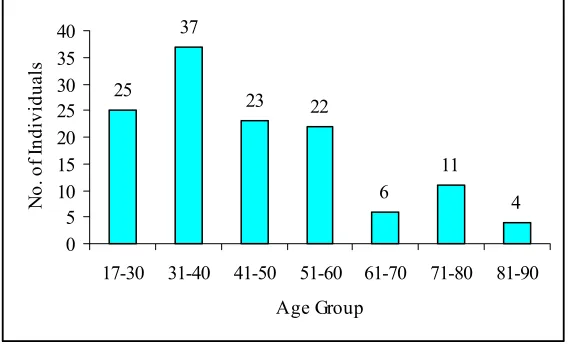
Out of the 128 cases used in the study, 94 were males and 34 were females, giving a male:female ratio of 2.7:1, comparable to that found in other samples of suicide victims (Cantor, 2000). The individuals in the study were aged between 17 and 86, with the majority of individuals falling into the 31 – 40 year old age bracket, followed by the 17 – 30 bracket (fig.1). This is in keeping with the rising trend of suicide in these younger age groups (Cantor, 2000).
Figure 1 about here.
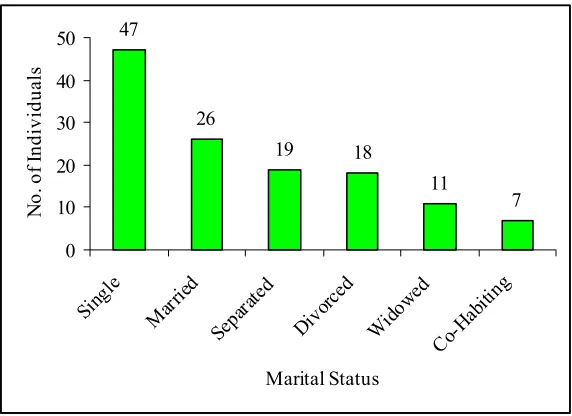
The majority of the sample (47, or 37%) were single at the time of death. This is in contrast to a number of studies in which largest group of individuals were divorced or separated (Cantor & Slater, 1995). Unlike other studies, individuals who were single but cohabiting with a partner were included in a separate category (fig.2), as cohabiting is likely to be a protective factor in suicide, similar to marriage.
Figure 2 about here.
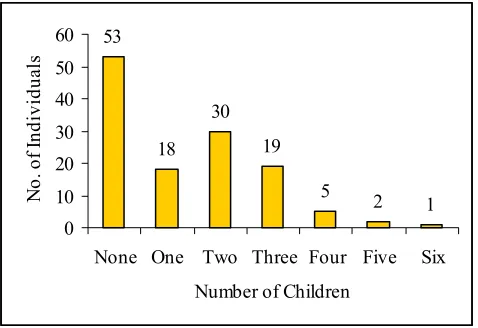
Figure 3 about here.
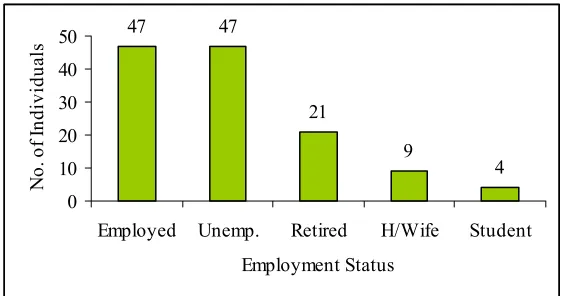
Of the 128 individuals included in the study, 47 (38%) were in paid employment at the time of death, and 47 (38%) were unemployed (including those not working for health reasons). This is an interesting finding, as previous studies have highlighted the fact that unemployment is more common than employment in the background of suicidal individuals (Cantor & Slater, 1995). Housewives, however, were included as a separate category in this study, because although they are not in paid employment, there may be important psychological differences between those who cannot find work, and those whose main employment is in looking after children and home.
Figure 4 about here
Physical and Mental Health
In the sample, 46 individuals (36%) were suffering from a physical illness such as cancer, epilepsy, motor neurone disease, or had recently experienced a stroke. Such a number is comparable to findings by other authors (Hendin, 1999).
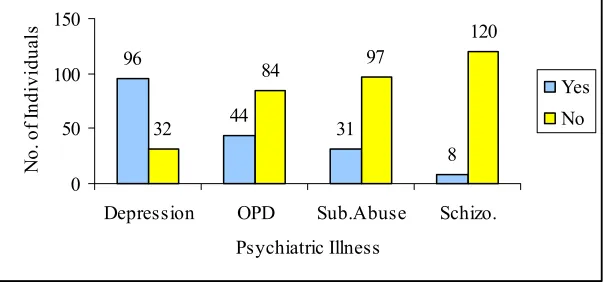
In the sample, 107 individuals (83%) were suffering from one or more psychiatric disorders at the time of death. Such a high figure is in keeping with the findings of other studies, that between 80 and 100% of individuals who commit suicide were suffering from some form of psychiatric disorder (Henrikkson et al, 1993).
Depression was the most common psychiatric disorder in the sample, occurring in 96 (75%) of the individuals. Once again, this reflects the results of other studies in which depression is the most common psychiatric disorder found in individuals who commit suicide (Hawton, 1992).
Figure 5 about here.
Life Events
event in the months leading up to their death. In the present study, these events fell into four categories: loss (separation, divorce, moving house); health (such as the diagnosis of a terminal illness, or deterioration of a known condition); financial (bankruptcy, debt); and legal (impending court cases, criminal charges, witness intimidation) (fig.6).
Figure 6 about here.
Suicidal Communication
A previous suicide attempt was evident in 59 (46%) of the cases in the study, usually occurring in the two years preceding the fatal attempt. This finding is similar to that cited by Sakinofsky (2000).
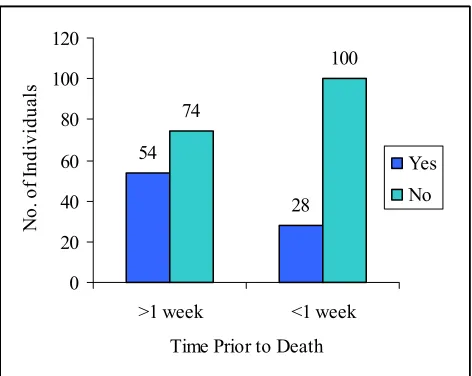
In the week prior to their deaths, 28 individuals (22%) communicated their suicidal intention via direct or indirect statements to family or friends. However, almost double this number (54, or 42%) had made some form of suicide threat in the months before their death, the significance of which was only realised after the fatal event. Suicidal intent was communicated, at some point preceding death, by 50% of the sample, a figure comparable to that stated by Jones & Namgauds, (1998). In relation to our general thesis this is a particularly important finding indicating that half of the sample may not have emitted the sort of overt, clear indication of intent that the courts so prize in deciding on suicide.
Figure 7 about here.
Sixty-three individuals (49.2% of the sample) left a suicide note. This proportion is notably higher than that found in previous studies, where between 15% and 30% of individuals have left a note (Williams, 1997, Pokorny, 1968). This may be because of the higher levels of education achieved by individuals today. It has been reported that those who have spent a greater number of years in education are more likely to leave a suicide note (Monk, 1987).
Suicide
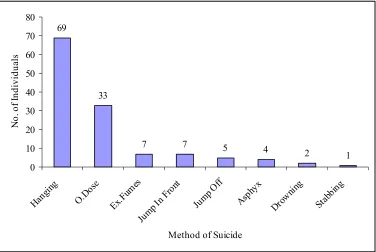
Figure 8 about here.
Hanging was the most frequently used method of suicide, occurring over twice as frequently as the next common method, overdose. Hanging, followed by overdose, have also been found to be the most frequently used methods in a number of other studies of British suicides (Wilkinson & Gunnell, 2000, Harwood et al, 2000). Death by inhalation of exhaust fumes, and by jumping in front of a moving object (usually a train) was each used by seven individuals in the present study. The majority of individuals (91) killed themselves indoors, either in their home, or in a garage attached to their home. Locations chosen for outdoor suicides included parks, rivers, railway lines, and motorways.
It can therefore be seen that the sample used for this investigation is fairly representative of British suicides as a whole, the differences being a high number of single individuals, and a high number of individuals in paid employment at the time of death. These differences may be due to the fact that suicide is becoming more common among the younger age groups, who are less likely to be married, and subsequently divorced or separated, than those in the older age groups. An increase in part-time employment and a decrease in job satisfaction may account for the increased number of employed individuals in this sample.
Development of Suicide Precursor Scale
Method
In order to determine the prevalence of suicide in the absence of overt precursors, a 14-item Suicide Precursor Scale was devised. An individual was given one point on the scale for each of the following variables that were found to be present in their case histories:
• Male gender
• History of depression • History of substance abuse • Schizophrenia
• Other psychiatric disorder • Physical illness
• Bereavement
• Stressful Life Event (not including bereavement) • Previous suicide attempt
• Previous communication of suicidal intent (>1 week prior to death) • Communication of suicidal intent in the week preceding death • Note found at scene of death.
Thus, the maximum score that could be obtained was 14 (indicating a wide range of precipitating factors) and the minimum score that could be obtained was 0 (indicating an absence of precipitating factors).
All of the variables included in the scale are recorded routinely in the investigation of sudden, unnatural deaths and so were available for all of the cases studied.
Results
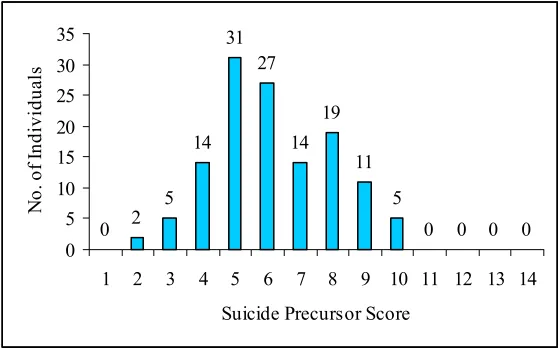
Each case was given a score on the Suicide Precursor scale. Scores ranged between 2 and 10, with a mean score of 6.
Figure 9 about here.
It can be seen that seven individuals achieved scores equal to or less than three on the Suicide Precursors scale, indicating that a verdict of suicide can be given in the absence of many overt precipitating factors. No case in the study achieved a score above 10. Twenty-one of the cases achieved a score of score of 4 or less. This gives a percentage of 16% which is very similar indeed to the 15% found by Robins (1981) for whom no overt indicators or obvious explanation of suicide could be given.
The distribution of scores and the high alpha coefficient therefore provides prima facae indication that suicide verdicts are given across a range of possible indicators with relatively few indictors being sufficient for a verdict. The question therefore follows as to whether there are sub-sets of indicators that tend to co-occur across this range that would provide support for the different pathways as hypothesised.
Smallest Space Analysis of Suicide Precursors
To see which variables are more likely to co-occur, Smallest Space Analysis (SSA) (Lingoes, 1973) was used, a multidimensional scaling technique that shows the relationship every variable has with every other variable (Canter & Herritage, 1990). SSA is a non-metric technique that works on the ranks of the association, in this case co-occurences, of every variable with every other variable, and represents these associations as distances in a statistically derived space. Each variable is represented as a point in space, and the rank order of the distances between them is inversely related to the rank order of the correlation coefficients. Thus, the higher the association between two variables, the closer they will lie on the SSA plot. Iterations are performed comparing the rank order assigned to the correlations with the rank order of the distances, while adjustments are made to the geometric representations. The closer the two rank orders, the better the ‘fit’ between the original association matrix and the representation. The coefficient of alienation is one measure of this relationship: the closer the coefficient is to zero the better the fit between the representation and the original correlations.
non-occurrences. This is particularly suited to the present data since it is not necessarily the case that an unreported variable was not present.
SSA of Suicide Precursors
SSA was used to analyse the 14 suicide precursors for the 128 cases of suicide. A three dimensional solution with a coefficient of alienation = 0.20 in 22 iterations, a good fit for this type of data, was produced. However, for ease of interpretation, only one projection of the representation will be reported, in this case, vector 1 x vector 2 gave the most meaningful structure to the data set.
Each point in the plot represents a variable and has been given a brief label for simplicity.
Figure 10 about here.
Table 1 about here.
Thematic Forms of Suicidal Behaviour
Table 2 about here
The model can be tested by plotting the frequency of occurrence of each of the variables onto the SSA projection. As can be seen, it is possible to draw very clear contours on this diagram to cover variables that occur in more than 45 per cent of cases, in 30 per cent to 45 per cent of cases, and in less than 30 per cent of cases. At the core of this structure are those variables that capture the typical context of suicide being male, unemployed, and having suffered from a recent stressful life event. Moving out from this are those indicators that reflect increasing ‘expression’ of suicide. The variables lying at the periphery of plot portray the most expressive suicidal precursors, such as communicating immediate suicidal intentions (PresComm), getting involved with alcohol or drugs (Sub.Abuse), and being diagnosed as suffering from schizophrenia (Schizo).
This serves to clarify the distinctions in the pathways to suicide as being aspects of the way in which the ideation relating to suicide is expressed. It is the variations in these modes of expression that make up the dominant themes of suicide. They have been indicated on the SSA plot through three conceptually distinct regions representing modes of expression: ‘Life Circumstances’, ‘Physical/Mental Health’, and ‘Suicidal History’. Each contains variables that share a common theme, showing that there are different ‘routes’ into suicidal behaviour.
Life Circumstances
The region labelled ‘Life Circumstances’ contains the variables: ‘substance abuse’, ‘unemployment’, ‘marital status’, and ‘loss’. These variables all indicate that it is extenuating circumstances in the individual’s life, such as being unemployed, separated, or divorced, that have led them to suicide. Substance abuse falls into this region, rather than into the ‘Physical/Mental Health’ region, because alcoholism or drug dependence is often used as a way of coping with such circumstances (Li, 1995). Also, the strong relationship between substance abuse, bereavement (loss) and suicide (Roy & Linnoila, 1986) may have influenced the positioning of this variable.
Physical/Mental Illness
of schizophrenia, however, suicide may be a direct response to the condition in question, if, for example, the patient fails to take their prescribed medication.
The high frequency variables ‘male’ and ‘stressful life events’ are also closely related to this theme, lying adjacent to this region on the SSA plot. This suggests that it is males who are most at risk of suicide when faced with deterioration in their physical or mental health, and that suffering from such illnesses may reduce an individual’s ability to cope with stressful life events such as legal or financial issues. However, the inclusion of recent diagnosis of a physical or mental illness (in the year before suicide) in the stressful life event category may go further towards explaining this relationship.
Suicidal History
The Suicidal History region contains those variables relating to a past history of suicidal behaviour, such as ‘previous attempt’ and ‘past communication’, as well as those relating to recent suicidal ideas, such as communication of suicidal intent in the week prior to death (PresComm) and leaving a note.This region thus highlights the importance of suicidal behaviour, both in the past and present, in identifying those at risk of completing suicide.
Depression also seems to be highly associated with this region. This may be due to the relationship between history of depression and history of previous deliberate self-harm (Sakinofsky, 2000). It also suggests that depression contributes to suicide in a different way to other psychiatric illnesses. For example, the depressed individual may see no reason to carry on living, whereas as individual diagnosed with agoraphobia may resent the enforced limitations of their illness, fearing a future of isolation.
Conclusions
From the frequencies of the suicide variables (table 1), it can be seen that the typical characteristics of a suicidal individual in this sample are being male, diagnosis of depression, and experience of a recent stressful life event.
of the SSA plot) reflect the more expressive precursors to suicide, and the more common variables, occurring in over 45% of the sample, reflect the least expressive suicide precursors.
There are then three modes of this suicidal expression, each indicating a conceptually distinct ‘route’ into suicide, namely: Life Circumstances, Physical/Mental Illness, and Suicidal History. This therefore indicates that three conditions exist in which there may be individuals with a limited number of precursors in their case histories.
The following case histories illustrate individuals who exhibit very low numbers of precursors from the three themes:
Life Circumstances
BH, a 60 year-old female shop assistant, lived with her husband and regularly saw her two children. She had experienced no recent bereavement or other loss of affectional relationship. BH was found hanging from the banister of her home, having left a note for her husband saying she felt that she could no longer carry on living.
TFG, a 28-year old male builder, was found hanging from a tree in a local park. He was co-habiting with his girlfriend of two years at the time of death. He had no history of either drug or alcohol abuse, and had suffered no interpersonal loss in the year preceding death.
Physical/Mental Illness
A 43 year-old female, DEH worked as a Community Care Assistant. She had no history of illness, either psychiatric or physical. She had experienced no recent stressful life events, although she and her partner had been separated for approximately five years. After consuming a large quantity of alcohol, she jumped off a motorway bridge into the oncoming traffic below.
Suicidal History
FPS was a 68 year-old retired male. He had made no previous attempts at suicide and had never given any indication that he wanted to take his own life. He had no history of depression. He had regular contact with his grandson, who reported that FPS gave no indication of suicidal intent in the week preceding his death. FPS tied a plastic carrier bag round his neck, thus suffocating himself. He left no suicide note explaining his actions.
PT, a 36-year old male, jumped in front of a moving train. He had not communicated his suicidal intention, either in the weeks or months prior to death. PT had made no previous suicide attempts and did not leave a note explaining his actions. He had had recent contact with his GP who did not notice any signs of depression.
Thus, cases of suicide exist in which the individuals in question possess a minimum number of the known suicide precursors.
Discussion
The present study has identified three distinct ‘pathways’ to suicide, based on precursors relating to an individual’s life circumstances, their suicidal history, and their physical and mental health. In relation to this, it has been found that suicide precursors differ in relation to their ‘expressiveness’, with the most expressive precursors (such as substance abuse and communication of suicidal intent in the days preceding death) occurring with a lower frequency than the less expressive precursors (such as being male, or unemployed). Individuals exhibiting these expressive precursors are likely to be at a very high risk of taking their own lives, and should therefore be provided with the appropriate help.
From here, it has been proven that suicide can occur in the absence of any of these overt precursors, the individuals in question possibly suffering from what may be termed ‘secret despair syndrome’, seeing their past and future as nothing but a string of disappointments and failures (Williams, 1997).
her verdict on the presence or absence of known suicide precursors, such as psychiatric illness and past expression of suicidal intent (Stanistreet et al, 2001). The present study has indicated that suicide can occur in the absence of such factors, making them an unreliable basis for decision making.
No associations were found between individuals with a limited number of precursors in their case histories, and either method or location of suicide, or history of psychiatric treatment. Such factors, therefore, cannot be used to distinguish cases with low numbers of precursors from deaths that are not suicide.
One limitation of this study is that the cases used were only those which received a verdict of suicide in the specified time period; accidental and open verdicts were not considered, although such cases might include suicides that occurred in the absence of overt precursors. As stated by Barraclough and Hughes (1987): ‘Some undetermined deaths are almost certainly suicides which failed to meet the legal criteria for a suicide verdict, since they did not leave sufficient evidence to prove their intent’ (Barraclough, 1987, p.133).
Previous studies have included cases of open and accidental death in their analysis, believing the inclusion of such cases to give a more accurate picture of suicide. For example, Linsley, Schapira & Kelly (2001) note that those deaths given open and suicide verdicts have many similarities, differing only with respect to presence of a suicide note, methods of suicide used, and age of the victim. They conclude that ‘open verdicts should be included in all suicide research after excluding cases in which suicide is unlikely’ (Linsley, Schapira & Kelly, 2001, p.467). In contrast to this however, Barraclough and Hughes (1987) do not recommend combining suicide and undetermined or accidental deaths in order to ascertain a more accurate picture of suicide, stating that to do so ‘does not seem correct on [this] evidence’ (Barraclough & Hughes, 1987, p.130). Future research on this topic, however, may wish to investigate cases of suspected suicide that received an alternative verdict as a result of the absence of overt precursors.
information contained in the files may be biased. Relatives and friends of the deceased may fail to provide relevant information regarding communication of suicidal intent, in an effort to sway the verdict towards accidental death.
Lastly, the files may be open to the bias of the coroner him or herself. It has been found that a verdict of suicide is more likely to be passed when the deceased has a record of psychiatric illness, or when the method of death is active (such as hanging) as opposed to passive (such as drowning) (Stanistreet et al, 2001). In spite of all of these problems, however, it has been found that ‘coroner’s notes of evidence are an excellent source of facts on which to base inquiries of this kind’ (Barraclough & Hughes, 1987, p.119).
Conclusion
Although much work has been carried out in order to refine and expand the known precursors to suicide, this study has shown that people do take their own lives in the absence of such overt precursors. One reason put forward for this is that the individuals in question are suffering from ‘secret despair syndrome’ in which they feel trapped by negative experiences, and lose hope for the future, but keep such feelings hidden from those around them. Such cases were identified regardless of which ‘pathway’ to suicide (life circumstances, suicidal history or physical/mental illness) was examined.
If the model proposed here is applied to the plausibility of Clelland’s claim that Elizabeth Redmond killed herself it is difficult to see what is known about her fitting into anyone of the three syndrome pathways revealed here. With a lack of a history of mental illness and no suicide note she would have been most likely to fall into the life circumstances pathway, but there were no indications that she had suffered those sorts of traumas. There is therefore no support from the present analysis for the claim of suicide. On the day that the trial commenced Clelland changed his pleas and admitted killing Redmond. He was found guilty of murder.
expected. This serves to show that the approach outlined here is a first step towards recognising a ‘secret despair’ syndrome even though it is unlikely to provide definitive guidance without further research. In particular that research would need to look more closely at the processes by which people may indicate suicidal thoughts even if minimally. In cases where the form of those thoughts are revealed, especially were detailed suicide notes are left, close study of those notes may help to elaborate the accounts the suicidal individuals develop for themselves thereby elucidating the internal narrative processes that give rise to the different pathways. Such detailed study will serve to help judges understand that psychological analysis of suicide with minimal indicators is revealing that it is not true that ‘anything is possible’ in suicide. There is a limit to the processes by which people can bring themselves to this desperate act.
References
Allebeck, P. & Bolund, C. (1991). Suicide and suicide attempts in cancer patients. Psychological Medicine, 21, 979 – 984.
Allgulander, C. (2000). Psychiatric aspects of suicidal behaviour: Anxiety disorders. In K.Hawton & K.van Heeringen (Eds). The International Handbook of Suicide and Attempted Suicide. John Wiley & Sons Inc.
Barraclough, B.M. (1987). The suicide rate of epilepsy. Acta Psychiatrica Scandivinicia, 76, 339 – 345.
Barraclough, B.M. & Phallis, D.J. (1975). Depression followed by suicide: A comparison of depressed suicides with living depressives. Psychological Medicine, 5, 55 – 61.
Beautrais, A.L., Joyce, P.R. & Mulder, R.T. (1998). Unemployment and serious suicide attempts. Psychological Medicine, 28, 209 – 218.
Brent, D.A. & Moritz, G. (1996). Developmental pathways to adolescent suicide. In D.Chichetti & S.Toth (Eds). Adolescents: Opportunities and challenges. New York: University of Rochester Press.
Broadman, A.P., Grimbaldeston, A.H., Handley, C., Jones, P.W. & Willmot, S. (1999). The north Saffordshire suicide study: A case-control study of suicide in one health district. Psychological Medicine, 29, 27 – 33.
Bunch, J. (1972). Recent bereavement in relation to suicide. Journal of Psychosomatic Research, 16, 361 – 366.
Canter, D.V. & Heritage, R. 1990). A multivariate model of sexual offence behaviour: Developments in “Offender Profiling”. Journal of Forensic Psychiatry, 1, 185-212.
Cantor, C.H. (2000). Suicide in the western world. In K.Hawton & K.van Heeringen (Eds). The International Handbook of Suicide and Attempted Suicide. John Wiley & Sons Inc.
Cantor, C.H. & Slater, P.J. (1995). Marital breakdown, parenthood and suicide. Journal of Family Studies,1, 91 – 102.
Cavanagh, J.T.O., Owens, D.G.C. & Johnstone, E.C. (1999). Suicide and undeternimed death in southeast Scotland. A case control study using the psychological autopsy method. Psychological Medicine, 29, 1141 – 1149.
De Hert, M. & Peuskens, J. (2000). Psychiatric aspects of suicidal behaviour: Schizophrenia. In K.Hawton & K.van Heeringen (Eds). The International Handbook of Suicide and Attempted Suicide. John Wiley & Sons Inc.
De Moore, G.M. & Robertson, A.R. (1996). Suicide in the 18 years after deliberate self harm. British Journal of Psychiatry, 169, 489 – 494.
Drake, R.E., Gates, C., Colton, P.G. & Whitaker, A. (1984). Suicide among schizophrenics: Who is at risk? Journal of Nervous and Mental Disease, 172, 613 – 617.
Fawcett, J., Busch, K.A., Jacobs, D., Kravitz, H.M. & Fogg, L. (1997). Suicide: A four-pathway clinical-biochemical model. Annals of the New York Accademy of Sciences, 836, 288 – 301.
Guze, S.S & Robins, E. (1970). Suicide and primary affective disorders. British Journa of Psychiatry, 117, 437 – 438.
Harwood, D.M., Hawton, K., Hope, T. & Jacoby, R. (2000). Suicide in older people: Mode of death, demographic factors and medical contact before death. International Journal of Geriatric Psychiatry, 15, 736-43.
Hawton, K. (1987). Assessment of suicide risk. British Journal of Psychiatry, 150, 145 – 153.
Hawton, K. (1992). Suicide and attempted suicide. In E.S.Paykel (Ed). Handbook of Affective Disorders: 2nd Edition. London: Churchill Livingstone.
Hawton, K. & Fagg, J. (1988). Suicide and other causes of death following attempted suicide. British Journal of Psychiatry, 152, 359 – 366.
Hendin, H. (1999). Suicide, assisted suicide and medical illenss. Journal of Clinical Psychiatry, 60, 26 – 50.
Henriksson, M.M., Aro, H.M., Marttunen, M.J., Heikkinen, M.E., Isometsä, E.T., Kuoppasalmi, K.I. & Lönnqvist, J.K. (1993). Mental disorders and comorbidity in suicide. American Journal of Psychiatry, 150, 935 – 940.
Hughes, D. & Kleepspies, P. (2001). Suicide in the medically ill. Suicide and Life Threatening Behaviour, supplement 31, 48 – 59.
Jamison, K.R. (1986). Suicide and bipolar disorders. In J.J.Mann & M.Stanlry (Eds). Psychobiology od suicidal behaviour. Annals of the New York Academy of Sciences, 487, 301 – 315.
Jones, C. & Namgauds, M. (1998). Working with the Risk of Suicide: Assessment and Management. Wirral & West Cheshire NHS Trust Booklet.
Kposowa, A.J. (2001). Unemployment and suicide: A cohort analysis of social factors predicting suicide in the US national longditudinal mortality study. Psychological Medicine, 31, 127 – 138.
Li, G. (1995). An interaction effect of bereavement and sex on the risk of suicide in the elderly: An historical cohort study. Social Science & Medicine, 40, 825 – 828.
Linehan, M.M., Rizvi, S.L., Welch, S.S. & Page, B. (2000). Psychiatric aspects of suicidal behaviour: Personality disorders. In K.Hawton & K.van Heeringen (Eds). The International Handbook of Suicide and Attempted Suicide. John Wiley & Sons Inc.
Lingoes, J. (1973). The Guttman-Lingoes Non-metric Program Series. MA Thesis, University of Michigan.
Murphy, G.E. (1988). Suicide and substance abuse. Archives of General Psychiatry, 45, 593 – 594.
Murphy, G.E. (2000). Psychiatric aspects of suicidal behaviour: Substance abuse. In K.Hawton & K.van Heeringen (Eds). The International Handbook of Suicide and Attempted Suicide. John Wiley & Sons Inc.
Platt, S.J. (1984). Unemployment and suicidal behaviour: A review of the literature. Scoail Science and Medicine, 19, 93 – 115.
Platt, S.J. & Hawton, K. (2000). Suicidal behaviour and the labour market. In K.Hawton & K.van Heeringen (Eds). The International Handbook of Suicide and Attempted Suicide. John Wiley & Sons Inc.
Pokorny, A.D. (1968). Myths about suicide. In H.L.P.Resnik (Ed). Suicidal Behaviors: Diagnosis and Management. London: Churchill.
Porter, L. & Alison, L. (in press). The impact of decisions, actions and orders on the behaviour of violent gangs. Small Group Research.
Rich, C.L., Warsradt, G.M., Nemiroff, R.A., Fowler, R.C. & Yound, D. (1991). Suicide, stressors and the life cycle. American Journal of Psychiatry, 148, 524 – 527.
Robins, E. (1981). The Final Months. A Study of the Lives of 134 Persons Who Committed Suicide. New York: Oxford University Press.
Robins, E., Gassner, S., Kayes, J., Wilkinson, R.H. & Murphy, G.E. (1959). The communication of suicidal intent: A study of 134 consecutive cases of successful (completed) suicide. American Journal of Psychiatry, 115, 724 – 733.
Roy, A. & Linnoila, M. (1986). Alcoholism in suicide. Suicide and Life Threatening Behaviour, 16, 162 – 191.
Sakinofsky, I. (2000). Repetition of suicidal behaviour. In K.Hawton & K.van Heeringen (Eds). The International Handbook of Suicide and Attempted Suicide. John Wiley & Sons Inc.
Shafii, M., Steltz-Lenarsky, J. & Denick, A.M. (1988). Co-morbidity of mental disorders in the post mortem diagnosis of completed suicide in children and adolescents. Journal of Affective Disorders, 15, 227 – 33.
Stanistreet, D., Taylor, S., Jeffrey, V. & Gabbay, M. (2001). Accident or suicide? Predictors of coroner’s decisions in suicide and accident verdicts. Medicine, Science and Law, 41, 111-15.
Stenager, E.N. & Stenager, E. (2000). Physical illness and suicidal behaviour. In K.Hawton & K. van Heeringen (Eds). The International Handbook of Suicide and Attempted Suicide. John Wiley & Sons Inc.
Vassilas, C.A. & Morgan, H.G. (1997). Suicide in Avon. British Journal of Psychiatry, 170, 452 – 55.
Wilkinson, D. & Gunnell, D. (2000). Comparison of trends in method-specific suicide rates in Australia and England & Wales, 1968-97. Australia and New Zealand Journal of Public Health, 24, 153-7.
Williams, J.M.G. (1997). Cry of Pain: Understanding Suicide and Self Harm. London: Penguin.
25 37
23 22
6
11 4 0
5 10 15 20 25 30 35 40
17-30 31-40 41-50 51-60 61-70 71-80 81-90
Age Group
N
o.
of
In
di
vi
du
al
[image:35.595.96.380.365.537.2]s
47
26
19 18
11
7
0 10 20 30 40 50
Single Marri ed
Sepa rated
Divo rced
Wido wed
Co-H abiti
ng
Marital Status
N
o.
of
In
di
vi
dua
[image:36.595.97.383.362.570.2]ls
53
18 30
19
5 2
1 0
10 20 30 40 50 60
None One Two Three Four Five Six
Number of Children
N
o.
of
In
di
vi
du
al
[image:37.595.104.343.356.520.2]s
47 47
21
9
4 0
10 20 30 40 50
Employed Unemp. Retired H/Wife Student
Employment Status
N
o.
of
In
di
vi
du
al
[image:38.595.88.370.114.262.2]s
96
44
31
8 32
84 97
120
0 50 100 150
Depression OPD Sub.Abuse Schizo.
Psychiatric Illness
N
o.
of
In
di
vi
du
al
s
[image:39.595.98.400.39.180.2]Yes No
44%
34% 11%
11%
[image:40.595.103.321.52.228.2]Loss Health Finincial Legal
54
28 74
100
0 20 40 60 80 100 120
>1 week <1 week
Time Prior to Death
N
o.
of
In
di
vi
du
al
s
[image:41.595.90.326.50.238.2]Yes No
69
33
7 7 5 4
2 1 0 10 20 30 40 50 60 70 80 Han ging O.Do se Ex.F umes Jump In F
ront Jump Off Asphy x Drowni ng Stab bing
Method of Suicide
[image:42.595.106.482.52.304.2]N o. of In di vi du al s
0 2 5
14 31
27
14 19
11 5
0 0 0 0
0 5 10 15 20 25 30 35
1 2 3 4 5 6 7 8 9 10 11 12 13 14
Suicide Precursor Score
N
o.
of
In
di
vi
du
al
[image:43.595.89.369.45.219.2]s
7. Note 12. Male
3. Marital 2. Unemp.
14. Dep. 1. Sub.Abuse
9. Schizo
11. OPD 10. Psys.Ill
4. Loss
13. SLE
5. Prev.Att.
6. PastComm
8. PresComm
<30%
30-45%
>45%
Physical/Mental Illness
Life Circumstances
[image:44.595.105.490.93.379.2]Suicidal History
Variable Label Variable Description
1. Sub.Abuse (31) Deceased had a history of substance abuse and/or alcoholism 2. Unemp (72) Deceased was unemployed/retired/on the sick at time of death 3. Marital (50) Deceased was divorced/separated/widowed at time of death 4. Loss (55) Deceased had experienced bereavement of relative/close friend 5. Prev.Att. (59) Deceased had made a previous suicide attempt
6. PastComm (54) Deceased had communicated suicidal intent >1 week prior to death 7. Note (63) Deceased left a suicide note
8. PresComm (28) Deceased had communicated suicidal intent <1 week prior to death 9. Schizo (8) Deceased was diagnosed as suffering from schizophrenia
10. Psys.Ill (46) Deceased was diagnosed as suffering from a chronic physical illness
11. OPD (44) Deceased was suffering from a psychiatric disorder (not depression, substance abuse or schizophrenia)
12. Male (94) Deceased was male
[image:45.595.88.533.69.319.2]13. SLE (91) Deceased has suffered a recent stressful life event (<1 year) 14. Dep. (96) Deceased was diagnosed as suffering from depression
Table 1. Description of SSA variables. Numbers in brackets represent frequency of occurrence of variables
Life Circumstances Suicidal History Physical/Mental Illness
2. Unemployment (72) 14. Depression (96) 12. Male (94) 4. Loss (55) 7. Note (63) 13. SLE (91) 3. Marital Status (50) 5. Previous Attempt (59) 10. Physical Illness (46)
[image:45.595.85.507.425.543.2]4. Substance Abuse (31) 6. Past Communication (54) 11. OPD (44) 8. Present Communication (28) 9. Schizophrenia (8)