ScholarWorks @ Georgia State University
Business Administration Dissertations Programs in Business Administration
Spring 5-6-2018
A Case Study: Evaluating the Implementation of
Eligibility Screening and Sliding Scale Payments in
A Community Clinic
Carol Passley
Follow this and additional works at:https://scholarworks.gsu.edu/bus_admin_diss
This Dissertation is brought to you for free and open access by the Programs in Business Administration at ScholarWorks @ Georgia State University. It has been accepted for inclusion in Business Administration Dissertations by an authorized administrator of ScholarWorks @ Georgia State University. For more information, please [email protected].
Recommended Citation
Passley, Carol, "A Case Study: Evaluating the Implementation of Eligibility Screening and Sliding Scale Payments in A Community Clinic." Dissertation, Georgia State University, 2018.
PERMISSION TO BORROW
In presenting this dissertation as a partial fulfillment of the requirements for an advanced degree from Georgia State University, I agree that the Library of the University shall make it available for inspection and circulation in accordance with its regulations governing materials of this type. I agree that permission to quote from, copy from, or publish this dissertation may be granted by the author or, in her absence, the professor under whose direction it was written or, in his absence, by the Dean of the Robinson College of Business. Such quoting, copying, or
publishing must be solely for scholarly purposes and must not involve potential financial gain. It is understood that any copying from or publication of this dissertation that involves potential gain will not be allowed without written permission of the author.
NOTICE TO BORROWERS
All dissertations deposited in the Georgia State University Library must be used only in accordance with the stipulations prescribed by the author in the preceding statement.
The author of this dissertation is: Carol Passley
1063 Bradshaw Estates Drive Canton GA 30115
The director of this dissertation is:
Karen D. Loch
J. Mack Robinson College of Business Georgia State University
A Case Study: Evaluating the Implementation of Eligibility Screening and Sliding Scale
Payments in A Community Clinic
by
Carol Passley
A Dissertation Submitted in Partial Fulfillment of the Requirements for the Degree
Of
Executive Doctorate in Business
In the Robinson College of Business
Of
Georgia State University
GEORGIA STATE UNIVERSITY
ROBINSON COLLEGE OF BUSINESS
Copyright by Carol Passley
ACCEPTANCE
This dissertation was prepared under the direction of the CAROL PASSLEY Dissertation
Committee. It has been approved and accepted by all members of that committee, and it has been
accepted in partial fulfillment of the requirements for the degree of Doctor of Philosophy in
Business Administration in the J. Mack Robinson College of Business of Georgia State
University.
Richard Phillips, Dean
DISSERTATION COMMITTEE
Dr. Karen D. Loch (Chair)
Dr. Pam Scholder Ellen
ACKNOWLEDGEMENTS
The path from dreams to success does exist. May you have the vision to find it, the courage to get on to it,
and the perseverance to follow it. Kalpana Chawla
I give thanks to the Lord, my God who has given me the strength to “climb mountains”
and without him, this would not have been possible. Attaining this goal would not have been
possible without the support of a myriad of people, and I want to highlight a few who have
supported, encouraged, motivated, cried, and prayed with me. Thank you to Gifton Passley, my
very supportive husband, and my beautiful daughters Toni and Tija Passley, who have been the
rock on which I stand.
I appreciate and acknowledge, Ivan and Phylicia Tucker and Daisy Graveney, who took
me in when I had no money to finish high school, so that I could fulfill the dream. I love and
adore my two best friends in the world, Charmaine Mitchell and Lillieth Hanson who were there
from the beginning and encouraged every endeavor that I undertook. I am also eternally grateful
to Sylvia Passley, who has been one of my biggest cheer leaders and who has felt every pain that
I have endured on the doctoral journey. A big thank you to my brothers and sisters; Oret Burke,
Judith Wade, Claire Johnson-Walker, Leon Bennett Jr., Karlane Grullon, Keshan Gordon and my
confidant, Lincia Bennett, this one is for you. To my prayer warriors, Collette Riley and Sheron
Robinson, I appreciate everything that you have done.
A special thank you to team at the clinic who supported this effort from the very start.
This research would not have been the same without their contributions. I thank all of the
anonymous participants in this study, who graciously accepted my invitation and candidly shared
their passion and feelings about this topic. I wish them continued success throughout their
I also wish to thank my research committee members Dr. Karen Loch (chair), Dr.
Pam Schroeder-Ellen and Dr. Thomas Conklin for lending their expertise to guide my efforts. I
know that the success of this effort was grounded by the talent each of them have conveyed to
me. Finally, I want to acknowledge and thank my wonderful mother, Inez Agatha Wilson
Bennett, who always said, “if I was only given the chance” ...this is in honor of you. From a
domestic help, to a higgler/entrepreneur, you always dreamed for us to have a chance. You gave
us the opportunity, the chance, and I did it for you. Sleep in eternal peace Mommy because -we
TABLE OF CONTENTS
ACKNOWLEDGEMENTS ... iv
LIST OF TABLES ... ix
LIST OF FIGURES ... x
I INTRODUCTION ... 1
I.1 Problem ... 1
I.2 Demographics ... 2
I.3 Area of Concern ... 3
I.4 Importance of Keeping the Clinic Open ... 3
I.5 Framing ... 4
II LITERATURE REVIEW ... 5
II.1Community Health Centers ... 5
II.1.1 Areas of Opportunities ... 5
II.1.2 Eligibility Assessment Screening ... 7
II.1.3 Definition of Sliding Scale ... 8
II.1.4 Additional Material Informing the Study ... 8
II.1.5 Financial Declaration ... 9
II.1.6 Demographic Screening ... 9
II.1.7 Health Insurance Information ... 9
II.1.8 Financial Eligibility ... 9
II.1.9 Sliding Scale ... 10
II.2Organizational Change and Process Innovation ... 10
II.3Research Question ... 15
III.1 Case Study ... 16
III.2 Clinic Setting ... 17
III.3 Data Collection, Sample, and Analysis ... 17
IV FINDINGS ... 21
IV.1 Observations ... 22
IV.1.1 Phase I ... 22
IV.1.2 Phase II ... 25
IV.1.3 Phase III: Postdata Gathering and Report ... 30
IV.2 Interview Responses ... 32
IV.2.1 Demographics... 33
IV.2.2 Process Comprehension ... 34
IV.3 Effects of Change... 36
IV.3.1 Impact of Eligibility Screening and Sliding Scale Implementation ... 39
IV.4 Teamwork-Collaboration ... 40
IV.5 Short- and Long-Term Challenges ... 42
IV.5.1 Suggestions: Short- and Long-Term Challenges ... 43
IV.6 Financial Implications ... 45
IV.7 Discussion ... 47
IV.7.1 Identification of Process Innovation ... 48
IV.7.2 Contribution to Practice... 53
IV.7.3 Contribution to Framing ... 54
IV.7.4 Contribution to the Area of Concern ... 54
IV.7.5 Limitations ... 54
APPENDICES ... 56
Appendix A Template of Eligibility Screening Tool ... 56
Appendix B: Sliding Scale Assessment Tool ... 57
Appendix C: Interview Guide ... 58
Appendix D: Themes Generated From Interviews ... 59
Appendix E: Nodes Created From Interview Guide ... 60
Appendix F: Example of Price Point Indicators Created by Staff ... 65
REFERENCES ... 66
LIST OF TABLES
Table 1 Demographic Information of the Patient Population of the Clinic ... 2
Table 2 Davenport’s Process Improvement Versus Process Innovation ... 12
Table 3 Composition of Study Sample ... 18
Table 4 Fleiss’s Kappa ... 19
Table 5 Example of Eligibility Screening Tool ... 26
Table 6 Objectives of Eligibility Screening ... 35
Table 7 Impact Scale and Recommendations ... 37
Table 8 Implementation of Eligibility Screening and Sliding Scale Schedule ... 39
Table 9 Indicators of Surprise During Implementation ... 41
Table 10 Short- and Long-Term Challenges ... 43
LIST OF FIGURES
Figure 1 Davenport’s high-level approach to process innovation. ... 12
Figure 2 Organizational chart of the community clinic. ... 13
Figure 3 Davenport’s high-level approach to process innovation with adaptation of Davenport’s model of process of innovation. ... 14
Figure 4 Time line of eligibility screening and sliding scale payment implementation. ... 21
Figure 5 Current workflow of front office staff. ... 24
Figure 6 Proposed workflow postimplementation. ... 31
Figure 7 Final workflow for the clinic... 32
Figure 8 FPL of patients. ... 46
Figure 9 Amount patients paid for services. ... 46
ABSTRACT
A Case Study: Evaluating the Implementation of Eligibility Screening and Sliding Scale
Payments in A Community Clinic
by
Carol Passley
May 2018
Chair: Karen D. Loch
Major Academic Unit: Executive Doctorate in Business
Nineteen percent of the Cherokee County, Georgia, population is uninsured, and the ratio
of population size to the number of physicians is 2,950:1. It is evident from the data that there is
a need for more health care practitioners in Cherokee County who can deliver adequate care to
the residents of the county. Recognizing the need to help uninsured individuals in the county, a
community clinic opened its doors in 2011 to address the gaps in care. However, over the years,
the increase in the number of patients being seen without the financial ability to pay has resulted
in the decreased viability of the clinic. The board of directors had to consider ways to improve its
financial outcomes. One such way was to consider eligibility screening, with sliding scale
payments based on the screening. The study was guided by one research question: How does one
community clinic implement a process innovation that requires cultural and structural shifts to
obtain and sustain financial viability?
INDEX WORDS: Eligibility, Screening, Community clinic, Uninsured, Underinsured, Health
I INTRODUCTION
I.1 Problem
According to the Georgia Department of Public Health (GDPH, 2017), 19% of Cherokee
County’s 235,000 residents are uninsured, and the ratio of the population size to the number of
physicians is 2,950:1. Recognizing the need to help individuals in the county who are uninsured,
a community clinic opened its doors in 2011 to address the gaps in care. The clinic provides
internal medicine services, pediatric care, basic gynecology care, laboratory services, and
prescription services. However, the revenue generated by the clinic is unable to sustain current
operations.
The clinic that was the setting of this study is a 501(c) 3 nonprofit organization that
provides quality and affordable health care services to individuals who are uninsured and
underinsured. The focus of the clinic is to provide primary medical care as well as health
programs that encourage positive behavioral changes. The clinic employs nine part-time workers
and has 31 volunteers: two nurse practitioners, one nurse-midwife, four medical doctors, 10
registered nurses, five administrative staff who assist in the front office, two registered dieticians,
two interpreters, one medical assistant, two certified nursing assistants, and two community
relations/grants liaisons. Of the individuals mentioned, three midlevel providers, two front office
staff, one nurse, and one community relations liaison are paid on a part-time basis.
This not-for-profit community clinic in northwestern Georgia is experiencing financial
difficulties because of its inability to generate sufficient revenue to keeps it doors open for the
population it serves. Of note, the clinic’s net operating loss for 2015 was more than $100,000.
The clinic currently charges a fixed amount of $45 to all patients, regardless of their ability to
Attempts were made to compare the cost structure of the clinic to other clinics throughout the
state, but such a comparison was difficult to complete because most clinics are federally
monitored and have an automatic computing algorithm in place for their electronic health
systems. In addition, staff members at those clinics were unable to verbalize how the
computation was used.
I.2 Demographics
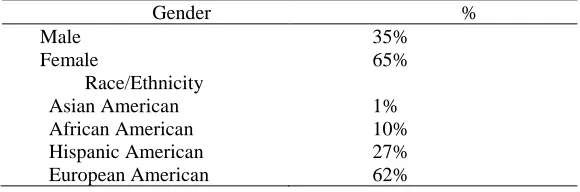
The demographics of the patient population of the clinic are broken down by gender and
[image:16.612.71.361.324.420.2]ethnicity in Table 1.
Table 1 Demographic Information of the Patient Population of the Clinic
Gender %
Male 35%
Female 65%
Race/Ethnicity
Asian American 1%
African American 10%
Hispanic American 27%
European American 62%
With a significant part of the population of Cherokee County without health insurance
and the decreasing financial viability of the clinic, the clinic leadership is considering
implementing an eligibility process for patients to determine whether eligibility screening would
improve its financial outcomes while it continues to provide care.
The clinic has explored additional ways to generate revenue, such as increasing the cost
of laboratory services, but those increases have not impacted the negative financial outcomes
significantly. In addition, the clinic used to be open 5 days per week, but it is now open only 2
days per week because of the ongoing financial constraints. The health care providers at the
clinic see approximately 30 to 40 patients on each of the 2 days over their 8- or 12-hr shifts.
during the days that the clinic is open. It was apparent that the clinic needed to remain open to
deliver the quality of health care that patients required.
I.3 Area of Concern
After giving careful consideration to the continued financial constraints and the recent
reduction in services, the leadership team of the practice manager, the clinical manager, and
board members decided to implement eligibility screening and sliding scale payments as one
way to improve the clinic’s financial situation in order to sustain the practice. Eligibility
screening has been used in other clinic settings, but not in this clinic; therefore, the leadership
team wanted to understand the effect that this change would have on financial viability, clinic
efficiency, and employee satisfaction. Consequently, the purpose of the study was to understand
the impact of implementing eligibility screening as a process innovation, which combines
business application with a new route of cost effectively meeting the organization’s initiatives.
(Davenport 1993).
I.4 Importance of Keeping the Clinic Open
It was evident from the GDPH (2017) data that there is a need for more health care
practitioners in Cherokee County to deliver adequate care. The leadership team at the clinic
believe that the clinic acts as a safety net and that because the care being provided is vital and
needed in Cherokee County, they want to continue providing those services. According to Ko,
Murphy, and Bindman (2015), safety net providers dispense a “significant level of health care to
uninsured, Medicaid, and other vulnerable patients” (p. S676). This belief was supported by
Nadkarni and Philbrick (2003), who asserted that community clinics are among the facilities
considered safety net agencies. Keeping this safety-net clinic open and financially viable became
I.5 Framing
This study followed a process innovation approach to assess the impact of implementing
eligibility screening and sliding scale payments. Process innovation involves the complete
redesign of a process that is augmented by technology and resources from the organization
(Davenport, 1993). Considering that no existing prescribed application process was being used
by the organization, implementation of eligibility screening involved structural and cultural
changes.
To better explore the problems that the clinic was experiencing at the time of this study, a
review of the literature was conducted. Key search terms included the advent of community
clinics, the barriers and areas of opportunities, defining eligibility screening, sliding scale, and
organizational change. The process innovation framework was applied to this study. The
II LITERATURE REVIEW
II.1 Community Health Centers
Lefkowitz (2005) stated that community health centers were developed in 1965 to
provide primary care to individuals who were poor and underserved in Boston, Massachusetts.
Fiscella and Geiger (2014) remarked that to date, 1,200 community health centers have been
formed to assist approximately 23 million low-income patients throughout the United States.
These centers are considered health safety nets because they provide aid to low-income,
uninsured people, but Cunningham, Bazzoli, and Katz (2008) stated that these centers are
experiencing an increase in the need for care while simultaneously being unpaid for the care
delivered.
Georgia has more than 90 community health centers in 67 counties throughout the state
(Adamcak, Catalon-Scott, Freeh, & Poole, 2013). However, Cherokee County has only one
community clinic to serve its population. How does a community clinic improve its financial
outcomes if it wishes to remain open and care for individuals who are poor and underserved,
given the financial constraints? What areas of opportunities could the clinic in Cherokee County
explore to improve its financial outlook so that it could reopen for 5 days each week?
II.1.1 Areas of Opportunities
Fiscella and Geiger (2014) discussed five threats to community health clinics in their
examination of ways that safety net providers could stay viable in the changing environment:
(a) federal funding and whether states will implement the changes, (b) states are not
expanding Medicare and Medicaid, (c) development of accountable care organizations, (d) an
increase in the number of underinsured patients, and (e) competition from advance care
clinics could explore to improve their financial outcomes. Fiscella and Geiger suggested several
opportunities related to improving payment processes: (a) increasing Medicaid in states where
expansion has occurred as a way to bring more revenue to the clinic, (b) improving the capacity
of the clinic, and (c) transforming the payment system.
Allen, Davis, Hu, and Owusu-Amankwah (2015) examined the willingness of rural
residents to pay for care, and they similarly concluded that the acceptance of Medicaid/Medicare
expansion would be instrumental in increasing revenue to rural health clinics and private
practices. Allen et al. also suggested using a sliding scale fee structure. Hall (2013) explored the
barriers to caring for uninsured patients in a community specialist practice and determined that it
can be difficult to decide which patients are truly in need of charity care. He suggested that
another possible solution might be to implement an eligibility determinant, notwithstanding
patients’ ability to pay. However, how does eligibility screening happen, and how could a sliding
scale fee schedule impact the financial outcomes of the clinic?
Despite the suggestions of Allen et al. (2015) as well as Fiscella and Geiger (2014) to
accept Medicaid expansion as one way of increasing revenue, this clinic in Cherokee County
could not attempt the Medicare/Medicaid expansion option because Georgia did not accept the
Medicaid/Medicare expansion offered under the Affordable Care Act. In addition, accountable
care organizations are federally affiliated, so members of the clinic’s board of directors were not
interested in exploring any option that was federally indicated.
However, the suggestion made by Allen et al. (2015) and Hall (2013) to implement
eligibility screening as one measure of generating revenue was embraced. The leadership team
screening as a way of transforming the payment system. Defining and exploring the tools used in
the research was addressed.
II.1.2 Eligibility Assessment Screening
Eligibility screening was not offered at the clinic because of the inability of the clinic
leadership to have a paid employee who could focus on completing the task. However, as more
volunteers began to offer their time, clinic administrators thought that this time might be ideal to
initiate the role. These individuals would be responsible for screening all patients for their ability
to pay for services before they were seen by the practitioners; in addition, as they were seeing the
patients, complete admission assessments would be undertaken to improve communication
between and among the health care providers at the clinic.
To assess how eligibility screening is completed, a comprehensive review of the literature
indicated that federal law requires that states participating in Medicaid must provide coverage for
certain groups of people, namely, low-income families, pregnant women, children; individuals
receiving supplemental security income, home, and community-based services; and children in
foster care. A Modified Adjusted Gross Income document, which was developed by the federal
government, is used to determine financial eligibility for Medicaid, and the approach considers
the relationship between taxable income and tax filing to decide which applies (U.S. Department
of Health and Human Services, 2017). The document informed this research, even though the
clinic does not accept Medicare/Medicaid because it is a cash-only clinic and is not interested in
any federal approach. Guidelines for the creation of an eligibility screening tool were established
by the federal government and have the following indicators:
• State, name, and contact information of the individual completing the verification
• State should choose the verification plan.
• Verification procedures for factors of eligibility.
• Financial.
• Nonfinancial.
• Additional factors of eligibility.
• Additional verification questions.
II.1.3 Definition of Sliding Scale
A sliding fee discount program originated from the concept of giving patients who are
financially capable the ability to reimburse health care providers for their care. This concept was
designed to address patients at or 200% below current federal poverty guidelines (“Discount Fee
Schedule,” 2017). Hall (2013) examined the perceived barriers that providers mentioned when
asked to care for uninsured patients, and they identified two limitations: making the extra effort
to determine which patients qualify for free care and arranging for services that patients need
from other providers. Hall suggested that a sliding scale approach be considered to reduce such
barriers.
II.1.4 Additional Material Informing the Study
Georgia conducts a training program to educate all community clinics on the process
required to implement eligibility screening. The training is completed in a 2-hour session by a
representative of the state. After the training, participants are considered eligibility specialists
whose primary role is to complete the required forms accurately. The assessment is done to
ascertain patients’ financial ability to pay based on whether their income is 100% to 200% of the
gross total income of the federal poverty level (FPL). Elements of the eligibility form must meet
declaration, demographic screening, insurance information, and financial eligibility (GDPH,
2017).
II.1.5 Financial Declaration
On their initial visits to the clinic, patients must bring with them proof of income. This
proof might include the two most recent W-2 forms, check stubs for 2 consecutive months, 2
most current years of completed tax returns, or a notarized letter from place of employment.
Other types of paperwork needed might include a recent award letter from the social security or
disability office, a statement from the department of labor showing unemployment benefits, or a
statement from the department of family and children services. Only one of the items is required
to prove financial eligibility.
II.1.6 Demographic Screening
Patients’ names, including middle initials, must be entered completely on the assessment
form to reduce the risk of administering care to the wrong patients. They must be able to provide
telephone numbers or emergency contact numbers. Patients also must bring with them current
and valid government-issued photo identification, such as a driver’s license or a passport.
II.1.7 Health Insurance Information
Health insurance information ascertains the level of care that is necessary. Patients might
not be aware that Medicaid has some insurance attributed to it, so it is imperative that Medicaid
cards be seen and acknowledged by the assessor. Accordingly, financial eligibility is then
computed based on the responses to indicators on the eligibility screening tool.
II.1.8 Financial Eligibility
Financial eligibility is computed in various ways, with the eligibility specialist (ES)
assessed (see Appendix A), the determination is made regarding whether or not they will pay for
services and the amount that they will pay based on a sliding scale developed by the clinic (see
Appendix B). The goal always is to assist patients in every way possible so that they receive the
care that they need.
II.1.9 Sliding Scale
A sliding scale payment schedule was determined by the clinic. The clinic decided that
patients whose financial assessment is between 25% and 49% below the FPL will pay $25 per
visit, patients between 50% and 99% will pay $30, patients between 100% and 149% will pay
$45 per visit, patients between 150% and 174% will pay $65, anyone assessed at 175% to 225%
will pay $75 per visit, and anyone 225% above the FPL will pay $100. If patients are estimated
to be below the 100th percentile, they will receive their care for free, and they will be referred to
other facilities for further assistance. Patients deemed eligible for free care will receive a gift
card to pay for services.
II.2 Organizational Change and Process Innovation
Organizational change always brings the risk of resistance to the change. In the case of
the clinic, there was the possibility that staff members and volunteers might not have, at least
willingly, accepted the change. Understanding organizational change is essential, but how does it
impact the staff? Day, Crown, and Ivany (2017) examined the impact of change on staff, and
they suggested that adverse outcomes are avoidable. They commented that burnout is “a
response to prolonged exposure to stressors and is a psychological syndrome to emotional
exhaustion” (p. 5), and they highlighted the importance of supervisors in mitigating burnout.
Kotter (1995) argued that change agents can help employees to accept change. He stated
sequences of phases that are realized over an extended period. He proposed a sequence of steps
to follow to help ensure a successful transition.
Ha (2014) offered a slightly different perspective from Kotter (1995) by focusing on the
role of managing organizational change, stating that “organizational change management refers
to planning, organizing, leading, and controlling a change process in an organization to improve
its performance and achieve the predetermined sets of strategic objectives” (p. 1). He also
commented that structural change is “the formal reporting relationships, procedures, controls and
authority decision-making processes” (p. 99). Ha defined cultural change as mutual philosophies
that organizations embrace that differentiate them from other organizations.
Davenport’s (1993) process innovation model served as a useful framework to approach
the proposed implementation of eligibility screening and the sliding scale payment schedule for
the community clinic. Davenport asserted that making the aforementioned changes would require
a process innovation with, similar to Ha (2014), associated structural and cultural changes.
Davenport defined process innovation as the implementation of a business procedure with the
“application of innovation to key process” (p. 1). He further stated that implementation of the
process innovation most likely would involve cultural and structural changes for the
organization. Davenport asserted that the primary component of innovation is to introduce
radical change and that process innovation is a combination of work structure change and
dramatic results. The technique is intended to “reduce cost or time and improve quality,
flexibility, service levels, or other business objectives” (Davenport, 1993, p. 1). At times, process
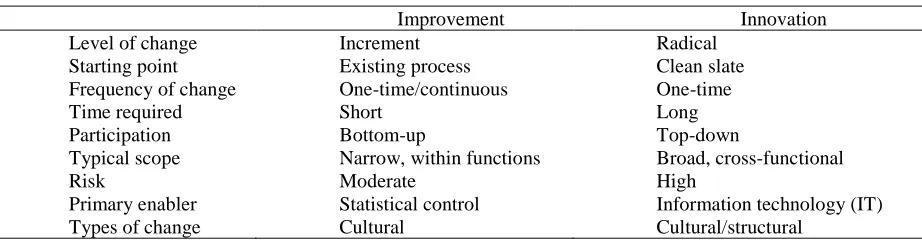
innovation might be perceived as process improvement, but Davenport sought to highlight the
variances by emphasizing the difference between process improvement and process innovation
Table 2 Davenport’s Process Improvement Versus Process Innovation
Improvement Innovation
Level of change Increment Radical
Starting point Existing process Clean slate
Frequency of change One-time/continuous One-time
Time required Short Long
Participation Bottom-up Top-down
Typical scope Narrow, within functions Broad, cross-functional
Risk Moderate High
Primary enabler Statistical control Information technology (IT)
Types of change Cultural Cultural/structural
Davenport (1993) noted that process innovation is a “top-down” (p. 12) decision. This
approach was relevant to the current study because the board of directors, practice manager, and
clinic manager at the clinic were instrumental in exploring the implementation of eligibility
screening as a radical approach to find ways to improve the financial status of the clinic.
Davenport (1993) identified five steps in the innovation process (see Figure 1):
1. Identify the process for innovation by observing what is currently occurring.
2. Identify change enablers such as IT.
3. Develop a business vision and process objectives.
4. Understand and improve existing processes.
5. Develop and prototype new processes.
[image:26.612.189.311.498.689.2]Eligibility screening is a new, one-time plan that is broad in scope and will impact
various staff members of the clinic. Davenport (1993) suggested that ideas to support initiatives
should be solicited from all workers to ensure their support. The organizational chart in Figure 2
shows the structure of the clinic and the proximity of the leaders to the frontline staff as this
[image:27.612.156.487.230.555.2]rapid, broad, and cross-functional process innovation occurs.
Figure 2 Organizational chart of the community clinic.
Staff members who might be affected by the change (highlighted by the dotted lines in
Figure 2) are the nurse practitioners, front office employees, volunteers, volunteer coordinator,
clinic manager, accounting personnel, and practice manager. This shows a likely cultural change
and possibly a structural change. The change might result in an IT component that could affect
cultural and structural aspects of the operation of the clinic because of opposition from or Board of
Directors-(volunteers)
Executive Director:-(paid podition)
Practice Manager (vacant)-Paid
position
Clinic Manager-(paid position):
Front Office: 2 employees;-(paid
positions) 2 Volunteers
Providers: Physicians 3 PT Nurse
Practitioners;-(paid positions) 4 Volunteer NPs;
1 Volunteer PA
apprehension of staff to the changes. Figure 3 illustrates the adapted visual representation of the
process innovation approach of the community clinic. The leadership team suggested that
eligibility screening could be implemented by using a change enabler, a concise spreadsheet that
[image:28.612.203.428.206.433.2]could be used as a tool to expedite the screening process to meet the objectives.
Figure 3 Davenport’s high-level approach to process innovation with adaptation of Davenport’s model of process of innovation.
The objectives of eligibility screening are to evaluate patients for their ability to pay for
clinical services and then evaluate the financial repercussions for the clinic regarding its viability
and sustainability from the revenue generated. In addition, evaluating the impact of eligibility
screening on improving efficiency at the clinic and assessing employees’ perceptions of the
implementation will be undertaken. A thorough understanding of the current process must be
undertaken as “understanding existing processes facilitates communication among participants”
(Davenport, 1993, p. 137) and communication is essential to the development of the new process
Eligibility screening implementation
Create information technology - spread sheet
Process Objectives:
Improve financial viability
Understand existing process
because “the success or failure of the effort will turn on the particular people who are gathered
together” (Davenport, 1993, p. 153).
II.3 Research Question
Based on the previously mentioned discussion and drawing from Davenport (1993), the
study was guided by one research question (RQ): How does one community clinic implement a
process innovation that requires cultural and structural shifts to obtain and sustain financial
III METHODOLOGY
A single-case approach was used to study the implementation process and impact of
eligibility screening. Several sources were used to obtain the data: (a) An audit of the clinic’s
financial data for 2 months preimplementation of eligibility screening was compared to financial
data of office visit-patient paid on the clinic’s financial report sheet for 3 months, and
(b) semistructured interviews of key personnel at the clinic. The interviews were recorded
and then transcribed for analysis (see Appendix C).
In addition, the researcher documented the changes through field notes as a participant
observer while also helping to formalize the changes and their implementation with the intended
outcome of assessing the financial stability and operational efficiencies that ensued. Schensul,
Schensul, and LeCompte (1999) defined participant observation as “the process of learning
through exposure to or involvement in the day-to-day or routine activities of participants in the
researcher setting” (p. 91). The researcher was privy to the day-to-day activities of the clinic.
As a participant observant, the researcher obtained vital information from the day-to-day
interactions because of the desire to know and understand the implications of eligibility
screening and the impact that the change might have on this clinic.
III.1 Case Study
The focus of this case study was a single community health clinic. Yin (2014) posited
that case study research might “contribute to our knowledge of the individual, group,
organizational, social, political, and related phenomena” (p. 4). This research might contribute to
such aspects as practice, area of concern, and literature. Yin also defined case study as a
“pragmatic examination that explores real spectacle, especially those without prescribed
margins” (p. 16). This study was an “opportunity to observe and analyze” (Yin, 2014, p. 52) a
grounded in a real-world environment that has no boundaries between “phenomenon and
context” (Yin, 2014, p. 16).
III.2 Clinic Setting
The study was conducted in a small community clinic in northwestern Georgia. Cherokee
County has a population of more than 200,000 people. Males comprise more than 49% of the
population; females comprise 51%. The demographics of the county are as follows: 0.49%
citizens are American Indian/Native Alaskan, 2% Asian American, 2% Multiracial/ Hawaiian,
6% Black/African American, and 89% European American. Based on the community assessment
completed by the GDPH (2017), the top six health concerns are heart disease, cancer, mental
health, respiratory disease, stroke, and hypertension.
III.3 Data Collection, Sample, and Analysis
Two months of preimplementation financial data were collected from March 2017 to
April 2017 and compared to data from May to July 2017. The clinic has 39 individuals, including
volunteers, who work/volunteer at any given time. Of the 39 participants, only 18 volunteers
were actively participating in any activities at the clinic; the other 13 individuals volunteered
sporadically and were difficult to contact. Therefore, 26 individuals were recruited for the study,
and 11 individuals agreed to be interviewed. Four of the 11 individuals were volunteers, and
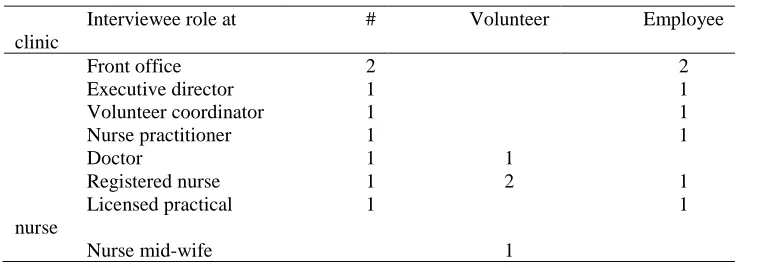
seven were employees. Table 3 shows that two front office staff, one executive director, one
volunteer coordinator, one nurse practitioner, one volunteer doctor, one registered nurse, one
licensed practical nurse, two volunteer registered nurses, and one volunteer nurse midwife were
Table 3 Composition of Study Sample
Interviewee role at clinic
# Volunteer Employee
Front office 2 2
Executive director 1 1
Volunteer coordinator 1 1
Nurse practitioner 1 1
Doctor 1 1
Registered nurse 1 2 1
Licensed practical nurse
1 1
Nurse mid-wife 1
This researcher reviewed all transcriptions for themes by looking for main or similar
comments in the various responses and color coding similar comments, as suggested by Ryan
and Bernard (2003). Use of the wordlist concept highlighted by Ryan and Bernard involved
creating a list and then counting the number of times that words or similar words were apparent.
This protocol was followed by creating and coding categories that held common themes. Themes
were reviewed, defined, and coded for agreement. The final process involved using examples to
highlight the themes.
Two other individuals collaborated by individually reviewing and coding the
transcriptions for categories and themes from the same material (see Appendix D). The reliability
of the findings was established using Fleiss’s Kappa. Fleiss (1971) explained that the kappa
considers the “measurement of agreement between any constant numbers of raters where there is
no relationship between the raters judging the various subjects” (p. 378). Zapf, Castell,
Morawietz, and Karch (2016) explored the best statistical assessment tool for interrater reliability
in different situations. After comparing Fleiss’s Kappa with Krippendorff’s alpha, Zapf et al.
determined that because both coefficients offered flexibility, they were capable of managing two
or more raters and categories. However, Zapf et al. recommended that Krippendorff’s alpha be
used whenever data are missing or high nominal data are used. Consequently, Fleiss Kappa
moderate. The calculated Kappa showed a moderate agreement of κ = 0.50 and a 78% agreement
[image:33.612.145.484.101.308.2](Landis & Koch, 1977; see Table 4).
Table 4 Fleiss’s Kappa
N coders: 3 N cases: 19 N decisions: 57
Fleiss’s kappa Observed agreement Expected agreement
0.5 0.789 0.579
The data were then imported into NVivo for further analysis. Each line of each interview
transcription was manually read and coded to 27 node titles (see Appendix E) to correspond with
the interview guide questions. In this study, categories had multiple meanings, and content was
coded to multiple nodes when relevant because of the nature of responses from a single interview
with meaning in more than one category. Five parent nodes were created as broader content
themes:
1. Q01-Q02. Clinical Role Position Balance.
2. Q03-Q06. Objective - Eligibility Screening.
3. Q07-Q12. Implementation - Eligibility Screening.
4. Q13-Q16. Challenges and suggestions.
5. Q17. Anything else.
Twenty-seven nodes with subcategories were moved to become subcategory nodes under
the five parent nodes. The result was five parent nodes and 159 subcategories. Coding reports
were retrieved and compiled from this node structure. In general, the coding strategy was to
node possible. The researcher coded for context and was able to capture more content than might
have been necessary. This process saved time having to look for context when the final analysis
was made from the reports. There are many ways to interpret data, and coding is a subjective, not
exhaustive, process. In this study, categories had multiple meanings, so the content was coded as
multiple nodes when relevant.
Initially, the researcher presumed that each interview would last 45 to 60 minutes because
of the number of questions presented; however, each interview lasted only an average of 15
minutes because some of the interviewees did not respond to all questions. Examples of some of
the interview items follow: “What was the objective(s) of eligibility screening?” “Please describe
the process before the eligibility screening.” and “What impact has the eligibility screening had
on staffing?”
The interview responses reflected the efficiency and satisfaction indicators; the field data
informed the other data. At the time of the study, health care staff at the clinic saw approximately
20 new patients each week, for a total of 160 individuals over 8 weeks. Six eligibility screening
specialists randomly completed the eligibility screening each week, and this researcher collected
IV FINDINGS
Execution of the eligibility screening and sliding scale payment implementation process
was fluid and new to the clinic, making the collection of data challenging. Therefore, a time line
with three phases (see Figure 4) was used to highlight the participant observations made by this
researcher throughout the study. Phase I comprised the 2-hour training session and subsequent
meetings, Phase II involved creation of the tool for the sliding scale assessment and the
implementation process, and Phase III was the advancement in tool usage and interviews for post
[image:35.612.107.492.291.595.2]hoc assessment of the implementation.
IV.1 Observations
IV.1.1 Phase I
The initial event was the training session for the eligibility specialist. It began with five
individuals in attendance. Two of the attendees were volunteer registered nurses, one of whom
attended the training via conference call. The other attendees were the volunteer coordinator,
practice manager, and the presenter. The clinical manager was invited to attend the discussion
after the training session because she had already been trained.
The training, which was 2 hours long, was completed in person by the presenter from the
GDPH, but there also was an option to have the training completed over the telephone. The
presenter provided handouts for the training session, and the same information was transmitted
electronically to the attendee on the telephone. The presenter proceeded to discuss the handout. It
should be noted that the material for the training session was not available prior to the meeting
because of government regulations requiring that it had to be distributed the day of the training.
One observation made at the time of the training involved the training material. Although
the information was important, it was noted that there was no succinct way to gather the data
from the material. For example, it is expected that staff collect information such as (a) marital
status of the patient, (b) number of dependents, and (c) family income from earned and unearned
sources (might be acknowledge from various sources).
However, where does one document the information collected? How could one
consistently manage the process so that all staff could become familiar with the information that
is needed to implement eligibility screening and sliding scale payments? After the initial session,
another meeting was convened with the clinical manager about the appropriate date and time to
begin implementation of the new process, parties who might be involved, ways to introduce the
Appropriate date and time. The group discussed the appropriate date and time to begin
the eligibility screening and sliding scale payment implementation. They stressed the importance
and urgency of the implementation, and they wanted to move forward as quickly as possible.
Therefore, it was agreed that the test run and go-live date would be within 2 weeks of the
training session. The front office staff had to be notified quickly about the changes because the
process would significantly impact them. The clinical manager and this researcher were tasked
with meeting staff, educating them, and seeking input.
Other decisions included that only new patients to the clinic would serve as the starting
point of the initiative, a test run should be completed prior to the actual go-live date to ascertain
areas of opportunities. In addition, it was agreed that patients would be asked to come in the day
before their appointments so that all paperwork could be checked and screening completed.
However, when this approach was attempted in the test run session, three patients cancelled their
appointments. Therefore, it was decided by the clinical manager that the patients would come in
1 hour earlier than their appointments to complete the procedure.
Parties involved. Considering the role of the front office staff and the decision that they
should be informed about the screening and sliding scale payments first, it is important to
highlight the multiple contacts that they would have in the execution of the implementation
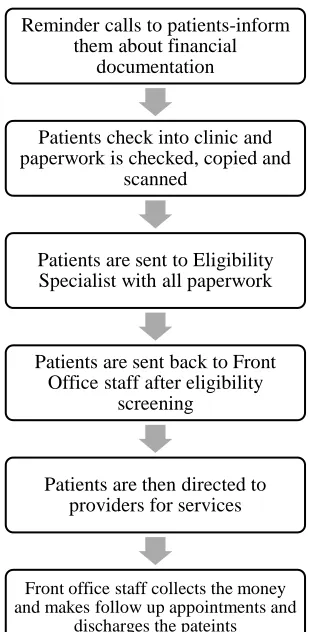
strategy. Figure 5 highlights the multiple contacts that they were responsible for and any missing
parts that might have been crucial to the financial outcome of the clinic. They were responsible
for calling the patients prior to their coming into the office, they were the first point of contact
when the patients came into the clinic, they ensured that the necessary documents were available
and appropriately completed, and they also directed the patients to the eligibility specialist and
Figure 5 Current workflow of front office staff.
Initiative introduction. Seeing the importance of and reliance that this researcher would
have on the front office staff, the researcher met with all the front office staff to explain the
intentions of the clinic and their role in the implementation process. They were offered the
opportunity to contribute to the development of the process innovation tool and to give feedback
and suggestions on ways to improve the tool and workflow. Davenport (1993) called this
approach “organizational prototyping” and highlighted that it was designed to “shape the
organizational environment or to revise the technology” (p. 156). Davenport noted that
prototyping is intended to excite and test new processes. Therefore, the sliding scale screening
and the payment evaluation were new processes with which the staff were very engaged and
were open to implementing and accepting the structural change in the workflow.
Reminder calls to patients-inform them about financial
documentation
Patients check into clinic and paperwork is checked, copied and
scanned
Patients are sent to Eligibility Specialist with all paperwork
Patients are sent back to Front Office staff after eligibility
screening
Patients are then directed to providers for services
Front office staff collects the money and makes follow up appointments and
Data collection tool and determination of sliding scale amounts. It was agreed that
creation of a spreadsheet would address the lack of tangible methods of collecting information
from the training material. The task of creating the Excel spreadsheet was given to this
researcher and became the genesis of this process innovation initiative. To complete
implementation of the screening, the payment schedule highlighting the dollar amount to be paid
based on income had to be decided.
The clinical manager and the executive director decided on the distribution of the
amounts for the sliding scale. This researcher was unable to ascertain how the amounts were
decided and was unable to determine if the amounts would impact the revenue significantly.
However, Phase II of the initiative began.
IV.1.2 Phase II
Conceptualization of the tools to be used to gather the data was shaped (see Table 5)
during the 2-week period, and esthetic changes were made based on this researcher’s
observation. Three iterations of the tool were required, feedback was solicited from each member
of staff, including staff who would be using it directly at each step of the process, and the final
Table 5 Example of Eligibility Screening Tool
The front office staff discovered that there had to be a discreet way to note the cost to the
patients, so that on their return to the front office, it would only be obvious to the staff. One staff
member suggested that a notation be made in the patients’ charts, and another staff member
created various price point indicators (see Appendix F) based on the fee schedule, along with
indicators to note that some patients also were receiving diabetes care.
During the test run, five decisions were made:
1. Location where the screening would occur.
2. Whether an interpreter would be in place.
3. Data collected.
4. Duration of the observation.
5. Financial observations.
Location where the screening occurred. It was decided that the ES would share a room,
which is directly behind the front office, with another staff member. The front office staff had
Community Clinic
FPL Amt paidGross Earned Income + Gross Unearned Income+ Total Family Income
Patient Name
Are you Married YES No
# Family Size18-21 (In college) including self
Gross Earned
Wages + tips (30 days/4 wks
2 Current W2 Y/N
2 Months cons ecuti ve checks
Wri tten notori zed l etter
Sepa ra ti on l etter
Self Employed Pay
Minus expenses, rent, utilities,advertising check if applicable
DK
-$
Bank Statement
La s t yea r's 1040
readily available access to the room because of the proximity to the front office. During
discussions on how patients’ assessments would occur, it was decided that patients would see the
ES first and then return to the front office. Although the room was convenient for the front office
staff, it was a challenge because of the potential for having patient privacy violated because both
providers needed to gather personal information from patients. This problem was solved
temporarily with an informal agreement that the staff would wait until the assessments were
completed before engaging with other patients and that a more convenient area would not be
determined until the clinic moved to the new location and would be addressed in Phase III during
the workflow.
Use of an interpreter. A significant number of patients were Spanish speaking, so
interpreting was challenging for this researcher. Even though the clinic had staff members who
could speak Spanish, it was difficult to have someone available to assist whenever needed.
Periodically, someone was available to assist, and the use of online translation tools was often
necessary. Since then, the clinic has recruited a volunteer whose responsibility is to serve as
translator. Another person fluent in Spanish was hired to assist with the screening, a decision that
represented structural change within the organization.
Data collected. It was decided to monitor the following indicators from the audit tool:
gender, ethnicity, race, county, insurance status, Medicaid status, insured or underinsured, FPL,
and amount to be paid for services. These indicators were chosen from the training material
given by Georgia and would provide the most vital information necessary to make informed
decisions for the clinic.
The decision to monitor all aspects of the screening indicators transpired because the
FPL highlights the number of patients who are at or below the FPL. In addition, gender,
ethnicity, race, county might be beneficial to leaders to be aware of the composition of their
patients. Patients who have insurance and Medicaid insurance cannot be seen at the clinic and are
asked to see their primary physicians.
Duration of the observation. The need to increase the revenue generated by the clinic
was immediate, so the decision was made to rapid cycle the screening process. Data were
collected for 3 months and compared to the financial data for the previous 2 months. The thought
was that the first month would be the period when areas of opportunities would be discovered
and addressed, and the other 2 months would have a hardwired process addressed by the
financial observations made.
Financial observations. To ensure that there would be an accurate indicator to measure
the financial impact of eligibility screening, an assessment of the financial information of the
clinic was gathered. It was agreed that office visits on the monthly financial statement would be
satisfactory. The accountant was asked to submit that information so that a concurrent
comparison could be made.
After all the relevant decisions were made, the go-live started on Week 2 with new
patients only. It was discovered that the patients were reluctant to bring their financial paperwork
in, sometimes because they were not sure about the required paperwork. In addition, as the
process advanced into all patients being screened, it was discovered that there were patients with
unique relationships that had to be addressed directly with providers. These patients were
temporarily exempted from the screening process.
It also was ascertained that conflicting information was being given to the staff, a
in their paperwork and were not seen by the ES, the front office staff were informing patients
that they could continue paying the flat fee of $45 until they provided the paperwork. This was
contrary to the goal of the initiative, because some patients were not willing to bring in their
paperwork, and the status quo would continue. After further discussions with the leaders, it was
decided that all patients would be seen by the ES, regardless of having or not having the required
paperwork. This decision made communication consistent.
One concern verbalized by staff was the need to have a consistent person who would be
able to complete the screening after the volunteers left or if someone had to take some time off.
Although seven individuals could complete the eligibility screening, the decision was made to
continue to recruit more staff trained in eligibility screening to ensure that someone would
always be available to complete the task as the screening process grew. However, the individuals
who were recruited as volunteers either were not able to volunteer enough time or resigned the
volunteer opportunity. Therefore, most of the screening was completed by this researcher until
another person could be recruited.
During this period, the practice manager and a volunteer who was recruited to assist with
the eligibility screening resigned. A few weeks later, the executive director and a front office
staff also resigned. Was the departure of staff a sign of burnout? Staff members expressed
concerns about the lack of staff, hours of operations, and uncertainty about the future of the
organization, but they were still willing to assume new roles and responsibilities to keep the
structural workflow element of the clinic intact.
The departures of staff might have affected the organizational structure because of the
reduced number of staff members available, but it did not appear to impact the workflow directly
coordinator also was willing to help in any capacity. Tavakoli (2010) suggested that
“organizational change may lead to distress and resistance” or “may produce eustress and
positive reactions” (p. 1795). Davenport (1993) noted that for an implementation to be
successful, leaders must manage behaviors and be sensitive to “employees’ attitudes and
perception” (p. 167). This type of leadership was demonstrated by the immediate leaders, who
were sensitive to staff concerns and were instrumental in moving the team forward by leading by
example. This leadership behavior was validated by Day et al. (2017), who asserted that
supervisory support and job control might be instrumental to reducing burnout.
IV.1.3 Phase III: Postdata Gathering and Report
During the study, one physical change was the sale of the building that accommodated
the clinic and the subsequent move to a new building. The sale and move created some anxiety
among the staff because they were not sure who would help to move the equipment and whether
the clinic would remain open or expand its hours of operations. Meetings were held with staff to
discuss the move and to allay their concerns; however, the situation was still turbulent because
sufficient people were not present to assist with logistics. Staff also expressed concerns about the
future of the clinic during the meetings.
Also in this phase, advancing the use of the screening tool to electronic format was
attempted. However, it became difficult to complete because on the day that it was attempted,
there was a high volume of patients, many of whom bought their paperwork, precipitating the
need to process the patients quickly for the providers. Therefore, electronic usage of the tool was
postponed until an alternative approach could be considered or retried, but it was never advanced
because of Internet connectivity issues experienced after the move to the new building. In
With the physical move of the clinic, the layout of the clinic was reconfigured, so an
alternative approach to screening patients using the eligibility screening tool was attempted.
Figure 6 shows the approach that was attempted after the move to the new clinic area and
underlined the immediate screening of patients at point of entry versus the prior approach of
[image:45.612.118.461.208.439.2]sending patients to another area after entering the clinic.
Figure 6 Proposed workflow postimplementation.
The process was very quick and had the potential to improve efficiencies; however, there
was the likelihood of having privacy violations because personal information was communicated
while other patients were in the waiting area. Therefore, the patients were asked to go behind an
enclosed area of the front office (point of entry) to complete the screening, which would give
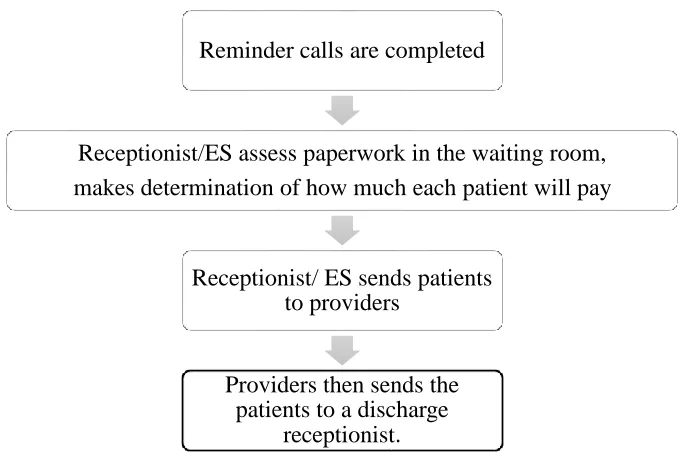
them privacy. Figure 7 is the final workflow that underscored the eligibility screening being
completed on admission in a private area, not the waiting room, while still making the workflow
efficient.
Reminder calls are completed
Receptionist/ES assess paperwork in the waiting room, makes determination of how much each patient will pay
Receptionist/ ES sends patients to providers
Providers then sends the patients to a discharge
Figure 7 Final workflow for the clinic.
Note. *Change in location of screening from waiting area to front office.
Because of the many components involved in this case study secondary to the creation of
an assessment tool, implementation of the sliding scale payment, relocation of the clinic, and the
loss of staff, it was important to ascertain staff feedback on the process, the tool, the workflow,
and the challenges. Therefore, feedback from practitioners, staff, and volunteers was
instrumental in providing insight into staff perceptions. Consequently, an assessment of staff
opinion of the changes was analyzed using an interview instrument adapted from the
TransforMed Practice Interview Guide (Jaén et al., 2010).
IV.2 Interview Responses
Eleven staff and volunteers participated in the interviews, with each interview lasting
approximately 15 minutes. Four of the interviewees were volunteers, and seven were employees.
The participants were encouraged to share their observations of the eligibility screening and Reminder call are
completed
Receptionist/ES determines amount in the office*
Receptionist/ES sends patients to providers
sliding scale implementation process. Four themes emerged as the interviewees expressed their
views, and excerpts from the replies are offered to validate the indicators:
• Process comprehension.
• Impact of cultural and structural change.
• Teamwork-collaboration.
• Financials.
The clinic environment was small, so to better understand the themes, demographic
information is discussed first because it informed the themes.
IV.2.1 Demographics
The results of the participants’ responses to clinical roles and position balance included
role at the clinic, length of time working at the clinic, knowledge of staff-to-nurse ratios, and
perceptions of how the ratios impacted their work. The length of time working at the clinic
ranged from 1.5 years to 3 years; the average length of volunteer time ranged from 5 months to 3
years. Five interviewees had previous roles at the clinic, and five had none; one person was a
volunteer who became employed by the clinic. In addition, five of the eight employees could
articulate the staff-to-volunteer ratio. This information is important to note because the
individuals who could accurately articulate the information were actively involved in the
day-to-day operations and the implementation, and they were fully aware of the needs of the clinic.
Four of the 11 interviewees verbalized that volunteers did not impact their work, but
seven felt that volunteers made an impact, highlighting that a significant number of interviewees
believed that having volunteers was impactful to the work being done. In addition, an equal
number of the interviewees were aware of the volunteer-to-staff ratio. Many of the
roles believed that volunteers impacted their work. They suggested that the clinic leadership
could increase the number of volunteers and hire more staff because the perception of the lack of
personnel might have contributed to the ability of the clinic to increase revenue. Further
discussions are presented as the themes emerged. The interviewees were identified numerically
as Interviewee 1 to Interviewee 11.
IV.2.2 Process Comprehension
Kotter (1995) suggested that organization are not very good at making changes;
therefore, the use of Kotter’s eight errors in organizations was interwoven into the interview
analysis as a method of analyzing any observed organizational changes. Thus, the interview
responses underscored that the majority of participants were aware of the objective and impact of
implementation process of the eligibility screening. The results in Table 6 are a combination of
responses to the questions, “What was the objective(s) of eligibility screening?” and “To what
extent do you believe that the objective of this initiative was met?”
All 11 individuals responded to these questions, and a significant number of them stated
that the screening was done to assess the patients on their economic status. The majority of the
interviewees mentioned that the screening was done for financial gain. Their responses supported
three of Kotter’s (1995) eight errors. Errors 1, 3, and 4 (1: establishing a sense of urgency, 3:
creating a vision, and 4: communicating the vision) created a sense of urgency regarding
financial deficits by encouraging members of the organization to be aware of the vision of the
organization and to articulate such vision easily. It was evident that most respondents were aware
of the objectives, so they were able to easily articulate the objectives of screening while offering
Interviewee 3 stated that the screening was done “to identify patients who truly were
struggling to afford an office visit cost because of their current income level.”
Interviewee 4 stated that“the objective was to try to help more patients below the family
[image:49.612.75.509.208.272.2]poverty line. They are not able to afford care and any hospital emergency room or urgent care.”
Table 6 Objectives of Eligibility Screening
Objective of eligibility screening 11 participants 100%
Sliding scale based on patient economic status Do not know
8 3
73% 27% Extent objective was met
Did not know
7 4
64% 36%
Interviewee 11 summarized that the innovation was completed“to identify a reasonable
and affordable dollar amount that each patient can afford to contribute for care provided. Also,
how would this impact the financial status of the clinic.”
The majority of the interviewees believed that the objectives were met and thought that it
was successful. Interviewee 3 emphatically felt that the objective was “100%, it was met. We
now have a really good understanding of patients that come through this door...” In addition,
although she perceived that identifying the patient population who were receiving care was a
successful outcome, she also felt “that opens up a whole other set of challenges.”
When Interviewee 3 was asked to explain that statement, the response was, “It’s more of
a challenge for supportive staff, meaning admin, I guess if you want to call it that, to make up
those funds from the community in terms of donors, in terms of grants, but I wouldn't trade it.”
Interviewee 3 discussed the challenges to staffing and funding as other areas of concern.
Consequently, these challenges were further explored in this research, along with garnering