WRL
Technical Note TN-15
Limits of
Instruction-Level
Parallelism
was founded by Digital Equipment Corporation in 1982. Our focus is computer science research relevant to the design and application of high performance scientific computers. We test our ideas by designing, building, and using real systems. The systems we build are research prototypes; they are not intended to become products.
There is a second research laboratory located in Palo Alto, the Systems Research Cen-ter (SRC). Other Digital research groups are located in Paris (PRL) and in Cambridge, Massachusetts (CRL).
Our research is directed towards mainstream high-performance computer systems. Our prototypes are intended to foreshadow the future computing environments used by many Digital customers. The long-term goal of WRL is to aid and accelerate the development of high-performance uni- and multi-processors. The research projects within WRL will address various aspects of high-performance computing.
We believe that significant advances in computer systems do not come from any single technological advance. Technologies, both hardware and software, do not all advance at the same pace. System design is the art of composing systems which use each level of technology in an appropriate balance. A major advance in overall system performance will require reexamination of all aspects of the system.
We do work in the design, fabrication and packaging of hardware; language processing and scaling issues in system software design; and the exploration of new applications areas that are opening up with the advent of higher performance systems. Researchers at WRL cooperate closely and move freely among the various levels of system design. This allows us to explore a wide range of tradeoffs to meet system goals.
We publish the results of our work in a variety of journals, conferences, research reports, and technical notes. This document is a technical note. We use this form for rapid distribution of technical material. Usually this represents research in progress. Research reports are normally accounts of completed research and may include material from earlier technical notes.
Research reports and technical notes may be ordered from us. You may mail your order to:
Technical Report Distribution
DEC Western Research Laboratory, UCO-4 100 Hamilton Avenue
Palo Alto, California 94301 USA
Reports and notes may also be ordered by electronic mail. Use one of the following addresses:
Digital E-net: DECWRL::WRL-TECHREPORTS
DARPA Internet: [email protected]
CSnet: [email protected]
UUCP: decwrl!wrl-techreports
David W. Wall
December, 1990
1. Introduction
There is growing interest in machines that exploit, usually with compiler assis-tance, the parallelism that programs have at the instruction level. Figure 1 shows an example of this parallelism. The code fragment in 1(a) consists of three instructions that can be executed at the same time, because they do not depend on each other’s results. The code fragment in 1(b) does have dependencies, and so cannot be executed in parallel. In each case, the parallelism is the number of instructions divided by the number of cycles required.
r1 := 0[r9] r1 := 0[r9]
r2 := 17 r2 := r1 + 17
4[r3] := r6 4[r2] := r6
(a) parallelism=3 (b) parallelism=1
Figure 1. Instruction-level parallelism (and lack thereof).
Architectures to take advantage of this kind of parallelism have been proposed. A superscalar machine [1] is one that can issue multiple independent instructions in the same cycle. A superpipelined machine [7] issues one instruction per cycle, but the cycle time is set much less than the typical instruction latency. A VLIW machine [11] is like a superscalar machine, except the parallel instructions must be explicitly packed
333333333333333
by the compiler into very long instruction words.
But how much parallelism is there to exploit? Popular wisdom, supported by a few studies [7,13,14], suggests that parallelism within a basic block rarely exceeds 3 or 4 on the average. Peak parallelism can be higher, especially for some kinds of numeric programs, but the payoff of high peak parallelism is low if the average is still small.
These limits are troublesome. Many machines already have some degree of pipe-lining, as reflected in operations with latencies of multiple cycles. We can compute the degree of pipelining by multiplying the latency of each operation by its dynamic fre-quency in typical programs; for the DECStation 5000,* load latencies, delayed branches, and floating-point latencies give the machine a degree of pipelining equal to about 1.5. Adding a superscalar capability to a machine with some pipelining is beneficial only if there is more parallelism available than the pipelining already exploits.
To increase the instruction-level parallelism that the hardware can exploit, people have explored a variety of techniques. These fall roughly into two categories. One category includes techniques for increasing the parallelism within a basic block, the other for using parallelism across several basic blocks. These techniques often interact in a way that has not been adequately explored. We would like to bound the effectiveness of a technique whether it is used in combination with impossibly good companion techniques, or with none. A general approach is therefore needed. In this paper, we will describe our use of trace-driven simulation to study the importance of register renaming, branch and jump prediction, and alias analysis. In each case we can model a range of possibilities from perfect to non-existent.
We will begin with a survey of ambitious techniques for increasing the exploitable instruction-level parallelism of programs.
1.1. Increasing parallelism within blocks.
Parallelism within a basic block is limited by dependencies between pairs of instructions. Some of these dependencies are real, reflecting the flow of data in the pro-gram. Others are false dependencies, accidents of the code generation or results of our lack of precise knowledge about the flow of data.
Allocating registers assuming a traditional scalar architecture can lead to a false dependency on a register. In the code sequence
r1 := 0[r9] r2 := r1 + 1 r1 := 9
we must do the second and third instructions in that order, because the third changes the value of r1. However, if the compiler had used r3 instead of r1 in the third instruc-tion, these two instructions would be independent.
333333333333333
*
A smart compiler might pay attention to its allocation of registers, so as to maxim-ize the opportunities for parallelism. Current compilers often do not, preferring instead to reuse registers as often as possible so that the number of registers needed is minim-ized.
An alternative is the hardware solution of register renaming, in which the hardware imposes a level of indirection between the register number appearing in the instruction and the actual register used. Each time an instruction sets a register, the hardware selects an actual register to use for as long as that value is needed. In a sense the hardware does the register allocation dynamically, which can give better results than the compiler’s static allocation, even if the compiler did it as well as it could. In addi-tion, register renaming allows the hardware to include more registers than will fit in the instruction format, further reducing false dependencies. Unfortunately, register renam-ing can also lengthen the machine pipeline, thereby increasrenam-ing the branch penalties of the machine, but we are concerned here only with its effects on parallelism.
False dependencies can also involve memory. We assume that memory locations have meaning to the programmer that registers do not, and hence that hardware renam-ing of memory locations is not desirable. However, we may still have to make conser-vative assumptions that lead to false dependencies on memory. For example, in the code sequence
r1 := 0[r9] 4[r16] := r3
we may have no way of knowing whether the memory locations referenced in the load and store are the same. If they are the same, then there is a dependency between these two instructions: we cannot store a new value until we have fetched the old. If they are different, there is no dependency. Alias analysis can help a compiler decide when two memory references are independent, but even that is imprecise; sometimes we must assume the worst. Hardware can resolve the question at run-time by determining the actual addresses referenced, but this may be too late to affect parallelism decisions. If the compiler or hardware are not sure the locations are different, we must assume con-servatively that they are the same.
1.2. Crossing block boundaries.
The number of instructions between branches is usually quite small, often averag-ing less than 6. If we want large parallelism, we must be able to issue instructions from different basic blocks in parallel. But this means we must know in advance whether a conditional branch will be taken, or else we must cope with the possibility that we do not know.
loops, whose branch is usually taken but not always. Two branches that map to the same table entry interfere with each other; no ‘‘key’’ identifies the owner of the entry. A good initial value for table entries is 2, just barely predicting that each branch will be taken.
Branch prediction is often used to keep a pipeline full: we fetch and decode instructions after a branch while we are executing the branch and the instructions before it. To use branch prediction to increase parallel execution, we must be able to execute instructions across an unknown branch speculatively. This may involve maintaining shadow registers, whose values are not committed until we are sure we have correctly predicted the branch. It may involve being selective about the instructions we choose: we may not be willing to execute memory stores speculatively, for example. Some of this may be put partly under compiler control by designing an instruction set with explicitly squashable instructions. Each squashable instruction would be tied explicitly to a condition evaluated in another instruction, and would be squashed by the hardware if the condition turns out to be false.
Rather than try to predict the destinations of branches, we might speculatively exe-cute instructions along both possible paths, squashing the wrong path when we know which it is. Some of our parallelism capability is guaranteed to be wasted, but we will never miss out by taking the wrong path. Unfortunately, branches happen quite often in normal code, so for large degrees of parallelism we may encounter another branch before we have resolved the previous one. A real architecture may have limits on the amount of fanout we can tolerate before we must assume that new branches are not explored in parallel.
Many architectures have two or three kinds of instructions to change the flow of control. Branches are conditional and have a destination some specified offset from the PC. Jumps are unconditional, and may be either direct or indirect. A direct jump is one whose destination is given explicitly in the instruction, while an indirect jump is one whose destination is expressed as an address computation involving a register. In principle we can know the destination of a direct jump well in advance. The same is true of a branch, assuming we know how its condition will turn out. The destination of an indirect jump, however, may require us to wait until the address computation is pos-sible. Little work has been done on predicting the destinations of indirect jumps, but it might pay off in instruction-level parallelism. This paper considers a very simple (and, it turns out, fairly accurate) jump prediction scheme. A table is maintained of destina-tion addresses. The address of a jump provides the index into this table. Whenever we execute an indirect jump, we put its address in the table entry for the jump. We predict that an indirect jump will be to the address in its table entry. As with branch predic-tion, we do not prevent two jumps from mapping to the same table entry and interfering with each other.
Software pipelining [8] is a compiler technique for moving instructions across branches to increase parallelism. It analyzes the dependencies in a loop body, looking for ways to increase parallelism by moving instructions from one iteration into a previ-ous or later iteration. This way the dependencies within one iteration can be stretched out across several, effectively executing several iterations in parallel without the code expansion of unrolling.
Trace scheduling [4] was developed for VLIW machines, where global scheduling by the compiler is needed to exploit the parallelism of the long instruction words. It uses a profile to find a trace (a sequence of blocks that are executed often), and schedules the instructions for these blocks as a whole. In effect, trace scheduling predicts a branch statically, based on the profile. To cope with occasions when this prediction fails, code is inserted outside the sequence of blocks to correct the state of registers and memory whenever we enter or leave the sequence unexpectedly. This added code may itself be scheduled as part of a later and less heavily executed trace.
2. This and previous work.
To better understand this bewildering array of techniques, we have built a simple system for scheduling instructions produced by an instruction trace. Our system allows us to assume various kinds of branch and jump prediction, alias analysis, and register renaming. In each case the option ranges from perfect, which could not be imple-mented in reality, to non-existent. It is important to consider the full range in order to bound the effectiveness of the various techniques. For example, it is useful to ask how well a realistic branch prediction scheme could work even with impossibly good alias analysis and register renaming.
This is in contrast to the 1989 study of Jouppi and Wall [7], which worked by scheduling static program executables rather than dynamic instruction traces. Since their compiler did scheduling only within basic blocks, they did not consider more ambitious scheduling.
The methodology of our paper is more like that of Tjaden and Flynn [14], which also scheduled instructions from a dynamic trace. Like Jouppi and Wall, however, Tjaden and Flynn did not move instructions across branches. Their results were similar to those of Jouppi and Wall, with parallelism rarely above 3, even though the two stu-dies assumed quite different architectures.
Nicolau and Fisher’s trace-driven study [11] of the effectiveness of trace schedul-ing was more liberal, assumschedul-ing perfect branch prediction and perfect alias analysis. However, they did not consider more realistic assumptions, arguing instead that they were interested primarily in programs for which realistic implementations would be close to perfect.
We believe our study can provide useful bounds on the behavior not only of hardware techniques like branch prediction and register renaming, but also of compiler techniques like software pipelining and trace scheduling. Unfortunately, we could think of no good way to model loop unrolling. Register renumbering can cause much of the computation in a loop to migrate backward toward the beginning of the loop, providing opportunities for parallelism much like those presented by unrolling. Much of the com-putation, however, like the repeated incrementing of the loop index, is inherently sequential. We address loop unrolling in an admittedly unsatisfying manner, by unrol-ling the loops of some numerical programs by hand and comparing the results to those of the normal versions.
3. Our experimental framework.
To explore the parallelism available in a particular program, we execute the pro-gram to produce a trace of the instructions executed. This trace also includes data addresses referenced, and the results of branches and jumps. A greedy algorithm packs these instructions into a sequence of pending cycles.
In packing instructions into cycles, we assume that any cycle may contain as many as 64 instructions in parallel. We further assume no limits on replicated functional units or ports to registers or memory: all 64 instructions may be multiplies, or even loads. We assume that every operation has a latency of one cycle, so the result of an operation executed in cycle N can be used by an instruction executed in cycle N+1. This includes memory references: we assume there are no cache misses.
We pack the instructions from the trace into cycles as follows. For each instruc-tion in the trace, we start at the end of the cycle sequence, representing the latest pend-ing cycle, and move earlier in the sequence until we find a conflict with the new instruction. Whether a conflict exists depends on the precise model we are considering. If the conflict is a false dependency (in models allowing them), we assume that we can put the instruction in that cycle but no farther back. Otherwise we assume that we can-not put the instruction in that cycle, but we can put it in the cycle that follows. If the correct cycle is full, we put the instruction in the next non-full cycle. If we cannot put the instruction in any pending cycle, we start a new pending cycle at the end of the sequence.
As we add more and more cycles, the sequence gets longer. We assume that hardware and software techniques will have some limit on how many instructions they will consider at once. When the total number of instructions in the sequence of pend-ing cycles reaches this limit, we remove the first cycle from the sequence, whether it is full of instructions or not. This corresponds to retiring the cycle’s instructions from the scheduler, and passing them on to be executed.
3.1. Parameters.
We can do three kinds of register renaming: perfect, finite, and none. For perfect renaming, we assume that there are an infinite number of registers, so that no false register dependencies occur. For finite renaming, we assume a finite register set dynamically allocated using an LRU discipline: when we need a new register we select the register whose most recent use (measured in cycles rather than in instruction count) is earliest. Finite renaming is normally done with 256 integer registers and 256 floating-point registers. It is also interesting to see what happens when we reduce this to 64 or even 32, the number on our base machine. To simulate no renaming, we sim-ply use the registers specified in the code; this is of course highly dependent on the register strategy of the compiler we use.
We can assume several degrees of branch prediction. One extreme is perfect pred-iction: we assume that all branches are correctly predicted. Next we can assume a two-bit prediction scheme as described before. The two-bit scheme can be either infinite, with a table big enough that two different branches never have the same table entry, or finite, with a table of 2048 entries. To model trace scheduling, we can also assume static branch prediction based on a profile from an identical run; in this case we predict that a branch will always go the way that it goes most frequently. And finally, we can assume that no branch prediction occurs; this is the same as assuming that every branch is predicted wrong.
The same choices are available for jump prediction. We can assume that indirect jumps are perfectly predicted. We can assume infinite or finite hardware prediction as described above (predicting that a jump will go where it went last time). We can assume static prediction based on a profile. And we can assume no prediction. In any case we are concerned only with indirect jumps; we assume that direct jumps are always predicted correctly.
The effect of branch and jump prediction on scheduling is easy to state. Correctly predicted branches and jumps have no effect on scheduling (except for register depen-dencies involving their operands). Instructions on opposite sides of an incorrectly predicted branch or jump, however, always conflict. Another way to think of this is that the sequence of pending cycles is flushed whenever an incorrect prediction is made. Note that we generally assume no other penalty for failure. This assumption is optimis-tic; in most real architectures, a failed prediction causes a bubble in the pipeline, result-ing in one or more cycles in which no execution whatsoever can occur. We will return to this topic later.
We can also allow instructions to move past a certain number of incorrectly predicted branches. This corresponds to architectures that speculatively execute instruc-tions from both possible paths, up to a certain fanout limit. None of the experiments described here involved this ability.
these two extremes would be alias analysis as a smart vectorizing compiler might do it. We don’t have such a compiler, but we have implemented two intermediate schemes that may give us some insight.
One intermediate scheme is alias by instruction inspection. This is a common technique in compile-time instruction-level code schedulers. We look at the two instructions to see if it is obvious that they are independent; the two ways this might happen are shown in Figure 2.
r1 := 0[r9] r1 := 0[fp] 4[r9] := r2 0[gp] := r2
(a) (b)
Figure 2. Alias analysis by inspection.
The two instructions in 2(a) cannot conflict, because they use the same base register but different displacements. The two instructions in 2(b) cannot conflict, because one is manifestly a reference to the stack and the other is manifestly a reference to the global data area.
The other intermediate scheme is called alias analysis by compiler even though our own compiler doesn’t do it. Under this model, we assume perfect analysis of stack and global references, regardless of which registers are used to make them. A store to an address on the stack conflicts only with a load or store to the same address. Heap references, on the other hand, are resolved by instruction inspection.
The idea behind our alias analysis by compiler is that references outside the heap can often be resolved by the compiler, by doing dataflow analysis and possibly by solv-ing diophantine equations over loop indexes, whereas heap references are often less tractable. Neither of these assumptions is particularly defensible. Many languages allow pointers into the stack and global areas, rendering them as difficult as the heap. Practical considerations such as separate compilation may also keep us from analyzing non-heap references perfectly. On the other side, even heap references are not as hope-less as this model assumes [2,6]. Neverthehope-less, our range of four alternatives provides some intuition about the effects of alias analysis on instruction-level parallelism.
dynamic
lines instructions remarks
22222222222222222222222222222222222222222222222222222222222222222222222222
Livermore 268 22294030 Livermore loops 1-14 Whetstones 462 24479634 Floating-point Linpack 814 174883597 Linear algebra [3] Stanford 1019 20759516 Hennessy’s suite [5]
22222222222222222222222222222222222222222222222222222222222222222222222222
sed 1751 1447717 Stream editor egrep 844 13910586 File search yacc 1856 30948883 Compiler-compiler metronome 4287 70235508 Timing verifier grr 5883 142980475 PCB router
eco 2721 26702439 Recursive tree comparison ccom 10142 18465797 C compiler front end
22222222222222222222222222222222222222222222222222222222222222222222222222
gcc1 83000 22745232 first pass of GNU C compiler, run on uexp.i espresso 12000 135317102 boolean function minimizer, run on opa.in li 7000 1247190509 Lisp interpreter, run on eight queens problem fpppp 2600 244124171 quantum chemistry benchmark, run on four atoms doduc 5200 284697827 hydrocode simulation, run on input.small
tomcatv 11 180 1986257545 vectorized mesh generation
[image:13.612.118.490.84.386.2]1 1 1 1 1 1 1 1 1 1 1 1 1 1 1 1 1 1 1 1 1 1 1 1 1 11 1 1 1 1 1 1 1 1 1 1 1 1 1 1 1 1 1 1 1 1 1 1 1 1 1
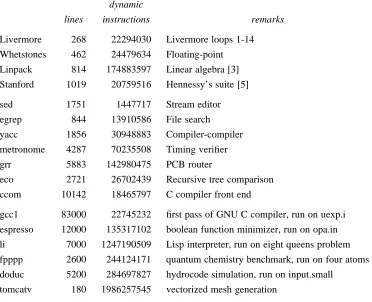
Figure 3. The seventeen test programs.
3.2. Programs measured.
As test cases we used four toy benchmarks, seven real programs used at WRL, and six SPEC benchmarks. These programs are shown in Figure 3. The SPEC benchmarks were run on accompanying test data, but the data was usually an official ‘‘short’’ data set rather than the reference data set. The programs were compiled for a DECStation 5000, which has a MIPS R3000* processor. The Mips version 1.31 compilers were used.
4. Results.
We ran these test programs for a wide range of configurations. The results we have are tabulated in the appendix, but we will extract some of them to show some interesting trends. To provide a framework for our exploration, we defined a series of five increasingly ambitious models spanning the possible range. These five are specified in Figure 4; the window size in each is 2K instructions. Many of the results we present will show the effects of variations on these standard models. Note that even the Fair model is quite ambitious.
333333333333333
*
branch jump reg alias
predict predict renaming analysis
2222222222222222222222222222222222222222222222
Stupid none none none none
2222222222222222222222222222222222222222222222
Fair infinite infinite 256 inspection
2222222222222222222222222222222222222222222222
Good infinite infinite 256 perfect
2222222222222222222222222222222222222222222222
Great infinite infinite perfect perfect
2222222222222222222222222222222222222222222222
Perfect perfect perfect perfect perfect
[image:14.612.167.441.67.187.2]222222222222222222222222222222222222222222222211 1 1 1 1 1 1
Figure 4. Five increasingly ambitious models.
b r a n c h e s j u m p s branch jump
infinite finite static infinite finite static freq freq
22222222222222222222222222222222222222222222222222222222222222222222222222
Linpack 96% 96% 95% 99% 99% 96% 3% 0.09%
Livermore 98% 98% 98% 19% 19% 77% 7% 0%
Stanford 90% 90% 89% 69% 69% 71% 16% 1.3%
Whetstones 90% 90% 92% 80% 80% 88% 7% 2.8%
22222222222222222222222222222222222222222222222222222222222222222222222222
sed 97% 97% 97% 96% 96% 97% 25% 1.3%
egrep 90% 90% 91% 98% 98% 98% 20% 0.09%
yacc 95% 95% 92% 75% 75% 71% 24% 0.5%
met 92% 92% 92% 77% 77% 65% 14% 2.1%
grr 85% 84% 82% 67% 66% 64% 13% 1.5%
eco 92% 92% 91% 47% 47% 56% 17% 2.3%
ccom 90% 90% 90% 55% 54% 64% 14% 2.2%
22222222222222222222222222222222222222222222222222222222222222222222222222
li 90% 90% 90% 56% 55% 70% 18% 3.7%
tomcatv 99% 99% 99% 58% 58% 72% 2% 0.002%
doduc 95% 95% 95% 39% 39% 62% 7% 0.9%
espresso 89% 89% 87% 65% 65% 53% 16% 0.5%
fpppp 92% 91% 88% 84% 84% 80% 1% 0.09%
gcc1 90% 89% 90% 55% 54% 60% 17% 1.6%
22222222222222222222222222222222222222222222222222222222222222222222222222
mean 11 92% 92% 92% 67% 67% 73% 13% 1.2%
1 1 1 1 1 1 1 1 1 1 1 1 1 1 1 1 1 1 1 1 1 1 1 1 1 1 1 11 1 1 1 1 1 1 1 1 1 1 1 1 1 1 1 1 1 1 1 1 1 1 1 1 1 1 1 11 1 1 1 1 1 1 1 1 1 1 1 1 1 1 1 1 1 1 1 1 1 1 1 1 1 1 1
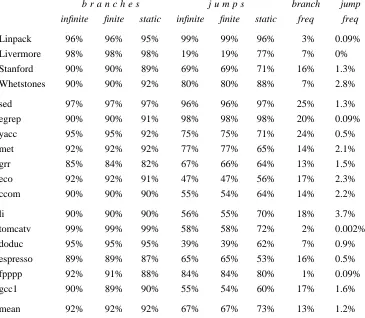
Figure 5. Success rates of branch and jump prediction.
4.1. Branch and jump prediction.
[image:14.612.120.485.221.539.2]Stupid0 Fair Good Great Perfect 64 2 4 6 8 10 12 14 16 18 20 22 24 26 28 30 32 34 36 38 40 42 44 46 48 50 52 54 56 58 60 62 parallelism ccom doduc eco egrep espresso fpppp gcc grr li Linpack Livermore metronome sed Stanford tomcatv Whetstones yacc
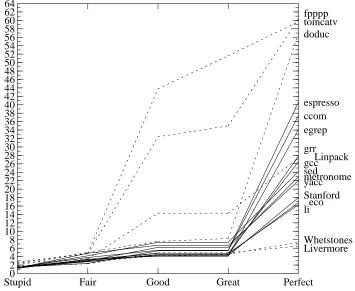
Figure 6. Parallelism under the five models.
4.2. Parallelism under the five models.
Figure 6 shows the parallelism of each program for each of the five models. The numeric programs are shown as dotted lines. Unsurprisingly, the Stupid model rarely gets above 2; the lack of branch prediction means that it finds only intra-block parallel-ism, and the lack of renaming and alias analysis means it won’t find much of that. The Fair model is better, with parallelism between 2 and 4 common. Even the Great model, however, rarely has parallelism above 8. A study that assumed perfect branch predic-tion, perfect alias analysis, and perfect register renaming would lead us down a dangerous garden path. So would a study that included only fpppp and tomcatv, unless that’s really all we want to run on our machine.
It is interesting that Whetstones and Livermore, two numeric benchmarks, do poorly even under the Perfect model. This is the result of Amdahl’s Law: if we com-pute the parallelism for each Livermore loop independently, the values range from 2.4 to 29.9, with a median around 5. Speeding up a few loops 30-fold simply means that the cycles needed for less parallel loops will dominate the total.
4.3. Effects of unrolling.
Stupid0 Fair Good Great Perfect 64
2 4 6 8 10 12 14 16 18 20 22 24 26 28 30 32 34 36 38 40 42 44 46 48 50 52 54 56 58 60 62
parallelism
Linpack (naiv4) Linpack.care10 Linpack.roll Linpack.naiv10
[image:16.612.134.513.54.348.2]Livermore Livermore.care10 Livermore.naiv10
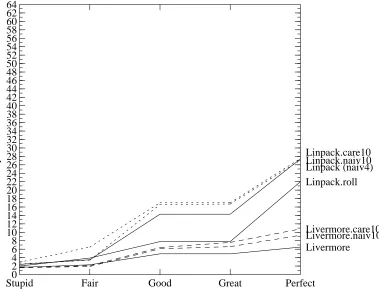
Figure 7. Unrolling under the five models.
adjustments to array indexes and so on. The other is careful unrolling, in which com-putations involving accumulators (like scalar product) are reassociated to increase paral-lelism, and in which assignments to array members are delayed until after all the calcu-lations are complete, so that false memory conflicts do not interfere with doing the cal-culations in parallel.
Figure 7 shows the result. The dotted lines are the 10-unrolled versions. Unrol-ling helps both Livermore and Linpack in the more ambitious models, although unrol-ling Linpack by 10 doesn’t make it much more parallel than unrolunrol-ling by 4. The difference between unrolling by 4 or 10 disappears altogether in the Perfect model, because the saxpy routine, which accounts for 75% of the executed instructions, achieves a parallelism just short of our maximum of 64 in each case. The aggregate parallelism stays lower because the next most frequently executed code is the loop in the matgen routine. This loop includes an embedded random-number generator, and each iteration is thus very dependent on its predecessor. This confirms the importance of using whole program traces; studies that considered only the parallelism in saxpy would be quite misleading.
removed. As a result, the parallelism goes down slightly. Even when alias analysis by inspection is adequate, unrolling the loops either naively or carefully sometimes causes the compiler to spill some registers. This is even harder for the alias analysis to deal with because these references usually have a different base register than the array refer-ences.
Loop unrolling is a good way to increase the available parallelism, but it is clear we must integrate the unrolling with the rest of our techniques better than we have been able to do here.
4.4. Effects of window size.
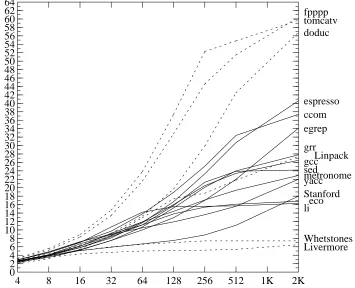
Our standard models all have a window size of 2K instructions: the scheduler is allowed to keep that many instructions in pending cycles at one time. Typical super-scalar hardware is unlikely to handle windows of that size, but software techniques like trace scheduling for a VLIW machine might. Figure 8 shows the effect of varying the window size from 2K instructions down to 4. Under the Great model, which does not have perfect branch prediction, most programs do as well with a 32-instruction window as with a larger one. Below that, parallelism drops off quickly. Unsurprisingly, the Perfect model does better the bigger its window. The Good model is not shown, but looks almost identical to the Great model, except that Linpack’s curve drops down to join the rest.
4.5. Effects of using discrete windows.
4 8 16 32 64 128 256 512 1K 2K 0 64 2 4 6 8 10 12 14 16 18 20 22 24 26 28 30 32 34 36 38 40 42 44 46 48 50 52 54 56 58 60 62 parallelism . . . doduc egrep fpppp Linpack sed tomcatv
4 8 16 32 64 128 256 512 1K 2K
0 64 2 4 6 8 10 12 14 16 18 20 22 24 26 28 30 32 34 36 38 40 42 44 46 48 50 52 54 56 58 60 62 parallelism ccom doduc eco egrep espresso fpppp gcc grr li Linpack Livermore metronome sed Stanford tomcatv Whetstones yacc
Figure 8(a). Size of continuous windows under Great model.
[image:18.612.135.475.56.357.2] [image:18.612.136.491.384.672.2]4 8 16 32 64 128 256 512 1K 2K 0 64 2 4 6 8 10 12 14 16 18 20 22 24 26 28 30 32 34 36 38 40 42 44 46 48 50 52 54 56 58 60 62 parallelism . . . doduc egrep fpppp Linpack sed tomcatv
4 8 16 32 64 128 256 512 1K 2K
0 64 2 4 6 8 10 12 14 16 18 20 22 24 26 28 30 32 34 36 38 40 42 44 46 48 50 52 54 56 58 60 62 parallelism ccom doduc eco egrep espresso fpppp gcc grr li Linpack Livermore metronome sed Stanford tomcatv Whetstones yacc
Figure 9(a). Size of discrete windows under Great model.
[image:19.612.138.473.54.346.2] [image:19.612.136.491.382.672.2]bNone bPerf
jNone bNone bNonejInf jPerf jNonebInf bInfjInf jPerfbInf jNonebPerf bPerfjInf jPerf
[image:20.612.144.477.74.379.2]0 64 2 4 6 8 10 12 14 16 18 20 22 24 26 28 30 32 34 36 38 40 42 44 46 48 50 52 54 56 58 60 62 parallelism ccom doduc eco egrep espresso fpppp gcc grr li Linpack Livermore metronome sed Stanford tomcatv Whetstones yacc
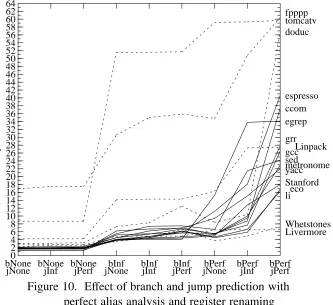
Figure 10. Effect of branch and jump prediction with perfect alias analysis and register renaming
4.6. Effects of branch and jump prediction.
We have several levels of branch and jump prediction. Figure 10 shows the results of varying these while register renaming and alias analysis stay perfect. Reduc-ing the level of jump prediction can have a large effect, but only if we have perfect branch prediction. Otherwise, removing jump prediction altogether has little effect. This graph does not show static or finite prediction: it turns out to make little difference whether prediction is infinite, finite, or static, as they have nearly the same success rate.
That jump prediction has little effect on the parallelism under non-Perfect models does not mean that jump prediction is useless. In a real machine, a branch or jump predicted incorrectly (or not at all) may result in a bubble in the pipeline. This bubble is a series of one or more cycles in which no execution can occur, during which the correct instructions are fetched, decoded, and started down the execution pipeline. Depending on the penalty, this may have a serious effect on performance. Figure 11 shows the degradation of parallelism under the Great model, assuming that each mispredicted branch or jump adds N cycles with no instructions in them. If we assume instead that all indirect jumps (but not all branches) are mispredicted, the right ends of these curves drop by 10% to 30%.
0 1 2 3 4 5 6 7 8 9 10 misprediction penalty (cycles)
0 16
2 4 6 8 10 12 14
parallelism
. . . doduc
espresso
li Linpack
Livermore
metronome sed
[image:21.612.126.477.58.338.2]Whetstones yacc
Figure 11. Effect of a misprediction cycle penalty on the Great model.
4.7. Effects of alias analysis and register renaming.
We also ran several experiments varying alias analysis in isolation, and varying register renaming in isolation.
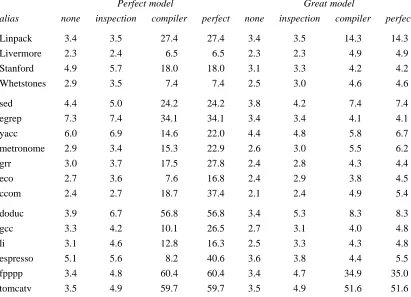
Figure 12 shows the effect of varying the alias analysis under the Perfect and Great models. We can see that ‘‘alias analysis by inspection’’ isn’t very powerful; it rarely increased parallelism by more than 0.5. ‘‘Alias analysis by compiler’’ was (by definition) indistinguishable from perfect alias analysis on programs that did not use the heap, but was somewhat helpful on the rest. There remains a big gap between this analysis and perfection, which suggests that the payoff of further work on heap disam-biguation may be significant.
Perfect model Great model
alias none inspection compiler perfect none inspection compiler perfect
22222222222222222222222222222222222222222222222222222222222222222222222222222222222
Linpack 3.4 3.5 27.4 27.4 3.4 3.5 14.3 14.3
Livermore 2.3 2.4 6.5 6.5 2.3 2.3 4.9 4.9
Stanford 4.9 5.7 18.0 18.0 3.1 3.3 4.2 4.2
Whetstones 2.9 3.5 7.4 7.4 2.5 3.0 4.6 4.6
22222222222222222222222222222222222222222222222222222222222222222222222222222222222
sed 4.4 5.0 24.2 24.2 3.8 4.2 7.4 7.4
egrep 7.3 7.4 34.1 34.1 3.4 3.4 4.1 4.1
yacc 6.0 6.9 14.6 22.0 4.4 4.8 5.8 6.7
metronome 2.9 3.4 15.3 22.9 2.6 3.0 5.5 6.2
grr 3.0 3.7 17.5 27.8 2.4 2.8 4.3 4.4
eco 2.7 3.6 7.6 16.8 2.4 2.9 3.8 4.5
ccom 2.4 2.7 18.7 37.4 2.1 2.4 4.9 5.4
22222222222222222222222222222222222222222222222222222222222222222222222222222222222
doduc 3.9 6.7 56.8 56.8 3.4 5.3 8.3 8.3
gcc 3.3 4.2 10.1 26.5 2.7 3.1 4.0 4.8
li 3.1 4.6 12.8 16.3 2.5 3.3 4.3 4.8
espresso 5.1 5.6 8.2 40.6 3.6 3.8 4.4 5.5
fpppp 3.4 4.8 60.4 60.4 3.4 4.7 34.9 35.0
tomcatv 11 3.5 4.9 59.7 59.7 3.5 4.9 51.6 51.6
[image:22.612.96.507.70.367.2]1 1 1 1 1 1 1 1 1 1 1 1 1 1 1 1 1 1 1 1 1 1 1 1 1 1 1 1 1 1 1 1 1 1 1 1 1 1 1 1 1 1 1 1 1 1 1 1 1 1 1 1 1 1 1 1 1 1
Figure 12. Effect of alias analysis on Perfect and Great models.
4.8. Conclusions.
Good branch prediction by hardware or software is critical to the exploitation of more than modest amounts of instruction-level parallelism. Jump prediction can reduce the penalty for indirect jumps, but has little effect on the parallelism of non-penalty cycles. Register renaming is important as well, though a compiler might be able to do an adequate job with static analysis, if it knows it is compiling for parallelism.
Even ambitious models combining the techniques discussed here are disappointing. Figure 14 shows the parallelism achieved by a quite ambitious hardware-style model, with branch and jump prediction using infinite tables, 256 FPU and 256 CPU registers used with LRU renaming, perfect alias analysis, and windows of 64 instructions main-tained continuously. The average parallelism is around 7, the median around 5. Figure 15 shows the parallelism achieved by a quite ambitious software-style model, with static branch and jump prediction, 256 FPU and 256 CPU registers used with LRU renaming, perfect alias analysis, and windows of 2K instructions maintained continu-ously. The average here is closer to 9, but the median is still around 5. A consistent speedup of 5 would be quite good, but we cannot honestly expect more (at least without developing techniques beyond those discussed here).
rNone0 r32 r64 r256 rPerf 64 2 4 6 8 10 12 14 16 18 20 22 24 26 28 30 32 34 36 38 40 42 44 46 48 50 52 54 56 58 60 62 parallelism ccom doduc eco egrep espresso fpppp gcc grr li Linpack Livermore metronome sed Stanford tomcatv Whetstones yacc
rNone0 r32 r64 r256 rPerf
64 2 4 6 8 10 12 14 16 18 20 22 24 26 28 30 32 34 36 38 40 42 44 46 48 50 52 54 56 58 60 62 parallelism . . . doduc egrep fpppp Linpack sed tomcatv
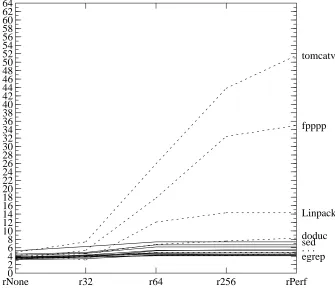
Figure 13(a). Effect of register renaming on the Perfect model.
[image:23.612.138.488.56.348.2] [image:23.612.138.473.383.671.2]|
0
|
8
|
16
|
24
|
32
|
40
|
48
|
56
|
64
|
zero-conflict branch and jump prediction
tomcatv li doduc fpppp espresso gcc1 linpack whet liver grr met yacc eco stanford ccom egrep sed
256 CPU and 256 FPU registers perfect alias analysis
[image:24.612.108.464.59.393.2]continuous windows of 64 instructions
Figure 14. The parallelism from an ambitious hardware model.
|
0
|
8
|
16
|
24
|
32
|
40
|
48
|
56
|
64
|
static branch and jump prediction
tomcatv li doduc fpppp espresso gcc1 linpack whet liver grr met yacc eco stanford ccom egrep sed
256 CPU and 256 FPU registers perfect alias analysis
[image:25.612.109.461.59.381.2]continuous windows of 2K instructions
Figure 15. The parallelism from an ambitious software model.
References
[1] Tilak Agarwala and John Cocke. High performance reduced instruction set pro-cessors. IBM Thomas J. Watson Research Center Technical Report #55845, March 31, 1987.
[2] David R. Chase, Mark Wegman, and F. Kenneth Zadeck. Analysis of pointers and structures. Proceedings of the SIGPLAN ’90 Conference on Programming Language Design and Implementation, pp. 296-310. Published as SIGPLAN Notices 25 (6), June 1990.
[3] Jack J. Dongarra. Performance of various computers using standard linear equa-tions software in a Fortran environment. Computer Architecture News 11 (5), pp. 22-27, December 1983.
[4] Joseph A. Fisher, John R. Ellis, John C. Ruttenberg, and Alexandru Nicolau. Parallel processing: A smart compiler and a dumb machine. Proceedings of the SIGPLAN ’84 Symposium on Compiler Construction, pp. 37-47. Published as SIGPLAN Notices 19 (6), June 1984.
[5] John Hennessy. Stanford benchmark suite. Personal communication.
[7] Norman P. Jouppi and David W. Wall. Available instruction-level parallelism for superscalar and superpipelined machines. Third International Symposium on Architectural Support for Programming Languages and Operating Systems, pp. 272-282, April 1989. Published as Computer Architecture News 17 (2), Operat-ing Systems Review 23 (special issue), SIGPLAN Notices 24 (special issue). Also available as WRL Research Report 89/7.
[8] Monica Lam. Software pipelining: An effective scheduling technique for VLIW machines. Proceedings of the SIGPLAN ’88 Conference on Programming Language Design and Implementation, pp. 318-328. Published as SIGPLAN Notices 23 (7), July 1988.
[9] Johnny K. F. Lee and Alan J. Smith. Branch prediction strategies and branch target buffer design. Computer 17 (1), pp. 6-22, January 1984.
[10] Scott McFarling and John Hennessy. Reducing the cost of branches. Thirteenth Annual Symposium on Computer Architecture, pp. 396-403. Published as Com-puter Architecture News 14 (2), June 1986.
[11] Alexandru Nicolau and Joseph A. Fisher. Measuring the parallelism available for very long instruction word architectures. IEEE Transactions on Computers C-33 (11), pp. 968-976, November 1984.
[12] J. E. Smith. A study of branch prediction strategies. Eighth Annual Symposium on Computer Architecture, pp. 135-148. Published as Computer Architecture News 9 (3), 1986.
[13] Michael D. Smith, Mike Johnson, and Mark A. Horowitz. Limits on multiple instruction issue. Third International Symposium on Architectural Support for Programming Languages and Operating Systems, pp. 290-302, April 1989. Published as Computer Architecture News 17 (2), Operating Systems Review 23 (special issue), SIGPLAN Notices 24 (special issue).
Appendix. Parallelism under many models.
On the next two pages are the results of running the test programs under more than 100 different configurations. The columns labelled ‘‘livcu10’’ and ‘‘lincu10’’ are the Livermore and Linpack benchmarks unrolled carefully 10 times. The configurations are keyed by the following abbreviations:
bPerf perfect branch prediction, 100% correct. bInf 2-bit branch prediction with infinite table. b2K 2-bit branch prediction with 2K-entry table. bStat static branch prediction from profile.
bNone no branch prediction.
2222222222222222222222222222222222222222222222222222
jPerf perfect indirect jump prediction, 100% correct. jInf indirect jump prediction with infinite table. j2K indirect jump prediction with 2K-entry table. jStat static indirect jump prediction from profile. jNone no indirect jump prediction.
2222222222222222222222222222222222222222222222222222
rPerf perfect register renaming: infinitely many registers. rN register renaming with N cpu and N fpu registers. rNone no register renaming: use registers as compiled.
2222222222222222222222222222222222222222222222222222
aPerf perfect alias analysis: use actual addresses to decide. aComp ‘‘compiler’’ alias analysis.
aInsp ‘‘alias analysis ‘‘by inspection.’’ aNone no alias analysis.
2222222222222222222222222222222222222222222222222222
wN continuous window of N instructions, default 2K. dwN 11 discrete window of N instructions, default 2K.
1
1
1
1
1
1
1
1
1
1
1
1
1
1
1
1
1
1
1
1
1
1
gcc espresso li fpppp doduc tomcat sed egrep ccom eco yacc met grr Stan Whet Liv Livcu10 Lin Lincu10
gcc espresso li fpppp doduc tomcat sed egrep ccom eco yacc met grr Stan Whet Liv Livcu10 Lin Lincu10
‘‘Titan System Manual.’’ ‘‘MultiTitan: Four Architecture Papers.’’
Michael J. K. Nielsen. Norman P. Jouppi, Jeremy Dion, David Boggs, Mich-WRL Research Report 86/1, September 1986. ael J. K. Nielsen.
WRL Research Report 87/8, April 1988. ‘‘Global Register Allocation at Link Time.’’
David W. Wall. ‘‘Fast Printed Circuit Board Routing.’’ WRL Research Report 86/3, October 1986. Jeremy Dion.
WRL Research Report 88/1, March 1988. ‘‘Optimal Finned Heat Sinks.’’
William R. Hamburgen. ‘‘Compacting Garbage Collection with Ambiguous WRL Research Report 86/4, October 1986. Roots.’’
Joel F. Bartlett.
‘‘The Mahler Experience: Using an Intermediate WRL Research Report 88/2, February 1988. Language as the Machine Description.’’
David W. Wall and Michael L. Powell. ‘‘The Experimental Literature of The Internet: An WRL Research Report 87/1, August 1987. Annotated Bibliography.’’
Jeffrey C. Mogul.
‘‘The Packet Filter: An Efficient Mechanism for WRL Research Report 88/3, August 1988. User-level Network Code.’’
Jeffrey C. Mogul, Richard F. Rashid, Michael ‘‘Measured Capacity of an Ethernet: Myths and
J. Accetta. Reality.’’
WRL Research Report 87/2, November 1987. David R. Boggs, Jeffrey C. Mogul, Christopher A. Kent.
‘‘Fragmentation Considered Harmful.’’ WRL Research Report 88/4, September 1988. Christopher A. Kent, Jeffrey C. Mogul.
WRL Research Report 87/3, December 1987. ‘‘Visa Protocols for Controlling Inter-Organizational Datagram Flow: Extended Description.’’
‘‘Cache Coherence in Distributed Systems.’’ Deborah Estrin, Jeffrey C. Mogul, Gene Tsudik,
Christopher A. Kent. Kamaljit Anand.
WRL Research Report 87/4, December 1987. WRL Research Report 88/5, December 1988. ‘‘Register Windows vs. Register Allocation.’’ ‘‘SCHEME->C A Portable Scheme-to-C Compiler.’’
David W. Wall. Joel F. Bartlett.
WRL Research Report 87/5, December 1987. WRL Research Report 89/1, January 1989.
‘‘Editing Graphical Objects Using Procedural ‘‘Optimal Group Distribution in Carry-Skip
Representations.’’ Adders.’’
Paul J. Asente. Silvio Turrini.
WRL Research Report 87/6, November 1987. WRL Research Report 89/2, February 1989. ‘‘The USENET Cookbook: an Experiment in ‘‘Precise Robotic Paste Dot Dispensing.’’
Electronic Publication.’’ William R. Hamburgen.
Unix-based Gateways.’’ David W. Wall.
Jeffrey C. Mogul. WRL Research Report 89/17, September 1989. WRL Research Report 89/4, March 1989.
‘‘Noise Issues in the ECL Circuit Family.’’ ‘‘Spritely NFS: Implementation and Performance of Jeffrey Y.F. Tang and J. Leon Yang.
Cache-Consistency Protocols.’’ WRL Research Report 90/1, January 1990. V. Srinivasan and Jeffrey C. Mogul.
‘‘Efficient Generation of Test Patterns Using WRL Research Report 89/5, May 1989.
Boolean Satisfiablilty.’’ ‘‘Available Instruction-Level Parallelism for Super- Tracy Larrabee.
scalar and Superpipelined Machines.’’ WRL Research Report 90/2, February 1990. Norman P. Jouppi and David W. Wall.
‘‘Two Papers on Test Pattern Generation.’’ WRL Research Report 89/7, July 1989.
Tracy Larrabee.
‘‘A Unified Vector/Scalar Floating-Point WRL Research Report 90/3, March 1990. Architecture.’’
‘‘Virtual Memory vs. The File System.’’ Norman P. Jouppi, Jonathan Bertoni, and David
Michael N. Nelson. W. Wall.
WRL Research Report 90/4, March 1990. WRL Research Report 89/8, July 1989.
‘‘Efficient Use of Workstations for Passive Monitor-‘‘Architectural and Organizational Tradeoffs in the
ing of Local Area Networks.’’ Design of the MultiTitan CPU.’’
Jeffrey C. Mogul. Norman P. Jouppi.
WRL Research Report 90/5, July 1990. WRL Research Report 89/9, July 1989.
‘‘A One-Dimensional Thermal Model for the VAX ‘‘Integration and Packaging Plateaus of Processor
9000 Multi Chip Units.’’ Performance.’’
John S. Fitch. Norman P. Jouppi.
WRL Research Report 90/6, July 1990. WRL Research Report 89/10, July 1989.
‘‘1990 DECWRL/Livermore Magic Release.’’ ‘‘A 20-MIPS Sustained 32-bit CMOS
Microproces-Robert N. Mayo, Michael H. Arnold, Walter S. Scott, sor with High Ratio of Sustained to Peak
Don Stark, Gordon T. Hamachi. Performance.’’
WRL Research Report 90/7, September 1990. Norman P. Jouppi and Jeffrey Y. F. Tang.
WRL Research Report 89/11, July 1989.
‘‘The Distribution of Instruction-Level and Machine Parallelism and Its Effect on Performance.’’ Norman P. Jouppi.
WRL Research Report 89/13, July 1989.
‘‘Long Address Traces from RISC Machines: Generation and Analysis.’’
Anita Borg, R.E.Kessler, Georgia Lazana, and David W. Wall.
‘‘TCP/IP PrintServer: Print Server Protocol.’’ Brian K. Reid and Christopher A. Kent. WRL Technical Note TN-4, September 1988. ‘‘TCP/IP PrintServer: Server Architecture and
Implementation.’’ Christopher A. Kent.
WRL Technical Note TN-7, November 1988. ‘‘Smart Code, Stupid Memory: A Fast X Server for a
Dumb Color Frame Buffer.’’ Joel McCormack.
WRL Technical Note TN-9, September 1989. ‘‘Why Aren’t Operating Systems Getting Faster As
Fast As Hardware?’’ John Ousterhout.
WRL Technical Note TN-11, October 1989.
‘‘Mostly-Copying Garbage Collection Picks Up Generations and C++.’’
Joel F. Bartlett.
WRL Technical Note TN-12, October 1989. ‘‘Limits of Instruction-Level Parallelism.’’ David W. Wall.