Nutrition Theses Department of Nutrition
Fall 12-15-2010
The Relationship between Omega-3 Fatty Acid
Intake and Muscle Soreness in Collegiate Rowers
Danica R. CarswellFollow this and additional works at:https://scholarworks.gsu.edu/nutrition_theses
This Thesis is brought to you for free and open access by the Department of Nutrition at ScholarWorks @ Georgia State University. It has been accepted for inclusion in Nutrition Theses by an authorized administrator of ScholarWorks @ Georgia State University. For more information, please contact
Recommended Citation
Carswell, Danica R., "The Relationship between Omega-3 Fatty Acid Intake and Muscle Soreness in Collegiate Rowers." Thesis, Georgia State University, 2010.
AUTHOR’S STATEMENT
In presenting this thesis as a partial fulfillment of the requirements for the advanced degree from Georgia State University, I agree that the library of Georgia State University shall make it available for inspection and circulation in accordance with its regulations governing materials of this type. I agree that permission to quote, to copy from, or to publish this thesis may be granted by the professor under whose direction it was written, by the College of Health and Human Sciences director of graduate studies and research, or by me. Such quoting, copying, or publishing must be solely for scholarly purposes and will not involve potential financial gain. It is understood that any copying from or
publication of this thesis which involves potential financial gain will not be allowed without my written permission.
NOTICE TO BORROWERS
All theses deposited in the Georgia State University library must be used in accordance with the stipulations prescribed by the author in the preceding statement. The author of this thesis is:
Danica Carswell 1195 Wyckfield Place Lawrenceville, GA 30044
The director of this thesis is:
Dan Benardot, Ph.D, RD, LD, FACSM Division of Nutrition
College of Health and Human Sciences Georgia State University
VITA
Danica R. Carswell
ADDRESS: 1195 Wyckfield Place
Lawrenceville, GA 30044
EDUCATION: M.S. 2010 Georgia State University
Health Sciences
B.S. 2009 Georgia State University
Nutrition
PROFESSIONAL EXPERIENCE:
May 2009 – Dec. 2010 Dietetic Intern
Children’s Healthcare of Atlanta, Grady Memorial Hospital, Georgia State University Counseling and Recreation centers, Davita Dialysis Campus West, WIC Campus Lawrenceville, Saint Joseph’s Hospital, New Horizons Campuses North and West, GA
Aug. 2009 – June 2010 Cooking/Nutrition Afterschool Instructor
Drew Charter School, Atlanta, GA
May 2008 – Sept. 2008 Receptionist
NutriFit, Sport, Therapy Inc., Atlanta, GA
May 2008 – Sept. 2008 Cashier/Server
Robeks Fruit Smoothies and Healthy Eats, Atlanta, GA
Mar. 2006 – Aug. 2007 Server
Monterrey Mexican Restaurant, Lawrenceville, GA
PROFESSIONAL SOCIETIES AND ORGANIZATIONS:
2010-present Greater Atlanta Dietetic Association
2008-present American Dietetic Association
PRESENTATIONS AND PUBLICATIONS:
2010 Morningside Elementary School Business Plan for Schoolyard
Sprouts
2010 Georgia Dietetic Association Poster Presentation: Independent
Senior Meals Satisfaction Surveying for Atlanta Regional
ABSTRACT
THE RELATIONSHIP BETWEEN OMEGA-3 FATTY ACID INTAKE AND MUSCLE SORENESS IN COLLEGIATE ROWERS
Background: Intense exercise may result in delayed-onset muscle soreness (DOMS),
which is worsened with unaccustomed eccentric exercise, and is considered a major
contributing factor to poor athletic performance. DOMS-related muscular inflammation
appears to be especially prevalent in college-aged athletes. There is beginning evidence
suggesting that omega-3 fatty acid (O3FA) intake may aid in alleviating muscle soreness,
possibly because O3FA contribute to the production of anti-inflammatory eicosanoids.
Objective: The primary objective of this study was to determine if the intake of omega-3
fatty acids was associated with a reduction in muscle soreness in collegiate rowers.
Methods: Several groups of collegiate rowers were identified as potential subjects and,
using an IRB-approved protocol, 61 volunteers from this subject pool agreed to
participate in the study. At the end of the first week of fall practice, subjects were asked
to provide information on age, weight, height, ethnicity, rowing level, sun exposure,
exercise regimen, pre- and peak-soreness and exertion levels, hydration status, and
food/supplement intake. A Talag scale was used to determine the severity of muscle
soreness, and a modified Borg scale was used to determine the exertion intensity level. A
food frequency questionnaire using a 10-point Likert scale was used to assess food and
supplement intake, with a focus on omega-3 fatty acids. Results: Subjects with a higher
intake of EPA/DHA rich bottled supplemental fish oil, taken by spoon, had significantly
higher soreness levels than those with lower intakes (p = 0.028). Higher soreness was
also significantly associated with higher intake of EPA/DHA rich fish oil capsules (p <
0.026). Lower soreness was significantly associated with higher fruit intake (p = 0.030).
Conclusions: These findings suggest that high intakes of omega-3 fatty acids from fish
oils, regardless of liquid or capsule form, may be contraindicated for collegiate rowers
wishing to reduce muscle soreness. Recommending fruit intake may be warranted in
THE RELATIONSHIP BETWEEN OMEGA-3 FATTY ACID INTAKE AND MUSCLE SORENESS IN COLLEGIATE ROWERS
By
Danica Rose Carswell
A Thesis
Presented in Partial Fulfillment of Requirements for the Degree of Master of Science in Health Sciences
Division of Nutrition
College of Health and Human Sciences Georgia State University
ii
ACKNOWLEDGMENTS
I would like to thank my thesis committee – Dr. Dan Benardot, Dr. Anita Nucci,
and Dr. Walter Thompson – for their invested time, assistance, and guidance through this
incredible process – I value everything I have learned from it. Mary Robeck is also
well-deserving of recognition for her invaluable editing support in the early stages of my
paper. Big thanks to Dr. Barbara Hopkins for helping me find a validated urine color
chart! I would also like to thank all previously unmentioned faculty from the Division of
Nutrition who have taught and advised me during both my undergraduate and graduate
degree programs at Georgia State – Dr. Dea Baxter, Dr. Mildred Cody, Dr. Vijay Gangi,
Dr. Jana Kicklighter, Professor Cathy McCarroll, Dr. Murugi Ndirangu, Dr. Meera
Penumetcha, and Professor Susan Roman. The Division of Nutrition at Georgia State has
been my home for many years, and in those years, I have gotten to learn a great deal both
from and about the wonderful people who teach and advise for the division - they are an
awesome group of people! I would especially like to thank my mom, Carrie, my
significant other, Jason Barry, my roommate, Alex Kennedy, and all of my classmates for
their continued support, understanding, and encouragement throughout my Master’s
degree program and thesis preparation. Lastly, thanks to the rowers for their participation
in this study and to their coaches, who took time from their practices to allow for study
iii
TABLE OF CONTENTS
Page
List of Tables………..iv
List of Figures………..v
Abbreviations………..vi
Chapter I. INTRODUCTION………...1
Problem………....1
Purpose and Hypotheses……….4
II. LITERATURE REVIEW………5
References……….29
III. THE RELATIONSHIP BETWEEN OMEGA-3 FATY ACID INTAKE AND MUSCLE SORENESS IN COLLEGIATE ROWERS MANUSCRIPT….……….33
Introduction………...34
Methods……….38
Results………43
Discussion and Conclusion……….………...60
References………..66
iv
LIST OF TABLES
Table Page
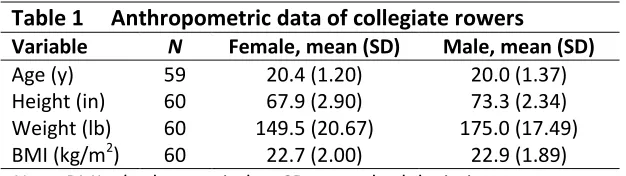
1. Anthropometric data of collegiate rowers 43
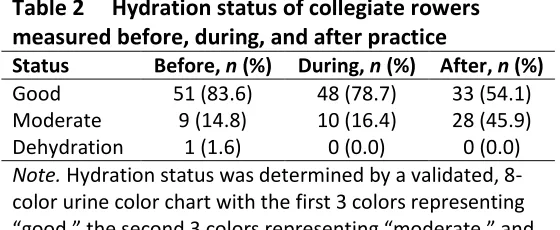
2. Hydration status of collegiate rowers measured before, during, 45 and after practice
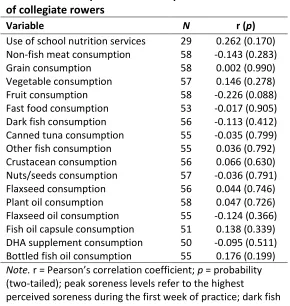
3. Dietary correlations to soreness levels of collegiate rowers 46
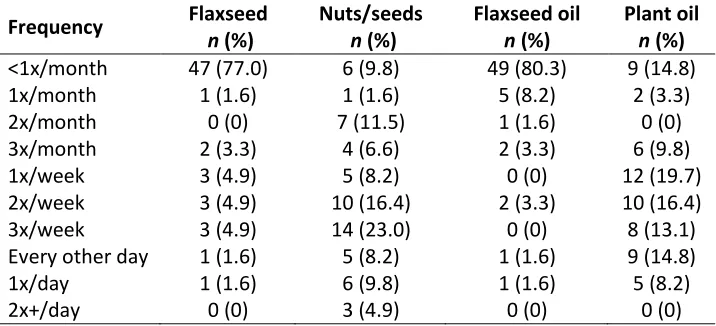
4. Frequency of plant-based omega-3 food consumption in collegiate 48
rowers
5. Frequency of fish-based omega-3 food consumption in collegiate 48 rowers
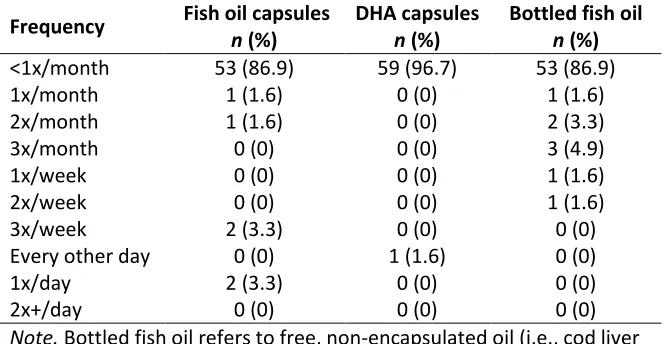
6. Frequency of omega-3 supplement consumption in collegiate 49 rowers
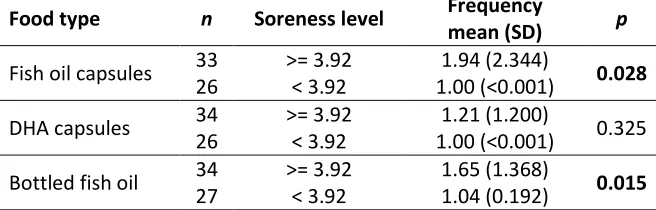
7. Comparison of peak soreness levels based on above- and below- 51 average frequencies of omega-3 supplement intake in collegiate
rowers
8. Comparison of omega-3-rich supplement intake frequencies on 51 above- and below-average peak soreness levels in collegiate rowers
9. Comparison of non-omega-3-rich food intake frequencies based on 52
above- and below-average peak soreness levels in collegiate rowers
10. Age, gender, and exercise correlations to soreness levels of 54 collegiate rowers
11. Comparison of peak soreness levels based on eccentric exercise 56 performance of collegiate rowers
12. Frequency of collegiate rowers with different pre-season and peak 57 season soreness levels
v
LIST OF FIGURES
Figure Page
1. Eicosanoid production 3
2. The rowing technique 4
vi
ABBREVIATIONS
ALA Alpha-linolenic acid
ATP Adenosine triphosphate
BCAA Branched-chain amino acids
COX Cyclooxygenase
DHA Docosahexaenoic acid
DOMS Delayed-onset muscle soreness
EAR Estimated Average Requirement
EE Eccentric exercise
EIMD Exercise-induced muscle soreness
EPA Eicospentaenoic acid
HEPE Hydroxyeicosapentaenoic acid
IL Interleukin
LOX Lipooxygenase
NADPH Nicotinamide adenine dinucleotide phosphate
NSAIDS Non-steroidal anti-inflammatory drugs
O3FA Omega-3 fatty acid
O6FA Omega-6 fatty acid
PGG2 Prostaglandin G2
PGH Prostaglandin endoperoxide
PGH2 Hydroxyendoperoxide
vii
PUFA Polyunsaturated fatty acid
TNF-alpha Tumor necrosis factor-alpha
ROM Range of motion
1
CHAPTER ONE
INTRODUCTION
THE PROBLEM
Muscle soreness is commonly experienced by athletes and is among several factors that
contribute to poor athletic performance. In recent literature, muscle soreness has been
shown to have negative effects on athletic performance, because of its association with
extreme reductions in range of motion and muscle strength (Cleary et al., 2005; Parr et
al., 2009). Muscle soreness referred to as “delayed-onset muscle soreness” (DOMS) is
that which peaks between 24 and 48 hours post-exercise and continues 2 to 4 days
(Cleary et al., 2005; Frey-Law et al., 2008; Mayer et al., 2006; Rahnama et al., 2005;
Tartibian et al., 2009).
DOMS is defined as a grade I muscle strain injury which represents a stretching and/or
minor tearing of the muscle, but not partial (grade II) or complete (grade III) muscle
tearing (Cheung et al., 2003; Ivins, 2006). It is thought to originate from inflammation
secondary to eccentric exercise (EE): Tartibian et al. (2009) found increases in limb
circumference accompanied by DOMS after EE intervention. EE is defined as a form of
exercise that lengthens (or stretches) the muscle with contraction (Prasartwuth et al.,
2005). Lengthened contractions (versus shortened ones) have been shown to increase
The inflammatory response is initiated by the calcium-mediated production of
eicosanoids (prostaglandins, thromboxanes, and leukotrienes) from polyunsaturated fatty
acids (PUFA), and their production is upregulated by the production of cytokines [tumor
necrosis factor-alpha (TNF-alpha), interleukin-1 (IL-1), and interleukin-6 (IL-6)] in
response to damage or already present inflammation (Mahan & Escott-Stump, 2008).
These eicosanoids control growth factor release, protease release, and attraction of
phagocytic cells in response to cell injury or damage (Mahan & Escott-Stump, 2008).
This increased movement of inflammatory particles to an area of damage and edema
associated with inflammation are thought to increase intramuscular pressure, stimulating
the group III and IV afferent sensory receptors that terminate in the myofibrils (Smith,
1991; Armstrong, 1990). Cheung et al. (2003) showed evidence of this, finding an
association between decreased DOMS-linked inflammation and lower intramuscular
pressure.
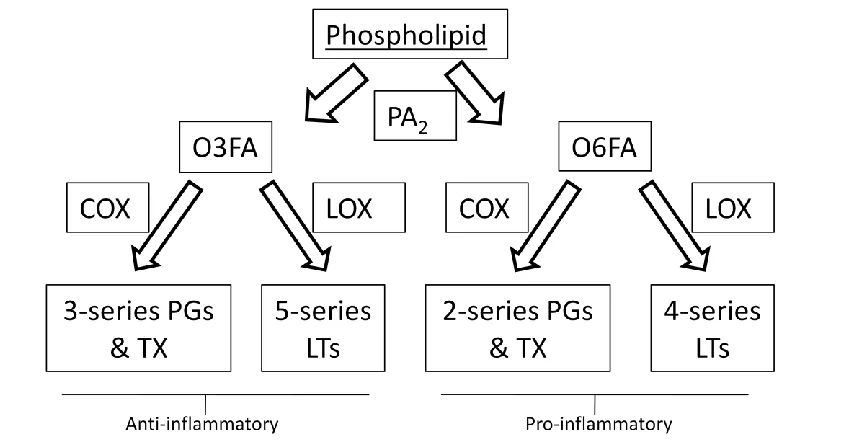
The inflammatory nature of eicosanoids is determined by the fatty acids from which they
are derived (Figure 1). Omega-6 fatty acids become pro-inflammatory eicosanoids, but
omega-3 fatty acids (O3FA) become anti-inflammatory 3-series prostaglandins and
thromboxanes via the cyclooxygenase-2 (COX-2) pathway and 5-series leukotrienes via
the lipooxygenase (LOX) pathway (Shils et al., 2006). Tartibian et al. (2009) have found
Figure 1 – Eicosanoid production (source: Champe et al.; 2008: 215).
Because O3FA have been shown to reduce muscle soreness through
anti-inflammatory action, it is important to investigate their intake. Intake of O3FA in
collegiate athletes is of particular interest, because they have a higher risk for developing
muscle soreness than other age groups, which may reduce athletic performance
(Chapman et al., 2008; Marginson et al., 2005). They have also been shown to have low
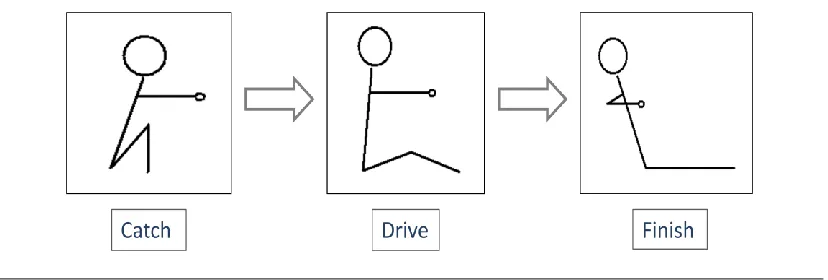
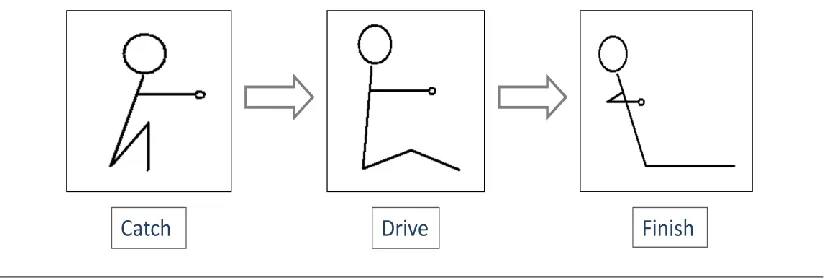
intakes of O3FA-rich foods like fish, nuts, and seeds (Brunt et al., 2008). In addition,
there are aspects of the rowing technique that involve inflammatory-inducing eccentric
contractions vastus medialis action prevents further forward motion by stopping knee
flexion at the catch of the stroke, and rectus femoris action prevents further backward
Figure 2 – The rowing technique. The catch represents the beginning of the stroke, where the oar blade is dropped into the water. The drive represents the oar being pulled through the water. The finish represents the end of the stroke, where the oar blade is lifted out of the water.
PURPOSE & HYPOTHESIS
Only two studies by Lenn et al. (2002) and Tartibian et al. (2009) have recently examined
the effects of O3FA intake on muscle soreness. Results of these studies were conflicting,
and neither study dealt with athletes or, specifically, rowers. The major purpose of this
study is to assess whether different levels of O3FA consumption from both foods and
supplements was associated with muscle soreness in collegiate rowers. Ultimately, this
information may help determine whether higher levels of O3FA intake would be useful to
collegiate rowers who currently experience high levels of muscle soreness.
Hypothesis: Higher omega-3 fatty acid intake is associated with reduced muscle
soreness in collegiate rowers.
Null Hypothesis: Higher omega-3 fatty acid intake is not associated with
5
CHAPTER TWO
LITERATURE REVIEW
EXERCISE-INDUCED MUSCLE DAMAGE
Exercise-induced muscle damage (EIMD) is commonly experienced by athletes and is
characterized by a decreased range of motion (ROM), delayed-onset muscle soreness
(DOMS), and decreased muscle strength, all of which negatively impact athletic
performance (Parr et al., 2009). It has been suggested that EIMD occurs with the
disruption of muscle fibers with eccentric exercise (Allen et al., 2005). In a study by
Cleary et al. (2005), 10 untrained male subjects (mean age of 21 years) reported a 10.5%
decrease in muscle strength accompanied by significant DOMS (p = 0.001) at 24 hours
post-eccentric exercise. After an eccentric exercise intervention in a separate study, 24
untrained subjects of mixed gender and college age reported 30-36% decreased strength
(p < 0.01) and a decrease in ROM between 5 and 8 percent (p < 0.01), with significant
muscle soreness (p < 0.05) (Parr et al., 2009). Theories on method(s) of causation
ultimately discuss inflammation.
Mechanisms of Primary EIMD
The three major forms of resistance exercises are isometric, concentric, and eccentric
(Prasartwuth et al., 2005, Mackey et al., 2008; Jubeau et al., 2007), all of which have
been shown to cause muscle damage. Isometric exercise involves muscle contraction
shortening of the muscle with contraction (Mackey et al., 2008). Eccentric exercise (EE)
is defined as a form of exercise that lengthens (or stretches) the muscle with contraction
(Prasartwuth et al., 2005).
Lengthened contractions have been shown to increase muscle damage and significantly
induce its characteristic symptoms (Philippou et al., 2003; Parr et al., 2009). It is this
lengthening that has been proposed to cause primary muscle damage, where the
sarcomeres of the muscle fiber are disrupted; the repeated lengthening causes
overstretching of the myofilaments of the sarcomere, causing increased tension in others
(Morgan & Proske, 2004). The change in structure may change the function, which
would account for the decreased strength associated with EIMD.
The effects of eccentric exercise may apply to the sport of rowing, as there are aspects of
the rowing technique that involve eccentric contractions: vastus medialis action stops
knee flexion at the catch of the stroke, and rectus femoris action slows hip extension at
the end of the stroke drive (Soper & Hume, 2004). Eccentric contractions are also
involved in a number of cross-training activities: step-ups, squats, lunges, bicep curls,
downhill running, low back extensions, and wrist extensions, among others (Prasartwuth
et al., 2005; Dwyer et al., 2010; Cleary et al., 2005, Frey-Law et al., 2008)
Mechanisms of Secondary EIMD
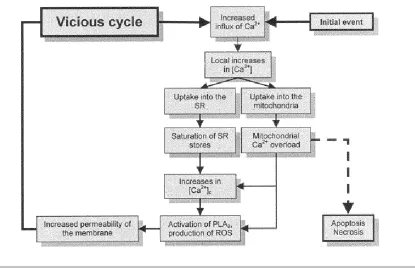
There are several theories on methods of secondary muscle damage. One theory is that
membranes become damaged and the intracellular and extracellular equilibrium changes,
resulting in a large influx of calcium (Allen et al., 2005). Calcium influx activates
phospholipase A2, which frees fatty acids from the membrane (Gissel, 2005; Shils et al.,
2006). One of these fatty acids is arachidonic acid, which can produce reactive oxygen
species (ROS) via activation of nicotinamide adenine dinucleotide phosphate (NADPH)
oxidase (Ayilavarapu et al., 2010; Gissel, 2005). These ROS may damage cell structures,
which stimulatesan inflammatory response (Mahan & Escott-Stump, 2008).
Another theory suggests that calcium influx leads to calcium overload in the
mitochondria, causing the permeabilization transition pore in mitochondria to open
(Duchen, 2004; Parekh & Putney, 2005). Opening of this pore leads to mitochondrial
membrane depolarization and decreased adenosine triphosphate (ATP) production and
use (Duchen, 2004). Decreased energy production and use by cells leads to apoptosis and
necrosis, whereby the inflammatory response is stimulated (Duchen, 2004; Mahan &
Figure 3 – Mechanisms of secondary muscle damage (source: Gissel, H; 2005: 172).
Inflammatory Mechanisms
In each of the inflammation theories mentioned above, muscle cell damage ultimately
leads to an inflammatory response. This process is initiated by the production of
eicosanoids (prostaglandins, thromboxanes, and leukotrienes) from polyunsaturated fatty
acids (PUFA), and their production is upregulated by the production of cytokines [tumor
necrosis factor-alpha (TNF-alpha), interleukin-1 (IL-1), and interleukin-6 (IL-6)] in
response to damage or inflammation (Mahan & Escott-Stump, 2008). These eicosanoids
control growth factor release, protease release, and attraction of phagocytic cells in
response to cell injury or damage. This process is calcium-mediated (Shils et al., 2006),
DELAYED-ONSET MUSCLE SORENESS
EIMD is characterized by several factors, including DOMS. DOMS is considered a grade
I muscle strain injury which represents a stretching and/or minor tearing of the muscle,
but not partial (grade II) or complete (grade III) muscle tearing (Cheung et al., 2003;
Ivins, 2006). Older theories indicate that DOMS from EIMD results from increased
movement of inflammatory particles to an area of damage and edema associated with
inflammation, thought to increase intramuscular pressure and stimulate the group III and
IV afferent sensory receptors that terminate in the myofibrils (Smith, 1991; Armstrong,
1990). More recent studies indicate that the mechanisms behind pain caused by DOMS
are unclear (Close et al., 2005; Parr et al., 2009); however, Cheung et al. (2003) found an
association between decreased DOMS-linked inflammation and lower intramuscular
pressure, and Tartibian et al. (2009) found increases in limb circumference accompanied
by DOMS, both suggesting the presence of edema and inflammatory particles.
How is DOMS Elicited?
All studies examining DOMS use EE to induce soreness, but another major component to
induction is the use of subjects that are “unaccustomed” to exercise. Several studies using
untrained subjects report greater soreness responses (Cleary et al., 2005; Lavender &
Nosaka, 2008; Mackey et al., 2008; Rahnama et al., 2005; Tartibian et al., 2009);
however, the time length of pre-study inactivity is not standardized amongst studies. For
example, these time periods ranged from 3 weeks (Howatson et al., 2009) to 1 year
Using unconditioned subjects is important, as studies with trained participants may not
induce high soreness scores. Lavender and Nosaka (2008) examined the effects of
training on 18 males, aged 21.4 +/- 2.6 years. Participants were randomly divided into
heavy-load-only exercise (40% of maximal isometric strength) and combined light and
heavy load exercise (10% of maximal isometric strength followed by 40%) groups, with
the combined exercise group separating light and heavy exercise by 2 days. In both cases
the intervention consisted of 6 sets of 5 eccentric bicep curls. Based on a 50-unit visual
analogue scale, perceived pain scores were significantly lower upon palpation (p = 0.002)
and passive extension (p = 0.02) of the muscle in the group that performed light eccentric
exercise 2 days before heavy eccentric exercise than in the heavy-load-only exercise
group.
A study by Howatson et al. (2009) used a different intervention for the 16 male subjects;
exercise bouts were separated by 2 weeks, and the intervention intensity did not increase.
Training demonstrated a DOMS-reducing effect: participants reported significantly lower
perceived pain scores after a repeated bout of 100 drop jumps (5 sets of 20 repetitions) (p
< 0.05). Combined with those of the Lavender and Nosaka (2008), these findings suggest
that a time period longer than 2 days may allow subjects to become unaccustomed to
eccentric exercise. More research is needed to determine a more exact time period.
After soreness-inducing exercise, most studies did not use the same method to elicita
pain response post-exercise. For example, studies surveyed subjects at rest, during
2005; Jubeau et al., 2008; Mackey et al., 2008; Mayer et al., 2006; Tartibian et al., 2009),
several of which elicited DOMS, several of which did not elicit DOMS.
How is DOMS Measured?
DOMS is measured immediately post-eccentric exercise intervention by the subject.
Several scales have been used, including a 10-point Likert scale, visual analogue scale,
and Talag scale, none appearing to have an advantage over the other, although the visual
analogue scale has been used most often (Nieman et al., 2006; Lenn et al., 2002;
Tartibian et al., 2009). The visual analogue scales used endpoints indicating “no pain”
and “worst pain” and were typically accompanied by a 10-point numerical pain-rating
scale (Frey-Law et al., 2008). Regardless of elicitation method or measuring scale, the
post-EE perceived pain scores of many soreness-related studies follow the same
trajectory over time, peaking between 24 and 48 hours and lasting about 2 to 4 days
(Cleary et al., 2005; Frey-Law et al., 2008; Mayer et al., 2006; Rahnama et al., 2005;
Tartibian et al., 2009).
What Populations are at Risk for Developing DOMS?
Those subjects who are of collegiate age have been shown to perceive higher soreness
levels. It is still undecided as to whether gender has an effect on soreness levels.
Age and DOMS
Those near college age (18 to 24 years) have a higher risk of developing DOMS.
exercises similar to that of the intervention. The younger population (n = 10) was
comprised of university students with a mean age of 25 +/- 1.8 years, while the older
population (n = 10) was comprised of local community members, aged 64 +/- 1.2 years.
Between 24 and 72 hours post-eccentric exercise (5 sets of 6 bicep curls of fast velocity),
muscle soreness scores were found to be significantly lower in the older subjects (p <
0.05). While the older population experienced significantly decreased muscle strength (p
= 0.016), there were no significant work differences between the two groups after the
intervention. In a similar study comparing an older population aged 20-29 years (n = 10)
to a younger population aged 9-10 years (n = 10), post-exercise soreness scores were
significantly higher in the older group (p < 0.05) through a 72-hour period (Marginson et
al., 2005).
Gender and DOMS
Gender has not shown to be a factor in relieving DOMS, but it may be associated with
performance. Tiidus (2003) indicates in his review that estrogen may help to stabilize
skeletal muscle by acting as an antioxidant to reduce membrane phospholipid
peroxidation and by having a cholesterol-like influence on membrane stability. These
actions may help maintain calcium balance in the muscle, which may decrease
inflammation after exercise by neutrophils (Tiidus, 2003). Tiidus (2003) indicates that,
while these mechanisms are possible, no experimental evidence has demonstrated
differential DOMS in males and females. A more recent study has shown evidence that
college-aged females (n = 55) were significantly more likely than males to experience
curls) intervention (p = 0.01), though the actual between-gender pain scores were not
significantly different (Dannecker et al., 2008).
NUTRIENT INTAKE OF THE COLLEGIATE ATHLETE
It is possible that college-aged populations experience DOMS-related poor athletic
performance due to inadequate intakes of either micro- or macronutrients (Burke et al.,
2006; Driskell & Wolinsky, 2006). Burke et al. (2006) indicate that increased physical
activity results in higher macronutrient needs, which arise from higher energy
expenditure, and increased micronutrient requirements, which arise from energy-creating
metabolic reactions. Several studies have shown significant associations between reduced
DOMS and supplementation of O3FA, branched-chain amino acids (BCAA) and
vitamins C, D, and E intakes and DOMS (Tartibian et al., 2009; Benson et al., 2006;
Silva et al., 2010; Bryer & Goldfarb, 2006; Shimomura et al., 2006).
These findings appear to be based on actual deficiencies or areas of low intake. Brunt et
al. (2008) found that college-aged subjects have low intakes of O3FA-rich fish, nuts, and
seeds. In a study by the American College Health Association (2010), more than 50% of
college students reported consuming less than 3 servings of fruits and vegetables,
indicating that they may be deficient in some of the micronutrients found in the fruit and
vegetable groups, micronutrients like vitamin C. A study using NCAA Division I
athletes (n = 250) by Hinton et al. (2004) reported that 60% of the surveyed population
did not meet the estimated average requirement (EAR) for vitamin E, and only 26% of
The same study using NCAA athletes reported vitamin D intake; the average female
consumed 6.7 +/- 4.3 micrograms per day, and the average male consumed 6.9 +/- 5.4
micrograms per day. Mean vitamin D intake in this study was above the recommended
intake of 5 micrograms, but large standard deviations indicate deficiencies in a portion of
this population (distribution of subjects for each intake level was not reported).
Fatty Acid Supplementation and Effects on DOMS
Because O3FA specifically may indirectly enhance athletic performance via their
association with reduced DOMS, it is important to investigate their intake in collegiate
athletes and their effects on athletic performance. The most common dietary O3FA
include eicosapentaenoic acid (EPA), docosahexaenoic acid (DHA), and alpha-linolenic
acid (ALA). These are found in fish and shellfish, nuts and seeds, and plant oils (Pickova,
2009).
A study supporting the soreness-ameliorating effects of omega-3 fatty acids examined 27
male subjects (mean age of 33.4 +/- 4.2 years) for perceived pain after O3FA
supplementation and an eccentric exercise intervention (Tartibian et al., 2009).
Volunteers took a fish oil capsule, containing 324 mg EPA and 216 mg DHA, once per
day for 30 days pre-exercise and for 2 days post-exercise. This study also used
supplementation of 100 IU d-alpha-tocopherol acetate in addition to the omega-3 capsule,
but frequency of administration was not indicated. Exercise consisted of 40 minutes of
bench step-ups, alternating 5 minutes stepping and one minute rest. There was a
pain scores seen 48 hours after exercise (p = 0.001), but not 24 hours after. Thigh
circumference, used as an indicator of inflammation, was significantly lower in the
supplemented group at 24 hours (p < 0.05) and 48 hours (p < 0.02).
The use of tocopherol supplementation may have had an antioxidant effect in these
subjects, although Tartibian et al. (2009) wrote that those effects are “regarded as
inconclusive.” Another limitation of the study was that, while a food frequency
questionnaire was administered, participants were asked to report their intake during the
pre-supplementation 12-month time period, so it is unknown whether the groups differed
significantly in non-supplemental omega-3 intake during supplementation. Another issue
the study faced was that the mean age of the participants was about 10 years above
collegiate age, so it is possible the effects might have been more pronounced in a younger
population.
A study by Lenn et al. (2002) reported a lack of soreness-ameliorating effects from
omega-3 fatty acid supplementation. This study examined 10 untrained males (mean age:
22.7 +/- 3.92 years) and 6 untrained females (mean age: 24.5 +/- 5.47) and the effects of
O3FA supplementation on muscle soreness. Subjects were divided into three supplement
groups: a fish oil group (n = 6) receiving 1.8 grams of fish oil, an isoflavone group (n =
5) receiving a combination of 120 mg of soy isolate and a non-O3FA-rich fat blend, and a
placebo group (n =6) receiving a combination of the non-O3FA-rich fat blend and wheat
flour. All groups were supplemented 30 days prior to and in the week during the exercise
30-day supplementation period, subjects performed 50 eccentric bicep curls using the
KinCom Dynamometer to induce muscle soreness, which was measured 2, 4, and 7 days
post-exercise. While a significant increase was seen in serum EPA and DHA (p < 0.05),
there were no significant differences among soreness levels of the subject groups. Unlike
the findings of Tartibian et al. (2009), the findings of this study indicate there is no
relationship between O3FA and DOMS. More research is needed to form a conclusion on
the relationship between O3FA and DOMS.
Mechanisms of O3FA
O3FA reduce perceived pain associated with inflammation by acting as both antioxidants
(indirectly) and anti-inflammatory agents. O3FA help combat inflammation by
competing with arachidonic acid – and O6FA – for eicosanoid generation. The more
O3FA in the blood and cell membrane, the more likely it will be released for eicosanoid
generation.
Arachidonic acid becomes pro-inflammatory 2-series prostaglandins (PG) and
thromboxanes (TX) via the cyclooxygenase (COX) pathway and 4-series leukotrienes
(LT) via the lipooxygenase (LOX) pathway (Shils et al., 2006). When arachidonic acid is
replaced as a substrate, O3FAs become anti-inflammatory 3-series PGs and TXs via the
cyclooxygenase (COX) pathway and 5-series LTs via the lipooxygenase (LOX) pathway
(Shils et al., 2006). These paths are initiated with the physiological stimulation of normal
(Shils et al., 2006). PLA2 releases omega-3 PUFA from the cell membrane for eicosanoid
generation.
Specifically, the COX-2 pathway (versus COX-1) mediates inflammation (Champe et al.,
2008). Prostaglandin endoperoxide (PGH) synthase catalyzes the COX-2 isozyme to
oxygenate fatty acids to become prostaglandin G2 (PGG2) and then catalyzes glutathione
peroxidase, reducing PGG2 to hydroxyendoperoxide (PGH2) (Champe et al., 2008; Shils
et al., 2006). This intermediate is converted into PGs and TXs, depending on the tissue.
PGs and TXs promote platelet aggregation and control contraction of smooth muscle and
vasoconstriction/dilation (Champe et al., 2008), but those derived from O3FA have lower
biological activity, making them less inflammatory (Mickleborough & Rundell, 2005).
The LOX pathway also mediates inflammation (Champe et al., 2008). Via the 5-LOX
pathway, fatty acids are converted into leukotrienes (Shils et al., 2006). LTs increase
vascular permeability and control contraction of smooth muscle and
broncho/vasoconstriction (Champe et al., 2008), but those derived from O3FA have
lower biological activity, making them less inflammatory (Mickleborough & Rundell,
2005). In addition to the 5-LOX pathway, the 15-LOX pathway oxidizes EPA and DHA
to 15-hydroxyeicosapentaenoic acid (15-HEPE) and 15-hydroxydocosahexaenoic acid,
respectively, and both of these products inhibit the formation of pro-inflammatory
4-series leukotrienes from arachidonic acid (Shils et al., 2006).
The college-aged population may be at higher risk for developing vitamin and mineral
deficiencies due to poor intake. In the literature, vitamins D, E, and C have been
examined to determine their effects on muscle soreness.
Vitamin D Supplementation: Effects Similar to O3FA?
The EPA and DHA used to supplement subjects in the O3FA studies are marine-based,
meaning they come from seafood sources. Fatty fish are not only good sources of O3FA,
but they are also good sources of vitamin D. It is possible that vitamin D may be partly
responsible for the soreness-reducing actions of O3FA. In a study of NCAA Division I
athletes, Hinton et al. (2004) found that the average vitamin D intake in femalesBenson et
al. (2006) examined a native Australian population that had chronic muscle pain and
vitamin D deficiencies. The researchers chose eight age- and gender-matched pairs, with
one person from each pair presenting with muscle pain and the other not presenting with
muscle pain. After the subjects (of mixed age and gender) were selected, blood tests were
run to determine presence of vitamin D deficiency. All subjects presenting with muscle
pain were found to be vitamin D deficient, while seven of those eight who did not present
with muscle pain were found to have normal vitamin D levels.
Vitamin D deficiency has also been linked to decreased muscle strength. Houston et al.
(2007) examined muscle strength in 976 elderly subjects of mixed gender with either
vitamin D deficiency (< 25 nmol/L), insufficiency (<50 nmol/L), or normal levels.
Subjects underwent two sessions (per hand) with the handgrip dynamometer, and the
were significantly associated with decreased handgrip (p =< 0.01). The study also found
that subjects with a vitamin D deficiency had significantly lower handgrip scores than
those with an insufficiency and that those with an insufficiency had significantly lower
handgrip scores than those with normal levels (p < 0.05). Parathyroid hormone levels –
which increase when vitamin D levels are low to stimulate production – were found to be
significantly and inversely associated with handgrip in this population (p = 0.01).
Decreased muscle strength can accompany DOMS (Cleary et al., 2005), so it is possible
that the pain described by Benson et al. (2006) is indicative of soreness, though eccentric
exercise was not discussed in the study. This information suggests it may be wise to
examine the diets of collegiate athletes for vitamin D-rich foods (i.e., fatty fish, fortified
dairy products, eggs) to determine an association with DOMS.
Vitamin E Supplementation and DOMS
While studies on O3FA supplementation from bothLenn et al. (2002) and Tartibian et al.
(2009) regard vitamin E’s effects on muscle soreness as “inconclusive,” vitamin E has
been found to have a reducing effect on DOMS. Given that vitamin E acts as an
antioxidant, it can reduce oxidative damage initiated by exercise-induced muscle damage.
Silva et al. (2010) wanted to both examine the antioxidant effects of vitamin E and test
for anti-inflammatory effects as well. The researchers recruited 21 male college students
from Brazil and split them into placebo and supplement intervention groups. The vitamin
E group was instructed to take 800 IU of D-alpha-tocopherol acetate once per day for 21
days – 14 days pre-exercise and 7 days post-exercise. Exercise testing involved eccentric
group reported significantly lower soreness scores at 2, 4, and 7 days post-exercise than
those of the placebo group (p < 0.05). To measure oxidative damage reduction,
researchers looked at each individual intervention group’s effects on lipid peroxidation
and protein carbonylation. In both cases, the vitamin E group had significantly lower
levels on days 4 and 7 than those seen in the placebo group (p < 0.05). To measure
anti-inflammatory effects, the researchers examined presence of tumor-necrosis factor-alpha
(TNF-alpha) and interleukin-10 (IL-10), both of which were not significantly different
between groups. The evidence from this study showed that vitaminE has an antioxidant
effect, but no anti-inflammatory effect, concerning DOMS. One weakness with this study
was that there was no dietary recall involved, so it is unknown whether the groups
significantly differed in non-supplemental vitamin E intake. This information suggests it
may be wise to examine the diets of collegiate athletes for vitamin E-rich foods (i.e.,
plant oils, nuts, seeds) to determine an association with DOMS.
Vitamin C Supplementation and DOMS
Evidence on vitamin C’s supplemental effects on DOMS is mixed, although its
mechanisms are similar to those of vitamin E. One study, conducted by Bryer and
Goldfarb (2006), examined vitamin C supplementation in 18 untrained males (mean age
near 23 years). Subjects were split into placebo and vitamin C groups, with the latter
group receiving 3 grams of vitamin C per day. Supplementation lasted 2 weeks prior to
and 4 days after eccentric exercise intervention (70 bicep curls). Researchers found that
the pain scores of the supplemented group were significantly lower at 24 hours
post-eccentric exercise than those of the placebo group (p < 0.05). Unlike the other
(2006) used dietary recall to ensure that their groups did not have significantly different
vitamin C and vitamin E intakes. This information suggests it may be wise to examine the
diets of collegiate athletes for vitamin C-rich foods (i.e., fruits, vegetables) to determine
an association with DOMS.
A contradictory study by Connolly et al. (2006) observed 24 mixed-gender subjects who
were untrained in the exercise of intervention. Participants were divided evenly into
placebo and supplemented groups, with the supplemented group receiving 3 grams of
vitamin C per day for 8 days – 3 days pre-exercise and 5 days post-exercise. Eccentric
exercise intervention consisted of 2 sets of 20 bicep curls. No effects on muscle soreness
were observed, but this study did not supplement as long as the previous study. In
addition, the amount of work completed in the exercise intervention was less in this study
than in the previous study, though the relationship between work and DOMS has not
been discussed at length.
Amino Acid Supplementation and DOMS
Amino acid supplementation maintains protein synthesis, which may help minimize
tissue damage post-exercise (Shimomura et al., 2006). A cross-over study by Shimomura
et al. (2006) looked specifically at BCAA supplementation and its effects on DOMS in
30 untrained, mixed-gender subjects, aged 21-24 years. Fifteen minutes pre- eccentric
exercise intervention (seven sets of 20 squats), subjects took a solution containing 5
grams of BCAA (isoleucine:leucine:valine ratio of 1:2.3:1.2), 1 gram of green tea, and
flavor. When compared against the control scores after the cross-over period, female
soreness scores post-BCAA intervention were significantly lower at 24, 48, and 72 hours
(p < 0.05). Males did not report the same results, hypothesized by researchers to be
because the solution was not standardized per kilogram for all participants (males
received about 77 +/- 3 mg/kg of BCAA, and females received about 92 +/- 2 mg/kg of
BCAA), which may have skewed the results. Further research is necessary to determine if
BCAA supplementation has beneficial effects in men as well. The use of green tea must
be accounted for, as it may also have an effect on DOMS. No dietary recall was taken
during this study, so it is unknown whether the groups had significantly different
non-supplemental BCAA intake. This information suggests it may be wise to examine the
diets of collegiate athletes for BCAA-rich foods (i.e., meat, dairy, eggs) to determine an
association with DOMS.
Fluid Intake and DOMS
Cleary et al. (2005) examined the effects of hydration status on DOMS in 10 untrained
males (mean age of 21 years). Subjects were split into hydrated and dehydrated groups
before onset of physical activity (5-minute warm-up followed by a 60-minute
hyperthermic walk and 45-minute normothermic downhill run), with the hydrated group
being instructed to drink water ad libidum throughout activity. Post-intervention, DOMS
was present in both groups, but overall lower-limb soreness was 44% higher in the
dehydrated group (p = 0.03). The inclusion of a warm-up poses a question of validity, as
warm-ups have been shown to decrease perceived pain scores after eccentric exercise
Nutrition Education: A Possible Link to DOMS Reduction?
In their transition, the college-aged population acquires a larger freedom to make
individual food choices (Economos, 2008), but are they well-equipped to handle this
freedom? College-aged students rely on the food and nutrition knowledge base built by
their environments to support their food choices (Ha, 2009), but is this knowledge base,
alone, sufficient enough to help students make healthy food choices? Ha et al. (2009)
found that college students (n = 80) who took a semester-long nutrition education class
made more healthful food choices. If nutrition education can influence students to make
better food choices, it may be beneficial to examine the nutrition education.
EXERCISE REGIMEN AND ALLEVIATION OF DOMS
In addition to eccentric exercise, there are other exercise-related factors that have shown
to reduce muscle soreness. Warm-ups and both pre- and post-exercise stretching
contribute to lower DOMS.
Warm-ups and DOMS
Similar to the effects of training and conditioning, warming up before eccentric exercise
has been shown to reduce muscle soreness. In a study by Law and Herbert (2007), 52
healthy adults (with a mean age of 21 years) were divided into four groups: control,
warm-up-only, cool-down-only, and combined warm-up and cool-down. The intervention
involved a warm-up and cool-down (10 minutes each) surrounding 30 minutes of
significant reduction in DOMS compared to those who had not completed the warm up (p
= 0.03); no reduction in DOMS was seen in the cool-down-only group. Further research
is necessary to determine whether warm-up time length affects DOMS.
Stretching and DOMS
Evidence proving that stretching impacts DOMS is lacking. In a Cochrane review,
Herbert and de Noronha (2008) examined stretch studies using mixed-gender subjects (n
= 10-30 per study) with a mean age of 25 years. These studies used stretching sessions
ranging from 40 seconds to 15 minutes, both pre- and post-exercise. Exercise
interventions were not solely eccentric. Researchers deduced that pre-exercise stretching
only lessened muscle soreness by 0.5 unit on a 100-unit scale (p < 0.05), and the
reduction from post-exercise was only 1.0 unit on the same scale (p < 0.05).
OTHER STRATEGIES USED TO REDUCE DOMS
The effectiveness of heat therapy, cold-temperature therapy, anti-inflammatory
medications, and massage have been examined for the alleviation of muscle soreness.
Each therapy has demonstrated associations to reduced muscle soreness with the
Hot/Cold Therapies
Extreme temperature therapy administration has also demonstrated DOMS-reducing
effects, though evidence suggests significant results are seen with heat only. The sixteen
males aged 23 +/- 3 years that participated in the study by Howatson et al. (2009) were
divided into two groups post-eccentric exercise: control and cold water immersion. The
latter group was instructed to immerse their legs (up to hip level) in 15°C water for 12
minutes immediately post-exercise and every subsequent day for 3 days. No significant
drop in muscle soreness was recorded for the cold water immersion group when
compared to the control group.
Astudy by Mayer et al. (2006) tested heat therapy against cold therapy in 32
mixed-gender subjects, aged 23.5 +/- 6.6 years and untrained in exercises similar to that of the
intervention.Heat wrap application for 8 hours at 18 and 32 hours post-eccentric exercise
(2 sets of 25 back extensions) provided 138% more pain relief at 24 hours (p = 0.026) and
significantly more pain relief at 48 hours (p < 0.05) than therapy using cold pack
application for 15-20 minutes, every 4 hours for 24 hours.
This study also examined heat as a soreness-prevention agent versus a soreness-treatment
agent in 34 subjects who underwent the same eccentric exercise mentioned above. When
heat wraps were applied for 8 hours (4 hours pre-exercise and 4hours post-exercise),
subjects reported pain intensity scores 46.8% lower at 24 hours (p < 0.001) and
experimentation is needed to identify specific temperatures or temperature ranges for
effective heat therapy.
Non-Steroidal Anti-Inflammatory Drugs
Non-Steroidal Anti-Inflammatory Drugs (NSAIDS) are of particular interest, because
they act on the same pathways through which O3FAs and other PUFAs become
anti-inflammatory or anti-inflammatory eicosanoids. NSAIDS inhibit both COX pathways,
thereby down regulating or blocking eicosanoid generation (Champe et al., 2008).
It is widely thought that ingestion of NSAIDS leads to pain relief; however, recent
evidence does not show that NSAIDS provide relief from DOMS. Rahnama et al. (2005)
recruited 44 non-athletic males aged 24.3 +/- 2.4 years, splitting them into 4 intervention
groups: physical activity, ibuprofen, combination, and control. Ibuprofen intervention
involved administration of a 400 mg dosage 1 hour before physical activity and continued
2 times daily with 400 mg dosages for 48 hours. Physical activity intervention consisted
of 2 parts: a warm-up – five-minute jog, 10-minute static stretching session, and 5-minute
submaximal concentric movement session – and specific eccentric exercise – a series of
70 eccentric actions on modified, single-arm curl machine using the non-dominant hand.
Results post-intervention indicated a significant reduction (p < 0.001) in perceived
soreness scores from the control score at 24 hours (when perceived soreness was highest)
that existed only in the combination and physical activity groups. Due to presence of
activity, the researchers speculate that the warm-up was the source of soreness reduction
in this study.
Kreuntz et al. (2008) ran a similar protocol; however, their findings are different. Twelve
males and 6 females of college age were recruited for the study. Subjects performed an
eccentric exercise intervention that included 6 sets of 4-10 bicep curls on five days a
week for 6 weeks, though arms were alternated each day. Supplementation involved
giving subjects 400 mg of ibuprofen immediately after the daily exercise intervention,
though only on days using one of their arms. After daily exercise intervention using the
other arm, subjects received a placebo. Results between arms were compared at the end
of the exercise intervention, and no significant differences were found between the
placebo and the ibuprofen, nor were any significant changes seen in DOMS. The authors
did not include whether subjects were untrained, nor did they mention whether their
exercise protocol induced significant muscle soreness, so it is possible that more research
is necessary to verify these findings.
Massage
Massage is yet another factor that impacts DOMS. In a study by Frey-Law et al. (2008),
43 mixed-gender subjects aged 23.3 +/- 3.5 years were placed into three treatment
groups: control, superficial touch, and deep-tissue massage. After subjects attended the
exercise intervention involving three sets of wrist extensor contractions with a 10-pound
dumbbell, researchers waited 24-48 hours to put participants through a second
intensity depending on their treatment group. Perceived pain was then tested at rest,
during stretch, and with muscle contraction. Researchers found that deep-tissue massage
significantly reduced pain perceived during stretch by 48.4% compared with the control
group (p < 0.05). This treatment demonstrated no significant effects at rest or with
contraction, nor was there any significant perceived pain-based effect seen in the
29
REFERENCES
Allen, D.G., Whitehead, N.P., & Yeung, E.W. (2005). Mechanisms of stretch-induced
muscle damage in normal and dystrophic muscle: role of ionic changes. The
Journal of Physiology, 567(3):723-735.
American College Health Association (2010). American College Health Association- National College Health Assessment II: Reference Group Data Report Fall 2009. Baltimore: American College Health Association.
Armstrong, LB (1990). Initial events in exercise-induced muscular injury. Medicine
& Science in Sports & Exercise, 22(4):429–435.
Ayilavarapu, S., Kantarci, A., Fredman, G., Turkoglu, O., Omori, K., Liu, H., Iwata, T., Yagi, M., Hasturk, H., & Van Dyke, T.E. (2010). Diabetes-induced oxidative
stress is mediated by ca2+-independent phospholipase a2 in neutrophils. Journal
of Immunology, 184(3):1507-1515.
Benson, J., Wilson, A., Stocks, N., & Moulding, N. (2006). Muscle pain as an indicator of vitamin D deficiency in an urban Australian Aboriginal population.
Medical Journal of Australia, 185(2):76-77.
Bloomer, R.J., Larson, D.E., Fisher-Wellman, K.H., Galpin, A.J., & Schilling, B.K. (2009). Effect of eicosapentaenoic and docosahexaenoic acid on resting and exercise-induced inflammatory and oxidative stress biomarkers: a randomized,
placebo controlled, cross-over study. Lipids in Health and Disease, 8(36):36-48.
Brunt, A., Yeong, R., & Zhong, L. (2008). Differences in dietary patterns among
college students according to body mass index. Journal of American College
Health, 56(6):629-34.
Bryer,S.C. & Goldfarb, A.H. (2006). Effect of high dose vitamin C supplementation
on muscle soreness, damage, function, and oxidative stress to eccentric exercise.
International Journal of Sport Nutrition and Exercise Metabolism, 16(3):270-80. Burke, L.M., Loucks, A.B., & Broad, N. (2006). Energy and carbohydrate for training
and recovery. Journal of Sports Sciences, 24(7):675-85.
Champe, P.C., Harvey, R.A., & Ferrier, D.R. (2008). Lippincott’s Illustrated
Reviews: Biochemistry. 4th ed. Baltimore, MD: Lippincott Williams & Wilkins. Chapman, D.W., Newton, M., McGuigan, M.R., & Nosaka, K. (2008). Comparison
between old and young men for responses to fast velocity maximal lengthening
contractions of the elbow flexors. European Journal of Applied Physiology,
104(3):531-539.
Cheung, K., Hume, P., & Maxwell, L. (2003). Delayed onset muscle soreness:
treatment strategies and performance factors. Sports Medicine, 33(2):145– 64.
Cleary, M.A., Sweeney, L.A., Kendrick, Z.V., & Sitler, M.R. (2005). Dehydration
and symptoms of delayed-onset muscle soreness in hyperthermic males. Journal
Close, G.L., Ashton, T., McArdle, A., & MacLaren, D.P.M. (2005). The emerging role of free radicals in delayed onset muscle soreness and contraction-induced
muscle injury. Comparative Biochemistry and Physiology - Part A: Molecular &
Integrative Physiology, 142(3):257-66.
Connolly, D.A., Lauzon, C., Agnew, J., Dunn, M., & Reed, B. (2006).The effects of
vitamin C supplementation on symptoms of delayed onset muscle soreness. The
Journal of Sports Medicine and Physical Fitness, 46(3):462-7.
Dannecker, E.A., Knoll, V., & Robinson, M.E. (2008). Sex differences in muscle pain: self-care behaviors and effects on daily activities. The Journal of Pain, 9(3):200-9.
Driskell, J. & Wolinsky, I. (2006). Sports Nutrition: Vitamins and Trace Elements. New York, NY: CRC/Taylor & Francis.
Duchen, M.R. (2004). Mitochondria in health and disease: perspectives on a new
mitochondrial biology. Molecular Aspects of Medicine, 25(4):365–451.
Frey-Law, L.A., Evans, S., Knudston, J., Nus, S., Scholl, K., & Sluka, K. (2008). Massage reduces pain perception and hyperalgesia in experimental muscle pain: a randomized, controlled trial. Journal of Pain, 9(8):714-21.
Gissel, H. (2005). The role of ca2+ in muscle cell damage. Annals of the New York Academy of Sciences, 1066(1):166-180.
Ha, E. & Caine-Bish, N. (2009). Effect of nutrition intervention using a general nutrition course for promoting fruit and vegetable consumption among college
students. Journal of Nutrition Education and Behavior, 41(2):103-109.
Herbert, R.D. & de Noronha, M. (2007). Stretching to prevent or reduce muscle
soreness after exercise. Cochrane Database of Systematic Reviews, 1(4):1-31.
Hinton, P.S., Sanford, T.C., Davidson, M.M., Yakushko, O.F., & Beck, N.C. (2004). Nutrient intakes and dietary behaviors of male and female collegiate athletes.
International Journal of Sport Nutrition and Exercise Metabolism, 14(4):389-405. Houston, D.K., Cesari, M., Ferrucci, L., Cherubini, A., Maggio, D., Bartali, B.,
Johnson, M.A., Schwartz, G.G., & Kritchevsky, S.B. (2007). Association between
vitamin D and physical performance: the InCHIANTI study. Journal of
Gerontology, Series A, Biological Sciences and Medical Sciences, 62(4):440-446. Howatson, G., Goodall, S., & van Someren, K.A. (2009). The influence of cold water
immersions on adaptation following a single bout of damaging exercise.
European Journal of Applied Physiology, 105(4):615-21.
Ivins, D. (2006). Acute ankle sprain: an update. American Family Physician,
74(10):1714–20.
Jubeau, M., Sartorio, A., Marinone, P.G., Agosti, F., Van Hoecke, J., Nosaka, K., & Maffiuletti, N.A. (2008). Comparison between voluntary and stimulated
contractions of the quadriceps femoris for growth hormone response and muscle
damage. Journal of Applied Physiology, 104(1):75-81.
Kreuntz, J.R., Quest, B., Farthing, J.P., Quest, D.W., Chilibeck, P.D. (2008). The effects of ibuprofen on muscle hypertrophy, strength, and soreness during
resistance training. The Journal of Applied Physiology and Nutrition Metabolism,
Lavender, A.P. & Nosaka, K. (2008). A light load eccentric exercise confers protection against a subsequent bout of more demanding eccentric exercise.
Journal of Science and Medicine in Sport, 11(3):291-8.
Law, R.Y.W. & Herbert, R.D. (2007). Warm-up reduces delayed-onset muscle
soreness but cool-down does not: a randomized controlled trial. The Australian
Journal of Physiotherapy, 53(1):91-5.
Lenn, J., Uhl, T., Mattacola, C., Boissonneault, G., Yates, J., Ibrahim, W., & Bruckner, G (2002). The effects of fish oil and isoflavones on delayed onset muscle soreness. Medicine & Science in Sports & Exercise, 34(10):1605-1613. Mackey, A.L., Bojsen-Moller, J., Qvortrup, K., Langberg, H., Suetta, C., Kalliokoski,
K.K., Kjaer, M, & Magnusson, S.P. (2008). Evidence of skeletal muscle damage following electrically stimulated isometric muscle contractions in humans.
Journal of Applied Physiology, 105(5):1620-7.
Mahan, K.L. & Escott-Stump, S. (2008). Krause’s Food & Nutrition Therapy. 12th ed. St. Louis, MO: Saunders.
Marginson, V., Rowlands, A.V., Gleeson, N.P., & Eston, R.G. (2005). Comparison of the symptoms of exercise-induced muscle damage after an initial and repeated
bout of plyometric exercise in men and boys. Journal of Applied Physiology,
99(3):1174-81.
Mayer, J.M., Mooney, V., Matheson, L.N., Erasala, G.N., Verna, J.L., Udermann, B.E. & Leggett, S. (2006). Continuous low-level heat wrap therapy for the
prevention and early phase treatment of delayed-onset muscle soreness of the low
back: a randomized controlled trial. Archives of Physical Medicine and
Rehabilitation, 87(10):1310-7.
Mense, S. & Schmidt, R.F. (1974). Activation of group IV afferent units from muscle
by algesic agents. Brain Research, 72(2):305–310.
Mickleborough, T.D., & Rundell, K.W. (2005). Dietary polyunsaturated fatty acids in
asthma- and exercise-induced bronchoconstriction. European Journal of Clinical
Nutrition, 59(12):1335-1346.
Morgan, D.L. & Proske, U. (2004). Popping sarcomere hypothesis explains stretch-
induced muscle damage. Clinical and Experimental Pharmacology & Physiology,
31(8):541-5.
Nieman, D.C., Henson, D.A., Dumke, C.L., Oley, K., McAnulty, S.R., Davis, J.M., Murphy, E.A., Utter, A.C., Lind, R.H., McAnulty, L.S., Morrow, J.D. (2006). Ibuprofen use, endotoxemia, inflammation, and plasma cytokinesduring
ultramarathon competition. Brain, Behavior, and Immunity, 20(1):578-584.
Parekh, A.B. & Putney, J.W. (2005). Store-operated calcium channels. Physiological
Reviews, 85(2):757–810.
Parr, J.J., Yarrow, J.F., Garbo, C.M., & Borsa, P.A. (2009). Symptomatic and functional responses to concentric- eccentric isokinetic versus eccentric-only isotonic exercise. Journal of Athletic Training, 44(5):462-8.
Prasartwuth, O., Taylor, J.L., & Gandevia, S.C. (2005). Maximal force, voluntary activation and muscle soreness after eccentric damage to human elbow flexor
Philippou, A., Maridaki, M., & Bogdanis, G.C. (2003). Angle-specific impairment of
elbow flexors strength after isometric exercise at long muscle length. Journal of
Sports Science, 21(10):859-65.
Pickova, J. (2009). Importance of knowledge on lipid composition of foods to support development towards consumption of higher levels of n-3 fatty acids via
freshwater fish. Physiological Research, 58(Suppl. 1):S39-S45.
Rahnama, N., Rahmani-nia, F., & Ebrahim, K. (2005). The isolated and combined effects of selected physical activity and ibuprofen on delayed-onset muscle soreness. Journal of Sports Sciences, 23(8):843-50.
Shils, M.E., Shike, M., Ross, A.C., Caballero, B., & Cousins, R.J. (2006). Modern Nutrition in Health and Disease. 10th ed. Baltimore, MD: Lippincott Williams & Wilkins.
Shimomura, Y., Yamamoto, Y., Bajotto, G., Sato, J., Murakami, T., Shimomura, N., Kobayashi, H. & Mawatari, K. (2006). Nutraceutical effects of branched-chain
amino acids on skeletal muscle. The Journal of Nutrition, 136(Suppl.
1):529S-32S.
Silva, L.A., Pinho, C.A., Silveira, P.C.L., Tuon, T., De Souza, C.T., Dal-Pizzol, F., & Pinho, R.A. (2010). Vitamin E supplementation decreases muscular and oxidative
damage but not inflammatory response induced by eccentric contraction. The
Journal of Physiological Sciences, 60(1):51-7.
Smith, LL (1991). Acute inflammation: the underlying mechanism in delayed onset muscle soreness? Medicine & Science in Sports Exercise, 23(5):542-551.
Soper, C. & Hume, P.A. (2004). Towards an ideal rowing technique for
performance: the contributions from biomechanics. Sports Medicine, 32(12):825-
48.
Tartibian, B., Maleki, B.H., & Abbasi, A. (2009). The effects of ingestion of omega-3 fatty acids on perceived pain and external symptoms of delayed onset muscle
soreness in untrained men. Clinical Journal of Sport Medicine, 19(2):115-119.
Tiidus, P.M. (2003). Influence of estrogen and gender on muscle damage and repair.
33
CHAPTER THREE
MANUSCRIPT
The Relationship between Omega-3 Fatty Acid Intake and Muscle Soreness in Collegiate Rowers
Danica Carswell, BS, Dr. Dan Benardot, Ph.D., DHC, RD, LD, FACSM, Dr. Anita Nucci, Ph.D., RD, LD, and Dr. Walter Thompson, Ph.D., FACSM, FAACVPR
The primary objective of this study was to determine if the intake of omega-3 fatty acids (O3FA), from self-selected foods and supplements, was associated with a reduction in muscle soreness in collegiate rowers. Several groups of collegiate rowers were identified as potential subjects and, using an IRB-approved protocol, 61 volunteers from this subject pool agreed to participate in the study. At the end of the first week of fall practice, subjects were asked to provide information on age, weight, height, ethnicity, rowing level, sun exposure, exercise regimen, pre- and peak-soreness and exertion levels, hydration status, and food/supplement intake. A Talag scale was used to determine the severity of muscle soreness, and a modified Borg scale was used to determine the exertion intensity level. A food frequency questionnaire using a 10-point Likert scale was used to assess food and supplement intake, with a special focus on O3FA. Subjects with a higher intake of EPA/DHA rich bottled
supplemental fish oil, taken by spoon, had significantly higher soreness
levels than those with lower intakes (p = 0.028). Higher soreness was also
significantly associated with higher intake of EPA/DHA rich fish oil capsules (p < 0.001). Lower soreness was significantly associated with higher fruit intake (p = 0.030). These findings suggest that high intakes of O3FA from fish oils, regardless of liquid or capsule form, may be
contraindicated for collegiate rowers wishing to reduce muscle soreness. Recommending fruit intake may be warranted for rowers wishing to reduce muscle soreness.
34 Introduction
Muscle soreness is commonly experienced by athletes and is among several factors that
contribute to poor athletic performance. In recent literature, muscle soreness has been
shown to have negative effects on athletic performance, because of its association with
extreme reductions in range of motion and muscle strength (Cleary et al., 2005; Parr et
al., 2009). Muscle soreness referred to as “delayed-onset muscle soreness” (DOMS) is
that which peaks between 24 and 48 hours post-exercise and continues 2 to 4 days
(Cleary et al., 2005; Frey-Law et al., 2008; Mayer et al., 2006; Rahnama et al., 2005;
Tartibian et al., 2009).
DOMS is defined as a grade I muscle strain injury which represents a stretching and/or
minor tearing of the muscle, but not partial (grade II) or complete (grade III) muscle
tearing (Cheung et al., 2003; Ivins, 2006). It is thought to originate from inflammation
secondary to eccentric exercise (EE): Tartibian et al. (2009) found increases in limb
circumference accompanied by DOMS after EE intervention. EE is defined as a form of
exercise that lengthens (or stretches) the muscle with contraction (Prasartwuth et al.,
2005). Lengthened contractions (versus shortened ones) have been shown to increase
muscle damage, which is triggers the inflammatory response.
The inflammatory response is initiated by the calcium-mediated production of
eicosanoids (prostaglandins, thromboxanes, and leukotrienes) from polyunsaturated fatty
necrosis factor-alpha (TNF-alpha), interleukin-1 (IL-1), and interleukin-6 (IL-6)] in
response to damage or already present inflammation (Mahan & Escott-Stump, 2008).
These eicosanoids control growth factor release, protease release, and attraction of
phagocytic cells in response to cell injury or damage (Mahan & Escott-Stump, 2008).
This increased movement of inflammatory particles to an area of damage and edema
associated with inflammation are thought to increase intramuscular pressure, stimulating
the group III and IV afferent sensory receptors that terminate in the myofibrils (Smith,
1991; Armstrong, 1990). Cheung et al. (2003) showed evidence of this, finding an
association between decreased DOMS-linked inflammation and lower intramuscular
pressure.
The inflammatory nature of eicosanoids is determined by the fatty acids from which they
are derived (Figure 1). Omega-6 fatty acids become pro-inflammatory eicosanoids, but
omega-3 fatty acid (O3FA) become anti-inflammatory 3-series prostaglandins and
thromboxanes via the cyclooxygenase-2 (COX-2) pathway and 5-series leukotrienes via
the lipooxygenase (LOX) pathway (Shils et al., 2006). Tartibian et al. (2009) have found
Figure 1 – Eicosanoid production (source: Champe et al.; 2008: 215).
Because O3FA have been shown to reduce muscle soreness through
anti-inflammatory action, it is important to investigate their intake. Intake of O3FA in
collegiate athletes is of particular interest, because they have a higher risk for developing
muscle soreness than other age groups, which may reduce athletic performance
(Chapman et al., 2008; Marginson et al., 2005). They have also been shown to have low
intakes of O3FA-rich foods like fish, nuts, and seeds (Brunt et al., 2008). In addition,
there are aspects of the rowing technique that involve inflammatory-inducing eccentric
contractions vastus medialis action prevents further forward motion by stopping knee
flexion at the catch of the stroke, and rectus femoris action prevents further backward