Psychology Dissertations Department of Psychology
3-31-2010
Evaluating the Influence of Participaiton in a Diverse High
Evaluating the Influence of Participaiton in a Diverse High
School-Based Group Mentoring Program
Based Group Mentoring Program
Lawanda Cummings Georgia State University
Follow this and additional works at: https://scholarworks.gsu.edu/psych_diss Part of the Psychology Commons
Recommended Citation Recommended Citation
Cummings, Lawanda, "Evaluating the Influence of Participaiton in a Diverse High School-Based Group Mentoring Program." Dissertation, Georgia State University, 2010.
https://scholarworks.gsu.edu/psych_diss/69
This Dissertation is brought to you for free and open access by the Department of Psychology at ScholarWorks @ Georgia State University. It has been accepted for inclusion in Psychology Dissertations by an authorized
EVALUATING THE INFLUENCE OF PARTICIPAITON IN A DIVERSE HIGH
SCHOOL-BASED GROUP MENTORING PROGRAM
by
LAWANDA CUMMINGS
Under the Direction of Gabriel Kuperminc, Ph.D.
ABSTRACT
Group mentoring may offer similar supports as traditional one-on-one mentoring and a
more culturally consistent forum for addressing issues of ethnicity, academic self-concept and
school connectedness (Lindsay-Dennis, Cummings, McClendon, in press; Utsey, Howard &
Williams, 2003). The present study investigates the development of students’ ethnic identity,
academic self-concept and school connectedness through participation in a school based group
mentoring program within a culturally diverse high school. Employing a mixed method design
and multilevel modeling analysis, both the ethnicity of the mentor and the diversity composition
of each group were assessed as contributors to the mentoring process. Ethnic identity and
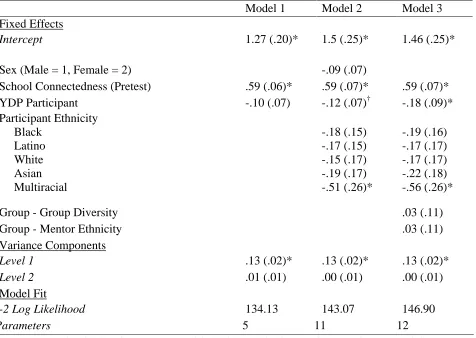
academic self concept did not yield significant associations (p =.75 and p =.42). School
connectedness yielded a significant, but negative association (p < .05) from participation; with
multicultural students reporting significantly less connection to the school. Review of process
notes maintained by mentors revealed specific group processes that may have influenced the
ethnic identity, academic self-concept, and school connectedness of students; such as discussion
and resolution of experiences of racism.
EVALUATING THE INFLUENCE OF PARTICIPAITON IN A DIVERSE HIGH
SCHOOL-BASED GROUP MENTORING PROGRAM
by
LAWANDA CUMMINGS
A Dissertation in Partial Fulfillment of the Requirements for the Degree of
Doctorate of Philosophy in Psychology
in the College of Arts and Sciences
Georgia State University
Copyright by
Lawanda Cummings
EVALUATING THE INFLUENCE OF PARTICIPAITON IN A DIVERSE HIGH
SCHOOL-BASED GROUP MENTORING PROGRAM
by
LAWANDA CUMMINGS
Committee Chair: Gabriel Kuperminc
Committee: Chris Henrich
Marci Culley
Kelly Lewis
Susan McClendon
Electronic Version Approved:
Office of Graduate Studies
College of Arts and Sciences
Georgia State University
Acknowledgements
The completion of this project is a culmination of many years, trials, failures, and
successes. This milestone is also an ending of a training and learning process that has made me a
competent researcher but more importantly, a better person. I dedicate this degree to my
ancestors and loved ones that were never afforded this opportunity and to those that will come
after me that will expected to pursue more and go further than I have.
This process has required the contribution of a village of scholars, elders, family and
friends that believed that I could achieve this life-long dream. I want to thank my parents and
family for enduring the long nights and grumpy days, and for instilling in me a love for learning.
I want to honor those that have been the calming voices of sanity during the darkest points of this
journey; my mother Elaine Cummings, my godmother Apostle Peeples, my eldest sister Charlene
Cummings, my big sib in the program Dr. Kim Broomfield-Massey, and my best friends Shaila
Philpot and Dr. Lashawnda Lindsay-Dennis. These powerful women have shown me how to be
complete in spirit, mind, body, and influence that I might change the world in some small way.
I want to thank my chair and mentor, Dr. Gabriel Kuperminc, for guiding this process and
making space for me grow, question, and learn. I also thank Dr. Leslie Jackson for being an
advocate and source of strength for so many students and for those I have been honored to call
friends; Dr. Obasaju, Dr. House, Dr. Holiday, Brandeis Nilaja Green, Mwende Mualuko and
many others. I also want to thank my colleagues at GSU that have suffered many writing groups
with me during the writing of this paper. And most of all I want to thank my Savior Jesus Christ
for keeping me through all the difficulties and making me able to see this through to the end. To
Table of Contents
Acknowledgements ... iv
List of Tables ... vii
List of Equations ... viii
Introduction ... 1
Mentoring ... 4
Limitations of One-on-one Mentoring and Alternative Approaches ... 6
Group Mentoring ... 7
Ethnicity and Group Mentoring. ... 10
Ethnic Identity ... 12
Ethnic Identity Development in Adolescence. ... 13
Academic Self-Concept ... 16
School Connectedness ... 19
Questions and Hypotheses ... 21
Method ... 23
Setting ... 23
Program Description ... 23
Participants ... 25
Program Implementation ... 26
Design and Procedure ... 27
Quantitative data ... 28
Measures ... 28
Results ... 34
Quantitative Analysis ... 34
Preliminary Analysis ... 34
Descriptive statistics ... 34
Tests of Group-level Differences ... 37
Qualitative Analysis ... 44
Group Descriptions ... 45
Discussion... 53
Integrating Qualitative Data ... 58
Study Limitations ... 61
Conclusion ... 62
List of Tables
Table 1: Group Composition for Qualitative Inclusion ... 32
Table 2: Descriptive Information for Program and Comparison Students ... 36
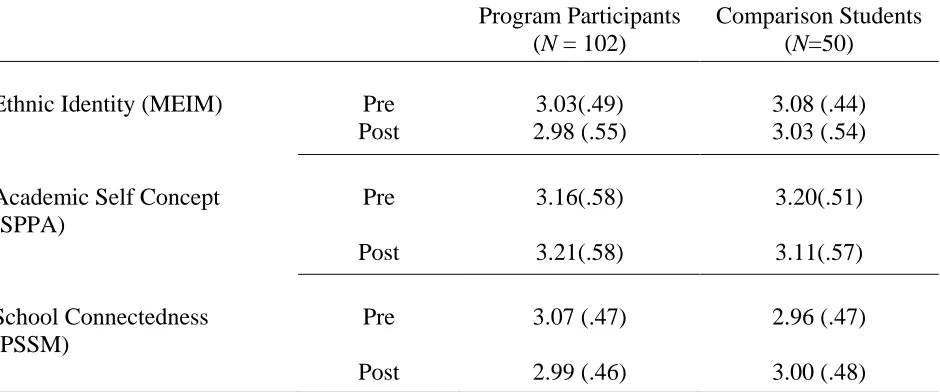
Table 3: Ethnic Identity, Academic Self-Concept, and School Connectedness Pre and Post-test Scores for Participant and Comparison Students ... 37
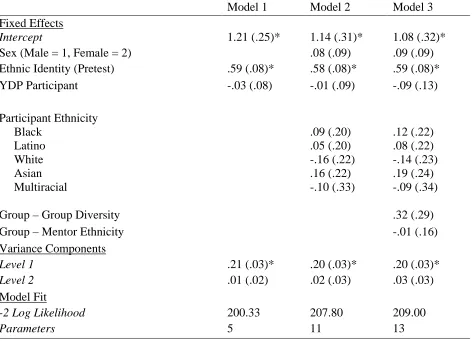
Table 4: Estimates of YDP Effects on Ethnic Identity ... 41
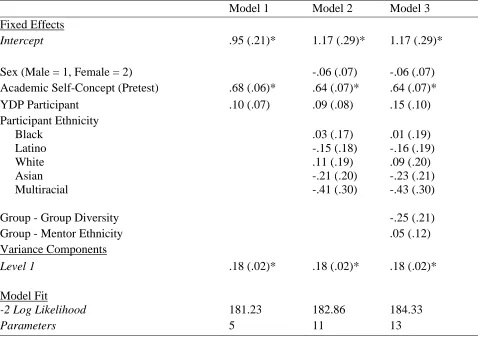
Table 5: Estimates of YDP Effects on Academic Self-Concept ... 42
Table 6: Estimates of YDP Effects on School Connectedness ... 43
List of Equations
Equation 1: Group Diversity Score ... 31
Introduction
Mentoring programs have emerged as a popular means for supporting youth. Research
has been primarily focused on outcomes for one-on-one mentoring programs (Rhodes, 2001;
DuBois, Holloway, Valentine & Cooper, 2002). These traditional programs have demonstrated
success in promoting protective factors, lessening risk behaviors, and improving academic
performance (DuBois, Holloway, Valentine & Cooper, 2002). Little attention has been given to
group based mentoring programs despite their being more cost effective and potentially reaching
more youth. A group mentoring approach matches a group of students to one or more mentors
creating two levels of relationship of the 1) mentor to protégé and 2) the protégé to their peers
(Hererra, Vang, & Gale, 2002). The limited research on group mentoring documents educational
and psychosocial gains similar to one-on-one mentoring (Hererra et al., 2002).
Mentoring provides a modality to intervene with students at risk for educational and
social failure. A mentoring “guide to success” is especially salient for ethnic minority students
who confront cultural and social incongruence between their own values or beliefs and those of
their schools and the larger society (Ogbu, 1990; Phelan, Cao, & Davidson, 1994; Cooper,
Jackson, Azmitia, Lopez & Dunbar, 1995). Research has argued that group mentoring may offer
similar supports as one-on-one mentoring and a more culturally consistent forum for addressing
issues of ethnicity (Lindsay-Dennis, Cummings, McClendon, in press; Utsey, Howarld &
Williams, 2003). Group mentoring offers a format that parallels the collective worldview found
in the cultures of visible racial/ethnic groups (Utsey et al., 2003). Therefore, many students of
color may be more comfortable in and better equipped to benefit from group mentoring than
questions on the effectiveness, processes and best practices for group mentoring initiatives.
Currently, one-on-one mentoring programs have been studied more extensively than
group mentoring programs. For example, several rigorous evaluations of the Big Brothers Big
Sisters (BB/BS) program, a national one-on-one youth mentoring program, have documented
gains for mentored youth compared to non-mentored youth in a variety of areas such as;
academic performance and behaviors, family and peer relationships, and interpersonal skill
development (Grossman & Tierney, 1998; Tierney, Grossman & Resch, 1995). Research
indicates that mentoring is particularly beneficial for youth living in high risk situations such as
single parent homes, high crime areas, and having limited economic resources (DuBois et al.,
2002). For example, The Guiding Youth to Careers program emerging from the University of
Pennsylvania focused on poor urban youth with various contextual risks with participants
evidencing gains in protégés academic and occupational acuity (Malone, 2006). These gains
were linked to mentors supporting students effort setting and meeting goals. For many urban
students contextual risks are compounded with struggles associated with being from a Visible
Racial/Ethnic Group (VREG) within a society that does not always value diversity or
acknowledge the challenges faced by members of these groups (Cook & Helms, 1999).
Although research shows that mentoring can be an effective strategy for building
resilience among youth, especially those living in conditions of high risk, there is a scarcity of
available mentors relative to the numbers of youth who would benefit from having a mentor.
Indeed, recent estimates suggest that there are 14.6 million adolescents are still in need of
mentors (Mentoring.org, 2009, para. 4). Group mentoring offers an alternative strategy to
address the mentoring gap by engaging more students with fewer mentors and resources. Group
as there will never be enough trained professionals to address the psychological needs within the
population. Additionally, many members of VREGs are hesitant to utilize traditional
psychological resources requiring creative methods of intervention to address threats to wellness
(Albee, 1969; Caplan & Caplan, 1993). Current trends in intervention design for VREG students
acknowledge a need for cultural responsiveness in program design and implementation
(Lindsay-Dennis, Cummings, McClendon, in press). Group mentoring is more consistent with the group
identity and socialization processes of many VREGs due its group-level focus, collective
process, and integrative nature (Herrera et al., 2002; Ogbu, 1990; Utsey et al, 2003).
Studies have generally concluded that children and adolescents who receive one-on-one
mentoring experience gains in their academic performance and in their relationships with parents
and teachers (Rhodes, 2002). Herrera et al. (2002) pointed out that these studies have not
investigated the impact of participating in group mentoring to assess and compare whether
participation operates in a different way to promote other protective factors that influence
students’ academic and interpersonal outcomes (Lapidus, 2004; House, 2004; Hartup, 1989).
Previous work with the mentoring program of interest in the current study, yielded specific gains
from participation within peer and parent relationships and group (ethnic) belongingness
(Lapidus, 2004; House, 2004). The diverse context of the program and past findings of increased
group belongingness led to the current inquiry focused on group participation and ethnic identity
development.
The present study investigates the development of students’ ethnic identity, academic
self-concept and school connectedness through participation in a school based group mentoring
program within a culturally diverse high school. Additionally, the role of ethnic identity as a
belonging will be tested. The remainder of this chapter critically reviews contemporary literature
regarding youth mentoring, ethnic identity, academic self-concept, and the role of school
connectedness. The current questions represent an important step in understanding and
substantiating some of the positive outcomes believed to come from participation in group
mentoring within the school context as well as the role of students’ ethnic identity in the
mentoring process. Exploring whether group mentoring can affect students’ ethnic identity,
academic self-concept, and school connectedness is also important because of the plethora of
research that links these constructs to academic success and positive psychosocial development
(Blum, 2005; Kuperminc, Blatt, & Leadbeater, 2000; Phinney & Chavira, 1992, Estela-Zarate,
Bhinji & Reese, 2005; Altschul, Oyserman, & Bybee, 2006).
Mentoring
Mentoring initiatives are very popular due to the accepted belief that non-parental
relationships with an adult can bolster protective factors in youth’s lives and positively alter the
youth’s educational, occupational, and developmental trajectories (Rhodes, 1994). There are
currently more than 1,700 organizations listed with the National Mentoring Database and over
500 agencies in the U.S. (DuBois, Holloway, Valentine & Cooper, 2002). Mentoring programs
have various formats that include traditional one-on-one adult mentoring, cross-generational,
peer mentoring, e-mentoring, and group mentoring (Sipe, 2002; Karcher, 2003; Karcher et al,
2006; Herrera, 1999). Across these formats, research has shown that supportive non-parental
adult relationships have the potential to boost youth resilience and promote higher levels of
efficacy (Rhodes, Bogat, Roffman, Edelman, & Galasso, 2002; Grossman & Tierney, 1998;
Dondero, 1997; Rhodes, 1994).
older, more experienced adults. These ‘natural mentors’ usually provide ongoing guidance and
support to facilitate a successful transition into adulthood (Klaw, Rhodes, Fitzgerald, 2003;
Rhodes & Davis, 1996). Despite gains attributed to these relationships, approximately half of all
youth do not have “natural mentors” to provide significant and on-going extra-familial
relationships characterized by mutual caring, commitment, and trust outside of a systemized
intervention program (Zimmerman, Bigenheimer, & Behrendt, 2005). In response to this need,
mentoring programs have emerged all over the U.S. to service at-risk youth in hopes of
decreasing the rates of school failure, incarcerations, and risky behaviors (Mentoring.org, 2009,
para. 7). The current explosion of mentoring programs has spurred empirical inquiry into the
effectiveness of formal mentoring programs designed to recreate the benefits observed in natural
mentoring relationships.
Historically, mentoring initiatives in the U.S. focused on saving children and adolescents
from the ills associated with the industrial revolution (Baker & Maguire, 2005). These early
mentoring efforts were primarily focused on white children and adolescents and did not typically
include VREGs. Historically, minority adolescents and children have been mentored by adults
within their communities rather than through formalized organizations focused on mentorship.
These natural mentors emerged from communities that often shared a common culture and
heritage with protégés. These natural links within the community have lessened as a result of
dramatic changes in schools, extended family, and neighborhoods which limit time and
availability for natural relationships to emerge (Scales & Leffert, 1999). These and other factors,
such as the mobile nature of modern families, have been associated with fewer natural mentors
and support within the immediate social structure of at-risk adolescents (Rhodes, 2001). To
formalized mentoring initiatives (including the group mentoring format) have emerged.
Evaluation research on formalized programs seeks to identify whether the same positive gains
seen in natural youth-adult mentoring relationships occur in these settings and to identify
empirically-based best practices for these initiatives.
There are many definitions of formalized mentoring; however most include 3 main
elements: 1) the mentor is someone with greater experience or wisdom than the mentee, 2) the
mentor offers guidance or instruction intended to facilitate growth and development of mentees,
and 3) there is an emotional bond between the mentor and mentee, in particular trust (Dubois &
Karcher, 2005). These elements are central in effective mentoring although they function
differently within the various approaches to mentor/protégé interactions. Research on mentoring
programs allows a thorough consideration of both the advantages and disadvantages of each
approach to assist practitioners and researchers develop testable theory on optimal mentoring.
Limitations of One-on-one Mentoring and Alternative Approaches
Although considered the gold standard, the literature acknowledges that one-on-one
mentoring programs have a chronic shortage of quality mentors. This shortage limits the growth
of these initiatives and leaves many youth that would benefit from these relationships without
mentors (Rhodes, Grossman & Roffman, 2002). In addition to contributing to the mentoring gap,
one-on-one mentoring programs usually have a lot of flexibility that may motivate some mentors
but intimidate others. For example, one-on-one programs like BBBS may have no set curriculum
or predefined goal for mentoring relationship. This requires that the mentor identify and set up
activities to promote the establishment of meaningful relationship with their protégé. In contrast,
most group mentoring initiatives have a built in curriculum or focus (e.g. problem behaviors).
of need, have inspired modified mentoring models that provide varied levels of structure and
modalities of contact, including group mentoring, cross-age peer mentoring, and virtual or
e-mentoring (Karcher, 2003; Sipe, 2002; Rhodes, Grossman & Roffman, 2002).
Site-based mentoring programs, like the current intervention, are the fastest growing
variation of mentoring intervention because they require less time and preparation on the part of
the mentor and can be tailored to the context’s specific focus (i.e. wellness intervention at a
clinic). Rhodes and colleagues (2002) reported that nearly half of new mentoring programs are
site-based, with approximately 70% based within schools. School-based programs maximize on
ready access to students due to compulsory education and the focus of schools on student
development. Among the mentoring variations, school based programs primarily focus on
outcomes consistent with the school context (academic, decreasing maladaptive behavior;
Portwood & Ayers, 2005). Often, these programs match a teacher or counselor to students who
have been identified as at-risk (Rhodes, Grossman& Roffman, 2002). School-based group
mentoring programs seek to provide opportunity for more students to have a mentor by pairing a
group of students with a more experienced mentor (Rhodes, Grossman & Roffman, 2002).
There has been limited empirical research on school-based group mentoring to explicate
group-level processes and effects of participation. These school bound programs take advantage of
contextual structures such as peers and invested adults (i.e., teachers or counselors) to support
student academic and psychosocial success. In theory, the group-level processes may facilitate
students’ identity development as members of VREGs, as academic beings, and promote their
integration into the school context.
Group Mentoring
popularity as an alternative to one-on-one mentoring. Of the 700 programs surveyed by
Public/Private Ventures, approximately 20% consider themselves to be group mentoring
programs (Rhodes, Grossman & Roffman, 2002). Herrera and colleagues (2002) described
substantial variation within group mentoring initiatives. Variations can be found in group sizes
(spanning 2 to 32 students), in group agenda (specific development in one skill or social/activity
focus), and amount of time spent in groups (6 to 14 hrs per month; Rhodes, Grossman &
Roffman, 2002). Group mentoring holds a specific appeal to school and community based
initiatives due to its cost effectiveness. These programs cost on average 50% less than
one-on-one mentoring per child (Herrera et al., 2002). Additionally, group mentoring makes more
intensive use of mentors to serve a larger number of students providing support to students that
would not otherwise be reached.
Within group mentoring initiatives, there are two levels of relationships that include the
protégé to their peers and the protégé to the mentor. These two levels of interactions and
relational modeling have shown benefits in students’ interpersonal skill development with both
their peers and parents (Herrera et al, 2002; House, 2004). Hartup (1989) discussed the role of
vertical and horizontal relationships in child development. He suggested that vertical
relationships provide a safe and supportive relationship in which youth can learn social skills
whereas horizontal relationships give youth an opportunity to use learned social skills and
enhance them (Hartup, 1989). Similar to Hartup’s discussion of vertical and horizontal
relationships, Barrera and Prelow (2000) posited that the social support mechanisms common in
interventions with youth mentoring and support groups as a mechanism for positive
development. These mechanisms include the development of interpersonal skills within the
group. Greater efficacy in assessing and creating social networks increases students’ potential for
future success and establishes important skills that can be utilized throughout life. Higher levels
of social support are associated with better health, educational, and social outcomes (Sherbourne
& Stewart, 1991); therefore, group mentoring initiatives may provide a space to learn how to
manage relationships.
One-on-one mentoring programs involve intense relationships between the mentor and
protégé that involve emotional, tangible, and informational support. Although group mentoring
programs seem to involve less intense mentor-protégé relationships and perhaps lower levels of
social support between adult and youth, group mentoring also provides a support network for
youth where group leaders provide informational support and individual group members provide
emotional support to each other (Herrera et al, 2002). Therefore, group mentoring provides a
setting where horizontal relationships occur through group member social support while vertical
relationships occur through the mentoring relationship that is formed between each youth and the
mentor. These two levels of relationships may facilitate similar outcomes to one-on-one
mentoring programs through different mechanisms. The horizontal relationship or support group
aspect may compensate for the less intense nature of the vertical mentor-protégé relationship
(House, 2004). In addition, the support group provides a setting where protégés can build social
networks and enhance social skills. Enhanced social skills can facilitate the development of
larger social networks outside of the group enriching their opportunities for additional
mentorship (Barrera & Prelow, 2000). One of the major benefits identified in Herrera et al.’s
(2000) study was improvement in protégés social skills. Mentors and protégés reported helping
other protégés feel better about talking to new people and working better with peers. Mentors
emerge from interactions between peers in a safe setting with the careful intervention and
direction of a mentor (Herrera et al., 2000). These skills easily translate to school, peer, and
home relationships promoting a more developed network of support (Sherbourne & Stewart,
1991).
Group mentoring attracts a different type of protégé than traditional mentoring. Many
youth interested in group mentoring would not usually participate in traditional mentoring but
the opportunity to interact with peers increases the attractiveness of these interventions (Herrera
et al., 2002). Using a group format also attracts a different type of mentor than traditional
one-on-one programs. Group mentors are usually older, less educated and more likely to be from a
minority group (Rhodes, Grossman & Roffman, 2002). Herrera and colleagues (2002) found that
these mentors felt less capable of managing the more intense one-on-one mentoring relationship
but capable of facilitating group level activities. Most school-based group mentoring initiatives
have set objectives that direct activities and time with protégés providing mentors structure for
mentor protégé interactions. Although the objectives are usually defined, the group mentoring
approach requires mentors to manage various levels of relationship and group dynamics while
promoting each student’s development. Mentors’ skill at managing these dynamics can
potentially determine the effectiveness of groups in supporting protégés. These complicated
interactions are not fully understood but they present alternative processes toward the gains
documented from one-on-one programs.
Ethnicity and Group Mentoring.
Ethnic and racial identity within the development and implementation of
community-based mentoring programs for minority youth has been debated as a factor in mentor selection,
2006). Within the debate on the impact of the race of mentors on protégé development, Ogbu
(1990) questions the ability of a white mentor to teach a black youth how to navigate the social
and contextual landmines of racism and oppression. Brown’s (2009) study of student-faculty
mentoring for African American male freshmen revealed benefits to matched mentors due to a
common experience. Also students indicated a discomfort in admitting difficulty to white faculty
mentors in fear of confirming negative stereotypes (Brown, 2009). In contrast, Rhodes, Davis,
Prescott, and Spencer (1996) found no significant effects due to the race of the mentor in a study
of African American teen mothers. The prominent factor in Rhodes et al, study was the
development of mutuality and trust within the mentoring relationship (1996). These contrasting
findings point to a limited understanding of race and ethnicity with mentoring relationships.
Literature on matching versus cross-matching mentors and protégés has primarily
focused on race and not ethnicity. Helms defines race as “asense of group or collective identity
based on one’s perception that s/he share’s a common heritage with a racial group (1990).” In
contrast, ethnicity is defined as “one’s sense of belonging to an ethnic group and the part of one’s
thinking, perceptions, feelings and behavior that is due to ethnic group membership” (Phinney &
Rotherham, 1987). The concept of ethnicity extends beyond group membership to the integration
of culture and experiences. Common ethnicity may lend relevancy to the mentor relationship for
VREG youth because of shared values and experiences. Research on ethnicity matching may
have been limited due to the lack of minority mentors within formalized programs; the unclear
distinction between race and ethnicity in research and a lack of empirical evaluative studies that
explore the function of mentor ethnicity in mentoring relationships and program outcomes
(Rhodes, Grossman, & Roffman, 2002; Cokely, 2000; Herrera et al., 2002).
have with minority students from cultures with a more collective worldview (Utsey, Howard &
Williams, 2003). Utsey and colleagues (2003) used West African principles in their therapeutic
group mentoring of African American boys in foster care. The utilization of collective principles
and cultural values within the group sessions was effective in decreasing the incidents of
maladaptive behavior among participants. Collins (2000) also discussed the cultural congruence
of a group dialogue process for African American women to redefine their reality and
experiences. For both mentors and protégés’, “the give and take of the dialogue process makes
struggling together for meaning of lived experiences itself a powerful exercise in self-definition and
self-discovery (Collins, 2000, p. 136)”. In this way group mentoring may have greater
applicability for more culturally collectivist groups toward the promotion of students’ academic
self-concept, their school connectedness and positive ethnic identity development.
Ethnic Identity
VREG youth make up 33% of all youth under the age of 18 in the United States
(Delgado, 2000). Students who are members of non-White ethnic or racial groups are
traditionally referred to as ‘minorities’. Cook and Helms (1999) challenged this
conceptualization because it implies “an inescapable psychological reminder of the
disempowered status of individuals who are not white” (p. 28). Additionally, the term minority
becomes a misnomer in many areas where Whites are outnumbered by other groups, such as the
diverse school in which this study took place. The majority of VREG youth live in urban areas
across all regions of the United States, which adds another layer of risk (Delgado, 2000). These
contextual factors pose psychological, developmental, and academic threats to adolescents’
transition into adulthood. For urban youth, these threats include poverty, teenage pregnancy and
Robinson & Ward, 1991; Ward, 1996, DuBois & Rhodes, 2001). Delgado (2000) points out that
these risks associated with urban living are compounded with experiences of racism and
classism. These social forces increase the challenges associated with social and academic
development, thereby making VREG group membership an additional risk. To combat these
issues, many organizations have employed mentoring focused on students identified as ‘at-risk’
due to familial composition, poverty, or academic failure. These students are disproportionately
from VREGs.
Ethnic Identity Development in Adolescence.
Adolescence has been documented in scholarly and popular literature as a challenging
developmental period that poses new demands on youth in their transition into adulthood
(Darling, 2005). For many VREG adolescents, this period can be especially daunting because it
also encompasses ethnic identity formation. During adolescence, youth routinely strive to
develop an identity separate from that of their parents. This developmental phase is also
characterized by more intense peer relationships and disrupted parent relationships (Steinberg &
Morris, 2001). Much of our identity is constructed though our interactions with others and the
context, therefore these relational processes can significantly impact on how VREG youth come
to understand their ethnic identity. Mentoring programs can contribute to this self-discovery
process with non-related caring adults providing guidance and support throughout adolescents’
identity development. Mentoring relationships add another source of support, socialization, and a
vehicle for understanding their place within the larger society.
Erikson (1968), a prominent theorist in developmental research, emphasized the social
context of psychological development. He conceptualized psychological development as a result
the developing person’s life. During adolescence, Erickson’s model focused on the psychosocial
crisis of identity versus identity diffusion. Adolescence is a period during which the developing
person establishes a sense of personal identity beyond the family unit. According to Erikson,
adolescents must find the answers to the following questions: Where do I come from? Who am
I? What do I want to become? These questions address origin, which for adolescents from
VREGs include values and traditions that are different from mainstream culture.
Building upon Erikson’s work, James Marcia (1966) developed a status approach for
understanding identity development in adolescents. Marcia identified patterns and common
issues that emerge while exploring adolescent identity. According to Marcia, important decisions
are made during adolescence about future occupations, political ideologies, and religious beliefs.
Addressing questions about their personal identity facilitates understanding of how young people
“fit” into the world. Both Erickson and Marcia’s progressive models allude to the importance of
contextual features and culture, but there is not an explicit acknowledgement of an ethnic
identity development process (Phinney, 1990).
Phinney (1989) builds on Marcia’s work by focusing specifically on ethnic identity in
adolescents and adults. Robinson and Howard-Hamilton (2000) defined ethnicity as groups of
individuals that share a common culture, nationality, history, or religion. Culture has a variety of
meanings but generally encompasses shared meaning and patterns of society that are transmitted
through generations (Betancourt & Lopez, 1993). Phinney’s (1989) model for ethnic identity
included an unexamined ethnic identity, an ethnic identity search, and an achieved (committed)
ethnic identity. Within the unexamined ethnic identity, the developing person has not
encountered ethnic identity issues due to either endorsement of the majority culture values, a
realizing the incongruence with majority culture (Phinney, 1990). Ethnic identity search, is
characterized by active exploration of one’s personal ethnic identity. This active exploration is a
response to a significant event that brings their membership to an ethnic group to the forefront.
Active search processes many times include immersion into one’s culture through activities such
as reading, participation in cultural tradition, and visiting historical/cultural museums. Achieved
ethnic identity includes an internalization of one’s membership in an ethnic group. For ethnic
minorities, this may require the developing person to come to terms with cultural differences
between their group and the majority culture, and the lower status of their group within the larger
society (Phinney, Lochner & Murphy, 1990). Many behavioral scientists view these phases as
unfolding on a continuum where people continually make adjustments in their conceptualizations
of themselves as ethnic beings throughout the lifespan (Cross, Parham & Helms, 1991). Within
the current study, ethnicity identity is measured to assess gains in positive ethnic identity
development over the span of the intervention.
A positive ethnic identity is especially salient due to societal and systemic barriers that
threaten the educational, relational, and psychological development of adolescents who are
VREGs and from disadvantaged backgrounds (Sipe, 2002; Herrera et al., 2002). Succumbing to
contextual risks can constrain adolescents’ educational and occupational trajectories into
adulthood by limiting their access to post secondary education opportunities and increasing the
likelihood of imprisonment, and early parenthood (Belgraves, 2004; Lindsay-Dennis, Cummings
& McClendon, in press). Recent research and intervention development to address this specific
developmental phase has sought to understand and employ empirically sound mentoring
methodologies as a means to boost protective factors and resiliency for contextual risk factors
McClendon & Cummings, March 2009). Research that investigates the role of ethnic identity
and culture in the mentoring process is needed to develop best practices for mentoring VREG
students in a culturally conscious manner.
Academic Self-Concept
A major milestone during adolescence is the completion of high school. High school
completion can have long reaching impact on students’ academic and occupational opportunities.
Unfortunately, there are many contextual factors that impact the psychosocial and academic
development of VREGs. For example, African American youth are four times more likely to live
in poverty which is associated with school failure and twice as likely to drop out of high school
as their white counterparts. Additionally, African Americans score lower in math and
standardized tests than their white and Latino counterparts and African Americans 16 years or
older more likely to be unemployed regardless of their educational level (National Center for
Educational Statistics, 2008). In light of these trends, the successful academic matriculation of
students has become a national agenda. To support student achievement and matriculation, over
70% of new site-based mentoring programs have emerged in school-contexts (Rhodes, Grossman
& Roffman, 2002). These programs are usually geared specifically to the goals and objectives of
the academic context they are embedded in. A major focus of most youth mentoring initiatives
within schools is academic achievement. These programs primarily match students with teachers,
older students, or other adults with weekly activities to support their academic progression ( e.g.,
tutoring; Rhodes, Grossman & Roffman, 2002). These efforts acknowledge that the school
context is a place where many students develop significant positive relationships with
non-familial adults with contextual goals centered on academics. Within the educational psychology
their concept of themselves as learners (Middleton & Midgley, 1997; Elliot & Harackiewicz,
1996). Pajares, Britner and Valiantes (2000) investigated the role of academic achievement
motivation, goals, and gender for middle school students (N=778) in their writing and science
efficacy. They found that task goals (mastery goals) were positively associated with self efficacy,
self concept, and self regulation. The increase in capacity to self-regulate in the school
environment was associated with positive outcomes (Pajares et al., 2000). Overall, Pajares et al.
substantiated prior findings that academic self-concept and achievement have a reciprocal
relationship (i.e. low self-concept was highly predictive of low academic performance).
Valentine, DuBois and Cooper (2004) conducted a meta-analysis on the relationship
between students’ self beliefs and their academic achievement. Across the included studies,
Valentine and colleagues found positive academic outcomes were moderately predictive of
students’ academic self concept. The reciprocal relationship between academic self-concept and
academic achievement is acknowledged, but the research points to a developmental path where
academic achievement informs the development of an academic self-concept (Valentine et al.,
2005; Guay, Marsh, & Boivin, 2003). Guay, Marsh and Boivin (2003) worked to clarify the
relationship between academic achievement and academic self-concept to see which
developmentally preceded the other. Their longitudinal study of 2nd to 4th grades (N=387) from
10 French Canadian elementary schools revealed that through academic experiences, students
developed a positive or negative academic self-concept. During this early developmental period
for academic self concept, experiences of school success and mastery were integral in their
assessment of school and their capacity as a student. These constructs then appear to function in
a reciprocal relationship from late elementary school through adolescence. School-based
boosting students’ self-concept as learners through peer and mentor support.
Within Phelan, Cao and Davidson’s (1994) research on high school youth, they discussed
the fact that many VREG students negotiate the boundaries between multiple worlds. Their
Multiple Worlds Framework focuses on the processes of movement between their family, peer,
and school worlds. Learning to transition between these worlds during adolescence is imperative
for academic and social success (Phelan et al., 1994). Within this model, four categories
emerged: 1) Congruent worlds/smooth transition, 2) Different worlds/border crossing managed,
3) Different worlds/ border crossing difficult, and 4) Different worlds/border crossing resisted.
Minority students usually fall within the last three categories as their cultures are not usually
parallel with mainstream. The level of proficiency that students had in transitioning between
these worlds was predictive of their academic success and school connectedness (Phelan et al.,
1994; Blum; 2005). High achieving minority students learn to navigate these worlds but many
times at a cost to their personal and ethnic identities (Phelan et al., 1994). Group mentoring
offers a way to support students with varying skill in making these transitions by enhancing their
capacity to navigate their family, peer, and school worlds (House, 2004; Phelan et al., 1994;
Herrera et al, 2002) while supporting their personal and ethnic identity (Lapidus, 2004).
Research supports gains for school-based programs that target both academic
self-concept and increased academic support to promote student success. With older students either
approach can increase student performance and their positive exchanges with the school context
(Valentine et al., 2005). Group mentoring also creates a network of peers that can assist in
navigating school requirements and a structure of accountability within the school context. The
access to educational and occupational opportunities during and after high school. Recent
research has also identified school connectedness and ethnic identity as promoters of academic
success for Latino/a and African American students further substantiating a connection between
these constructs that needs further investigation (Estela-Zarata, Bhimji, Reese, 2005; Altschul,
Oyserman, Bybee, 2006). Group mentoring offers a modality to promote development in all
three of these domains to promote student success.
School Connectedness
The school context is second only to family as a stabilizing force in adolescents’ lives
(Blum, 2005; McNeeley, Nonemaker, & Blum, 2002). There is an apparent value of connections
within the school environment to adolescents’ social and academic development. Blum’s (2005)
specified four criteria for students feeling connected that included the following: 1) high
academic rigor and expectations, 2) support of learning, 3) positive adult-student relationships,
and 4) physical and emotional safety. School connectedness is defined by Blum and Libbey
(2004) as “the belief by students that adults in the school care about their learning and about
them as individuals (p.230).” As a construct, school connected has been studied across multiple
disciplines concerned with adolescent development as a predictor of health outcomes,
educational attainment, and psychological functioning to name a few. Research in school
connectedness shows seven factors that influence students’ positive attachment to school: 1)
having a sense of belonging and being a part of school, 2) liking school, 3) perceiving
teachers/adults in school as supportive and caring, 4) having a good friend within school, 5)
being engaged in their current and future academics, 6) believing that discipline in the school is
fair and effective, and 7) participating in extracurricular activities (Battistich & Hon, 1997;
Learn, 2004, Fin & Rock, 1993, Voelkl, 1995,). All of the factors associated with higher levels
of school connectedness are highly predictive of school success. House, Kuperminc and
Block-Lapidus (2005) found that group mentoring can promote a sense of school belonging for youth
when youth perceive a positive relationship with the mentor and mutual support from group
members. Karcher, Davis, and Powell’s (2002) research on mentoring and connectedness further
substantiated the benefits that come from mentoring relationships in promoting school
connectedness and social skills among middle and high school students. His premise was that
mentoring can promote social bonding and a sense of belonging that helps students connect to
themselves, others, and the larger society (Karcher, 2001). Karcher’s (2001) framework of
adolescent connectedness shows that these types of connections can be generalized and assist
students in their social and academic goals.
The school context is a critical venue for adolescent development beyond knowledge
acquisition. Non-academic aspects of school (i.e. social interactions) are significant contributors
to both school and student success (Blum, 2005). There are multiple strategies given to increase
student attachment to the school through inclusion of parents, having high academic standards,
and supporting teachers. One strategy within Blum’s (2005) report was the development of at
least one positive relationship with an adult at the school. He emphasized that this adult could be
a teacher, a staff person, or a volunteer from the community. This relationship with a
non-familial adult could increase school connectedness, model self-regulatory behaviors (aiding in
behavior problems), and boost psychosocial skills (aiding in relationship maintenance with peers,
family, and school personnel; Blum, 2005, Herrera et al., 2002, Rhodes et al, 2000). All these
non-academic skills are imperative for successful navigation through school and navigating
role that mentoring can have on the student academic progression with mentors functioning as
agents of change. By developing a relationship characterized by mutuality, consistency, and a
commitment of time (6 months to a year); positive relationships can positively influence student
academic and psychosocial outcomes (Grossman & Rhodes, 2002, Rhodes, 2002).
Questions and Hypotheses
Based on this review of the literature, the present study is designed to investigate the
influence of group level diversity and the ethnicity of the mentor on student ethnic identity
development, academic self-concept and school connectedness. Additionally, the function of
participation in a school-based group mentoring program on students’ ethnic identity, academic
self-concept, and school connectedness were assessed. The role of ethnic identity was explored
to identify the mechanism by which it affects academic and school level variables. Lastly, to
more fully understand the group process and ethnic identity development, an exploratory
qualitative analysis of different group compositions was conducted. The following questions
were addressed in this study:
1. Does the ethnic composition of groups and the ethnicity of the facilitating mentor
influence student ethnic identity development differently across nested groups?
a. It was hypothesized that increases in ethnic identity would be observed among
youth who participate in groups characterized by the presence of high levels of
cultural diversity and facilitated by ethnic minority mentors.
2. Does participation in a school-based group mentoring program predict the development
of students’ ethnic identity, academic self concept and school connectedness in high
school students?
in academic self-concept, school connectedness and a positive ethnic identity
relative to a demographically matched comparison group.
3. Does participation in group mentoring contribute to school connectedness and academic
self-concept via its effects on ethnic identity development?
a. It was hypothesized that ethnic identity would mediate the associations of
participation in group mentoring with academic self concept and school
Method
Setting
The Youth Development Program (YDP) took place in an urban school that is one of the
most diverse schools in Georgia with students from more than 50 counties in Africa, Europe,
South and Central America and Asia. The majority of students are from VREGs with
approximately 1 in 4 students enrolled in English for speakers of other languages (ESOL)
classes. The school population is largely Latino (59%) and African American (23%) with a
smaller representation of Asian, (12%) and multiracial (2%) students. Students eligible for free
or reduced lunch constitute 68% of the overall student population. Latino and African American
students experience school failure and dropout at disproportionately high rates with, for example,
these two groups making up 91% of the dropouts for the 2005-2006 school years. With the
multiple risk factors of low SES, limited opportunities within the urban context, and minority
status; mentoring initiatives like YDP seek to address the psychosocial needs of students beyond
academics and increase student capacity to navigate the school context and pursue additional
academic and occupational opportunities.
Program Description
YDP is a school-based group mentoring program that emerged from a partnership
between an urban university and a high school. This partnership was initiated by school
administrators concerned about the development of recently immigrated students and their need
for additional support in navigating a new culture and school environment. The focus of YDP
was primarily on psychosocial development rather than academics. Through this partnership,
undergraduate psychology students function as mentors to small groups of high school students.
applied credits toward their degree. Mentors met weekly within normal school operating hours
for a full academic year1
An advanced psychology class on understanding and using appropriate interpersonal
skills was a prerequisite for enrolling in this practicum. These skills included active listening,
conflict resolution, self-awareness (reflective processes) and basic relationship theory. Students
that met this prerequisite were interviewed by at least 2 team members to assess their fit to the
program. Selected students were then required to attend pre-training with program faculty and
graduate supervisors. This pre-training focused on ethical considerations in working with youth,
strategies for initiating and maintaining healthy relationships with students, and ways to
incorporate protégés needs and desires in group processes (Sipe, 1992; Herrera et al., 2000;
Tierney & Branch, 1992; Rhodes, 2005). Mentors were exposed to relevant literature about the
potential of close relationships to help or hinder students depending on consistency and
dedication of mentors (Grossman & Rhodes, 2002). Activities and role play were used to train
mentors to utilize a flexible, consistent, and fun approach for relating to protégés (Sipe, 2002).
To further the potential of forming close relationships with protégés, mentors learned how to
promote a safe environment for all protégés by establishing the expectation for group
confidentiality, and through the creation of group rules with protégés. Also mentors learned and
communicated to students the limits of confidentiality (i.e., mentors are required to report any
intent of students to harm themselves or others and mentors are required to disclose group
processes and concerns to their supervisors). .
1
Mentors were taught best practices for mentoring with the anticipation that they would
create or modify provided activities to address the specific needs of their groups (Elements of
Effective Mentoring, 2010). In this way, mentors had ownership of information presented and
the freedom to be genuine in the group. This strategy also deliberately included protégés in the
process of determining group discussion topics and activities. The goal of facilitating this level
of flexibility and responsiveness to protégés in groups was to promote the development of close,
meaningful relationships.
Mentors were given a list of students who were nominated by teachers and guidance
counselors in the school from which their group members could be selected. Single gendered
groups were formulated with the intention of creating safe environments for discussion and
exploration of salient topics to participating students. Mentors approached the identified students
and invited them to join their group. Once groups were formed, mentors received on-site
supervision each week before and after their meeting with a psychology doctoral student.
Mentors also received off-site supervision with an assigned doctoral student supervisor for
approximately 1 hour per week. These meetings were usually conducted with another
undergraduate mentor to facilitate sharing and a group learning process. Throughout the year,
mentors and staff met for on-going training support, and review of the mentoring process.
To assist in the supervision process, mentors were required to keep weekly records of the
group mentoring process and their personal experiences as a facilitator. These records were also
used to assess growth within the groups over time and as a source of data for program evaluation.
Groups were reflective of the diversity of host school and students were matched according to
interest and specifications of mentors.
Recruitment. Program participants were recruited through teacher and counseling center
referrals. Undergraduate mentors specified characteristics of the type of group they would be
interested in working with and the information was given to teachers to elicit referrals. Mentors
typically decided on characteristics such as gender, ethnicity, grade level, interests, and specific
challenges such as academic or behavioral risk. Careful consideration was given to ensure that
no groups were comprised of highly aggressive youth to combat iatrogenic effects as suggested
by Dishion and colleagues (1999). Once teacher referral lists were obtained, mentors visited
potential protégés, gave them a brief description of the program, and conducted a brief interview.
Interested students were asked to return a signed parent consent form and sign a student
assent form. Recruitment for comparison students was conducted in English classes as all grades
are represented as well as varying levels of academic ability. Investigators visited classrooms,
gave a description of the study, and distributed parent consent forms. The study only included
students who returned signed parent consent forms and signed a student assent form
Sample. The final sample included 152 students (102 participants and 50 comparison
students). The participant group came from the 2001-2002, and 2002-2003, 2003-2004, and
2004-2005 school years and the comparison group came from the 2002-2003, 2003-2004, and
2004-2005 school years. Each student participated in a full year mentoring program. Out of the
23 groups, 4 individual groups were purposively selected for qualitative inquiry into group
processes related to ethnic identity development. The procedure for selecting groups for
qualitative analysis is described below. Group process characteristics were extracted through
review of mentors’ weekly progress notes.
Group sessions occurred during the school day for approximately 1 hour. Mentors came
to school 30 minutes prior to sessions to meet with an onsite supervisor to review their plans for
group and to ensure that required resources are available for their planned activities. Protégés
met primarily in a conference room in the school library with on-site supervisors readily
available. At the conclusion of each session, mentors met with the on-site supervisor to discuss
and review what happened in the group. Mentors were required to fill out a process notes form
for their on campus supervision the following week. Activities and discussion topics were
primarily drawn from student suggestions but all reviewed groups covered diversity issues (e.g.,
group membership, discrimination), communication skills (e.g., peers and parents), future goals
(e.g., college and career), high risk behaviors (e.g., sexual activity, drugs), and school related
concerns (e.g., academic performance, challenges with curriculum).
Design and Procedure
This mixed method study used both quantitative and qualitative data sources. The
quantitative component of the study utilized pre-post survey data collected from participating
and comparison students on ethnic identity, academic self-concept, and school connectedness.
The qualitative component utilized quantitative findings to purposefully select four groups for
review of the process notes kept by mentors to assess group process and focus on ethnic identity.
This method allowed the researcher to use qualitative data to explain quantitative findings from
an interpretivist-positivist paradigm. This positivist paradigm aims to evaluate objectively the
social world while the interpretivist strives to understand individual and group meanings ascribed
to experiences (Creswell, 2003). This combined approach sought to maximize the strengths of
Quantitative data
A pre-post test design with a nonequivalent comparison group was employed to test the
effects of participation on ethnic identity development, academic self concept and school
connectedness. Program participants and comparison participants were asked to participate in the
study at the start of program implementation about one month after the start of the school year
(September) and at program exit during the last 2 to 3 weeks of the school year (May). The
current study focused on students that received a full academic year of mentoring with pre-post
assessments to quantify changes in ethnic identity, academic self-concept, and school
connectedness. Questionnaires were administered by trained graduate and undergraduate
research assistants and took approximately 30 to 45 minutes to complete. Mentors were not
involved in data collection and questionnaires included identification numbers to ensure
confidentiality of participants’ responses. Participants were reminded that only investigators
would have access to their responses. Snacks were given to participants in appreciation for their
participation.
Measures
Participants in the study completed several self-report scales designed to assess program
effects on ethnic identity, academic self-concept and school connectedness. The comparison
group received an identical battery of scales with the exception of 2 measures that assessed
relational experiences participants had with the mentors and their mentoring group.
Background Information. Students completed a brief informational questionnaire
indicating their ethnic group, sex, grade level in school, and whether or not they were born in the
US. These individual characteristics were reviewed to ensure that participants and comparison
School Connectedness. Students completed the Psychological Sense of School
Membership (PSSM) scale (Goodenow, 1993). The PSSM includes 18 items that measure
feelings of inclusion, respect, sense of acceptance, and encouragement for participation. Using a
4-point Likert scale (1=not at all true to 4=very true), students rated statements like “Other
students in this school take my opinions seriously.” Item scores are averaged to obtain a total
school connectedness score. Research has linked school connectedness to self reports of school
motivation providing support for the validity of the scale (Poyrazli, Ferrer-Wreder, Meiser,
Forthun, Coatsword & Grahame, 2008). This scale has shown internal consistency with alphas
ranging from .71 to .88 for middle school youth and .88 for high school youth (Goodenow, 1993;
Hagborg, 1994). Students with a greater sense of school membership were more motivated, had a
more positive self-concept, expressed greater school satisfactions, had more positive
relationships with teachers and performed better academically (Hagborg, 1994; Blum, 2005). For
the current sample, the internal consistency of this scale was stable with alphas at pretest of .79
and at posttest .82.
Academic Self-Concept. Students completed an adapted 5-item scale derived from
Harter’s (1988) Self-Perception Profile for Adolescents (SPPA)scale that measures students self
perceived scholastic capacity. Example items include: “I feel I am just as smart as others my
age” and “ I do very well at my class work.” A 4-point likert scale was utilized in this modified
measure with 1= Not at all true to 4=Very true. This scale has shown internal consistency with
an alpha of .75 for high school populations (Kuperminc, Darnell, & Alverez-Jimenez, 2008).
Consistent with prior research on this sample, the alphas at pretest were .72 and at posttest were
.74.
(MEIM) that measures two factors: 1) ethnic identity search and 2) affirmation, belonging and
commitment to your identified group (Phinney, 1992). There are 3 subscales within the measure
that assess: 1) sense belonging and feelings toward one’s ethnic group, 2) one’s ethnic behaviors
and customs, and 3) achievement of ethnic identity through exploration and commitment. Scale
items include statements like “I feel a strong attachment towards my own ethnic group” and “I
am happy that I am a member of the group I belong to.” Each statement is rated on a 4-point
scale (1=strongly disagree to 4=strongly agree). A total score was calculated by first reverse
scoring negative items, then averaging across all 14 items. This scale has been used with
ethnically diverse groups of high school students with alphas over .80 (Phinney, 1992; Phinney,
Ferguson, & Tate, 1997). The internal consistency for this scale with the current sample was
stable with alphas for pretest and posttest of .78 and .83 respectively.
Group Diversity Composition. Each group received a score that reflected the level of
diversity within each group. Students reported their ethnicity in an open-ended question within
the background information section of the questionnaires. Students’ answers were re-coded into
six categories (Black/African decent, Latino, White, Asian, Multiracial, Unknown). This
reclassification of race grouped students with distinct cultural differences into one category
within this particular school due to the high percentage of international students (e.g., Somali and
African American students were both coded as Black). For students with missing ethnicity data,
review of the process notes that documented group activities helped ascertain student ethnicity.
Students with no additional ethnicity information were categorized as Unknown (N=7). Group
diversity was calculated as a ratio of the number of ethnicities represented in a group and the
total number of group members, as shown in equation 1. For example, the diversity score for a
students and a diversity score of .33. Each member of the group received the group diversity
score for subsequent analysis.2
EQUATION 1: GROUP DIVERSITY SCORE
Group Diversity Score = __N ethnic_groups -1__ N individuals in group -1
Mentor Ethnicity. Within the initial study, the ethnicity of the mentor was not a focus so
they were not directly asked their ethnic group membership so very little information was
available about mentors’ ethnicity. For the current study mentors were assigned to either a white
or ethnic category. Approximately 74% of the mentors were members of an ethnic group (N =
17). The majority of groups included 3 or more ethnicities within the protégés (N= 19). Of the 3
groups with ethnically homogeneous groups, two were facilitated by mentors to address needs
specific to the populations targeted by an ethnically matched mentor (e.g., a group of Bosnian
refugee youth facilitated by a mentor who was herself a Bosnian refugee).
Qualitative Data
The qualitative component of this study used an instrumental case study design that
involves systematic investigation of a few cases to understand group process (Bless &
Higson-Smith, 1995). Within this mixed method research design; the quantitative findings informed the
selection of cases and the direction of inquiry.
2
Both the numerator and denominator were rescaled by subtracting 1 from the total; this reduced
the effect of group size on the estimate of group diversity (e.g., without doing this, a group with
only 2 members would have a minimum diversity score of .5 even if only 1 ethnic group was
Inclusion criteria. Four groups were selected for further inquiry to review group
processes in regards to ethnic identity development and ethnic identity’s relation to academic
self-concept and school connectedness. Groups were selected on the basis of two criteria; 1) the
match between the mentor’s and protégés’ ethnicity (same or cross-matched), and 2) the level of
diversity within the group (highest and lowest). A group of all white females was also included
as a basis of comparison of the inclusion of ethnic identity issues within group processes.
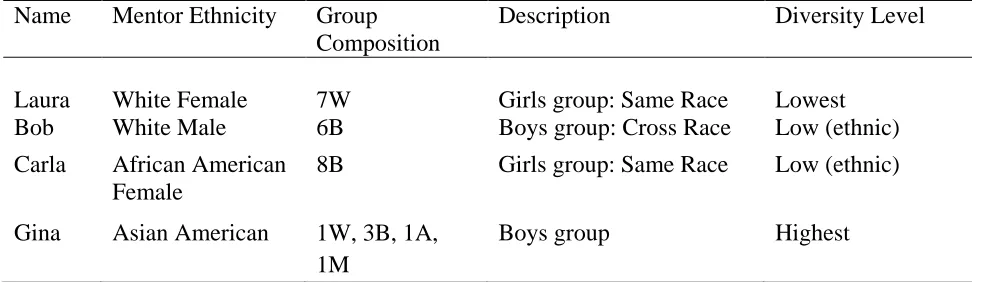
Description of the group composition and mentor ethnicity for selected groups are listed in Table
1. The names of mentors were changed to preserve confidentiality. These four groups span three
[image:42.612.65.560.387.528.2]different program years, but comparison across groups yielded no cohort effects.
TABLE 1
GROUP COMPOSITION FOR QUALITATIVE REVIEW
Name Mentor Ethnicity Group Composition
Description Diversity Level
Laura White Female 7W Girls group: Same Race Lowest Bob White Male 6B Boys group: Cross Race Low (ethnic) Carla African American
Female
8B Girls group: Same Race Low (ethnic)
Gina Asian American 1W, 3B, 1A, 1M
Boys group Highest
Note. Gina’s group is neither cross nor same matched due to the diversity of her group.
Document Review Procedures. Weekly process notes were maintained by each mentor to
document group activities, discussion topics, emergent issues and overall group progress.
Mentors filled out a form for each one hour meeting with the students and these documents were
used for by supervisors to provide support and assistance. Process note forms were standardize
readiness) and post-meeting (description of group session, student responsiveness to activity,
mentors’ rating of feeling like a teacher, parent, or friend, and the groups cultural focus). The
forms for the included groups (N = 76) were reviewed and coded for five types of ethnic identity
exploration; 1) discrimination/racism experiences, 2) coping strategies for discrimination/racism,
3) cultural norms of group membership, 4) importance of group membership, and 5)
multiculturalism. Some forms were missing and groups with documentation were assessed and
counted in the percentage of group time focused on ethnic identity development.