ScholarWorks @ Georgia State University
ScholarWorks @ Georgia State University
Counseling and Psychological Services
Dissertations Department of Counseling and Psychological Services
Summer 8-7-2012
The Relationships Among Multidimensional Perfectionsim,
The Relationships Among Multidimensional Perfectionsim,
Shame and Trichotillomania Symptom Severity
Shame and Trichotillomania Symptom Severity
Christina L. Noble
Georgia State University
Follow this and additional works at: https://scholarworks.gsu.edu/cps_diss
Recommended Citation Recommended Citation
Noble, Christina L., "The Relationships Among Multidimensional Perfectionsim, Shame and Trichotillomania Symptom Severity." Dissertation, Georgia State University, 2012.
https://scholarworks.gsu.edu/cps_diss/78
ACCEPTANCE
This dissertation, THE RELATIONSHIPS AMONG MULTIDIMENSIONAL
PERFECTIONISM, SHAME AND TRICHOTILLOMANIA SYMPTOM SEVERITY, by CHRISTINA L. NOBLE, was prepared under the direction of the candidate’s Dissertation Advisory Committee. It is accepted by the committee members in partial fulfillment of the requirements for the degree Doctor of Philosophy in the College of Education, Georgia State University.
The Dissertation Advisory Committee and the student’s Department Chair, as representatives of the faculty, certify that this dissertation has met all standards of excellence and scholarship as determined by the faculty. The Dean of the College of Education concurs.
______________________________ ________________________________
Jeffrey S. Ashby, Ph.D. Kenneth B. Matheny, Ph.D.
Committee Chair Committee Member
______________________________ ________________________________
Gregory L. Brack, Ph.D. Takako Chris Oshima, Ph.D.
Committee Member Committee Member
_____________________ Date
______________________________ Brian Dew, Ph.D.
Chair, Department of Counseling and Psychological Services
______________________________ R. W. Kamphaus, Ph.D.
AUTHOR’S STATEMENT
By preparing this dissertation as a partial fulfillment of the requirements of the advanced degree Georgia State University, I agree that the library of Georgia State University shall make it available for inspection and circulation in accordance with its regulations
governing materials of this type. I agree that permission to quote, to copy from, or to publish this dissertation may be granted by the Professor under whose direction it was written, by the College of Education’s director of graduate studies and research, or by me. Such quoting, copying, or publishing must be solely for scholarly purposes and will not involve potential financial gain. It is understood that any copying from or publication of this dissertation which involves potential financial gain will not be allowed without my written permission.
NOTICE TO BORROWERS
All dissertations deposited in the Georgia State University library must be used in
accordance with the stipulations prescribed by the author in the preceding statement. The author of this dissertation is:
Christina L. Noble 1762 Pierce Arrow Pkwy
Tucker, GA 30084
The director of this dissertation is:
Dr. Jeffrey S. Ashby
Department of Counseling and Psychological Services College of Education
CURRICULUM VITA
Christina L. Noble
ADDRESS: 1762 Pierce Arrow Pkwy
Tucker, GA 30084
EDUCATION:
Ph.D. 2012 Georgia State University Counseling Psychology
Ed.S. 2011 Georgia State University Professional Counseling
M.S. 2008 Georgia State University Professional Counseling
M.A. 2004 Emory University
Cognitive and Developmental Psychology
B.A. 2002 Wesleyan College
Psychology, Minors in Neuroscience and Theatre
PROFESSIONAL EXPERIENCE:
2011-2012 Pre-Doctoral Psychology Internship
Georgia Institute of Technology Counseling Center, Atlanta, GA 2010-2011 Advanced College Counseling Practicum
Georgia Institute of Technology Counseling Center, Atlanta, GA 2008-2011 Balint Facilitator for Family Medicine
Department of Graduate Education, Atlanta Medical, Atlanta, GA 2008-2011 Instructor for CPS Department (Undergraduate and Graduate)
Georgia State Univeristy, Atlanta, GA
2009-2010 Assessment, Testing, and Diagnostic Practicum
Anxiety and Stress Management Institute, Atlanta, GA 2007-2011 Psychotherapy Counseling Practica and Staff Therapist
Anxiety and Stress Management Institute, Atlanta, GA
PROFESSIONAL SOCIETIES AND ORGANIZATIONS: 2011-present Georgia Psychological Association 2010-present OCD Georgia, Board Member
2009-present VALOR Institute for Dissociative Disorders, Board Member 2009-present Trichotillomania Learning Center
2009-present National Board of Certified Hypnotherapists
2009-present International Society for the study of Trauma and Dissociation 2008-present American Psychological Association, Division 17
REFERREED PUBLICATIONS:
Gnilka, P., Ashby, J., & Noble, C. (in-press). Multidimensional perfectionism and anxiety: Differences among perfectionists and tests of a coping-mediation model.
Journal of Counseling & Development.
Ashby, J., Noble, C., & Gnilka, P. (in-press). Multidimensional perfectionism,
depression, and satisfaction with life: Differences among perfectionists and tests
of a stress-mediation model. Journal of College Counseling.
Ashby, J., Slaney, R., Noble, C., Gnilka, P., & Rice, K. (in-press). Understanding differences between “Normal” and “Neurotic” perfectionists: Implications for
mental health counselors. Journal of Mental Health Counseling.
Diprima, A., Ashby, J., Gnilka, P., & Noble, C. (2011). The relationship between family variables and perfectionism in adolescent students. Psychology in the Schools,
48(8), 815-827. doi: 10.1002/pits.20594
Ashby, J., Dickinson, W., Gnilka, P., & Noble, C. (2011). Hope as a mediator and moderator of multidimensional perfectionism and depression in middle school
students. Journal of Counseling & Development, 89(2), 131-139.
Book Chapters
Ashby, J.S. & Noble, C.M. (2011). Integrating Cognitive Behavioral play therapy and Adlerian play therapy in the treatment of perfectionism. In A.A. Drewes, S.C.
Bratton, & C.E. Schaefer (Ed.s) (pp. 225-239), Integrative Play Therapy. New
York: John Wiley & Sons.
Government Reports
THE RELATIONSHIPS AMONG MULTIDIMENSIONAL PERFECTIONISM, SHAME AND TRICHOTILLOMANIA SYMPTOM SEVERITY
by
Christina L. Noble
ABSTRACT
The purpose of this study was to explore the relationship between
multidimensional perfectionism, shame and Trichotillomania (TTM) symptom severity in
a sample of college students and a clinical sample of individuals with TTM. A total of
286 college students were recruited from a large, Southeastern public University and 114
individuals with TTM were recruited across at a conference for individuals with TTM
and TTM-focused social media communities. The study sought to explore whether
shame (characterological, behavioral or bodily) mediated the relationship between wither
adaptive or maladaptive perfectionism and TTM symptom severity. Correlations and
tests of means were conducted and the Preacher and Hayes macro with bootstrapping was
utilized to test mediation and moderation with the following measures: the Almost
Perfect Scale-Revised (APS-R; Slaney et al., 2001), the Massachusetts General
Hairpulling Scale (MGH-HPS; Keuthen et al., 1995, and the Experience of Shame Scale
(ESS; Andrews, Qian, & Valentine, 2002). Results suggested that the clinical sample
reported significantly higher levels of all three types of shame, as well as significantly
higher scores for TTM severity than the student sample. No mediation or moderation
was found among the variables for the student sample. In the clinical sample, no
significant moderation was found, but behavioral shame was significantly mediated the
limitations, implications for practitioners, and directions for future research were
THE RELATIONSHIPS AMONG MULTIDIMENSIONAL PERFECTIONISM, SHAME AND TRICHOTILLOMANIA SYMPTOM SEVERITY
by
Christina L. Noble
A Dissertation
Presented in Partial Fulfillment of Requirements for the Degree of
Doctor of Philosophy in
Counseling Psychology in
the Department of Counseling and Psychological Services in
the College of Education Georgia State University
Copyright by Christina Noble
ACKNOWLEDGMENTS
There are so many people who have contributed to this work. First, I would like to thank the brave participants of this study. The participants of this study were people who deal with Trichotillomania every day and were gracious enough to share their pain, challenges and their voices with me. Thank you for turning experience into advocacy.
Next I would like to thank my research and clinical mentors for all of their help, guidance and kindness. Jeff Ashby, you have been a source of comfort and inspiration to me as I have gone through this process. You are a mentor in the truest sense of the word and I am so thankful to have you on my team. I would also like to thank Ken Matheny, Greg Brack, and Chris Oshima for their guidance and support. Thank you to Rebecca Beaton for engaging my interest in treating OCD and Trichotillomania, for cups of tea, and supporting me in my growth as a clinician and a person. Also, thanks to Tara Williams— your expertise and friendship has been immeasurably valuable in so many ways.
I would like to thank my mom and dad, Lyn and Jeff Miner, for their love and for being great cheerleaders, and to my in-laws Ed and Joy Noble, who are such a gift to me. Thanks to my chosen family, the Superpals— Em, Scot, Kris, EJ, Lisa and Scott. You have been there to laugh with me, cry with me, and distract me in all the best possible ways. Thank you for sharing my life with me, and thanks in advance for the years to come.
Finally, thank you to my husband and my best friend, Christian Noble. So many things have been made possible through our love and commitment to each other. I look forward to many years of making our shared dreams reality. Love you.
TABLE OF CONTENTS
Page
List of Tables ... iv
List of Figures ...v
Chapter 1 SHAME AND SELF-INJURIOUS BEHAVIORS: IMPLICATIONS FOR CLINICIANS WORKING WITH NONSUICIDAL SELF-HARM,TRICHOTILLOMANIA AND DERMATILLOMANIA ...1
References ...22
2 THE RELATIONSHIPS AMONG MULTIDIMENSIONAL PERFECTIONISM, SHAME, AND TRICHOTILLOMANIA SYMPTOM SEVERITY Introduction ...32
Method ...38
Results ...45
Discussion ...56
References ...64
LIST OF TABLES
Tables Page
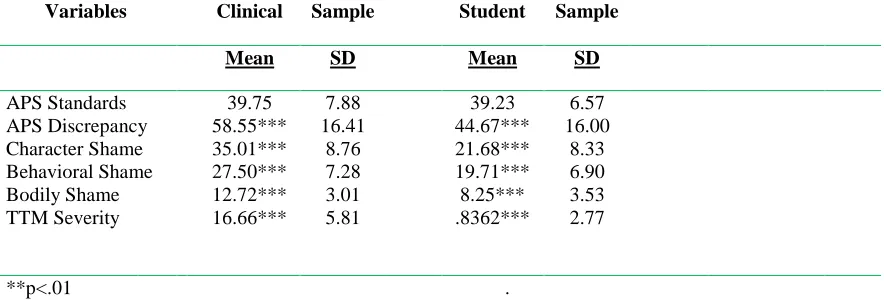
1 Means, Standard Deviations, and Intercorrelations among Study’s Variables for Clinical Sample ...47 2 Means, Standard Deviations, and Intercorrelations among Study’s Variables
LIST OF FIGURES
Figures Page
1 Path Analysis of the Relationships Between Adaptive Perfectionism, Shame (Characterological, Behavioral and Bodily) and TTM Severity in Clinical
Sample ...54 2 Path Analysis of the Relationships Between Maladaptive Perfectionism, Shame
(Characterological, Behavioral and Bodily) and TTM Severity in Clinical
Sample ...54 3 Path Analysis of the Relationships Between Adaptive Perfectionism, Shame
(Characterological, Behavioral and Bodily) and TTM Severity in Student
Sample ...55 4 Path Analysis of the Relationships Between Maladaptive Perfectionism, Shame
(Characterological, Behavioral and Bodily) and TTM Severity in Student
Sample ...55
CHAPTER 1
SHAME AND SELF-INJURIOUS BEHAVIORS:
IMPLICATIONS FOR CLINICIANS WORKING WITH NONSUICIDAL SELF-
HARM, TRICHOTILLOMANIA AND DERMATILLOMANIA
Shame has gained considerable interest amongst researchers and practitioners due
to its significant role in mental health related issues (e.g., Brown et al., 2009). Labeled as
an “exceedingly difficult condition to recognize and diagnose,” it has been suggested that
shame is “frequently bypassed or unacknowledged” by therapists and avoided by clients
(Pattison, 2000; p. 30). This may be particularly harmful for clinicians working with
clients who exhibit self-injurious behaviors (SIBs), as research suggests that shame is a
frequent and pernicious feature of these disorders (e.g., Hayes, Storch & Berlanga, 2009).
Given their prevalence and negative impact on social or occupational functioning,
self-injurious behaviors (SIBs) such as nonsuicidal self injury (e.g., cutting, burning,
hitting oneself), trichotillomania (i.e., compulsive hairpulling), and dermatillomania (i.e.,
compulsive skinpicking) have drawn significant attention in the psychological literature
(Bohne, Wilhelm, Keuthen,Baer, & Jenike, 2002; Christenson,Mackenzie, & Mitchell,
1991; Flessner & Woods, 2006; Wilhelm et al., 1999; Teng, Woods, Twohig, & Marcks,
2002). Although these behaviors serve a number of functions, such as regulating
emotional states (Christenson, Ristvedt, & Mackenzie, 1993; Diefenbach, Mouton-Odum,
& Stanley, 2002; Keuthen et al., 2000), research suggests that many individuals
experience such shame and embarrassment from their SIBs that they withdraw from
social activities and avoid seeking help to recover from these conditions (Hayes, Storch
Wilhelm et al., 1999). For others, feelings of low self-worth and shame can be
motivators to punish the self through physically harming the body, resulting in cyclical
patterns of SIBs and further shame feelings (Yip, 2006).
Though shame appears to be a common factor that is present in these related
disorders, it is likely that shame plays different roles in the ways that the disorders
originate and are maintained. Parsing the role of how shame typically occurs in the
context of each of these disorders (e.g., as a catalyzing force, a maintainer of behavior, a
barrier to help-seeking) has valuable implications for treatment. The purpose of this
article is to review current literature and research on the relationships between shame and
SIBs in the service of connecting current conceptual and empirical literature with our
practical understanding of the experience of shame for individuals struggling with these
issues. In addition, this article will provide suggestions for utilizing shame-based
interventions to support and foster change in clients with SIBs.
Shame as a Construct
Tangney (2001) describes shame as a “global, painful, and devastating experience
in which the self, not just behavior, is painfully scrutinized and negatively evaluated” (p.
599). A highly aversive, self-conscious and self-condemning emotion, shame is coupled
with a global belief that the self is unacceptable (Haidt, 2003; Tangney & Dearing, 2002).
Similarly, Lewis (1971) suggests that an individual has significant issues with shame
when the self, as opposed to the individual’s actions or behavior, is seen as undesirable.
Lewis purports that this negative self-focus is compounded by shame-oriented
individuals’ difficulties with drawing distinctions between their actions and their more
or compulsive behavior (e.g., drugs, alcohol, gambling) as part of their nature, rather than
something that can be changed or controlled. Unable to seperate the self from the
behavior, these clients would likely struggle to take reparative action.
Although it is often compared to the other self-conscious emotions, such as guilt
and embarrassment, shame differs in some notable ways. Roseman (1984) proposed that
shame results in the perception of being disapproved of by other people. Similarly,
Gilbert (1998) suggests that shame is associated with a global sense of personal
inadequacy, failure or badness rather than the guilt-centered feeling of regret about an
action taken. In contrast, guilt may catalyze action tendencies to correct perceived
misdeeds (Gilbert). In addition, internal shame beliefs (e.g., “I am bad or flawed”) often
contribute to external shame beliefs (e.g., “Others view me as bad or flawed”). Gilbert
posits that it is external shame that leads to tendencies to hide aspects of the self or
behaviors. With these intricacies and theoretical bases in mind, a number of researchers
have dedicated themselves to the assessment of shame.
There are two major classifications in the assessment of shame: trait shame and
state shame (see Rivzi, 2009 for a review). Trait measures of shame (i.e., global measures
of dispositional proneness to experience shame) indicate a variety of different
phenomena. These assessment tools evaluate shame through a number of different factors
and constructs; likelihood of shame responses, frequency of shame thoughts or feelings,
domain-specific shame about particular aspects of the self such as characterological
shame, bodily shame or behavioral shame, or personal associations of the self with
shame-related words, among others. In contrast, state-based measurements of shame
asserts that different combinations of state and trait shame can be experienced by an
individual at different times and across different contexts.
Tracy, Robins, and Tangney (2007) suggest that shame is characterized by a
number of emotions, perceptions, sensations, and verbal and non-verbal behaviors both
during and after the shame experience. Lewis notes that shame “results in the disruption
of ongoing, exploratory behavior (and) creates both confusion in thought and the inability
to speak” (2000, p.629). The global, negative affect of shame is often accompanied by a
feeling of shrinking, of being small and powerless, and a sense of being exposed (Chao,
Cheng & Chiou, 2011; Tangney, 2001; Tangney et al. 1998). Goldberg (1991) cites
some physical, bodily indicators of the shame response, including gaze aversion,
lowering the head, blushing, perspiration, and tearfulness. Acting submissive to appease
others or displaying anger to redirect attention away from the shameful experience are
examples of commonly observed behavioral patterns (Tangney, 2001). Tangney &
Dearing (2002) suggest that shame moves one into a state of seclusion and isolation,
whether this is through more active means, such as externalizing blame, or through more
passive withdrawal from the interpersonal situation in question.
A number of authors have noted that shame is inextricably linked to body-relevant
issues, particularly when behaviors around the body are perceived as dysfunctional,
atypical, or uncontrollable. According to Lewis (1971), shame is more strongly correlated
with consciousness, imaging, and greater body awareness than other
self-conscious emotions, such as guilt. Similarly, Broucek (1991) stated that “any loss of
control over one’s body, mental functions or emotions is an elicitor of shame” (p. 38).
about body-relevant norms, such as appearance and hygiene. Although research suggests
significant relationships between shame and maladaptive, body-focused behaviors, there
has been little work done to evaluate and compare shame in different types of SIBs (i.e.,
non-suicidal self-injury, trichotillomania, and dermatillomania).
Self-injurious behaviors
Definitions and Prevalence
Non-suicidal self-injury (NSSI) is a term that describes any behavior that results
or is likely to result in damage to bodily tissue, and wherein the intent of the injurer is to
cause damage, but not death, to the self (Muelenkamp et. al, 2010). Forms of NSSI can
include actions such as cutting, burning, scratching and hitting oneself, all of which may
or may not cause physical damage to the individual (Silverman, Berman, Sanddal,
O’Carroll, & Joiner, 2007). The behaviors can be enacted with the person’s own hands,
as well as with “preferred instruments,” such as pencil tips, pins, glass shards, scissors,
scalpels, razor blades, and box cutters (Woldorf, 2005).
Although any area of the body can serve as a target for NSSI, the most frequently
targeted areas are the wrists, arms, ankles, inner thighs, feet, abdomen, and bra and
underwear lines (Hicks & Hinck, 2007). Hicks & Hinck posit that the intentional act of
tissue destruction serves to shift overwhelming emotional pain into more acceptable
physical pain, and provides the injurer with tissue damage as a visual demonstration of
extreme emotional distress. Some additional reasons for NSSI include emotional
avoidance and numbing, feeling in control, asking for help in a nonverbal manner, and
Researchers have consistently found relationships between NSSI and a number of
psychological conditions, such as Posttraumatic Stress Disorder (Zlotnik, Mattia, &
Zimmerman, 2001; Sacks, Flood, Dennis, Hertzberg, & Beckham, 2008), Borderline
Personality Disorder (Brown, Comtois, & Linehan, 2002), Dissociative Disorders (Briere
& Gil, 1998), Substance abuse (Zlotnik, et al., 2001), Anxiety disorders (Haw et.al,
2001), and Mood disorders (Haw, Houston, Townsend, & Hawton, 2002). Risk factors
associated with NSSI include childhood physical and sexual abuse, parental insecure
attachment (Gratz, Conrad, & Romer, 2002), and impulsivity (Simeon & Favazza, 2001).
Prevalence estimates suggest that 3 million people in the United States engage in
NSSI (Van Sell et. al, 2005). In clinical populations, reported rates of NSSI range widely
depending on the diagnoses of the population. Zanarini, Frankenburg, Hennen and Silk
(2003) found rates of NSSI as high as 80.1% in inpatient samples with Borderline
Personality Disorder. In inpatient samples with clinical depression, studies report rates
ranging from 31% to 70% (Briere & Gil, 1998; Haw et al., 2001). Research suggests that
prevalence rates range from 11% -38% in college student populations (Gratz, 2001;
Whitlock, Eckenrode, & Silverman, 2006). This is in comparison to rates of around 4% in
adult non-clinical populations (Klonsky, Oltmanns & Turkheimer, 2003). These statistics
suggest that NSSI is and will continue to be a relevant issue for clinicians and clients
alike.
Shame and Non-suicidal Self-injury
A number of authors point to shame as both a catalyst in the etiology of NSSI and
a maintaining force in these behaviors. This is to say that individuals who self-injure are
episode of NSSI, with these feelings contributing to the onset of the self-harming
behaviors (Yip, 2006). Yip postulates that self-injurers have been taught that emotions
and urges such as anger and desire are bad, and that they must be punished for
experiencing them. NSSI is maintained through a “release of endorphins after the
physical damage contributes to a feeling of relief and an addictive maladaptive coping
cycle of pain, relief, shame and self-hate” (p. 145). Individuals who self-harm report
mounting tension leading up to an episode, giving rise to “seemingly irresistible urges to
self-injure…and dissociation just before engaging in self-injury,” with the episode
followed by “guilt, embarrassment, self-hatred and anger, thus fueling the next cycle” (p.
197; Woldorf, 2005). Herpetz (1995) suggests that typical shame triggers, such as
rejection and failure, are also triggers for NSSI acts.
Engaging in self-injury feeds into a destructive, self-perpetuating cycle of shame,
wherein the person feels ashamed of the “bad or weak” person she perceives herself to be
as well as the inability to stop the self-harming behavior (Brown et al., 2009). Kelter and
Harker (1998) suggest that shame may be specifically associated with NSSI, as one
function of shame is to restore important relationships by motivating the individual to
acknowledge that they have acted wrongly and to accept punishment. They posit that
when global evaluations of the self as negative and immoral become extreme, self-hatred
can lead to punishment of the self in hopes of redemption and reconnection. The double
bind of NSSI is that the behavior simultaneously serves as a visual plea for help, as well
as an isolating source of shame that the person is compelled to conceal and perform
Shameful self-concealment is widely reported among people who self-injure. This
takes place in many forms, including wearing baggy, heavy clothes or showing avoidance
of situations wherein their bodies will be seen by other people (Derouin & Bravender,
2004). Brown et al. (2009) note that the “link between shame and NSSI may be
especially strong since shame is most associated with self-hatred and hiding problems in
therapy” (p. 816). These authors suggest that self-injurers are likely to feel ashamed that
they are engaging in SIBs, and that this shame creates a cycle of concealment and inhibits
help-seeking behaviors. Shame can also prevent clients from disclosing triggers for NSSI,
such as childhood history, personal characteristics, and past and current behaviors, thus
perpetuating and maintaining cycles of self-harm.
Trichotillomania
Definitions and Prevalence
Trichotillomania (TTM) is an SIB that is characterized by repetitive hair pulling,
primarily from the scalp, eyebrows, and eyelashes, which results in noticeable hair loss
(Christenson et al., 1991). The damage in TTM can range widely, with the severity and
physical impact of the pulling varying from more superficial, cosmetic loss to serious
loss, infection, and permanent hair loss (Keuthen et al., 2001). Individuals with TTM
typically experience an upsurge in tension prior to a pulling episode, as well as feelings
of relief, release, or pleasure while engaging in what is referred to as focused or
intentional pulling behavior (Duke et al., 2010). A number of authors have argued for
exclusion of pre-pulling tension in making a diagnosis of TTM (Christenson et al., 1991;
du Toit, van Kradenburg, Niehaus, & Stein, 2001), as some individuals with TTM only
as automatic or unfocused pulling. This calls into question current diagnostic criteria,
suggesting both a possible exclusion of the criteria of precipitating tension in the DSM-V,
as well as the need for evaluating both impulsive and compulsive features of TTM (Duke
et al., 2010).
TTM commonly co-occurs with a range of other disorders, including obsessive
compulsive disorder, major depressive disorder, and generalized anxiety disorder
(Lochner, Simeon, Niehaus, & Stein, 2002), and can have serious physical, social, and
emotional consequences (Keuthen et al., 2001). More common than previously thought,
estimates of TTM from university surveys suggest that 1.5% of males and 3.4% of
females endorse hair pulling to a clinically significant degree, with .6% endorsing all
diagnostic criteria of TTM (Christenson, Pyle, & Mitchell, 1991). Surveys of university
students indicate that nonclinical hair pulling behaviors are found in up to 15.3% of these
participants (Stanley, Borden, Bell, & Wagner, 1994).
Shame and Trichotillomania
A number of authors (e.g., Castai et al., 2000) suggest that shame is an emotional
consequence of TTM behaviors, but little support exists for shame as an initial catalyst
for this set of behaviors (i.e., that higher levels of shame lead to the onset of the disorder).
Instead, individuals with TTM commonly report negative self-referencing emotions such
as shame in response to their hair pulling, as well as frustrations with being unable to
control these behaviors (Casati et al., 2000; du Toit et al., 2001; Stemberger et al., 2000).
Soriano and colleagues (1996) found that shame and low self-esteem are frequent
experiential consequences of the inability to stop engaging in TTM behaviors. Woods et
unsupportive responses from others who do not understand the nature of the disorder,
simply suggesting that the cure is to ‘just stop pulling.’
Compulsive hair pulling can also negatively impact an individual’s social
functioning, engagement in recreational activities, and pursuit of self-care practices for
fear that hair loss will be discovered (e.g., du Toit et al., 2001; Stemberger et al., 2000).
Individuals with TTM report that hair pulling can be socially isolating, with many
keeping hair pulling a secret from even close friends and family. Stemberger et al. also
note that compulsive hair pulling can contribute to increased conflicts and decreased
sexual intimacy in marriages, thus significantly impacting the quality of these
interpersonal relationships. In addition to strained social relationships, sufferers may
avoid contact with medical providers due to shame surrounding self-inflicted hair loss
(O’Sullivan et al., 1996; 1997). This avoidance enables the continuation of the physical
and mental cycles of the disorder, as well as the cycle of shame inherent in them.
Dermatillomania
Definitions and Prevalence
Dermatillomania, also referred to as compulsive skin-picking, pathological skin
picking, and psychogenic excoriation, involves the repetitive, intentional scratching,
abrading or picking at normal skin, skin with minor blemishes, scabs or insect bites
(Hayes et al., 2009). The picking results in noticeable injury or disfigurement that can
include disfiguring scars and significant infections (Greisemer, 1978; Odlaug & Grant,
2008; Wilhelm et al.,1999). Fingers and instruments (e.g., pins, tweezers) are the most
common methods of manipulating the skin in dermatillomania (Bohne et al., 2002), and
(Arnold et al., 1998; Keuthen et al., 2000). Studies suggest that individuals with
dermatillomania tend to be female and usually engage in these behaviors for extended
periods of time (Arnold et al., 1998). Similar to NSSI and TTM, research suggests that
skin pickers use these behaviors to regulate unpleasant emotions, cognitions, or
sensations (Flessner and Woods, 2006; Keuthen et al., 2000).
Dermatillomania has been associated with a number of other conditions, such as
alcohol abuse or dependence, obsessive-compulsive disorder, mood disorders, and
anxiety disorders (Arnold et al.,1998; Bloch, Elliott, Thompson, & Koran, 2001; Simeon
et al., 1997; Wilhelm et al., 1999). Although seemingly innocuous, CSP can result in
significant impairment. For example, Arnold et al. (1998) found that 12% of an inpatient
sample of chronic skin pickers reported suicidal ideation as a result of severe, skin
picking-related problems.
Current research suggests that skin picking is a common behavior in the general
population and can range widely in frequency and severity (Bohne et al., 2002). Keuthen
et al., (2000) estimated that approximately 2–4% of the population engages in
pathological skin picking. Bohne and colleagues found that over 77% of a sample of
German college students engaged in at least one skin-picking episode on a daily basis,
with 4.6% reporting significant impairment due to their skin picking. Similarly, Hayes
et al. (2009) found that 62.7% of an American community sample engaged in some form
of skin picking, defined as any picking, rubbing, or scratching of one’s own skin, and
11.2% reported engaging in severe, self-injurious skin picking.
A number of authorshave suggested that self-conscious emotionsare the
bedfellows of compulsive skin picking (e.g., Keuthen et al, 2000; Wilhelm et al., 1998).
For the majority of individuals with CSP, the scars and sores produced serve as sources
of shame and anxiety for the individual who must carry them. Keuthen and colleagues
(2001) found a positive relationship between compulsive skin picking severity and
duration of daily picking, satisfactionduring picking, and shame subsequent to picking,
as well asdepression and anxiety scores in a clinical sample of chronic skin pickers.
Related to this, Simeon et al., (1997) found that shame, loneliness, and humiliation were
common emotional experiences of the individuals in their sample who engaged in
compulsive skin picking.
Avoidance of social interactions and self-concealment are reported consistently
by individuals with compulsive skin picking (e.g., Keuthen et al., 2001). In a comparison
study of injurious and non-injurious skin picking, Keuthen and fellow researchers found
that those participants with self-injurious skin picking endorsed significantly greater
avoidance, embarrassment, and social anxiety. In a study evaluating social avoidance
behavior in chronic skin pickers, Arnold et al. (1998) found that 20 percent of
participants reported being housebound, while almost half of participants noted
significant social avoidance and withdrawal. A related study by O’Sullivan and
colleagues (1999) found that over half of their study participants avoided social
situations, with almost 90% reporting social embarrassment. In addition, research
suggests that individuals with compulsive skin picking spend great amounts of effort and
time in the process of concealing the damage they have done to their bodies (e.g.,
participants used clothing or cosmetics to conceal the results of their skin picking, with
over half of subjects reporting substantial dissatisfaction with physical appearance and
obsessional fears that their picking would be perceived by others.
Summary
Shame plays a central role in the etiology and maintenance of different self
injurious behaviors, but critical differences exist between these behaviors. For instance,
NSSI appears to occur initially as a result of shame about the self, but continues as an
individual is increasingly ashamed of their self-injurious behaviors as well.
Neurochemical reinforcement, the desire to self-punish, secretiveness and shame are all
factors that promote continuation of the behaviors (Yip, 2006). Shame further minimizes
the likelihood that the sufferer will seek adequate support to stop the self-harming
behavior, as well as to process and heal from experiences that initially contributed to the
sufferer’s shame (i.e., childhood abuse, relational trauma, etc.).
In contrast to NSSI, there is little evidence that individuals with TTM engage in
hair pulling behaviors because of feelings of shame about themselves or as a way to
self-punish. Instead, individuals appear to experience shame in response to their inability to
stop the cycle of pulling as well as to the physical consequences of the hairpulling (i.e.,
bald spots, missing eyebrows, etc.). The hairpulling behaviors are maintained through
avoidance of disclosure and help-seeking, as well as feelings of hopelessness after
repeated attempts to stop pulling (Penzel, 2003). In addition, hairpulling can reinforce
social isolation and negatively impact self care, grooming behaviors, and self-esteem
Similarly, although shame does not appear to be an initial catalyst for the onset of
self-injuring behaviors for the majority of individuals with CSP, it is a common
consequence and maintainer of these behaviors. Research suggests that the majority of
picking behaviors are not rooted in shame, but instead initiated unintentionally and
continued to regulate difficult emotions, cognitions, or sensations by neurochemical
means (Flessner and Woods, 2006; Keuthen et al., 2000). Clinical practice literature (e.g.,
Penzel, 2003) suggests that there is a subset of individuals with CSP who experience
compulsive perfectionism and feelings of shame associated with having flaws, though
there is little research on this specific subtype of skin pickers. These individuals perceive
self-injurious skin-picking as an attempt to fix their skin, although the behaviors result in
more damage, flaws, and shame about not being able to be perfect (Penzel). As with
TTM, those who engage in CSP tend to avoid both medical and mental health assistance
due to the shame surrounding their disorders (Hayes, Storch & Berlanga, 2009).
Shame-based interventions with modifications for the treatment of SIBs
In spite of a broad body of research and conceptual thought linking NSSI, TTM
and CSP with shame, there has been a surprising lack of attention paid to the treatment of
shame for individuals with SIBs. Although shame plays a significant role in all SIBs,
clinicians must take into account a number of different factors to create appropriate and
effective interventions for specific clients. Interventions should be tailored to target the
type of shame (state vs. trait) as well as to account for the domain-specificity of the
shame experienced (e.g., characterological, behavioral, bodily, etc.). Interventions
targeting shame must also be appropriate for the individual’s type of SIB (e.g., NSSI,
A growing body of evidence suggests that the therapeutic relationship is the most
important element of successful psychotherapy outcomes (e.g., Horvath & Bedi, 2002).
Kaufman (1993) suggests that the quality of the relationship may be particularly critical
for shame-based clients, noting the vital nature of building a strong relationship of trust
between therapist and client. Tangney and Dearing (2002) suggest that when a client is
dominated by shame, negative self-evaluation and heightened sensitivity to disapproval
from others can cause concealment of the severity of clinical issues. The client’s
expectation that behaviors or resulting distress will be met with disgust, disapproval or
disdain can negatively impact the quality of the therapeutic relationship and the efficacy
of the therapeutic work (Gilbert, Pehl, & Allan, 1994). Thus a central part of the healing
process for clients with SIBs may be experiencing an empathic, genuinely interested
interaction with a therapist, wherein behaviors can be described without fear of judgment,
support and compassion can be received, and strategies learned to manage the behaviors.
Lewis notes that “it is critical that the therapist has an appreciation that engaging
in therapy can evoke shame” (1971; pp. 15). Clinicians working with these clients must
normalize client anxiety and fears of judgment during the initial phases of therapy. The
process of an initial clinical interview is intrinsically exposing; the client is asked to
provide information about patterns of thinking, feeling and behaving, personal history, as
well as the behaviors, symptoms and distressing experiences that led the client to seek
help. Clinicians must gather information about the behaviors enacted by the client in
order to create an effective treatment plan, which can be particularly stressful for clients
who experience shame around SIBs. This should include information such as triggers for
used, severity of injury, and impairment across different settings (i.e., social, vocational,
etc.). Clinicians can help to minimize client anxiety by exhibiting a high level of
transparency as related to the purpose of these questions and how the information will be
used to aid in the recovery process.
Therapists must be mindful of the shame their clients experience when conducting
intakes in order to not overwhelm new clients; particularly around topics of self-injury,
the body, and related behaviors. One strategy that may be particularly helpful during
these initial phases of therapy is to balance the process of information-gathering with
engaging in psychoeducation about SIBs. Shame and shame-related cognitions are
commonly associated with SIBS, with clients reporting that they feel that they are alone
in their struggles (Penzel, 2003). Clinicians who can cite research findings about the
prevalence and characteristics of SIBs may help to reduce feelings of isolation and
shame.
In addition, shame should also be assessed to determine the client’s state and trait
shame, as well as the specific domains where the shame is manifesting. Such nuances
have significant implications for appropriate and effective treatment. For example, one
individual who engages in CSP may do so in an automatic manner and feel shame as a
result of the behaviors they engage in. Conversely, another person may be driven to pick
their skin in an attempt to “fix their imperfection” as a result of internalized or
characterological shame, and then additionally feel ashamed about their behavior or the
physical repercussions of the picking. These two individuals both experience shame, but
It is also important for the client to understand the etiology of disordered behavior
and the role that shame commonly plays in perpetuating the behaviors for a client’s
specific SIB. Individuals struggling with NSSI can benefit from therapeutic discussions
of factors that predispose people to engaging in self-harm, such as childhood physical and
sexual abuse and insecure attachment. Clients who can draw connections between past
life circumstances and current maladaptive behavior patterns may experience a reduction
of shame and self-blame. Similarly, exploring familial patterns of TTM and CSP and
providing education on the potential genetic contribution to these behaviors can
additionally assist in shame reduction. Providing psychoeducation to a client can result in
a cognitive shift, transforming the behavior from “something that I do because I have no
willpower” to “something that I do (and potentially that other members of my family do)
because of a genetic predisposition to this form of body-focused coping.”
Clients can benefit greatly from psychoeducation about the functions of SIBs,
such as the self-regulating properties of the behaviors. Instead of perceiving the behaviors
as purposeless and themselves as weak-willed or flawed, clients can shift their frame to
the perspective that the behavior does fulfill some purpose (e.g., that there is
neurochemical reinforcement for the behaviors; Yip, 2006). Reframing self injurious
behavior as an attempt to self-regulate or modulate difficult emotions can help
individuals see the behavior as a means of coping during difficult or stressful times.
Emphasizing that the SIB is a learned set of behaviors also helps to separate the disorder
from the self of the client, thus reducing characterological shame. Shame can be reduced
and hope instilled through the implication that the behaviors can be replaced with
allows the client to then look for alternative, more personally acceptable ways to fulfill
the functions of the SIB, such as exercising or taking medication, while simultaneously
reducing shame.
Such psychoeducation need not be limited to the attributes and functions of SIBs.
In addition, learning about shame, its etiology and aftereffects can be useful in this
process. Lewis (1971) stated that in order to be healed, shame must be acknowledged and
owned. Thus, a crucial step in interventions is “dismantling the defenses that (the client)
has erected against recognizing their own shame” (Pattison, 2000; pp. 166), so that the
client can “gain insight into their shame, and thus get rid of or dissipate it” (Lewis, 1992;
p. 127).
A strategy that may be particularly helpful in raising a client’s awareness of
shame is providing education on typical behavioral and postural manifestations of shame.
Valliant (1997) suggests that the “unpleasant, sickening inner sensations associated with
shame must be carefully detailed with each patient so that they can identify these feelings
when they occur” (p.271). For example, explaining to a client that external cues (such as
gaze aversion, dropping the chin or blushing) or internal indicators (feeling small or
feeling a desire to withdraw) are often associated with shame can help her to gain an
awareness of indicators that she is moving into a shame response. When the therapist and
client have determined the client’s typical shame response indicators, they can both more
effectively attend to shame as it occurs in and outside of therapy.
After these patterns are identified, therapists can work with clients to more
effectively manage their shame responses in session. With an attuned eye to shame
make eye contact, to lift their chin, or to breathe and let their flushing response dissipate.
Similarly, if the client shifts subjects away from conversations about their self-injuring, it
can be helpful to gently refocus the session and express curiosity about the potentially
shame-related divergence. It can be helpful for the therapist to maintain this attitude of
genuineness and curiosity regarding the client’s cognitive, behavioral, and emotional
process when engaging in SIBs.
Respectfully asking clients to walk their therapist through the process of
self-injury allows the clinician to gather valuable information about the antecedents and
repercussions of the behaviors, builds rapport and acceptance in the therapeutic
relationship, and reduces the client’s shame around discussing the behaviors. Learning an
emotional vocabulary to speak about one’s internal experiences is essential in the
recovery process (Macdonald, 1998). This is particularly critical for individuals who use
their SIB as a means of expressing internal pain, conflict, or as a means of nonverbally
asking for help. Morrison (1989) stated that the sharing of secrets and unspoken thoughts
releases significant energy that was previously taken up by concealment and fear—
energy that can be redirected toward healthy goals.
Finally, therapists can also offer to view the bodily damage resulting from the
SIB. For self-injurers, this can include self-inflicted bruises, burned skin, incisions or
scars. Individuals with TTM may show the therapist areas where hair has been pulled,
while clients with CSP may reveal areas of skin that have been picked by fingers or other
implements. When engaging in the process of exploring shame, the therapist must
“recognize and interpret the client’s shame without further activating shame and thus
Focusing on the shame experience too intensely or prematurely in the relationship may be
similarly damaging, as can asking for the client to show the physical evidence of their
behaviors before a relationship has been established. It is evident that a therapist working
with SIBs must carefully balance the processing of shame and potentially
shame-inducing behaviors.
Conclusions
This article provides a cursory exploration of the intersection of shame and SIBs,
emphasizing the importance of assessing the type of shame, sources of shame, and shame
severity when working with self-injuring clients. In addition, it highlights the importance
of using a customized approach to treating the person in the context of the specific SIB
and the shame with which they struggle. Therapists must work to educate clients on
current research and thinking on the topics of nonsuicidal self-injury, trichotillomania and
dermatillomania. This will help clients to build a conceptual understanding of the
workings of SIBs in general as well as their own specific set of behaviors. Building an
understanding will, in turn, reduce shame, instill hope, and build self-efficacy in the
recovery process. This psychoeducational focus is best balanced by more active,
collaborative therapeutic work toward personal understanding and behavioral change.
Through these combined strategies the client can process and explore the etiology and
maintenance of their disorder, as well as the social, emotional, and physical repercussions
of these behaviors.
This article reviews current thinking on SIBs and shame. Although some initial
thoughts were provided on ways that interventions for shame can be tailored for work
studies are needed to empirically evaluate the impact of shame reduction interventions in
the context of SIBs. Future practice should encourage further development of
interventions to modify multiple types of shame in clients who self-injure, and add to our
collective understanding of how shame impacts and impedes the recovery process for
References
American Psychological Association. (2000). Diagnostic and statistical manual of mental
disorders (4th ed., text rev.). Washington, DC: APA.
Arnold, L. M., McElroy, S. L., Mutasim, D. F., Dwight, M. M., Lamerson, C. L., &
Morris, E.M. (1998). Characteristics of 34 adults with psychogenic excoriation.
Journal of Clinical Psychiatry, 59, 509–514.
Bloch, M. R., Elliott, M., Thompson, H., & Koran, L. M. (2001). Fluoxetine in
pathologic skin picking: Open-label and double-blind results [Electronic version].
Psychosomatics, 42, 4, 314-319.
Bohne, A., Keuthen, N. J., Wilhelm, S., Deckersbach, T., & Jenike, M. A. (2002).
Prevalence of symptoms of body dysmorphic disorder and its correlates: A cross
cultural comparison. Psychosomatics, 43(6), 486-490.
Briere, J., & Gil, E. (1998). Self-mutilation in clinical and general population samples:
Prevalence, correlates, and functions. American Journal of Orthopsychiatry, 68,
609-620.
Broucek, F.J. (1991). Shame and the self. New York: Guilford Press
Brown, M., Comtois, K.A., Linehan, M.M. (2002). Reasons for suicide attempts and
nonsuicidal self-injury in women with borderline personality disorder. Journal of
Abnormal Psychology, 111, 198-202.
Bohne, A., Wilhelm, S., Keuthen, N., Baer, L., & Jenike, M. (2002). Skin picking in
German students: prevalence, phenomenology, and associated characteristics.
Brown, M. Z., Linehan, M. M., Comtois, K., Murray, A., & Chapman, A. L. (2009).
Shame as a prospective predictor of self-inflicted injury in borderline personality
disorder: A multimodal analysis. Behaviour Research and Therapy, 47(10), 815
822.
Casati, J. , Toner, B. , & Yu, B. (2000). Psychosocial issues for women with
trichotillomania. Comprehensive Psychiatry, 41(5), 344.
Christenson, G.A., Pyle, R. L., & Mitchell J. E. (1991). Estimated lifetime prevalence of
trichotillomania in college students. Journal of Clinical Psychiatry, 52, 415-417.
Christenson, G.A., MacKenzie, T.B., & Mitchell, J.E. (1991). Characteristics of 60 adult
chronic hair pullers. American Journal of Psychiatry, 148, 365-370
Christenson, G.A, Ristvedt, S.L., Mackenzie, T.B. (1993). Identification of
trichotillomania cue profiles. Behaviour Research and Therapy, 31, 315-320.
Duke, D., Keeley, M., Geffken, G., & Storch, E. (2010). Trichotillomania: A current
review. Clinical Psychology Review, 30(2), 181-193.
Derouin, A., & Bravender, T. (2004). Living on the edge: The current phenomenon of
self mutilation in adolescents. American Journal of Maternal Child Nursing,
29(1), 12-18.
Diefenbach, G. J., Mouton-Odum, S, & Stanley, M. A. (2002). Affective correlates of
trichotillomania. Behaviour Research and Therapy, 40, 1305-1315.
du Toit P.L., van Kradenburg, J., Niehaus, D.H., Stein, D.J. (2001). Characteristics and
phenomenology of hairpulling: An exploration of subtypes. Comprehensive
Flessner, C. A. & Woods, D. W. (2006). Phenomenological characteristics, social
problems, and the economic impact associated with chronic skin picking.
Behavior Modification, 30, 944-963. doi:10.1177/0145445506294083
Gilbert, P., Pehl, J., & Allan, S. (1994). The phenomenology of shame and guilt: An
empirical investigation. Journal of Medical Psychology, 67, 23-26.
Gilbert, P. (1998). What is shame? Some core issues and controversies. In P. Gilbert & B.
Andrews, (Eds), Shame: Interpersonal behavior, psychopathology, and culture,
Series in affective science (pp. 3-38). New York, NY, US: Oxford University
Press.
Goldberg, C. (1991). Understanding shame. Northvale, NJ: Jason Aronson.
Gratz, K. L. (2001). Measurement of deliberate self-harm: Preliminary data on the
Deliberate Self-Harm Inventory. Journal of Psychopathology and Behavioral
Assessment, 23, 253-263.
Gratz, K. L., Conrad, S. D., & Roemer, L. (2002). Risk factors for deliberate self-harm
among college students. American Journal of Orthopsychiatry, 72, 128-140.
Griesemer, R. D. (1978). Emotionally triggered disease in a dermatological practice.
Psychiatric Annals, 8, 49-56.
Haidt, J. (2003). The moral emotions. In R. J. Davidson, K. R. Scherer, & H. H.
Goldsmith (Eds.), Handbook of affective sciences. Oxford : Oxford University
Press.(pp. 852-870).
Haw, C., Houston, K. Townsend, E. & Hawton, K.(2001). Deliberate self-harm patients
with alcohol disorders: Characteristics, treatment and outcome. Crisis: The
Hayes, S. L., Storch, E. A., & Berlanga, L. (2009). Skin Picking Behaviors: An
Examination of the Prevalence and Severity in a Community Sample. Journal of
Anxiety Disorders, 23, 314-319.
Herpetz, S. (1995). Self-Injurious behavior: Psychopathological and nosological
characteristics of subtypes of self-injurers. Acta Psychiatrica Scandinvika, 91, 57
68.
Hicks, K. M. & Hinck, S. M. (2008), Concept analysis of self-mutilation. Journal of
Advanced Nursing, 64, 408–413.
Harder, D. W. (1995). Shame and guilt assessment, and relationships of shame- and guilt
proneness to psychopathology. In J. P.Tangney & K. W.Fischer (Eds.), Self
conscious emotions: The psychology of shame, guilt, embarrassment, and pride.
(pp. 368-392). New York: Guilford.
Horvath, A. O., & Bedi, R. P. (2002). The alliance. In J. C. Norcross (Ed.), Psychotherapy
relationships that work: Therapist contributions and responsiveness to patients.
(pp. 37-69). New York: Oxford University Press.
Kaufmann, J. (1993). The psychology of shame: Theory and treatment of shame-based
syndromes (1st ed.). New York: Springer.
Keuthen, N., Deckersbach, T., Wilhelm, S., Hale, E., Fraim, C., Baer, L., O’Sullivan, R.
L., & Jenike, M.A. (2000). Repetitive skin-picking in a student population and
comparison with a sample of self injurious skin-pickers. Psychosomatics, 41(3),
210-215.
Keuthen, N. J., Bohne, A., Himle, M., & Woods, D. W. (2005). Advances in the
Ling & B. Ling (Eds.), Obsessive compulsive disorder research (pp. 1-29).
Hauppauge, NY: Nova Biomedical Books.
Keuthen, N. , Stein, D. , & Christenson, G. (2001). Help for hair pullers: Understanding
and coping with trichotillomania. Oakland, CA: New Harbinger.
Keuthen, N. J., Deckersbach, T., Wilhelm, S., Engelhard, I., Forker, A., O'Sullivan, R. L.,
& Baer, L. (2001). The Skin Picking Impact Scale (SPIS): Scale development and
psychometric analyses. Psychosomatics: Journal of Consultation Liaison
Psychiatry, 42(5), 397-403.
Klonsky, E.D., Oltmanns, T.F., & Turkheimer, E. (2003). Deliberate self harm in a
nonclinical population: Prevalence and psychological correlates. American
Journal of Psychiatry, 160, 1501-1508.
Lewis, H.B. (1971). Shame and guilt in neurosis. New York, NY: International
University Press.
Lewis, H. B. (1987). The role of shame in symptom formation. Hillsdale, NJ: Lawrence
Erlbaum.
Lewis, M. (1992) Shame: The Exposed Self. NY: The Free Press.
Lewis, M. (2000). Self-conscious emotions: Embarrassment, pride, shame, and guilt. In
M. Lewis & J. M. Haviland-Jones (Eds.), Handbook of emotions (2nd ed., pp.
623-636). New York: Guilford.
Lochner, C., Simeon, D., Niehaus, D.J.H., Stein, D.J. (2002). Trichotillomania and skin
picking: A phenomenological comparison. Depression and Anxiety, 15, 83-96.
Macdonald, S. (1998). Disclosing Shame. In P. Gilbert and B. Andrews (Eds.) Shame.
Martens, W. H. J. (2005). A multicomponential model of shame. Journal for the Theory
of Social Behavior, 35, 399-411.
Miller, S. (1996). Shame in context. New York, NY: Routledge.
Morrison, A.P. (1989). Shame: The underside of narcissism. New Jersey: Analytic Press.
Muehlenkamp, J. , Kerr, P. , Bradley, A. , & Larsen, M. (2010). Abuse subtypes and
nonsuicidal self-injury preliminary evidence of complex emotion regulation
patterns. Journal of Nervous and Mental Disease, 198(4), 258-263.
Norberg, M. , Wetterneck, C. , Woods, D. , & Conelea, C. (2007). Experiential avoidance
as a mediator of relationships between cognitions and hair-pulling severity.
Behavior Modification, 31(4), 367-381. doi:10.1177/0145445506297343
Nussbaum, M.C. (2004). Hiding from Humanity: Shame, Disgust, and the Law.
Princeton, NJ: Princeton University Press.
Odlaug, B., & Grant, J.E. (2008). Clinical characteristics and medical complications of
pathologic skin picking, General Hospital Psychiatry, 30, 61–66.
doi:10.1016/j.genhosppsych.2007.07.009
O'Sullivan, R. , Keuthen, N. , Jenike, M. , & Gumley, G. (1996). Trichotillomania and
carpal tunnel syndrome. Journal of Clinical Psychiatry, 57(4), 174.
O'Sullivan, R. , Keuthen, N. , Christenson, G. , Mansueto, C. , Stein, D. , et al. (1997).
Trichotillomania: Behavioral symptom or clinical syndrome? American Journal
of Psychiatry, 154(10), 1442.
Parker, S. & Thomas, R. (2009). Psychological Differences in Shame vs. Guilt:
Implications for Mental Health Counselors.Journal of Mental Health Counseling,
Pattison, S. (2000). Shame: Theory, therapy, theology. Cambridge, University Press.
Penzel, F. (2003). The Hairpulling Problem: A Complete Guide to Trichotillomania. New
York, Oxford.
Rangganadhan, A. R., & Todorov, N. (2010). Personality and self-forgiveness: The roles
of shame, guilt, empathy and conciliatory behavior. Journal of Social and Clinical
Psychology, 29(1), 1-22. doi: 10.1521/jscp.2010.29.1.1
Rivzi, S.L. (2009). Development and Preliminary Validation of a New Measure to Assess
Shame:The Shame Inventory. Journal of Psychopathology and Behavior
Assessment, 32, 438-447.
Roseman, I. J. (1984). Cognitive determinants of emotions: A structural theory. In P.
Shaver (Ed.), Review of Personality and Social Psychology (Vol. 5, pp. 11-36).
Beverly Hills, CA: Sage.
Sacks, M.B., Flood, A.M., Dennis, M.F., Hertzberg, M.A., Beckham, J.C. (2008). Self
mutilative behaviors in male veterans with Posttraumatic Stress Disorder. Journal
of Psychiatric Research, 42(6), 487-94, doi:10.1016/j.jpsychires.2007.05.001.
Van Sell, S., O'Quin, L., Oliphant, E., Shull, P., Austin, K., Johnston, E., & Nguyen, C.
(2005). Help stop self-injury. RN, 68(11), 55-59.
Silverman, M.M., Berman, A.L., Sanddal, N.D., O’Carroll, P.W., Joiner, T.E. (2007).
Rebuilding the Tower of Babel: A revised nomenclature for the study of suicide
and suicidal behaviors part 2: Suicide-related ideations, communications, and
behaviors. Suicide and Life-Threatening Behavior, 3, 264–277.
Simeon, D., & Favazza, A.R. (2001). Self-injurious behaviors: Phenomenology and
Assessment and treatment (pp. 1-28). Washington, DC: American Psychological
Association.
Simeon, D, Stein, D.J., Gross, S., Islam, N., Schmeidler, J., Hollander,E.. (1997). A
double-blind trial of fluoxetine in pathologic skin picking. Journal of Clinical
Psychiatry, 58(8), 341-7.
Soriano, J. , O'Sullivan, R. , Baer, L. , Phillips, K. , McNally, R. , et al. (1996).
Trichotillomania and self-esteem: A survey of 62 female hair pullers. Journal of
Clinical Psychiatry, 57(2), 77.
Stanley, M.A., Borden, J.W., Bell, G.E., & Wagner, A.L. (1994). Nonclinical hair
pulling: Phenomenology and related psychopathology. Journal of Anxiety
Disorders, 8, 119-130.
Starr, D. (2004). Understanding those who self-mutilate. Journal of Psychosocial Nursing
and Mental Health Services, 42, 32–40.
Stein, D. J., Grant, J. E., Franklin, M. E., Keuthen, N., Lochner, C., Singer, H. S., &
Woods, D. W. (2010). Trichotillomania (hair pulling disorder), skin picking
disorder, and stereotypic movement disorder: Toward DSM-V. Depression and
Anxiety, 27(6), 611-626.
Stemberger, R. , Thomas, A. , Mansueto, C. , & Carter, J. (2000). Personal toll of
trichotillomania: Behavioral and interpersonal sequelae. Journal of Anxiety
Disorders, 4(1), 97-104.
Swannell, S., Martin, G., Scott, J., Gibbons, M., & Gifford, S. (2008). Motivations for
self injury in an adolescent inpatient population: Development of a self-report
Tangney, J. P., Wagner, P., & Gramzow, R. (1992). Proneness to shame, proneness to
guilt, and psychopathology. Journal of Abnormal Psychology, 101, 469-478.
Tangney, J. P. (1996). Conceptual and methodological issues in the assessment of shame
and guilt. Behaviour Therapy and Research, 34, 741-754.
Tangney, J. P., Miller, R. S., Flicker, L., & Barlow, D. H. (1996). Are shame, guilt and
embarrassment distinct emotions? Journal of Personality and Social Psychology,
70, 1256-1269.
Tangney, J. P. (2001). Constructive and destructive aspects of shame and guilt. In A. C.
Bohart & D. J. Stipek.(Eds). Constructive & destructive behavior: Implications
for family, school, & society (pp. 127-145). Washington, DC: American
Psychological Association.
Tangney, J. P., & Dearing, R. L. (2002). Shame and Guilt. New York: Guilford Press.
Tracy, J., Robins, R., & Tangney, J. (Eds.) (2007). The self-conscious emotions: Theory
and research. New York: Guilford Press.
Teng, E. J.,Woods,D.W., Twohig, M. P., & Marcks, B.A. (2002). Bodyfocused repetitive
behavior problems: Prevalence in a nonreferred population and differences in
perceived somatic activity. Behavior Modification, 26, 340–360.
Thomas, H.E., (1999). The shame response to rejection. New York: Albano Books.
Valliant, L.M. (1997). Changing character: Short-term anxiety-regulating psychotherapy
for restructuring defenses, affects, and attachment. New York, NY: BasicBooks.
Whitlock, J.L., Eckenrode, J.E. & Silverman, D. (2006). The epidemiology of self
Wilhelm, S., Keuthen, N. J., Deckersbach, T., Engelhard, I. M., Forker, A. E., Baer, L.,
O’Sullivan, R. L., & Jenike, M. A. (1999). Self-injurious skin picking: Clinical
characteristics and comorbidity. Journal of Clinical Psychiatry, 60(7), 454-459.
Woldorf, G. (2005) Clinical implications of the paradox of deliberate self-injury. Journal
Specialist Pediatric Nursing, 10, 196–200.
Woods, D. W., Fuqua, R. W., & Outman, R. C. (1999). Evaluating the social
acceptability of individuals with habit disorders: The effects of frequency,
topography and gender manipulation. Journal of Psychopathology and
Behavioral Assessment, 21, 1-18.
Yip, K. (2006). A strength’s perspective in working with an adolescent with self cutting
behaviours. Child and Adolescent Social Work Journal, 23, 134-146.
Zanarini, M.C., Frankenburg, F.R., Hennen, J., Silk, K.R. (2003). The longitudinal course
of borderline psychopathology: 6-year prospective follow-up of the
phenomenology of borderline personality disorder. American Journal of
Psychiatry, 160, 274–283. doi:10.1176/appi.ajp.161.11.2108
Zlotnik, C., Mattia, J. L., & Zimmerman, M. (2001). The relationship between
posttraumatic stress disorder, childhood trauma, and alexithymia in an outpatient
CHAPTER 2
THE RELATIONSHIPS AMONG MULTIDIMENSIONAL PERFECTIONISM,
SHAME AND TRICHOTILLOMANIA SYMPTOM SEVERITY
Introduction
A growing body of research suggests that “rates of Trichotillomania are
approaching, matching, or even exceeding those of more commonly researched
disorders” (Woods, 2011; p. 747). More common than previously thought, TTM
prevalence estimates range from 0.6% to 3.4% of the population, with 70-93% of these
cases being women (Christenson, Pyle, & Mitchell, 1991; Rothbaum, Shaw, Morris, &
Ninan, 1993; Duke, Bodzin, Tavares, Geffken, & Storch, 2009). In addition, several
researchers have found behavioral patterns consistent with some aspects of TTM
occurring at rates of 1.0% to 13.3% in college students (Duke, Keeley, Ricketts, Geffken,
& Storch, 2009; Graber & Arndt, 1993; Rothbaum, Shaw, Morris, & Ninan, 1993;
Woods & Miltenberger, 1996). These studies suggest a conceptualization of TTM that
ranges from occasional, benign hairpulling to more severe, compulsive hairpulling which
results in significant impairment and distress (Loughran et al., 2011).
Often, TTM is comorbid with other mental health issues, which can further
exacerbate impairment. Frequently co-occurring disorders include anxiety and depression
(Duke et al., 2009), as well as substance abuse and eating disorders, (Mackenzie &
Mitchell, 1991; Norberg, Wetterneck, Woods, & Conelea, 2007), cluster b & c
personality disorders (Christenson, Chernoff-Clementz, & Clementz, 1992), attachment
addition, there is a growing body of research that suggests a significant relationship
between Obsessive Compulsive Disorder (OCD) and TTM (Christenson & Mackenzie,
1995; Duke, Keeley, Geffken, & Storch, 2010).
The strength of the connections between TTM and OCD has led TTM to be
conceptualized as an OC spectrum disorder, “characterized as repetitive, intentional
performance of behavior, which sufferers perceive as difficult to resist in spite of
knowledge of potential adverse consequences… often related to negative affective
states”( Bohne, Keuthen, Tuschen-Caffier, & Wilhelm, 2005; p. 935). Research suggests
a high comorbidity between TTM and OCD symptomatology. For example, Stewart,
Jenike, & Keuthen (2005) found that 18.8% of patients in an inpatient sample of
individuals treated for OCD reported low rates of hairpulling, 15.6% reported moderate
to severe hairpulling, and 7.8% reported severe hairpulling. Similarly, Hajcak, Franklin,
Simons, and Keuthen (2006) found positive relationships between anxiety, stress
reactivity, hair-pulling, skin-picking and OC symptoms (obsessing and checking) in a
nonclinical, college student sample. In addition, researchers hypothesize that TTM urges
are activated by affectively-valenced external cues (setting and tools or implements for
pulling) and internal cues, including emotional triggers (anxiety, tension, boredom, anger,
loneliness, guilt, indecision, and excitement), sensations (visual, tactile, and physical),
and cognitions (e.g., perceived symmetry)(Mansueto, Golomb, Thomas, & Stemberger,
1997). These authors suggest that these cues may be particularly salient for individuals
with comorbid OCD or depression which are often related to a “tendency toward
perfectionism” (Mansueto, et al.; p.571).