A Novel Algorithm for Optimizing Headway
Distance for Connectivity in VANETs
Parul Sharma1, Simranjit Kaur2, Sourabh Mahajan3
M. Tech Scholar, Department of ECE, S.S.C.E.T, Badhani, Pathankot, India1
Assistant Professor, Department of ECE, S.S.C.E.T, Badhani, Pathankot, India2
Assistant Professor, Department of ECE, S.S.C.E.T, Badhani, Pathankot, India3
ABSTRACT: Vehicular Ad hoc Networks (VANETS) enable the vehicles to communicate with each other as well as
with road side units on the other side. The knowledge of vehicle headway distribution is essential for estimating the probability of connectivity in vehicle ad hoc networks. The distribution of vehicles in a single lane has been taken into account that consecutive vehicles have to maintain a minimum safe distance between them. Although minimum headway distance based VANETS has shown better results than other techniques but still suffers from abnormal environmental conditions. This paper proposes technique which utilized dynamic communication and dynamic path selection using artificial bee colony algorithm to enhance the results of VANETS further.
KEYWORDS: Road side units, Genetic algorithm, Dynamic path, VANETS, Artificial Bee colony optimization.
I. INTRODUCTION
Vehicular Ad Hoc Networks (VANETs) are created by applying the principles of mobile ad hoc networks (MANETs) - the spontaneous creation of a wireless network for data exchange - to the domain of vehicles. They are a key component of intelligent transportation systems (ITS). While, in the early 2000s, VANETs were seen as a mere one-to-one application of MANET principles, they have since then developed into a field of research in their own right. By 2015, the term VANET became mostly synonymous with the more generic term inter-vehicle communication (IVC), although the focus remains on the aspect of spontaneous networking, much less on the use of infrastructure like Road Side Units (RSUs) or cellular networks. VANET is one of the impactful areas for the improvement of ITS in order to provide road safety and comfort to people. It enables vehicles to actively communicate with each other and to perceive the road situation such as accidents or traffic jams effectively in their vicinity. VANET enables vehicles to avoid problems either by undertaking preventive actions and safety measures or by alerting other drivers. In ITS, each vehicle plays the role of sender, receiver and router to broadcast information to the vehicular network or transportation agency, which then uses the information to ensure safe, free-flow of traffic. VANET is one of the impactful areas for the improvement of ITS in order to provide road safety and comfort to people.
II. VANETSCOMMUNICATIONTECHNOLOGY
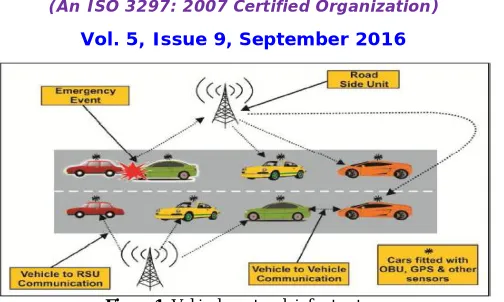
Figure 1: Vehicular network infrastructure
Vehicles can additionally be fitted with hardware that permits detailed position information such as Global positioning system (GPS) or a Differential global positioning system (DGPS) receiver. Fixed RSU, which are connected to the backbone network, must be in place to facilitate communication. The number of RSUs distribution is dependent on the communication protocol to be used. For example, some protocols require roadside units to be distributed evenly throughout the whole road network; some require roadside units only at intersections, while others require roadside units only at region borders.
The three groups of message transmission existent in VANET are RSU-to-OBU/ Infrastructure-to-Vehicle (I2V), OBU-to-RSU/ Vehicle-to-Infrastructure (V2I) and OBU-to-OBU/Vehicle-to-Vehicle (V2V) communications (Fig.1.3). Sichitiu & Kihl (2008) have contributed a complete description of the V2V communications. The VANET communication which happens between groups of vehicles directly is termed as ‘one-hop’ interaction or node re-transmits data via ‘multi-hop’ interaction. In order to expand the communication strength, the deployed RSUs act as a gateway to the internet for collecting, processing and storing information. For effective communication, VANET are likely to employ a myriad of wireless technologies.
III.CHALLENGESINVANETS
The main characteristic of decentralization backed by self management is the cause of security, dissemination and mobility challenges that surface while designing VANET. The difficulty in facing these challenges amplifies further because of the short-range communication. The challenges that VANET tend to face are discussed below.
1. Medium Access Control Protocols
There is a need to design MAC protocols for handling quickly changing services, allocating shared channel access and alleviating the medium access delay for ensuring increased reliability. Further, these protocols should give more priority to event-driven messages instead of periodic messages ensuring comfort. These are actually the two types of messages circulated in the CCH. The periodic messages contain beaconing status to nearby vehicles, such as position, speed and direction. On the other hand, event-driven messages are emergency ones sent to other vehicles, time. Another problem is of hidden terminals that hinder the performance in VANET. This problem arises when the nodes are out of radio range to each other and may try to access the medium simultaneously due to which the receiving channels witness data collision. The major drawback of the hidden terminals in VANET is that, there is no common definition for the problem when a broadcast ad hoc network is considered. Moreover, signals undergo fading in a real system and therefore it is hard to define “communication range” and when two nodes are “out of radio range”.
2. Mobility Management
with seamless communications, in which service continuity is guaranteed while vehicles are roaming through different RSU with heterogeneous wireless technologies.
3. Information Dissemination
Distributing information over long distances in VANET is a very challenging task. It can be executed only when the inherent characteristics and limitations described in section 1.3 are taken into consideration for all components of the system. The message dissemination is difficult due to the following challenges:
Obtain information - how to convert the local observations into a data basis for the application.
Transport the information - how to deliver the information to interested parties in other parts of the network.
Summarize measurements - how to combine very similar attributes to reduce redundancy among participating nodes.
Aggregate information - how to accumulate information on larger geographical area.
IV. RELATEDWORK
V. GAPSINLITERATURE
1. The effect of safe distance between cars on congested traffic phase is ignored in existing literature. 2. The use of dynamic communication range in VANETs is also ignored.
3. The effect of abnormal environment condition is also ignored by existing researchers in VANETS.
VI.RESULTS
RESULTS METHODOLOGY
1. Deploy VANETS.
2. Here after deploying VANETs, connectivity path is defined.
3. In this step, Genetic Algorithm based on Dynamic Communication based headway distance has been evaluated.
4. In this step, Dynamic path selection on the basis of genetic algorithm is applied. 5. Connectivity probability is evaluated
6. Evaluate results.
Fig 2: Proposed Methodology
B. PERFORMANCE ANALYSIS
This paper has designed and implemented the proposed technique in MATLAB tool u2013a. The evaluation of proposed technique is done on the basis of following metrics i.e. time to live and pit time. In order to implement the proposed algorithm, design and implementation has been done.. These parameters are standard values used as benchmark for VANETS. In order to implement the proposed algorithm, design and implementation have been done.
Start
Deploy VANETS
Define connectivity path
Evaluate Genetic Algorithm based Dynamic
Communication based headway distance
Apply Dynamic path selection
Evaluate connectivity probability
1) Time To Live
This shows value in an Internet Protocol (IP) packet that tells a network router whether or not the packet has been in the network too long and should be discarded. Table 1 shows the comparative research of the Time to live, where it represents various numbers of nodes according to these nodes different values of TTL taken in existing and proposed technique respectively.
Table1. Time to Live
Time To Live1
S.NO Existing Result Proposed Result
1 0.9258 0.9167 2 2.4996 2.6046 3 3.4916 3.5455 4 4.4451 4.5893 5 5.3806 5.1221 6 6.3110 5.9362 7 7.2259 6.9030 8 8.1242 7.8392 9 9.0236 8.4173 10 9.9118 9.2987 11 10.7893 10.1739 12 11.6726 11.0898 13 12.5449 11.9108 14 13.4148 12.7241 15 14.2844 13.2339
Fig 3: Packet delivery ratio
The above fig.3 represents the comparison of TTL between existing and also the proposed technique where serial no represents the number of nodes and value represents the TTL. Here, green line shows the proposed technique and blue line shows the existing one. In our case the proposed TTL are comparatively lower than the existing one.
2. Pit Time
Table 2. Pit Time
Fig 4: Pit Time
The above fig.4 represents the comparison of PIT Time between existing and also the proposed technique where serial no represents the number of nodes and value represents the PIT Time. Here, green line shows the proposed technique and blue line shows the existing one. In our case the proposed overhead are comparatively lower than the existing one.
VII. CONCLUSION
Veh icular ad h oc n etwor ks (VANETS) h ave been en vision ed to pla y an impor tant r ole in th e futur e wir eless commun ication ser vice mar ket for safet y commun ication s as well as for in for mation an d en ter tainmen t application s. The knowledge of vehicle headway distribution is essential for estimating the probability of connectivity in vehicle ad hoc networks. The distribution of vehicles in a single lane has been taken into account that consecutive vehicles have to maintain a minimum safe distance between them. The proposed technique is designed and implemented in the MATLAB 2013a by using wireless communication and data analysis toolbox. This paper has proposed The proposed technique has utilized dynamic communication and dynamic path selection using artificial bee colony algorithm to enhance the results of VANETs further. The comparative analysis clearly indicates that the proposed technique outperforms over the available methods.
REFERENCES
[1] Wisitpongphan, Nawaporn, et al. "Routing in sparse vehicular ad hoc wireless networks." IEEE journal on Selected Areas in Communications 25.8 (2007): 1538-1556.
[2] Abdalla, Ghassan MT, Mosa Ali Abu-Rgheff, and Sidi Mohammed Senouci. "Current trends in vehicular ad hoc networks." Proceedings of UBIROADS workshop. 2007.
[3] Toor, Yasser, et al. "Vehicle ad hoc networks: applications and related technical issues." IEEE communications surveys & tutorials 10.3 (2008): 74-88.
[4] Härri, Jerome, et al. "Vehicular mobility simulation with Vanet MobiSim." Simulation (2009).
[5] Buchenscheit, Andreas, et al. "A VANET-based emergency vehicle warning system." 2009 IEEE Vehicular Networking Conference (VNC). IEEE, 2009.
[6] Leung, Kin K. "IMPACT OF TRANSPORT MODELS ON CONNECTIVITY OF VEHICULAR AD-HOC NETWORKS." July 11-15, 2010
[7] Jin, Wen-Long, and Bruce Wang. "Connectivity of vehicular ad hoc networks with continuous node distribution patterns." University of California Transportation Center (2010).
[8] Kesting, Arne, Martin Treiber, and Dirk Helbing. "Connectivity statistics of store and forward intervehicle communication." IEEE Transactions on Intelligent Transportation Systems 11.1 (2010): 172-181.
PIT Time 1
S.NO Existing Result Proposed Result
[9] Martinez, Francisco J., Chai Keong Toh, Juan Carlos Cano, Carlos T. Calafate, and Pietro Manzoni. "A survey and comparative study of simulators for vehicular ad hoc networks (VANETs)." Wireless Communications and Mobile Computing 11, no. 7 (2011): 813-828.
[10]Saleet, Hanan, Rami Langar, Kshirasagar Naik, Raouf Boutaba, Amiya Nayak, and Nishith Goel. "Intersection-based geographical routing protocol for VANETs: a proposal and analysis." Vehicular Technology, IEEE Transactions on 60, no. 9 (2011): 4560-4574.
[11]Hao, Yong, Yu Cheng, Chi Zhou, and Wei Song. "A distributed key management framework with cooperative message authentication in VANETs."Selected Areas in Communications, IEEE Journal on 29, no. 3 (2011): 616-629.
[12]Cenerario, Nicolas, Thierry Delot, and Sergio Ilarri. "A content-based dissemination protocol for VANETs: Exploiting the encounter probability."Intelligent Transportation Systems, IEEE Transactions on 12, no. 3 (2011): 771-782.
[13]Lu, Rongxing, Xiaodong Li, Tom H. Luan, Xiaohui Liang, and Xuemin Shen. "Pseudonym changing at social spots: An effective strategy for location privacy in vanets." Vehicular Technology, IEEE Transactions on 61, no. 1 (2012): 86-96.
[14]Toutouh, Jamal, José García-Nieto, and Enrique Alba. "Intelligent OLSR routing protocol optimization for VANETs." Vehicular Technology, IEEE Transactions on 61, no. 4 (2012): 1884-1894.
[15]Al-Rabayah, Mohammad, and Robert Malaney. "A new scalable hybrid routing protocol for VANETs." Vehicular Technology, IEEE Transactions on 61, no. 6 (2012): 2625-2635
[16]Lu, Rongxing, Xiaodong Lin, Xiaohui Liang, and Xuemin Shen. "A dynamic privacy-preserving key management scheme for location-based services in vanets." Intelligent Transportation Systems, IEEE Transactions on 13, no. 1 (2012): 127-139.
[17]Cheng L, Panichpapiboon S. Effects of intervehicle spacing distributions on connectivity of VANET: a case study from measured highway traffic. IEEE CommunMag 2012;50(10):90–7.
[18]Dang, Duc Ngoc Minh, Choong Seon Hong, Sungwon Lee, and Eui-Nam Huh. "An efficient and reliable MAC in VANETs." Communications Letters, IEEE 18, no. 4 (2014): 616-619.
[19]Shen, Xia, Xiang Cheng, Liuqing Yang, Rongqing Zhang, and Bingli Jiao. "Data dissemination in VANETs: A scheduling approach." Intelligent Transportation Systems, IEEE Transactions on 15, no. 5 (2014): 2213-2223.
[20]Feng, Cheng, Zhijun Li, Shouxu Jiang, and Rui Zhang. "Data Aggregation and Routing Guidance with QoS Guarantee in VANETs." International Journal of Distributed Sensor Networks 2014 (2014).
[21]Mittal, Narendra Mohan, and Savita Choudhary. "Comparative Study of Simulators for Vehicular Ad-hoc Networks (VANETs)." International Journal of Emerging Technology and Advanced Engineering (ISSN 2250-2459, ISO 9001: 2008 Certified Journal, Volume 4, Issue 4 (2014).
[22]Chen, Chen, Yanan Jin, Qingqi Pei, and Ning Zhang. "A connectivity-aware intersection-based routing in VANETs." EURASIP Journal on Wireless Communications and Networking 2014, no. 1 (2014): 1-16.
[23]Molina-Gil, Jezabel, Pino Caballero-Gil, and Cándido Caballero-Gil. "Aggregation and probabilistic verification for data authentication in VANETs."Information Sciences 262 (2014): 172-189.
[24]Da Cunha, Felipe Domingos, et al. Data communication in VANETs: a survey, challenges and applications. Diss. INRIA Saclay; INRIA, 2014.
[25]Jia, Dongyao, Kejie Lu, and Jianping Wang. "On the network connectivity of platoon-based vehicular cyber-physical systems." Transportation Research Part C: Emerging Technologies 40 (2014): 215-230.