SCHWAEBLE, KATHRYN. The Diffusion of Narratives: Merging the Narrative Policy
Framework (NPF) & Policy Diffusion Using the Case of Mandatory Sentencing Reform. (Under the Direction of Dr. Thomas Birkland).
This policy process dissertation improves traditional diffusion theory by adding representation in the statehouse and measures of interest group narrative attention. The case is the reform of mandatory sentencing policy within the United States in the 2000s. I draw upon the Narrative Policy Framework (NPF), a relatively new approach to the study of the policy process, to incorporate a narrative measure within the diffusion model. Further, I use a traditional policy diffusion model to explore not only the spread of policy change, but also the spread of policy narratives. Logistic regression models explore whether a state reforms their mandatory sentencing policy. I use a type of event history analysis, Cox proportional hazards models, to explore the time to reform, or whether a state is an earlier versus later adopter of mandatory sentencing reform.
I find that narratives can significantly predict whether a state adopts mandatory sentencing reform, as well as lead to states being earlier adopters of reform. A geographic measure significantly predicts reform, despite recent research in policy diffusion failing to find significance of regional measures. I find conflicting evidence whether mandatory sentencing reform is a bipartisan effort. Interest groups are more likely to target states with a higher
by
Kathryn Schwaeble
A dissertation submitted to the Graduate Faculty of North Carolina State University
in partial fulfillment of the requirements for the degree of
Doctor of Philosophy
Public Administration
Raleigh, North Carolina 2020
APPROVED BY:
_______________________________ _______________________________ Dr. Thomas Birkland Dr. G. David Garson
Committee Chair
_______________________________ _______________________________ Dr. James Brunet Dr. Stacy De Coster
_______________________________ Dr. Michael Jones
ii BIOGRAPHY
Kathryn Schwaeble is a scholar of the policy process. She focuses on public policy, public opinion, and narratives. Her policy area of focus is criminal justice, particularly
iii ACKNOWLEDGEMENTS
I am dedicating this dissertation to Pat Roberts, who was there every step of the way with her support of and help with this project. I would like to thank the advisors who have guided me and helped me to get where I am today at each school I have studied at, particularly Tom
iv TABLE OF CONTENTS
LIST OF TABLES ... vi
LIST OF FIGURES ... viii
Chapter 1: Introduction and Problem Statement ... 1
Introduction ... 1
What are Mandatory Minimum Policies? ... 1
The Case of Mandatory Sentencing Reform ... 2
Research Questions and Analysis Plan ... 6
Chapter 2: The Case of Mandatory Sentencing Policies and Their Reform ... 8
Introduction ... 8
A Brief History of Sentencing in the United States ... 8
Mandatory Sentencing Policies... 10
Partisan Stances on Mandatory Sentencing ... 16
Reform of Mandatory Sentencing Policies ... 18
Types of Reform ... 23
Debates on Reform ... 24
Justification for Case Selection ... 25
Focus on Legislators ... 25
Choice of State-Level Sentencing ... 26
Conclusion ... 26
Chapter 3: Theoretical Framework ... 27
Introduction ... 27
Policy Diffusion ... 27
Mechanisms of Diffusion ... 29
State-Level Diffusion Studies ... 33
Criminal Justice Policy Diffusion Studies ... 35
Morality Policy ... 44
Gap in the Literature ... 46
Narratives and the Narrative Policy Framework ... 48
Merging Policy Diffusion and Narrative Analysis ... 51
Conclusion ... 52
Chapter 4: Research Design, Data, and Methodology ... 54
Introduction ... 54
Outcome Variable Operationalization ... 54
Predictor Variable Operationalization ... 57
Data Overview ... 63
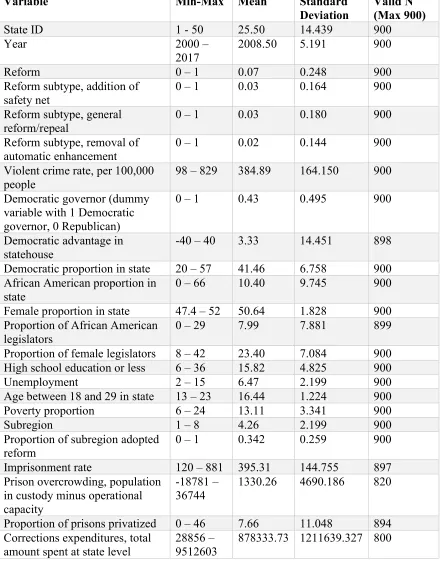
Descriptive Statistics ... 63
Hypotheses ... 66
Methodology Overview ... 73
Event History Analysis ... 74
v
Chapter 5: Results and Findings ... 78
Introduction ... 78
Adoption of Mandatory Sentencing Reform Policies ... 78
Adoption of Subtypes of Mandatory Sentencing Reform... 81
Diffusion of Mandatory Sentencing Reform Policies ... 87
Diffusion of Subtypes of Mandatory Sentencing Reform ... 90
Presence of Mandatory Sentencing Narratives ... 96
Diffusion of Mandatory Sentencing Narratives ... 99
Narratives and Reform Trends ... 102
Findings Regarding Speed of Diffusion ... 109
Conclusion ... 112
Chapter 6: Discussion and Conclusion ... 113
Major Innovations of the Dissertation ... 113
Review of the Findings ... 114
Hypotheses about Reform Adoption ... 116
Hypotheses about Reform Spread ... 118
Hypotheses about Narrative Presence ... 120
Hypotheses about Narrative Spread ... 121
Key Findings of the Dissertation ... 122
Limitations ... 124
Future Research ... 125
REFERENCES ... 128
APPENDICES ... 146
Appendix A: The Effect of Mandatory Sentencing Policies ... 147
Appendix B: State Prison Incarceration Rate, Select States & All 50 States ... 149
Appendix C: State Imprisonment Rate in 2017 ... 150
Appendix D: State Expenditures on Corrections in Billions, 1985-2017 ... 151
Appendix E: Public Support for “Tough on Crime” Policy, 1953-2010 ... 152
Appendix F: Policy Narrative from ACLU ... 153
Appendix G: Policy Narrative from FAMM ... 155
Appendix H: Policy Narrative from ALEC ... 157
Appendix I: Policy Narrative from Right on Crime ... 159
vi LIST OF TABLES
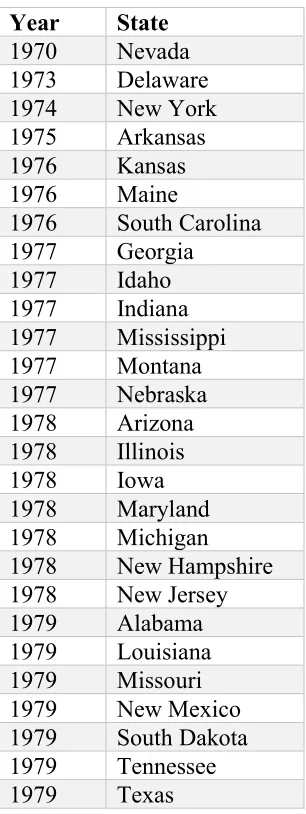
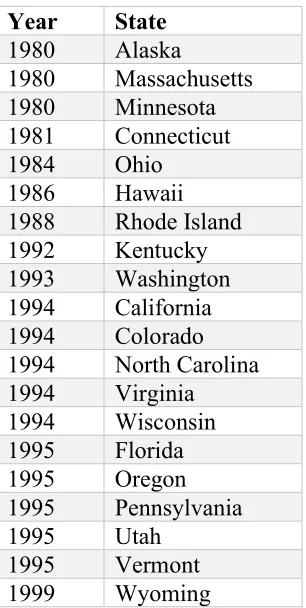
Table 2-1 Most Recent Mandatory Sentencing Policy Enacted by State during
Modern Wave ... 12
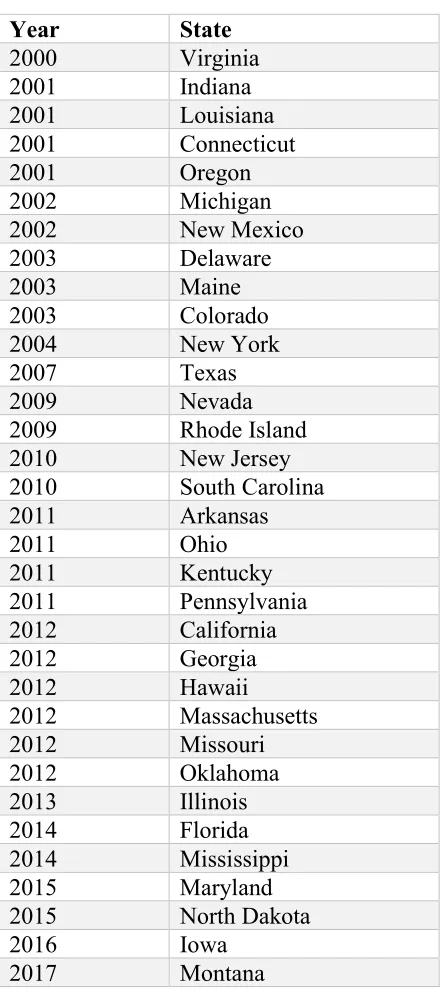
Table 2-2 Reform of Mandatory Minimum Sentencing Policies in the 2000s ... 21
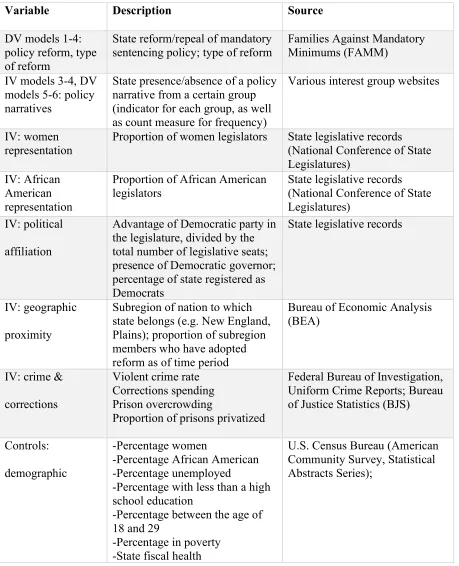
Table 4-1 Variables and Sources ... 62
Table 4-2 Descriptive Statistics ... 64
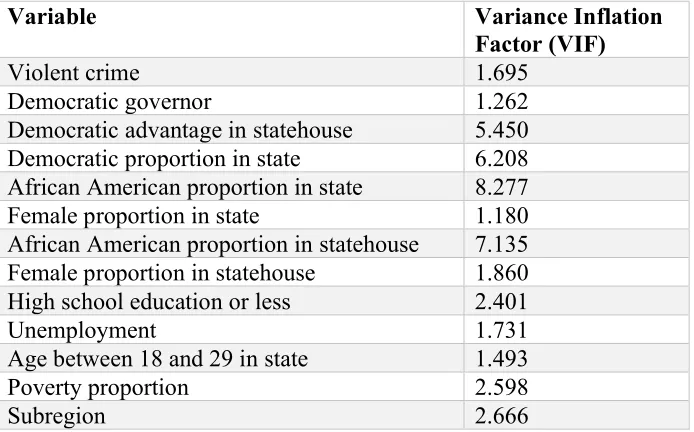
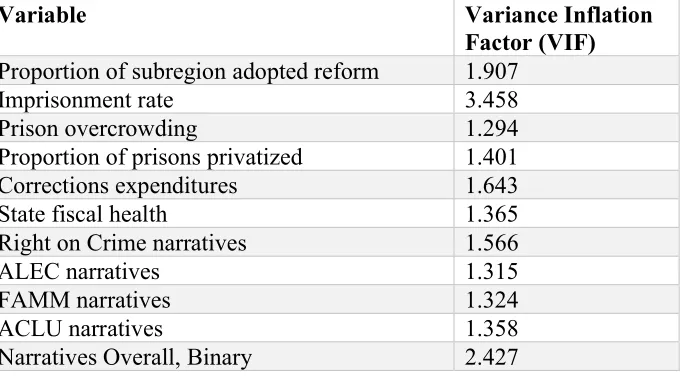
Table 4-3 Collinearity Statistics ... 65
Table 4-4 Hypotheses about Reform ... 67
Table 4-5 Hypotheses about Narratives ... 69
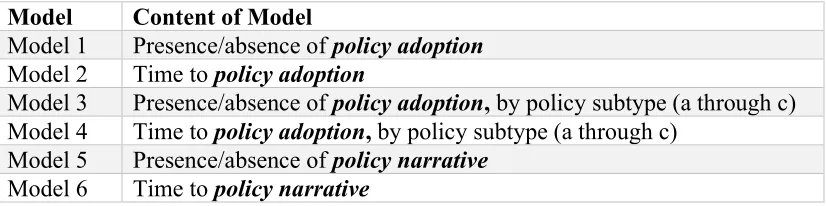
Table 4-6 Models ... 74
Table 5-1 Model 1 (DV reform, logistic regression model) ... 80
Table 5-2 Model 3a (DV subtype 1, addition of safety net, logistic regression model) ... 82
Table 5-3 Model 3b (DV subtype 2, general reform/repeal, logistic regression model) ... 84
Table 5-4 Model 3c (DV subtype 3, removal of automatic sentence enhancements, logistic regression model) ... 86
Table 5-5 Model 2 (DV reform, event history analysis) ... 89
Table 5-6 Model 4a (DV subtype 1, addition of safety net, event history analysis) ... 91
Table 5-7 Model 4b (DV subtype 2, general reform/repeal, event history analysis) ... 93
Table 5-8 Model 4c (DV subtype 3, removal of automatic sentence enhancements, event history analysis) ... 95
Table 5-9 Model 5 (DV narratives, logistic regression) ... 98
Table 5-10 Model 6 (DV narratives, event history analysis) ... 101
Table 5-11 States Not Targeted by Narratives ... 102
Table 5-12 Highest Narrative Attention by State ... 103
viii LIST OF FIGURES
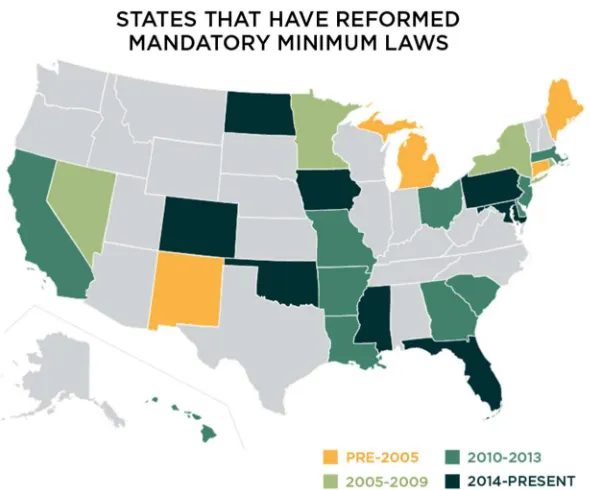
Figure 1-1 State Reforms of Mandatory Minimum Sentencing Policies, 2000-2016 ... 5
Figure 5-1 Level of Narrative Attention by Year ... 103
Figure 5-2 Number of State Reforms Per Year ... 104
Figure 5-3 Interest Group Targeting by State, 2000-2017 ... 106
Figure 5-4 States That Reformed Mandatory Minimum Sentencing Policies, 2000-2017 ... 109
Figure 5-5 Diffusion of State Mandatory Sentencing Reform ... 111
1 CHAPTER 1: INTRODUCTION AND PROBLEM STATEMENT
Introduction
Why have some states reformed mandatory minimum sentences and others have not (at least, not yet)? Using the theoretical framework of policy diffusion, I explain the process of when and why mandatory sentencing reform occurred during the 2000s. Traditional diffusion theory alone is not enough to explain these changes. By adding a theory of the effect of
narratives, we can understand the why of reform. Diffusion answers how reform spreads, while adding a measure for narratives allows us to better understand this spread in a more nuanced way than traditional diffusion literature. The major contribution of this dissertation is the addition of narratives to the diffusion literature.
The goal of exploring the diffusion of policy reform adoption is to better understand policy change, particularly state-level policy processes and the role that narratives play. Other studies have used event history analysis (EHA) and the Narrative Policy Framework (NPF) in the context of criminal justice, making this is a rich area for further exploration. I contrast the factors influencing the diffusion of policy adoption with factors influencing the diffusion of narratives across states for the same number of years, using a sample of interest group documents. This dissertation demonstrates the extent to which a diffusion model may predict the spread of narratives, rather than its traditional use for policy change.
What are Mandatory Minimum Policies?
2 presumptive policies that mandate sentencing guidelines that judges generally must follow. Mandatory sentences are communications from legislators that certain crimes necessitate harsh punishment (Clement, 2001; Tonry, 1999). In turn, these also shift focus away from community-based sentences to more incarceration. Mandatory sentencing policies generally target either habitual offenders or those committing unpopular offenses including drug related crimes and crimes against children. Three strikes laws are one common type of mandatory sentence targeting habitual offenders. Many states required a 25 year to life sentence upon a third felony offense (Clement, 2001). The unintended result of mandatory minimum sentences was increased prosecutorial discretion due to the practice of plea bargaining, because defendants are usually willing to agree to a lesser offense to avoid going to trial and being sentenced to a long mandatory minimum (Benavie, 2009). In general, mandatory sentences increased sentence length, decreasing judicial authority to account for the circumstances or nature of an individual or their offense (Benavie, 2009).
The most recent wave of mandatory sentencing occurred in the 1980s and early 1990s. By 1994 all 50 states had at least one mandatory sentencing policy in place (National Research Council, 2014; Parent et al., 1997). Policies that were tough on crime were popular during this time, but states soon realized that these policies did not work. Therefore, reform began.
The Case of Mandatory Sentencing Reform
3 2000 through 2017. This case serves as an appropriate context to explore the process of diffusion of a policy (as well as diffusion of policy narratives) across the United States.
I provide a few examples of early reform of mandatory minimum sentencing policies at the state level to illustrate trends in the type of changes made. In Connecticut, a 2001 policy change relaxed mandatory minimum laws for the sale or possession of drugs if the court finds good cause. In 2001, Indiana also reformed their sentences, exempting drug offenders with no other types of convictions from the three strikes law, as long they do not have more than one trafficking conviction. In 2002, New Mexico repealed a mandatory sentencing enhancement requiring prosecutors to charge defendants with a prior drug conviction as a habitual offender. Also in 2002, Michigan repealed almost all of its drug mandatory minimums, changed lifetime probation to a five-year period, and created new sentencing guidelines. Finally, in 2003, Maine reduced the mandatory minimum sentence for murder from 25 to 20 years, and authorized courts to suspend any other mandatory sentences which represented a substantial injustice and would not endanger public safety. As demonstrated, most policy changes by states in the reforms focus on drug offenders, particularly those who are nonviolent, which is consistent with the reforms throughout the 2000s. Maine and Michigan did make more sweeping changes, such as a change for murder sentences and a general guideline change, but these are more exceptions to the general trend throughout the 2000s.
4 harsher sentences. Lawmakers passed the initial mandatory minimums in hopes of increasing fairness, as they intended to decrease judicial discretion by setting definitive punishments by offense type. Yet it turned out that a concomitant increase in prosecutorial discretion through the use of plea bargains led to unfairness in implementation of mandatory sentencing policies
themselves, particularly for people of color. Mandatory minimum sentencing policies also ended up being very costly and burdensome on the states’ criminal justice systems, as longer sentences mean housing older offenders who generally have a very low risk of reoffending once reaching a certain age. They exacerbated the effects of the justice system on impoverished minority
communities, discussed in Appendix A. They also contributed to a rising incarceration issue, pictured in Appendix B.
Arguments for repealing punitive sentencing policies led to a wave of bipartisan efforts beginning in 2010 associated with the Justice Reinvestment movement, a formalized effort to enact sentencing change at the state level (La Vigne et al., 2016), although several states had already been moving in the direction of reform since the early 2000s (FAMM, 2017c; Mauer, 2002, 2011; Porter, 2012). Since 2005, when only four states had enacted reforms of their
5 Figure 1-1 State Reforms of Mandatory Minimum Sentencing Policies,
2000-2016.
Source: FAMM (http://www.thealiadviser.org/sentencing/famm-urges-mass-legislature-to-adopt-sentencing- reform-in-response-to-supreme-court-ruling/).
Politics helps explain state crime policies. For instance, policies that were tough on crime were popular in Oklahoma, where under both Democrats and Republicans, the state passed some of the most punitive laws (Obbie, 2016). Yet Oklahoma overcame this tendency in 2012,
6 Yet reform is not comprehensive: both political parties tend to focus on reducing mandatory minimums for nonviolent, low risk offenders, not removal of all mandatory minimums (Larkin & Bernick, 2014; Newburn, 2016).
Research Questions and Analysis Plan
The NPF emphasizes that the stories people tell about policies matter (McBeth, Jones, & Shanahan, 2014). Combining this approach with policy diffusion will reveal the role narratives play in diffusion. My dissertation proposes that combining arguments from traditional policy diffusion models with the NPF is likely to offer a more comprehensive understanding of policy diffusion using mandatory sentencing reform as an instance of diffusion. I offer that it is important to understand how policy narratives influence policy diffusion, and to consider whether variables used in diffusion studies to predict policy change and time to policy change shape narrative presence. The core research questions addressed in this dissertation are:
1. What factors lead to the adoption of mandatory sentencing reform policies at the state level?
2. What factors lead to the diffusion of mandatory sentencing reform policies at the state level?
3. What factors lead to the adoption of policy narratives at the state level? 4. What factors lead to the diffusion of policy narratives at the state level?
7 factors influencing adoption of reform are the same as those influencing time to adoption of reform. I use the same models for the outcomes of reform by subtype and policy narratives.
To ensure the diffusion of narrative results are comparable and to have a baseline model, initial models explore the diffusion of policy adoption itself. The models using narratives then explore whether the variables accounting for policy diffusion are the same or different from those accounting for policy narrative diffusion. By modeling the outcome of interest group narratives, this dissertation builds on the knowledge established by the NPF about policy narratives.
For the level of analysis of NPF, this dissertation is a meso-level study that focuses on interest groups and organized narratives for and against policies (McBeth, Jones, & Shanahan, 2014). The narrative outcome data consists of interest group documents related to mandatory sentencing policies. I measure interest group involvement with a count of these reform
narratives, by state and year. This policy context is somewhat unique, as there is no for or against reform, but rather all actors are in favor of reform. I use a simple count measure of narratives because of this one-sidedness.
8 CHAPTER 2: THE CASE OF MANDATORY SENTENCING POLICIES AND THEIR
REFORM Introduction
The policy case at the heart of this study is reform of mandatory minimum sentencing policy in the United States, at the state level. The policy outcome I explore is whether and when a state adopts any reform or repeal of mandatory minimum sentencing policies. I review the trajectory of sentencing policy in the United States, including the underlying context, particularly the purpose of or philosophy regarding punishment that is the focus of the policies put into place. I then define mandatory minimum policies and when they arose in the United States. This study is not focused on policy implementation; rather, the focus is on policy change through adoption. Other types of sentencing are also reviewed here to give context to the policy case.
A Brief History of Sentencing in the United States
The United States went from an emphasis on retribution, then rehabilitation, then back to retribution throughout the 1900s (Gertner, 2010; Schwartz, 1983). Indeterminate sentencing predominated within the United States until the mid-1970s. Indeterminate sentencing is based on rehabilitation, so the parole board determines when an offender is perceived as reformed
(Witayapanyanon, 1989). The sentence is subject to limits according to the range the sentencing judge gives. The role of the parole board as an administrative body was to determine when an individual was rehabilitated to the extent that they were prepared to return to society.
9 crime and punishment (Witayapanyanon, 1989). The movement stemmed from an elite-created moral panic about crime among the public (Loo & Grimes, 2004). Within this law-and-order movement, politicians severely limited the discretion of judges and parole boards. They passed mandatory prison terms and determinate sentencing structures, removing the use of parole and indeterminate sentences where offenders were released once seen as reformed (Cullen, Clark, & Wozniak, 1985).
There was a national interest in presumptive sentencing in the late 1970s (Zalman, 1982). Presumptive sentencing is “sentencing guidelines that were developed by a specialized agency and that have some degree of formal legal authority” (Coffee & Tonry, 1983, p. 156).
Presumptive sentences provide a range of appropriate sentence length to the judge, who is generally expected to follow the range unless special circumstances warrant departure from the sentencing range (but these departures are subject to appellate review). Minnesota’s presumptive sentencing guidelines provide a range of months for which an individual should go to prison for a particular offense nature and their prior history (Coffee & Tonry, 1983). Sentencing guidelines were put into place with the intention of decreasing judicial sentencing disparities (Schwartz, 1983). Guidelines leave discretion with the judge, as they have to select seriousness of offense (Schwartz, 1983). The sentence was about doing time for the violation of the law, rather than being rehabilitated or reformed. Yet in operation, these actually increased disparities as discretion merely shifted from judges to prosecutors (Tonry, 2013).
10 discretion. Zimring (1983) argues that mandating minimum terms for particular offenses leads to longer prison terms because lawmakers, caught up in the tough-on-crime movement, envisioned applying these sentences to the worst offenders. This “get-tough” movement consisted of
lawmakers attributing harsher punishment desires to the public, despite whether the public actually supported this (Cullen, Clark, & Wozniak, 1985).
By the mid-1980s, demands for accountability came within a context of declining trust in government, which opened the door for politicians to stoke fear of crime and to claim
government responsibility for protecting victims and the public while dealing out harsh punishment to the criminals (Simon, 2007). One way this took form was the passing of more laws calling for determinate sentencing (Fairchild & Webb, 1985), yet reform left large amounts of discretion within the system despite efforts otherwise (Zimring, 1983).
Mandatory Sentencing Policies
The United States has a long history of mandatory sentencing policies, yet the policies I focus on are the most recent wave of mandatory sentencing enactments in the U.S. from the late 1970s to the 1990s. Crime was on the decline during the 1990s, yet all states, even liberal states, got tough on crime. Democrats particularly feared being labeled as soft on crime, so along with Republicans they rallied behind policy choices such as three strikes laws, which mandate that an offender committing a third felony offense be given to a life sentence for the third offense. Interestingly, the earlier mandatory minimums were largely repealed during the 1960s, culminating in the federal government repealing all federal mandatory minimums in 1970 (Tonry, 2013). Yet by the 1970s, they were back in favor.
11 policies. New York’s Rockefeller Drug Laws passed in 1973 and mandated a sentence of 15 years to life for possessing four ounces or selling two ounces of an illicit drug (Benavie, 2009). This was during pressure to address open-air markets for drugs like heroin and high crime. New York led the states and federal government in establishing harsh mandatory sentencing policies, and many states followed suit (Kilgore, 2015). A law focused on gun offenses is the Michigan law passed in 1976 mandating a two-year sentence for any individual in possession of a firearm while committing a felony offense. Any individual subject to this mandated term was not eligible for parole, probation, or a suspended sentence, and had to serve the two years consecutively, thereby adding time to the sentence length (Bynum, 1982).
The 1970s, 1980s, and 1990s represented a slow ramp-up of mandatory minimum sentence policies, mandating increased sentence lengths. During the 1970s, 49 states (all except Wisconsin) enacted mandatory minimum laws that generally required a one- to two-year sentence for any felony, typically for firearms offenses (Shane-DuBow, Brown, & Olsen, 1985; Tonry, 2013). During the 1980s, most states and the federal government passed minimums of five, ten, and 20 years focused on drug offenses, sex offenses, and violent offenses, as well as for habitual offenders specifically (Mauer & Nellis, 2018; Tonry, 2013).
12 crime concerns, and because of their desire for longer sentences (Stemen, 2007). These laws target harsh sentences for certain offenses and require predetermined sentences, despite the carry through with most offenders pleading out to avoid lengthy sentences (Stemen, 2007). Yet these policies mostly remain in place to serve the symbolic goal of appearing tough on crime.
Table 2-1 Most Recent Mandatory Sentencing Policy Enacted by State during Modern Wave.
Year State
1970 Nevada
1973 Delaware 1974 New York 1975 Arkansas 1976 Kansas 1976 Maine
1976 South Carolina 1977 Georgia
1977 Idaho 1977 Indiana 1977 Mississippi 1977 Montana 1977 Nebraska 1978 Arizona 1978 Illinois
1978 Iowa
13 Table 2-1 (continued).
During the 1990s, most states passed three strikes policies that required 25 years to life for various crimes, mainly for drug-related offenses, and enacted life without parole (LWOP) laws, many of which were mandatory policies (Tonry, 2009; Tonry, 2013). These 1990s-era policies included widespread passage of “three-strikes-and-you’re out” laws, in which an
individual who gets a third felony offense receives a life sentence, as well as truth-in-sentencing laws, in which individuals must serve at least 85 percent of the sentence given to them by the judge (abolishing early parole release) (Tonry, 2013; Sabol et al., 2002; Stemen, Rengifo, & Wilson, 2006). “Following the high-profile adoption of the three-strikes law in California in 1994 about half the states enacted a variation on this policy, typically calling for a life sentence for a third conviction of a violent offense” (Mauer & Nellis, 2018, p. 117).
Year State 1980 Alaska
1980 Massachusetts 1980 Minnesota 1981 Connecticut
1984 Ohio
1986 Hawaii 1988 Rhode Island 1992 Kentucky 1993 Washington 1994 California 1994 Colorado 1994 North Carolina 1994 Virginia 1994 Wisconsin 1995 Florida 1995 Oregon 1995 Pennsylvania
1995 Utah
1995 Vermont
14 The reasons for the emergence of mandatory minimum sentencing policies and the
rationales for their adoption are important to understand. Lawmakers see crime as a particularly intractable problem, making it “a peculiarly frustrating problem area for decision makers” (Fairchild & Webb, 1985, p. 9). The general public’s fear of crime may rise even when crime itself is not rising (as occurred during the 1990s) (Fairchild & Webb, 1985). Given the
difficulties inherent in this policy area, policy makers are prone to embrace simple solutions that are later replaced when results show undesirable or at least less than desirable results (Fairchild & Webb, 1985). Thus, it is not surprising that mandatory sentencing policies were able to spread yet again to every state, in an even more punitive manner than prior policies. Legislators saw mandatory minimum policies as politically appealing at the time (Doob & Cesaroni, 2001; Tonry, 2013). There was “a trend toward punitiveness among policymakers, a punitiveness founded on feelings of frustration, anxiety, and loss of control” (Fairchild & Webb, 1985, p. 9). It is politically attractive to lengthen, not shorten, sentence lengths in general (Wicharaya, 1995). Further, political entrepreneurs (advocates for policy change) and concern about crime levels in the 1990s among the public (the fear of crime problem, rather than actual rising crime)
(Wicharaya, 1995) allowed for the enactment of tough on crime policies, including an infamous mandatory sentencing policy, the three strikes law (Williams, 2003).
15 expressed for drug law violators seems out of all proportion to their crimes. The drug war
appears to give people a license to say thigs about illicit drug users that they would never be allowed to say about the groups whom they associate with these drugs: African Americans, Latinos, and rebellious young people” (Benavie, 2009, p. 14). These strong emotions from members of the public may drive the harsh punishments resulting, with drug offenses sometimes result in sentences equal to that of murder or rape (Benavie, 2009).
Proponents believed mandatory sentences would even the length of sentences for offenders and reduce judicial bias in the process, as well as reduce crime due to the deterrent effect of potential long sentences for particular offenses or repeat offenders (Loftin, Heumann, & McDowall, 1983; Roche, 1999). The theory behind why mandatory sentences would decrease crime is deterrence. Yet “there is no convincing evidence that they are effective deterrents to crime” (Tonry, 2013, p. 466; see also Doob & Webster, 2003 and Webster & Doob, 2012). By the early 1990s, crime was decreasing, due to a multitude of reasons (but not sentencing policies that were tough); political salience of the issue dropped and possibilities for reform increased, particularly those focused on the flaws of the War on Drugs (Mauer & Nellis, 2018). Yet even if they are not successful deterrents, proponents argue they serve the other goal of retribution and incapacitation. (See Appendix A for further discussion of the effects of mandatory sentencing policies on communities of color and impoverished areas.)
16 more in favor of punitive measures, they are more likely to pass punitive measures into law. Berk, Brackman, and Lesser (1977) found lawmakers responded to crime-related problems with new legislation or harsher policies. Both studies found elites adhering to solutions that are in their own interest, a key factor in the rise of tough-on-crime legislation, most notably mandatory minimum sentences, due to their fear of being perceived as soft on crime. Values and beliefs are another factor shaping criminal lawmaking (Berk, Brackman, and Lesser, 1977).
Partisan Stances on Mandatory Sentencing
Everyone, liberals and conservatives alike, is against crime (Rosch, 1985). This helps in comprehending how a tough on crime mandate such as mandatory sentencing policy took off in the 1970s and 1980s in the U.S. Both parties, and all levels of government, supported a large-scale shift to harsh, punitive policies (Mauer & Nellis, 2018).There is also the matter of timing, as trends in policy follow the country’s sentiments about appropriate punishments for crime. As I will discuss in the following chapter in the section on morality policy, mandatory sentencing policies are an example of following public sentiment, and this matters because it helps frame the differences between liberals and conservatives on the issue.
17 mandatory minimums, which include deterrence, removal of unjust practices, elimination of bias, and longer incapacitation effects. This is because conservatives generally support exactness in the sentence received for a certain offense. Early mandatory sentencing proponents perceived their institution as removing racial bias from sentencing decisions, as all individuals charged for the same offense would receive the same sentence. Yet this discretion transfers from judges to prosecutors, leaving room for continued bias in who prosecutors offer a plea deal and to what lesser offense.
In contrast, liberals see crime as caused by social problems, including poverty, unemployment, and discrimination, thus they prioritize policy responses addressing social failures over harsher sentencing (Lakoff, 2002; Rosch, 1985). The motivating standards for liberals include fairness, due process, equal protection, and elimination of discrimination (Rosch, 1985). The liberal stance aligns well with arguments against mandatory sentencing policies, including limited judicial discretion, inconsistent application, targeting of specific groups, coercive use, no individualized case considerations, high cost, and use for nonviolent crime. Prosecutors’ discretion increases under mandatory sentencing policies, as they have the responsibility of charging and bringing a case against a defendant. The practice of plea-bargaining increases under these sentencing policies, because a defendant fears the lengthy sentence that is a possibility if the prosecutor decides to charge them with a more serious offense. Judges’ discretion in turn decreases, as losing their ability to consider individual mitigating circumstances in a case ties their hands, as most policies mandate certain exceptions must be present to deviate from the prescribed length of sentence.
18 punishment meaning prison, and ensuring that certainty in sentences occur. Liberals’ reason is equality, while conservatives’ reason is crime control (Zimring, 1983, p. 109). This is an interesting preview to the conditions of the 2000s that have allowed for the rollback of
mandatory minimum policies. Although the reasoning behind support is different from the two parties, they are in general alignment on the recommended policy solution. This is a unique aspect of sentencing policy that makes it a very interesting case for the study of diffusion. This introduces a key question of this dissertation: is mandatory sentencing reform bipartisan? Are state legislators from both sides willing to reform these policies, or are both paying “lip service” as the public has shifted in favor of reform, without taking political action?
Reform of Mandatory Sentencing Policies
Tonry (1992) established that mandatory sentencing policies are ineffective and damaging to the system of justice. Yet policy change does not always follow pragmatism, so knowing the policies are failing does not alone lead to reform. Given the influence of these policies, it is difficult to justify their continuation. Yet changing ineffective policy is not that simple. Reforming a policy requires overcoming the status quo, that necessitates power in the policy process and also that the issue is a priority (Nice, 1994). Important actors were supportive of reform: the American Bar Association, U.S. Sentencing Commission, and most federal judges oppose mandatory minimums (Benavie, 2009).
19 included in the 2010 federal Fair Sentencing Act is a partial, minor success (Mauer & Nellis, 2018), although this was a very specific reform that does not address all drug offenders, but rather is a piecemeal effort to correct the large disparity between racial treatment of cocaine-related offenses.
In late 2018 the bipartisan First Step Act was signed into law, following the earlier-established rationale that incarceration and longer sentences do not work to address crime and exacerbate the problem (Nagin, 2013; National Institute of Justice, 2016). The law enhances the safety valve for low-level nonviolent drug offenders, allowing them to avoid mandatory
minimum sentences. For certain drug offenders, the applicable mandatory minimum sentencing terms are shortened. The First Step Act also makes the achievements of the Fair Sentencing Act retroactive (Federal Bureau of Prisons, 2019). This demonstrates the federal level is beginning to catch up to the states, although this is more recent than this dissertation’s state sample which ends in 2017.
Despite only some change at the federal level, states have been very successful in reforming their policies, with more than half of states having adopted some type of mandatory sentencing reform as of 2018 (FAMM, 2017c; Vera Institute of Justice, 2018). Since 2000, at least 29 states have achieved some type of reform of mandatory sentencing policies (Mauer & Nellis, 2018). (See Table 2-2.) By the late 1990s, even conservatives were in support of
20 nonviolent offenses (Mauer & Nellis, 2018). This is despite the political difficulties in reforming these policies for violent offenders especially.
As seen in Table 2-2, on average, modern mandatory minimums stayed in effect without any reform by a state for about 29 years. On the shortest end of the spectrum, Oregon and
21 Table 2-2 Reform of Mandatory Minimum Sentencing Policies in the 2000s.
Year State
2000 Virginia
2001 Indiana
2001 Louisiana
2001 Connecticut
2001 Oregon
2002 Michigan
2002 New Mexico
2003 Delaware
2003 Maine
2003 Colorado
2004 New York
2007 Texas
2009 Nevada
2009 Rhode Island
2010 New Jersey
2010 South Carolina
2011 Arkansas
2011 Ohio
2011 Kentucky
2011 Pennsylvania
2012 California
2012 Georgia
2012 Hawaii
2012 Massachusetts
2012 Missouri
2012 Oklahoma
2013 Illinois
2014 Florida
2014 Mississippi
2015 Maryland
2015 North Dakota
2016 Iowa
22 The reasoning for general bipartisan support of mandatory minimum sentencing reform may be due to the focus on nonviolent, mainly drug, offenders. For instance, the American Legislative Exchange Council, a traditionally conservative group, claims the “most effective way to combat the surge of individuals in prison is to engage in reforming mandatory minimum sentences for nonviolent, low-risk offenders” (Smith, 2016). Although more liberal groups occasionally mention violent offenders and that their sentences are out of line from a just sentence, their attention is mainly on nonviolent, drug offenders.
Shifting budget constraints and prison overcrowding help explain the shift in political landscape that allowed for state-level reform:
On one hand, this potentially provided prison guards and officials with job security and even growth. On the other, the strain on state budgets made it impossible for states to fund enough new prisons and guards to meet the demand. In the end, the department of corrections and prison guard unions joined in the call for reform, advocating for
alternatives to prison for drug offenders as a way to reduce the influx of inmates.
Although this led to closures of some prisons that had been opened to accommodate drug offenders, this was preferable to the severe overcrowding prisons were dealing with under the policies of the War on Drugs. (Frost, 2014, p. 210)
23 sentencing policies for nonviolent offenders. These reforms are bipartisan among lower crime rates (Lowery, 2015).
In the U.S., we have seen pushback against mandatory minimums because of the negative influence on communities of color and the inequities in their implementation (see Appendix A). For instance, in her study of why reform or rollback of drug mandatory sentences was politically feasible in some states but not others, Frost (2014) finds that race was an underlying issue in New York’s reform due to the clear disparate effects, yet the rhetoric around reform generally avoided the discussion of race. Rather, explicit narratives for reform focused on budgetary reasons, and race only appeared implicitly. In contrast, Frost (2014) found both politicians and interest groups working towards reform in Michigan discussed race. They made these decisions strategically according to whether to avoid the conversation about race and discrimination because of the divisive nature of these topics. This is interesting given the disparate effects of mandatory sentencing policies. Yet she found reform of drug mandatory minimums to be best predicted by state budget shortfalls. This is an interesting finding, given that morality policies are mostly immune from economic causal factors, that supports the argument that reform is
economically driven. I test this economic argument in a model including different types of mandatory sentencing reform to determine what is driving this movement or trend, rather than looking at one type of reform.
Types of Reform
24 of crimes for which mandatory sentences are on the books. Most reform efforts center around reform that benefits nonviolent drug offenders (Beckett, Reosti, & Knaphus, 2016). It is still not politically feasible to ask for sentencing reform for violent offenders (Beckett, Reosti, &
Knaphus, 2016). To address this variation in reform types, I use one source from Families Against Mandatory Minimums (FAMM) that classified state reforms into three categories: expansion of judicial discretion (untying the hands of judges by allowing them to deviate from mandatory sentences), general repeal or revision of mandatory sentences (rolling back or
shortening lengths of sentences on the books), and revision of automatic sentence enhancements (removal of longer mandated sentences because of possession of a gun during the commission of a felony, for example) (FAMM, 2017c). By using their categorization, this limits the difficulty of rating the degree to which a state reformed or what the policy the state passed changes about the mandatory minimum policy or policies they had on the books.
Debates on Reform
25 seen no adverse effects as states and the federal government have reformed their policies
throughout the 2000s, or it may be that the public agrees with the same arguments made by legislators: mandatory minimums are costly and ineffective, and contribute to the prison build-up.
Justification for Case Selection
This is a relevant case because it provides a recent diffusion across the United States. It is also an important case to study what leads to mandatory sentencing reform spread because the reform of mandatory minimums is timely but also preferred by public opinion. It appears that legislators are recognizing their misgivings in prior support for mandatory minimums and ready to reform, which is a rare occurrence in the policy realm.
Focus on Legislators
26 Choice of State-Level Sentencing
Rather than the federal level, state lawmakers form most sentencing policy in the criminal realm: According to Zimring (1983, p. 101), “State government is the main arena of punishment policy in the federal system.” State governments make the most critical criminal justice policy decisions (Bergin, 2011; Jones & Newburn, 2005). Also, using states as the level of analysis allows for the use of policy diffusion methodology, as detailed in Chapter 4. Diffusion across the states is interesting, as progress on mandatory sentencing policy reform is occurring mainly among the states. “Since 2000, 29 states have enacted laws increasing judicial discretion and revising when and how sentences are handed down. Thirty-two bills have been passed within the past five years alone, according to the report. States, the report shows, are becoming champions of reform, acting ahead of both Congress and the Obama administration” (Rhodan, 2014).
Conclusion
Due to the widespread nature of mandatory sentencing policies across the United States beginning in the mid-1970s and lawmakers continuing to pass them into the 1990s,
27 CHAPTER 3: THEORETICAL FRAMEWORK
Introduction
First, I focus on what policy diffusion and diffusion of innovation is as a policy process framework, including what the classic mechanisms of diffusion are. I then provide an overview of the history of policy innovation and diffusion studies within the United States. Next, I review policy diffusion studies that use states as the level of analysis, as that is the level of the current study, and some similar mechanisms operate according to the state legislative process regardless of policy differences. I then review examples of work about the diffusion of criminal justice policy. Next, I review the literature on morality policy, as mandatory sentencing policy reform is an example of this category of policy. I describe the policy type (morality) as policy
characteristics matter to the spread of policy. By better understanding the characteristics of morality policy, I can better model policy diffusion for reform. Finally, I review the literature on narratives, the NPF, and how I combine the literature on policy diffusion with that of narratives.
Policy Diffusion
28 studied by economics, public administration, and other fields; and governments by political scientists as well as sociologists (Nice, 1994).
In this study, I use the political science form of policy diffusion. Political science and public administration produced nearly one thousand policy diffusion articles over the past 50 years (Shipan & Volden, 2012). Understanding policy spread between jurisdictions is of interest. The theoretical foundation of the current study is based on expectations about political party support for policy reform, as well as how I expect reform to spread. I discuss theories of policy diffusion and Lakoff’s (2002) moral politics. This chapter lays out the definition used, and the mechanisms of diffusion, to help understand policy change.
According to Rogers (2003), “Diffusion is the process by which an innovation is communicated through certain channels over time among the members of a social system” (p. 35). The social system indicates shared norms, but also individuals who have opinion leadership, such as policy entrepreneurs. Scholars often discuss the elements of decision making involved when adopting policy innovations (in this study, the state legislators), and how information from other jurisdictions decreases uncertainty and risk (Rogers, 2003). The innovation is not new in general, but rather new to the jurisdiction adopting it (Rogers, 2003). In other words, policy diffusion is “one government’s policy choices being influenced by the choices of other governments” (Shipan & Volden, 2012, p. 788).
29 jurisdiction), put it in place (first by going through the proposal and passage process), then
confirm the decision based on the effects of implementation (Rogers, 2003).
According to Boushey (2010), the process Rogers (2003) lays out for innovation-diffusion is similar to the public policy cycle, a heuristic used to understand the non-linear process of policy making. In summary, some scholars break policy diffusion studies into stages: there are some “failure points” where innovation may fail: at the proposal stage, adoption stage, or implementation stage (Nice, 1994). Division into different stages of the policy process is necessary because different diffusion mechanisms matter more at these different stages (Karch, 2007). I focus on adoption as this is the most publicized and available data about whether state lawmakers pass a policy.
Mechanisms of Diffusion
Scholars consider Walker’s 1969 study the seminal study of policy diffusion between jurisdictions (e.g. Sliva, 2016). Walker studied the question of why policy spreads quickly in some cases, slowly in others, and sometimes fails to diffuse at all. This variation is due to the nature of the networks between the jurisdictions. The jurisdictions in a policy diffusion study must be part of a social system: the choice of one state influences the policy decisions made by other states (Berry & Berry, 2014). “We can say that policy diffusion occurs if the probability of adoption of a policy by one governmental jurisdiction is influenced by the policy choices of other governments in the system” (Berry & Berry, 2014, p. 310). I discuss the mechanisms of influence because these help us understand the probability of policy change. These are
30
Learning. Learning occurs when a jurisdiction observes that a policy is effective for another jurisdiction and thus decides to adopt it (Berry & Berry, 2014; Braun & Gilardi, 2006; Levy, 1994). Various factors influence whether a state learns from another. There are inherent constraints on learning; for instance, a more professionalized legislature has the time and
resources to research the policy decisions of other states, and thus learn from them. Also, it may be that states only hear of the progress made, and thus learn from, states geographically close (Berry & Berry, 2014) (although a critique of this regional approach is later in this chapter). Further, the ideological similarity to another jurisdiction, as well as preexisting beliefs about a policy solution, shape how policy actors interpret new evidence, thus changing their likelihood of adopting that idea from the other jurisdiction (Gilardi, 2010).
Learning depends on the policy itself, making learning complicated. For instance, if a policy area or proposal is complex, learning is less likely to occur (Makse & Volden, 2011; Shipan & Volden, 2011). Policies that have very observable effects are more likely to diffuse via learning (Makse & Volden, 2011). Learning has a larger effect as time goes on, as more
information about a potential innovation becomes available (Gilardi, Füglister, & Luyet, 2009). Yet according to Shipan and Volden (2011), learning may occur more because of political opportunity than the effectiveness of the policy itself, reminding us that the characteristics of the jurisdiction are also important to consider, as I will expand on later in this chapter.
31 diffusion as learning as a critical mechanism by which policies diffuse, particularly given the current policy case where competition and coercion are not operating.
Imitation. Also known as emulation, imitation occurs when a jurisdiction copies a policy choice of another, because they want to be like the other jurisdiction, regardless of characteristics of the policy or the potential outcomes as a result of the policy adoption (Berry & Berry, 2014; Shipan & Volden, 2006, 2008, 2012). For instance, imitation is at work when a state copies word-for-word the policy adopted by another, without adapting anything for their own state’s circumstances (although this is an extreme case, and a state need not copy the innovation verbatim to constitute imitation). Imitation is more likely to occur between jurisdictions that are similar in some way, such as a large city copying another similarly sized city, or jurisdictions one wants to emulate, such as smaller cities copying larger (Shipan & Volden, 2008). Early studies focused on regional or neighboring effects on imitation (Lutz, 1986; Walker, 1969), although these have fallen out of favor in recent years as the effects have failed to hold up over time. Also, the inherent weakness of this approach was a failure to distinguish between whether the
mechanism was learning or imitation.
32 further between imitation and learning, learning focuses on the policy itself and the outcome of it, while imitation focuses on the similarity of the jurisdiction or actor (Shipan & Volden, 2008).
Competition. Competition is operating when a jurisdiction makes the decision to pass a policy because policy makers believe they will gain an economic advantage over other
jurisdictions by having the policy in place, or it will prevent other jurisdictions from gaining an advantage over them (Berry & Berry, 2014). The concept of competition stems from the early work of Tiebout (1956), who modeled local level government competition, in which the goal is to attract residents. The thought was that members of the public will select to live in the
jurisdiction that aligned with their preferences for taxes and spending. This area of competition across governments has been a popular area of research since, particularly for economic-related policies (Shipan & Volden, 2011).
Coercion. Coercion involves a jurisdiction in a position of power over another either increasing the jurisdiction’s incentive to adopt a policy or forcing the jurisdiction to adopt it (Berry & Berry, 2014). Coercion could be horizontal influence, such as one country in a stronger position coercing a weaker country to adopt a certain policy (e.g. Simmons, Dobbin, & Garrett, 2006), or vertical, such as the federal government in the United States coercing states to adopt a policy as occurred with the adoption of speed limits on highways and the drinking age being shifted to 21 from 18 (e.g. Shipan & Volden, 2006) (Berry & Berry, 2014). Coercion may take place through use of force, threats, or even incentives (Shipan & Volden, 2012, p. 791).
The diffusion mechanisms of competition and coercion are only defined, not
33 Competition involves competing for resources resulting from a policy; the resources here would be prisoners when put in those terms, thus competition is not present. Also, criminal court jurisdiction is dependent on where one violates a state’s laws; thus, there is no
cross-jurisdictional concerns about competition. Coercion is not operating since mandatory sentencing reform was not a policy that the federal government had passed and was incentivizing for states to pass as well through some sort of inducement.
State-Level Diffusion Studies
The United States’ federal system makes state-level diffusion studies very common. This is particularly true in the realm of criminal justice studies, because the diffusion of these policies is independent of coercion from the federal government in this policy case, as there are no financial incentives or explicit communications from the federal government to the states about mandatory sentencing reform.
34 mandatory sentencing reform. Further research may expand on the incorporation of narratives to test whether the findings here stand for non-morality policies, such as governance policies.
As they sided with the proponents of policy types diffusing differently, as is accepted today, Berry and Berry used specific policy cases to exemplify the diffusion mechanisms of interest. In 1990 they studied the diffusion of state lotteries and in 1992 they studied the diffusion of income tax policies. Their first study explored whether arguments about internal determinants (political, economic, and social factors) of policy change were compatible with external, or regional diffusion, determinants. Regional diffusion indicates the adoption of those in nearby entities, in this context the influence of neighboring state adoption on a state’s own policy adoption. They found internal and external determinants were compatible and advocated the use of event history analysis (EHA) models for this type of study, as it works even in the instance of rare occurrences (Berry & Berry, 1990). Although they focused on the now outdated regional effects, this finding also applies for other external determinants.
Berry (1994) posited that event history analysis (EHA) as demonstrated in Berry and Berry (1990) is the best method to use for policy innovation and diffusion studies, as prior approaches testing one of these models in isolation was subject to false positives, or finding that a model was influencing policy change when in actuality it was not. Studying the effect of these models simultaneously on policy change is the best methodological choice (Berry, 1994). Thus, the current study follows the example started by this seminal piece that established scholars of policy diffusion should incorporate both internal and external determinants in one diffusion model to better understand the spread of policy across jurisdictions. It also follows the
35 Criminal Justice Policy Diffusion Studies
To review works of policy diffusion relevant to my case, I focus on U.S.-based policies at the state level because international diffusion studies given the different mechanisms between countries versus states are not as insightful for the current approach, and also criminal justice policy is so country-specific that comparing to studies outside the context of the United States for the current approach is not as useful as those focused domestically.
Internal state characteristics. Sliva’s (2016) review of sentencing and corrections policy diffusion studies found that internal state determinants such as economic, political, and social factors, were more influential upon policy diffusion than crime rates. This aligns with the work of Boushey (2010), who studied the diffusion of policies, including but not limited to criminal justice policies. He found that the population size, wealth, and political culture of the state shape innovation (see also Nice, 1994; Soule & Earl, 2001). Further, higher professionalization of the legislature and higher public education levels led to more likely adoption of innovation
(Boushey, 2010).
36 prohibitions of sodomy that had been on the books were Democratic-led states, while those keeping prohibitions longer were Republican-led, indicating the strong role of ideology in the diffusion of this moral policy change (Nice, 1994). Yet earlier work found no political party or election influence on criminal justice legislation (Heinz et al., 1969; Zalman, 1982). This lack of influence of party can be seen through both parties supporting the tough on crime movement– there is not generally a clear left and right among legislators on these issues, due to the fear of the public labeling them soft on crime. The party stances appear to move simultaneously on the issue, as we see with a shift toward accepting reform proposals. Political ideology overall is an important predictor in the general policy diffusion literature (Bergin, 2011; Berry & Berry, 1999; Nicholson-Crotty, 2009).
High turnover (or high levels of partisan competition) lead to more likely, as well as faster, policy innovation, particularly for morality policies (Boushey, 2010). Further, a
jurisdiction that has high levels of partisan competition is more likely to adopt an innovation that is politically feasible to both parties (Boushey, 2016). Soule and Earl (2001) found evidence that having a governor of a different party than that in power in the state legislature (divided
government) led to faster adoption of hate crime legislation, as other states notice the adoption and they in turn follow suit. Thus, there are several ways of operationalizing partisanship within a state and depending on the policy type they may influence diffusion.
37 and more public input drives the spread of death penalty policy across the United States
(Mooney & Lee, 1999b). To expand on this, lawmakers rely differently on public opinion depending on the extent of public division or agreement on the issue. Mooney and Lee (2000) find on a closely divided issue, public opinion drives the diffusion process. Yet in the case of one-sided public opinion (such as favoring the abolishment of the death penalty), the ideology of political elites rules the diffusion process (Mooney & Lee, 2000). The level of influence public opinion has depends on the larger political climate on the policy innovation at hand.
Emmert and Traut (2003) studied the spread of policies across the states banning the execution of individuals who are mentally challenged. In this correlate of a sentencing policy change, they found both public opinion and the values of lawmakers were important predictors of state’s policy change, consistent with findings on morality policy. In another example of studying the passage of a punitive policy, Traut and Emmert (2003) found citizen ideology and preferences for the death penalty to be influential. Allen and colleagues (2004) attribute truth-in-sentencing policy diffusion to increased public support for harsh punishment. Cocca (2002) also studied the role of public opinion on diffusion but found this to be an indirect influence.
Legislative mechanisms, focused on in the current study, are more susceptible to public influence than the court system (Kane, 2007).
38 policy has shown to have both political parties in favor of reform as well. Does bipartisanship emerge as an influential factor when I study the diffusion of the policy?
Even further, public opinion becomes more influential on policy outcomes in the
legislature when a policy is moral (Mooney, 2001). “Because morality can be perceived to be an issue in which everyone is an expert, state officials may become less responsive to interest groups (i.e., movements) and more responsive to general public opinion” (Kane, 2007, p. 233). “The history of sodomy law reform and these results also indicate that who argues for change matters; not just by affecting the chances of success, but by shaping the other factors that determine whether or not the policy change occurs. For example, in the case of sodomy law decriminalization, having state officials as the primary sponsors for change made elite allies (i.e., percent Democrat) less important” (Kane, 2007, p. 235). Thus, the following section describes the issue of legislative responsiveness.
A state’s likelihood of adopting a new morality policy increases when state legislators are more responsive to the public (Boushey, 2010, 2016). In addition, when the public views crime as a pressing problem, or as highly salient, state governments are more likely to respond to the public’s desires (Boushey, 2016). The study of innovation diffusion “gives primacy to the decision making of formal elected and appointed officials in state government, who identify, evaluate, and adopt emerging innovations that meet the challenges presented by interstate economic competition or address pressing social policy problems” (Boushey, 2010, p. 3). Thus, legislative responsiveness to the public’s opinion is a crucial piece that goes into the process of agenda setting; therefore, it is an important aspect of study within diffusion of innovations.
39 communication and interconnectedness has increased the speed of policy diffusion, with policies in the early twentieth century spreading much slower than those in the late twentieth and early twenty-first century. One specific way communications occur is through media. Allen and colleagues (2004) found the media’s focus on crime shaped the adoption of truth-in-sentencing policies, in addition to the main influence of federal government coercion. Oakley (2009) found increased media attention to increase the likelihood of fetal killing policy adoption. Thus, media influence may matter to their ability to communicate across jurisdictions, but even more so in the context of criminal justice policy due to their focus on crime.
40 analyzes over time the differences in mechanisms for policy change, finding they differ based on who the key advocates are. With morality policy diffusion, we should pay more attention to interest group influence since everyone sees themselves as an expert, so the public opinion outweighs that of vested interests (Kane, 2007). The threat of counter-mobilization by groups is also a key factor in the diffusion of innovations (Boushey, 2010, 2016), so interest group work is not only in favor of policies, but also against.
Three strikes, one example of a mandatory sentencing policy, diffused throughout the U.S. as a result of efforts by interest groups (Boushey, 2010). In another study of the spread of punitive sentencing policies, Williams (2003) found crime rates and policy entrepreneurs to be key to the process. Political entrepreneurs and concerns about crime predicted the spread of punitive sentencing policies by states in the early 1990s, including truth in sentencing and three strikes laws (Williams, 2003). These factors were more influential than characteristics of states themselves. Since scholars found political entrepreneurs and high crime were the influential variables for initial adoption of the punitive sentencing policies, will this be the case with the repeal of these policies? To some extent, I believe policy entrepreneurs will still play a role, but state characteristics will become more important and crime less important when it comes to repeal. Ideology, as discussed in the prior section on internal determinants, becomes more important when a policy has the public support united behind it. I hypothesize crime is less important as the rationale for repealing mandatory policies relies less on arguments about crime than justifications for putting these policies in place initially.
41 discussion of interest groups and policy entrepreneurs and the key role they play in the diffusion of innovation, it is important to make this connection. These groups and individuals are
influential because of their agenda-setting capabilities. Without this influence upon the decision making of legislators, they would fail to influence innovation diffusion at the state level. To shape diffusion, though, they must overcome the status quo bias within the political system. “There are typically many advantages on the side of current programs and practices. If officials are satisfied with current performance levels, they may have little inclination to search for alternative approaches… maintaining the status quo generally involves much less uncertainty” (Nice, 1994, p. 144). Yet the more certainty that current policy is flawed, as with both major parties seeing mandatory sentencing policies as problematic (although for different reasons), the more likely change and innovation in policy is possible (Nice, 1994). Further, goal alignment on a policy problem as well as on a solution makes it more likely for policy innovation to occur (Nice, 1994).
How has mandatory sentencing reform managed to overcome the bias toward policy inertia? “Because enacting policy change is typically so difficult, with many points at which new initiatives can be defeated, the advantages of the status quo are generally very strong. Indeed, the difficulty of enacting policy changes may deter officials from even proposing innovations” (Nice, 1994, p. 16). Also, Nice (1994, p. 145) points out that, “although inertia is a powerful force in government, forces for change are sometimes stronger.” There is a bias toward status quo, yet the mechanisms of diffusion, such as learning, imitation, competition, and coercion, may help overcome this bias, depending on the policy itself, the characteristics of the
42 mechanisms of diffusion in the following section, with a focus on their testing within criminal justice state-level studies.
Mechanisms of diffusion in criminal justice policy. An example of a sentencing policy diffusion found coercion, an example of external influence, was the main mechanism of
diffusion. Allen, Pettus, and Haider-Markel (2004) focus on understanding how the federal government influences the states, thus emphasizing the mechanism of coercion. Although coercion is not a mechanism of focus for the current study, this study examines a case of the diffusion of truth-in-sentencing laws across the U.S., one type of more punitive sentencing policy requiring certain violent offenders serve at least 85 percent of their sentences (thus reducing good time credit and earlier parole). This is because there was a 1994 policy by the federal government (Violent Offender Incarceration and Truth-in-Sentencing Incentive Grant Program of the Violent Crime Control and Law Enforcement Act) that premised grants for correctional facilities based on whether a state had a truth-in-sentencing policy in place. Although not
inherently coercive, incentives such as grants can be coercive, as the authors found in this study. Allen and colleagues (2004) found that above and beyond other internal and external
determinants, federal influence swayed some states to adopt this type of sentencing policy.
43 In contrast with Allen and colleagues’ focus on the mechanism of coercion, Grossback, Nicholson-Crotty, and Peterson (2004) focus on learning and the role that ideology plays in state-level policy change (although they do discuss how states may learn from the federal government). Scholars assume state governments know what the ideological makeup is of other states. Thus, when a state that is similar to them ideologically adopts a policy, their likelihood of adopting the same policy increases because the state’s leaders assume it is a good policy decision for their context. The adoption of a policy by a dissimilar ideological state, in contrast, lowers the likelihood of a state adopting the same policy (Grossback et al., 2004). They posit learning may occur from any other government entity, not restricted by geographic proximity or region (consistent with current established findings on the lack of geographic influence).
One of the cases used to test their model of learning is the passage of sentencing guidelines, which limit judicial discretion and intend to keep violent offenders in prison longer (and are thus part of the tough on crime wave beginning in the late 1970s). They find that states weigh information about sentencing guideline adoption more heavily if the jurisdiction is more ideologically similar to the state (Grossback et al., 2004). This study is a clear example that ideological similarities, or normative pressure/imitation, outweighs regional influences in
44 Morality Policy
This section draws from literature on policy types, focusing on morality policy, because policies relating to the punishment of crime are understood as morality policies. By presenting the typology of policies, I can focus in on examples of diffusion studies with morality policies as the cases, so that results are more comparable to the current study. Policy type matters to
diffusion, and characteristics of the policy or innovation itself are often understudied or not considered (Boushey, 2010; Makse & Volden, 2011). Yet policy types can help us understand which mechanisms of diffusion are most likely to be operating. For instance, morality policies that diffuse for symbolic reasons may be more likely to be diffusing due to imitation, not competition, as there is little to no economic reasoning for the policy spread (Karch, 2007). As another example, the process by which morality and economic policies is similar, yet the
reasoning or mechanism behind the diffusion process is different (Mooney & Lee, 1995, 1999b). Moral policies diffuse because of public opinion, and less because of learning on the part of policymakers (Mooney & Lee, 1999b):
Because of its technical simplicity, saliency, and conflicts of basic values, morality policy may not be amenable to policy learning… When possible, policymakers make morality policy in their usual way, by incremental steps and learning from previous adoptions. But when basic moral conflicts surface, considerations other than policy learning drive
reinvention. (Mooney & Lee, 1999a, p. 80)
45 Scholars define morality policies as social regulatory policies; these are non-economic policies dominated by single-issue interest groups (Boushey, 2010; Smith, 2002; Tatalovitch & Daynes, 1998). This is part of the policy typology literature and is in contrast with governance policies dealing with limitations of governmental authority and regulatory policies dealing with economic, environmental, and professional realms (Boushey, 2010). Following this, I categorize mandatory sentencing policies, and their reform, as morality policy.
Lakoff’s (2002) work expands on what moral politics means, helping us to better understand the actions of liberals and conservatives when dealing with morality policy types. The work of Lakoff sets up why liberals and conservatives have different reasoning, and thus different views on, these morality policies. The current study works to understand whether there has been a true shift in conservative thought about mandatory sentencing policies, even though it goes against their principles. It may be lip service, and the results support this with Democratic legislative control influencing reform diffusion.
According to Lakoff (2002), liberals have less insight in general into their worldview than conservatives do. “But where conservatives are relatively aware of how their politics relates to their views of family life and morality, liberals are less aware of the implicit view of morality and the family that organizes their own political beliefs” (Lakoff, 2002, p. 31). This may mean the nature of narratives crafted by groups from either side are different; for instance, liberals may be less acknowledging of the issue as moral or where their views come from, whereas
conservatives may be more so. The conservative underpinnings focus on self-interest and moral strength, while liberal underpinnings are nurturance and empathy (Lakoff, 2002). Thus,