University of South Carolina
Scholar Commons
Theses and Dissertations
6-30-2016
Who Are They ? A Case Study of Community
Health Worker (CHW) Programs in Primary
Health Care
Constance Renee Williams Shepard University of South Carolina
Follow this and additional works at:https://scholarcommons.sc.edu/etd Part of theEducation Commons
This Open Access Dissertation is brought to you by Scholar Commons. It has been accepted for inclusion in Theses and Dissertations by an authorized administrator of Scholar Commons. For more information, please [email protected].
Recommended Citation
Who Are They?
A Case Study of Community Health Worker (CHW) Programs in Primary Health Care
by
Constance Reneé Williams Shepard
Bachelor of Social Work Livingstone College, 1978
Master of Social Work University of Georgia, 1982
Submitted in Partial Fulfillment of the Requirements
For the Degree of Doctor of Philosophy in
Foundations of Education
College of Education
University of South Carolina
2016
Accepted by:
Allison Anders, Major Professor
Kara Brown, Committee Member
Michelle Bryan, Committee Member
Diane Carr, Committee Member
Spencer Platt, Committee Member
ii
iii
Dedication
To my Savior and Father, who always allows me to participate.
In doing so, I connect and learn from and with others
What truly matters!
To Patience,
Your spirit is present helping us to defy the odds over and over again.
To my Family,
From whence we have come and will go.
And
To Everyone in the study,
It was an honor and a privilege to have shared these moments with you.
It is with the greatest esteem that I dedicate to each of you
iv
Acknowledgements
No words or space can capture my heartfelt appreciation to everyone who has
supported me on this journey. In the deepest way possible, I honor my dissertation
committee members. Your mentorship and unwavering support throughout this journey
have helped prepared me for this moment. I am especially appreciative of my family,
fictive kinfolks, friends, colleagues, students, and acquaintances who always found time
to listen, encourage and support me in whatever way possible. You each contributed
v
Abstract
Community health workers (CHW) programs are an important emerging strategy
to address the rising cost of health care, the shortage of healthcare staff, and the lack of
accessible, affordable and quality health care (Sanders & Lehmann, 2007; WHO, 2010;
CDC, 2012). The American Public Health Association (APHA) defines community
health worker (CHWs) as frontline public health workers, trusted members of their
communities and individuals that have a unique understanding of the people and
communities they serve. CHWs develop trusting relationships that enable them to serve
as an intermediary between healthcare, social services providers, and community
members. By doing so, they facilitate culturally responsive patient-centered health care
(APHA, 2010). Researchers have demonstrated CHW programs are effective
interventions for increasing positive health outcomes in the management of chronic
diseases (WHO, CDC, 2012). Missing from the literature is information regarding the
nature of the cultural context of CHWs programs in primary health care settings with
diverse populations.
The purpose of this ethnographic case study was to gain insight into the culture of
CHW programs in primary health care (PHC). I explored CHW programs at three PHC
sites in SC to craft rich descriptions of the provisions of CHW services from the
perspectives of the people engaged in the day to day activities. The aim was to understand
better the CHW services, the roles, and responsibilities CHWs provide in PHC. I identify
vi
services. I share and discuss the perception of the CHW services from the people receiving
these services.
Keywords: Community health workers, primary health care, culturally responsive,
patients’perceptions, ethnographic case study.
vii
Table of Contents
Dedication ... iii
Acknowledgements ... iv
Abstract ...v
List of Tables ...x
List of Figures ... xi
Chapter 1: Introduction ...1
1.1Statement of the Problem ...6
1.2 Study Relevance ...10
1.3 Study Purpose ...17
1.4 Study Significance. ...18
Chapter 2: Conceptual Framework ...20
2.1 Situated Knowledge and Assumptions ...…20
2.2 Theoretical Framing……… 27
2.3 Review of the Literature ...42
Chapter 3: Research Design ...67
3.1 Role of the Researcher ...68
3.2 Methodology ...70
3.3 Case Study Sites Selection ...72
3.4 Methods of Data Collection ...75
viii
3.6 Methodological Consideration ...91
Chapter 4: A Day in the Life of Community Health Workers in PHC ...96
Vignette 1: The Drive to Work ...107
Vignette 2: Patience’s Office ...111
Vignette 3: The Clinic Area ...123
Vignette 4: The Home Visit ...134
Vignette 5: The End of the Day ...142
4.1 The Day in the Life of CHWs Salient Points ...151
4.2 CHW Program Services in PHC ...194
4.3 CHWs’ Roles and Tasks ...213
Chapter 5: Illustrations of Community Health Care Worker (CHW) Services ...222
5.1 Culturally Responsive CHW Program Services ...223
5.2 Perceptions of CHW Services ...245
Chapter 6: Insights, Implications and Conclusion ...268
6.1 Theoretical Implications ...268
6.2 Methodological Implications ...273
6.3 Implications for Practice ...291
6.4 Study Limitations ...303
6.5 Future Studies ...305
6.6 Conclusion ...307
References ...309
Appendix A –Informed Consent ...330
ix
Appendix C –CHW Interview Protocol ...333
Appendix D – Patient Interview Guide ...336
Appendix E – Health Care Team Members Interview Questions ...341
Appendix F –Sample of Documents Collected ...342
x
List of Tables
Table 1.1 Modified Adjusted Gross Income (MAGI) for SC Medicaid Eligibility ...4
Table 1.2 SC Health Care Initiatives ...14
Table 2.1 Research Questions Emic/ Etic Approaches ...29
Table 3.1 CHW Program Sites in Primary Health Care (PHC) ...75
Table 3.2 Research Data Collection/Analysis Matrix...76
Table 4.1 Primary Healthcare Providers ...97
Table 4.2 Mrs. Brown’s Medication List ...128
Table 4.3 Hillsboro Family Practice Inpatient List ...154
Table 4.4 Community Health Workers Models of Services ...196
xi
List of Figures
Figure 1.1 Medicaid Coverage Gap ...2
Figure 1.2 Leading Causes of Death in U.S...5
Figure 1.3 Child and Adult Medicaid Recipient Disease Hotspots ...13
Figure 4.1 The Expanded Care Model ...107
1
Chapter 1
Introduction
“If true changes in healthcare systems are to come about, people must become more
engaged in these systems improving their health and relationships with healthcare
providers, and each must become more trusting, continuous, and mutually respectful”
(Hector, Rosenthal, Brownstein, Rush, Matos, & Hernandez, 2011, p. 2199).
Each year health organizations in the United States (U.S.) release data that reflects
a healthcare system embroiled in crisis. Millions of people in the U.S. are uninsured and
lack access to health care despite the recent implementation of the Patient Protection and
Affordable Care Act (PPACA), also known as the ACA of 2010 (Kaiser Family
Foundation, 2014). Under the ACA, ineligible and uninsured people are now able to
qualify for Medicaid. The increase in eligibility level from 100% to 133% of the federal
poverty rate made this possible (Kaiser Family Foundation, 2014). The federal poverty
level is a measure of income issued by the Department of Health and Human Services
that determines eligibility for federal programs and benefits (Healthcare.gov, 2016). For
example, a family of three with an annual income of $27,000 would be able to qualify for
Medicaid under ACA. The Patient Protection and Affordable Care Act of 2010 also
created a marketplace allowing individuals to compare benefits and prices to obtain the
2
In the 2012 Supreme Court decision, states were given the choice to opt-out of the
Medicaid expansion under ACA; this ruling is one reason that explains why many people
with low incomes remain uninsured (The Kaiser Family Foundation, 2014). Residents in
the states that decided to opt out of the Medicaid expansions and are ineligible for
Medicaid coverage are not required to obtain insurance and will not have to pay the
penalties for being uninsured (Obamacare Facts, 2016). Consequently, individuals in
these particular states remain uninsured. The resulting coverage gap affects an estimated
four million poor adults in the U.S. (Kaiser Family Foundation, 2014). These adults do
not qualify for Medicaid, nor are they eligible for subsidies or tax credits to purchase
health insurance in the marketplace (Garfield, Damico, Stephens, & Rouhani, 2014). The
state of South Carolina was one of the thirteen states to opt out of the Medicaid expansion
(Kaiser Family Foundation, 2014).
3
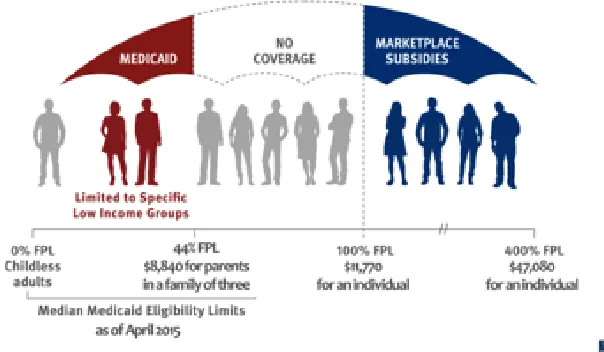
In Figure 1.1, Medicaid1 refers to a health insurance program for low-income
individuals and those with disabilities (Healthinsurance.org, 2015, n. p.). No coverage
includes the individuals without any health insurance. The marketplace subsidies include
two types of funding assistance.
The first type of assistance, called the premium tax credit, works to reduce
enrollees’ monthly payments for insurance coverage. The second type, the cost-sharing
subsidy, is designed to minimize enrollees’ out-of-pocket costs when they go to the
doctor or have a hospital stay. To receive either type of financial assistance, qualifying
individuals and families must enroll in a plan offered through a health insurance
marketplace (The Kaiser Family Foundation, 2015, n. p.).
Effective January 1, 2014, under the ACA, South Carolina is required to use the
Modified Adjusted Gross Income (MAGI) to determine individuals and groups’
eligibility for Medicaid (SC Healthy Connection, 2014). Table 1.1 highlights the MAGI
eligibility requirements for Medicaid in SC. Medicaid eligibility is limited to certain
individuals: pregnant women; families with a child under age 19; children who are or
were in foster care; and children adopted. Other qualified individuals include those
diagnosed with breast or cervical cancer and those who are blind, have a disability, need
care in a nursing home, or are over the age of 65 with very little or no income (SC
Healthy Connections Website, 2015).
1
4
Table 1.1 Modified Adjusted Gross Income (MAGI) for SC Medicaid Eligibility (SC Healthy Connections Website, 2016
The Health Care Needs of the Nation
The Centers for Disease Control (CDC) (2012) has estimated that 133 million
people, or 45% of the total U.S. population, has at least one chronic disease. Chronic
diseases (CD) include heart disease, strokes, cancer, obesity, diabetes, or other conditions
and are major factors contributing to the health care crisis (CDC, 2012). Chronic disease
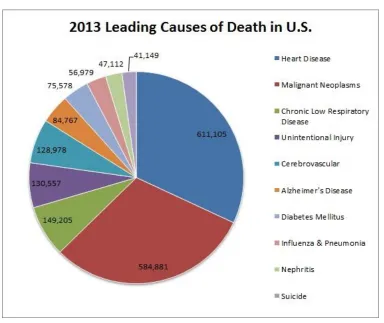
treatment constitutes over 75% of health care costs in the U.S. As depicted in Figure 1.2,
5
Chronic diseases are preventable when individuals change their unhealthy behaviors,
increase exercise, adopt a nutritious diet, and maintain a healthier lifestyle without
tobacco and excessive use of alcohol (CDC, 2012). Investing $10 per person in
community-based healthcare focused on changing behaviors such as physical inactivity,
poor nutrition, and smoking could save approximately 6 billion dollars annually (CDC,
2009).
Figure 1. 2 Leading Causes of Death in the U.S. (SAVE, 2014)
In 2009, the Centers for Disease Control made recommendations to curtail the
rising cost of health care and prevent increased chronic diseases. They reached out to
communities, policymakers, healthcare professionals, voluntary and professional
organizations, the private sector and governmental agencies, and academic institutions.
6
address critical areas affecting healthcare. These areas include but are not limited to the
individuals’ well-being, policy promotion, health equity, research translation, and
workforce development in health care. Echoing Hector et al. (2011), I argue that a
paradigm shift must occur in the healthcare field to produce efficient and effective health
care that is affordable, accessible, and accountable to the people it serves. The healthcare
system needs “policies and practices that connect and engage individuals, families, and
communities to health care providers so that trusting and respectful relationships may be
developed and positive health outcomes for all people achieved” (p. 2199).
1.1 Statement of the Problem
Notwithstanding the factors contributing to the healthcare crisis in the U.S.,
researchers have found that problems related to the healthcare crisis exist at multiple
levels (CDC, 2009; Hector et al., 2011). For example, at the micro level, an individual
must be actively engaged in receiving and participating in the management of her or his
health care (Perez & Martinez, 2008). At the mezzo level, primary health care (PHC)
providers and other health care experts have been at the center of health care rather than
patients and family members (Hector et al., 2011). At the macro level, the World Health
Organization (WHO) (2010) posits that healthcare systems must address the social
determinants of health to improve the population’s health. Social determinants of health
include aspects of an individual’s environment, learning capabilities, work history or
employment, and the quality or risks of life (Healthy People.Gov, 2014 & CDC, 2016).
These social determinants are broken down into five areas: “economic stability,
education, social and community context, health and health care, neighborhood and built
7
2016, n.p.). Hector and his colleagues (2011) contend that the healthcare system will only
change when there are mutual respect and understanding of the patient and the healthcare
providers’ roles and responsibilities.
Given the number of the uninsured people and the high rate of chronic
diseases, South Carolina’s health care system has, for many years, been in an upheaval
demonstrating woeful signs of deterioration at multiple levels (Krugman & Wells,
2009). Among the reasons for the decline is the rising cost of health care. Krugman &
Wells (2009) argue that rising health insurance premiums and new medical
technologies, advanced medications, and the increased costs of treatment have made
the U.S. health care system extremely ineffective and inefficient. The U.S. health care
divides people into insiders and outsiders.
Insiders are individuals who have enough insurance, and can receive modern
medicine provided, regardless of the expense. On the other hand, outsiders are
those individuals who have poor insurance or none at all, receiving very little
medical care. In response to new medical technology, the system spends even
more on insiders. However, it compensates for higher spending on insiders, in
part, by consigning more people to outsider status—robbing Peter of basic
care to pay for Paul’s state-of-the-art treatment. Thus, we have the cruel
paradox that medical progression is bad for many Americans’ health.
(Krugman & Wells, 2009, n. p.).
For the uninsured individuals in SC, who need and are seeking health care,
there are few options. If an individual cannot pay out of pocket, most health care
8
treatment. Health care providers will not provide treatment to uninsured individuals
because usually there are additional health care services needed to diagnose
adequately and treat patients. On the other hand, if the person is seeking treatment at
the local hospital’s emergency room, the staff is mandated by federal law to provide
medical attention to an uninsured individual. The Emergency Medical Treatment &
Labor Act (EMTALA) mandates that the public must have access to emergency
services care, even if they are unable to pay for it (Centers for Medicare & Medicaid
Services, 2015). Therefore, the hospital must stabilize the patient and then transfer or
refer him/her to an appropriate level of health care. In chapters 4 and 5, I will discuss
some of the charitable assistance available to help patients with medical expenses and
services. Unfortunately, these funds are minimal and typically available for
emergencies or limited health care procedures such as outpatient surgery.
Adding to SC’s health care challenges is the lack of accessibility to health care
in rural communities within SC, which represent nearly 30% of the population (U.S.
Census, 2010). Fortunately, the state has 22 Federally Qualified Community Health
Centers (FQCHC).
FQCHC are community-based, non-profit organizations that provide PHC
prevention, education, and case management. These health centers accept most
health insurance plans including Medicare and Medicaid. Additionally, they
service patients without insurance, by rendering services provided on a sliding
fee scale based on the patient's income (SC Primary Health Care Association,
9
The FQCHC receives federal funding from the U.S. Department of Health and
Human Services to help cover the expenses for uninsured patients and those who
cannot afford to pay copayments and other costs related to their health care.
An Intervention for Change
For a sustainable change in the U.S. healthcare system to occur, I argue that
healthcare experts must advocate for the integration of community health workers
(CHWs) into primary health care systems and patients’ health care teams (WHO, 2010;
CDC, 2012). CHWs facilitate and promote individual and community wellness by
assisting in the prevention and management of chronic diseases (WHO, 2010; CDC,
2012). Integrating CHWs into healthcare teams and community-based prevention efforts
can make significant contributions to strengthening and building community healthcare
systems (Hector et al., 2011). Hector et al. (2011) argued that such changes could cause a
shift “from a ‘sickness care’ system to a healthcare system that provides ‘comprehensive
care’ system for individuals, families, and community and tribal wellness” (p. 2199).
Typically, there is no current established relationship between a person's community and
the health care system. This suggests that the health care a patient receives is sporadic
and focuses only on addressing the sickness and not necessarily in promoting good
health.
Globally, CHW programs have served as important strategies to address the rising
cost of health care, the shortage of qualified healthcare staff, and the lack of accessible
and affordable healthcare (Sanders & Lehmann, 2007; WHO, 2010; CDC, 2012). The
CDC (2012) has cited three significant reasons why CHW programs are effective. First,
10
individuals with a unique understanding of the communities and the people in those
communities that they serve. Second, CHWs can function as bridges that link together
individuals from the communities, healthcare providers, social service agencies, and
other key stakeholders interested in fostering positive health outcomes by providing
culturally competent services (CDC, 2012). According to the CDC (2016), cultural and
linguistic competence is a set of congruent behaviors, attitudes, and policies that come
together in a system, agency, or among professionals that enable effective work in
cross-cultural situations (CDC, 2016). The last reason is that CHWs help strengthens the
capacity of individuals and the communities by working collaboratively with community
members and stakeholders to ensure that stakeholders understand relevant problems and
issues affecting these individuals and communities. In summary, CHWs advocate for
healthcare solutions on behalf of the people and communities they serve (American
Public Health Association, 2014; CDC, 2012; Perez & Martinez, 2008). Community
health workers help strengthen and build community systems of care as members of
healthcare teams and community-based prevention efforts, (Hector et al., 2011).
1.2 Study Relevance
The Kaiser Family Foundation (2014) reported at the time the state of South
Carolina opted out of the Medicaid expansion under the ACA that there were
approximately 765,000 uninsured adults in the state of South Carolina. The legislature’s
decision not to expand Medicaid under the ACA meant that nearly 194,000 individuals
who would have been eligible for Medicaid under ACA were denied immediate access to
health care. These individuals do not meet the state’s requirements for Medicaid, and
11
1.1. Additionally, approximately 189,000 individuals did not qualify for SC Medicaid or
healthcare coverage because they are undocumented immigrants or persons with incomes
that are too high to be eligible for the marketplace subsidies (Kaiser Family Foundation,
2014). Another 289,000 uninsured individuals meet the income requirement for
100-400% of the poverty level, qualifying them to purchase insurance through the
marketplace.
Governor Haley (2012) argued the expansion of Medicaid under the Patient
Protection and Affordable Care Act (PPACA) “ultimately hurts the poor, South Carolina,
and the country by doubling down on a system that already delivers some of the lowest
value in the world” (n. p.). Instead of taking the Medicaid expansion, Governor Haley
and the SC State Legislature,
invested $176 million of new recurring state funds in Medicaid to enroll about
65,000 low-income children through Express Lane Eligibility, replace the
one-time revenue with recurring sources, and expand the number of home and
community-based placements available to our beneficiaries (Keck, 2012, n. p.).
The rationale for the investment was there was plenty money already appropriated
to SC’s health care system, but funding needed to be reallocated for “non-productive to
productive uses “(Keck, 2012, n. p.). Tony Keck (2012), the director of Medicaid,
pointed out the state’s strategy focused on three areas: payment reform, clinical
integration, and targeting hotspots and disparities.
1) Payment reform through initiatives placed more of the responsibility at the providers’
level and rewarded them based on their performance. An example is the Greenville
12
Medicaid managed care partnered together to manage better the Medicaid patients. This
resulted in shared responsibility for the structure, performance and case management of
the Medicaid beneficiaries.
2) Clinical integration created with stakeholders focused on multidisciplinary care teams
that integrate physical and behavioral health with long-term care services for 65,000
beneficiaries. Effective July 1, 2012, SC began reimbursing primary care practices
certified as patient-centered medical homes 50 cents to $2 per member per month
depending on certification status.
3) The Hotspots and Disparities focus is to layer Medicaid on top of other state and local
government agency and private resources to address geographic, population and disease
hotspots to improve health where it is needed most. The hotspot map in Figure 1.3 shows
geo-coding analysis of hotspots in South Carolina Medicaid for a collection of diseases.
This effort has cost-savings targets, which identified those hospitals at risk. In a survey of
over 3,000 Medicaid beneficiaries, 32 percent reported multiple ER use in the past twelve
months and 48 percent cited lack of convenient physician office hours as the reason for
these visits (Keck, 2012, n. p.).
The Hotspot map in Figure1.3 depicts low and high disease prevalence among
Medicaid by Zip Code Tabulation Areas ( ZCTAs). The top 5 diseases in SC for adults
and children are included in this analysis. Adult disease indicates a recipient has, at least,
one or more of the following conditions: cardiovascular disease (CVD), chronic
obstructive pulmonary disease (COPD), depression, diabetes, and/or hypertension”(Child
13
Figure 1.3 Child and Adult Medicaid Recipient Disease Hotspots by ZCTA, 2014
Lopez-DeFede, Mayfield-Smith, and Stewart (2011) pointed out hotspots existing
throughout the state. For example, hotspots in Lexington, Richland, and Marlboro
counties accounted for all age groups. Lexington and Richland counties are urban
whereas Marlboro is rural. Hotspots for adult Medicaid recipients exist in Lexington,
Richland, Chesterfield, Marlboro, and portions of Beaufort County. Of these counties,
Richland and Beaufort are urban. Lopez-DeFede and her colleagues highlighted these
areas and determined these areas were also adversely affected by the social determinants
of health.
During 2012-2014, the South Carolina Department of Health and Human
14
related to the hotspots and to coordinate healthcare for the chronically ill, Medicaid
recipients, the uninsured, and high utilizers of emergency rooms especially in the rural
areas (SCDHHS, 2014). Table 1.2 depicts the initiatives, their purpose, CHW
involvement, and the oversight partnerships. SCDHHS solicited requests for proposals
and/or grants from health care providers at the local level to collaborate and create
partnerships to develop and implement the initiatives (Table 1.2) in their local
communities. Of concern to this study are the HOP and the CHW Medicaid Pilot
Program because they both used CHW programs in the provision of services.
Table 1.2 SC Health Care Initiatives Adapted from SC Healthy Connections (2015)
Health Care
Initiative
Program Description CHWs Involvement Oversight/Par tners Healthy Outcome Project (HOP) Created platform, structure and funding, to develop local partnerships and coordinated care for individuals who were uninsured, chronically ill and over-utilizing hospital emergency rooms.
CHWs were employed by PHC providers and worked between emergency rooms at local hospitals and PHC providers.
SCDHHS, local hospitals, FQHC, insurance providers, state agencies PHC providers partnered together.
CHW Medicaid Pilot Program
Improved patient care and health outcomes through compliance with health
screenings,
maintaining office appointments as well as in adherence to medication therapy.
These individuals will interface with the clinical practice and the community where
15
they reside. social services
organizations)
Free/ Hybrid Clinics
Enable a free clinic to become a Medicaid provider, and maintain its “free” clinic roots and mission.
Provide medical care to low-income
patients uninsured and Medicaid.
Utilize paid providers, often supplemented with volunteers (providers and otherwise).
Charge a fee for services on a sliding scale, which can allow for free care for the lowest-income patients.
N/A SCDHHS/
HeART Initiative (50 members include physicians, nurses, CHWs, hospitals, insurance providers, FQHC, state agencies community-based and social services organizations).
First, the SC Healthy Outcome Plan (HOP) was approved by the General
Assembly 33.34 to provide “healthcare providers a platform, structure and funding, to
develop local partnerships for the coordination of care of individuals uninsured,
chronically ill and over-utilizing hospital emergency rooms” (SC Healthy Connections
16
individuals, improve the health of Medicaid beneficiaries across the state and decrease
the cost of SC healthcare. HOP’s Triple Aims are; 1) to improve SC’s population
health; 2) to improve patients’ healthcare experiences, and 3) to reduce the per capita
cost of healthcare in the state. CHWs assist in the provision of a system of coordinated
care for those uninsured, and individuals with chronic diseases. They connect
individuals with PHC providers and help them access other medical services, such as
medications, supplies, and equipment (Gayheart, 2014).The ultimate goal is to reduce
the cost of emergency room care and improve patients’ health care.
The SCDHHS organized and implemented the Health Access at the Right Time
(HeART), a collaborative initiative with approximately fifty stakeholders statewide (PHC
physicians, the hospital association, FQCHC, CHWs, insurance providers,
community-based organizations (CBO) state agencies, and nurses). The aim of the HeART initiative
was to identify and implement viable interventions to address Medicaid geographical
hotspots within communities in South Carolina (America Public Health Association,
2014). Members of the initiative developed a variety of health care strategies to identify
alternative health interventions and resources for Medicaid recipients and uninsured
individuals across the state.
Second, the Medicaid pilot program established the reimbursement for approved
CHW services in PHC (Gayheart, 2014). The SCDHHS also provided PHC providers a
$6, 000 grant for CHWs to receive education and training and certification as a CHW.
The purpose of this CHW program was to support and assist individuals receiving
Medicaid and to encourage those individuals to take responsibility and manage their
17
recommendations, and keep medical appointments, and they served as a liaison between
patients, health care providers, and community members (HeART, 2014). The four goals
of their CHW programs are 1) to increase the value of the partnership between the patient
and the primary care physician. 2) To decrease emergency room visits and
hospitalizations by improving utilization of primary care physician. 3) To enhance
Medicaid recipients’ chronic disease management skills and engagement with primary
health care providers; and 4) to reduce costs and improve health outcomes (HeART,
2014).
1.3 Study Purpose
The purpose of the study was to understand the nature of CHW program services,
and the roles and responsibilities CHWs perform in primary health care settings in South
Carolina. CHWs are frontline health workers and trusted individuals who work to
understand the people they serve (HeART, 2014). The findings reflect implications for
CHW training and practice in the field. Data inform the knowledge and competencies
CHWs need to facilitate better health outcomes for the individuals, families, and
communities who receive CHWs’ services. I argue that to affect sustainable change in
health care at multiple levels; we need a better understanding of the complex dynamics
that exist between primary health care providers and the diverse individuals and
communities they serve. In this study, I explored three CHW programs in primary health
care settings in SC to construct rich descriptions from the perspectives of CHWs, the
18
Research Questions
The study was an ethnographic case study (Merriam, 2002) about CHWs in the
context of three primary healthcare settings in South Carolina. The research questions
guiding the study were:
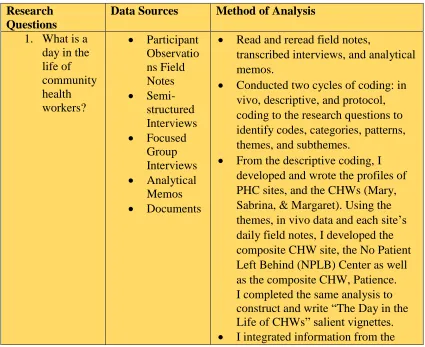
1. What is a day in the life of community health workers?
2. What services do CHW programs provide?
3. In what ways do CHWs provide culturally responsive services?
4. How do individuals receiving CHWs’ services perceive these services?
1.4 Study Significance
This study contributed to several bodies of knowledge that inform CHW training
or education and programs in healthcare. In this study, I addressed the day to day
activities of three CHW programs in PHC, the services, the CHWs’ responsibilities and
roles performed in the provision of services. I explored the link between CHWs and the
diverse people working with and receiving CHW services and described the mechanisms
in which they provide culturally responsive services. Also, I provided the perceptions of
CHWs services from the perspective of the individuals affected by the services, the
patients, family and healthcare professionals working with the CHWs.
Researchers have demonstrated that CHW programs were effective in increasing
positive health outcomes for persons with chronic diseases (WHO, 2010, CDC, 2012).
Other researchers have suggested that CHWs provide culturally appropriate services, yet
it is unclear how CHWs accomplish culturally responsive services. It is important to
19
diverse patients and communities’ cultural backgrounds, traditions, and beliefs to affect
better health outcomes. This study’s findings reflect implications for encouraging
healthcare providers to work closely with CHWs and other healthcare team members to
ensure culturally responsive delivery within communities for the prevention and
management of chronic disease
In summary, the study provides insight into CHWs’ service delivery from the
perspectives of the diverse people and groups receiving CHWs’ services. I believe it is
not only crucial for CHWs but also, other healthcare providers, to have an understanding
of the human and cultural diversity of their patients to assist them in achieving better
health outcomes. The study provides an understanding of the practical as well as the
cultural mechanisms in which CHW programs operate in PHCs. As such, the findings
reflect implications for understanding the roles, responsibilities, and duties of CHWs, as
well as the critical issues CHWs encounter in PHCs. I present here a rich, detailed
description of the CHWs in three PHC sites in SC, in hope that this study will help
inform people regarding the resiliency of marginalized people and to help them
understand the meaningful work CHWs perform. I also showcase the importance of
collaborative efforts between healthcare professionals, groups, policy makers, state, local,
health care, social services, and community-based organizations for social change in SC’s
20
Chapter 2
Conceptual Framework
The conceptual framework acts as a guide for the research study. It may include
the relationship between assumptions, beliefs, variables and theories (Miles & Huberman,
1994). In this study, I used three components identified as being essential to constructing
a conceptual framework (Maxwell, 2005). First, I discuss how my experiential
knowledge (i.e., personal, professional and educational experiences), positionality,
critical reflexivity and personal assumptions have informed this study (Lincoln & Guba,
2013). Second, I share a rich body of knowledge from critical race theory (Delgado and
Stefancic, 2012), culturally responsive pedagogy (Gay, 2000, 2002 & 2010), and CHWs
as educators (Berthold, Miller & Avila Esparza, 2009). This body of knowledge is
interdisciplinary from the fields of law, education and social work that informs my work
and provides a context for this study. Finally, I review the literature related to the history
of community health workers (CHWs) and services in primary health care (PHC)
settings.
2.1 Situated Knowledge and Assumptions
Maxwell (2005) explained that traditionally a researcher's background, identity,
and experiences were framed as biases that negatively affected the study’s findings.
21
one’s real world experiences, from the research process. According to Maxwell (2005),
“any view from someone’s perspective is shaped by the social and theoretical lens of the
observer” (p. 39). There is no objectivity. Maxwell posits that researchers must be able to
identify the influence of experiential knowledge and assumptions about thought processes
and analysis of data. Knowledge of this process helps readers understand how the
personal experiences of the researcher can influence study results. After all, experiential
knowledge is lived experience. It is a way of knowing that incorporates actual
experiences from which researchers ascribe meaning—the ultimate goal of qualitative
research (Berg, 2008).
Personal Experiences. It is not a coincidence that I come to this study about
CHWs in a primary healthcare setting. I believe it is the universal order my life, to learn
and grow personally and professionally from this experience. I am included among the
one in four people, in the U.S., diagnosed with a chronic disease. I am a diabetic. Nearly
twelve years ago my doctor prescribed for me two forms of insulin that I needed to take
three times a day. He included instructions for a particular diet to assist in the
management of my disease. Approximately two years later, I continued the struggle to
lose weight and manage my blood sugar levels. In hindsight, my lack of progress was
directly related to not having access to the necessary tools and information I needed to
make better choices (i.e., healthier food, exercise, etc.). At a deeper level, I lacked
self-awareness. Once there was self-awareness, I acknowledged and accepted responsibility
22
Now, I have realized that there were risk factors that influenced my overall health
status, too. Those risk factors included my family heritage and medical history of
diabetes, obesity, and high blood pressure. Likewise, race/ethnic disparities and the
socioeconomic status in which I grew up resulted in limited access to healthier food
choices and regular healthcare. On a broader level, factors such as the historical and
sociopolitical contexts, policies, and practices I encountered while growing up in the
1960s played a role. Moreover, knowledge of health care was much more limited during
that period.
Today, there is an increase in awareness of how family medical history, diet and
exercise can prevent chronic diseases. Rogers (2013) contends that one should not assess
or consider individuals solely based on their behaviors. One must examine the influence
of factors beyond the control of the individual. This approach is the
person-in-environment perspective which involves micro, mezzo, and macro factors that impact all
our lives (Rogers, 2013).
Micro Level
The micro level is the individual’s characteristics, gender, race, age, medical
history, and psychological and cognitive development, as well as SES and disability
status (Rogers, 2013). According to the American Diabetes Association (2015), because I
am an African-American woman, I am nearly two times more likely than people in other
groups to develop diabetes.
Mezzo Level
The individual’s immediate cultural environment is the mezzo level. This level
23
work environment, social institutions systems, and access to resources at the local level
(Rogers, 2013). Growing up in the South, my cultural traditions, lifestyle, social
activities, and professional environments all center around food. On any given day or
holiday, I am confronted with many more opportunities to eat unhealthy food than to eat
healthy food. I have found that making healthier food choices is more difficult when
family; friends, co-workers, and others encourage and reinforce unhealthy eating. Still,
unlike millions of people in the U.S., for most of my adult life, I have had access to
healthcare. During my childhood, I did not go to a doctor for regular checkups, and I
seldom recall going to a physician when I was sick. This may help explain why I have
never felt comfortable with my doctors. I do not think I ever seriously managed my
health positively until I finally connected with a physician, Dr. Carter, whom I now
understand provided me with culturally responsive health care (Gay, 2010).
Dr. Carter spent time talking with and getting to know me. We not only discussed
my medical history; we discussed all aspects of my background, as well as my personal,
family, social, emotional, spiritual, educational, and professional life. I believed that Dr.
Carter’s attention to detail and her genuine interest in me (culturally responsive approach)
would lead to an improvement in my health status. She began by asking me to think
about what I wanted for my life. She then asked me to envision the physical, mental, and
spiritual health I would need to realize my goals. Using the information relevant to me
and from my cultural background, Dr. Carter helped me identify and set realistic SMART
(Specific, Measurable, Achievable, Realistic and Time-phased) goals. Within 30 days, I
had lost ten pounds, and my blood sugar levels began to decline. I am no longer in need
24
exercise regimen that lowered my A1C 2 levels. The lower A1C levels resulted in a
change in my medication status from taking insulin three times per day to a pill,
Metformin 100 mg., on an as-needed basis (Pro Re Nata). I may always have a diagnosis
of diabetes; however, I have successfully managed my health. Furthermore, with Dr.
Carter’s medical guidance, care, and concern, I will continue toward my goal of optimal
health.
My healthcare plan includes remaining insulin-free. I now look forward to going
to the doctor for my routine check-ups. I now feel empowered to seek primary health care
providers who support and encourage me, and to ask and get answers to my questions
about my wellbeing. Moreover, I see my physician as a collaborator working with me to
ensure a holistic approach to my health.
Macro Level
The macro level consists of broader social factors that impact an individual’s life
and health status (Rogers, 2013). Included here are governmental and systems’ policies
and practices, educational policy, media, societal norms, economic conditions and
opportunities (Kirk and Okazawa-Ray, 2010). I believe these macro-level factors can
inhibit an individual’s health status because of the historical, social, and political
progression of healthcare systems in the US. For example, traditionally, the U.S. health
care systems have not empowered patients to manage their health (Funnell, 2000).
Historically, healthcare policies and practices and knowledge about a patient’s health
2The A1C “reflects your average blood sugar level for the past two to three months.
25
belonged to the doctors and other medical staff (Funnell, 2000). Healthcare providers
dictated what the patient was to do, and the patient played a passive recipient role.
Healthcare experts insist a paradigm shift must occur for patients and healthcare
providers to work as a team to ensure better health outcomes for patients (CDC, 2012).
While I think making this shift in healthcare policies is essential, I also believe that in
addition to teamwork, there are factors that influence health outcomes. I will discuss
other factors below in more detail.
Educational and Professional Experiences. I am a first generation college
graduate with bachelor and masters degrees in social work. As a social worker, I have
been afforded the opportunity and privilege to work with many diverse individuals,
families, groups, and communities in a variety of settings. These settings include a child
welfare agency, a mental health hospital, a women’s prison, a residential substance abuse
treatment program for women and their children, and several non-profit
community-based service organizations. I have always worked with people from diverse cultural,
racial and ethnic groups, which have helped shape and mold me to become the person I
am today.
After thirty plus years of social work practice, I entered graduate school to pursue
my doctorate. I wanted to learn methods and ways of thinking that would enable me to
promote systemic change. I am interested in the type of change that allows people to live,
work, and socialize in a world where everyone has respect, dignity, and opportunities for
justice. I firmly believe that many of the people, whom I have worked with, were doing
their best despite policies and practices that may have marginalized them. Given the
26
regardless of their disciplines, who are committed to social justice, require a broad
spectrum of knowledge and practical skills to affect social justice. I argue that we cannot
affect social change, such as healthcare reform, only at the individual level. Rather,
change agents must be active advocates and adopt models and interventions to initiate
systemic change at all levels: micro, mezzo, and macro.
I am currently a doctoral candidate in Educational Foundations and Inquiry
(EDFI). I am gaining knowledge of the perspectives and methods of multidisciplinary
approaches to affect and sustain social action and change. Through my scholarship in
EDFI, I have significantly expanded my worldviews to include applying an interpretative,
normative, and critical lens to my practice (Phillips, 2010). This study about CHWs
provided me a unique opportunity to draw on the scholarship of education, social work,
and healthcare, in addition to qualitative inquiry, the use of multiple theories, and various
approaches to learning. In doing so I collaborated with practitioners, policy makers,
educators, researchers and other allies to inform, teach, educate, create, and critique
interventions and strategies that promote better health outcomes for diverse people, and
communities.
I became interested in conducting research about CHWs through my role as an
instructor at Midlands Technical College in South Carolina. I taught a six-week
educational and training course for individuals seeking certification as a CHW. In my
role as an instructor, I have gained insight into the educational and training needs of
CHWs from multiple perspectives. I frequently discussed recommendations for the
design of the state’s certification training program with students, employers, and other
27
design of the CHW curriculum, I administered the certification exam to students
statewide.
The culmination of my educational, personal and professional experiences
provides the technical knowledge needed to interpret and make meaning of the data
gathered during this study (Maxwell, 2005). I believe my experiential knowledge will
help strengthen and facilitate understanding of the cultural factors that exist with PHC
providers and the diverse patients receiving CHW services. On a personal level, it is
important to help inform healthcare and social service systems, administrators, providers,
CHWs, and patients about ways to work collaboratively to promote better health
outcomes in our communities.
2.2 Theoretical Framing
The theory is “a set of organized principles about particular events in the real
world” (McKeachie, 1976, p. 829). Researchers use theory to expand findings from the
study to a place within the broader world (McKeachie, 1976). Bennett (2008) defined
theory as a systematic process of “thoughts, concepts, and ideas, inductive and deductive
that express a hypothesis that can be tested to explain or predict phenomena” (p. 5).
However, the goal of qualitative research is not to test a hypothesis, nor is it to make
predictions. Rather, it is to make visible real world experiences (Denzin & Lincoln,
2013). Depending on its use, theory comes in many shapes, sizes, forms, and types
(Schwandt, 2007). For example, social theories provide clear distinctions between the
social and cultural factors related to real world experiences (McKeachie, 1976).
McKeachie (1976) identified four primary functions of theory. A theory is 1) a
28
understanding of the topic of inquiry; 2) a way to organize knowledge into a framework
for specific items of information; 3) the identification of the complexity and subtlety of
events, whereby an idea or concept such as “discrimination” entails unequal treatment,
unfairness, pre-conceived ideas, and prejudice of others; and 4) a way to reorganize prior
experiences, and add new principles, rules, concepts and explanations for an event. For
instance, I use culturally responsive theory advanced by Gay (2000, 2002, & 2010) for
culturally responsive teaching as a framework to identify the mechanisms in which
CHWs provide culturally responsive services in PHC.
Many qualitative researchers prefer not to begin their studies with defined
theoretical perspectives (Schwandt, 2007). Rather, the researchers allow the data to drive
the development of theory. For this study, I used both emic and etic perspectives to
address the research questions. An emic approach reflects an “insider’s” view. This
includes language, concepts, or ways of expression used by the members of the cultural
environment. An etic approach “uses the concepts and scientific language by researchers
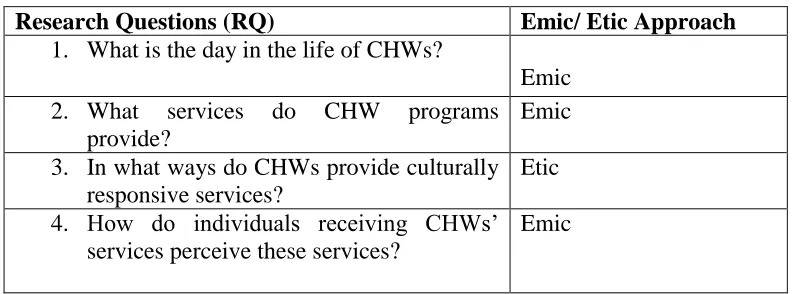
to refer to same phenomena of CHW in PHC” (Schwandt, 2007, p. 81-82). Table 2.1
presents research questions one, two and four that center on the experiences of the people
in the context of CHW programs in PHC for explanations to the research questions. In
Table 2.1, research question three represents an etic approach for which I use a culturally
responsive theoretical framework to guide my coding and analysis of data to answer the
question.
First, critical race theory (CRT) informs my understanding of the historical racial
and social, economic class disenfranchisement that exists within the policies and
29
that CRT is a valuable tool to contextualize CHW programs in PHC in South Carolina.
Second, I discuss the CHW education and training model to inform my understanding of
one of the multidisciplinary roles CHWs perform as educators on a broad range of topics.
(Berthold, Miller, Avila-Esparza, 2009).
Table 2.1 Research Questions Emic/ Etic Approaches
Third, I use cultural responsiveness (Gay, 2000) as a theoretical framework in which to
consider the ways in which community health workers in PHC provide culturally
responsive services.
Critical race theory (CRT). CRT and intersectionality, in particular, are valuable
tools that helped me to contextualize and prepare for this study. In fact class and the
intersection of class, male gender, and race were prominent among the patients receiving
CHW services. In Chapters 4 and 5, I represent intersectional disenfranchisement. CRTis
a global movement based on the history of racially marginalized people’s resistance to
domination and oppression perpetuated by dominant groups (Delgado & Stefancic,
2012). According to Taylor, Gillborn, & Ladson-Billings (2009) the purpose of
oppression is to sustain systems of racial, economic, and socio-political dominance.
Research Questions (RQ) Emic/ Etic Approach
1. What is the day in the life of CHWs?
Emic 2. What services do CHW programs
provide?
Emic
3. In what ways do CHWs provide culturally responsive services?
Etic
4. How do individuals receiving CHWs’ services perceive these services?
30
Hegemony aids in the processes of maintaining oppression (Gramsci, 1971). Critical
legal scholars and critical race theorists incorporated Gramsci’s (1971) idea of hegemony
in their theoretical work on race, racism, and the dominance of white supremacy in the
United States (Crenshaw, 1995). Hegemony is the domination of people’s minds where
they unknowingly consent to a dominant group’s beliefs, systems, and oppressive
practices as if they were their own (Bates, 1975). CRT scholars argue that racism and
other “isms” are both conscious and unconscious (Delgado & Stefancic, 2012).
Individuals may overtly demonstrate attitudes and behaviors that intentionally or
unintentionally discriminate against people based on their race, or other identities.
According to Delgado and Stefancic (2012), racism is maintained and perpetuated
through the ideologies and practices in ordinary, everyday activities that are often
invisible but are extremely powerful. Marginalized people unconsciously accept and
consent to this imbalance of power. CRT scholars have argued that racism is normal,
ingrained and fixed within the U.S. culture.
During the 1970s, CRT scholars Derrick Bell, Alan Freeman and others argued
that the U.S. legal system exemplified and reinforced racism through rulings that
maintained discriminatory laws (Taylor, Gillborn, & Ladson-Billings, 2009). Critical
legal scholars asserted that the U.S. judiciary system and legal discourse must change to
ensure social justice (Taylor, Gillborn, & Ladson-Billings, 2009). As a theoretical
framework, CRT scholarship reflects ways to incorporate praxis and examine and analyze
the influence of race on people of color. CRT scholars posited that race was a mechanism
31
people into groups based on their skin color and physical attributes and privileged Whites
over other racial groups (Taylor et al., 2009; Delgado & Stefancic, 2012).
CRT scholars suggested that people of color experience oppressions that intersect
with gender, class, national origin, and sexual orientation, and analyzed the
intersectionality of such oppressions (Delgado & Stefanic, 2012). Critical race theorists
insisted that understanding oppression at the intersections of multiple identities required
“an examination of race, sex, class, national origin, and sexual orientation and their
interactions in various settings” (Delgado & Stefanic, 2012, p. 57). By examining
intersectionality, we can uncover the economic, social, and political contexts in which
dominance operates based on individuals’ multiple identities. The intersection of race,
gender, class and other identities may manifest in complex and harmful ways (Howard,
2008). For example, O’Conner (2001), who demonstrated that the process of receiving
public assistance, especially for women of color, keeps them embroiled in cycles of
poverty, invites us to consider a Black female who is employed but uninsured by her
employer. Underpaid by that same employer she is unable to access health care without
jeopardizing her access to food and shelter. If she is unemployed, she would likely
qualify for Medicaid and other public assistance.
According to Delgado and Stefancic (2012), CRT scholars recognized that those
in power portray the appearance of equality and humanity when it benefits them. One
tenet of Critical Race Theory is interest convergence. Interest convergence occurs when
the dominant group appears to function in a way that is socially responsible by taking
action on behalf of marginalized groups but in fact only takes such action because in
32
best interest. CRT scholars argued that racism advances the dominant groups’ interests
materially by privileging the White elite and middle class. People of color have been
exploited throughout the history of the U.S., regardless of changes such as civil rights
legislation (Bell, 1992, Delgado & Stefanic, 2012). In this way, racial hierarchies
determined who gets the best housing, access to the best schools and jobs with benefits
such as health insurance.
Due to the hegemonic capitalist policies within healthcare systems, policies that
require people with low or no income, living in poverty and uninsured to obtain health
care in emergency rooms (ER). The Emergency Medical Treatment and Labor Act
(EMTALA) of 1986 ensures that people seeking health care treatment in hospitals’
emergency rooms are screened and stabilized regardless of their ability to pay
(Zibulewsky, 2001). The purpose of the law was to prevent discrimination and hospitals
from “dumping or transferring individuals to other facilities, who could not afford to pay
without considering their health status” (p. 399). While hospitals have traditionally
received funds for the expense, uncompensated expenses for EMTLA have skyrocketed
over time (Zibulewsky, 2001). Due to the increasing numbers of the uninsured and
changes in the U.S. healthcare system and to health management organizations (HMOs),
this strategy is no longer effective. Because many people who are uninsured or
underserved are forced to seek health care at the emergency rooms, policy makers and
critics, place the blame the rising cost of health care in part due to the poor and uninsured
33
Critical race theory helps me to consider the ongoing rhetoric that often blames
marginalized individuals for problems. Many of the individuals in this study lived in
rural and urban communities where primary health care was not available. If it was
available; often individuals lacked the health insurance to cover the cost of PHC
services, medications and other treatments they needed to manage their health. Similar
to the barriers and inequities students of color and with low or no income experience in
education systems that result in low achievement, individuals in the study encountered
health care inequalities that contributed to negative health outcomes. CRT prompted me
to pay attention to structural elements that I discuss in Chapters 4 and 5 that highlights
unemployment, the lack of transportation, jobs, education and the ways in which PHC
systems track the uninsured and Medicaid population.
In addition, CRT scholars generate not only theoretical tenets but also critical race
methodology (Solórzano & Yosso, 2009). Although I did not use tenets from CRT in an
apriori framework for this study, the scholarship from the field and the methodology
inform the ways I think about issues of race, racism, class and classism in the United
States. According to Solórzano & Yosso (2009) critical race methodology
a) Foregrounds race and racism in all aspects of the research process…
b) challenges traditional research, paradigms, content, ideologies, and
explanations… c) offers a liberatory or transformative solutions to racial, gender
and class subordination and d) focuses on the racialized, gendered and classed
experiences… (p. 23).
By challenging the dominant ideologies of social institutions, for example, education and
34
neutral or objective, and did not provide equal opportunities for all people (Taylor,
Gilborn, Ladson-Billings, 2009). They argued that such systems disseminate majoritarian
narratives3, which served as smokescreens to hide self-interest, power and privilege
within the systems. CRT scholars work to honor people of color’s ways of knowing and
methodologies, at times eschewing the scientific practices of dominant groups (Delgado
& Stefancic, 2012).
People of color “value experiential sources of knowledge that reflect their lived
and cultural experiences” (Delgado & Stefancic, 2015 p. 10). Critical race methodologies
include story-telling, counter-narratives4, parables, songs, poetry, and other forms of
expression that authentically capture the essence of lived experiences for people of color
(Solo’rzano and Yosso, 2009, p. 133). For example, lay healers and CHWs are
knowledgeable about the economic, social, and political factors that contribute to health
care barriers for people they serve (APHA, 2012). Analogously, many of the CHWs’
patients value experiential knowledge for healing. Praying, spirituality and faith,
storytelling, songs, poetry, and other forms of expression that authentically represent their
cultural background omitted from the dominant treatment practices (Berthold, Miller,
Avila-Esparza, 2009).
Of utmost significance to this study are the commitments to social justice CRT
scholars would support. They denounced all forms of dominance such as racism, sexism,
classism, and ableism (Delgado & Stefancic, 2012). Delgado and Stefancic (2012)
3
Majoritarian narratives are the stories that portray “the majority culture attitudes should hold sway” (Delgado & Stefancic, 2012, p. 166).
4
35
asserted that all people oppressed “share the effects of abuse [and] although each group
form of oppression may differ, they must have clear strategies for social change.”
(p. 630). CRT informs this project through the ways it allows me to identify racism as
both insidious and deeply embedded within systems of both education and health care. In
particular, studying the tenet of interest convergence has taught me to question
policymakers’ and governmental agencies’ policies that may not be in the best interest of
the people they serve. Because of CRT’s strong advocacy and commitment to equality
and social justice for all people, I argue that CRT provides an informative lens for
considering CHW programs in PHC because it centers on racism and classism, allowing
us to review policies and practices that marginalize the people they are intended to help.
Cultural responsiveness (CR). CHWs are diverse individuals, educated, trained,
and certified to provide a broad range of health-related services. These services include
health education to diverse individuals, groups and communities; culturally responsive
teaching and practices are appropriate approaches to consider. According to Gay (2010),
although called by many different names including culturally relevant, sensitive,
centered, congruent, reflective, mediated, contextualized [compentent, humility]
and responsive, the ideas of why it is important to make the classroom instruction
more consistent with the cultural orientation of ethnically diverse and how this
can be done, are virtually identical (Gay, 2010, p. 31).
Culturally responsive pedagogy (CRP) began in the educational systems as an
effective teaching strategy to address the education of diverse students and reduce the
achievement gaps among students of color and those with lower socio-economic status
36
Culturally responsive teaching is using the cultural knowledge, prior experiences,
frames of reference, and performing styles of ethnically diverse students to make
learning more relevant to and effective for them. Culturally responsive teaching
is behavioral expressions of knowledge, beliefs and values that recognize the
importance of racial and cultural diversity in learning (Gay, 2010, p. 31).
In other words, CRP honors the cultural backgrounds of all ethnic groups to ensure
meaningful teaching and learning experiences for students. To do so, Gay (2000)
suggested educators must create a community of learning that builds on the strengths,
values, and cultural and family heritages, to guide the development and implementation
of curricula. Teachers create a classroom climate that facilitates active caring, supportive
relationships with students and “challenges racial and cultural stereotypes, prejudices,
racism and other forms of injustices and oppression” (p. 31). Through the design of
curriculum and instructions, teachers build on students’ relevant home and school
experiences and integrate academic experiences to facilitate real–world application (Gay,
2000). These CR teaching practices yield six attributes that are validating and affirming,
comprehensive, multidimensional, empowering, transformative, and emancipatory for
diverse students (Gay, 2000). Below is a brief description of the attributes. I provide a
detail description in chapter 5.
1). Validating and affirming by acknowledging and respecting the legitimacy of
the cultural heritages of different ethnic groups, both as legacies that affect
students’ dispositions, attitudes, and approaches to learning and as worthy content