University of South Carolina
Scholar Commons
Theses and Dissertations
2018
The Effects Of A Flipped Classroom On Student
Comprehension And Perception Among Second
Language Learners In A Bachelor Of Social Work
Course
Beverly Wagner
University of South Carolina
Follow this and additional works at:https://scholarcommons.sc.edu/etd Part of theCurriculum and Instruction Commons
This Open Access Dissertation is brought to you by Scholar Commons. It has been accepted for inclusion in Theses and Dissertations by an authorized administrator of Scholar Commons. For more information, please [email protected].
Recommended Citation
T
HEE
FFECTS OF AF
LIPPEDC
LASSROOM ONS
TUDENTC
OMPREHENSION ANDP
ERCEPTION AMONGS
ECONDL
ANGUAGEL
EARNERS IN AB
ACHELOR OFS
OCIALW
ORKC
OURSEby
Beverly Wagner
Bachelor of Science
Tennessee Technological University, 1982
Master of Social Work University of South Carolina, 1992
_______________________________________________________________________
Submitted in Partial Fulfillment of the Requirements
For the Degree of Doctor of Education in
Curriculum and Instruction
College of Education
University of South Carolina
2018
Accepted by:
Christopher Bogiages, Major Professor
Suha Tamim, Committee Member
Rhonda Jeffries, Committee Member
Cathy Brant, Committee Member
ii
iii
DEDICATION
This dissertation is dedicated to my husband, Rick, and my two wonderful
iv
ACKNOWLEDGEMENTS
I would like to thank and acknowledge the following people who provided
support and assistance throughout this dissertation journey. First to my doctoral
committee chair and advisor, Dr. Christopher Bogiages, who was a consistent source of
guidance, wisdom and support. I would also like to thank the members of my committee,
Dr. Suha Tamim, Dr. Rhonda Jeffries, and Dr. Cathy Brant for your insights and
guidance.
My thanks and indebtedness to Mrs. Nawal Majeed, who provided translations
during student interviews as well as a review of my work. Your kindness, generosity, and
insights were invaluable. My thanks also to Dr. Matthew Robby, Dr. Sinead Eccles, Mr.
Hakem Al-Nasser and Dr. Riaz Akseer who all provided guidance and support of my
research at different points in the process.
My appreciation also to faculty and students who shared their thoughts and
experiences and participated in this study. A special thanks to my students, both past and
present, who are a constant source of inspiration for me. Thank you for the privilege of
teaching and learning from you.
Finally, to my family who make all things possible, my husband, Rick, my
children, Rich and Leslie, and my parents, Harvey and Anne Neufeldt. A final thank-you
v ABSTRACT
This two phased action research study first explored obstacles to learning among
second-language learners in a UAE undergraduate, social work course. This knowledge
was then used in the modification of a flipped class approach to understand how this
approach could influence student engagement and comprehension. This study was
grounded in a sociocultural and student-centered learning theoretical framework, through
first exploring the sociocultural influences and obstacles within a specific cultural context
and modifying a student-centered learning approach based on this knowledge. Both
phases were studied using a qualitative, ethnographic design.
Phase I sought to answer the following research questions: What are the obstacles
to learning identified by native-Arabic, female English language learners? What are the
obstacles to learning and teaching as noted by faculty who teach native-Arabic, female
English language learners? Data was collected through a faculty open-question survey, a
faculty focus group, and interviews with five students who later participated in the
flipped class. Data was analyzed using qualitative methods of thematic analysis. Findings
from Phase I indicated differing expectations between instructors and students of what
teaching and learning should be. These expectations intersected with a second-language
learning environment, and resulted in consistent teaching and learning challenges. The
knowledge gained from Phase I informed Phase II and the implementation of a flipped
class. Phase II sought to answer the following research subquestions: How can a flipped
vi
English language learners in an undergraduate social work course? How can a
flipped classroom pedagogy provide faculty who are non-Arabic speakers opportunities
to support native-Arabic, English language learners? Data was collected through field
notes, audio transcriptions, a research journal, content analysis of exam responses, and
post flipped-class student interviews. Data was again analyzed using qualitative methods.
Findings of Phase II indicated that culturally relevant knowledge could be incorporated in
a flipped class model. Behavioral engagement improved, as well as comprehension and
application among students performing at the lower end of the class.
Key Words: English language learners, second-language learners, flipped class,
vii
TABLE OF CONTENTS
Dedication ... iii
Acknowledgements ... iv
Abstract ... v
List of Tables ... ix
List of Figures ... x
Chapter 1: Introduction ... 1
Chapter 2: Literature Review ... 26
Chapter 3: Methodology ... 75
Chapter 4: Findings and Discussion ... 120
Chapter 5: Action Plan, Reflection, Recommendations, and Conclusion ... 199
References ... 225
Appendix A: Semistructured Student Interview Protocols ... 253
Appendix B: Faculty Survey and Responses ... 256
Appendix C: Faculty Focus Group Questions ... 258
Appendix D: Student and Faculty Consent Forms ... 260
Appendix E: Field Note Form... 264
Appendix F: Educator Reflection Journal Questions ... 265
Appendix G: Pedagogical Strategies to Address Obstacles ... 266
viii
Appendix I: Codebook ... 270
Appendix J: Content Analysis Rubric ... 281
Appendix K: Summary Table of Online and Class Activities ... 290
Appendix L: IRB Approval ... 295
Appendix M: Research Setting Approval Form ... 296
ix
LIST OF TABLES
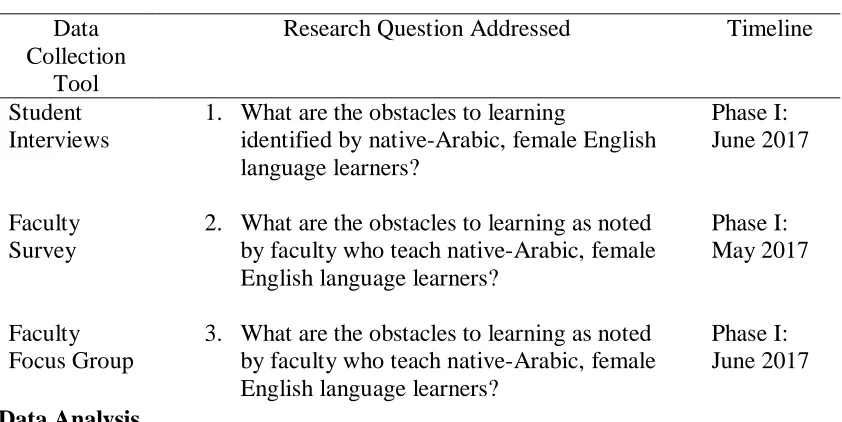
Table 3.1 Timeline for Phase I Data Collection ... 92
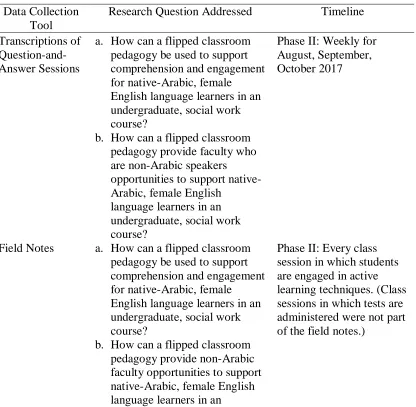
Table 3.2 Timeline for Phase II Data Collection ... 106
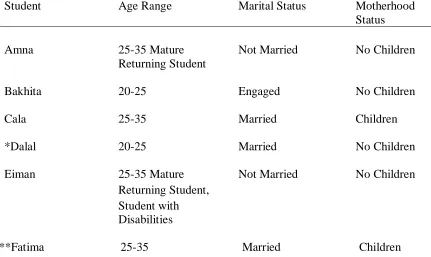
Table 4.1 Student Participant Demographic Data ... 123
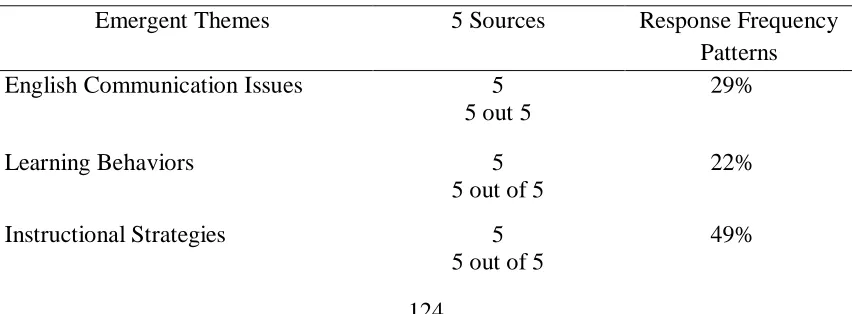
Table 4.2 Student Interview Emergent Themes, Sources, and Response Frequency Patterns ... 124
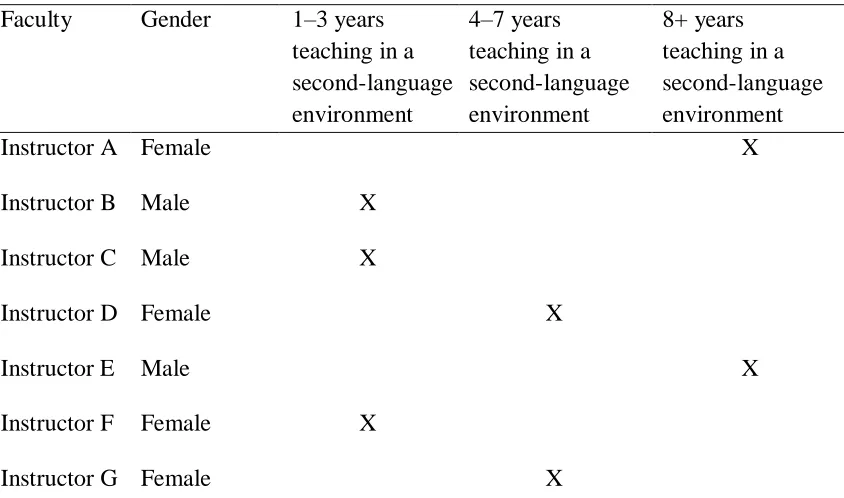
Table 4.3 Faculty Focus Group Participant Data ... 134
Table 4.4 Faculty Survey Findings... 135
Table 4.5 Faculty Focus Group Emergent Themes, Sources, and Response Frequency Patterns ... 137
Table 4.6 Instructor-and Student-Suggested Pedagogical Strategies ... 154
Table 4.7 Comparison of Comprehension Responses by Semester ... 176
Table 4.8 Comparison of Application Responses by Semester ... 177
Table 4.9 Post Student Interview A Priori Themes, Sources, and Response Frequency Patterns ... 181
x
LIST OF FIGURES
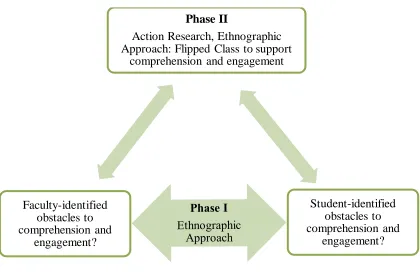
Figure 1.1 Ethnographic Action Research Design ... 17
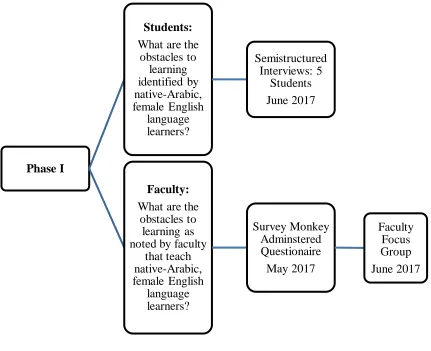
Figure 3.1 Phase I Overview ... 84
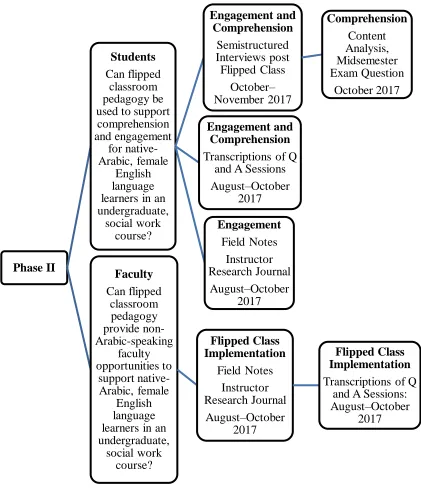
Figure 3.2 Phase II Overview ... 97
Figure 4.1 Comparison of Student and Instructor Expectations and Challenges ... 147
1 CHAPTER 1
INTRODUCTION
Problems encountered in second-language learning and instructional
environments cannot be fully understood without considering the specific context and
culture in which the learning takes place (Goodwin, 2013). Indeed, Bashir-Ali (2011)
argues that “all teaching and learning are socially situated” (p. 106) and cannot be
divorced from the context in which the learning takes place. Obstacles to learning could
occur not only due to language differences but also due to differing cultural perspectives
of students and teachers (Al Issa, 2005; Goodwin, 2013; Polleck & Shabdin, 2013).
These differences can create problems in classroom engagement and comprehension of
material.
The flipped classroom is a teaching approach that has gained popularity in
Western countries, i.e., North American and western European countries (Filatova, 2015;
Joanne & Lateef, 2014). With increased opportunities for student-centered learning and
support from the surge of worldwide mobile technology, for many instructors it has
become the answer to disengagement and poor achievement in the classroom (Hamdan,
McKnight, McKnight, & Arfstrom, 2013). A flipped classroom typically involves the use
of technology to deliver course content or a class lecture outside the classroom, usually
through electronic means, so that class time can be spent on practical application or
2
activities are done in the classroom while the traditional lectures or content are watched
outside of class. Research, however, is limited in regard to the flipped classroom’s
applicability with second-language learners in general, as well as second-language
learners from Eastern countries, such as Arab countries (Al Issa, 2005; Joanne & Lateef,
2014). As Jackson (2015) warns, “exportation of any kind of student-centered learning in
diverse societies and regions is likely to yield unexpected results” (p. 761). Considered
another way, any teaching strategy used to address obstacles to learning must consider
cultural preferences and perceptions (Hatcher, 2008; McFeeters, 2003). This study
attempted to understand obstacles to learning and teaching among second-language
learners in a UAE undergraduate social work class and consider how a flipped class
approach could be used and contextualized to address these obstacles.
Background: United Arab Emirates
In the span of less than 50 years the United Arab Emirates has become one of the
richest countries in the world and uses a small portion of its wealth to provide free higher
education to its citizens, Emiratis (Madsen, 2009). Although Emiratis make up less than
20% of the total UAE population, the government hopes to replace expatriate labor with
an Emirati workforce through a process called Emiratization (Aswad, Vidican, &
Samulewicz, 2011a; Walters, Quinn, & Walters, 2003). This is due, in part, to
governmental concerns about unemployment among native Emiratis and the desire to
decrease dependence on expatriate labor (Toledo, 2011).
With governmental expectations that they will find employment upon graduation,
students are entering higher education at increased rates. According to Sherif (2013),
3
this number will climb to 200,000 (Daleure, Albon, Hinkston, Ajaif, & McGeown, 2014).
Thus, the need for competency-based education or an education in which students are
able to demonstrate critical-thinking skills, solve problems, and perform other marketable
skills remains strong (Madsen, 2009). Yet the 2012 unemployment rate among UAE
nationals has increased to nearly 12%, and UAE national women in particular have a low
28% workforce participation rate, even though they are more likely to be educated at the
tertiary level (Aswad, Vidican, & Samulewicz, 2011a; Sherif, 2013). Low female
workforce participation is due in part to cultural influences and strict gender roles. For
Emirati women, family obligations will come first, before school or employment
responsibilities (Daleure, Albon, Hinkston, et al., 2014; Lambert, 2008).
Yet additional reasons for graduate unemployment may include graduates from
UAE schools and universities who are lacking requisite skills needed by the job market
when compared with expatriate workers (Sherif, 2013). Private employers continue to
show preference in hiring expatriate workers who they believe are more experienced,
have the necessary skills, are more qualified, and are less expensive to employ (Aswad et
al., 2011a; Daleure, Albon, & Hinkston, 2014). Compounding this problem are saturated
public services where many Emiratis prefer to work (Daleure, Albon, & Hinkston, 2014).
As Sherif (2013) explains, basic and tertiary education have not been able to provide
sufficient education to meet labor market demands. Samman (2003) concurs, stating that
the main cause of skill deficits among Gulf Cooperation Council (GCC) countries,
including Oman, Saudi Arabia, Qatar, Kuwait, and UAE, is quality of education issues.
Quality of education problems begin early and include primary and secondary
4
entering college or university often arrive unprepared for college (Rinderman,
Baumiester, & Gröper, 2014). Reasons for this include educational deficiencies that occur
in primary and secondary schools and include dependence on rote learning methods,
teacher-centered curricula, teacher training issues, curriculum and teaching that rely
solely on textbooks, and lower educational levels of parents (Farah & Ridge, 2009;
Madsen, 2009; Rinderman, Baumiester, & Gröper, 2014; Samman, 2003). The primary
teaching method may have been memorization of material instead of building a
connection with what is being learned, encouraging creativity or personal responsibility,
and acquiring time management skills (Madsen, 2009; Rinderman et al., Samman, 2003;
2014; Vassall-Fall, 2011). Crabtree (2010) goes further to describe the UAE state
education system as didactic, and dominated by the teacher. As Farah and Ridge (2009)
argue, UAE pedagogical approaches need to move beyond the transmission of knowledge
to include other approaches and techniques. However, compounding this issue are
cultural traditions for this more didactic approach that could limit participatory teaching
methods (Veeran, 2013; Shukri, 2014).
Additionally, students arrive to higher education institutions with weak English
skills, yet English is so dominant in the UAE tertiary sector; it is almost impossible to
find any college or university in Dubai that teaches in Arabic, and English remains the
language most often used by UAE tertiary institutions (Gallagher, 2011). English is
viewed as essential in the UAE, but an added issue described by Gallagher (2011) is the
“linguistic distance between Arabic and English” (p.4), such as radically different script
and opposite page orientation, reading and writing left to right, which makes learning
5
The combination of these issues forms educational deficits that can follow
students from primary and secondary school to technical college or university and on into
the workforce. A 2013 World Economic Forum Report stated that graduates of Middle
Eastern higher education institutions, including those in Qatar and UAE, did not have the
competencies needed by employers to include adequate English language skills, oral and
written communication abilities, and skills of critical thinking (Arab News, 2013). And
while Ashour and Fatima (2016) describe the UAE’s strong commitment to education
and robust system of higher education, they also suggest that the skills graduates obtain
may not be sufficient to meet the needs of a knowledge-based economy.
Background: College, Program, and Students
These are problems mirrored, at times, in a UAE bachelor of social work
program. The college system is made up of different colleges spread throughout the seven
emirates that comprise the UAE. It offers a variety of applied bachelor diplomas as well
as applied diplomas and certificates that emphasize technical and workforce-preparedness
skills. Workforce preparedness is a primary goal of the college system, and
student-centered learning approaches are increasingly emphasized as ways to provide students
with needed workforce training. All students attending the college are Emirati Nationals,
and as stated, all Emirati Nationals receive free education at the tertiary level (Toledo,
2013).
The social work program is currently offered at two women’s campuses in two
different emirates. The UAE is an Islamic society, and in keeping with Islamic culture
6
The program is small with less than 200 students, all female and all Emirati
nationals. While most UAE national women continue to live in “traditional communities
and extended families guided heavily by custom and Islam,” these traditions are not
necessarily opposed to higher education (Samier, 2015, p. 243). The UAE society
supports and encourages women to pursue post-secondary education (Hassane, McClam,
& Woodside, 2009). Women’s higher educational attainment in the GCC is on par with
Western countries, and in some Emirates 50% of all college students are women, with
women in the majority to graduate at the tertiary level (Aswad et al., 2011b; Marmenout
& Lirio, 2014; Samier, 2015).
Background: National Qualifications Framework
More recently, the college has initiated the process of aligning its programs with
the UAE National Qualifications Framework (NQF) or QFEmirates (QFE), which is a
framework that aligns educational programs with workplace needs and standards (NQA,
n.d.). This alignment mandates competency-based education and emphasizes the
importance of knowledge, skill, and competency acquisition among Emirati Nationals as
part of the country’s emiratization efforts (NQA, n.d.). Persons are awarded diplomas on
the basis of specific outcomes defined by the NQF as “what a person with an award
knows, can do and understands” (NQA, n.d.), rather than the amount of time spent in a
program. The NQF, like other international frameworks, uses a taxonomic approach in
which programs align their program outcomes, course outcomes, and assessment
strategies with the level of qualification such as a bachelor’s degree qualification (AQF,
2013). Outcomes must indicate adequate levels of complexity based upon the particular
7
The NQF can be conceptualized as a way to regulate qualifications and provide
assurances to employers that students have obtained the necessary knowledge, skills, and
competence for their particular level of qualification or degree (Ashour & Fatima, 2016).
Problem in Practice
The problem in practice this dissertation sought to address was issues with
comprehension of and engagement with an English-based, undergraduate social work
course among native-Arabic, second-language learners.
As future UAE social workers, graduates are expected to communicate, assess,
and counsel effectively in both Arabic and English since they will be working with both
expatriate and local populations. Additionally, they are expected to demonstrate good
writing skills, critical thinking skills, and problem-solving abilities or, as Altshuler and
Bosch (2003) suggest, become “professional problem solvers” (p. 202). Garthwait (2015)
adds that social work requires cognitive abilities to use theoretical and empirical
knowledge to analyze client needs and interventions. In other words, social work
graduates must be able to apply theory to practice situations and use critical thinking
skills to assess problems and select interventions (Garthwait, 2015; Sage & Sele, 2015).
However, problems of both weak English skills and cultural contextualization can
hamper the ability of students to gain necessary knowledge and skills. Social work
curricula in the UAE, for example, are taught mostly in English (Crabtree, 2008).
Although there are social work faculty who are bilingual and first-language Arabic
speakers, all textbooks and materials are in English. Use of social work English teaching
materials are the norm in Arab Gulf countries, because as Sloan, Bromfield, Matthews
8
instructional materials, mostly British or American textbooks are used. Thus, students do
need effective English communication and writing skills and critical thinking skills to
learn, comprehend, and apply course concepts in the classroom and in practice settings.
Instruction, on the other hand, needs to be delivered at a level where students do not
become overwhelmed by concepts they may not have the language skills to understand
(Feledichuck & Wong, 2014).
Additional concerns include student engagement with the social work curriculum
and, at times, the fit between social work curriculum and Arab-Islamic culture. While
“many of Islam’s core values and purposes are largely congruent with the mission,
vision, and core values of the social work profession” (Sloan et al., 2017, p. 200), there
still exists an incongruous fit, at times, between a social work curriculum and the context
in which it exists. Social work is heavily influenced by Western ideals and scholarship
and may not adequately integrate with collective cultural traditions, such as how social
problems are conceptualized and addressed in Islamic countries like the UAE (Samier,
2015; Sloan et al., 2017; Veeran, 2013). Other issues include avoiding topics that are
considered culturally inappropriate to talk about, which can lead to deficits in student
skill acquisition (Crabtree, 2008). This lack of cultural contextualization of social work
can negatively influence both student engagement with the social work curriculum and
student attainment of requisite knowledge and competencies (Crabtree, 2008; Hassane et
al., 2009; Veeran, 2013).
Pedagogical challenges, therefore, include both assisting students with
9
the material, both of which can create problems for students in understanding concepts
and linking theory to practice.
Rationale and Purpose for the Study
When considering any pedagogical approach, an understanding of the context’s
specific obstacles to learning encountered by both students and faculty provides
necessary information to assist learners in making connections to their learning. How do
students and faculty experience and perceive obstacles in the teaching and learning
environment? What are the unique second-language and cultural challenges of a given
teaching environment? This information provides a necessary foundation from which to
develop or modify a pedagogical approach, such as a flipped classroom.
The flipped classroom approach is an approach that can be adapted and modified
to specific contexts (Filatova, 2015). This approach uses class time for a variety of
active-learning techniques, or techniques that require the students to engage in their own
learning with meaningful activities (Prince, 2004). The traditional lecture or content is
moved outside of the regular class time and often delivered through electronic means.
Class activities, combined with online videos or other out-of-class activities, provide
students with multiple ways of learning course material (Bergman & Sams, 2012).
In regard to the out-of-class components, the flipped classroom approach could be
well suited for the UAE classroom due to its use of technology to deliver the traditional
lecture. As suggested by Engin (2014), in the UAE, mobile learning has become an
integral part of education, and “no longer is it possible to ignore the push to incorporate
mobile technology into the classroom” (p. 13). Farah (2014) concurs, stating that Arab
10
and course content before the regular class time provides the extra time for students to
process new knowledge and concepts, while allowing the learner and second-language
learner in particular, opportunities to go back and review complex or difficult concepts
and vocabulary (Fallows, 2013; Khanova, Roth, Rodgers, & McLaughlin, 2015).
Additionally, the flipped classroom approach emphasizes student-centered
learning (SCL) activities, which require mastery of concepts and skills as opposed to
memorization of them (Bergman & Sams, 2012). If the concept of mastery was applied to
the UAE Qualifications Framework, this could be conceptualized as whether or not the
student was able to master a particular learning outcome. For students coming from
earlier educational experiences that encouraged memorization, the flipped classroom
could potentially help them to engage with the learning content, comprehend knowledge,
and acquire needed skills and competencies, thus mastering specific learning outcomes
(Bergman & Sams, 2012; NQA, n.d.).
SCL strategies can help second-language learners make connections to what they
are learning. Techniques such as applying second-language vocabulary to real-life
situations help learners to integrate learning within their own unique backgrounds and life
experiences (Shen & Xu, 2015). And while the social work program currently uses a
combination of traditional lecture and active-learning techniques, a flipped classroom
provides additional time to incorporate student-centered and active-learning techniques
(Prince, 2004).
Finally, SCL is important in social work education. More specifically,
active-learning and experiential techniques that require application are essential in social work
11
situations (Altshuler & Bosch, 2003; Garthwait, 2015). Students, however, also must be
able to apply theories and evidence-based knowledge and skills to people’s problems. As
described by Garthwait (2015), social work requires cognitive abilities to use theoretical
and empirical knowledge to analyze client needs and interventions, thus integrating
theory with practice. Karolich and Ford (2013) maintain that many students struggle to
apply psychological and social theories to client case samples and client issues. They
argue further that many students may not be able to acquire the necessary higher-order
thinking skills in a passive classroom where the teacher primarily lectures.
Yet perhaps the most salient reason to use the flipped classroom approach is the
flexibility it offers as it can be customized to meet the needs of specific teaching and
learning contexts such as those inherent in a UAE social work course (Filatova, 2015).
Research Questions
This two-part study first explored perceived obstacles to learning among learners
and instructors, followed by an exploration of a flipped class approach to address student
engagement and comprehension in a UAE social work course. The flipped classroom
approach was chosen for this study due to its flexibility and possible adaptability to
cross-cultural teaching situations. Research questions for this study included the following:
1. What are the obstacles to learning identified by native-Arabic, female English
language learners?
a. How can a flipped classroom pedagogy be used to support comprehension
and engagement for native-Arabic, female English language learners in an
12
2. What are the obstacles to learning and teaching as noted by faculty that teach
native-Arabic, female English language learners?
b. How can a flipped classroom pedagogy provide faculty who are
non-Arabic speakers opportunities to support native-non-Arabic, female English
language learners in an undergraduate social work course?
The theoretical foundation that supports this action research study will be
explored next and will include sociocultural theory, social constructivism, and
student-centered learning.
Theoretical Framework Overview
Sociocultural Theory and Social Constructivism
Developed by Lev Vygotsky, sociocultural theory and social constructivism
include the belief that “language and culture are the frameworks through which humans
experience, communicate, and understand reality” (Graduate Student Instructor, 2017).
The construction of knowledge, or the active engagement of the student in creating his or
her own knowledge, occurs within the social context of the environment and not
independent of it (Adams, P., 2006; Bashir-Ali, 2011; Lee & Hannafin, 2016; Nunan &
Bailey, 2009). In the classroom, cognitive development, knowledge, meaning creation,
and skills building are constructed through interactions with students and teachers
(Bashir-Ali, 2011; Powell & Kalina, 2009). Thus, Vygotsky emphasized that learning is
not done in isolation but rather through interactions in the environment. These theories
provide a foundation to explore context-specific obstacles related to language and culture
and contextualized avenues to address these obstacles. Indeed, instruction that is
13
and development of learning activities specific to the learning context (McFeeters, 2003;
Mishra, R., 2014).
Student-Centered Learning
Slavich and Zimbardo (2012) argue that when using student-centered learning
(SCL) techniques, “instructors should shape course curricula and content based on
students’ needs, abilities, interests, and learning styles” (p. 570). Instructors who use SCL
approaches engage students in an active and collaborative approach to learning as
opposed to teacher-centered approaches in which students passively gain knowledge from
a lecture (Lee & Hannafin, 2016; Slavich & Zimbardo, 2012). Thus, what comprises SCL
is the engagement of the students in the process of their own learning and could include
peer assistance or peer tutoring, cooperative learning, collaborative learning, or
problem-based learning (Prince, 2004; Bishop & Verleger, 2013). These types of approaches could
use student groups or teams and divide work among the team. Individual contributions
are combined to achieve the learning outcome or goal for the group. Student-centered
techniques are particularly important because they provide students with flexible and
adaptive skills needed for working in modern economies. Yet the caveat is that culture
needs to be taken into consideration and the student-centered approach adapted to the
cultural context. Flipped classroom activities are examples of SCL and can be tailored to
ensure increased opportunities for culturally relevant activities (Ahn, Ingham, Mendez, &
14
Action Research Methodology Overview
Action Research Rationale
As a social work educator and researcher, one of my goals in undertaking this
research was to make a positive difference in my teaching practice and environment.
Thus, action research was used as a basis for this study as its methodology provided an
effective framework to explore problems in teaching and learning, and to research
different teaching strategies or techniques that could potentially enhance instruction
(Dana & Hoppey-Yendol, 2014). Action research is research that is done by teachers,
with students and other teachers, and provides opportunities for teacher-researchers to
make differences in their own organizations, with their own students (Herr & Anderson,
2015; Mertler, 2014). Leedy and Ormond (2013) add that action research is a type of
applied research, or research that has current societal relevance, and involves solving a
current question or problem in one’s work environment. This application to local context
made action research a powerful framework for this study. Indeed, this study sought to
better understand unique problems experienced by social work students learning in a
second-language, UAE class as well as their experiences learning in a flipped class. In
other words, it was a relevant framework to employ when the focus of the research was
on “the unique characteristics of the population with whom a practice is employed and
with whom some action must be taken” (Mertler, 2014, p. 4). Perhaps even more
important was the flexibility an action research framework provided. I was able to
incorporate unintentional findings from the first phase of this study into the second phase.
As the problem of practice this study sought to understand and address was issues
second-15
language learners, an emphasis on context and culturally relevant interventions became
important. The research design included an exploration of the unique problems
experienced by students and faculty as well as the implementation of a culturally relevant
pedagogical approach that could enhance learning. Thus, this study was divided into two
phases. In Phase I, specific obstacles to teaching and learning were explored. During the
following semester, Phase II was implemented and built upon the findings of Phase I.
This action research study included the use of qualitative strategies. Qualitative
strategies, as defined by Denzin and Lincoln (2011), (cited by Creswell and Poth, 2017),
include an emphasis on the situated nature of qualitative research, or research “that
locates the observer in the world” (p. 7). The use of an ethnographic qualitative approach
to this study provided a means for me to participate, observe, and explore participant
perspectives and experiences within the unique cultural context of a UAE college
classroom (Creswell & Poth, 2017; Patton, 2015). For example, what are the common
experiences of first-language Arabic learners in a UAE, second-language social work
classroom environment? What are common experiences of non-Arabic-speaking
instructors who teach second-language learners? What are common experiences of
second-language students in a class in which a new pedagogical approach is used?
Research Design—Research Questions 1 and 2
Research questions 1 and 2 were addressed in Phase I. Data collected and
analyzed during this phase was used to answer questions regarding perceived obstacles of
first-language Arabic learners and instructors teaching in a UAE, second-language
16
group, and semistructured interviews with students. This data was collected the semester
prior to the implementation of the Phase II flipped class approach.
A qualitative ethnographic research design was used to study Phase I. This design
was chosen due to the importance of understanding how the cultural context influenced
obstacles and the perception of obstacles in a second-language learning environment or,
as Patton (2015) points out, “How does culture explain perspectives and behaviors?” (p.
100). Additionally, my role in the research was that of participant observer, both
participating as an instructor and researcher as well as observing through the process of
data collection and reflection on the research process. As Patton (2015) emphasizes,
participant observation is a primary method of ethnographic research.
Research Design—Research Subquestions a and b
Data from Phase I was used to inform Phase II for the implementation of a flipped
class approach. Data collected and analyzed in Phase II was used to answer research
questions of how a flipped class could be used to support students learning in a
second-language environment and how a flipped class approach could be used by faculty who
were non-Arabic speakers to support learning. Data collected included weekly audio
transcripts of portions of the flipped class meetings, field notes, research journal, and
semistructured, post-interviews with students. This data was used to understand how a
flipped class could increase student engagement and comprehension. Transcripts were
collected one time a week, and field notes were collected each time the class met. Data
was collected from week 1 through week 12 of a 15-week semester. Post flipped course
student interviews took place during weeks 11 and 12. Additionally, a content analysis of
17
information. A qualitative, ethnographic approach was again used to understand the
influence of culture and how a contextualized flipped class approach could support
student learning. Figure 1.1 depicts the two-phase study and the flow of information from
Phase I to Phase II.
Figure 1.1 Ethnographic Action Research Design
Trustworthiness: Validity and Reliability
Validity strategies to ensure the data indeed measured what it was supposed to
measure included triangulation through the gathering of multiple sources of data, member
checking after Phase I and Phase II to ensure the accuracy of the emergent and a priori
themes, and peer debriefing through asking a peer to read through the findings (Creswell,
2014; Mertler, 2014). Reliability measures included multiple rounds of coding and
consistent code definitions to ensure stability of qualitative coding through the use of a
codebook. An external coder was also used to check coding and establish a degree of
intercoder agreement.
Phase II
Action Research, Ethnographic Approach: Flipped Class to support
comprehension and engagement
Student-identified obstacles to comprehension and
engagement? Faculty-identified
obstacles to comprehension and
18
Additionally, this study was firmly grounded in its theoretical framework and
methods chosen to study this topic. Specifically, the sociocultural framework emphasizes
the inherent role of culture in learning; thus, an ethnographic approach that emphasizes
the influence of culture on a phenomena or problem connects the methods used to study
the problem to its theoretical framework. Finally, while this study is not generalizable nor
is it meant to be generalizable to other populations, the use of thick rich descriptions in
chapters 3 and 4 could help the reader determine the extent of transferability to his or her
own context and teaching and learning environments (Dana & Hoppey-Yendol, 2014).
Positionality
I had a dual and active role as both researcher and participant and was the
instructor for the course, the researcher, and a participant. As such, Herr and Anderson
(2015) emphasize the importance of ongoing self-reflection in regard to one’s “multiple
positionalities” in the study (p. 76). This ongoing self-reflection was documented through
the use of a research reflection journal. A research reflection journal also provided
additional transparency in the research process and was an avenue to explore my
thoughts, feelings, and perceptions about observations and the research process (Ortlipp,
2008).
As described by Dana and Hoppey-Yendol (2014), action research and teacher
inquiry are contextual and occur within a specific place to include the understanding of
diverse cultures within the classroom and school to improve instruction. For the purposes
of this study, action research provided the necessary focus “on the unique characteristics
19
Brayboy and Deyhle (2000) also warn of issues with cultural outsiders as they
gather qualitative data. These include “failing to see the nuances from the perspective of
the informants” (Brayboy & Deyhle, 2000, p. 165). While I am an insider in regard to the
teaching faculty, I am also a cultural outsider. This was a particular concern during
student interviews as both language and cultural barriers could have inhibited an
objective interpretation of the data. Thus, an interpreter was used to address possible
language barriers.
Significance and Limitations
Significance
Improving practice within a specific cultural context, and gaining an
understanding of the use of an innovative yet culturally different pedagogical approach,
are in part what makes this study significant. Certainly, of primary significance for me
was the opportunity to improve my own teaching practice through the gathering of
information about how a particular group of UAE social work students learn best, and
how a flipped classroom approach could be contextualized to meet their learning needs
(Mertler, 2014). As an educator one of my daily concerns is determining how students
learn best in a second-language environment. To understand this, I was challenged to
consider culturally specific obstacles to learning. These could include the learning
backgrounds of students as well as students’ cultural expectations of what teaching and
learning should be. These expectations could easily clash with the use of an innovative
yet culturally different teaching approach such as a flipped classroom. Thus, an added
significance of this study is the importance of understanding culturally specific obstacles
20
method. Additionally, while student-centered learning (SCL) is a theoretical foundation
for this study, SCL such as a flipped class approach, when used with students who may
have a limited background of exposure to this type of learning, may not work or may
only partially work. As Burt (2004) suggests, it is when complete immersion of
active-learning pedagogies is used without adequately preparing students that student are at
greater risk. When teachers understand and use the context to attempt to make certain an
innovative teaching method is relevant to the unique culture and background of the
students, they create conditions that help to ensure the approach is more effective (Burt,
2004; Shukri, 2014).
Beyond my teaching practice, this research is potentially useful to UAE
administrators and instructors regarding perceptions of students and faculty as to what
they perceive as working or not working in second-language learning environments and
how a flipped class could be used to support teaching and learning. Additionally,
educators from outside the UAE may find this study relevant to their own efforts in
contextualizing pedagogical approaches. Finally, this information has the potential to
inform social work education and how a flipped class could be used to further
contextualize a social work course. As the social work curriculum at my institution, like
other social work programs in Arabic or Middle Eastern countries, is heavily influenced
by Western scholarship, how could a social work course be further contextualized to meet
the educational needs of students who will practice within their local communities? This
research considers ways that a flipped classroom approach could be used to tailor social
21
Yet are there social justice concerns addressed in this research that are
significant? Social justice pedagogy, according to Lemley (2014), includes a common
goal of equitable education in which all students have the opportunity to excel. This
includes achievement both inside and outside the classroom. This research addresses
teaching and learning concerns for UAE women that as a group may have increased time
constraints due to social role and family obligations (Daleure, Albon, Hinkston, et al.,
2014: Hassane et al., 2009; Lambert, 2008). This is a particular concern for time pressure
outside of a college. Thus another significant area of this research is how a flipped class,
with its out-of-class requirements, could be implemented with students who may have
these kinds of time issues and pressures (Bergman & Sams, 2012; Findlay-Thompson &
Mombourquette, 2015; Han, 2015; Kim, Kim, Khera, & Getman, 2014; Overmyer,
2014).
Finally, through this action research study, I would like to provide data and a
rationale for continuing to implement trials of flipped classroom in social work classes
and to further engage native-Arabic, second-language social work students (Mertler,
2014; Mok, 2014).
Limitations
The following are limitations to this study:
1. The study results cannot be generalized beyond the research participants. The
knowledge may be deemed transferable by the reader if the context is similar.
2. A researcher-participant language barrier existed in which an interpreter was
used. Squires (2009) reminds that language changes during the process of
22
interview process. Even though member checking was completed with both
participants and the translator, this barrier can still influence the interpretation
of the results (Squires, 2009).
3. My position within the study, as both an instructor of the course and the
researcher, increases the potential problems of objectivity in the gathering,
analyzing, and reporting of findings (Brayboy and Deyhle, 2000).
Summary and Organization
This chapter provided a background and context of the problems faced by
undergraduate, second-language learners in a social work program at a UAE college. A
flipped classroom approach consisting of student-centered learning techniques, combined
with the use of technology, was proposed to address problems of engagement and
comprehension (Hamdan et al., 2013). Yet questions of how a flipped classroom
approach could be contextualized to a UAE social work classroom suggested a thorough
investigation of obstacles to learning and teaching as well as the collection of student
perception and comprehension data. The following chapters will provide an account of
how second-language problems of learning and teaching were explored with a particular
group of UAE social work students and instructors, and how their perceptions and
suggestions were incorporated in a flipped class approach to teaching.
Chapter 2 will explore relevant research on current obstacles to learning faced by
UAE national women, second-language obstacles, and other obstacles to comprehension
in UAE college classrooms. The sociocultural, social constructivist, and student-centered
23
regarding the use of a flipped classroom and the rationale for the methodological design
of the study.
Chapter 3 provides a description and analysis of the research design, participants,
setting, selected methodology, data collection and analysis procedures, and ethical
safeguards used throughout. Chapter 3 also provides a thorough description of the
qualitative ethnographic design used for data collection and analysis in Phase I and II of
the study.
Chapter 4 provides a breakdown of the study results and findings and discussions
of these findings. Chapter 4 is organized according to the two phases of the study.
Finally, Chapter 5 will provide an action plan for future cycles of this action research
project, final reflection of this action research, future research recommendations, and
conclusion.
Key Terms and Definitions
Definitions important to this study are as follows:
Active learning. Any educational strategy that engages the student in the learning
process. Examples include collaborative and cooperative learning (Prince, 2004).
Blended learning. Convergence of online and face-to-face education.
Camtasia. Commonly used and flexible video editing software that provides screen
video and audio capture. Videos once uploaded can be watched on almost any device.
Culture. “The shared patterns of behaviors and interactions, cognitive constructs, and
affective understanding that are learned through a process of socialization. These shared
24
another group” (CARLA, n.d., para. 1). In the proposed study, the instructor is from a
different culture than the students.
Emirati Nationals. Citizens of the UAE who share the common culture of the Arabian
Peninsula, the common language of Arabic, and the common religion of Islam.
Ethnography. A type of qualitative research approach in which culture is considered
primary in understanding a problem or phenomenon (Patton, 2015).
Flipped or inverted classroom. These two terms will be used interchangeably
throughout the dissertation Flipped or inverted classroom is a teaching strategy that
delivers lecture content through online videos outside of class and uses class time for
active- learning and practical-application activities (Arnold-Garza, 2014).
Learning management system. A framework and infrastructure that handles, delivers,
and manages instructional content (Watson & Watson, 2007).
Mobile technology. A variety of portable devices on which technology can be used.
These could include mobile phones, laptops, tablets, etc.
NQF. National Qualification Framework of the UAE. UAE national initiative created to
align UAE educational programs with industry competencies and standards.
Second-language learner. A learner who learns in a language that is not his or her first
language. In the case of this study, second-language learners who are first-language
Arabic speakers and are learning in an environment where English is the language of
instruction.
Student-Centered Learning (SCL). Active and collaborative approaches to learning as
opposed to teacher-centered approaches in which students passively gain knowledge from
25
UAE. United Arab Emirates. A country located on the Arabian Peninsula in the Middle
26 CHAPTER 2
LITERATURE REVIEW
How can obstacles to engagement and comprehension among students learning in
a second language be optimally addressed? This two-phase action research study first
explored these obstacles within the specific context of a UAE undergraduate social work
classroom, followed by the implementation of a flipped class approach to understand how
this approach could support learning. Specific attention was given to issues of cultural
and contextual relevancy when using a traditionally Western pedagogical approach in an
international setting. Yet understanding these issues began with a literature review.
Indeed, this study resides in a preexisting knowledge base that informed this research and
provided a rationale for this action research study (Dana & Hoppey-Yendol, 2014).
This review is organized into four sections. Beginning with the problems
experienced by UAE second-language learners, this review provides insight into the
historical and current obstacles to learning experienced by Emirati students. Next, the
theoretical foundation that supports this research is explored, as well as how this research
is thoroughly grounded in its theoretical foundation of sociocultural and social
constructivist theories, and student-centered learning (SCL). Following the theoretical
foundation, an alternate teaching approach, the flipped class, is considered. The
compatibility of the flipped classroom approach with social work education and with
second-language and diverse teaching environments is also reviewed and, again,
27
the methodology and design implementation used to explore obstacles to learning and
how a flipped class could be used to support learning are provided (Leedy & Ormond,
2005; Mertler, 2014).
Obstacles to Engagement, Comprehension, and Instruction
Obstacles to Engagement and Instruction
Obstacles to engagement and instruction can include gender role responsibilities
that may interfere with classroom engagement, lack of contextualization of education,
and earlier passive learning experiences.
Gender role responsibilities. Certainly, obstacles to engagement can include
inconsistent attendance and lack of time outside of class to study course materials. For
UAE women, these problems can be persistent. UAE female students face challenges
specific to their gender and societal roles. Gender roles of Emirati women are dictated by
tradition and religious interpretation (Gallant & Pounder, 2008; Marmenout & Lirio,
2014). These roles are structured, often rigid, and where women assume the primary role
of family caretaker (Hassane et al., 2009; Marmenout & Lirio, 2014). For example, the
role of caretaker and other household responsibilities are often assumed by the eldest
unmarried female. She may be expected to assist with the care of siblings—such as
tutoring younger siblings, as parents may lack the education to do this—to travel with her
family, or to take care of sick family members. Family obligations will come first, before
school or employment responsibilities (Daleure, Albon, & Hinkston, 2014; Lambert,
2008). The primary focus for Emirati women is the “well-being of their families”
(Marmenout & Lirio, 2014, p. 152), and it is believed that no woman should put her own
28
describes the UAE as a society in transition where younger generations are stuck between
a traditional society and a society that increasingly embraces liberalism.
Many young women will marry while in college and will be expected to have
children “within the first two years of marriage due to cultural values of fertility and
government policies that give economic incentives to UAE Nationals to increase the
Emirati birthrate” (Lambert, 2008, p. 106). A high birthrate is encouraged by both
tradition and the government, and women are pressured to continue the tradition of
having large families (Marmenout & Lirio, 2014). The lack of quality child care centers
forces many students to rely on foreign-born housemaids or family members to care for
children while they are at college. This reliance on housemaids, however, from a cultural
point of view, is seen as problematic due to concerns that the quality of family life will
suffer if families rely on housemaids from different cultural and religious backgrounds
who may not provide suitable guidance for children (Gallant & Pounder, 2008).
Additional problems related to gender and attendance involve transportation. Lack
of culturally acceptable transportation can limit college attendance. Some families will
restrict female members from driving, and social customs may inhibit female students
from taking taxicabs with unknown male drivers without suitable chaperones (Gallant &
Pounder, 2008; Samier, 2015). In some cases, college buses are available but may include
long wait times that may preclude women with time constraints from using the bus. Thus,
transportation can lead to inconsistent attendance, when family members or other
chaperones are unavailable and when the student does not have a driver’s license or is not
29
History of Passive Learning. Madsen (2009) posits that many first-year UAE
college students struggle due to the differences between the college learning environment
and their high school environment. These high school environments often used
teacher-centered approaches to teaching and learning where the teacher was in charge of
transmitting information and may have primarily lectured, and students may have used
rote memorization as a common learning strategy (Burt, 2004; Shukri, 2014; Vassall-Fall,
2011). Students arrive at college without the experience or skills to engage adequately in
classrooms that use active learning (Burt, 2004). As Burt warns, “in contexts where
active learning approaches are new to the students, there is a danger that students can
become unmotivated due to inadequate preparation and unfamiliarity with the learning
style” (Burt, 2004, p. 2).
Shukri (2014) links rote memorization in primary and secondary schools to
Arabic traditions that focus on memorization of Qur’anic texts and Islamic religious
teachings. In Saudia Arabia, for example, practices of rote memorization that require the
learner to depend on the teacher persist today (Shukri, 2014). Richardson (2004) adds
that years of passive learning in UAE primary and secondary schooling make changing to
a student-centered model even more challenging. This can create anxiety and discomfort
for students who come from teacher-centered learning environments (Burt, 2004;
Richardson, 2004; Vassall-Fall, 2011).
However, Burt (2004), supported by Shukri (2014), counters these arguments,
stating that SCL pedagogies can work with Arabic students provided students are
adequately prepared, expectations and reasons for using specific teaching strategies are
30
students. It is when complete immersion of active-learning pedagogies is used without
adequately preparing students that student are at greater risk (Burt, 2004).
Lack of educational contextualization. Hassane, McClam, and Woodside
(2009) suggest that UAE social service education is a unique blend of Arab culture and
Islam, which makes teaching challenging and the “fit with a Western template difficult”
(p. 31). While social work education has been in the forefront of addressing cultural and
religious diversity, it has yet to fully develop an indigenized model for curriculum
development in the Middle East and UAE (Crabtree, 2008). Social work curriculum in
Islamic countries continues to be strongly influenced by Western scholarship and tends to
prefer “Eurocentric and Western ideals instead of embracing Arab world views” (Veeran,
2013, p. 1082). Islamic worldviews are rarely integrated into Western scholarship, in part
due to secularization of the social sciences (Samier, 2015). Yet, in regard to the Western
influences on social work education in Arab countries, “these influences have been
understandably critiqued as culturally incongruent as well as ignorant of broader Islamic
principles” (Crabtree, 2008, p. 537). Examples of incorporating Islamic worldviews to
ensure cultural relevancy could include acknowledgment of responsibilities to the
collective, the influence of tribal culture, Sharia law, and Islamic Universal principles, all
of which impact how social problems are addressed in Islamic societies (Crabtree, 2008).
Additionally, acknowledging differences in how family, community, gender, age, mental
health, and/or problem solving are conceptualized could also increase cultural relevancy
(Veeran, 2013).
Even more problematic can be the incongruence between Islamic values and
31
prevailing perception of what is culturally appropriate in terms of professional training
and practice” (Crabtree, 2008, p. 537). Examples include not discussing or superficially
discussing problems that are considered culturally inappropriate to talk about, such as
rape, sexual abuse, and partner and family violence.Problems in training can lead to
inabilities to meet community needs, due to a lack of cultural contextualization of social
work, leaving students unprepared for diverse practice issues (Crabtree, 2008; Hassane et
al., 2009; Veeran, 2013).
Obstacles to Comprehension and Instruction
Obstacles to comprehension can include learning in a second language, lack of
cultural language contextualization, and differences in pedagogical expectations.
Second-language learning. Bilingual education can be thought of as instruction
in two languages for any or all parts of a school curriculum (Gallagher, 2011). Per
Gallagher, this means the second language is added at no penalty to the first language.
Challenges to bilingual and second-language learning include use of slang, different
dialects, and vocabulary in the second language that can make comprehension difficult
for second-language learners (Feledichuck & Wong, 2014; Gallagher, 2011).
Specific to Arabic, because of the “diaglossic features of Arabic, as well as the
linguistic distance between Arabic and English” (Gallagher, 2011, p. 66), learning in
bilingual settings can be particularly challenging (Gallagher, 2011; Shukri, 2014). Similar
to other Arabic speakers, UAE nationals use diaglossic speech patterns and use both
formal and informal or modern and colloquial Arabic (Gallagher, 2011; Shafiro, Levy,
Khami-Dakwar, & Kharkhurin, 2012; Shukri, 2014). Modern Standard Arabic reflects the
32
(Gallagher, 2011). Gallagher (2011) emphasizes that instructors do not always appreciate
that learning Modern Standard Arabic is, for many students, like learning a second
language.
Additional linguistic challenges for native-Arabic, English language learners
include learning a completely different script and understanding the nuances in English–
Arabic sound correspondence. English language has a “full one-to-one
symbol-sound correspondence or . . . both consonant and vowel symbol-sounds are written in English”
(Gallagher, 2011, p. 67). In Arabic writing, only constant and long vowels are written,
which can lead to issues in English language writing (Shukri, 2014). A compounding
problems includes the fact that vowels are not present in Modern Standard Arabic,
creating problems for native-Arabic speakers in understanding oral English language
(Gallagher, 2011; Shukri, 2014; Shafiro et al., 2012). Other issues include differences in
the following areas: subject-verb agreement, verb tenses, use of articles, Arabic
orthography or spelling in which placement of the letter in the word is subjective and the
shape of the letter varies according to where it is placed in the word, and opposite page
orientation between the two languages in both reading and writing (Gallagher, 2011;
Goodwin, 2013; Shukri, 2014). Goodwin (2013) argues that differences are so vast
between Arabic and English that native-Arabic speakers cannot rely on their
first-language abilities for building second-first-language, English competency.
While these linguistic challenges pose considerable potential difficulties for
native-Arabic speakers learning in English, Gallagher, on a positive note, emphasizes
research supports that learners progress in content courses, such as social work, as well
33
(2011) concluded that in the UAE students need to develop both their indigenous
language and the “national capacity” to use English (p. 10). Finally, while there continue
to be debates in the gulf region regarding the widespread teaching of English as Western
hegemony, Gallagher (2011) maintains that UAE educational beliefs are pragmatic and
“education in the UAE school system is premised on an economic-political belief in the
advantages of ‘both and’ instead of ‘either or’” (p. 64).
Culture, language, and comprehension. Goodwin (2013) emphasizes the
importance of using culturally relevant teaching strategies when teaching in a second
language because “communication is mediated by the learners’ social and cultural
identities” (p. 71). When instructors understand cultural dynamics, they can more easily
add clarity to interactions and explanations (Goodwin, 2013). Native-Arabic, English
language learners, for example, are more likely to use code switching in their verbal
communication or mixing two languages or styles of speech together (Goodwin, 2013).
This can include use of Arabic words mixed together with English words or words that
signal collective cultural backgrounds such as the use of we instead of I (Filatova, 2015;
Goodwin, 2013). Instructors can use teaching strategies that connect with collective
cultural values such as group work (Filatova, 2015). Conversely, Shukri (2014) adds that
because culture influences written expression and how students perceive meanings,
students transfer their first-language culture to their second-language learning. Thus, as
Shukri (2014) argues, “addressing cultural issues helps to socialize English-language
learners regarding embedded cultural norms” (p. 195). As Kolikant (2011) points out,
34
contextualize the situation, according to a cultural perspective different than that expected
by the teacher” (p. 544).
Culture and pedagogical clashes. A cultural gap can occur when instruction is
not customized to meet the cultural and social needs of students (Polleck & Shabdin,
2013). Al Issa (2005) highlights the problem of instructors coming from Western
countries to teach students from Eastern cultures as is common in the UAE. Intercultural
conflicts can arise due to differing communication styles and belief systems that lead to a
lack of understanding on the part of both student and instructor, which can lead to
frustration for both parties (Al Issa, 2005). Instructor reliance on previous ways of
helping students to understand or on previous ideas or methods of teaching may not work
in a culturally different setting. As Polleck and Shabdin (2013) argue, “When teachers do
not share the same cultural backgrounds, linguistic codes, social protocols and/or value
systems, discord can occur that detracts from student learning” (p. 143).
Hatcher (2008) points out the issue of nonaccommodation responses by Western
educators. These are responses based on assumptions that Western teaching approaches
are universally applicable to any teaching context as they are based on sound evidence.
Thus, the instructor disregards the culture, such as culturally divergent communication
styles, patterns, beliefs, or views (Al Issa, 2005; Hatcher, 2008).
Two common areas of differences in cultural patterns are individualism versus
collectivism and high context versus low-context environments. Western instructors may
unknowingly adopt an individualistic perspective and assume all students should be
self-reliant, autonomous, and motivated (Al Issa, 2005; Hatcher, 2008). In collective cultures,
35
and their identity in terms of the group or collective (Al Issa, 2005). Pedagogy, in
collective cultures, will usually follow the norms of the culture, such as students being
expected to listen, not questioning the instructor or the instructor’s wisdom, and the
teacher being responsible for the students’ learning (Al Issa, 2005; Veeran, 2013). This
teacher-centered approach mimics status distinctions between adults and children
(Veeran, 2013). Changing this hierarchical approach to learning through the use of
student-centered learning approaches could potentially clash with the Arabic cultural
foundation. Participatory learning, according to Veeran (2013), “may be limited in Arab
cultural contexts not because of students’ lack of ability but rather in observing the
practice of ‘adult wisdom’ and respect” (p. 1082).
In regard to high-and low-context teaching environments and an instructor’s
educational approach, Western-trained educators are often trained in low-context
teaching environments. These are environments in which clear and specific
communication is valued and the explicit meaning or message in oral and written
communication is expected. This can be contrasted with a high-context environment,
such as the UAE, in which meaning is inferred and communication is more indirect
because the collective culture provides a context in which meaning is understood (Al
Issa, 2005). The goal of high-context communication is “harmony and saving face” (Al
Issa, 2005, p.154). Hatcher (2008) emphasizes an added dimension of uncertainty
avoidance or the degree to which a culture is comfortable with a lack of structure.
Students from Arab cultures may prefer less uncertainty, and prefer order and good class
36 Summary
Obstacles to learning among female, native-Arabic speakers in English-language
learning undergraduate classes can include sociocultural issues of gender roles, a history
of passive learning or dependence on rote memorization, a lack of cultural
contextualization of course materials and pedagogical approaches, problems related to
learning in a second language or bilingual classrooms, and a lack of recognition of the
links between cultural norms and second-language acquisition.
Theoretical Foundation
This study considers obstacles to learning and teaching among second-language
learners in a UAE college course as well as the use of a pedagogical approach historically
and culturally different from approaches used in Arabic cultures (Filatova, 2015; Veeran,
2013). Thus, sociocultural and social constructivism theories, developed by Russian
psychologist Lev Vygotsky, support this research. These theories propose that thinking
and learning are not solely individual occurrences, but rather are shaped by sociocultural
forces through the interaction of the learner with his or her environment (Kozulin, Gindis,
Ageyev, & Miller, 2003). They provide a necessary framework to understand the
influence of culture and emphasize the importance of adapting teaching approaches in
ways that are culturally responsive. Student-centered learning (SCL) is a flexible teaching
model that could potentially enhance the teaching environment through its emphasis on
construction of knowledge through student “interactions with their environment as well
as other encounters and past experiences” (Lee & Hannafin, 2016, p. 709). This
flexibility is key when considering adaptation of a teaching approach to a specific context