doi:10.1155/2009/214309
Research Article
Asymptotic Behavior of Equilibrium Point for
a Class of Nonlinear Difference Equation
Chang-you Wang,
1, 2, 3Fei Gong,
2, 4Shu Wang,
3Lin-rui Li,
3and Qi-hong Shi
31College of Mathematics and Physics, Chongqing University of Posts and Telecommunications,
Chongqing 400065, China
2Key Laboratory of Network Control & Intelligent Instrument (Chongqing University of Posts and
Telecommunications), Ministry of Education, Chongqing 400065, China
3College of Applied Sciences, Beijing University of Technology, Beijing 100124, China 4College of Automation, Chongqing University of Posts and Telecommunications,
Chongqing 400065, China
Correspondence should be addressed to Chang-you Wang,[email protected]
Received 17 February 2009; Accepted 17 September 2009
Recommended by Elena Braverman
We study the asymptotic behavior of the solutions for the following nonlinear difference equation xn1 si1Akixn−ki/B0
t
j1Bljxn−lj, n 0,1, . . . , where the initial conditions x−r, x−r1, . . . , x1, x0 are arbitrary nonnegative real numbers,k1, . . . , ks, l1, . . . , lt are nonnegative
integers, r max{k1, . . . , ks, l1, . . . , lt}, and Ak1, . . . , Aks, B0, Bl1, . . . , Blt are positive constants. Moreover, some numerical simulations to the equation are given to illustrate our results.
Copyrightq2009 Chang-you Wang et al. This is an open access article distributed under the Creative Commons Attribution License, which permits unrestricted use, distribution, and reproduction in any medium, provided the original work is properly cited.
1. Introduction
Difference equations appear naturally as discrete analogues and in the numerical solutions of differential and delay differential equations having applications in biology, ecology, physics, and so forth1. The study of nonlinear difference equations is of paramount importance not
only in their own field but in understanding the behavior of their differential counterparts. There has been a lot of work concerning the globally asymptotic behavior of solutions of rational difference equations2–6. In particular, Elabbasy et al.7investigated the global stability and periodicity of the solution for the following recursive sequence:
xn1axn− bxn cxn−dxn−1
In8 Elabbasy et al. investigated the global stability, boundedness, and the periodicity of solutions of the difference equation:
xn1
αxnβxn−1γxn−2
AxnBxn−1Cxn−2
, n0,1, . . . . 1.2
Yang et al.9investigated the global attractivity of equilibrium points and the asymptotic behavior of the solutions of the recursive sequence:
xn1
axn−1bxn−2
cdxn−1xn−2
, n0,1, . . . . 1.3
The purpose of this paper is to investigate the global attractivity of the equilibrium point, and the asymptotic behavior of the solutions of the following difference equation
xn1
s
i1Akixn−ki B0tj1Bljxn−lj
, n0,1, . . . , 1.4
where the initial conditionsx−r, x−r1, . . . , x1, x0 are arbitrary nonnegative real numbers,
k1, . . . , ks,l1, . . . , ltare nonnegative integers,r max{k1, . . . , ks, l1, . . . , lt},andAk1, . . . , Aks, B0, Bl1, . . . , Blt are positive constants. Moreover, some numerical simulations to the equation are given to illustrate our results.
This paper is arranged as follows. In Section 2, we give some definitions and preliminary results. The main results and their proofs are given inSection 3. Finally, some numerical simulations are given to illustrate our theoretical analysis.
2. Some Preliminary Results
To prove the main results in this paper we first give some definitions and preliminary results 10,11which are basically used throughout this paper.
Lemma 2.1. LetI be some interval of real numbers and let
f :Ik1−→I 2.1
be a continuously differentiable function. Then for every set of initial conditionsx−k, x−k1, . . . , x0∈I,
the difference equation
xn1fxn, xn−1, . . . , xn−k, n0,1, . . . 2.2
has a unique solution{xn}n∞−k.
Definition 2.2. A pointx∈I is called an equilibrium point of2.2if
xfx, x, . . . , x. 2.3
Definition 2.3. Letp, qbe two nonnegative integers such thatp q n. Splittingx it is said to be monotone nondecreasing inIn.
Definition 2.4. Letxbe an equilibrium point of2.1.
i xis stable if, for everyε > 0, there existsδ > 0 such that for any initial conditions x−k, x−k1, . . . , x0∈Ik1with |x−k−x||x−k1−x|· · ·|x0−x|< δ, |xn−x|< εhold forn1,2, . . . .
iixis a local attractor if there exists γ > 0 such that xn → xholds for any initial
conditionsx−k, x−k1, . . . , x0∈Ik1with|x−k−x||x−k1−x|· · ·|x0−x|< γ.
iiixis locally asymptotically stable if it is stable and is a local attractor.
ivxis a global attractor ifxn → xholds for any initial conditionsx−k, x−k1,. . . , x0∈
Ik1.
vxis globally asymptotically stable if it is stable and is a global attractor. vixis unstable if it is not locally stable.
Lemma 2.5. Assume thats1, s2, . . . , sk∈Rand k∈ {0,1,2, . . .}. Then
|s1||s2|· · ·|sk|<1 2.4
is a sufficient condition for the local stability of the difference equation:
xnks1xnk−1· · ·skxn0, n0,1, . . . . 2.5
3. The Main Results and Their Proofs
Letx, xbe the equilibrium points of1.4, then we have
Thus, the linearized equation of1.4aboutxis
zn1 equilibrium pointx0of 1.4is locally stable.
Proof. It is obvious byLemma 2.5that3.5is locally stable if
continuous function satisfying the mixed monotone property. If there exists
Moreover, ifmM, then2.2has a unique equilibrium pointx∈m0, M0and every solution of
2.2converges to x.
Proof. Usingm0 andM0 as a couple of initial iteration conditions we construct two
sequences{mi}and{Mi}i1,2, . . .from the equation
By the continuity offwe have
−1
It follows byTheorem 3.2that the equilibrium pointx 0 of1.4is global attractor. The proof is therefore complete.
4. Numerical Simulations
In this section, we give numerical simulations supporting our theoretical analysis. As examples, we consider the following difference equations:
−1 0 1 2 3 4 5
y
−20 0 20 40 60 80 100
n yMn3/4
yxn
ymn3/4
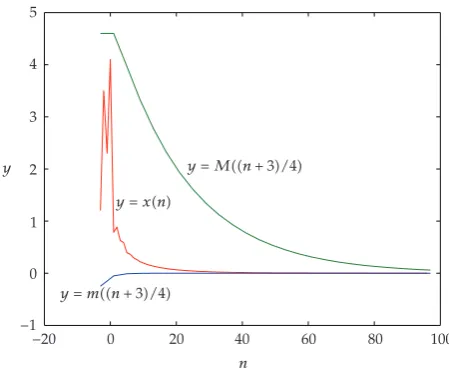
Figure 2:Chart of4.2withx−3 1.2, x−2 3.5, x−1 2.3, x0 3.1.
Letm0 −1/4, M0 4.6. It is obvious that 4.1 and4.2satisfy the conditions of
Theorem 3.3when the initial conditions arex−3, x−2, x−1, x0∈0,4.64.
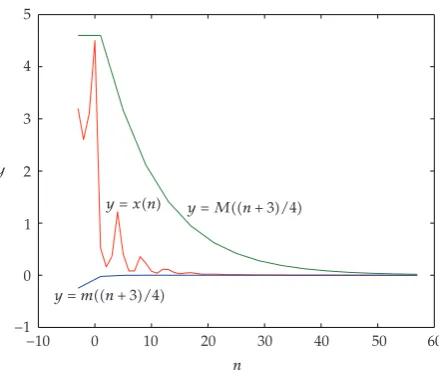
Figure 1shows the numerical solution of4.1withx−3 3.2, x−2 2.6, x−1 3.1, x0
4.5 and the relations that mi≤xl≤Mi whenl≥k1i1, i0,1,2, . . . .
Figure 2shows the numerical solution of4.2withx−3 1.2, x−2 3.5, x−1 2.3, x0
3.1 and the relations thatmi≤xl≤Mi whenl≥k1i1, i0,1,2, . . . .
Acknowledgment
The authors are grateful to the referees for their comments. This work is supported by the Science and Technology Project of Chongqing Municipal Education CommissionGrant no. KJ 080511of China, Natural Science Foundation Project of CQ CSTCGrant no. 2008BB 7415 of China, the NSFCGrant no.10471009, and the BSFCGrant no. 1052001of China.
References
1 W.-T. Li and H.-R. Sun, “Global attractivity in a rational recursive sequence,”Dynamic Systems and Applications, vol. 11, no. 3, pp. 339–345, 2002.
2 C. C¸ inar, “On the positive solutions of the difference equationxn1 xn−1/1xnxn−1,”Applied Mathematics and Computation, vol. 150, no. 1, pp. 21–24, 2004.
3 K. Cunningham, M. R. S. Kulenovi´c, G. Ladas, and S. V. Valicenti, “On the recursive sequencexn1 αβxn/BxnCxn−1,”Nonlinear Analysis: Theory, Methods & Applications, vol. 47, no. 7, pp. 4603– 4614, 2001.
4 L. Li, “Stability properties of nonlinear difference equations and conditions for boundedness,” Computers & Mathematics with Applications, vol. 38, no. 2, pp. 29–35, 1999.
5 M. R. S. Kulenovi´c, G. Ladas, and N. R. Prokup, “A rational difference equation,” Computers & Mathematics with Applications, vol. 41, no. 5-6, pp. 671–678, 2001.
6 X.-X. Yan, W. T. Li, and H.-R. Sun, “Global attractivity in a higher order nonlinear difference equation,”Applied Mathematics E-Notes, vol. 2, pp. 51–58, 2002.
7 E. M. Elabbasy, H. El-Metwally, and E. M. Elsayed, “On the difference equationxn1axn−bxn/cxn−
8 E. M. Elabbasy, H. El-Metwally, and E. M. Elsayed, “Global attractivity and periodic character of a fractional difference equation of order three,”Yokohama Mathematical Journal, vol. 53, no. 2, pp. 89– 100, 2007.
9 X. Yang, W. Su, B. Chen, G. M. Megson, and D. J. Evans, “On the recursive sequencexn1 axn−1
bxn−2/cdxn−1xn−2,”Applied Mathematics and Computation, vol. 162, no. 3, pp. 1485–1497, 2005. 10 M. R. S. Kulenovi´c and G. Ladas,Dynamics of Second Order Rational Difference Equations with Open
Problems and Conjectures, Chapman & Hall/CRC, Boca Raton, Fla, USA, 2001.