Micro-blog: Sentiment Modelling and Randomness
Reduction for Topic Modelling
London School of Economics and Political Sciences
Wenqian Cheng
A thesis submitted to the Department of Statistics of the London
School of Economics for the degree of Doctor of Philosophy,
I certify that the thesis I have presented for examination for the MPhil/PhD degree of the London School of Economics and Political Science is solely my own work other than where I have clearly indicated that it is the work of others (in which case the extent of any work carried out jointly by me and any other person is clearly identified in it). The copyright of this thesis rests with the author. Quotation from it is permitted, provided that full acknowledgement is made. This thesis may not be reproduced without my prior written consent.
I warrant that this authorisation does not, to the best of my belief, infringe the rights of any third party.
I declare that my thesis consists of approximately 50,000 words.
Abstract
Before the arrival of modern information and communication technology, it was not easy to capture people’s thoughts and sentiments; however, the development of statistical data mining techniques and the prevalence of mass social media provide opportunities to capture those trends. Among all types of social media, micro-blogs make use of the word limit of 140 characters to force users to get straight to the point, thus making the posts brief but content-rich resources for investigation. The data mining object of this thesis is Weibo, the most popular Chinese micro-blog.
In the first part of the thesis, we attempt to perform various exploratory data mining on Weibo. After the literature review of micro-blogs, the initial steps of data collection and data pre-processing are introduced. This is followed by analysis of the time of the posts, analysis between intensity of the post and share price, term frequency and cluster analysis.
Secondly, we conduct time series modelling on the sentiment of Weibo posts. Considering the properties of Weibo sentiment, we mainly adopt the framework of ARMA mean with GARCH type conditional variance to fit the patterns. Other distinct models are also considered for negative sentiment for its complexity. Model selection and validation are introduced to verify the fitted models.
Thirdly, Latent Dirichlet Allocation (LDA) is explained in depth as a way to discover topics from large sets of textual data. The major contribution is creating a Randomness Reduction Algorithm applied to post-process the output of topic
Acknowledgements
First, I would like to express my sincere gratitude to Prof. Piotr Fryzlewicz for the continuous support of my PhD study, for his patience, motivation, and immense knowledge. I am grateful to him for his constructive criticism during my thesis writing and for his encouragement at all stages of my research. This work would not have been done without his continued guidance and generous support. My thanks also goes to Dr. Clifford Lam and Dr. Wicher Bergsma for their comments and suggestions on my work.
I would like to thank the Centre of Analysis of Time Series (CATS) and the Time Series Group of the Statistics Department at LSE for providing a perfect environment in which to pursue research. I am thankful to Ian Marshall (the Research Administrator of the Department of Statistics), and Lyn Grove and Jill Beattie (the Administrators at CATS) for their kind support.
There are many people whose suggestions, discussions and comments have greatly contributed to my PhD work. I very much appreciate Christopher Sciberras’s efforts and kind assistance in proofreading this thesis and correcting my grammatical errors. I am grateful to Dr. Alan Pryor, my master project supervisor, to keep giving me valuable advice and inspiration in my research. I am also grateful to Ivan Sanchez, Dr. Sebastian Riedel and Dr. Nikos Aletras from the Computer Science Department at University College London and Dr. Georg Hahn from the Statistics Department at Imperial College for their comments and suggestions about my research. Hearty thanks go to my colleagues over the years for their stimulating
discussions and after-work chats. They include Rafal Baranowski, Anna Louise Schroeder, Na Huang, Majeed Simaan, Ewelina Sienkiewicz, Ali Habibnia, Cheng Qian, Yajing Zhu, and Hyeyoung Maeng.
I would also like to extend thanks to the following for their constant and unfailing support, and I could not have managed it without them: Chen Lu, Si Qiao, Ying Chen, Ruoxi Li, Anran Chen, Kun Wang, Jiang Shu, Nawal Mustafa, Michelle Warbis and Cynthia Endezoumou.
Finally, I am very grateful to my family who offered me both spiritual encouragement and financial support throughout all the stages of my research. Thanks for your unconditional love and belief in me.
Contents
1 Introduction 21
2 Exploratory Data Mining 25
2.1 Literature Review of Data Analysis of Microblogs . . . 25
2.1.1 Review of Relevant Twitter Data Analysis . . . 25
2.1.2 Review of Weibo Data Analysis . . . 28
2.2 Data Collection . . . 31
2.3 Analysis of the Time of the Posts . . . 36
2.4 Intensity of Posts vs Share Price . . . 44
2.5 Chinese Word Segmentation . . . 54
2.6 Term Frequency . . . 55
2.6.1 Most Frequent Terms for Vanke and Biguiyuan . . . 57
2.6.2 Most Frequent Terms for Suning and Guomei . . . 58
2.6.3 Most Frequent Terms for Donghang, Biyadi and Maotai . . . 60
2.6.4 Beyond Term Frequency . . . 62
2.7 Cluster Analysis . . . 63
2.8 Summary . . . 73
3 Time Series Modelling on Sentiment 75 3.1 Introduction to Sentiment Analysis . . . 75
3.2 Time Series of Sentiment . . . 84
3.3 Univariate Time Series Model Fitting . . . 89
3.3.1 A General Framework . . . 89
3.3.2 Fitting Proportional Positive Sentiment . . . 97
3.3.3 Fitting Proportional Negative Sentiment . . . 103
3.3.4 Other Approaches for Fitting Proportional Negative Sentiment112 3.3.5 Model Comparison and Validation for Proportional Negative Sentiment . . . 118
3.4 Multivariate Time Series Model Fitting . . . 122
3.5 Summary . . . 128
4 Topic Modelling and Randomness Reduction 130 4.1 Introduction to Topic Models . . . 130
4.2 Latent Dirichlet Allocation in Depth . . . 132
4.2.1 The Development of Topic Models . . . 132
4.2.3 Learning LDA by Gibbs Sampling . . . 142
4.3 Application of LDA on Microblogs’ data . . . 149
4.3.1 Data Pre-processing for LDA . . . 149
4.3.2 Parameter Control for Functions . . . 150
4.4 Randomness Reduction . . . 152
4.4.1 Motivation and the Literature . . . 152
4.4.2 The Algorithm . . . 156
4.4.3 Empirical Examples for Randomness Reduction . . . 160
4.5 Case Studies for the Significance of Randomness Reduction . . . 166
4.6 Significance of Randomness Reduction on Twitter Datasets . . . 173
4.6.1 Randomness Reduction on Tweets about Apple . . . 174
4.6.2 Randomness Reduction on Tweets about US Airlines . . . . 176
4.7 Topic Classification and Evolution . . . 178
4.8 Summary . . . 192
5 Conclusion, Discussion and Future Direction 194
Appendix
200
A.1 Capturing Data via API . . . 200
A.2 Details for Web Crawling . . . 202
A.3 Details for Web Parsing . . . 202
A.4 Additional Results for the Analysis of the Time of the Posts . . . . 204
A.5 Result of Linear Regression for Vanke . . . 207
A.6 Additional Results for Intensity of the Posts vs Share Price . . . 209
A.6.1 Time Series Figures for Company Guomei . . . 209
A.6.2 Time Series Figures for Company Donghang . . . 213
A.6.3 Time Series Figures for Company Biyadi . . . 217
A.7 Word Cloud . . . 221
A.8 Additional Figures for Cluster Analysis . . . 222
B Appendix for Chapter 3 229 B.1 Additional Figures for Positive/Negative Polarity . . . 229
B.2 Additional Figures for Seven Dimensions Sentiments . . . 233
B.3 Details for Fitting Proportional Negative Sentiment Time Series . . 236
C Appendix for Chapter 4 239
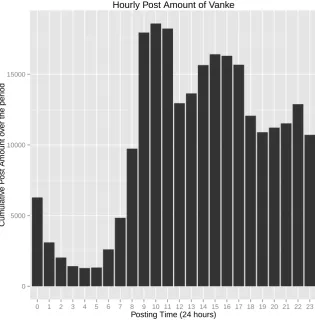
2.3.1 Daily post amount of Vanke, coloured by time, from 3rd May to 9th Dec 2013. . . 38 2.3.2 Hourly post amount of Vanke. . . 40 2.3.3 Hourly time series plot for Vanke post amount from 3rd May to 9th
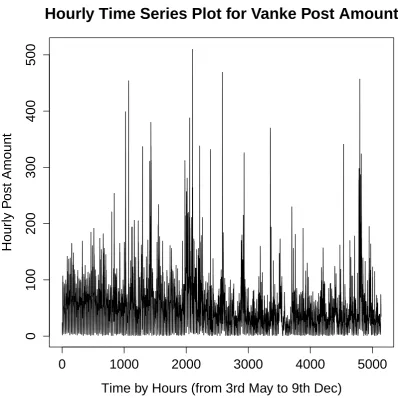
December 2013. . . 42 2.3.4 Hourly time series plot for post amount (multiple companies) from
3rd May to 9th December 2013. . . 43 2.4.1 Post amount vs share price for Vanke. . . 45 2.4.2 Dot plot of post amount (x-axis) and share price (y-axis) for Vanke. 46 2.4.3 Time series for share price of Vanke. . . 48 2.4.4 Time series for post amount of Vanke. . . 49 2.4.5 Nadaraya-Watson kernel regression estimate with Bandwith 0.5 for
Vanke (Rt and D0t). . . 51
2.4.6 Regression estimate using local polynomials with Bandwith 0.5 for Vanke (Rt and D0t). . . 52
2.4.7 SiZer plot for Vanke (Rt and Dt0). . . 53
2.6.1 Term frequency for Vanke. . . 58
2.6.2 Term frequency for Biguiyuan. . . 58
2.6.3 Term frequency for sampled Suning. . . 59
2.6.4 Term frequency for Guomei. . . 60
2.6.5 Term frequency for Donghang. . . 61
2.6.6 Term frequency for Biyadi. . . 61
2.6.7 Term frequency for Maotai. . . 62
2.7.1 Cluster plot from k-means. . . 65
2.7.2 Cluster plot from PAM. . . 68
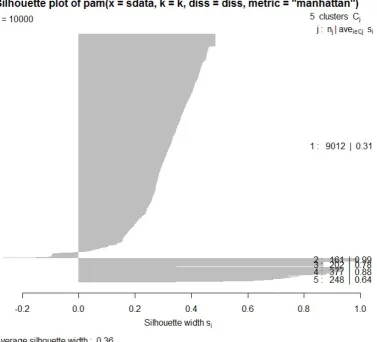
2.7.3 Silhouette plot for PAM. . . 69
2.7.4 Agglomerative hierarchical clustering. . . 71
3.1.1 Sentiment polarity for company Biyadi using 3 months’ data. . . . 80
3.1.2 3D plot of positive and negative sentiments. . . 81
3.1.3 Histograms for seven sentiment dimensions. . . 82
3.1.4 Plots of Good score vs all other scores. . . 83
3.2.1 Original time series for sentiments (top to bottom: Positive, Negative, Overall). . . 86
3.2.2 Proportional time series for sentiments (top to bottom: Positive, Negative, Overall). . . 87
3.3.2 ACF and PACF plots for proportional positive sentiment time series. 98 3.3.3 Residual plots of AR(1) for proportional positive sentiment time
series. . . 99 3.3.4 QQ plot against normal of AR(1) + ARCH(1) for proportional
positive sentiment time series. . . 102 3.3.5 QQ plot against t-distribution of AR(1) + ARCH(1) for proportional
positive sentiment time series. . . 102 3.3.6 Time series plot for proportional negative sentiment. . . 104 3.3.7 Time series plot for proportional negative sentiment (adjusting the
huge spike between Day 206 and Day 208 by exponential smoothing).104 3.3.8 ACF and PACF plots for proportional positive sentiment time series
(adjusting the huge spike between Day 206 and Day 208 by exponential smoothing). . . 105 3.3.9 Diagnostics plots of Model 1 for proportional negative sentiment
time series. . . 108 3.3.10 Plots of series with 2 conditional standard deviation superimposed
for proportional negative sentiment time series (Top: Model 1 vs Bottom: Model 2). . . 110 3.3.11 QQ plots against skewed normal for proportional negative sentiment
3.3.12 Time series plot for proportional negative sentiment (adjusting the huge spike between Day 206 and Day 208 by threshold clearance). 113 3.3.13 ACF and PACF plots for proportional negative sentiment (adjusting
the huge spike between Day 206 and Day 208 by threshold clearance).114 3.3.14 QQ plot against skewed t-distribution of Model A for proportional
negative sentiment (adjusting the huge spike between Day 206 and
Day 208 by threshold clearance). . . 115
3.3.15 Comparison of MAE among Model 1, Model 2, and exponential smoothing prediction. . . 120
3.3.16 Comparison of MAE among Model A, Model B, and exponential smoothing prediction. . . 121
3.4.1 Cross-correlation plot for transformed proportional positive and negative sentiment time series. . . 123
3.4.2 Residual plot for VAR model. . . 125
3.4.3 ACF for the residuals of VAR model. . . 126
3.4.4 PACF for the residuals of VAR model. . . 126
4.2.1 Bayesian network of LDA. . . 140
A.4.1 Daily post amount, coloured by time (Multiple companies: Biguiyuan,
Biyadi, Maotai, Donghang, Guomei, and Suning). . . 205
A.4.2 Hourly post amount (Multiple companies: Biguiyuan, Biyadi, Maotai, Donghang, Guomei, and Suning). . . 206
A.5.1 Dot plot for log returns of share price and log returns of post amount of Vanke. Group A: Rt vs Dt0; Group B: R 0 t vs Dt. . . 207
A.5.2 Result of linear regression for Vanke (Group A: Rt and D0t). . . 207
A.5.3 Result of linear regression for Vanke (Group B: R0t and Dt). . . 208
A.6.1 Time series for share price of Guomei. . . 209
A.6.2 Time series for post amount of Guomei. . . 210
A.6.3 Regression estimate using local polynomials with Bandwith 0.5 for Guomei (Rt and Dt0). . . 211
A.6.4 SiZer plot for the first derivative for Guomei (Rt and D0t). . . 212
A.6.5 Time series for share price of Donghang. . . 213
A.6.6 Time series for post amount of Donghang. . . 214
A.6.7 Regression estimate using local polynomials with Bandwith 0.5 for Donghang (Rt and D0t). . . 215
A.6.8 SiZer plot for the first derivative for Donghang (Rt and Dt0). . . 216
A.6.9 Time series for share price of Biyadi. . . 217
A.6.11 Regression estimate using local polynomials with Bandwith 0.5 for
Biyadi (Rt and Dt0). . . 219
A.6.12 SiZer plot for the first derivative for Biyadi (Rt and D0t). . . 220
A.7.1 Word cloud for Biyadi. . . 221
A.8.1 Cluster plot from CLARA. . . 222
A.8.2 Silhouette plot for CLARA. . . 223
A.8.3 Cluster plot from PAM. Sparsity = 0.96. . . 224
A.8.4 Silhouette plot for PAM. Sparsity = 0.96. . . 225
A.8.5 Cluster plot from PAM. Sparsity = 0.95. . . 226
A.8.6 Silhouette plot for PAM. Sparsity = 0.95. . . 227
A.8.7 Agglomerative hierarchical clustering. Sparsity = 0.97. . . 228
B.1.1 Histograms of polarities (comparison between Chinese Emotional Words Ontology (top) and Hownet Chinese Message Structure Base (bottom)). . . 229
B.1.2 Skewness test of positive and negative sentiments. . . 230
B.1.3 Poisson and Negative Binomial distribution fitting. . . 230
B.1.4 Information of Poisson and Negative Binomial distribution fitting. 231 B.1.5 Correlation test of positive and negative sentiments. . . 231
B.1.7 Top 50 negative sentiment words. . . 232
B.2.1 Scores of seven dimension sentiments. . . 233
B.2.2 Correlation and p-values between different sentiments. . . 234
B.2.3 Plots of Happiness, Surprise score vs other remaining scores. . . 235
B.2.4 Plots of Anger, Fear, Sadness score vs other remaining scores. . . . 235
B.3.1 QQ plot against normal ARMA for proportional negative sentiment (adjusting the huge spike between Day 206 and Day 208 by threshold clearance). . . 238
C.1.1 Example Two: topic words and original posts. . . 240
List of Tables
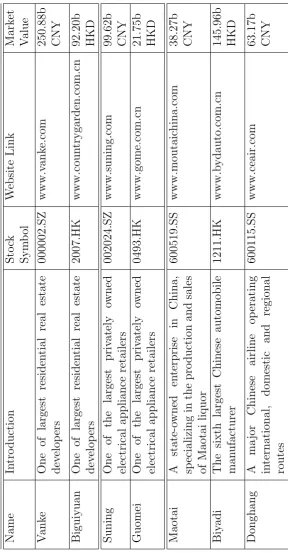
2.1 Descriptions about the companies. . . 34
2.2 Post amount for each company. . . 35
2.3 Stationarity test results . . . 50
2.4 Structure of a term-document matrix . . . 63
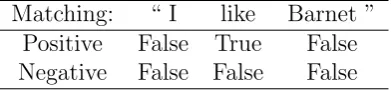
3.1 Example of lexicon-based sentiment matching . . . 76
3.2 Proportional sentiment time series stationarity test results . . . 88
4.1 Randomness Reduction empirical example for the best final intersections at the topic level. . . 165
4.2 Improvement by Randomness Reduction for the first month (3rd May to 2nd June) . . . 170
4.3 Improvement by Randomness Reduction for the second month (2nd Jun to 1st Jul). . . 170
4.4 Improvement by Randomness Reduction for the third month (1st Jul to 1st Aug). . . 171
4.5 Improvement by Randomness Reduction for the fourth month (1st Aug to 1st Sep). . . 171
4.6 Improvement by Randomness Reduction for the fifth month (1st Sep
to 1st Oct). . . 171
4.7 Improvement by Randomness Reduction for the sixth month (1st Oct to 1st Nov). . . 172
4.8 Improvement by Randomness Reduction for the seventh month (1st Oct to 1st Nov). . . 172
4.9 Summary of results for Randomness Reduction. . . 172
4.10 Summary of results for Randomness Reduction on Twitter data set about Apple . . . 175
4.11 Summary of results for Randomness Reduction on Twitter dataset about US Airlines . . . 177
4.12 Summary of topic categories. . . 179
4.13 Monthly topic evolutions with overlapped periods. . . 180
4.14 Monthly topic evolutions without overlapped periods (Part1). . . . 181
4.15 Monthly topic evolutions without overlapped periods (Part2). . . . 181
4.16 Summary of topic categories by month and by week. . . 182
4.17 Weekly topic evolutions (part1). . . 184
4.18 Weekly topic evolutions (part2). . . 185
4.19 Weekly topic evolutions (part3). . . 186
Introduction
Social Media is a type of Internet-based application which allows the creation and exchange of user-generated content. It was built on the ideological and technological foundations of Web 2.0 (Oreilly, 2005), which allows users to update status and interact with each other, rather than just retrieve information. Due to the easy accessibility and multimedia nature of microblogging platforms, recently some Internet users tend to migrate from traditional communication applications, such as blogs or mailing lists, to microblogging services.
Authors of those posts broadcast their current status to the public or a selected circle of contacts, discuss current issues and share opinions on a variety of topics. Individuals can also embed shortened URLs, insert hash tags, and comment on others’ posts. The 140 characters word limit of microblogs forces users to get straight to the point, which makes the posts brief but content-rich resources for investigation.
“Weibo” is the Chinese word for “microblog”. Sina Weibo is a Chinese microblogging website which is used by well over 30% of Internet users in China, with a market penetration similar to Twitter in the United States (Rapoza, 2011). Forbidding the usage of Twitter in China resulted in the birth and popularity
of indigenous Weibo. It was launched by Sina Corporation on 14 August 2009, and attracted 503 million registered users by 2012 (Ong, 2013). Statistics showed there were 100 million daily users on Sina Weibo by the third quarter of 2015 (China-Resonance, 2011).
On average 600 million tweets were generated per day (500 million for twitter (TwitterInc., 2013), 100 million for Weibo (SinaCorp., 2013)), which create extensive resources for statistical data mining. The emotions and attitudes exhibited by these massive user-generated contents would be good indicators for people’s thinking and future behaviours. Researchers, marketeers and political activists see these data as a good source for opinion mining, topic extraction and sentiment analysis for marketing or social studies. How to recognise the valuable parts of those enormous data and carry out statistical studies has become a significant research issue. The information from microblog posts is stored in unstructured formats (text) and not organised using any automated system, resulting in the complexity of data preprocessing and the difficulties of applying statistical methods.
In the literature, Weibo-related research mainly focuses on numerous qualitative analyses for popularity, social effect or verification mechanism, but only a few quantitative analyses could be found, which will be introduced in Section 2.1. My thesis will focus on the Sina Weibo, which is an emerging, attractive and still partially untapped research field. In addition, the research of Weibo sentiment time series modelling and topic modelling is relatively new and there remains much to be explored.
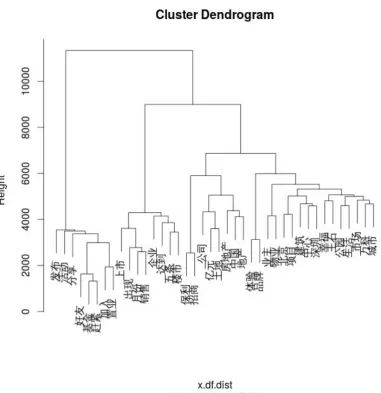
mining. It starts with a literature review for microblogs and describes how to generate data from Weibo for seven specific companies in Chart 2.1. Before capturing textual features, we conduct quantitative analysis on the pattern of the time of the posts for those specific companies and their relationship with share prices. In the second half of Chapter 2, after introducing Chinese word segmentation, we generated several results from initial text analysis. The term frequency chart can be a good show case for the most important terms and helps to build a basic understanding of the posting content. Clustering methods, such as k-means and k-mediods, are applied to group the posts.
In Chapter 3, we describe some fundamental methods for sentiment analysis and present time series for both positive and negative sentiments. A general framework for univariate time series model fitting is provided in detail, and this framework is then employed for our sentiment time series fitting. Results show that the proportional positive time series fits well using the general framework, while we need alternative approaches to fit the proportional negative time series. Model comparison and validation are presented for proportional negative sentiment after attempting multiple approaches for model fitting. Multivariate time series models are adopted as we intend to model and explain the interactions and comovements between positive and negative sentiment time series. Interesting results are obtained by exploiting the vector autoregressive (VAR) and BEKK models for the Box-Cox transformed time series data.
(2003). The thorough generative process and model learning using Gibbs sampling are introduced in detail. After applying LDA on our microblog’s data, it can be found that the generated topics contain some randomness. We intend to reduce the randomness and retain stable and well-explained topics for topic evolution analysis. Thus, the Randomness Reduction algorithm for filtering out the insignificant topics and utilising topic distributions to find out the most persistent topics is proposed. Case studies are presented to show the significance of the performance of the algorithm. The filtered topics are then classified and the evolution of these topics is detailed.
Exploratory Data Mining
2.1
Literature
Review
of
Data
Analysis
of
Microblogs
Before performing initial data analysis and further data mining on Weibo’s data, a requisite is to conduct a literature review to explore previous researches on microblogs. Due to the wider spread and earlier establishment of Twitter, a more considerable body of research can be found on Twitter than on Weibo. The first step is to investigate the relevant literature on Twitter.
2.1.1
Review of Relevant Twitter Data Analysis
There have been several papers on exploring hotspots and examining the predictive power of Twitter. Using Twitter’s data as predictors, researchers illustrated that it is possible to improve the prediction outcomes of disease outbreaks (Louis and Zorlu, 2012), including seasonal influenza (Achrekar et al., 2012). Singh et al. (2012) pointed out that tweets can be used to visualise immediate traffic conditions in London. Improving voting behavior prediction by adding Twitter information
(Chrzanowski and Levick, 2012), such as elections prediction (Gayo-Avello, 2012a; Chung and Mustafaraj, 2011), is another interesting research topic. However, some counter-views (Gayo-Avello, 2012b) have been put forward against using tweets as a predictive indicator for election. Other studies such as movie performance prediction (Asur and Huberman, 2010) and Oscar prediction (Thelwall et al., 2011) may also be of interest.
There are a few analyses about stock price prediction (Logunov, 2011; Mittal and Goel; Bollen et al., 2011). How the posts from microblogs relate to the fluctuation of stock price is an appealing topic for researchers, and there are many papers on this theme. Most stock prediction practice is based on a large amount of tweets and aims at predicting benchmark stock market indices, rather than focusing on specific companies. One of the most influential papers was by Bollen et al. (2011), investigating whether the measurement of collective mood states generated from large-scale Twitter posts are correlated to the value of the Dow Jones Industrial Average (DJIA), and the results indicate that the accuracy of DJIA predictions was improved significantly by including specific public mood dimensions. In addition, most articles with keywords “microblog” (“Twitter”) and “stock price” also include “sentiment” in their title. This fact implies that sentiment time series modelling is a crucial element for predicting future stock price using microblog posts.
identifications for English texts, and it was applied by Bollen et al. (2011) and Ramon (2012) for sentiment analysis in their research. We adopted several Chinese lexicons in our research and they will be introduced in Chapter 3. Machine learning algorithms, such as naive Bayes classifier, Support Vector Machine (SVM) and Neutral Networks (NN), were employed as supervised learning methods for sentiment classification in many studies (Xie et al., 2012; Ramon, 2012; Ding et al., 2011; Tian and Zheng, 2012). Supervised learning algorithms examine the training data and develop an inferred function, which can be used for mapping new data. The relevance and quality of training data is crucial when high accuracy is required. However, due to the lack of relevant training data and the difficulties of manually tagging, we will narrow down our sentiment classification to lexicon-based approaches in this thesis.
regression models were applied for selecting and analysing the content of tweets. To assess the model adequacy, non-linearity and causality tests on the time series were conducted. Results showed that adding the additional time series from Twitter results in an increase in prediction accuracy of 5 percent or more. These studies are closely connected with the research detecting the potential relationship between Weibo’s post amount and share price, which can be a starting point for our Weibo data analysis.
2.1.2
Review of Weibo Data Analysis
According to iResearch’s report (China-Resonance, 2011), Sina Weibo had 56.5% of China’s microblogging market based on active users, and 86.6% based on browsing time over competitors such as Tencent Weibo and Baidu’s services. It successfully went public on Nasdaq under the symbol “WB” in 2014.
There is little literature in English on Weibo, therefore, we searched for Weibo literature using an official Chinese Academic Platform named China Knowledge Resource Integrated Database (CNKI, 2016). Most papers about Weibo are qualitative analyses, for example about Weibo’s propagation characteristics, posters’ motive and behaviour, and the relationship between Weibo and marketing. Only a few studies have included quantitative analyses on Weibo and these studies will be introduced in the following paragraphs. Reviews will include three main aspects: stock market prediction, hotspot detection, and topic or social affair trend forecasting.
A group of researchers at Shanghai University (Zhou et al., 2013) found that investors’ emotions could be detected from the heat of some keywords on microblogs and could be used to predict stock market fluctuations, which is similar to Twitter analysis for stock price prediction. They defined six keywords which could be translated as “Bull Market”, “Positive News”, “Stock Index rise”, “Bear Market”, “Negative News”, and “Stock Index drop”. The heat of the keywords was defined as the daily number of posts containing those words. The input data were the sequences of the heat and the output data were the fluctuation labels (+1 and -1) of the closing price. A significant Granger causality relationship between “rise” or “drop” and closing prices was found. Results showed that the heat of keywords’ indicated the trend of some events indirectly, and the accuracy was about 59% for “stock index rise” and 78% for “stock index drop”. By setting a lag of one week’s time, the change of heat of these two words could correctly predict the change of Shanghai Composite index in most cases.
possible hotspots of a certain subject using Weibo data. A case study to find the potential hotspots of the specific field of “data mining” was conducted and compared with other traditional hotspots detecting methods. Sheng (2012) performed word frequency counts, co-word analysis, and social media analysis to find out the hot keywords and academic leaders for this subject, and track them continuously. Comparing those automatically detected hotspot results from Weibo with the topics on Web of Science for “data mining” subject, they found around 30 percent of specific topics were identical. Results showed that making use of Weibo data would improve the hotspot detection further as it could include several more latest hotspots than traditional methods.
Zheng et al. (2012) have proposed an approach for news topics detection using Weibo data. By finding the emerging keywords from a large amount of posts and then clustering them, news topics could be recognised and recorded. To identify the keywords, researchers introduced the compound weight to combine the word frequency and the growth trend. A measurement of the likelihood of a word to be a news keyword was taken, and a contextual relevance model was used to support incremental clustering and construct the topic. The results proved the effectiveness of the approach to detect news topics out of massive messages (3 million posts for 10 days).
and illustrated fully later in Chapter 4. By calculating aggregation and separation between the short-period and long-period moving average line, breaking events can be recognised. The LDA algorithm is applied to figure out the event-related “word bag” and corresponding weight for the event. The data of the first seven days were used as the training materials and the eighth day’s posts were used to check the prediction. The results of the prediction showed some significance, but the limitation was that only a single case study with small data size and very short time span was conducted.
After reviewing the relevant literature for both Twitter and Weibo, we start our research with some exploratory data mining, such as the time of the posts, the relationship between post amount and share price, term frequency and cluster analysis. Time series modelling on sentiment and topic modelling for hotspots detection will be carried out and clarified in the following chapters.
2.2
Data Collection
but it is still possible to download posts by individual users or geolocation. The technical details of obtaining data via API can be found in Appendix A.1.
Unlike Web Crawling, specified in Appendix A.2, which downloads all the information from each page, Web Parsing is generally targeted at capturing specific information and transforming unstructured data into structured data that can be stored and analysed in a database. Extensible Markup Language (XML) is adopted for Web Parsing as a markup language that defines a set of rules for encoding data in a format that is both human-readable and machine-readable. The advantage of this method is that there is no need to consider API limits. The disadvantage is that it is still an unofficial method to capture data, so the web page format or the download limit may change. This method had been adopted and kept stable for more than a half year until Sina changed the version of the web interface December in 2013 and included the Captcha to avoid data acquisition from external applications.
period, and if we intend to capture all of them, the time interval of running our code needs to be relatively short. Thus, due to the limit of the search frequency, we may only choose moderately hot keywords in order to capture continuous data. For instance, if we chose “Baidu” (the most popular Chinese search engine) as our keyword, the number of posts containing “Baidu” will far exceed the limit of 1600 per hour. Thus, we cannot capture a complete dataset for a very popular keyword. In contrast, if a brand is not popular at all, only a few posts can be found within an hour. It will be difficult to conduct text mining or time series analysis.
Our data set covers approximately six months and the post amount of each company are listed in Chart 2.2. In summary, the data collection for four companies, Biyadi, Guomei, Donghang and Vanke, started on 3rd May 2013, and for three other companies, Biguiyuan, Maotai and Suning, started on 8th May 2013. Our data collection ended on 9th December 2013 when Sina added Captcha to its login mechanism. More technical details can be found in Appendix A.3.
Table 2.2: Post amount for each company. Company Length Post Amount
Vanke 221 days 247373 Biguiyuan 215 days 94809
Suning 215 days 732684 Guomei 221 days 327298 Maotai 215 days 183539 Biyadi 221 days 134530 Donghang 221 days 38963
imputation treats the imputed data points as an equal to the original ones, which may cause misleading results (Rubin, 1988). There are on average three gaps in our dataset for each company and the gaps are mostly shorter than one day, so we employed simple imputation: the average of the day before and the day after is calculated as the modified daily post amount. For instance, in Vanke’s data, the post amount on 26th June was only 56, which is unusual, and the average of the 25th and 27th’s amount 12(1079 + 1526) = 1303 is used instead. Other methods such as exponential smoothing are employed for missing data and extreme values in Chapter 3 for further sentiment time series modelling.
Apart from some analyses conducted on all the companies, the majority of the analyses in this thesis are mainly based on Vanke’s data. This is due to the fact that, compare to other companies, it has higher quality and a moderate quantity of data. Suning and Guomei include a large number of promoted posts and thus have many bursts and a very large quantity of data. The other companies are less popular than Vanke and have a smaller quantity of data.
2.3
Analysis of the Time of the Posts
In this section, we will investigate the posting patterns by analysing the time of the posts. A series of charts and graphs are created to show the different characteristics of posting time. Most of the analyses in this section are based on the data collected for company Vanke from the start of May till the start of December. The results for the other companies can be found in Appendix A.4.
Figure 2.3.1 for Vanke and Figure A.4.1 for all the other companies. It seems that the daily number of posts for Vanke during these 7 months are relatively stable at around 1300 posts per day with a slight downward trend, except for three extreme peaks and two gaps of missing data.
By observing the posts over the periods of peaks, we can find possible causes of those extreme peaks. Two peaks around 4th July and 25th November seem to result from breaking news of Vanke. The former appears to be from a news story announcing Vanke ranked as the top 1 in sales value in the “Top 50 ranking in China’s real estate business sales in the first half of 2013”. The latter appears to be due to a news story stating that Vanke evaded land value added tax amounting to 3.8 trillion Yuan. Many Weibo users forwarded and commented on these news, and there were many discussions and follow-ups. The reason for the peak around 29th July is hard to determine. It might result from many promotions and advertisements held by Vanke’s official account during that week. It involved users by drawing prizes from all the forwarders, i.e. the official account will make posts for promotion purpose, and many followers will forward the posts to take the opportunities for random lucky draws, which boosted the post amount and attracted many followers.
0 1000 2000 3000
5th May 5th Jun 5th Jul 5th Aug 5th Sep 5th Oct 5th Now 5th Dec
Date: from 3rd May to 9th Dec
P
ost Amount
factor(Hour)
0
1
2
3
4
5
6
7
8
9
10
11
12
13
14
15
16
17
18
19
20
21
22
23
[image:40.595.124.501.154.555.2]Daily Post Amount of Vanke, coloured by Time
peaks: morning around 10am, afternoon around 3pm, and evening around 10pm. After observing the original posts, the afternoon peak for Suning can be explained as the promotions by Suning were mostly announced on its official account in the afternoon and they initiated many reposts.
The evening peak could indicate that Weibo users talked about Donghang, Maotai, Suning and Guomei more often at home in the evening as they are brands more related to daily life. It may be because airlines (Donghang), liquor (Maotai), and electrical appliances (Suning and Guomei) are more likely to be topics of interest after work than real estate brands (Vanke, Biguiyuan) and automobile brands (Biyadi). These findings are supported by research which focuses on using tweets as an electronic word of mouth (Jansen et al., 2009). Jansen selected brands and categories under the assumption that these brands would be most likely mentioned in and affected by microblogging and after exploring several lists including American Customer Satisfaction Index, Business Weeks Top Brand 100, etc. The categories were chosen to be closely related with items in daily life, which included transportation, food and consumer electronics. Jansen’s findings provide support to the empirical findings described above: Donghang (transportation), Maotai (food), Suning and Guomei (consumer electronics) are in Jansen’s chosen categories and closely linked to daily life.
0 5000 10000 15000
0 1 2 3 4 5 6 7 8 9 10 11 12 13 14 15 16 17 18 19 20 21 22 23
Posting Time (24 hours)
Cum
ulativ
e P
ost Amount o
v
er the per
iod
[image:42.595.164.480.226.547.2]Hourly Post Amount of Vanke
Hourly Time Series Plot for Vanke Post Amount
Time by Hours (from 3rd May to 9th Dec)
Hour
ly P
ost Amount
0
1000
2000
3000
4000
5000
0
100
200
300
400
[image:44.595.113.512.178.576.2]500
2.4
Intensity of Posts vs Share Price
After analysing only the time of the posts, we are interested in the relationship between the intensity of posts of a company and this company’s share price. In this section, we will focus on Vanke to analyse the potential relationship. The historical daily adjusted closing prices (adjusted for dividends and splits) of Vanke (Symbol: 000002.SZ) between 3rd May and 9th December are downloaded from the Yahoo!Finance (2016) website and recorded as original share prices.
We denote the post amount at dayt asAt and the original share price at day t as
Pt. Initially, a line chart combiningAt andPt is drawn in Figure 2.4.1. There seem
to be some similar patterns between share price and post amount at the beginning of the period. A dot plot forAt and Pt for Vanke is produced in Figure 2.4.2, and
a weak correlation between the post amount and share price according to the plot can be seen. We conduct several tests in this section to further investigate the relationship.
One of the difficulties of processing the time series is dealing with the weekend gaps in share price. First, we create two modified time series and make the denotations: Pt: Original Share Price at dayt
Pt0: Modified Share Price at day t (create Saturday’s share price and Sunday’s as Friday’s)
At: Original Post Amount at dayt
YMD.SP$Date
YMD.SP$Amount
May Jun Jul Aug Sep
0 1000 2000 3000 ● ● ● ● ● ● ● ●● ● ● ● ● ● ● ● ● ● ●● ● ● ●● ● ● ●●● ●● ● ● ● ●● ● ● ● ● ● ● ● ● ● ● ● ● ● ● ●●●● ● ● ● ● ● ● ● ● ● ● ● ● ● ●● ● ● ●● ● ●●● ● ●●● ● ● ●●● ● ● ●● ● 9 10 11 12 YMD.SP$Adj.Close
Posts Amount Share Price
Figure 2.4.1: Post amount vs share price for Vanke. The dotted pink line represents the share price and the blue line represents the post amount. The share price gaps are due to the closure of the stock market during weekends.
Group A (without weekends): Pt vs A0t
Group B (with weekends): Pt0 vs At
Figure 2.4.2: Dot plot of post amount (x-axis) and share price (y-axis) for Vanke. 1992), the Augmented Dickey-Fuller (ADF) test (Dickey and Fuller, 1979) and the Phillips-Perron (PP) test (Phillips and Perron, 1988) are applied to accomplish this task and validate each other. The KPSS test is a stationarity test with a null hypothesis that an observable time series is stationary around a deterministic trend. It can be used for both level stationarity and trend stationarity. If the result of the p-value is larger than 0.05, it means that H0 can not be rejected, thus
indicating stationarity. However, in the other two tests, the ADF test and the PP test, p-values smaller than 0.05 indicate stationarity.
the approximation log(1 +r) ≈ r ensures they are close in value to raw returns. Another advantage of looking at the log returns of a series is that the relative changes in the variable can be seen and compared directly with other variables whose values may have very different base values. For the post amount, if we assume that some news and promotions last several days and the transmission and popularity of a brand depend on yesterday’s, we can expect the hotness of today’s keywords based on yesterday’s, then we may still try to calculate log returns for the daily differences.
We denote the log returns of the time series:
Rt: Log Return of Original Share Price (Rt= log(Pt)−log(Pt−1))
Rt0: Log Return of Modified Share Price (R0t= log(Pt0)−log(Pt0−1)) Dt: Log Return of Original Post Amount (Dt= log(At)−log(At−1))
D0t: Log Return of Modified Post Amount (Dt0 = log(At0)−log(A0t−1))
The time series plots which regard the share price and post amount can be found separately in Figure 2.4.3 and 2.4.4. For the share price figure, the first row shows the three time series Pt, log(Pt), Rt for the original share price (no weekends) and
the second row shows the three time series Pt0, log(Pt0), R0t for the modified time series of share price (Friday’s share price is applied to Saturday’s and Sunday’s). The first row shows the three time series At, log(At), Dt for the original post
amount and the second row shows the three time series A0t, log(A0t), Dt0 for the modified post amount (weekend data deleted).
Figure 2.4.3: Time series for share price of Vanke (First row, from left to right: Pt,
log(Pt), Rt. Second row, from left to right: Pt0, log(Pt0), R0t).
Figure 2.4.4: Time series for post amount of Vanke (First row, from left to right: At, log(At), Dt. Second row, from left to right: A0t, log(A
0
t),D
0
t).
the dependent variable (y) are built. The outcomes of linear regression for Group A and Group B can be found in Figure A.5.2 and A.5.3 respectively. From the regression model A.5 and results listed in Appendix, it can be concluded that we can hardly find any evidence for the linear relationship between log returns of post amount and share price.
To analyse further the potential relationship between share price and post amount, we introduce kernel smoothing methods (Wand and Jones, 1994) to find smoother lines for the relationship and determine whether they are significantly different from zero or not.
Table 2.3: Stationarity test results
Case KPSS test ADF test PP test Stationarity Pt 0.01 0.6146 0.5847 non-stationary
log(Pt) 0.01 0.5955 0.5448 non-stationary
Rt 0.1 0.03371 0.01 stationary
R0t 0.1 0.01 0.01 stationary At 0.1 0.09092 0.01 almost stationary
log(At) 0.04968 0.207 0.01 almost stationary
Dt 0.1 0.01 0.01 stationary
A0t 0.1 0.03309 0.01 stationary log(A0t) 0.04968 0.08175 0.01 almost stationary
D0t 0.1 0.01 0.01 stationary
polynomial regression (Fan et al., 1995) are applied as the kernel smoothers. The bandwidth of a kernel density estimate can be customised or selected using direct plug-in methods. We choose the direct plug-in approach, where the unknown functionals that appear in expressions for the asymptotically optimal bandwidths are replaced by kernel estimates (Ruppert et al., 1995). Both of the kernel methods are applied to Group A: log return of original share price Rt and log return of
modified post amount D0t.
SiZer result for the first derivative is shown in Figure 2.4.7. Vanke’s SiZer graph indicates that the derivatives of the smoother line is not significantly different from zero (with most parts purple). That is to say, we can not detect a significant relationship between log returns of share price and post amount for Vanke.
The results for other companies can be found in Appendix A.6, including time series plots for original/modified share price and post amount, plots of their log and log returns, regression estimate using local polynomials, and plots of SiZer. All the results show a limited relationship between share price and post amount.
● ● ● ● ● ● ● ● ● ● ● ● ● ● ● ● ● ● ● ● ● ● ● ● ● ● ● ● ● ● ● ● ● ● ● ● ● ● ● ● ● ● ● ● ● ● ● ● ● ● ● ● ● ● ● ● ● ● ● ● ● ● ● ● ● ● ● ● ● ● ● ● ● ● ● ● ● ● ● ● ● ● ● ● ● ● ● ● ●
−1.0 −0.5 0.0 0.5 1.0
−0.05
0.00
0.05
Log Return of Original Share Price
Log Retur
n of Modified P
ost Amount
● ● ● ● ● ● ● ● ● ● ● ● ● ● ● ● ● ● ● ● ● ● ● ● ● ● ● ● ● ● ● ● ● ● ● ● ● ● ● ● ● ● ● ● ● ● ● ● ● ● ● ● ● ● ● ● ● ● ● ● ● ● ● ● ● ● ● ● ● ● ● ● ● ● ● ● ● ● ● ● ● ● ● ● ● ● ● ● ●
−1.0 −0.5 0.0 0.5 1.0
−0.05
0.00
0.05
Log Return of Original Share Price
Log Retur
n of Modified P
ost Amount
−1.0 −0.5 0.0 0.5
−0.4
−0.2
0.0
0.2
0.4
0.6
x$x.grid
lo
g10
(
h
)
Figure 2.4.7: SiZer plot for Vanke (Rt and Dt0). X-axis represents the log returns
2.5
Chinese Word Segmentation
Initial quantitative and time series analyses provide a brief description of the general patterns for the posts, but they are not sufficient for understanding what people generally posted about these companies. Thus, further textual analysis, as a complement of quantitative methods, would provide insight on the contents that people posted about. This textual analysis can be also referred to as text mining, a process of deriving the patterns and trends from texts through means such as statistical pattern learning. Typical text mining tasks include text categorization, text clustering, concept/entity extraction, sentiment analysis, document summarisation, and entity relation modelling. It is a part of statistical pattern learning, which aims to use artificial intelligence to learn from data. In this and next two sections, we will first introduce Chinese word segmentation and term frequency analysis as basic text mining, and then explore cluster analysis for grouping posts based on their contents. Next chapters will further discuss sentiment modelling and topic modelling. For quantitative data analyses that only research the amount of posts, there are no other steps required for data pre-processing. Nevertheless, when attempting text mining, some additional steps are requisite. Unlike English, which contains spaces between adjacent words, all Chinese characters are written together. Therefore, word segmentation is essential for Chinese text as an extra step before text mining. As the segmentation influences further textual analysis, it is crucial to find a way to segment Chinese sentence accurately and efficiently.
segmentation. All of them are originally based on Java. The oldest one built on the MMSEG (Tsai, 2000) for Java Lucene Chinese Analyser, is named rmmseg4j. The problem of this method is that the corpus contains many old-fashioned words, making it insufficient to cope with modern microblog texts. The latest version enables the function of inserting a list of words into the corpus, which means one can add new words or new definitions to be used for word segmentation. But it still lacks the ability for detecting and inserting a large amount of new words efficiently. Another package called rsmartcn, separates words by their semantics effectively and at a faster speed. It forms a port to Imdict Chinese Analyser, which applies an authoritative algorism ICTCLAS (Zhang et al., 2003) based on Hidden Markov Model (HMM) designed by the Chinese Academy of Sciences.
The latest Chinese word segmentation tool is Rwordseg (Li, 2012). It uses rJava to call the Java word segmentation tool Ansj (Sun, 2012), which is an improved port based on ICTCLAS. Compared to rsmartcn, it contains some advance functions, such as separating a combination of Chinese and English, adding Part-of-speech tagging, and inserting new external lexicons. We applied this package for Chinese word segmentation in further Weibo text mining.
2.6
Term Frequency
to create a corpus. In linguistics, a corpus is a large and structured set of texts and can be used to undertake further statistical analysis. We clean up the data by removing punctuation, numbers, links and English letters. A group of Chinese stop words is removed using a wide-spread Chinese stop words list. Several dictionaries are added from the Sogou Word Database (one of the most widely-used Chinese pinyin input method providers) for popular cyberwords and social media buzz words, and a glossary for those specific companies, e.g. the CEO’s name, affiliated brand names, competitor names, etc., is attached. The minimum topic-word length is set as two, in order to ensure the vocabulary for word frequency only contains sensible terms. This is because a single term with a single character in Chinese does not usually imply a well-defined semantic meaning.
A term frequency chart is a data frame containing most frequent terms with their frequencies, generated in a descending order. It is useful to develop a basic understanding of what the public generally mention about the companies. It can also be helpful to check the correctness of word segmentation, attach specific words to the lexicon, and add extra words to the stop words list.
The term frequency charts for our seven companies can be found in Figures 2.6.1, 2.6.2, 2.6.3, 2.6.4, 2.6.5, 2.6.6, and 2.6.7. All the term frequency charts are generated using all the posts that we collected, except Suning, for which we run a random sample of 200,000 posts, due to the large quantity of original dataset (732,684 posts).
regions and the name of CEO can also be discovered in several charts. We can also find out many promotion-related terms and understand how they promote themselves. The following sections will list some most frequent terms and discuss the information related to these terms.
2.6.1
Most Frequent Terms for Vanke and Biguiyuan
Figure 2.6.1: Term frequency for Vanke.
Figure 2.6.2: Term frequency for Biguiyuan.
2.6.2
Most Frequent Terms for Suning and Guomei
both). The most important competitors for both companies is Jingdong, a Chinese electronic commerce company (rank 17 and 16), but not each other. Individuals mentioning Guomei are likely to mention Suning (rank 15), but there are many posts only containing Suning (we cannot find “Guomei” in Suning’s chart). The most popular products for Suning are refrigerator (rank 10), phone (rank 11), and computer (rank 19). It seems that Suning had a promotion on the National day (rank 14) and had a lucky draw for its followers (rank 6, 32 and 34). While for Guomei, the promotion is likely to be for the eighth year anniversary (rank 25), and the membership policy, which is mentioned very frequently (rank 12), might be one of their business strategies.
Figure 2.6.4: Term frequency for Guomei.
2.6.3
Most Frequent Terms for Donghang, Biyadi and
Maotai
Figure 2.6.5: Term frequency for Donghang.
Figure 2.6.7: Term frequency for Maotai.
2.6.4
Beyond Term Frequency
2.7
Cluster Analysis
A term frequency chart can provide the top keywords that individuals are the most likely to mention for a specific company, but it can hardly group those posts based on their contents addressing different aspects and provide a comprehensive description of what individuals are posting about. Cluster analysis is to group a set of objects in a way such that the objects in the same group (called cluster) are more similar to each other than to those in other clusters. In cluster analysis, we treat each post as an object, and we intend to group the posts based on the key words which they contain.
Table 2.4: Structure of a term-document matrix
Document 1 Document 2 Document 3 Document 4 . . .
Term 1 1 0 1 0 . . .
Term 2 0 1 0 1 . . .
Term 3 1 2 1 0 . . .
Term 4 0 0 1 1 . . .
Term 5 0 1 0 2 . . .
. . . .
reduced by controlling the sparsity, which will be described later.
Using term-document matrix, we are able to calculate the distances between posts, and then group the posts into different clusters by different clustering methods in a high-dimensional space. The clusters can be visualised in a bivariate or a trivariate plot, in which each post is represented by a point according to principal components or multidimensional scaling. As an example, in Figure 2.7.1 the clusters are visualised by two leading principal components in the two-dimensional space. Three different cluster algorithms are adopted in our research: k-means (Hartigan and Wong, 1979), k-medoids (Kaufman and Rousseeuw, 1990) and hierarchical clustering (Kaufman and Rousseeuw, 1990).
−15
−10
−5
0
−2
0
2
4
6
CLUSPLOT( MatrixWeiboForCluster )
Component 1
Component 2
These two components explain 78.85 % of the point variability.
● ● ● ● ● ● ● ● ● ● ● ● ● ● ● ● ● ● ● ● ● ● ● ● ● ● ● ● ● ● ● ● ● ● ● ● ● ● ● ● ● ● ● ● ● ● ● ● ● ● ● ● ● ● ● ● ● ● ● ● ● ● ● ● ● ● ● ● ● ● ● ● ● ● ● ● ● ● ● ● ● ● ● ● ● ● ● ● ● ● ● ● ● ● ● ● ● ● ● ● ● ● ● ● ● ● ● ● ● ● ● ● ● ● ● ● ● ● ● ● ● ● ● ● ● ● ● ●1
2
3
4
5
6
7
8
9
10
11
12
13
14
15
16
17
18
19
20
2122
23
24
25
26
27
28
29
30
31
32
33
34
35
36
37
38
39
40
41
42 43
44
45
46
47
48
49
50
51
52
53
54
55
56
6162
57
58
59
60
63
64
65
66
67
68
69
70
71
72
73
74
75
76
77
78
79
80
81
82
83
84
85
86
87
88
89
90
91
92
93
94
95
96
97
98
99
100
103
101
102
104
105
106
107
108
109
110
111
112
113
114
115
116
117
118
119
120
121
122
123
124
125
126
127
128
129
130
131
132
133
134135
136
137
138
139
140
141
142
143
144
145
146 147
148
149
150 151
152
153
154
155
156
157
158
159
160
161
162
163
164
165
166
167
168
169
170
171
172
173
174
175
176
177
178
179
180
181
182
183
184
185
186
187
188
189
190
191
192
193
194
195
196
197
198
199200
201
202
203
204
205 206
207
208
209
210
211
212
213
214
215
216
217
218
219
220
221
222
223
224
225
226
227
228
229
230
231
232
233
234
235
236
237
238
239
240
241
242
243
244
245 246
247 248
249
250
251
252
253
254
255
256
257
258
259
260
261
262
263
264
265
266
267
268
269
270
271
272
273
274
275
276
277 278
279
280
281
282
283
284
285
286
287288
289
290
291
292
293
294
295
296
297
298
299
300301
302
303
304
305
306
307
308
309
310
311
312
313
314
315
316
317
318
319
320
321
322
323
324
325
326
327 328
329
330
331
332
333
334
335
336
337
338
339
340
341
342
343
344
345
346
347
348
349
350
351
352
353
354
355
356
357
358
359
360
361
362
363
364
365
366
367
368
369
370
371
372
373
374
375
376
377
378
379 380
381
382
383
384
385
386
387
388
389
390
391
392
393
394
395
396
397
399
398
400
401
402
403
404
405
406
407
408
409
410
411
412
413 414
415
416
417
418
419
420
421
422
423
424
425
426
427
428
429
430
431
432
433
434
435
436
437
438
439
440
441
442
443
444
445
446
447
448
449
450
451
452
453
454
455
456
457
458
459
460
461
462
463
464
465
466
467 468
469
470
471
472
473
474
475
476
477
478
479
480
481
482
483
484
485
486
487
488
489
490
491
492
493
494
495
496
497
498
499
500
501
502
503
504
505
506
507
508
509
510
511
512
513
514
515
516
517
518
519
520
521
522
523
524
525
526
527
528
529
530
531
532
533
534
535
536
537
538
540
539
541
542
543
544
545
546
547
548
549
550
551
552
553
554
555
556
557
558
559
560
561
562
563
564
565
566
567
568
569
570
571
572
573
574
575
576
577
578
579580
581
582
583
584
585
586
587
588
589
590
591
592
593
594
595
596
597
598
599
600
601
602
603
604
605
606
607
608
609
610
611
612
613
614
615
616
617
618
619
620
621
622
623
624
625
626
627
628
629
630
631
632
633
634
635
636
637
638
639
640
641
642
643
644
645
646
647
648
649
650
651652
654
653
655
656
657
658
659
660661
662
663
664
665
666
667
668
669
670
671
672
673
674
675
676
677
678
679
680
681
682
683
684
685
686
687 688
689
690
691
692
693
694
695
696
697
698
699
700
701
702
703
704
705
706
707
708
709
710
711
712
713
714
715
716
717
718
719
720
721 722
723
724
725
726
727
728
729
730
731
732
733
734
735
736
737
738
739
740
741
742
743
744
745
746
747
748
749
750
751
752
753
754
755
756
757
758
759
760
761
762
763
764
765
766
767
768
769
770
771
772
773
774
775
776
777
778
779
780
781
782
783
784
785
786
787
788
789
790
791
792
793
794
795
796
797
798
799
800
801
802
803
804
805
806
807
808
809
810
811
812
813
814
815
816
817
818
819
820
821
822
823
824825
826
827
828
829
830
831
832
833834
835
836
837
838
839
840
841
842
843
844
845
846
847
848
849
850
851
852
853
854
855
856
857
858
859
860
861
862
863
864
865
866
867
868
869
870
871
872
873
874
875
876
877
878
879
880
881
882
883
884
885
886
887
888
889
890
891
892
893
894
895
896
897
898
899
900
901
902
903
904
905
906
907
908
909
910
911
912
913
914
915
916
917
918
919
920
921
922
923
924
925
926
927
928
929
930
931
932
933
934
935
936
937
938
939
940
941
942
943
944
945
946
947
948
949
950
951
952
953
954
955
956
957
958
959
960
961
962
963
964
965
966
967
968
969
970
971
972
973
974
975
976
977
978
979
980
981
982
983
984
985
986
987
988
989
990
991
992
993
994
995
996
997
998
999
1000
1001
1002
1003
1004
1005
1006
1007
1008
1009
1010
1011
1012
1013
1014
1015
1016
1017
1018
1019
1020
1021
1022
1023
1024
1025
1026
1027
1028
1029
1030
1031
1032
1033
1034
1035
1036
1037
1038
1039
1040
1041
1042
1043
1044
1045
1046
1047
1048
1049 1050
1051
1052
1053
1054
1055
1056
1057
1058
1059
1060
1061
1062
1063
1064
1065
1066
1067
1068
1069
1070
1071
1072
1073
1074
1075
1076
1077
1078
1079
1080
1081
1082
1083
1084
1085
1086
1087
1088
1089
1090
1091
1092
1093
1094
1095
1096
1097
1098
1099
1100
1101
1102
1103
1104
1105
1106
1107
1108
1109
1110
1111
1112
1113
1114
1115
1116
1117
1118
1119
1120
1121
1122
1123
1124
1125
1126
1127
1128
1129
1130
1131
1132
1133
1134
1135
1136
1137
1138
1139
1140
1141
1142
1143
1144
1145
1146
1147
1148
1149
1150
1151
1152
1153
1156
1154
1155
1157
1158
1159
1160
1161
1162
1163
1164
1165
1166
1167
1168
1169
1170
1171
1172
1173
1174
1175
1176
1177
1179
1184
1178
1180
1181
1182
1183
1185
1186
1187
1188
1189
1190
1191
1192
1193
1194
1195
1196
1197
1198
1199
1200
1201
1202
1203
1204
1205
1206
1207
1208
1209
1210
1211
1212
1213
1214
1215
1216
1217
1218
1219
1220
1221
1222
1223
1224
1225
12261227
1228
1229
1230
1231
1232
1233
1234
1235
1236
1237
1238
1239
1240
1241
1242
1243
12441245
1246
1247
1248
1249
1250
1251
1252
1253
1254
1255
1256
1257
1258
1259
1260
1261
1262
1263
1264
1265
1266
1267
1268
1269
1270
1271
1272
1273
1274
1275
1276
1277
1278
1279
1280
1281
1282
1283
1284
1285
1286
1287
1288
1289
1290
1291
1292
1293
1294
1295
1296
1299
1297
1298
1300
1301
1302
1303
1304
1305
1306
1307
1308
1309
1310
1311
1312
1313
1314
1315
1316
1317
1318
1319
1320
1321
1322
1323
1324
1325
1326
1327
1328
1329
1330
1331
1332
1333
1334
1335
13361337
1338
1339
1340
1341
1342
1343
1344
1345
13461347
1348
1349
1350
13511352
1353
1354
1355
1356
13571358
1359
1360
1361
1362
1363
1364
1365
1366
1367
1368
1369
1370
1371
1372
1373
1374
1375
1376
1377
1378
1379
1380
1381
1382
1383
1384
1385
1386
1387
1388
1389
1390
1391
1392
1397
1393
1394
1395
1396
1398
1399
1400
1401
1402
1403
14041405
1406
1407
1408
1409
14101411
1412
1413
1414
14151416
1417
1420
1425
1418
1419
1421
1422
1423
1424
1426
1427
1428
1429
1430
1431
1432
1433
1434
1435
1436
1437
<