Western University Western University
Scholarship@Western
Scholarship@Western
Electronic Thesis and Dissertation Repository
4-20-2015 12:00 AM
Multilingual Information Access: Practices and Perceptions of Bi/
Multilingual Information Access: Practices and Perceptions of Bi/
multilingual Academic Users
multilingual Academic Users
Peggy I. Nzomo
The University of Western Ontario
Supervisor Dr. Isola Ajiferuke
The University of Western Ontario
Graduate Program in Library & Information Science
A thesis submitted in partial fulfillment of the requirements for the degree in Doctor of Philosophy
© Peggy I. Nzomo 2015
Follow this and additional works at: https://ir.lib.uwo.ca/etd
Part of the Library and Information Science Commons
Recommended Citation Recommended Citation
Nzomo, Peggy I., "Multilingual Information Access: Practices and Perceptions of Bi/multilingual Academic Users" (2015). Electronic Thesis and Dissertation Repository. 2812.
https://ir.lib.uwo.ca/etd/2812
This Dissertation/Thesis is brought to you for free and open access by Scholarship@Western. It has been accepted for inclusion in Electronic Thesis and Dissertation Repository by an authorized administrator of
MULTILINGUAL INFORMATION ACCESS:
PRACTICES & PERCEPTIONS
OF BI/MULTILINGUAL ACADEMIC USERS
Thesis format: Integrated Article
by
Peggy I. Nzomo
Graduate Program in Library & Information Science
A thesis submitted in partial fulfillment of the requirements for the degree of
Doctor of Philosophy in Library & Information Science
The School of Graduate and Postdoctoral Studies The University of Western Ontario
London, Ontario, Canada
ii
Abstract
The research reported in this dissertation explored linguistic determinants in online information searching, and examined to what extent bi/multilingual academic users utilize Multilingual Information Access (MLIA) tools and what impact these have on their information searching behavior.
The aim of the study was three-pronged: to provide tangible data that can support recommendations for the effective user-centered design of Multilingual Information Retrieval (MLIR) systems; to provide a user-centeredevaluation of existing MLIA tools, and to offer the basis of a framework for Library & Information Science (LIS)
professionals in teaching information literacy and library skills for bi/multilingual academic users.
In the first phase of the study, 250 bi/multilingual students participated in a web survey that investigated their language choices while searching for information on the internet and electronic databases. 31 of these participants took part in the second phase which involved a controlled lab-based user experiment and post experiment questionnaire that investigated their use of MLIA tools on Google and WorldCat and their opinions of these tools. In the third phase, 19 students participated in focus groups discussions and 6 librarians were interviewed to find out their perspectives on multilingual information literacy.
iii
The study highlights the roles of both IR system designers as well as LIS professionals in enhancing and promoting multilingual information access and literacy: User- centered design, user-modeling were found to be key aspects in the development of more effective multilingual information retrieval (MLIR) systems. The study also highlights the
distinction between being multilingually information literate and being multilingual information literate. Suitable models for instruction for bi/multilingual academic users point towards Specialized Information Literacy Instruction (SILI) and Personalized Information Literacy Instruction (PILI).
iv
Co-authorship statement
While all the papers presented in Chapters 3, 4 and 5 will be co-authored with my thesis supervisory committee- Dr. Isola Ajiferuke, Dr. Liwen Vaughan and Dr. Pamela
v
Acknowledgements
I wish to acknowledge and thank my Lord and savior Jesus Christ for enabling me to start and complete this work.
My sincere and heartfelt thanks to my supervisor Dr. Isola Ajiferuke and to my
supervisory committee members Dr. Liwen Vaughan and Dr. Pam McKenzie for their insightful comments and guidance in my research and writing. Thank you also to my program advisor Dr. Victoria Rubin for her guidance earlier on in my program, and to Dr. Diane Rasmusssen for the few, but impactful conversations we had while I was a
research assistant on one of her projects. These conversations shaped my approach on how to conduct research and also set a precedent for me to always endeavor to be engaged in research that can translate into practice.
My thanks also to Liwen, Gao, Marina, Lucia, Alexandre and Jihwan for their help in translating the text of the experiment tasks. Thank you also to my research assistant Tamara for her invaluable help during the experiment sessions. A heartfelt appreciation also to all the students and librarians who participated in the study- this work could not have been accomplished without you.
vi
Table of Contents
Page
Abstract……….ii
Co-authorship statement………..iv
Acknowledgements………...v
Table of Contents……….vi
List of Tables………...xi
List of Figures……….xii
List of Appendices……….xiv
List of Abbreviations………..xv
Chapter 1: Introduction……….1
1.1 Background……….……….1
1.2 Problem Statement………..……….2
1.3 Scope of Study……….………6
1.3.1 Information searching & retrieval in the Canadian context……….7
1.4 Research design ...………...7
1.4.1 Research questions………...8
1.5 Significance of study………..10
1.6 Limitations ...………….………11
vii
Chapter 2: Literature Review………..13
2.1 Information searching behavior……….13
2.2 Interactive Information Retrieval………...16
2.3 Multilingual Information Access (MLIA) .………...17
2.3.1 MLIA: Definition of concepts………...17
2.3.2 Applications of Cross Language Information Retrieval (CLIR)………...19
2.3.3 User centered studies in CLIR………...…22
2.3.4 CLIR system user profiles……….24
2.3.5 User participation in evaluation of MLIR………..26
2.4 Theoretical Framework………..30
2.5 Summary………38
2.6 References………..41
Chapter 3: Multilingual information retrieval & use: perceptions and practices amongst bi/multilingual academic users……….47
3.1 Introduction………47
3.2 Related work………..………49
3.2.1 International students……….50
3.2.2 ESL students………..……54
3.3 Research questions……….57
3.4 Methodology………..58
3.5 Results………60
viii
3.5.2 Web survey section 2: Internet use……….……...63
3.5.3 Web survey section 3: Electronic databases use………...65
3.6 Discussion………..69
3.6.1 Implications for LIS professionals……….72
3.6.2 Implications for IR system designers……….73
3.7 Conclusion & future research………....74
3.8 References………..75
Chapter 4: Experimenting with Multilingual Information Access (MLIA) tools on Google and WorldCat: Bi/multilingual students’ experience and perceptions
………81
4.1 Introduction………81
4.2 Related work………..84
4.3 Research questions……….87
4.4 Methodology………..88
4.4.1 Search Tasks………..88
4.4.2 Systems………..91
4.4.3 Experiment design & procedure………93
4.5 Results………94
4.5.1 Findings from the experiment captures……….………...95
4.5.2 Findings from the post experiment questionnaire………115
4.6 Discussion………....126
ix
4.8 References………132
Chapter 5: Multilingual Information Literacy (MLIL): Students’ and Librarians’ Perspectives………...137
5.1 Introduction………..137
5.1.1 Multilingualism………138
5.1.2 Information literacy……….139
5.2 Related work………141
5.2.1 International students………...141
5.2.2 ESL students………144
5.2.3 Librarians and services to international & ESL students………146
5.3 Research questions………..148
5.4 Methodology………148
5.4.1 Student Focus group discussions……….148
5.4.2 Librarian Interviews……….151
5.5 Results………..152
5.5.1 Student Perspectives………155
5.5.2 Librarian Perspectives………..168
5.6 Discussion: Convergences & Divergences in students’ and librarian perspectives………..180
5.7 Conclusion ………..185
5.7.1 Practical implications & future research………..188
x
Chapter 6: Conclusion, contributions & future research………...198
6.1 Introduction………..198
6.2 Discussion………199
6.3 Recommendations………....203
6.4 Contributions of the study………....205
6.5 Future research……….208
6.6 References………208
Appendix A: Web survey instruments……….212
Appendix B: Experiment instruments………..222
Appendix C: Focus group discussions & Interviews: Instruments………..238
Appendix D: Ethics Approval(s)……….250
xi
List of Tables
Page
Chapter 1
Table 1.1: Top ten languages used on the web ………...4
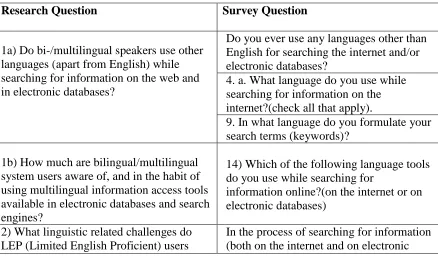
Table 1.2: Relationship between research questions & instruments………9
Chapter 3 Table 3.1: Research questions & corresponding survey questions………57
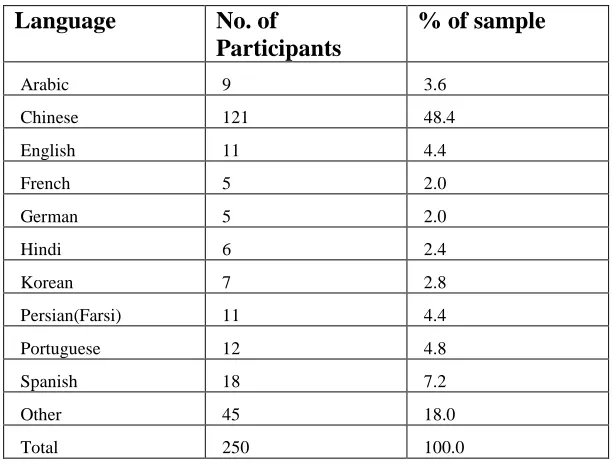
Table 3.2: Frequency distribution by native language………...61
Chapter 4 Table 4.1: MLIA tools: IR stages & functionality……….83
Table 4.2: Overall design of the experiment………..93
Tables 4.3a-d: Descriptive statistics of number of MLIA tools used and time spent per participant for each task………...108
Table 4.4: Cross-tabulation of MLIA tool use by language task was stated in………...112
Table 4.5: Cross-tabulation of MLIA tool use by search language……….113
Table 4.6: Reasons for preferring a search without MLIA tools……….120
Table 4.7: Reasons for preferring a search with MLIA tools………..121
Table 4.8: Reasons for having No Preference……….122
Table 4.9: Usefulness of MLIA Tools……….124
xii
List of Figures
Page
Chapter 3
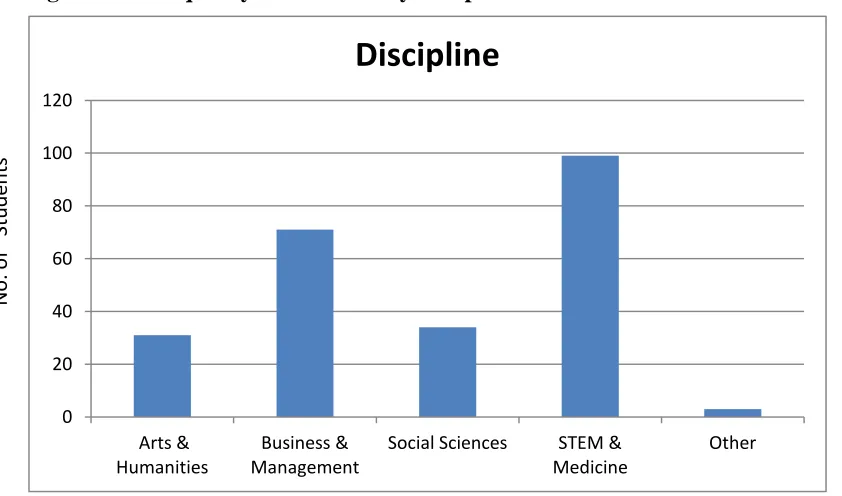
Figure 3.1: Frequency distribution by discipline………...60
Figure 3.2: Length of time with English as primary language of instruction………62
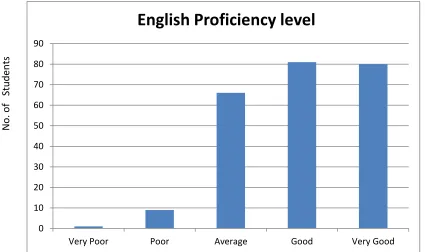
Figure 3.3: Frequency distribution on self-reported English proficiency………..63
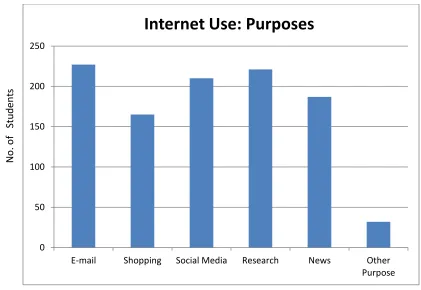
Figure 3.4: Internet use: Purposes………..65
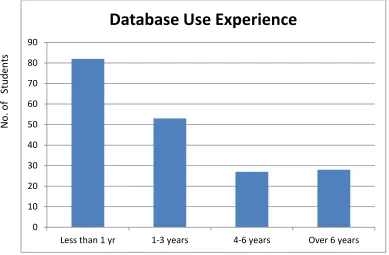
Figure 3.5: Database use experience………..66
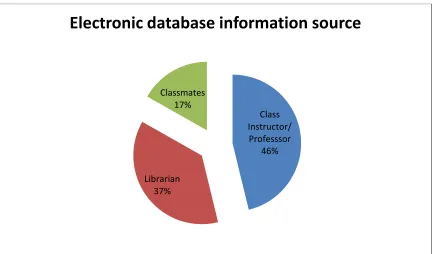
Figure 3.6: Electronic database information source ………...67
Figure 3.7: Linguistic help needed by bi/Multilingual students………...68
Figure 3.8: Library services desired by Bi/Multilingual students………..69
Chapter 4 Figure 4.1: Search Language Choice……….96
Figure 4.2: Use of MLIA tools….………....97
Figure 4.3: Use of MLIA Tools by type . ……….98
Figure 4.4a: CLIR search- Keywords entered in English and search limited to Spanish………100
Figure 4.4b: CLIR Search: Keywords in English with search limited to Chinese………101
Figure 4.5a. Laptop Search using non-English search Engine (Baidu)………...102
Figure 4.5b: MLIR search on Laptop: Keywords entered in Chinese in Google………103
xiii
Figure 4.6b. CLIR Search on Global Warming: Keywords entered in
English and search limited to Chinese………105
Figure 4.7a. MLIR Search on Wetlands: Keywords entered in French……….106
Figure 4.7b. MLIR Search on Wetlands: Keywords entered in German………107
Figure 4.8a: MLIA tool use on the smartphone task………...109
Figure 4.8b: MLIA tool use on the global warming task………110
Figure 4.8c: MLIA tool use on the laptop task………....110
Figure 4.8d: MLIA tool use on the wetlands task………111
Figure 4.9: Satisfaction scores by task……….116
Figure 4.10a. Satisfaction scores by type of task- shopping task vs. academic task…..116
Figure 4.10b: Satisfaction scores by language task was stated in – English vs. Native language……….117
Figure 4.11: MLIA Tools- Past & Future Use comparison……….118
Figure 4.12: IR Stages and when MLIA tools were needed most………..119
Figure 4.13: Preference for use/non-use of MLIA Tools………....120
Chapter 5 Figure 5.1a: Student profile summary (Discipline)………153
Figure 5.1b: Student profile summary (Gender)………153
xiv
List of Appendices
Appendix A: Web survey instruments……….212
Appendix B: Experiment instruments………..222
Appendix C: Focus group discussions & Interviews: Instruments………..238
xv
List of Abbreviations
ACRL- Association of Colleges & Research Libraries ALA- American Library Association
ALISE- Association for Library Science Education
ASIS&T- Association for Information Science & Technology CLA- Canadian Library Association
CLIR- Cross Language Information Retrieval
IFLA- International Federation of Library Associations IIR- Interactive Information Retrieval
IL-Information Literacy IR- Information Retrieval
ISB- Information Searching Behavior ISP- Information Search Process LEP- Limited English Proficient LWB- Librarians Without Borders MLIA- Multilingual Information Access MLIL- Multilingual Information Literacy MLIR- Multilingual Information Retrieval TAM- Technology Acceptance Model
1
CHAPTER ONE
1.0 Introduction
1.1 Background
Multilingualism and multiculturalism form an integral part of the dynamics that define today’s global information society. The European Commission, (2007) provides the
definition of multilingualism as: “the ability of societies, institutions, groups or individuals to engage on a regular basis with more than one language in their day to day lives.” (as cited in Cenoz, 2013, p.5). With regard to multilingualism in individuals, the definitions have
become more inclusive and less rigid. These definitions tend to emphasize use as opposed to proficiency: Li (2008) for instance, defines a multilingual individual as “anyone who can communicate in more than one language, be it active (through speaking and writing) or passive (through listening and reading)” (p. 4). In this dissertation, both of these definitions are adapted, and the phenomenon of multilingualism is considered in the context of
information access and specifically as it pertains to information retrieval and information searching in the online information environment. It is therefore used in reference to collections, information retrieval systems as well as library services to users.
2
ensuring access to this information. Some studies have indeed emphasized that supporting Multi-Lingual Information Access (MLIA) and Cross-Language Information Retrieval (CLIR) in digital libraries and on the internet is crucial to providing universal access to digital content (Oard, 1997; Borgman, 1997; Bian & Chen, 2000; Peters & Sheridan, 2001). However, just as Evans (2006), points out, end users who are involved in multilingual information processing will often require greater functionality and support from IR systems than their monolingual counterparts: they require among other things, the translation or summarization of the information that they cannot fully understand or adequately manipulate, and also require help with formulating queries, perhaps in a language in which they may not be fully proficient.
User -centered research such as the current study can be useful in informing the creation of new MLIR (Multilingual Information Retrieval) systems or in refining existing MLIR systems. Investigations in this area could focus on different areas including observing how bi/multilingual users search for and use information written in languages they are not proficient in while also examining the role of language and culture in facilitating or inhibiting access to information.
1.2 Problem statement
The current multilingual environment on the web and in digital libraries has brought with it many opportunities, but as well many challenges. As Chowdhury (2003), observes:
“…multilingual information retrieval has now become a major challenge in providing access to the prolific information on the web” (p.72). In scholarly publishing, particularly in the
3
would be called a Binsenweisheit in German, a trivially obvious insight.”(p.v). The
assumption has been that with the exponential growth of information on the web and
advancements in technology (e.g. increased and faster access to the internet, development of spanning languages such as XML(Extensible Markup Language), advances in Natural Language Processing etc.,) access and use of information has also been facilitated. However, this is not always the case, and the digital divide is still a reality for many in the world. For instance, even though all these technological advancements have been existent for some time, some studies have shown that some users are unaware of these advancements or they may lack the skills to fully utilize these technologies. These users therefore still need help in navigating this vast amount of information: for example, users may need help in formulating queries, determining the quality of the information they find on the internet, making
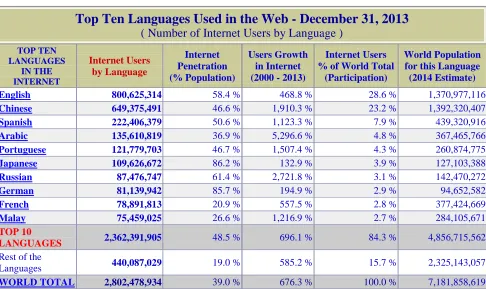
4 Table 1.1
Top Ten Languages Used in the Web - December 31, 2013
( Number of Internet Users by Language )
TOP TEN LANGUAGES IN THE INTERNET Internet Users by Language Internet Penetration (% Population) Users Growth in Internet (2000 - 2013)
Internet Users % of World Total
(Participation)
World Population for this Language (2014 Estimate)
English 800,625,314 58.4 % 468.8 % 28.6 % 1,370,977,116
Chinese 649,375,491 46.6 % 1,910.3 % 23.2 % 1,392,320,407
Spanish 222,406,379 50.6 % 1,123.3 % 7.9 % 439,320,916
Arabic 135,610,819 36.9 % 5,296.6 % 4.8 % 367,465,766
Portuguese 121,779,703 46.7 % 1,507.4 % 4.3 % 260,874,775
Japanese 109,626,672 86.2 % 132.9 % 3.9 % 127,103,388
Russian 87,476,747 61.4 % 2,721.8 % 3.1 % 142,470,272
German 81,139,942 85.7 % 194.9 % 2.9 % 94,652,582
French 78,891,813 20.9 % 557.5 % 2.8 % 377,424,669
Malay 75,459,025 26.6 % 1,216.9 % 2.7 % 284,105,671
TOP 10
LANGUAGES 2,362,391,905 48.5 % 696.1 % 84.3 % 4,856,715,562 Rest of the
Languages 440,087,029 19.0 % 585.2 % 15.7 % 2,325,143,057
WORLD TOTAL 2,802,478,934 39.0 % 676.3 % 100.0 % 7,181,858,619
NOTES: (1) Top Ten Languages Internet Stats were updated for December 31 2013. (2) Internet Penetration is the ratio between the sum of Internet users speaking a language and the total population estimate that speaks that specific
language. (3) Internet usage information courtesy of Nielsen Online,International Telecommunications Union,GfK, and other reliable sources. (4) World population information comes mainly from theU.S. Census Bureau.
Source: Internet World Stats
Many digital libraries are also acknowledging the importance of providing multilingual capabilities in order to serve a wider range of users, globally. For instance, the European Commission launched the i2010 Digital Libraries Initiative to enable access to
multilingual information in European national libraries (Gey et al., 2006). However, it is worth noting that there are still very few digital libraries that offer multilingual
5
multi-format Spanish- English digital library; The Perseus Digital library at Tufts
University that offers access in English, Latin and Greek and the International Children’s Digital Library (ICDL). Their investigation further revealed that these libraries do not support a cross language search. Some have debated the utility of Cross Language Information Retrieval (CLIR) by referring to it as ‘‘the problem of finding documents
that you cannot read”. To this argument, Oard, He and Wang (2008) countered aptly with the following response:
“The debate need not turn solely on whether you can read what you find. Rather,
the question to be answered is whether you can afford not to even know what exists in other languages. Perhaps that question could have been answered affirmatively in the past, but it seems unlikely that the 21st century will be as tolerant of such myopia.” (p.209).
6
the study documented in chapter 5 of this dissertation also offer the basis of a framework for LIS (Library & Information Science) professionals to teach academic users in a way that reflects actual behaviors and real- world situations.
Researcher’s Approach
This dissertation is written from an advocacy/ participatory world view in that it aims at raising awareness about the language barriers that some- especially limited English proficient users may encounter in the online information environment. To that end, it aims at advocating for more MLIA tools to be included on IR systems and for these to be seamlessly integrated so they’re easy to use. It also aims at lending a voice to some underserved student populations such as international students and raise awareness of some of the linguistic related challenges they may face while searching for information online. In line with the current emphasis on user-centered design/ participatory design / user-centered evaluation, the study also advocates for these in the context of IR system design and in the design and implementation of library services for this user group.
1.3 Scope of study
The aim of this study is to gain insight into the unique needs of potential or current MLIR system users and their information searching behavior, thus providing valuable
7
primary language of instruction and where the majority of the students are native English speakers.
1.3.1 Information searching and retrieval in the Canadian context
Canada, as a bilingual country with two official languages was uniquely suitable for this study. One main reason for this is the existence of bilingual corpora that make MLIR and machine translation easier and more efficient. The results of the study could therefore be very pertinent in the Canadian context and could be implemented for search options used on library websites for academic institutions as well on government websites and other international agencies that provide information on their websites in more than one language. A large Canadian academic institution such as the University of Western Ontario was also suitable for this study as bi/multilingual participants could be recruited amongst the international student population, bilingual Canadians, as well as from regional student organizations and language related clubs.
1.4 Research design
8
information searching actions and interactions in the multilingual information retrieval environment from the user perspective. Specifically, the studies sought to describe the user experience and identify the factors that influence the users’ searching behavior in multilingual environments where Multilingual Information Access (MLIA) tools are available. The research also sought to concretize the concept of MLIL (Multilingual Information Literacy) and identify the role that different stakeholders such as IR system designers and LIS professionals could play in enhancing and promoting multilingual information literacy.
1.4.1 Research questions
The current study sought to investigate the following questions in the case of bi/multilingual online information academic users in Canada.
1) What role do linguistic determinants (e.g. English language proficiency, search language choice, use of MLIA tools such as machine translation) play in information seeking on the web and on select electronic databases?
a) Do bi-/multilingual speakers use other languages (apart from English) while searching for information on the web and in electronic databases?
b)What are their language choices and considerations in their query formulation? 2) How much are bilingual/multilingual system users aware of, and in the habit of using multilingual information access tools available in electronic databases and search engines?
9
4) How well do current MLIR (Multilingual Information Retrieval) systems (e.g. search engines and electronic databases) meet the expectations and needs of bi/ multilingual academic users?
5) What are the perspectives of current academic librarians, and students regarding how to address the linguistic related challenges that bi/multilingual users face while searching for information online?
These research questions were addressed in the study as summarized below:
Table 1.2: Relationship between research questions & instruments
Research Questions Instrument
1) What role do linguistic determinants play in information seeking on the web and on select electronic databases?
Web survey
2) How much are bilingual/multilingual system users aware of, and in the habit of using multilingual information access tools available in electronic databases and search engines?
Web survey
3) How does the availability and use of multilingual information access tools affect the information searching behavior of bi/multilingual academic users?
Experiment
4) How well do current MLIR (Multilingual Information Retrieval) systems (e.g. search engines and electronic databases) meet the expectations and needs of bi/ multilingual academic users?
Experiment
5) What are the perspectives of current academic librarians, and students regarding how to address the linguistic related challenges that bi/multilingual users face while searching for information online?
Focus group discussions (students)
10
1.5 Significance of study
In seeking to gain a deeper understanding of the information seeking behavior of bi\multilingual academic users, the research presented in this dissertation contributes to three areas of research: 1) Design/ development of Multilingual Information Retrieval systems. 2) Theories/models of information seeking behavior and 3) Web usability and information services for bi/multilingual users. Moreover, in keeping with the current emphasis on user-centered design, the current study provides data that could inform system designers on how to cater to users with diverse linguistic backgrounds and language proficiencies. It also provides valuable information to LIS (Library and Information Science) professionals on how to design services-e.g. information literacy classes for this specific user- group- i.e. bi/multilinguals. Web designers for multinational companies and governments could also find the results of the study useful in providing information to support their localization and internationalization efforts.
Since the study used real users or potential users of MLIA tools, the study also
highlighted practical application domains where MLIR technologies can be employed,
thus helping motivate the need for further developments in MLIR while also providing an
opportunity to evaluate the effectiveness of already existing technologies. Another
practical implication of the study points towards adapting a user-centered model for
providing services for this user group e.g. models or curricula for teaching information
11
1.6 Limitations
The study used a purposive sample limited to non-native English speakers who are
bi/multilingual and currently matriculated at the University of Western Ontario (including
its affiliated colleges) and Fanshawe College. The participants were mainly drawn from
the international student and ESL student populations at these institutions because of the
assumption that they have knowledge of English and at least one additional language.
Proxy measures were used in determining the English language proficiency level of the
participants; the measures used were: attendance in ESL classes within the last two years,
number of years with English as language of instruction, and self- reported proficiency
levels. Potential response bias could also be present especially on the web survey and
post experiment questionnaire where self-reported data was used.
A within- subjects experiment design was used in the second phase of the study and it is
acknowledged here that some potentially intervening variables that could affect users
search experience and ultimately their satisfaction with the results they retrieve were not
controlled for. These included: language proficiency levels, search expertise, domain
knowledge, carry-over effects and availability of foreign language documents in the
databases used in the experiment. It was also difficult to control for the differences in
system performance due to the different language pairs used by the participants. This is
of particular relevance in this study as other research has shown that translation greatly
12
1.7References
Ammon U. (2001). The dominance of English as a language of science: effects on other languages and language communities. Berlin: Walter de Gruyter.
Berendt B. & Kralish, A. (2009). A user-centric approach to identifying best deployment strategies for language tools: the impact of content and access language on Web user behavior and attitudes. Journal Information Retrieval. 12(3).380-399.
Bian, G.-W. & Chen, H.-H. (2000), “Cross-language information access to multilingual collections on the internet”, Journal of the American Society for Information Science, 51 (3), 281-296.
Borgman, C.L. (1997), “Multi-media, multi-cultural, and multi-lingual digital libraries, or how do we exchange data in 400 languages?”, D-Lib Magazine, June, available at: www.dlib.org/dlib/june97/06borgman.html
Cenoz, J. (2013). Defining multilingualism. Annual Review of Applied Linguistics, 33, 3–18.
Chen J. & Bao Y (2009). Information access across languages on the web: From search engines to digital libraries. Proceedings of the American Society for Information Science and Technology, 46, (1)1-14.
Chowdhury, G. (2003). Natural Language Processing. Annual Review of Information Science and Technology (ARIST), 37, 51-89.
Gey, F. C., Kando, N., Chin-Yew L. & Peters, C. (2006). New directions in multilingual information access. SIGIR Forum, 40(2), 31-39.
Li, W. (2008). Research perspectives on bilingualism and multilingualism. In W. Li & M. Moyer (Eds.), The Blackwell handbook of research methods on bilingualism and multilingualism (pp. 3–17). Oxford, UK: Blackwell.
Oard, D. W., He, D., & Wang, J. (2008). User-assisted query translation for interactive cross-language information retrieval. Information Processing and Management, 44, 181-211.
Rao ,V.& Varma, V.(2009). User behavior in a multilingual information access task in Peters, C. et al. Evaluating Systems for Multilingual and Multimodal
13
CHAPTER TWO
2.0 Literature Review
2.1 Information searching behavior
In its broadest sense, information behavior addresses all aspects of human information interactions with various forms of information. Ithas been variously defined as the study of how people need, seek, give and use information in different contexts, including the workplace and everyday living (Pettigrew et al, 2001). This definition is consistent with Wilson who defines information behavior as: “The totality of human behavior in relation
to sources and channels of information, including both active and passive information seeking and information use.” (Wilson, 2000, p. 49). In cognitive approaches such as
those posited by Ingwersen and Jarvelin (2005), the individual or the user is the main driving force behind information behavior. A cognitive approach bears implications for a study such as this one since differences in individuals including languages used/ and level of proficiency in these languages, culture, information literacy, domain knowledge are all factors that affect the users search experience while using an Information Retrieval system.
Information searching behavior is a subset of information seeking and refers to people’s
14
different information seeking behaviors due to differences in culture, language and even learning styles. As Case, 2007 points out:
“Information seeking behavior often defies generalization and usually escapes
observation; it is difficult to generalize about a behavior that varies so much across people, situations and objects of interest and so much of it takes place inside a person’s head.” ( p. 15)
Nevertheless, human information searching behavior and navigation behavior
patterns have been studied from various points of view. A literature review reveals a range of approaches that have been used in classifying search behavior and its determinants with the most common being categorizing information searching behavior depending on the users’ visit objective (e.g. goal oriented vs. exploratory
15
To date, there exists a dearth of studies that have examined a user’s language or linguistic
background as a determining variable. Luna et. al (2002, 2003) explored the effects of language processing and cultural issues, their interaction and their impact on website evaluation. Their study found that certain factors such as design elements, content and the users’ cultural values may moderate a language’s effect on attitudinal variables such as
persuasion. Berendt and Kralisch, (2004) explored the impact of users’ linguistic backgrounds on their information searching behavior. Using a log file analysis of a website in the field of public health care on which the information was offered in four different languages, they focused on the users’ preferences in regard to use of search engines and alphabetically content –organized hyperlinks. Their study found that search experience and domain knowledge act as mediating factors in the case of users searching for information in their non-native language. For this group of users, search engines and alphabetically organized hyperlinks were their preferred methods for searching for
information while content organized links were the preferred methods for users searching in their native language. They further found that users who did not have sufficient
16
2.2 Interactive Information Retrieval
Interactive information retrieval (IIR) is an Information Retrieval (IR) model that accounts for the cognitive, interactive and situational aspects of IR. The concept underlying interaction has to do with the intersection of a person with an information system. This notion of interaction grew from an awareness that simply matching the user’s query with retrieved results fails to recognize the intersection of the human with
the system which could account for important variability in explaining the results
obtained. Consequently, many researchers have asserted that the users’ query formulation and the users’ interaction with the system becomes a defining characteristic of the
information search process (Belkin et al., 1980). Ingwersen’s cognitive model of IR
17
situational user process (Spink, 1997). Such a view of feedback becomes even more critical in MLIR environments where it is sometimes necessary for the user to modify translations.
Since context and searchers’ characteristics (e.g. language proficiency) form an integral
part of the search process in a multilingual information retrieval environment, Interactive Information Retrieval models were useful in informing the current study. Just like the user and their interactions with an information retrieval system is the focus of interactive IR, a user- oriented view has also been adopted in cross language research within
interactive Cross language Information Retrieval (CLIR). For purposes of this study, the definition of interactive CLIR given by Oard et al, (2008) was adopted, as it gives
emphasis on the user and their interaction with the system. They define interactive CLIR as: “A process in which searcher and system collaborate to find documents that satisfy
an information need regardless of the language in which those documents are written” (p.181).
2.3 Multilingual Information Access (MLIA)
2.3.1 Multilingual Information Access (MLIA): Definition of concepts
Multilingual information access and retrieval is a specific area of the academic domain of information access and retrieval whose main focus is the development of systems for finding and using information in multiple languages, both monolingually and across languages. The broader term Multilingual Information Access (MLIA) refers to
18
documents or both). The retrieval of information in a MLIR system may be monolingual or across languages. Examples of multilingual information access tools include
multilingual Interfaces for electronic databases and library websites, multilingual library guides, correct display of multiple fonts or characters, machine translation of retrieved documents, Cross Language Information Retrieval (CLIR) search options and
Multilingual Information Retrieval (MLIR). The focus of this study lies at the intersection on information seeking and information retrieval, with Cross Language Information Retrieval being one of the tools that are explored extensively. CLIR is a subfield or branch of Information Retrieval that is devoted to overcoming language boundaries. It refers specifically to systems that are used to query a multilingual collection in one language and retrieve documents in other languages or in another language. Peters, Braschler and Clough (2012) give specific support functionalities that could benefit users who lack proficiency in the language they are searching in, and summarize them as follows:
Query formulation support – Query translation (e.g., language selection, select/deselect translated terms, back translation of query terms)
Evaluation support (document selection and examination) - Provide summary of results (e.g., present results written in different languages, generate and translate document surrogates)
Query reformulation support -Edit query translation (e.g., query expansion and translation refinement)
19
In addition to the above, providing a multilingual interface to support these search functions is important. Savourel (2001) also suggests that a key area to consider for a multilingual user interface is Internationalization and Localization and provides
definitions of these: “Internationalization is the process of developing a product in such a
way that it works with data in different languages and can be adapted to various target markets without engineering changes, i.e., developing an architecture that is able to accommodate multiple languages; while Localization is the subsequent process of translating and adapting a product to a given market’s cultural conventions.” (p.35). Localization could thus involve customization of numeric, date and time formats,
currency usage, keyboard usage, symbols, icons and colors, legal requirements, rules for sorting and re-designing any references to culturally-specific ideas.
2.3.2 Applications of Cross Language Information Retrieval (CLIR)
Cross Language Information Retrieval (CLIR) has found many applications in information retrieval, these include:
- Recall-oriented retrieval: For instance, when searching for patent information, one would want to find all information regarding the invention in question regardless of what language it’s written in.
-Multimedia Information retrieval: Images, as a form of visual media, can be regarded as “language-independent” and therefore lend themselves easily for adopting CLIR in
20
-Digital libraries: Many libraries are providing digital access to their collections which may include information in multiple languages. Multilingual information access tools such as CLIR could be helpful in providing access to this information.
-Common markets (European Union, NAFTA, MercoSul): Information sharing and all other transactions could benefit from CLIR. The EU for instance, has shown a great interest in CLIR, funding several projects on the subject; the most important was perhaps EMIR (EMIR-Consortium 1994). EMIR was one of the first general CLIR systems to be implemented and evaluated.
-Multilingual countries: In countries that have more than one official language (e.g. Canada, Switzerland), official information is published in all languages, providing a very good source of corpora (e.g. Canadian parliament debates in French and English; Swiss newspapers in German, French and Italian). These corpora can be used effectively in statistical machine translation, and in turn be used to improve Cross language information retrieval.
-Multinational companies: Many large organizations and companies provide multilingual information on their websites but do not provide a cross language search- one has to search in one language at a time. In recognition of this need, some companies have invested in CLIR research: these include: Xerox (Renders 2003), IBM (Franz, 2002), Microsoft (Gao, 2000), and Google (Chen & Bao, 2009).
21
-Internet use: Research has shown that while English is still the most dominant language on the web (accounting for at least 56.37% in 2005); the majority of the users are non-native English speakers (Gey, et al, 2005; Berendt & Kralish, 2009). For non-non-native English speakers or web users with limited English proficiency, CLIR could indubitably prove very useful for Everyday Life Information Seeking (ELIS) (Salvolainen, 1999). Examples of end users who could potentially benefit from such efforts include:
- Health information: doctors, patients, and caregivers searching for medical or treatment information from other countries or in other languages;
- Tourism: vacationers or travelers looking for travel guides or local information while traveling abroad;
- Business information: investors interested in doing business in other countries or expanding their markets abroad;
- Immigration: new immigrants who have not yet developed proficiency in the languages spoken in their host countries.
-Education: Foreign language/translation students looking for comparative texts or online multilingual dictionaries; or international students studying in a foreign country.
User- centric studies such as this one could also help CLIR system designers and developers of digital-library software (e.g. Greenstone) in determining where best to concentrate their efforts and investments so as to build systems that are efficacious and user-friendly.
22
impact on information access could prove invaluable in providing recommendations for improving information sharing efforts.
2.3.3 User- centered studies in CLIR
Until recently, CLIR research has focused on laboratory experiments entailing physical system development, for example, development of translation techniques for query translation or content (document) translation using various methods: ontology, machine translation lexicons, bilingual dictionary and corpora (Oard, 1997). In order to bridge the gap between CLIR research and applications, an effort has to be made to understand who the real users or potential users of CLIR systems are. As Petrelli et al (2004) point out: “Little effort has been made to identify the users of CLIR systems and to fully understand how these users can make use of such systems.” (p.23). Based on a systematic review of
literature on multilingual digital libraries, Diekema,( 2012) also reported similar findings, i.e. that research in multilingual digital libraries was mostly system based involving experimental systems or system prototypes and very few studies explored the users or potential users of multilingual digital libraries. However, a number of user- centered studies in Multilingual Information Retrieval are documented in literature: For instance, Rieh and Rieh (2005) explored the behavior, perceptions and preferences of Korean bilingual academic web users at the Myongji University in Korea. Their study found that participants seldom used CLIR options or used multilingual tools available on the web; instead, they simply chose their search language depending on the type of search task rather than familiarity or knowledge of the language. They found that the participants preferred to use English for their research, but chose Korean for their personal
23
Petrelli et al (2006) who found that users of CLIR systems chose the most appropriate language for their task, not necessarily their native language. In their case study
observing and interviewing real users, Petrelli et al (2004) found that search behavior of subjects was influenced by the user goals and purposes for the search, language
24
Other studies that have focused on international students in North American universities who are non-native English speakers have found that language barriers and cultural differences often inhibit individuals’ access to and use of libraries and online information
(Curry & Copeman, 2005; Zhuo, 2007; Ferrer-Vinent, 2010). Liestman and Wu (1990) also made a strong case for translated materials as an efficient and successful tool for library orientation and instruction: their study reports the results of library orientation sessions for international students that were offered to one group in English and to
another control group in their native language, Chinese. Pre and post test results indicated only a modest increase in the scores for the group receiving library instruction in English while the group receiving library instruction in Chinese increased their post test scores significantly. In a study that surveyed international students at the University of Western Ontario in Ontario, Canada, Nzomo, Rubin and Ajiferuke (2012) found that English language proficiency was positively correlated with satisfaction of results from an online search. They also found a lack of awareness of multilingual information access tools among this user group.
2.3.4CLIR system user profiles
Several user-centered studies in CLIR have explored how the level of proficiency in a language affects the use of a CLIR system: Roehling (2007) mentions three types of users for whom a CLIR search is useful: for people who have a large passive vocabulary but a smaller active vocabulary (seldom used vocabulary) could benefit from CLIR in that even though they are able to read the documents they retrieve, they may not have the
25
system would allow them to enter their query in the language they’re most comfortable
with and retrieve the results for them. Secondly, multilingual speakers may want to issue one query to search a multilingual collection and retrieve relevant documents in all the languages that are supported by the system. In the third scenario, monolinguals who have translation resources available but want to save some costs may want to look at a
machine translated summary of a document to see if it’s relevant and worth translating.
Indeed, summaries of documents retrieved through a CLIR system would benefit even polyglots; as Hansen et al, (2002) observe: “assessing the worth of documents in a foreign language is more complex than in one’s first language”. In a study exploring
which users would benefit from CLIR in web retrieval, Airio (2007) reported similar findings , i.e. that users with good to moderate/ passive target language skills would benefit from query translation while those with poor target language skills could benefit from both query and document translation.
26
documents even without high proficiency levels in the target language. However, in their use of CLIR systems, search intermediaries often have to compensate for poor language skills by their searching expertise and a deep knowledge of the text collections they’re
searching. Amongst all the studies, there is consensus that users who lack proficiency in the language they are searching in could most certainly benefit from CLIR systems. As Gey et al, (2005) point out, users of CLIR systems are mostly looking for and retrieving information in languages in which they have little or no competence. The systems should therefore have capability of providing help in query formulation, in interpreting the results (including judging relevance), and in reading the documents they select
(translation of documents). It is from such findings that several CLIR /MLIR researchers have recognized the importance of user – system interaction and advocated for user-centered designing and as well for building initial models based on real user participation (Petrelli et al., 2008 & López-ostenero et al. 2008).
2.3.5 User participation in evaluation of MLIR systems
Evaluation is a key activity for IR research and for any research. As Gey et al. (2005), point out: “There is a duality between research and evaluation. Good research is validated
by evaluation and good evaluation environments stimulate further research” (p.417). The evaluation of information retrieval (IR) systems can be defined as the process of
assessing how well a system meets the information needs of its users: in general, there are two broad categories of evaluation, system evaluation and user-based evaluation. User-based evaluation measures the user’s satisfaction with the system, while system
27
needs of users, user-based evaluation would seem to be the ideal measurement of a system. However user-based evaluation is extremely expensive and difficult to carry out. Some reasons for this include:
- It requires a large, representative sample of actual users of the retrieval system
- Each of the systems to be compared must be equally well developed and complete
with an appropriate user interface; and each subject must be equally well trained on all systems; and
- Factors such as the learning effect must be controlled for. (Jones & Willet, 1997, p.168).
Previous IR evaluation has mainly focused on system-oriented evaluation, predominately through the use of standardized benchmarks or test collections in controlled laboratory experiments. In system- oriented evaluation, such as the Cranfield model, the objective was to keep all variables controlled and to obtain results, which would enable one to state conclusions about retrieval systems in general (Robertson, 1981). The limitations with this model lie with its restricted assumptions on the cognitive and behavioral features of the environment in which IIR systems function (Ellis, 1996). Thus, in recent years, IR laboratory researchers have increasingly shown an interest in research design tools and methodologies that address user-IR system interaction from a more contextual
28
cognitive and relevance revolution necessitate that realism be assured with reference to the formation of information need and relevance assessment processes while the interactive revolution regards the fact that IR systems have become more interactive. Thus, in contrast to the system- oriented approach, the cognitive–user centered approach offers a broader definition to the system, viewing seeking and retrieval processes as a whole. The main purpose of this type of evaluation is to determine how well the user, the retrieval mechanism and the database interact in extracting information, under real-life operational conditions. Robertson and Hancock-Beaulieu, (1992) summarize the difference between these two major approaches by stating:” The conflict between
laboratory and operational experiments is essentially a conflict between, on the one hand, control over experimental variables, observability, and repeatability, and on the other hand, realism’ (p.460).
Research in Interactive IR has also brought to the forefront the limitations of system-oriented evaluations, pointing out that since IR systems are mainly used in an interactive way, user-centered evaluations would be more helpful as they could be used to assess the overall success of a retrieval system as determined by the end users. The evaluation of IIR systems should therefore take into account the dynamic nature of information needs and relevance and reflect the interactive information seeking and retrieval processes. In essence, the user and their interactions with an information retrieval system is the focus of interactive IR. Borlund, (2003) proposes a framework for the evaluation ofinteractive IR systems and information searching behavior through an experimental setting which aims at measuring all the user’s activities of interaction with retrieval and feedback
29
considerations are paramount especially as users in this case are often trying to retrieve relevant documents in languages with which they are not well acquainted.
Despite the costly nature of user-based evaluations, there have been system evaluation studies where the system was evaluated by real users: Chung et al. (2004) evaluated a portal CLIR system by studying real users. The portal system named “CBizPort: Chinese Business Intelligence Portal” is a meta-search engine for business information of China,
Taiwan, and Hong Kong and they asked users to compare this system with other search engines from these three regions. They started to investigate problems in existing search engines which might not serve many non-English speaking Internet users. From the beginning of the experiment and the evaluation, they tried to focus on real users’ needs and difficulties. Their findings from the study’s participants’ comments indicated that
CBizPort performed better than regional Chinese search engines in terms of analysis functions, cross-regional searching capabilities, and user-friendliness, while regional Chinese search engines had more efficient and were more popular. (p. 818).
More recently, Petrelli et al, (2008) conducted a series of interactive CLIR experiments through the Clarity project. These experiments proved invaluable in that they provided the opportunity to test usability parameters such as efficiency, effectiveness and user satisfaction; As Petrelli et al point out- “the effectiveness of a CLIR system should not only be determined by its ability to retrieve relevant documents but also on how it supports the whole task of retrieving and use.”(p. 25). The experiments also suggested
30
control over the system. However, their experiments found that full control of the system was not “indispensable” and that most users only cared about the mechanisms of the
systems when things went wrong or when they got a result they had not anticipated. The user-centered evaluations brought to the forefront the discrepancies that often exist between real life evaluations (using real users) and laboratory experiments; and they concluded that though difficult to conduct; “in the field evaluations” involving real users
performing real tasks could help in arriving at a definitive understanding of CLIR users and their needs.
2.4 Theoretical Framework
The current research was informed by several models of information searching behavior,
with specific emphasis on user-centered approaches. This approach to information
seeking is concerned with the behavioral and cognitive aspects of information seekers. In
this approach, human information seeking has been described as a behavior that includes
questions, dialogue, and social and cognitive situations, associated with a user’s
interaction with an information retrieval system (Kuhlthau , Spink & Cool, 1992;
Kuhlthau, 1993). Kuhlthau’s model, referred to as the Information Search Process (ISP)
is interesting because it addresses affective aspects of the search process. She posits that:
“A model representing the user’s sense-making process of information seeking ought to
incorporate three realms of activity: physical, actual actions taken; affective, feelings
experienced; and cognitive, thoughts concerning both process and content.” (Kuhlthau,
1991, p.362). Her model is comprised of 6 stages: Initiation, Selection, Exploration,
Formulation, Collection and Presentation. She attaches to these stages the associated
31
Initiation phase of the process is said to be characterized by feelings of uncertainty, vague
and general thoughts about the problem area, and is associated with seeking background
information: the ‘appropriate task’ at this point is simply to ‘recognize’ a need for
information. The remaining appropriate tasks are: Identify, that is, fix the general topic of
the search; Investigate, or search for information on that general topic; Formulate, focus
on a more specific area within the topic; Collection, that is, gather relevant information
on the focus; and Complete, end the information search. She posits that the feelings of
uncertainty associated with the need to search for information often give rise to feelings
of doubt, confusion and frustration. However, as the search process continues and is
increasingly successful, those feelings change: as relevant material is collected the user’s
confidence increases and this is often associated with feelings of relief, satisfaction and a
sense of direction. Kuhlthau also identifies four criteria that might affect information seekers’ search processes to choose information: task, time, interest, and availability of
the information (1993a, p. 39). These are critical factors used to judge relevance when
information seekers conduct their information search. Kuhlthau empirically tested her
model through a series of longitudinal studies of high school students, and later showed
the applicability of the model to the work of a securities analyst. While I recognize that
there might be differences in the users she used for her studies and the user group in this
research, Kuhlthau’s research certainly holds relevance for the current study in that it lays
emphasis on the user and brings to the fore the need to assess user’s perceptions of the
availability of information, while also addressing the users’ feelings during the different
stages. In a multilingual search, especially when users are trying to access information in
32
dissatisfaction are not uncommon. Kulthau’s research was particularly relevant to the
phase involving the focus group discussions with participants, as they narrated the kinds
of emotions they have while searching for information in a language in which they may
not be proficient.
This research also drew moderately on Bates’ (1989) Berry picking technique theory for
online information-seeking. Bates (1989) search model was created to reflect the real
behavior of information searchers. While the traditional IR model simply matches the
query with documents, Bates’ model differs from it in four areas: (1) Nature of the query,
(2) Nature of the overall search process,(3) Range of search techniques used, and (4)
Information "domain" or territory where the search is conducted. Bates’ model aligns well
with the idea of interactive IR and the feedback process between the searcher and the
system: As she explains, the formation of a query in real life may start from one topic, but
new ideas may be generated during the search process. Moreover, users may obtain more
useful ideas during the search process, multiplying the number of retrieval tasks involved
in this search process. Bates (1989) wrote that “the query is satisfied not by a single final
retrieved set, but by a series of selections of individual references and bits of information
at each stage of the ever-modifying search. A bit-at-a-time retrieval of this sort is here
called berrypicking.”(p. 410). This idea of the “evolving search” seems to lend itself aptly
to the multilingual information searching environment as users may want to modify
translations, even language choices as their search progresses. Recommendations based on
her model have been used to improve search techniques and interface design and would in
no doubt be applicable to this study. In sum, Bates’ theory offered important insights
33
inform IR system designers; most of these recognize and advocate paying attention to
users’ information behavior and designing systems accordingly.
The dissertation was also informed by ideas espoused in Saracevic’s stratified model of
an IR interaction (Saracevic (1996, 1997). This model proposes that there is a sequence
of processes (interactions) occurring in several connected levels or strata between user
and system through an interface as a surface. “The levels or strata represent each different
element, such as query (characteristics), cognitive (knowledge, structure…), affective
(intent…) and situational (tasks...) on the user side; and, engineering (hardware,
capacities), processing (software, algorithms…), and content (information resources,
representations…) on the system side. “ Saracevic (1996) further posits that as the
information is processed, it continues to be modified by variables such as feedback from
the system and the user, and therefore functions at various levels or strata as does the
system and this interaction then leads to even more interaction. There is an emphasis on
the complexity of the IR interaction, with the user and the system often needing to adapt.
The current study considered part of this model in assessing how queries are modified as
the search progresses. Additionally, the model informed the analysis in regard to the roles
of the user vs the role of the system: the strata on the user side such as language of
proficiency and type of task were considered while on the system side the study
considered what type of MLIA tools are needed and at what stages in the information
retrieval process. Furthermore, in a multilingual search where users often rely on machine
translation it was worth exploring how the interactive feedback between user and system
34
Ingwersen and Järvelin’s (2005) model of cognitive information retrieval was certainly
applicable to the current study and was used as one of the theoretical frameworks to
undergird the research. In their work, they highlight the disconnection between
system-oriented information retrieval and cognitive and user-system-oriented information retrieval, and
propose an integrated information seeking and research framework. In their framework,
interaction and perception are the central processes of information seeking behavior and
interactive information retrieval. They discuss the complexity of information retrieval
processes by bringing information seekers’ situations, work and search task, task
complexity, knowledge types, cognitive styles and interactions into their framework. In
the cognitive approach, both the information searching and information retrieval
processes are regarded as processes of cognition.This is mainly because adopting a
cognitive view helps to model and interpret other conceptions that are central to
information searching and retrieval such as the concepts of work tasks, evaluation,
relevance, and information acquisition and use. In this study, these are all concepts that
are explored as they relate to the user’s characteristics and their context. For instance, the
researcher explored the context defining bi/multilingual users’ information searching
behavior. Specific aspects that were investigated include: how they make language
choices and what challenges they consequently face as a result of these choices: e.g. how
they formulate their queries, how they make relevance judgments especially when using a
language they may not be very proficient in, their understanding of bibliographic
information, and how they select and ultimately use information that is not in their native
language. In summary, the main idea of Ingwersen and Järvelin’s framework - “how
35
algorithmic information processing in system components through IR interaction” (p.
275) certainly aligns well with one of the objectives of this study- which is to provide
empirical evidence to support recommendations for the effective user-centered design of MLIR systems.
The Information Foraging Theory as posited by Pirolli and Card (1995, 1999) was also
considered in seeking to explain the information searching behavior of bi/multilingual
users. This theory provides a theoretical foundation of the link between cognitive burden
(i.e. effort) and behavioral reactions (Pirolli & Card, 1995, 1999). Their model aims to
explain user strategies for seeking, gathering and consuming information on the Web
based on the effort involved. Thus, the human information forager uses what Pirolli and
Card call “the proximal perception of information scent” to assess profitability of an
information source in relation to other potential sources (Pirolli & Card, 1999). In regard
to the online information seeking environment, the theory posits that users continue to
follow links as long as the information gained from following the link is not exceeded by
the costs of accessing it, where costs are determined by time and cognitive effort. Many
websites that appear to have multilingual interfaces at the outset sometimes end up being
monolingual as one follows the links. Berendt and Kralisch, (2005) investigated how data
distribution across languages on the web affects how web users access information and
applied the concept of linguistically determined foraging to the use of search options and
link-following behavior. Their study found that language-based cognitive burden was a
determinant of web-site access and consequently, it does influence information seeking.
In the current study, link-following behavior was analyzed in the context of search
36
the keyword strategy, it could not be ascertained how language impacts link following
behavior. The tasks also turned out to be easy enough such that the captures could not
allow for aspects such as failed searches, or abandoned searches to be analyzed.
Longitudinal studies, log analyses or studies that do not utilize assigned tasks might yield
better and more data to aid in analyzing this aspect.
Explanatory models of information searching behavior were also relevant to this study.
Even though the study did not test either one of these models, the Technology
Acceptance Model (TAM) and Personalized Multilingual Information Retrieval (PMLIR)
informed the researcher’s process in analyzing the data from the second phase of the
study which involved a user-experiment. This was mainly to find out their suitability in
representing the information searching behavior of bi/multilingual users. The TAM
model was considered in trying to find out users’ acceptance of MLIA tools while the
PMLIR was considered in light of the diversity that was apparent in the users’
characteristics and in the way they used MLIA tools. The Technology Acceptance Model (TAM) (Davis, 1989) posits that intention to use an information system is predicted by its perceived ease of use and perceived usefulness. In the overall evaluation of the MLIA tools, perceived ease of use and perceived usefulness were factors that were considered in
the current study, mainly in the users’ responses on the post experiment questionnaire.
PMLIR models such as those proposed by Ghorab, Zhou, Steichen and Wade (2011)
would be of particular interest in this study as they take into consideration personal
characteristics of the user and especially those that pertain to language. In the case of the
current study characteristics such as language proficiency, domain knowledge, interests