A CFD BASED HEAT TRANSFER AND FLUID FLOW
ANALYSIS OF SOLAR AIR HEATER PROVIDED
WITH COMBINATION OF CIRCULAR AND SQUARE
SECTION TRANSVERSE RIB ROUGHNESS ON THE
ABSORBER PLATE
Ajeet Singh Kushawaha
1, Ravi Vishwakarma
21
Research Scholar,
2Professor, Shri Institute of Science &Technology, RGPV Bhopal, MP, (India)
ABSTRACT
The study of heat transfer and fluid flow processes in an artificially roughened solar air heater by using
computational fluid dynamics (CFD). The effects of small diameter of circular and square transverse wire rib
roughness on heat transfer and fluid flow have been investigated. The Reynolds number, relative roughness
pitches (P/e) and relative roughness height (e/D) are chosen as design variables. A 3-D CFD simulation is
performed using the ANSYS FLUENT 14.5 code. The Renormalization-group (RNG) k-ε model is selected as
the most appropriate one. Results are validated by comparing with available experimental results. It is
apparent that the turbulence created by small diameter of transverse wire ribs result in greater increase in heat
transfer over the duct. However, the use of artificial roughness results in higher friction losses. The present
CFD investigation clearly demonstrates that the average Nusselt number and average friction factor increase
with increase in the relative roughness height. The condition for optimum performance has been determined in
term of thermal enhancement factor1.39. A maximum value of heat transfer coefficient has been found to be
31.6467 for the range of parameters investigated.
Keyword: Solar Air Heater, Reynolds’s number, Heat Transfer Rate, Thermal Enhancement
Factor, CFD.
I. INTRODUCTION
enhancement technology has been improved and widely used in heat exchanger application; such as refrigeration, automotives, process industry, chemical industry, etc. One of the widely-used heat transfer enhancement technique is inserting different shaped elements with different geometries in channel flow.
1.1
Renewable Energy Scenario in India
India is blessed with an abundance of sunlight, water and biomass. Vigorous efforts during the past two decades are now bearing fruit as people in all works of life are more aware of the benefits of renewable energy, especially decentralized energy where required in villages and in urban or semi-urban centers. India has the world’s largest programmed for renewable energy. Government created the Department of Non-conventional Energy Sources (DNES) in 1982.
Energy is defined as the ability or the capacity to do work. Energy is the basic ingredient to sustain life and development. Work means moving or lifting something, warming or lighting something. There are many sources of energy that help to run the various machines invented by man. There has been an enormous increase in the demand for energy since the middle of the last century as a result of industrial development and population growth. World population grew 3.2 times between 1850 and 1970, per capita use of industrial energy increased about twenty fold, and total world use of industrial and traditional energy forms combined increased more than twelve fold.
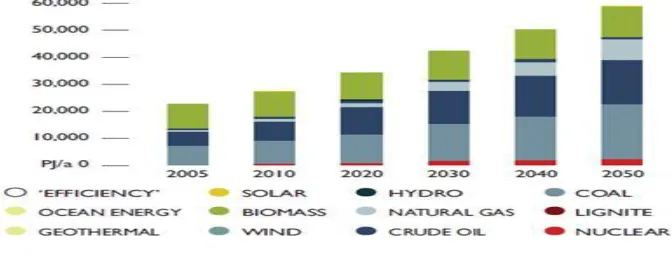
Figure 1: Energy Consumption in India
1.2 Solar Thermal Energy
Solar Thermal energy is heat energy obtained by exposing a collecting device to the rays of the sun. A solar
thermal energy system makes use of the warmth absorbed by the collector to heat water or another working fluid
or to make steam.
Advantages:
1. Solar Thermal Energy makes use of renewable natural resources which is readily available in most parts of
the world.
Disadvantages:
1. Solar Thermal Energy system is not cost-effective in areas which have long periods of cloudy weather or
short daylights.
2. In cooler climates freezing can damages collecting system components.
The components of solar air heater are:-
(i) Transparent glass cover.
(ii) Absorber plate or heated wall.
(iii) Insulation bottom.
Figure 2: Concept of Solar Air Heater
II. EXPERIMENTAL SETUP
III. PROBLEM FORMULATION ANALYSIS
To make solar air heater more efficient there is in need of increase in heat transfer capability in SAH duct which
can be done by creating turbulence in a duct by introducing artificial roughness geometry in it. Basically
artificially roughened absorber plate breaks the laminar sub-layer in order to reduce thermal resistance and
increase heat transfer coefficient. Artificially roughness geometry on underside of an absorber surface is an
effective technique to enhance heat transfer and fluid flowing in a rectangular duct of SAH. The application of
artificial roughness geometry (in different shapes) has been recommended to enhance the heat transfer
coefficient by several investigators. Till date many researchers have used various artificial roughness geometry
plates in SAH duct to enhance its performance. Various roughness plate used are Transverse wedge shaped rib,
metal grit ribs, dimple ribs, inclined with gap ribs, multi v-shaped ribs, arc shaped ribs, protruded roughness
geometry, W-shaped ribs , circular ,square ribs etc.
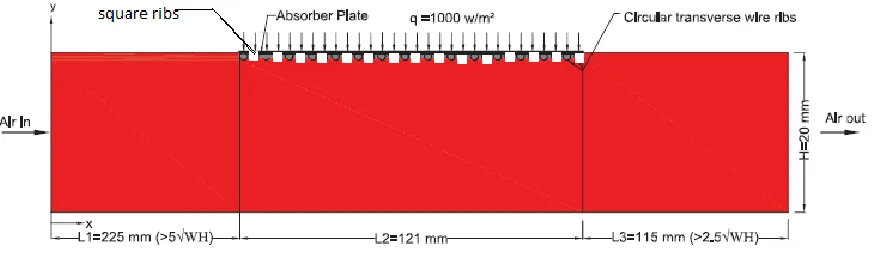
Figure 4: Computational Domain for Solar Air Heater
IV. METHODOLOGY
Computational fluid dynamics (CFD) is a computer‐based simulation method for analyzing fluid flow, heat
transfer, and related phenomena such as chemical reactions.
This project uses CFD for analysis of flow and heat transfer. Some examples of application areas are:
aerodynamic lift and drag (i.e. airplanes or windmill wings), power plant combustion, chemical processes,
heating/ventilation, and even biomedical engineering (simulating blood flow through arteries and veins).
CFD analyses carried out in the various industries are used in R&D and manufacture of aircraft, combustion
engines, as well as many other industrial products.
It can be advantageous to use CFD over traditional experimental‐based analyses, since experiments have a cost
directly proportional to the number of configurations desired for testing, unlike with CFD, where large amounts
of results can be produced at practically no added expense. In this way, parametric studies to optimize
Figure 5: Over view on the COUPLED Solution method
V.RESULT AND DISCUSSION
This chapter presents the predicted airflow velocity, pressure and temperature profiles during Forced-air flow
over rib geometry in the duct which were consider in this research work. The CFD analysis has been performed
for combination of circular and square ribs on absorber plat of SAH and result has been compared with the case
of smooth duct operating under the same Conditions to evaluate the enhancement in heat transfer.
Fig.7 Plate-Square-Circular-p10-e-0.5-re-5000-Tempreture
Fig.8 Plate-Square-Circular-p10-e-0.5-re-5000-Velocity
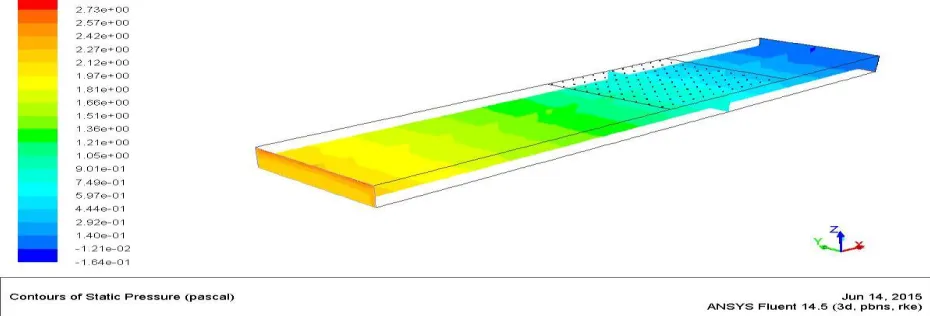
Fig.10 Plate-sq-circ-p10-e-0.5-re-8000-Pressure
VI. CONCLUSION
A 3-dimensional CFD analysis has been carried out to study heat transfer and fluid flow behavior in a
rectangular duct of a solar air heater with one roughened wall having combination of circular
And square transverse wire rib roughness. The effect of Reynolds number, roughness height, roughness pitch,
relative roughness pitch and relative roughness height on the heat transfer coefficient and friction factor have
been studied. In order to validate the present numerical model, results have been compared with available
experimental results under similar flow conditions. CFD Investigation has been carried out in medium Reynolds
number flow (Re ¼3800e18, 000). The following conclusions are drawn from present analysis:
1. The Renormalization-group (RNG) k-ε turbulence model predicted very close results to the experimental
results, which yields confidence in the predictions done by CFD analysis in the present study. RNG k-ε
turbulence model has been validated for smooth duct and grid independence test has also been conducted to
check the variation with increasing number of cells.
2. Average Nusselt number increases with an increase of Reynolds number. The maximum value of average
Nusselt number is found to be 43.577 for relative roughness pitch of 5 and for relative roughness height of 0.06
at a higher Reynolds number, 10,000.
3. Average friction factor decreases with an increase of Reynolds number. The maximum value of average
friction factor is found to be 1.698 for relative roughness pitch of 5 and relative roughness height of 0.06 at a
lower Reynolds number, 5000.
4. It is found that the circular and square transverse wire rib roughness with P/e ¼ 5 and e/D ¼ 0.06 provides
better thermal enhancement factor for the studied range of Reynolds number and hence can be employed for
REFERENCE
[1]. Yadav A.S, Bhagoria J.L, A CFD based heat transfer and fluid flow analysis of a solar air heater
provided with circular transverse wire rib roughness on the absorber plate, Energy 55 (2013) 1127–1142
[2]. Yadav A.S, Bhagoria J.L, Modeling and simulation of turbulent flows through a solar air heater having
square sectioned transverse rib roughness on the absorber plate, Sci. World J. 2013 (2013).
[3]. Lanjewar A, Bhagoria J.L, Sarvaiya R.M “Augmentation of heat transfer coefficient by using 900 broken
transverse ribs on absorber plate of solar air heater”. Renewable Energy 36 (2011) 4531–4541. (2005).
[4]. Prasad K and Saini J.S, A experimental investigation in transverse ribs on the absorber plate by assuming
that the total shear force, Heat and mass transfer 40 976-993 (1997).
[5]. Karwa R, Solanki S.C, Saini S.C, Thermo-hydraulic performance of solar air heaters having integral
chamfered rib roughness on absorber plates 26 (2001) 161–176 (2001)
[6]. Bhagoriya J.L, Lanjewar A, Heat transfer coefficient and friction factor correlations for rectangular solar air heater duct having transverse wedge shaped rib roughness on the absorber plate, Renewable Energy 25
(2002) 341– 369.
[7]. Prasad K, Mullick S.C, Heat transfer characteristics of a solar air heater used for drying purposes, Appl.
Energy 13 (2) (1983) 83–93.
[8]. Saini R.P, Verma J, An experimental setup on the fluid flow and heat transfer of solar air heater duct
having dimple –shaped artificial roughness, Energy 33 (2008) 1277–1287.
[9]. Verma S.K, Prasad B.N, Investigation for the optimal thermo-hydraulic performance of artificially
roughened solar air heaters, Renewable Energy 20 (2000) 19–36.
[10].Bopche S.B, Tandale M.S, Experimental investigations on heat transfer and frictional characteristics of a
turbulator roughened solar air heater duct, Int. J. Heat Mass Transfer 52 (2009) 2834–2848.
[11].Gupta D, Investigations on fluid flow and heat transfer in solar air heaters with roughened absorbers,