Geothermal energy
A. Manzella
Institute of Geosciences and Earth Resources - Pisa, Italy
Summary.— Geothermal technologies use renewable energy resources to generate electricity and direct use of heat while producing very low levels of greenhouse-gas (GHG) emissions. Geothermal energy is the thermal energy stored in the underground, including any contained fluid, which is available for extraction and conversion into energy products. Electricity generation, which nowadays produces 73.7 TWh (12.7 GW of capacity) worldwide, usually requires geothermal resources temperatures of over 100◦C. For heating, geothermal resources spanning a wider range of temperatures can be used in applications such as space and district heating (and cooling, with proper technology), spa and swimming pool heating, greenhouse and soil heating, aquaculture pond heating, industrial process heating and snow melting. Produced geothermal heat in the world accounts to 164.6 TWh, with a capacity of 70.9 GW. Geothermal technology, which has focused for decades on ex-tracting naturally heated steam or hot water from natural hydrothermal reservoirs, is developing to more advanced techniques to exploit the heat also where under-ground fluids are scarce and to use the Earth as a potential energy battery, by storing heat. The success of the research will enable energy recovery and utilization from a much larger fraction of the accessible thermal energy in the Earth’s crust.
1. – Introduction
flow from the continental crust is 57 mW/m and from the oceanic crust is 99 mW/m [1]. Our planet is a dynamic system, with its inner changes, mostly slow from the perspective of human time, but producing very quick changes close to the surface. These are not only earthquakes and volcanic eruptions, very well-known to humans. The interaction of inner, geological processes with the physical processes just above the ground surface originates the complex system characterizing the geothermal systems. The hottest areas of the Earth’s surface are near tectonic plate boundaries, which are often associated also to volcanoes and seismic activity and where hot magmatic bodies are present within or close to our reference 10 km depth. The heat flow at the Earth’s surface therefore derives from the radiogenic decay within the upper crust, the heat generated in the most recent magmatic episode, and the heat coming from the mantle and inner Earth’s structures. In continental crust, where the isotope heating is larger since granitic rocks rich of long-living radioactive isotopes are common, the heat flow is highest in areas having experienced “recent” (less than 65 million year) magmatic activity, whereas it decreases to 46 mW/m2 in crust older than 800 million years [1]. In oceanic crust the concentration of radiogenic heating is negligible due to the rock composition (basaltic), but the crust thickness is smaller than in continents and the heat flow largely derives from heat flowing from the mantle. Most plate boundaries are below sea level and the young oceanic crust has very high heat flow values. Geothermal exploitation is focused so far to continental areas, where energy is requested.
To extract energy from the underground we mostly use the water as carrier of heat. As the crust is highly fractured and thus permeable to fluids, surface water, essentially rainwater, penetrates at depth and exchanges heat with the rocks. Two main forms of heat transfer occur within the crust: conduction and convection. Where rocks are very fractured and circulating fluids are abundant, the resulting convective heat transfer is very efficient and can be easily exploited by drilling wells and discharge the hot fluids to the surface. In these convective systems, named hydrothermal resources, the aquifers represent the geothermal reservoir. Occasionally, in areas of very high heat flow, the fluid has high temperature (up to above 300◦C) and, depending on the pressure, can be vapor (steam) or water.
Geothermal technologies described in the following sections, while producing very low levels of greenhouse-gas (GHG) emissions, have an important role to play in real-izing targets in energy security, economic development and mitigating climate change. Geothermal resources, as opposed to hydrocarbon ones, are generallyrenewablesince the circulation of heat and fluid is continuous. There is a constant terrestrial heat flow to the surface, then to the atmosphere from the immense heat stored within the Earth, and fluid enters the reservoir from the recharge zones or injected in the subsurface through injec-tion wells (in industrial plants). Heat can be extracted at different rates. To guarantee a sustainableuse of geothermal energy, the rate of consumption should not exceed the rate of generation, so that the heat removed from the resource is replaced on a similar time scale. Geothermal plants typically develop below a certain level of energy production.
Geothermal typically provides base-load generation, since it is generally immune from weather and seasonal variation, therefore producing almost constantly and distinguishing it from several other renewable technologies that produce variable power or heat with time.
2. – Utilization of geothermal heat
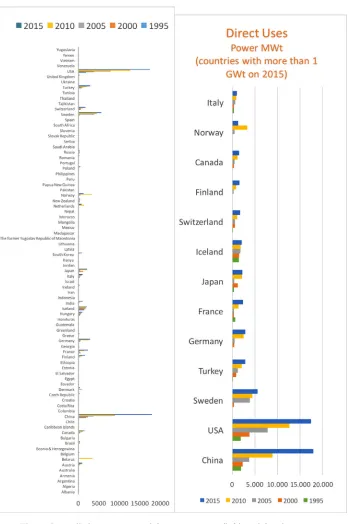
In direct use geothermal energy is employed directly as heat without further conversion into other types of energy. On 2015 at the World Geothermal Congress 83 countries were reported to use geothermal heat for direct uses. The overall capacity of 70.3 GW was installed on 2015 and produced in total 58.7 EJ of thermal energy [2] (fig. 1).
Direct use of geothermal heat and water dates back thousands of years and it continues today. The Romans, Chinese, and Native Americans left clear proofs that they used geothermal water for bathing, cooking and for therapeutic purposes. Where accessible, natural hot waters have been used for space heating in cold areas and seasons. Today geothermal water is used for many different applications depending on the temperature of the water, including electricity generation, which is the most important form of utilization of high-temperature geothermal resources (>120◦C). Known uses of geothermal heat range from fish farming and soil heating at low temperatures, through space heating and drying at intermediate temperatures, to industrial processing at high temperatures (they have a wide temperature range).
absorption machines and heat pumps, which are readily available on the market and efficiently able to heat and cool the fluids, geothermal applications are becoming more and more flexible.
Geothermal heat pump systems for the moment are a reference market mostly ded-icated to space heating and cooling, and exploits groundwater or groundcoupled tem-peratures at shallow depth (10–200 m depth). Since they do not require any particular thermal anomaly, geothermal heat pumps represent a geothermal heat production tech-nology which is suitable even for regions with altogether ordinary geothermal conditions. Thanks to them, nowadays direct use of geothermal heat can be done anywhere in the world, and many countries which are not specially known for geothermal resources have been ranking high in geothermal direct utilization due to the use of geothermal heat pumps. Since this technology has a large potential of expanding its application and may be combined with other geothermal technologies, we describe it in some detail.
2.1.Geothermal heat pump technology. – To heat or cool a space we need to transfer heat. To this aim, we may use the thermal energy stored in the ground at shallow depth, usually 50–100 m to a maximum of 250 m. Below a depth of a few meters the temperature is not affected by the seasonal change of air temperature and is essentially constant and equal to the mean annual air temperature. The thermal energy of the ground can be exploited by using heat pumps, which convert the low-temperature geothermal energy to thermal energy at a higher temperature exploiting the physical property of fluids to absorb and release heat when they vaporize or condense, respectively. They work like a refrigerator, moving heat from a space (to keep it cool) and discharging heat at higher temperature. They are made of a closed circuit where a refrigerant fluid is circulated, usually water or other kind of fluids not dangerous for the environment. Depending on temperature and pressure condition the refrigerant fluid is in the liquid or vapor state, and is compressed or expanded by using an external energy, usually electric, to move the heat. Common air conditioning systems work this way and exchange heat with the external air.
In the Ground Source Heat Pumps (GSHP) the refrigerant fluid exchange heat with the ground, taking advantage of the fact that the ground has a stable temperature throughout the year. In winter, when the external air is cold, the ground has a higher temperature and the heat exchange is more efficient. With proper technology the process may be reversed, and the heat pump may also work as a refrigerator in summer, using the cool temperature of the ground to chill the space. The main component added is the underground heat exchanger, through which the heat is absorbed or released to the ground.
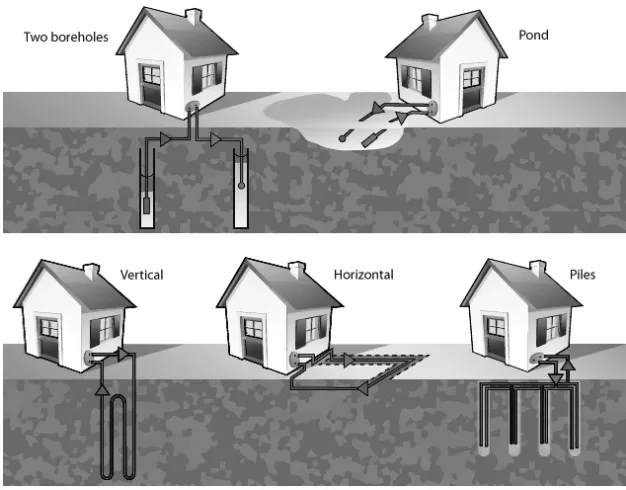
Fig. 2. – Open (top) and closed (bottom) loop GSHP systems.
Theopen loop systems are made of a heat exchanger (in the building to be heated/ cooled), an abstraction well, an injection well (fig. 3). In some cases the abstracted water is not re-injected in the ground but released at the surface (in sewage systems, for example), thus avoiding the cost of a second borehole. This practice is recommended only when there is no risk of reducing the groundwater in the aquifer, and should be done with the proper care for avoiding environmental impact. Re-injection of abstracted water is also regulated by local laws, which defines limitations of use.
The amount of water to abstract, the rate of abstraction and the distance between the two wells must be properly planned. They depend on the heat demand and on the thermal and hydraulic properties of the ground. Accurate planning avoids to cool (or heat in summer) the ground at a higher rate than natural equilibrium allows, therefore guaranteeing the sustainability of the systems and the thermal balance in the aquifer. The balance is enhanced when the system works in reverse mode,i.e.heating in winter (chilling the ground) and cooling in summer (heating the ground). Abstraction and injection wells should be far enough to avoid thermal short circuiting between the two during the installation’s life time, commonly 20–30 years.
Fig. 3. – Open loop GSHP system in detail: a) heat exchanger; b) abstraction well; c) injection well.
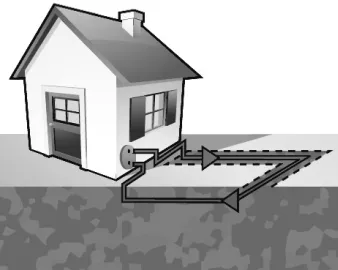
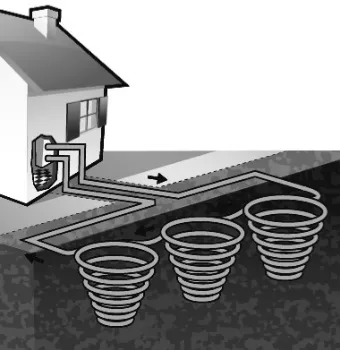
Theclosed loop or Ground Coupled Heat Pump(GCHP) systems are made of closed loop tubing that can be installed horizontally as a loop field in trenches, vertically in wells or as baskets (figs. 4, 5 and 6). The loop is typically made of high-density polyethylene pipe and contains a mixture of water and anti-freeze. The size of the loop field depends on the soil type and moisture content, the average ground temperature and the heat loss or gain characteristics of the building being conditioned. Horizontal loops can be used wherever there is sufficient surface area available for their installation, and are more rarely installed for space heating and cooling of buildings than vertical borehole heat
Fig. 5. – Closed loop GSHP, vertical system.
exchangers. Vertical exchanger commonly consist of one or several U-pipes or coaxial pipes, more frequently used for deeper boreholes. Bore-holes are spaced at least 5–6 m apart and the depth depends on ground and building characteristics. For example, a house needing 10 kW of heating capacity might need three boreholes 80–110 m deep in sedimentary rocks. Heat exchanger pipe systems can be integrated directly into the concrete foundations of buildings and other constructions for heating and cooling and are called heat piles. If properly designed and integrated into a combined heating and cooling system right from the beginning, these systems can be a useful part of modern low-energy, low CO2-emission buildings and constructions.
The net thermal efficiency of a heat pump should take into account the efficiency of electricity generation and transmission, typically about 30%. Since a heat pump moves 3 to 5 times more heat energy than the electric energy it consumes, the total energy output is much greater than the electrical input. This results in net thermal efficiencies greater than 300% as compared to radiant electric heat being 100% efficient. Traditional combustion furnaces and electric heaters can never exceed 100% efficiency.
Geothermal heat pumps can reduce energy consumption —and corresponding air pollution emissions— up to 44% compared to air source heat pumps and up to 72% compared to electric resistance heating with standard air-conditioning equipment. The performance of heat pumps is usually expressed as Coefficient of Performance (COP), which is the ratio of heating output or heat removal to electricity input. Cooling per-formance is typically expressed as the Energy Efficiency Ratio (EER) while heating and cooling performance of reversal heat pumps is typically expressed as the Seasonal Per-formance Factor (SPF), the mean of COP and EER.
Performance is influenced by all components of the installed system, including the soil conditions, the ground-coupled heat exchanger, the heat pump appliance, and the build-ing distribution, but is largely determined by the difference between the input (ground) temperature and the output (room) temperature. GSHP on the market today have standard COP ranging from 2.4 to 5.0 and EER ranging from 10.6 to 30 [3].
Geothermal heat pump technology is used for space heating and cooling of single building, small and large, and in district heating systems. Ground source heat pumps are characterized by high capital costs and low operational costs compared to other conventional heating source. Since the overall economic benefit depends primarily on the relative costs of electricity and fuels, which are highly variable over time and across the world, a constant and overall estimate is not possible. Based on recent prices, ground source heat pumps have lower operational costs than any other conventional heating source except natural gas and almost everywhere in the world, excluding a handful of countries where natural gas is exceptionally cheap, or where electricity is exceptionally expensive. Capital costs, which may amount to 10–15 thousands of US$ for a single home system, are known to benefit from economies of scale so they are more cost-effective for larger commercial buildings and harsher climates. The cost of installation, which can be two to five times that of a conventional heating system in most residential applications, is affected by the size of living area, the home’s age, insulation characteristics, the geology of the area, and location of the property. Although ground source heat pumps are recognized as one of the most efficient heating and cooling systems on the market, they are known and advertised only in some countries, and seldom benefit from tariffs and incentives helping to sustain the capital cost and based on metered readings on an annual basis for 1 or 2 decades.
Fig. 7. – Sketch of Borehole Thermal Energy Storage, BTES, in the cooling phase of summer (left) and the heating phase of winter (right).
or waste heat from industrial processes, for example. UTES can be closed (Borehole Thermal Energy Storage, BTES, fig. 7) or open systems (Aquifer Thermal Energy Stor-age, ATES, fig. 8), as for GSHP technology. Heat storage efficiency increases with scale, so this advantage is most significant in commercial or district heating systems.
Other technological frontiers refer to optimization of process technology of heat pumps, such as for the absorption heat pump, and the combination of geothermal and other renewable energy technologies for heating and cooling.
2.2.Technology for direct use of heat. – A variety of processes requires a temperature comparable to that of available geothermal fluids. The warm water circulating in pipes and appliances for providing heat to these processes is conventionally heated with a boiler, using gas or other fossil fuels as energy source. When geothermal fluids are used, they can be directly circulated in the heating system or, more frequently, clean water is heated through a heat exchanger and then circulated, while geothermal fluids are re-injected in the subsurface.
The use of geothermal heat not only increases the share of green energy and reduces GHG emissions, but on the long term it also contributes to the energy efficiency of the plant since it forces the dimensioning of the heating system to the true temperature level required by the process. Most heating systems are dimensioned for very high temperature waters, easily obtainable by boilers but not with geothermal. It has not been easy or convenient to adapt an existing heating system to a geothermal exchange system, and most of reported geothermal direct use plants were designed as geothermal since the beginning. Thanks to heat pump technology we have now much more flexibility.
The main types of direct applications of geothermal energy are space heating (in-cluding heat pumps described before), bathing and swimming (in(in-cluding balneology), agricultural (greenhouses and soil heating), industry, and aquaculture (mainly fish farm-ing). In Europe the main share of installed thermal potential is for geothermal heat pump system (68%) and district heating (15%), while balneology, aquaculture and de-icing amount to 11% and industrial and agricultural processes to 6%. There are many other types of utilization, on a much smaller scale, some of which are unusual and seldom reported [2].
Space and district heating and cooling has its most important expression in Iceland, where over 98% of space heating is provided by geothermal. It is also widely distributed in the East European (Pannonian) countries, as well as in the United States, China, Japan, France (Paris basin).
Geothermal district heating (GDH) systems are capital intensive. The main costs are initial investment costs for production and injection wells, and down-hole pumps. These costs add to the high cost of conventional district systems, for transmission pumps, pipelines and distribution networks, monitoring and control equipment, peaking sta-tions and storage tanks. Operating expenses, however, are comparatively lower than in conventional systems, and consist of pumping power, system maintenance, control and management. An important benefit is achieved by combining heating and cooling in ar-eas where the climate permits it, since the load factor would be higher than the factor for heating alone, and the unit energy price would consequently improve. The distribution network is particularly expensive, and a crucial factor in estimating the initial cost of the system is the thermal load density, which is the heating and cooling demand divided by the ground area of the district. A high heating and cooling demand density determines the economic feasibility of a geothermal district heating project.
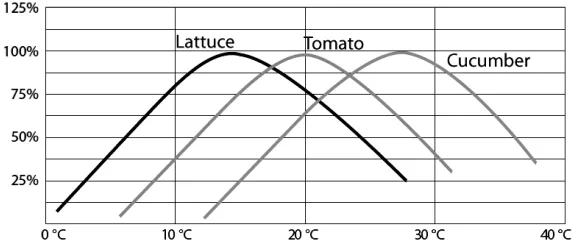
Fig. 9. – Productive trend with temperature of common vegetables.
Theagricultural applications of geothermal fluids consist of the plant growing tem-perature control in open fields and greenhouses. Thermal water can be used inopen-field agricultureto heat the soil and, sometime, to irrigate it where ponds and rivers are not available. Soil heating is provided by burying thin pipelines where warm fluids are cir-culated. The greatest drawback in this heating is the cost, and this technique results economic only in few cases. Heating the soil in buried pipelines without the irrigation system could also decrease the heat conductivity of the soil, because of the drop in hu-midity around the pipes, and consequent thermal insulation. The best solution seems to be that of combining soil heating and irrigation. The chemical composition of the geothermal waters used in irrigation must be monitored carefully to avoid adverse effects on the plants. The temperature control in opfield agriculture prevents any damage en-suing from low environmental temperatures, extends the growing season, increases plant growth, and boosts production. It also sterilizes the soil, increasing productivity.
The most common application of geothermal energy in agriculture is, however, in greenhouse heating, which has been developed on a large scale in many countries. The greenhouse heating extends the cultivation of vegetables and flowers out-of-season or in an unnatural climate, and can now draw on a widely experimented technology. Various solutions are available for achieving optimum growth conditions, based on the optimum growth temperature of each plant (fig. 9), and on the quantity of light, on the CO2 concentration in the greenhouse environment, on the humidity of the soil and air, and on air movement. Greenhouse heating can be accomplished by forced circulation of air in heat exchangers, hot-water circulating pipes or ducts located in or on the floor, finned units located along the walls and under benches, or a combination of these methods.
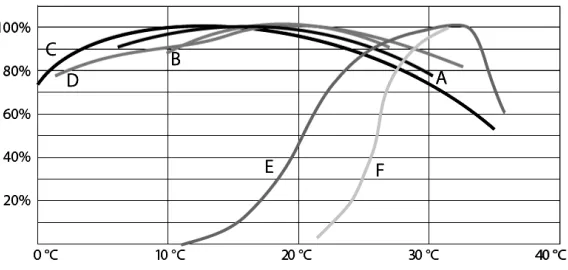
Fig. 10. – Productive trend with temperature of different animal species. A = chicken, egg production; B = poultry, weight increase; C = Jersey cow, milk production; D = pork, weight increase; E = shrimps, weight increase; F = cat-fish, weight increase.
This technology has taken maximum advantage from heat pump technology, and shallow groundwater or ground energy is more and more used. In the Netherlands, for examples, there has been a major boost of local tomato production thanks to the geothermal technology.
Farm animals and aquatic species, like vegetables and plants, benefit in quality and quantity from the optimum conditioning of their environmental temperature (fig. 10). Geothermal heat is used profitably in animal husbandry. The energy required to heat a breeding installation is about 50% of that required for a greenhouse of the same surface area, so a cascade utilization could be adopted. Breeding in a temperature-controlled environment improves farm animal health, and the hot fluids can also be used to clean, sanitize and dry the animal shelters and waste products. Aquaculture, the controlled breeding of aquatic forms of life, is the most common application of geothermal animal husbandry, due to an increasing market demand and the large importance of the breeding temperatures for aquatic species with respect to land species, as can be seen in fig. 10. By maintaining an optimum temperature artificially we can breed more exotic species, improve production and even, in some cases, double the reproductive cycle. The species that are typically raised are carp, catfish, bass, tilapia, mullet, eels, salmon, sturgeon, shrimp, lobster, crayfish, crabs, oysters, clams, scallops, mussels and abalone. Aquacul-ture also includes alligator and crocodile breeding, as tourist attractions and for their skins, which could prove a lucrative activity.
The temperatures required for aquatic species are generally in the 20–30◦C range. The size of the installation will depend on the temperature of the geothermal source, the temperature required in the fish ponds and the heat losses from the latter.
ical extraction, CO2extraction, laundry use, pulp and paper processing, and borate and boric acid production. The best example in the world of industrial applications are the diatomaceous drying in N´amafjall (Iceland), pulp and paper processing at Kawerau (New Zealand), and the 50 years old industry of milk products Medo-Bel Creamery of Klamath Falls (Oregon). Desalination using geothermal heat has been proposed in many places, mainly volcanic island, for solving a typical problem of lack of drinking water in tourist season in remote island. It has never proved to be economical and the proposals never reached the stage of demonstration but, with the help of heat pumps, the plants might see a growing application in the future. More and more wineries are adopting geothermal systems for temperature control of the various phases of wine production, especially now that heat pumps technology contributes also to humidity control.
The elements to consider in thecost estimate of a geothermal system for heat appli-cation are numerous and often more complicated than for other forms of energy. Plant installation and operating cost must be evaluated carefully before a geothermal project is launched, and vary from case to case. The overall cost depends on the resource (amount of heat, fluid discharge rate, depth to drill), the cost of installation and operation, and financial conditions including available tariffs and incentives, the price of other available energy sources, the plant efficiency, the load time. District space heating levelized costs range from US$ 45/MWhtto US$ 85/MWht. Costs of heating greenhouses vary between US$ 40/MWhtand US$ 50/MWht[4].
3. – Power production
Electricity generation mainly needs steam to rotate a turbine that activates a gener-ator, which produces electricity. Most power plants still use fossil fuels to boil water for steam, whereas geothermal power plants use steam produced from or heated by under-ground hot fluids. Three main types of technology are available: dry steam, flash steam and binary cycle, depending on the characteristics of the geothermal fluid.
water-Fig. 11. – Simplified flow diagram for direct steam, atmospheric exhaust geothermal power plant.
dominated systems, having a mixture of liquid and vapor in the reservoir. When this mixture is reached by a well it flows upward by its own pressure. The flow results in a pressure drop. For very hot fluids, usually above 250◦C, the fluid pressure at the surface results much lower than the saturation pressure corresponding to the fluid temperature, and the mixture of water and steam is wholly vaporized before reaching the surface. In this case a dry steam plant can be used.
Steam turbines are available with either atmospheric (back-pressure) or condensing exhausts. Atmospheric exhaust units (fig. 11) are simple and cheap and quickly installed, but steam consumption (from the same inlet pressure) per kilowatt-hour produced is almost double that of a condensing unit. The steam, direct from dry steam wells or, after separation, from wet wells, is passed through a turbine and exhausted to the atmosphere. The atmospheric exhaust turbines are used as pilot plants, stand-by plants, in the case of small supplies from isolated wells, and for generating electricity from test wells during field development.
In the condensing units with condenser at the outlet of the turbine, the steam in the turbine expands to the (low) pressure value of the condenser (fig. 12). In the con-denser the steam is cooled by spraying cooling water. The cooling water and condensed
Fig. 13. – Simplified flow diagram for single flash geothermal power plant.
steam are mixed and pumped directly to the cooling tower for recirculation. Having more auxiliary equipment, the condensing units are more complex than the atmospheric exhaust units and the bigger sizes can take twice as long to construct and install. The resulting power capacity of the condensing units is, however, much higher than that of the atmospheric exhaust units. Condensing plants have an average size of 45 MWe. Units of 40–60 MWe capacity are very common, but plants of 110 MWe have also been constructed and installed.
Flash steam turbines are the most common and use very hot geothermal fluids, with temperatures higher than 180◦C. When the reservoir is reached by wells, the mixture of water and steam of liquid-dominated systems flows up through wells in the ground under its own pressure. As it flows upward, the pressure decreases and some of the hot water boils into steam. This change of state for pressure drop, called flash, gives the name to the technology. The original and flashed steam is then separated from the water and used to power a turbine/generator. The liquid phase is separated by the steam and piped to be re-injected back in the subsurface. From this point on the equipment is the same of a dry steam plant, and this plant is called single-flash plant (fig. 13). Depending on the thermodynamic condition of the fluids, it could be economic to obtain a second (sometime even a third) flash from the separated fluid, producing more steam from its boiling. This double-flash steam power type of plant differ from the previous ones for the equipment required for the secondary flash. Flash steam plants have an average size of 30 MWe.
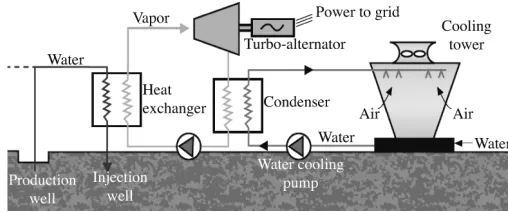
Fig. 14. – Simplified flow diagram for ORC binary geothermal power plant.
whole process, and the working fluid circulates in a closed loop, so there are little or no air emissions and the geothermal water is totally re-injected.
The two different categories of binary cycles commonly available, Organic Rankine Cycles (ORC) and Kalina cycles, mostly differentiate as far as the working fluid is con-cerned: in ORC a pure working fluid, (or seldom an azeotropic mixture) is utilized, while in Kalina cycle and Kalina derived cycles, a mixture of water and ammonia is selected. By selecting suitable secondary fluids installed binary systems utilize geothermal fluids in the temperature range 73◦C (at Chena Hot Springs, Alaska) and 180◦C. The upper limit depends on the thermal stability of the organic binary fluid, and the lower limit on technical-economic factors: below a certain temperature and depending on the air temperature at the condenser the size of the required heat exchangers would render the project uneconomical. Beside production from low-to-medium temperature geothermal fluids and waste fluids, binary systems can also be used to avoid flashing of the geother-mal fluids (for example, to prevent well sealing). In this case, down-hole pumps can be used to keep the fluids in a pressurised liquid state, and the energy can be extracted from the circulating fluid by means of binary units.
Binary plants are usually constructed in small modular units of a few hundred kWe to a few MWe capacity. The total size of the plant has little effect on the specific cost, as a series of standard modular units is joined together to create power-plants up to a few tens of megawatts. Their cost depends on a number of factors, but particularly on the temperature of the geothermal fluid produced, which influences the size of the turbine, heat exchangers and cooling system.
It is also possible to cascade a steam unit with a binary cycle plant, which uses the condensed steam. These combined units are under development for further optimization. Cogenerationscheme,i.e.the generation of heat (usually for district heating) and power, is also feasible, as well ashybrid plantsusing the geothermal source in addition to another thermal source (e.g.solar or biomass or wastes).
Fig. 15. – Power production installed capacity trend in 27 countries.
Nowadays, power production in the world have a total capacity of 12.6 GW [5]. Single flash power plants are the most used technology for geothermal power, composing 41% (∼5.079 MWe) of Installed Capacity globally. Dry Steam follows at 22% (∼2.863 MW) and double flash ranks third at 21% (∼2.544 MW) of global installed capacity. Lastly, binary is 12% (∼1.790 MW) of global installed capacity. The last 3% of power plants are triple flash, back pressure, flash/binary hybrid, EGS (described in the Present and Future chapter), or some other geothermal technology.
Geothermal power production has a much shorter history than direct uses. Commer-cial power production commenced in Italy at the beginning of the 20th century, when Prince Ginori Conti, heir of the industrial facilities of Larderello (Tuscany, Italy) for the production of boric acid, had the idea of using the hot fluids to generate the power re-quired by the factory. Power production in Italy increased for a while and ceased during the II World War, when the facilities were destroyed by bombs. After the war, power production steadily increased in Italy, soon accompanied by a quick growing of produc-tion in California, New Zealand and Japan. Nowadays, 27 countries produce power from geothermal resources (fig. 15). USA has the largest geothermal power production area (3.45 GW), mainly from The Geysers, California, followed by Philippines (1.87 GW), Indonesia (1.34 GW), Mexico (1.017 GW), New Zealand (1.005 GW) (fig. 16) [5].
Capital cost of geothermal power production plants is high, as for any other use of geothermal energy. However, since the geothermal energy is constantly provided, geother-mal has a base-load production, and the Capacity Factor (CF,i.e.the actual produced energy with respect to the full capacity energy) is much higher than for other renewable energies, resulting in a Leveled Cost of Energy comparable to other energy sources.
Fig. 16. – Power production installed capacity trend in the 13 countries with capacity larger than 100 MW on 2015.
on factors such as the geology of a country or region, quality of the resource (e.g., tem-perature, flow rate, chemistry), and the infrastructure in place [4]. However, geothermal power can be competitive and complement other sources of generation thanks to high capacity factors, long plant lifetimes, and the absence of recurring fuel costs. Levelized costs of energy from hydrothermal resources are usually found to be between US$ 50 and 80 per MWe. Binary plants have higher upper limits: levelized costs for new greenfield plants can be as high as US$ 120 per MWe in the United States and US$ 200 per MWe in Europe, for small plants and lower temperature resources [4].
The investment cost breakdown of utility scale geothermal power development (based on data from Iceland) shows that 35% of the total cost is related to power plant construc-tion, and 34% to drilling. The remaining 31% is made of steam gathering system (13%), interconnection (6%), early development (5%), miscellaneous (5%) and infrastructure (2%) costs [6].
4. – Geothermal project development
To realize a geothermal plant, utilizing either shallow and deep systems, a number of activities are necessary and a geothermal project is made of essentially standard stages (fig. 17).
First of all, the geothermal resource is assessed through exploration, with the aim of defining the amount of heat and physicochemical characteristics of the underground. The latter are required for the correct planning of the later activities. In parallel, especially for heat use, it is necessary to define the amount and rate of required thermal energy. After the assessment stage, the boreholes (for shallow systems) and wells are drilled and the resource is accessed and verified. The technology to be used in the plant is defined on the base of the information retrieved during the assessment and refined in the drilling stages. An environmental impact analysis is also made, as required by law almost everywhere. Eventually, facilities are built and the plant is operated and managed.
pro-Fig. 17. – Development phases of a geothermal project.
gram all existing geological, hydrogeological, geophysical and geochemical data of the study area and adjacent areas must be collected. For the assessment of deep geothermal systems thispre-feasibility analysis refers to a broad area in order to eliminate the less interesting areas and concentrate on the most promising ones (reconnaissance) and pre-feasibility is carried out on the chosen areas of few square kilometers. This information frequently plays an important role in defining the objectives of the geothermal explo-ration program and could lead to a significant reduction in costs. When all information is retrieved and the geothermal systems is roughly determined, new data are acquired to complete the picture and decide where to drill boreholes or wells (feasibility). Usually, the exploration stage is completed with the first, exploratory well drilled and a direct characterization of underground condition.
Drilling represents one of the main costs of a geothermal plant, and the number of boreholes or wells should be kept at a minimum, just necessary to satisfy the resource required by the plant to produce the demanded energy. Drilling and completion of wells are very critical operations, to be conducted with an eye on safety of the well and of the surrounding environment, and on speed, in order to decrease both operational cost and disturbance time to the neighbors. Shallow boreholes are drilled with the same technologies for fresh water wells, with similar safety precautions. The most peculiar part of shallow geothermal drilling is related to completion of geoexchangers, to secure the conductive exchange.
Deep geothermal wells uses technology similar to the rotary drilling for oil and gas. Main differences are due to the different geomechanical, physical and chemical conditions. Rocks in geothermal systems span from sedimentary rocks (as in oil and gas) to metamor-phic, crystalline and volcanic rocks, usually much harder to drill. The high temperature affects the circulation system and the cementing procedure. Heavy mud is often used, due to the heavy load of debris to extract during the drilling. When possible, also air is used since it makes the drilling much faster and cheaper, but is used with care in forma-tion carrying excessive water or prone to collapse. Chemical condiforma-tion must be checked, especially at high temperature, to avoid productive fracture sealing, mud drying, damage to the casing or the drilling bits due to aggressive components. Blowout preventers are often used, especially in volcanic and magmatic condition where geothermal fluid may be rich of gases.
Directional drilling is used, although sub-vertical wells are common. Sometimes it may be attractive or even necessary to drill boreholes from the same platform and deviate them in different directions. Casing is usually necessary, but in hard rocks, where the risk of collapse is minimum, can be avoided. Immediately after well completion, the well is tested to obtain information regarding physicochemical condition of fluids and rocks at depth. Depending on well condition, geological and physical analyses (logs) are carried out in the well, rock and fluid samples are taken for further analyses in the labs. The most important information are temperature, depth, condition of fluid productive fractures, pressures at various depth, types of rocks and permeability, porosity, fluid content and its chemical composition. This information is used for refining the interpretation of deep geological structures, their thermal and hydraulic condition. Reservoir modeling is then carried out, to estimate potential fluid flow from the well, energy potential, and predict well performance (pressure, temperature, enthalpy of fluid).
of the least polluting forms of energy. The degree to which geothermal exploitation affects the environment looks proportional to the scale of its exploitation and the depth of resource, and shallow geothermal systems can easily avoid to produce environmental impact by adapting the most elementary precautions. The most critical potential risk is thermal pollution, when the boreholes are incorrectly localized or the rate of extraction is too high. The first effect of wrong design is, however, a low efficiency of the plant, a problem that usually finds a technical solution. Electricity generation in binary cycle plants will affect the environment in the same, limited way as direct heat uses. The effects are potentially greater in the case of conventional back-pressure or condensing power plants, especially as regards air quality, but can be kept within acceptable limits. The following aspects essentially refer to deep geothermal system deployment.
Any modification to our environment must be evaluated carefully, in deference to the relevant laws and regulations (which in some countries are very severe), but also because an apparently insignificant modification could trigger a chain of events whose impact is difficult to fully assess beforehand. For example, a mere 2–3◦C increase in the temperature of a body of water as a result of discharging the waste water from a utilization plant could damage its ecosystem.
The most perceptible effect on the environment is that ofdrilling, whether the bore-holes are shallow ones for geoexchangers or deep producing wells. Installation of a drilling rig and all the accessory equipment entails the construction of a drilling pad and access roads if they are not available. These operations will modify the surface morphology of the area and could damage local plants and wildlife. In case of blowouts of fluids from the wells, fluids can pollute surface water and air. This eventuality is nowadays well solved by the essentially constant presence of blowout preventers where high temperatures and pressures, and aggressive chemicals are anticipated. During flow tests undesirable gases may be discharged into the atmosphere, but only for a very limited time. Noise can be annoying, and drilling technology tries hard to keep noise at the lowest possible level with silencers. The best solution, indeed, is to avoid to stay too close to urban areas and to keep the drilling time as quick as possible. The impact on the environment caused by drilling is temporary, and mostly ends once drilling is completed.
plant can be built in a fancy design, as in some Italian areas, or partially hidden by vegetation (usually outside the facility to ease maintenance).
Plant operation of deep, high-temperature geothermal resources, especially in volcanic and magmatic areas, may produce environmental problems. Some geothermal fluids, such as those utilized for district-heating in Iceland, are freshwaters, but this is very rare and deep geothermal fluids (steam or hot water) often containgases such as carbon dioxide (CO2), hydrogen sulphide (H2S), ammonia (NH3), methane (CH4), and trace amounts of other gases, as well asdissolved chemicals whose concentrations usually increase with temperature. For example, sodium chloride (NaCl), boron (B), arsenic (As) and mercury (Hg) are a source of pollution if discharged into the environment. The waste waters from geothermal plants also have a higher temperature than the environment and therefore constitute a potential thermal pollutant. Geothermal fluids, however, may be treated and chemicals separated. Various processes can be adopted to reduce gas emissions,e.g. for hydrogen sulphide. Carbon dioxide is also present in the fluids used in the geothermal power plants, although much less CO2 is discharged from these plants than from fossil-fuelled power stations.
Discharge of waste watersis also a potential source of chemical pollution, although the low-to-moderate temperature geothermal fluids used in most direct-use applications gen-erally contain low levels of chemicals and the discharge of spent geothermal fluids is sel-dom a major problem. Spent geothermal fluids with high concentrations of chemicals such as boron, fluoride or arsenic of deep, high-temperature fluids should be treated and re-injected into the reservoir, or elements extracted for mineral use. To avoid discharge into surface waters after cooling, the waters can be cooled in special storage ponds or tanks to avoid modifying the ecosystem of natural bodies of waters (rivers, lakes and even the sea). Extraction of large quantities of fluids from geothermal reservoirs reduce pore pressure and the land surface may tend tosubside, i.e.to gradually sink. This is an irreversible phenomenon, a slow process distributed over vast areas. Over a number of years the lowering of the land surface could reach detectable levels, in some cases of the order of a few tens of centimeters and even meters, and should be monitored systematically. This effect is nowadays famous, after Wairakei in New Zealand registered a 4.5 m localized subsidence between 1964 and 1974: water-dominated systems such as Wairakei subside more than vapor-dominated systems. Subsidence occurrence is controlled by topographic monitoring, so far accomplished by high-resolution GPS remote control. Subsidence is prevented or reduced by re-injection of spent fluids, which also sustain the production.
small-scale geothermal resources are capable of improving energy efficiency of many ap-plications. Today the global installed capacity of geothermal energy amounts to about 60 GW worldwide with shares of 18%, 26%, and 56% for power generation, direct use, and ground source heat pumps (GSHP), respectively. Lead markets for geothermal energy are in America, Europe and Asia [7].
The primary obstacles to geothermal deployment are the high investment cost and the risk of drilling without reaching commercially viable geothermal resources. Lowering drilling costs is a key issue for lowering up-front costs. R&D efforts are also focussing on reducing heat exchanger costs, since design and layout of heat exchanger heavily influence the investment and operation costs of geothermal plants. Optimization of heat exchangers play a central role in geothermal binary power plants but also for direct use and GSHP applications. Regarding the risk of not finding the enough fluids to run a geothermal plant, R&D in exploration technology and implementation of a risk insurance fund are under consideration.
The development of Unconventional Geothermal Resources(UGR), which requires technological development to become economically productive, would increase enor-mously the share of utilized geothermal energy. Among UGR, research projects have focused so far to two kind of resources: Coproduced and Enhanced Geothermal Systems. Enhanced Geothermal Systems (EGS) comprehend the development of geothermal systems where the natural flow capacity of the system is not sufficient to support adequate power production but where artificial fracturing of the system by chemical and/or hy-draulic stimulation can allow production at a commercial level. The reservoirs are created to produce energy from geothermal resources that are otherwise not economical due to lack of water and/or permeability. EGS technology requires validation and deployment, cost reduction, and performance improvement. While achieving cost-competitive electric-ity generation from EGS is a long-term goal, in the near-term R&D and demonstration projects will move industry along the learning curve toward technological readiness. Once technical and economic challenges for EGS are overcome, or other methods of exploiting hot rock resources become available (e.g.without fracturing the underground bedrock), geothermal deployment could be pursued wherever rock temperatures and other under-ground properties allow the economic sale of energy. This would mean that advanced geothermal systems could be deployed where demand for electricity and heat exist.
economic life of oil and gas fields. The research is primarily carried out in USA, where hundreds of thousands of oil and gas wells produce hot water concurrent with oil and gas production. It is estimated that the water produced annually by oil and gas fields could generate up to 3 GWe of clean, base-load power using binary geothermal units [8]. Other uses, such as district heating and cooling, may be considered where oil and gas fields are close to urban settings. These technologies offer an opportunity to expand fossil fuels development into the renewable energy sector. Coproduced resources include also mineral recovery from geothermal fluids.
Cogenerationof heat and power (Combined Heat and Power, CHP) from deep aquifers andhybrid technology integrating geothermal to other green energy sources are important targets for innovative technology. The sale of heat from CHP development (e.g. for district heating) increases the economic viability of lower-temperature resources. It will be also important to further optimizecascade use of geothermal energy.
Estimated global geothermal electrical power installed capacity by 2050 amounts to 200 GWe, including 100 GWe hydrothermal electricity capacity and 100 GWe from EGS [4]. The reference scenario assumes that hot rock technology will become commer-cially viable soon after 2030. This power production is expected to avoid around 760 megatonnes (Mt) of CO2emissions per year worldwide. Most of this increase is expected to happen in Pacific Asia, mainly Indonesia; the East-African Rift Valley; Central and South America; as well as in the United States, Japan, New Zealand, and Iceland.
The estimated global sum of annual geothermal heat use by 2050 amounts to 5.8 EJ (about 1 600 TWh thermal energy), removing contributions from ground source heat pumps and assuming full use of the potential of CHP generation via EGS technology [4]. Under the assumed condition, the utilization of heat from deep rock formations should theoretically become possible wherever rock temperatures and the properties of the un-derground allow the economic sale of energy. The largest potential for geothermal heat can be found in regions with high heat demand: Europe, China and North America.
The International Energy Association on 2011 listed the key conditions for the full development of geothermal energy by 2050:
– A holistic policy framework is needed that addresses technical barriers relating to resource assessment, accessing and engineering the resource, geothermal heat use and advanced geothermal technologies. Moreover, such a holistic framework needs to address barriers relating to economics, regulations, market facilitation and RD&D support.
– Policy makers, local authorities and utilities need to be more aware of the full range of geothermal resources available and of their possible applications in order to develop consistent policies accordingly. This is particularly true for geothermal heat, which can be used at varying temperatures for a wide variety of tasks.
[2] Lund J. W.and Boyd T. L., “Direct Utilization of Geothermal Energy 2015 Worldwide
Review”, inProceedings World Geothermal Congress 2015, Melbourne, Australia(2015). [3] European Geothermal Energy Council,Market report 2013/2014, December 2013.
[4] International Energy Agency, Technology Roadmap: Geothermal Heat and Power (OECD/IEA, Paris) 2011.
[5] Bertani R., “Geothermal power generation in the World 2010–2014 update report”,
Geothermics,60(2016) 31.
[6] Gehringer M. and Loksha V., Geothermal Handbook: Planning and Financing Power
Generation, ESMAP technical report no. 002/12 (World Bank, Washington, DC) 2012. [7] Sigfusson B.andUihlein A.,2014 JRC Geothermal Energy Status Report (Publications
Office of the European Union) 2015, ISBN: 978-92-79-44614-6, ISSN: 1831-9424.
[8] Matek B.,2013 Geothermal Power: International Market Overview (Geothermal Energy