ABSTRACT
MEOLI, DINA.
Interactive Electronic Textiles: Technologies, Applications, Opportunities, and Market Potential. (Under the direction of Dr. Traci May-Plumlee.)The developing area of interactive electronic textiles is generating an abundance of
literature within the textile industry. Presently, researchers in this area are working toward
the development of interactive touch and voice activated wireless electronic textiles.
Potentially, these specialized textiles will integrate many communication, entertainment,
and safety devices directly into traditional textile and apparel products.
The purpose of this research was to study the emerging area of interactive electronic
textiles. First, available literature was used to examine interactive electronic technologies,
the potential application areas for these technologies, and the potential market appeal for
interactive electronic textiles. Hypotheses were developed regarding expert perceptions of
the potential technologies appropriate for mass-producing these products at affordable price
points. To test the hypotheses, expert opinions regarding future opportunities, applications,
and market appeal for interactive electronic textiles were obtained via an Internet-based
electronic survey. The results of the survey revealed that numerous viable technologies were
being investigated for developing interactive electronic textiles; health and safety,
communication, and entertainment were perceived as major growth areas for these
specialized textiles; and that product attributes, operation difficulty levels, and user
concerns were considered to have important implications for interactive electronic textiles
INTERACTIVE ELECTRONIC TEXTILES:
TECHNOLOGIES, APPLICATIONS, OPPORTUNITIES, AND
MARKET POTENTIAL
by
DINA MEOLI
A thesis submitted to the Graduate Faculty of North Carolina State University
in partial fulfillment of the requirements for the Degree of
Master of Science
DEPARTMENT OF TEXTILE AND APPAREL, TECHNOLOGY AND MANAGEMENT
Raleigh May 2002
APPROVED BY:
______________________________ ______________________________
Dr. Cynthia Istook Dr. John McCreery
BIOGRAPHY
The author, Dina Meoli, was born on April 7, 1970, in Queens, New York. She
moved to Florida in 1975 with her family where she received her primary and secondary
education. In 1988, she graduated from Largo High School in Largo, Florida. While
attending high school, she developed an interest in fashion and textiles. This led her to Saint
Petersburg Vocational and Technical Institute where she studied the fundamentals of apparel
construction and design during 1988-1990.
In 1993, she entered the Fashion Institute of Technology in New York City. She
graduated Magna Cum Laude earning a Bachelor of Science degree in Textile Development
and Marketing in 1997. In 2000, she moved to Raleigh, North Carolina to attend North
Carolina State University. Currently, she is pursuing a Master of Science Degree in Textiles
ACKNOWLEDGMENTS
I wish to express my sincere thanks to my thesis chair, Dr. Traci May-Plumlee for all
of her endless guidance and support in conducting this research. I am extremely grateful for
all of the knowledge and ideas she has shared with me throughout every step of this research.
Her efforts enabled me to succeed, acquire an abundance of knowledge, and enjoy my
graduate experience. I would also like to thank my co-chairs, Dr. Cynthia Istook and Dr.
John McCreery for their insight and assistance throughout this research. I want to say a
special thank to Shawn Dunning, College of Textiles Computing Services, for his endless
patience and computer-programming assistance with creating an on-line electronic version of
the survey used for data collection. Additionally, I would like to thank Kim Anderson,
Lisa Parillo-Chapman, Claudia Deaton, and the many others at North Carolina State
University College of Textiles who have answered many questions that guided me along the
TABLE OF CONTENTS
LIST OF FIGURES ...VI
LIST OF TABLES ...VIII
CHAPTER ONE: INTRODUCTION ... 1
1.1 PURPOSE OF RESEARCH ...2
1.2 RELEVANCE OF PROPOSED RESEARCH ...2
1.3 RESEARCH QUESTIONS ...3
1.4 CONCLUSION...5
CHAPTER TWO: LITERATURE REVIEW... 6
2.1 HISTORY OF WEARABLE COMPUTING ...6
2.2 ELECTRONIC TEXTILES ...8
2.3 INTERACTIVE ELECTRONIC TEXTILE TECHNOLOGIES ...10
2.3.1 METALLIC AND OPTICAL FIBERS ... 10
2.3.2 CONDUCTIVE YARNS AND THREADS ... 15
2.3.3 CONDUCTIVE COATINGS ... 18
2.3.4 CONDUCTIVE INKS... 22
2.4 ENABLING TECHNOLOGIES...27
2.4.1 INTERACTIVE TECHNOLOGIES ... 27
2.4.2 NANOTECHNOLOGY... 29
2.4.3 ELECTRONIC COMPONENT INTEGRATION... 30
2.4.4 WIRELESS COMMUNICATION NETWORKS ... 32
2.5 RELATED APPLICATIONS AND OPPORTUNITIES ...39
2.6 RELATED CONCERNS ...46
2.7 SUMMARY...49
CHAPTER THREE: HYPOTHESES... 50
3.1 HYPOTHESES GENERATION ...50
3.2 HYPOTHESIS 1 ...50
3.3 HYPOTHESIS 2 ...51
3.4 HYPOTHESIS 3 ...51
3.5 CONCLUSION...51
CHAPTER FOUR: RESEARCH METHODOLOGY ... 52
4.1 SAMPLE...52
4.2 DATA COLLECTION METHOD ...53
4.3 VARIABLES ...55
4.4 DATA ANALYSIS...56
CHAPTER FIVE: RESEARCH RESULTS... 58
5.1 SAMPLE CHARACTERISTICS ...58
5.2 HYPOTHESES TESTING ...61
CHAPTER SIX: DISCUSSION OF RESULTS... 72
CHAPTER SEVEN: RELATED RESEARCH... 83
7.1 PRESENT RESEARCH EFFORTS ...83
7.2 TECHNOLOGY RESEARCH OPPORTUNITIES...87
7.3 MARKET RESEARCH OPPORTUNITIES ...88
7.4 CONCLUSION...90
REFERENCES... 91
APPENDICES ... 99
APPENDIX A: SURVEY QUESTIONAIRRE...100
LIST OF FIGURES
Figure 1: Wearable Computing Devices Developed By Steve Mann ... 7
Figure 2: Head-Mounted Wearable Computers... 8
Figure 3: The "Mooring" Jacket... 9
Figure 4: Communications System ... 9
Figure 5: Speakers and Microphone... 9
Figure 6: Metallic Fiber Diameters Compared to Human Hair ... 11
Figure 7: Bundle Drawing Process ... 11
Figure 8: Shaving Process... 11
Figure 9: Stainless Steel and Polyester Thread... 12
Figure 10: 100% Stainless Steel Thread ... 12
Figure 11: "Smart Shirt" 3rd (Left) and 4th (Right) Generation Prototypes ... 14
Figure 12: "Smart Shirt" Textile Platform ... 14
Figure 13: Micrograph of Metallic Silk Organza ... 16
Figure 14: Micro Controller Circuit on Silk Organza ... 16
Figure 15: Embroidered Fabric Keypad ... 18
Figure 16: Levi's Musical Jean Jacket ... 18
Figure 17: Stitched Square and Round Component Packages... 32
Figure 18: Stitch Fastened Component Package ... 32
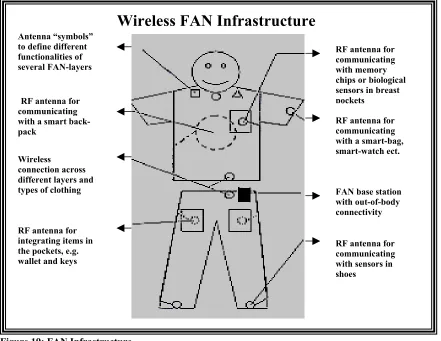
Figure 19: FAN Infrastructure ... 38
Figure 20: Multi-Layer FAN Garment ... 38
Figure 21: Sleeve Integrated Communication Device... 40
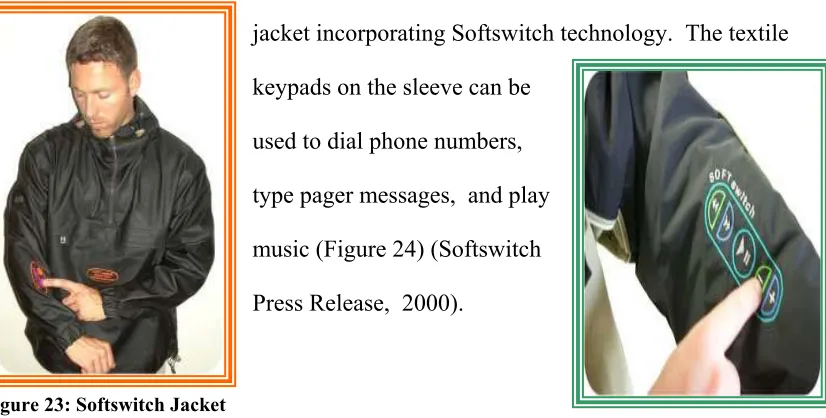
Figure 23: Softswitch Jacket... 41
Figure 24: Sleeve Integrated Textile Keypad ... 41
Figure 25: Softswitch Remote Control ... 41
Figure 26: Softswitch Light Switch... 42
Figure 27: Softswitch Pillow ... 42
Figure 28: Softswitch Seat Sensors ... 42
Figure 29: Philips Electronic Sportswear Garment... 43
Figure 30: Philips Electronic Ski-Suit... 44
Figure 31: Electronic Childrens’ Garments... 45
Figure 32: Familiarity Classification... 58
Figure 33: Knowledge Classification ... 59
Figure 34: Company or Organization Size... 59
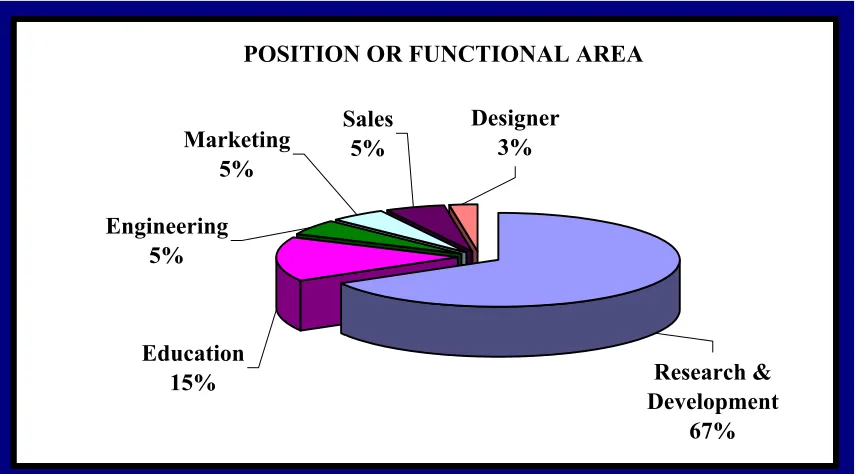
Figure 35: Position or Functional Area ... 60
Figure 36: Geographic Locations ... 60
LIST OF TABLES
Table 1: Areas of Design Flexibility for Direct Digital Printing ... 26
Table 2: Electronic Data Collection Advantages ... 53
Table 3: Percent of Sample Familiar With Each Technology ... 61
Table 4: Technology One-Way ANOVA Testing Results ... 62
Table 5: Chi-Square Results for Factors Affecting Technology Use ... 63
Table 6: Factors Affecting Use of Optical Fibers ... 63
Table 7: Factors Affecting Use of Conductive Inks... 64
Table 8: Application Area One-Way ANOVA Testing Results ... 64
Table 9: Tukey's Application Area Testing Results ... 65
Table 10: Niche Market ANOVA Testing Results: 5-Year Time Frame ... 66
Table 11: Niche Market ANOVA Testing Results: 10-Year Time Frame ... 66
Table 12: Mass Market ANOVA Testing Results: 5-Year Time Frame... 66
Table 13: Mass Market ANOVA Testing Results: 10-Year Time Frame... 67
Table 14: Niche Market Tukey'sTesting Results for 5 and 10-Year Timeframes ... 67
Table 15: Mass Market Tukey's Testing Results for 5 and 10-Year Timeframes ... 68
Table 16: Product Attribute One-Way ANOVA Testing Results... 70
Table 17: Tukey's Product Attribute Testing Results... 70
Table 18: One-Way ANOVA Testing Results for Concerns... 71
Table 19: Tukey's Testing Results for Potential Concerns ... 71
Table 20: Percent of Sample Familiar With Each Technology ... 73
Table 21: Interactive Electronic Textile Technology Testing Means... 74
Table 23: Summary of Open-Ended Comments: Technology Use ... 76
CHAPTER ONE: INTRODUCTION
As electronics become smaller, less expensive, and require less power we have
begun to adorn our bodies with personal information and communication devices. Such
devices include cellular phones, personal stereos, pagers, personal digital assistants
(PDA's), pocket video games, and notebook computers. As we move into an electronic
future, many of these devices will be integrated into our apparel. Developing these
wearable-computing products is emerging as an important research and technology area.
Many different terms are being used to identify this new area. Examples include: "Wearable
Computers", "Smart Garments", and "Intelligent Garments". However, these terms all fail
to include the other numerous applications for the specialized textiles typical of this product
category. Integrated intelligence has the potential to benefit many traditional textile
applications such as medical, military, industrial, and commercial and residential textiles.
For the purpose of addressing the entire area with one term, "Interactive Electronic Textiles"
will be used throughout the remainder of this paper to identify this emerging area.
Since interactive electronic textile products are in the early stages of development,
there are many questions and concerns about this emerging area. Many of these questions
stem from the technologies being used to produce these products as well as the application
areas and market potential. As new products enter the market that will affect our social and
business culture, potential concerns such as privacy, security, and safety will also develop.
This research provides an in-depth study of the interactive electronic textiles arena by
reviewing literature, interviewing experts, and conducting surveys. Together these research
1.1 PURPOSE OF RESEARCH
The purpose of this research is to explore the emerging area of interactive electronic
textiles. This research identifies and examines expert perceptions of the technologies, their
potential application areas, and the market potential for interactive electronic textiles. The
technologies range from the conductive materials used for product development, to the
electronics used activate them. Many of these technologies are already used successfully
outside the textile complex for other applications. Efforts are underway to modify and adapt
them for interactive electronic textile development. Considering the production of
electronic devices and textiles are two quite different areas, both industries must combine
their expertise to successfully develop interactive electronic textile products. Therefore,
understanding the product development efforts of each industry is vital to this new areas
success. By understanding the development efforts for interactive electronic textiles we will
have a better idea of which technologies will be the first to market within this new area.
Expert perceptions of the applications, future opportunities, and the potential market appeal
for interactive electronic textiles were also identified and examined. The available literature
suggests there are many appropriate applications and markets for these specialized textiles.
Potential applications and opportunities range from fashion and functional apparel to
commercial and residential furnishings. An on-line electronic survey questionnaire was
administered to industry experts presently researching and developing these specialized
textiles to gather data on the specifics of interactive electronic textile development including
the technologies, the applications, and the market potential for these products.
1.2 RELEVANCE OF PROPOSED RESEARCH
The interactive electronic textiles arena has generated an abundance of literature,
especially trade literature. The literature suggests the merge of electronics and textiles will
offer significant opportunities for both industries. These opportunities stem from increased
electronics to become smaller and more powerful. Many industry experts are seeking to take
this one step further by integrating electronics into textiles to increase user mobility and
comfort. This involves understanding available technologies and how they can be used to
develop interactive electronic textiles. The firms that understand how to incorporate these
emerging technologies into their business strategy will establish and sustain financial and
competitive advantages within their industry. This research provides a better understanding
of the current work and foci in the interactive electronic textiles arena and may potentially
open the area to new concepts and ideas. When a research study can provide information to
assist industry with further understanding of a new emerging area it proves to be worthwhile
and relevant.
1.3 RESEARCH QUESTIONS
The research questions for this project are significant to the emerging literature on
interactive electronic textiles. They were developed to provide a better understanding of this
new technological area within the textile industry and to address some of the questions that
were unanswered. Considering that there are many different technologies being used to
develop interactive electronic textiles, the potential of each individual technology is
ambiguous. Therefore, the first research question to address is:
Question 1: Which technologies have the greatest potential in the area of interactive electronic textiles?
Determining the significant technologies will clarify the focus of research efforts and
assist further development. Identifying and perfecting the significant technologies will
enable both researchers and practitioners to have a better understanding of the future
identified, questions arise as to the most appropriate applications. This brings us to the
second research question.
Question 2: Which application areas have the greatest potential for interactive electronic textiles?
Available literature suggests the main application areas for interactive electronic
textiles are communication, entertainment, health, and safety. However, the significance
of each application area is unclear. By determining which applications possess the greatest
potential, researchers and practitioners will gain insight on the future market opportunities
for interactive electronic textiles. This directly relates to the third research question.
Question 3: According to an industry expert perspective, what will be the potential market appeal for interactive electronic textile products?
Industry experts presently involved in interactive electronic textile research and
development can provide valuable insight into the expected potential market appeal for
interactive electronic textiles. There are many factors that can affect the market success for
new technological products. Factors relating to the success of interactive electronic textile
products include difficulty levels for use, care and maintenance, compatibility among
products, and affordability. Considering this area is still developing, those presently
advancing this area are the most appropriate to provide perceptions on the expected potential
1.4 CONCLUSION
The preceding section provided an introduction to the emerging area of interactive
electronic textiles and why it is an important topic to explore, the research relevancy, and
the research questions at hand. The following chapters outline the research and report the
results. Chapter two provides a review of the literature that serves as the foundation for this
research. Chapter three converts the research questions into testable hypotheses. Chapter
four outlines the research methodology used for conducting the survey. Chapters five and
six examine the research results and chapter seven explores opportunities for future
CHAPTER TWO: LITERATURE REVIEW
2.1 HISTORY OF WEARABLE COMPUTING
Wearable computing devices have been around for years. They can easily be defined
as devices that become part of the users personal space and are operationally and
interactionally controlled by the user, i.e. they are always on and accessible (Mann, 1998).
Historical research suggests the first complete wearable computer, conceived in 1955, was
designed to predict outcomes of the casino gambling game roulette. This wearable system
was a cigarette-pack sized analog computer with four push buttons. A data taker would use
the buttons to indicate the speed of the roulette wheel, then the computer would send tones
via radio to a hearing aid worn by the bettor. This wearable was later prototyped in 1961 by
Edward Thorp and Claude Shannon at the Massachusetts Institute of Technology. Thorp
disclosed a similar system, featured in the March 27th 1964 issue of Life Magazine, for
beating the Wheel of Fortune gambling game (Siewiorek, 1999).
Since then, many researchers have experimented with wearable concepts. One such
researcher, Steve Mann, professor at the Massachusetts Institute of Technology (MIT), is
considered a pioneer in the area of wearable computing. He has been designing and building
wearable devices since the early 1980's. Early wearable computing systems developed by
Mann consisted of head and waist mounted displays and cameras (Figure 1) (Mann, 1996).
impractical for daily use. Today, Mann's wearables have shifted toward more comfortable
and practical devices such as eyeglass based communication systems, 'smart shoes' that
incorporate sensors to provide
information on footstep force and
velocity, and 'smart undergarments' that
can monitor heart rate and respiration
(Mann, 1996).
Figure 1: Wearable Computing Devices Developed By Steve Mann
A research group at Carnegie Mellon University coined the term ‘wearable
computing’ in 1991. Today this term is used to define a wide assortment of wearable devices
that incorporate electronics. Examples of these devices are pocket and wristwatches,
portable cassettes and compact disk players, and notebook computers. These wearable
electronic devices can either be strapped on the body or easily carried in a pocket for
transferring, receiving, and storing information (Siewiorek, 1999).
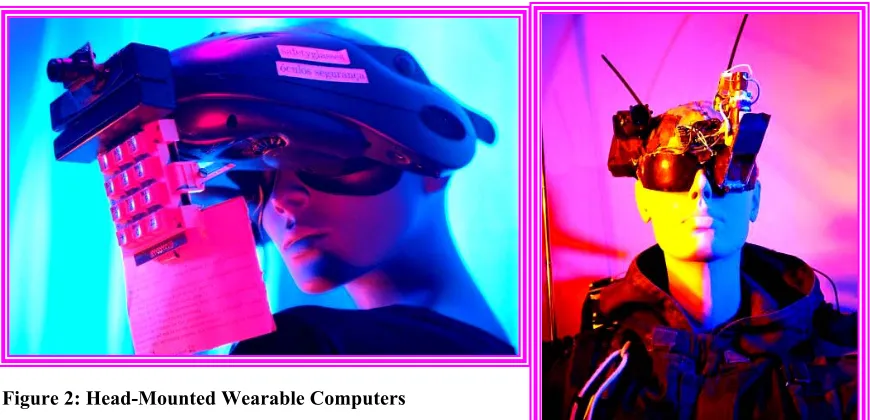
Many of the wearable electronics developed to date are cumbersome and awkward
due to the materials and processes used in their fabrication (Figure 2). As a result, most of
these devices are only wearable in the sense that they can be strapped on the body or carried.
Today interest in wearable computing is increasing and development is shifting toward more
currently being explored, integrating electronic technologies directly into textiles and
apparel to create truly wearable devices.
Figure 2: Head-Mounted Wearable Computers
2.2 ELECTRONIC TEXTILES
In the past, clothing containing electronics was only portrayed in the world of
science fiction. The merging of textiles and technology has made electronic textiles an
exciting new reality. The idea of integrating electronics into our textile and apparel products
is no longer science fiction. Textile-based computing is currently being developed, allowing
the wearer to easily move audio, data, and power around a garment or textile. These
specialized textiles have the potential to keep us connected, informed, and entertained
without the need to carry any electronic devices. Interactive touch, voice, and body heat
activated wearable electronics are being developed and are gradually appearing on store
shelves. The development of these items is fueled by the increasing desire for mobile
Interactive electronic textiles items on the market today use integrated wiring and
carrying devices that add bulk and weight to the garments making them uncomfortable and
impractical for daily use. Furthermore, these items are expensive and present issues relating
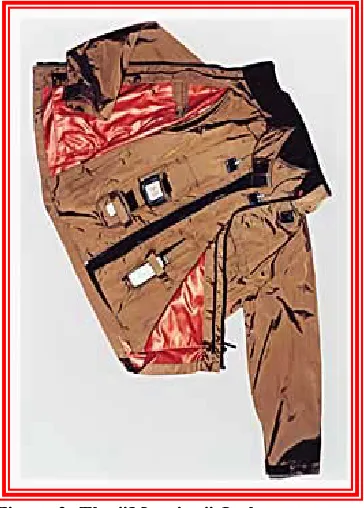
to garment care, flexibility, and user safety. The first wired electronic apparel line was
recently developed by two leading wearable
technology developers, Levi Strauss & Co. and
Philips Research Laboratories. In August of 2000,
they were the first to introduce an outerwear line,
ICD+ (Industrial Clothing Design Plus), comprised
of four "wired" jackets that combined garment
functionality with wearable electronics. One of the
four jackets included in the ICD+ outerwear line is
the Mooring (Figure 3).
Figure 3: The "Mooring" Jacket
These jackets incorporate a communications system that connects a mobile phone and
MP3 player (Figure 4). The garment also has built-in speakers, a microphone and a display
(Figure 5). A personal area network (PAN) provides the backbone for connecting these
electronics. Concealed inner wiring and
connectors in the fabric allow the
devices to operate by remote control.
Figure 4: Communications System
The devices and the control pad can be disconnected for garment laundering, however the
inner wiring and connectors cannot be removed.
Currently, these jackets only work with Philips' devices, and will require upgrading
as new technology makes its way into clothing. Limited editions of these jackets are now
available in Europe for $600 to $900, and may be launched soon in American markets
(Izarek, 2000).
As the demand for practical lightweight mobile devices for storing, accessing,
and transferring information increases, so does the demand for wireless wearable devices.
Many believe the future is wireless. Electronic devices such as cellular phones, personal
stereos, and computers can be integrated directly into textiles and apparel by using
conductive materials to provide these highly mobile and convenient wireless capabilities.
2.3 INTERACTIVE ELECTRONIC TEXTILE TECHNOLOGIES
The tactile and aesthetic properties of textile and apparel products are important to
consumers. Many are reluctant to wear bulky gadgetry or have wires and hard plastic cases
containing electronics against their bodies. In the effort to develop lighter more appealing
wearable devices, conductive materials are being used to transform traditional textile and
apparel products into fashionable, desirable, lightweight, wireless wearable computing
devices. Materials, such as metallic and optical fibers, conductive threads, yarns, fabrics,
coatings and inks are being used to supply conductivity and create wireless textile circuitry.
2.3.1 METALLIC AND OPTICAL FIBERS
Electronic textiles can be created by using minute electrically conductive fibers.
These metallic fibers have been used for years in various industrial applications for the
purpose of controlling static and electromagnetic interference shielding. Today, metallic
conductive fibers can be classified into two general categories, those that are naturally
conductive and those that are specially treated to create conductivity (Lennox-Kerr, 1990).
Naturally conductive fibers or metallic fibers are developed from electrically
conductive metals such as ferrous alloys, nickel, stainless steel, titanium, aluminum,
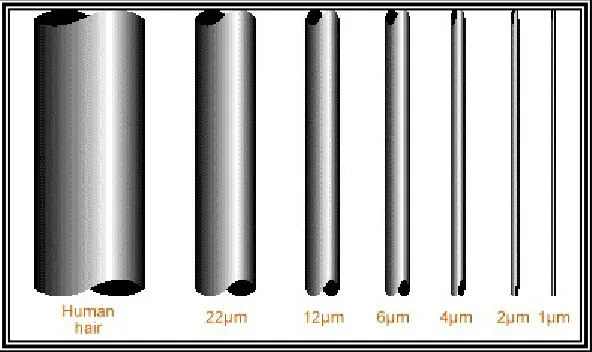
copper, and carbon. Metal fibers are very thin metal filaments, with diameters ranging from
1 to 80 microns (µm). Officially called a micrometer, a micron (µm) is one thousandth of a
millimeter. To illustrate the fineness of a metallic fiber of 1 µm, a comparison can be made
between these fibers and the diameter of a strand of human hair which ranges between 70
and 100 µm (Figure 6) (Bekaert Fiber Technologies, 2001).
Metallic fibers are typically produced by either using a bundle-drawing process or by
a shaving process. The
bundle-drawing process
consists of bundling several
fine metal wires then
drawing them continuously
and simultaneously from
source metals.
Figure 6: Metallic Fiber Diameters Compared to Human Hair Figure 7 illustrates the steps involved in the metal fiber bundle-drawing process.
While the shaving process in Figure 8, develops metallic
fibers by shaving off
the edge of a coil of
a thin sheet of metal.
Figure 7: Bundle Drawing Process
A thread developed from steel and polyester fibers is shown in Figure 9, while a
100% stainless steel thread is illustrated in Figure 10. Metallic fibers are highly conductive,
however they expensive and their brittle characteristics can damage spinning machinery over
time. In addition, they are heavier than most textile fibers making homogeneous blends
difficult to produce (Bekaert Fiber Technologies, 2001).
Figure 9: Stainless Steel and Polyester Thread
Figure 10: 100% Stainless Steel Thread Electrically conductive fibers can also be produced by coating the fibers with metals,
galvanic substances or metallic salts like copper sulfide and copper iodide. Metallic fiber
coatings produce highly conductive fibers, however adhesion between the metal and fiber
and corrosion resistance can present problems. Galvanic coatings produce fibers with
relatively high conductivity. However, galvanic coatings can only be applied to conductive
substrates, limiting these galvanic coatings to graphite and carbon fibers. Furthermore, the
galvanic coating process is complex and expensive. Due to these limitations, galvanic
coatings are usually not used for textiles. A variety of fibers can be coated with metallic
salts and the coating process can be accomplished on traditional textile machinery. Metallic
salt coatings can only achieve low conductivities and the fibers lose conductivity during
laundering. Altering coating procedures can improve these limitations and the appeal of
Electrically conductive fibers can be produced in filament or staple lengths and can
be spun with varying ratios of traditional non-conductive fibers to create yarns that possess
different degrees of conductivity. Conductive fibers are functionally compatible with the
base material so they can be used to develop a wash and wear conductive fabric that will
look and feel like a normal fabric. The electronic textile is completed when microelectronics
are linked to the fabric. Micro electronics provide digital and analog functions in response to
mouse input to activate sound and voice synthesis, and to incorporate remote controls for
signals, guiding, and controlling the electronic textile (Electro Textiles, 1999).
Optical fibers can also be used to produce interactive electronic textiles. Optical or
glass fibers, are about 120 micrometers in diameter. They are used to carry communications
or computer data signals in the form of pulses of light over long distances without the need
for repeaters. Optical fibers are used for many different applications including: composites,
telecommunications, local area networks (LAN's), cable TV, closed circuit TV, optical
fiber sensors, and conductive textiles (Bell College, 1997).
Optical fibers are developed from a mixture of silica sand, borates and trace amounts
of specialty chemicals. The mixture is then blended and fed into a furnace to dissolve the
sand mixture into molten glass. The molten glass flows to heat resistant platinum trays with
small tubular openings called "bushings." The molten glass is drawn out through the
bushings to a precise diameter and cooled by air and water to set the diameter and create a
filament. The filaments are then coated with an aqueous chemical mixture called a "sizing"
to protect the filaments during processing and handling. The production process is
completed when the sized filaments are wound and packaged. Optical fibers offer excellent
strength and they are not affected by sunlight exposure. However, they are relatively stiff
fibers that possess poor flexibility, drapability and abrasion resistance (Owens Corning,
Optical Fibers Microphone
Sensor
Transceiver
In 1996, optical and electrically conductive fibers were used by researchers at
Georgia Institute of Technology to develop a smart shirt for a project funded by the United
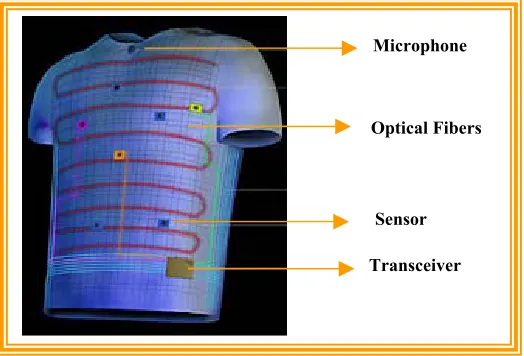
States Navy. The "Smart Shirt" is a T-shirt that functions like a computer to monitor the
wearer's heart rate, EKG, respiration, temperature, and other vital signs. The third and
forth generation "Smart Shirt" prototypes are illustrated in Figure 11 (Georgia Institute of
Technology, 2000).
This smart T-shirt utilizes a groundbreaking electro-optical textile, the Wearable
Motherboard™ Smart
Shirt, that integrates broad
based sensors with the
human body to eliminate
the need for loose wires
and discomfort associated
with many currently used
patient monitoring devices.
Figure 11: "Smart Shirt" 3rd (Left) and 4th (Right) Generation Prototypes
The technology behind this shirt allows sensors to be mounted at various locations on
the garment and allows information to be transferred to and from the sensors. The two
technology platforms used to develop
the Smart Shirt are a proprietary
textile platform and a wireless
communications/data management
software platform (Sensatex
Incorporated, 2001).
The “Smart Shirt” textile
platform (Figure 12) consists of the
Wearable Motherboard™, that permits information to be transferred and exchanged within
the garment. This textile platform collects data from various parts of the wearer's body and
routes the data to a small transceiver device attached to the waist portion of the shirt. The
transceiver handles the processing, transmission, and display of the wearer's vital signs.
After the data is collected by the transceiver the data management software platform
consisting of a computing system and a programming interface, transfers the information
from the garment to a wireless gateway. The gateway then transmits the complex
time-critical health data through the Internet where the actual monitoring occurs. The data is
processed with monitoring software then it is sent to the wearer and/or the wearer's
caregivers via the Internet. Together these platforms form a versatile framework for
incorporating sensing, monitoring, and information processing devices for biomedical
monitoring and wearable computing applications (Sensatex Incorporated, 2001).
Georgia Tech Research Corporation and Sensatex Incorporated, a start up company
funded by New York-based Seed One Ventures, formed a licensing agreement to
manufacture and market the "Smart Shirt." Sensatex expects the Smart Shirt to be less
costly than current monitoring systems and predicts the Smart Shirt will be available to
consumers in 2001. Presently, the Smart Shirt is being tested in over 12,000 clinical trials in
the United States and is in the process of receiving FDA approval (Georgia Institute of
Technology, 2000).
2.3.2 CONDUCTIVE YARNS AND THREADS
Conductive and optical fibers are just two materials that can be used to develop
conductive yarns, and therefore interactive electronic textiles. Metallic yarns can also be
used to produce electrically conductive textiles. Metallic yarns are created by wrapping a
non-conductive yarn with a metallic copper, silver, or gold foil to provide conductivity.
been produced since the mid-18th century (Post, E.R., Orth, M., Russo, P.R., and
Gershenfeld, N., 2000).
One example of this technology uses metallic silk organza. Metallic silk organza is a
finely woven silk fabric developed from two types of yarns, the warp is a plain silk yarn and
the weft is a silk yarn wrapped in a thin copper foil or thread (Figure 13). The metallic foil
or thread is prepared just like a cloth-core telephone wire, and is highly conductive (~0.1
Ω/cm).
The copper thread transforms the silk yarn into a highly conductive yarn with a silk
core. The physical properties of the silk core give the total yarn high tensile strength and a
tolerance for high temperatures, allowing
it to be sewn or embroidered on industrial
machinery without being damaged.
Furthermore, these properties make
metallic yarns very promising for
mass-producing interactive electronic textiles
(Orth, 1997).
Figure 13: Micrograph of Metallic Silk Organza
A micro controller circuit attached to the organza provides the electronic interactive
component for the fabricated circuit. The micro controller circuit shown in Figure 14
enables the textile to control light
emitting displays (LED'S), sense
touch along the length of the fabric,
and use audible feedback through a
piezoelectric speaker for interaction.
The micro controller and all of its supporting components are soldered on the surface of the
metallic organza weave (Post et al., 2000).
Protecting the fabricated circuit is the final phase in completing the interactive
electronic textile. Fabricated circuit protection assures the conductive yarns will not come
into contact with each other when the material is folded or twisted. Coating, supporting, or
backing the fabric with an insulating cloth layer can accomplish circuit protection. Coating
the fabric has proved to disturb the conductivity. Backing is the preferred method because it
provides a high degree of fabric flexibility (Post et al., 2000).
Conductive threads can also be used to develop interactive electronic textiles.
Conductive threads are similar to conductive yarns, due to their composition of conductive
fibers. However, there are some important differences between the two. Conductive threads
have smaller diameters and therefore they perform better when machine sewn. The threads
can easily pass through ordinary sewing machine needles and the thread's conductivity can
be controlled through stitch placement. Furthermore, the conductivity of some conductive
threads will increase from needle and bobbin contact. There are various types and diameters
of conductive thread available today (Post et al., 2000).
Conductive fibers, yarns, and threads can be processed on ordinary textile
machinery or by using embroidery techniques. Embroidery offers advantages over knitting
or weaving. Conductive thread and yarn embroidery can be accomplished on single or
multiple layers of fabric or can be applied on various types of textile and apparel products in
one step. In addition, the circuit layout and stitch patterns can be precisely specified in a
The embroidered fabric keyboard shown in Figure 15 was produced with a mildly
conductive stainless steel and polyester composite thread using ordinary embroidery
techniques. The keyboard is integrated into the Levi's Musical Jean Jacket developed by
Massachusetts Institute of Technology (MIT) Media Lab (Figure 16). This flexible and
durable embroidered fabric keyboard is highly responsive to touch, turning an ordinary
denim jacket into a wearable musical instrument that allows the wearer to play notes,
chords, and rhythms. The Levi's Musical Jean Jacket is not available in stores yet, but is
currently being test marketed in Europe ("Musical Jacket Project").
Figure 15: Embroidered Fabric Keypad
Figure 16: Levi's Musical Jean Jacket
2.3.3 CONDUCTIVE COATINGS
Traditional textiles can also be transformed into electrically conductive materials by
using conductive coatings. These coatings are suitable for use on many fiber types. They
also produce good conductivity without significantly altering existing substrate properties
such as density, flexibility, and handle. Coatings can be applied to the surface of fibers,
include electroless plating, evaporative deposition, sputtering, and coating the textile with a
conductive polymer.
Electroless plating involves immersing the substrate in an electroless plating solution.
Chemical reactions between the reducing agent in the solution and the metal ions form the
metal coating on the textile. Nickel and cooper are the most popular metals used for
electroless plating, however various types of metals can also be used. Electroless plating
has many advantages: it produces a uniform electrically conductive coating; any substrate
that remains stable in the electroless plating solution can be coated in this manner; and it is
possible to obtain coatings that possess unique mechanical, magnetic, and chemical
properties. The main disadvantage of electroless plating is the expense, this is due to the
high cost of the reducing agent used in the plating solution (Vaskelis, 1991).
Evaporative deposition takes place in a vacuum chamber. As the fabric enters the
vacuum chamber the pressure inside the chamber is adjusted to accommodate the substrate.
The coating metal is then heated to a temperature just below the boiling point to allow the
metal to substantially evaporate. The fabric is exposed to the vaporized metal where it
condenses on the surface and changes to a solid forming the coating. Aluminum is
commonly used for this coating process, however various types of metals can be used. This
process can produce extremely thin coatings for lower levels of conductivity or relatively
thick coatings when higher conductivity is required. The major markets for evaporative
deposition coatings include wall coverings, shades and drapery liners, automotive trim,
solar energy control films, paper stock for microwave browning and crisping bags, and
protective clothing. Research is being conducted to develop relatively thin highly conductive
coatings to create highly conductive lighter weight fabrics (Smith, 1988).
The sputtering process also takes place in a vacuum chamber, however the coating
process is different from evaporative deposition. The coating material is ejected atom by
textile substrates can be coated in this manner. In addition, different metals, alloys, or
oxides can be mixed or layered in a single application to create specialized coatings for
specific applications. This process can achieve a uniform coating with good adhesion to the
substrate. The sputtering coating process is slow, about 1/10 of the speed of evaporative
deposition. This is due to the low deposition rate of the coating material. This coating
method is costly due to the speed limitation. Presently, the main applications for this
coating process are textiles for military and aerospace applications (Siefert, 1993).
Conductive coatings can also be achieved by coating a textile with a conductive
polymer. A process called doping develops conductive polymers. Doping is an oxidation or
reduction process that mobilizes the electrons in the polymer creating an intra- or
intermolecular structure within the polymer. This new polymer structure allows the polymer
to conduct electricity, hence creating an electrically conductive polymer. Polymer
properties such as conductivity, hydrophilic/hydrophobic state of the polymers surface,
color, volume, and permeability for gases can also be adjusted during doping for specific
end use applications (Aldissi, 1989).
The commercialization of electrically conductive polymers is still in its infancy.
Presently, conductive polymer materials are used for various conductive and anti-static
coatings, and films. Modern research has revealed that conductive polymers can be used to
coat yarns or fabrics in an aqueous solution or by spraying the liquid conductive polymer on
the substrate. Conductive polymer coatings are superior to metal coatings because they are
highly conductivity, and have excellent adhesion and non-corrosive properties. Numerous
conductive polymers have been developed to date and new patents in this area are emerging
daily. Polyaniline and polypyrole are common conductive polymers being explored to coat
textile substrates (Kahn, Kimbrell, Fowler, & Barry 1993).
Challenges still remain in the area of conductive polymers. Existing conductive
difficult to process into end products using conventional processing methods. Presently,
conductive polymers are under intense research and development in the academic sector and
also in the chemicals and electronics industry to solve these production problems and
advance conductive polymer technology. As technology develops, researchers predict
conductive polymers will be used for a wide variety of applications within many industries
such as aerospace, automobile, chemical processing, electronic equipment, military
hardware, and textiles ("Electroactive Polymers," 1999).
Conductive coating can also be achieved by filling or loading textile fibers with
carbon or metallic salts such as copper sulfide. Carbon-loaded fibers possess good
conductivity and they are easily processed in conventional textile systems. Metallic-salt
loaded fibers have comparatively lower conductivity and are usually used when lower
conductivity is desired. Today conductive coatings are primarily used for industrial and
home furnishing textile applications, however they are finding new applications and
opportunities in the area of interactive electronic textile development (Heisey & Wightman,
1993).
In addition to using conductive coatings, a carbonizing process can be used to
develop electrically conductive textiles. Gortix Limited of Southport, UK is using this
process to develop electrically conductive textiles that provide constant heat at low voltages.
The carbonizing process involves processing the textile in a carbonization furnace at 1000oC
to create an electrically conductive textile. The resulting carbon textile is then encapsulated
by a reflector and moisture wicking layer, for durability and user comfort. The textile is
then connected to a power source (power pack or battery). As low voltage current is passed
through, the fabric is warmed according to changes in resistivity with temperature allowing
the simple circuitry to be used to control the temperature within 0.5oC. Gorix is a
developing outlets for its Gorix fabrics in Europe and the United States (Lennox-Kerr,
2000).
2.3.4 CONDUCTIVE INKS
Conductive ink technology is another method used to create interactive electronic
textiles. Adding metals such as carbon, copper, silver, nickel, and gold to traditional
printing inks creates conductive inks. These specialized inks can be printed onto various
substrates such as paper, plastic, and textiles to create electrically active patterns and
therefore electronic textiles. Companies such as Creative Materials Incorporated, DuPont,
Methode Electronics Incorporated, Motson, and Think and Tinker Limited currently
produce and sell conductive inks for creating electrically active patterns on substrates.
Conductive ink technology, originally developed for the production of smart cards or
printed circuit boards, has been used for years in various market applications. Computer
applications are by far the largest markets for smart cards or printed circuit boards. Other
markets that use printed circuit boards developed from conductive ink technology include:
communications, automotive, industrial electronics, instrumentation, government/military,
consumer (e.g. home thermostats) , and business retail (US Market, 1998).
Printed circuit boards are classified into two categories, rigid or flexible. Many of
the applications previously mentioned utilize rigid circuit technology, where the material is
incapable of bending or twisting. The demand for flexible circuit technology is increasing as
electronic and telecommunication devices are becoming more compact and lightweight. In
addition to reduced circuit sizes, flexible circuitry offers 360 degree bending capabilities,
3-D design capability, weight reductions, the ability to easily adapt to various applications,
greater conceptual design freedom, and increased circuit reliability (US Market, 1998).
As of 1998, rigid printed circuit boards represent 89% of the market, while flexible
printed circuit boards capture the remaining 11%. However, the flexible market is growing
is estimated to reach $13 billion in 2003. The rigid circuit market is forecasted to increase
6% annually, reaching $11 billion, while the flexible market will increase 15.5% annually
reaching $2 billion (Cahill, 1998).
The use of conductive inks for flexible printed circuits has increased in popularity
because they offer substantial cost saving over traditional plating techniques. Recent
technology has improved the durability and reliability of conductive inks, increasing their
popularity and use within many industries. Technological advances currently are improving
integrated circuit processing by increasing circuit speeds and reducing circuit sizes, further
increasing popularity of conductive inks (Cahill, 1998).
Colortronics is an example of one United States company successfully marketing a
conductive ink package for the development of flexible printed circuit boards on textiles.
Colortronics, located in Pennsylvania, is a research and development company specializing
in the development, manufacturing, and marketing of flexible conductive inks, paints and
coatings. Recently, they have patented a new technology called, The Brillion™ System.
This system combines colorful conductive inks, electronic components, and technology
know-how to create interactive talking products such as educational toys, T-shirts, sound
books, greeting cards, packaging, posters, and wallpaper.
Once printed, the conductive inks become the sensors creating a wireless current
carrying circuit. Electronic components, provided by small modules, are then attached to
the printed sensors for touch and voice activation. These small modules can fit unobtrusively
anywhere on the printed material, and are necessary to complete the wireless textile
circuitry. The Brillion™ System uses non-toxic conductive inks that maintain flexibility to
withstand bending and laundering without losing conductivity. This patented technology can
be licensed from Colortronics or products can be printed in their in-house facilities according
Conductive inks are currently being applied to substrates by using gravure,
flexographic, and rotary screen-printing technologies. Gravure printing technologies utilize
solid metal rollers engraved with the print design or wooden rollers carrying an engraved
metal wrapper. Ink is supplied to the engraved roller from a color tray via two intermediate
rollers. The excess ink is removed from the roller surface by a doctor blade, leaving ink
only in the engraved areas. As the substrate comes in contact with the engraved roller, the
ink that is deposited in the engraved areas transfers to the substrate creating the print. The
depth of the engraved design determines the amount of ink delivered, which controls the
depth of color applied to the substrate. This printing method is very capital intensive, for
both printing machinery and rollers. Since a separate engraved roller is required to print
each color in the design, it is necessary to keep a large inventory of print rollers on hand.
Purchasing and maintaining this large inventory of print rollers is expensive (Miles, 1994).
Flexographic printing is also a roller printing method. The print roller, also called
the stereo, is covered in rubber or a composite molding, and carries the design in relief.
Laser techniques are used to cut out the design in the material covering the rollers. The ink
is delivered to the stereo rollers by an engraved metering roller. The number of stereo rollers
used for printing depends on the number of colors in the print, normally there are between
six and eight stereo rollers. Flexographic printing is less capital intensive than gravure
printing in regards to both machinery and roller costs. However, ink costs are considerably
higher, due to the heavier ink loading necessary to achieve the required shade depth on
textile substrates. In addition, Flexographic printing is frequently slower and offers less
design complexity than gravure printing (Miles, 1994).
Rotary screen is a continuous printing method that uses engraved seamless metal or
plastic screen cylinders for applying print designs on substrates. Aseparate engraved screen
is required for each color in the print design and each color requires a separate print
pattern. The design cannot exceed the circumference of the screen cylinder. Sixteen inches
is the maximum repeat size obtainable for roller printing while screen-printing can obtain
forty-inch design repeats. The engraving process is expensive and long production delays
are common during design changeovers (Cohen & Price, 1994).
Digital Printing is another area drawing much attention in the application of
conductive inks. This is due to the unique production process of digital printing, creating
designs via computer then electronically transferring them directly to a printer. Digital
printing eliminates many of the intermediary steps associated with traditional printing
methods, offering greater design and production capabilities.
The unique digital printing process begins with the graphic image. Graphic image
data can be represented by either analog or digital signals. Many graphic images today begin
as an analog image, consisting of data in a continuous form. Digital printing technologies
require the print image to be in a digital format. If the graphic image is in a continuous
analog format than conversion to a discontinuous form using binary numbers is necessary to
create a graphic digital image (Cahill, 1998).
The conversion to a digital image from analog representation may be accomplished
by using one of three methods: scanning the design (artwork), creating the design using
computer aided design (CAD) software, or by screen separations. Using an electronic
scanner to scan the artwork into a computer software program automatically formats the
design into a digital format. Designs created in a CAD software programs produce a similar
effect, the image is naturally in a digital format upon creation. Screen separations, from
traditional rotary screen-printing production, can also be used to create a digital file. The
digital file created from the screen separations can be used to quickly create new colorways
with a digital printer. For many purposes, digital images are superior to analog images
because they can be easily manipulated by using computer software programs (Easterling,
Table 1: Areas of Design Flexibility for Direct Digital Printing
Unlimited Effects
Unlimited design repeats Reproduce original artwork Fine line precision and detail Photo realism
Tonal textural effects
Digital Media
Computer design rendering Scanning
Digital photography Simulations
Engineered Designs Continuous designs and pattern matching (darts, seams, armholes, and collars)
Mass Customization Opportunities On demand printing using digitally integrated automation to produce custom orders quickly
Product Variation
Custom designs and colorways Multiple product printing
Multiple versions of a single design Limited edition/special event items New product development
(King, 2000)
Once the design is in a digital format it is highly versatile. It can be printed to a
variety of substrates such as paper, vinyl, plastic, and textiles. Digital images are printed
from a digital printer directly onto the substrate. Many CAD software packages will
interface with digital printers, providing flexibility and reduced production times. Digital
files can also be used to drive a variety of digital printers, so images can be sent
electronically to other locations for viewing or printing. This allows the Internet to be used
as a data source and to generate a global network for the printing industry. Designs can be
transferred via the Internet to one location for production approval, and in seconds be sent to
another location for printing (Rehg, 1994).
Digital printing increases production efficiency from design conception to production
offering significant benefits over traditional printing methods. The benefits offered by
digital printing technologies have prompted many conductive ink developers to experiment
conductive ink developers, there are several challenges for successfully using digital
technologies for printing conductive inks. These challenges include:
Selecting the appropriate pre- and post- textile treatments
Developing the appropriate ink viscosity
Achieving the appropriate conductivity by:
- Constant agitation of the ink reservoir to prevent settling of the metallic additive
- Delivering appropriate ink quantities to the textile substrate
- Proper drying of the printed material (Armbruster, Borgenstein & Emil, 2001).
Even though there are many challenges for conductive inks, there is great potential
for creating flexible circuits on textiles using digital printing technologies. Research and
development to perfect mechanical circuit integrity and develop appropriate ink
concentrations for proper substrate adhesion is currently ongoing in this area. Overcoming
these production hurdles will enable conductive ink technologies to successfully use digital
printing for producing electronic textiles.
2.4 ENABLING TECHNOLOGIES
The electronic textile technologies previous discussed are used to create textiles that
have the ability to conduct electricity. Additional components including input and output
devices, sensors, and power supplies provide the necessary technologies for interaction,
hence creating an interactive electronic textile.
2.4.1 INTERACTIVE TECHNOLOGIES
Input devices including keyboards, speech and handwriting recognition systems are
some options being explored for interactive electronic textile data entry. Keyboards will be
around for a long time, but speech activated computing systems are expected to grow in
importance. By 2010, speech activated systems will be widely used in a variety of devices.
and Liquid Crystal Displays (LCD’s). CRT's are a major technology used for desktop
displays and televisions, while LCD's are growing fast for mobile and portable applications.
Other output technologies being explored include mirror displays and flexible light emitting
displays (Ducatel, 2000).
Sensors add features and functionality to interactive electronic textiles. They are
small electronic devices that have the ability to receive and respond to signals or stimuli.
Sensors enable electronic textile functions to be related to the users current activity or
situation. There are many types of sensors available that can be used in various
combinations to add selected functions to interactive electronic textiles. Camera and
keyboard sensors are being used to provide a variety of functions. Sensors can also be used
to monitor vital signs and signal the user when vitals go out of a certain range. Sensors can
either be attached or integrated into a textile substrate to add a variety of features to the
interactive electronic textile that can benefit the user (Farringdon, 2001).
Power supply technologies provide the electrical power for activating the components
integrated in the electronic textile. Batteries are currently being used to provide electrical
power for component activation. Battery technology has advanced over recent years due to
high demand for smaller, high energy, rechargeable batteries. Batteries have not only
become smaller and more powerful, some varieties are mechanically flexible,
water-resistant (washable), and can be fabricated at lower costs (Hahn & Reichl, 1999).
An example of a battery capable of providing electrical power for interactive
electronic textiles was recently developed by a German research team led by The Fraunhofer
Institute for Reliability and Microintegration (FhG-IZM). This research team developed a
small battery that can be printed on a substrate and fabricated at high production speeds in
button-sized or coin-type format at cost below one United States Dollar. The battery is
fabricated by screen printing a thick layer of a silver-oxide based paste then applying a thin
AgO-ZN battery. These batteries can be printed on a variety of substrates. In addition to
textile substrates, they can also be directly integrated into plastic cards, smart labels, and
hybrid circuits. As an alternative to battery power and to further expand power supply
technology, research is underway to utilize solar energy and energy created by the human
body as a source of electrical power for interactive electronic textiles (Hahn & Reichl,
1999).
2.4.2 NANOTECHNOLOGY
Nanotechnology is a new key technology that can further develop the previously
mentioned interactive technologies. Nanotechnology is defined as the fabrication of devices
with molecular scale precision. This involves controlling the structure of matter
molecule-by-molecule throughout the manufacturing process to create products and byproducts with
specific engineered characteristics. The idea of fabricating devices and materials according
to atomic specifications was first suggested by scientist Richard Feynman in 1959. The first
journal article published on molecular nanotechnology: "Molecular Engineering: An
approach to the development of general capabilities for molecular manipulation," appeared
12 years later in 1981 in the Proceedings of the National Academy of Sciences. Currently,
nanotechnology is still in an infantile stage. However, the future looks promising, many
companies are fabricating nonomachines, nanoelectronics, and other nonodevices to
improve existing products and to create many new ones. In addition, nanotechnology is also
being applied to areas of textile production ("The Coming Revolution in Molecular
Manufacturing," 2001).
Devices fabricated with features less than 100 nanometers (nm), are considered
products of nanotechnology. A nanometer is a unit of length measuring one billionth of a
meter (10–9 m) and is usually used to describe the size of a single molecule. This
revolutionary technology has the potential to create stronger and smarter textiles by enabling
Molecules, the building blocks of textiles, are tangled together in various ways to
form fibers. Spinning fibers into yarns and then weaving or knitting them into various
designs creates a fabric. By using nanotechnology to create textiles from the molecular level
we can reinforce the original molecules with additional molecules to develop stronger
textiles. For example, carbon molecules can be used as reinforcement to increase tensile
strength without affecting the textiles flexibility. Furthermore, nanotechnology can
potentially make textiles smarter or electrically interactive. Molecule-sized computers,
sensors, and electronic devices, that can be programmed for specific purposes, can be
directly integrated into textiles using nanotechnology (McGuinness, 1997).
Considering nanotechnology is still being perfected, it is having an enormous impact
on many fields of science. Presently, nanotechnology is expanding into the areas of physics,
biology, engineering, chemistry, and computer science. As this rapid progress continues,
we will increase our ability to implement beneficial breakthroughs in many areas including
interactive electronic textile development ("Introduction To Nanotechnology," 2001).
Microelectromechanical Systems (MEMS), is another area closely related to
nanotechnology that is impacting interactive electronic textile development. MEMS are also
known as micromachines, nanomachines, or transducers that are less than one square
millimeter in size. MEMS usually consist of mechanical microstructures, microsensors,
microactuators, and electronics integrated into a single chip. MEMS could potentially
provide smart-sensors for electronic textiles, however further research is necessary to
materialize this idea (Holme, 2000).
2.4.3 ELECTRONIC COMPONENT INTEGRATION
Regardless of the conductive materials used to develop the electronic textile, the
electronic components and power supply must be either attached or embedded into the textile
some of the methods being used to accomplish electronic component and power supply
integration (Post et al., 2000).
Soldering involves mounting the components directly onto the textiles surface. The
solders are soft alloys of lead (Pb), tin (Sn), or sometimes silver (Ag), that are used to join
the metallic electrical components within the textile. Soldering achieves good electrical
contact within the textile. However, soldered components are not suitable for applications
where they could potentially come in contact with a user's body, due to their toxicity.
Furthermore, fabric flexibility is often compromised, making soldering unfavorable for
many apparel applications (Post et al., 2000).
Bonding involves using conductive adhesives to embed components into textile
substrates. Conductive adhesives can be developed according to the end use application.
Therefore, this method is more favorable over soldering for apparel applications. Non-toxic,
highly conductive, highly durable, and moderately flexible conductive adhesives can
potentially be used to bond rigid components with flexible textile substrates. Conductive
adhesives present a viable fabrication technique for embedding components into textile
substrates. Further work in this area will advance the possibilities for fabricating textile
circuitry in this manner (Post et al., 2000).
Components can also be stapled into conductive stitched circuits to create electronic
textile circuitry. This involves pressure-forming a component to grip a sewn conductive
trace within the textile substrate. When the substrate flexes or bends the conductive trace is
free to move within the pressure-formed component, forming a self-wiping conductivity
between the fabric and the components. However, mismatches often occur when
pressure-forming rigid components to flexible substrates, potentially limiting the textiles flexibility.
In addition, normal flexing of the textile stretches the pins that attach the component to the
Steel Threads
Steel Composite Threads
Joining involves attaching an electronic component's thread frame directly to a
stitched fabric circuit. Threads leading out of the electronic component can be stitched,
punched, or woven through the substrate and can also be connected to other components.
Joining components to textile substrates in this manner constrains the components to specific
locations allowing the conductive threads to be evenly balanced. Figure 17shows square
and round component packages that have been stitched onto a textile substrate and Figure 18
shows a stitch fastened component
package that has been applied by
laying thread flat on the textile surface
and fastening it by stitches at regular
intervals (Post et al., 2000).
Figure 17: Stitched Square and Round Component Packages
Figure 18: Stitch Fastened Component Package Soldering, bonding, stapling, and joining are some of the methods being used to
embed electronic components into textile substrates. Each of these textile circuit fabrication
techniques has its advantages and disadvantages. Therefore, the textile substrate and its
final application will help determine the appropriate circuit fabrication technique to complete
the interactive electronic textile.
2.4.4 WIRELESS COMMUNICATION NETWORKS
Electronic components must be connected by some means in order to create