Clinical Interventions in Aging
Dove
press
R e v I e w
open access to scientific and medical research
Open Access Full Text Article
Background: Exercise programs that challenge an individual’s balance have been shown to
reduce the risk of falls among older adults. Virtual reality computer-based technology that provides the user with opportunities to interact with virtual objects is used extensively for entertainment. There is a growing interest in the potential of virtual reality-based interventions for balance training in older adults. This work comprises a systematic review of the literature to determine the effects of intervention programs utilizing the Nintendo Wii console on balance control and functional performance in independently functioning older adults.
Methods: Studies were obtained by searching the following databases: PubMed, CINAHL,
PEDro, EMBASE, SPORTdiscus, and Google Scholar, followed by a hand search of biblio-graphic references of the included studies. Included were randomized controlled trials written in English in which Nintendo Wii Fit was used to enhance standing balance performance in older adults and compared with an alternative exercise treatment, placebo, or no treatment.
Results: Seven relevant studies were retrieved. The four studies examining the effect of
Wii-based exercise compared with no exercise reported positive effects on at least one outcome measure related to balance performance in older adults. Studies comparing Wii-based training with alternative exercise programs generally indicated that the balance improvements achieved by Wii-based training are comparable with those achieved by other exercise programs.
Conclusion: The review indicates that Wii-based exercise programs may serve as an
alterna-tive to more conventional forms of exercise aimed at improving balance control. However, due to the great variability between studies in terms of the intervention protocols and outcome measures, as well as methodological limitations, definitive recommendations as to optimal treatment protocols and the potential of such an intervention as a safe and effective home-based treatment cannot be made at this point.
Keywords: virtual reality, exergame, balance, exercise, falls
Introduction
Approximately one third of individuals aged 65 years or older experience at least
one fall a year,1,2 with over 40% of falls resulting in significant physical injury or
death.3 Fall-related injuries, as well as fear of falling, contribute to reduced mobility,
which curtails an individual’s participation in daily activities, leading ultimately to
a decline in quality of life.3,4 With increased life expectancy in developed countries,
fall prevention has become an urgent global health challenge.5
Causes of falls are multifaceted and their prevention requires a comprehensive,
multidimensional treatment strategy.2,6–8 It is well documented that some of the risk
factors for falls related to the neuromuscular system, such as impaired balance and gait as well as reduced muscle strength, can be modified by appropriate exercise
Journal name: Clinical Interventions in Aging Article Designation: Review
Year: 2014 Volume: 9
Running head verso: Laufer et al
Running head recto: Wii-based exercise enhances balance in older adults DOI: http://dx.doi.org/10.2147/CIA.S69673
Does a wii-based exercise program enhance
balance control of independently functioning
older adults? A systematic review
Yocheved Laufer Gali Dar
einat Kodesh
Physical Therapy Department, Faculty of Social welfare and Health Sciences, University of Haifa, Haifa, Israel
Correspondence: Yocheved Laufer Physical Therapy Department, Faculty of Social welfare and Health Sciences, University of Haifa, Haifa, Israel 31905 email [email protected]
Clinical Interventions in Aging downloaded from https://www.dovepress.com/ by 118.70.13.36 on 20-Aug-2020
For personal use only.
This article was published in the following Dove Press journal: Clinical Interventions in Aging
23 October 2014
Dovepress Laufer et al
programs.9–11 A systematic review aimed at establishing
whether particular components of an exercise program are associated with a greater decrease in falls determined that larger relative effects on fall prevention are seen in programs
that include exercises focusing on balance control.12 Thus,
intervention programs incorporating exercises that challenge balance, such as Tai Chi exercises, have been shown to reduce the risk of falls among older adults.13,14 The intensity
of the balance-focused exercise program and the need to adhere to it throughout one’s lifetime are crucial for
success-ful fall prevention.12 Therefore, intervention programs must
be designed to encourage exercise compliance by stimulating motivation and being easily accessible, while at the same time having no adverse effects.
Virtual reality (VR) computer-based technology provides the user with opportunities to interact with virtual objects
and events that simulate the real world.15,16 By offering the
user the opportunity to interact with a variety of engaging activities, some of which may be too risky when practiced in the real world, VR technology can encourage repetitive task-specific behavior graded to the competence level of the user, while providing the feedback necessary for effective motor
learning.17,18 Thus, VR-based exercise can provide
experien-tial, active learning opportunities that are fun, motivating, and
challenging whilst being safe and ecologically valid.17 Due
to its potential as a means to enhance motor and cognitive learning, VR technology is emerging as a rehabilitation tool for individuals with a variety of physical disabilities, includ-ing stroke,19 Parkinson’s disease,20 and cerebral palsy.21
The use of VR technology has rapidly expanded in the last decade, with the introduction of off-the-shelf commercial consoles and games. Although these systems were developed for entertainment purposes, they have evolved as a means to encourage fitness exercise (termed exergames) in the general
population.22,23 As commercial systems are much less
expen-sive than custom-developed rehabilitation tools, off-the-shelf systems are also gaining popularity as treatment modalities for motor and cognitive rehabilitation of subjects with a
variety of orthopedic and neurological impairments.24–26 Of
the four best known commercial systems (Nintendo Wii, Dance Dance Revolution, Playstation EyeToy, and Microsoft
Kinect),27,28 Nintendo Wii is the most popular system applied
for rehabilitation purposes. Thus, a recent systematic review of commercial systems used for rehabilitation of the upper limb following a stroke identified ten studies that utilized the Nintendo Wii and only two that used the PlayStation Eye
Toy.29 In a similar systematic review regarding the use of
VR in Parkinson’s disease, all six studies identified utilized
the Nintendo Wii system.30 A recent audit by the National
Stroke Foundation of Australia found that 84 of 111 (76%) metropolitan stroke rehabilitation hospitals purchased a
Nintendo Wii console.31 Further, in a preliminary literature
review, we did not identify any randomized controlled studies on the effects of VR-based interventions on balance control in older adults with commercial systems other than the Nintendo Wii.
The popularity of this system is probably due to the vari-ety of video games enabled through both the Wii Remote (Wiimote) and the Wii Balance Board (Nintendo of America Inc., Redmond, WA, USA) peripheral devices. The Wiimote incorporates three-dimensional accelerometer technology that tracks arm movements and can be used, for example, to encourage players to mimic movements performed in real-life sports, such as swinging a tennis racquet. The Wii Balance Board is a platform device capable of monitoring changes in the individual’s center of pressure. It is employed in con-junction with Wii Fit software and uses an avatar to provide feedback regarding changes in one’s center of pressure throughout a variety of interactive games. Both peripheral devices can be used in games that challenge an individual’s balance capabilities, while providing appropriate visual and auditory feedback regarding balance performance.
Since the Wii gaming console was introduced to the market in 2006, there has been a growing interest in its poten-tial for balance training in older adults. Whereas preliminary
studies involved only single-case designs32,33 or single-group
designs (with no control group),34,35 a number of studies of
higher methodological quality have been published in the last few years. The primary objective of the present study was to systematically review randomized controlled trials that examined the effects of intervention programs utilizing the Nintendo Wii console on balance control in independently functioning older adults. The success of such interventions was reviewed in comparison with alternative exercise pro-grams, as well as with no exercise intervention. The present review was written in accordance with the guidelines rec-ommended by the PRISMA (Preferred Reporting Items for
Systematic Reviews and Meta-Analysis) statement.36
Methods
Search strategy
An online search of the PubMed (since 1966), CINAHL (since 1982), PEDro, EMBASE (since 1974), SPORTdiscus (since 1930), and Google Scholar databases was performed independently by two of the authors (YL, EK). The last full search was conducted in June 2014. The electronic search
Clinical Interventions in Aging downloaded from https://www.dovepress.com/ by 118.70.13.36 on 20-Aug-2020
Dovepress wii-based exercise enhances balance in older adults
was completed by a hand search of bibliographic references of the included studies.
The search terms used were: “virtual reality”, “video game”, “exergame”, and “Wii Fit”, crossed with “balance”, “postural control”, or “falls”. The search was restricted to the English language. The search was initially conducted by two of the authors independently (YL, EK) and final-ized by the authors in collaboration. Duplicate publications were removed after all databases and reference lists were searched. The titles and abstracts of all identified articles were reviewed, with the full article reviewed whenever deemed necessary to finalize a decision about inclusion.
Study inclusion and exclusion criteria
The authors screened all selected citations independently. Study inclusion criteria were:
• Randomized controlled trials appearing in refereed
journals.
• Trials in which a VR exergame based on Nintendo Wii
was used to enhance standing balance performance in comparison with an alternative exercise treatment that did not involve VR or interactive computer gaming, or in comparison with a placebo treatment, or with no treatment at all. In cases where a conventional exercise program was added to the Wii-based intervention, the article was included only if the same conventional program was offered to the control group.
• Participants were adults aged 55 years or older
liv-ing in the community or independently in retirement centers.
• Participants were referred to the VR intervention
primar-ily to improve standing/walking balance control.
• Participants were without cognitive impairment and were
able to ambulate independently with/out assistive devices, with/out a history of falls.
• A report of at least one outcome measure assessing
standing/walking balance capabilities, fall incidence, or fall efficacy.
Exclusion criteria were:
• Studies designed to address populations with specific
neurological (ie, stroke, Parkinson’s disease, and multiple sclerosis), metabolic (ie, diabetes), or musculoskeletal (ie, rheumatoid arthritis) deficits that might impair balance control.
• Studies with a PEDro score of #4.
• Studies with less than six participants in each intervention
group.
• Studies in which no inferential statistics were reported.
• Studies reported in conference proceedings, posters,
theses, or dissertations.
Data extraction
A data extraction form was developed by the reviewers that included the following details: number of male and female subjects in each treatment group; subjects’ mean age (stan-dard deviation [SD]) per group; type of Wii peripherals and Wii games used; type of control group intervention; subjects’ residence, location of intervention; provision of supervision during intervention; number of treatments per week; number of treatment weeks; duration of each treatment; statistical analyses employed; outcome measures assessed; and statisti-cally significant changes per outcome measure. Each author extracted the data independently, and differences between the reviewers in regard to the data summary were discussed and resolved in a face-to-face meeting.
Quality assessment
The methodological quality of the included studies was assessed in accordance with the PEDro classification scale, providing a score between 0 to 10.37 The PEDro ratings,
which are provided by the Centre for Evidence-Based
Phys-iotherapy at the George Institute for Global Health (http://
ptwww.cchs.usyd.edu.au/), were used whenever available. Studies for which a PEDro score was not published were scored independently by the authors, with discrepancies dis-cussed in a face-to-face meeting and resolved by agreement. Due to the nature of the studies, blindness of the subjects or the individuals providing the treatment was not possible; hence, the maximum possible score was 8. Studies were rated between excellent and poor on the basis of the PEDro score as follows: 8–7 (excellent), 6 (good), and 4–5 (fair).
Results
Study selection
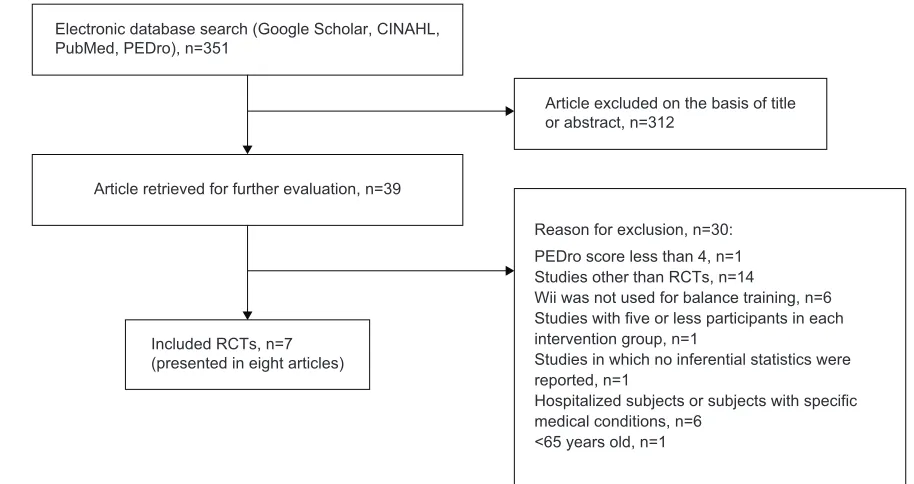
Initial screening resulted in a total of 351 papers, of which 39 were considered relevant on the basis of their title and abstract. Full text review of these studies indicated that eight randomized controlled trials met all the inclusion criteria for review. Two of these articles were considered as a single study, since consultation with their primary author determined that they reported different outcome measures
obtained from the same data set.38,39 Thus, the final review
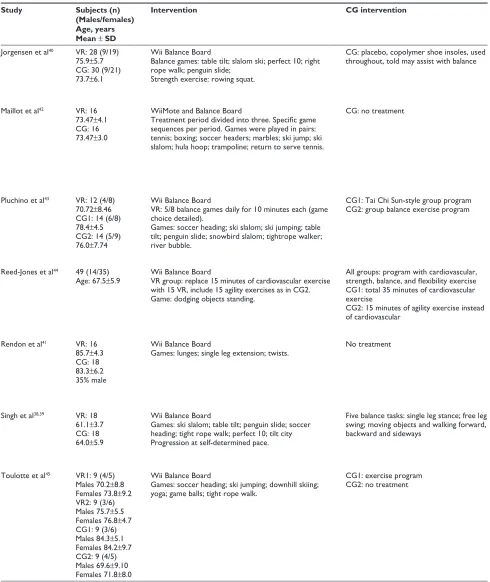
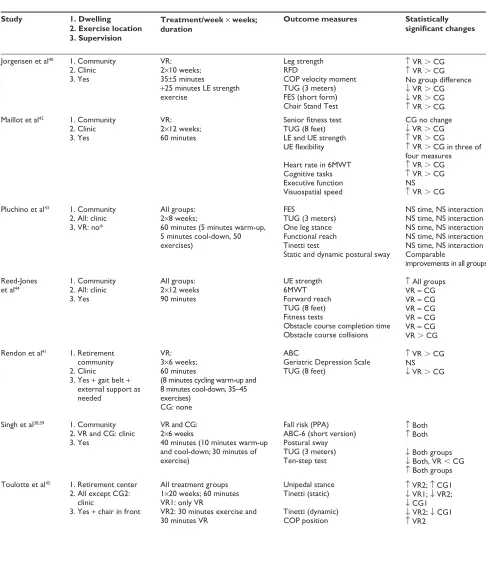
included seven randomized controlled trials. The selection process for the studies included in this systematic review is presented in Figure 1. Characteristics of the final seven studies retrieved are summarized in Table 1.
Clinical Interventions in Aging downloaded from https://www.dovepress.com/ by 118.70.13.36 on 20-Aug-2020
Dovepress Laufer et al
Electronic database search (Google Scholar, CINAHL, PubMed, PEDro), n=351
Article retrieved for further evaluation, n=39
Article excluded on the basis of title or abstract, n=312
Included RCTs, n=7 (presented in eight articles)
Reason for exclusion, n=30: PEDro score less than 4, n=1 Studies other than RCTs, n=14
Wii was not used for balance training, n=6 Studies with five or less participants in each intervention group, n=1
Studies in which no inferential statistics were reported, n=1
Hospitalized subjects or subjects with specific medical conditions, n=6
<65 years old, n=1
Figure 1 Results of the literature search conducted in June 2014.
Abbreviation: RCT, randomized controlled trial.
Methodological quality
The methodological quality of the included papers according to the PEDro classification scale is presented in Table 2. The
mean PEDro score was 5.57 (SD0.78), with one study graded
excellent (score 7/10),40 two good (score 6/10),38–41 and the
rest fair (score 5/10).42–45
Four items were scored positive in all studies: “eligi-bility criteria”, “random allocation”, “baseline compara-bility”, “point estimates and variacompara-bility”, and “adequate follow-up”, while “between group comparison” was scored positive in most of the studies. In contrast, blindness of the participants or the therapists was impossible due to the nature of the studies, and only three studies
main-tained blindness of the assessor.38–41 Finally, “concealed
allocation”43,45 and “intention to treat” were rated positive
in only two studies.40,41
Characteristics of included studies
Subjects
The seven studies reviewed included 285 older adults, with 126 participating in VR-based training (Wii Fit) and 159 in control groups. The number of subjects per group ranged from nine to 30 subjects, with a mean of 14.5 (SD7.13)
and 14.18 (SD6.03) subjects in the VR and control groups,
respectively. Mean group ages ranged between 61.1 and 85.7 years, with a mean age of over 70.0 years reported in five studies.40–43,45
vR intervention
The majority of the studies utilized the Wii Balance Board for the VR interaction, and one also used the Wiimote
console.42 With the exception of one study that included two
groups training with the Wii,45 only one group participated
in VR-based training in each study.
A variety of 27 games were used in the different studies.
The number of different games per study varied from one44 to
nine,43 with a mean of 5.85 (SD 2.85) games per study.
“Soccer heading”, “slalom ski”, and “tight rope walk” were the most popular games and were used in four studies. The instructions regarding the interaction time with each game and the sequence of the games within the intervention period were extremely variable, as was the degree of detail provided to the reader regarding these parameters.
All the VR interventions were carried out in a clinical setting, and with the exception of one study,43 the participants
were supervised during the interaction by an attending clini-cian. In two studies, additional precautions were taken, either by placing a chair in front of the participant45 or by using a gait
belt, to allow for external support as necessary.41 In all
stud-ies, except for one in which subjects practiced in pairs,42 the
games were played on a one-to-one basis.
Control interventions
Only in one study the control group received a placebo treat-ment as the subjects were informed that special copolymer
Clinical Interventions in Aging downloaded from https://www.dovepress.com/ by 118.70.13.36 on 20-Aug-2020
Dovepress wii-based exercise enhances balance in older adults
shoe insoles may aid their balance.40 In two studies with one
control group, no treatment was offered;41,42 in one study that
had two control groups, one received no treatment and the
second received an alternative exercise program.45 In three
additional studies, the control groups received an alterna-tive exercise program.38,39,43,44 The alternative exercises for
the control group varied between studies.
Duration and number of treatments
The duration of the VR intervention ranged from 6 to
20 weeks, with a mean of 10.57 (SD4.85) weeks. The total
number of treatments ranged from 12 to 24, with a mean of
19.14 (SD4.29). The length of treatment ranged from 35 to
90 minutes, with a mean of 57.85 (SD17.76) minutes. Total
treatment time ranged from 480 to 2,160 minutes, with a
mean of 1,145.7 (SD547.5) minutes.
Outcome measures
Assessments were carried out pre-intervention and imme-diately post-intervention in all the studies. An additional
mid-term assessment was conducted in only one study.44 No
study included follow-up assessments.
All of the studies employed at least one outcome measure that examined change in functional balance performance. The most frequently used measure was the Timed Up and Go (TUG) test, which was tested in all but one study that used unipedal stance time (eyes open and closed) and the Tinetti Balance test instead.45 While two studies did not
include any additional functional tests,41,42 most studies
incorporated additional clinical tests, such as the chair stand test, which is considered both a functional test and a general
assessment of lower extremity strength.40,42,44 Other clinical
tests included were the functional reach test,43,44 the Tinetti
Balance test,43,45 the one-leg stance test,43,45 obstacle course
completion,44 and the ten-step test.38 In addition to clinical
balance tests, four studies incorporated instrumented mea-sures of postural sway.38,40,43,45
Since no follow-up tests were included, none of the studies demonstrated a treatment effect on fall frequency. However, two studies included questionnaires examining treatment effect on fall risk,38,43 and four used a questionnaire38,40,41,43 to
evaluate the intervention effect on fear of falling, which has been shown to be related to activity limitations and fall risk.46,47
Other performance measures examined were fitness and muscle strength. The six-minute walk test was used to examine
treatment effect on activity endurance in two studies42,44 and
one study incorporated a senior fitness test.44 Effect on muscle
strength was evaluated in three studies.40,42,44 Finally,
mea-sures of cognitive performance42 and depression were tested
in only one study.41
Treatment effect
Due to methodological variability and insufficient data, the effects of Wii-based training could not be pooled for a meta-analysis. Thus, for example, while TUG was the most frequently used test, incorporated in all but one
study,45 the distance walked in each direction was 3 meters
in three studies39,40,43 and 8 feet in three studies.41,42,44 These
differences, as well as insufficient data in two of the
studies,41,42 along with different control interventions made
it impossible to perform a meta-analysis.
All four studies comparing the VR group with no treat-ment or with a sham treattreat-ment indicated that VR training had
a significant positive effect on the TUG test.40–42,45 Among
the three studies that compared the Wii-based program with a different exercise program, Pluchino et al43 reported no
significant improvement in TUG for either treatment group, similar improvements in both groups were noted by
Reed-Jones et al44 and greater improvements in TUG were reported
for the group receiving an alternative exercise program in the third study.39
Significantly greater effects were noted for the VR group when compared with a control group in the chair stand test,40,42 the six-minute walk test,42 and the Tinetti static
test.45 Somewhat less consistent results were obtained when
comparing the VR intervention with an alternative interven-tion. While Pluchino et al43 reported no significant effect
on performance measures in either treatment group for the
forward reach test and the Tinetti static test,43 Reed-Jones
et al44 reported comparable improvements in both the
VR-based and non-VR-VR-based interventions for the chair stand test, the six-minute walk test, the forward reach test, the obstacle course test, and the Tinetti static test, and Singh et al reported comparable results for the ten-step test.38 A positive
effect on postural sway measures were noted in three39,43,45 of
four studies.40 Finally, the results of the balance self-efficacy
questionnaires indicated improved self-confidence following Wii-based training in two studies,40,41 no significant
improve-ment in one,43 and comparable positive results when the effect
of Wii-based training was compared with an alternative
exercise program.38
Discussion
The present systematic review was conducted to evaluate the effects of VR-based training with the Wii gaming console on
Clinical Interventions in Aging downloaded from https://www.dovepress.com/ by 118.70.13.36 on 20-Aug-2020
Dovepress Laufer et al
Table 1 Study characteristics
Study Subjects (n) (Males/females) Age, years Mean ± SD
Intervention CG intervention Study 1. Dwelling
2. Exercise location 3. Supervision
Treatment/week × weeks;
duration Outcome measures Statistically significant changes
Jorgensen et al40 vR: 28 (9/19)
75.9±5.7 CG: 30 (9/21) 73.7±6.1
wii Balance Board
Balance games: table tilt; slalom ski; perfect 10; right rope walk; penguin slide;
Strength exercise: rowing squat.
CG: placebo, copolymer shoe insoles, used
throughout, told may assist with balance Jorgensen et al
40 1. Community
2. Clinic 3. Yes
vR: 2×10 weeks; 35±5 minutes
+25 minutes Le strength exercise
Leg strength RFD
COP velocity moment TUG (3 meters) FeS (short form) Chair Stand Test
↑ vR CG
↑ vR CG No group difference
↓ vR CG
↓ vR CG
↑ vR CG Maillot et al42 vR: 16
73.47±4.1 CG: 16 73.47±3.0
wiiMote and Balance Board
Treatment period divided into three. Specific game sequences per period. Games were played in pairs: tennis; boxing; soccer headers; marbles; ski jump; ski slalom; hula hoop; trampoline; return to serve tennis.
CG: no treatment Maillot et al42 1. Community
2. Clinic 3. Yes
vR: 2×12 weeks; 60 minutes
Senior fitness test TUG (8 feet) Le and Ue strength UE flexibility
Heart rate in 6MwT Cognitive tasks executive function visuospatial speed
CG no change
↓ vR CG
↑ vR CG
↑ vR CG in three of four measures
↑ vR CG
↑ vR CG NS
↑ vR CG
Pluchino et al43 vR: 12 (4/8)
70.72±8.46 CG1: 14 (6/8) 78.4±4.5 CG2: 14 (5/9) 76.0±7.74
wii Balance Board
vR: 5/8 balance games daily for 10 minutes each (game choice detailed).
Games: soccer heading; ski slalom; ski jumping; table tilt; penguin slide; snowbird slalom; tightrope walker; river bubble.
CG1: Tai Chi Sun-style group program
CG2: group balance exercise program Pluchino et al
43 1. Community
2. All: clinic 3. vR: no*
All groups: 2×8 weeks;
60 minutes (5 minutes warm-up, 5 minutes cool-down, 50 exercises)
FeS
TUG (3 meters) One leg stance Functional reach Tinetti test
Static and dynamic postural sway
NS time, NS interaction NS time, NS interaction NS time, NS interaction NS time, NS interaction NS time, NS interaction Comparable
improvements in all groups
Reed-Jones et al44 49 (14/35)
Age: 67.5±5.9 wii Balance BoardvR group: replace 15 minutes of cardiovascular exercise with 15 vR, include 15 agility exercises as in CG2. Game: dodging objects standing.
All groups: program with cardiovascular, strength, balance, and flexibility exercise CG1: total 35 minutes of cardiovascular exercise
CG2: 15 minutes of agility exercise instead of cardiovascular
Reed-Jones
et al44 1. Community2. All: clinic
3. Yes
All groups: 2×12 weeks 90 minutes
Ue strength 6MwT Forward reach TUG (8 feet) Fitness tests
Obstacle course completion time Obstacle course collisions
↑ All groups vR = CG vR = CG vR = CG vR = CG vR = CG vR CG
Rendon et al41 vR: 16
85.7±4.3 CG: 18 83.3±6.2 35% male
wii Balance Board
Games: lunges; single leg extension; twists. No treatment Rendon et al
41 1. Retirement
community 2. Clinic
3. Yes + gait belt +
external support as needed
vR: 3×6 weeks; 60 minutes
(8 minutes cycling warm-up and 8 minutes cool-down, 35–45 exercises)
CG: none
ABC
Geriatric Depression Scale TUG (8 feet)
↑ vR CG NS
↓ vR CG
Singh et al38,39 vR: 18
61.1±3.7 CG: 18 64.0±5.9
wii Balance Board
Games: ski slalom; table tilt; penguin slide; soccer heading; tight rope walk; perfect 10; tilt city Progression at self-determined pace.
Five balance tasks: single leg stance; free leg swing; moving objects and walking forward, backward and sideways
Singh et al38,39 1. Community
2. vR and CG: clinic 3. Yes
vR and CG: 2×6 weeks
40 minutes (10 minutes warm-up and cool-down; 30 minutes of exercise)
Fall risk (PPA) ABC-6 (short version) Postural sway TUG (3 meters) Ten-step test
↑ Both
↑ Both
↓ Both groups
↓ Both, vR CG
↑ Both groups Toulotte et al45 vR1: 9 (4/5)
Males 70.2±8.8 Females 73.8±9.2 vR2: 9 (3/6) Males 75.7±5.5 Females 76.8±4.7 CG1: 9 (3/6) Males 84.3±5.1 Females 84.2±9.7 CG2: 9 (4/5) Males 69.6±9.10 Females 71.8±8.0
wii Balance Board
Games: soccer heading; ski jumping; downhill skiing; yoga; game balls; tight rope walk.
CG1: exercise program
CG2: no treatment Toulotte et al
45 1. Retirement center
2. All except CG2: clinic
3. Yes + chair in front
All treatment groups 1×20 weeks; 60 minutes vR1: only vR
vR2: 30 minutes exercise and 30 minutes vR
Unipedal stance Tinetti (static)
Tinetti (dynamic) COP position
↑ vR2; ↑ CG1
↓ vR1; ↓ vR2;
↓ CG1
↓ vR2; ↓ CG1
↑ vR2
Note: *Author’s confirmation regarding no supervision of Wii interaction, with no adverse effects.
Abbreviations: VR, virtual reality (experimental group); CG, control group; TUG, Timed Up and Go; NS, not significant; ABC, Activities-specific Balance Confidence Scale; LE, lower extremities; UE, upper extremities; COP, center of pressure; FES, Falls Efficacy Scale; 6MWT, six-minute walk test; RFD, rate of force development; SD, standard deviation; PPA, Physiological Profile Approach; Wiimote, Wii Remote.
Clinical Interventions in Aging downloaded from https://www.dovepress.com/ by 118.70.13.36 on 20-Aug-2020
Dovepress wii-based exercise enhances balance in older adults
Table 1 Study characteristics
Study Subjects (n) (Males/females) Age, years Mean ± SD
Intervention CG intervention Study 1. Dwelling
2. Exercise location 3. Supervision
Treatment/week × weeks;
duration Outcome measures Statistically significant changes
Jorgensen et al40 vR: 28 (9/19)
75.9±5.7 CG: 30 (9/21) 73.7±6.1
wii Balance Board
Balance games: table tilt; slalom ski; perfect 10; right rope walk; penguin slide;
Strength exercise: rowing squat.
CG: placebo, copolymer shoe insoles, used
throughout, told may assist with balance Jorgensen et al
40 1. Community
2. Clinic 3. Yes
vR: 2×10 weeks; 35±5 minutes
+25 minutes Le strength exercise
Leg strength RFD
COP velocity moment TUG (3 meters) FeS (short form) Chair Stand Test
↑ vR CG
↑ vR CG No group difference
↓ vR CG
↓ vR CG
↑ vR CG Maillot et al42 vR: 16
73.47±4.1 CG: 16 73.47±3.0
wiiMote and Balance Board
Treatment period divided into three. Specific game sequences per period. Games were played in pairs: tennis; boxing; soccer headers; marbles; ski jump; ski slalom; hula hoop; trampoline; return to serve tennis.
CG: no treatment Maillot et al42 1. Community
2. Clinic 3. Yes
vR: 2×12 weeks; 60 minutes
Senior fitness test TUG (8 feet) Le and Ue strength UE flexibility
Heart rate in 6MwT Cognitive tasks executive function visuospatial speed
CG no change
↓ vR CG
↑ vR CG
↑ vR CG in three of four measures
↑ vR CG
↑ vR CG NS
↑ vR CG
Pluchino et al43 vR: 12 (4/8)
70.72±8.46 CG1: 14 (6/8) 78.4±4.5 CG2: 14 (5/9) 76.0±7.74
wii Balance Board
vR: 5/8 balance games daily for 10 minutes each (game choice detailed).
Games: soccer heading; ski slalom; ski jumping; table tilt; penguin slide; snowbird slalom; tightrope walker; river bubble.
CG1: Tai Chi Sun-style group program
CG2: group balance exercise program Pluchino et al
43 1. Community
2. All: clinic 3. vR: no*
All groups: 2×8 weeks;
60 minutes (5 minutes warm-up, 5 minutes cool-down, 50 exercises)
FeS
TUG (3 meters) One leg stance Functional reach Tinetti test
Static and dynamic postural sway
NS time, NS interaction NS time, NS interaction NS time, NS interaction NS time, NS interaction NS time, NS interaction Comparable
improvements in all groups
Reed-Jones et al44 49 (14/35)
Age: 67.5±5.9 wii Balance BoardvR group: replace 15 minutes of cardiovascular exercise with 15 vR, include 15 agility exercises as in CG2. Game: dodging objects standing.
All groups: program with cardiovascular, strength, balance, and flexibility exercise CG1: total 35 minutes of cardiovascular exercise
CG2: 15 minutes of agility exercise instead of cardiovascular
Reed-Jones
et al44 1. Community2. All: clinic
3. Yes
All groups: 2×12 weeks 90 minutes
Ue strength 6MwT Forward reach TUG (8 feet) Fitness tests
Obstacle course completion time Obstacle course collisions
↑ All groups vR = CG vR = CG vR = CG vR = CG vR = CG vR CG
Rendon et al41 vR: 16
85.7±4.3 CG: 18 83.3±6.2 35% male
wii Balance Board
Games: lunges; single leg extension; twists. No treatment Rendon et al
41 1. Retirement
community 2. Clinic
3. Yes + gait belt +
external support as needed
vR: 3×6 weeks; 60 minutes
(8 minutes cycling warm-up and 8 minutes cool-down, 35–45 exercises)
CG: none
ABC
Geriatric Depression Scale TUG (8 feet)
↑ vR CG NS
↓ vR CG
Singh et al38,39 vR: 18
61.1±3.7 CG: 18 64.0±5.9
wii Balance Board
Games: ski slalom; table tilt; penguin slide; soccer heading; tight rope walk; perfect 10; tilt city Progression at self-determined pace.
Five balance tasks: single leg stance; free leg swing; moving objects and walking forward, backward and sideways
Singh et al38,39 1. Community
2. vR and CG: clinic 3. Yes
vR and CG: 2×6 weeks
40 minutes (10 minutes warm-up and cool-down; 30 minutes of exercise)
Fall risk (PPA) ABC-6 (short version) Postural sway TUG (3 meters) Ten-step test
↑ Both
↑ Both
↓ Both groups
↓ Both, vR CG
↑ Both groups Toulotte et al45 vR1: 9 (4/5)
Males 70.2±8.8 Females 73.8±9.2 vR2: 9 (3/6) Males 75.7±5.5 Females 76.8±4.7 CG1: 9 (3/6) Males 84.3±5.1 Females 84.2±9.7 CG2: 9 (4/5) Males 69.6±9.10 Females 71.8±8.0
wii Balance Board
Games: soccer heading; ski jumping; downhill skiing; yoga; game balls; tight rope walk.
CG1: exercise program
CG2: no treatment Toulotte et al
45 1. Retirement center
2. All except CG2: clinic
3. Yes + chair in front
All treatment groups 1×20 weeks; 60 minutes vR1: only vR
vR2: 30 minutes exercise and 30 minutes vR
Unipedal stance Tinetti (static)
Tinetti (dynamic) COP position
↑ vR2; ↑ CG1
↓ vR1; ↓ vR2;
↓ CG1
↓ vR2; ↓ CG1
↑ vR2
Note: *Author’s confirmation regarding no supervision of Wii interaction, with no adverse effects.
Abbreviations: VR, virtual reality (experimental group); CG, control group; TUG, Timed Up and Go; NS, not significant; ABC, Activities-specific Balance Confidence Scale; LE, lower extremities; UE, upper extremities; COP, center of pressure; FES, Falls Efficacy Scale; 6MWT, six-minute walk test; RFD, rate of force development; SD, standard deviation; PPA, Physiological Profile Approach; Wiimote, Wii Remote.
Clinical Interventions in Aging downloaded from https://www.dovepress.com/ by 118.70.13.36 on 20-Aug-2020
Dovepress Laufer et al
balance control and functional performance in independently functioning older adults. The literature review revealed a rapidly growing interest in the potential of this system as an exercise modality for this population. Whereas only sporadic reports that were not well controlled appeared in the literature in the first few years immediately following the introduction of Wii (2006–2011), seven randomized controlled studies examining the effects of Wii-based interventions on balance control among older adults living in the community were published in the years 2012–2014. However, the tremendous methodological variability among studies, as well as some methodological limitations, made it impossible to conduct a comprehensive meta-analysis.
The four studies examining the effects of Wii-based exer-cise programs in comparison with no exerexer-cise indicate that Wii-based training may serve as a means to improve balance control and self-confidence among community-dwelling older
adults.40–42,45 The studies comparing Wii-based training with
alternative exercise programs further support this conclu-sion, as the balance improvements achieved with Wii-based training were comparable with those achieved with other exercise programs in several of the tested outcome measures. Nevertheless, this conclusion must be regarded with caution. While both groups demonstrated improvements in TUG in the
study by Singh et al39 greater gains were noted in the group
that completed a conventional exercise program. In contrast,
Pluchino et al43 showed comparable improvements only in
measures of postural sway, with no change in functional balance performance in either treatment group. Finally,
while Reed-Jones et al44 reported comparable improvements
in balance performance measures in all treatment groups, it should be noted that the group receiving Wii-based training also participated in additional balance and strength exercises that may have led to the observed improvements. However, this study demonstrated that substituting 15 minutes of car-diovascular training with Wii-based training enhanced the subjects’ obstacle avoidance behavior. This may be related to improved visual processing and attention, which are targeted during Wii-based training. Thus, the advantage of VR-based training may contribute to processes not captured by the more standard performance measures examined in most studies. As the fall incidence in older adults has been shown to be related to their ability to maintain balance while performing
cogni-tively demanding tasks (ie, dual tasking),48–51 future studies
should further investigate the effects of VR-based training on these abilities and their relationship to fall prevention.
To be suitable as a home-based treatment modality, it is necessary to determine that older adults can use the Wii
Table 2
Summary of methodological quality based on the PEDro classification
Study
Overall
Eligibility criteria* Random allocation Concealed allocation Baseline comparable Blind subject Blind therapist Blind assessor Adequate follow-up Intention to treat Between-group comparison Point estimates and variability
Jorgensen et al
40
7
Yes
Yes
No
Yes
No
No
Yes
Yes
Yes
Yes
Yes
Maillot et al
42
5
Yes
Yes
No
Yes
No
No
No
Yes
No
Yes
Yes
Pluchino et al
43
5
Yes
Yes
Yes
Yes
No
No
No
No
No
Yes
Yes
Reed-Jones et al
44,**
5
Yes
Yes
No
Yes
No
No
No
Yes
No
Yes
Yes
Rendon et al
41
6
Yes
Yes
No
Yes
No
No
Yes
No
Yes
Yes
Yes
Singh et al
38,39
6
Yes
Yes
No
Yes
No
No
Yes
Yes
No
Yes
Yes
Toulotte et al
45
5
Yes
Yes
Yes
Yes
No
No
No
Yes
No
No
Yes
Total
7/7
7/7
2/7
7/7
0/7
0/7
3/7
5/7
2/7
6/7
7/7
Notes:
*
eligibility criteria not included in total score; **rated by authors.
Clinical Interventions in Aging downloaded from https://www.dovepress.com/ by 118.70.13.36 on 20-Aug-2020
Dovepress wii-based exercise enhances balance in older adults
system safely without supervision. Only one of the reviewed articles noted that the subjects performed the Wii-based intervention at their own convenience, albeit at the clinic, but apparently without supervision.43 Further, only one article
addressed the issue of adverse effects, stating that none were
reported.40 Thus, based on this systematic review, it is not
possible to make a statement regarding the suitability of this intervention for independent use by older adults. To the best of our knowledge, only two non-randomized studies exam-ined home usage of the Wii system for balance enhancement in older adults. Agmon et al in a pilot study of seven subjects with impaired balance, modified two of the four Wii games used in order to ensure the participants’ safety. Additionally, more than five 30-minute training sessions were necessary beyond the first week of use to ensure that the participants
were confident with the activities.34 In a more recent study,
a group of 21 elderly subjects with no balance impair-ments undertook unsupervised Wii-based balance training performed in pairs. During a six-week treatment period (30-minute interactions three times per week), two subjects ceased participation due to exacerbation of low back pain, which did not require medical treatment. No acute adverse
events were reported during the VR interaction.52 The ability
to use the Wii system independently in the home environment must be considered in future studies, taking into account the subjects’ ages as well as factors such as initial balance performance, comorbidities and cognitive states.
A variety of games were used in the different studies, of which the three most popular were the “soccer heading”, “sla-lom ski”, and “tight rope walk”. These games were probably chosen since they require adequate core muscle control and upper and lower limb muscle strength for rapid and accurate movements. The games challenged the subjects’ balance by requiring them to lean in different directions and to take sharp turns, thus shifting their center of mass to the limits of their base of support. The chosen games also appeared to encourage moderate to vigorous physical exertion. It is interesting to note, that in the pilot study noted above, Agmon
et al34 reported safety concerns and muscle strains with the
“basic step” and “soccer heading” games, respectively.34 Yet,
“soccer heading” was employed in four of the seven studies included in the present review.38,39,42,43,45 Future studies are
necessary to optimize the use of Wii-based balance training in terms of game choice and treatment intensity.
It has been repeatedly suggested that engaging in fun and challenging VR games may strongly affect an individual’s motivation to apply maximal effort and thus increase overall
compliance with treatment.53 Although level of motivation
and enjoyment were not documented in the reviewed articles, Wii-based interventions have been reported as enjoyable for balance training in nonimpaired elderly adults,52,54 as well as
in individuals following traumatic brain injury.55 Further,
one of the reviewed articles reported a very high level of adherence to the program and an interest in continued use of this modality at home.42 In addition to their effect on
compliance, Wii-based games are well suited for home-based exercise programs, as they are relatively inexpensive, and do not require large spaces or additional peripheral equipment. These important attributes render this modality particularly appealing for older adults, who are expected to engage in exercise programs to counter the negative consequences of aging and a sedentary lifestyle, but may find it difficult to participate in formal exercise activities that entail time, place, and cost constraints.
In conclusion, the present review of seven randomized controlled trials indicates that engaging older adults living in the community in a Wii-based exercise program is feasible and may enhance their balance capabilities. Thus, such pro-grams may serve as an alternative to more conventional forms of exercise aimed at improving balance control. However, studies vary greatly in terms of their methodological quality and the intervention protocols and outcome measures used. Better designed, randomized controlled studies, including larger group sizes, follow-up assessments, as well as more standardized protocols and outcome measures are necessary before definitive statements can be made regarding the poten-tial of a Wii-based intervention as a safe and effective home-based treatment for community living, elderly individuals. Future studies should provide more detailed guidelines as to the optimal treatment and implementation protocols.
Disclosure
The authors report no conflicts of interest in this work.
References
1. Lord SR, Ward JA, Williams P, Anstey KJ. An epidemiological study of falls in older community-dwelling women: the Randwick falls and fractures study. Aust J Public Health. 1993;17(3):240–245.
2. Ganz DA, Bao Y, Shekelle PG, Rubenstein LZ. Will my patient fall?
JAMA. 2007;297(1):77–86.
3. Bialoszewski D, Slupik A, Lewczuk E, Gotlib J, Mosiolek A, Mierzwinska A. Incidence of falls and their effect on mobility of indi-viduals over 65 years of age relative to their place of residence. Ortop Traumatol Rehabil. 2008;10(5):441–448.
4. Zijlstra GA, van Haastregt JC, van Eijk JT, van Rossum E, Stalenhoef PA, Kempen GI. Prevalence and correlates of fear of falling, and associated avoidance of activity in the general population of community-living older people. Age Ageing. 2007;36(3):304–309.
5. World Health Organization. Global report on falls in older age. 2007. Available from: http://www.who.int/ageing/publications/ Falls_prevention7March.pdf. Accessed July 8, 2013.
Clinical Interventions in Aging downloaded from https://www.dovepress.com/ by 118.70.13.36 on 20-Aug-2020
Dovepress Laufer et al
6. Kelly KD, Pickett W, Yiannakoulias N, et al. Medication use and falls in community-dwelling older persons. Age Ageing. 2003;32(5): 503–509.
7. Lord SR. Visual risk factors for falls in older people. Age Ageing.
2006;35 Suppl 2:ii42–ii45.
8. Muir SW, Gopaul K, Montero Odasso MM. The role of cognitive impairment in fall risk among older adults: a systematic review and meta-analysis. Age Ageing. 2012;41(3):299–308.
9. Carter ND, Kannus P, Khan KM. Exercise in the prevention of falls in older people: a systematic literature review examining the rationale and the evidence. Sports Med. 2001;31(6):427–438.
10. Lord SR, Ward JA, Williams P, Strudwick M. The effect of a 12-month exercise trial on balance, strength, and falls in older women: a randomized controlled trial. J Am Geriatr Soc. 1995;43(11): 1198–1206.
11. Steadman J, Donaldson N, Kalra L. A randomized controlled trial of an enhanced balance training program to improve mobility and reduce falls in elderly patients. J Am Geriatr Soc. 2003;51(6):847–852. 12. Sherrington C, Whitney JC, Lord SR, Herbert RD, Cumming RG,
Close JC. Effective exercise for the prevention of falls: a systematic review and meta-analysis. J Am Geriatr Soc. 2008;56(12):2234–2243. 13. Low S, Ang LW, Goh KS, Chew SK. A systematic review of the
effec-tiveness of Tai Chi on fall reduction among the elderly. Arch Gerontol Geriatr. 2009;48(3):325–331.
14. Wolf SL, Barnhart HX, Kutner NG, McNeely E, Coogler C, Xu T. Selected as the best paper in the 1990s: Reducing frailty and falls in older persons: an investigation of tai chi and computerized balance training. J Am Geriatr Soc. 2003;51(12):1794–1803.
15. Holden MK. Virtual environments for motor rehabilitation: review.
Cyberpsychol Behav. 2005;8(3):187–207.
16. Rizzo AA. Virtual reality and disability: emergence and challenge.
Disabil Rehabil. 2002;4:567–569.
17. Rizzo AA, Kim GJ. A SWOT analysis of the field of virtual real-ity rehabilitation and therapy. Presence Teleoper Virtual Environ.
2005;14(2):1190146.
18. Sveistrup H. Motor rehabilitation using virtual reality. J Neuroeng Rehabil. 2004;1(10):1–8.
19. Glegg SM, Tatla SK, Holsti L. The GestureTek virtual reality system in rehabilitation: a scoping review. Disabil Rehabil Assist Technol.
2014;9(2):89–111.
20. Ma HI, Hwang WJ, Fang JJ, et al. Effects of virtual reality training on functional reaching movements in people with Parkinson’s disease: a ran-domized controlled pilot trial. Clin Rehabil. 2011;25(10):892–902. 21. Bryanton C, Bosse J, Brien M, McLean J, McCormick A, Sveistrup H.
Feasibility, motivation, and selective motor control: virtual reality compared to conventional home exercise in children with cerebral palsy. Cyberpsychol Behav. 2006;9(2):123–128.
22. Owens SG, Garner JC III, Loftin JM, van Blerk N, Ermin K. Changes in physical activity and fitness after 3 months of home Wii Fit™ use.
J Strength Cond Res. 2011;25(11):3191–3197.
23. Warburton DE, Bredin SS, Horita LT, et al. The health ben-efits of interactive video game exercise. Appl Physiol Nutr Metab.
2007;32(4):655–663.
24. Jelsma J, Pronk M, Ferguson G, Jelsma-Smit D. The effect of the Nintendo Wii Fit on balance control and gross motor function of chil-dren with spastic hemiplegic cerebral palsy. Dev Neurorehabil. 2013; 16(1):27–37.
25. Lotan M, Yalon-Chamovitz S, Weiss PL. Improving physical fit-ness of individuals with intellectual and developmental disability through a virtual reality intervention program. Res Dev Disabil.
2009;30(2):229–239.
26. Mouawad MR, Doust CG, Max MD, McNulty PA. Wii-based movement therapy to promote improved upper extremity function post-stroke: a pilot study. J Rehabil Med. 2011;43(6):527–533.
27. Larsen LH, Schou L, Lund HH, Langberg H. The physical effect of exergames in healthy elderly a systematic review. Games for Health Journal. 2013;2(4):205–212.
28. Taylor MJ, McCormick D, Impson R, Shawis T, Griffin M. Activity promoting gaming systems in exercise and rehabilitation. J Rehabil Res Dev. 2011;48(10):1171–1186.
29. Pietrzak E, Cotea C, Pullman S. Using commercial video games for upper limb stroke rehabilitation: is this the way of the future? Top Stroke Rehabil. 2014;21(2):152–162.
30. Barry G, Galna B, Rochester L. The role of exergaming in Parkinson’s disease rehabilitation: a systematic review of the evidence. J Neuroeng Rehabil. 2014;11(1):33.
31. National Stroke Foundation. National Stroke Audit Rehabilitation Ser-vices: Data Supplement 2012. Available from: http://strokefoundation. com.au/site/media/2012-Supplementary-data.pdf. Accessed September 10, 2014.
32. Clark R, Kraemer T. Clinical use of Nintendo Wii bowling simulation to decrease fall risk in an elderly resident of a nursing home: a case report. J Geriatr Phys Ther. 2009;32(4):174–180.
33. Miller CA, Hayes DM, Dye K, Johnson C, Meyers J. Using the Nintendo Wii Fit and body weight support to improve aerobic capacity, balance, gait ability, and fear of falling: two case reports. J Geriatr Phys Ther.
2012;35(2):95–104.
34. Agmon M, Perry CK, Phelan E, Demiris G, Nguyen HQ. A pilot study of Wii Fit exergames to improve balance in older adults. J Geriatr Phys Ther. 2011;34(4):161–167.
35. Bateni H. Changes in balance in older adults based on use of physical therapy vs the Wii Fit gaming system: a preliminary study. Physio-therapy. 2012;98(3):211–216.
36. Liberati A, Altman DG, Tetzlaff J, et al. The PRISMA statement for reporting systematic reviews and meta-analyses of studies that evaluate health care interventions: explanation and elaboration. J Clin Epidemiol.
2009;62(10):e1–e34.
37. Sherrington C, Herbert RD, Maher CG, Moseley AM. PEDro: a database of randomized trials and systematic reviews in physiotherapy. Man Ther. 2000;5:223–226.
38. Singh DK, Rajaratnam BS, Palaniswamy V, Pearson H, Raman VP, Bong PS. Participating in a virtual reality balance exercise program can reduce risk and fear of falls. Maturitas. 2012;73(3):239–243. 39. Singh DK, Rajaratnam BS, Palaniswamy V, Raman VP, Bong PS,
Pearson H. Effects of balance-focused interactive games com-pared to therapeutic balance classes for older women. Climacteric.
2013;16(1):141–146.
40. Jorgensen MG, Laessoe U, Hendriksen C, Nielsen OB, Aagaard P. Efficacy of Nintendo Wii training on mechanical leg muscle function and postural balance in community-dwelling older adults: a randomized controlled trial. J Gerontol A Biol Sci Med Sci. 2013;68(7):845–852. 41. Rendon AA, Lohman EB, Thorpe D, Johnson EG, Medina E, Bradley B.
The effect of virtual reality gaming on dynamic balance in older adults.
Age Ageing. 2012;41(4):549–552.
42. Maillot P, Perrot A, Hartley A. Effects of interactive physical-activity video-game training on physical and cognitive function in older adults.
Psychol Aging. 2012;27(3):589–600.
43. Pluchino A, Lee SY, Asfour S, Roos BA, Signorile JF. Pilot study comparing changes in postural control after training using a video game balance board program and 2 standard activity-based balance interven-tion programs. Arch Phys Med Rehabil. 2012;93(7):1138–1146. 44. Reed-Jones RJ, Dorgo S, Hitchings MK, Bader JO. WiiFit Plus balance
test scores for the assessment of balance and mobility in older adults.
Gait Posture. 2012;36(3):430–433.
45. Toulotte C, Toursel C, Olivier N. Wii Fit(R) training vs adapted physi-cal activities: which one is the most appropriate to improve the balance of independent senior subjects? A randomized controlled study. Clin Rehabil. 2012;26(9):827–835.
46. Hita-Contreras F, Martinez-Amat A, Lomas-Vega R, et al. Predictive value of stabilometry and fear of falling on falls in postmenopausal women. Climacteric. 2012;16(5):584–589.
47. Yoo IY. Recurrent falls among community-dwelling older Koreans: prevalence and multivariate risk factors. J Gerontol Nurs. 2011;37(9): 28–40.
Clinical Interventions in Aging downloaded from https://www.dovepress.com/ by 118.70.13.36 on 20-Aug-2020
Clinical Interventions in Aging
Publish your work in this journal
Submit your manuscript here: http://www.dovepress.com/clinical-interventions-in-aging-journal
Clinical Interventions in Aging is an international, peer-reviewed journal focusing on evidence-based reports on the value or lack thereof of treatments intended to prevent or delay the onset of maladaptive correlates of aging in human beings. This journal is indexed on PubMed Central, MedLine,
CAS, Scopus and the Elsevier Bibliographic databases. The manuscript management system is completely online and includes a very quick and fair peer-review system, which is all easy to use. Visit http://www.dovepress. com/testimonials.php to read real quotes from published authors.
Dovepress
Dove
press
wii-based exercise enhances balance in older adults
48. Beauchet O, Annweiler C, Dubost V, et al. Stops walking when talking: a predictor of falls in older adults? Eur J Neurol. 2009;16(7):786–795. 49. Condron JE, Hill KD. Reliability and validity of a dual-task force
plat-form assessment of balance perplat-formance: effect of age, balance impair-ment, and cognitive task. J Am Geriatr Soc. 2002;50(1):157–162. 50. Hauer K, Marburger C, Oster P. Motor performance deteriorates with
simultaneously performed cognitive tasks in geriatric patients. Arch Phys Med Rehabil. 2002;83(2):217–223.
51. Nordin E, Moe-Nilssen R, Ramnemark A, Lundin-Olsson L. Changes in step-width during dual-task walking predicts falls. Gait Posture.
2010;32(1):92–97.
52. Nicholson VP, McKean M, Lowe J, Fawcett C, Burkett B. Six weeks of unsupervised Nintendo Wii Fit gaming is effective at improving balance in independent older adults. J Aging Phys Act. February 28, 2014. [Epub ahead of print].
53. Jack D, Boian R, Merians AS, et al. Virtual reality-enhanced stroke reha-bilitation. IEEE Trans Neural Syst Rehabil Eng. 2001;9(3):308–318. 54. Meldrum D, Glennon A, Herdman S, Murray D, McConn-Walsh R.
Virtual reality rehabilitation of balance: assessment of the usabil-ity of the Nintendo Wii® Fit Plus. Disabil Rehabil Assist Technol.
2012;7(3):205–210.
55. Cuthbert JP, Staniszewski K, Hays K, Gerber D, Natale A, O’Dell D. Virtual reality-based therapy for the treatment of balance deficits in patients receiving inpatient rehabilitation for traumatic brain injury.
Brain Inj. 2014;28(2):181–188.
Clinical Interventions in Aging downloaded from https://www.dovepress.com/ by 118.70.13.36 on 20-Aug-2020