104 | P a g e
LOAD TESTING OF IC-ENGINE BASED ON BIO
DIESEL GENERATED THROUGH GASIFICATION
PROCESS
Abhishek Pratap Shahi
1, K K Thakur
2, Santosh Khumbhare
3,
B.B Saxena
4 1Research Scholar,
2,3Professor,
4Professor& HOD, Patel College of Science and Technology,
PCST, RGPV Bhopal, MP, (India)
ABSTRACT
At present every country is facing two major challenges namely the energy crisis and environmental
degradation. Crying need of the day is to mean fuel, more fuel and cheaper fuel. Moreover the growing use of
petroleum fuels in the ever-increasing number of automobiles is causing rapid degradation of environment in
every country due to vehicular exhaust pollution. To meet this twin problem of fuel oil scarcity and air pollution
caused by the growing use of petroleum fuel, alternate renewable clean burning fuel should be exploded for
using motor vehicles. Most prominent eco-friendly fuels are the bio-solar fuels namely alcohol, natural gas and
hydrogen.
Producer gas is also one such viable alternative fuel and its use can go a long way in meeting the energy needs
of certain vital sectors of the economy and in certain important regions of the century. Producer gas fueled
small sizes C.I.Engines have a vast potential, especially in the agricultural sector of developing countries like
India. As per data available in 1989, 2.5 million diesel powered irrigation pump-sets of 3-5 hp ratings are
currently in use in the country and these can be converted to run on producer gas a substantial saving in the
consumption of diesel can be effected. Using the producer gas along with diesel in the engine can save nearly
about 25% of the diesel.
Keyword: Energy Crisis, Bio-fuels, Internal Combustion Engine, Gasification, Load Testing.
I. INTRODUCTION
Biomass is all biologically-produced matter based in carbon, hydrogen and oxygen. The estimated biomass
production in the world is 146 billion tons a year, consisting of mostly wild plant growth. The term biomass
generally refers to renewable organic matter generated by plants through photosynthesis in which solar energy
combines with carbon dioxide and moisture to form carbohydrates and oxygen [1].
During the last century, the consumption of energy has increased a lot due to the change in the life style and the
significant growth of population. This increase of energy demand has been supplied by the use of fossil
resources, which caused the crises of the fossil fuel depletion, the increase in its price and the serious
environmental impacts as global warming, acidification, deforestation, ozone depletion. As fossil fuels are
105 | P a g e
that would be economically efficient, socially equitable, and environmentally sound. Two of the maincontributors of this increase of energy demand have been the transportation and the basic industry sectors, being
the largest energy consumers.
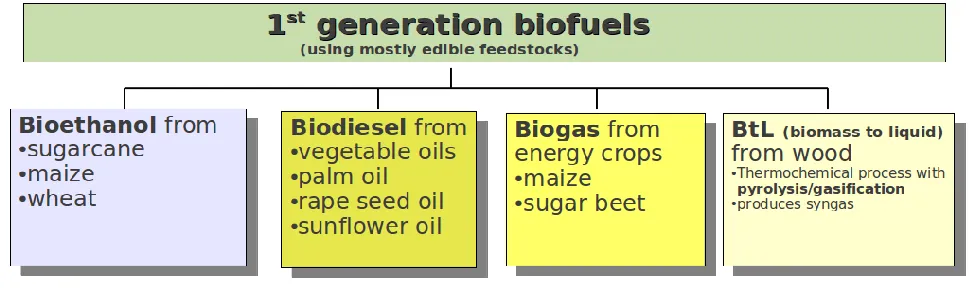
Figure 1: Classification of First Generation Biofuels
1.1
Limitations of the 1st-Generation Bio-Fuels are That They
contribute to higher food prices due to competition with food crops;
are an expensive option for energy security taking into account total production costs excluding government
grants and subsidies;
provide only limited GHG reduction benefits (with the exception of sugarcane ethanol and at relatively high costs in terms of $ /tonne of carbon dioxide ($ /t CO2) avoided;
do not meet their claimed environmental benefits because the biomass feedstock may not always be
produced sustainably;
are accelerating deforestation (with other potentially indirect land use effects also to be accounted for); Potentially have a negative impact on biodiversity; and compete for scarce water resources in some regions.
1.2 Second Generation Biofuels
These are also known as advanced biofuels, are fuels that can be manufactured from various types of biomass.
Biomass is a wide-ranging term meaning any source of organic carbon that is renewed rapidly as part of
the carbon cycle. Biomass is derived from plant materials but can also include animal materials.
Lignocelluloses refer to plant dry matter (biomass), so called lignocelluloses biomass. It is the most
abundantly available raw material on the Earth for the production of bio-fuels, mainly bio-ethanol. It is
composed of carbohydrate polymers (cellulose, hemicelluloses), and an aromatic polymer (lignin)[2].
First generation biofuels are made from the sugars and vegetable oils found in arable crops, which can be easily
extracted using conventional technology. In comparison, second generation biofuels are made
from lignocelluloses biomass or woody crops, agricultural residues or waste, which makes it harder to extract
the required fuel.
1.3 Biodiesel as an Engine Fuel
Fast depletion of fossil fuels is demanding an urgent need to carry out research work to find out the viable
106 | P a g e
engine performance evaluations have established the feasibility of using vegetable oils. It has been found thatvegetable oils hold special promise in this regard, because they can be produced from the plants grown in rural
areas. Vegetable oils from crops such as soybean, peanut, sunflower, rape, coconut, Karana, neem, cotton,
mustard, jatropha, linseed and coster have been evaluated in many parts of the world in comparison with other
non-edible oils. Karanja (pungamia) is an oil seed-bearing tree, which is non-edible and does not find any
suitable application with only 6% being utilized of 200 million tons per annum.
Biodiesel refers to a vegetable oil - or animal fat-based diesel fuel consisting of long-chain alkyl (methyl, ethyl,
or propyl) esters. Biodiesel is typically made by chemically reacting lipids (e.g., vegetable oil, animal fat) with
an alcohol producing fatty acid ester [3].
1.4 Engine Performance Characteristics of Biodiesel
Biodiesel has low heating value, (10% lower than diesel) on weight basis because of presence of substantial
amount of oxygen in the fuel but at the same time biodiesel has a higher specific gravity (0.88) as compared to
mineral diesel (0.85) so overall impact is approximately 5% lower energy content per unit volume. Thermal
efficiency of an engine operating on biodiesel is generally better than that operating on diesel. Brake-specific
energy consumption (bsec) is a more reliable criterion compared to brake-specific fuel consumption (bsfc) for
comparing fuels having different calorific values and densities.
.
Figure 2: Emissions Compared to Petroleum Diesel Emissions by Percentage
1.5 Environmental Benefits of Biodiesel Fuel
The steadily rising price of petroleum products and the environmental impact of procuring, manufacturing, and
using them create the need for alternate energy sources. Biodiesel, fuel that is chemically prepared from
vegetable oil, provides an environmentally friendly substitute for diesel fuel. It is classified as a biofuels because
107 | P a g e
II.
EXPERIMENTAL DETAIL OF PRODUCING BIOMASS
Gasification is a process that converts organic or fossil fuel based carbonaceous materials into carbon
monoxide, hydrogen and carbon dioxide. This is achieved by reacting the material at high temperatures
(>700 °C), without combustion, with a controlled amount of oxygen and/or steam. The resulting gas mixture is
called syngas (from synthesis gas or synthetic gas) or producer gas and is itself a fuel. The power derived from
gasification and combustion of the resultant gas is considered to be a source of renewable energy if the gasified
compounds were obtained from biomass. The advantage of gasification is that using the syngas is potentially
more efficient than direct combustion of the original fuel because it can be combusted at higher temperatures or
even in fuel cells, so that the thermodynamic upper limit to the efficiency defined by Carnot's rule is higher or
not applicable. Syngas may be burned directly in gas engines, used to produce methanol and hydrogen.
2.1 Desirable Properties of Biomass for Gasifier
1. Average moisture content less than 15%
2. Average heating value(AHV) not less than 10 MJ/Kg
3. Size range 1.25cm and less than 7.62cm (>1/2” and 3”).
4. Ash fusion temperature not less than 1150C
5. Ash content (less than 6%).
6. Easy ignition characteristics.
7. Uniform chemical composition.
8. Cand form structurally strong char.
9. Relatively simple to collect, store and handle.
2.2 Details of Gasifier
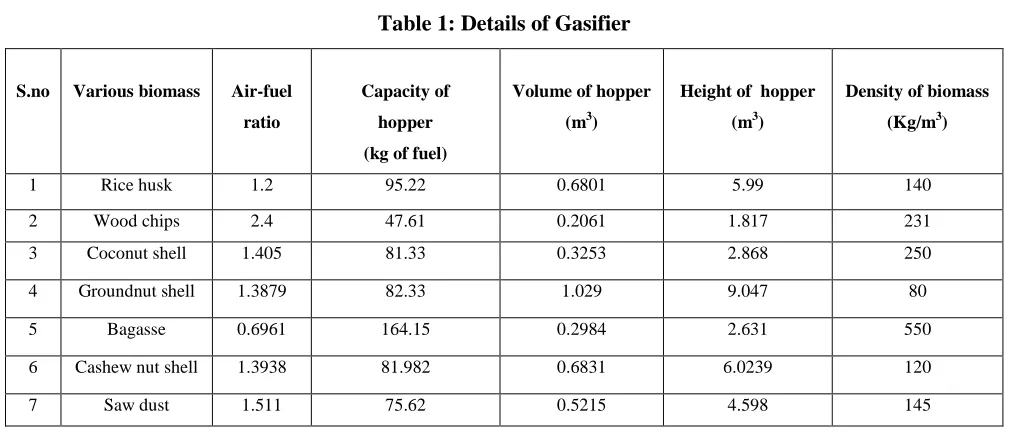
Table 1: Details of Gasifier
S.no Various biomass Air-fuel ratio
Capacity of hopper (kg of fuel)
Volume of hopper (m3)
Height of hopper (m3)
Density of biomass (Kg/m3)
1 Rice husk 1.2 95.22 0.6801 5.99 140
2 Wood chips 2.4 47.61 0.2061 1.817 231
3 Coconut shell 1.405 81.33 0.3253 2.868 250
4 Groundnut shell 1.3879 82.33 1.029 9.047 80
5 Bagasse 0.6961 164.15 0.2984 2.631 550
6 Cashew nut shell 1.3938 81.982 0.6831 6.0239 120
7 Saw dust 1.511 75.62 0.5215 4.598 145
108 | P a g e
Gas flowG
as
ifier
Apparatus Pressure Relief Water In Water Out Heat Exchanger BlowerGate Valve 2
Gate Valve 1 Filter
the engine Mixture to Fly Ash Seperator
Air Flow Direction
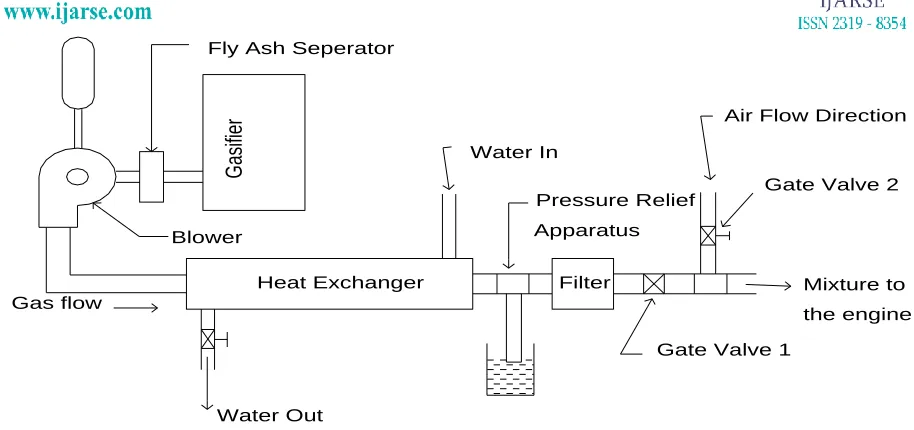
Figure 3: A Systematic Diagram of the Test Setup (Outline)
2.3 Load Testing Results on I.C. Engine
The apparatus consist of a single cylinder four stroke diesel engine to which a brake drum with rope
arrangement is fitted. The brake drum and engine are cooled by circulating water. A burette is fixed in the fuel
line to measure the fuel consumption.
2.3.1 Formula Used
Net load = ( W – S ) x 9.81 (N)
Brake power (BP) = 2NR(W-S) x 1/60000 (kW)
Total fuel consumption (TFC) = V / T (kg/sec) (V= 5 ml )
Brake specific fuel consumption = TFC/ BP (kg / kW hr)
2.3.2 Tabulation
Table 2: For Diesel
S.no Load (W) kg Spring load (S) Kg Net load (N) Brake power (BP) KW Total fuel consumption(TFC) Kg/sec Brake specific fuel consumption Kg/kW hr
Time for 5ml of
fuel consumption
T sec
1 2 3 4 5 6 7 0 2 4 6 8 10 12 0 0 0.25 0.5 0.75 1 1.25 0 19.62 36.79 53.96 71.123 88.29 105.46 0 0.4992 0.9361 1.3729 1.8098 2.2467 2.6835 1.0487x10⁻⁴
1.5925 x10⁻⁴
1.8695 x10⁻⁴
1.9545 x10⁻⁴
2.15 x10⁻⁴
2.3888 x10⁻⁴
2.5294 x10⁻⁴
109 | P a g e
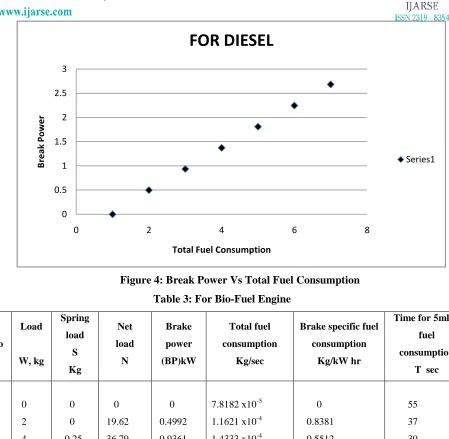
Figure 4: Break Power Vs Total Fuel Consumption
Table 3: For Bio-Fuel Engine
S.No Load W, kg Spring load S Kg Net load N Brake power (BP)kW Total fuel consumption Kg/sec
Brake specific fuel
consumption
Kg/kW hr
Time for 5ml of
fuel
consumption
T sec
1 2 3 4 5 6 7 0 2 4 6 8 10 12 0 0 0.25 0.5 0.75 1 1.25 0 19.62 36.79 53.96 71.123 88.29 105.46 0 0.4992 0.9361 1.3729 1.8098 2.2467 2.6835
7.8182 x10⁻⁵
1.1621 x10⁻⁴
1.4333 x10⁻⁴
1.5926 x10⁻⁴
1.72 x10⁻⁴
1.7917 x10⁻⁴
1.9685 x10⁻⁴
0 0.8381 0.5512 0.4176 0.3421 0.2871 0.2508 55 37 30 27 25 24 23
III. CONCLUSION
This work on testing an engine using producer gas and diesel is done by using some components like heat
exchanger, filter, etc., which enables one to understand the real working principles and function of various
components and engine.
It is seen that maximum of 27.02% of diesel fuel replacement is obtained for the load 19.62 Newton (2 kg). By
improving the design of the gasifier for increase in the production and by using other biomass more
replacements of diesel could be obtained. 0 0.5 1 1.5 2 2.5 3
0 2 4 6 8
B re ak Pow e r
Total Fuel Consumption
FOR DIESEL
110 | P a g e
REFERENCE
[1] Pulkrabek, Willard W. (1997). Engineering Fundamentals of the Internal Combustion Engine. Prentice
Hall. p. 2. ISBN 9780135708545.
[2] Bridgewater A V 1995 The technical and economic feasibility of biomass gasification for power generation.
Fuel 74: 631–53.
[3] Chen Hu, Wang Jianxin, Shuai Shijin and Chen Wenmiao 2008 Study of oxygenated biomass fuel blends
on a diesel engine. Fuel 87: 3462–3468
[4] Ciolkosz Daniel 2010 Characteristics of Biomass as a Heating Fuel. Penn State College of Agricultural
Sciences research, Pennsylvania State University.
[5] Dogru M, Howarth C R, Akay G, Keskinler B and Malik A A 2002 Gasification of hazelnut shells in a