POLICY DEVELOPMENT AND IMPLEMENTATION: A MULTIPLE SECTOR COLLABORATIVE APPROACH
IN SOCIAL, HEALTH, AND COMMUNITY FIELDS
Phouthava (Tara) Frichitthavong
Bachelor of Arts (Monash University) Bachelor of Social Work (Monash University)
Submitted in Fulfillment of the Requirements For the Degree of Doctor of Philosophy
Victoria University
Faculty of Arts, Education, and Human Development School of Social Sciences and Psychology
ii
ABSTRACT
A multiple sector collaboration (MSC) approach to public health and social policy development and implementation is becoming the norm in postmodern cities and communities. The development of a theoretical framework in relation to MSC practice is still in its infancy. As an approach to policy development and implementation, MSC has been subjected to criticism for (a) its often value driven, complex, and
time-consuming methods, and (b) the lack of measurable or tangible outcomes. The gaps found in the literature reveal a significant need for further evidence-based research that focuses on gaining greater insight into the operations of MSC and how the approach might contribute to improved social, health, and community outcomes.
The aim of the present research is to close the identified gaps. Utilising a single-case approach, an existing and well-reputed MSC was selected for in-depth study over a 3-year period. Findings from this case study show that values, common purpose, group processes and dynamics, relationships, interactions, and synergy are vital components in the development and operation of a fully-functioning MSC. Further to previously known features and characteristics of collaboration/community coalition, new
dimensions relevant to policy development and implementation are reported within a broad conceptual framework. Multiple levels of intervention, power, learning, accountability, personal and professional support, access and speed, minimising risks and maximising of innovation appear to be critical indicators to a best-practice model. Key hallmarks of the MSC approach appear to be empowerment, ownership, and integration. The thesis concludes with a series of recommendations for future practice and evaluation research, having contributed to knowledge and broken new ground in the area. For practice, they include: a rethink of MSC as an effective approach; a new appreciation of the core and powerful mechanisms and forces that are part of the MSC operational system; viewing MSC from a systems framework; ultilisation of skills development specific to MSC practice that fits features identified; commitment and time devoted to interactions and relationships; a sustainable and effective MSC requires time and space in order for interactions and relationships to be developed and cultivated; and awareness of the contribution that a MSC (once established) makes to the social and political infrastructure of the community within which it operates.
iii
STUDENT DECLARATION
I, Tara Frichitthavong, declare that the thesis entitled Policy development and implementation: A multiple sector collaborative approach in social, health, and community fields is no more than 100,000 words in length, exclusive of tables, figures, appendices and references. This thesis contains no material that has been submitted previously, in whole or in part, for the award of any other academic degree or diploma. Except where otherwise indicated, this thesis is my own work.
iv
DEDICATION
From one refugee to another, I dedicate this work to refugees across the world for their courage and struggle to find a place to call home and a safe community in which to belong.
To my mother, Ninh Frichittavong, for her heroic life and courage in settling our family in Australia and for raising eight of us with amazing humanity, generosity, and
v
ACKNOWLEDGEMENTS
Professor Dorothy Bruck, Associate Professor Christopher Sonn, and Peter Streker my supervisors, for their trust, support, and generosity in sharing their knowledge and their continued commitment to high quality research and intellectual rigour throughout this study.
Vin McKay, for his vision and commitment to excellence, support, and encouragement for the completion of this research.
Peter Luangrath, for his unwavering support and commitment to the completion of this thesis. For his faith in my capacity and for sharing our passion for learning.
Professor Rae Walker, Dr Julie Mosillo, Dr Cynthia Schultz for their time, encouragement and support, and willingness to read drafts.
Port Phillip Healthy and Safer Cities Alliance, City of Port Phillip, and Nillumbik Shire Council for their support, and generosity in sharing their knowledge and commitment to high quality research in the community work.
vi
TABLE OF CONTENTS
CHAPTER 1 INTRODUCTION……….……...………1
Overview………...……….……....……..…1
Statement of Problem……….……….……...….…2
Conceptualisation of MSC………3
Thesis Aims, Background, and Research Questions………...………5
Aim………....…………5
Personal Background……….5
Research Questions………....………7
Thesis Outline………..8
CHAPTER 2 LITERATURE REVIEW………...………..10
Introduction……….…………10
Collaboration and MSC……….10
Emergence of Collaboration………..…10
Multiple Sector Collaboration (MSC)………..14
MSC and Social and Ecological Perspectives………...…15
WHO’s Social and Ecological Model of Health and MSC………...17
Healthy City Movement and Other International Movements……….19
MSC in Community Psychology (CP)………..………21
Ecology………...………22
Prevention………..………23
Sense of Community……….………23
Empowerment………29
Inclusiveness………..…………30
MSC as Community Coalition………..…30
Community Coalition Action Theory………....……32
Systems Science: A Framework for MSC………32
MSC in Other Disciplines and Perspectives………..…34
Group Dynamics Perspective………...…....…….………34
Interorganisational Relationships………...……..36
Analysis of the Gaps in Current Literature……….37
Summary……….39
CHAPTER 3 MEHTODOLOGY……….……..………..42
Introduction………....…...……42
Background to Methodology……….……42
Case Study Research: Historical Background………..42
Rationale for Chosen Methods………..……….44
Research Design……….………...……...…44
The Case: Port Phillip Healthy and Safer Cities Alliance………....47
vii
CHAPTER 4 DATA COLLECTION, MANAGEMENT, AND
ANALYSIS……….49
Phase 1………..……….51
Phase 2………..….54
Phase 3………..…….56
Phase 4………...………57
Phase 5………...………57
CHAPTER 5 FINDINGS………..………..………..58
Overview……….………58
Section 1: Basic Features of an Alliance………..………58
Context………...…………58
Common Ground………..……….…………..…….63
Organisational Structure and Technical Capacity……….……….…..………65
Outcome………...………..……...…….69
Leadership………...………..72
Resources………...…...…….73
Section 2: Dynamic Forces……….….…….74
Interactive………...………...…………75
Relationale..………...………..……….75
Synergic………...…….76
Transformative………..………….…………..…….77
Section 3: Towards Social and Community Intervention………...……78
Multiple Levels and Multidimensional Interventions…...………..……..…78
Learning………...…...……81
Relational Power for Change and Action……….……….…………..………82
Speed and Access in Response and Action……….……….…..…..……83
Accountability………..……….…..…..……85
Personal and Professional Support……….…..…...…86
Minimisation of Risks and Maximisation of Innovation…...…….…88
Section 4: Hallmarks of Collaboration……….89
Empowerment………..………..……90
Ownership………..………..….90
Integration………..………...………90
Section 5: Summary Conclusions……….……91
CHAPTER 6 DISCUSSION………..………..……….94
Introduction……….…. 94
Research Questions and Related Findings………94
Summary of Key Findings in Relation to Previous Literature………....…107
Key Findings and Community Psychology Principles………112
Summary………...………...118
CHAPTER 7 CONCLUSION………...………..…121
Introduction……….………121
viii
Theory and MSC Evaluation Tools……….………121
Strengths of the Research Methodology……….……….124
Weaknesses of the Research Methodology……….………125
Recommendations and Implications for Practice and Future Research ……….126
Practice………126
Research………..……….…………126
In Conclusion………...………127
Epilogue………...………128
REFERENCES………..……..……130
APPENDIXES………...………...……139
APPENDIX 1 Port Phillip Healthy and Safer Cities Alliance………....140
APPENDIX 2 Victoria University of Technology: Consent Form………146
APPENDIX 3 Stage One: Interview Questions/Guide………...…148
APPENDIX 4 Stage Two: Interview Questions/Guide ….………151
APPENDIX 5 Example of Minutes of the Alliance Meeting and Analysis……….………154
APPENDIX 6 Summary of Preliminary Findings of Evaluation Reports Discussion Paper…...161
ix
LIST OF FIGURES
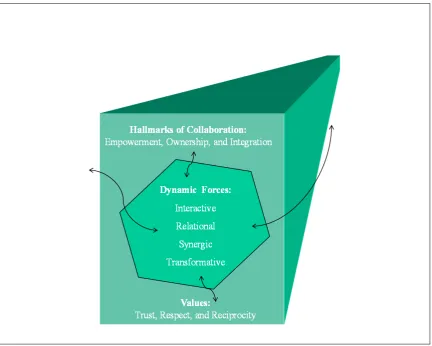
Figure 1 Multiple sector collaboration: A best-practice framework……….……59
x
LIST OF TABLES
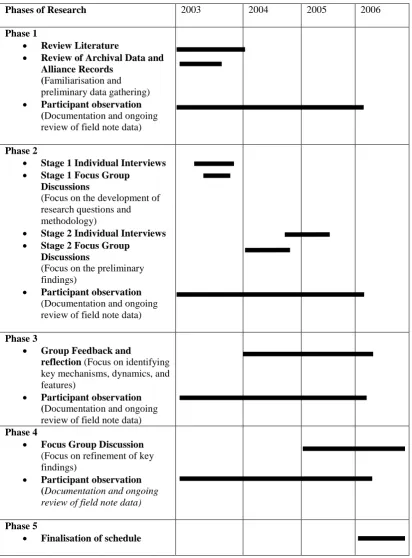
Table 1 The Schedule for Data Collection, Management, and Analysis………..52
Table 2 Strategies and Mechanisms for Contextual Engagement………61
Table 3 Examples of Mechanism to Ensure Community Engagement………...61
Table 4 Areas of Potential Shared, Differing, and Opposing Interests and Intentions……….65
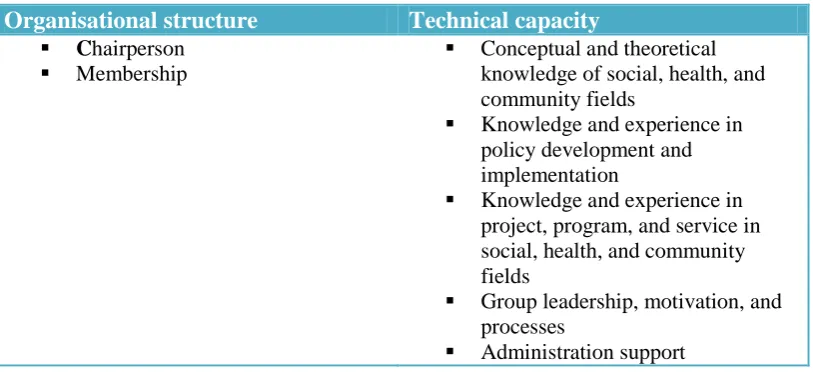
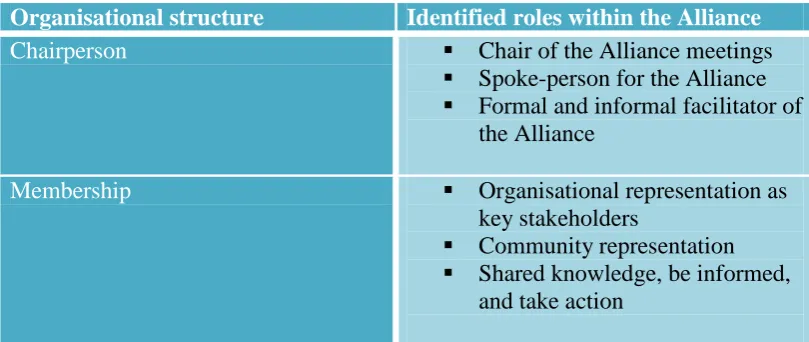
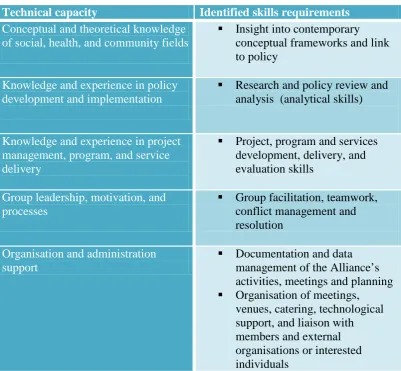
Table 5 Organisational Structure and Technical Capacity………...65
Table 6 Organisational Structures and Identified Roles within the Alliance…...66
Table 7 Technical Capacity and Identified Skills Requirements………..67
Table 8 Alliance Actions and Activities………...70
Table 9 Leadership Model of the Alliance ………..73
Table 10 Social Capital Features within Identified Forces……….……74
Table 11 Wolff’s (2001b) Best-Practice Features and New Findings to Characterise MSC………95
Table 12 Assessment Tools for Evaluation of MSC Values………...122
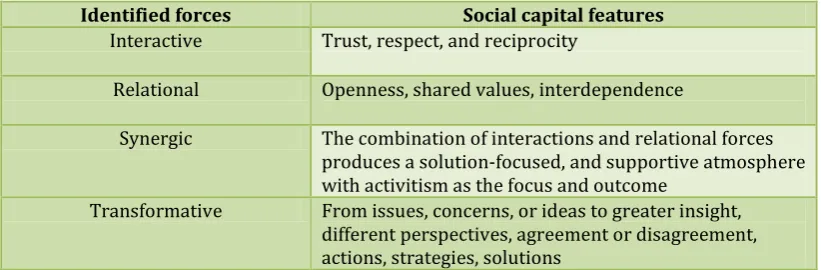
Table 13 Assessment Tools for Evaluation of MSC Dynamic Forces………….123
Table 14 Assessment Tools for Evaluation of MSC Hallmarks of Collaboration……….123
Table 15 Assessment Tool for Evaluation of MSC Social Intervention Features………..124
1
CHAPTER 1
INTRODUCTION
Overview
Over the past 20 years, application of the Multiple Sector Collaboration (MSC) approach to policy development and implementation in the social, health, and community fields has increased dramatically. Once considered an uncommon or experimental practice, it is now an expected requirement of major national, state, and local government policy directions and funding conditions (Chavis, 2001; Himmelman, 2001; Wolff, 2001a). Its popularity represents a remarkable shift in approach and practice. It has implications for (a) how and which social, health, and community priorities are set, (b) the distribution of limited resources, and (c) the type of programs and services made available to the community.
Historically, MSC practice emerged through partnerships between social welfare groups, faith-based organisations, businesses, and government bodies. The driving force that underpinned the emergence of collaboration between these sectors was the need for coordination and pooling of limited resources to bring about social reform and the development of social support services for those in need in the community (McMillan, as cited in Chavis, 2001). Literature on MSC can be traced back to these early developments. Its relatively recent recognition within the social sciences is largely due to the shift in the conceptualisation of health and wellbeing (Chavis, 2001; Wolff, 2001a). This shift has also played a major role in the acceptance of MSC practice as a critical contemporary approach to policy development and implementation in social, health, and community sectors.
2
ecological model of health that recognises the multiple facets of health determinant factors, including social, cultural, economic, and environmental dimensions. Under this new framework, a major rethink in approach to policy development and implementation across sectors was required (WHO, 1995). MSC was identified by WHO as one of its core strategies for achieving better social, health, and community outcomes (WHO, 1995). Thus, the movement, from the traditional medical model of health to the current social and ecological model of health is the foundation for the emergence of MSC practice in the 21st
However, current literature and research on MSC in the social sciences are limited and still in their infancy in relation to an evidence-based and
theoretical framework. Ongoing debate revolves around conflicting views on the effectiveness of MSC and the lack of tangible proof of its impact on improved social, health, and community conditions (Chavis, 2001; Foster-Fishman, Berkowitz, Lounsbury,Jacobsen, &Allen, 2001; Himmelman, 2001). The key argument in support of the MSC approach is the recognition of its potential to provide coordination and integration of services. These are essential elements for achieving outcomes in line with WHO mandates (1995, 1999, 2004). This social and ecological model of health strongly advocates the need for structures,
systems, and social reforms that contribute to the community-wide and population-based social, health, and community fields (WHO, 2003, 2004). century.
Statement of Problem
3
Supporters of MSC practice have argued that the MSC approach to policy development and implementation is highly innovative and critical to the success of social, health, and community work (Wolff, 2001a). Literature on the
emergence of the MSC approach has often drawn favourable comparison to historical, social, and societal changes that have been achieved through long and extensive social and political movements, such as human rights, gender-equality, and environmental movements (Chavis, 2001). At best, the MSC approach has small groups of practitioners and supporters who recognise the need to advocate and demonstrate its effectiveness, outcomes, and impact in the community. Overall, the major debate about MSC comes down to the need for an appropriate evaluation framework and evaluative tools basic to which is a conceptualisation of MSC as a entity. This need has been consistently identified among researchers and practitioners as an important next step forward (Chavis, 2001; Foster-Fishman, Berkowitz, et al., 2001; Himmelman, 2001).
In summary, the rapid growth in popularity of the MSC approach to policy development and implementation has led to the mistaken assumption that it is based on a clearly established underlying framework. However, research in this area is still in a formative phase of development, focusing predominantly on the identification of components, features, and characteristics of MSC, with limited emphasis on enquiry into the dynamic and inner workings of MSC. As a
consequence, the current practices of MSC in social, health, and community areas often lack full awareness of the challenges and difficulties in establishing a MSC, the diverse and complex nature of the processes involved, and the skills required. As well, current evaluation of MSC practices provides mixed results about its effectiveness and its direct impact on social, health, and community outcomes (Chavis, 2001; Foster-Fishman, Berkowitz, et al., 2001; Himmelman, 2001).
Conceptualisation of MSC
To adequately address the questions raised, the range of concepts
4
Community readiness. Literature on collaboration has identified certain preconditions as important in insuring successful collaboration (Trickett & Ryerson Espino, 2004). Wood and Gray (1991) argued that the qualities of the convener or initiator of the collaboration are important preconditions. These qualities include convening power; legitimacy among participants; a balanced even-handed approach; appreciation for overall vision, participants, and process; and the ability to identify all relevant stakeholders.
Intentionality. In MSC, membership can range from 3 to over 20
individuals representing organisations, and the members’ interests and intentions are diverse and broad- ranging. Wood and Gray (1991), in their work on
collaboration highlighted the important distinction between three kinds of interests or intentions among stakeholders, which they argued require sorting and are a critical aspects in determining the success of collaboration: (a) shared, (b) differing, and (c) opposing. Thus, the process of forming common ground in MSC is a significant part of the relationship-building required among members, as it is highly relational and is likely to be sustained by ongoing values of openness, mutual respect, and reciprocity.
Organisational structure and technical capacity. The extent and quality of organisational support to the establishment and ongoing development of MSC is an important feature that is said to differentiate successful MSC from the rest (Wolff, 2001b).
Outcome (activity and action). MSC is a living and learning system that is sustainable when member organisations are actively involved and engaged at some level of its work and operation. Capacity to provide ongoing links and connections among actions, activities, overall strategic objectives, and outcomes are critical to maintaining the commitment and to overall credibility (Wolff, 2001b).
5
distinction between characteristics, qualities, skills, and context of leadership in traditional medical or acute management compared to leadership in health promotion and public health settings.
Resources. Allocated resources to support the development and ongoing work of a MSC are important to its smooth operation (Wolff, 2001b). A special feature in relation to the use of resources lies in sharing between member organisations. The management of resources can be highly effective when
multiple facilities and locations pool their diversity of resources and skills (Wolff, 2001b).
Thesis Aims, Background, and Research Questions
Aim
The present study aims to take the next step forward called for by previous researchers, by using a case study method to develop a comprehensive
conceptualisation, which in turn might lead to a framework for practical application in the field. The broad aim is to contribute ultimately to structural reform, systems change, social action, and innovation for improved social, health, and community outcomes. The specific aim is to contribute to the current body of knowledge by gaining insight into the operations and processes underlying MSC and by presenting tangible evidence of a dynamic and complex system at work.
Personal Background
As a practitioner and facilitator of a range of MSC projects, the researcher was well placed to undertake the present investigation. Her 20 years of
6
the inner workings of the MSC approach and in developing a systematic conceptual framework for an effective MSC have evolved as a result of direct experience and observation of MSC in practice. The researcher’s experiences in the field as a practitioner, facilitator and as a senior manager involved the
development of a range of policies, strategies and approaches designed to address social, health and community issues within different local government areas.
The researcher has had a direct role in leading the establishment and development of five MSC in different areas. These MSC’s are still in operation at the time of the write up of this thesis, they include MSC that focus on youth issues (Whitehorse Youth Issues Network), women empowerment and leadership
(Nillumbik Women’s Network), children and family services coordination (Nillumbik Alliance for Children and Family), children service systems reform (Nillumbik Best Start Partnership), and primary health care reform (Primary Care Partnership).
Each of these MSC consists of community and organisation
representatives of a cross section of the community including education, health, welfare, police, community, politician, businesses, and various levels of
governments. Each of the MSC consists of membership of eleven to twenty five active members. Based on her involvement in these MSC over the years, the researcher has gained insight into processes and issues that are central to developing and implementing effective MSC’s.
7
One of the areas of interest to the research is the different between volunteer and non-volunteer (or imposed) establishment of MSC. The
researcher’s observations and direct experience suggested that the nature of the formation of MSC (volunteer or non-volunteer) seem to have impacted on the process and effectiveness of MSC. Among the five MSC listed above, there was evidence to suggest that the context for the formation and development of MSC seems to have direct impact on the progress and effectiveness of MSC. For example, three of the five MSC that were established on a volunteer basis seems to progress and develop more rapidly in building relationships and trust that lead to action and innovative solution. In Victoria the application of MSC is
predominantly driven from government policy direction and funding
requirements, two of the five MSC (Best Start Partnership and Primary Care Partnership) were among the imposed MSC as part of a new government policy and funding conditions. Among the government imposed MSC, the researcher observed that the development of relationships and trust among members seem to require greater time and focus prior to the effective operation of MSC were achieved. For example, significant process and administrative procedures were created as part of the formation of both the Best Start Partnership, and Primary Care Partnership to ensure open and transparent processes in relation to its
operation, management and decision making processes. It became clear that these additional processes were critical for the development of trust and ownership among members for an imposed MSC. These observations have informed the researcher in the formation of the research questions and overall focus of this study. The researcher is particularly interested in the identification of the internal processes and structures that drives and determines effective MSC.
Research Questions
8
Community Psychology and the social sciences, in particular as outlined by Wolff (2001a) in his conceptualisation of MSC as community coalition, the following research questions emerge: To what extent are these undergirding
conceptualisations evident in the present single-case study investigation? What, if any other, features might emerge? How might these findings be translated into a practical application as an evaluation framework and evaluative tools for MSC projects? Specifically, how might a MSC best function to achieve structural change, systems reform, social action, and innovation?
Thesis Outline
Throughout the thesis, it is argued that a new framework for exploring MSC is needed to further improve current understanding of the inner workings of MSC and in order to capitalise on its full potential. Chapter 2 contains a historical and developmental literature review of MSC, with reference to literature on social, health, and community areas in the social sciences and, in particular, Community Psychology. The review of the literature demonstrates that the shift in paradigm to the current social and ecological model of social, health, and community fields has directly identified the MSC approach to policy development and
implementation as a tool and critical process for achieving structural reform, systems change, and social action.
Chapter 3 provides details of the chosen research methodology. The selection of the research methodology was a collaborative approach involving extensive dialogue, discussion, and workshops with members of the MSC chosen as the case study.
Chapter 4 provides the rationale for the development of the research methodology, and the alignment of the objectives of the research with the expectations of the MSC as a partner in the research, are described as important factors taken into account in the development of an effective working relationship and gaining access to the inner workings of the MSC.
9
facility, which was actively seeking critical evaluation after having been operating for over 5 years. The established reputation for innovation and effective
collaboration and a clear role in policy development and implementation in social, health, and community fields allowed for a rich data-base to emerge.
Chapter 6 discusses the findings in relation to previous literature and is based on the thesis that, through greater insight into the inner working of a MSC and through a systems theory approach to analysis, there has emerged a
comprehensive conceptual framework with potential for use as an evaluative tool of MSC best practice.
10
CHAPTER 2 LITERATURE REVIEW Introduction
This chapter provides an overview of the history and development leading to, and the current conceptualisation of, Multiple Sector Collaboration (MSC), with reference to literature on social, health, and community areas in the social sciences and, in particular, Community Psychology. This body of literature on health and wellbeing is important to the present research, because of its direct link to the emergence of MSC in policy development and implementation.
Developments in the social, health, and community fields provide context for understanding the emergence of MSC in terms of underlying concepts and its current application. The review of the literature demonstrates that the shift in paradigm to the current social and ecological model of social, health, and
community fields has directly identified the MSC approach to policy development and implementation as a critical process for achieving structural reform, systems change, and social action.
The first section presents a brief history of collaboration and the emergent recognition of MSC, the second section provides summaries of the
11
Collaboration and MSC
Emergence of Collaboration
The term “collaboration” originates from the Latin word collaboratio(n), referring to “work together” (Chantrell, 2002). It has roots in mid-nineteenth century charity and social movements, with a focus on planning and resource development through the joint efforts of representatives from nonprofits or community organisations, government bodies, businesses, and charitable organisations. Evidence of its application appeared in 1869 as a form of social action in London during the Charity Society Movement (Chavis, 2001).
According to Chavis (2001), collaboration has been applied in the social welfare systems of the Western world since then, with the focus on planning and
coordinating organisations for solving social problems. Collaboration was an important feature of the human rights movement and the women’s movements in the 1950s and 60s, and in more recent times to social justice initiatives, health promotion, and public health movements in the 70s and 80s (De Leeuw, 2001; Duhl & Sanchez, 1999).
Collaboration as an approach in the history of major social movements, which resulted in collective action and social reform, was best known for its effectiveness in generating social movements and asserting political influence for social change. Chavis (2001) stated that, in the past decade, formal collaborations have become recognised as “the most common key element of all social problem-solving efforts” (p. 309) and an essential feature of government policy and decision in resource allocation.
A review of literature on collaboration shows strong emerging interests from diverse fields including business, engineering, health, social work, medicine, governance, and government policy (Schuman, 2006). A common theme across these fields is the increasing recognition of collaboration as a creative and innovative approach to problem-solving and development of new and improved outcomes. For example, in business, corporations collaborate to generate
12
profit (Schuman, 2006); In engineering and management, increasing usage of a collaborative approach (also referred to as system engineering, operations and supply chain management) produces lower overall costs and improved quality and efficiency (Jacob, Chase, & Aquilano, 2005; Oz, 2004); in medicine, collaboration has been used as a mechanism to improve medical quality and patient safety . Parker-Oliver, Bronstein, and Kurzejeski (2005) stated that, in health and social work:
Nurse and physician collaborative practice in intensive care units has been found to improve patient outcomes and nurse satisfaction.… Teamwork among physicians, nurses, and social workers reduced readmission to the hospital, reduced physician office visits, and helped older adults with chronic illnesses maintain their health status. … Collaboration among social workers and psychologists, physical therapists, and other health providers has been found to enhance the ability of these providers to meet clients' service needs, to better understand clients, to solve complex problems, and to successfully implement treatment plans (p. 280).
In governance, collaborative governance has been described by Henton, Melville, Amsler, and Kopell (2005) as “ an emerging set of concepts and practices that offer prescriptions for inclusive, deliberative, and often consensus oriented approaches to planning, problem solving, and policy making” (p.1). These authors also stated that it is “a new level of social/political engagement between and among the several sectors of society that constitutes a more effective way to address many of modern societies’ needs beyond anything that the several sectors have heretofore been able to achieve on their own” (p. 1).
In 1989, Fendley and Christenson identified collaboration in the context of learning and incorporated it in a new concept he called “collaborative learning-work”. He argued that collaborative learning-work is a concept for future trends and directions in learning and organisations. Fendley and Christenson (1989) defined collaborative learning-work as “processes, methodologies and
environments in which professionals engage in a common task, in which
13
an important feature of collaboration in relation to learning, sharing of knowledge, and development of innovations. He argued that, through collaborative learning-work, old and new concepts, ideas or issues are reviewed, redefined, and
integrated into the existing knowledge structure and form new knowledge
structures. This process involves the resolution of any tension or conflict between old and new insights, which can then lead to innovation.
Bransford’s (1986) cognitive problem-solving cycle has been identified by Fendley and Christenson (1989) as the parallel process that a collaborative
learning-work group experiences as they operate to achieve their common goal. Bransford’s cycle consists of five phases as follows:
• Identify: Individuals can agree that a problem exists but yet disagree on how to define or represent it. Define: How the problem is defined influences the type of solutions the group will generate; it involves assumptions and constraints.
• Explore: The search for solutions that the group can agree upon will respond to the need as defined.
• Act: This phase involves testing out hypotheses about the solutions to see what will work and what will not meet the defined need.
• Look: The final phase involves observation of the effects.
In Trickett and Schmid’s (1993) work on the concept of collaboration in community research and intervention, the historical origin of collaboration in social and cultural research method in anthropology, sociology, and psychology was identified. The concept of collaboration was developed in anthropology in an ethnographic study of culture (Mead, 1969), in sociology in the concept of “buy in” or partnership with the communities (Whyte, 1964), and in psychology in the collaborative action research model (Lewin, 1946). Trickett and Schmid (1993) stated that there are epistemological, pragmatic, and ideological rationalisations underpinning the development of collaboration as a critical feature in research method in anthropology, sociology, and psychology.
14
knowledge, and the value of minimising the gap between collaborating partners in relation to the quality and validity of the research (Trickett, 2004). Pragmatically, it has been argued that collaborative approaches enhance the relevance and
usefulness of the research to the local area and potentially become an important resource to the local community. Ideologically, based on the concept of
“knowledge is power”, a collaborative approach encourages knowledge-sharing with participating partners. Thus, citizens or local communities can directly benefit from collaborative research and further develop their capacity to excel.
To summarise, themes common to the concept of collaboration across disciplines include innovation (i.e., new ideas and solutions), efficiency gain, partnership, and participation, resulting in increased richness and relevance of outcomes. Overall, it can be argued that one of the main strengths of
collaboration is in its capacity to facilitate and transform conflicts. However, critics of collaboration have argued that a collaborative approach can also maintain and re-enforce the existing conditions and hierarchal structure of the context in which it operates and fail to generate change (Chavis, 2001;
Multiple Sector Collaboration (MSC)
Himmelman, 2001).
In recent times, there has been a significant increase in recognition of MSC as a way forward in service development, co-ordination, and delivery in health and social services (Foster-Fishman, Salem, Allen, & Fahrbach, 2001). The same recognition also exists for the MSC approach in policy development and implementation in public health, social work, and community development areas (Duhl, 2005; Foster-Fishman, Salem, et al., 2001).
Overall, literature on MSC is limited. It is found and referred to
interchangeably within the literature as coalition, alliance, partnership, network, or consortium. Usually, it is taken to mean different disciplines, professionals, and people of diverse background working together on issues of common purpose and interests (Berkowitz, 2001; Wolff, 2001b). According to Sann as cited in
Goumans (1995), an intersectoral action is:
15
through processes of problem solving, policy development, procedural turning, personal and institutional relationships, within a relatively closed time-frame and a specific societal context (p. 65).
For the purposes of the present research, MSC is defined as a
transformative mechanism, a mechanism that creates dynamic and multiple forms of connecting and transforming of ideas, interests, and resources. It is
transformative capital for change and innovation.
MSC and Social and Ecological Perspectives
Throughout history, how health is defined and the model of health adopted in the public health policy arena plays a vital role in the shaping of the popular approach and practice in policy development and implementation. Evidence of the links between the model of health and the approach adopted can be identified in various phases that are consistent with the development of a conceptual
understanding of, and insight into, health. For example, from the earliest sanitary focus on health to the medical model of health, and the current social and
ecological model of health, there is a parallel development in policy development and implementation from an individual, disease-focused, and treatment-based approach to the broader population, public health, structural, and systems-focused approach (De Leeuw, 2001). As a result, similar development also occurred through the expansion of the number of sectors, disciplines, and interested players in the field.
From early days, when health was seen as the domain of sanitation
scientists, the field expanded to include medical professionals and social scientists (De Leeuw, 1999). The expanding number of disciplines and players in the field reflects the multifaceted dimensions of MSC practice. Thus, the concept of health and MSC practice evolved over time with changing technology and values: from the historical origin in sanitary factors as the main focus of health to
communicability, and from the late nineteenth through to the twentieth century, when germ theory and bacteriological and immunological theories came to
16
of the disciplinary base of health and health-related research and practice from sanitary science, to medical, and now the social sciences (De Leeuw, 1999).
Prior to the 1970s, the concept of health was predominantly seen as the domain of the traditional medical model that focused on treatment for the removal of illness and disease. Consistent with this paradigm, public health policy
development and the implementation processes were carried out in isolation from other sectors and the wider community. Services were also more individually focused and specifically treatment-based rather than a whole systems approach. It can be argued that the paradigm shift, from a singular perspective dominated by the medical profession to a multidisciplinary perspective on social, health, and community factors, renders the development of MSC critical to the new perspective on health and wellbeing.
Within the health education movement, the concept of health focus shifted from the traditional medical model to include the psychological model of health, which was also known as the health belief model (DiClemente, Crosby, & Kelger, 2001). The concept of health within the psychological model expanded the focus on the individual to include belief and value systems as significant players in determining (a) the capacity to be less or more susceptible to disease, and (b) the management of the recovery process. Underpinning the psychological model of health are the assumptions that reason and rational choice in relation to belief, behaviour, and action are among the key determinants of an individual’s health status. Thus, the focus of community intervention under the psychological model continued to be dominated by the focus on the individual and a treatment-base (DiClemente, Crosby, & Kelger, 2001). At that point in time, other broader systemic and structural features (i.e., housing, employment, and social
environment) were not prominent factors for consideration in the planning and implementation of programs and initiatives in the community (DiClemente, Crosby, & Kelger, 2001).
17
(DiClemente, Crosby, & Kelger, 2001). Within this framework, living conditions and life style patterns have been identified as having a direct relationship to the health status of individuals and communities. The notion of health has expanded more broadly to include the complex factors and conditions attributed to physical, mental, and social wellbeing. These factors and conditions are referred to as determinants of health and include: social, economic, and physical environments; early childhood development; personal health practices; individual capacity and coping skills; human biology; and health services (United Nations Population Fund, 2000). The underlying shift also highlighted a broader emphasis on prevention and to improving the systems and structures determining health and less on the immediate causes of ill-health and mortality.
The present thesis argues that the increased emphasis on multidisciplinary and multiple-sector collaborative approaches in policy development and
implementation is a reflection of the need for an expansive, structural, and systemic approach to health.
WHO’s Social and Ecological Model of Health and MSC
The establishment of the World Health Organisation (WHO) in 1948 played a major role in the development of the first international MSC approach to research, data gathering, and analysis of population health, and the impact on community safety and development. WHO provided the foundation and source of data-benchmark platforms that informed the important policy framework for social, health, and community wellbeing. WHO’s reports and findings have direct impact on policies, practice, and program interventions in health, social work, and community development areas at international, national, state, regional, and local levels (WHO, 1995)
18
integration of social, physical, cultural, and environmental dimensions of health. MSC practice was identified as a vital tool for the development and
implementation of the new public health framework (WHO, 1986). Since the adoption of the Ottawa Charter for Health Promotion in 1986, there has been a rapid growth in the establishment of MSC as an approach to policy and practice.
In 1995, a report published by WHO provided health status indicators, trends, progress, and development of health-related issues and implications for public health policy worldwide. WHO reports have since been used as a key point of reference for the development and implementation of social, health, and
community policy frameworks in many countries, Australia included. The reports provide a platform for current and future debates on population health issues, research, public health policy, programs, and services. The data and findings reported by WHO highlight major barriers and features as well as contributors to better social, health, and community fields. WHO (1995) stated that:
The main ecological, social, economic and political actions required to create supportive environments include establishing healthy public policy with the involvement of all sectors; strengthening community participation and upgrading personnel skills; and reorienting health services towards prevention and health promotion (p. 12).
Thus, the emergence of MSC in policy development and implementation became a requirement and condition for new funding and innovative practices. The impact of the new social and ecological model of health can be found across various public health and social policy initiatives in Australia. Examples of some of the changes are: at the Federal level, a policy for “Stronger Families and Communities Strategy” in families and children services area; at State
19
commonalities that run through these policies and government initiatives are the acceptance of (a) the social and ecological model of health, and (b) the MSC approach to policy development and implementation through its establishment at various levels of government and within communities.
In summary, the social and ecological model of health perspective provides a pathway for a much more complex and multilevel approach to the development of social policies, strategies, programs, and services in the community than was previously the case. It has also formed the theoretical foundation for the establishment, recognition, and development of MSC practice. WHO’s new policy framework on health promotion clearly established the
importance of the MSC approach to the development of public policy and the implementation of strategies in the community.
Healthy City Movement and Other International Movements
The WHO perspective on health provides a major incentive for the adoption of the social and ecological model of health in public health, social, and community development arenas, operating at various levels including local, regional, state, and federal. In European cities, the Healthy City Movement also added support to the new public health framework and is taking hold rapidly in other parts of the world. Under the Healthy City framework, the concept of health is seen as “a multi-causal phenomenon …and inter-sectoral collaborative
approach, community action and political support are required” (De Leeuw, 2001, p.36). De Leeuw (2001) proposed a unifying “constituent” definition of Healthy City as:
A locality-based strategic and systemic approach of social, physical and individual determinants of health and disease incorporating the full involvement of communities in the formulation, implementation and evaluation of policies and interventions aiming at equity in health and sustainable development (p.40).
20
MSC is the key to policy development and implementation in the Healthy City movements. The qualities of a healthy city under this movement include:
• a clean, safe physical environment of high quality;
• an ecosystem that is stable now and sustainable in the long-term; • a strong, mutually supportive, and nonexploitive community; • a high degree of participation and control by the public over
decisions affecting their lives;
• the meeting of basic needs (food, water, shelter, income, safety, and work) of all people;
• access to a wide variety of experiences and resources for a wide variety of interactions;
• a diverse, vital, and innovative city economy;
• the encouragement of connectedness with the past and the heritage of city dwellers and others;
• a form that is compatible with the past, and enhances the preceding, characteristics;
• an optimum level of appropriate public health and sick care services accessible to all; and
• high health status (high levels of positive health and low levels of disease).
Similar projects that share similar values and principles to the Healthy City Movement are the UNICEF Child-Friendly City (UNICEF, 2001); the United Nations Centre for Human Settlements (UNCHS Habitat) in its good governance framework on “Inclusive City” Declaration (UNCHS, 2000); and Healthy Futures for APEC Megacities and Metropolis projects (De Leeuw, 1999).
21
theoretical framework for MSC which take the form of alliances and coalition-building (Chavis, 2001).
Developments in the social, health, and community fields and the emerging recognition of the value of MSC provide background for the present research. Of equal import is the emergence of MSC as a potential mechanism for social and systems change in Community Psychology (CP).
MSC in Community Psychology (CP)
CP is of particular interest to this research for a number of reasons. The core interests of CP in social, health, and community fields, social change, and multiple levels of analysis are important contexts within which MSC operates. The shift in the conceptualisation of these core CP interests is closely linked to the current level of discussion of MSC as a mechanism for social change as a tool for delivering on CP interests, and as a vital feature in all areas where it is being applied (Chavis, 2001; Rappaport, 1981).
The formation of CP since 1965 was closely connected to the emergent recognition of the importance of the broader contexts and systems as vital to social, health, and community conceptualisations (Bennett, Schwartz, & Stein, 1966). This was a major shift in focus in the field of psychology, from the traditional applied psychology focus on the individual level of analysis to
ecological levels of analysis (Nelson & Prilleltensky, 2005). There is a strong link between the development of CP as a field of significant importance within
psychology and the conceptualisation of social, health, and community entities in the social sciences with particular reference to concepts such as the ecological (Kelly,1988; Trickett & Schmid, 1993) and that of empowerment (Rappaport, 1981). Similar developments have also occurred in social work, health promotion and education, public health, and community development.
22
cutbacks in government funding (Himmelman, 1996); limitations of the health and human service system when it became too complex; and civic engagement as a response to the decline in civic engagement (Bradley, 1998; Lappe & Dubois, 1994; Putnam, 2000).
The literature concerning CP principles such as ecology, prevention, psychological sense of community, empowerment, and inclusiveness provide essential context for the present thesis. It is relevant to the potential role of MSC in policy development and implementation, and how it operates and functions in community settings.
Ecology
CP’s ecological principle emphasises the importance of holism and multiple layers of contextualisation, including micro, meso, and macro levels. Bronfenbrenner (1979) argued that multiple ecological levels need to be considered for every phenomenon being studied in CP.
• Individuals: Studied in terms of person-environment fit, focusing on systems and structures, also referred to as second-order change.
He established the following ecological levels of analysis:
• Microsystems: Environments in which an individual have the most direct contact, such as classrooms, families, sports teams, self-help groups.
• Organisations: Larger microsystems an individual belongs to, such as choirs, school, or business organisations.
• Localities: Communities or geographic localities, such as neighborhoods/townships.
• Macrosystems: Societies at large, including government, social and culture systems.
23
a highly effective form of intervention at multiple levels, and important for the development and implementation of an ecological perspective.
Prevention
The CP principle of prevention promotes competence, social, health, and community wellbeing, and prevention of psychosocial problems. It emphasises the important function of MSC in a broad range of community settings and its capacity and strength to handle complex interplay of diverse elements, as well as the interdependent nature of social, health, and community sectors. MSC
functions and operations are characterised by recognition of the importance of the relationship of social, health, and community factors to individuals, families, and organisations. Furthermore, the emphasis on prevention and the second order of social change in systems, structures, and processes in CP has created a context for exploration and analysis of MSC as a mechanism for preventative work.
Currently, CP literature predominantly acknowledges the importance of MSC and often refers to it as a new and highly effective mechanism for preventative work (Wolff, 2001b) So much of MSC practice involves multiple levels of
participation and process, a diverse range of stakeholders, and cross-disciplinary approaches. This involvement often leads to the claims of supporters that MSC is an innovative approach and cutting-edge work, in particular in the area of
prevention (Wolff, 2001c).
Sense of Community
According to Sarason (1974), Sense of Community (SC) is “ the
24
of social cohesion, social connectedness, social capital, and community building capacity (Wolff, 2001c).
The widely cited work by McMillan and Chavis (1986) has provided further clarity about the concept of SC and greater insight into MSC functions, operations, and key features. These authors defined SC as “a feeling that
members have of belonging, a feeling that members matter to one another and to the group, and a shared faith that members’ needs will be met through their commitment to be together” (p. 9). Their work identified four elements of SC: membership, influence, integration and fulfilment of needs, and shared emotional connections; the "definitive element for true community" (p. 14), SC includes shared history and shared participation or identification with shared history. All these elements of SC may be integral features of those MSC projects considered to be successful.
According to Sarason (1974), McMillan and Chavis (1986), a MSC approach is critical in the creation and development of all key elements identified in the SC framework. The concepts of social capital and community capacity are significant recent developments in CP and provide important perspectives on MSC. However, the present limited review of CP literature draws attention to current gaps in the recognition of links to these two concepts operating among MSC’s features, functions, and undertakings.
The present research argues that MSC itself is a form of collective social capital and its activities generate webs of relational systems of support (social cohesion and social connectedness) within its membership and within the communities where it operates (community capacity). The present research further argues that MSC, from the SC perspective (Fisher, Sonn, & Bishop, 2002), can be considered as important community asset with structures, forms, and forums for the facilitation of the development of social cohesion, social connectedness, community capacity, and social capital.
25
empirical studies into social capital and health were done by Kawachi (1997), who proposed the following three hypotheses:
Variations in income inequality predict the extent of investment in social capital; investment in social capital predicts variations in total and cause-specific mortality; and little residual direct association exists between income inequality and mortality after investment in social capital has been controlled (p.35).
As a broad term, social capital refers to the "norms and networks
facilitating collective action for mutual benefit" (Woolcock, 1998, p. 155). There is some consensus among researchers that social capital refers to the "ability of actors to secure benefits by virtue of membership in social networks or other social structures" (Portes, 1998, p. 6). Based on these definitions, there is a clear link to the MSC approach, characteristics, processes, and goals. Coleman’s (1998) definition of social capital is the most commonly referred in the United Kingdom, North America, and Australia: It “is less tangible yet it exists in the relations between people” (p.100). Putnam’s work and conceptualisation of social capital has gained the most prominence in debate in the field of social and public health research. Putnam (1993) referred to social capital as:
Networks of society that enable communities to cooperate for mutual benefit which may in turn allow the improvement of productivity of social institutions. Social capital is embedded in a variety of forms including volunteerism, trust, community networks and friendship (p.35).
26
perspective, the MSC approach is often referred to as one of its forms and a critical element to its building and development (Putnam, 2000; Wolff, 2001b).
According to Woolcock (1998), communities that are successful have the capacity to develop outcomes based on building social capital. He stated that social capital is achieved when:
People are willing and able to draw on nurturing social ties (i) within their local community, (ii) between local communities and groups with external and more extensive social connections to civil society, (iii) between civil society and macro-level institutions and (iv) within corporate sector institutions (p.216).
All these features outlined by Woolcock are reflected in MSC processes (Wolff, 2001b). From the social capital perspective, MSC‘s effectiveness and success can be measured in its capacity to improve social trust, social
connectedness, and relations and cooperation in the community. MSC as an entity has been referred to as both a form of social capital and a formal structural source for the development and cultivation of social capital outcomes such as bridging, bonding, and linking capital as its core nature and function (Cox, 1995; Scanlon, 2004). In particular, bridging capital has been closely connected to
interorganisational and multiple sectoral collaboration, and to MSC as the basis for community-based social, health, and community initiatives (Kreuter, Lezin, & Young, 2000).
The use of the concept of social capital in community building and as a community strengthening indicator has been criticised for its narrow scope and lack of capacity to identify the complex informal webs, relationships, and diverse subcategories that make up community (Campbell, 2001). Other concerns raised in relation to the use of the concept of social capital in the community context are the influence and impact of the current market-driven society and political
27
of structure and logic of the market. Community has been reframed into a form of information and economic network and exchange that underpins capitalism and a globalised information society. In doing so, the concept of community has been removed from its traditional foundation and association with place and tradition into “a web of more or less spontaneously generated social relationships that are imbued with a certain ethical character, yet remain open and mobile” (Scanlon, 2004, p. 59).
In summary, the present research argues that MSC, as a form of social capital, has the capacity to facilitate complex, multilevel, and multiple sector issues, systems, and perspectives. A similar claim could also be made in relation to the MSC approach as a form or facilitator of the development of other
associated concepts such as community capacity, social cohesion, and social connection. There is strong support from a broad range of literature for efforts to improve social capital through the strengthening of community capacity, social cohesion, and social connection. For improved social, health, and community outcomes, the establishment and development of the MSC approach is an integral part of the social intervention. The Butterfoss (2001), Wolff (2001b), Chavis (2001), and Himmelman (2001) analyses of MSC and community coalitions as community intervention strategies have demonstrated its capacity to provide forums, processes, and structures that support the development, implementation, and maintenance of community capacity and social capital through increased social cohesion and social connection strategies.
28
Community capacity. Seen together, MSC and the concept of community capacity provide a broad insight into the MSC approach to policy development and implementation, and its relationship to social and community change. There are several definitions of community capacity available in the literature.
According to McLeroy (1994), community capacity refers to “ the characteristics of communities that affect their ability to identify, mobilise, and address social and public health outcomes" (p.2). Roger, Howard-Pitney and Lee (as cited in Goodman et al., 1998) highlighted the common features and processes of the MSC approach in their conceptualisation of community capacity as “the cultivation and use of transferable knowledge, skills, systems, and resources that affect
community and individual level changes consistent with public health related goals and objectives." (p. 259). Based on these definitions, the following
characteristics of community capacity are identified. They are linked closely to the nine dimensions of MSC in the form of community coalitions, as outlined by Wolff (2001, b).
Another definition of community capacity was provided by Easterling et al. (1998), who referred to community capacity as "the set of assets or strengths that residents individually and collectively bring to the cause of improving local quality of life" (p. 12). These authors highlighted three elements of assets within community capacity, which are clearly embedded and reflected in MSC processes and outcomes as assets that “ need to contribute to increased quality of life for the whole community”; “already exist in the community”; and act as “the synergistic effects of these combined individual assets” (p. 12). Chaskin, Brown, Venkatesh, and Vidal (2001) referred to community capacity as:
..the interaction of human capital, organisational resources, and social capital existing within a given community that can be leveraged to solve collective problems and improve or maintain the well-being of a given community. It may operate through informal social processes and/or organized effort (p. 7).
The commonalities of these definitions and links to MSC include
29
participation Chaskin, Brown, Venkatesh, and Vidal (2001). Community capacity as a concept highlights the importance of identifying (a) the potential and capacity of community; (b) the need to understand various forms of community capacity, including MSC, as a process as well as an outcome; (c) the role of supportive organisational structures and processes; and (d) the important link between participation and leadership, namely, the dynamics and development involved Chaskin, Brown, Venkatesh, and Vidal (2001).
Empowerment
The conceptualisation of MSC can be further articulated through CP’s perspective on empowerment, with its focus on power from an empowerment approach and the importance of social justice values. Rappaport’s (1984)
definition of empowerment stated that: “empowerment is viewed as a process: the mechanism by which people, organizations, and communities gain mastery over their lives” and “an intentional, ongoing process centered in the local
community, involving mutual respect, critical reflection, caring, and group participation, through which people lacking an equal share of resources gain greater access to and control over those resources” (p.2). Articles in a special issue of the American Journal of Community Psychology (2001) on community coalition evaluation of the effectiveness of MSC has emphasised the importance of considering the concepts associated with empowerment. For example,
Rappaport (1984) included the importance of diversity, arguing that it is a defining aspect of CP as a field. Current debate on the effectiveness of MSC includes its capacity to address the empowerment concerns within the context or communities in which it operates. MSC has been referred to as a new mechanism or approach to empowerment through its often broad membership and
representation of diverse cross-sections of the community (Wolff, 2001b). However, criticism of MSC has also highlighted its limitations in adequately addressing the inequity or power imbalance in communities, and its potential to replicate or re- enforce the existing power structure operating within the
30
Inclusiveness
MSC alignment with CP’s inclusive principle is often referred to in the CP literature by Berkowitz and Chavis (2001) in relation to its capacity to be
inclusive of minority and grassroots participation. One of MSC’s strength has been identified as its capacity to be inclusive and participatory in the way it functions and operates. Rappaport’s (1984) reference to diversity as an essential value of CP addresses the importance of working with communities regardless of ethnicity, culture, sexual orientation, disability status, socio-economic status, gender, and age. This value is often reflected in the new and emerging research on the current practice of MSC, with rapidly growing evidence supporting the effectiveness of MSC’s approach in the context of marginalised groups (Berkowitz, 2001). Inclusiveness as a principle is closely connected to the
interests that often lead to the development of MSC, driving as well as challenging how MSC operates and sustains itself.
MSC as Community Coalition
In 2001, the American Journal of Community Psychology published a special edition on MSC in the form of community coalitions. Researchers and practitioners presented a range of perspectives and debates on the effectiveness, roles, and characteristics of MSC and community coalition. The debates reflected developments and the need for a comprehensive theoretical framework and evaluation of MSC in health, social, and community sectors, at both policy development and implementation levels (Berkowitz, 2001; Duhl & Sanchez, 1999; Chavis, 2001; Foster-Fishman, Salem et al., 2001; Wolff, 2001b)
31
with shared values and principles. This includes empowerment, community participation, consultation, social justice, a social-model of health, respect, and trust (Wolff, 2001b). Wolff identified nine dimensions required by coalitions to effectively maximise their potential. Their link to community capacity has already been noted and includes community readiness, internationality, structure, and organisational capacity, taking action, membership, leadership, resources, relationships, and technical assistance.
Wolff (2001a) also outlined seven positive impact characteristics of community coalitions that are “ holistic and comprehensive”, “ flexible and responsive”,“ build a Sense of Community”, “build and enhance resident engagement in community life”, “provide a vehicle for community
empowerment”,“ allow diversity to be valued and celebrated as foundation for the wholeness of the community”, and “ are incubators for innovative solutions to large problems facing not only their community, but also the nation as a whole” (p. 168).
Wolff’s (2001b) conceptualisation of community coalitions offers insight into MSC as a form of community coalition. However, the nine dimensions are largely based on existing traditional characteristics and features of groups and organisational frameworks with emphasis on structure, planning, resource development, membership, and leadership. From a systems framework, Wolff’s (2001b) conceptualisation of MSC is limited to the identification of parts and characteristics that constitute MSC and neglects to fully explore the importance of the dynamic forces of interaction, interdependence, and integration that exist and operate as integral systems of MSC.
The present research argues that the increased attraction and emerging evidence of MSC as an innovative tool with solutions and strategies relevant to social, community, and health sectors requires new insights into the dynamics and evolving forces operating within MSC that extend beyond traditional and
32
Community Coalition Action Theory
Butterfoss and Kelger (2001) attempted to develop a theoretical
framework for community coalition called Community Coalition Action Theory (CCAT). They outlined 23 propositions for the development and maintenance of community coalition. Similar to Wolff’s (2001b) definition, they stated that "community coalitions bring people together, expand available resources, and focus on a problem of community concern to achieve better results than any single group or agency could have achieved alone" (p.157). They further stated that the theoretical basis for community coalitions are borrowed from various fields, including community development, citizen participation, political science, interorganisational relations, and group process. Their CCAT is the first in the field to attempt to formulate a theoretical framework for MSC in the form of community coalition.
Systems Science: A Framework for MSC
Current research and application of the MSC approach to policy development and implementation is still at a formative stage. Thus, further research is needed to increase understanding of its potential for and limitations in achieving the desired outcomes in social, health, and community fields. When reviewed as a system, MSC can be seen as a dynamic and complex interrelated web of activities. In the review of systems theory literature, key concepts such as the nonlinear and dynamic nature of systems, the interactive and interrelated importance of systems, and the interdisciplinary approach required in the systems approach emerge as vital to the conceptualisation of MSC (Foster, 2000).
System theory and science are transdisciplinary, interdisciplinary,
multidisciplinary, and multiperspective domains. Systems theory brings together concepts and principles from the philosophy of science, physics, computer science, biology, engineering, sociology, particle science, geography, economics, and psychotherapy in family systems therapy. Systems science originates from a range of diverse fields, including ecological systems, organisation theory,