Properties of Machine Learning Applications for Use in Metamorphic Testing
Christian Murphy, Gail Kaiser, Lifeng Hu
Department of Computer Science, Columbia University, New York NY 10027
{
cmurphy, kaiser, lh2342
}
@cs.columbia.edu
Abstract
It is challenging to test machine learning (ML) applica-tions, which are intended to learn properties of data sets where the correct answers are not already known. In the absence of a test oracle, one approach to testing these ap-plications is to use metamorphic testing, in which proper-ties of the application are exploited to define transforma-tion functransforma-tions on the input, such that the new output will be unchanged or can easily be predicted based on the original output; if the output is not as expected, then a defect must exist in the application. Here, we seek to enumerate and classify the metamorphic properties of some machine learn-ing algorithms, and demonstrate how these can be applied to reveal defects in the applications of interest. In addition to the results of our testing, we present a set of properties that can be used to define these metamorphic relationships so that metamorphic testing can be used as a general ap-proach to testing machine learning applications.
1
Introduction
Making machine learning (ML) applications dependable presents a particular challenge because conventional soft-ware testing processes do not always apply: in particular, it is difficult to detect subtle errors, faults, defects or anoma-lies in the ML applications of interest because there is no reliable “test oracle” to indicate what the correct output should be for arbitrary input. The general class of software systems with no reliable test oracle available is sometimes known as “non-testable programs” [20].
One approach to testing such applications is to use a pseudo-oracle [7], in which multiple implementations of an algorithm process an input and the results are compared; if the results are not the same, then one or both of the imple-mentations contains a defect. In the absence of multiple im-plementations, however, metamorphic testing [2] [22] can be used to produce a similar effect: input can be modified in such a manner that it should produce the same output as the original, and if it does not, then a defect must exist.
Of course, this can only show that a defect does exist and cannot demonstrate the absence of defects, since the cor-rect output cannot be known in advance, but metamorphic testing provides a powerful technique to testing such “non-testable programs” by use of a built-in pseudo-oracle.
A challenge of metamorphic testing is to determine the so-called metamorphic relationships that can be used to transform an input such that its new output will be pre-dictable, given the output produced by the original input. This generally requires domain knowledge and/or familiar-ity with the algorithm’s implementation, and these relation-ships may not necessarily apply to other applications. In this paper, we seek to create a taxonomy of metamorphic relationships that are applicable to input data of both su-pervised and unsusu-pervised machine learning applications, including the inclusion and omission of data, permutation, and modification of numerical values. Our contribution is a set of properties that can be used to define these relation-ships so that metamorphic testing can be used as a general approach to testing machine learning applications.
Previously we have investigated approaches to testing such applications by considering properties of their data sets [14] and by using random testing [15]. In this paper, we first present our analysis of the metamorphic properties of MartiRank [9], a ranking implementation of the Martin-gale Boosting algorithm [12]. The result of this investiga-tion is then used to guide the creainvestiga-tion of metamorphic re-lationships that can be used in testing. We apply metamor-phic testing to MartiRank, as well as to two other machine learning applications: an implementation of Support Vec-tor Machines (SVM) [18] called SVM-Light [11], and the anomaly-based intrusion detection system PAYL [19], and report our findings.
2
Background
2.1
Metamorphic testing
Metamorphic testing [2] [22] is designed as a general technique for creating follow-up test cases based on exist-ing ones, particularly those that have not revealed any
fail-ure, in order to try to find uncovered flaws. Instead of being an approach for test case selection, it is a methodology of reusing input test data to create additional test cases whose outputs can be predicted. In metamorphic testing, if input
xproduces an outputf(x), a transformation functionT can then be applied to the input to produceT(x); this transfor-mation is based on a metamorphic property of the function, such that the outputf(T(x))can then be predicted, based on the (already known) value off(x).
A classic example is the sine function. If we have built a function to compute sine, and for some selected inputx
we have computed sin(x) =y, then we can create the test input (x+ 2π) and expect that sin(x+ 2π) will also equal
y, based on the metamorphic property of sine that sin(α) = sin(α+ 2π). Similarly, given sin(x) =y, we can create the test input -xand expect that sin(-x) should be -y, based on the metamorphic property of sine that sin(-α) = -sin(α).
It is clear that this approach is very useful in the absence of an oracle. Regardless of the values ofxandy, if sin(-x) does not equal -sin(x), then there must be a defect in the implementation of the sine function. Although the use of these simple identities for testing numerical functions is not unique to metamorphic testing [6], the approach can be used on a broader domain of any functions that display metamor-phic relationships, including machine learning applications.
2.2
Related work
Applying metamorphic testing to situations in which there is no test oracle has been studied in great detail by Chenet al. [4] [5]. Our work builds on theirs by apply-ing metamorphic testapply-ing to a specific application domain (machine learning) and looking for the metamorphic rela-tionships within those types of applications. Additionally, whereas their work has primarily focused on functions with simple numerical input domains [3], we are considering in-puts that consist of larger (possibly alphanumeric) data sets, as a result of the types of applications we are investigating.
27,81,88,59,15,16,88,82,41,17,81,98,42, ..., 0 15,70,91,41, 5, 3,65,27,82,64,58,29,19, ..., 0 22,72,11,92,96,24,44,92,55,11,12,44,84, ..., 1 82, 3,51,47,73, 4, 1,99, 1,51,84, 1,41, ..., 0 57,77,33,86,89,77,61,76,96,98,99,21,62, ..., 1 ...
Figure 1. Example of part of a data set used by supervised ML ranking algorithms
Although there has been much work that applies machine learning techniques to software engineering in general and software testing in particular (e.g., [1]), there has thus far been very little published work in the reverse sense: apply-ing software testapply-ing techniques to ML applications that have no reliable test oracle. Orange [8] and Weka [21] are two
of several frameworks that aid ML developers, but the test-ing functionality they provide is focused on compartest-ing the quality of the results, and not evaluating the “correctness” of the implementations. Similarly, testing of intrusion detec-tion systems [13] [16] has typically addressed quantitative measurements like overhead, false alarm rates, or ability to detect zero-day attacks, but does not seek to ensure that the implementation is free of defects.
2.3
Machine learning fundamentals
In general, data sets used in machine learning consist of a collection of examples, each of which has a number of
attributevalues and, in some cases, alabel. The examples can be thought of as rows in a table, each of which repre-sents one item from which to learn, and the attributes are the columns of the table. The label, if it exists, indicates how the example is categorized. In some cases a label of 1 is considered apositive example, and a 0 represents anegative example; without loss of generality, we only discuss these cases here. Figure 1 shows a small portion of a data set that could be used by such applications. The rows represent ex-amples from which to learn, as comma-separated attribute values; the last number in each row is the label.
SupervisedML applications execute in two phases. The first phase (called thetraining phase) analyzes a set of train-ing data; the result of this analysis is amodelthat attempts to make generalizations about how the attributes relate to the label. In the second phase (called thetesting phase), the model is applied to another, previously-unseen data set (the
testing data) where the labels are unknown. In a classifica-tion algorithm, the system attempts to predict the label of each individual example; in a ranking algorithm, the output of this phase is a ranking such that, when the labels become known, it is intended that the highest valued labels are at or near the top of the ranking.
Unsupervised ML applications also execute in training and testing phases, but in these cases, the training data sets necessarily do not have labels. Rather, an unsupervised ML application seeks to learn properties of the examples on its own, such as the numerical distribution of attribute values or how the attributes relate to each other. This model is then applied to testing data, to determine if the same properties exist. Data mining and collaborative filtering are two well-known examples of unsupervised learning.
2.4
Applications investigated
In this work we looked at three ML applications: Marti-Rank [9], SVM-Light [11] and PAYL [19].
The development of MartiRank was commissioned by a company for potential future experimental use in predicting impending electrical device failures, using historic data of
past device failures as well as static and dynamic informa-tion about the current devices. Classificainforma-tion in the binary sense (“will fail” vs. “will not fail”) is not sufficient be-cause, after enough time, every device will eventually fail. Instead, a ranking of the propensity of failure with respect to all other devices is more appropriate.
In the training phase, MartiRank, which is a supervised ML algorithm, executes a number of “rounds”. In each round the set of training data is broken into sub-lists; there are N sub-lists in the Nth round, each containing 1/Nth of the total number of positive labels. For each sub-list, Marti-Rank sorts that segment by each attribute, ascending and de-scending, and chooses the attribute that gives the best “qual-ity”. The quality of an attribute is assessed using a variant of the Area Under the Curve (AUC) [10] that is adapted to ranking rather than binary classification. The model, then, describes for each round how to split the data set and on which attribute and direction to sort each segment for that round. In the second phase, MartiRank applies the segmen-tation and sorting rules from the model to the testing data set to produce the ranking (the final sorted order).
1.0000,61,d
0.4000,32,a;1.0000,12,d
0.2500,18,d;0.5555,55,d;1.0000,41,d
Figure 2. Sample MartiRank model
Figure 2 shows a sample model. In the first “round”, shown on the first line, all of the examples are sorted by attribute 61 (indicated by the “61”) in descending order (in-dicated by the “d”). In the second round, shown on the sec-ond line, the result of the first round is then segmented. The first segment contains 40% of the examples in the data set (indicated by the “0.4000”) and sorts them on attribute 32, ascending. The rest of the data set is sorted on attribute 12, descending. The two segments are then concatenated to reform the data set, which is then segmented and sorted according to the next line of the model, and so on.
The second supervised ML algorithm we invesigateed, SVM [18], belongs to the “linear classifier” family of ML algorithms that attempt to find a (linear) hyperplane that separates examples from different classes. In the learning phase, SVM treats each example from the training data as a vector of N dimensions (since it has N attributes), and attempts to segregate the examples with a hyperplane of
N-1 dimensions. The type of hyperplane is determined by the SVM’s “kernel”: here, we investigate the linear, poly-nomial, and radial basis kernels. The goal is to find the maximum margin (distance) between the “support vectors”, which are the examples that lie closest to the surface of the hyperplane; the resulting hyperplane is the model. As SVM is typically used for binary classification, ranking is done by classifying each individual example (irrespective of the others) from the testing data according to the model, and
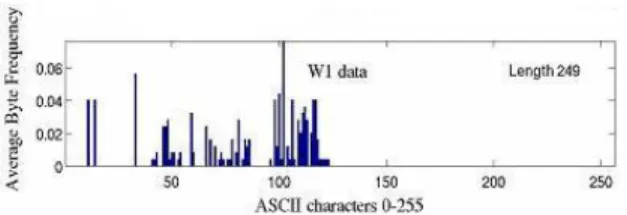
Figure 3. Sample payload byte distribution
then recording its distance from the hyperplane. The exam-ples are then ranked according to this distance. SVM-Light [11], which we used in our testing, is an open-source imple-mentation of SVM, and also has a ranking mode.
We also investigated an intrusion detection system called PAYL. Many such systems are primarily signature-based detectors, and while these are effective at detecting known intrusion attempts and exploits, they fail to recognize new attacks and variants of old exploits. However, anomaly-based systems like PAYL are used to model normal or ex-pected behavior in a system, and detect deviations of in-terest that may indicate a security breach or an attempted attack. PAYL has been developed for research purposes at Columbia University.
As PAYL is an example of unsupervised machine learn-ing, its training data simply consists of a set of TCP/IP net-work payloads (streams of bytes), without any associated lables or classificiation. During its training phase, it com-putes the mean and variance of the byte value distribution for each payload length in order to produce a model; Figure 3 shows an example of such a distribution. During the sec-ond (“detection”) phase, each incoming payload is scanned and its byte value distribution is computed. This new pay-load distribution is then compared against the model (for that length) using the Mahalanobis distance, which is a way of comparing two sets of data but unlike Euclidean distance does not depend on the scale of the values; if the distribution of the new payload is above some threshold of difference from the norm, PAYL flags the packet as anomalous and generates an alert. PAYL may also raise an alert in other circumstances, for instance if the payload length had never been seen before in the training data.
3
Approach
We previously reported on our testing of ML ranking ap-plications (MartiRank and SVM-Light) in which we devel-oped test cases by analyzing the problem domain, analyzing the algorithms as defined in pseudo-code, and analyzing the runtime options [14]. This then allowed us to devise equiv-alence partitions that served as guidelines for the creation of datasets using random testing [15].
We then went back to these applications and used our knowledge of the algorithms to identify metamorphic
rela-tionships (previously unpublished) that would give us an-other way of testing such applications in the absence of an oracle. These properties are described in Section 4.
Once we had enumerated and categorized the different types of metamorphic properties, we used these principles in our testing. We first tested an implementation of Mar-tiRank, and then sought to also apply these to SVM-Light (another ranking application) and the anomaly-based intru-sion detection system PAYL, on which we conducted meta-morphic testing using the same guidelines. Section 5 dis-cusses the results of our testing.
4
Metamorphic properties
We begin by describing our observations of the meta-morphic properties of MartiRank [9]. We first considered metamorphic relationships that should not affect the output: either the model that is created as a result of the training phase, or the ranking that is produced at the end of the test-ing phase. For the traintest-ing phase, if traintest-ing data set input
D produces model M, then we looked for transformation functionsT so that inputT(D)would also produce model
M. Additionally, if testing data set inputKand modelL pro-duce rankingr(K, L)=R, then we looked for transformation functionsT so that the combinationsr(T(K), L),r(K, T(L))
andr(T(K), T(L))all produceRas well.
Based on our analysis of the MartiRank algorithm, we noticed that it is not the actual values of the attributes that are important, but it is therelativevalues that determine the model. Adding a constant value to every attribute, or mul-tiplying each attribute by a positive constant value, should not affect the model because the model only concerns how the examples relate to each other, and not the particular val-ues of the examples’ attributes. The model declares which attributes to sort to get the best ordering of the labels; in Figure 1, if the values in any column were all increased by a constant, or multiplied by a positive constant, then the sorted order of the examples would still be the same, thus the model would not change. Additionally, applying a given model to two data sets, one of which has been created based on the other but with each attribute value increased by a con-stant, would generate the same ranking, based on the same line of reasoning. Thus, MartiRank exhibits metamorphic properties that we can classify as bothadditiveand multi-plicative: modifying the input data by addition or multipli-cation should not affect the output.
It should also be the case that changing the order of the examples should not affect the model (in the first phase) or the ranking (in the second). As MartiRank is based on sort-ing, in the cases where all the values for a given attribute are distinct, it is clear that the sorted order will still be the same regardless of the original input order. Thus, Marti-Rank also has apermutativemetamorphic property, albeit
only limited to certain inputs.
We then considered metamorphic relationships that would affect the output, but in a predictable way. For the training phase, if training data set inputDproduces model
M, then we looked for transformation functionsT so that input T(D)would produce modelM’, whereM’ could be predicted based onM. Additionally, if testing data set input
Kand modelLproduce rankingr(K, L)=R, then we looked for transformation functionsTso thatr(T(K), L),r(K, T(L))
andr(T(K), T(L))all can be predicted based onR. Keep in mind that in order to perform testing, we need to be able to have a predictable output based onRbecause we cannot know it in advance otherwise, since there is no test oracle.
We mentioned above that multiplying all attributes by a positive constant should not affect the model. On the other hand, mulitplying by a negative constant clearly would have an effect, because sorting would now result in the oppo-siteordering. The effect on the MartiRank model, however, could easily be predicted, because the model not only spec-ifies which attribute to sort on, but which direction (ascend-ing or descend(ascend-ing) as well. Consider that, if one were to sort a group of numbers in ascending order, then multiply them all by a negative constant, and sort in descending order, the original sorted order would be kept intact. In MartiRank, if in the original data set a particular attribute is deemed to be the best one to sort on, and a new data set is created by mul-tiplying every attribute value by a negative constant, then that particular attribute will still be the best one to sort on, but in the opposite direction. The only change to the model will be the sorting direction. Thus, MartiRank displays an invertive metamorphic property, wherein it is possible to predict the output based on taking the “opposite” of the in-put. We mention here again that this property only holds in the case where all values are distinct.
This invertive property can also be seen in the testing phase. For data set inputK, we defineK’as its inverse,i.e.
all attribute values multiplied by a negative constant. For modelL, we defineL’as its inverse,i.e. the sorting direc-tions all changed. We also defineR=r(K, L)as the ranking produced on data setKand modelL, andR’as the inverse ranking, where the examples are ranked in “backwards” or-der. Based on the explanation above, we can expect that if
r(K, L)=R, thenr(K’, L’)is also equal toR, because sorting the positive values ascending will yield the same ordering as sorting the negative values descending. It follows, then, that
r(K’, L)andr(K, L’)should both be equal toR’, in which the ranking is the same but in the opposite direction.
Furthermore, once we know the model, it is easy to add an example to the set of testing data so that we can predict its final place in the ranking. Take, for example, the model shown in Figure 2. In the first round, it sorts on attribute 61 in descending order; if we add an example to a testing data set such that the example has the greatest value in attribute
61, it will end up at the top of the sorted list. In the second round, the model sorts the top 40% (which would include our added example) on attribute 32 in ascending order; if we modify our added example so that it has the smallest value for attribute 32, it will stay at the top of the list. And so on. Knowing the model, we can thus construct an ex-ample, add it to the data set, and expect it to appear first in the ranking. We can thus say that MartiRank has an in-clusivemetamorphic property, meaning that a new element can be included in the input and the effect on the output is predictable. Similarly, MartiRank also shows anexclusive metamorphic property: if an example is excluded from the testing data, the resulting ranking should stay the same, but without that particular example, of course.
5
Case studies
As a result of our investigation of MartiRank, we have identified six metamorphic properties of supervised ML ap-plications: additive, multiplicative, permutative, invertive, inclusive, and exclusive. Following that analysis, we con-ducted metamorphic testing using those properties.
5.1
Metamorphic testing of MartiRank
After identifying the metamorphic properties of Marti-Rank, we constructed corresponding test cases and were able to detect a defect in the implementation. Another of its invertive properties is that if all of the labels in the train-ing data are negated (multiplied by -1), the final ranktrain-ing of the testing data should be the same but in opposite order from the original, since what was the “worst” would now be considered “best”. However, because the particular im-plementation we were testing was designed specifically to rank the likelihood of device failures, the labels in the train-ing data (which represented the number of failures over a given period of time) would never be negative in practice, so this was not considered during development. During meta-morphic testing, the implementation produced inconsistent results when a negative label existed, and we confirmed this bug first with a simple toy data set and then upon inspection of the code, in which a logical flaw existed in the way the examples were being segmented during training. In prin-ciple a general-purpose ranking algorithm should allow for negative labels (-1 vs. +1 is sometimes used in other appli-cations), of course.
5.2
Analysis of SVM-Light
Our testing demonstrated that SVM exhibits the same metamorphic properties shown by MartiRank. Almost all of the transformations that we tested based on these metamor-phic properties resulted in a modification of the output
com-pared to the original, but this modification was always pre-dictable or could be converted to the original output with ad-ditional transformations. For instance, if a training data set were transformed using an additive, multiplicative, and/or invertive relationship, then the corresponding model (hyper-plane) would be affected by being shifted, expanded, or in-verted in theNdimensions; however, if the testing data set also had the same transformation(s) applied, the resulting ranking of the new model applied to the new data set would be the same as the original model applied to the original data set, because each example (or point inN dimensions) would similarly be moved, and the relative distances would stay the same. Our testing revealed this to be the case in SVM-Light.
Because in its ranking mode, SVM considers each exam-ple in the testing data independently and ranks according to the distance from the hyperplane, SVM also demonstrates the exclusive property: if an example is removed, it would not affect the final ranking. Similarly, SVM demonstrates the inclusive property, though in a simpler form than Mar-tiRank. In the ranking phase, regardless of the model, by looking at the numerical values in the testing data one can construct a new example with attribute values that are sig-nificantly greater than the others; thus, that example is going to be very far away from the hyperplane, and will be ranked highest. Lastly, SVM has the permutative property because the ordering of the examples in the training data should not affect the resulting hyperplane that separates them.
5.3
Metamorphic testing of SVM-Light
As we originally reported in [14], the SVM-Light imple-mentation has a bug in which permuting the training data caused it to create different models for different input or-ders. This occurred even when all attributes and labels were distinct - thus removing the possibility that ties between equal values would be broken depending on the input or-der.
Our analysis of the SVM algorithm indicates that it the-oretically should produce the same model regardless of the input data order; however, an ML researcher familiar with SVM-Light told us that because it is inefficient to run the quadratic optimization algorithm on the full data set all at once, the implementation performs “chunking” whereby the optimization algorithm runs on subsets of the data and then merges the results [17]. Numerical methods and heuristics are used to quickly converge to the optimum. However, the optimum is not necessarily achieved, but instead this pro-cess stops after some threshold of improvement. This is one important area in which the implementation deviates from the specification, as revealed by metamorphic testing.
Although we have only considered ranking algorithms thus far, we believe that classification algorithms would
dis-play the same properties because of the similarity of the al-gorithms in terms of the ways in which they treat the data; this is left as future work.
5.4
Analysis of PAYL
We next sought to determine whether the properties we used to guide metamorphic testing of MartiRank could also be applied to a different type of ML application. The appli-cation we chose was PAYL [19], an anomaly-based intru-sion detection system.
Because the model generated by PAYL in the train-ing phase represents the distribution of byte values in the TCP/IP payload (see Figure 3), it is clear that it exhibits the additive and multiplicative properties. Adding a constant value to each byte would shift the distribution, and multi-plying by a constant would stretch it. Therefore, it would be easy to predict the effect on the model. Additionally, the categorization (as anomalous or not) of a packet in the test-ing phase would not change if it, too, had its bytes modified in the same manner.
Much of our analysis of PAYL focused on its permutative properties, primarily because some attackers may try to hide a worm or virus by permuting the order of the bytes, so as to trick a signature-based intrusion detection system. Of course, the model created by PAYL does not consider the order of the bytes, only their distribution, so a permutation should still result in the same model.
PAYL also has an invertive property. An “inverse” of the distribution can be obtained by subtracting each byte value from the maximum (255, or 0xFF), so that frequently-seen values become less frequent, and vice-versa. If the same treatment is applied to the payloads in the testing data, then the same alerts should be raised, since these values will still appear to be anomalous.
Aside from considering the distribution of byte values in creating its model, PAYL also considers the existence (or absence) of payloads of certain lengths, and thus certainly has inclusive metamorphic properties. For instance, con-sider a model that generates an alert on a new payload be-cause its length had never before been seen. If the particular payload were then included in the training data, it should no longer be considered anomalous. We would similarly ex-pect PAYL to have exclusive metamorphic properties: if all payloads of a certain length were removed from the set of training data, then any messages of that length in the testing data would thus be considered anomalous because they had not previously been seen.
5.5
Metamorphic testing of PAYL
We then conducted testing of PAYL by using data sets generated via these metamorphic relationships. By using
the exclusive metamorphic property, we were able to detect two defects in PAYL. We started with training data that had payloads of various sizes, including 274 bytes, and created a model that was applied to a set of testing data, which also included a payload of 274 bytes; PAYL raised no alerts. We then removed all payloads of 274 bytes from the training data and applied the model to the same (unmodified) testing data, expecting that the payload of 274 bytes in the test-ing data would cause PAYL to raise a “length-never-seen-before” alert. However, PAYL raised an anomaly alert for the payload of length 274, even though there was no pay-load of that length in the training data. An alert was cor-rectly being raised, but it was the wrong type.
Additionally, PAYL unexpectedly raised bothanomaly alertsand“length-never-seen-before” alerts for payloads of 1448 bytes, which theoretically should never happen (since it can only be anomalous if that length had actually been seen before). Upon further investigation, we determined that PAYL actually should have raised the “length-never-seen-before” alert from the first set of training data, since there were no payloads of that length. So not only were the alerts not being raised in the first place, but false positives were then being raised in the second.
Our key result, though, was that we were able to verify that PAYL exhibits the same six metamorphic properties as MartiRank, and then use these properties to drive metamor-phic testing and find important defects in PAYL.
6
Conclusion and future work
We have identified six metamorphic properties that we believe exist in many machine learning applications: ad-ditive, multiplicative, permutative, invertive, inclusive, and exclusive. Although these are likely not theonly metamor-phic properties that can exist in a machine learning algo-rithm, they provide a foundation for determining the rela-tionships and transformations that can be used for conduct-ing metamorphic testconduct-ing, which we have shown to reveal defects in the applications of interest.
Further investigation would involve applying these meta-morphic properties to other ML applications, and looking to classify other properties. Additionally, as we have defined our properties independent of the actual numerical values used in the data sets, future work could consider how to initially create new data sets such that further application-specific metamorphic properties can also be revealed.
We have found metamorphic testing to be an efficient and effective approach to testing ML applications. We hope that our findings here and the identification of metamorphic properties help others who are also concerned with the qual-ity of non-testable programs.
7
Acknowledgments
The authors would like to thank T.Y. Chen, Marta Arias, Hila Becker, Gabriela Cretu, Phil Gross, and David Waltz for their assistance. Murphy and Kaiser are members of the Programming Systems Lab, funded in part by NSF CNS-0717544, CNS-0627473, CNS-0426623 and EIA-0202063, and NIH 1 U54 CA121852-01A1.
References
[1] T. J. Cheatham, J. P. Yoo, and N. J. Wahl. Software testing: a machine learning experiment. InProc. of the ACM 23rd Annual Conference on Computer Science, pages 135–141, 1995.
[2] T. Y. Chen, S. C. Cheung, and S. Yiu. Metamorphic testing: a new approach for generating next test cases. Technical Re-port HKUST-CS98-01, Department of Computer Science, Hong Kong University of Science and Technology, 1998. [3] T. Y. Chen, F.-C. Kuo, T. H. Tse, and Z. Q. Zhou.
Meta-morphic testing and beyond. InProc. of the International Workshop on Software Technology and Engineering Prac-tice (STEP), pages 94–100, 2004.
[4] T. Y. Chen, T. H. Tse, and Z. Q. Zhou. Fault-based test-ing without the need of oracles. Information and Software Technology, 44(15):923–931, 2002.
[5] T. Y. Chen, T. H. Tse, and Z. Q. Zhou. Semi-proving: an integrated method based on global symbolic evaluation and metamorphic testing. InProc. of the 2002 ACM SIGSOFT international symposium on software testing and analysis (ISSTA), pages 191–195, 2002.
[6] W. J. Cody Jr. and W. Waite. Software Manual for the Ele-mentary Functions. Prentice Hall, 1980.
[7] M. D. Davis and E. J. Weyuker. Pseudo-oracles for non-testable programs. InProc. of the ACM ’81 Conference, pages 254–257, 1981.
[8] J. Demsar, B. Zupan, and G. Leban. Orange: From ex-perimental machine learning to interactive data mining. [www.ailab.si/orange], Faculty of Computer and Informa-tion Science, University of Ljubljana.
[9] P. Gross et al. Predicting electricity distribution feeder fail-ures using machine learning susceptibility analysis. InProc. of the 18th Conference on Innovative Applications in Artifi-cial Intelligence, 2006.
[10] J. A. Hanley and B. J. McNeil. The meaning and use of the area under a receiver operating characteristic (ROC) curve.
Radiology, 143:29–36, 1982.
[11] T. Joachims. Making large-Scale SVM Learning Practi-cal. Advances in Kernel Methods - Support Vector Learning. MIT Press, 1999.
[12] P. Long and R. Servedio. Martingale boosting. InProc. of the 18th Annual Conference on Computational Learning Theory (COLT), pages 79–84, 2005.
[13] P. Mell et al. An overview of issues in testing intrusion de-tection systems. Tech. Report NIST IR 7007, National Insti-tute of Standard and Technology.
[14] C. Murphy, G. Kaiser, and M. Arias. An approach to soft-ware testing of machine learning applications. InProc. of the 19th international conference on software engineering and knowledge engineering (SEKE), pages 167–172, 2007. [15] C. Murphy, G. Kaiser, and M. Arias. Parameterizing random
test data according to equivalence classes. InProc of the 2nd international workshop on random testing, pages 38– 41, 2007.
[16] J. P. Nicholas, K. Zhang, M. Chung, B. Mukherjee, and R. A. Olsson. A methodology for testing intrusion detec-tion systems. IEEE Transactions on Software Engineering, 22(10):719–729, 1996.
[17] R. Servedio. Personal communication, 2006.
[18] V. N. Vapnik. The Nature of Statistical Learning Theory. Springer, 1995.
[19] K. Wang and S. Stolfo. Anomalous payload-based network intrusion detection. InProc. of Recent Advances in Intrusion Detection (RAID), Sept. 2004.
[20] E. J. Weyuker. On testing non-testable programs.Computer Journal, 25(4):465–470, November 1982.
[21] I. H. Witten and E. Frank.Data Mining: Practical Machine Learning Tools and Techniques, 2nd Edition. Morgan Kauf-mann, 2005.
[22] Z. Q. Zhou, D. H. Huang, T. H. Tse, Z. Yang, H. Huang, and T. Y. Chen. Metamorphic testing and its applications. InProc. of the 8th International Symposium on Future Soft-ware Technology (ISFST 2004), 2004.