and Practice
Perception
A Review of Birth Registration
in Addis Ababa and the Regional States of
Oromia, Amhara and SNNPR, Ethiopia
Plan Ethiopia The African Child Policy Forum Kirkos Sub City PO Box 1179
Kebele 40, House #: 1069 Addis Ababa
Addis Ababa Ethiopia
Ethiopia Tel +251-1-528407/09/10 Tel +251-1-670175 Fax +251-1-513420
Fax +251-1-161542 Email: [email protected] www.plan-international.org www.africanchildforum.org
September 2005
All rights reserved. No part of this publication may be reproduced, stored in a retrieval system or transmitted, in any form or by any means, electronic, mechanical, photocopying, recording or otherwise, without the prior permission of the publisher.
The Research Team was composed of:
G Ato Mebratu Gebeyehu (Principal Researcher, Coordinator and Team Leader)
G Ato Belete Retta (Team Member and Principal Researcher)
G Ato Yoseph Endeshaw (Team Member and Principal Researcher)
G Ato Hailemelekot Taye (Research Designer and Data Analyst)
The Research Team also recognise their ‘fifth’ member, W/ro Sara T/Mariam, for her invaluable contribution to the design of the research and her assistance in the organisation and revision of the research report.
Acknowledgements
The Research Team wish to acknowledge the research respondents and the assistance of the following people in Addis Ababa and the regional research sites:
G Ato Birhanu Tsigu (Field Researcher)
G Mequanent Addis (Data Organiser)
G W/t Lishan W/Medihin (Research Assistant)
G W/t Helen Fikre (Research Assistant)
G Ato Endale Kebede (Research Assistant)
G Ato Habtu G/Hiwot (Research Assistant)
G Ato Afework Delelu (Research Assistant)
G W/t Zenawa Desalegn (Research Assistant)
G W/ Selamawit Admasu (Research Assistant)
G Ato Mebratu Asres (Research Assistant)
G Ato Gizachew Mengiste (Research Assistant)
G Ato Wanachew Tariku (Research Assistant)
G Ato Habtamu Tadesse (Research Assistant)
Editors
G Rakeb Messele, Manager, Technical Programs, The African Child Policy Forum
Nicola Sharp, Plan International Headquarters
Plan Ethiopia The African Child Policy Forum
Kirkos Sub City PO Box 1179
Kebele 40, House #: 1069 Addis Ababa
Addis Ababa Ethiopia
Ethiopia Tel +251-1-528407/09/10
Tel +251-1-670175 Fax +251-1-513420
Fax +251-1-161542 Email: [email protected]
www.plan-international.org www.africanchildforum.org
September 2005
All rights reserved. No part of this publication may be reproduced, stored in a retrieval system or transmitted, in any form or by any means, electronic, mechanical, photocopying, recording or otherwise, without the prior permission of the publisher.
Contents
Foreword 3
Executive Summary 4
1: The Study and its Approach 7
1.1 Introduction 7
1.2 Objective of the Study 7
1.3 Methodology and Data Collection Techniques 8
1.4 Limitations of the Study 11
2: The Meaning of Birth Registration 13
2.1 What is Birth Registration? 13 2.2 The Need for and Significance of Birth Registration 14 2.3 State of Birth Registration across the World 16
3: Review of the National Policy and Legal
Framework for Birth Registration 19
3.1 International Instruments 19 3.2 The 1995 FDRE Constitution 20 3.3 The National Population Policy of Ethiopia 20 3.4 The National Plan of Action for Children 20 3.5 The 1960 Civil Code of Ethiopia 20 3.6 The 1957 and Revised Penal Code of Ethiopia 23 3.7 The Revised Family Law of Ethiopia 23 3.8 Proclamation Number 104/1976 and
Proclamation Number 206/1981 24 3.9 Draft Proclamation to Provide for Establishing
the Central Office for Registration and of Vital Events and Organisation of Vital Events
Registration System 24
3.10 Main Findings of the Review of National Policy
and Legal Framework 25
4: Perception of Birth Registration 27
4.1 Introduction 27
4.2 Awareness of Birth Registration as a
Fundamental Right 28
4.3 Significance of Birth Registration 29 4.4 Community Level Perception 32
5: The Practice of Birth Registration 35
5.1 The Status of Birth Registration in Ethiopia 35 5.2 The Practice of Issuing Birth Certificates 36 5.3 Other Means of Verifying Birth 40 5.4 Value Accorded to Documents 41
6: Impact of the Absence of a Birth
Registration System 43
6.1 The Impact in General 43
6.2 Impact on Planning and Policy 44 6.3 Impacts on the Rights of Children 46
7: Stakeholder Analysis and Review
of Practical Initiatives 51
7.1 Description of Stakeholders 51 7.2 Stakeholders, Interests and Respective Roles 52 7.3 Opportunities and Threats Identified
by Stakeholders 54
7.4 Ongoing Practical Efforts and Processes
Related to a Birth Registration System 56
8: Conclusion and Recommendations 61
8.1 Concluding Remarks 61
8.2 Recommended Actions 62
Bibliography 65
Annexes 67
Annex 1 Focus group discussion and
case study guidelines 67
Annex 2 List of significance of birth registration as identified by NGOs, policy makers, children in the regions and community
people in Addis Ababa 68
Annex 3 Tables referred to in Chapter 5 70 Annex 4 Consequences of non-registration of birth
as identified by informants 72 Annex 5 List of key informants contacted 75
Table 1.1: Research Groups and Data
Collection Techniques 9
Table 1.2:Key Informants Targeted and Reached 11
Table 2.1: Registration Status of Children across the World 16
Chart 4.1:Characteristics of Informants and their Size 27
Table 4.1: Is Birth Registration a Fundamental
Child Right? Results across Regions 28
Table 4.2:Is Birth Registration a Fundamental
Child Rights: Results across Respondent Groups 28
Table 4.3:Significance of Birth Registration at
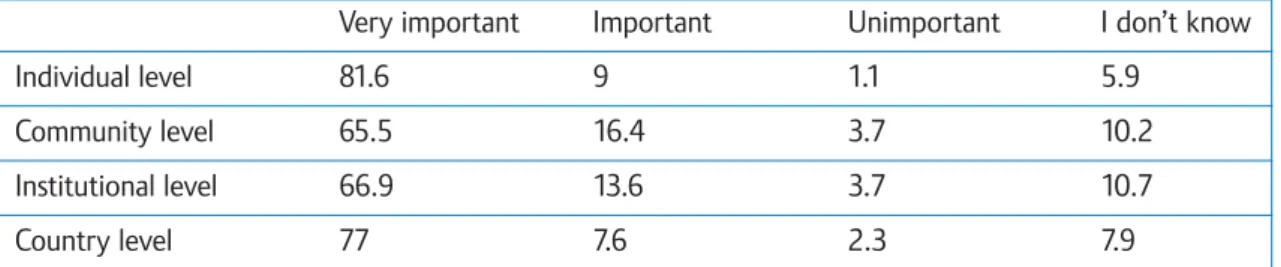
Various Levels 29
Table 4.4:Links of Birth Registration with Rights and
Development Issues 29
Table 4.5:Summary of Qualitative Data on the Perception of Respondents about the
Significance of Birth Registration 31
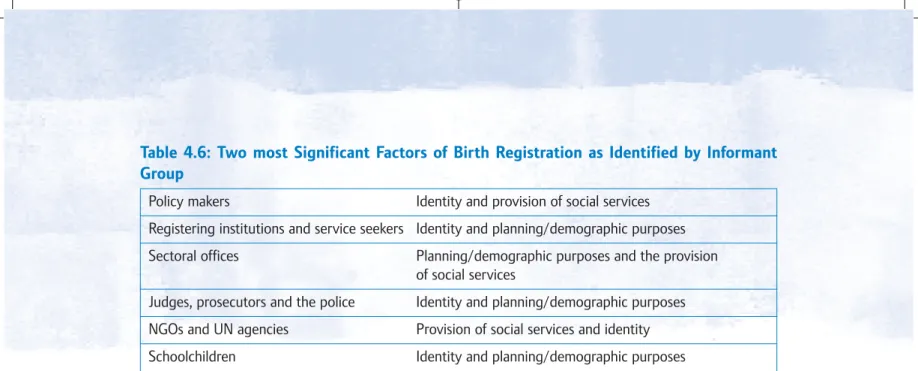
Table 4.6:Two most Significant Factors of Birth
Registration as Identified by Informant Groups 32
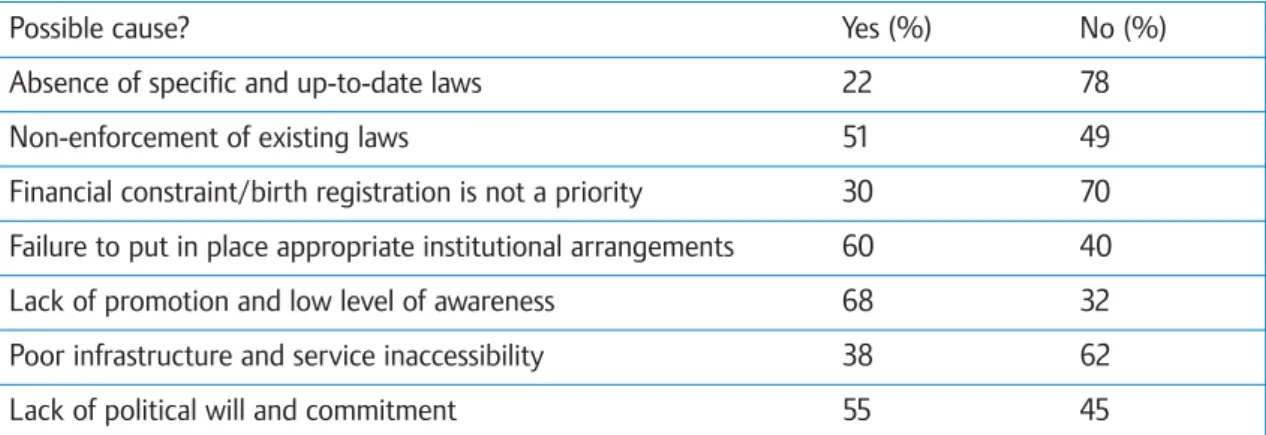
Table 5.1: Causes for the Absence of a Birth Registration
System in Ethiopia 36
Table 5.2:Value Accorded to Certificates and
Documents in Relation to Verifying Age 41
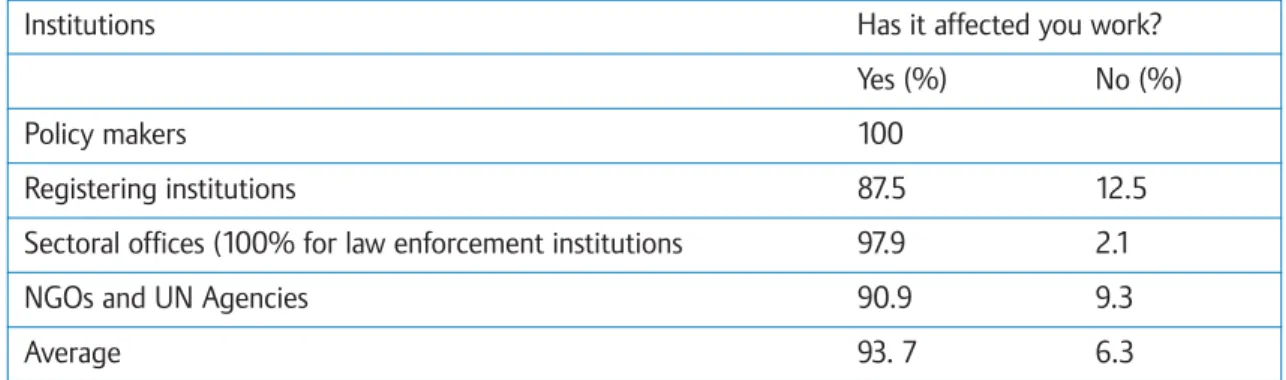
Table 6.1: How Lack of Birth Registration Data affects the Work of Respondent Organisations 44
Table 6.2:Affirmative Responses on how Institutional Work has been affected by Lack of
Birth Registration 45
Table 6.3:Knowledge of Birth Registration Related Cases by Respondents from Sectoral Offices,
NGOs and UN Agencies 46
Foreword
Birth registration is the official recording of the birth of a child. It is, in essence, the official and positive recognition of a new member of society, who is entitled to all the rights and responsibilities of a valued citizen.
The lack of birth registration may prevent a child from access to social and economic services including health, social assistance and education. Later in childhood, identity documents help protect children against early marriage, child labour, premature enlistment in the armed forces or, if accused of a crime, prosecution as an adult.
Generally, unregistered children tend to be found in countries where there is little awareness of the value of birth registration or where the registration network is inadequate. This is a serious concern for child rights organisations such as Plan, our principal collaborator and partner on a wide range of areas. The African Child Policy Forum and Plan Ethiopia thus initiated this study with a view to developing an understanding of the situation of birth registration in Ethiopia, the difficulties and obstacles, and the way forward.
The study confirms the now well-known and unfortunate fact that there is no formal birth registration system in Ethiopia. It shows that there is a legal vacuum with regard to birth registration, and therefore recommends that the enactment of legislation should be the first and most important step towards having a birth registration system.
The African Child Policy Forum would like to seize this opportunity to express once again its gratitude to Plan Ethiopia for funding this study. The Forum would also like to express its thanks and appreciation to the Research Team for ably carrying out this study.
Rakeb Messele
Manager, Technical Programs The African Child Policy Forum
Executive
Summary
The right to be registered at birth is enshrined under Article 7 of the United Nations (UN) Convention on the Rights of the Child (CRC) which states that: “The child should be registered immediately after birth and shall have the right from birth to a name (and) to acquire a nationality.” Yet, UNICEF estimate that 36 per cent or 48 million children are not annually registered at birth. Plan and other child focused institutions recognise birth registration as a priority issue that must be promoted universally.
Given that Ethiopia is one of the few countries in the world with no birth registration system, the births of around 2.9 million children every year are not legally recognised. Consequently, Plan and the African Child Policy Forum initiated this study with the overall objective of developing a comprehensive understanding of birth registration in Ethiopia from the local up to the institutional level and, based on this understanding, proposing a multi-stakeholder approach for a fully functional birth registration system in Ethiopia that is compulsory, universal, permanent and continuous.
The study covered Addis Ababa and the regional states of Oromia, Amhara and SNNPR with a total target of 531 informants (40 per cent female) representing: policy makers, including members of parliament; sectoral offices, including health and education, law enforcement and judicial agencies; birth certificate issuing institutions, including hospitals, churches and municipalities; service seekers of registering institutions; school principals and children; children in difficult circumstances; and community representatives drawn from the local administration, religious leaders, community-based organisations and women/youth associations. The methodology of the study was a mixture of qualitative and quantitative methods covering different visual and oral as well as group and individual data collection techniques. The study also included a review of the legal and policy framework for a birth registration system, an assessment of individual and institutional perceptions of birth registration, practices related to birth certification in Addis and the regional sites, and the effect and impact of the absence of birth registration on institutions and individuals. Stakeholder analysis and a comprehensive literature review were also undertaken.
The study demonstrates that there is limited understanding about what birth registration means across regions and research informants and at individual and institutional levels. The aim of achieving Universal Birth Registration (UBR) is not understood, nor is the duty of the Ethiopian Government to respect, protect and fulfil Article 7 of the CRC. In addition, it is not widely acknowledged that birth registration is part of a reliable civil registration system generating data on vital events which provide the basis for effective governmental planning and policy.
The study confirmed the absence of both a formal and informal birth registration system in Ethiopia. In an attempt to fill this vacuum, what has emerged is the practice of birth certificates being issued by churches, hospitals and municipalities.
The study also established that birth registration is not viewed as a prerequisite for issuing a birth certificate. While churches and hospitals may consult baptismal records and delivery notes in order to issue the certificates and municipalities require some kind of proof of identity, no ‘register’ of births is maintained.
What does exist is a list or record of the individuals who have benefited from the certification process. It was further discovered that these lists are not shared with a central authority for statistical or demographic purposes. This is because the records kept by hospitals and churches do not contain reliable and consistent sources of birth-related information. Furthermore, the process of issuing baptism certificates undertaken by churches is open to falsification since it is not designed to record facts about the child. Rather, it is produced as a record of payment for a service.
Even though relatively higher validity and formal value is given to the birth certificates issued by municipalities, even this certification process is said to be exposed to the falsification of age, identity, birth place and parents.
The research also noted a lack of uniformity in the appearance and contents of the certificates between issuing organisations and even amongst themselves. This observation also applied to the process for issuing a birth certificate and the procedures and mechanisms in place for acquiring birth certificates.
Other problems with the current practice include the following:
G the possibility of one person having a number of different birth certificates
G the possibility that even an accurate birth certificate can be contested due to the fact that it was likely to
have been issued without reliable verification of date of birth
G the fact that birth certificates are attributed different value and validity when issued from different
institutions or from different regions
G the inconsistency of acquiring birth certificates in terms of complexity, cost, and time factor even when
acquiring a birth certificate from similar institutions
The study established that the absence of birth registration and the existence of contestable certificates has an impact on individuals in relation to the realisation of their rights. Examples of cases where the rights of the child are abused include: the right to a name and nationality; the right to protection from abuse, neglect, and exploitation including early marriage and trafficking; the right to protection from maltreatment including juvenile justice administration and child labour; the right to access basic social services including education and health; and the rights of Orphans and Vulnerable Children (OVC).
The study also noted that the absence of birth registration has an impact on institutions. The institutions targeted by the study reported experiencing problems in accessing reliable data at all levels and at different time intervals on a regular basis due to the absence of vital statistics that would be generated by a birth registration system. Community level informants also strongly felt the lack of birth registration in the sense that individuals have to calculate their own age based on unreliable oral information.
There are ongoing efforts by various institutions towards creating a system of birth registration in Ethiopia. Notable initiatives include the Government’s effort to enact legislation on civil registration and pilot projects being carried out by UNICEF and the World Health Organization (WHO). It is also important to note that a number of institutions need the benefits a birth registration system would bring about and have expressed their willingness to participate in a multi-stakeholder process in order to achieve that aim.
Based on the findings of the study, a number of recommended actions are put forward from the local right up to the international level. These emphasise the primary responsibility of the government in achieving universal coverage of birth registration in Ethiopia and the need to engage with other stakeholders throughout the process. These include international organisations, development cooperation agencies, civil society, community level institutions and children themselves. Actions that need to be undertaken include: practical institutional and legislative measures, awareness creation, policy advocacy and research, capacity building, child participation and birth registration promotion activities.
1: The Study and
its Approach
1.1
Introduction
Both the United Nations (UN) Convention on the Rights of the Child (CRC) and the African Charter on the Rights and Welfare of Children stipulate that state parties have an obligation to ensure the right of children to birth registration in their respective countries. However, the performance of states is not encouraging, especially in underdeveloped nations. Regardless of geography and status, all nations need to have a birth registration system not only to ensure the realisation of a number of rights and to fulfil the practical needs of children, but also to ensure that research, development, business planning and service delivery are based on accurate and reliable data. Birth registration statistics as the source of this data saves time, effort and money spent recurrently and unnecessarily on alternative methods of data collection such as one-time surveys or special studies.
Although formulating and issuing relevant laws and policies for the enforcement of birth registration as part of a vital registration system date back to the time of Emperor Menelik II and, more recently, the Civil Code of the 1960s, a continuous, effective and comprehensive registration system has not yet been established in Ethiopia. The absence of such a system has a negative impact on the rights of individuals and data collection for policy and planning.
It is assumed that non-registration of Ethiopian children due to the absence of a birth registration system has been contributing to the invisibility of children in the whole country, making the discrimination, neglect and abuse they experience go unnoticed, and leaving their deprivation, vulnerability and exploitation unaddressed. For the government, non-state actors and other parties, the absence of birth registration makes both the delivery of basic services to citizens and the task of addressing and dealing with socio-economic problems through appropriate intervention programs difficult.
Aware of the above problem, Plan International, with its goal of achieving Universal Birth Registration (UBR) and the African Child Policy Forum (ACPF) initiated a piece of research with the following objective:
1.2 Objective of the Study
The objective of the study was to develop a comprehensive understanding of birth registration at different levels on which could be based a proposal for a multi-stakeholder approach towards a fully functional birth registration system in Ethiopia that is compulsory, universal, permanent and continuous.
In line with the overall purpose, the research sought to investigate issues around the perception of individuals and institutions towards birth registration, practices related to the issuance of birth certificates from various institutions, the policy and legal environment for the enforcement of birth registration, the obstacles to a birth registration system and the impact and effect of the absence of a birth registration system in realising human rights, rights of children and development goals.
The study further identified the needs, problems, strengths, weaknesses, threats and opportunities of birth registration from the perspective of stakeholders that could feed into the ongoing institutional efforts towards the establishment of a birth registration system in Ethiopia.
1.3 Methodology and Data Collection Techniques
The research employed a multi-strategy approach using a mixture of methodologies that included quantitative and qualitative techniques. The logic behind employing a number of data collection techniques was to verify and ensure the accuracy and reliability of data collected from various sources and so ensure the validity of the findings and conclusions.
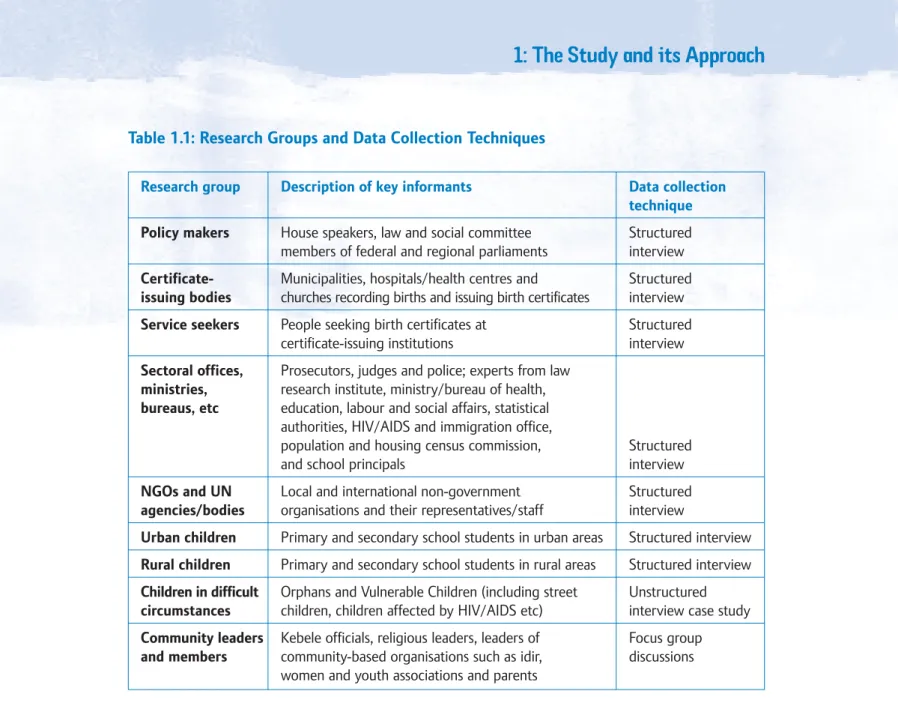
Since the informants that the research targeted ranged in status, position and role, it was necessary to categorise them and their involvement in birth registration into various different research groups and design appropriate data gathering tools based on the type of data sought from them. Table 1.1 shows a list of the research groups that were studied with a description and summary of the data collection techniques that were employed.
Table 1.1: Research Groups and Data Collection Techniques
Research group Description of key informants Data collection
technique
Policy makers House speakers, law and social committee Structured
members of federal and regional parliaments interview
Certificate- Municipalities, hospitals/health centres and Structured issuing bodies churches recording births and issuing birth certificates interview
Service seekers People seeking birth certificates at Structured
certificate-issuing institutions interview
Sectoral offices, Prosecutors, judges and police; experts from law ministries, research institute, ministry/bureau of health, bureaus, etc education, labour and social affairs, statistical
authorities, HIV/AIDS and immigration office,
population and housing census commission, Structured
and school principals interview
NGOs and UN Local and international non-government Structured
agencies/bodies organisations and their representatives/staff interview
Urban children Primary and secondary school students in urban areas Structured interview Rural children Primary and secondary school students in rural areas Structured interview Children in difficult Orphans and Vulnerable Children (including street Unstructured circumstances children, children affected by HIV/AIDS etc) interview case study Community leaders Kebele officials, religious leaders, leaders of Focus group and members community-based organisations such as idir, discussions
women and youth associations and parents
In addition to the structured and unstructured interviews and focus group discussions, a literature review, examination of official documents and observation techniques were also employed to collect the required data for the research.
1.3.1 The Structured Interview
This instrument was designed and administered to obtain a rich and considerable amount of quantitative and qualitative data from all informant groups except community leaders and members (from the first seven research groups [Table1.1]). For this purpose, the instrument was designed to have both open and closed questions through which a total of 354 informants were reached. These included house speakers, law and social committee members of federal and regional parliaments; personnel in certificate-issuing institutions such as municipalities, churches and hospitals/health centres; service seekers of certificate-issuing institutions; prosecutors, judges and police; experts from a law research institute, ministry/bureau of health, education, labour and social affairs, central/regional statistical authorities and the national population and housing census commission office; local and international NGOs, including UN agencies; school directors and children at urban and rural schools. Depending upon the type of data sought from each research group (Table 1.1) the content of the interview schedule was altered accordingly.
1.3.2 The Unstructured Interview
This tool was used to interview children in difficult circumstances, including Orphans and Vulnerable Children (OVCs). Its aim was to gather qualitative data that could show the effect and impact of non-registration on children who are in difficult circumstances. Accordingly, a total of 19 children were reached and interviewed.
1.3.3 Focus Group Discussions (FGDs)
With the aim of obtaining in-depth qualitative data, focus group discussions (FGDs) were carried out at the kebele/community level in both urban and rural sites selected from the four regions. The participants of the FGDs were deemed to represent the local community and included: kebele officials, religious leaders, leaders of community based organisations such as idir, women and youth associations and parents. This made the total number of participants in the FGDs 206. The discussion focused on the perceptions of individuals at the community level about birth registration, the practice of acquiring a birth certificate and verifying the age of children and the feasibility of a comprehensive, permanent, regular and compulsory birth registration system in Ethiopia (see Annex 1).
1.3.4 Literature Search and Review
Both published and unpublished literature related to birth registration was searched with the aim of developing the conceptual framework or understanding necessary for conducting the review. This process also helped shape the content of the data gathering instruments and identified the experience of good practices in other countries for comparative review.
1.3.5 Official Document Examination
Official documents produced by relevant organisations were also consulted to gather some of the data required for investigating and analysing the practice of certificate-issuing institutions and for examining and assessing the policy and legal framework and environment in the country.
1.3.6 Observation
Observation was a technique used throughout the field work and was used as a reference both for developing further research questions and for identifying and cross checking issues during data analysis. As a result, unstructured and non-interactive observation of children, other informants, community interactions, forms of communication and the general environment was recorded on a regular basis throughout the field work. The technique was also utilised to learn about the operational environment at the certificate-issuing institutions.
1.3.7 Research Sites, Population and Sample Selection
There were a large number of potential research sites in Addis Ababa, Oromia, Amhara and SNNPR. Of Ethiopia’s estimated population, almost 85 per cent reside in these regions. Correspondingly, a total of 44 administrative zones, 831 woreda towns, over 9,000 kebeles and 15,000 social organisations/institutional establishments were directly or indirectly linked with birth registration issues in the country.
As a result, it was necessary to limit the scope of the review so that the study was a manageable size. Accordingly, 48 geographical locations/sites were selected (12 regional zones/sub cities and 36 woredas/kebeles). Within the 48 geographical sites, 161 institutional sites were then selected. The selection was approached by employing a stratified/quota sampling technique. The main stratifying/quota criteria used in selecting geographical and administrative locations/sites were the level of urbanisation and development, administrative structure and equal representation. Regarding institutional sites, the criteria include the availability of well established certificate-issuing systems and richness of experience.
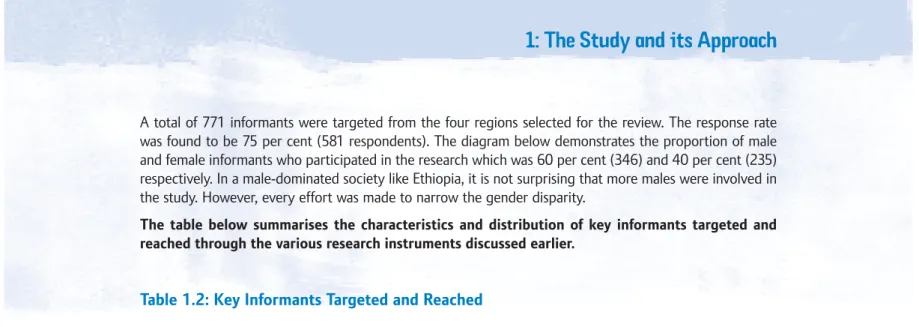
A total of 771 informants were targeted from the four regions selected for the review. The response rate was found to be 75 per cent (581 respondents). The diagram below demonstrates the proportion of male and female informants who participated in the research which was 60 per cent (346) and 40 per cent (235) respectively. In a male-dominated society like Ethiopia, it is not surprising that more males were involved in the study. However, every effort was made to narrow the gender disparity.
The table below summarises the characteristics and distribution of key informants targeted and reached through the various research instruments discussed earlier.
Table 1.2: Key Informants Targeted and Reached
Research group Target Achieved AA OR AM SN
N= N= %
Policy makers 15 8 53 2 1 2 3
Registering institutions 36 34 94 8 9 8 9
Service seekers 120 71 59 19 17 16 19
Sectoral offices 78 53 68 9 13 16 15
NGOs & UN agencies 30 16 53 16 – – –
Urban children 60 106 177 28 29 27 22 Rural children 60 68 113 – 20 28 20 Children in difficult Circumstances 12 19 158 5 5 4 5 Community leaders 360 206 57 57 64 45 40 Totals 771 581 75 144 158 146 133 Participation by region (%) 25 27 25 23
1.4 Limitations of the Study
The major limitations of the study were:G the limited sample size which was due to the difficulty of covering all potential research sites and
informants from the four regions selected for review
G the research could have utilised richer and fuller data if the response rate had been 100 per cent. As it
was, only a 75 per cent (581) response rate was achieved out of the 771 targeted informants. The remaining 25 per cent were not able to participate in the research due to various reasons: lack of interest and time; the difficulty of accessing policy makers since parliaments were not in session; and the unavailability of NGO workers because it was the end of the fiscal year
G although the imbalance between the proportion of males (60 per cent) and females (40 per cent) was
not significant, the composition of the informants could also be identified as one of the limitations of the research
G the research team could not locate and access all the studies on birth registration that have been
2: The Meaning of
Birth Registration
2.1 What is Birth Registration?
Birth registration is the official recording of the birth of a child by some administrative level of the state and is coordinated by a particular branch of government. It is part of a system of civil registration, which is also referred to as the registration of vital events. Civil registration is a system where the occurrence and characteristics of vital events pertaining to the population like births, deaths, marriages and divorces are recorded in a continuous, permanent and universal manner. The purpose of civil registration is primarily for establishing the legal documents provided by the law. These records serve also as a primary source of vital statistics1.
Since birth registration is the foundation of a civil registration system and acts as the starting point of all other data flow, it is particularly important. An ideal or a fully functional birth registration system should have four major qualities. It should be universal in the sense that the system should be designed to register every newborn child in the country. It should be compulsory to ensure that every child is registered. It should
also be permanent and continuous, to ensure registration without interruption2.
Although it may vary from country to country, the content of a birth record should, as a minimum, include the child’s name, sex, date and place of birth, the name, address and nationality of both parents’ and the name and signature of the registrar. Other particulars that may be entered in a birth record include the date of birth of the child’s parents, name and address of the person making the declaration, names and addresses
of witnesses and so on3.
Birth registration is usually accompanied by the issuance of a document called a birth certificate. A birth certificate is a legal document issued to an individual by the state to prove that a birth has been recorded. Therefore, birth registration, and the issuing of a birth certificate are two distinct yet interlinked events, wherein birth registration is a prerequisite for issuing a birth certificate in normal circumstances.
1 UNICEF (2002:2); Plan (2005:12-13) 2 UNICEF (2002:2); Plan (2005:12-13) 3 UNICEF (2002:2)
2.2 The Need for and Significance of Birth Registration
Civil registration in general and birth registration in particular is an essential instrument for the normal functioning of any society. Birth registration plays a crucial role in the realisation of a range of human rights as well as in promoting democracy and good governance. Birth registration is also an indispensable instrument to generate accurate demographic data, which is essential for government and other institutions to plan and meet the needs of citizens. In general the significance of birth registration can be broadly categorised into two:
G to provide for the legal protection of citizens and realisation of human rights
G to attain individual information needed to provide public services at the lowest level of administration
and to collate accurate and continuous demographic data essential to plan, implement and monitor policies and programs
2.2.1 Birth Registration and Human Rights
Birth registration is closely linked with human rights, in particular with the rights of children. The linkage between birth registration and human rights can be expressed in two ways. On the one hand, birth registration is a human right by its own merit and is recognised by various human rights instruments, including the Convention on the Rights of the Child (CRC) and the International Covenant on Civil and Political Rights (ICCPR). Accordingly, Article 7 of the CRC provides that every child shall be registered immediately after birth and has a right to a name and nationality and to know his or her parents. Where the right to birth registration is not recognised, a child is virtually non-existent in the legal sense as proof of birth represents the first acknowledgement of the child’s significance to the country and the child’s status under the law.
The right to birth registration is a basic human right, the non-observance of which deprives a child of the privileges and protection that a nation offers its citizens. In the absence of birth registration as proof of age and identity, a country cannot even answer the question ‘who is a child?’ The principle behind the recognition of the rights of a child emanates from being a child, which is determined only by age, which in turn requires birth registration.
The non-observance of birth registration, as well as being a violation of a right in itself, makes children
invisible and marginalised, depriving them of their other rights4.
The right to have a name and nationality:Children have the right to have a name and nationality. Birth registration guarantees that the child is given a name and that it is legally recognised. It also acts as the basic source of information on which to establish the nationality of the child, which may be based either on the place of birth or the nationality of the parents and sometimes both.
The right to know parents and have their care: The right to know one’s parents and have their care is a basic right of children. Birth registration includes information about the parents of the child. This facilitates the realisation of the right to know one’s parents. It also assists children to benefit from the protection and care to be given by parents and guardians. It also helps the government to ensure that parents/guardians have duly discharged their obligation to provide care and protection to the child.
The right of the child to be protected against abuse and exploitation: The right of the child to be protected against any form of child abuse and exploitation cannot also be effectively implemented without a systematised birth registration system. The protection of children from early marriage, child labour, child sexual exploitation and many other abuses cannot be addressed effectively without proof of age. For instance, birth registration ensures that girls are not given away for marriage before they attain the required age limit through falsifying their age, since data collected by means of birth registration is difficult to falsify. The absence of birth registration not only contributes to child abuse but also further victimises abused children. Speedy trial involving children is compromised causing additional trauma to the child and increased costs for, in many instances, poor parents. Even when the law stipulates a higher penalty for offences against children (for example statutory rape), failure to establish and prove the age of the victim means that children do not get adequate redress for the violation of their rights, while perpetrators are often punished under a
The right of the child not to be involved in armed conflict:Children are actively involved in armed conflict in many parts of the world, particularly in a number of nations in Sub-Saharan Africa. The Optional Protocol to the CRC on the Involvement of Children in Armed Conflicts has raised the age limit for recruitment and deployment of children into military service from 15 to 18. Yet, without reliable proof of age, it is difficult to
implement effectively this provision and thereby protect children from being used as soldiers6.
The rights of children in conflict with the law:Without proof of age, the special protection provided for in law to young offenders can be denied. Especially in cases of serious crimes in countries where the death penalty is still practised, proof of age can mean the difference between life and death. In countries where the birth registration rate is low, the very objective of juvenile justice administration, rehabilitating children in conflict with the law, cannot be realised. Children could end up being detained, convicted and sentenced as adults. Juvenile justice administration can, therefore, only be realistic if the age of children can be established. Accurate information about the age of children can be obtained provided that a strong birth
registration system is institutionalised7.
The right to participate in the political life of the country:To elect and be elected is a key right of citizens in order to participate in the conduct of public affairs. It is common practice that election processes are tied up with establishing citizenship as well as date of birth. This information can be more easily
established if there is a birth registration system8.
The right of access to social services: In many countries, where registration systems are not yet fully implemented, a birth certificate is required to gain access to the country's basic services, such as health care, school enrolment, social benefits and getting a passport. As a result, countries are compelled to overlook their own rules requiring proof of birth to access services. This is especially true in the case of rural areas where rates of registration are very low. For instance, Kenya, Myanmar, Pakistan and Uganda require a birth certificate for school enrolment but do not enforce that regulation in the rural areas. Although this shows that even in the absence of a birth certificate, children do receive services; the mere fact that they have access to services does not lead us to conclude that the absence of birth registration does not deny children of their basic rights. Lack of registration still means that their needs are not anticipated and accordingly
planned for9.
2.2.2 Birth Registration and Development
Although development is also a human rights issue in itself, it is important to understand the significance of birth registration to development. This can be achieved by focusing on its statistical value. Every country needs accurate data on vital statistics in order to plan and meet the needs of its citizens. Vital statistics in terms of births, deaths, divorces and fertility should be available for governments to use for economic and development planning for the benefit of its citizens.
Birth registration as part of civil registration is the most accurate way to update population census data collected at ten-year intervals. Effective registration that provides detailed information on population growth at every administrative level, from national to local, allows a government to measure not only overall trends in fertility and mortality, but also differentials among population groups and administrative levels.
It also helps to identify geographic, social and gender disparities within a country. People in the least developed parts of a country and people of minority and other marginalized groups may have the lowest birth registration rate. In the absence of such data these groups of a society could be further excluded. Such data, therefore, gives an accurate picture of the situation in order to better plan the development and implementation of development policies, particularly in health, education, housing, water and sanitation, employment, and agricultural and industrial production.
The lack of this important data prevents the government from allocating budget to those who are in greatest need. Birth registration also provides information to plan and coordinate immunisation efforts, monitor child growth, promote universal enrolment in primary education, monitor and address dropout (especially among girls due to religious, cultural and traditional values of the community) all of which are paramount in a child’s life. Accurate data further serves international organisations and non-governmental organisations to
program their activities with greater impact10.
6. UNICEF (2002:6) 7. UNICEF (2002:6) 8. UNICEF (2002:7)
9. www.unicef.org/pon98/civil8.htm 10. www.unicef.org/pon98/civil8.htm
Monitoring the fourth Millennium Development Goal (MDG) is another added significance of having a birth registration system. Improved rates of birth registration, as part of effective civil registration systems, would assist the international community in monitoring progress towards the fourth MDG, which is reducing by
two-thirds the under 5 mortality rate between 1990 and 201511.
Unlike censuses conducted every ten years, civil registration enables authorities to decipher trends at shorter intervals, for instance on a yearly, quarterly and monthly basis. Whilst other sources of data, such as sample surveys and population censuses, are important alternate sources of information, they are also recognized
to be more expensive and not cost effective12.
2.3 State of Birth Registration across the World
Related studies and surveys indicate that data concerning unregistered children are approximate. Most unregistered children are found in developing nations and even within a country, children born in rural and remote areas and children born of parents who are marginalised because of ethnicity and poverty, are more likely not to be registered. Even in industrialised countries where the rate of registration is as high as 98 per
cent, birth registration cannot be claimed as a universal human right13.
According to UNICEF (2005), South Asia has the largest number of unregistered children with 63 per cent of births unrecorded. In Sub-Saharan Africa, 55 per cent of all births go unregistered. Next is central and eastern Europe, the Commonwealth of Independent States and the Baltic States where 23 per cent of children are not legally recognised. In East Asia and the Pacific, 19 per cent of births are not registered and in the Middle East and North Africa this figures stands at 16 per cent. 15 per cent of children are not registered at birth in Latin America and the Caribbean and, finally, 2 per cent of children in industrialised countries are ‘invisible’.
Table 2.1: Registration Status of Children across the World
No data Armenia, Bahrain, Burkina Faso, Costa Rica, Ecuador, Egypt,
El Salvador, Eritrea*, Ethiopia*, Guatemala, Jordan, Kyrgyzstan, Lebanon, Liberia, Malawi, Mexico, Morocco, Mozambique, Nicaragua, Pakistan, Paraguay, Peru, Romania, Somalia*, South Africa, Sri Lanka, Syrian Arab Republic, Thailand, Tunisia, Turkey, Turkmenistan and Yemen
Less than 25% of children registered Afghanistan, Bangladesh, Cambodia, Ghana, Kazakhstan,
Tanzania, Timor-Leste, Uganda and Zambia
Less than 50% of children registered Angola, Chad, Democratic Republic of the Congo, Equatorial
Guinea, Gambia, Guinea-Bissau, India, Mali, Myanmar, Nepal, Niger, Sierra Leone and Zimbabwe
Less than 75% of children registered Benin, Botswana Central African Republic, Cote d’Ivoire,
Guinea, Haiti, Indonesia, Lao People’s Democratic Republic, Kenya, Lesotho, Mauritania, Namibia*, Nigeria, Maldives, Rwanda, Sao Tome and Principe, Senegal, Sudan, Swaziland and Vietnam
75 – 100% of children registered Albania, Azerbaijan, Bolivia, Bosnia & Herzegovina, Brazil,
Burundi, Cameroon, Colombia, Comoros, Cuba, Democratic People’s Republic of Korea, Dominican Republic, Gabon, Georgia, Guyana, Iraq, Jamaica, Madagascar, Mongolia, Occupied Palestinian Territory, Philippines, Republic of Moldova, Suriname, Tajikistan, Togo, Trinidad and Tobago, Uzbekistan and Venezuela
The most common factors or barriers responsible for the low rate of birth registration across the world include: lack of political will or attention on the part of governments, administrative obstacles, complete absence or inadequacy of legislation, resource constraints, geographical barriers and socio-cultural factors. Despite the low rates of birth registration in many parts of the world, there are countries which are waging successful campaigns to raise their birth registration levels. Many of these countries are assisted by organisations such as UNICEF and Plan whose efforts are exerted towards realising universal coverage of the right to be registered as enshrined under Article 7 of the CRC.
Uganda is one of the countries which used to have a good birth registration system. Started in 1904, the system covered the entire country by 1930, but was unravelled completely due to the bloodshed under General Idi Amin. Uganda is now making a great effort to revitalise its system and its efforts are showing an encouraging result. By the first year of revitalising its registration system, the number of children registered
was 1 million14.
The Philippines has designated a Civil Registration Month and conducts a mass campaign on birth registration every February. A nationwide publicity drive about the importance of registration together with
awards for the best performing registrars is conducted to complement the registration process15.
Recent birth registration campaigns in Bangladesh have resulted in the registration of over 4 million children whereas in India a national registration campaign is operating in 15 different languages. Television, publicity and documentary films shown in cinemas are included as part of the campaign which, in the first four
months, resulted in the registration of more than 230,000 children16.
Together with the Ministry of Interior, the Asian Development Bank and UN volunteers, Plan in Cambodia is running a national mobile registration campaign. Within eight months, 5.7 million or 46 per cent of the total population have been registered and the Ministry of Interior aims to have the total population registered by
the end of 200517.
In addition to campaigns, attempts are being made by some countries to register births electronically. One of the oldest municipalities of Bangladesh, the city of Rajshahi, introduced an electronic Birth Registration Information System (BRIS) on a pilot basis in April 2001. The birth registration system is based on disrupted application architecture, with four clients and one server connected via a local area network. BRIS registers births electronically by providing a basic citizen identity and building this along with other data into a population database that is shared with other
public agencies. For instance, the Department of Health uses birth registration data to ensure immunisation coverage by providing health workers with vaccination lists and parents with immunisation schedules. The school enrolment process could also be assisted by
the system18.
The purpose of the electronic system is to speed up the registration process which was previously done manually. It is believed that the system helps to avoid errors, duplications and inconsistencies through a centralised storage of data. In addition, both registration and immunisation rates have increased since the introduction of the system. The main stakeholders are the health and statistics agencies of government and the Rajshahi City Corporation. 14. www.oggham/com/cambodia/archives//000484.htm 15. www.oggham/com/cambodia/archives//000484.htm 16. www.oggham/com/cambodia/archives//000484.htm 17. www.plan-international.org 18. www.egovdev.org/rajshahi.htm
3: Review of the
National Policy and
Legal Framework for
Birth Registration
A fully functional birth registration system necessarily requires an effective and appropriate policy and legal framework. Ineffective or incomplete civil registration legislation and, in some cases, the complete absence of legislation are among the major contributing factors for the poor status of birth registration in many countries.
The first official attempt to organise a statistical system for measuring vital events in Ethiopia was by Emperor Menelik II in 1900 EC. The principal objective of Menelik’s proclamation was to empower the Ministry of Interior to carry out annual population censuses throughout Ethiopia and to establish a vital registration system by recording the number of births, deaths and marriages and reporting the results to the
Emperor and his Ministers19.
A number of other legal and policy measures have been undertaken since then, particularly from the 1960s onward. This next section describes the relevant policy and legal instruments that exist in Ethiopia with regard to civil registration in general and birth registration in particular following Emperor Menelik’s first endeavour. It also evaluates the legal and policy framework with a view to identifying the major problems.
3.1 International Instruments
Article 7 of the Convention on the Rights of the Child (CRC) states that “every child shall be registered immediately after birth and shall have the right from birth to a name and nationality and to know his or her parents”. This provision makes birth registration, in and of itself, a fundamental right of every child. It also demonstrates the interconnection between birth registration on the one hand and the rights of the child to a name, nationality and to know his or her parents on the other. Article 24(2) of the International Covenant on Civil and Political Rights (ICCPR) also specifies that “every child shall be registered immediately after birth”.
According to Article 9 of the Constitution of the Federal Democratic Republic of Ethiopia (FDRE), all international agreements ratified by Ethiopia are an integral part of the law of the land. Yet, although Ethiopia ratified the CRC on 14 May 1991 and the ICCPR on 11 June 1993, The Committee on the Rights of the Child (the body responsible for monitoring the implementation of the CRC) has expressed concern at the very low levels of birth registration in Ethiopia. The Committee has observed that insufficient steps have been taken to ensure the registration of children after birth and believes that the State registration procedure is hampered in practice by a lack of registration desks, especially in rural areas. The Committee has also expressed its concern in relation to the lack of adequate means available for the registration of refugee children.
3.2 The 1995 FDRE Constitution
Article 36 of the 1995 FDRE Constitution specifies the right of the child to a name and nationality, as well as the right to know his or her parents. Because there is a direct relationship between birth registration and these rights, it can be asserted that the FDRE Constitution implies acknowledgement of birth registration as an indispensable instrument for their attainment. This is certainly in line with international consensus. The above assertion is given additional validity when viewed in light of Article 13(2) of the Constitution, which stipulates that the human rights enshrined in the Constitution should be interpreted in accordance with international human rights instruments adopted by Ethiopia. As stated above, the CRC clearly establishes a connection between birth registration on the one hand and the rights of the child to a name, nationality and to know his or her parents on the other.
3.3 The National Population Policy of Ethiopia
The National Population Policy of Ethiopia is another document in which the government’s policy on birth registration is reflected. In this document, enacting laws/regulations that make the registration of vital events, including birth, compulsory is identified as one of the major areas of population activities requiring priority attention. Moreover, establishing a nationwide registration system of vital events like birth, marriage, death and so on is mentioned as one of the duties and responsibilities of the National Office of Population. The responsibility to facilitate the establishment of vital registration systems is also imposed on the Central Statistical Authority.
3.4 The National Plan of Action for Children
Issued in June 2004, Ethiopia’s National Plan of Action for Children for the period 2003–10 also notes the importance of birth registration. In this Plan of Action, registering every child (through kebele and woreda administration) in most urban centres, is one of the activities planned under the program of protecting children from abuse, exploitation and violence.
However, given that the CRC and ICCPR recognise that every child is entitled to birth and the fact that comprehensiveness or universality is one of the basic requirements for the existence of a fully functional civil and birth registration system, the plan to register only children in urban areas seems short-sighted and is problematic from a human rights perspective, as it would amount to a discrimination against and a violation of the rights of children in rural areas.
3.5 The 1960 Civil Code of Ethiopia
The 1960 Civil Code of Ethiopia is the only piece of legislation that sets out detailed and comprehensive rules on civil registration. Book I, Title I of the Civil Code devotes a whole chapter (Articles 47 to 153) to establishing a system of civil registration. From the outset, Article 47(1) makes clear the importance of civil registration by specifying that births, deaths and marriages shall be proved by means of the records of civil status. The chapter dealing with the registration of civil status is divided into seven sections, the contents of which are discussed briefly below.
Section One (Articles 48 to 73) deals with officers of civil status, their appointment and duties both in urban and rural areas, as well as in jurisdictions outside Ethiopia. Concerning appointment, an officer of civil status is to be appointed in each urban and rural commune by the governor of the province. One or more assistants to the officer of civil status who shall replace him or her in his absence are also to be appointed by the governor. Where the appointed officer of civil status or his assistants are not in a position to carry out their duties, the head of the commune is required to act as the officer of civil status in his territory. Consuls of Ethiopia and commanding officers of ships flying the Ethiopian flag are also required to carry out the duties of officers of civil status as the need arises.
Ensuring that the births, deaths and marriages taking place within his or her jurisdiction are entered into the register of civil status is among the major duties of the officer of civil status. Records of birth shall be drawn up within three months of the birth of a child. Records of births drawn up after the three months period has expired are given only the probatory value of simple information. In rural areas which have not been assigned a particular officer of civil status, information concerning civil status shall be gathered by an officer at least once a year. The officer of civil status is also responsible for maintaining the registers of civil status; ensuring their custody and conservation and delivering to interested persons extracts from or copies of records contained in the registers.
Section Two specifies that three kinds of registers shall be kept for each commune and in each consulate: a register of births, a register of deaths and a register of marriages. These registers may not be removed from their place unless the law provides for or authorises their removal. The law imposes a duty on the Ministry of Interior and the Ministry of Foreign Affairs to supply the registers free of charge to every commune and consulate. This section also specifies rules on the compulsory information that the register is expected to contain, the form the registers should take and the control mechanism for ensuring proper and safe keeping of the registers.
Section Three deals with records of civil status and contains rules applicable to all the three kinds of registers, as well as rules for each kind of record. The particulars to be entered in all kinds of register must be written clearly and without any abbreviations. They should also not contain erasures, words written over another or additions. All records should also contain the day, the month and the year when they were received and bear the signature of the officer of civil status.
In relation to records of birth, this section specifies that they should show the day, month and year of the birth, the sex of the child, the first names of the child, the names, dates and places of birth of his or her parents and, where appropriate, the names and date and place of birth of the person making the declaration. A declaration of birth and the drawing up of a record of birth are required only if the child has lived for 48 hours. If the child has lived for less than 48 hours, his or her birth and death goes unrecorded.
While the law allows any person to declare the birth of a child to the officer of civil status, it imposes a duty to declare such a birth on to the father of the child, or, in his absence, on to the mother or guardian of the child, or in their absence, on to the person who has taken care of the child. The officer of civil status is authorised to draw up a record of birth on his own initiative if he is aware of it. The law also sets out rules for the registration of the birth of a child whose identity is unknown.
Section Four contains rules pertaining to the correction of civil status records. An order or judgment from a court is required to correct records of civil status. An application for correction may be made by the public prosecutor or by the departmental office of civil status or any other interested person. Applications for adding a first name and for the correction of clerical mistakes are to be decided by the president of the court by way of an order. All other applications for the correction of the records of civil status shall be decided by judgments delivered by the courts. The corrections are to be made, either by making alterations on the previous record or by drawing up a new record.
Rules and procedures dealing with copies of and extracts from records of civil status are laid down in Section Five. Depositaries of the registers are duty bound to disclose to any person making an application for copies or extracts from the record of birth, but without revealing any other particulars, the date when the record was drawn up, the date and place of birth, the sex and the first names and family name of the child. However, actual copies of the record of birth may only be issued to the heirs of the child, to public administrative bodies or with the authorisation of the court. Copies or extracts of the records of civil status are to be issued on printed forms, which would be prepared and supplied by the governor. The law also provides for the payment of a prescribed fee to get copies or extracts of records of civil status.
Civil and criminal liabilities to be imposed against any person who violates the rules of civil registration are treated under Section Six. Officials of civil status who violate the laws on civil registration have civil liability to any person who suffers harm as a result of such violation. Witnesses and those who make declarations are also liable for the accuracy of the facts which they attest to or corroborate. An officer who fails to draw up a record or who fails to declare an event to the department office of civil status within the prescribed period is criminally liable as prescribed in the Penal Code. Any person who fails to make the proper declaration or who makes inaccurate declarations, any person who destroys or alters a register of civil status and any person who knowingly makes use of a fraudulently altered record, copy or extract of a record is also punishable in accordance with the provisions of the Penal Code.
Section Seven deals with rules that pertain to acts of notoriety. An act of notoriety is to be drawn by an official authorised by a court of law in the following circumstances: where the registers of civil status have not been kept regularly or where they contain gaps; where they have been lost or torn; where it is very difficult to obtain a copy of the record where the person does not know the place the record has been made or where the law so provides.
Several observations can be made about the provisions in the Civil Code that deal with civil registration. The birth registration system intended in the Civil Code is universal in the sense that all children in the nation, whether in rural or urban areas, are required to be registered. It is also compulsory as it imposes a duty to declare birth on officers of civil status together with sanctions for failure to declare. In addition, the Civil Code provides for a permanent and continuous system of registration. Therefore, it can be said that the birth registration system designed in the Civil Code meets the basic elements of a full functional registration system – universal, compulsory, permanent and continuous.
However, problems surface around the question of whether the birth registration system provided for in the Civil Code reflects current realities. A number of changes in circumstances have taken place since 1960 that have an impact on the registration system. For instance, changes in government administration structure such as the introduction of a federal system of government, the dissolution of the Ministry of Interior and the establishment of kebele administrative structures would make the application of some of the provisions problematic.
There have also been significant developments in international and domestic laws concerning human rights in general and the right to birth registration in particular, which up-to-date legislation on birth registration should take into account. Moreover, significant advancements in information technology, which are very relevant to establishing an effective and easily accessible birth registration system have taken place. Failure to provide for the use of such technological advancements is one of the drawbacks of the civil registration system designed in the Civil Code.
At any rate, the provisions of the Civil Code on civil registration have never been operational due to a transitory provision in the Civil Code itself (article 3361), which specifies that provisions pertaining to registers of civil status shall not come into force until a day to be notified by an Order published in the Negarit Gazeta. However, such an Order has never been issued to date, meaning that the rules on civil registration remain only on paper.
3.6 The 1957 and Revised Penal Codes of Ethiopia
The 1957 Penal Code of Ethiopia contains provisions that deal with offences related to the failure to register a birth. In this regard, Articles 623 and 624 are most pertinent. Article 623 deals with the omission to register the birth of an infant and provides that “relatives, doctors, midwives or the directors or administrative officers of medical institutions or clinics who fail to register the birth of a new-born infant with the appropriate civil authority, are punishable with a fine not exceeding five hundred dollars, or with simple imprisonment not exceeding one month”. Article 624 deals with the issue of false registration and imposes a simple imprisonment, or in aggravated cases, a rigorous imprisonment not exceeding five years, on a person who makes false statements concerning the birth of an infant.
In addition to the above provisions of the Penal Code which deal directly with offences related to birth registration, there are also provisions relevant to offences related to birth registration. These include provisions dealing with forgery of instruments and certificates (Articles 383 to 398), breach of official duties (Article 412) and failure to make compulsory official declarations (Articles 428 and 758).
Apart from some changes to wording and numbering, the principles and penalties related to failing to declare a birth and making a false birth declaration are maintained in the revised Penal Code of Ethiopia. Although this has already been adopted by the House of Peoples’ Representatives, it is awaiting publication before it can come into force.
The transitory provision in the Civil Code that postponed the application of the rules on civil registration has also affected the applicability of the Penal Code provisions related to failure to declare birth and making a false birth declaration. This is because in the absence of a birth registration system, it is impossible to talk of such offences.
3.7 The Revised Family Law of Ethiopia
Issued in July 2000, the Revised Family Law of Ethiopia imposed a duty on the Federal Government to issue a law on civil registration and to establish the institutional arrangements needed for its implementation within six months of its promulgation (Article 321[1]). However, despite the fact that it has been well over four years since the Revised Family Law was promulgated, the Federal Government has yet to discharge its obligation of issuing a law on civil registration.
Article 321(2) of the Revised Family Law provides that, until such time that the office of civil status is established and commences its work as per article 321(1), certificates of birth, marriage and other similar certificates already given or that will be given by appropriate bodies shall be treated with the same legal validity as if they were given by an officer of civil status. This provision therefore gives legal recognition to the existing practice of issuing birth certificates, which is mainly performed by municipalities.
The family laws issued by some regional states also contain transitory provisions similar to Article 321 of the Revised Family Law, albeit with some modifications. The Oromia Family Law, for instance, instructs that a registration system should be established. However, it does not set out a time frame for establishing the system. The Amhara Regional State Family Law sets a two-year time frame for the establishment of a registration system.
Apart from provisions which are directly related to the establishment of a civil registration system, different provisions in the Revised Family Law underline the importance of civil registration as a means of proof of status. In particular, Article 154 provides that the record of birth is the principal means of proving both paternal and maternal filiations.
3.8 Proclamation Number 104/1976 and
Proclamation Number 206/1981
The previous government attempted to establish a civil registration system through the kebele structure. Accordingly, the Urban Dwellers Association Consolidation and Municipalities Proclamation No. 104 was issued in 1976. This provides under Article 9(14) that the powers and duties of the kebeles include keeping registers of births, deaths and marriages within the kebele.
The Urban Dwellers’ Association and Urban Administration Proclamation No. 206/1981 was another piece of legislation that attempted to establish a civil registration system through the kebele structure. Article 13 (15 to 17) of this proclamation specifies that kebeles should keep proper registers of houses, the number of residents and records of births, deaths and marriages in accordance with directives to be issued. However, such directives have not come into existence.
The scope of Proclamation Nos. 104/1976 and 206/1981 only covers urban areas and, as such, has similar problems to those discussed under the National Plan of Action for Children. In addition, as stated above, the Proclamations simply give power to kebeles to register civil status without providing detailed rules on how the registration is to be carried out. This could be one reason why the kebeles have never kept proper registers of vital events.
Moreover, the Institution of the Urban Dwellers’ Association no longer exists. The kebele structure has become a formal unit of government administrative structure governed by rules of the civil service. Therefore, it can be said that Proclamations Nos. 104/1976 and 206/1981 are practically repealed and are no longer operational.
On the other hand, under Proclamation Nos. 79 and 303 of 1972, the Central Statistical Authority (CSA) of Ethiopia has been designated with the responsibility of conducting vital registration - that is the registration of births, deaths, marriages and divorces of the population and the basic sources of information of its
dynamics20.
3.9 Draft Proclamation to Provide for Establishing a Central
Office for Registration of Vital Events and Organisation of Vital
Events Registration System
A proclamation providing for the establishment of a central office for the registration of vital events and the organisation of a vital events registration system was drafted by the Justice and Legal System Research Institute and submitted to the House of Peoples’ Representatives in April 2001. Accordingly, the House has been studying and considering this draft Proclamation through its standing committees.
The Proclamation is basically prepared along the lines of the 1960 Civil Code provisions that deal with registration of civil status. In other words, the draft proclamation on the registration of vital events is the revised version of the Civil Code on civil registration. As such, most of the provisions outlined in the Civil Code have found their way in to the draft proclamation with little or no changes.
Significant changes that have been introduced into the draft Proclamation mainly relate to the institutional arrangements for carrying out the registration process. Accordingly, the draft Proclamation establishes at the federal level a central office for the registration of vital events, which coordinates and facilitates the registration of vital events throughout the country. It also provides for the establishment of regional offices and kebele registration offices, which actually carry out the registration of vital events.
The head of the central office is to be appointed by the Prime Minister, whereas heads of regional offices are to be appointed by regional executives. Officers of civil status at the kebele level are to be appointed by the councils of regional states.