PERCEPTIONS OF TEACHER APPROACHABILITY AND THE INFLUENCE OF THOSE PERCEPTIONS ON STUDENT-TEACHER INTERACTIONS
by
Kathryn Marquette Teston Liberty University
A Dissertation Presented in Partial Fulfillment Of the Requirements for the Degree
Doctor of Education
Liberty University 2017
A GROUNDED THEORY STUDY ON MIDDLE SCHOOL STUDENTS’ PERCEPTIONS OF TEACHER APPROACHABILITY AND THE INFLUENCE OF
THOSE PERCEPTIONS ON STUDENT-TEACHER INTERACTIONS by Kathryn Marquette Teston
A Dissertation Presented in Partial Fulfillment Of the Requirements for the Degree
Doctor of Education
Liberty University, Lynchburg, VA 2017
APPROVED BY:
James L. Zabloski, Ed.D., Committee Chair
Sandra L. Battige, Ph.D., Committee Member
David W. Tilley, Ed.D., Committee Member
ABSTRACT
The purpose of this grounded theory study was to investigate how middle school student perceptions of teacher approachability influenced their interactions with teachers. The fourteen participants were sixth-, seventh-, and eighth-grade general education middle school students from three school models (public, private, and Christian) in the metro area of a city in the southeastern United States. The Approach-Avoidance Theory, first proposed by Kurt Lewin, (1935) provided the theoretical framework for this study. The central research question that shaped this grounded theory study was: How do general education middle school students’ perceptions of teacher approachability influence the students’ interactions with their teachers? The three subquestions investigated whether or not social constructs in school, home environment, and student-teacher relationships had any impact on students’ perceptions of teacher approachability. Data collection
incorporated an initial single-question screening questionnaire, a demographic questionnaire, individual and focus group interviews, and journaling/blogging. Data analysis included open, axial, and selective coding through transcription of participants’ responses to interview questions. Three major themes emerged through the data analysis: awareness (self- and other-), communication, and relationship, which were all influenced by social constructs in school, home environment, and student-teacher relationships. Trustworthiness and ethical considerations of data collection and analysis were addressed and implemented. Recommendations for future research included: student connectedness to teachers, creating environments that foster approachability, teaching self-advocacy skills to students, and students’ approach-avoidance tendencies according to personality.
Dedication
A project of this magnitude is rarely accomplished in isolation and this research study is no exception. There are two special ones to whom I dedicate these six years of work. First of all, without the sustaining grace of Jesus, I would not have endured to the end and completed such an arduous task. He kept me focused on the goal, kept me awake when I was fading (and I think even wrote some parts that I do not remember writing myself), and made every detail of the data collection process come together when it seemed that the window of opportunity was closing. Secondly, my beloved husband of forty-three years, Michael Teston, was my constant encourager and inspiration to stay the course. He continually expressed belief in my ability to finish what I had begun. Time and again he sacrificed his preferences to support my pursuit. He truly loves me as Christ loves the Church. This achievement is our achievement and a true example of oneness. Thank you, my beloved.
Acknowledgements
Even though this research study reflects my own work during these past six years, the journey has also included a support network of educational professionals, friends, family, and colleagues who cheered from the sidelines. My amazing dissertation chair, Dr. James Zabloski, provided the most consistent guidance from the moment he accepted this role through the oral defense. He is to be commended for his patience and ability to oversee every step of the process. Because of his vantage point of experience, he asked valuable questions to clarify my research and writing. Thank you, Dr. Zabloski, for your commitment to seeing this work through to the end. Thank you for expressing your belief in the value of the study and in my ability to cross the finish line.
In addition, I extend my gratitude to Dr. Sandra Battige and Dr. David Tilley for agreeing to serve on my dissertation committee. Their perspectives, refining questions, and interest in my study added a measure of depth to my thinking and writing. In the midst of their own rigorous schedules, I greatly appreciate their commitment to my research study and me.
I began this journey the month my son graduated from high school because I knew I would need something to help soften the impact of our empty nest. As an educator, I was committed to lifelong learning and pursuing a doctorate seemed to be the logical next step. With any worthwhile endeavor, a support network of sideline cheerleaders makes everything seem more feasible. I would not have been able to reach this point in my pursuit if not for the consistent encouragement of my three adult children and their spouses, Sara and Evan Morris, Laura and Cliff Welch,
and David and Tiffany Teston, my seven grandchildren, Kailyn, Kathryn, Kristian, Genevieve, Landon, William and Ashlynn, and my sisters and their husbands, Jan and Brian Kooiman and Marcia and Alan Russell. They have been faithful to spur me on when the road seemed to be getting longer and the goal more removed. They also sacrificed time together and creating new memories in anticipation that this journey would one day be completed.
There is an amazing group of people I call my colleagues and with whom I have the privilege of serving our school together. They have encouraged me, expressed interest in my study, and checked on my progress. Their prayers and words have been invaluable. In particular, I want to thank my fellow sojourner, Joey Morecraft (soon to be Dr. Morecraft) who has provided a sympathetic ear and brilliant mind as we’ve held each other accountable to keep on keeping on. My first administrative assistant, Carol Turner, helped me prepare for each course in the early years and my receptionist, Peggy Yates, protected my time and guarded my door. Thank you both so much. Since becoming the Head of School, my current administrative assistant, Melanie Pager, has been vigilant in relieving as much stress as she could while helping me balance all of my responsibilities. Many of my teaching colleagues have prayed for and encouraged me along the way, including Suzi Harrison who has been one of the most faithful and consistent prayer warriors these six years.
My long-time friend, John Woodall, who is responsible for my meeting Jesus as my Savior in London, England in 1969, continues to be my champion and the one who celebrates all the good things from our Heavenly Father. He is also the one
who introduced me to my beloved husband. My best friend, Tara Bryant and her husband, Gary, continued to keep tabs on my progress even while being separated by hundreds of miles. We have all continued to spur one another on in love and good deeds these many years. Thank you for your enduring friendships.
I am grateful for the Board of Trustees at Fellowship Christian School who has continued to hold me accountable to finish my doctorate without the pressure of a deadline. Their determination to follow hard after God is inspiring and reassuring. I am blessed and honored to serve our school under their leadership.
My mother-in-law, Edna Teston’s last words on earth told me how proud she was of my work and me. I felt she was speaking not only for my father-in-law and her, but also for my own parents who are now in Heaven. Without the union of Phil and Veva Marquette in marriage in 1943, I would not have been Kathryn Marquette. Thank you, Mom and Dad, for your examples to Jan, Marcia, and me to pursue our dreams, give everything our best, and stop to listen to people’s stories. Because of you, I’ve heard some of the most amazing stories in my lifetime and learned to treasure the value God places on each person’s soul. You taught me that. I love you and still miss your presence. Perhaps you’ll be in that great cloud of witnesses when this educational pursuit is complete and God alone receives the glory.
Table of Contents ABSTRACT ... 3 Dedication ... 4 Acknowledgements ... 5 Table of Contents ... 8 List of Tables ... 12 List of Figures ... 13 List of Abbreviations ... 14
CHAPTER ONE: INTRODUCTION ... 15
Overview ... 15 Background ... 16 Situation to Self ... 18 Philosophical Assumptions ... 19 Paradigms ... 21 Problem Statement ... 22 Purpose Statement ... 23
Significance of the Study ... 24
Research Questions ... 26
Definitions ... 29
Summary ... 30
CHAPTER TWO: LITERATURE REVIEW ... 31
Overview ... 31
Approach-Avoidance Conflict Theory ... 32
Social Conflict Theory ... 34
Attachment Theory ... 36
Social Cognitive Theory ... 38
Related Literature ... 40
Origins ... 40
Adolescent Needs and Differences ... 42
Middle School Model Versus Junior High Model ... 45
Professional Development for Middle School Teachers ... 47
Teacher-Student Relationships ... 50
Self-efficacy, Self-determination, and Self-advocacy ... 55
Summary ... 59
Identifying the Gap ... 59
Explaining the Gap ... 61
CHAPTER THREE: METHODS ... 63
Overview ... 63 Design ... 64 Research Questions ... 65 Setting ... 66 Participants ... 69 Procedures ... 70
The Researcher's Role ... 72
Data Collection ... 73 Questionnaires ... 74 Interviews ... 76 Document Analysis ... 80 Focus Groups ... 81 Journaling/Blogging ... 83 Data Analysis ... 84 Open Coding ... 85
Axial Coding ... 85 Selective Coding ... 86 Trustworthiness ... 87 Credibility ... 87 Dependability ... 88 Transferability ... 88 Confirmability ... 89 Ethical Considerations ... 89 Summary ... 89
CHAPTER FOUR: FINDINGS ... 91
Overview ... 91
Selection Process and Descriptions of Participants ... 92
Phase One: A One-Question Screening Questionnaire ... 92
Phase Two: Participant Selection ... 93
Phase Three: Demographic Questionnaire ... 93
Results ... 100
Theme Development ... 100
Research Question Responses ... 121
Summary ... 127
CHAPTER FIVE: CONCLUSION ... 129
Overview ... 129 Summary of Findings ... 129 Discussion ... 131 Theoretical Framework ... 131 Related Literature ... 135 Implications ... 141 Theoretical Implications ... 141 Empirical Implications ... 144
Practical Implications ... 149
Delimitations and Limitations ... 152
Delimitations ... 152
Limitations ... 153
Recommendations for Future Research ... 154
Summary ... 156
REFERENCES ... 158
Appendix A: Introductory Email to School Administrators ... 168
Appendix B: Step-by-Step Timeline ... 169
Appendix C: IRB Approval Letter ... 170
Appendix D: IRB Approval Email ... 171
Appendix E: IRB Approval to Change School Setting ... 172
Appendix F: IRB Parent Consent Form ... 173
Appendix G: IRB Child Assent Form ... 177
Appendix H: Office of Accountability and Research Permission ... 179
Appendix I: Parent Consent Form – Public School ... 180
Appendix J: Child Assent Form – Public School ... 181
Appendix K: One-Question Screening Questionnaire ... 182
Appendix L: Demographic Questionnaire ... 183
Appendix M: Individual Interview Questions ... 185
Appendix N: Focus Group Interview Questions ... 187
List of Tables
List of Figures
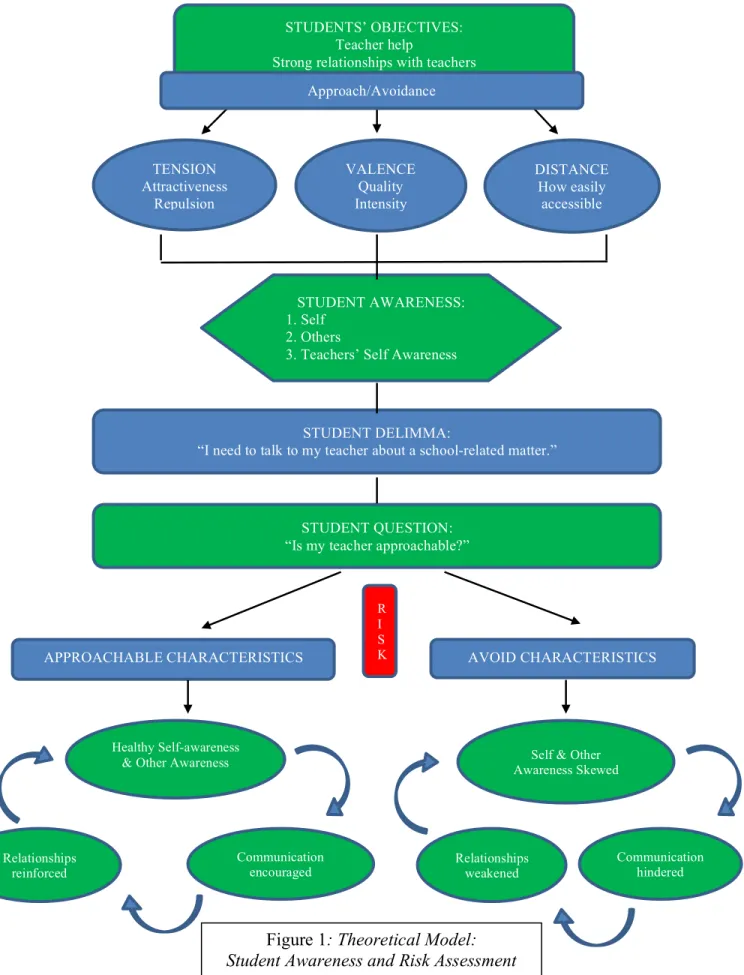
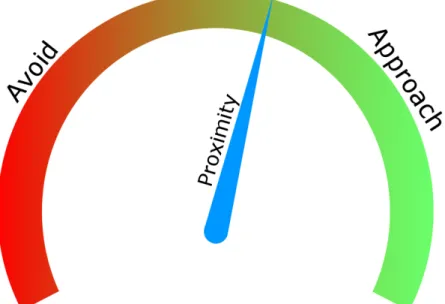
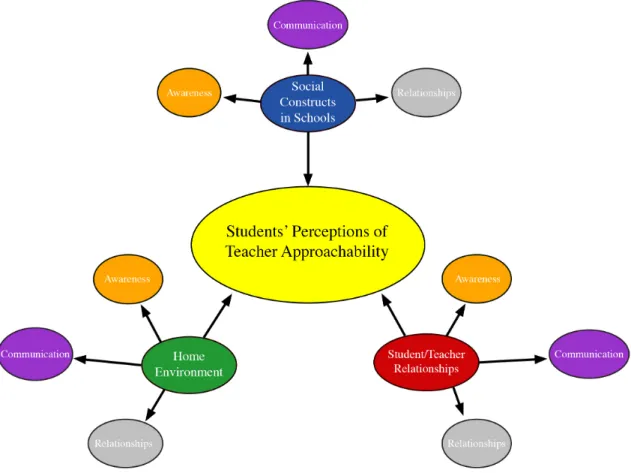
Figure 1: Theoretical Model: Student Awareness and Risk Assessment………….. 106 Figure 2: Student Awareness: Proximity in Relationships and Risk Calculator…... 124 Figure 3: Influences That Affect Students’ Perceptions of Teacher Approachability129
List of Abbreviations Emotional Intelligence (EI)
CHAPTER ONE: INTRODUCTION Overview
During the season of life known as adolescence, students find themselves
navigating a seemingly deep ravine between childhood and adulthood, trying to discover their own identity and express their independence while striving for emotional, social, physical, and mental balance at the same time (Jackson & Davis, 2000). Adolescents have moved from a smaller elementary school to a middle school where students converge with classmates from other elementary schools. Adolescent students move from knowing and being known by their teachers to being the proverbial little fish in a big pond. In this transition, adolescents may think they are the only ones who feel they do not belong or experience a sense of inadequacy and lack of normalcy (Jackson & Davis, 2000). Some adolescents’ ease or difficulty in establishing healthy relationships with adults reflects the strength of their relationships with their parents (Bergin & Bergin, 2009; Dykas, Woodhouse, Ehrlich, & Cassidy, 2010). The manner in which adolescents resolve conflict at school carries over from the conflict resolution strategies they have learned at home (Branje, Van Doorn, Van der Walk, & Meeus, 2009; Goldwater & Nutt, 1999). If they are confident to approach their parents to discuss different life matters, approaching teachers with school-related matters may follow suit (Davis, 2003; Karam, 2006; Kauffman, 2013; Sands, 2011; Ubinger, Handal, & Massura, 2013). Research reveals the need for teachers to create emotionally and socially safe environments for their students (Durlak, Weissberg, Dymnicki, Taylor, & Schellinger, 2011; Goldwater & Nutt, 1999; Jackson & Davis, 2000). Additionally, programs that teach self-advocacy strategies to students have experienced a measure of success, particularly for students
who are gifted or challenged with learning differences (Lane-Garon, Yergat, & Kralowec, 2012; LaRusso & Selman, 2011; Rajalakshmi, Srividya, & Suresh, 2012; Saha, 2012; Sebag, 2010). Even with the implementation of these initiatives, middle school students still seem to be hesitant or resistant to approach their teachers with questions and
concerns, sometimes because of fear (Branje et al., 2009). This grounded theory study investigates how middle school students’ perceptions of teacher approachability influence their interactions with teachers.
Background
As common as the term is today, before the early 1900s, the word “adolescent” was not a part of Americans’ vocabulary (Sands, 2011). Little people were children, and then they became adults. There was no term assigned to the in-between years. A young person was an apprentice for a trade where skills were gained in order to provide for a family one day. However, there was not a term, or a period of one’s youth, to designate the development and maturity that was taking place. Beginning in the early 1900s, theories of psychology were beginning to emerge and theorists began building an
understanding of knowing and learning (Miller, 2011). Such prevalent theories included Bandura’s (1977) social learning, social cognitive, and social modeling theories, Piaget’s (1969) cognitive development theory, Vygotsky’s (1934) social development theory, Skinner’s (1980) operant conditioning theory, and Maslow’s (1943) hierarchy of needs. Sands (2011) provides an impressive synthesis of the history of the middle school model in the American educational system. The recognition of developmental challenges of the adolescent provided the underlying philosophy of the middle school model, which was established in the 1960s for the purpose of creating nurturing environments for
adolescents between the elementary and high school years (Sands, 2011). The previous junior high model was more of a pre-high school than designed with the young
adolescent’s needs in mind. This newer model included small group mentoring with teachers in order to provide a lifeline for students as they navigated the young adolescent years. However, even with multiple theories for understanding this developmental phase and models to address this acquired knowledge, middle school students continue to deal with their perceptions of teacher approachability. Programs that teach self-determination and self-advocacy have been created in order to teach students how to speak up for themselves (Caldwell, 2011; Douglas, 2004). However, generally advocacy and
self-determination emphases are developed for students with learning or behavioral
challenges. Self-advocacy programs for general education students are not the normal context for such initiatives. Professional development for teachers has been implemented in schools across the nation in order to equip teachers better in meeting the academic, emotional, and social needs of their students (Durlak et al., 2011; Lane-Garon et al., 2012). Yet, even with these initiatives and emphases, students still have their perceptions of teacher approachability that influence interactions with their teachers. The questions that must be asked address the rationale behind students’ beliefs about approaching their teachers. Understanding the rationale of students’ perceptions of their teachers’
approachability is the focus of this research study. Greater awareness of today’s middle school students’ thinking should prompt emphasis in redesigning ineffective programs, challenge irrelevant thinking, and better equip students to navigate their current and future relationships (Feldman, Derdikman-Eiron, & Masalha, 2010).
Situation to Self
Through my thirty-six years as an elementary, middle, and high school teacher, K-12 administrator, and mother, and grandmother, I have experienced my own
children’s, as well as other students’ perceptions of teacher approachability. When prompted to pursue a conversation with the teacher, a common response proposed that whatever concern the student had could become worse if the teacher was approached. No reasonable explanation was offered; however, the student’s perception or experience prompted the apparently rational response. Such hesitancies became an anomaly from my perspective. From a personal vantage point, why would my own children rather keep their school-related questions to themselves when their mother and two aunts were lifelong educators? After all, I considered us to be rational, friendly, approachable, nurturing educators. Additionally, whenever I was made aware that a student or parent was hesitant to approach my colleagues or me (based on real or perceived issues), my counsel to pursue a conversation was met with resistance, and even a sense of fear. Numerous times, the response alluded to the feeling that the situation or relationship would become worse, and even unrecoverable.
Although my childhood memories recall a peaceful home environment, my husband’s was the opposite. So, when we married forty-three years ago, our expectations for a normal discussion were vastly different. Through the years, we’ve learned to resolve conflict calmly and effectively, but not without exercising many ineffective conflict resolution strategies in the interim. Helping students and adults navigate conflict well, self-advocate, and find their voices has become a consistent pursuit of mine. Because of my eternal optimist perspective, I tend towards believing that most situations
can be resolved and relationships can be mended. This dream can become a reality if students and adults learn to communicate effectively through a lens of preference for one another. With that mindset, along with my compassion for the typical struggles during the adolescent years, I felt compelled to conduct my research study around middle school student perception of teacher approachability. My passion for researching this topic is grounded in my philosophical assumptions and paradigms (Creswell, 2013), which are explained in the sections that follow.
Philosophical Assumptions
The study’s philosophical assumptions are rooted in an understanding of biblical principles and a biblical worldview. The roles filled or the hats worn do not define one’s identity, as a person, rather it is defined by a personal relationship with Christ as Creator and Savior. People are designed to live in relationship with others and to model those relationships upon biblical principles. As a Christian educator, helping students
understand these principles and make decisions based on a biblical worldview provide the impetus for this study. With these assumptions, the belief that biblical principles are applicable and relevant for all cultures, all ages, and at all times sets the foundation moving forward.
Ontological. The ontological assumption recognizes the diversity of each person’s reality – and the perception that defines that reality. With all people, middle school students included, having a clear and accurate perception can be challenging, at best. Because people are designed as relational beings, social and emotional factors can skew one’s perception such that decisions are based upon an errant perception. Often, people live life out of the perception of their own realities. Generally, people do not
embrace belief systems they view as errant. People hold onto beliefs that are deemed to be accurate and correct.
Epistemological. Knowledge is gathered from many different avenues throughout the course of one’s life. Middle school students gather their knowledge through formal and informal teaching and modeling. Knowledge is also acquired and processed through one’s senses, including observation of others. What students perceive and experience about relationships develops their knowledge base and understanding. Generally, students make relational decisions based upon what they understand about themselves and what they perceive they know about others.
Alethiological. Whereas epistemology explains the acquisition of knowledge, alethiology is the study of truth. Knowledge and truth are not synonymous as one might suppose. Knowledge acquired about a subject does not necessarily equate to the veracity of that knowledge. For instance, each worldview embodies a bank of knowledge; however, any worldview outside a biblical worldview does not represent truth. One specific challenge with today’s youth is a lack of discernment between knowledge and truth. Information and perspectives that are relayed through media are too often accepted as truth without the verification of such. Even students reared in Christian homes stray from their biblical roots of belief in exchange for the world’s portrayal of truth. This study will explore the participants’ ability to differentiate between knowledge and truth.
Rhetorical. Definitions of terms and concepts will be enmeshed within the context of each phase of the research so as not to predispose the reader towards a certain bias in advance. Effective expressive and receptive communication requires a mutual understanding of terms and concepts to ensure both parties, at least, have that shared
foundation. The noted phenomenon details their stories and perspectives. Therefore, most importantly, the students’ voices will be heard throughout the research study.
Axiological. With values rooted in biblical principles and Judeo-Christian ethics, a measure of subjectivity will be revealed in the process of collecting and analyzing the data during this study. As questionnaires, interviews, focus groups, and
journaling/blogging are coded and analyzed, the researcher’s values will influence the interpretation of the data, however, these values will be bracketed from the data collected and analyzed. Middle school students’ perceptions of their relationships and the actions they take in response to those perceptions will emerge through the data.
Paradigms
Overlaying philosophical assumptions are educators’ beliefs about students’ knowledge acquisition and the learning process (Creswell, 2013). Over the course of time, many theorists have conducted research and proposed theories around the teaching and learning processes. These include Piaget’s cognitive stage theory and Vgotsky’s sociocultural theory (Miller, 2011). Based on their own worldviews, educators embrace those theories, which best align with their own beliefs and experiences.
Interactionist. By virtue of the fact this qualitative study focuses on middle school students’ relationships with their teachers, an interactionist paradigm is relevant. Students will describe their interactions with their teachers and their reasoning for withholding interaction when that choice is made. The factors that weigh into their reasoning for whether or not to engage their teachers are expected to be multi-faceted. The strength of a teacher/student relationship reflects the nature of their interactions with one another.
Pragmatist. Due to the fact that this study will focus on the practical aspect of middle school student engagement with their teachers, a pragmatic paradigm embodies the goals of the study well. The impetus for this research study is twofold: to acquire more understanding about a perceived issue and to help propose solutions through the voices and stories of the participants. The end goal of this researcher’s study will be the implementation of proposed next steps as identified in the findings. Taking action, based upon acquired knowledge and understanding, is the pragmatist’s motivation for research.
Social constructivist. As students strive to make sense of their world, they regularly evaluate and interpret their perceptions and experiences based upon multiple factors (personality, previous experiences, academic successes and challenges, relational strengths and weaknesses, parenting, and conflict resolution practices, to name a few). This study will collect and analyze data to disseminate the various factors that play into the formation of the students’ perceptions. The researcher recognizes the complexity of the study due to the nature of the issue and the demographics of the participants.
However, a measure of insight into the thinking of students around this issue is bound to emerge. The strategies implemented as a result of the findings validate the significance of the research study.
Problem Statement
A far too common response of students, when encouraged to talk to their teachers regarding school-related issues is to respond with an expression of fear or avoidance (Branje et al., 2009). Although many studies have been conducted and programs have been developed around self-advocacy, generally the context is exceptionality – equipping students who are either gifted or have learning differences to find their voices and speak
up about their learning needs (Caldwell, 2011). Even with the affirmation of the inherent value of self-advocacy, students often respond with apprehension and avoidance
(Rajalakshmi et al., 2012). Research studies have focused on creating effective programs and equipping teachers to be supportive and accessible for their students, but a gap remains in understanding the factors, from students’ perspectives, that influence their perceptions of teacher approachability. Why do some students find their teachers to be approachable while others avoid talking to their teachers when they have school-related issues to discuss? That question capsulizes the focus of this research study. The
problem is an understanding of general education middle school students’ perceptions of teacher approachability is missing from the body of research.
Purpose Statement
The purpose of this grounded theory study is to investigate general education middle school students’ perceptions of teacher approachability and how their perceptions influence interactions with teachers. The number of participants will be ten to fifteen middle school students (or until data saturation is achieved) in three middle school settings (one public, one private, and one Christian) in the metro area of a southeastern city in the United States. Following an initial one-question screening about student perception of teacher approachability, a questionnaire will be given to those students who indicated any negative aspects of teacher approachability. General education students will be selected in order to provide a cross-section of demographics. At this stage in the research, approach-avoidance will be generally defined as the catalyst that sways a student’s perception of teacher approachability (Carver, 2015; Corr & McNaughton, 2012; Diseth & Samdal, 2014 Elliot, 2006; Linnenbrink-Garcia, Middleton, Ciani, Easter,
O-Keefe, & Zusho, 2012; Scholer & Higgins,2013). The main theories guiding this study are the approach-avoidance conflict theory proposed by Lewin (1935) and the social cognitive theory proposed by Bandura (1989). These theories help explain the reasoning around perceptions of others’ approachability. The approach-avoidance theory and social cognitive theory may help explain the tension created when an adolescent considers addressing a school-related situation with a teacher (Carver, 2015; Corr & McNaughton, 2012; Elliot, 2006; Krieglmeyer, DeHouwer, & Deutsch, 2013; Linnenbrink-Garcia, et al., 2012; Scholer & Higgins, 2013).
Significance of the Study
Upon first review, one might think an understanding of middle school students’ perceptions of teacher approachability has been saturated with research and effective programs have been developed and implemented to address the findings. To a certain degree this is true; however, students’ behaviors continue to reveal a perception of teacher unapproachability. Research proposes teachers need to create safe learning environments for their students in order to be perceived as approachable (Lane-Garon, et al., 2012; LaRusso & Selman, 2011). The middle school model was originally designed to address the needs of middle school students (Sands, 2011). However, current trends reveal a gap between research findings, responses to the findings, and the fact that students continue to perceive their teachers as unapproachable.
Learning and behavioral theories that help explain this apparent phenomenon provide a framework of thought and understanding around students’ perceptions of teacher approachability. Explaining social/emotional engagement and attachment in relationships, development of self-perception and self-awareness, approach-avoidance
tendencies, and viewpoints of conflict provide context for this study in the pursuit of understanding students’ perceptions of teacher approachability. The investigation will consider if the four proposed theories provide insight, the research study actually extends further understanding of existing theories, or a grounded theory emerges through the data analysis.
Through triangulation of data collection and analysis, it is anticipated this grounded theory study will provide helpful information that reveals the participants’ perceptions of teacher approachability. Through individual and focus group interviews as well as journaling/blogging, greater understanding of the students’ reasoning should emerge for why specific teachers, or teachers in general, are considered approachable or unapproachable for discussing school-related matters. Perhaps, as the participants think through their own perceptions and experiences with their teachers, they will gain a greater sense of confidence in their abilities to address matters with their teachers, who were previously viewed as unapproachable. Additionally, maybe the participants will be able to encourage their classmates to overcome perceptions of unapproachable teachers. The researcher is also hopeful the findings of this study will be an encouragement to teachers whose students consider them to be approachable to continue feeding that perception. The significant findings of this study may not impact those teachers who are considered unapproachable by their students simply because the teachers do not even realize they are perceived in this way. Emotional intelligence (EI) or emotional quotient (EQ) measures how well a person recognizes the impact they make on others. The possibility exists that a teacher who is considered to be unapproachable is not cognizant of that perception.
Researchers and educators are compelled to examine the factors that comprise a middle school student’s perception of teacher approachability. Although this study will have certain limitations, the current findings will be representative of the greater middle school population. The original philosophical underpinnings of the middle school model may need to be resurrected and programs around this model considered for reinstatement. Redesigning current middle school teachers’ and students’ school days may be required in order to meet the unique social and emotional needs of these young adolescents. Of particular interest will be newer factors in students’ thinking such as social media, social/emotional dynamics, and the perceived approachability of today’s middle school teachers (Lyles, 2014). Certainly, students need the reassurance that their teachers are emotionally safe people and approachable.
Research Questions
This qualitative grounded theory study will address one central research question: How do general education middle school students’ perceptions of teacher approachability influence the students’ interactions with their teachers? The research study will consider the students’ perceptions of whether or not their teachers are approachable when there are school-related matters to discuss. Perhaps previous personal experiences influence students’ perceptions of teacher approachability (Karam, 2006; Kauffman, 2013; Wagner-Pacifici & Hall, 2012). The study will consider if a student has had positive or negative interactions with teachers that help to determine whether or not teachers are approachable. In addition, students’ perceptions of others’ experiences may influence their own perceptions as well (Williams, 2013). Three sub questions will help guide the research study:
1. How, if at all, do social constructs in school affect middle school students’ perceptions of teacher approachability? An effective learning environment, which was focused on adolescents’ needs, was the premise for the middle school versus junior high school model in the 1950s (Board, n.d.; Sands, 2011). The philosophy behind the program design highlighted the value of the middle school model for meeting adolescents’ needs (Bedard & Do, 2005; Dhuey, 2011; Sabol & Pianta, 2012). However, due to lack of follow through in program implementation, larger teacher/student ratios than deemed optimal, and risk management concerns, the positive effect of the middle school model was not fully realized and the students’ perceptions of teacher approachability were developed around busy teachers and packed schedules. Professional development designed to help teachers meet students’ needs are not always geared for the middle school context (Malti & Noam, 2008; Sabol & Pianta, 2012; Saha, 2012). Simply stated, the middle school environment may validate the perception that teachers are unapproachable when it is really programming and inadequate training that confirm students’ perceptions of their teachers (Karam, 2006; LaRusso & Selman, 2011; Sands, 2011). This question explores the role that the school context plays in students’
perceptions of teacher approachability.
2. How, if at all, does home environment affect middle school students’ perceptions of teacher approachability? Research has shown that students emulate their parents’ strategies in relationship development and conflict resolution. Sometimes strategies are intentionally taught and modeled by
parents. However, children emulate what has been observed more often than what they have been told (Bradford, Vaughn, & Barber, 2007; Feldman et al., 2010; Kiner, 2009). This question explores the students’ lived experiences in their homes and the resulting influence on their perceptions of teacher
approachability (Dykas et al,. 2010; Garcia-Ruiz, Rodrigo, Hernandez-Cabrera, Maiquez, & Dekovic, 2013; Kiner, 2009).
3. How, if at all, does the student-teacher relationship affect middle school students’ perceptions of teacher approachability? As the masters of their classrooms, teachers are regarded as the creators of their environments and initiators of relationships with their students (Davis, 2003; Sabol & Pianta, 2012). Modeling and enforcing mutual respect is a key ingredient in
establishing safety within the classroom environment (Bernstein-Yamashiro & Noam, 2013; Matsumura, Slater, & Crosson, 2008). Whether or not a teacher is perceived to be a safe person influences the student’s perception of teacher approachability (Malti & Noam, 2008; Sabol & Pianta, 2012). This question provides insight into the students’ perceptions of teacher approachability reflecting how safe they believe their teachers to be (Davis, 2003; Danielsen, Samdal, Hetland, & Wold, 2009; LaRusso & Selman, 2011; Lyles, 2014; Karam, 2006; Saha, 2012).
All of these questions and considerations revolve around the central question that seeks to understand how middle school students’ perceptions of teacher approachability influence interactions with their teachers.
Definitions
Terms, which represent psychological and educational concepts, are explained in context throughout this study. The combination of disciplines (psychology and
education) helps bring clarity to the focus on middle students’ perceptions of teacher approachability.
Approachability. The comfort level students feel in talking to their teachers about matters that are important to the student to the measure that advice may be pursued and a sense of care received (Denzine & Pulos, 2000). Students deem a teacher to be
approachable if that teacher is perceived to be a safe person for expressing oneself through emotional transparency and vulnerability.
Family of origin. This circle of influence can include parents, siblings, extended family, or those who had significant impact in the formation of a student’s identity and practices.
Self-advocacy. The ability and skill to find one’s voice and speak up regarding interests, needs, and concerns is self-advocacy (Sebag, 2010). All three of these life skills prepare students well for navigating their educational journeys, particularly in regard to their relationships with their teachers.
Self-determination. The belief that “all individuals have the right to direct their own lives” is self-determination (Sebag, 2010, p. 22).
Self-efficacy. The belief that one has the ability to orchestrate prospective situations and their outcomes is self-efficacy (Danielsen et al., 2009).
Summary
The purpose for pursuing this research study is two-fold: the researcher’s specific interest in evaluating general education middle school students’ perceptions of teacher approachability and the influence of those perceptions on student-teacher interactions. Understanding the participants cannot represent all middle school students in their
perceptions and experiences, the study focuses on common factors adolescents identify in their perceptions of teacher approachability. The study is designed to provide windows of understanding into the adolescent’s experience, personal preferences, life skills, and inherent qualities that form perceptions of teacher approachability. As a grounded theory qualitative study, students’ experiences will be recorded through their stories. As stated previously, the purpose of this study reflects the researcher’s personal and professional interest in understanding middle school students’ perceptions of teacher approachability. Gathering and analyzing data from within three different school models provides
understanding of similarities and differences in middle school students’ experiences and perceptions. The students will identify strategies that have been effective in their school contexts and the reasoning why some strategies work and others do not when they have decided to approach their teachers to discuss school-related matters. Conversely, students will provide data that will lend insight into the deciding factors when they choose to avoid seeking help from teachers they perceive to be unapproachable.
CHAPTER TWO: LITERATURE REVIEW Overview
Upon first review, one might think the issue of students’ perceptions of teacher approachability has been saturated with research and that effective programs have been developed and implemented to address the findings. However, students’ behaviors
continue to reveal a hesitancy, and lack of follow through, in student-teacher interactions. Research supports the need for teachers to create safe learning environments for their students (Diseth & Samdal, 2014; Linnenbrink-Garcia et al., 2012; Lyles, 2014). The middle school model was originally designed to address the developmental needs of middle school students. However, current trends reveal a gap between research findings, responses to the findings, best practices that have been implemented, and students who continue to perceive their teachers as unapproachable. In essence, response to research has prompted programming that instructs the teacher in creating environments that are effective for teacher-student relationships. Identifying research that explores the students’ perspectives of teacher approachability and, specifically, perceptions that influence student-teacher interactions is the focus of this literature review. The research study will collect data that details the real experiences of its participants in the school context, particularly with the participants’ teachers. Educators and students alike might agree on a shared goal of strong relationships and mutual respect. Programs exist that help bridge the gap between teachers and their students. This journey of literature exploration seeks to reveal how much perceptions of teacher approachability influence the pursuit of student-teacher interactions.
Theoretical Framework
In a grounded theory, qualitative study, existing theoretical thoughts and ideas are considered at the outset of the new research study. These theories provide a “conceptual guide for choosing the concepts to be investigated, for suggesting research questions, and for framing the research findings” (Corbin & Strauss, 2015, p. 39). The primary purpose of this specific grounded theory study is not to develop a new theory, but to explain the phenomenon of the study’s focus. The driving force behind this model is to identify any common threads of participants’ experiences to determine whether or not a new or blended theory emerges from the research findings. Simply stated, the researcher investigates if the data generates a new theory or if a theory is grounded in the collected data (Creswell, 2013). In this specific research study, four primary theories form the framework through which the participants’ experiences are examined. Comprising the theoretical framework are the approach-avoidance conflict theory, the social conflict theory, the attachment theory, and the social cognitive theory. An explanation for the reasoning why each theory was identified as relevant to this research study is outlined within the context of each theory’s description.
Approach-Avoidance Conflict Theory
One of the early founders of social psychology, Kurt Lewin (1935) is recognized as the originator of the approach-avoidance conflict theory, which he proposed in the early twentieth century. Other psychologists, such as Bower and Miller (1960) are also identified with Lewin’s (1935) theory. Theorists Whiting and Child (1953) and Sears et al. (1953) developed the approach-avoidance conflict theory further in an attempt to explain aggressive behaviors in humans (Burchard, 1963). Interestingly, cooperation and
competition are linked to the approach-avoidance theories. Cooperation involves both or all parties working together to achieve a commonly valued goal; whereas, competition generally means someone pursues and achieves a specific goal at the expense of others not achieving theirs.
Dollard and Miller (Tanzen, n.d.) base their approach-avoidance findings on the drive-cue-action triggers. For example, the hunger drive is triggered by a cue of hunger pangs and followed by pursuing something to eat. Similarly, a drive for understanding may be triggered by a cue of confusion, resulting in approaching the teacher for
enlightenment. However, as pointed out by the approach-avoidance theorists, the assessment of either goal is measured according to three factors: tension, valence, and distance (Baumeister & Vohs, 2007). Tension is created by the attractiveness or repulsion of the goal; valence is the quality or intensity of the attraction/repulsion; and distance is how easily accessible each goal might be (Baumeister & Vohs, 2007). By application to the classroom setting, a student assesses the tension, valence, and distance in deciding whether or not to approach teachers with questions or concerns. Students weigh the perceived inherent value of approaching or avoiding and then decide accordingly what to do with what is on their minds.
There are three types of approach-avoidance tendencies: 1) approach-approach, where a person must choose between two equally desirable goals; 2)
avoidance-avoidance, where a person must decide between two negative, equally undesirable outcomes; and 3) approach-avoidance, where a person must weigh the positive outcomes against the negative outcomes, or the perception of each outcome (Roeckelein, 2006).
Although not identified as such, the possibility emerges that fear triggers an approach or avoidance response (Champion, 1961; Elliot et al., 2013; Linnenbrink-Garcia, et al., 2012), which is the function of the amygdala in potential fight, flight, or freeze scenarios of conflict (Elliot, Eder, & Harmon-Jones, 2013). Robinson, Wilkowski, & Meier (2008) and Carver (2015) linked extraversion to those who approach conflict and neuroticism to those who avoid. Although, the motivations to approach or avoid conflict can co-exist at the same time, one cannot physically choose to do both (Robinson et al., 2008).
The approach-avoidance theory has been researched for the purpose of
understanding the strategies people implement in order to handle stress (Roth & Cohen, 1986). If someone believes approaching the source of conflict can better control a
stressful situation, then this motivation leads to action; however, if a lack of control of the situation seems more likely, then one will tend to avoid the source of conflict (Roth & Cohen, 1986). The tension created by approach-avoid scenarios is directly correlated to the proximity of the goal as well as its inherent value (Knowles & Linn, 2004;
Krieglmeyer et al., 2013). Social Conflict Theory
Depending upon one’s worldview, discovering Karl Marx is considered the author of social conflict theory may seem surprising (Marx & Engels, 1978; Rogers, 2013). However, when one considers the basis for his theory and political stance, the seeming incongruence disappears. Marx’s theory revolved around socialistic dynamics between economic groups. His theory proposes conflict can be alleviated when the separation dynamics are removed. Social conflict theory presupposes conflict exists due to
differences in economic position and resources. Marx’s theory is based on the belief the wealthy naturally tend to oppress the poor, which is at the root of all social conflict. Actually, the biblical writer, Paul, best explains in 1Timothy 6:10 what Karl Marx missed in his view of wealth: “the love of money is at the root of evil.” Marx’s theory (Marx & Engels, 1978) presupposes all wealthy people love money and oppress the poor.
Although it may be true that social differences stir conflict, one cannot conclude this is an enduring fact that always holds true. One’s perception of differences can determine if conflict engagement, avoidance, adjustment, or resolution will follow (Ubinger et al., 2013). Although middle school students might experience conflict at school based on economic status, perhaps there are other social dynamics middle school students could encounter resulting in conflict. Marx’s social conflict theory may or may not prove to be a viable theoretical framework for this particular research study, but through the lens of social conflict related to dynamics relevant to the adolescent’s world, the underlying premise of the theory might have viable application (Malti & Noam, 2008).
Approaching conflict from a negative stance may be based more on one’s lack of conflict resolution skills than the nature of the conflict itself if students lack
understanding that conflict is a natural part of life (Sadri-Damirchi & Bilge, 2014). Differences in perspective can be at the root of the conflict, yet once understanding of the other’s perspective is achieved, the conflict may very well be resolved. The responses to differences of perspective reflect many different factors. Conflict resolution strategies develop across time through life experiences, according to personality tendencies,
resolution strategies (Ahern, 2006; Branje et al., 2009; Williams 2013). Some strategies are intentionally learned and employed; others are non-intentional and reflect responses acquired through time. Automatic responses to conflict become ingrained strategies. When a person experiences undesirable results in conflict resolution, different strategies are sought sometimes. However, this is not always the case. Albert Einstein’s adage, “Insanity is doing the same thing over and over again and expecting different results” sums up many people’s conflict resolution strategies or lack thereof.
Attachment Theory
The attachment theory, as proposed by Bowlby (1969), investigates the psychological impact of whether or not babies and young children possess a sense of attachment to significant adults in their early years. The strength of this attachment influences their future relationships, including the methods employed for handling conflict with others (Kiner, 2009; Wei , Heppner, & Mallinckrodt, 2003). Research reveals healthy attachment with caregivers in younger years influences whether or not healthy attachment with others will be probable in later years (Pinata & Harbers, 1996; Wei et al., 2003). Strong attachments in the early years lay the foundation for a sense of security to approach people and situations later on (Davis, 2003 Karam, 2006; Wei et al., 2003). Also, strong attachments produce greater security, which transfers into a sense of confidence in approaching other adults – such as teachers (Davis, 2003 Dykas et al., 2010; Karam, 2006; Sabol & Pianta, 2012).
Four types of attachment are proposed by Bergin and Bergin (2009): secure, insecure/avoidant, insecure/resistant, and insecure/disorganized-disoriented. The first type of attachment, secure, should be the goal of every caregiver. A child who feels
securely attached to a caregiver will more likely develop secure relationships with others in the future (Sabol & Pianta, 2012). The second type of attachment – insecure/avoidant – usually occurs when the child experiences primary caregivers who are “insensitive, intrusive, angry, and rejecting” (Bergin & Bergin, 2009, p. 143). Since the child does not feel safe, there will be a tendency to avoid interaction with the caregiver. These
tendencies usually carry into future relationships, unless the significant adults in a child’s or adolescent’s life can foster a safe and secure environment.
Insecure/resistant is the third type of attachment where “children fail to derive feelings of security” (Bergin & Bergin, 2009, p. 143) from the primary caregiver, although the caregiver is attempting to provide that security. Children may be “passive, whiney, fussy, helpless, or immature, or they may be angry, petulant, and resistant” toward the caregiver (Bergin & Bergin, 2009, p. 144). The relationship with the
caregiver could be described as enmeshed where the child and adult exhibit their need for dependence upon the other for emotional support. While the child needs to attach to the adult, there is still uncertainty the adult is dependable and in control.
The fourth type of attachment is insecure/disorganized-disoriented where the child expresses the desire for attachment, yet exhibits behaviors that are contradictory (Bergin & Bergin, 2009). This type of poor attachment is reflective of the child’s sense that the caregiver is not safe or predictable. The caregivers’ responses to the child can range from aggressive outbursts to extreme insensitivity (Bergin & Bergin, 2009). The child longs for attachment, yet significant adults do not provide safety and security for healthy attachment to occur.
The significance of healthy attachments is partly revealed in an adolescent’s success at school, academically and otherwise (Bergin & Bergin, 2009; Sabol & Pianta, 2012). Security of attachment predicts academic achievement and a greater willingness to accept academic challenges (Bergin & Bergin, 2009). Children who are insecure often display behaviors of frustration, anxiety, hostility, and emotional disconnectedness (Bergin & Bergin, 2009). Conversely, healthy attachment provides the framework and foundation for socializing with peers and interacting with other adults. Secure children learn how to regulate their emotions internally as well as display appropriate expression externally.
Typically, an adolescent begins a journey towards independence during the middle school years. A desire to be more self-sufficient and self-dependent characterizes this life stage, until such a time that the adolescent might need to appeal for help from an adult. If the adolescent experienced healthy attachments to caregivers in the early years, the likelihood of seeking help from other significant adults, such as teachers, is more prevalent (Bergin & Bergin, 2009; Bowlby, 1969; Pianta & Harbers, 1996). For the healthy-attached adolescent, other significant adults are generally safe to approach for help.
Social Cognitive Theory
Bandura (1989) is widely known as the originator of the social cognitive theory, which also guides the researcher’s understanding of students’ perceptions of experiences and events in their lives. One must consider the dynamics of the social cognitive theory in relation to students’ perceptions of teacher approachability. According to Bandura (1989), people possess the capability of controlling the impact of events in their lives, at
least to some degree. “Children bring to their interactions with others a set of prior expectancies that affect relationship outcomes such as rapport and liking” (Gurland & Evangelista, 2014, p. 2). By application to this research study, adolescents can exercise critical thinking skills by implementing metacognitive strategies before taking action (Bandura, 1989). Exercising metacognition would mean the students are examining their perspectives and thought processes in order to determine if they are based on truth and accuracy. Granted, no one is able to determine someone else’s responses or actions. However, through practicing well-reasoned approaches, students stand a greater chance for a positive result than a negative response (Caprara, Vecchione, Barbaranelli, & Alessandri, 2013).
As with any generation of students, fostering their social and emotional development are as equally vital as meeting their intellectual and academic needs. However, as never before in generations past, today’s students have surpassed previous students in the technology realm and understandably so. No previous generation has experienced the technology explosion as this generation has experienced. At the same time, this generation is generally delayed in social and emotional development (Elmore, 2010). Because of this delay, social and emotional development programs have been developed in schools in order to close students’ gaps in these critical areas (Durlak et al., 2011; LaRusso & Selman, 2011). This research study considers the part social cognitive theory plays in investigating middle school students’ perceptions of teacher
Related Literature
From the theoretical framework outlined, several factors are proposed which potentially influence middle school students’ perceptions of teacher approachability. Some factors are embedded in the students’ family dynamics including the manner in which conflict is handled in their homes, the student’s personality, natural adolescent needs and distinctions, relevant school programs geared specifically for middle school students, effective professional development for teachers to better equip them in reaching the middle school student’s needs, the health of teacher-student relationships, and the strategies students are taught and encouraged to implement towards advocacy, self-determination, and self-efficacy.
Origins
A student’s self-perception and identity is rooted in one’s family of origin as established during the formative years of childhood. A picture of one’s self is drawn in reflection of the messages received about personality, character, strengths, weaknesses, abilities, appearance, or perceived flaws in any of these components. The student’s home is the first place where learning how to live in community and relationship with others takes place (Danielsen, et al., 2009). A sense of self-worth and capacity to contribute to the family affirms a student’s perception of having something valuable to give.
Additionally, a student’s sense of satisfaction, both in life and in school, is reflective of a sense of family, teacher, peer, and community support. As much as a student might long to be the master of one’s own ship and make decisions independently of others, the student still thrives with the support of others. There may be resistance to
boundaries and rules, yet it is these same parameters that provide a sense of safety and security, especially in these developmental years.
From this study’s theoretical framework, research bears out the impact family conflict holds in shaping students’ perceptions of teacher approachability. Students have observed the strategies their parents and other adults utilize in interacting with others. Not only have students witnessed strategies for addressing issues, but also the responses of the other party. Therefore, students are more likely to imitate their parents’ strategies (Bradford et al., 2007; Feldman et al., 2010; Kiner, 2009) or even avoid approaching others about issues if these strategies do not appear to reap their own desired effect. Research demonstrates this is also true in relationships with siblings (Tucker & Kazura, 2013). The home environment provides the initial stage for students as they choose their own methods for addressing issues (Ahern, 2006; Bradford et al., 2012; Branje et al., 2009; Kiner, 2009).
Equally true, adolescent choices and behaviors negatively impact their homes and family dynamics. When a student becomes involved in risky behaviors, not only does potential suffering of consequences for these choices exist, but also relationships and future opportunities become part of the fallout as well (Malti & Noam, 2008). A child reflects a sense of identity and self-worth from what is received from those who should know the student best – family. If the family unit is disconnected or dysfunctional, the student’s bearings become unstable and the journey through the potentially tumultuous years creates mental and emotional instability (Malti & Noam, 2008).
Another aspect of family dynamics related to approaching or avoiding issues is . Cultural differences, both within the native cultural context as well as cultural mores
expected outside the native context, have been factored into how, or if, students will address issues with their teachers (Feldman et al., 2010). The manner in which family members learn to address issues may reflect their family of origin’s cultural expectations (Feldman et al., 2010). For one to go outside those cultural mores may be considered unacceptable at best and shameful at worst (Feldman et al., 2010).
The degree of attachment students feel towards their parents has a direct correlation to how these students handle issues with their teachers (Sabol & Pianta, 2012). If students are more secure in their familial relationships, they are more likely to exhibit confidence in handling matters appropriately (Dykas et al., 2010; Garcia-Ruiz et al., 2013; Kiner, 2009). However, if the primary parent-child relationship is viewed as being disconnected or conflicted, students are more likely to withdraw from other authoritarian relationships, such as those with their teachers. These students lack the confidence and security of relationship in order to handle matters themselves (Garcia-Ruiz et al., 2013).
An additional insight about family dynamics and its influence on students’ confidence in approaching their teachers is the parents’ own experiences during their middle school years (Williams, 2013). If parents were negatively impacted by their own memories of middle school years as they interacted with their teachers, then they were likely to communicate, and transfer these experiences to their children (Williams, 2013). Adolescent Needs and Differences
In the adolescent stage of development, students can wrestle with social, mental, and emotional feelings of inadequacy they never experienced previously. Socioeconomic factors increase these challenges even further (Malti & Noam, 2008). Whereas these
factors may not have been as noticeable to the elementary student, an awareness of socioeconomic differences begins to emerge in the adolescent mind. Generally, the young adolescent gravitates towards sameness with peers; differences are not desirable. Because of the normal developmental distinctions of the adolescent period, issues can be compounded when a student’s mental, emotional, or social problems are added to the mix (Malti & Noam, 2008). The adolescent who is mentally, emotionally, and socially secure and satisfied is more likely to experience academic success and vice versa (Malti & Noam, 2008; Sabol & Pianta, 2012). The young adolescent mind finds it difficult to understand the connection between academic achievement and behavioral frame of reference.
In addition to cultural dynamics that may influence students’ process in deciding whether or not to approach their teachers are other significant needs and differences research has considered. Gender differences are noted in homes of aggression and violence where boys generally become more aggressive, yet girls internalize their experiences (Ahern, 2006). Therefore, boys reared in homes of conflict are more likely to confront their teachers, whereas girls from homes of conflict are more likely to avoid any potential confrontation (Ahern, 2006). Girls also have a tendency to believe
affecting any change in a situation is not within their control (Karam, 2006; Williams & McGillicuddy-DeLisi, 1999).
Gender-divided classes have recaptured the attention of researchers and educators in recent years. While identifying male and female differences in their learning and social needs, schools have responded by creating gender-divided classes and
(Karam, 2006; Raider-Roth, Albert, Bircann-Barkey, Gidseg, & Murray, 2008).
Recognizing gender differences in the learning process is the beginning step as teachers rethink and redesign their approaches to teaching and learning (Raider-Roth et al., 2008). When teachers demonstrate an appreciation for gender differences, and adjust their teaching strategies to accommodate those differences, they communicate greater
approachability to their students (Raider-Roth et al., 2008). Generally speaking, girls are more relationally driven than boys are, so a longing to feel connected to teachers and experience greater satisfaction in life and school is more pertinent to girls than to boys (Danielsen et al., 2009). Boys find greater satisfaction outside the school setting in realms such as sports and other activities (Danielsen et al., 2009). Age differences of adolescents are also considered in researching how adolescents cope with varied stressors in their lives (Karam, 2006; Williams & McGillicuddy-DeLisi, 1999). Younger
adolescents are more prone to being tentative in addressing stressors in their lives because they view themselves as being less skilled in assessing the situation and
determining effective next steps (La Russo & Selman, 2011; Williams & McGillicuddy-DeLisi, 1999). The middle adolescent is more apt to manage the problem or pursue viable solutions without seeking help (Williams & McGillicuddy-DeLisi, 1999).
Helping students develop a healthy sense of resiliency during the adolescent years is a major key in their mental, emotional, and social development, all connected to their academic success as well (Bernstein-Yamashiro & Noan, 2013; Malti & Noam, 2008). During this season of an adolescent’s development, learning how to view and manage hardship, inequities, disappointments, self-identity, loss, and doubts provides perspective for present circumstances and strategies for future challenges. The adolescent years can
cause loss of footing and an overwhelming sense of confusion about finding one’s place in the world (Malti & Noam, 2008). Doubt can replace confidence in whether or not the adolescent has what it takes to be successful. This life stage presents a critically
important time to help students develop resiliency, which is grounded in an accurate picture of themselves and a promising view of their futures.
A natural progression of adolescent development is an increasing desire to pursue independence and autonomy (Hamman & Hendricks, 2005). Adolescent students may not realize they are caught in a power struggle with themselves. They are moving towards independence and taking control of their lives at the same time they recognize their dependence upon others to meet their needs. In one sense they want to handle their own challenges, yet, in another, they want someone to handle the challenges for them. So they are faced with the tension of whether or not they can approach their teachers about school related matters, partly due to their quest to be independent.
Middle School Model Versus Junior High Model
The evolution of grade level structuring has progressed from the one-room schoolhouse where all grade levels received instruction to a kindergarten through eighth grades and high school model followed by the formation of a junior high between elementary and high school model to today’s typical model of elementary, middle, and high school divisions (Board, n.d.). The recognition of specific developmental needs of early adolescents was the underlying reasoning behind the impetus to create the junior high and middle school models (Board, n.d.). The junior high model was focused on equipping students for their high school years – a junior, high school model (Bedard & Do, 2005; Board, n.d.). The underlying belief was young adolescents would achieve
greater academic success in high school if they received a more rigorous course of study during the junior high years. However, this model failed to acknowledge and address the specific characteristics and needs of the early adolescent (Board, n.d.; Dhuey, 2011).
Educators recognized students in this life stage need environments and people that are safe. The key players in an adolescent’s life need to fully understand the
developmental challenges of this period of time as well as best practices for connecting with and supporting young people through a potentially turbulent season (Malti & Noam, 2008; Sabol & Pianta, 2012). The subsequent middle school model paid more attention to the developmental needs of adolescents than its predecessor junior high model (Board, n.d.). “The middle school movement of the 1960s changed schools’ focus to the human development of individuals transitioning from childhood to adulthood” (Sands, 2011, p. 42). Students could thrive in an environment that was designed with their needs and challenges in mind (Bedard & Do, 2005; Board, n.d.). This newer model was designed around a mentor/mentee relationship where each student was assigned to a mentoring teacher who would help the student successfully navigate the middle school years (Board, n.d.; Sands, 2011). In turn, the mentors were trained in ways they could relate to and support their mentees through this developmental stage. With the original middle school model, teachers were trained in mentoring their students and the structure of the daily schedule provided time for mentors/mentees to meet together. Strategies such as block teaching, where teachers teach two subjects; common planning periods for teachers to have time to collaborate together; and looping, where teachers teach the same students for two to three years, were implemented to provide better connections between teachers and students in order to strengthen their relationships with each other (Board, n.d.). The
underlying belief was stronger teacher-student relationships would promote greater academic success and social/emotional stability for middle school students.
The model was not flawed; however, the ongoing implementation of its design soon began to wane and middle school became just another season in a student’s secondary education. The mentoring model soon gave way to large class sizes and risk-management concerns. Therefore, a model that was specifically designed with the middle school student’s developmental and social/emotional needs, was abandoned in order to accommodate the economic needs of education and litigation bents of society. Of course, not all school districts adopted the middle school model for the reasoning of its proposed inherent value. Some school systems viewed the model as a means to alleviate overcrowding in elementary schools, facilitate better usage of school properties, and reflect the community’s stance on racial segregation/integration (Board, n.d.). Those who opposed the middle school model did so based upon their perception that students’ academic progress would be hindered if programming and structure were adjusted to accommodate developmental needs (Norton, 2000). The common belief held that changing the learning environment compromised the academic rigor. There was not a sense of both being possibile where rigor could be accomplished in a more
developmentally sensitive setting.
Professional Development for Middle School Teachers
In conjunction with recognizing the distinct needs of middle school students, specific professional development is available for educators in order to equip them to understand adolescents’ academic, social, and emotional needs (Karam, 2006; LaRusso & Selman, 2011; Sands, 2011). Although professional certifications are granted for