
A Comparability Study on Driver Fatigue Using C#, C++ and Python
61 ISSN: 2590-3551 eISSN: 2600-8122 Vol. 2 No. 1 April 2018
A Comparability Study on Driver Fatigue Using C#,
C++ and Python
K.J. Raman
1, A. Azman
2, S.Z. Ibrahim
3,
S. Yogarayan
4, M.F.A. Abdullah
5, S.F. Abdul Razak
6,
A.H. Muhamad Amin
7and K. Sonai Muthu
81,2,3,4,5,6,7,8
Faculty of Information Science and Technology, Multimedia University (MMU), Melaka, Malaysia
1[email protected],
2afizan.azman.mmu.edu.my,
3[email protected],
4
[email protected],
5[email protected],
6[email protected],
7[email protected],
8[email protected]
Abstract
—Accidents on road are very common
these days. Most of them are caused by driver
fatigueness. Some common causes and symptoms
have been identified. One of the main solution
to detect driver fatigue is by analyzing the facial
features of the drivers. This paper discusses about
the facial features that can be used to detect driver
fatigue. Further examples on existing vehicle
safety technology is also discussed. Primarily, this
work emphasizes on the study of three different
programming languages and its compatibility
which works best to be integrated with the
proposed hardware. Based on the study, the
result is discussed and the suitable programming
language is suggested.
Keywords
—
Accidents, Fatigue and Face Detection
I. INTRODUCTION
O
NE of the main focus for car manufactures
in safety falls is preventing the car from
accident to occur. With the number of devices
equipped in the modern cars, it is designed to
protect the driver and passenger safety and
accident prevention. These devices are generally
categorized as active and passive driving safety.
Active driving safety mainly points out to
have a system which works to prevent the risk
of collision or accident to occur. For instance,
when a driver brakes, anti-lock brakes prevent
the wheels from locking up thus, enabling the
driver to control the car while braking. Traction
control systems restrain the wheels from
skidding when the car is being accelerated.
Besides that, electronic stability control ensures
the car is under control on the road regardless of
the surrounding condition.
On the other hand, passive driving safety
protects the drivers and passengers after the
accident occurred. Air bags are equipped with a
cushion as a safeguard to the occupants during
a crash. Seat belts grips the passengers in place
so that they don’t flung forward or ejected from
the car. Protecting the car occupant if the car is
being rolled is the responsible of rollover bars.
Moreover, in the occurrence read end collision,
head restraints helps to prevent the vehicle
occupant from getting whiplash.
II. FINDINGS
Fatigue can be described as a lack of
energy, which results in a less active mode of
an individual. Fatigue is the consequences of
the exhausted state of an individual and it has
a gradual onset that can have a physical or
mental cause. Fatigue decreases efficiency in
the performance of daily activities, Moreover,
fatigue is the top most safety concern of many
fields, mainly in transportation because fatigue
can lead to catastrophic accidents [1] [2].
Fatigue among drivers is distinguished
into two categories; they are an acute fatigue and
a chronic fatigue. In a simpler terms, an acute
fatigue arises weariness while chronic fatigue
typically arising from prior sleep deprivation.
There are few causes for fatigue such as eating
habit, amount of sleep, amount of exercise,
Article history: Manuscript received 25 January 2018; received inInternational Journal of Human and Technology Interaction
62 ISSN: 2590-3551 eISSN: 2600-8122 Vol. 2 No. 1 April 2018
anaemia, lack of nutrients, thyroid problems,
diabetes, depression, sleeping problems and
heart disease [3].
International Journal of Human and Technology Interaction (IJHaTI), Vol. 2, No. 1, 1 April 2018
1 ISSN: 2590-3551
Abstract— Accidents on road are very common these days. Most of them are caused by driver fatigueness. Some common causes and symptoms have been identified. One of the main solution to detect driver fatigue is by analyzing the facial features of the drivers. This paper discusses about the facial features that can be used to detect driver fatigue. Further examples on existing vehicle safety technology is also discussed. Primarily, this work emphasizes on the study of three different programming languages and its compatibility which works best to be integrated with the proposed hardware. Based on the study, the result is discussed and the suitable programming language is suggested.
Keywords—Accidents, Fatigue and Face Detection
I. INTRODUCTION
NE of the main focus for car manufactures in safety falls is preventing the car from accident to occur. With the number of devices equipped in the modern cars, it is designed to protect the driver and passenger safety and accident prevention. These devices are generally categorized as active and passive driving safety.
Active driving safety mainly points out to have a system which works to prevent the risk of collision or accident to occur. For instance, when a driver brakes, anti-lock brakes prevent the wheels from locking up thus, enabling the driver to control the car while braking. Traction control systems restrain the wheels from skidding when the car is being accelerated. Besides that, electronic stability control ensures the car is under control on the road regardless of the surrounding condition.
On the other hand, passive driving safety protects the drivers and passengers after the accident occurred. Air bags are equipped with a cushion as a safeguard to the occupants during a crash. Seat belts grips the passengers in place so that they don’t flung forward or ejected from the car. Protecting the car occupant if the car is being rolled is the responsible of rollover bars. Moreover, in the occurrence read end collision, head restraints helps to prevent the vehicle occupant from getting whiplash.
___________________________________________________________ Article history: Manuscript received 25 January 2018; received in revised form 3 March 2018; Accepted 19 March 2018.
II. FINDINGS
Fatigue can be described as a lack of energy, which results in a less active mode of an individual. Fatigue is the consequences of the exhausted state of an individual and it has a gradual onset that can have a physical or mental cause. Fatigue decreases efficiency in the performance of daily activities, Moreover, fatigue is the top most safety concern of many fields, mainly in transportation because fatigue can lead to catastrophic accidents [1] [2].
Fatigue among drivers is distinguished into two categories; they are an acute fatigue and a chronic fatigue. In a simpler terms, an acute fatigue arises weariness while chronic fatigue typically arising from prior sleep deprivation. There are few causes for fatigue such as eating habit, amount of sleep, amount of exercise, anaemia, lack of nutrients, thyroid problems, diabetes, depression, sleeping problems and heart disease [3].
Fig. 1. Driver Fatigue Danger [4]
Fig. 1. shows a study conducted by the American National Sleep Foundation’s, stated that more than half of the drivers admitted being fatigue while driving a vehicle. Another portion of the poll that is 37% of the drivers are reported falling asleep behind the wheel. The poll carried out by the America National Sleep Foundation, and found out that about 100000 of police reports over crashes each year due to fatigue problem among the drivers. An overall conclusion is that only one driver out five of them tend to pull over the side to take a rest as precautionary measures when they are feeling tired or
A Comparability Study on Driver Fatigue Using
C#, C++ and Python
Kirbana Jai Raman1, Afizan Azman2, Siti Zainab Ibrahim3
Sumendra Yogarayan4, Mohd Fikri Azli Abdullah5, Siti Fatimah Abdul Razak6
Anang Hudaya Muhamad Amin7, Kalaiarasi Sonai Muthu8
1,2,3,4,5,6,7,8Faculty of Information Science and Technology, Multimedia University (MMU), Melaka, Malaysia 1[email protected], 2afizan.azman.mmu.edu.my, 3[email protected], 4[email protected], 5[email protected], 6[email protected],
7[email protected], 8[email protected]
O
Fig. 1. Driver Fatigue Danger [4]
Fig. 1. shows a study conducted by the
American National Sleep Foundation’s, stated
that more than half of the drivers admitted
being fatigue while driving a vehicle. Another
portion of the poll that is 37% of the drivers are
reported falling asleep behind the wheel. The
poll carried out by the America National Sleep
Foundation, and found out that about 100000
of police reports over crashes each year due to
fatigue problem among the drivers. An overall
conclusion is that only one driver out five of
them tend to pull over the side to take a rest as
precautionary measures when they are feeling
tired or drowsy [5]. It is advisable for the drivers
to take breaks after a long journey because it is
a common risk and even higher for the driver
of falling asleep on wheel after every four to six
hours of non-stop driving.
The National Highway Traffic Safety
Administration (NHTSA) of America
conservatively concluded that huge number
of results in fatal accidents, serious and mild
injuries, while billions in monetary losses [6].
On the other hand, Fig. 2. shows that fatigue can
affect the individual mental and physical. The
risk of crash is higher when the fatigue affects
an individual physically rather than mentally.
Most common symptoms of fatigue drivers are
having trouble in focusing or having narrowing
attention on roads, head nodding or inability
to keep the eyes open and constant yawning or
rubbing eyes. Besides that, slower reaction time
and drifting out in lane are also considered as
fatigue [7].
International Journal of Human and Technology Interaction (IJHaTI), Vol. 2, No. 1, 1 April 2018
2 ISSN: 2590-3551
drowsy [5]. It is advisable for the drivers to take breaks after a long journey because it is a common risk and even higher for the driver of falling asleep on wheel after every four to six hours of non-stop driving.
The National Highway Traffic Safety Administration (NHTSA) of America conservatively concluded that huge number of results in fatal accidents, serious and mild injuries, while billions in monetary losses [6]. On the other hand, Fig. 2. shows that fatigue can affect the individual mental and physical. The risk of crash is higher when the fatigue affects an individual physically rather than mentally. Most common symptoms of fatigue drivers are having trouble in focusing or having narrowing attention on roads, head nodding or inability to keep the eyes open and constant yawning or rubbing eyes. Besides that, slower reaction time and drifting out in lane are also considered as fatigue [7].
Fig. 2. Relationship between Fatigue Continuum and Crash Risk [8] Many researches on fatigue detection have been carried out over the years. Eye closure is the simplest symptom to detect drowsiness. Despite the simplicity of this symptom, it provides very useful information about drowsiness and anesthesia even among the drivers. In order to detect drivers’ drowsiness, eye closure can be used in two different forms which is a continuous eye closure and the eye closure percentage in a certain period of time.
The entire image of the face involves localization of the eyes and the eye-envelopes, which determines the areas around the eyes. In the subsequent frames, during the tracking, the search space is reduced to the area corresponding to the eye envelopes in the current frame. Besides, low computational effort can be used in this tracking, since the search space is significantly reduced. During the tracking, in order to detect the failure, the general constraints such as distance between eyes and horizontal alignment of the two eyes that can be used.
Apart from that, in fatigue, yawning is another symptom that occurs with mouth opening. However, some drivers while driving tend to speak which can be considered as a symptom of distraction. Therefore, mouth region is related to the symptoms can be used to detect driver drowsiness and as well distraction. According to research, there are lips reading when someone arches their lips. For example, arching lips upward is a mark of contempt, happy or satisfied, elongated lips is a
mark of anger or grudge, while downward lips is a mark of frustration, sad or dissatisfaction. In this context, the mouth shape changes according to different state it is engaged in. For example, the mouth is widely open when an individual is yawning and opens moderately when talking. In order to distinguish these two different states, training and testing method should be carried out so that it does not give a false positive result.
Commonly, vehicle safety technology refers to an advanced driver assistance systems which is developed to secure the wellbeing of the vehicle occupants. The existing vehicle safety technology is discussed in Table I.
TABLE I. VEHICLE SAFETY TECHNOLOGY
Technology How It Works
Steering Pattern
Monitoring Input by power steering system Vehicle Position in
Lane Monitoring Usage of lane monitoring camera Driver Face
Monitoring Usage of camera for driver face monitoring Physiological
Measurement
Requirement of body sensors to measure parameters such as brain
activity, heart rate and muscle activity
Some of the examples of current existing technology for vehicles are Attention Assist of Mercedes Benz. Fig. 3. shows the functions that Attention Assists have. It creates an individual profile at the start of every trip. Basically, attention assists monitor and records steering movement and speed of car with a condition that the car is travelling at speeds between 80 and 180km/h. Attention Assists examine factors such as time behind wheel, driver activity, and weather and road surface. It releases an audible sound and frames on the instrument cluster in order to alert the drivers [9].
Fig. 3. Mercedes Benz Attention Assist [9]
Meanwhile, there is also a car safety technology from Volkswagen Das Auto as shown in Fig. 4., which is Fatigue
Fig. 2. Relationship between Fatigue Continuum and Crash Risk [8]
Many researches on fatigue detection have
been carried out over the years. Eye closure is
the simplest symptom to detect drowsiness.
Despite the simplicity of this symptom, it
provides very useful information about
drowsiness and anesthesia even among the
drivers. In order to detect drivers’ drowsiness,
eye closure can be used in two different forms
which is a continuous eye closure and the eye
closure percentage in a certain period of time.
The entire image of the face involves
localization of the eyes and the eye-envelopes,
which determines the areas around the eyes. In the
subsequent frames, during the tracking, the search
space is reduced to the area corresponding to the
eye envelopes in the current frame. Besides, low
computational effort can be used in this tracking,
since the search space is significantly reduced.
During the tracking, in order to detect the failure,
the general constraints such as distance between
eyes and horizontal alignment of the two eyes that
can be used.
Apart from that, in fatigue, yawning is
another symptom that occurs with mouth
opening. However, some drivers while driving
tend to speak which can be considered as a
symptom of distraction. Therefore, mouth
region is related to the symptoms can be used to
detect driver drowsiness and as well distraction.
According to research, there are lips reading
when someone arches their lips. For example,
arching lips upward is a mark of contempt,
happy or satisfied, elongated lips is a mark of
anger or grudge, while downward lips is a mark
of frustration, sad or dissatisfaction. In this
context, the mouth shape changes according
A Comparability Study on Driver Fatigue Using C#, C++ and Python
63 ISSN: 2590-3551 eISSN: 2600-8122 Vol. 2 No. 1 April 2018
to different state it is engaged in. For example,
the mouth is widely open when an individual is
yawning and opens moderately when talking.
In order to distinguish these two different states,
training and testing method should be carried
out so that it does not give a false positive result.
Commonly, vehicle safety technology refers to
an advanced driver assistance systems which
is developed to secure the wellbeing of the
vehicle occupants. The existing vehicle safety
technology is discussed in Table I.
TABLE I. VEHICLE SAFETY TECHNOLOGY
International Journal of Human and Technology Interaction (IJHaTI), Vol. 2, No. 1, 1 April 2018
2 ISSN: 2590-3551
drowsy [5]. It is advisable for the drivers to take breaks after a long journey because it is a common risk and even higher for the driver of falling asleep on wheel after every four to six hours of non-stop driving.
The National Highway Traffic Safety Administration (NHTSA) of America conservatively concluded that huge number of results in fatal accidents, serious and mild injuries, while billions in monetary losses [6]. On the other hand, Fig. 2. shows that fatigue can affect the individual mental and physical. The risk of crash is higher when the fatigue affects an individual physically rather than mentally. Most common symptoms of fatigue drivers are having trouble in focusing or having narrowing attention on roads, head nodding or inability to keep the eyes open and constant yawning or rubbing eyes. Besides that, slower reaction time and drifting out in lane are also considered as fatigue [7].
Fig. 2. Relationship between Fatigue Continuum and Crash Risk [8] Many researches on fatigue detection have been carried out over the years. Eye closure is the simplest symptom to detect drowsiness. Despite the simplicity of this symptom, it provides very useful information about drowsiness and anesthesia even among the drivers. In order to detect drivers’ drowsiness, eye closure can be used in two different forms which is a continuous eye closure and the eye closure percentage in a certain period of time.
The entire image of the face involves localization of the eyes and the eye-envelopes, which determines the areas around the eyes. In the subsequent frames, during the tracking, the search space is reduced to the area corresponding to the eye envelopes in the current frame. Besides, low computational effort can be used in this tracking, since the search space is significantly reduced. During the tracking, in order to detect the failure, the general constraints such as distance between eyes and horizontal alignment of the two eyes that can be used.
Apart from that, in fatigue, yawning is another symptom that occurs with mouth opening. However, some drivers while driving tend to speak which can be considered as a symptom of distraction. Therefore, mouth region is related to the symptoms can be used to detect driver drowsiness and as well distraction. According to research, there are lips reading when someone arches their lips. For example, arching lips upward is a mark of contempt, happy or satisfied, elongated lips is a
mark of anger or grudge, while downward lips is a mark of frustration, sad or dissatisfaction. In this context, the mouth shape changes according to different state it is engaged in. For example, the mouth is widely open when an individual is yawning and opens moderately when talking. In order to distinguish these two different states, training and testing method should be carried out so that it does not give a false positive result.
Commonly, vehicle safety technology refers to an advanced driver assistance systems which is developed to secure the wellbeing of the vehicle occupants. The existing vehicle safety technology is discussed in Table I.
TABLE I. VEHICLE SAFETY TECHNOLOGY
Technology How It Works
Steering Pattern
Monitoring Input by power steering system Vehicle Position in
Lane Monitoring Usage of lane monitoring camera Driver Face
Monitoring Usage of camera for driver face monitoring Physiological
Measurement
Requirement of body sensors to measure parameters such as brain
activity, heart rate and muscle activity
Some of the examples of current existing technology for vehicles are Attention Assist of Mercedes Benz. Fig. 3. shows the functions that Attention Assists have. It creates an individual profile at the start of every trip. Basically, attention assists monitor and records steering movement and speed of car with a condition that the car is travelling at speeds between 80 and 180km/h. Attention Assists examine factors such as time behind wheel, driver activity, and weather and road surface. It releases an audible sound and frames on the instrument cluster in order to alert the drivers [9].
Fig. 3. Mercedes Benz Attention Assist [9]
Meanwhile, there is also a car safety technology from Volkswagen Das Auto as shown in Fig. 4., which is Fatigue
Some of the examples of current existing
technology for vehicles are Attention Assist of
Mercedes Benz. Fig. 3. shows the functions that
Attention Assists have. It creates an individual
profile at the start of every trip. Basically,
attention assists monitor and records steering
movement and speed of car with a condition
that the car is travelling at speeds between 80
and 180km/h. Attention Assists examine factors
such as time behind wheel, driver activity, and
weather and road surface. It releases an audible
sound and frames on the instrument cluster in
order to alert the drivers [9].
International Journal of Human and Technology Interaction (IJHaTI), Vol. 2, No. 1, 1 April 2018
2 ISSN: 2590-3551
drowsy [5]. It is advisable for the drivers to take breaks after a long journey because it is a common risk and even higher for the driver of falling asleep on wheel after every four to six hours of non-stop driving.
The National Highway Traffic Safety Administration (NHTSA) of America conservatively concluded that huge number of results in fatal accidents, serious and mild injuries, while billions in monetary losses [6]. On the other hand, Fig. 2. shows that fatigue can affect the individual mental and physical. The risk of crash is higher when the fatigue affects an individual physically rather than mentally. Most common symptoms of fatigue drivers are having trouble in focusing or having narrowing attention on roads, head nodding or inability to keep the eyes open and constant yawning or rubbing eyes. Besides that, slower reaction time and drifting out in lane are also considered as fatigue [7].
Fig. 2. Relationship between Fatigue Continuum and Crash Risk [8] Many researches on fatigue detection have been carried out over the years. Eye closure is the simplest symptom to detect drowsiness. Despite the simplicity of this symptom, it provides very useful information about drowsiness and anesthesia even among the drivers. In order to detect drivers’ drowsiness, eye closure can be used in two different forms which is a continuous eye closure and the eye closure percentage in a certain period of time.
The entire image of the face involves localization of the eyes and the eye-envelopes, which determines the areas around the eyes. In the subsequent frames, during the tracking, the search space is reduced to the area corresponding to the eye envelopes in the current frame. Besides, low computational effort can be used in this tracking, since the search space is significantly reduced. During the tracking, in order to detect the failure, the general constraints such as distance between eyes and horizontal alignment of the two eyes that can be used.
Apart from that, in fatigue, yawning is another symptom that occurs with mouth opening. However, some drivers while driving tend to speak which can be considered as a symptom of distraction. Therefore, mouth region is related to the symptoms can be used to detect driver drowsiness and as well distraction. According to research, there are lips reading when someone arches their lips. For example, arching lips upward is a mark of contempt, happy or satisfied, elongated lips is a
mark of anger or grudge, while downward lips is a mark of frustration, sad or dissatisfaction. In this context, the mouth shape changes according to different state it is engaged in. For example, the mouth is widely open when an individual is yawning and opens moderately when talking. In order to distinguish these two different states, training and testing method should be carried out so that it does not give a false positive result.
Commonly, vehicle safety technology refers to an advanced driver assistance systems which is developed to secure the wellbeing of the vehicle occupants. The existing vehicle safety technology is discussed in Table I.
TABLE I. VEHICLE SAFETY TECHNOLOGY
Technology How It Works
Steering Pattern
Monitoring Input by power steering system Vehicle Position in
Lane Monitoring Usage of lane monitoring camera Driver Face
Monitoring Usage of camera for driver face monitoring Physiological
Measurement
Requirement of body sensors to measure parameters such as brain
activity, heart rate and muscle activity
Some of the examples of current existing technology for vehicles are Attention Assist of Mercedes Benz. Fig. 3. shows the functions that Attention Assists have. It creates an individual profile at the start of every trip. Basically, attention assists monitor and records steering movement and speed of car with a condition that the car is travelling at speeds between 80 and 180km/h. Attention Assists examine factors such as time behind wheel, driver activity, and weather and road surface. It releases an audible sound and frames on the instrument cluster in order to alert the drivers [9].
Fig. 3. Mercedes Benz Attention Assist [9]
Meanwhile, there is also a car safety technology from Volkswagen Das Auto as shown in Fig. 4., which is Fatigue
Fig. 3. Mercedes Benz Attention Assist [9]
Meanwhile, there is also a car safety
technology from Volkswagen Das Auto as
shown in Fig. 4., which is Fatigue Detection
System. This system analyzes the driving
characteristics and indicates possible fatigue
[10]. Besides that, Fatigue Detection System
assess steering movements along with other
dashboard signals released inside the vehicle.
Warning is prompted every 15 minutes if break
not taken. Precisely, the system does not take
control over the moving car into control as the
drivers are rightfully in charge of the vehicle on
their own. The system functions equally but has
some restriction to winding roads, poor surface
roads and a sporty driving style. Other existing
car safety technology includes Driver Alert
of Ford, Active Driving Assistant of BMW as
shown in Fig. 5. and Lane Departure Warning
of Mazda [11]. All these three-technology uses
vehicle position in lane monitoring technology.
International Journal of Human and Technology Interaction (IJHaTI), Vol. 2, No. 1, 1 April 2018
3 ISSN: 2590-3551
Detection System. This system analyzes the driving characteristics and indicates possible fatigue [10]. Besides that, Fatigue Detection System assess steering movements along with other dashboard signals released inside the vehicle. Warning is prompted every 15 minutes if break not taken. Precisely, the system does not take control over the moving car into control as the drivers are rightfully in charge of the vehicle on their own. The system functions equally but has some restriction to winding roads, poor surface roads and a sporty driving style. Other existing car safety technology includes Driver Alert of Ford, Active Driving Assistant of BMW as shown in Fig. 5. and Lane Departure Warning of Mazda [11]. All these three-technology uses vehicle position in lane monitoring technology.
Fig. 4. Volkswagen Fatigue Detection [10]
Fig. 5. BMW Active Driving Assistant [11]
TABLE II. SUMMARY OF EXISITING VEHICLE SAFETY TECHNOLOGY
Automotive System Technology
Mercedes Benz
[9] Attention Assist Steering Pattern Monitoring
Volkswagen Das Auto [10] Fatigue Detection System Steering Pattern Monitoring
BMW [11] Active Driving Assistant Vehicle Position in Lane Monitoring
Ford [12] Driver Alert Vehicle Position in Lane Monitoring
Mazda [13] Warning System Lane Departure Vehicle Position in Lane Monitoring
Table II summarizes the existing vehicle safety technology that are available in the market. It is seen that most car safety technology uses is vehicle position in lane monitoring.
III. PROPOSED WORK
The proposed system will be an active driving safety that will be placed in the car for real time fatigue detection. The proposed parameters is used to track fatigue in eyes and mouth. Beforehand, face will be detected firstly before detecting the facial features. As for this, OpenCV libraries and Haar Cascade Classifiers will be used. OpenCV is known as an open source computer vision and machine learning software library. OpenCV library has a huge number of optimized algorithms that can be used to identify objects, to detect faces and to track camera movements. It leans mostly towards real time applications.
Haar Cascade has already contains a pre-trained classifiers to detect and to extract features such as face, eyes, nose, lips and ears [14]. These cascade classifiers reduces the computational time taken to detect and to process the facial features. It is trained using many positive and negative images to ensure the accuracy of the classifiers [15]. Some examples of Haar feature based on line and edge features. Moreover, adaboost is also used to enhance further the training process. It reduces the rate of error and improves the detection.
Fig. 4. Volkswagen Fatigue Detection [10]
International Journal of Human and Technology Interaction (IJHaTI), Vol. 2, No. 1, 1 April 2018
3 ISSN: 2590-3551
Detection System. This system analyzes the driving characteristics and indicates possible fatigue [10]. Besides that, Fatigue Detection System assess steering movements along with other dashboard signals released inside the vehicle. Warning is prompted every 15 minutes if break not taken. Precisely, the system does not take control over the moving car into control as the drivers are rightfully in charge of the vehicle on their own. The system functions equally but has some restriction to winding roads, poor surface roads and a sporty driving style. Other existing car safety technology includes Driver Alert of Ford, Active Driving Assistant of BMW as shown in Fig. 5. and Lane Departure Warning of Mazda [11]. All these three-technology uses vehicle position in lane monitoring technology.
Fig. 4. Volkswagen Fatigue Detection [10]
Fig. 5. BMW Active Driving Assistant [11]
TABLE II. SUMMARY OF EXISITING VEHICLE SAFETY TECHNOLOGY
Automotive System Technology
Mercedes Benz
[9] Attention Assist Steering Pattern Monitoring
Volkswagen Das Auto [10] Fatigue Detection System Steering Pattern Monitoring
BMW [11] Active Driving Assistant Vehicle Position in Lane Monitoring
Ford [12] Driver Alert Vehicle Position in Lane Monitoring
Mazda [13] Warning System Lane Departure Vehicle Position in Lane Monitoring
Table II summarizes the existing vehicle safety technology that are available in the market. It is seen that most car safety technology uses is vehicle position in lane monitoring.
III. PROPOSED WORK
The proposed system will be an active driving safety that will be placed in the car for real time fatigue detection. The proposed parameters is used to track fatigue in eyes and mouth. Beforehand, face will be detected firstly before detecting the facial features. As for this, OpenCV libraries and Haar Cascade Classifiers will be used. OpenCV is known as an open source computer vision and machine learning software library. OpenCV library has a huge number of optimized algorithms that can be used to identify objects, to detect faces and to track camera movements. It leans mostly towards real time applications.
Haar Cascade has already contains a pre-trained classifiers to detect and to extract features such as face, eyes, nose, lips and ears [14]. These cascade classifiers reduces the computational time taken to detect and to process the facial features. It is trained using many positive and negative images to ensure the accuracy of the classifiers [15]. Some examples of Haar feature based on line and edge features. Moreover, adaboost is also used to enhance further the training process. It reduces the rate of error and improves the detection.
International Journal of Human and Technology Interaction
64 ISSN: 2590-3551 eISSN: 2600-8122 Vol. 2 No. 1 April 2018
TABLE II. SUMMARY OF EXISITING VEHICLE SAFETY TECHNOLOGY
Automotive System Technology
Mercedes Benz
[9] Attention Assist Steering Pattern Monitoring
Volkswagen
Das Auto [10] Detection Fatigue System
Steering Pattern
Monitoring
BMW [11] Active Driving
Assistant Vehicle Position in Lane Monitoring
Ford [12] Driver Alert Vehicle Position in
Lane Monitoring
Mazda [13] Lane Departure
Warning System Vehicle Position in Lane Monitoring
Table II summarizes the existing vehicle
safety technology that are available in the
market. It is seen that most car safety technology
uses is vehicle position in lane monitoring.
III. PROPOSED WORK
The proposed system will be an active
driving safety that will be placed in the car
for real time fatigue detection. The proposed
International Journal of Human and Technology Interaction
(
IJHaTI
)
, Vol. 2, No. 1, 1 April 2018
4
ISSN: 2590-3551
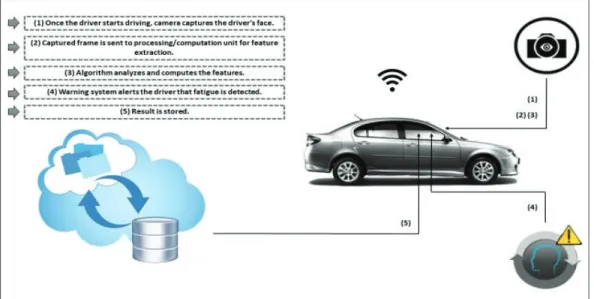
Fig. 6. Illustration Diagram of Driver Fatigue Alert System
Fig. 6. shows an illustration on how the system works. The
system consists of driver fatigue detection. It starts right away
when the driver starts driving and the camera will monitors the
drivers face. Captured frame is sent to computation unit for
facial feature extraction. Once the facial feature is analyzed,
warning sound in the form of an audible sound will be
triggered to alert the drivers. Detection result will be stored in
the cloud for future usage. Fig. 7. illustrates the overall
processes that takes place in Driver Fatigue Alert System.
Fig. 7. Framework of Driver Fatigue
Raspberry Pi will be used to integrate the system into the car
as it has low costing in terms of hardware. Meanwhile, the
feature
s’
extraction involves eye closure and mouth open
(yawning).
IV.
C
OMPARISONThis system has been developed using three different
programming languages and they are C#, C++ and Python.
The ideology of the system is tested in different programming
languages in order to observe the detection speed compatibility
with Raspberry Pi.
A.
C#
Being one of the prominent programming language, C# is
prone to certain software such as systems, embedded and
application with device drivers and high end quality server and
client applications. It was designed to be simple, modern and
an object-oriented language. The language is suitable for the
development of software and the deployment in the distributed
environments. EmguCV is a cross platform that is used to
develop this system [16].
For the fatigue detection that has been developed using
C#, the detection time is slower compared to C++ and Python.
And due to portability in the development of C# programs by a
large amount, it makes the system lags in a huge scale. It was
developed using Visual Studio Community 2013. The main
purpose is to develop a warning system through facial
expression that deals to support the user by providing
Graphical User Interface (GUI) which deals with utility, user
ease and user friendly as well. Fig. 8. shows the code snippet
from C#.
Fig. 6. Illustration Diagram of Driver Fatigue Alert System
parameters is used to track fatigue in eyes
and mouth. Beforehand, face will be detected
firstly before detecting the facial features. As
for this, OpenCV libraries and Haar Cascade
Classifiers will be used. OpenCV is known as
an open source computer vision and machine
learning software library. OpenCV library has
a huge number of optimized algorithms that
can be used to identify objects, to detect faces
and to track camera movements. It leans mostly
towards real time applications.
Haar Cascade has already contains a
pre-trained classifiers to detect and to extract features
such as face, eyes, nose, lips and ears [14]. These
cascade classifiers reduces the computational
time taken to detect and to process the facial
features. It is trained using many positive and
negative images to ensure the accuracy of the
classifiers [15]. Some examples of Haar feature
based on line and edge features. Moreover,
adaboost is also used to enhance further the
training process. It reduces the rate of error and
improves the detection.
Fig. 6. shows an illustration on how the
system works. The system consists of driver
fatigue detection. It starts right away when
the driver starts driving and the camera will
monitors the drivers face. Captured frame
is sent to computation unit for facial feature
extraction. Once the facial feature is analyzed,
warning sound in the form of an audible sound
will be triggered to alert the drivers. Detection
result will be stored in the cloud for future
usage. Fig. 7. illustrates the overall processes
that takes place in Driver Fatigue Alert System.
A Comparability Study on Driver Fatigue Using C#, C++ and Python
65 ISSN: 2590-3551 eISSN: 2600-8122 Vol. 2 No. 1 April 2018
International Journal of Human and Technology Interaction (IJHaTI), Vol. 2, No. 1, 1 April 2018
4 ISSN: 2590-3551
Fig. 6. Illustration Diagram of Driver Fatigue Alert System Fig. 6. shows an illustration on how the system works. The
system consists of driver fatigue detection. It starts right away when the driver starts driving and the camera will monitors the drivers face. Captured frame is sent to computation unit for facial feature extraction. Once the facial feature is analyzed, warning sound in the form of an audible sound will be triggered to alert the drivers. Detection result will be stored in the cloud for future usage. Fig. 7. illustrates the overall processes that takes place in Driver Fatigue Alert System.
Fig. 7. Framework of Driver Fatigue
Raspberry Pi will be used to integrate the system into the car as it has low costing in terms of hardware. Meanwhile, the features’ extraction involves eye closure and mouth open (yawning).
IV. COMPARISON
This system has been developed using three different programming languages and they are C#, C++ and Python. The ideology of the system is tested in different programming languages in order to observe the detection speed compatibility with Raspberry Pi.
A. C#
Being one of the prominent programming language, C# is prone to certain software such as systems, embedded and application with device drivers and high end quality server and client applications. It was designed to be simple, modern and an object-oriented language. The language is suitable for the development of software and the deployment in the distributed environments. EmguCV is a cross platform that is used to develop this system [16].
For the fatigue detection that has been developed using C#, the detection time is slower compared to C++ and Python. And due to portability in the development of C# programs by a large amount, it makes the system lags in a huge scale. It was developed using Visual Studio Community 2013. The main purpose is to develop a warning system through facial expression that deals to support the user by providing Graphical User Interface (GUI) which deals with utility, user ease and user friendly as well. Fig. 8. shows the code snippet from C#.
Fig. 7. Framework of Driver Fatigue
Raspberry Pi will be used to integrate
the system into the car as it has low costing in
terms of hardware. Meanwhile, the features’
extraction involves eye closure and mouth open
(yawning).
IV. COMPARISON
This system has been developed using
three different programming languages and
they are C#, C++ and Python. The ideology of
the system is tested in different programming
languages in order to observe the detection
speed compatibility with Raspberry Pi.
A. C#
Being one of the prominent programming
language, C# is prone to certain software such
as systems, embedded and application with
device drivers and high end quality server and
client applications. It was designed to be simple,
modern and an object-oriented language. The
language is suitable for the development of
software and the deployment in the distributed
environments. EmguCV is a cross platform that
is used to develop this system [16].
For the fatigue detection that has been
developed using C#, the detection time is slower
compared to C++ and Python. And due to
portability in the development of C# programs
by a large amount, it makes the system lags
in a huge scale. It was developed using Visual
Studio Community 2013. The main purpose
is to develop a warning system through facial
expression that deals to support the user by
providing Graphical User Interface (GUI) which
deals with utility, user ease and user friendly as
well. Fig. 8. shows the code snippet from C#.
International Journal of Human and Technology Interaction (IJHaTI), Vol. 2, No. 1, 1 April 2018
5 ISSN: 2590-3551
Fig. 8. Portion of C# Code
The flow of the system is divided into few steps, which are;
i. Face Detection
Under the face detection function, it takes one frame at a time. The frame grabber provides this framing and in every single frame, the detection tries to identify the face of the driver. This is accomplished by utilizing a set of predefined samples provided in Haarcascade.
ii. Eyes Detection
Once it function to detect the face of the driver, the next detection is focused on the driver’s eyes. This is accomplished
with the predefined set sample of Haarcascades. Moreover, the approach is known to be a machine learning based where the cascade function is trained with many positive and negative images that is used to detect objects.
iii. Fatigue Detection
In the process of detecting the position of the driver’s eyes,
fatigue detection system identifies if the driver is either fatigue or not fatigue. The detection function takes into consideration the state of the eyes, whether it is open or closed and the rate of the eyes blink. In the case, if the eyes of the driver is detected open, no action to be taken. However, if the eyes of the driver is detected closed continuously for two seconds this indicates the driver is fatigue and automatically a warning sound is triggered.
Fig. 9. C# Fatigue Detection
Fig. 9. shows the final output of fatigue detection that is programmed with C#.
B. C++
C++ is known to be a general purpose programming language that has essential, object oriented and basic and common programming feature. There are few different DLL’s
that are integrated together with OpenCV to enable the entire coding process to work smoothly. A missing in one of the DLL causes the system to completely fail to execute.
Detection level in C++ for fatigue is faster compared to that of C#. However, the entire development of a C++ project takes time and slow and at times faces debugging issues. Efficiency of program decreases along with the detection level as the system faces exception errors. It is less reliable due to the complexity of the operations.
For C++, nearly similar flow of process is involved as C#.
Once the camera is activated, it searches for an individual’s
face. Once the face is identified, the region of interest is focused. Here, the region of interest is both the eyes and Fig. 10. shows the code snippet for C++ programming.
Fig. 10.Portion of C++ Code
Fig. 8. Portion of C# Code
The flow of the system is divided into few
steps, which are;
i.
Face Detection
Under the face detection function, it
takes one frame at a time. The frame grabber
provides this framing and in every single frame,
the detection tries to identify the face of the
driver. This is accomplished by utilizing a set of
predefined samples provided in Haarcascade.
ii. Eyes Detection
Once it function to detect the face of
the driver, the next detection is focused on
the driver’s eyes. This is accomplished with
the predefined set sample of Haarcascades.
Moreover, the approach is known to be a
machine learning based where the cascade
function is trained with many positive and
negative images that is used to detect objects.
iii. Fatigue Detection
In the process of detecting the position
of the driver’s eyes, fatigue detection system
identifies if the driver is either fatigue or not
fatigue. The detection function takes into
consideration the state of the eyes, whether it
is open or closed and the rate of the eyes blink.
In the case, if the eyes of the driver is detected
open, no action to be taken. However, if the eyes
International Journal of Human and Technology Interaction
66 ISSN: 2590-3551 eISSN: 2600-8122 Vol. 2 No. 1 April 2018
of the driver is detected closed continuously for
two seconds this indicates the driver is fatigue
and automatically a warning sound is triggered.
International Journal of Human and Technology Interaction (IJHaTI), Vol. 2, No. 1, 1 April 2018
5 ISSN: 2590-3551
Fig. 8. Portion of C# Code
The flow of the system is divided into few steps, which are;
i. Face Detection
Under the face detection function, it takes one frame at a time. The frame grabber provides this framing and in every single frame, the detection tries to identify the face of the driver. This is accomplished by utilizing a set of predefined samples provided in Haarcascade.
ii. Eyes Detection
Once it function to detect the face of the driver, the next detection is focused on the driver’s eyes. This is accomplished
with the predefined set sample of Haarcascades. Moreover, the approach is known to be a machine learning based where the cascade function is trained with many positive and negative images that is used to detect objects.
iii. Fatigue Detection
In the process of detecting the position of the driver’s eyes,
fatigue detection system identifies if the driver is either fatigue or not fatigue. The detection function takes into consideration the state of the eyes, whether it is open or closed and the rate of the eyes blink. In the case, if the eyes of the driver is detected open, no action to be taken. However, if the eyes of the driver is detected closed continuously for two seconds this indicates the driver is fatigue and automatically a warning sound is triggered.
Fig. 9. C# Fatigue Detection
Fig. 9. shows the final output of fatigue detection that is programmed with C#.
B. C++
C++ is known to be a general purpose programming language that has essential, object oriented and basic and common programming feature. There are few different DLL’s
that are integrated together with OpenCV to enable the entire coding process to work smoothly. A missing in one of the DLL causes the system to completely fail to execute.
Detection level in C++ for fatigue is faster compared to that of C#. However, the entire development of a C++ project takes time and slow and at times faces debugging issues. Efficiency of program decreases along with the detection level as the system faces exception errors. It is less reliable due to the complexity of the operations.
For C++, nearly similar flow of process is involved as C#.
Once the camera is activated, it searches for an individual’s
face. Once the face is identified, the region of interest is focused. Here, the region of interest is both the eyes and Fig. 10. shows the code snippet for C++ programming.
Fig. 10.Portion of C++ Code
Fig. 9. C# Fatigue Detection
Fig. 9. shows the final output of fatigue
detection that is programmed with C#.
B. C++
C++ is known to be a general purpose
programming language that has essential, object
oriented and basic and common programming
feature. There are few different DLL’s that are
integrated together with OpenCV to enable
the entire coding process to work smoothly. A
missing in one of the DLL causes the system to
completely fail to execute.
Detection level in C++ for fatigue is faster
compared to that of C#. However, the entire
development of a C++ project takes time and
slow and at times faces debugging issues.
Efficiency of program decreases along with the
detection level as the system faces exception
errors. It is less reliable due to the complexity of
the operations.
For C++, nearly similar flow of process is
involved as C#. Once the camera is activated, it
searches for an individual’s face. Once the face
is identified, the region of interest is focused.
Here, the region of interest is both the eyes
and Fig. 10. shows the code snippet for C++
programming.
International Journal of Human and Technology Interaction (IJHaTI), Vol. 2, No. 1, 1 April 2018
5 ISSN: 2590-3551
Fig. 8. Portion of C# Code
The flow of the system is divided into few steps, which are; i. Face Detection
Under the face detection function, it takes one frame at a time. The frame grabber provides this framing and in every single frame, the detection tries to identify the face of the driver. This is accomplished by utilizing a set of predefined samples provided in Haarcascade.
ii. Eyes Detection
Once it function to detect the face of the driver, the next detection is focused on the driver’s eyes. This is accomplished with the predefined set sample of Haarcascades. Moreover, the approach is known to be a machine learning based where the cascade function is trained with many positive and negative images that is used to detect objects.
iii. Fatigue Detection
In the process of detecting the position of the driver’s eyes, fatigue detection system identifies if the driver is either fatigue or not fatigue. The detection function takes into consideration the state of the eyes, whether it is open or closed and the rate of the eyes blink. In the case, if the eyes of the driver is detected open, no action to be taken. However, if the eyes of the driver is detected closed continuously for two seconds this indicates the driver is fatigue and automatically a warning sound is triggered.
Fig. 9. C# Fatigue Detection
Fig. 9. shows the final output of fatigue detection that is programmed with C#.
B. C++
C++ is known to be a general purpose programming language that has essential, object oriented and basic and common programming feature. There are few different DLL’s that are integrated together with OpenCV to enable the entire coding process to work smoothly. A missing in one of the DLL causes the system to completely fail to execute.
Detection level in C++ for fatigue is faster compared to that of C#. However, the entire development of a C++ project takes time and slow and at times faces debugging issues. Efficiency of program decreases along with the detection level as the system faces exception errors. It is less reliable due to the complexity of the operations.
For C++, nearly similar flow of process is involved as C#. Once the camera is activated, it searches for an individual’s face. Once the face is identified, the region of interest is focused. Here, the region of interest is both the eyes and Fig. 10. shows the code snippet for C++ programming.
Fig. 10.Portion of C++ Code
Fig. 10. Portion of C++ Code
Once the eyes are successfully detected, it
is marked with a red cross spot indicating the
eyes are being captured in the video feed. Later,
computation process takes place focusing on the
region of interest. The smaller the height and the
larger the width, it is considered fatigue else, it
is in a neutral state. There is no audible sound
indicating a person is fatigue, however a fatigue
alert message is displayed on the window as
shown in Fig. 11.
International Journal of Human and Technology Interaction (IJHaTI), Vol. 2, No. 1, 1 April 2018
6 ISSN: 2590-3551
Once the eyes are successfully detected, it is marked with a red cross spot indicating the eyes are being captured in the video feed. Later, computation process takes place focusing on the region of interest. The smaller the height and the larger the width, it is considered fatigue else, it is in a neutral state. There is no audible sound indicating a person is fatigue, however a fatigue alert message is displayed on the window as shown in Fig. 11.
Fig. 11.C++ Fatigue Detection
C. Python
Python is an object oriented script language and it contains certain modules that are used in order to run the system without error. Some of them are numpy, scipy and time. There are other modules built in packages that comes together with python. Python is much simpler and leads to faster development. Moreover it has a clean and straightforward syntax that ease the coding process besides having a huge standard library. Python has built a high level data types which is rich in polymorphic lists.
Fig. 12.Portion of Python Code
As shown in Fig. 12. above, python programming works with extensive support libraries that does not require lengthy coding. The development of fatigue detection in Python comes with computing the eye activity. Similarly, face detection is the first step to identify the eyes. Once the eyes is in the video feed, the eye activity is observed over frames.
PERCLOS method is used to detect fatigue. The percentage of the eye closure is calculated over the video feed with closeness of the eyes over 70% is considered fatigue. An audible sound is also prompted to alert the individual in case of fatigue. On the other hand, the eye activity record is stored in a log file for future retrieval purposes. Fig. 13. shows the results from the eye state detection.
Fig. 13.Python Fatigue Detection
Fatigue detection level in Python works better compared to C#. Although the speed is almost similar with C++, it reduces the time taken for the development for the entire project due to simplified version of the coding hierarchy. Besides that, it has its modules that also reduces the computation time for fatigue detection.
D. Compatibility with Raspberry Pi
The system that have been developed to detect fatigue will be integrated into Raspberry Pi. The purpose of using Raspberry Pi is mainly because to get the system integrated inside a car. It is cost effective hardware that can be easily obtained and handled. Looking into the programming language compatibility for the Raspberry Pi, Python comes first. It is easy to read and to write with Python on Raspberry Pi. Python syntax are clean at where Python development environment can be used through IDLE. Raspberry Pi supports Python version 2 and 3 at once. Python commands can be run using Raspberry Pi command line and it is directly executable. If looking into having the system integrated in car using Raspberry Pi, Python is the best choice.
E. DISCUSSION
The entire idea of developing fatigue detection system regardless of what is already in the global market is to provide a sight of it to Malaysian made cars. This is because local made cars does not have such system. Furthermore, considering other environmental factors such as weather and Malaysian road condition, it is crucial to have fatigue detection for Malaysian roads.
TABLE III. COMPARISON OF THE PROGRAMMING LANGUAGES
Language /
Criteria C# C++ Python
Speed Moderate Good Good
Fig. 11. C++ Fatigue Detection
C. Python
Python is an object oriented script language
and it contains certain modules that are used in
order to run the system without error. Some of
them are numpy, scipy and time. There are other
modules built in packages that comes together
with python. Python is much simpler and leads
to faster development. Moreover it has a clean
and straightforward syntax that ease the coding
process besides having a huge standard library.
Python has built a high level data types which is
rich in polymorphic lists.
A Comparability Study on Driver Fatigue Using C#, C++ and Python
67 ISSN: 2590-3551 eISSN: 2600-8122 Vol. 2 No. 1 April 2018
International Journal of Human and Technology Interaction
(
IJHaTI
)
, Vol. 2, No. 1, 1 April 2018
6
ISSN: 2590-3551
Once the eyes are successfully detected, it is marked with
a red cross spot indicating the eyes are being captured in the
video feed. Later, computation process takes place focusing on
the region of interest. The smaller the height and the larger the
width, it is considered fatigue else, it is in a neutral state.
There is no audible sound indicating a person is fatigue,
however a fatigue alert message is displayed on the window as
shown in Fig. 11.
Fig. 11.
C++ Fatigue Detection
C.
Python
Python is an object oriented script language and it
contains certain modules that are used in order to run the
system without error. Some of them are numpy, scipy and
time. There are other modules built in packages that comes
together with python. Python is much simpler and leads to
faster development. Moreover it has a clean and
straightforward syntax that ease the coding process besides
having a huge standard library. Python has built a high level
data types which is rich in polymorphic lists.
Fig. 12.Portion of Python Code
As shown in Fig. 12. above, python programming works
with extensive support libraries that does not require lengthy
coding. The development of fatigue detection in Python
comes with computing the eye activity. Similarly, face
detection is the first step to identify the eyes. Once the eyes is
in the video feed, the eye activity is observed over frames.
PERCLOS method is used to detect fatigue. The
percentage of the eye closure is calculated over the video feed
with closeness of the eyes over 70% is considered fatigue. An
audible sound is also prompted to alert the individual in case
of fatigue. On the other hand, the eye activity record is stored
in a log file for future retrieval purposes. Fig. 13. shows the
results from the eye state detection.
Fig. 13.Python Fatigue Detection
Fatigue detection level in Python works better compared
to C#. Although the speed is almost similar with C++, it
reduces the time taken for the development for the entire
project due to simplified version of the coding hierarchy.
Besides that, it has its modules that also reduces the
computation time for fatigue detection.
D.
Compatibility with Raspberry Pi
The system that have been developed to detect fatigue will
be integrated into Raspberry Pi. The purpose of using
Raspberry Pi is mainly because to get the system integrated
inside a car. It is cost effective hardware that can be easily
obtained and handled. Looking into the programming language
compatibility for the Raspberry Pi, Python comes first. It is
easy to read and to write with Python on Raspberry Pi. Python
syntax are clean at where Python development environment
can be used through IDLE. Raspberry Pi supports Python
version 2 and 3 at once. Python commands can be run using
Raspberry Pi command line and it is directly executable. If
looking into having the system integrated in car using
Raspberry Pi, Python is the best choice.
E.
DISCUSSION
The entire idea of developing fatigue detection system
regardless of what is already in the global market is to provide
a sight of it to Malaysian made cars. This is because local
made cars does not have such system. Furthermore,
considering other environmental factors such as weather and
Malaysian road condition, it is crucial to have fatigue detection
for Malaysian roads.
TABLE III. COMPARISON OF THE PROGRAMMING LANGUAGES
Language /
Criteria
C#
C++
Python
Speed
Moderate
Good
Good
Fig. 12. Portion of Python Code
As shown in Fig. 12. above, python
programming works with extensive support
libraries that does not require lengthy coding.
The development of fatigue detection in
Python comes with computing the eye activity.
Similarly, face detection is the first step to
identify the eyes. Once the eyes is in the video
feed, the eye activity is observed over frames.
PERCLOS method is used to detect fatigue.
The percentage of the eye closure is calculated
over the video feed with closeness of the eyes
over 70% is considered fatigue. An audible
sound is also prompted to alert the individual
in case of fatigue. On the other hand, the eye
activity record is stored in a log file for future
retrieval purposes. Fig. 13. shows the results
from the eye state detection.
International Journal of Human and Technology Interaction (IJHaTI), Vol. 2, No. 1, 1 April 2018
6 ISSN: 2590-3551
Once the eyes are successfully detected, it is marked with a red cross spot indicating the eyes are being captured in the video feed. Later, computation process takes place focusing on the region of interest. The smaller the height and the larger the width, it is considered fatigue else, it is in a neutral state. There is no audible sound indicating a person is fatigue, however a fatigue alert message is displayed on the window as shown in Fig. 11.
Fig. 11.C++ Fatigue Detection
C. Python
Python is an object oriented script language and it contains certain modules that are used in order to run the system without error. Some of them are numpy, scipy and time. There are other modules built in packages that comes together with python. Python is much simpler and leads to faster development. Moreover it has a clean and straightforward syntax that ease the coding process besides having a huge standard library. Python has built a high level data types which is rich in polymorphic lists.
Fig. 12.Portion of Python Code
As shown in Fig. 12. above, python programming works with extensive support libraries that does not require lengthy coding. The development of fatigue detection in Python comes with computing the eye activity. Similarly, face detection is the first step to identify the eyes. Once the eyes is in the video feed, the eye activity is observed over frames.
PERCLOS method is used to detect fatigue. The percentage of the eye closure is calculated over the video feed with closeness of the eyes over 70% is considered fatigue. An audible sound is also prompted to alert the individual in case of fatigue. On the other hand, the eye activity record is stored in a log file for future retrieval purposes. Fig. 13. shows the results from the eye state detection.
Fig. 13.Python Fatigue Detection
Fatigue detection level in Python works better compared to C#. Although the speed is almost similar with C++, it reduces the time taken for the development for the entire project due to simplified version of the coding hierarchy. Besides that, it has its modules that also reduces the computation time for fatigue detection.
D. Compatibility with Raspberry Pi
The system that have been developed to detect fatigue will be integrated into Raspberry Pi. The purpose of using Raspberry Pi is mainly because to get the system integrated inside a car. It is cost effective hardware that can be easily obtained and handled. Looking into the programming language compatibility for the Raspberry Pi, Python comes first. It is easy to read and to write with Python on Raspberry Pi. Python syntax are clean at where Python development environment can be used through IDLE. Raspberry Pi supports Python version 2 and 3 at once. Python commands can be run using Raspberry Pi command line and it is directly executable. If looking into having the system integrated in car using Raspberry Pi, Python is the best choice.
E. DISCUSSION
The entire idea of developing fatigue detection system regardless of what is already in the global market is to provide a sight of it to Malaysian made cars. This is because local made cars does not have such system. Furthermore, considering other environmental factors such as weather and Malaysian road condition, it is crucial to have fatigue detection for Malaysian roads.
TABLE III. COMPARISON OF THE PROGRAMMING LANGUAGES
Language /
Criteria C# C++ Python
Speed Moderate Good Good
Fig. 13. Python Fatigue Detection
Fatigue detection level in Python works
better compared to C#. Although the speed
is almost similar with C++, it reduces the
time taken for the development for the entire
project due to simplified version of the coding
hierarchy. Besides that, it has its modules that
also reduces the computation time for fatigue
detection.
D. Compatibility with Raspberry Pi
The system that have been developed to
detect fatigue will be integrated into Raspberry
Pi. The purpose of using Raspberry Pi is mainly
because to get the system integrated inside a
car. It is cost effective hardware that can be
easily obtained and handled. Looking into the
programming language compatibility for the
Raspberry Pi, Python comes first. It is easy to
read and to write with Python on Raspberry
Pi. Python syntax are clean at where Python
development environment can be used through
IDLE. Raspberry Pi supports Python version
2 and 3 at once. Python commands can be run
using Raspberry Pi command line and it is
directly executable. If looking into having the
system integrated in car using Raspberry Pi,
Python is the best choice.
E. DISCUSSION
The entire idea of developing fatigue
detection system regardless of what is already
in the global market is to provide a sight of it to
Malaysian made cars. This is because local made
cars does not have such system. Furthermore,
considering other environmental factors such
as weather and Malaysian road condition, it is
crucial to have fatigue detection for Malaysian
roads.
TABLE III. COMPARISON OF THE PROGRAMMING LANGUAGES
Language /
Criteria C# C++ Python
Speed Moderate Good Good
Detection Slow Fairly Fast Fast
Object
Oriented Yes Yes Yes
Development
Time Longer Longer Shorter
RPi
Compatibility Weak Moderate Good

![Fig. 14. International Comparison of Anger [18]](https://thumb-us.123doks.com/thumbv2/123dok_us/10969505.2985111/8.702.353.634.319.575/fig-international-comparison-of-anger.webp)
