Universitat Politècnica de Catalunya
Master of Science in Management EngineeringMaster’s thesis:
Study of the increased future employability of students
working for Junior Enterprises
In collaboration with JADE – the European Confederation of Junior Enterprises
Supervisor: Eulalia Griful Ponsati
Candidate:
Mona Herter
This thesis was elaborated in the framework of the double degree program Master of Science in Management Engineering between the two universities Universitat Politecnica de Catalunya (Barcelona, Spain) and Politecnico di Torino (Turin, Italy). Due to the different regulations in the universities, there are slight differences in the formalities and the title of the present work. The title at Politecnico di Torino is “Analysis of students’ intentions towards entrepreneurship influenced by the experience of working for a Junior Enterprise” and supervisors are Prof. Elisa Ughetto and Prof. Paolo Landoni.
ABSTRACT
The present thesis contains an analysis of students’ intentions towards entrepreneurship and their increased employability influenced by the experience of working for a Junior Enterprise. It is based on an empirical study about the identity of members of the European Junior Enterprise network (JADE) as well as a literature research among academic studies and several studies conducted by the European Commission about Entrepreneurship in higher education. Key findings are the positively influenced entrepreneurial intentions of students and the increased feeling of preparedness for the job market thanks to their work for a Junior Enterprise.
Keywords: EMPLOYABILITY, JUNIOR ENTERPRISE, JE,
ENTREPRENEURSHIP, EUROPE, JADE, JUNIOR ENTREPRENEUR,
STUDENTS, EUROPEAN COMMISSION, EUROPEAN CONFEDERATION OF JUNIOR ENTERPRISES
EXECUTIVE SUMMARY
The traditional formal education system is valuable and highly important for the learning of technical skills and knowledge. However, there is a clear gap between theoretic knowledge and interpersonal as well as practical skills development in this system. These practical and soft skills can be learned in the way of non-formal or informal education. The purpose of this thesis is to compare and evaluate ways to close the gap between university and the real job market. Different initiatives by higher education institutions in order to foster entrepreneurship among students have been studied. A broad variety of entrepreneurial programs, project-based learning concepts and innovation labs have been found. This is compared to the non-formal way of education for example in the form of complementary extra-curricular activities for students to empower their self-development. Thus, the special case of Junior Enterprises (JEs), a concept existent since 1967 is analyzed for its impact on students in higher education.
Scientifically, it shall be analyzed whether the concept of JEs has a measurable impact on students in terms of their attitudes and intentions towards entrepreneurship as well as readiness for the real job world which awaits them after their graduation.
As first step, broad literature research on the topic of entrepreneurship in higher education has been done. It is quoted as a best practice1 to equip students with the needed skills for the job market, not only to become entrepreneurs themselves but far more establish an entrepreneurial mindset as a complementation of their skills and boost for their employability. Subsequently, JADE - the European umbrella organization has been studied for its role in engaging, empowering and fostering entrepreneurship among students. The scientific research was based on an empirical study among Junior Entrepreneurs and their identity, experience in the JE network, their intentions and attitudes towards entrepreneurship and the job market. The data collected in this survey was analyzed in a regression analysis to find significant correlations between the student’s activity in a JE and their developed skills, international propensity or future career plans.
Major outcomes of the research show that there is a clear positive effect of the time a student spends working for a JE on their intentions towards entrepreneurial action. Besides, the amount of industry related projects a student has actively contributed to
whilst being a member of the JE has been found positively correlated to the wish of being employed in the private sector and thus the feeling of being prepared for the job market. Other influences on entrepreneurial intentions like international propensity or the attitude of a student towards volunteering as well as further work experience could not be validated by the analysis.
The results found in the present research can be translated into other fields as well. In general, it can be assumed that a student who is active in an association alongside his studies, connecting with other students and working on his self-development, he will feel more prepared and self-confident for both, starting entrepreneurial action or beginning a corporate career. So, the activity of a student in a Junior Enterprise are of course not the only way of acquiring entrepreneurial skills and attitudes. The concept of putting the theoretically learned into practice and acquiring skills by performing extra-curricular activities is also supported by other student’s associations like for example AIESEC2, ESTIEM3 or ESN4. In the specific field of student entrepreneurship, there are organizations with a similar model like for example Junior Achievement5 who are focusing on primary and high school students, or 180 Degrees Consulting6 who are active in the field of social entrepreneurship, always based on a student-volunteering model. All these organizations have an important contribution on entrepreneurship and skills development among students.
However, JADE’s exclusiveness lays in the fact that is entirely run by and for students. The structure of a bottom-up organization, which emerged thanks to the urge of students for complementing their University studies and grew into a global network of like-minded students speaks for the uniqueness of this concept. By adding the JE
2 “Developing the leadership potential of youth through experiential learning, volunteer experiences and professional internships.”, retrieved from http://aiesec.org/.
3 “Organisation for European Students of Industrial Engineering and Management, who combine technological understanding with management skills. Our goal is to establish and foster relations between students.”, retrieved from https://www.estiem.org/
4 “Our mission is to represent international students, thus provide opportunities for cultural understanding and self-development under the principle of Students Helping Students.”
5 “JA's volunteer-delivered, kindergarten-12th grade programs foster work-readiness, entrepreneurship and financial literacy skills, and use experiential learning to inspire students to dream big and reach their potential.”, retrieved from https://www.juniorachievement.org/
6 “We improve education, reduce homelessness, and alleviate poverty by helping non-profits receive the support and expertise they need to improve and expand their services. At the same time, we develop a generation of future leaders committed to making a difference.”,
experience to the portfolio of Universities, best synergies are evoked as the combination of formal and non-formal education – university and extra-curricular activities is the most beneficial when it comes to the development of technical skills, knowledge and soft skills as a base for entrepreneurial activity.
ACKNOWLEDGEMENTS
I would first like to thank my thesis advisor Professor Ughetto of Politecnico di Torino. Prof. Ughetto has always be available for quick and constructive feedback. Also, I am gratefully indebted to Eulalia Griful Ponsati, my academic supervisor of Universitat Politecnica de Catalunya, for her very valuable comments on this thesis.
Furthermore, I would like to acknowledge Professor Landoni as the second reader of Politecnico di Torino, and I want to thank him for his contributions to this thesis.
My special gratitude goes to Giuliano Sansone, P.h.D. student at Politecnico di Torino. Without his constant feedback and support, especially concerning the methodology and technicalities of the data analysis and the literature research, the research would not have been successfully conducted.
I would also like to thank the Junior Entrepreneurs of the JADE network who took part in the survey and who live and spread the passion for this unique concept day by day. JADE is supporting the entrepreneurship education eco-system all over Europe and helped me to discover the real impact of the Junior Enterprise concept.
Finally, I must express my very profound gratitude to my parents and to my sister for providing me with unfailing support and continuous encouragement throughout my years of study and through the process of researching and writing this thesis. This accomplishment would not have been possible without them. Thank you.
TABLE OF CONTENTS
INTRODUCTION ... 10
-1. ENTREPRENEURSHIP EDUCATION ... 12
-1.1 WHY ENTREPRENEURSHIP EDUCATION? ... -12
-1.2 WHAT IS ENTREPRENEURSHIP EDUCATION? ... -14
-1.3 LITERATURE REVIEW ON ACADEMIC PAPERS ABOUT ENTREPRENEURSHIP EDUCATION ... -15
-1.4 CLASSIFICATION OF THE YOUNG ENTREPRENEUR ... -19
-1.4.1 Attitudes ... 20
-1.4.2 Skills ... 21
-1.4.3 Knowledge ... 22
-1.5 ENTREPRENEURIAL PROGRAMS IN HIGHER EDUCATION VERSUS JE CONCEPT ... -24
-1.5.1 Programs in the European academic eco system. ... 24
-1.5.2 Why are especially these programs successful? ... 28
-1.5.3 Entrepreneurial selfperception ... 29
-1.5.4 Desire for transition ... 30
-1.5.5 Intentions towards entrepreneurship: employment preference ... 32
-2 JES, JADE & THE EUROPEAN NETWORK ... 35
-2.1 WHAT IS A JE? ... -35 -2.2 WHAT DO JES WORK ON? ... -35 -2.3 WHAT IS JADE? ... -38 -2.3.1 JADE Structure ... 39 -2.3.2 JADE History ... 40 -2.3.3 JADE Activities ... 40
-2.4 JADE AS FACILITATOR ON EUROPEAN LEVEL ... -43
-2.5 THE CENSUS &IDENTITY STUDY AS BASE FOR THIS RESEARCH ... -45
-3 RESEARCH METHOD ... 47
-3.1 THEORETICAL DEVELOPMENT ... -47
-3.2 SAMPLE AND DATA COLLECTION ... -48
-3.2.1 DATA SET ... -48
-3.2.2 DATA COLLECTION ... -48
-3.2.3 GENDER ... -49
-3.2.5 FIELD OF STUDY ... -51 -3.2.6 STUDY ABROAD ... -52 -3.2.7 LANGUAGES SPOKEN ... -53 -3.2.8 PREVIOUS JOBS ... -54 -3.2.9 REASONS TO JOIN JE ... -56 -3.2.10 SKILLS LEARNED IN JE ... -57
-3.2.11 FUTURE JOB EXPECTATIONS ... -58
-3.2.12 SURVEY QUESTIONS ... -59 -3.3 HYPOTHESIS ... -61 -3.4 REGRESSION MODEL ... -61 -3.4.1 Dependent variable ... 61 -3.4.2 Predictor variables ... 61 -3.4.3 Control variables ... 62 -3.4.4 Model specification ... 62
-3.5 MULTINOMIAL REGRESSION ANALYSIS IN STATA ... -63
-4. RESULTS ... 65
-4.1ANALYSIS ... -65
-4.2FURTHER ANALYSES ... -69
-4.3INTERPRETATION ... -71
-5. LIMITATIONS ... 73
-6. CONCLUSION & FUTURE OUTLOOK ... 74
REFERENCES ... 77
LIST OF FIGURES ... 81
LIST OF TABLES ... 82
TABLE OF FORMULAE ... 82 -APPENDIX 1: SUPPORT ... I APPENDIX 2: STATA LEARNING DOCUMENTS ... VI APPENDIX 3: DATASET ... VI APPENDIX 4: FINANCIAL ASPECTS ... VI APPENDIX 5: TIME PLANNING ASPECTS ... VII APPENDIX 6: ENVIRONMENTAL ASPECTS ... VIII
Introduction
In the recent years, not only politicians but also higher education institutions and companies have discovered the urgent necessity for entrepreneurial skills among students. Not only for creating future entrepreneurs but also intrapreneurs7 and furthermore for preparing students for the challenges in the job market. Entrepreneurship education is also described “as a method whereby students (of all types) practice creating, finding, and acting on opportunities of creating value” (Neck, 2014) (Neck, 2011). In general, the entrepreneurial activities within a University include different curricular and extra-curricular elements, as well as research efforts (Kuratko, 2005). In the present thesis, the main focus is on extra-curricular activities in the entrepreneurship education field.
In detail, the option for students to work in so-called Junior Enterprises (JEs), alongside their studies gives them the bespoke opportunity of learning and experiencing entrepreneurship in a safe or low-risk environment. By doing this, the students are achieving a unique hands-on experience of non-formal education where they can put into practice the skills learned by formal education in the classroom. Currently, the JEs are on European level confederated by JADE, which represents a network of over 22.000 students Europe wide. JADE is a non-profit non-governmental organization affiliated to the European Commission and the European Parliament and is based in Brussels.
This thesis is being elaborated in order to give a scientific proof of this fostering of entrepreneurial mindset as well as the skills development thanks to the JE. The analysis of the entrepreneurial intentions of students influenced by their experience of working for a JE is based on an empirical study about a Census and Identity survey within the European JE network as well as a study conducted by the European Commission about Entrepreneurship in higher education.
As first step, an extensive research about the status quo of entrepreneurship education has been done and a research among academic literature has been conducted to understand the background. Then, an overview of the JE concept and the importance of JADE in the European within the European education eco-system is given. The initiatives of fostering entrepreneurship by JADE and by higher education institutions are, among other, followed to contribute to the focus of Horizon 2020, a directive of the European Commission in order to bring Europe a step forward in terms of economic growth and competitiveness (Bacigalupo, et al., 2016). Other than the study conducted by the European Commission among alumni of the JE network, the present thesis analyses the mindset and attitudes of students currently active in JEs towards their future career wishes, besides the correlation between their education and attitude towards entrepreneurship is measured by a regression analysis.
Subsequently, chapter 3 explains the methodology followed for the present research. First, data about the Junior Entrepreneurs’ identity has been collected by an online survey. Subsequently the dataset is cleaned and prepared. After analyzing and understanding the dataset, some descriptive statistics are done in order to showcase the identity and variety of students active in the JE movement. For the analysis of the recorded data, two research hypotheses are defined and based on them, the regression model and interesting variables are decided. Following, correlation analyses as well as multinomial regressions, are performed. For the data analysis, the econometrics software STATA has been used. This tool was part of the industrial economics course at Politecnico di Torino and its functionality was studied autonomously. Finally, the results are interpreted and the evaluation of the hypotheses performed. After pointing out the limitations of the present study, the conclusion serves also to give a future outlook on the JE movement on the background of entrepreneurial development.
1.! Entrepreneurship Education 1.1!Why Entrepreneurship Education?
The European Commission has done huge efforts in the past years and by the means of Horizon 2020 will continue to do so in the next couple of years. Why is the Commission putting so much resources and commitment into the education of entrepreneurs?
The youth unemployment rates in Europe are on their climax, reasons are the missing opportunities as well as the poor preparation of students for the job market, due to a lack of practical experience. Besides, the Commission is trying together with other stakeholders to fight the lack of entrepreneurial culture. According to a research conducted in the field, as it can be seen in the graph below, one of four young Europeans are unconfident to be able to find a job when finishing their education.8
Figure 1: Young people’ confidence in finding a job after graduation (European Union, 2015) Furthermore, as it can be seen in Figure 2, one third of people aged between 15 and 29 years are afraid of not finding a stable job and almost 15% are concerned about not having the right knowledge or set of skills in order to succeed in the job market.
Figure 2: Young people’s main concerns when thinking about getting a job (European Union, 2015)
Figure 3 suggests that, in addition, every second young person explicitly says, they would not like to start a business and almost one quarter of young people thinks to start a business is too difficult, even if they would like to – opposed to a very low percentage of roughly 15% would definitely consider starting an own business.
Figure 3: EU Youth indicator: young people about setting up their own business (European Union, 2015)
As it can be seen in these inquiries, there is a huge need for the improvement of opportunities for Europe’s young people and an even bigger need for spreading the entrepreneurial culture in order to achieve a positive contribution on society.
1.2!What is Entrepreneurship education?
As mentioned above, entrepreneurship education is the training of entrepreneurial skills and knowledge as well as the fostering of entrepreneurial attitudes and mind-sets among students. This is mostly done by a combination of formal, non-formal and informal education. This means, a combination of traditional theoretic lectures, practical exercises and activities outside the classroom. Entrepreneurship education helps to achieve competences with the aim of raising consensus among all stakeholders and to establish a bridge between the worlds of education and work. The Entrepreneurial Competences Framework consisting of the combined method mentioned above, shall foster entrepreneurial capacity of European citizens. The basic three competence areas are interrelated and interconnected, in specific: ‘Ideas and opportunities’, ‘Resources’ and ‘Into action’ (Bacigalupo, et al., 2016).
1.3!Literature review on academic papers about entrepreneurship education To understand the context of entrepreneurship in higher education, a review of existing literature has been concluded. In the following paragraphs, different methods of equipping students with entrepreneurial skills during their academic career are presented. To start with, existing academic research about JEs is presented. Following, the classification of the young entrepreneur: skills, attitudes and knowledge which have been defined as necessary prerequisites to make students employable are illustrated. The chapter will be concluded by the presentation and evaluation of entrepreneurship programs which are existent in the European academia and the entrepreneurship study programs are compared versus the JE concept.
The Global University Entrepreneurial Spirit Students’ Survey (GUESSS) (Bergmann, et al., 2016).GUESSS is an international research project that investigates and compares entrepreneurial intentions and activities of students in 26 countries9 in the world (Bergmann, 2015).
It has been established in 2003 and has been rolled out every two to three years, adding further countries in each edition of the survey. On the background of this project, a research among 12 German Universities has been conducted about the ability of students for the recognition of business opportunities and their capabilities of turning them into action. The research suggests that there are different requirements that enable entrepreneurial action: knowledge about entrepreneurship and human capital, which means the set of skills and beliefs that facilitate putting ideas into action. “Even if people had the same knowledge, their beliefs, attitudes and personality characteristics would lead to different perceptions concerning a potential entrepreneurial opportunity.” This supports the assumption on the base of the present thesis, that formal education10 is not sufficient to facilitate entrepreneurial capabilities among students. The beliefs
9 In 2011 the edition that served as a base for Bergman’s paper, the following countries have taken part: Argentina, Austria, Belgium, Brazil, Chile, China, Estonia, Finland, Germany, Greece, Hungary, Ireland, Japan, Liechtenstein, Luxembourg, Mexico, Netherlands, Pakistan, Portugal, Romania, Russia, Singapore, South Africa, Switzerland, UK.
10 Definition: Formal education: the hierarchically structured, chronologically graded ‘education system’, running from primary school through the university and including, in addition to general academic studies, a variety of specialized programs and institutions for full-time technical and professional training (Smith, 2012)
and attitudes can only be formed and develop by non-formal11 learning. According to the study, knowledge and human capital can be acquired in different ways: formal learning (in University lectures) or by professional industry experience (Bergmann, 2015).
The study also suggests, that there is a significant difference between research-based business opportunities and non-research based opportunities. Especially research-based opportunity beliefs are more connected to uncertainty and thus require more experience than non-research based. “Having acquired knowledge about entrepreneurship and starting a business does not help people in reducing the uncertainty about the feasibility and fit of a specific business idea.” (Bergmann, 2015). The near elimination of uncertainty, can only be achieved by experience, or the opportunity to test the opportunity in a safe environment, which is the case for example in a JE. This is another support for the underlying assumption of this thesis.
The study concludes that different types of knowledge relatedness are important for research-driven and non-research-driven venture ideas. Whereas relevant professional experience and, thus, tacit knowledge is important for research-driven ideas, non-research-driven ideas benefit from general human capital, specifically, codified knowledge obtained during university studies. Opportunity beliefs relate to entrepreneurial action. However, we find such a relationship only for non-research-driven venture ideas and not for others suggesting that different types of uncertainty are prevalent in the two cases.
Another study based on the GUESSS Project is researching the question: “To what extent and in what way do the university and the regional context influence university students’ decision to take first entrepreneurial action and, subsequently, to establish a new business?” (Bergmann, et al., 2016). To assess this question, the research differentiates between students who have already taken first actions for creating a start-up – so-called nascent entrepreneurs – and students who are already entrepreneurs. Always under consideration of the different stages of the “entrepreneurial process” (Carter, 1996). Like mentioned above, also this
11 Definition: Non-formal education: any organized educational activity outside the established formal system – whether operating separately or as an important feature of some broader activity – that is intended to serve identifiable learning clienteles and learning objectives (Smith, 2012)
paper sees a significant difference between research-based and non-research-based business ideas and the different degree of involved knowledge transfer.
The study proves that the organizational context for students is more important for the intentions to start a business then for the final real enterprise creation. It also shows that regional circumstances are highly important for the real enterprise creation but not significant for the student’s intentions to start a business. Besides, the study gives proof for the phenomenon of peer-influence: the ambient of fellow students who follow entrepreneurship education has a positive effect on the student’s intentions to become entrepreneurs (Carter, 1996). This as well, is an effect which is given by the JE concept. By working for a JE, students do not only benefit from this peer-effect but they also gain valuable experience from working on projects for firms in the industry. This industry experience in an early stage, even before graduating gives students an advantage compared to other students. The results of the study show that formal entrepreneurial learning does have a positive effect on the individual’s intentions to become entrepreneurs, while it does not have a significant effect on the real creation of enterprises. It also states the lack of professional experience and market knowledge as main reason why entrepreneurial ambitions of students are postponed or fail. Bergmann et. al. (2016) also suggest that “Industry experience seems to be even more valuable for entrepreneurial performance than academic knowledge”. This, again, supports the concept of students working in a JE alongside their studies.
Different academic papers discussing the benefits of JEs are already existing, like for example “International Experiential Learning in Engineering” (Bakies & Lamb, 2014) which explains the rise of the JE concept in the United States, initiated by the wish to implement Project-Based-Learning methodology at the 6th best Engineering University of the United States, University of Illinois (colleges.usnews, 2016). This paper stresses mainly the other aspect of JEs. Other than just providing the entrepreneurial skills, competences, attitudes and setting, it also serves to prepare students adequately for the job market. It offers a possibility to combine formal (classroom) and non-formal (student’s association) learning.
This is also supported by the fact, that even commercially published books like “Human Resources Management in Consulting Firms”, published by Springer Verlag, are referring to the JE concept. The confederation of JEs in Germany is connected closely to a variety of large consulting firms, who confirm Junior Entrepreneurs as
properly skilled for the challenges in the job market and therefore recruit their future talent preferably among JE alumni (Domsch & Hristozova, 2006).
The JE movement is recently growing as well in Turkey, where a study has been conducted in order to find influencing factors for entrepreneurial intentions of university students (Turker & Selcuk, 2009). It also brings a new dimension into the picture, which is the correlation of entrepreneurial intentions not only with perceived educational support but also with a certain level of self-confidence of the individual as well as the perceiving of structural support in the society. It has been proven that a self-confident individual given the structural and educational support of his environment rather have intentions to become entrepreneur than others.
Conditions under which entrepreneurship education may be most effective for enhancing entrepreneurial intentions have been analysed by a study of Maersch (Maresch, et al., 2016). Also the role of motivational drivers and the academic backgrounds have been analysed. In general, the paper proves the positive effect of entrepreneurship education on entrepreneurial intentions. But it also states that mostly students from business related fields benefit from entrepreneurship education which in general has a positive but rather low effect. For science and engineering students there is still a lack of entrepreneurship education, which could according to the paper be solved by implementing “Lean Start-up based classes” (Maresch, et al., 2016) in the curriculum. The paper stresses also the still existing gap between entrepreneurial intentions and actions, it suggests the improvement of entrepreneurship education in order to fight the main barriers: action fear, action uncertainty, and competing interests (van Gelderen, 2013). It furthermore suggests that a significant effort is still to be performed in order to adapt entrepreneurship education to the specific needs of distinct groups of students, which can only be done with a deep understanding of the challenges and barriers these specific target groups face, resulting from own experience. Both, the suggested integration of lean start-up and the adaption to specific needs of students in regards to entrepreneurship education, can be facilitated by supporting students to set up a JE at their University.
According to the study conducted by Wong (2014) among university students in Singapore, the participation especially in experiential-learning entrepreneurship programs at universities have a significant positive influence on students’ entrepreneurial engagement. The study also confirms the effect of program participation on the students’ attitudes and perceptions (Wong, et al., 2014). It strongly
suggests the move toward hands-on experiential programs as a more effective way for educational institutions to influence students’entrepreneurial behavior and encourage venture creation activity on campus (Wong, et al., 2014). Which is again a support for the JE concept as the purest concept of experiential learning.
1.4! Classification of the young entrepreneur
The main goal of entrepreneurship in education, apart from taking away the syndrome of the fear of failure from the student, is the acquisition of an entrepreneurial mind-set as well as a set of skills required to become entrepreneur. Various scientific researches have been conducted in order to analyse and define the bespoke set of skills. This patagraph is based on the information by a study conducted by the European Commission in collaboration with JADE (Gibcus, et al., 2012). In the bespoke study, the key competences of an entrepreneur have been classified as a mix of: Attitudes, Skills & Knowledge (Gibcus, et al., 2012).
Figure 4: Entrepreneurial Key Competences12
In the following illustrations each of the classifications is explained in detail:
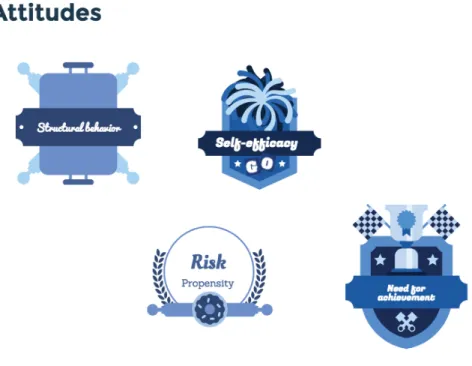
Figure 5: Entrepreneurial Attitudes13 1.4.1! Attitudes
The study shows that entrepreneurs excel in: risk propensity and need of achievement. Risk propensity refers to an individual’s tendency to take risk in his or her actions. JADE alumni have, according to the study, a higher risk propensity compared to the other groups. Moreover, there is also a difference in the willingness to take risks between male and female alumni. According to the study, Male JADE alumni appear to be the most willing to take risks. This can be explained by the fact that, students who have created a JE in their university have already overcome the psychological barrier of starting their own business. Subsequently, they are more self confident, so they are more averse in taking risks compared to the other groups of students. Finally, the study suggests that in general males tend to have a higher risk propensity than females. The need of achievement explains the human capacity to set and fulfil personal and achievable goals. JADE alumni receive the highest scores also
in this category, followed by the entrepreneurship alumni, both far above the level of the alumni control group. An interesting observation is that males within the alumni entrepreneurship group have a higher need of achievement than females. Whereas this does not happen for the JADE alumni: here, male and female alumni have the same need of achievement. Summing up, both genders of JADE alumni have the highest score in terms of need of achievement. Finally, the study underlines that for the two core aspects of entrepreneurial attitude, the need for achievement and the behaviour toward risk, JADE alumni are on the highest rank (Gibcus, et al., 2012).
Figure 6: Entrepreneurial Skills14
1.4.2! Skills
Talking about entrepreneurial skills means talking about the ability of turning ideas into action. All interviewees agree on the fact that higher education has provided them with the skills and know-how enabling them to run a business. It must be said that a subject in a theoretical way is different from putting the acquired knowledge into practice in a safe environment. JADE alumni have this chance to apply what they have studied in the classroom while working for a JE practically. Depending on the field of study and on the core business of the JE, different types of services are offered to the JE’s clients and therefore different skills are learned. Therefore, JADE alumni scored best in all the analysed characteristics.
In particular, JADE alumni score significantly higher in networking skills. This factor can be explained as JADE is a network of JEs. Junior Entrepreneurs are very well aware of the importance of networking, not only for the exchange of best practices and collaboration for projects but much more for their professional career and as a way to collect contacts that can be used in the future. Moreover, Junior Entrepreneurs often attend networking events as well as conferences and congresses where they can develop their networking skills. No differences between male and female in networking skills were noticed.
Another relevant skill where JADE alumni score best is motivation. Motivation is the ability of motivating oneself and others. This skill is very important to gain support and assistance in realizing opportunities. The fact that JADE alumni score highest can be explained once more by the fact that JADE alumni participate in running JEs and as for that they already have experience in motivating different stakeholders. Among the stakeholders, there are for example their JE colleagues or other students that can be interested in joining the JE as well as potential clients (Gibcus, et al., 2012).
1.4.3! Knowledge
This aspect refers to having a clear understanding and knowledge on entrepreneurship including the role of entrepreneurs in today’s world. Alumni of the two entrepreneurial groups have a better knowledge of entrepreneurship compared to the control group. JADE alumni score the highest in the “knowledge of entrepreneurship”. This can be explained as JADE vision by 2018 is to be considered as the expert network on student entrepreneurship.
1.5!Entrepreneurial programs in higher education versus JE concept 1.5.1! Programs in the European academic eco system.
In the European academic world, many study programs in the field of entrepreneurship are already existing and the creation of new programs is heavily supported by the European Commission (European Commission, 2016). Students can choose from a total of 261 Bachelors Degrees15 and 736 Masters degrees related to entrepreneurship available in Europe16 . In the following, a couple of successful entrepreneurship programs in the European academia are illustrated. The programs have been chosen by recommendation in relevant papers in the field (European Commission) (Gibcus, et al., 2012).
1.5.1.1!Finland
The first example for entrepreneurial programs can be found in Jväskyla, Finland. It is indeed a ground-breaking model in the field of entrepreneurship education, the founder, Johannes Partanen, was nominated for Counselor of Education in 2010 for his work. The quality of the teachers can be proven by the fact that World CSR Day recently chose the Head Coach, Ms. Ulla Luukas, as one of world’s 50 most influential leaders. The so-called Team Academy is since the start in 1993 a part of Jyväskylä University of Applied Sciences, in detail it is defined as the Entrepreneurship Center of Excellence. The University has built an own campus for this Center of Excellence, which has capacity for 180 young entrepreneurs. The very practical study program lasts three and a half years and leads to a Bachelor of Business Administration degree. The structure of the program is as follows: five full-time coaches are working with the 180 students in the program. The teachers, which are called Team Academy coaches have a business degree, business-related work experience, and have completed the pedagogical studies required of all University of Applied Sciences teachers in Finland. The instruction method is focused on a very practical way, which includes a high degree of team-work and thereby learning with and from peers. This “learning by doing” is achieved by teams of ten to 20 students which are formed at the beginning of the program and work throughout the program as independent cooperatives. The Team Academy philosophy is teaching business through running a business. Their model
15 Compare http://www.bachelorsportal.eu/search/#q=di-86|lv-bachelor,preparation|!dg-premaster&order=relevance
16 Compare http://www.mastersportal.eu/search/#q=kw-Entrepreneurship|lv-master,preparation|!dg-prebachelor|rg-1&order=relevance.
shows the strong belief that entrepreneurship cannot be purely taught theoretically but must always be connected with practical and individual experience. The model of the Team Academy completely different from conventional teaching and learning approaches:
• No students but team entrepreneurs, • No classrooms but an open plan office, • No teaching but learning,
• No teachers but coaches,
• No simulations but real business, and
• No control but self-organizing (Gibcus, et al., 2012).
In this case, the approach is not to implement practical tasks into the theory but much rather bringing theoretic readings in the form of business-related books into the overall practical course of the program. Theoretic topics include leadership, marketing, creativity, and innovation, entrepreneurship and personal growth. At the end of the program, an academic thesis is written by the students.
1.5.1.2!Ireland
At Dublin Institute of Technology, the entrepreneurship program “Social Entrepreneurship and the Student” contains a project where students organize a charity event instead of absolving an exam. The students have complete freedom in the organization and planning as well as overall scale of the event, they are supposed to work completely autonomously. Within three months the students have to
1. identify a charity that they wish to support; 2. generate and select an idea for a charity event; 3. secure a suitable venue;
4. get sponsors for the event;
5. develop and implement a marketing strategy; 6. sell tickets for the event;
7. organise every element of the operations;
8. determine the budget for the event and manage the finances; 9. review the success of the event;
10. write a report individually on their learning experiences. (Gibcus, et al., 2012).
The list of activities shows that the organization and implementation of the event is including most aspects of running a business. This highly practical approach is unique in the Irish academic world, during the preparation of the events, no traditional classes are held, classes are rather workshops to support the project. This practice enables students to bring in and make use of knowledge acquired in other business subjects in this course and students with different sets of skills and abilities have the chance to showcase their motivation, commitment and organisational skills. The project is relatively young, it has been established two years ago, but thanks to the good results and the good course evaluations of the students, the project can be seen as a big success. This entrepreneurial approach apparently motivated students highly, students feel that they are learning much more effectively, plus they greatly appreciate the opportunity to do a real world project. Students have also appreciated the social aspect of the project very much, besides they were surprised of the variety of ways in which entrepreneurial skills could be applied. All in all, the demand among students for the course is steadily increasing since its establishment (Gibcus, et al., 2012).
1.5.1.3!Austria
At the Johannes Kepler University of Linz, entrepreneurship mindset is fostered and skills are learned in an own Innovation Lab. It combines students from different academic disciplines, who are working together in mixed teams of both entrepreneurs and engineers. The innovation lab aims at investigating in the feasibility for technical innovation in an academic context.
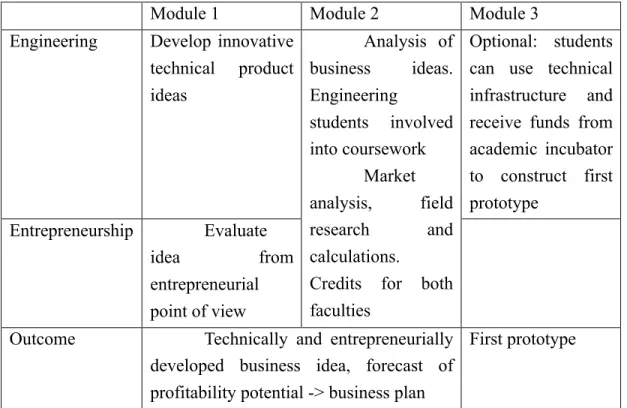
Courses in the engineering as well as business faculties provide a program offer which stresses the entire product development process both from the manager’s and the engineer’s point of view. The procedure within the innovation lab is typically the following: a technical product idea is generated, the idea is elaborated in regards to market and business potential and the prototype is created (Gibcus, et al., 2012). Three modules, which are courses of the duration one semester, build up the Innovation Lab:
Module 1 Module 2 Module 3 Engineering Develop innovative
technical product ideas Analysis of business ideas. Engineering students involved into coursework Market analysis, field research and calculations. Credits for both faculties
Optional: students can use technical infrastructure and receive funds from academic incubator to construct first prototype Entrepreneurship Evaluate idea from entrepreneurial point of view
Outcome Technically and entrepreneurially
developed business idea, forecast of profitability potential -> business plan
First prototype
Table 1: Innovation Lab Module structure (Gibcus, et al., 2012)17
1.5.1.4!Germany
The Technical University of Munich is a pioneer in the field of entrepreneurship in higher education. Not only by calling itself the “Entrepreneurial University”, also by providing and entrepreneurial setting, entrepreneurial thinking and acting among students is supported and empowered. The University has an interdisciplinary profile of sciences, engineering, medicine, and life & food sciences, where a great variety of research and education are offered.
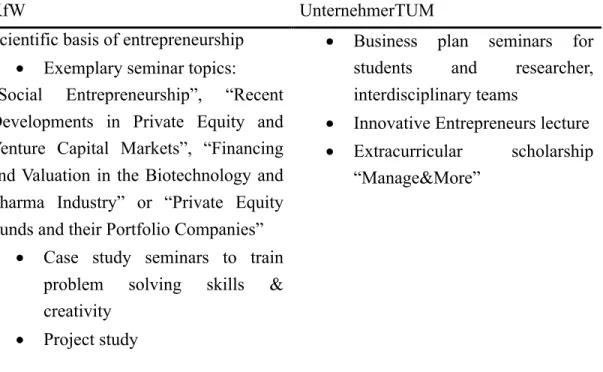
At the location Munich, there are two central institutions for entrepreneurship education both on a scientific and an applied level: the KfW Endowed Chair in Entrepreneurial Finance and the UnternehmerTUM. This is a further point which provides for an entrepreneurial setting by offering trainings and the opportunity to get a deeper understanding of entrepreneurial topics for business, science, engineering and medical students. The two institutions complement themselves with the scientific background and practical approaches. Both offer a number of diverse lectures, seminars
and hands-on approaches for students from all faculties to engage in the topic of entrepreneurship. A special focus is placed on interdisciplinary training, and students from all faculties are encouraged to join the courses and work in interdisciplinary teams.
KfW UnternehmerTUM
Scientific basis of entrepreneurship
•! Exemplary seminar topics: “Social Entrepreneurship”, “Recent Developments in Private Equity and Venture Capital Markets”, “Financing and Valuation in the Biotechnology and Pharma Industry” or “Private Equity Funds and their Portfolio Companies”
•! Case study seminars to train problem solving skills & creativity
•! Project study
•! Business plan seminars for students and researcher, interdisciplinary teams
•! Innovative Entrepreneurs lecture
•! Extracurricular scholarship “Manage&More”
Table 2: UnternehmerTUM & KfW Programmes (Gibcus, et al., 2012)18
1.5.2! Why are especially these programs successful?
Experts have identified the success factors for entrepreneurship education as follows:
As an external framework condition it can be defined that entrepreneurship has to be spread across the curriculum and to be reached by students from different disciplines. The framework conditions to ensure the effective integration of entrepreneurship can be positively influenced by public policies. When it comes to institutions of higher education, two key success factors have been identified: the partial replacement of traditional by a more balanced way of teaching with a high degree of learning-by-doing. The shift of the classic University model into an “entrepreneurial university”, which is represented by an omnipresent entrepreneurial mindset in the entire institution. A number of universities and colleges are fostering a
shift towards this approach, but the ones illustrated above are clearly a step ahead (European Commission).
In the following paragraphs, the author will demonstrate the impact of different entrepreneurship programs on the mind-set and capabilities of alumni in respect to entrepreneurship. The direct comparison between former students of entrepreneurship programmes at Universities vs. former Junior Entrepreneurs of the JADE network vs. a control group of other students. This comparison has been done for the study by the European Commission (Gibcus, et al., 2012)and the results are presented in a short summary to illustrate the implications of entrepreneurship education on alumni. It can easily be seen that students who have been in touch with entrepreneurial education have a shifted mind-set for both, a more entrepreneurial self-perception towards and openness to an entrepreneurial future and career goals.
1.5.3! Entrepreneurial self-perception
First, the entrepreneurial self-perception has been investigated: alumni have been asked to what extent they consider themselves entrepreneurial persons. Where the entrepreneurial characteristics have been defined as having the ability to turn ideas into action, including creativity, innovation and risk-taking as well as having a strong sense of initiative and tolerance to failure. Several statements were used in order to measure the self-perception. The clustered score on the following four statements has been taken:
− I am ready to do anything to become an entrepreneur;
− My professional goal is to become an entrepreneur;
− I have no intention of ever starting a firm;
− I am not entrepreneurial.
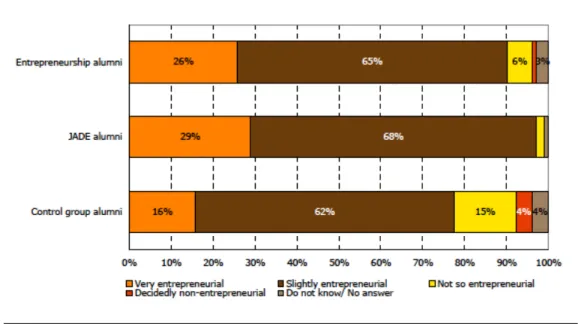
According to the study, alumni of the entrepreneurial group(s) consider themselves much more an entrepreneurial person than alumni of the control group (compare Figure 8). 90% of the entrepreneurship alumni consider themselves slightly or very entrepreneurial. On the other hand, only three quarter of the control group alumni consider themselves a slightly or very entrepreneurial person. Male alumni consider themselves more as an entrepreneurial person than female alumni. There are no significant age differences.
Figure 8: Entrepreneurial self-perception (Gibcus, et al., 2012)
1.5.4! Desire for transition
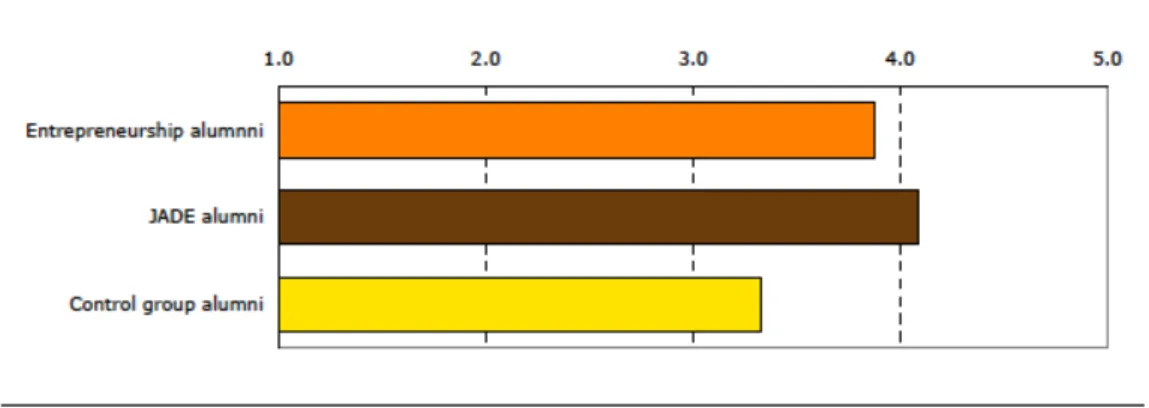
Another measured factor is the desire for a transition towards entrepreneurship of entrepreneurship alumni in comparison to control group alumni (Figure 9). The clustered score on the following four statements has been taken as a measure:
− A career as an entrepreneur seems attractive to me;
− I think that entrepreneurship would provide great satisfaction;
− Among various options, I’d rather be an entrepreneur;
− I am negative towards entrepreneurship.
The clustered score for these four statements shows that entrepreneurship alumni have a stronger desire for a transition towards entrepreneurship than control group alumni (Figure 10). On average they are less negative towards entrepreneurship, they have a stronger desire to be an entrepreneur among various options, they think more often that entrepreneurship will give them great satisfaction and they see more often the attractiveness of a career as an entrepreneur. JADE alumni have an even stronger desire for a transition towards entrepreneurship than entrepreneurship alumni.
Furthermore, male alumni outscore female alumni. There are no significant age differences.
Figure 9: Intentions towards entrepreneurship by group, structure 1 (Gibcus, et al., 2012)
1.5.5! Intentions towards entrepreneurship: employment preference
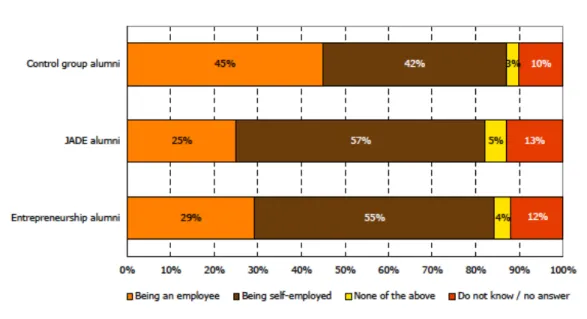
Another way to indicate alumni’s intentions towards entrepreneurship is their employment preference: given the choice, would the preference be to be an employee, be self-employed or none of these? Similar to the previous characteristics, there is a significant difference between the employment preferences of the entrepreneurial groups and the control group (Figure 23). More than 50% of the entrepreneurial group(s) alumni would rather like to be self-employed at this moment, whereas for the control group only 42% of the alumni share this preference. Simultaneously, less than 30% of the alumni of entrepreneurial groups alumni prefer being an employee, whereas almost half of the control group would prefer to be an employee.
Figure 11:Employment preference by group (Gibcus, et al., 2012)
By acquiring the key competences of an entrepreneur, as defined in chapter 1.2, the employability of students is naturally expected to be increased. Employability contains not only the capability to find a first job, but also to maintain a job and find a new job in paid and/or in self-employment. The extent of employability can be measured considering a variety of aspects. In the study “Effects and impact of entrepreneurship programmes in higher education”(Gibcus, et al., 2012) the focus has
been on job experience, job satisfaction, annual income and involvement in business start up of the alumni who are in paid employment.
Figure 12:Job experience of alumni currently in paid employment (Gibcus, et al., 2012) All in all, it can be seen that entrepreneurship study programmes are not the only way of producing highly skilled students with an entrepreneurial mind-set. The concept of JEs is a valid alternative, which has been proven by the quoted study of the European Commission. Even the Forbes magazine gives five reasons why curricular entrepreneurship programs are not necessarily the best initiative (forbes, 2013):
Academic entrepreneurship programs are almost always part of the business school, students with other backgrounds or interests are not being attracted by those programs – subsequently no variety in entrepreneurs graduating from these programs. Professors are often far away from the entrepreneurial reality; thus their teaching is too academic and does not foster a real entrepreneurial spirit among the students. Business cases studied/ ideas initiated are mainly related to the university and not independently implementable in the real world/ not solving a real world problem. The standard academic grading system is not the correct evaluation method for creative minds like entrepreneurs are – does not represent the quality of a students work and therefore should not be applied. Hardly any incentives are given for students to step out and
really launch their business – a big part of the ideas are dying with the end of the course (forbes, 2013).
All these criticisms of academic entrepreneurship programs can be opposed with the JE concept, which is on a European level represented by JADE and explained in more detail in 2 JEs, JADE & the European Network.
In this chapter, a broad research of literature about the forms and contents of entrepreneurship education and its importance has been presented. Entrepreneurial competences have been analysed and thanks to a study by the European Commission among entrepreneurship alumni, entrepreneurial propensity and intentions of those alumni compared to a control group of other alumni could be understood. It has been found out that students either from an academic entrepreneur program on extra-curricular activity like a Junior Enterprise are significantly more entrepreneurially oriented than other students. Further analyses of the existing academic literature about entrepreneurship education brought the conclusion, that entrepreneurship education is not only important in terms of entrepreneurial skills development and capacity building but also for creating awareness and fomenting the ability of spotting business opportunities and the pursuing opportunity beliefs.
2! JEs, JADE & the European Network 2.1!What is a JE?
A JE is a non-profit civil social organization, formed and managed exclusively by undergraduate and postgraduate students of higher education, which provides services for companies, institutions and society, under the guidance of teachers and professionals with the goal to consolidate and enhance the learning or their members. JEs are similar to real companies, counting with the principles of corporate governance like management council and executive board, and own regulations.19
The objectives of a JE are the following:
•! Providing a “learning by doing” experience for students, who create and manage their own non-profit SMEs offering offer various services to the market, in relation to their field of study
•! Connecting academic knowledge and the business world, allowing students to add practical experience to their theoretical skills
•! Fostering entrepreneurial skills, needed in modern economies and societies, such as self-confidence and direct entrepreneurship experience
•! Enhancing employability in a local market, helping local companies to search for and employ talented, experienced and motivated students from one single place
•! Improving local economic and social growth: Junior Entrepreneurs are a direct way to promote universities’ brands to local companies20
2.2!What do JEs work on?
JEs work on a number of different projects, ranging from consultancy services to translation, from Minimum Viable Product development to coding for website and mobile applications. In the following paragraph, some examples of innovative projects conducted by the JEs in Europe can be seen as examples of the disruptive character of the JE Movement.
19 JADE information material. 20
21% of former Junior Entrepreneurs start their own company within 3 years after graduation :EU average: 4?8%A: JEs are an essential motor for
disruptive innovation and
Activity fields of Junior Enterprises Analysis around the site and study path Name of JE: ENVOL Junior-Etudes Client: CCI de Haute Corse
Country: France
Outline: To help the Calvi Sainte Catherine platform to simplify its landing procedures, ENVOL has made a trajectory analysis around the area. This data helped completing a file for the Civil Aviation Direction. They started with an analysis of the current operational situation and then a study of the landing procedures via a landing simulation for Pilots. Finishing with a modelling of the averaged trajectory and the obtainment of a new certification for the Aerodrome and an opportunity for the students to get used to this type of procedures. The project is the winner of the French national award “Label ingénieur 2015”21
Mobile app development Name of JE: Junior ISEP Client: Smartphood SAS Country: France
Outline: Through the creation of two Apps (one for the customers to order and one for the delivering services followed in real time) habitants from Paris can order high quality foodboxes in all the city and follow the track of their meal. This project permitted the creation of a new enterprise and the app is available on iOs and Android. The project is the winner of the French national award “Label ingénieur 2014”.22
Creation of an administrative software Name of JE: Junior ISEP
Client: Internally developed project Country: France
Outline: Creation of a software to manage a construction site and manage all electrical infrastructure while optimising the needed electric wiring. The graphical interface must show the positioning of the machines on the site. There are two modules,
21 JADE information material. 22 JADE information material.
first one is admin mode and second one is optimising mode. The project was made in collaboration with the client so it would meet his needs as much as possible and was redesigned multiple times. The project is the winner of the French national award “Label ingénieur 2013”23
Organization of biggest Italian event on Wearable technologies Name of JE: JEToP
Client: Internally developed project Country: Italy
Outline: WTT is the first Italian exhibition entirely dedicated to wearable technology. Wearable devices are 24H companions; sports, health and entertainment are just few of the fields in which this new life-changing technology can enhance and simplify our lives. User experience is crucial thus the objective is to make the public interact with devices, experiencing various situations to understand their true potential. Conferences and debates will give the public an idea of what will happen in the coming years. Wearables, as a new-born technology, are just at the beginning! The second objective is to give the chance to the participating companies to create a network, through exclusive B2B moments. WTT is preceded by a Hackathon, a 48h marathon dedicated to developers, to create ideas for new devices and applications. Microsoft and Arduino, as official partners, supply the hardware and guide the participants.24
Start-up Weekend Benevento Name of JE: JEBS
Client: Internally developed project Country: Italy
Outline: The Start-up Weekend is a non-profit business competition supported by the Kauffman Foundation and Google for Entrepreneurs. The event, lasting 54 hours, involves the transformation of a business idea into a concrete project that will eventually be exposed to a jury of industry experts and investors.
The event is the largest initiative in the world for the development of new business ideas and holds the record for the field training and team building. It is
23 JADE information material. 24 JADE information material
therefore a unique opportunity to practice their skills and acquire new ones, meet new people, to network with startupper and investors. Start-up Weekend Benevento had a more noble and ambitious goal: to promote and disseminate the entrepreneurial spirit in a region, the South, characterized by a strong static and cultural backwardness.25
2.3!What is JADE?
JADE – the European Confederation of JEs – is an international, non-profit umbrella-organisation of JEs. The network is currently composed of 14 Confederations and Consultative Members from Europe, summing up to almost 300 JEs in the top universities in Europe, for a total of over 22,000 Junior Entrepreneurs and a cumulated turnover of 16 million € per year (JADE, 2016).
Figure 13: JADE Member countries26
25 JADE information material 26 JADE information material.
As the organization representing the JEs at European level, its mission is: “To be the voice of the European JE Movement, representing, integrating, and supporting the Network, through the spread of youth entrepreneurship.” (JADE, 2016).
2.3.1! JADE Structure
JADE can be defined as a bottom-up organization: at the base of the organization pyramid there are the Junior Entrepreneurs, who choose in turn the leaders of their JEs to represent and guide the organization, manage the relationship with clients and suppliers, partners and in general all the external stakeholders. At national level, the JEs elect their country representatives, who work in the national confederations to promote the JE concept and answer the needs of their JEs at country level. Each country elects its International Manager, the person responsible to keep contacts and ensure effective communication between the national and the European level, JADE. Finally, all the national representatives, gathered in the General Assembly, elect the JADE Executive Board, which, living and working in Brussels, represents the movement at European level and keeps the relationship with the partners, institutions, and the other confederations in the world. 27
Figure 14: Bottom-up structure of the Organization28
27 internal JADE material. 28 internal JADE material.
2.3.2! JADE History
The JE movement appeared in France in 1967, with the foundation of the first JE at the ESSEC Business School, in Paris. The concept spread soon both in France and beyond the national boarder: The Confédération Nationale des Junior-Entreprises, CNJE, was founded in 1969, and between the 70s and the 80s the concept moved around Europe. In 1992 in six countries JEs were federated already in national Confederations, and decided to take a step forward in the creation of a larger scale movement: JADE (Junior Association for the Development in Europe) was created with the aim of fostering at European level the JE concept and help promote the creation of new JEs around the continent.
2.3.3! JADE Activities
Being the European Confederation of JEs, JADE carries out several activities on European level, that can be clustered as follows:
•! JADE Events: bringing the network together.JADE organizes two major events per year, the first in March in Brussels (JADE Spring Conference) and the second during the summer, around Europe (Summer JADE Conference), with around 300 participants per event and over 20 nationalities represented. In these occasions, the network gathers to exchange knowledge and best practices and are supported by both partner institutions and companies that also share their perspective on the issue at stake. The gem stone of International events, JE World Conference, is held every two years – alternatively in Europe or in Brazil – bringing together Junior Entrepreneurs from all around the world to foster the JE global movement.
•! Furthermore, JADE organizes each year Generations Club, an event aimed at bringing together representatives from the major European youth organizations as well as representatives of the policy making area, experienced professionals and accomplished entrepreneurs, to better understand the youth’s perspective and learn from each other. In 2016, seven networks representing more than several millions of young people were invited to discover the value of entrepreneurial skills at the Microsoft Innovation Centre Brussels. At their aid guests from both public and private sector, rounding up seniors from Nike, Adecco and Microsoft, but also from Universities and the European
Commission DGs and the OECD, drove the discussions into creating a European report on the Youth’s Perspective on Entrepreneurial skills and formal, non-formal and informal ways of learning these.
•! Positioning and White Papers: lobbying for young people. JADE works to foster the JE movement and make it possible for a steadily increasing number of students to put their ideas in practice. To reach this goal, JADE is aiming at positioning the JE concept as a best practice in entrepreneurship and in entrepreneurial education, by writing position papers and influencing reports from relevant institutions29
•! Fostering skill acquisition and knowledge sharing. JADE’s members master cutting edge processes and techniques, are able to access state of art knowledge in the fields in which they want to foster change: this is why JADE is providing its members with dedicated trainings as well as education opportunities around Europe. On one hand, it is ensured that high-quality workshops during the own events are offered, held either by corporate partners or by own members, to encourage knowledge sharing. Also, by collaborating with high-level education institutions such as EIIL and Microsoft, with which JADE has signed in 2014 the “Educational Transformation Agreement”, JADE is striving to ensure the best opportunities to the Junior Entrepreneurs.
•! Representing the movement in high-profile events.
JADE representatives are often invited to speak on the behalf of our Junior Entrepreneurs about the JE movement and to showcase the concept, positioned as experts in student entrepreneurship. The aim is to present the JEs as the real bridge between universities and the labour market. In the last year, we participated as speakers or moderatos in several events30.
29 “Facilitate the development of JEs" is a key priority for Education and Youth Framework of EU2020
30 “What works: Entrepreneurship in higher Education” by OECD, Helsinki, Finland
“Meet the Experts Sessions on Entrepreneurial skills”, European Business Summit, Brussels, Belgium
!! JADE is recognized as a best practice that brings universities and businesses together under EU Oslo Agenda for Entrepreneurship Education
!! JADE is in the Steering Board of UNESCO Youth Committee for Higher Education and a stakeholder consultant for the World Bank
!! JADE is quoted as best practice in “Effects and impact of entrepreneurship programmes in higher education”, study by the European Commission, 2012 !! JADE is quoted in the paper from the OECD “OECD Higher Education Programme
“What Works” Conference: Entrepreneurship and Higher Education” as an example of best practices, 2012. JADE is quoted as a mean to increase economic and social impact in the European Commission report “Entrepreneurship Education: a road to success”, 2015
!! “Youth entrepreneurship: prospects for EU”, by Commission Vice-President Katainen cabinet, Brussels, Belgium
“Thematic University-Business Forum”, Berlin, Germany by European Commission Concertation Meeting - DG Connect, Brussels, Belgium
“6th University-Business Forum”, Brussels, Belgium
“PILC 2015: Change Leadership - Key to Successful Growth”, Croatia, by PAR University “Solutions to Youth Employment - A Partnership between Governments, Private Sector and Civil Society” - Brussels, Belgium, World Bank
“SME Envoys” - Milano, Italy, European Commission
“European Development Days” - Brussels, Belgium, European Commission “Informal Forum International Students Organisations” - Budapest, Hungry “International ProAktivity Summit 2015” - Brussels, Belgium by YouthProAktiv
“Young people and entrepreneurship: how to bridge the gap?” - European Policy Centre JADE partnered for the Microsoft’s European AppCup - http://www.appcup.eu