USING OUTCOME MEASURES IN THE EVALUATION OF ONE EDUCATOR PREPARATION PROGRAM IN
CENTRAL TEXAS
A Record of Study by
DENA MARIE CROOK
Submitted to the Office of Graduate and Professional Studies of Texas A&M University
in partial fulfillment of the requirements for the degree of DOCTOR OF EDUCATION
Chair of Committee, Valerie Hill-Jackson Committee Members, Mary Margret Capraro
Jean Madsen
Jacqueline Stillisano Head of Department, Michael De Miranda
December 2017
Major Subject: Curriculum and Instruction
ABSTRACT
Framed in a quantitative methodology, this study focused on the efficacy of an undergraduate elementary educator preparation program (EPP) at a central Texas university. The study was propelled by the national discourse on the quality of EPPs and the stakeholders of the EPP who requested a program evaluation. Outcome-based measures that examined how well the EPP prepared pre-service teachers for the knowledge and skills necessary for the classroom were utilized. These measures utilized external state accountability data in the form of a principal survey and internal accountability data in the forms of a program graduate survey and a student teacher evaluation. These instruments focused on the perceptions of principals, program graduates, and student teacher supervisors regarding how well pre-service teachers were prepared to teach in pre-kindergarten through sixth grade classrooms.
Findings reflected that all three stakeholder groups believed that the EPP sufficiently prepared pre-service teachers for the areas of classroom management and instruction. However, program graduates revealed that the EPP did not sufficiently prepare pre-service teachers in working with students with disabilities, working with limited English proficiency students, and using technology for instruction and assessment. The principal and program graduate groups were also asked to rate the overall effectiveness of the EPP’s preparation, with both groups responding that the EPP sufficiently prepared pre-service teachers for the classroom.
This study was the first step in a program evaluation for the EPP. While the overall findings were positive, there were some areas that need to be further explored. EPP leadership and faculty must utilize findings to create a catalyst for program monitoring and improvement.
DEDICATION
For my intelligent, beautiful, and wise daughter, may you always know joy in learning and growing as an individual! You inspire me!
ACKNOWLEDGEMENTS
Thank you to my parents, Greg and Diane Rich, who have always pushed me to be the best that I can be. I would especially like to acknowledge my father, who upon hearing that I was going to change majors from pre-med to education, made me promise to purse my doctorate. Well, Dad, it was slow in coming, but it is DONE! I appreciate all the nights you spent editing my work!
A huge debt of gratitude to my husband, Don, who has supported my learning and growing through life. He has been especially understanding of the time I have needed to study and write. He has made my path smoother in pursuing my degree.
To the “village,” you know who you are, and there are too many to name! You have taken my children so I could dedicate time to studying, you have listened to me as I have cried, and you have been my cheerleaders! I appreciate your sharing in this journey with me.
Dr. Hill-Jackson, never have I worked so hard on a piece of writing in my life! You have inspired me to write and think as a scholar! Drs. Capraro, Madsen, and Stillisano, I appreciate your time and talent to support me through this process.
CONTRIBUTORS AND FUNDING SOURCES
Contributors
This work was supervised by a record of study committee consisting of Professor Dr. Valarie Hill-Jackson, my Chair, of the Department of Teaching,
Learning, and Culture and Professors Dr. Jean Madsen, Dr. Mary Margret Capraro, and Dr. Jacqueline Stillisano, my committee members of the Department of Teaching, Learning, and Culture.
All work for the record of study was completed independently by the student. Funding Sources
There are no outside funding contributions to acknowledge related to the research and compilation of this document.
NOMENCLATURE
CAEP Council for the Accreditation of Educator Preparation CCSSO Council of Chief State School Officers
CSU Central State University
EGE6 English as a Second Language/Generalist Certification Program Early Childhood through Sixth Grade
EPPs Educator Preparation Programs
HEA Higher Education Act
InTASC Interstate Teacher Assessment and Support Consortium NCATE National Council for Accreditation of Teacher Education OEIs Overall Effectiveness Indicators
PD Professional Development
PEIMS Public Education Information Management System SBEC State Board for Educator Certification
STEP Stanford Teacher Education Programme
STSs Student Teacher Supervisors
TEA Texas Education Agency
TEAC Teacher Education Accreditation Council TExES Texas Examinations of Educator Standards TPACK Technological Pedagogical Content Knowledge
TPIs Teacher Performance Indicators
TABLE OF CONTENTS
Page
ABSTRACT ... ii
DEDICATION ... iv
ACKNOWLEDGEMENTS ...v
CONTRIBUTORS AND FUNDING SOURCES ... vi
NOMENCLATURE ... vii
TABLE OF CONTENTS ... viii
LIST OF FIGURES ...x
LIST OF TABLES ... xi
CHAPTER I INTRODUCTION ...1
The Problem Space ...2
The Problem of Practice ...8
Research Questions ...15
Researcher’s Role ...16
Purpose of the Study ...16
Significance of the Study ...17
Definition of Terms ...20
CHAPTER II LITERATURE REVIEW ...23
Introduction ...23
Historical Perspective on EPP Accountability from the 1800s to Present ...24
Rationale for Improving EPPs ...28
EPP Accountability ...32
Intersecting External and Internal Accountability through EPP Program Evaluation ...38
EPP Stakeholder Perceptions Regarding Program Evaluation ...43
Connecting Professional Standards to EPP Evaluation ...46
Early Childhood-Sixth Grade Generalist/ESL Certification in Texas and at CSU ...69
CHAPTER III METHODOLOGY ...78 Methodology ...78 Participants ...80 Setting ...82 Methods ...83 Data Analysis ...103
Issues of Reliability, Confidentiality, and Other Ethical Concerns ...105
Qualifications of Researcher ...110
CHAPTER IV FINDINGS ...112
Methodology and Methods Summary ...114
Findings ...121
CHAPTER V SUMMARY, CONCLUSIONS, AND RECOMMENDATIONS ...166
Research Overview ...166
Summary of Findings ...167
Practical Implications ...171
Theoretical Implications ...174
Recommendations for Improvement ...177
Limitations to the Study ...186
Suggestions for Future Research ...188
Conclusion ...190 REFERENCES ...193 APPENDIX A ...224 APPENDIX B ...226 APPENDIX C ...234 APPENDIX D ...249
LIST OF FIGURES
FIGURE Page
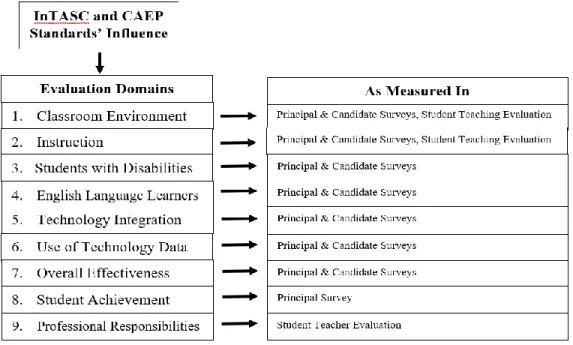
2.1 InTASC and CAEP Standards’ Influence on EPP Evaluation Domains on Texas Principal and Candidate Surveys and on the
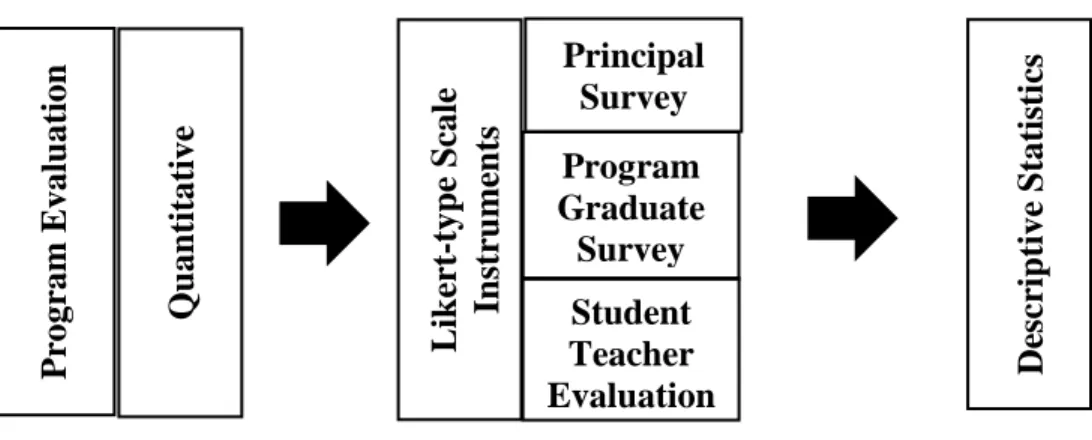
Student Teacher Final Evaluation at CSU ... 50 3.1 Overview of Methodology, Data Collection Instruments, and Data
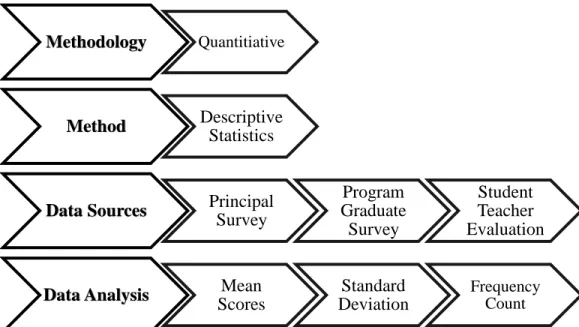
Analysis ... 85 4.1 Overview of Methodology, Methods, Data Sources,
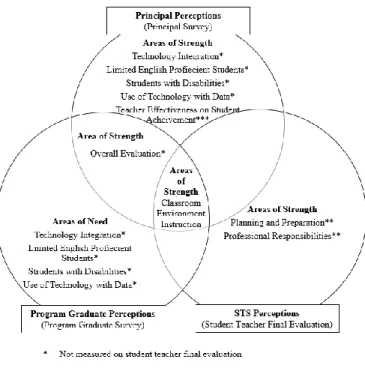
and Data Analysis ... 115 4.2 Triple Venn Diagram Comparing and Contrasting Principal,
Program Graduates, and STS Perceptions of the Efficacy of the CSU EGE6 EPP in Readying Pre-Service Teachers for the
LIST OF TABLES
TABLE Page
1.1 2013-2014 TExES’ Passing Rate Scores of EPPs with 600 to
1,200 Test Takers ... 10 1.2 2011-2012 EGE6 TExES’ Passing Rate Scores of EPPs with over
100 Test Takers ... 11 2.1 Results of EPP Preparedness for Instruction: Percent of Teachers
Found to be Very Well and Moderately Well Prepared ... 55 2.2 Comparison of the Three Largest EGE6 Certification Programs
in Texas ... 72 2.3 2016-2017 EGE6 Program Enrollment Gender and Ethnicity
Demographics ... 74 2.4 CSU EGE6 Pre-Service Teacher Demographics vs. Texas Public
School Student Demographics ... 74 3.1 Principal Survey Questions from the Classroom Environment
Domain ... 87 3.2 Comparison of Principal Survey and Educator Preparation
Program Candidate Exit Survey ... 92 3.3 Program Graduate Survey Questions from the Classroom
Environment Domain ... 93 3.4 Comparison of Principal Survey, Program Graduate Survey, and
Student Teacher Final Evaluation Domains ... 97 3.5 Student Teacher Final Evaluation Sub-Criteria from the Classroom
Environment Domain ... 98 3.6 Comparison of Principal Survey, Program Graduate Survey, and
Student Teaching Evaluation in the Classroom Environment Domain ... 99 3.7 Comparison of Principal Survey, Program Graduate Survey, and
Student Teacher Evaluation in the Instruction Domain ... 100 3.8 Years that Data Were Collected on Each Instrument ... 103
TABLE Page 3.9 Summary of Data Analysis Techniques for Each Data Collection
Instrument ... 103
4.1 Overview of Data Source Instruments ... 117
4.2 Teacher Performance Indicators and Corresponding Data Sources ... 119
4.3 Overall Effectiveness Indicators and Corresponding Data Sources ... 120
4.4 Alignment of Findings to the Guiding Questions and to the Data Sources ... 122
4.5 Principal Survey, Program Graduate Survey, and Student Teacher Evaluation TPI Mean and Standard Deviation Scores ... 123
4.6 TPI Items with the Highest Percentage of Well Prepared/Advanced ... 136
4.7 TPI Items with the Highest Percentage of Not Sufficiently Prepared or Emerging ... 144
4.8 CSU EGE6 EPP Principal Survey First Septile Items of Not Sufficiently Prepared vs. National Principal Data... 147
4.9 Principals’ and Program Graduates’ Overall Evaluation of the EPP by Mean and Standard Scores ... 153
4.10 Principals’ and Program Graduates’ Overall Evaluation Percentages for Each Response Selection ... 153
4.11 Principal Survey Percent of Selection Choices for Teacher Effectiveness and Student Achievement Domain for the CSU EGE6 EPP ... 157
5.1 Summary of Findings by Participant for Areas of Effectiveness and Areas in Need of Improvement ... 168
CHAPTER I INTRODUCTION
In a speech to faculty at Columbia University’s Teacher College, former Secretary of Education Arne Duncan (2009) emphasized that educator preparation programs (EPPs) at universities are mediocre and do not serve the needs of students in the pre-kindergarten through twelfth grade (P-12). Questioning the quality of teacher preparation, he called for changes to be made in the way teachers are prepared and in the ways EPPs are held accountable by state law. Duncan (2009) stated, “The bar must be raised for successful teacher preparation programs because we ask more of teachers today than even a decade ago” (p. 2). One recommendation included EPPs better readying pre-service teachers to improve public school student learning. He emphasized that EPPs should be evaluated based on their program graduates’ effectiveness in the classroom.
Duncan’s (2009) speech exemplified the current discourse on EPP
accountability and improvement (Gingsberg & Kingston, 2014; Schaffer, 2014). The discussion stems from several different sources (e.g., governmental, educational organizations, prominent individuals in the educational field, EPPs) with each having varying conceptualizations of what EPP accountability and improvement should entail (Imig, Wiseman, & Imig, 2011). However, all sources agree that the ultimate goal is improving EPPs so that pre-service teachers are effectively prepared to impact the
learning of P-12 students in the 21st century (Cuthrell, Stapleton, Lys, Smith, & Fogarty, 2014; Donovan, Ashdown, & Mungai, 2014; Schaffer, 2014).
With the goal of improving teacher preparation so that pre-service teachers are thoroughly readied for P-12 classrooms, what can EPPs do in response to discussions on accountability and the need for program improvement? Program evaluation is one answer to such a question. Kilpatrick, Lincoln, and Morrow (2006) stated in their study rationale that, “Teacher preparation programs need ongoing assessment systems for program evaluation and candidate improvement” (p. 36). Accountability measures (e.g., state licensing examinations, employer feedback, and teacher feedback) collected at national, state, and the local EPP levels can provide assessment data that will allow EPP faculty to analyze and interpret areas of strength and need in their existing program so that program improvement steps can initiated.
The Problem Space
Issues of EPP accountability and improvement permeate through national, state, and local levels (i.e., individual EPPs) serving as forces that shape the direction of teacher preparation for the 21st century. Kumashiro (2015) wrote, “Like no other time in our nation’s history, the preparation of public school teachers is front and center in both national and statewide policy considerations” (p. 1). The underlying current for moving these forces forward is the desire to increase student learning in P-12 settings (Crowe, 2010; Donovan et al., 2014; Duncan, 2009; Meadows & Theodore, 2012; Plecki, Elfers, & Nakamura, 2012). This desire is propelled by a global economy that requires teachers be prepared to foster mastery of rigorous content, critical thinking,
and problem-solving skills creating college and workforce-ready students (National Council for Accreditation of Teacher Education [NCATE], 2010).
EPP Accountability at the National Level
Levine (2006) studied 28 university-based EPPs to ascertain the state of teacher preparation in the United States. He stated that if 65% is considered to be a failing grade in school, then EPPs are failing in their job. He supported this by showing that only 40% of principals and 58% of program graduates perceived that the EPP “very well prepared” or “moderately well prepared” teachers for the classroom. Levine (2006) prescribed several ways for improving teacher preparation. One
recommendation included tracing P-12 student achievement scores on state standardized tests back to EPPs. Levine (2006) argued that today’s information
economy requires a change in the way EPPs prepare teachers. He wrote the attention of “schooling has shifted from process to outcomes, from teaching to learning. The
measure of a school’s success is the achievement of its students . . . . The measure of a program’s [EPP’s] success is how well the students in its graduates’ classes perform” (p. 105). Levine’s (2006) study of the impact of EPPs on preparing teachers, as well as his recommendation, exemplifies the rationale at the national level that propels the call for more rigorous accountability and program improvement. It is noted that Levine’s 2006 study is the most current peer reviewed large-scale national study that examines perceptions concerning the EPP efficacy of teacher preparation (Zeichner & Conklin, 2016).
The No Child Left Behind Act (NCLB) of 2001 illustrated the federal
government’s impact on EPP accountability and improvement; in addition to requiring states to hold public schools accountable for the academic achievement of
disadvantaged children, it also mandated that states must increase “the number of highly qualified teachers in the classroom” (NCLB, 2002, Title II, Sec. 2101).
Originally, a highly qualified teacher was defined as one who passed a state licensing examination holding a certificate to teach (Imig & Imig, 2007). However, in the tidal wave of educational reform, highly qualified has been interpreted beyond examination scores to increased rigorous accountability measures that extend beyond the walls of the EPP and into the public school (Crowe, 2010; Imig & Imig, 2007). Donovan et al. (2014) expounded on this extension of accountability stating the landscape has shifted from input-based measures of accountability (i.e., measures that are within the control of the EPP such as faculty qualification) to outcome-based measures of accountability. Outcome-based measures focus on the classroom performance of the teacher with the performance being traced back to the EPP where he/she was trained.
Kennedy, Abn, and Choi (2008) discussed teacher quality as being measured in outcome-based indicators such as direct classroom observation, principal ratings of teachers, and teachers’ student achievement scores on a state examination. NCLB’s directive of a highly qualified teacher has placed more accountability on states and EPPs to evidence their ability to meet the mandate (Steadman & Evans, 2014). While NCLB does not specifically ask states to collect data that connects the quality of the EPP to their program graduate’s effectiveness in the classroom, other federal policies
do. For example, the Race to the Top Initiative was a $4.35 billion federal grant aimed at encouraging states to reform student learning and improve school system capacity; however, one specific condition of the grant required states to trace student
achievement scores back to EPPs (U.S. Department of Education [U.S. Dept. of Ed.], 2009). Additionally, there was potential legislation in the 2016 reauthorization of the Higher Education Act (HEA) that could have mandated EPPs be rated according to measures of program graduate performance in P-12 classrooms (U.S. Dept. of Ed., 2016a). While this legislation was rescinded by Congress on March 27, 2017
(Koolbeck, 2017), the proposed mandates exemplify the current philosophical stance of organizations and lawmakers calling for more outcome-based accountability measures in regard to an EPP’s ability to ready teachers for the classroom.
EPP Accountability at the State Level
In June 2009, the State of Texas increased EPP accountability by enacting new legislation with more rigorous criteria (Texas Education Agency [TEA], 2011). Prior to this system, EPPs were held accountable and accredited by the state for the quality of their programs through certification examination scores received by pre-service
teachers prior to teaching in a P-12 classroom. Three new criteria were added making a total of four accountability measures. These four criteria are outlined below as they appear in the Texas Administrative Code (19, §229.4, 2010), which specifies in order for an EPP to be accredited, the following four annual accountability measures must be met:
2. State Board of Educator Certification approval of annual findings
concerning principal ratings of program graduates who have taught three years or less.
3. Program graduates’ student achievement scores must show improvement in graduates’ first three years of teaching.
4. Compliance rate of 95% with standards associated with the EPP’s quality of field supervision.
Failure to meet one state accountability measure could ultimately result in an EPP’s state accreditation status being revoked. It is noted that two out of the four current criteria incorporate measuring an EPP’s effectiveness in readying the pre-service teachers for the classroom by examining data of program graduates once they have started teaching in the public school. These measures align with the national call for EPP accountability.
The Texas Education Agency oversees educational laws and policy in Texas. Mirroring the national call for effective teacher preparation, TEA (2014a) wrote, “The Texas Education Agency is committed to ensuring quality educator preparation programs that recruit and prepare qualified educators who meet the needs of all learners in today's and tomorrow's Texas classrooms” (p. 1).
EPP Accountability at the Local Level
At the local level, individual EPPs have heard and felt the impact of federal and state legislation initiative and policies. One response by EPPs to national and state educational pressure for more rigorous accountability and program improvement has
been to conduct evaluations of their programs or aspects of their programs (Cuthrell et al., 2014; Kilpatrick et al., 2006; Schaffer, 2014). Texas EPPs have also looked inward at their teacher preparation programs through program evaluation (Bains, 2011; Bauml, 2011; Lim, 2011). These program evaluations have resulted in program and policy improvements. Darling-Hammond, Newton, and Chung (2010) encapsulated this writing:
In light of these concerns [increasing accountability measures and program improvement initiatives], teacher educators are seeking to develop strategies for assessing the results of their effort, strategies that appreciate the complexity of teaching and learning and provide a variety of lenses on the process of learning to teach. Many programmes are developing assessment tools for gauging their candidates’ abilities and their own success as teacher educators in adding to those abilities to data on entry and retention in teaching, as well as perceptions of preparedness on the part of candidates and their employers once they are in the field. (p. 370)
The use of program evaluation as a means to initiate program improvement goes beyond offsetting and responding to the national criticisms of EPPs doing a mediocre job and the assumption that rigorous accountability measures will force EPPs to change programming. Program evaluation should be woven into an organization’s health so that the organization (e.g., the EPP) does not become static and remains dynamic regardless of external sources (e.g., legislation, educational organizations) pressuring the EPP to change (Fitzpatrick, Sanders, & Worthen, 2011). However, the current discourse on the need for EPP improvement also helps to motivate EPPs to look inward at their own programs, so that they can be sure that their teacher preparation is effective in thoroughly readying their pre-service teachers for the
classroom (Lauer, Dean, Martin-Glenn, & Asensio, 2005; Meadows & Theodore, 2012).
The Problem of Practice Context
Central State University (pseudo name) is the largest university-based EPP in Texas and the second largest in the nation graduating approximately 900 pre-service teachers annually (Korcheck, 2014a). The English as a second language/generalist certification program early childhood through sixth grade (EGE6) is the largest program contained within the EPP. In the 2013-2014 school years, 415 teacher candidates took the Texas Examinations of Educator Standards (TExES) EGE6
certification test (Van Overschelde, 2014). This test is often taken in the same semester of graduation. In examining the EGE6 certification program, there are indicators of effectiveness and indicators that suggest further investigation is needed so that data can be accrued to inform programming decisions.
Indicators of effectiveness. Several indicators point to the Central State University (CSU) EPP’s effectiveness in preparing pre-service teachers for the classroom. On the international front, CSU secured accreditation through the Teacher Education Accreditation Council (TEAC) in 2011. Currently, 213 programs across 167 EPPs in five countries have some level of TEAC accreditation (TEAC, 2014). As a matter of perspective regarding this accreditation, there are 2,170 EPPs in the United States (U.S. Dept. of Ed., 2014). Nationally, the EPP at CSU was not listed on the 2014 Title II of the Higher Education Reports as at risk or low performing (U.S. Dept. of
Ed., 2014). In reference to state accountability measures, CSU was ranked as accredited for the 2012-2013 school year (TEA, 2015g). This is the highest ranking award, demonstrating that the CSU EPP met all four state accountability criteria with success. It was found to be in compliance with state codes regulating EPPs in a TEA (2013) Compliance Audit Report. It is noted that TEA only audited the EGE6
certification program because it is the largest program contained within the CSU EPP. Indicators that suggest further investigation. When digging deeper below the surface of the CSU EGE6 certification program, three indicators suggest that this program may be in need of further evaluation to determine its effectiveness in
preparing pre-service teachers for pre-kindergarten through sixth grade classrooms (P-6). These indicators include the EPP’s and EGE6 program’s certification scores on the TExES (i.e., teacher certification examinations in Texas), teacher retention rates, and information from CSU faculty stakeholders.
Scores on the TExES. Three concerns emerge upon examination of CSU’s TExES scores. Concerns center on the passing rate of other EPPs in Texas compared to the EPP at CSU, the passing rate of the EGE6 certification program compared to other EPPs, and the passing rate of the EGE6 certification program compared to other certification programs nested within CSU’s EPP.
CSU’s EPP passing rate vs. other Texas EPPs. Using the most recent data available through TEA (2015b), CSU had a 94% passing rate for all TExES examinations in 2013-2014 school year. Table 1.1 illustrates CSU’s passing rate compared to other Texas EPPs that had between 600 and 1,200 examinees.
Table 1.1
2013-2014 TExES’ Passing Rate Scores of EPPs with 600 to 1,200 Test Takers
EPP Number of Test
Takers
Passing Rate
IteachTEXAS 860 100%
Region 4 Educational Service Center 618 99%
University of North Texas 818 97%
Texas A&M University 639 97%
Texas A&M University - Commerce 669 95%
Central State University 702 94%
Sam Houston State University 674 92%
Lamar University 1,183* 91%
*Lamar University had the greatest amount of test takers.
While CSU’s passing rate appears to be high, a comparison of passing rates across EPPs reveals a different picture. Out of 150 Texas EPPs, 106 EPPs had higher passing rates than CSU. It is noted that the EGE6 certification program constitutes a large proportion of test takers who take one or more of the TExES program certification examinations. To adjust for statistical discrepancies among EPPs that have a lower number of test takers, EPPs with 600 to 1,200 test takers were ranked order according to percent passing. Out of the eight EPPs that had test takers in this range, five of the EPPs had a higher percentage of test takers that passed.
Passing rate of the EGE6 certification program compared to other EPPs. In specific reference to the EGE6 certification program, there are only 26 EPPs in Texas that have teacher preparation in place towards this certification program. The most current data available through TEA (2015c) showed that CSU had a 68.9% passing rate on the EGE6 TExES examination for the 2011-2012 school year. In comparison to other EPPs across the state, 11 other EPPs had higher passing rates. It is noted that out
of the 26 EPPs, only three EPPs had over 100 test takers with CSU having the highest number at 402. In fact, CSU test takers comprised 42% of test takers. The other two EPPs with over 100 test takers had a higher passing rate than CSU (see Table 1.2).
Table 1.2
2011-2012 EGE6 TExES Passing Rate Scores of EPPs with over 100 Test Takers
EPP Number of Test Takers Passing Rate
University of Texas - Austin 173 88.4%
University of North Texas 147 72.8%
Central State University 402 68.9%
Passing rate of the EGE6 certification compared to other certification
programs nested within CSU’s EPP. Using the most recent results from TEA (2015c), there were a total of 38 program certification TExES examinations taken by CSU students in the College of Education in the 2011-2012 school year. Out of 38 CSU EPP certification programs, 31 had a higher passing rate of test takers than the EGE6
certification program. As the largest certification program in the CSU EPP, it would be expected that this program would have a higher passing rate than the other programs housed within CSU.
Teacher retention rates. The State Board for Educator Certification (SBEC) tracks the retention of teachers in the public school and tracks the rate back to the EPP that prepared the teacher. Using the most recent data from SBEC (2013), CSU’s five-year retention rate for program graduates who entered the classroom at the beginning of 2007 and remained at the end of the 2012-2013 school year was 60.1%. Additional analysis of retention data illustrates that 96 out of 178 Texas EPPs had higher retention
rates than CSU. The retention rate of teachers is an important factor to consider. Research on novice teachers reflects that 40% to 50% of new teachers leave the field within their first five years of teaching (Ingersoll, 2012; Ingersoll & Kralik, 2004; Marable & Raimondi, 2007). Ingersol and Kralik (2004) found that one of the reasons that novice teachers leave the classroom is connected to their perceptions of how well they were prepared by their EPP to teach in the classroom.
Stakeholder groups and values. In order to build a richer and more in-depth understanding of the current state of the EGE6 certification program at CSU,
conversations were held with faculty stakeholders. Soliciting stakeholder feedback in regard to program evaluation is an effective technique as it creates stakeholder ownership of the evaluation process and findings (Fitzpatrick et al., 2011). An overarching theme that ran through the stakeholder discussions dealt with the organization’s value for the need of effectiveness. It is noted that stakeholders have been given pseudo names to safeguard their identity. The faculty at CSU value program effectiveness because they realize that a program must be strong in order to provide pre-service teachers with the best preparation for the classroom. In discussions, stakeholders shared that the certification program is using program evaluation and data that can help faculty in making knowledgeable decisions concerning program
improvement. However, all the program evaluation measures and reports focus on the program’s efficacy while EGE6 pre-service teachers are still contained within the walls of the EPP. This is in opposition to the current calls for EPP accountability that focus on outcome-based measures of an EPP’s effectiveness (Cochran-Smith, Piazza, &
Power, 2012). Therefore, assessing the program once program graduates enter the classroom is a missing element in the program evaluation parameters. It noted that the state has accountability information that pertains to program graduates’ performance in the public school classroom. These data can be accessed for analysis and interpretation by the EGE6 faculty. While all stakeholders supported program evaluation measures that examined how the certification program impacted pre-service teachers once they began teaching, they discussed that state data like such have not been analyzed. They believed the ability to do this would be an integral and pivotal component of program evaluation. One stakeholder remarked, “We used to give more lip service to follow up studies than we do now. But we need to know this . . . . It is taking it one step further. But we need to know this” (L. Brandon, personal communication, February 5, 2015). Accumulation of Evidence Pointing to the Need for Further Investigation
Several pieces of evidence have been accumulated that indicate the CSU EGE6 certification program may need to be further evaluated in order to decide if
improvement steps should be taken to strengthen its efficacy. The current call for more rigorous EPP accountability and improvement complements and contributes to the certification program taking evaluation steps. Evidence in the form of CSU’s TExES passing rates overall and in particular in the EGE6 certification program point to the need for closer inspection as it is the largest certification program contained within the EPP. In the spring of 2014, EGE6 faculty began the process of analyzing and
interpreting TExES data to inform improvement. However, no other state
student achievement scores) have been examined to measure the program’s effectiveness in preparing EGE6 teachers for the classroom nor have the voices of program graduates been solicited to provide feedback regarding how their preparation readied them for the classroom. Additional evidence indicates that CSU program graduates have a lower retention rate in the classroom than most EPPs in Texas with 96 out of 178 having higher rates. The final piece of evidence centers on faculty
stakeholders who have expressed that data regarding principal perceptions on the EGE6’s certification program in preparing teachers, as well as program graduates’ perceptions concerning the efficacy of their preparation would be valuable in helping to strengthen the EGE6 certification program.
In order to increase the efficacy of the EGE6 certification program at CSU so that its graduates more powerfully impact the learning of the students they teach, program faculty need access to data sources centered on program graduates’ preparedness for P-6 grade classrooms. Data sources include principal surveys collected by TEA, student teaching evaluations collected by CSU, and surveys that solicit program graduate’s perceptions of their teacher preparation. The intention of these sources is to provide outcome-based data that will inform the CSU EGE6 faculty of the certification program’s effectiveness in preparing pre-service teachers for the classroom. Interpretations of the data will act as a catalyst in planning and
implementing programming policies and decisions intended to strengthen the quality of teacher preparation in the CSU EGE6 program. However, these data sources are not readily accessible or available for faculty to analyze and interpret.
Research Questions
In a synthesis of the literature on the call for more rigorous EPP accountability measures and EPP improvement and the empirical evidence collected on the EGE6 certification program, the following overarching research question has been crafted.
In response to the national call for more rigorous accountability that measures the impact of educator preparation programs on readying teachers for the classroom and through the use of program evaluation, what are the perceptions of principals, program graduates, and student teaching supervisors concerning the efficacy of Central State University’s early childhood through sixth grade English as a second language/generalist educator preparation certification program in regard to preparing pre-service teachers for the knowledge and skills needed in the classroom?
To support and answer the above question the following guiding questions have been constructed:
1. What teacher performance indicators do principals, program graduates, and student teacher supervisors (STSs) perceive as being met in the preparation of preservice teachers? Which indicators were perceived as not met? 2. What teacher performance indicator items on the principal survey, program
graduate survey, and student teacher final evaluation exhibited the highest frequency of response rates for the well prepared/advanced? What
performance indicator items exhibited the highest frequency of response rates for the not sufficiently prepared/emerging?
3. How do principals, program graduates, and STSs perceive CSU’s overall effectiveness in the preparation of pre-service teachers? In what ways are the perceptions from all three stakeholders similar? Dissimilar?
Researcher’s Role
As a 16-year member of the E6EG faculty and as the co-program coordinator, the researcher is an insider who is familiar with the program’s current policies, courses, program history, program initiatives, and faculty members. This familiarity along with her leadership position allowed her to facilitate a program evaluation that utilizes principal, program graduate, and student teacher supervisor perceptions concerning how well the E6EG certification program readies pre-service teachers for P-6 classrooms.
Purpose of the Study
Feuer, Floden, Chudowsky, and Ahn (2013) emphasized that the evaluation of an EPP is essential in improving teaching and P-12 student learning. They discussed that public concern has prompted several entities (e.g., governmental, think tank organizations, EPPs) to more closely examine the efficacy of EPPs through the use of program evaluation. Potential accountability legislation in the reauthorization of the HEA evidences the federal government’s powerful impact in ensuring that EPPs are effectively readying teachers for the classroom. In response to governmental
accountability mandates, Ludlow et al. (2010) shared that an EPP can use data from accountability mandates as evaluation measures to help the EPP examine its
preparation program, but researchers stressed that EPPs must also design and collect data on its program using measures that reflect the mission and goals of the EPP. In doing this, there is an intersection of external and internal accountability measures. Using program evaluation as a platform, the intersection of these multiple measures
provides a deeper and richer picture that is specifically tailored to the EPP (Ludlow et al., 2010).
The intent of the study was to use program evaluation measures that intersect mandated state accountability data and data that CSU stakeholders deem as essential to critically assess the efficacy of the EGE6 program at CSU. The objective was to
uncover areas where the program was doing well and areas where the program could be strengthened. This critical evaluation involved gathering information from principals, program graduates, and STS. Perceptions from these three sets of stakeholders were solicited regarding how well the certification program prepared teachers for the
classroom. The outcome of the study served three purposes. First, it illustrated the CSU EGE6 certification program’s ability to positively respond to calls from outside entities to ensure that it was effectively readying teachers for the classroom. Second, it
demonstrated, as an organization, the EGE6 program recognized that program evaluation was necessary to ensure program effectiveness and growth. Finally, and most importantly, it provided CSU with specific data concerning its ECEG certification program. Data revealed areas in need of strengthening acting as a catalyst for program improvement.
Significance of the Study
The study has both practical and research implications. Archbald (2008) discussed that a study with practical significance directly benefits the community or program under investigation, while a study with research significance contributes to a
body of knowledge in the field. This study is valuable because it has both practical and research significance.
Practical Significance
This study has practical significance, since it was framed as a program
evaluation. Program evaluation is beneficial for organizations. It is needed if the EGE6 certification program is to evolve and improve so that the EPP can assure that it is preparing pre-service teachers to be effective in the classroom. Fitzpatrick et al. (2011) explained that program evaluation using a thorough systematic data gathering process yields information that can facilitate organizational improvement. They wrote that evaluation builds organizational capacity that “will improve organizations and their decisions and actions” (Fitzpatrick et al., 2011, p. 240). Therefore, program evaluations are a best practice for organizations in order to improve the policy and/or practice of the organization. Program evaluation as a way of both building organizational capacity and contributing to practical significance is evidenced by Darling-Hammond et al.’s (2010) description of the Stanford Teacher Education Programme’s (STEP) evaluation. The authors described how STEP underwent a program evaluation that examined several areas of the EPP. Findings prompted faculty collaboration in redesigning courses and creating performance assessments specifically designed to improve the teacher preparation program within STEP.
In discussions with the Chair of Curriculum and Instruction at CSU, she confirmed that program evaluation is necessary for the EGE6 program if it is to improve (E. Benter, personal communication, October 10, 2014). In addition, the
results of the study will contribute significantly to the certification program
stakeholders (e.g., faculty, pre-service teachers, administrators) at CSU as the findings will be uniquely tailored to this individual program and will be used post-study to springboard program and policy improvement.
Research Significance
Upon publication, the findings of the study can contribute to research
significance. The literature is inundated with a theoretical rhetoric calling for change in teacher preparation and in the ways EPPs should be held accountable for that
preparation; however, studies that evaluate EPPs are scarce (Darling-Hammond, 2006b; Meadows & Theodore, 2012). Additionally, there are limited number of studies that use more than one data source to evaluate an EPP’s effectiveness (Donovan et al., 2014; Gansle, Noell, & Burns, 2014; Plecki et al., 2012; Sandoval-Lucero et al., 2011). The study used three data sources to evaluate the EPP’s effectiveness. Finally, there is limited research that examines both principal and program graduate perceptions
concerning the quality of the EPP’s preparation (Baecher, 2012). The study contributed to filling a research need, as it specifically investigated principal and program graduate perceptions concerning one EPP’s preparation program.
Intersection of Practical with Research Significance
Darling-Hammond (2006b) wrote, “Although reform initiatives have triggered much discussion about the structures of teacher education . . . there has been less discussion about what goes on within the black box of the program” (p. 303). Being able to look inside the “black boxes” of EPPs in order ascertain what makes effective
practice is an essential step to improving teacher education at both the local and national level. This study examined the EGE6 certification program’s impact on teacher preparedness in order to help faculty understand what is happening within the program’s “black box,” and upon publication, it will serve as an example for other EPPs who are interested in program improvement. Program evaluation case studies of EPPs serve as a concrete model for other EPPs who want to contribute to the
discussion of accountability and program improvement, while at the same time
strengthening their own teacher preparation program and policies (Ludlow et al., 2010). Definition of Terms
Accountability: A process of gathering data to inform policymakers, the general public, accrediting bodies, and other educational stakeholders about the status of an EPP’s performance (Council of Chief State School Officers [CCSSO], 2012).
Accreditation: A status granted after an EPP has demonstrated to a state and/or national organization that its program is sound and rigorous (National Research Council, 2010).
Domain: An area of knowledge that can be studied (Lynch, Ashley, Aleven, & Pinkwart, 2006).
Educator Preparation Program (EPP): Any program that recruits and prepares educators to work with students in classrooms (TEA, 2015d).
English as a Second Language/Generalist Certification Program (EGE6): Certification program based on coursework that is specific to providing pre-service teachers with the educational background to teach and interact with pre-kindergarten
through sixth grade students in a standard classroom. In addition, pre-service teachers are prepared to work with students and their families who come from non-English speaking backgrounds. It is noted that students are not required to speak a language other than English for this certification program (Texas State University College of Education Undergraduate Advising, 2014).
Input Accountability Measures: Input measures focus on evaluating what happens within the EPP. These measures include but are not limited to examining the qualifications of EPP faculty, the content of the courses, especially regarding national standards and fieldwork experiences (Cochran-Smith et al., 2012).
Novice Teacher: A teacher who has taught three years or less (Caspersen & Raaen, 2014).
Outcome-Based Accountability Measures: Measures based on the program graduate’s performance as a classroom teacher (Aldeman, Carey, Dillion, Miller, & Silva, 2011). Outcome measures include but are not limited to student achievement scores, retention rates, and employer feedback.
Pre-Service Teacher: A student enrolled in an EPP who is preparing to become a certified teacher.
Program Evaluation: Program evaluation is the practice of constructing knowledge about the value of a program prompting program improvement that is applicable and useful (Shaddish, 1994).
Teacher Effectiveness: A measure of a teacher’s impact on student learning
gains (Crowe, 2008). This term is often used interchangeably with teacher quality. See the teacher quality definition.
Teacher Preparation Program (TPP): Teacher preparation training in a four- to five-year college or university based undergraduate program (Zeichner & Conklin, 2008).
Teacher Quality: The evidence of critical teaching skills that provide a
successful education for all students (Lesley, Gee, & Matthews, 2010). This evidence is usually measured in how well a teacher’s students score on tests of achievement (Zumwalt & Craig, 2008). This term is often used interchangeably with teacher effectiveness. See the teacher effectiveness definition.
Texas Education Agency (TEA): A state agency that is responsible for overseeing primary and secondary education in the State of Texas (TEA, 2015a).
Texas Examination of Educator Standards(TExES): A series of criterion-referenced standardized tests that measure the test-taker’s knowledge of an established criterion based on the Texas Essential Knowledge and Skills curriculum. Test taker’s take specified examinations based on the area/s (e.g., early childhood-sixth grade, reading education) that he/she wants to be certified to teach (Educational Testing Service, 2015).
CHAPTER II LITERATURE REVIEW
Introduction
The preparation of teachers has become a national focus as policymakers, educational organizations, prominent individuals in the field, educational researchers, and educator preparation programs (EPPs) have all contributed to the discussion of the “why,” the “how,” and the “what” in a conversation centered on strengthening teacher preparation. The “why” constitutes the rationale behind the call for stronger teacher preparation improvement. The “how” centers on ways to hold EPPs more accountable for their preparation of teachers with the intention of fostering improvement and/or dismantlement of programs. Finally, the “what” in the conversation brings together the “how” and the “why” by showing what can be done by EPPs in response to the call for more rigorous accountability and program improvement so that teachers are prepared to be effective in P-12 classrooms. In order to situate the current discussion of EPP accountability and improvement, a historical perspective of EPPs is needed to better understand the present rationale for improving teacher preparation. In addition, the accountability measures being debated and the use of program evaluation as a tool for EPPs to respond to the calls of accountability and improvement are warranted elements in the conversation. Finally, a discussion on the EGE6 program in Texas and at CSU is merited. These topics will provide better insight as to why it is necessary to determine the efficacy of the CSU EGE6 certification using outcome-based measures that secure
the perceptions of principals, program graduates, and STS by investigating the following research question:
In response to the national call for more rigorous accountability that measures the impact of educator preparation programs on readying teachers for the classroom and through the use of program evaluation, what are the perceptions of principals, program graduates, and student teaching supervisors concerning the efficacy of Central State University’s early childhood through sixth grade English as a second language/generalist educator preparation certification program in regard to preparing pre-service teachers for the knowledge and skills needed in the classroom?
Historical Perspective on EPP Accountability from the 1800s to Present In viewing the United States’ history of EPP accountability, a foundation must be established that illustrates teacher certification, the rise of teacher preparation programs, the evolution of teacher preparation in the early 20th century, and the federal influences that have impacted the accountability of EPPs. It is noted that accountability and accreditation are not equivalent terms. Accountability is defined as a process of gathering data to inform policymakers, the general public, accrediting bodies, and other educational stakeholders about the status of an EPP’s performance (CCSSO, 2012). While accreditation is a status granted after an EPP has demonstrated to a state and/or national organization that its program is sound and rigorous (National Research Council, 2010).
Teacher Certification in the United States
Teacher certification deals with obtaining the appropriate credentials (e.g., college degree, passing a licensing test) from an authoritative source (e.g., state government) and allows one to instruct in a classroom (Collins & O’Brien, 2011). Agnus (2001) discussed that in colonial America, a teacher was certified to teach if
judged to have good moral character by the town’s minster/s. Knowledge of content matter and pedagogical skills did not impact the hiring of a teacher until the 19th century when civil authorities were given the power to hire teachers. This shift in sanctioning authority began with the development of the common school model (i.e., organization of schools into elementary, junior high, and high schools), and attempts were made to establish systems of formal training for teachers (Labaree, 2008). Rise of Formal Teacher Training
Angus (2001) wrote that one of the largest formal training programs for teachers was state normal schools. Normal schools were designed to train a large number of candidates in order to fulfill a need for teachers in the public school system. These schools typically offered upper high school content and pedagogical coursework. They eventually evolved into state colleges and universities. In the early 1900s states began to increase the requisite training for teacher certification with requirements varying from state-to-state (Angus, 2001).
Call for Accountability at the Start of the 20th Century
As the preparation of teachers became more formalized at the start of the 20th century, the call for quality control of teachers began. Angus (2001) noted that in tandem to the call for better teacher quality, this period of history reflected distinct differences in social classes along with an influx of immigrants. Additionally, the economic structure of the country was shifting from an agrarian society to an industrial one. With this shift, different economic problems arose requiring different solutions. Education was seen as a way to remedy the social problems of society by presenting
“scientifically-based solutions that appeared to be nonpolitical” (Angus, 2001, p. 13). These scientifically-based solutions focused on making sure students had basic skills.
In 1946, the National Education Agency created the National Council on Teacher Educator and Professional Standards to facilitate professional standards in teaching including certification in order “to protect the public from incompetent teachers” (Angus, 2001, p. 22). In 1950, Angus (2001) reported that states had
authority to determine certification criteria such as specific courses and hours required, but the EPP had the power to determine how to implement the details of the state criteria. This excessive control of teacher preparation by EPPs led to the creation of the National Council for the Accreditation of Teacher Education (NCATE). NCATE was founded in 1954 because there was a need for an independent accreditation body that could assure quality in teacher preparation (NCATE, 2014).
Federal Influences that Impacted EPP Accountability
Three major federal influences have had an impact on EPP accountability. They include the publication of A Nation at Risk, the Higher Education Act (HEA), and No Child Left Behind Act (NCLB).
A Nation at Risk. The government sponsored a 1983 publication, A Nation at Risk, that raised concern over the state of education thrusting the issue of educational reform into the public spotlight like it had never been viewed before (Glatthorn, Boschee, Whitehead, & Boschee, 2012). Instilling a sense of fear in the American public, it fostered ideas that education in the United States had fallen behind other countries, and schools were failing (Tobin, 2012). The report stated, “teacher
preparation programs need substantial improvement” (National Commission on Excellence in Education, 1983, p. 20); however, no recommendations were made on how to improve teacher preparation.
Higher Education Act. Tier II of the HEA of 1965, reauthorized in 1998, requires states to submit three annual reports to disclose specific information
concerning EPPs. Information contained in the reporting includes but is not limited to state certification and license requirements, state licensing pass rates, criteria for identifying low performing schools, and the number of students enrolled in EPPs by gender, race, and ethnicity (U.S. Dept. of Ed., 2013).
No Child Left Behind Act of 2001. NCLB hailed in a new wave of public education reform with direct implications on EPPs (Gansle et al., 2014). It mandates that states must increase “the number of highly qualified teachers in the classroom” (NCLB, 2002, Title II, Sec. 2101). This is the first piece of legislation that specifically linked teacher quality and student achievement (Tobin, 2012). Steadman and Evans (2014) wrote that by addressing the issue of a highly qualified teacher, this legislation placed more accountability on states and EPPs to evidence their ability to meet this mandate.
Current State of Federal Legislation
On December 13, 2014, the U.S. Department of Education released proposed changes to the reauthorization of the HEA. Kumashiro (2015) wrote that these changes would require more state regulation resulting in ranking EPPs as either exceptional, effective, at risk, or low performing. State regulations would require that EPPs
evidence performance of student learning outcomes (i.e., how well EPP graduates impact student learning through state achievement test scores), employment outcomes (i.e., retention rates of EPP graduates in high-need schools), survey outcomes (i.e., employer and EPP graduates’ perceptions of the EPP quality of preparation received), and accreditation by either a state or an outside accreditation body such as Council for the Accreditation of Educator Preparation (U.S. Dept. of Ed., 2016). Koolbeck (2015) reported that these mandates were met with criticism from EPPs. In March 2017, the proposed HEA reauthorization accountability mandates were rescinded by Congress (Koolbeck, 2017). While these mandates did not become part of the reauthorization of HEA, they serve as evidence of the current social and political discourse on EPP improvement. The rationale for this discourse follows.
Rationale for Improving EPPs
Dillon and Silva (2011) wrote “Most school reform efforts have focused on schools, districts, and communities. But the move to assess teacher education and publicize the results put higher education under a spotlight that it has rarely
experienced” (p. 54). The rationale (i.e., the “why”) for this is centered on a call for teacher preparation improvement grounded in three major schools of thought that intertwine. These include (a) an economic rationale for improving teacher preparation, (b) the need for knowledge-based learning, and (c) the influence of teacher quality on student learning.
Economic Rationale
An economic rationale propels the conversation forward concerning the call for EPP improvement and accountability. Human capital theory underlies this rationale and is exemplified in the concerns raised by test scores of students in the United States versus international students and by the globalization of the workforce.
Human capital theory. Cochran-Smith and Villegas (2015) reviewed 1,500 studies conducted between 2000 and 2012 in order to develop a framework that conceptualizes the landscape of research on teacher preparation. They traced the economic influences that have impacted education and in particular the preparation of teachers. Economic influences of the early 20th century have evolved from an
industrial-focused economy to a knowledge-based economy. In a knowledge-based economy, the focus is on how to produce and distribute informational goods and services. This shift has created new labor markets, patterns of production, and patterns of consumption. Cochran-Smith et al. (2012) termed this as human capital theory, and they emphasized that this theory has the greatest influence on the call for EPP
improvement and accountability. In this theory, schools must be prepared to “produce a workforce that can meet the demands of the completive global market” (Cochran-Smith et al., 2012, p. 11).
Examples of human capital theory. Two examples are found in the literature regarding EPPs improving the efficacy of preparation. These revolve around test scores of students in the United States compared to international students and a call for a globalization of the workforce.
Test scores of students in the United States vs. international students. Cibulka (2011) shared that one of the pushes for more EPP accountability is positioned in the discrepancy of student scores on international measures like the Trends in International Mathematics and Science Study (TIMSS) and Programme for International Student Achievement. For example, scores on the 2011 TIMSS showed that fourth grade students in the United States were ranked 11th out of 50 countries with Singapore ranking first, and eighth grade students were ranked eighth out of 42 countries with the Republic of Korea ranking first (Mullis, Martin, Foy, & Arora, 2011). Donovan et al. (2014) stated that these rankings have put tremendous pressure on EPPs to ensure that they are able to prepare teachers to improve student performance on these types of measures.
Globalization of the workforce. Apple (2001) wrote that the dominant
conservative political forces see “the world as intensely competitive economically, and students–as future workers–must be given the requisite skills and dispositions to compete efficiently and effectively” (p. 38). The CCSSO (2012) stated that the jobs that exist today may not exist in the future, and the future will have jobs that are not yet imagined by society. Thus, to ensure that students receive the highest quality education that puts them first in the world, EPPs must meet the demand of global preparation. To do this, they must examine current practices and transform those practices with the intent of preparing teachers who are able to equip P-12 students with the knowledge and skills needed to be college-and-career ready (CCSSO, 2012).
Knowledge-Based Learning
Meeting the needs of a knowledge-based economy in a human capital era, requires that teachers are prepared to teach with a knowledge-based learning approach that reaches all students in a powerful and effective manner (Darling-Hammond, 2010). In a synthesis on the research on teacher preparation, Cochran-Smith et al. (2015) identified knowledge-based learning as a theme in teacher preparation. They discussed the knowledge-based approach differs from the transmission of factual information because it requires teachers to facilitate learning by providing students with
experiences to construct knowledge and to think at a more critical level in order to pose and solve problems.
Influence of Teacher Quality on Student Learning
Teacher quality has been connected to student learning (Goldhaber, 2016; Lesley et al., 2010). The Rand Corporation (2012) stated, “Many factors contribute to a student’s academic performance, including individual characteristics and family and neighborhood experiences. But research suggests that, among school-related factors, teachers matter most” (p. 1). Chetty, Friedman, and Rockoff (2014a) conducted a longitudinal study collecting data on math and English test scores from 2.5 million students in third through eighth grade. They found students’ test scores were predictive based on the teachers encountered. To show that the teacher’s impact went beyond the student success on achievement tests, researchers conducted a follow-up study
demonstrating that students who were assigned to high quality teachers were more likely to attend college and earn a higher salary (Chetty et al., 2014b). The implication
of a highly-qualified teacher has impacted EPPs as these are the entities responsible for preparing teachers for the classrooms of the 21st century (Gansle et al., 2014).
Therefore, at the end of a teacher preparation program, the more highly qualified the pre-service teacher is, the more likely he/she will positively impact student learning.
EPP Accountability
Ludlow et al. (2010) noted that the 2006 Spelling’s Commission’s report on Higher Education was a turning point in the conversation on EPP accountability. The Commission reasoned that because of the absence of EPP accountability measures that EPPs were in need of dramatic improvement. The report recommended that EPP accountability focus on meaningful outcomes such as a national standardized metrics. The “how” of accountability for EPPs is a much-heated debate among a web of actors including federal, state, and local agencies, professional organizations, national and regional accreditors, EPPs, and a multitude of other influences that encompass “think-tanks” and prominent individuals in the field (Cochran-Smith et al., 2012). In the current discourse of what EPP accountability should encapsulate, outcomes-based measures have received the most attention; whereas, input measures were previously used to judge the efficacy of an EPP. The most frequently discussed outcome-based measures are illustrated in the proposed reauthorization regulations under Title II of the HEA.
Input Measures vs. Outcome-Based Measures of Accountability
Cochran-Smith et al. (2012) discussed that prior to the mid-1990s, EPP accountability measures focused on input measures that included examining the
qualifications of EPP faculty, the content of the courses especially in regard to national standards, and fieldwork experiences. In other words, input measures focus on what goes on inside the walls of the EPP. Input measures are within the control of the EPP. While outcome-based measures focus on measuring how teacher preparation translates outside the walls of the EPP in relation to how program graduates perform as a
classroom teacher (Aldeman et al., 2011).
NCATE’s (2010) Blue Ribbon Panel studied and proposed teacher preparation improvement steps. The panel emphasized that what EPP graduates know is not as important as how they put that knowledge into practice in the classroom. The need for outcome-based measures of accountability is based on the premise that little
information is known about the classroom success or failure of a teacher once his/hers preparation program has been completed (Aldeman et al., 2011). The Council for the Accreditation of Educator Preparation (CAEP) is the merger of Teacher Education Accreditation Council (TEAC) and NCATE, two prominent non-governmental national accreditation bodies for EPPs. Institutions seeking accreditation through CAEP must show evidence of outcome-based measures. These measures of impact address “the results of preparation at the point where they most matter—in classrooms and schools . . . . The paramount goal of providers is to prepare candidates who will have a positive impact on P-12” (CAEP, 2015a, p. 13).
Darling-Hammond (2010) warned against the exclusive use of outcome-based measures of accountability. She wrote that it is equally as important to focus on the essential ingredients of a quality teacher preparation program. These inputs should
focus on the quality of the curriculum and clinical experiences so that theory and practice are married together to support and enhance one another. Using medical school as a comparison to EPPs, Darling-Hammond (2010) discussed that a medical school that neglects providing its students with knowledge of pathology and intern experiences under a skilled doctor in appropriate teaching hospitals will not be
accredited as these are some of the essential ingredients needed in the profession; thus the accreditation of EPPs needs the same types of input measures.
Proposed Outcome-Based Accountability Measures in the HEA
The proposed changes to HEA provide examples of the most “popular” outcome-based measurements discussed in the literature (Aldeman et al., 2011; CCSSO, 2012; Crowe, 2010). Three examples of outcome-based accountability
measures are illustrated in the proposed reauthorization of the HEA (U.S. Dept. of Ed., 2016a) and are outlined below along with the perspectives of different voices who are part of the accountability discourse.
Employment outcomes. Tracking employment outcomes of EPPs shows evidence of three-year retention rates and the types of schools where new teachers are employed, especially in schools that are considered to be high-needs schools. Crowe (2010) discussed this type of measure allows EPPs to collect evidence on what types of schools their program graduates are hired in and how long they stay. He shared that persistence in teaching is low for new teachers who are hired in high-needs schools (i.e., schools labeled low achieving often with a high poverty and minority student population). Teacher preparation matters in relation to the retention of new teachers in
high-needs schools. Darling-Hammond (2010), citing her own 2006 study on effective teacher preparation programs, noted that teacher preparation can effectively prepare teachers for placements in high-needs schools. CAEP (2015a) accreditation criteria includes retention as a measure of an EPP’s efficacy.
Teacher and employer feedback. This accountability measure solicits teacher feedback about the effectiveness of their preparation and employer feedback on how well he/she perceived the effectiveness of a novice teacher’s preparation in the form of surveys. The intent of this study was to obtain employer and teacher feedback in order to assess the efficacy of the CSU EGE6 certification program. Ginsberg and Kingston (2014) supported this type of accountability effort stating information obtained from surveys can provide EPPs with valuable information concerning the effectiveness of preparation. Information can flag potential areas of preparation that are of concern and that may need further investigation by the EPP and/or the state (Crowe, 2010). In evaluating the Stanford Teacher Education Preparation Programme, Darling-Hammond et al. (2010) reported that principal (i.e., employer) and program graduate surveys were used to track perceptions of how well the EPP prepared pre-service teachers for the classroom. While the overall perceptions of both stakeholders were positive,
information concerning the need to more critically examine some programming areas were noted, especially in the areas of how well prepared teachers were to use research to make decisions and involve parents. Satisfaction of employers and of program graduates as a measure of accountability is supported by CAEP (2015a) as one of this accreditation body’s standards.
Student learning outcomes. In this accountability measure, student growth as measured by state or local evaluation instruments will be tied to teacher effectiveness during a teacher’s first three years of teaching. This accountability measure has raised the most argument concerning its value as an outcome-based measure.
Supporting voices. On one side of the continuum are those who support this measure. These voices are often from sources that are not in the business of preparing teacher educators. Educator Sector is one of those voices. This organization self-describes as an educational think tank dedicated to making a measurable impact on education (Educator Sector, 2014). In a policy brief sponsored by the organization, the authors outlined that the most meaningful measure of an EPP’s performance is missing in the ways EPPs are held accountable (Aldeman et al., 2011). This missing element is a measure of how well a teacher is able to teach as quantified by student learning. The authors proposed that this element can be determined by using student achievement data that are linked back to the teacher. The teacher and his/her student achievement data are then traced back to the EPP. Being able to trace P-12 student achievement back to an EPP as a measure of accountability is also supported by CAEP (2015a) as one of this accreditation body’s standards, and states qualifying for Race to the Top federal grants had to link student achievement scores back to teachers and the EPPs that prepared them (U.S. Dept. of Ed., 2009).
Voices of dissent. On the flip side of the continuum are voices that argue that the alignment of teachers’ students’ achievement scores is not a valid and reliable measure of the EPP’s impact on preparing teachers. These voices are mostly