Theses and Dissertations
December 2012
Complexity and Uncertainty in Human and
Ecological Risk Assessment
Matthew Jordan Dellinger
University of Wisconsin-MilwaukeeFollow this and additional works at:
https://dc.uwm.edu/etd
Part of the
Ecology and Evolutionary Biology Commons
,
Environmental Sciences Commons
,
and the
Epidemiology Commons
This Dissertation is brought to you for free and open access by UWM Digital Commons. It has been accepted for inclusion in Theses and Dissertations by an authorized administrator of UWM Digital Commons. For more information, please [email protected].
Recommended Citation
Dellinger, Matthew Jordan, "Complexity and Uncertainty in Human and Ecological Risk Assessment" (2012).Theses and Dissertations. 607.
COMPLEXITY AND UNCERTAINTY IN HUMAN AND ECOLOGICAL RISK
ASSESSMENT
by
Matthew J. Dellinger, M.S.
A Dissertation Submitted in Partial Fulfillment of the Requirements for the Degree of
Doctor of Philosophy in Biological Sciences
at
The University of Wisconsin-Milwaukee December 2012
ii
ASSESSMENT
by
Matthew J. Dellinger, M.S.
The University of Wisconsin-Milwaukee, 2012 Under the Supervision of Dr. Timothy Ehlinger
Multiple interacting stressors in the environment present increasingly complex risks to human health. Too often, however, the data required for traditional risk assessment are either lacking or unavailable at the necessary spatial or temporal scale. In addition, assessment practices and management policies need to move away from single factor approaches in order to accommodate the reality of complex chemical mixtures and environmental stressors. Recent literature suggests that a paradigm shift is under way. This points to a need for the
development of new techniques both for rapid data collection and flexible risk assessment strategies that can adapt to make use of readily available data. This dissertation presents two types of methods for improving the risk assessment process given these evolving challenges: predictive analytics and integrated effect-directed toxicity screening.
The first technique addresses the characterization of environmental health using toxicological screening tools. Environmental influences on ecological and human health are often studied using indicators that represent important risk components such as chemical contamination, hazards, exposures, and biological stress. Unfortunately, studies are frequently constrained by the lack of calibrated indicators constructed from standardized metrics.
The second technique is a novel method for population-level risk assessment that uses self-organizing feature maps (SOM) to generate multivariate clusters of cause-of-death and birth outcome metrics, in combination with the use of and supervised learning risk-propagation
iii
exposure-outcome linkages at the county level for Wisconsin, USA and civil divisions in
Dobrogea, Romania; thereby providing a dynamic visualization of public health risk relationships with behavioral risk factors (e.g. smoking, heavy drinking) and environmental factors (e.g. land cover, nitrates and faecal coliform in drinking water). These risk relationships do not
demonstrate cause-effect, but provide guidance for targeted investigations and for risk-management prioritization.
To investigate a unique way of measuring environmental health, a sediment contact assay using zebrafish (Danio rerio) embryos was adapted from Hollert et al. (2003) as an indicator of teratogenic stress within river sediments. Sediment samples were collected from Lake Michigan tributary watersheds. Sediment contact assay responses were then compared to prevalence of congenital heart disease (CHD) and vital statistic birth indicators aggregated from civil divisions associated with these same watersheds. Significant risk relationships were detected between variation in early life-stage (ELS) endpoints of zebrafish embryos 72 hour post-fertilization and the birth prevalence of human congenital heart disease and infant
mortality. Examination of principal components of ELS endpoints suggests that variance related to zebrafish embryonic heart and circulatory malformations is most closely associated with human CHD prevalence.
This study demonstrates a novel application of effect-based toxicity testing for ecological and human health risk assessments. These results support the hypothesis that bioassays normally used for ecological screening can be useful as indicators of environmental stress to humans so as to expand our understanding of environmental – human health linkages. Finally, next steps and new directions for these lines of thinking are discussed.
iv
© Copyright by Matthew J. Dellinger, 2012 All Rights Reserved
v
IN THE GREAT LAKES ... 1
A Report to the Health Professionals Task Force of the International Joint Commission ... 1
INTRODUCTION ... 1
METHODS ... 3
RESULTS ... 5
I: Brominated Flame Retardants ... 5
II: Alkylphenolic substances ... 10
III: Perfluorinated Compounds ... 14
IV: Current-use Pesticides ... 18
V: Chlorinated Paraffins ... 22
VI: Synthetic Musks ... 25
VII: Organic Wastewater Constituents/Pharmaceuticals ... 27
Mercury: Prominent Legacy Pollutant ... 28
Polychlorinated Biphenyls: Prominent Legacy Pollutant ... 29
Dioxins: Prominent Legacy Pollutant ... 30
DISCUSSION AND CONCLUSIONS ... 31
Summary of Hazards: CEC Categories ... 31
Summary of Exposures: CEC Categories ... 32
Impediments in Assessing Health Hazards ... 33
Uses and limitations of Effect-Directed Analysis ... 37
Priority Area: Collect relevant human health data for environmental studies ... 39
Priority Area: Expand role the of screening assays in the risk assessment process ... 40
Conclusions and Recommendations: Chemicals of Emerging Concern ... 43
CHAPTER 2: ZEBRAFISH SEDIMENT CONTACT ASSAY:ANOVEL TOOL FOR INTEGRATING HUMAN AND ECOLOGICAL RISK ASSESSMENTS ... 54
INTRODUCTION ... 54
Effect-Directed Analysis and the Case for Integrative Toxicity Screening ... 54
METHODS ... 56
Site Selection and Sampling... 56
vi
Pore Water Toxicity Assay ... 61
Treatment of Data and Analysis ... 61
RESULTS ... 62
Chemical Contamination of Sediments in Lake Michigan Costal Streams ... 62
Characterization of Early Life-Stage Endpoints Using Principal Component Analysis ... 63
Early Life-Stage Response to Sediment Characteristics ... 63
DISCUSSION ... 65
Implications of ELS Endpoint Response to City-Bound Watersheds ... 67
Integrative Toxicity Screening Using EDA ... 69
CHAPTER 3:USING PREDICTIVE ANALYTICS TO GUIDE TOXICOLOGICAL RISK ASSESSMENT AND INDICATOR PRIORITIZATION ... 85
INTRODUCTION ... 85
Employing Risk Propagation and Predictive Models ... 85
Data Patterning and Predictive Modeling Approach ... 86
METHODS ... 88
RESULTS ... 90
Wisconsin Counties ... 90
Dobrogea Romania Civil Divisions ... 92
DISCUSSION ... 93
Predictive Indicator Patterns ... 93
Chapter 4: Prospectus for Using Predictive Analytics in Environmental Health ... 109
Systemic and Predictive Analytics to Generate Knowledge ... 110
EDA and the Screening of the Human Environment ... 111
Proposed Next Steps ... 114
Conclusions ... 115
REFERENCES ... 122
vii
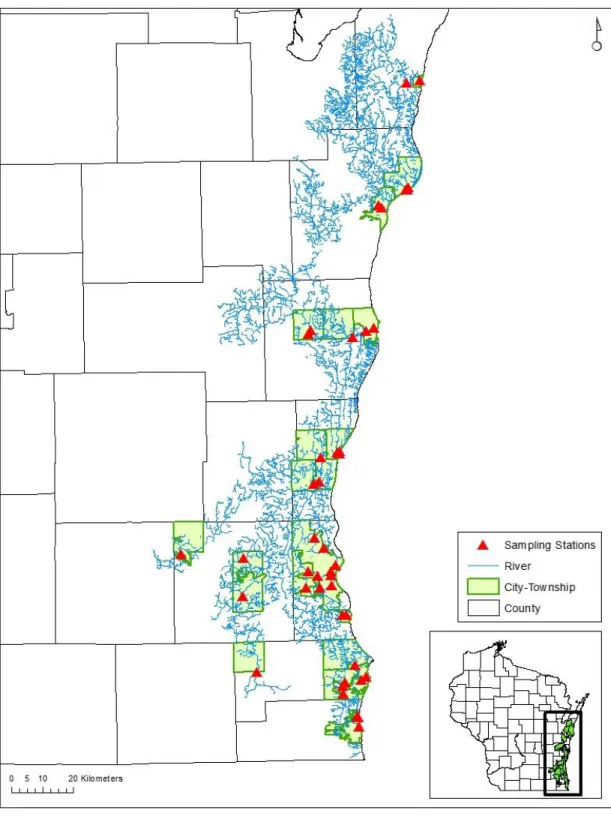
Figure 1: Conceptual model comparing human health risk assessment process to ecological risk assessment process both originally based on EPA risk assessment protocols. ... 52 Figure 2: Concept illustrating the need for techniques that model exposure and mixed stressors within complex systems to allow for innovative, informative human and ecological health risk assessments. ... 53 Figure 3: Sites (N=48) for sediment sampling of streams representing 26 human populations along Lake Michigan in Wisconsin. City boundaries are represented in green, sediment sampling locations are represented by red triangles, water bodies are displayed in blue to provide
context. ... 72 Figure 4: Chemical contaminates (nanograms) per gram sediment from 10 cities and 4
Milwaukee rivers, totaling 25 samples (some upstream, some downstream). Y axis represents ∑PBDE (A), ∑Dioxin (B), and ∑PCB (B) in ng/g. The x-axis lists sample codes which represent the watershed then city respectively, 1’s represent furthest downstream (relative to city
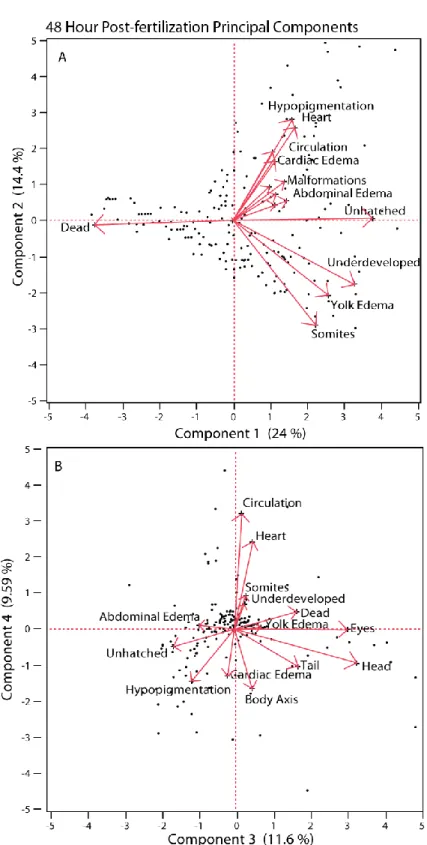
boundaries) 3’s represent furthest upstream (relative to city boundaries) 2’s represent sites that were either from equally contributing, but separate, watersheds or midstream sites. ... 74 Figure 5: Biblot (a matrix of scatterplots of the scores for pairs of principal components overlaid with a matrix of two-dimensional representations of factor loading) of early life-stage endpoints recorded at 48 hours post-fertilization. X-axis represents component 1 and component 2 (A) Y-axis represents component 2 and component 4 (B). Labeled biplot rays show eigenvectors of endpoints relative to each component in multivariate space. ... 76 Figure 6: Biblot (a matrix of scatterplots of the scores for pairs of principal components overlaid with a matrix of two-dimensional representations of factor loading) of early life-stage endpoints recorded at 72 hours post-fertilization. X-axis represents component 1 and component 2 (A) Y-axis represents component 3 and component 4 (B). Labeled biplot rays show eigenvectors of endpoints relative to each component in multivariate space. ... 77 Figure 7: Risk-regression of 72 hours post fertilization principal component 3 and congenital heart disease (A); and principal component 1 and infant mortality (B). Prevalences are
calculated as incidence of death within first year of life, or diagnosis of congenital heart disease, divided by total births for that time period in the corresponding city or zipcode. Lines represent the 10th, 50th, and 90th percentiles of the fitted relationship. ... 82 Figure 8: Statistical Clustering and Spatial mapping of County-level Cause-of-Death data for Wisconsin, USA. Figures show Biplots of SOM clusters with rays indicating relationship relative to standard Principal Component eigenvectors, and maps SOM Clusters color-coded for
Wisconsin Counties. Cluster 1 = red circles, Cluster 2 = green crosses, Cluster 3 = blue diamonds. (A) Cause-of-Death SOM Biplot; (B) Cause-of-Death SOM Map. ... 99 Figure 9: Box plot displaying selected death rates (Cancer and Diabetes) across SOM clusters which were created using birth vital records from Wisconsin counties. ... 100 Figure 10: Statistical Clustering and Spatial mapping of Birth Outcomes data for Wisconsin, USA. Figures show Biplots of SOM clusters with rays indicating relationship relative to standard Principal Component eigenvectors, and maps SOM Clusters color-coded for Wisconsin Counties.
viii
Figure 11: Box plot displaying selected birth outcomes (percent low birth weight and infant mortality rate) across SOM clusters which were created using birth vital records from Wisconsin counties. ... 102 Figure 12: Categorical profiler of cluster prediction using seven land cover variables for Cause of Death clusters (A) and Birth Vital Statistic clusters (B). These are two separate models. X axis indicates percent of county land covered. Y axis indicates fitted probability of the response category... 104 Figure 13: Categorical profiler of cluster prediction using six mother characteristics factors (A) and behavioral risk factors (B). These are two separate models. X axis indicates percent smokers, heavy drinkers, overweight obese, exercised in the past 30 days, median income and age (A); percent mothers within county who smoked, had inadequate or no prenatal care (Kessner index), where 35 or older, who’s birth interval was within 2 years, are white, and did not attend college (B). Y axis indicates fitted probability of the response category. ... 105 Figure 14: Categorical profiler of cluster prediction using seven air quality variables for Cause of Death clusters (A) and Birth Vital Statistic clusters (B). These are two separate models. X axis indicates grams per kilometer of carbon monoxide, mono-nitrogen oxides, volatile organics, sulfur dioxide, particulate matter <25 microns, particulate matter <10 microns, and ammonia. Y axis indicates fitted probability of the response category. ... 106 Figure 15: Statistical Clustering and Spatial mapping of Civil Division-level Vital Statistics data for the Dobrogea region of Romania. Figures show Biplots of SOM clusters with rays indicating relationship relative to standard Principal Component eigenvectors, and maps SOM Clusters color-coded for each Civil Division. Cluster 1 = red, Cluster 2 = green, Cluster 3, Cluster 4 = yellow. (A) Vital Statistic SOM Biplot; (B) Vital Statistic SOM Map showing river basin shapes. ... 107 Figure 16: (A) Maps showing log10 Nitrate and Faecal Coliform levels for river basins in
Dobrogea Romania calculated from Shaker et.al (2010). (B) Risk Prediction profiles for SOM cluster identification using directed-learning neural network models of two water quality and five land cover parameters. X-axis indicates the level of risk factors for a Civil Division. Y-axis indicates the probability for a Civil Division to be classified within a specific SOM Cluster (P[1], P[2], P[3] and P[4] respectively ) when exhibiting a specific level of the risk factor on the X-axis. ... 108 Figure 17: Infant mortality rates (IMR = deaths per 1,000 births) color coded by Wisconsin counties (years 2000-2006). Homicidal and accidental deaths were not incorporated into this database. ... 118 Figure 18: Percent low birthweight (less than 2,500 grams) color coded by Wisconsin counties (2000-2006 ... 119 Figure 19: Percent premature births (less than 37 weeks gestation) color coded by Wisconsin counties (2000-2006). ... 120
ix
public health. ... 121 LIST OF TABLES
Table 1: List of Chemical of Emerging Concern (CEC) categories, based on the categories
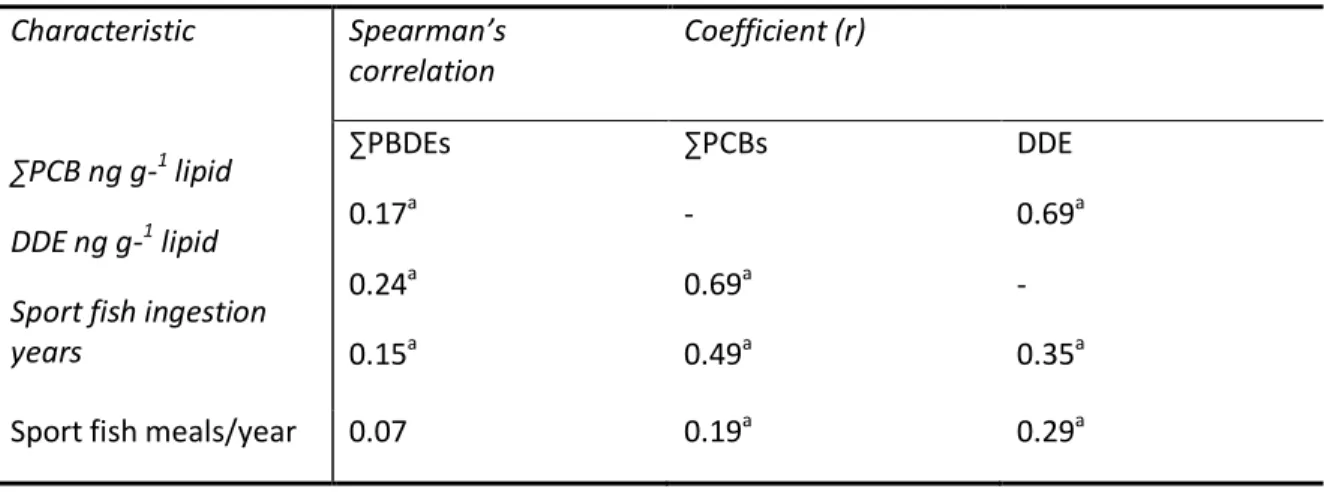
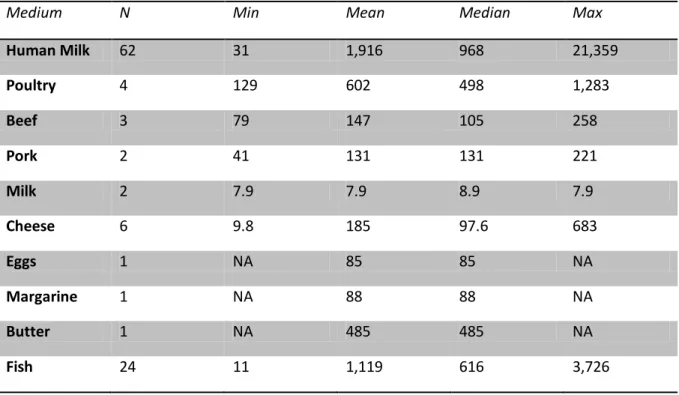
reiveiwed by Klecka et al. (2010). ... 46 Table 2: Associations of PPBDEs, PPCBs, and DDE (ng g_1 lipid) with demographic characteristics and potential exposure routes for 472 participants. Drawn from Anderson et al. (2008). ... 47 Table 3: PBDE concentrations (pg/g wet weight) in market survey items from Schecter et al 2006. *NA = not available. ... 48 Table 4: predicted no effect concentrations (PNEC) from the EC risk assessments (EC 2005a, b, 2008a, b)... 49 Table 5: Perturbation of biological pathways and hazards suggested from a spring 2011
literature search of governmental risk assessments, epidemiology, laboratory, and wildlife studies and human health outcomes which have been associated with chemicals from each CEC category. Organic Wastewater Constituents were not included to avoid redundancy and over-generalization. ... 50 Table 6: Evidence of exposure of CECs to humans based on a spring 2011 literature search of governmental risk assessments and published literature that observed chemicals from each category either in the environment or in humans. ... 51 Table 7: Data requested from the Wisconsin Pediatric Cardiac Registry and the Wisconsin
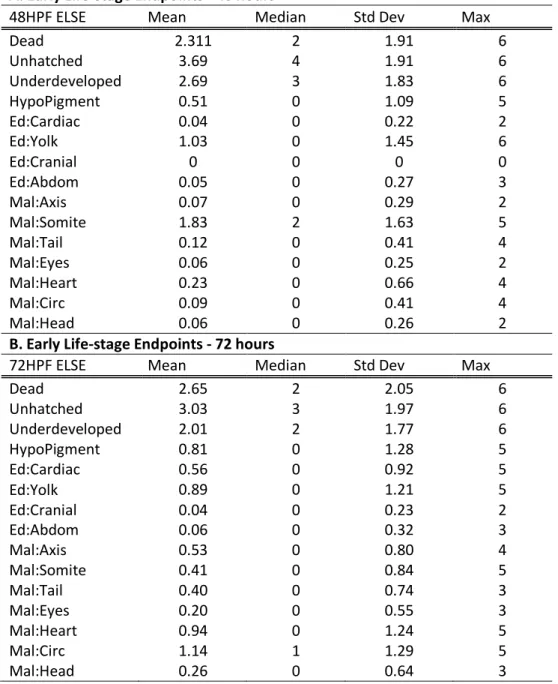
Department of Health Services. All birth counts were aggregated over ten years (2000-2010) by address of mother at time of birth. ... 73 Table 8: Treatment summary statistics of early life-stage endpoints: death, hatch, development, lack of pigmentation, cardiac edema, yolk edma, cranial edema, abdominal edema,
malformation of body axis, somite development, tail malformation, eye malformation,
heart/heartbeat malformation, circulatory malformation, and head malformation at 48 (A) and 72 (B) hours post-fertilization. Replicates consisted of 6 embryos yielding a maximum possible response of 6. ... 75 Table 9: Loading scores for principal components of 48 hour post-fertilization (A) and 72 hour post-fertilization (B) early life-stage endpoints. Dominant loading scores are in bold. ... 78 Table 10: Properties of standard linear regression model for total oxygen demand vs. principal components of early life-stage endpoints... 79 Table 11: Multiple linear regression model (standard least squares) effects for 48 hour post-fertilization principle components 1(A), 2(B), 3(C) and 4(D). Model parameters are total PBDEs congeners, total PCB congeners, total Dioxins (all log10( ng/g sediment)) as well as inhibition (proportional feeding inhibition of T. platyurus larvae), and percent organic content by weight (arcsine transformed). T Ratio is the ratio of the estimate to its standard error. ... 80
x
congeners, total PCB congeners, total Dioxins (all log10( ng/g sediment)) as well as inhibition (proportional feeding inhibition of T. platyurus larvae), and percent organic content by weight (arcsine transformed). T Ratio is the ratio of the estimate to its standard error. ... 81 Table 13: Effect likelihood ratio tests for risk models comparing mean principal component scores of early life-stage endpoints to birth prevalence of vital statistic outcomes (low birth weight , premature births, and infant mortality rates) and birth prevalence of congenital heart disease (all diagnoses)... 83 Table 14: Data used to calculate indicators which showed significant increased risk in association with stream teratogenicity. Data were queried from the Wisconsin Department of Health Services and The Wisconsin Pediatric Cardiac Registry. All birth counts were aggregated over ten years (2000-2010) by address of mother at time of birth... 84 Table 15: Statistical data used for (A) SOM Clustering of public health indicators, and (B)
Directed-learning Neural-network prediction of clusters. Wisconsin data were queried from Wisconsin Interactive Statistics on Health database by county for years 2002-2006. Data for civil divisions in Dobrogea Romania were provided by the Romanian National Institute of Statistics. Unless otherwise noted, data were calculated as percent and arc-sine transformed prior to analysis. Death Rates were calculated per 100,000 population and Infant Mortality rate is per 1,000 live births. Sex ratio is the number of male birth divided by total births. ... 97 Table 16: Statistical data used for Directed-learning Neural-network prediction of clusters (Romania). Data for civil divisions in Dobrogea Romania were provided by the Romanian
National Institute of Statistics. ... 98 Table 17: Predictive models for two types of health-outcomes and two types of predictive factors. Training and Validation R2 are reported which use the 2/n root of the log-likelihood.
The R2 is scaled to have a maximum of 1 for perfect model and 0 for a model no better than a constant model. ... 103 Table 18: List of vital statistic indicators with suggested risk factors supported by
xi
I would like to thank the International Joint Commission Health Professional Task-Force for providing the opportunity to conduct a literature review that contributed to their important work. I thank Dr. Andrew Pelech and the Herma Heart Center for providing essential
collaboration and aid for my work. I am grateful to the Children’s Environmental Health Sciences Core Center for providing pilot funding to conduct the Zebrafish Sediment Contact Assay component of this dissertation. My committee members Dr. Michael Carvan, Dr. Christine Cronk, Dr. Reinhold Hutz, and Dr. John Berges have provided excellent support and guidance to me. Dr. Timothy Ehlinger, my advisor, has provided endless support, knowledge, and guidance without which I could never have succeeded. My lab-mates; Jesse Jensen, Stephen McGuire, Jared Bozich, Subhomita Ghosh Roy and Aaron Krizeck have aided me at every turn without question. And, of course, the love of my family has provided the motivation to always better myself.
C
HAPTER1:
E
NVIRONMENTALE
FFECTS ONH
UMANH
EALTH:
A
R
EVIEW FORC
HEMICALS OFE
MERGINGC
ONCERN IN THEG
REATL
AKESA Report to the Health Professionals Task Force of the International Joint Commission
INTRODUCTION
A key problem in the Great Lakes (GL) is the continued presence, as well as emergence, of toxic substances that may occur at levels above those considered safe for humans and wildlife. In addition to well-known “legacy” toxicants, there also exist chemicals of emerging concern released to the GL and subsequently detected in water, sediments, fish, and wildlife. To protect human and ecosystem health against future threats, researchers and policy makers require a better understanding of such substances with respect to their potential risks. Great Lakes contamination from pollution is a well-established issue. Concerns regarding GL contaminants often warrant fish consumption advisories, apprehension over drinking water quality, and limitations for recreational use of waters. Chemicals of Emerging Concern (CECs) are of growing interest to entities such as the International Joint Commission (IJC), who recently tasked the Health Professional Task Force (HTPF) with investigating the current state of
knowledge regarding CECs, the GL environment, and human health. The review that follows was commissioned by the HTPF to investigate the state of published scientific knowledge regarding potential risks to human health posed by emerging chemicals of concern (CECs) in the Great Lakes (Dellinger et al. 2011). This report is one component of a larger effort to advise the International Joint Commission on CECs.
Chemicals of Emerging Concern comprise a vast array of potential search topics, for the sake of focus the review was conducted using a literature search of seven categories of CECs. In this review, we (Dellinger et al. 2011) provided general suggestions for adapting risk assessment techniques to the growing landscape of pollution exposures in the GL. It was beyond the scope
of the original report to conduct a full quality assurance/control review of the 271 publications reviewed in preparation for this work. Therefore, this review relies on the established peer-review process of scholarly academic journals to assure quality of the research and resources cited. A recent comprehensive review of CECs in the Great Lakes was conducted by Klecka et al. (Klecka et al. 2010). By comparison, the goals of the Dellinger et al. (2011) report to the IJC were: (1) to concisely characterize the diversity and complexity of research under the topic "chemicals of emerging concern"; (2) to explore the concepts of risk assessment for CECs, particularly as related to human health risk assessment; and (3) to evaluate whether this review of the literature can provide suggestions to risk assessors and policy-makers as how to proceed in dealing with CECs and human health.
The term “Chemical of Emerging Concern” (CEC) can be used to describe “new and emerging chemicals” (Klecka et al. 2010) but generally refers to a growing awareness of
environmental contamination from chemicals that are poorly understood or unregulated. New understanding of such chemicals can initiate new concern over previously unknown effects along with concern over the risk that these chemicals may pose to the health of humans and ecosystems. In addition to this definition, the term CEC is sometimes used to describe any pollutant that is not considered a “legacy” contaminant (often more tightly regulated or banned chemicals such as Hg, PCBs, Dioxins, etc.). Although I provide a list of CEC categories below, these categories do not encompass all possible “emergent” chemicals that could be present in and contaminate the environment. Therefore, this categorization of CECs denotes the
complexity of the topic as well as the importance of an increased understanding of these chemicals.
There is no standard list of chemicals of emerging concern but Table 1 describes a list based on the report, “Chemicals of emerging concern in the Great Lakes Basin: an analysis of
environmental exposures” (Klecka et al. 2010). The work by Klecka et al. (2010) was conducted to help inform the IJC regarding the peer-reviewed scientific studies and reports since 1997 regarding chemicals of emerging concern that may pose threats to water quality in the Great Lakes watershed. After reviewing the Klecka et al. (2010) report, we were contacted by the HTPF to investigate the state of knowledge regarding human health and CECs. Klecka et al. (2010) provides a comprehensive review of CEC-related topics, upon which this first Chapter expands. For this reason, and in order to maintain continuity for the IJC, we adopted their classification of CECs in our work, with some modifications to fit the scope of this paper.
Our initial report (Dellinger et al. 2011), as well as the report put forth by Klecka et al (2010) focused on 15th IJC biennial report categories which did not include nanomaterials, pathogens or genetically altered organisms, nor the legacy chemicals (for example mercury or PCBs). Since the subsequent chapters do not necessarily speak solely to CEC-related issued I have included a section on non-CEC chemicals to this document.
METHODS
A search was conducted for each of the CEC (Table 1) categories using ISIWeb of Science®, an online academic citation index provided by the Thomson Reuters Company. This index provides access to multiple databases, cross-disciplinary research, and in-depth
exploration of specialized subfields within an academic or scientific discipline. Additionally, any cited paper within the cited index is linked to any other literature (book, academic journal, proceedings, etc.) cites these works. Also, journals and/or papers can be selected based upon their citation frequency in the literature, which can be interpreted as a surrogate measure for their impact in a field. In this way, current trends, patterns, and emerging fields of research can be assessed. Papers recommended by colleagues and Task Force members, and governmental reports and risk assessments were also included in the review. We also included some
references from cited publications that were not found in ISIWeb of Science® but were located in pubmed®.
Topics were queried first through keywords searches relating to the chemical names (e.g. “Alkylphenol Ethoxylates”, “Alkylphenolic Substances”, “Nonyl-phenols”, or CAS#: 25154-52-3). If keyword searching did not yield adequate results, citation indexing (searching articles related to those identified as relevant) was used to acquire related studies. Citation indexing was also used to follow up if a particular study showed great relevance (see below).
A subset of peer-reviewed scientific publications from each of the CEC categories from Table 1 was selected to represent the state of knowledge regarding the occurrence of CECs in the GL and the risks these chemicals pose to human health. Additional studies from outside the Great Lakes were also included to provide a balanced review on risk for exposure, general occurrence in the environment and effects on humans. Some categories, such as PBDEs and Akylphenolic Substances, yielded hundreds of publications while others such as synthetic musks, yielded far fewer hits. Although government agencies have produced comprehensive risk assessments on most CEC categories such as synthetic musks (EC 2005a, b, 2008a, b; ECB 2005) these reports were not included in the ISI database. The selection criteria were developed based on discussions with the members of the IJC Health Professionals Task Force (HPTF). The criteria for including a given paper were as follows in descending order of priority:
Prioritization Selection Criteria:
1. Relevance to the chemical group being searched 2. Relevance to Great Lakes region
3. Relevance to Risk Assessment a. Risk of exposure
c. Effects of chemical on humans and relevant model systems 4. Year of publication (preference to most recent research)
RESULTS
I: Brominated Flame Retardants Description
Brominated flame retardants are a class of additive halogenated flame retardants used in numerous commercial products due to their fire retardant properties. Polybrominated diphenyl ethers (PBDEs), for example, are added to plastics and foam products to make them difficult to burn. The Agency for Toxic Substances and Disease Registry (ATSDR) has published a Toxicological Profile for Polybrominated Biphenyls and Polybrominated Diphenyl Ethers (PBBs and PBDEs) in which they are described as persistent, bioaccumulative and of concern to human health. The ATSDR states that, “because PBDEs are added rather than reacted to the product, they could leave the product under ideal conditions and enter the environment” (ATSDR 2004). They suggest that this rarely happens (ATSDR 2004). More recent literature reviewed below, however, has observed PBDEs as well as other flame-retardants and their metabolites in sediments, biota, and humans.
This category may include Polybrominated Biphenyls (PBBs) Polybrominated diphenyl ethers or other BFRs (HBCD (hexabromocyclododecane) and TBBPA (Tetrabromobisphenol A)). These chemicals also undergo metabolic transformation in top predators (whales, bears) potentially altering biotransformation and toxicity (McKinney et al. 2006). PBDE and HBCD metabolites have also been found to bioaccumulate in ringed seals and polar bears (Letcher et al. 2009).
Discussion of Hazards
The potential hazards suggested from our literature search include reproductive and developmental toxicity, immunity toxicity, neurotoxicity and endocrine disruption in humans and wildlife. This has been suggested by epidemiological, laboratory, and field studies (Roze et al. 2009; Saegusa et al. 2009; Talsness et al. 2009a; Zhang et al. 2010). The literature on BFR pays particular attention to endocrine disruption. Alterations to thyroid functions associated with PBDEs and HBCD, such as increased serum levels of thyroxine (T-4) and decreased serum levels of triiodothyronine (T3), have been documented in both human cohorts and exposed lab animals (Saegusa et al. 2009; Talsness et al. 2009a, b; Turyk et al. 2008; Wang et al. 2010; Yang et al. 2009). PBDE metabolites may produce higher endocrine disrupting activity than PBDE parent compounds. Hydroxylated-PBDEs, especially, induce serious endocrine disrupting interactions (Song et al. 2009; Yang et al. 2009).
According to the ATSDR (2004) PBDEs have not been definitively associated with health related outcomes, but are of concern due to their increasing presence and potential for human exposure. Several studies (published after 2004) described the following health concerns in humans associated with BFR exposure: developmental deficits in children (Roze et al. 2009) male genitourinary (GU) conditions (Small et al. 2009), and alterations of thyroid function (Dallaire et al. 2009; Turyk et al. 2008; Wang et al. 2010). Another study, using NHANES data, found two BFRs; PBB-153 and PBDE-153, which were significantly associated with both diabetes and metabolic syndrome. Dose-response relationships appeared to differ between these two chemicals (Lim et al. 2008). Both Turyk et al. (2008) and Dallaire et al. (2009) measured PCBs as well as BDE congeners when investigating these associations and, although they made efforts to control for demographics and medical history, it’s difficult to rule out the possiblity that the alterations in thyroid function were due soley to PBDEs and PCBs as opposed to other
contaminants that may not have been measured. Similar criticisms could be raised regarding the other studies cited above and below.
Discussion of Evidence for Exposure
As previously reported by Klecka et al (2009), the publications reviewed here indicate that Tetrabromodiphenyl Ether (BDE-47), is the most environmentally prominent PBDE found in Great Lakes samples despite discontinuation of Pentabromodiphenyl mixture production in 2004. In contrast to BDE-47, Decabromodiphenyl Ether (BDE-209) is still used in manufacture of electronic devices. BDE-209 finds its way into top predators such as falcons and eagles
(Johansson et al. 2009; Park et al. 2009a, b; Potter et al. 2009; Venier et al. 2010). PBDE levels in falcons were strongly correlated with nest proximity to human populations. Furthermore, BDE -209, while accumulating in these top predators, undergoes metabolic debromination to the banned, lower-brominated PBDEs (Johansson et al. 2009; Park et al. 2009a, b; Potter et al. 2009). The half-life of BDE 209 in higher organisms appears to be relatively short (Park et al. 2009a).
Both PBDEs and other BFRs (particularly the current-use BFR hexabromocyclododecane or HBCD) accumulate in Great Lakes food webs. For example, Batterman et al. (2007) reported secular increases in PBDE in GL fish. Additionally, PBDEs and emergent BFRs were reported in the plasma of GL bald eagles. A statistically significant relationship was found between total PBDE concentrations and total PCB and p,p'-DDE concentrations, suggesting that these compounds share a common source, which is most likely the eagle's food (Venier et al. 2010). The concentrations of 13 currently used brominated flame retardants (BFRs) were recently analyzed in 16 sediment cores collected from the North American Great Lakes(Yang et al. 2012). Among them, 1,2-bis(2,4,6-tribromophenoxy)ethane (BTBPE), decabromodiphenyl ethane (DBDPE), hexabromocyclododecane (HBCD), 1,2-dibromo-4-(1,2-dibromoethyl) cyclohexane
(TBECH), and hexachlorocyclopentadienyl dibromocyclooctane (HCDBCO) were more frequently detected than others. Overall, these emerging BFRs have much lower concentrations than polybromodiphenyl ethers (PBDEs) and dechloranes. Inventories of the five BFRs were found to decrease linearly (log-scaled) with the increasing latitude of the sampling locations.
Furthermore, BFRS, particularly DBDPE and BTBPE, were found to increase exponentially in recent years (Yang et al. 2012).
HBCD was recently shown to bioaccumulate in benthic invertebrates of Lake Ontario. It has also been shown to accumulate in Great Lakes herring gulls and lake trout (Gauthier et al. 2009; Ismail et al. 2009) as well as other non-Great Lakes food webs (Letcher et al. 2009; Losada et al. 2009). Sediment compartments of Lakes Huron and Erie serve as reservoirs for the
accumulation and slow transfer of hexabromobiphenyl (hexaBB) to the food web constituents of these lakes (Lim and Lastoskie 2011).
Human exposure to BFRs is highly probable as contamination increases in the GL region. However, it is unclear to what extent human exposure routes stem from Great Lakes sources such as fish consumption. Although BFRs have been shown to accumulate in food webs and sediments of the GL, it is suggested that PBDE exposure in humans may result from multiple contributors (Anderson et al. 2008; de Wit 2002; Imm et al. 2009; Schecter et al. 2006; Ward et al. 2008). Of particular interest are a variety of inhalation exposure scenarios involving indoor materials such as carpets, car seats, and pillows. Upon comparing blood serum levels to bromine levels of household items measured by portable X-ray fluorescence (XRF) Imm et al. (2009) determined pillows and car seats to be the strongest predictors of lipid adjusted PBDE. Nevertheless, subjects with the highest levels of PBDEs (90th percentile) from the study reported consuming more sport caught fish.
Given the increasing levels of BFRs in GL fish it seems probable that fish consumption contributes at least partially to human PBDE and other BFR exposure. As seen on Table 2, Anderson et al. (2008) reported weak correlations between PBDE serum concentrations and various exposure routes. It is worth noting that serum PCBs (for which fish consumption is a well-established exposure route) were moderately associated with sport fish ingestion whereas PBDEs showed a much weaker, albeit significant, association. This suggests that although PBDEs and other BFRs accumulate in fish tissues (Batterman et al. 2007; Ismail et al. 2009; Luross et al. 2002; Zhu and Hites 2004) fish consumption is only one of several important exposure routes for PBDEs.
Evidence for additional factors contributing to PBDE exposure is provided by Schecter et al (2006), a market study measuring concentrations of thirteen PBDE congeners in 62 food samples. Additionally, they estimated levels of PBDE intake from food for the U.S. general population by age and sex. In this study, fish exhibited highest levels of PBDEs compared to other foods (Table 3), but meat contributed the most to PBDE dietary intake. For the first year of life, human milk was the major contributor of PBDEs. Schecter et al. (2006) concluded that diet most likely is not the sole or even major source of PBDE exposure. Furthermore, they point out that although these PBDE levels exceed those found in European and Canadian studies the dietary exposures evaluated in their study fail to explain the 10- to 20-fold higher levels in blood and milk from the U.S. general population.
Conclusions: BFRs
The information reviewed above suggests that BFRs accumulate in Great Lakes food webs, persist in the environment and disrupt endocrine function. Some degree of human exposure to these chemicals appears likely. Potential exposure routes could include inhalation of particles from household items or consumption of various food items including sport caught
fish from the Great Lakes. Although the consumption of GL fish may be an important exposure route for some individuals, the reviewed literature suggests it is not the ‘major’ source. There were no studies or risk assessments that explicitly suggest humans are at risk to PBDE-derived health effects from fish consumption. However, future risk assessments could show otherwise.
The importance of fish in a healthy diet cannot be refuted. I therefore identify the need for comprehensive risk assessments for BFRs and GL fish consumption to evaluate the degree of ‘concern’ over this particular pathway for BFRs. The results of Anderson et al. (2008) and Schecter et al. (2006) imply that legacy chemicals such as PCBs and Hg remain the dominant hazards of fish consumption, but not enough information exists to make a definitive conclusion.
The literature reviewed here suggests a high potential for exposure in humans, probably through multiple pathways. Despite the lack of definitive health effects associated with BFRs, a variety of publications cited here demonstrate common hazards, particularly endocrine
disruption. Despite the possibility that much of the human exposure to BFRs is not GL related this chemical group merits careful consideration. Further clarification of exposure pathways to humans will help to elucidate the degree to which this group of chemicals is a GL priority. II: Alkylphenolic substances
Description
Alkylphenolic substances (APs) were introduced in the 1940s and constitute a class of non-ionic surfactants used in detergents, paints, pesticides, personal care products, and plastics. Nonylphenol ethoxylates (NPEs) and their metabolites are a class of the broader group of compounds known as alkylphenol ethoxylates (APEs). Nonylphenol (NP) is the most common ‘basic’ chemical of the alkylphenol family. Typically, NP is further reacted to produce NPEs, and other condensation resins. Due to their high performance and cost-effectiveness, NP derivatives have emerged as the preferred ingredient in numerous industrial processes and products.
Environment Canada provides a Priority Substances List Assessment Report on Nonylphenol and its Ethoxylates (EC 2001). Alkylphenolics are detected in both biotic and abiotic strata of the Great Lakes (EC 2001; Klecka et al. 2010).
Discussion of Hazards
The literature describes APs as weak endocrine disruptors; certain metabolites such as p-tert-Octylphenol (OP) are known to bind to estrogen receptors (Bechi et al. 2006; Gregory et al. 2009). In a study cited by the EC (2001) risk assessment, NP was 1000–100 000 times less potent than estradiol in stimulating estrogenic activity (Lee and Lee 1996). Effects on sexual development from some of these compounds are documented in both laboratory and field studies using fish and mammals (below).
Zebrafish exposed to wastewater effluent contaminated with APEs showed reduced egg production up to 89.6%, 84.7% and 76.9% (Zoller 2006). Populations of fish exposed to higher levels of APs and their metabolites show higher prevalence of feminized traits (Balch and Metcalfe 2006; Kortner et al. 2009; Mayer et al. 2007; Vethaak et al. 2005). The prevalence of feminizing effects in male fish is largest in small regional surface waters that receive runoff or wastewater discharges (Vethaak et al. 2005, Mayer et al. 2007). However determining the magnitude of the contributions attributable to APs relative to human hormones in the effluent may require additional studies. For example, Jobling et al. (2009) explored the hypothesis that endocrine disruption in fish is multi-causal, resulting from exposure to mixtures of chemicals with both estrogenic and antiandrogenic properties. Using hierarchical generalized linear and generalized additive statistical modeling they demonstrated that feminizing effects in wild fish could be best modeled as a function of their predicted exposure (based on wastewater
Although limited information exists regarding human effects and exposure, an Italian study estimated dietary intake of NP, OP, and octylphenol ethoxylate (OPE ) in adults of about 12, 0.1, and 0.1 µ g day(-1). These estimated intakes of NP and OP were much lower than doses associated with toxic effects in laboratory animals (Ferrara et al. 2005). However, this low risk may not apply to developing fetuses. To investigate the effects of these compounds on human development Belechi et al. (2006) observed estrogen receptor expression in first trimester human placentas using an in vitro model of chorionic villous explants. Their findings suggest that the human trophoblast may be highly responsive to NPs, which raises concern over maternal exposure in early gestation (Bechi et al. 2006).
A follow-up study to Belechi et al. (2006) observed effects from extremely low doses of p-NP on the placental release of cytokines (Bechi et al. 2010). This suggests possible greater risk for maternal exposure to NPs during pregnancy despite the previously mentioned weak effects using lab animals. Furthermore, absorption and distribution of NP in maternal and neonatal rat uteri is documented to be extremely rapid, and can easily pass though the placenta during pregnancy (Hong et al. 2004)
Discussion of Evidence for Exposure
Some evidence suggests that Europe is much more contaminated by APE compared to North America and developing countries (Berge et al. 2012). Lee et al. found that the hydrophobic metabolites of APs such as the non-phenols (nonylphenol (NP)) are likely to accumulate in sludge of wastewater treatment plants whereas the water-soluble metabolites are likely to enter the environment when discharged into lakes (Lee et al. 2004). However, Mayer et al. (2007) demonstrated accumulation of NP metabolites in aquatic biota of Cootes Paradise in Hamilton, Ontario by a transfer of alkylphenolic substances from sediments to biota and their accumulation in the invertebrate tissue, particularly the highly hydrophobic 4-NP. These
investigators suggest that ingestion of contaminated sediment is the predominant exposure pathway for these organisms, and since invertebrates are an important food source for many wetland organisms, occurrence of these substances in the invertebrate tissue likely contributes to high prevalence (83%) of intersex condition observed in white perch collected from Cootes Paradise (Mayer et al. 2007). Hydrophobic NP metabolites were also detected in osprey eggs from Chesapeake Bay and fish from the Great Lakes area (Schmitz-Afonso et al. 2003).
A study from Taiwan observed concentrations of 4-NP and 4-OP in 59 human milk samples and suggested food consumption behaviors could contribute to NP and OP exposure (G-W Chen et al. 2010). OP concentration was significantly associated with the consumption of cooking oil (beta = 0.62, P < 0.01) and fish oil capsules (beta = 0.39, P < 0.01) after adjustment for age and body mass index (BMI). NP concentration was also significantly associated with the consumption of fish oil capsules (beta = 0.38, P < 0.01) and processed fish products (beta = 0.59, P< 0.01). The food pattern of cooking oil and processed meat products from factor analysis was strongly associated with OP concentration in human milk (P < 0.05).
Chen et al. (2010) observed that food consumption (particularly the use of cooking oil) was an important exposure route for Alkylphenols in Taiwan. Interestingly, the mean NP concentration in human milk from the Taiwanese participants (4.47 lg/kg) was much higher than those reported in studies from other nations (Ademollo et al. 2008; Cheng et al. 2006). The authors suggest that this may be due to the elevated levels of Alkylphenol concentrations in Taiwanese rivers and sediments compared to sediment from countries such as Italy, Japan and Germany (Cheng et al. 2006). Additionally, the Italian study (Ademollo et al. 2008)
demonstrated a positive correlation between NP in breast milk and fish consumption (assessed within the cohort via questionnaire). NPs have also been observed in cow’s milk as well as human breast milk in Chinese and Italian studies (Dorea 2009; Lin et al. 2009).
Conclusions: APs
The EC (2001) report on NP and NPEs concluded that these substances are “toxic” as defined in Section 64 of CEPA 1999 and that options to reduce exposure should be investigated. The EC (2001) also cautions that other APEs such as OP and OPEs (also covered above) have many of the same physical/chemical properties, which make them likely candidates as replacement or alternative products for NP and NPEs. However, they also possess similar toxicological properties and greater estrogenic properties. Exposure to humans is particularly concerning when one considers the presence of NPs in breast milk and the vulnerability of developing infants. Not enough information exists to comment specifically on the potential for exposure to humans living in the Great Lakes Regions.
Given the spatial distribution of AP contamination (e.g., near wastewater treatment effluents), one may expect a risk of exposure to humans, particularly from GL related sources. Furthermore, the above studies suggested bioaccumulation of AP metabolites and identified AP metabolites in human breast milk. Although weakly estrogenic, the potential for exposure to developing infants who may be susceptible to APs (and perhaps APs mixed with other estrogen-mimickers) warrants precaution. It is possible that APs present a significant health risk to human populations in the Great Lakes and other regions. Further information on additive or synergistic effects of endocrine disruptors and environmental AP occurrence is needed. III: Perfluorinated Compounds
Description
Perfluorinated Compounds (PFCs) are used as surfactants in a variety of industrial processes and are ubiquitous in the environment. This is due to their widespread use over the past 50 years in a broad range of applications, including use as surface treatments for carpets, fabric, and leathers for stain resistance, as well as coatings on various paper products (Klecka et
al. 2010). Health Canada (HC) provides a risk assessment for perfluorooctane sulfate (PFOS), its salts and its precursors, which are forms of PFCs. Since PFOS is likely the ultimate perfluorinated degradation or metabolic product of the group of substances considered in their report, HC suggested that levels of this compound in human tissue provide a useful indicator of exposure to this group of substances from all potential sources (HC 2006). The complex structure of
perfluorinated surfactants makes it difficult to predict their environmental behavior from an understanding of their physical-chemical properties (Klecka et al. 2010).
Discussion of Hazards
Endpoints considered in the Canadian PFOS human health risk assessment included histopathology effects in the liver, carcinogenicity as well as hematological and hormonal parameters in humans (HC 2006). Potential human health outcomes due to PFC exposures suggested in recent literature vary from reproductive and endocrine disruptive effects to immunotoxicity of lab animals. Many publications simply cite prevalence in human blood and environment as cause for investigation, rather than invoking concern over any specific effect. Nevertheless, PFCs seem to affect reproductive and endocrine function in laboratory animals and human cohorts.
Some studies have documented alteration of thyroid status in fish. For example, PFC exposure was found to alter gene expression in the hypothalamic-pituitary-thyroid axis of dosed zebrafish (Shi et al. 2008; Shi et al. 2009). Additional studies using fish revealed reproductive deficits including alterations to ovarian development as well as offspring deformation and mortality (Ankley et al. 2005; Du et al. 2009).
Other Studies from the literature search suggesting hazards to human health mostly involved endocrine function, reproduction, and development. PFCs were shown to easily pass the placental barrier in mother-neonate pairs raising concern over fetal development (Midasch
et al. 2007). A hospital-based cross-sectional epidemiologic study of singleton deliveries in Baltimore, Maryland observed small negative associations between low levels of both PFOS and PFOA concentrations and birth weight, ponderal index (mass/height index), and head
circumference (Apelberg et al. 2007). A similar study from Japan indicated a negative correlation between in utero exposure to low levels of PFOS and birth weight (Washino et al. 2009). In a mother-infant pair birth cohort from Taiwan, the odds ratio of preterm birth, low birth weight, and small for gestational age increased with PFOS exposure [per unit: adjusted odds ratio (OR) (95%CI) = 2.45 (1.47, 4.08), 2.61(0.85, 8.03) and 2.27 (1.25, 4.15)] (Chen et al. 2012). Finally, PFCs were associated with fewer normal sperm in a cohort of Danish men (Joensen et al. 2009). Efforts to identify developmental deficits and effect thresholds have yielded suggestive – but limited – results (Bjork et al. 2008; Butenhoff et al. 2009a; Butenhoff et al. 2009b; Chengelis et al. 2009a; Chengelis et al. 2009b; Das et al. 2008)
Discussion of Evidence for Exposure
PFCs are known to accumulate in Great Lakes biota including lake trout, blue gill and birds. The predominant perfluorinated compounds detected in fish were PFOS (De Silva et al. 2011; Delinsky et al. 2009; Furdui et al. 2007; Sinclair et al. 2006; Ye et al. 2008). Furdui et al. (2007) recently reported the spatial distribution of various PFC contaminants in lake trout from the Great Lakes. Fish from Lake Superior contained the lowest total concentrations, while the highest levels were found in samples from Lake Erie. Fish from Lakes Ontario and Huron showed similar total concentrations, respectively, while samples from Lake Michigan were lower (Furdui et al. 2007).
Furdui et al. (2007) also reported significant correlations between PFOS concentration and trout body weight. This suggests that PFCs bioaccumulate and biomagnify in food chains like other persistent bioaccumulative toxics such as Hg and PCBs. This is further confirmed by
(Ye et al. 2008) who found medianPFOS levels significantly elevated in piscivorous fish (88.0 ng/g) when compared with non-piscivorous fish (15.9 ng/g) in whole fish homogenates from the Ohio, Missouri, and Upper Mississippi Rivers.
Fish contamination of PFCs occurs inland within the Great Lakes region as well. A study by Sinclair et al. (2006) revealed elevated levels of PFCs (PFOS were the most prevalent PFC) in Minnesota samples of blue gill, with median concentrations of 47.0-102 ng/g at locations along the Mississippi River, 2.08 ng/g in the St. Croix River, and 275 ng/g in Lake Calhoun. These results suggest that PFC contamination in freshwater fish is not limited to areas with known historical PFC inputs.
Food, breast milk and water ingestion are thought to be important PFC exposure routes for humans (Berger et al. 2009; Trudel et al. 2008; von Ehrenstein et al. 2009). In a
comprehensive assessment of consumer exposure to PFOS and PFOA Trudel et al. (2008) investigated PFC contributions from gender- and age-specific exposure scenarios. The study found that North American and European consumers are likely to experience ubiquitous and long-term uptake doses of PFOS and PFOA in the range of 3 to 220 ng/kg body weight per day (ng/kg(bw)/day) and 1 to 130 ng/kg(bw)/day, respectively. The greatest portion of the chronic exposure to PFOS and PFOA is likely to result from the intake of contaminated foods and drinking water (Trudel et al. 2008.)
The above findings support the notion that GL fish consumption could play an important role in human exposure to PFCs (especially PFOS). Studies from other regions have suggested this exposure route. A study from Sweden analyzed PFC levels in fish muscle tissue from edible species caught in the second largest freshwater lake in Sweden, Lake Vattern, and in the brackish water Baltic Sea (Berger et al. 2009). The authors calculated human exposure to PFOS via fish intake for three study groups, based on consumption data from the literature. The
results showed that PFOS intake strongly depended on individual fish consumption as well as the fish catchment area. Comparing these findings to the results from Trudel et al. (2008) suggests that Great Lakes fish consumption is a PFC exposure route that deems serious consideration.
Conclusions PFCs
The review presents relatively strong evidence for human exposure to PFCs. This exposure is likely due to oral exposure routes including food and water consumption. These chemicals are accumulating in Great Lakes fish and therefore could contribute to human
exposure via fish consumption. The evidence for human health hazards from PFCs is inadequate for definitive risk assessment or even identification of specific hazards.
IV: Current-use Pesticides Description
Klecka et al. (2010) reported that pesticides are often observed in surface waters, sediments, groundwater, and sometimes atmosphere. Many studies in the searched literature focused on surface, ground or drinking water, particularly when investigating human health risk (Ochoa-Acuna et al. 2009; Waller et al. 2010b).
Although herbicides and insecticides have different modes of action, the category “pesticides” often combines these two categories and other chemicals. In this review “pesticides” were treated as one broad category. This was done to keep the volume of
literature manageable for review. Unfortunately this categorization, initially reported by Klecka et al. (2010) oversimplifies the diverse list of chemicals it encompasses. The pesticide category does help to conceptualize the issue of “agrichemicals” as a common risk category (theoretically unified through exposure routes more so than hazards). Many studies on this subject included multiple chemicals in their reports. Some reports group them as “agricultural contaminants” or
“agrichemicals” the environmental source of which is generally thought to be agricultural or urban runoff.
Discussion of Hazards
A disadvantage of grouping pesticides, or any diverse group of chemicals, is the increased challenge of identifying specific hazards associated with the group. A study from Indiana found that atrazine, and perhaps other co-occurring herbicides in drinking water, is associated with an increased prevalence of small-for-gestational-age infants (Ochoa-Acuna et al. 2009). Furthermore, a retrospective, case-control study using Washington State Birth Certificate and US Geological Survey databases found an association between maternal exposure to surface water atrazine and fetal gastroschisis (congenital fissure of the ventral abdominal wall),
particularly in spring conceptions (Waller et al. 2010a). Studies like these support the notion that developing infants may be susceptible to pesticide-contaminated drinking water. Both of these retrospective cohort studies controlled for socio-economic and behavioral factors such as drinking and smoking. However, confounding stressors (air pollution, water quality, and other contaminants) were not well accounted for. This is a common problem with studies associating human health effects with CECs.
The above associations are, however, supported by laboratory studies showing cellular and hormonal alterations to exposed human tissues. Orton et al. (2009) tested 11 pesticides (isoproturon, diuron, linuron, 4-chloro-2-methylphenoxy acetic acid (MCPA), mecoprop, atrazine, simazine, PCP, trifluralin, chlorpropham, and bentazone) for endocrine disruption. Common effects from this study were antiestrogenic/antiandrogenic activity in a yeast screen, and inhibition of ovulation, accompanied by decreased testosterone production (Orton et al. 2009).
Changes to in vitro human chorionic gonadotropin (hCG)-stimulated hormone production in ovarian follicles was also observed (Orton et al. 2009). Another study exposed
human MCF-7 cells to environmentally relevant concentrations of atrazine. The doses altered protein expression in the cells. Affected proteins included those regulating oxidative stress such as superoxide dismutase and structural proteins such as actin or tropomyosin (Lasserre et al. 2009).
It is also worth noting that many pesticides negatively affect amphibian and fish reproduction according to several papers and reviews (Jin et al. 2010; Langlois et al. 2010; Rohr and McCoy 2010). Many studies outline negative effects of atrazine and other herbicides on amphibian reproductive health such as sex ratios and gonadal function (Langlois et al. 2010; Rohr and McCoy 2010). Similar effects were found in laboratory-exposed rats (Abarikwu et al. 2010) and zebrafish (Jin et al. 2010). This suggests that amphibians could serve as important sentinels of human health especially when considering agricultural runoff and drinking water exposure.
Discussion of Evidence for Exposure
Atrazine and other agricultural contaminants are suspected to negatively affect human birth outcomes via drinking water exposure. The Indiana study cited above calculated monthly concentrations during 1996-2002 of nitrates, atrazine and other pesticides using United States Geological Survey's National Water Quality and compared them to monthly United States birth defect rates for live births from 1996 to 2002 using United States Centers for Disease Control and Prevention natality data sets. Elevated concentrations of agrichemicals in surface water from April-July coincided with higher risk of birth defects in live births with maternal last menstrual period occurring in the same period (April-July) (Winchester et al. 2009). These patterns, and those observed by Ochoa-Acuna et al. (2009) suggest a relationship between agricultural application/runoff and human exposure.
Agricultural runoff is suspected to contribute greatly to the presence of these chemicals in the aquatic environment as well as soils (Echols et al. 2008; Pham et al. 2000; Riederer et al. 2010). Additionally, many pesticides travel further in water than they do in air (Matthies et al. 2009). In a study of 10 remote inland lakes in Ontario, Canadathe most frequently detected chemicals in lake water, precipitation, and air were α-endosulfan, atrazine, metolachlor, chlorpyrifos, chlorothalonil, and trifluralin, and α-endosulfan. Chlorpyrifos were the chemicals detected frequently in zooplankton (Kurt-Karakus et al. 2011).
Conclusions: Pesticides (Agrichemicals)
As previously mentioned, many studies investigate health concerns related to
agricultural runoff but not necessarily specific agrichemicals. Nevertheless, evidence of cellular stress and endocrine disruption raise human health concerns. Since pesticides appear to occur primarily in surface and ground waters, the potential exists for human exposure via drinking water and food crops. Even water treatment can result in disinfectant by-products which may raise health concerns (Krasner 2009). Antibiotic resistance of pathogens is another cause for concern.
Many veterinary pharmaceuticals (sometimes referred to as agripharmaceuticals) occur in the environment presumably from agricultural runoff and the lack of treatment for animal waste. These chemicals could include pharmaceuticals (amprolium, carbadox, monensin, and tylosin) as well as natural and synthetic steroid hormones (Snow et al. 2010; Song et al. 2010). Chemicals such as pesticides and veterinary pharmaceuticals are manufactured with specific modes of action (i.e.,specifically designed to be biologically and physiologically active). In this way, and because they are associated with agricultural runoff, veterinary pharmaceuticals and pesticides should be considered an important group of agrichemicals that warrants serious consideration.
Human exposure data for these chemicals are well covered in the CDC Fourth National Report on Human Exposure to Environmental Chemicals (CDC 2009). From this report, it is clear that humans in the United States are exposed to several pesticides as evidenced by their
presence in urine samples according to the National Health and Nutrition Examination Survey (NHANES). The risks from these chemicals could include but are not limited to: reproductive, genotoxic, carcinogenic, neurotoxic, and respiratory effects.
Discussions with the HPTF influenced this review to focus on point-source pollutants. The review conducted here does not allow for a representative perspective of the literature on the various chemicals that could be included in the pesticide category. In our report (Dellinger et al. 2011) we strongly suggested that further consideration be given as to how pesticides, herbicides, and agrichemicals are categorized and reviewed for future discussion.
V: Chlorinated Paraffins Description
Chlorinated paraffins (CPs), technical mixtures of polychlorinated alkanes (PCAs), occur ubiquitously in the environment (Bayen et al. 2006). CPs are used as lubricants and coolants in metal cutting and metal forming operations and as secondary plasticizers and flame retardants in plastics. Polychorinated alkanes represent a difficult analytical problem because of the complexity inherent in industrial mixtures. The total number of possible congeners is unknown, but far exceeds 10,000 (Eljarrat and Barcelo 2006). CPs seem to behave similarly to persistent organic pollutants (POPs), leading several countries to impose regulations on the use of CPs. The U.S. Environmental Protection Agency identified Short-Chain Chlorinated Paraffins (SCCPs), for action plan development based on their presence in humans; persistent, bioaccumulative, and toxic (PBT) characteristics; use in consumer products; production volume; or other similar factors (EPA 2009).
Discussion of Hazards
According to the EPA action plan acute toxicity of SCCPs (C10-13) is very low. There was
no evidence of developmental effects in prenatal developmental toxicity studies in rats and rabbits (EC 1999; EPA 2009; UNEP. 2009).
The liver, kidney and thyroid are major target organs in repeated-dose studies with rats and mice. When administered by gavage, chlorinated paraffins (C12, 60 percent chlorine) are
carcinogenic in rats and mice of both sexes (NTP 1986, 2005). The underlying mechanisms for the carcinogenicity of SCCP in rats and mice are not clearly known.
Information regarding PCAs in the GL and their effects on humans is limited. PCAs show sub lethal developmental deficits in laboratory frogs as well as trout (Buryskova et al. 2006; Cooley et al. 2001). Trout exposed to the PCAs (whole fish concentrations 0.22-5.5 microg g(-1)) showed a diminished or no startle response, loss of equilibrium, and developed a dark
coloration. Dark coloration, however, is an indicator of stress and may not be pathologically relevant. Histopathological lesions were also observed in the livers of trout from each exposure group. Cooley et al. (2001) suggested that PCA toxicity is inversely related to carbon chain length, as has been observed in similar studies investigating mammals. The concentrations in the fish from this experiment were at levels that have been reported in invertebrates and fish from contaminated sites in the Great Lakes.
Discussion of Evidence for Exposure
According to the EPA action plan the primary non-occupational routes of exposure to SCCPs include ingestion, both directly and through contaminated food, and dermal contact with products. Chlorinated paraffins have been isolated from human liver, kidneys, adipose tissue and breast milk. SCCP exposure could occur from sources far from their use and release due to
their potential for environmental transport (EPA 2009). For example, SCCPs have been found in breast milk samples taken from Inuit women (UNEP 2009).
SCCPs and Medium Chain Chlorinated Paraffins (MCCPs) were found to biomagnify from prey and predators in both Lake Michigan and Lake Ontario. Trophic magnification factors for the invertebrates-forage fish-lake trout food webs ranged from 0.41 to 2.4 for SCCPs and from 0.06 to 0.36 for MCCPs (Houde et al. 2008). Klecka et al. (2010) reported on several studies that detected CPs in sediment and water within the Great Lakes but the information is limited and our report to the HPTF failed to uncover new information on the occurrence of these chemicals in the environment.
Bayen et al. (2006) offered the following future research priorities for CPs:
improvements in analytical methodologies (reducing the complexity of the analysis, producing reference materials and performing inter-laboratory studies); determining background levels of chlorinated paraffins in the environment and human populations (this question should be answered using quality assured analytical tools allowing the inter-comparison of data); and investigating the sources of CPs to the environment and to humans.
Conclusions
Information found relevant to risk assessment on CPs was relatively sparse. The above information suggests a moderate concern for human exposure in the GL. Even fewer studies were found regarding human health effects. Based on the literature search for this review, the database remains inconclusive regarding the potential for human health hazards of CPS. Further research, perhaps following the priorities set forth by Bayen et al. (2006) could allow for
VI: Synthetic Musks Description
Synthetic musks are used extensively in perfumes, cosmetics, detergents, cleaning products, and other personal care products. As such, they have found their way into the surface water, sediment, and biota of the Great Lakes basin particularly near wastewater effluents (Guo et al. 2009; Sumner et al. 2010). Unlike their natural counterparts, synthetic musks have physical-chemical properties similar to other hydrophobic and semi-volatile organics that are known to bioaccumulate and biomagnify in aquatic organisms (Klecka et al 2010).
Discussion of Hazards
The European Commission (EC) has recently compiled risk assessments for the following synthetic musks: musk xylene (CAS# 81-15-2) (EC 2005a), musk ketone (CAS# 81-14-1) (EC 2005b), 1-(5,6,7,8-tetrahydro-3,5,5,6,8,8-hexamethyl-2-naphthyl)ethan-1-one (AHTN) (CAS# 21145-77-7) (EC 2008a), and 1,3,4,6,7,8-hexahydro-4,6,6,7,8,8-hexamethylcyclopenta-2-benzopyran (HHCB) (CAS# 1222-05-5)(EC 2008b) in which predicted no effect concentrations (PNEC) were developed (Table 4). These risk assessments generally extrapolate human health risk from rodent models.
Laboratory studies suggest that synthetic musks influence endocrine function. These compounds show weak estrogenic activity (Bitsch et al. 2002a; Schreurs et al. 2004; Schreurs et al. 2002). One study tested a variety of musk fragrances using the E-screen assay that
demonstrated estrogenic activity. A statistically significant increase in proliferation rate of human MCF-7 breast cancer cells was detected for two nitro musks (musk xylene, musk ketone), a major metabolite of musk xylene ( p-amino-musk xylene), and the polycyclic musk fragrance AHTN (Bitsch et al. 2002b). Other studies show developmental toxicity in mussels (Gooding et al. 2006; Luckenbach et al. 2004) and fish (Carlsson and Norrgren 2004b). The zebrafish model
has suggested both endocrine disruption and reproductive effects in response to synthetic musks (Carlsson and Norrgren 2004a; Schreurs et al. 2004; Schreurs et al. 2002). One study suggested that certain polycyclic musks, including AHTN and HHCB, induce the expression levels of hepatic estrogen receptor alpha and vitellogenin mRNA/protein and modulate expression levels of CYP3A4 mRNA in the livers of male medaka (Yamauchi et al. 2008). The actual health consequences to humans from synthetic musk exposure remain unclear based on this review. Discussion of Evidence for Exposure
Concentrations of polycyclic, but not nitro musks, were detected in freshwater fish from two urbanized areas in the lower Great Lakes: Hamilton Harbour in western Lake Ontario, and the Detroit River and nearby western Lake Erie (O'Toole and Metcalfe 2006). Although Klecka et al. (2009) reported that musks occured most frequently in biota (as compared to water or sediment) there exists little other information regarding their occurrence in humans or human exposure. One study observed low levels of musks in human breast milk (Kang et al. 2010). Their presence in Great Lakes biota, however, suggests a potential for exposure via fish consumption.
Two studies have evaluated serum levels of synthetic musks related to cosmetic use. No dominant source of nitro musk uptake was observed, although their relationship to body surface area indicates cosmetic products applied to the skin as the likely origin of plasma concentrations (Hutter et al. 2010; Hutter et al. 2009).