www.hydrol-earth-syst-sci.net/18/463/2014/ doi:10.5194/hess-18-463-2014
© Author(s) 2014. CC Attribution 3.0 License.
Hydrology and
Earth System
Sciences
Large-sample hydrology: a need to balance depth with breadth
H. V. Gupta1, C. Perrin2, G. Blöschl3, A. Montanari4, R. Kumar5, M. Clark6, and V. Andréassian2
1Department of Hydrology and Water Resources, The University of Arizona, Tucson, AZ, USA 2Irstea, Hydrosystems and bioprocesses Research Unit (HBAN), Antony, France
3Institute of Hydraulic Engineering and Water Resources Management, Vienna University of Technology, Vienna, Austria 4Department DICAM, University of Bologna, Bologna, Italy
5UFZ – Helmholtz Centre for Environmental Research, Leipzig, Germany
6Hydrometeorological Applications Program, Research Applications Laboratory, Boulder, CO, USA
Correspondence to: H. V. Gupta ([email protected])
Received: 26 June 2013 – Published in Hydrol. Earth Syst. Sci. Discuss.: 12 July 2013 Revised: 18 December 2013 – Accepted: 26 December 2013 – Published: 6 February 2014
Abstract. A holy grail of hydrology is to understand catch-ment processes well enough that models can provide detailed simulations across a variety of hydrologic settings at multi-ple spatiotemporal scales, and under changing environmental conditions. Clearly, this cannot be achieved only through in-tensive place-based investigation at a small number of heav-ily instrumented catchments, or by empirical methods that do not fully exploit our understanding of hydrology. In this opin-ion paper, we discuss the need to actively promote and pursue the use of a “large catchment sample” approach to model-ing the rainfall–runoff process, thereby balancmodel-ing depth with breadth. We examine the history of such investigations, dis-cuss the benefits (improved process understanding resulting in robustness of prediction at ungauged locations and under change), examine some practical challenges to implementa-tion and, finally, provide perspectives on issues that need to be taken into account as we move forward. Ultimately, our objective is to provoke further discussion and participation, and to promote a potentially important theme for the upcom-ing Scientific Decade of the International Association of Hy-drological Sciences entitled Panta Rhei.
1 Introduction
“Because almost any model with sufficient free parameters can yield good results when applied to a short sample from a single catchment, effective testing requires that models be tried on many catchments of widely differing characteristics,
and that each trial cover a period of many years.” (Linsley, 1982).
1.1 Motivations for developing large-sample hydrology
A holy grail of hydrological science is to achieve a degree of process understanding that enables construction of models that are capable of providing detailed and physically realistic simulations across a variety of different hydrologic environ-ments, and at multiple spatial and temporal scales (Nash and Sutcliffe, 1970; Klemeš, 1986a; Michel et al., 2006). With its focus on reducing predictive uncertainty, the Prediction in Ungauged Basins (PUB) initiative of the International As-sociation of Hydrological Sciences (IAHS) has helped move the culture of hydrologic science closer to this objective, and away from a reliance upon universal models applied via re-calibration at each study location (Hrachowitz et al., 2013).
This move has deep roots (see Linsley, 1982), but has be-come considerably stronger since the 1999 IAHS meeting in Birmingham where the idea was extensively discussed. It has helped drive the search for improved understanding of the hydrological cycle, and for modeling approaches that
a. achieve the three R’s (reliability, robustness and realism);
b. have greater generality and transposability; and for which
Clearly, this cannot be achieved only through detailed studies at heavily instrumented catchments – although such studies are of critical importance. Nor can it be achieved by simple regionalization methods based primarily in statistical approaches and/or spatial extrapolation rather than improved understanding of hydrologic behavior. What is needed is to take further advantage of the extensive data sets now avail-able (and becoming availavail-able) to make common a large-sample approach to hydrological investigation (Andréassian et al., 2006). While this emphasis has long been the focus of what is known as comparative hydrology (e.g., Kovacs, 1984; Falkenmark and Chapman, 1989; Thompson et al., 2011; Blöschl et al., 2013; see also Sect. 5.2), it is gratify-ing to see that more and more recent investigations have rec-ognized the value of adopting this approach (see numerous examples cited in this paper).
1.2 The context of current practice
The context of much current hydrological practice is a fo-cus on depth rather than breadth (with several notable excep-tions), wherein detailed process investigation and model de-velopment/refinement are conducted at only one or a limited number of catchments. The typical goal is to (a) learn more about a specific catchment by improving upon some prior concept, or (b) establish a basis for prediction and decision-making at that specific location. This might be called place-based learning. By contrast, the scientific aspiration is to gen-eralize from the study of specific cases, so that we can dis-cover and establish general hydrological principles, thereby advancing hydrological understanding.
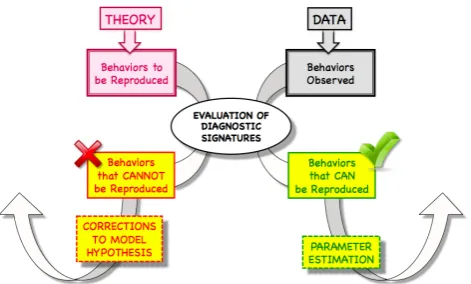
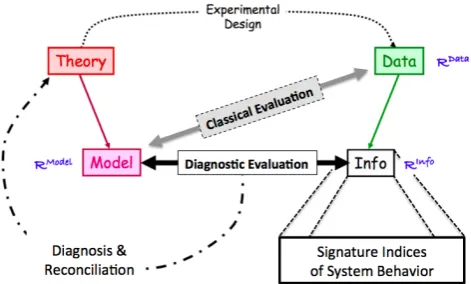
Over the past several decades, the hydrology community has developed a number of generic model codes or model development frameworks (multi-hypothesis environments), that can be applied to a given catchment study (see discus-sion in Clark et al., 2011 and Gupta et al., 2012). These codes make it possible to select a specific off-the-shelf model struc-ture, after which one need only specify values for the param-eters. If model performance is inadequate, attempts can be made to diagnose model deficiencies (Fig. 1) and find ways to correct/improve the model/hypothesis (Gupta et al., 2008; McMillan et al., 2011; Euser et al., 2013). The community has also made available a large number of data sets that can be used to test such codes.
[image:2.595.311.547.61.203.2]However, attempts at such generalization are fraught with difficulties. Faced with the tremendous geo–eco–hydro-climatic variability of environments across the world, at-tempts based on generic models are typically complicated by considerable noise in the individual results (e.g., Oudin et al., 2010; Savenije, 2009) – these being due to unresolved model identification issues arising from a combination of in-adequate data (insufficient information), data noise, model structural inadequacy, and weak model identification tech-niques (e.g., see Gupta et al., 1998, 2008, 2012). This is
Fig. 1. How an approach based in evaluation of signature properties
can be used to detect and diagnose model deficiencies and develop appropriate ways to improve the model/hypothesis (figure based on ideas presented in Gupta et al., 2008).
particularly true as both model realism and spatiotemporal resolution are increased.
On the one hand, such difficulties have contributed to the counter notion of uniqueness of place (Beven, 2000), and that the model structure should adapt to reflect spatial differences in the dominant hydrologic processes. On the other hand, global-scale hydrological studies typically use only a sin-gle conceptual structure to represent all locations around the world, while attempting to account for the place-to-place dif-ferences entirely through the specification of model param-eters (representing differences in soil and vegetation proper-ties) while largely ignoring the spatial variability in dominant hydrological processes (Dirmeyer et al., 2006).
1.3 Purpose of the paper
2 Previous studies: what have we learned?
2.1 Early attempts at large-sample studies
The issue of using large numbers of catchments for hydro-logical investigation is not new; early attempts go back more than thirty years. However, practical reasons – including lim-itations in data access, computing requirements or the ability to collaborate efficiently – made such efforts difficult. Fur-ther, there was a common belief that models developed in one location could not be readily applied elsewhere. Conse-quently, it was difficult to really know the respective merits and usefulness of any existing model.
In 1967, the World Meteorological Organization (WMO) launched an initiative to develop an inventory of models, along with advice to users regarding their accuracy under various hydro-climatic conditions. Not surprisingly, it was quickly deemed useful to carry out an actual model inter-comparison study and, in 1973, ten simulation models from seven countries were applied to a set of six catchments (from the USA, the former Soviet Union, Australia, Japan, Cameroon and Thailand) that represent a variety of hydro-climatic conditions (WMO, 1975; Sittner, 1976). Although the investigation did not arrive at definitive conclusions re-garding the merits of the models tested, it drew attention to the need for a deeper and wider evaluation of models. At that time, a small number of other model inter-comparison stud-ies involving more than one catchment were also carried out; for example see Mein and Brown (1975) who compared three models on four catchments in Australia, and James (1972), Egbuniwe and Todd (1976) and Magette et al. (1976) for their work on the Stanford model using 2 to 16 catchments. From the 1970s onward, a significant number of studies have used large samples for the statistical investigation of floods (e.g., Hardison, 1974; Hosking et al., 1985; Lichty et al., 1990).
A few years later Linsley (1982) listed generality as one of four main properties desirable in hydrological models (along with accuracy, applicability and ease-of-use). Linsley argued that it was necessary to break out of the habitual practice of developing a different model for each catchment, because that eliminates the opportunity for learning what comes with repeated applications of the same model. He suggested the necessity for extensive testing of new models (see introduc-tory quote) so that ones that are not sufficiently general can be eliminated, and stressed the usefulness of large-scale ap-plications, saying the application of a model to many catch-ments results in many sets of parameters which can conceiv-ably serve as a basis for objective determination of parame-ters from physical characteristics of the catchments.
Along the same line of thought, Klemeš (1986a) proposed a formal four-level testing scheme to evaluate transposability of a model in time and space. Despite the demanding na-ture of such testing, Klemeš (1986a) regarded this scheme as a minimum requirement, and stated that the “use of more test basins [. . . ] would increase the credibility standing of
a model, and an accumulation of test results may lead to meaningful generalizations”. Bergström (1991) agreed, stat-ing “growstat-ing confidence in hydrological modelstat-ing can be ob-tained by applying the model under a span of different geo-graphical, climatological and geological conditions.”
These ideas, expressed by leading hydrologists, set the ba-sis for studies involving large catchment samples, that have now begun to be more common.
2.2 Examples of relevant literature from a rainfall–runoff modeling perspective
While several modeling studies during the 1980s used more than one catchment (e.g., Weeks and Hebbert, 1980; Naef, 1981; Pirt and Bramley, 1985; Loague and Freeze, 1985; Weeks and Ashkanasy, 1985; WMO, 1986; Srikanthan and Goodspeed, 1988), the actual emergence of large-sample studies arguably occurred in the early 1990s, coinciding with a progressive increase in availability of computing power, and using time series that are sufficiently long to enable ro-bust assessments.
To illustrate the growing interest in large-sample studies, a list of 94 published rainfall–runoff modeling studies that used more than 30 catchments is presented in the Supple-ment. This list is not intended to be a comprehensive or ex-haustive list, but instead a rough overview, given that there are many other kinds of hydrological investigations (such as flood studies, hydro-ecological investigations, etc.) that are based in a large-sample approach, but these are not listed here. The sample sizes in our list range from 30 to 1508, with a median of 140. Early studies were mainly from Australia, France and Belgium, followed later by the UK, Austria and USA, etc. (see e.g., the reviews by Boughton, 2006 and Merz et al., 2006, for Australia and Austria respectively, and more comprehensive discussion in Blöschl et al., 2013).
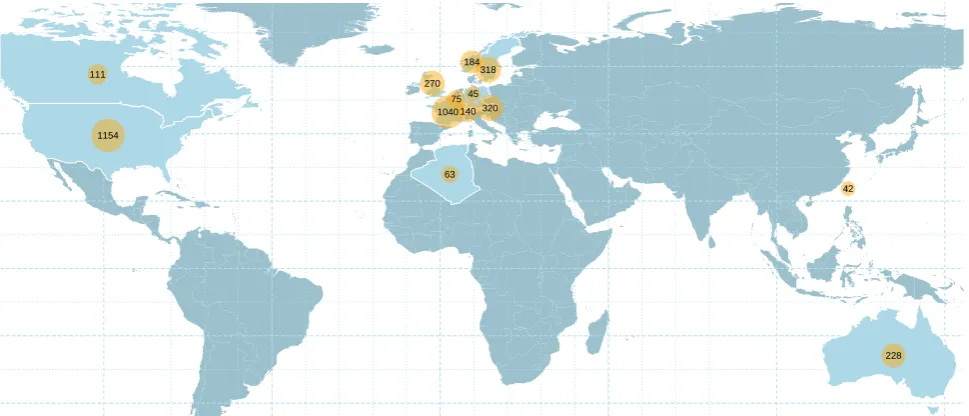
The catchments in this list are from a variety of physi-cal, climatic and hydrological conditions (see Fig. 2). While some studies focused on national data sets, others included catchments from several countries (although typically less than five). The studies focused on a range of spatial and tem-poral scales: catchment areas ranged from 1 to 130 000 km2 and models were run at hourly, daily, monthly, annual and inter-annual time steps. The study goals included a variety of purposes, most commonly being related to
a. model development, application and comparison; b. estimation of model parameters (calibration and
re-gionalization techniques);
63
228 320
75 111
1040 45 184
318
140
42 270
[image:4.595.56.541.62.270.2]1154
Fig. 2. Map showing locations of catchments reported in the Supplement. Size of symbol is proportional to numbers of catchments from the
corresponding country.
Not surprisingly, most studies used conceptual-type rainfall–runoff (CRR) models rather than physically based models, probably due to their relative ease of implementa-tion on large samples and lower data and computing require-ments. In general, the reasons for using large catchment sam-ples were
1. to arrive at conclusions that were more general than could be achieved using a single catchment (e.g., about the relative merits of various methods);
2. to establish range of applicability, or expected level of efficiency, of methods/models; or
3. to ensure sufficient information to enable statistically significant relationships to be established (e.g., be-tween catchment descriptors and model parameters in regionalization studies).
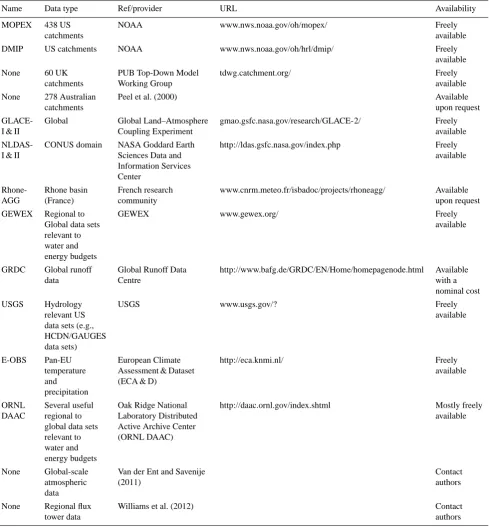
In addition, several groups compiled large-sample data sets with the goal of facilitating collective efforts. The pi-oneering inter-comparison studies sponsored by the WMO (1975, 1986, 1992) involved several teams and data sets. The Model Parameter Experiment promoted by NOAA (MOPEX, www.nws.noaa.gov/oh/mopex/; see Schaake et al., 2001; Chahinian et al., 2006; Duan et al., 2006; Schaake and Duan, 2006, etc.) engaged several groups in the study of a sample of 438 catchments from the USA and 40 in France. Most recently, the Distributed Model Intercompari-son Projects (DMIP-I and DMIP-II, Smith et al., 2004, 2012; www.nws.noaa.gov/oh/hrl/dmip/) engaged several groups in a comparative assessment of spatially distributed hydro-logical models (and associated parameter estimation strate-gies), using comprehensive data sets from a large number of US catchments.
Likewise large-scale comparative studies such as the North American Land Data Assimilation System (NLDAS-I and NLDAS-(NLDAS-I(NLDAS-I), the Project for (NLDAS-Intercomparison of Land-surface Parameterization Schemes (PILPS), the Rhone-Aggregation Land Surface Scheme Intercomparison Project, and the Global Energy and Water Cycle Exchanges Project (GEWEX), have compiled a large array of hydro-meteorological data sets (see Table 1). While these data sets were compiled for regional-scale land-surface models at a relatively large spatial resolution (1/8◦or larger), such data sets could provide a useful starting point for hydrological in-vestigations over large and diverse spatial domains.
3 General benefits of large-sample hydrology
There are at least four clear benefits to studies that work with data from large numbers of catchments:
3.1 Improved understanding
Table 1. Examples of data sets potentially useful for large-sample hydrological investigations.
Name Data type Ref/provider URL Availability
MOPEX 438 US NOAA www.nws.noaa.gov/oh/mopex/ Freely
catchments available
DMIP US catchments NOAA www.nws.noaa.gov/oh/hrl/dmip/ Freely available None 60 UK PUB Top-Down Model tdwg.catchment.org/ Freely
catchments Working Group available
None 278 Australian Peel et al. (2000) Available
catchments upon request
GLACE- Global Global Land–Atmosphere gmao.gsfc.nasa.gov/research/GLACE-2/ Freely
I & II Coupling Experiment available
NLDAS- CONUS domain NASA Goddard Earth http://ldas.gsfc.nasa.gov/index.php Freely
I & II Sciences Data and available
Information Services Center
Rhone- Rhone basin French research www.cnrm.meteo.fr/isbadoc/projects/rhoneagg/ Available
AGG (France) community upon request
GEWEX Regional to GEWEX www.gewex.org/ Freely
Global data sets available
relevant to water and energy budgets
GRDC Global runoff Global Runoff Data http://www.bafg.de/GRDC/EN/Home/homepagenode.html Available
data Centre with a
nominal cost
USGS Hydrology USGS www.usgs.gov/? Freely
relevant US available
data sets (e.g., HCDN/GAUGES data sets)
E-OBS Pan-EU European Climate http://eca.knmi.nl/ Freely temperature Assessment & Dataset available and (ECA & D)
precipitation
ORNL Several useful Oak Ridge National http://daac.ornl.gov/index.shtml Mostly freely DAAC regional to Laboratory Distributed available
global data sets Active Archive Center relevant to (ORNL DAAC) water and
energy budgets
None Global-scale Van der Ent and Savenije Contact
atmospheric (2011) authors
data
None Regional flux Williams et al. (2012) Contact
tower data authors
3.2 Robustness of generalizations
Second is the possibility of bringing methods of statistical analysis to bear, so that statistical robustness can be achieved, and degrees of confidence can be established (Mathevet et al., 2006). In doing so, large samples can help to both reduce the impact of severe data errors (sometimes present in only a few
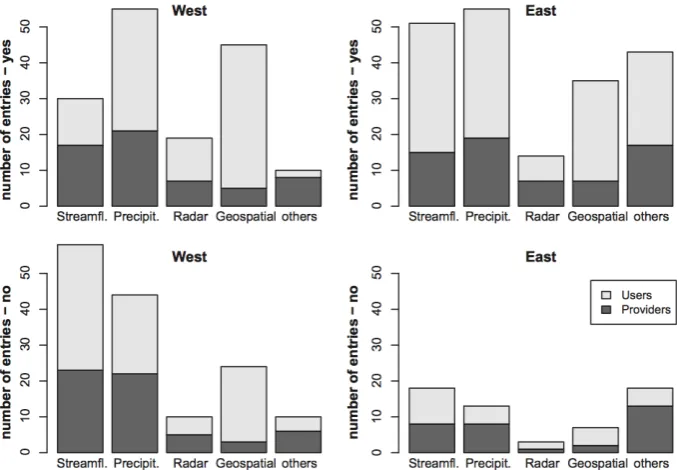
Fig. 3. Shows perceptions regarding economic barriers to the availability of hydrometeorological data in Europe. Survey results are stratified
by data providers (dark grey) and data users (light grey); western Europe (left subplots) and eastern Europe (right subplots); and type of data (bars indicating streamflow, precipitation, radar, geospatial, and others). Yes responses indicate that economic barriers are perceived to exist, whereas No indicates that economic barriers are perceived not to exist (reproduced from Viglione et al., 2010).
3.3 Classification, regionalization and model transfer
Third, large samples support and facilitate the development of catchment classification and regionalization systems that provide insights into hydrological behavior (a key moti-vation of the PUB initiative), thereby facilitating transfer of understanding to ungauged locations (Sivapalan, 2003; Götzinger and Bardossy, 2007; Oudin et al., 2010). Since, process dominance varies with climatic and physiograph-ical characteristics of a catchment (terrain, soil, geology, etc.) and other factors, a satisfactory regionalization sys-tem (see important work by Winter, 2001; McDonnell and Woods, 2004; Wagener et al., 2007; among others) cannot be achieved without spatially extensive data sets that are repre-sentative of catchment types worldwide. Further, prior test-ing on large and diverse catchment sets paves the way for improved model transfer into operational use; as expressed by Bergström (1991) “the large number of applications have gradually built up our confidence in the use of these mod-els to a degree where we can continue our operational appli-cations and accept the models as the foundation for further model development.”
3.4 Estimation of uncertainty
Fourth, large samples support and facilitate better under-standing of how much uncertainty can be expected in model predictions given available knowledge (Andréassian et al., 2007), by making possible a statistical regionalization of
uncertainty estimates (Skøien and Blöschl, 2007; Bourgin et al., 2013; Blöschl et al., 2013) and thereby indicating (a pri-ori) how much prediction uncertainty can be expected at ar-bitrary locations (including ungauged ones).
4 Challenges to practical implementation
4.1 Availability and quality of data sets having large numbers of catchments
sells products derived from the data) and the desire to reduce misuse of data due to inappropriate redistribution by users.
Nonetheless, several large catchment sample data sets are freely available. We list several examples in Table 1 that could be useful for large-sample hydrological investigations. However, there is the important issue of adequate metadata (details regarding how the data were collected, and what can be done with them). While it is increasingly becoming stan-dard practice to provide metadata, at least for large data sets (e.g., see the WMO/GRDC initiative www.bafg.de/GRDC and wis.wmo.int, and the work on metadata for NEXRAD by Kruger et al., 2011), such information is not generally avail-able for catchment data sets. One reason is that it is gener-ally more difficult to apply the same kind of rigorous qual-ity checks that can be implemented at heavily instrumented catchments, and even something as basic as visual inspec-tion can be too time-consuming when compiling samples of hundreds of catchments.
Finally, as pointed out by a reviewer we should mention that there is a considerable amount of relevant grey litera-ture dealing with catchment data sets from applied sciences and operational practice (e.g., NOAA, 2007; Hughes, 2013; Uhlemann et al., 2013). We face a significant challenge in better exploiting and incorporating such data into scientific investigation.
4.2 Reporting and sharing protocols for data and models
A longstanding issue is, of course, the need for coherence in the way data and models are reported, stored and shared; this is currently done in a number of different ways depending on their nature and the purpose for which they were compiled. Data deemed to be of wider interest to the hydrologic com-munity are now increasingly published in journals through data and analysis notes, along with metadata. Further, data collected by Hydro-meteorological Services, and other pub-lic agencies, are more easily accessible via the Internet, al-though typically with much less meta-information (Viglione et al., 2010).
While considerable attention has been given to protocols for documenting and sharing data during the past several decades (Jones et al., 1979; Goodall et al., 2008; Viglione et al., 2010; see also https://www.wmo.int/pages/prog/gcos/ Publications/gcos-96.pdf), the procedures for documenting and sharing models (computer codes) continue to remain ex-tremely ad hoc. At the same time, protocols for the report-ing of model performance are largely non-existent. As noted elsewhere: “As a community, we have fallen into reliance on measures and procedures for model performance evalu-ation that say little more than how good or bad the model-to-data comparison is in some ‘average’ sense” (Gupta et al., 2008). Consistent reporting of sets of more informative (than mean squared error or Nash–Sutcliffe efficiency) and properly benchmarked measures of model performance are
necessary to better facilitate the generalization of findings from individual case studies (Mathevet et al., 2006; Perrin et al., 2006; Schaefli and Gupta, 2007, among others).
It is important to keep in mind that the primary purpose of reporting is to make the information useful to the recipient. The comparative assessment of Blöschl et al. (2013) reported that inconsistency in use and reporting of model performance hampered their investigation. Further, they had to actually ap-proach the authors of the publications to ask for their data and model outputs. To effectively handle such problems, a data repository linked to the papers would have been extremely useful.
4.3 Identification of model structures and parameters
With growing availability of geo-spatial data sets and in-creases in computational power, there has been signifi-cant progress in the development of local-, regional- and continental-scale spatially distributed hydrologic models that simulate hydrological processes at relatively high resolution, and at points that are effectively ungauged (e.g., Carpenter and Georgakakos, 2004; Ivanov et al., 2004; Reed et al., 2004; Koren et al., 2004, Smith et al., 2012). However, while such models make possible detailed support for wa-ter resource management (e.g., Blöschl et al., 2008), more work needs to be done on identifiability and transferability of their structures and parameters (e.g., see Beven, 1989, 2002; Grayson et al., 1992; Kirchner, 2006; Samaniego et al., 2010; Andréassian et al., 2012), and on quantifying predic-tive uncertainty (Beven and Freer, 2001; Doherty and John-ston, 2003; Pokhrel et al., 2008). To establish credibility, such models (and their sub-components) must be properly tested at large numbers of catchments encompassing a wide variety of land-surface and climatic conditions.
5 Perspectives and recommendations
5.1 Overcoming barriers to sharing data
To state the obvious, large-sample hydrology requires large samples of relevant data sets. Most current studies of large-sample catchment hydrology have focused on regional or na-tional scales (e.g., Parajka et al., 2005, 2007; Oudin et al., 2008, 2010; Kumar et al., 2013) and there is a need to extend these to global scale. As computer power and data storage capabilities continue to increase, one might expect that data exchange will also increase. Nonetheless, the PUB synthe-sis effort (Blöschl et al., 2013), driven largely by the desire to conduct comparative studies, demonstrated clearly that it is indeed possible to compile and jointly analyze large data sets.
require deliberate efforts by a spectrum of organizations, in-cluding the International Association of Hydrological Sci-ences, and the Panta Rhei (Change in Hydrology and Soci-ety) initiative. At a more general level it may be necessary to bring about a policy change for data providers and data users. Governments and hydrological services need to be informed about the benefits of shared information for them, and more transparent protocols for the transfer of information may be needed to fully exploit the rich hydrologic data legacy that exists around the world (Viglione et al., 2010). By pointing beyond benchmarking, to the possibility of actually learning new things, we hope that hydrologists and institutions will be convinced of the need to find ways to overcome the eco-nomic and legal constraints to building and sharing reference data sets.
Further, as mentioned in Sect. 4.2, easier access to the data and model outputs used in published work will be extremely useful (the Supporting Materials concept now used by sev-eral journals is a good step forward). It is common knowl-edge that the disparity in data characteristics (amount, type, quality, resolution, etc.) from region to region impedes our attempts to make progress in improving process understand-ing, refining models, improving predictions and reducing un-certainty. In this regard, progress will likely be much faster if large-sample studies include some discussion of the data requirements and availability specific to the various regions, and where and how the models are limited by data. Of course, there will always be regional issues, and issues with inter-preting historical data sets.
5.2 Enhancing the link with comparative hydrology
Large-sample studies have traditionally focused on statistical analysis (e.g., to develop regression relationships for flood regionalization or to estimate and transfer model parameters to ungauged basins). With PUB, there has been a move be-yond this to focus on the importance of investigating and demonstrating causal processes (Merz and Blöschl, 2008a, b; Carrillo et al., 2011; Troch et al., 2013), by seeking to un-derstand the controls and macro-scale signatures that arise from their actions and interactions (Wagener and Montanari, 2011; Grauso et al., 2008; Sawicz et al., 2011, 2013).
In this regard, the study of comparative hydrology (Falkenmark and Chapman, 1989) seeks to exploit knowl-edge regarding a much wider array of conditions and pro-cesses than can ever be possible with a single model struc-ture, or by studies based on limited numbers of catchments, thereby providing a valuable complement to the detailed in-vestigation of specific catchments. For example, the PUB Synthesis report (Blöschl et al., 2013) revealed significant trends of decreasing performance with increasing aridity, and increasing performance with increasing catchment size and data availability (see Parajka et al., 2013; Salinas et al., 2013), patterns than would have been impossible to detect in any other way. However, comparative studies of
regionalization approaches have resulted in strikingly varied conclusions. One likely reason, though not the only one (see Oudin et al., 2008), may be the use of insufficiently large catchment samples, which would cause the conclusions to be overly dependent on differences in the characteristics repre-sented by each data set.
In fact, large-sample hydrology provides an opportunity for both regionalization and comparative hydrology. While regionalization studies focus on improved hydrological pre-dictions by making use of data from neighboring catch-ments, in comparative hydrology the focus is on contrasting catchments from different regions to develop generalized un-derstanding about the causes and controls that give rise to these differences. It is noteworthy that the PUB decade of IAHS has seen significant progress in both regionalization approaches and in comparative hydrology as summarized by Blöschl et al. (2013).
Of course, several key issues will need deeper investi-gation. For example, no clarity has yet emerged regard-ing which (observable) catchment characteristics are hydro-logically relevant to catchment classification, as required for comparative hydrology. Further, how process dominance (and complexity) varies with environment and scale (Skøien et al., 2003), and the role of thresholds, are not well un-derstood. These make it difficult to properly link catchment types to the selection of appropriate process representation (thereby determining model structures). Importantly, classi-fication could help in identifying typical (i.e., normal or rep-resentative) catchments to be targeted for intensive investiga-tion, thereby providing a stronger basis for catchment obser-vatory initiatives such as CUAHSI. Meanwhile, the contrast with typical or normal ranges for catchments in a given class will facilitate the detection of outlier catchments similarly deserving of targeted special attention.
5.3 Achieving good performance for the right reasons
Clearly, models structures used in any large-sample investi-gation should be representative of the diversity of hydrolog-ical processes present, so that good performance achieved is for the right reasons (Klemeš, 1986b; Kirchner, 2006; Martinez and Gupta, 2010, 2011). Moreover, the tendency to universally apply a fixed set of assumptions regarding driving mechanisms and process structure can sometimes miss the more important processes in a particular catchment (Savenije, 2009; Halihan et al., 2009; Blöschl et al., 2013).
the model performance by increasing complexity.” Following the latter approach, Nash and Sutcliffe (1970) had presented a strategy for model development from the simple to the com-plex “which may help to avoid this frustration” (Bergström, 1991). This allows one to begin with simple assumptions re-garding process structure, identify catchments where these assumptions result in poor performance, and then progres-sively introduce appropriate complexity justified by diagnos-tic tests and other evidence. In this regard, the repeated use of a universal model structure as a starting point can aid in the development of the experience necessary to diagnose what does, and does not, work at a specific location.
Ultimately, the goal of working with large catchment sets is to better understand the hydrological cycle. Through a pro-cess of designing improved local models, and by understand-ing the relationships between functional behavior (expressed through model structure) and observable characteristics of the catchment, we should progress towards better compre-hension of catchments as systems.
5.4 Estimating model parameters
Structure selection does not, of course, resolve the problem of parameter specification, which is made more complex by the spatial heterogeneities involved in large-sample studies. Fortunately, progress has been made by recognizing that pa-rameter values at specific locations within spatial fields can be linked to observable basin physical characteristics (soil texture, vegetation, topography, etc.) that display strong pat-terns of organization in space (Abdulla and Lettenmaier, 1997; Fernandez et al., 2000; Hundecha and Bardossy, 2004; Pokhrel et al., 2008; Hundecha et al., 2008; Samaniego et al., 2010; Kumar et al., 2013; among others). For example, some studies have pursued an approach of developing re-gional relationships that map observable catchment charac-teristics onto what are sometimes called a priori parameter estimates (Koren et al., 2000; Leavesley et al., 2003; Blöschl, 2005). An important benefit of this approach is to regularize the optimization problem, limiting the degrees of freedom to a small number of regional transfer function coefficients called global-, super-, or hyper-parameters (see Pokhrel et al., 2008; Samaniego et al., 2010).
[image:9.595.310.546.62.204.2]To obtain robust estimates for these coefficients, the model must be run at a large number of catchments, and across diverse hydro-climatic conditions, so that hypothesis tests about the structures of the regional transfer functions can be conducted. This approach modifies the modeling problem in an interesting way, as one must now evaluate an augmented model hypothesis consisting of both (a) the catchment model structure relating system inputs to state variables and out-puts, and (b) the regional transfer function structure and co-efficients relating catchment properties to model parameters. Although the complexity of the hypothesis under investi-gation is increased, this approach provides statistical advan-tages by (i) accounting for random variability in catchment
Fig. 4. Classical versus Diagnostic model evaluation. The classical
approach compares model simulations directly with the collected data. In the diagnostic approach, patterns in the model simulations are compared with corresponding patterns in the data (figure based on ideas from Gupta et al., 2008).
properties that tends to diminish their correlation with lumped catchment-scale properties (Kling and Gupta, 2009); (ii) reducing the biasing effects of data noise due to the damp-ing effects of larger sample sizes; and (iii) improvdamp-ing iden-tifiability due to increased diversity of hydro-climatic condi-tions covered. The recent multi-scale parameter regionaliza-tion approach (Samaniego et al., 2010; Kumar et al., 2013) suggests that the approach is robust, and can facilitate the transfer of model hypotheses across spatial domains. Fur-ther strength could be achieved by constraining the model using information about hydrological dynamics provided by soil moisture, snow cover, etc. (Parajka and Blöschl, 2008; Parajka et al., 2009).
5.5 Testing hypotheses and assessing reliability
In this regard, it will be helpful to shift the focus of model evaluation away from data fitting towards an emphasis on reproduction of diagnostic signatures (Fig. 4) – a move away from hydrograph mimicry towards model fidelity (Vogel and Sankarasubramanian, 2003; Yadav et al., 2007; Gupta et al., 2008; Blöschl et al., 2008; Martinez and Gupta, 2011; Clark et al., 2011; Koster and Mahanama, 2012; Castiglioni et al., 2010; etc.) – the idea being to make it harder to win the game through calibration (in the sense of model tuning) and to instead seek answers that are correct for the right rea-sons (Kirchner, 2006). Therefore, further progress in diag-nostic analysis (Yilmaz et al., 2008; Martinez and Gupta, 2010, 2011; McMillan et al., 2011), improved understanding of physical land-surface constraints (Koster and Mahanama, 2012), and improved assessments of model structural ade-quacy (Gupta et al., 2012) and uncertainty (Montanari et al., 2009; Montanari, 2011; Montanari and Koutsoyiannis, 2012) are required. All of these areas depend on increased ana-lytical sophistication, and will undoubtedly benefit from the breadth of information contained in large-sample data sets.
5.6 Coping with variability and change
The non-stationarities underlying changing climate and catchment conditions make the problem of estimating hydro-logical fluxes and predicting catchment response more diffi-cult. In such cases, it becomes important to distinguish be-tween situations that are predictable from those that are not (Blöschl and Montanari, 2010; Kumar, 2011). It is now com-mon to use scenario analysis as a way of assessing the im-pacts of future change on hydrological response (Mahmoud et al., 2009, 2011; among many others). However, investiga-tion using large-sample data sets can facilitate a much wider range of analyses.
For example, large-sample data sets were used by Merz et al. (2011) and Coron et al. (2012) to investigate changes in estimated model parameters associated with changes in cli-mate, and by Ter Braak and Prentice (1988) to use spatial gradients as a surrogate for temporal gradients in investi-gations of change. Similarly, Peel and Blöschl (2011) sug-gested that changing climate could cause hydrological pro-cesses in one catchment to become similar to those in other catchments currently experiencing conditions similar to the target climate, thereby providing a basis for understanding the effects of change. Ultimately, these analyses must exploit the information provided by data other than runoff, includ-ing hydrogeological information, soil moisture from remote sensing products (Parajka et al., 2006), snow characteristics (e.g., Blöschl and Kirnbauer, 1991, 1992), etc.
5.7 Trading depth of analysis for sample size
Finally, while the benefits of large-sample hydrology are many and important, they come at a cost. When large num-bers of catchments are analyzed, all procedures for selecting
model structures and estimating parameters must be auto-mated. This makes it difficult to attend to clues that might otherwise be provided by the assessment of local knowledge (whether hard or soft data), or by process understanding that can be gained from field trips. In this regard, soft informa-tion on catchment funcinforma-tioning can be as valuable as hard data for improving understanding about catchment function-ing (Seibert and McDonnell, 2002). Ultimately, there is no free lunch, and investigations that exploit the benefits of large catchment sample sizes (providing breadth) must be com-plemented by detailed investigations at specifically targeted catchments (providing depth).
6 In conclusion
This paper has discussed the need to actively promote and pursue the use of a large catchment sample approach to mod-eling the rainfall–runoff process, thereby balancing depth with breadth. In either case, the need to understand hydro-logical change will require that large-sample investigations be guided by process understanding, with statistical analy-sis playing the important supporting roles of (a) capturing the summary effects of various controls, including feedbacks across processes and scales, and (b) detecting spatial and temporal patterns that will need to be properly explained. Only then can we expect to achieve improved predictabil-ity and the abilpredictabil-ity to extrapolate to new situations (Kumar, 2011).
We hope that this paper serves the function of provoking further discussion, and will promote what could be an im-portant theme for Panta Rhei, the upcoming IAHS Scientific Decade. In this regard, as suggested by reviewer Sopan Patil, we end with a call for increasing the diversity of efforts in large-sample hydrology (beyond the focus on catchment modeling taken by this paper).
Supplementary material related to this article is
available online at http://www.hydrol-earth-syst-sci.net/ 18/463/2014/hess-18-463-2014-supplement.pdf.
Acknowledgements. This paper was partially developed in the
through the Centre of Excellence for Climate System Science (grant number CE110001028). The third author acknowledges funding from the Austrian Science Fund (projects W1219-N22 and P 23723-N21). Olivier Delaigue is thanked for providing Fig. 2.
Edited by: M. Sivapalan
References
Abdulla, F. A., and Lettenmaier, D. P.: Development of regional pa-rameter estimation equations for a macroscale hydrologic model, J. Hydrol., 197, 230–257, 1997.
Andréassian, V., Hall, A., Chahinian, N., and Schaake, J.: Intro-duction and Synthesis: Why should hydrologists work on a large number of basin data sets?, in: IAHS Publication no. 307, Large sample basin experiments for hydrological model parameteriza-tion: Results of the Model Parameter Experiment – MOPEX, Paris, 1–5, 2006.
Andréassian, V., Lerat, J., Loumagne, C., Mathevet, T., Michel, C., Oudin, L., and Perrin, C.: What is really undermining hydrologic science today?, Hydrol. Process., 21, 2819–2822, doi:10.1002/hyp.6854, 2007.
Andréassian, V., Perrin, C., Berthet, L., Le Moine, N., Lerat, J., Loumagne, C., Oudin, L., Mathevet, T., Ramos, M.-H., and Valéry, A.: HESS Opinions “Crash tests for a standardized eval-uation of hydrological models”, Hydrol. Earth Syst. Sci., 13, 1757–1764, doi:10.5194/hess-13-1757-2009, 2009.
Andréassian, V., Perrin, C., Parent, E., and Bardossy, A.: Editorial – The Court of Miracles of Hydrology: can failure stories con-tribute to hydrological science?, Hydrolog. Sci. J., 55, 849–856, doi:10.1080/02626667.2010.506050, 2010.
Andréassian, V., Le Moine, N., Perrin, C., Ramos, M. H., Oudin, L., Mathevet, T., Lerat, J., and Berthet, L.: All that glitters is not gold: the case of calibrating hydrological models, Hydrol. Process., 26, 2206–2210, doi:10.1002/hyp.9264, 2012.
Beniston, M., Stoffel, M., Harding, R., Kernan, M., Ludwig, R., Moors, E., Samuels, P., and Tockner, K.: Obstacles to data access for research related to climate and water: Implications for science and EU policy-making, Enviro. Sci. Policy, 17, 41–48, 2012. Bergström, S.: Principles and confidence in hydrological modelling,
Nord. Hydrol., 22, 123–136, 1991.
Beven, K.: Changing ideas in hydrology – The case of physically-based models, J. Hydrol., 105, 157–172, 1989.
Beven, K.: Towards an alternative blueprint for a physically based digitally simulated hydrologic response modelling system, Hy-drol. Process., 16, 189–206, 2002.
Beven, K. and Freer, J.: Equifinality, data assimilation, and uncer-tainty estimation in mechanistic modelling of complex environ-mental systems, J. Hydrol., 249, 11–29, 2001.
Beven, K. J.: Uniqueness of place and process representations in hydrological modelling, Hydrol. Earth Syst. Sci., 4, 203–213, doi:10.5194/hess-4-203-2000, 2000.
Blöschl, G.: Rainfall-runoff modeling of ungauged catchments, in: Encyclopedia of Hydrological Sciences, edited by: Anderson, M. G., John Wiley & Sons, Chichester, 2061–2080, 2005.
Blöschl, G. and Kirnbauer, R.: Point snowmelt models with differ-ent degrees of complexity – internal processes, J. Hydrol., 129, 127–147, 1991.
Blöschl, G. and Kirnbauer, R.: An analysis of snow cover patterns in a small Alpine catchment, Hydrol. Process., 6, 99–109, 1992. Blöschl, G. and Montanari, A.: Climate change impacts – throwing
the dice?, Hydrol. Process., 24, 374–381, 2010.
Blöschl, G., Reszler, C., and Komma, J.: A spatially distributed flash flood forecasting model, Environ. Modell. Softw., 23, 464–478, doi:10.1016/j.envsoft.2007.06.010, 2008.
Blöschl, G., Sivapalan, M., Wagener, T., Viglione, A., and Savenije, H.: Runoff Prediction in Ungauged Basins, Synthesis across Pro-cesses, Places and Scales, Cambridge University Press, Cam-bridge, UK, 465 pp., 2013.
Boldetti, G., Riffard, M., Andréassian, V., and Oudin, L.: Data-set cleansing practices and hydrological regionalization: is there any valuable information among outliers?, Hydrolog. Sci. J., 55, 941–951, 2010.
Boughton, W.: A review of Australian model parameterization stud-ies using large basin samples, IAHS Publication no. 307, IAHS, Wallingford, UK, 126–131, 2006.
Bourgin, F., Andréassian, V., Perrin, C., and Oudin, L.: Transferring model uncertainty estimates from gaged to ungaged catchments, submitted, 2013.
Carpenter, T. M. and Georgakakos, K. P.: Continuous streamflow simulation with the HRC-DHM distributed hydrologic model, J. Hydrol., 298, 61–79, 2004.
Carrillo, G., Troch, P. A., Sivapalan, M., Wagener, T., Harman, C., and Sawicz, K.: Catchment classification: hydrological analysis of catchment behavior through process-based modeling along a climate gradient, Hydrol. Earth Syst. Sci., 15, 3411–3430, doi:10.5194/hess-15-3411-2011, 2011.
Castiglioni, S., Lombardi, L., Toth, E., Castellarin, A., and Mon-tanari, A.: Calibration of rainfall–runoff models in ungauged basins: A regional maximum likelihood approach, Adv. Water Resour., 33, 1235–1242, doi:10.1016/j.advwatres.2010.04.009, 2010.
Chahinian, N., Mathevet, T., Habets, F., and Andréassian, V.: The MOPEX 2004 French database: main hydrological and morpho-logical characteristics, IAHS, Wallingford, UK, 29–40, 2006. Clark, M. P., Kavetski, D., and Fenicia, F.: Pursuing the method of
multiple working hypotheses for hydrological modeling, Water Resour. Res., 47, W09301, doi:10.1029/2010WR009827, 2011. Coron, L., Andréassian, V., Perrin, C., Lerat, J., Vaze, J.,
Bourqui, M., and Hendrickx, F.: Crash testing hydrological models in contrasted climate conditions: an experiment on 216 Australian catchments, Water Resour. Res., 48, W05552, doi:10.1029/2011WR011721, 2012.
Dirmeyer, P. A., Gao, X., Zhao, M., Guo, Z., Oki, T., and Hanasaki, N.: GSWPb2: Multimodel Analysis and Implications for Our Perception of the Land Surface, B. Am. Meteorol. Soc., 87, 1381–1397, 2006.
Doherty, J. and Johnston, J. M.: Methodologies for calibration and predictive analysis of a watershed model, J. Am. Water Resour. Assoc., 39, 251–265, 2003.
from the second and third workshops, J. Hydrol., 320, 3–17, doi:10.1016/j.jhydrol.2005.07.031, 2006.
Egbuniwe, N. and Todd, D. K.: Application of the Stanford Wa-tershed Model to Nigerian waWa-tersheds, Water Resour. Bull., 12, 449–460, 1976.
Ehret, U., Blöschl, G., Bogaard, T. A., Gelfan, A. N., Gupta, H. V., Harman, C., Kleidon, A., Scherer, U., Schymanski, S., Sivapalan, M., Wang, D., Weijs, S. V., Wagener, T., Bierkens, M. F. P., Di Baldassarre, G., Parajka, J., van Beek, L. P. H., van Griensven, A., Westhoff, M., Winsemius, H. C., and Zehe, E.: Advancing Hydrology to deal with Predictions Under Change, Hydrolog. Sci. J., 58, 1198–1255, 2013
Euser, T., Winsemius, H. C., Hrachowitz, M., Fenicia, F., Uhlen-brook, S., and Savenije, H. H. G.: A framework to assess the realism of model structures using hydrological signatures, Hy-drol. Earth Syst. Sci., 17, 1893–1912, doi:10.5194/hess-17-1893-2013, 2013.
Falkenmark, M. and Chapman, T. (Eds.): Comparative Hydrology, UNESCO, Paris, 1989.
Fernandez, W., Vogel, R. M., and Sankarasubramanian, A.: Re-gional calibration of a watershed model, Hydrolog. Sci. J., 45, 689–707, 2000.
Freebairn, J. and Zillman, J.: Funding meteorological services, Me-teorol. Appl., 9, 45–54, 2002.
Goodall, J. L., Horsburgh, J. S., Whiteaker, T. L., Maidment, D. R., and Zaslavsky, I.: A first approach to web services for the National Water Information System, Environ. Modell. Softw., 23, 404–411, doi:10.1016/j.envsoft.2007.01.005, 2008.
Götzinger, J. and Bardossy, A.: Comparison of four regionalisation methods for a distributed hydrological model, J. Hydrol., 333, 374–384, doi:10.1016/j.jhydrol.2006.09.008, 2007.
Grauso, S., Fattoruso, G., Crocetti, C., and Montanari, A.: Estimat-ing the suspended sediment yield in a river network by means of geomorphic parameters and regression relationships, Hydrol. Earth Syst. Sci., 12, 177–191, doi:10.5194/hess-12-177-2008, 2008.
Grayson, R. B., Moore, I. D., and McMahon, T. A.: Physicallly-based modelling, 2. Is the concept realistic, Water Resour. Res., 26, 2659–2666, 1992.
Gupta, H. V., Sorooshian, S., and Yapo, P. O.: Towards im-portant Calibration of Hydrologic Models: Multiple and Non-Commensureable Measures of Information, Water Resour. Res., 34, 751–763, 1998.
Gupta, H. V., Wagener, T., and Liu, Y.: Reconciling theory with observations: Elements of a diagnostic approach to model evalu-ation, Hydrol. Process., 22, 3802–3813, 2008.
Gupta, H. V., Clark, M. P., Vrugt, J. A., Abramowitz, G., and Ye, M.: Towards a Comprehensive Assessment of Model Struc-tural Adequacy, Opinion Paper, Water Resour. Res., 48, W08301, doi:10.1029/2011WR011044, 2012.
Halihan, T., Mouri, S., and Puckette, J.: Evaluation of Fracture Properties of the ArbucklebSimpson Aquifer, report Oklahoma State University, www.owrb.ok.gov/ studies/groundwater/arbuckle_simpson/pdf/2009_Reports/ EvaluationFracturePropertiesArbuckleSimpson_Halihan.pdf, Oklahoma State University, 2009.
Hardison, C. H.: Generalized skew coefficients of annual floods in the United States and their application, Water Resour. Res., 10, 745–752, doi:10.1029/WR010i004p00745, 1974.
Hosking, J. R. M., Wallis, J. R., and Wood, E. F.: An ap-praisal of the regional flood frequency procedure in the UK Flood Studies Report, Hydrolog. Sci. J., 30, 85–109, doi:10.1080/02626668509490973, 1985.
Hrachowitz, M., Savenije, H. H. G., Blöschl, G., McDonnell, J. J., Sivapalan, M., Pomeroy, J. W., Arheimer, B., Blume, T., Clark, M. P., Ehret, U., Fenicia, F., Freer, J. E., Gelfan, A., Gupta, H. V., Hughes, D. A., Hut, R. W., Montanari, A., Pande, S., Tetzlaff, D., Troch, P. A., Uhlenbrook, S., Wagener, T., Winsemius, H. C., Woods, R. A., Zehe, E., and Cudennec, C.: A decade of Predic-tions in Ungauged Basins (PUB) – a review, Hydrolog. Sci. J., 58, 1198–1255, doi:10.1080/02626667.2013.803183, 2013. Hughes, D. A.: A review of 40 years of hydrological
sci-ence and practice in southern Africa using the Pit-man rainfall–runoff model, J. Hydrol., 501, 111–124, doi:10.1016/j.jhydrol.2013.07.043, 2013.
Hundecha, Y. and Bárdossy, A.: Modeling of the effect of land use changes on the runoff generation of a river basin through pa-rameter regionalization of a watershed model, J. Hydrol., 292, 281–295, doi:10.1016/j.jhydrol.2004.01.002, 2004.
Hundecha, Y., Ouarda, T., and Bardossy, A.: Regional estimation of parameters of a rainfall-runoff model at ungauged watersheds using the “spatial” structures of the parameters within a canonical physiographic-climatic space, Water Resour. Res., 44, W01427, doi:10.1029/2006WR005439, 2008.
Ivanov, V. Y., Vivoni, E. R., Bras, R. L., and Entekhabi, D.: Preserv-ing high-resolution surface and rainfall data in operational-scale basin hydrology: a fully-distributed physically-based approach, J. Hydrol., 298, 80–111, doi:10.1016/j.jhydrol.2004.03.041, 2004.
James, L. D.: Hydrologic modeling, parameter estimation, and wa-tershed characteristics, J. Hydrol., 17, 283–307, 1972.
Jones, J. R., Beall, R. M., and Giusti, E. V.: International coopera-tion in water resources, GeoJournal, 3, 481–487, 1979.
Kirchner, J. W.: Getting the right answers for the right rea-sons: Linking measurements, analyses, and models to advance the science of hydrology, Water Resour. Res., 42, W03S04, doi:10.1029/2005WR004362, 2006.
Klemeš, V.: Operational testing of hydrological simulation models, Hydrolog. Sci. J., 31, 13–24, 1986a.
Klemeš, V.: Diletantism in hydrology: transition or destiny?, Water Resour. Res., 22, 177S–188S, 1986b.
Kling, H. and Gupta, H.: On the development of regionalization re-lationships for lumped watershed models: The impact of ignoring sub-basin scale variability, J. Hydrol., 373, 337–351, 2009. Koren, V., Reed, S., Smith, M., Zhang, Z., and Seo, D. J.:
Hy-drology Laboratory Research Modeling System (HL-RMS) of the US National Weather Service, J. Hydrol., 291, 297–318, doi:10.1016/j.jhydrol.2003.12.039, 2004.
Koren, V. I., Smith, M., Wang, D., and Zhang, Z.: Use of soil prop-erty data in the derivation of conceptual rainfall runoff model parameters, Proceedings of the 15th Conference on Hydrology, American Meteorological Society, Long Beach, California, 103– 106, 2000.
Kovács, G.: Proposal to construct a coordinating matrix for comparative hydrology, Hydrolog. Sci. J., 29, 435–443, doi:10.1080/02626668409490961, 1984.
Kruger, A., Krajewski, W. F., Domaszczynski, P., and Smith, J. A.: Hydro-NEXRAD: Metadata computation and use, J. Hydroin-form., 13, 267–276, 2011.
Kumar, P.: Typology of hydrologic predictability, Water Resour. Res., 47, W00H05, doi:10.1029/2010WR009769, 2011. Kumar, R., Samaniego, L., and Attinger, S.: Implications of
dis-tributed hydrologic model parameterization on water fluxes at multiple scales and locations, Water Resour. Res., 49, 360–379, doi:10.1029/2012wr012195, 2013.
Leavesley, G. H., Hay, L. E., Viger, R. J., and Markstrom, S. L.: Use of a priori parameter estimation methods to constrain cali-bration of distributed parameter models, in: Calicali-bration of Water-shed Models, Water, Science and Application 6, edited by: Duan, Q., Gupta, H. V., Sorooshian, S., Rousseau, A. N., and Turcotte, R., American Geophysical Union, 255-266, 2003.
Legates, D. R. and McCabe, G. J.: Evaluating the use of “goodness-of-fit” measures in hydrologic and hydroclimatic model valida-tion, Water Resour. Res., 35, 233–241, 1999.
Le Moine, N., Andréassian, V., Perrin, C., and Michel, C.: “Outlier” catchments: what can we learn from them in terms of prediction uncertainty in rainfall-runoff modelling?, IAHS Publ., 313, 195– 203, 2007.
Lichty, R. W. and Karlinger, M. R.: Climate factor for small-basin flood frequency, J. Am. Water Resour. Assoc., 26, 577–586, doi:10.1111/j.1752-1688.1990.tb01395.x, 1990.
Linsley, R. K.: Rainfall–runoff models – An overview, in: Rainfall– runoff relationship, edited by: Singh, V. P., Water Resources Pub-lications, Highlands Ranch, Colorado, USA, 3–22, 1982. Loague, K. M. and Freeze, R. A.: A comparison of rainfall–runoff
modeling techniques on small upland catchments, Water Resour. Res., 21, 229–248, 1985.
Magette, W. L., Shanholtz, V. O., and Carr, J. C.: Estimating se-lected parameters for the Kentucky watershed model from wa-tershed characteristics, Water Resour. Res., 12, 472–476, 1976. Mahmoud, M., Liu, Y., Hartmann, H., Stewart, S., Wagener,
T., Semmens, D., Stewart, R., Gupta, H., Dominguez, D., Dominguez, F., Hulse, D., Letcher, R., Rashleigh, B., Smith, C., Street, R., Ticehurst, J., Twery, M., van Delden, H., Waldick, R., White, D., and Winter, L.: A formal frame-work for scenario development in support of environmen-tal decision-making, Environ. Modell. Softw., 24, 798–808, doi:10.1016/j.envsoft.2008.11.010, 2009.
Mahmoud, M., Gupta, H. V., and Rajagopal, S.: Scenario develop-ment for water resources planning and watershed managedevelop-ment: Methodology and semi-arid region case study, Environ. Modell. Softw., 26, 873–885, doi:10.1016/j.envsoft.2011.02.003, 2011. Martinez, G. F. and Gupta, H. V.: Toward improved
identi-fication of hydrological models: a diagnostic evaluation of the “abcd” monthly water balance model for the conter-minous United States, Water Resour. Res., 46, W08507, doi:10.1029/2009WR008294, 2010.
Martinez, G. F. and Gupta, H. V.: Hydrologic consistency as a basis for assessing complexity of monthly water balance models for the continental United States, Water Resour. Res., 47, W12540, doi:10.1029/2011WR011229, 2011.
Mathevet, T., Michel, C., Andréassian, V., and Perrin, C.: A bounded version of the Nash-Sutcliffe criterion for better model assessment on large sets of basins, in: Large sample basin exper-iments for hydrological model parameterisation: Results of the Model Parameter Experiment – MOPEX, edited by: Andréas-sian, V., Hall, A., Chahinian, N., and Schaake, J., IAHS Red Books Series no. 307, IAHS, Wallingford, UK, 211–219, 2006. McDonnell, J. J. and Woods, R.: On the need for catchment
classi-fication, J. Hydrol., 299, 2–3, 2004.
McMillan, H. K., Clark, M. P., Bowden, W. B., Duncan, M., and Woods, R. A.: Hydrological field data from a modeller’s perspec-tive: Part 1. Diagnostic tests for model structure, Hydrol. Pro-cess., 25, 511–522, doi:10.1002/hyp.7841, 2011.
Mein, R. G. and Brown, B. M.: Sensitivity of optimized parameters in watershed models, Water Resour. Res., 14, 299–303, 1978. Merz, R. and Blöschl, G.: Flood frequency hydrology: 1. Temporal,
spatial, and causal expansion of information, Water Resour. Res., 44, W08432, doi:10.1029/2007WR006744, 2008a.
Merz, R. and Blöschl, G.: Flood frequency hydrology: 2. Com-bining data evidence, Water Resour. Res., 44, W08433, doi:10.1029/2007WR006745, 2008b.
Merz, R., Blöschl, G., and Parajka, J.: Regionalisation methods in rainfall-runoff modelling using large samples, IAHS publication no. 307, IAHS, Wallingford, UK, 117–125, 2006.
Merz, R., Parajka, J., and Blöschl, G.: Time stability of catchment model parameters: Implications for climate impact analyses, Water Resour. Res., 47, W02531, doi:10.1029/2010WR009505, 2011.
Michel, C., Perrin, C., Andréassian, V., Oudin, L., and Mathevet, T.: Has basin scale modelling advanced far beyond empiricism?, IAHS Publication no. 307, IAHS, Wallingford, UK, 108–116, 2006.
Montanari, A.: Uncertainty of Hydrological Predictions, in: Treatise on Water Science, vol. 2, edited by: Wilderer, P., Academic Press, Oxford, 459–478, 2011.
Montanari, A. and Koutsoyiannis, D.: A blueprint for process-based modeling of uncertain hydrological systems, Water Resour. Res., 48, W09555, doi:10.1029/2011WR011412, 2012.
Montanari, A., Shoemaker, C. A., and van de Giesen, N.: Introduc-tion to special secIntroduc-tion on Uncertainty Assessment in Surface and Subsurface Hydrology: An overview of issues and challenges, Water Resour. Res., 45, W00B00, doi:10.1029/2009wr008471, 2009.
Montanari, A., Young, G., Savenije, H. H. G., Hughes, D., Wa-gener, T., Ren, L. L., Koutsoyiannis, D., Cudennec, C., Toth, E., Grimaldi, S., Blöschl, G., Sivapalan, M., Beven, K., Gupta, H., Hipsey, M., Schaefli, B., Arheimer, B., Boegh, E., Schy-manski, S. J., Di Baldassarre, G., Yu, B., Hubert, P., Huang, Y., Schumann, A., Post, D. A., Srinivasan, V., Harman, C., Thompson, S., Rogger, M., Viglione, A., McMillan, H., Charack-lis, G., Pang, Z., and Belyaev, V.: “Panta Rhei-Everything Flows”: Change in hydrology and society – The IAHS Sci-entific Decade 2013–2022, Hydrolog. Sci. J., 58, 1256–1275, doi:10.1080/02626667.2013.809088, 2013.
Naef, F.: Can we model the rainfall-runoff process today?, Hydrol. Sci. Bull., 26, 281–289, 1981.
NOAA: Office of Hydrologic Development Hydrology Labora-tory Strategic Science Plan, http://www.nws.noaa.gov/oh/src/ docs/Strategic_SiencePlan2007-Final.pdf, 2007.
Oudin, L., Andréassian, V., Perrin, C., Michel, C., and Le Moine, N.: Spatial proximity, physical similarity and ungaged catch-ments: confrontation on 913 French catchments, Water Resour. Res., 44, W03413, doi:03410.01029/02007WR006240, 2008. Oudin, L., Kay, A. L., Andréassian, V., and Perrin, C.:
Are seemingly physically similar catchments truly hy-drologically similar?, Water Resour. Res., 46, W11558, doi:10.1029/2009WR008887, 2010.
Parajka, J. and Blöschl, G.: The value of MODIS snow cover data in validating and calibrating conceptual hydrologic models, J. Hy-drol., 358, 240–258, doi:10.1016/j.jhydrol.2008.06.006, 2008. Parajka, J., Merz, R., and Blöschl, G.: A comparison of
regionali-sation methods for catchment model parameters, Hydrol. Earth Syst. Sci., 9, 157–171, doi:10.5194/hess-9-157-2005, 2005. Parajka, J., Naeimi, V., Blöschl, G., Wagner, W., Merz, R., and
Sci-pal, K.: Assimilating scatterometer soil moisture data into con-ceptual hydrologic models at the regional scale, Hydrol. Earth Syst. Sci., 10, 353–368, doi:10.5194/hess-10-353-2006, 2006. Parajka, J., Merz, R., and Blöschl, G.: Uncertainty and multiple
objective calibration in regional water balance modelling: case study in 320 Austrian catchments, Hydrol. Process., 21, 435– 446, doi:10.1002/hyp.6253, 2007.
Parajka, J., Naeimi, V., Blöschl, G., and Komma, J.: Matching ERS scatterometer based soil moisture patterns with simulations of a conceptual dual layer hydrologic model over Austria, Hydrol. Earth Syst. Sci., 13, 259–271, doi:10.5194/hess-13-259-2009, 2009.
Parajka, J., Viglione, A., Rogger, M., Salinas, J. L., Sivapalan, M., and Blöschl, G.: Comparative assessment of predictions in ungauged basins – Part 1: Runoff-hydrograph studies, Hy-drol. Earth Syst. Sci., 17, 1783–1795, doi:10.5194/hess-17-1783-2013, 2013.
Peel, M. C. and Blöschl, G.: Hydrological modelling in a changing world, Prog. Phys. Geogr., 35, 249–261, 2011.
Peel, M. C., Chiew, F. H. S., Western, A. W., and McMahon, T. A.: Extension of Unimpaired Monthly Streamflow Data and Re-gionalisation of Parameter Values to Estimate Streamflow in Un-gauged Catchments, National Land and Water Resources Au-dit, Theme 1 – Water Availability, Centre for Environmental Applied Hydrology, The University of Melbourne, Melbourne, p. 37, 2000.
Perrin, C., Andréassian, V., and Michel, C.: Simple benchmark models as a basis for criteria of model efficiency, Archiv für Hydrobiologie Supplement 161/1–2, Large Rivers, 17, 221–244, 2006.
Pirt, J. and Bramley, E. A.: The application of simple moisture ac-counting models to ungauged catchments, J. Inst. Water Eng. Sci-ent., 39, 169–177, 1985.
Pokhrel, P., Gupta, H. V., and Wagener, T.: A spatial reg-ularization approach to parameter estimation for a dis-tributed watershed model, Water Resour. Res., 44, W12419, doi:10.1029/2007WR006615, 2008.
Reed, S., Koren, V., Smith, M., Zhang, Z., Moreda, F., and Seo, D. J.: Overall distributed model intercomparison project results, J. Hydrol., 298, 27–60, 2004.
Salinas, J. L., Laaha, G., Rogger, M., Parajka, J., Viglione, A., Siva-palan, M., and Blöschl, G.: Comparative assessment of predic-tions in ungauged basins – Part 2: Flood and low flow studies, Hydrol. Earth Syst. Sci., 17, 2637–2652, doi:10.5194/hess-17-2637-2013, 2013.
Samaniego, L., Kumar, R., and Attinger, S.: Multiscale pa-rameter regionalization of a gridbbased hydrologic model at the mesoscale, Water Resour. Res., 46, W05523, doi:10.1029/2008WR007327, 2010.
Savenije, H. H. G.: HESS Opinions “The art of hydrology”*, Hy-drol. Earth Syst. Sci., 13, 157–161, doi:10.5194/hess-13-157-2009, 2009.
Sawicz, K., Wagener, T., Sivapalan, M., Troch, P. A., and Carrillo, G.: Catchment classification: empirical analysis of hydrologic similarity based on catchment function in the eastern USA, Hy-drol. Earth Syst. Sci., 15, 2895–2911, doi:10.5194/hess-15-2895-2011, 2011.
Sawicz, K. A., Kelleher, C., Wagener, T., Troch, P., Sivapalan, M., and Carrillo, G.: Technical Note: Characterizing hydrologic change through catchment classification, Hydrol. Earth Syst. Sci. Discuss., 10, 6599–6627, doi:10.5194/hessd-10-6599-2013, 2013.
Schaake, J. and Duan, Q. Y.: The model parameter estimation ex-periment (MOPEX) – Preface, J. Hydrol., 320, 1–2, 2006. Schaake, J., Duan, Q., Koren, V., and Hall, A.: Toward improvement
parameter-estimation of land surface hydrology models through the Model Parameter Estimation Experiment (MOPEX), IAHS-AISH Publ., 270, 91–98, 2001.
Schaefli, B. and Gupta, H. V.: Do Nash values have value?, Hydrol. Process., 21, 2075–2080, 2007.
Seibert, J.: On the need for benchmarks in hydrological modelling, Hydrol. Processes, 15, 1063-1064, 2001.
Seibert, J., and McDonnell, J. J.: On the dialog between experi-mentalist and modeler in catchment hydrology: Use of soft data for multicriteria model calibration, Water Resour. Res., 38, 1241, doi:10.1029/2001WR000978, 2002.
Sittner, W. T.: WMO project intercomparison of conceptual models used in hydrological forecasting, Hydrolog. Sci. J., 21, 203–213, 1976.
Sivapalan, M.: Prediction in ungauged basins: a grand challenge for theoretical hydrology, Hydrol. Process., 17, 3163–3170, 2003. Skøien, J. O. and Blöschl, G.: Spatiotemporal topological
krig-ing of runoff time series, Water Resour. Res., 43, W09419, doi::0.1029/2006WR005760, 2007.
Skøien, J. O., Blöschl, G., and Western, A. W.: Characteristic space scales and timescales in hydrology, Water Resour. Res., 39, 1304, doi:10.1029/2002WR001736, 2003.
Smith, M. B., Seo, D. J., Koren, V. I., Reed, S. M., Zhang, Z., Duan, Q., Moreda, F., and Cong, S.: The distributed model intercom-parison project (DMIP): motivation and experiment design, J. Hydrol., 298, 4–26, 2004.
Srikanthan, R. and Goodspeed, M. J.: Regionalization of conceptual model parameters for meso-scale catchments in the Hunter Val-ley, Hydrology and Water Resources Symposium 1988, ANU, Canberra, 85–90, 1988.
Ter Braak, C. J. F. and Prentice, I. C.: A theory of gradient analysis, Adv. Ecol. Res., 18, 271–317, 1988.
Thompson, S. E., Harman, C. J., Konings, A. G., Sivapalan, M., Neal, A., and Troch, P. A.: Comparative hydrology across AmeriFlux sites: The variable roles of climate, veg-etation, and groundwater, Water Resour. Res., 47, W00J07, doi:10.1029/2010WR009797, 2011.
Troch, P. A., Carrillo, G., Sivapalan, M., Wagener, T., and Saw-icz, K.: Climate-vegetation-soil interactions and long-term hy-drologic partitioning: signatures of catchment co-evolution, Hy-drol. Earth Syst. Sci., 17, 2209–2217, doi:10.5194/hess-17-2209-2013, 2013.
Uhlemann, S., Bertelmann, R., and Merz, B.: Data expansion: the potential of grey literature for understanding floods, Hydrol. Earth Syst. Sci., 17, 895–911, doi:10.5194/hess-17-895-2013, 2013.
van der Ent, R. J. and Savenije, H. H. G.: Length and time scales of atmospheric moisture recycling, Atmos. Chem. Phys., 11, 1853– 1863, doi:10.5194/acp-11-1853-2011, 2011.
Viglione, A., Borga, M., Balabanis, P., and Blöschl, G.: Barriers to the exchange of hydrometeorological data in Europe: Results from a survey and implications for data policy, J. Hydrol., 394, 63–77, 2010.
Vogel, R. M. and Sankarasubramanian, A.: Validation of a water-shed model without calibration, Water Resour. Res., 39, 1292, doi:10.1029/2002WR001940, 2003.
Wagener, T. and Montanari, A.: Convergence of approaches toward reducing uncertainty in predictions in ungauged basins, Water Resour. Res., 47, W06301, doi:10.1029/2010WR009469, 2011. Wagener, T., Sivapalan, M., Troch, P., and Woods, R.: Catchment
Classification and Hydrologic Similarity, Geogr. Compass, 1, 901–931, doi:10.1111/j.1749-8198.2007.00039.x, 2007.
Weeks, W. D. and Ashkanasy, N. M.: Regional parameters for the Sacramento model: a case study, Trans. Inst. Eng. Aust., CE27, 305–313, 1985.
Weeks, W. D. and Hebbert, R. H. B.: A comparison of rainfall-runoff models, Nord. Hydrol., 11, 7–24, 1980.
Williams, C. A., Reichstein, M., Buchmann, N., Baldocchi, D., Beer, C., Schwalm, C., Wohlfahrt, G., Hasler, N., Bernhofer, C., Foken, T., Papale, D., Schymanski, S., and Schaefer, K.: Climate and vegetation controls on the surface water bal-ance: Synthesis of evapotranspiration measured across a global network of flux towers, Water Resour. Res., 48, W06523, doi:10.1029/2011WR011586, 2012.
Winter, T. C.: The concept of hydrologic landscapes, J. Am. Water Resour. Assoc., 37, 335–349, 2001.
WMO: Intercomparison of conceptual models used in operational hydrological forecasting, Operational Hydrology Report no. 7, WMO no. 429, World Meteorological Organization, Geneva, Switzerland, 1975.
WMO: Intercomparison of models of snowmelt runoff, Operational Hydrology Report no. 23, WMO no. 646, World Meteorological Organization, Geneva, Switzerland, 1986.
WMO: Simulated real-time intercomparison of hydrological mod-els, Operational Hydrology Report no. 38, WMO 779, World Meteorological Organization, Geneva, Switzerland, 1992. Yadav, M., Wagener, T., and Gupta, H.: Regionalization of
con-straints on expected watershed response behavior for improved predictions in ungauged basins, Adv. Water Resour., 30, 1756– 1774, 2007.