ScholarWorks @ Georgia State University
ScholarWorks @ Georgia State University
Psychology Dissertations Department of Psychology
Summer 8-12-2014
Yoga Intervention For Adolescent Females With Juvenile
Yoga Intervention For Adolescent Females With Juvenile
Idiopathic Arthritis
Idiopathic Arthritis
Amanda B. Feinstein Georgia State University
Follow this and additional works at: https://scholarworks.gsu.edu/psych_diss
Recommended Citation Recommended Citation
Feinstein, Amanda B., "Yoga Intervention For Adolescent Females With Juvenile Idiopathic Arthritis." Dissertation, Georgia State University, 2014.
https://scholarworks.gsu.edu/psych_diss/131
This Dissertation is brought to you for free and open access by the Department of Psychology at ScholarWorks @ Georgia State University. It has been accepted for inclusion in Psychology Dissertations by an authorized
IDIOPATHIC ARTHRITIS
by
AMANDA BETH FEINSTEIN
Under the Direction of Lindsey L. Cohen and Akihiko Masuda
ABSTRACT
Juvenile idiopathic arthritis (JIA) is a chronic rheumatic disease associated with pain,
stiffness and increased psychosocial burden. The purpose of this study was to investigate through
an ABAB single-case design the impact of a yoga intervention on pain and morning stiffness in
adolescent females with JIA. A secondary aim was to assess the impact of this intervention on
self-efficacy, mindfulness, and health-related quality of life (HRQOL). Two adolescents with
JIA participated in three yoga groups and daily home yoga practice with a DVD. Participants
engaged in daily self-monitoring of pain and stiffness and completed questionnaires assessing
psychosocial functioning at pre- and post-intervention. A three-month follow-up on primary and
there were no overall systematic changes in pain or stiffness as a result of the intervention;
however, trends toward changes in pain were present during the final phases of the study. For the
second participant, systematic changes were observed across most but not all phases for morning
stiffness, whereas results for pain were less consistent. Modest changes were revealed on
secondary outcome measures; however, not consistently in the direction of hypotheses. Lack of
stable baseline data for both participants was a significant limitation of the study and is
discussed. More research is needed to determine if the yoga intervention utilized in this study is
an effective method for reducing pain and stiffness and enhancing psychosocial functioning in
adolescent girls with JIA.
IDIOPATHIC ARTHRITIS
by
AMANDA BETH FEINSTEIN
Dissertation Submitted in Partial Fulfillment of the Requirements for the Degree of
Doctor of Philosophy
in the College of Arts and Sciences
Georgia State University
Copyright by Amanda Beth Feinstein
IDIOPATHIC ARTHRITIS
by
AMANDA BETH FEINSTEIN
Committee Co-Chairs: Lindsey Cohen
Akihiko Masuda
Committee: Lisa Armistead
Gabriel Kuperminc
Sheila Angeles-Han
Electronic Version Approved: July 21, 2014
Office of Graduate Studies
College of Arts and Sciences
Georgia State University
DEDICATION
This work is dedicated to the living and loving memory of Mukunda Tom Stiles- yogi,
physical therapist, teacher, and guide- who passed on February 18th 2014. Thank you for your
offering of a gentle yoga practice that eases the pain of the body and the heart. With great respect
and love.
This research is also dedicated to my mentor, friend, and teacher Dr. Eric Cassell. Thank
you for teaching me so much about suffering, the relief of suffering, and the healing of body,
mind, and soul. Your teachings will continue to influence my work and my life for years to
ACKNOWLEDGEMENTS
First and foremost I wish to acknowledge my family- my mom, dad, and brother- for
their unending, unconditional, and loving support. I could not have done this without you. Your
support means the world to me and I love you all so much. Thanks also to my extended family
for always cheering me on and believing in me.
Thank you next to my incredible research mentors, Dr. Aki Masuda and Dr. Lindsey
Cohen. Your guidance, expertise, time, patience, enthusiasm, and humor have been invaluable. I
appreciate all of your support and feedback, through the ups and downs, helping me to make it
through to the end. My sincere appreciation also goes out to my other GSU committee members,
Dr. Lisa Armistead & Dr. Gabe Kuperminc for your feedback, and to Dr. Sheila Angeles-Han for
your interest in this project and for your encouraging support throughout.
Thank you to the Emory Pediatric Rheumatology Clinic rheumatologists and staff for
their full support of this research. Particularly, I’d like to thank Dr. Sampath Prahalad for
mentoring me on the American College of Rheumatology Research Education Foundation
Preceptorship Award, which funded the creation of the yoga DVD and participant compensation.
Thank you to Pain in Child Health and the Mayday Fund for supporting further research
education and training in pediatric pain and connecting me with researchers who provided
feedback at different stages of this project: Dr. Susan Tupper, Dr. Carl von Baeyer, Dr. Leora
Kuttner, Dr. Jennifer Stinson, Dr. Subhadra Evans, & Dr. Lonnie Zeltzer. Thank you to my
clinical supervisors, Dr. Brenda Bursch and Dr. Anya Griffin, who provided nurturing
mentorship while completing this process.
Thank you to the CHAMP lab, my Georgia State University cohort, and UCLA interns
and Laura Cousins for your help running the yoga groups and with data collection/entry. Great
appreciation to all of my non-school friends, particularly Sara Zuk, Lisa Gimbel, Dr. Donna
Wang, and Andrew Kundtz, who provided emotional and spiritual support throughout the
graduate school process. Thank you to Bhakti Messenger, Phil McWilliams, the Atlanta kirtan
community, and Kristina Buck, for helping me to stay as peaceful as possible through the
academic rigor.
Thank you to Jamie Olmstead, the videographer, who did a superb job filming and
editing the yoga DVD. Thank you to Darnell Elmore and Tony Conway for allowing their
children to be filmed in the yoga DVD, and the kids for their willingness to do it.
And thank you to all of the youth with arthritis, and others who live with pain, who
volunteer their time to participate in studies like this so that, through our research, we may play a
TABLE OF CONTENTS
ACKNOWLEDGEMENTS ...vi
INTRODUCTION...1
Overview of Juvenile Idiopathic Arthritis ...1
Symptoms of Juvenile Idiopathic Arthritis ...2
Psychosocial Functioning of Youth with Juvenile Idiopathic Arthritis ..4
Treatment of Juvenile Idiopathic Arthritis ...7
Overview of Yoga and its Application to Juvenile Arthritis ...10
Current Study...14
Primary Aims and Hypotheses ...15
METHOD ...17
Participants ...17
Setting...18
Design ...18
Measures ...20
Procedures ...23
Analytic Plan ...27
RESULTS ...29
Descriptive Data and Adherence to Protocol ...29
Treatment Effects Associated with Primary Aims ...29
Treatment Effects Associated with Secondary Aims ...37
Anecdotal Reports ...39
Primary Outcomes ...41
Secondary Outcomes ...43
Strengths ...45
Limitations ...47
Future Directions ...50
REFERENCES ...54
APPENDICES ...67
Appendix A: Yoga Program and Yoga DVD Script ...67
INTRODUCTION
Overview of Juvenile Idiopathic Arthritis
Juvenile Idiopathic Arthritis (JIA) is a chronic inflammatory autoimmune disease of
unknown etiology with onset occurring at the age of 16 or earlier (Cassidy, 2004). It is one of the
most common rheumatic diseases of childhood, and the fifth most common chronic disease of
childhood, affecting nearly 300,000 individuals under the age of 17 (The Arthritis Foundation,
2007; Cassidy et al., 2005; Helmick et al., 2008; Sacks, Helmick, Luo, Ilowite, & Bowyer,
2007). Formerly known as juvenile rheumatoid arthritis (JRA) or juvenile chronic arthritis
(JCA), JIA is the current terminology used to describe the following seven categories of juvenile
arthritis: polyarthritis rheumatoid factor (RF) negative, polyarthritis RF positive, systemic,
oligoarticular, psoriatic arthritis, enthesitis-related arthritis, and undifferentiated arthritis (Petty et
al., 2004). Primary manifestations of JIA, including joint pain, inflammation, stiffness, and
fatigue, are expressed across JIA subtypes, with the exception of systemic JIA in which the
clinical manifestations include fever, rash, and internal organ involvement, typically
accompanied by joint symptoms (Petty & Cassidy, 2005).
JIA disproportionately affects females except in systemic disease in which males and
females are equally impacted, and in enthesitis-related disease, which more frequently impacts
males (Ravelli & Martini, 2007). Age of onset also varies, ranging from early onset (prior to age
six), as seen in the oligoarticular subtype, to adolescent onset, seen in a subset of those with
polyarticular RF positive disease (Ravelli & Martini, 2007). Epidemiological studies reveal that
children of European ancestry are at increased risk of developing all subtypes of JIA except for
RF positive polyarticular disease and systemic onset, in which children of African, Indian, and
Native North American descent are at higher risk (Saurenmann et al., 2007). Characteristics such
relations to poorer functional outcomes (Flato et al., 2002; Packham & Hall, 2002). The causes
of JIA are largely unknown, but there appears to be a complex genetic component involving an
autoimmune response (Cassidy & Petty, 2005), in which the immune system attacks the
individual’s joints, cartilage, and tissue surrounding the joints. There is no single diagnostic test
to confirm the presence of JIA, but it can be diagnosed clinically through the evaluation of a core
set of outcomes, including disease activity, parent/patient assessment of overall well-being,
functional ability, number of joints with active arthritis, number of joints with limited range of
motion, and erythrocyte sedimentation rate (ESR), a lab value helpful in monitoring the effects
of inflammation and response to medication (Giannini et al., 1997).
Symptoms of Juvenile Idiopathic Arthritis
One of the principal symptoms of JIA is pain which is commonly experienced daily. Pain
fluctuates within and across individuals with JIA, and data suggest that typical pain is in the mild
to moderate range with one quarter of children experiencing severe pain (Anthony & Schanberg,
2003; Schanberg, Gill, Anthony, Yow, & Rochon, 2005; Schanberg, Lefebvre, Keefe, Kredich,
& Gil, 1997; Stinson et al., 2008; Tupper, Rosenberg, Pahwa, & Stinson, 2013). An electronic
diary study, which assessed daily pain three times per day over the course of a one month period,
found that across JIA subtypes, patients endorsed pain level as being “high” (i.e., pain intensity
score greater than 40 on 100mm visual analogues scale) in 31% of all entries (Bromberg,
Connelly, Anthony, Gil, & Schanberg, 2014). Children often describe arthritis pain qualitatively
as “aching,” “sharp,” “burning,” and “uncomfortable,” and it is generally experienced upon
active or passive motion of the joint rather than at rest (Beales, Keen, & Lennox Holt, 1983;
Varni, Thomson, & Hanson, 1987). In the same electronic diary study cited above, Bromberg et
period, and similar rates of pain reporting have been found specifically in those with
polyarticular disease (Schanberg et al., 2005).
Joint inflammation and swelling are other core characteristics of JIA, which may cause
limitations in range of motion of the joint and interfere with daily living. Joint pain and
inflammation are related to morning stiffness, a symptom that is described as a temporary
achiness experienced upon waking from sleep, which is often behaviorally exhibited as
retardation in motion or activity. Considered to be an important determinant of health status in
youth with JIA, morning stiffness is a common symptom and can range from a slight stiffening
of joints to prolonged morning stiffness causing more extended impairments in daily mobility
(Scott, 1960; Selvaag, Flatø, Lien, Sørskaar, Vinje, & Førre, 2003). Duration and severity of
morning stiffness may vary within and across patient subgroups. In youth with polyarticular
disease, research examining daily stiffness over a two-month period revealed that participants
report morning stiffness an average of 74.1% of days and rate average stiffness as 30.6 (SD =
22.3) on a 0-100 visual analogue scale, with higher scores indicating greater stiffness (Schanberg
et al., 2005). Although little research has documented the impact of morning stiffness on
physical and psychosocial functioning, a recent study of children and adolescents with JIA found
that stiffness intensity at the time of measurement predicted functional limitations at that time
(Bromberg et al., 2014).
Large joints are most frequently involved (e.g., knees and hips), although small joints
such as those of the hands and feet are also commonly impacted (Cassidy et al., 2005). Upper
extremities that are most affected are elbows, wrists, and shoulders. Across JIA subtypes, the
most common joints of the lower body to be affected are the knees, hips, and ankles, as well as
result of swelling and stiffness related to JIA (Cassidy & Petty, 2005) and has been found to be a
strong indicator of functional disability (Bekkering et al., 2001). Disability is a problematic
manifestation of JIA and predictors of disability include female sex, symmetric arthritis, hip joint
involvement, long duration of elevated ESR, and positive RF (Flato et al., 2002).
Exacerbations of disease symptoms, including increased pain, inflammation, and
prolonged morning stiffness, are often referred to as “flares” in disease activity and can be
problematic for youth with JIA. For example, despite treatment, flare rates as high as 20% over
the course of a two-month period have been reported in school-age children with polyarticular
disease (Schanberg, Anthony, Gil, & Maurin, 2003). Fluctuations in disease activity and pain
might be linked to a number of factors including psychosocial aspects of functioning (Schanberg
et al., 2005)
Psychosocial Functioning of Youth with Juvenile Idiopathic Arthritis
Symptoms of chronic illness have been linked to decrements in social and emotional
functioning, whereas a variety of psychosocial factors have been linked to better functioning in
chronic illness populations generally, and those with JIA. For example, pain across pediatric
populations has been linked to functional disability (Gauntlett-Gilbert & Eccleston, 2007; Logan
& Scharff, 2005). Specifically among youth with JIA, pain has been found to predict poorer
overall psychological adjustment (Billings, Moos, Miller, & Gottlieb, 1987; Sandstrom &
Schanberg, 2004), diminished quality of life (QOL; April, Feldman, Platt, & Duffy, 2006), and
health-related quality of life (HRQOL; Sawyer et al., 2005; Shaw, Southwood, Duffy, &
McDonagh, 2006). Socially, greater morning stiffness is related to fewer social engagements and
with greater subjective reports of disability report longer duration of morning stiffness
(Dempster, Porepa, Young, & Feldman, 2001).
Self-efficacy has been linked to positive functioning in both youth and adults with
arthritis (Barlow, Shaw, & Wright, 2001; Smarr et al., 1997). Self-efficacy (SE) is defined as
“beliefs in one’s capabilities to organize and execute the courses of action required to produce
given attainments” (Bandura, 1997, p. 3). With regard to chronic illness generally, SE may be
described as one’s perceived ability to manage aspects of one’s illness and specifically, the
perceived ability to manage arthritis sequelae in the context of JIA (Barlow, et al, 2001). SE is
considered to be one of the most critical psychosocial variables in understanding functional
disability and pain in adult RA populations (Somers et al., 2010). Specifically, increases in SE
associated with participation in self-management interventions predicted improvements in
functional status, pain, and depressive symptoms in adults with RA (Smarr et al., 1997). Despite
the dearth of literature exploring this construct in the JIA population, SE has emerged as an
important variable predictive of positive outcomes in other pediatric chronic illness populations
(e.g., asthma, cystic fibrosis, sickle cell disease, cancer, diabetes) (Boardway, Delamater,
Tomakowsky, & Gutai, 1993; Miles, Sawyer, & Kennedy, 1995; Reeb & Bush, 1996;
Thompson, Gustafson, Gile, Godfrey, & Murphy, 1998). Given the importance of SE in the adult
arthritis and pediatric chronic illness literature, SE is a worthy construct to examine in the JIA
population, specifically in the context of the implementation of self-management interventions.
Mindfulness is another variable that has been linked to psychological well-being in
pediatric and adult populations (Brown & Ryan, 2003; Greco, Baer, & Smith, 2011; McCracken,
Gauntlett-Gilbert, & Vowels, 2007). Mindfulness may be defined as enhanced attention and
stimuli (Brown & Ryan, 2003). Mindfulness-Based Stress Reduction (MBSR; Kabat-Zinn,
1990), Acceptance and Commitment Therapy (ACT; Dahl, Wilson, Luciano, & Hayes, 2005),
and Contextual Cognitive Behavior Therapy (CCBT; McCracken, 2005) utilize mindfulness
principles and/or exercises with people with chronic pain. These interventions focus on fostering
open awareness of the present moment experience, including unpleasant internal experiences
such as painful sensations, thoughts, and emotions, without trying to avoid, change, or reduce
them.
Although mindfulness has not been explicitly explored in youth with JIA, pertinent
literature suggests its relevance to the psychological adjustment of this population (Semple, Lee,
Rosa, & Miller, 2010). For example, acceptance – defined as mindfully embracing difficult
experiences – of pain has been found to be related to higher overall QOL (Feinstein et al., 2011).
Psychological flexibility, which may be defined as one’s ability to contact the present moment
more fully (Hayes, Luoma, Bond, Masuda, & Lillis, 2006), has been shown to be related to
higher overall QOL, lower levels of anxiety, and higher HRQOL in adolescents with JIA
(Feinstein, et al., 2011). The nascent yet growing child and adolescent literature suggests that
mindfulness may reflect greater functioning and overall well-being (Semple, Lee, Rosa, &
Miller, 2010).
HRQOL may be defined as the patient’s own views of their health as assessed across
physical, psychological, and social domains (Feldman, Grundland, McCullough, & Wright,
2000; Gong, Young, Dempster, Porepa, & Feldman, 2007). Among research with samples of
youth with JIA, HRQOL has been found to be negatively related to various aspects of
functioning including pain, disability, depression, frustration, and disease activity (Sawyer et al.,
impairments in HRQOL stem from difficulties with gross motor functioning (e.g., kneeling for
several minutes, running two blocks) and systemic problems (e.g., disease characteristics such as
stiffness, joint tenderness/swelling) (Shaw, Southwood, Duffy, & McDonagh et al. 2006). In
contrast, some psychological variables such as psychological flexibility have been associated
with higher reports of HRQOL in adolescents with JIA (Feinstein, et al., 2011). Thus,
interventions that address the combination of disease characteristics (e.g., pain, stiffness),
physical functioning, and psychological functioning may be useful to increase HRQOL in this
population.
Treatment of Juvenile Idiopathic Arthritis
Although multidisciplinary treatment utilizing pharmacological, physical, and
psychosocial strategies is the ideal and recommended treatment for JIA, the majority of
treatments focus on disease modifying medications (Cassidy & Petty, 2005). These medications
generally aim to mitigate symptoms such as joint inflammation, pain, and stiffness, and halting
the progression of the disease. Medical treatment of JIA has improved in the past 10-15 years
with the advent of new disease-modifying anti-rheumatic drugs and biologic therapy, and the
expansion of these agents used to treat JIA has induced remission in many patients. However,
despite these treatments, some patients, particularly those with polyarticular and systemic-onset
subtype, continue to have active symptoms, which are accompanied by lower physical and
psychological functioning (Hayward & Wallace, 2009; Wallace, Huang, Bandeira, Ravelli, &
Giannini, 2005). Specifically, recent research suggests that children and adolescents with JIA
continue to endorse levels of pain, stiffness, and fatigue comparable to those in the pre-biologic
Physical and occupational therapies can be utilized to help maintain and improve range
of motion, muscle strength, and skills for daily living in youth with JIA (Hafner, Truckenbrodt,
& Spamer, 1998). Similarly, exercise programs have been demonstrated to positively impact the
health status of youth with JIA (Klepper, 1999; Takken, van der Net, & Helders, 2001). Despite
prior assumptions that exercise may exacerbate disease activity in both adults with RA as well as
youth with JIA, individually tailored exercise programs are now considered safe and may be an
essential part of multidisciplinary treatment (Klepper, 1999; for a review, see Klepper, 2003).
One study reported that an 8-week, low impact, weight-bearing, conditioning program designed
for youth with JIA resulted in significant reductions in joint count and articular severity index
(i.e., assessment combining limitation of motion, swelling, tenderness, and pain on passive
motion indices), without any significant exacerbations in disease activity (Klepper, 1999).
However, Klepper (1999; 2003) notes that little research has been conducted exploring the most
effective, safe, and fun modes of exercise for youth with JIA.
Youth with JIA have also been shown to benefit from psychologically-oriented
interventions. The extant literature includes cognitive behavioral interventions for pain
management, which have instructed patients in a broad range of psychological and behavioral
methods, such as guided imagery, progressive relaxation, and operant pain management
techniques (Lavigne, Ross, Berry, Hayford, & Pachman, 1992; Walco, Varni, & Ilowite, 1992).
Lavigne et al. (1992) examined the utility of a cognitive behavioral treatment package for
children with moderate to severe JRA pain (ages 6-17, N = 8), which taught children progressive
muscle relaxation, enhancement of relaxation through use of electromyogram biofeedback, and
autogenic exercises (e.g., self-statements) with relaxing imagery. Parents were provided with
management techniques and relaxation exercises were encouraged at home. Using a
multiple-baseline design, results indicated modest reductions in self-reported and parent-reported pain
from pre-treatment to 6-month follow-up.
Walco et al. (1992) tested an 8-session individualized cognitive behavioral pain
management intervention that was comprised of self-regulatory strategies including progressive
muscle relaxation, meditative breathing, and guided imagery. Participants (N = 13) were
provided with an audiotape of the techniques in order to practice and implement strategies at
home and parents also met with a therapist to learn behavioral management strategies related to
their child’s chronic pain. Results demonstrated statistically and clinically significant reductions
in pain intensity from pre- to post- treatment, and improvements in adaptive functioning at 6- and
12-month follow-ups.
Other psychosocial interventions include a retreat for children with arthritis and their
families to address problems with pain and behavior (Hagglund et al., 1996) and summer camps
for children with rheumatic diseases intended to bolster self-esteem (Stefl, Shear, & Levnison,
1989). Compliance trials to improve medication adherence (Rapoff, Lindsley, & Christophersen,
1984; Rapoff, Purviance, & Lindsley, 1988) have also been explored, as well as interventions
designed specifically for adolescents with JIA. One intervention for adolescents addressed
transitional care issues including medical, psychological, and educational/vocational needs of
adolescents as they move from child to adult-centered health care (McDonagh, Southwood, &
Shaw, 2006). Another utilized a narrative form of therapy called the Self-Confrontation Method
to aide teenagers in integrating their experience with chronic arthritis into their personal narrative
self-management program) has been reported in the literature that specifically targeted adolescents
(Stinson et al., 2010).
In summary, although evidence is limited, youth with JIA who participate in
interventions teaching self-regulatory strategies to manage pain, including guided imagery,
meditative breathing, and progressive muscle relaxation (Lavigne et al., 1992; Walco et al.,
1992) seem to experience improvements in pain. According to JIA experts, an optimal treatment
approach for JIA utilizes multidisciplinary care combining pharmacology, physical and
psychosocial approaches, with the goals of fostering psychological and social development and
decreasing pain and other symptoms (Cassidy & Petty, 2005). An ideal adjunctive therapy for
youth with JIA should target the physical and structural symptoms of pain and joint stiffness and
aim to improve psychological factors related to greater well-being, such as self-efficacy and
mindfulness. Yoga might fulfill these criteria.
Overview of Yoga and its Application to Juvenile Arthritis
Yoga is an ancient spiritual tradition and practice originating from India that seeks to
bring the body, mind, and spirit into harmony and balance. Yoga has a number of different
components (e.g., postures, breathing, meditation), which are practiced in numerous methods or
styles (Stiles, 2000). Hatha yoga, the most prevalent method in Western societies, emphasizes
physical postures (asanas) and breathing exercises (pranayama) that are used to promote physical
health, relaxation, and well-being.
Today, yoga is understood and practiced largely as a system of physical exercise, and the
mind-body relationship central to traditional yoga practice is often ignored. From a traditional
understanding of yoga, asanas are viewed as tools to increase one’s awareness and consciousness
including physical movement, posture, breathing, combined with the observation of thoughts,
feelings, or emotions that may arise during yoga practice. From this perspective, body and mind
are viewed as interrelated and integrated, and asana practice is intended to synchronize mind and
body.
Traditional conceptions of yoga are beginning to be explained through modern
conceptual models purporting that physiological/structural, psychological, and spiritual facets
interrelate to one another, (Evans, Tsao, Sternlieb, & Zeltzer, 2009). Taken together, these
components may be responsible, as a whole, for comprising the health benefits of yoga. For
example, physiologic/structural benefits may include changes in the musculoskeletal system such
as increasing range of motion in the joints and relaxing muscles (Evans et al., 2009).
Additionally, in alignment with this model, psychological constructs such as self-efficacy and
mindfulness, may also be influenced by yoga practice. Researchers (Evans et al., 2009) speculate
that as yoga directly impacts structural, psychological, and spiritual dimensions of a person that,
in turn, aspects of functioning such as pain and quality of life may improve. The integration of
these components is what may differentiate yoga from simply an exercise routine or cognitive
behavioral therapy modality. As such, it has been categorized as a form of Mind and Body
Medicine under the larger rubric of complementary and alternative medicine, a set of practices
that focus on the interaction between mind, body, brain, and behavior (CAM; National Institutes
of Health, 2011)
Yoga has become an increasingly popular intervention to address chronic and persistent
pain in adult and pediatric populations (Wren, Wright, Carson, & Keefe, 2011), including
chronic arthritis in adults (Evans et al., 2010; Kolasinski et al., 2005). Although yoga
preferences among youth with chronic pain syndromes revealed that techniques such as yoga,
that enhanced relaxation and increased somatic control, were most popular (Tsao, Meldrum,
Kim, Jacob, & Zeltzer, 2007).
Whereas no direct literature examining yoga for JIA exists, yoga has in fact been studied
both in other pediatric pain populations, as well as in adults with arthritis. Relevant to the present
study, these findings may be informative to developing a yoga intervention for youth with JIA. A
review of the clinical applications of yoga in children, including those with pain, suggests that
yoga may offer therapeutic benefits to pediatric populations (Birdee et al., 2009). One
randomized trial included in that review investigated the beneficial effects of yoga for
adolescents, ages 11-18, with irritable bowel syndrome (IBS) (Kuttner et al., 2006). This
intervention consisted of a 1-hour in-person yoga instruction session with a teacher certified in
Hatha and Iyengar yoga followed by use of a yoga video for daily practice of 10 minutes a day
over 4 weeks. Although the style of yoga was not clearly defined, poses were described in detail
and selected specifically for the easing quality of the poses on the abdomen and bowel. Results
revealed that those in the yoga group reported decreases in functional disability and anxiety, and
improvements in gastrointestinal symptoms.
Kuttner et al.’s (2006) study demonstrates how benefits may be obtained from an
intervention that only minimally utilized in-person instruction, and relied on brief daily practice
with a yoga DVD for the bulk of the practice. Results of this study suggest that home yoga
practice with a DVD is a viable and effective way to deliver a yoga intervention to adolescents.
The duration of daily practice time was taken into consideration when designing this intervention
in order to make it most accessible to adolescent participants and feasible to complete. Despite
practice such as other activity commitments. Additionally, Kuttner et al.’s yoga program was
tailored to address a specific chronic pain condition (i.e., IBS) using poses thought to specifically
impact abdominal discomfort. Despite tailoring, study participants stated that the intervention
would have been more helpful if they had more yoga poses to choose from and could choose
them based on how they were feeling, suggesting participants’ desires for even more specificity
and options related to their pain condition.
Regarding the use of yoga to manage arthritis in adults, most studies have utilized
Iyengar yoga, a style of yoga in which precision, alignment, and the use of props are common,
and it is suggested that this style can be performed by anyone (Iyengar, 1966). Garfinkel et al.
(1994) utilized an Iyengar-based protocol for adults with osteoarthritis of the hands and found
that the yoga group, compared to the control group, experienced significant improvements in
pain and grip strength. A pilot study investigating the use of Iyengar yoga for osteoarthritis of the
knees demonstrated improvement in pain disability and affect (Kolasinski et al., 2005).
Another study consisted of a 12-session wait-list control yoga program for 47 adult
patients with rheumatoid arthritis (RA), a disease more similar to JIA than osteoarthritis, and
utilized both a group format in which participants met for 1 hour twice a week for 6 weeks
combined with a home practice (Badsha, Chhabra, Leibman, Mofti, & Kong, 2009). This
protocol, implemented in the United Arab Emirates, utilized a style of yoga (Vishwas-Raj yoga)
that focuses on a combination of meditation, stretching, strengthening, and deep breathing. Poses
were conducted in a variety of postures including from a chair, lying down, and sitting. Results
of this intervention revealed improvements in tender and swollen joint count, functioning, and
seven participants in the active group, while no participants in the control group reduced or
discontinued medication.
A pilot study targeting a young adult subgroup with RA demonstrated benefits of yoga on
various facets of participants’ functioning (Evans et al., 2010). This program utilized a
therapeutic sequence from the Iyengar tradition, which emphasized alignment and the use of
props to decrease the likelihood of causing stress to the joints (Iyengar, 1966). Five 24- to
31-year-olds with RA participated in the 6-week program, consisting of two 1.5-hour sessions of
yoga per week. Participation resulted in improvements in pain, disability, and components of
mental health, including depression, vitality, and self-efficacy.
Although the yoga protocol utilized in this study (Evans et al., 2010) was described as
being specifically suited for people with RA, certain traditional poses (e.g., inversions, triangle,
modified downward dog), though modified, may still be challenging to individuals with
significant loss of range of motion in certain joints (e.g., wrists, shoulders, hips). Additionally,
although the yoga program was demonstrated to be safe in the context in which it was applied,
certain poses utilized in this program may not be safely recommended for patients to practice on
their own, making regular daily practice less accessible. In terms of qualitative data ascertained
from participants, it was noted that when the intervention ended, and participants stopped
practicing yoga, they no longer experienced improvements in their symptoms. Thus, it would be
prudent to consider adding a home yoga component in future studies to provide participants with
tools for potentially maintaining their gains following the termination of the intervention.
Current Study
Based on prior studies (e.g., Evans et al., 2010; Kuttner et al., 2006), a yoga intervention
and accessible format that provides diversity and selection of postures. The method of combining
in-person instructions with a home-based practice accompanied by DVD is an innovative way to
make yoga more accessible to adolescents. Given growing desires for independence during
adolescence, providing a strategy that youth can largely complete on their own, may assist them
in gaining confidence to self-manage aspects of their disease.
Although Iyengar yoga is a style often selected for people with chronic pain conditions
based on its adaptability, modifications needed for arthritis patients with limitations or structural
changes in their joints, may not be capable of safely and comfortably replicating postures at
home and may rely on regular in-person instruction to attain benefits.. Additionally, as the Evans
et al. (2010) study revealed, after yoga classes terminated, results might not be maintained. Thus,
understanding the impact of daily yoga on daily functioning, using a format that is tailored to
patients with JIA, appears necessary.
In terms of the intervention needs of adolescents with JIA, a multidisciplinary
self-management program that addresses the physical/structural aspects of JIA and promotes
well-being related to psychological/psychosocial factors is needed. Consistent with these criteria,
Stinson et al. (2008) found that adolescents with JIA explicitly desired greater availability and
access to comprehensive management interventions. In addition to learning
self-management techniques, the adolescents in Stinson et al.’s (2008) study reported wanting
support from peers. Lastly, no interventions exist that specifically target pain and morning
stiffness in adolescents with JIA.
Primary Aims and Hypotheses
The purpose of the current study was to use a single-case reversal ABAB design to assess
stiffness duration in adolescent females with JIA. It was hypothesized that participants would
report lower pain and morning stiffness when practicing yoga than when not practicing yoga. A
secondary aim was to examine whether the adolescents’ self-efficacy, mindfulness, and HRQOL
improved over the course of the study. Lastly, pain, morning stiffness, self-efficacy, mindfulness,
and HRQOL were assessed at 3-month follow-up to determine whether treatment gains were
METHOD
Participants
Inclusion criteria consisted of the following: 1) patient was between 12 and 18 years of
age; 2) diagnosis of JIA by a pediatric rheumatologist; 3) average self-reported pain score of 3 or
higher based on numerical rating scale from 0 (no pain) to 10 (worst pain you can imagine) or
average minimum of 30 minutes duration of self-reported morning stiffness; 4) stable disease1
for a minimum of three months, as defined by no significant changes in treatment according to
physician; 5) minimum of three joints with active arthritis; and 6) daily access to a DVD player
or computer on which to watch the yoga DVD. Exclusion criteria consisted of those patients who
were currently enrolled in other yoga classes, in other exercise programs, or in psychotherapy
targeting pain management or coping with JIA. Additionally, patients who did not speak English,
who were pregnant, or who were cognitively impaired were excluded from participation. Those
who required immediate medical care or had a history of severe mental illness (i.e., psychotic
disorders) were also excluded from the study due to safety issues. If changes in medication
occurred after the start of the intervention, participants were allowed to remain enrolled in the
study, and the date and nature of the medication change was collected. Additionally, participants
were asked to inform the research team if and when they began a yoga, exercise, or pain
management program during the course of the study.
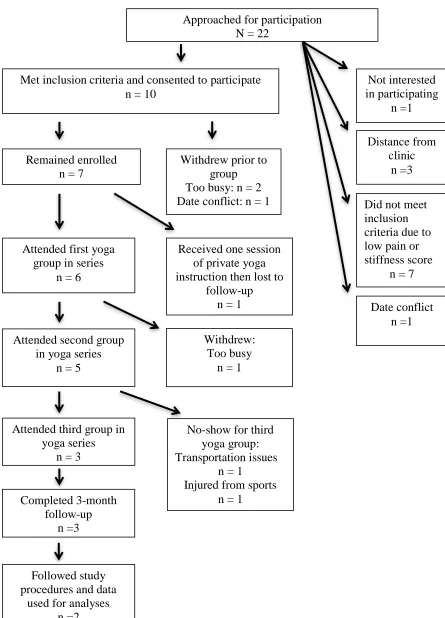
Participating rheumatologists referred 22 patients who met the age and diagnosis
inclusion criteria. Eleven of these patients met full study criteria and chose to enroll in the study.
Numerous patients who did not meet criteria reported disappointment about not being able to
enroll in the study and described interest in future yoga programs for JIA. See Figure 1 for a flow
1
chart of participant enrollment. Two participants completed the full intervention including all
three yoga sessions as well as consistently engaged in home yoga practice; thus, data from these
two participants were used in the final analyses.
Participant 1, who has been given the pseudonym “Jen” for the purposes of the study,
was a 15-year-old, 9th-grade, Caucasian female with polyarticular RF negative JIA with a disease
onset at age 12. Participant 2, given the pseudonym “Nina” was a 17-year-old, 12th
-grade female
of Asian descent with polyarticular RF positive disease. Her disease onset was at age 14.
Setting
Patients who met inclusion criteria were greeted and consented by the primary
investigator at the outpatient clinic at Emory Children’s Center Division of Pediatric
Rheumatology. All yoga group sessions took place on weekends at the Emory Children’s Center
in a carpeted semi-private space.
Design
An ABAB reversal single-case design was used, which combines an applied clinical
focus with scientific rigor, yielding high internal validity (Kratochwill et al., 2010; Cohen,
Feinstein, Masuda, & Vowles, 2014). Specifically, single-case designs are recommended when
exploring functional relations among variables (i.e., causal relation between independent and
dependent variables) and are well suited for testing novel interventions (Cohen et al., 2014;
Drotar, La Greca, Lemanek, & Kazak, 1995; Kratochwill, Hitchcock, Horner et al., 2010; Rapoff
& Stark, 2008). The ABAB design involves gathering baseline data (A1), instating a treatment or
intervention (B1), removing or withdrawing the intervention (A2), and then reinstating the
intervention (B2). In the current study, daily self-report of pain and stiffness were the primary
the first yoga treatment phase (B1), revert to baseline levels when treatment is withdrawn (A2),
and then again decrease during the second yoga phase (B2), evidence would exist for reductions
in pain and stiffness being a function of the yoga intervention.
A minimum of one participant is needed for an ABAB design because the participant
provides its own control for comparison; however, having several participants can assist in
demonstrating replication of effects (Kazdin, 1982; Kratochwill et al., 2010). Outcome variables
in single-case designs must be measured repeatedly during each phase. In accordance with
standard guidelines (Kratochwill et al., 2010), reversal designs must have a minimum of four
phases per participant (e.g., ABAB) and a minimum of five data points (i.e., data reported at least
5 days per participant) of target behavior per phase in order to interpret the effects of treatment
(Kazdin, 2011; Kratochwill, et al., 2010). Additionally, the intervention must be systematically
manipulated by the researcher to meet standards (Kratochwill et al., 2010).
Treatment effects are often interpreted in terms of the following criteria: level, trend,
variability, consistency, and latency (Cohen et al., 2014; Kazdin, 2011; Kratochwill et al., 2010).
Level is considered to be the mean score of the data within a particular phase. Trend refers to the
slope and the direction (i.e., increasing, decreasing) of the data within a phase. Variability is
understood by comparing the range of the data points within and across phases. Consistency
refers to the examination of patterns of data when comparing phases. Latency describes the
immediacy or delay of changes in data observed when a phase is introduced.
In an ideal ABAB design, initiation of the active treatment is typically determined based
on stability of baseline data (Kazdin, 1982). However, given the practical demands of conducting
the present study, the dates of group yoga sessions (i.e., start of B1) were pre-determined and
instructions were given for a date to begin daily self-monitoring of pain and morning stiffness.
Jen’s baseline data (A1) consisted of 26 data points, whereas Nina’s baseline (A1) was comprised
of 16 data points. Jen’s subsequent phases, B1, A2, and B2, were precisely 14 days each, as
instructed. Nina’s first yoga phase (B1) was 15 days, her reversal phase (A2) was 13 days, and
her final yoga phase (B2) was 13 days. Phase lengths for Nina varied according to both when the
principal investigator was able to reach Nina by phone or email, and when Nina initiated the
change in accordance with instructions. The extended baselines and relatively long yoga phases
of 2 weeks were selected to balance the aim to obtain stable data with the recognition that JIA is
characterized by fluctuations in pain and stiffness.
Measures
Demographics.A demographic questionnaire was administered to caregivers. Questions
assessed background information about the adolescent (e.g., age, gender, ethnicity, and health
status) and also about the caregiver (e.g., relation to adolescent, gender, age, ethnicity, race,
education, occupation, family income, health status). Adolescents were also asked to answer
several demographic questions (age, grade in school, disease subtype, JIA onset and duration).
Pain Intensity. Pain intensity was measured via an 11-point numerical rating scale
(NRS-11). The scale ranges from 0 (no pain) to 10 (worst pain you can imagine). The NRS-11 is
said to be the most commonly used scale in pediatric clinical settings with children over the age
of 8 (von Baeyer, 2006). Miro, Castarlenas, and Huguet (2009) have demonstrated adequate
validity for assessing pain intensity in both clinical and non-clinical samples of children as young
as six and eight, respectively. Additionally, in adult populations, a reduction of approximately
two points on the NRS-11 indicates clinically important changes in pain (Farrar, Young,
throughout the duration of the study through either a paper diary or online survey. Participants
were instructed to record their pain intensity scores upon awakening and 30 minutes after
awakening. Pain was also measured at each yoga group and again daily at 3-month follow-up.
Morning Stiffness. Participants reported on the intensity of their morning stiffness using
an 11-point numerical rating scale, anchored by 0 (not stiff at all) and 10 (very stiff). They were
instructed to record their stiffness intensity upon awakening and 30 minutes later. Additionally,
duration of morning stiffness, operationalized as the amount of time in minutes or hours that the
adolescent experiences joint achiness and stiffness in the mornings, was measured via self-report.
Participants recorded stiffness duration at a later point in the day as stiffness may last up to a few
hours. Daily stiffness intensity and duration reports were also collected at 3-month follow-up.
Yoga Practice. Participants reported on whether or not they engaged in yoga each day by
responding “yes” or “no” to a simple stem question (i.e., Did you practice yoga today?). If they
endorsed yoga practice, they also indicated which track(s) from the yoga DVD they practiced by
selecting from the listed answer choices (e.g., “1. Intro;” “2. Breathing;” “3. Ankles, Knees,
Hips”). This was begun at the start of the first yoga phase, continued through the duration of the
intervention, and was then reported again at 3-month follow-up for two weeks.
Self-efficacy. Self-efficacy was measured by the Children’s Arthritis Self-Efficacy Scale
(CASE; Barlow, Shaw, & Wright, 2001), an 11-item Likert format scale specifically designed
for school-aged children and adolescents with JIA that assesses perceived self-efficacy as related
to three arthritis-specific content areas which comprise the subscales: activities, symptom
management, and emotions. Questions are specific to perceived control over arthritis (e.g., “I can
find ways to control the stiffness of arthritis” “I can control my arthritis at school”). The Likert
subscale totals that range from 3 to 20, with total scores ranging from 11 to 55. Higher scores
indicate greater self-efficacy. The CASE has been validated in samples aged 7-17 years.
Coefficient alphas for the 3 subscales were reported as follows: activity, α = 0.90; symptoms, α =
0.87; and emotions, α = 0.85 (Vuorimaa, Honkanen, Konttinen, Komulainen, & Santavirta,
2007). Adequate face, content, construct, and criterion validity have all been established (Barlow
et al., 2001). Self-efficacy was assessed at the first in-person yoga session following the
completion of the baseline phase (A1), at the final in-person yoga session (completion of B2), and
at 3-month follow-up.
Mindfulness. The Mindful Attention Awareness Scale- Adolescent form (MAAS-A;
Brown, West, Loverich, & Beigel, 2011) is a measure of attention and awareness in daily life
activities based on the adult version of the MAAS (Brown & Ryan, 2003). The scale specifically
measures individual differences in the frequency of mindlessness (e.g., ‘‘It seems I am ‘running
on automatic’ without much awareness of what I’m doing’’), the opposite of the construct of
mindfulness, over time because authors suggest that mindless states are more common and
accessible to people untrained in mindfulness. The MAAS-A is a 14-item, self-report tool with
responses indicated on a 6-point Likert scale ranging from 1 (almost always) to 6 (almost never),
with higher scores reflecting higher trait mindfulness. This scale was validated in a normative
sample and an outpatient psychiatric sample, both ages 14-18, demonstrating acceptable internal
consistency (normative, α = 0.85-0.88; psychiatric, α = 0.86). Scores are computed by
calculating a total of all items, with higher scores denoting greater mindfulness. The MAAS-A
was completed at the first and last in-person yoga sessions and at 3-month follow-up.
Health-related Quality of Life. The Juvenile Arthritis Quality of Life Questionnaire
children with arthritis (Duffy, Arensault, Wantabe, Duffy, Paquin, & Strawczynski, 1997). It is a
74-item self-report questionnaire that assesses the following domains: physical functioning,
emotional well-being, and general symptoms. The JAQQ is comprised of four subscales
including gross motor functioning (17 items), fine motor function (16 items), psychosocial
functioning (22 items), and general/systemic symptoms (19 items). The JAQQ also contains a
100mm pain VAS, which was not utilized to maintain consistency in measurement of pain; thus
an 11-point numerical rating scale (NRS-11) ranging from 0 to 10 was supplemented.
Participants respond to a stem question, “As a result of arthritis or its treatment, how often have
you, over the past 2 weeks, had difficulty with the following activities?” which is answered
based on a Likert-type scale ranging from 1 (none of the time/never)to 7 (all of the time) with an
additional response option (0) which indicates that the item does not apply to the child. Across
the four subscales, adolescents choose up to five items from each subscale that are the most
personally relevant to them, and a mean score is computed from the items selected. The total
JAQQ score is calculated to be the mean across all four dimensions. Change in score from one
administration to the next can be calculated for both the JAQQ total score and each dimension.
Although no specific cut-off points have been established, a higher score indicates poorer
HRQOL. This measure was used anecdotally to supplement information about participants’
experiences rather than to determine specific levels of functioning or impairment. Construct
validity and sensitivity to change have been demonstrated for the JAQQ. The JAQQ was
completed by participants at the first and last in-person yoga sessions and at 3-month follow-up.
Procedures
This study was approved by both Georgia State University and Emory University
consenting of all participants. Recruitment was conducted in two phases during November 2011
to March 2012 and June 2012 to October 2012 to enroll patients for two separate waves of the
yoga group interventions, which occurred in March 2012 to April 2012 and October 2012 to
November 2012. Inclusion and exclusion criteria were explained in more detail prior to
consenting the participant and caregiver in order to deem if they meet criteria for inclusion. For
those who met criteria, caregivers completed a consent form and the adolescents completed an
assent form. Patients were also able to contact the primary investigator via email or telephone to
receive more information about the study. Participants received $10 gift cards each time they
completed the questionnaire packets (e.g., first yoga session, last yoga session, and 3-month
follow-up).
Adolescents were provided instruction on reporting daily pain and morning stiffness (i.e.,
intensity and duration) scores on the day of study enrollment. Jen, who participated in the first
wave of the intervention, reported scores through a secure online survey. Due to participant
difficulty consistently accessing the online survey, paper diaries were used in the second wave
when Nina was enrolled. Participants received daily emails from the primary investigator
reminding them to record their scores for the day. The primary investigator also called
participants 1-2 times per week to collect the pain and stiffness data. During active yoga phases,
participants also reported which tracks from the yoga DVD they practiced each day.
Baseline (A1) consisted of daily self-monitoring for a minimum of 2 weeks.
Subsequently, the intervention phase (B2) began when participants attended the first yoga group.
At the first group, participants were provided a DVD to guide in-home yoga practice. A
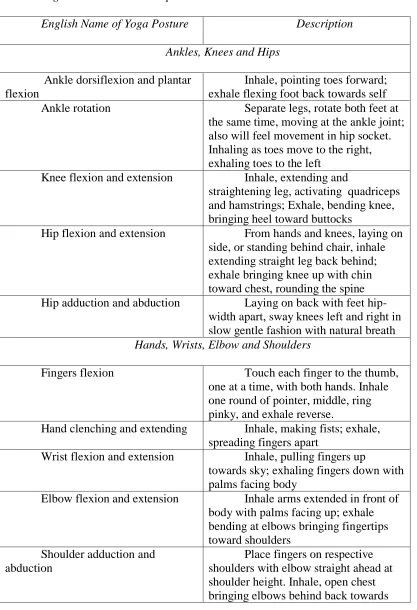
complete description of the yoga program, a modified sequence of The Joint Freeing SeriesTM,
Yoga postures with descriptions are depicted in Table 1.During this first yoga group (see
Appendix B), participants were introduced to each other with ice-breaker activities,
confidentiality was discussed, and participants were provided with psycho-education about yoga
and the specific style being taught in the study. The concept of body awareness was introduced
and then participants learned a yoga sequence designed for adolescents with arthritis, including
breathing techniques. Jen attended the first group with one other adolescent, whereas Nina’s first
group contained three additional adolescents. These additional adolescents either withdrew from
the study or did not complete full study procedures and therefore were not included in analyses.
The first session lasted approximately three hours and light refreshments were provided after the
yoga portion of the class was complete. At the end of the yoga session, participants were given a
copy of a DVD, which reviewed the yoga sequence they learned during the yoga group. The
participants were instructed to practice with the DVD every morning. Specifically, they were
asked to do at least the track focused on breathing plus one other track on the DVD, but it was
preferred and recommended that they completed the breathing track, the track focused on back
and neck movements, and one other track. In total, participants were expected to practice yoga
for an approximate duration of 10-15 minutes daily. They were told to practice after waking and
before having breakfast for the next two weeks. Participants were also instructed to keep other
morning activities consistent during all phases of the intervention to minimize confounding
factors (e.g., if they took morning showers during the baseline phases, they should continue to
take morning showers during yoga phases).
At the end of the 2-week yoga phase, the primary investigator called each of the families
Participants continued daily reporting of pain and stiffness; however, they were additionally
asked if they had practiced yoga as a form of integrity check.
After 2 weeks, the second in-person yoga group occurred (B2). Both Jen and Nina
attended their respective second groups each with one other adolescent. During this session,
confidentiality was reviewed and the concept of acceptance was introduced which was
interwoven into the yoga practice. Following the discussion, participants were led through the
breath work and yoga sequence for approximately one hour. In addition, the instructor answered
questions about the yoga sequence and provided appropriate adaptations as necessary. This
session was approximately 2.5 hours and light refreshments were served. A more detailed
description of the session can be found in Appendix B. At the completion of the second yoga
group session (last day of A2), participants were instructed to practice daily with the DVD again
for 2 more weeks. After 2 weeks, participants were invited back to the clinic to attend a final
yoga group. This third group was included as way to help participants solidify their yoga skills,
collect post-intervention data, and conduct a focus group with participants. Jen attended this
group alone, as no other adolescents arrived that day. Nina’s final group was attended by one
other adolescent. Following approximately 1 hour of yoga practice, the remainder of the session
consisted of a focus group, asking participants and their caregivers to describe their experience
participating in the study. The final group lasted approximately 2.5 hours and refreshments were
provided. Following the completion of the third yoga group, participants no longer completed
daily assessments.
Follow-up. Three months after the completion of the intervention, participants were
contacted by phone and asked to engage in daily self-monitoring of pain and morning stiffness
had learned through the study (with or without the DVD), and if so, which tracks they practiced.
Jen and her mother completed the three-month follow-up packet during a regularly scheduled
clinic visit. Nina requested the packets be sent to the home and both she and her mother
completed and returned them. In addition to psychosocial measures, participants and parents
were also asked to estimate how many times during the past 3 months the adolescent practiced
yoga, motivation for practicing, and barriers that interfered with yoga practice.
Analytic Plan
The data evaluation process traditionally used to assess ABAB reversal designs is that of
visual inspection; however, a number of analytical approaches have been introduced in the
literature to augment visual inspection (Cohen et al., 2014). To examine pain and stiffness,
changes in patterns between the baseline and the intervention phases were evaluated.
Specifically, changes in level, trend, variability, consistency, and latency were visually assessed
(Cohen, et al, 2014; Kratochwill, et al., 2010). To complement the visual inspection of level and
trend, the conservative dual-criterion (CDC) method was employed (Fisher, Kelley, & Lomas,
2003). This method involves generating level and trend criterion lines to aid in the evaluation of
changes across phases (Swoboda, Kratochwill, & Levin, 2010). When employing the CDC
criteria, a pre-determined number of data points must fall below or above both the mean and
trend lines depending on the hypothesized direction of the effect in order to conclude that
systematic change has occurred.
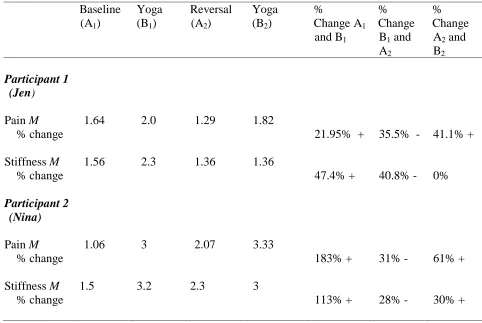
In addition to visual inspection and CDC method, percent change scores were also used
to explore changes in pain and stiffness intensity. These scores were calculated to describe the
average change in pain and stiffness from waking to 30 minutes later compared across phases.
waking for each day) were obtained for each day and then averaged within each phase. The mean
scores were then compared across phases.
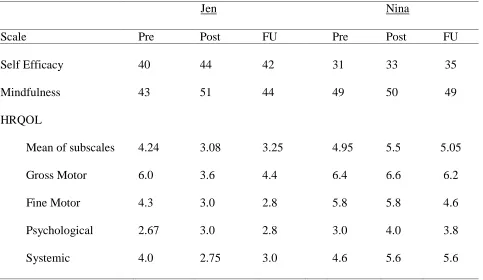
To assess secondary outcome measures including self-efficacy, mindfulness, and health
related quality of life, the scores were compared at pre-intervention, post-intervention, and
3-month follow-up. Percent change calculations were also used to evaluate change over time.
RESULTS
Descriptive Data and Adherence to Protocol
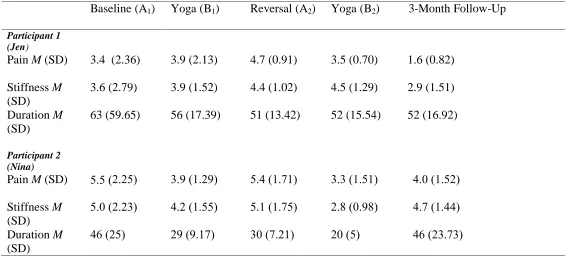
Means and standard deviations for pain and stiffness scores across phases are reported in
Table 2. Jen engaged in yoga practice 78% of days instructed, but only typically adhered to
practicing 1-2 tracks from the DVD. Nina practiced yoga 57% of days, and consistently practiced
a minimum of 3 tracks from the DVD. Additionally, Nina reported engaging in the full DVD
(i.e., all tracks) 6 times out of the total 16 days she engaged in yoga during the intervention
phases. Both participants completed daily diaries again at 3-month follow-up for two weeks,
reporting on the same daily measures. Jen recorded pain and stiffness scores 11 out of 14 days,
reported practicing yoga 3 of those days, and used one track from the DVD each time she
practiced. Nina recorded diary data for all 14 days, reported practicing yoga 4 out of 14 days (on
weekends only), and completed the entire DVD each time she practiced.
Treatment Effects Associated with Primary Aims
The two primary aims of this study were to decrease JIA pain and morning stiffness via a
yoga intervention. The following describes results based on visual inspection and CDC analysis
for (a) pain reported 30 minutes after waking, (b) stiffness reported 30 minutes after waking, and
(c) duration of morning stiffness calculated in minutes. The same outcome variables were
explored at three-month follow-up through visual inspection alone.
Participant 1: Jen
Pain Intensity. Examining Figure 2 via visual inspection and the CDC method reveals
that there was a significant increase in the level of pain and change in trend from A1 to B1,
contrary to hypotheses. No significant changes in pain level were demonstrated comparing B1 to
B1 to A2 in opposition to hypotheses using both modalities of evaluation. Consistent with
hypotheses, visual inspection suggests a decrease in pain level and significant change in trend
from A2 to B2, which are supported by the CDC method.
Variability in pain scores decreased throughout Jen’s participation in the study. Although
the lowest variability is present within the second intervention phase (B2), variability appears to
decrease over time (A1 to B2), rather than as a consistent effect of the intervention. Thus, the
consistency in the pattern of data is weak comparing across yoga phases and non-yoga phases
with regard to hypotheses. Small latency effects are seen from B1 to A2, and from A2 to B2;
however variability within these phases may preclude conclusions related to latency.
In summary, the only changes in pain level and trend consistent with hypotheses were
observed when comparing A2 to B2. In fact, there was an increase in level and change in
direction opposite of prediction when comparing the baseline (A1) and first yoga phase (B1).
Examinations of variability, consistency, and latency also do not support systematic changes
across the four phases; yet patterns are seen emerging from A2 to B2. Thus, one cannot conclude
systematic changes in Jen’s pain scores as a function of the intervention.
Morning Stiffness Intensity. As can be gleaned from Figure 3, lack of stability in A1
makes it difficult to visually determine change in stiffness level and trend comparing A1 to B1.
CDC method aids in these interpretations suggesting a significant increase in level and change in
trend from A1 to B1, both contrary to hypotheses. Visually examining B1 compared to A2 reveals
little change in level, and CDC method reveals similar conclusions with no systematic
differences indicated. With regard to trend, variability hinders stronger conclusions from being
drawn via visual inspection, but CDC assists in this observation by suggesting a systematic
final yoga phase (B2), visual inspection again reveals minimal difference in level and trend,
which are both confirmed by no systematic changes indicated by the CDC method.
Great variability is present in A1 and B1, yet it decreases over the course of the study.
Specifically, phases A2 and B2 demonstrate considerably less variability indicating a lack of
consistency in patterns of data when examining yoga and non-yoga phases. Small latency effects
can be seen from B1 to A2, but the variability in phase B1 hinders conclusions. In summary,
evidence across criteria does not support systematic changes in morning stiffness intensity
consistent with hypotheses.
Duration of Morning Stiffness. Using Figure 4 to compare levels of stiffness duration
between phases A1 and B1, a change in level is not apparent via visual inspection, nor is a
systematic change revealed via the CDC method. No changes in level of morning stiffness
duration are present between B1 and A2, and levels appears stable comparing the reversal phase
(A2) and final yoga phase (B2) utilizing both visual inspection and the CDC method to evaluate.
In terms of trends, the variability in A1 and B1 makes visual inspection challenging, yet CDC
suggests a systematic change in trend between A1 and B1, contrary to hypotheses. Using visual
inspection, there is some indication of a change in trend when comparing B1 to A2, with A2 more
clearly stabilizing, but the CDC method rejects systematic change between these phases. Finally,
comparing the reversal phase (A2) and final yoga phase (B2), no changes in trend are observed
via visual inspection nor through the CDC method.
With regard to variability of stiffness duration, one can see a clear pattern of decrease
through the course of the study (A1 to B2) with fewer high extremes in duration of morning
outcomes, there is greater consistency in data patterns between A2 and B2 than between A phases
and B phases. No notable latency effects are present.
To summarize, there are no systematic changes in mean or trend for Jen’s morning
stiffness duration in the direction of hypotheses according to either visual inspection or the CDC
method. Variability in the first two phases (A1 and B1) impacts visual conclusions drawn; CDC
actually suggests trends opposite of hypotheses. The patterns of variability and consistency do
not lend support to hypotheses either. Thus, there is no evidence that Jen’s stiffness duration was
systematically altered as a result of the intervention.
Three-month follow-up. At 3-month follow-up Jen’s pain intensity is lower in level that
any of the phases during the intervention and an upward trend is observed. The pattern of data
and the range of variability are both most similar to phase A2. For morning stiffness intensity,
Jen’s 3-month data are quite variable and exhibit no clear trend. Similarly to pain, stiffness levels
are in a lower range at 3-months than any other phase and the pattern is most similar to B2. Jen’s
stiffness duration reflects similar patterns of variability, level, and trend to both A2 and B2.
Although the level of duration of morning stiffness is comparable to that found during the second
half of the intervention, it is not discriminately consistent with the yoga phases. In summary, Jen
only practiced yoga 3 out of 14 days during the follow-up, yet data reflected patterns of lower
pain and stiffness intensity than during any phase of the intervention. Jen’s data across pain
intensity, morning stiffness intensity, and duration of morning stiffness are consistent with the
conclusions found in the ABAB single-case analyses suggesting that there was no change in
Jen’s primary outcome measures as a result of the intervention.