ScholarWorks @ Georgia State University
ScholarWorks @ Georgia State University
Counseling and Psychological Services
Dissertations Department of Counseling and Psychological Services
Spring 5-11-2012
Teachers' Perceived Barriers to Effective Bullying Intervention
Teachers' Perceived Barriers to Effective Bullying Intervention
Megan L. Marshall Georgia State University
Follow this and additional works at: https://scholarworks.gsu.edu/cps_diss
Recommended Citation Recommended Citation
Marshall, Megan L., "Teachers' Perceived Barriers to Effective Bullying Intervention." Dissertation, Georgia State University, 2012.
https://scholarworks.gsu.edu/cps_diss/70
This dissertation, TEACHERS‟ PERCEIVED BARRIERS TO EFFECTIVE BULLYING INTERVENTION, by MEGAN LEIGH MARSHALL, was prepared under the direction of the candidate‟s Dissertation Advisory Committee. It is accepted by the committee members in partial fulfillment of the requirements for the degree of Doctor of Philosophy in the College of Education, Georgia State University.
The Dissertation Advisory Committee and the student‟s Department Chair, as representatives of the faculty, certify that this dissertation has met all standards of excellence and scholarship as determined by the faculty. The Dean of the College of Education concurs.
_________________________________ _________________________________ Joel Meyers, Ph.D.
Co-Committee Chair
Kristen Varjas, Psy.D. Co-Committee Chair
_________________________________ _________________________________ Stephen Truscott, Psy.D.
Committee Member
Barbara Meyers, Ed.D. Committee Member
_________________________________ Date
_________________________________ Brian J. Dew, Ph.D.
Chair, Department of Counseling and Psychological Services
_________________________________ R. W. Kamphaus, Ph.D.
By presenting this dissertation as a partial fulfillment of the requirements for the
advanced degree from Georgia State University, I agree that the library of Georgia State University shall make it available for inspection and circulation in accordance with its regulations governing materials of this type. I agree that permission to quote, to copy from, or to publish this dissertation may be granted by the professor under whose direction it was written, by the College of Education‟s director of graduate studies and research, or by me. Such quoting, copying, or publishing must be solely for scholarly purposes and will not involve potential financial gain. It is understood that any copying from or publication of this dissertation which involved potential financial gain will not be allowed without my written permission.
All dissertations deposited in the Georgia State University library must be used in
accordance with the stipulations prescribed by the author in the preceding statement. The author of this dissertation is:
Megan Leigh Marshall 1766 Chanson Place Marietta, GA 30062
The director of this dissertation is:
Dr. Joel Meyers
Department of Counseling and Psychological Services College of Education
Megan Leigh Marshall
ADDRESS: 1766 Chanson Place
Marietta, GA 30062
EDUCATION:
Ph.D. 2012 Georgia State University School Psychology Ed.S. 2005 Georgia State University
School Psychology M.Ed. 2003 Georgia State University
School Psychology B.A. 2000 University of Georgia
Psychology
PROFESSIONAL EXPERIENCE:
2010-Present School Psychologist
Cherokee County Schools, Canton, GA 2009-2010 Project Coordinator/Graduate Assistant Georgia State University, Atlanta, GA 2008-2009 School Psychology Predoctoral Intern
Tennessee Internship Consortium, Knoxville, TN 2007-2008 Part-Time School Psychologist
Cherokee County Schools, Canton, GA 2005-2007 Contract School Psychologist
Clayton County Schools, Morrow, GA 2004-2005 School Psychology Intern
City Schools of Decatur, Decatur, GA 2003-2003 School Psychology Practicum Student
DeKalb County School System, Decatur, GA 2002-2010 Graduate Research Assistant
Georgia State University, Atlanta, GA
PROFESSIONAL SOCIETIES AND ORGANIZATIONS:
2011-Present American Psychological Association Division 16: School Psychology
2004-2011 Student Affiliates in School Psychology, Georgia State University Chapter
Green, A., Farist, D., Jones, S., Marshall, M., & Howard, P. (2011, September).
Autism: Practical strategies and solutions. Presentation for educators in Cherokee County School District, Canton, GA.
Marshall, M. L., Huddleston, L., & Varjas, K. (2010, January). Promoting a positive classroom climate through addressing bullying behaviors. Presentation at the City Schools of Decatur‟s Celebration of Professional Learning Conference, Decatur, GA.
Smith, H., Varjas, K., Meyers, J., Marshall, M. L., Ruffner, C., & Graybill, E. C. (2010). Teachers‟ perceptions of teasing in schools. Journal of School Violence, 9, 2-22.
Varjas, K., Meyers, J., Henrich, C., Bennett, T., Huddleston, L., Kim, S., Marshall, M. L., Parris, L., Tenenbaum, L., Vanegas, G., Walker, D., & Bolling, H. (2010). Renfroe Bullying Intervention Project Curriculum (Prepared for Renfroe Middle School). Atlanta, GA: School Psychology Program, Georgia State University.
Marshall, M. L., Varjas, K., Meyers, J., Graybill, E. C., & Skoczylas, R. B. (2009). Teacher responses to bullying: Self-reports from the front Line. Journal of School Violence, 8(2),136-158.
Meyers, J., Varjas, K., Henrich, C., Marshall, M. L., Huddleston, L., & Kennedy, P. (2009, September). Bullying prevention and intervention project.
Presentation to the Metro Atlanta Psychological Service Consortium, East Point, GA.
Varjas, K., Meyers, J., Bellmoff, L., Lopp, E., Birckbichler, L., & Marshall, M. L. (2008). Missing voices: Fourth through eighth grade urban students‟ perceptions of bullying. Journal of School Violence, 7(4), 97-118. Varjas, K., Dew, B., Marshall, M. L., Graybill, E., Singh, A., Meyers, J., &
Birckbichler, L. (2008). Bullying in schools towards sexual minority youth.
Journal of School Violence, 7, 59-86.
Varjas, K., Graybill, E., Mahan, W., Meyers, J., Dew, B., Marshall, M. L., Singh, A., & Birckbichler, L. (2007). Urban service providers‟ perspectives on school responses to gay, lesbian, and questioning students: An exploratory study.
Professional School Counseling, 11(2), 113-119.
Mahan, W., Varjas, K., Dew, B., Meyers, J., Singh, A., Marshall, M. L., & Graybill, E. (2006). School and community service providers‟ perspectives on gay, lesbian, and questioning bullying. Journal of GLBT Issues in Counseling, 1(2), 45-66.
Varjas, K,. Meyers, J., Henrich, C. C., Graybill, E. C., Dew, B. J., Marshall, M. L., Williamson, Z., Skoczylas, R. B., & Avant, M. (2006). Using a participatory culture-specific intervention model to develop a peer victimization
TEACHERS‟ PERCEIVED BARRIERS TO EFFECTIVE BULLYING INTERVENTION
by Megan Marshall
Despite the critical role teachers play in the management and reduction of
bullying in schools (Craig, Henderson, & Murphy, 2000; Frey, Jones, Hirschstein, &
Edstrom, 2011; Nicolaides, Toda, & Smith, 2002), minimal research has been conducted
examining teachers‟ responses to these negative behaviors (Bauman & Hurley, 2005;
Marshall, Varjas, Meyers, Graybill, & Skoczylas, 2009; Sairanen & Pfeffer, 2011; Yoon
& Kerber, 2003). Moreover, a critical topic lacking in the literature is the identification of
potential barriers (e.g., difficulty identifying bullying, lack of time to address these
behaviors) inhibiting teachers from successful intervention. The purpose of this
exploratory study was to assess teachers‟ perceived barriers to effective bullying
intervention, as well as to examine potential relationships between how teachers reported
responding to bullying and perceived barriers to successful intervention. Individual
in-depth qualitative interviews with 30 fourth through eighth grade teachers were used to
determine teachers‟ responses and perceived barriers to bullying interventions. Inductive
and deductive approaches to data analysis (LeCompte & Schensul, 1999; Nastasi &
Schensul, 2005; Varjas, Nastasi, Moore, & Jayasena, 2005) were used to explore
teachers‟ self-reported barriers. Teachers described the presence of numerous barriers
that challenged their ability to consistently and effectively respond to bullying.
Qualitative results indicated that these barriers occurred on multiple levels and included
the following four major themes: student-, teacher-, school- and sociocultural-based
systematic relationships were evident. That is, teachers reported responding to bullying
similarly regardless of their perceived barriers to effective intervention. Implications for
improving and informing anti-bullying efforts aimed at eliminating these barriers and
increasing the likelihood of teacher intervention are discussed. Future research ideas also
INTERVENTION by
Megan Marshall
A Dissertation
Presented in Partial Fulfillment of Requirements for the Degree of
Doctor of Philosophy in
School Psychology in
the Department of Counseling and Psychological Services in
the College of Education Georgia State University
Copyright by Megan Leigh Marshall
I would like to thank my committee members, Dr. Joel Meyers, Dr. Kris Varjas,
Dr. Stephen Truscott, and Dr. Barbara Meyers for offering their knowledge, guidance,
and support throughout this process. I am extremely grateful for the opportunity to have
learned from each of them. I would also like to thank the school system and teachers for
their participation, as well as the research team who helped me complete this study. I am
forever grateful to my family and friends for their encouragement and love throughout
this long journey. I would also like to thank my husband, Mike, for his unwavering
support and patience. To my fellow student colleagues, I could not have achieved this
goal without you and I offer my sincerest appreciation for your friendship and
collaborative spirit along the way. Finally, I would like to thank my professors for
providing me with exceptional training and guidance throughout graduate school.
Page
List of Tables ……… iv
List of Figures ………...………… v
Abbreviations ……… vi
Chapter 1 AN INTEGRATED TEACHER PROFESSIONAL LEARNING MODEL FOR SCHOOL-BASED BULLYING…..……….. 1
School-Based Efforts to Prepare Teachers to Manage Bullying….... 5
Rationale for a Teacher Professional Learning Model for School-Based Bullying ………..………... 13
Effective Professional Development for Teachers …………....…… 16
Participatory Culture-Specific Intervention Model ...………..…….. 19
Integrated Teacher Professional Learning Model for School-Based Bullying……….. 22
Conclusion……….……. 43
References ……….. 45
2 TEACHERS‟ PERCEIVED BARRIERS TO EFFECTIVE BULLYING INTERVENTION ……….... 64
Rationale ……….…... 72
Method ……….………….. 74
Results ……….……... 84
Discussion ……….………. 101
References………...…… 110
Appendixes ……… 121
Table Page
1 Seven Essential Components of the ITPLMB……….. 23
2 Template for the ITPLMB……… 28
3 Number and Percentage of Participants Who Reported Experiencing
Each Barrier……….. 86
4 Number and Percentage of Participants Who Reported Implementing
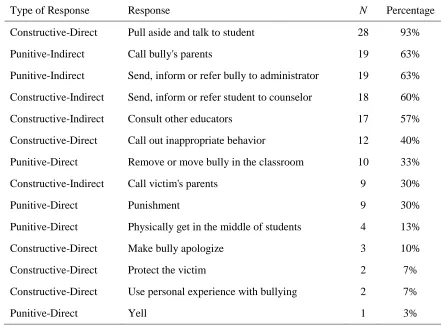
Each Bullying Response……….……….. 98
Figure Page
1 Two by Two Framework for Teachers‟ Responses to Bullying………... 26
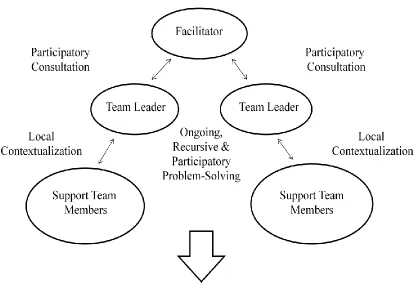
2 Ongoing Support and Feedback Process of the ITPLMB………. 41
3 Teachers‟ Responses to Bullying ………...……….. 69
4 Coding Hierarchy for Teachers‟ Self-Reported Barriers to Effective
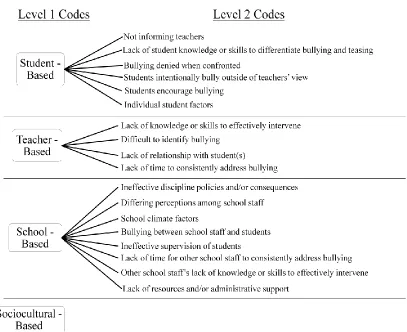
Bullying Intervention……… 85
CFGs Critical Friends Groups
ITPLMB Integrated Teacher Professional Learning Model for School-Based Bullying
NEA National Education Association
OBPP Olweus Bullying Prevention Program
PCSIM Participatory Culture-Specific Intervention Model
PD Professional Development
AN INTEGRATED TEACHER PROFESSIONAL LEARNING MODEL FOR
SCHOOL-BASED BULLYING
Despite substantial research efforts, anti-bullying legislation, and ongoing media
attention, school-based bullying continues to be an international, pervasive epidemic due
to its widespread impact on students‟ well-being and academic performance (Due et al.,
2005; Griffin & Gross, 2004; Nansel et al., 2001). Bullying is broadly defined as repeated
and intentionally aggressive behavior characterized by an imbalance of power between
the perpetrator and victim (Olweus, 1993). Children and adolescents report experiencing
bullying at alarming rates during the school day (Bradshaw, Sawyer, & O‟Brennan, 2007;
Craig et al., 2009; Nansel et al., 2001; Wang, Iannotti, & Nansel, 2009). For example, in
a recent study, 49% of more than 15,000 students in grades 4 through 12 reported being
bullied at least once during the last month (Bradshaw et al., 2007). Bullying includes both
physical (e.g., hitting, pushing) and verbal (e.g., name-calling, threatening) behaviors
(Bradshaw, Waasdorp, O‟Brennan, & Gulemetova, 2011; Olweus, 1993). In addition,
bullying can be inflicted indirectly via relational bullying (e.g., socially ostracizing
others, spreading rumors; Olweus, 1993) and electronically (e.g., sending disrespectful
and harassing photographs, emails, text messages; Diamanduros, Downs, & Jenkins,
2008). Prior research has indicated that bullying peaks in middle school (e.g., Goldbaum,
Craig, Pepler, & Connolly, 2007; Nansel et al., 2001) and occurs in several locations
within the school environment (e.g., the classroom, hallway, cafeteria, playground;
Bradshaw et al., 2007). Furthermore, girls are more likely to be involved in indirect
bullying, whereas boys are more likely to be involved in verbal and physical bullying
(Wang et al., 2009).
Studies have shown that bullying results in numerous deleterious effects for
involved students (i.e., bullies, victims, bully-victims, and bystanders), including short-
and long-term behavioral (e.g., Nansel et al., 2001), physical (e.g., Srabstein & Piazza,
2008), social-emotional (e.g., Craig et al., 2009) and mental health problems (e.g.,
Gladstone, Parker, & Malhi, 2006). Bullying victimization also has been associated with
decreased academic performance (Glew, Fan, Katon, Rivara, & Kernic, 2005; Juvonen,
Wang, & Espinoza, 2011; Srabstein & Piazza, 2008), school avoidance (Kochenderfer &
Ladd, 1996), and impaired concentration in the classroom (Boultan, Trueman, & Murray,
2008). Students frequently involved in bullying as victims or perpetrators tend to dislike
school and demonstrate lower academic competence and school attendance (e.g., Glew et
al., 2005; Srabstein & Piazza, 2008).
Teachers spend a substantial portion of the school day interacting with students
and are therefore at the forefront of the battle against bullying. School climate research
has indicated that by implementing consistent and effective interventions for
school-based bullying, teachers can play a critical role in providing a safe and supportive
environment that promotes student learning (Colvin, Tobin, Beard, Hughes, & Sprague,
1998; Kasen, Berenson, Cohen, & Johnson, 2004). However, several studies have shown
incidents and therefore are reluctant to approach them for help (Craig, Henderson, &
Murphy, 2000; Doll, Song, & Siemers, 2004; Espelage & Asidao, 2001; Hazler, Miller,
Carney, & Green, 2001; Holt & Keyes, 2004; Swearer & Cary, 2003; Varjas, Meyers,
Bellmoff, et al., 2008). Remarking on the perceived ineffectiveness of teachers, James
and colleagues (2008) stated that “research shows that without specific training, teachers
have a poor understanding of bullying and how to manage it” (p. 161). Despite the
critical need for teacher preparation on bullying, teachers frequently report being
ill-equipped to combat these behaviors due to lack of training (Benítez, García-Berbén, &
Fernández-Cabezas, 2009; Holt & Keyes, 2004; Marshall, Varjas, Meyers, Graybill, &
Skoczylas, 2009; Mishna, Scarcello, Pepler, & Wiener, 2005).
The first step of successful prevention or reduction of bullying requires educators
to be able to accurately recognize these behaviors and possess the requisite knowledge,
skills, and dispositions to effectively intervene (Kokko & Porhola, 2009; Limber &
Small, 2003; Nicolaides, Toda, & Smith, 2002; O‟Moore, 2000). Increased learning
opportunities for teachers have been highly encouraged, both at the pre-service and
in-service level (Kokko & Porhola, 2009; James et al., 2008; O‟Moore, 2000), to provide
critical information regarding the types, prevalence, signs and consequences of bullying,
as well as to educate teachers about how to intervene and prevent these behaviors
(O‟Moore, 2000). Studies have demonstrated that teachers can significantly reduce the
negative effects of bullying (e.g., poor academic achievement, increased mental and
physical health concerns, absenteeism) if properly prepared; however, teacher
(Horne, Orpinas, Newman-Carlson, & Bartolomucci, 2004; Nicolaides et al., 2002; Rigby
& Bagshaw, 2003).
The demands placed on classroom teachers are extraordinary. Educational
policies and standards are frequently changing, requiring teachers to be both responsive
to new professional roles and responsibilities and accountable for providing an equitable
education for increasingly diverse students (e.g., Darling-Hammond, 2006; Valli &
Buese, 2007). Teachers are under immense pressure to meet current standards of
educational success which are largely defined by students‟ performance on high-stakes,
content-based assessments (e.g., Carroll, 2007; Hilliard, 2000). Beyond providing
academic instruction, teachers also have the ethical responsibility of protecting students
from harm (as espoused by the National Education Association‟s code of ethics, 1975).
Because bullying thwarts teachers‟ efforts to enhance academic achievement and
threatens students‟ safety in schools (Colvin et al., 1998; Kasen et al., 2004), teachers
have both a professional and ethical responsibility to decrease these behaviors (NEA,
1975).
The current paper first examines school-based efforts to prepare teachers to
address bullying, including anti-bullying prevention/intervention programming and
pre-service/in-service education for teachers. Following, in response to findings in the
literature, the rationale for developing a teacher professional learning model specific to
bullying is discussed. Research on effective Professional Development (PD) for teachers
Participatory Culture-Specific Intervention Model (PCSIM; Nastasi, Moore, & Varjas,
2004) are reviewed, followed by the presentation of an integrated teacher professional
learning model for bullying. This model seeks to address the challenges associated with
existing efforts to educate teachers about bullying prevention, as well as to incorporate
essential components of effective PD and the PCSIM into a comprehensive model for
educators to use to reduce bullying.
School-Based Efforts to Prepare Teachers to Manage Bullying
Bullying legislation has increasingly required schools to develop and implement
policies and procedures to prohibit bullying (Hu, 2011; Limber & Small, 2003; Srabstein,
Berkman, & Pyntikova, 2008; Terry, 2010; Whitted & Dupper, 2005). As a result,
numerous intervention and prevention programs have been designed to address
school-based bullying (for a review, see Farrington & Ttofi, 2009;Merrell, Gueldner, Ross, &
Isava, 2008). For the purpose of this paper, the literature on several anti-bullying efforts
that incorporate teacher education as at least one aspect of the bullying intervention,
prevention, or pre-service/in-service program are presented (e.g., Benítez et al., 2009;
Newman-Carlson & Horne, 2004; Olweus & Limber, 2010; O‟Moore & Minton, 2005;
Salmivalli, Kaukiainen, & Voeten, 2005). More specifically, the following three
initiatives are discussed in detail to provide foundational information regarding the range
of school-based approaches used to prepare teachers to address bullying: (1) a
comprehensive anti-bullying program: The Olweus Bullying Prevention Program (OBPP;
intervention: Bully Busters (Horne, Bartolomucci, & Newman-Carlson, 2003; Newman,
Horne, & Bartolomucci, 2000; Newman-Carlson & Horne, 2004); and (3) a pre-service
training course designed to educate teachers about bullying (Benítez et al., 2009).
A Comprehensive Anti-Bullying Program
Founded on the premise that bullying is a systemic problem requiring school-wide
intervention, comprehensive anti-bullying programs target interventions at the student,
teacher/classroom, school, and sometimes the community level (e.g., Olweus, 1993;
Olweus & Limber, 2010; Smith, Schneider, Smith, & Ananiadou, 2004; Whitted &
Dupper, 2005). The Olweus Bullying Prevention Program (OBPP) was one of the first
comprehensive programs developed to reduce bullying in schools (Olweus, 1993) and has
been widely implemented and evaluated worldwide (Limber, 2004; Olweus & Limber,
2010). The program is based on the following principles in which adults “(a) show
warmth and interest in their students; (b) set firm limits to unacceptable behavior; (c) use
consistent, nonphysical nonhostile negative consequences for violation of rules; and (d)
act as authorities and positive role models” (Limber, 2011a, p. 72). Intervention strategies
used in the OBPP to reduce and prevent bullying are designed to address multiple levels.
For example, community-level interventions include developing school-community
partnerships and involving community members on a coordinating committee.
School-level strategies aim to educate school personnel on the fundamental principles of the
program and improve the supervisory system. Classroom- or teacher-level interventions
and discuss class rules against bulling. Finally, individual-level strategies require teachers
to intervene during all suspected bullying situations by talking with bullies, victims, and
parents of involved students (Olweus, 1993; Olweus et al., 2007; Olweus & Limber,
2010).
The OBPP incorporates a school kick-off event, administration of the Olweus
Bullying Questionnaire (a student assessment of bullying), and school-wide rules against
bullying (e.g., students and adults will not bully others, students and adults will try to
help students who are bullied). Members of the coordinating committee participate in a
two-day training with certified OBPP trainers and are responsible for building-level
implementation, which includes providing a full-day training for all school personnel.
Further, staff discussion groups (comprised of no more than 15 teachers and other school
personnel) are led by a member of the coordinating committee and meet regularly to
provide support during program implementation (i.e., encourage staff to present questions
or concerns about the program) and discuss successes and failures related to bullying
dilemmas (Olweus, 1993; Olweus et al., 2007; Olweus & Limber, 2010).
The OBPP was initially implemented and evaluated in the 1980s as part of a
national anti-bullying campaign in Bergen, Norway (Olweus, 1993). Findings from the
study, targeting 2,500 students in grades 5 through 8, indicated approximately a 50%
decline in students‟ self-reported victimization (Olweus, 1991, 1993). Teachers‟ ratings
of bullying in the classroom also decreased (Olweus, 1991, 1993). Since that time,
evaluated internationally with mixed results (e.g., Eslea & Smith, 1998; Pepler, Craig,
O‟Connell, Atlas, & Charach, 2004; Roland, 1989; Stevens, Van Oost, & de
Bourdeaudhuij, 2004). Olweus and Limber (2010) recently stressed the importance of
interpreting these results with caution because “the programs used in these interventions
have deviated considerably, but to different degrees, from the OBPP model in terms of
program content, implementation model, or actual implementation” (p. 383). Assessing
factors affecting program implementation, Kallestad and Olweus (2003) analyzed data
from teachers and schools implementing the OBPP program in Norway and found that
several teacher-level (i.e., efficacy in managing bullying, empathy with victimized
students, having read more of the program materials) and school-level factors (i.e., school
staff‟s openness in communication, the school‟s attention to bullying-related problems)
accounted for a significant portion of variance in program implementation. Further,
results confirmed that teachers were “key agents of change with regard to adoption and
implementation of the OBPP” (Olweus & Limber, 2010, p. 379).
Implementation of the OBPP in several diverse settings in the United States (e.g.,
rural, urban communities) have yielded some positive outcomes (e.g., Black & Jackson,
2007; Limber, Nation, Tracy, Melton, & Flerx, 2004); however, the program “has not
demonstrated consistent efficacy in schools in North America” (Swearer, Espelage,
Vaillancourt, & Hymel, 2010, p. 42; Bauer, Lozano, & Rivara, 2007). While examining
these inconsistent findings, Limber (2011b) identified potential barriers to
implementation and evaluation of the OBPP in the U.S., including resistance by school
researchers have called for cultural adaptations of the program for U.S. implementation,
such as increased community involvement on the coordinating committee, additional
professional learning opportunities for teachers on the importance and use of classroom
meetings, and increased emphasis on the coordinating committee to plan and implement
the OBPP (Limber, 2011a, 2011b; Olweus & Limber, 2010). Despite the location or
cultural adaptations, critical features of the OBPP consistently include bullying-related
training for school personnel and ongoing staff support meetings (Limber, 2011a, 2011b;
Olweus & Limber, 2010).
A Teacher-Targeted Anti-Bullying Program
Another approach to school-based anti-bullying prevention and intervention
programming relies heavily on teacher education for the management of bullying (e.g.,
Newman-Carlson & Horne, 2004; Salmivalli et al., 2005). For instance, Bully Busters is a
teacher-targeted bully prevention program that incorporates staff development and
monthly support meetings with fellow teachers (Horne et al., 2003; Newman et al., 2000).
The program includes a psychoeducational curriculum that consists of modules focused
on increasing teachers‟ awareness and recognition of bullying, as well as identifying
classroom-based prevention and intervention efforts to reduce these behaviors. Bully
Busters is implemented over the course of several staff development sessions
(recommended by the authors to be delivered weekly in three 2-hour training sessions)
and incorporates both didactic (e.g., presentation of related content) and experiential
learning opportunities for teachers (Newman-Carlson & Horne, 2004). The learning
activities to educate and include students into the anti-bullying program, and suggested
questions to be discussed during the support/supervision sessions with other educators.
Guided by an instructor who adheres to the training curriculum presented in the Bully
Busters manual, the support/supervision team meetings are comprised of four to eight
teachers who meet bimonthly. These team meetings serve as a reminder for teachers to
continue to address bullying, as well as a venue to share success and failure stories, seek
advice from their peers, dispel fears, feel empowered, obtain additional classroom
activities, and develop collaborative problem-solving skills (Horne et al., 2003; Horne et
al., 2004; Newman et al., 2000).
Newman-Carlson and Horne (2004) implemented the Bully Busters curriculum
with sixth-, seventh-, and eighth-grade teachers in a Southeastern U.S. middle school. All
teachers were informed of the opportunity to attend a staff development training program
on bullying (for which they received continuing education credit). Seventy-one percent of
eligible teachers participated in the study (N = 30) and were divided into control (i.e., did not receive training) and treatment (i.e., received Bully Busters training) groups. Results
indicated that teachers in the treatment group reported increased knowledge and
application of bullying interventions, improved personal self-efficacy, and decreased
discipline referrals compared to classrooms in the control group. In another study,
Browning and colleagues (2005) evaluated Bully Busters in a rural elementary school in
Tennessee. School personnel who were trained using the Bully Busters curriculum
(including teachers, administrators, and support personnel) reported significant increases
classroom-based prevention strategies, behavioral characteristics of and interventions for
bullies and victims, and teacher and student stress management techniques (Browning,
Cooker, & Sullivan, 2005).
Bell and colleagues (2010) implemented and evaluated an abbreviated version of
the Bully Busters program in a Southeastern U. S. middle school serving sixth-, seventh-,
and eighth-graders. Seventy-five percent of the teacher population participated in the
study (N = 52 teachers), while 488 students (73% of the student population) completed pre- and post-test measures. Participating teachers reported significant improvements in
their perceived self-efficacy of intervening during bullying situations; however, actual
teacher-implemented interventions were not assessed. Furthermore, no significant
changes related to school climate, victimization, or school safety were reported by
students (Bell, Raczynski, & Horne, 2010). Finally, Hunter (2007) conducted a
qualitative study of middle school students‟ perceptions of Bully Busters. After a
year-long implementation by teachers, results indicated that students who were satisfied with
the program reported that their teachers (a) implemented more program elements and (b)
appeared engaged in implementation. Conversely, students who were dissatisfied
reported feeling frustrated with their teachers‟ resistant or disinterested attitude toward
the program (Hunter, 2007). Recommendations for future research on the Bully Busters
program have included identifying characteristics associated with teacher engagement,
evaluating the frequency and efficacy of teacher-implemented anti-bullying strategies,
and pinpointing ways to enhance program buy-in for teachers (Horne, Bell, Raczynski, &
Pre-Service/In-Service Teacher Learning Efforts to Address Bullying
Researchers have examined pre-service and practicing teachers‟ knowledge,
attitudes and responses to bullying (e.g., Bauman & Del Rio, 2006; Bradshaw et al.,
2007; Holt & Keyes, 2004; Nicolaides et al., 2002; Yoon & Kerber, 2003). However,
minimal research has investigated the effects of professional learning efforts intended to
educate individuals either preparing to become (i.e., pre-service) or currently employed
(i.e., in-service) as teachers about bullying (Benítez et al., 2009). Beyond the in-service
components of comprehensive or targeted anti-bullying intervention/prevention programs
such as those described above (e.g., Newman-Carlson & Horne, 2004; Olweus, 1993;
Olweus & Limber, 2010), little is known regarding how practicing teachers are being
prepared to deal with these behaviors. Although key topics to address during
bullying-related training for teachers have been proposed (e.g., O‟Moore, 2000), empirical studies
investigating these professional learning efforts are lacking.
In terms of pre-service preparation, Benítez and colleagues (2009) developed and
evaluated a course on bullying for pre-service teachers in Grenada, Spain. The 60-hour
elective course met twice weekly in two hours sessions to provide students enrolled in a
teacher educator program with an overview of bullying. The following concepts were
addressed during the course: “problem definition and characteristics, etiological factors,
analysis of the agents involved, effects of bullying, evaluation of the phenomenon, and
knowledge and practices for interventions that prevent or address bullying” (Benítez et
al., 2009, p. 195). Pre-post analyses indicated significant improvements in pre-service
students, as well as perceived ability to effectively intervene in bullying situations
(Benítez et al., 2009). In summary, numerous researchers (and educators) have called for
more teacher preparation related to bullying (e.g., Benítez et al., 2009, Marshall et al.,
2009; Nicolaides et al., 2002; O‟Moore, 2000); however, minimal attention has been
given to training efforts, particularly for practicing teachers, regarding bullying.
Rationale for a Teacher Professional Learning Model for School-Based Bullying
Research on anti-bullying prevention/intervention programs and pre-service
educational opportunities indicates that teachers can become more knowledgeable and
confident in identifying and addressing school-based bullying through teacher
professional learning efforts (e.g., Benítez et al., 2009; Browning et al., 2005;
Newman-Carlson & Horne, 2004). There are several reasons, however, why the aforementioned
approaches may be challenging for schools to implement or ineffective in reducing
bullying. First, unfunded mandates and financial constraints placed on schools often
make it challenging to devote the necessary resources (e.g., money and staff, particularly
external staff) to sustain anti-bullying prevention and intervention programs (Hu, 2011;
Limber & Small, 2003). Second, in-service professional learning opportunities frequently
require schools to pay for on-site presenters or for teachers to attend off-campus staff
development (thus requiring financial commitments to pay for substitutes). Third,
teachers daily lives are inherently busy and therefore time to attend staff development
opportunities based on the availability of prevention/intervention program coordinators
may be limited (Hazler & Carney, 2006). Finally, a mandated, one-size-fits all approach
(Orpinas, Horne, & Staniszewski, 2003). Orpinas and colleagues (2003) noted that
pre-packaged anti-bullying programs are limited by “the lack of support and engagement of
teachers, who may feel the program is one additional burden on their already busy
schedules, and that programs are not specifically tailored to the needs of their particular
school and students” (p. 433).
Several studies suggest that important characteristics of effective anti-bullying
efforts include the degree of integrity and commitment to implementation by teachers
(Hirchstein, Van Schoiack Edstrom, Frey, Snell, & MacKenzie, 2007; Kallestad &
Olweus, 2003; Pepler, Smith, & Rigby, 2004; Salmivalli et al., 2005), as well as the
degree to which the program is contextualized within local settings (Black, Washington,
Trent, Harner, & Pollock, 2010). More generally, researchers have indicated that
school-based prevention and intervention programs are more likely to be accepted and sustained
over time when key stakeholders within the school environment (e.g., teachers, students,
administrators) are invited to participate in the development, implementation, and
evaluation of the program (e.g., Boxer, Musher-Eizenman, Dubow, Danner, & Heretick,
2006; Nastasi et al., 2004; Varjas et al., 2006). Further, recognition and adherence to
specific school cultural factors (i.e., norms, beliefs, values, behavioral expectations) has
been found to be critical to the success of many school reform initiatives such as
school-based, cross-cultural organizational consultation (Meyers, 2002), mental health
promotion programming (Nastasi, Varjas, Bernstein, & Jayasena, 2000), and
anti-bullying preventive-intervention efforts (Varjas et al., 2006; Varjas, Meyers, Meyers, et
adaptable teacher professional learning model is needed in which input is solicited from
teachers in the local context (i.e., participatory) and incorporated into the development
and implementation of the model (i.e., culture specificity).
Adequately preparing teachers to manage bullying requires more than a one-shot,
lecture-format presentation on how to identify and respond to these behaviors (Bauman,
Rigby, & Hoppa, 2008; Heinrichs, 2003). Due to the complex nature of bullying, it is
unrealistic to assume that teachers can simply be taught to implement specific strategies
to effectively address a range of problems related to bullying. Furthermore, the literature
suggests that little is known regarding the effectiveness of specific anti-bullying
strategies (e.g., pulling aside and talking to the victim, punishing the bully; Schwartz,
Kelly, Duong, & Badaly, 2010). As a result, rather than providing predetermined
responses for bullying, educating teachers about how to problem-solve, develop, and
evaluate strategies for each unique bullying situation may be more efficient and effective
in meeting the needs of the local context.
The Integrated Teacher Professional Learning Model for School-Based Bullying
(ITPLMB) presented in this paper was developed from theory, practice, and prior
research findings with the goal to create an economical and culture-specific template to
use when educating teachers about the content of bullying (e.g., prevalence, types, causes
and consequences), how to engage in problem-solving strategies to identify and
implement effective responses to bullying, and to incorporate ongoing peer support and
feedback to promote sustainability within local contexts. During development of the
reviewed. Following, literature pertaining to effective teacher learning and school-based
intervention models led to the identification of several critical components that were
incorporated into the ITPLMB. The next sections provide a brief literature review on (1)
effective PD for teachers and (2) aspects of the PCSIM that have been effective for
school-based change. In the final section of this paper, the research-based components of
PD and the PCSIM comprising the ITPLMB are described, followed by the presentation
of the Integrated Teacher Professional Learning Model for School-Based Bullying.
Effective Professional Development for Teachers
Professional development opportunities aim to increase and improve teachers‟
knowledge, skills, dispositions, and pedagogy to increase student learning. To achieve
this goal, professional development has traditionally included direct didactic activities
such as workshops, seminars, in-service opportunities, and local, state and national
conferences (Desimone, 2009; Little, 1993). However, more complex views of
professional learning have developed that incorporate not only prescribed and discrete
educational efforts for teachers, but also informal interactions and experiences (Borko,
2004; Desimone, 2009; Easton, 2008). For instance, throughout the school day, teacher
learning and development occurs within multiple contexts and aspects of practice such as
participating in group discussions with peers, mentoring, receiving performance-based
feedback, developing lesson plans and assessments, co-teaching, and interacting with
parents and administrators (Borko, 2004; Easton, 2008; Guskey, 2000; Little, 1993;
identify and incorporate features of effective PD into the bullying-focused teacher
professional learning model presented in this paper.
Researchers have investigated the essential characteristics of PD with varying
results. For example, Joyce and Showers (1980) analyzed over 200 studies examining the
effectiveness of teacher educational strategies and identified the following five critical
elements for professional development: (1) description of skill, strategy or theory, (2)
demonstration or modeling of skills, (3) simulated practice, (4) structured feedback, and
(5) continued support for authentic application. These researchers also indicated that the
combination of more than one of these elements used during teacher professional learning
efforts increased the likelihood of impact on teachers‟ awareness, knowledge, skill
acquisition, and application (Joyce & Showers, 1980). Conversely, Desimone (2009)
conducted a thorough review of the literature and instead of focusing on the type of
professional development activities (workshops, group discussions, etc.), she identified
five critical or core features of effective PD, including (a) focus on content, (b) active
learning, (c) coherence between what is taught and teachers‟ knowledge base, (d)
duration, and (e) collective participation. Desimone (2009) argued that the impact of
professional development can be assessed using a path model which proposes that
following effective PD incorporating the aforementioned characteristics, an increase in
teachers‟ knowledge, skills, and/or attitudes and beliefs leads to changes in instructional
practices, and finally, to improved student achievement.
Truscott and Truscott (2004), citing discontent with traditional, one-time PD
elementary school reading teachers. The program investigated the effectiveness of a
model based on the tenets of Positive Psychology (Seligman & Csikszentmihalyi, 2000)
and Self-Determination Theory (Ryan & Deci, 2000) such as developing social climates
that foster strength and relatedness among educators, enhancing teachers‟ perceptions of
knowledge and competence, encouraging autonomous decision-making, and applying
skills in an authentic setting. Socioconstructivist learning theory principles (i.e., situated
cognition, social context, and scaffolding instruction; Piaget, 1954; Merriam, Caffarrella,
& Baumgartner, 2007; Vygotsky, 1978) also were incorporated into their 2-year project,
which included direct instruction with the consultant via workshops, demonstration
lessons, coaching, and ad hoc inquiry groups. Participating teachers reported valuing the
opportunity to exhibit control and choice regarding the focus of the professional learning
program, applicability of the program to their specific students and classroom
instructional strategies, and feedback received on the implementation of skills. Further,
when asked to identify the most helpful elements of the professional development model,
teachers reported the social/collaborative component of the program and the availability
of the consultant. Truscott and Truscott (2004) suggested that “the power of choice,
control, social collaboration, and contextual-validity appear to be potentially important”
(p. 64) when implementing professional development opportunities for teachers.
Researchers working from different PD models have identified a number of
common aspects of successful teacher learning. For example, researchers found that
of educators and integrating these needs with school and district goals (Garet, Porter,
Desimone, Birman, & Yoon, 2001; Quick, Holtzman, & Chaney, 2009). PD also should
be job-embedded so as to be relevant to teachers‟ specific concerns and practiced in
authentic experiences throughout the school day (Easton, 2008; Garet et al., 2001;
Truscott & Truscott, 2004). It should be instructionally-focused, emphasizing both
content and pedagogy (Desimone, 2009; Garet et al., 2001; Joyce & Showers, 1980;
Kennedy, 1998; Quick et al., 2009) and encourage teachers to be active decision makers
(Truscott & Truscott, 2004). Further, it should be collaborative in nature and actively
engage teachers through learning communities designed to promote social
problem-solving and peer feedback (Garet et al., 2001; Quick et al., 2009) Finally, PD needs to be
ongoing, both in duration (number of professional learning sessions) and intensity (hours
spent in each session; Desimone, 2009; Garet et al., 2001; Quick et al., 2009). Based on
these findings, several key components for effective teacher professional development
were identified and incorporated into the ITPLMB. These components will be described
in detail in the section on the description of the teacher professional learning model.
Participatory Culture-Specific Intervention Model
The Participatory Culture-Specific Intervention Model (PCSIM; Nastasi et al.,
2004) provides a framework for the development, implementation and evaluation of
culture-specific interventions. Emphasizing participatory and recursive problem-solving
and data-based decision making, the PCSIM tailors intervention and prevention efforts to
local contexts. In line with these efforts, portions of the PCSIM were integrated into the
from stakeholders during all stages of the process, the PCSIM enhances social and
ecological validity, acceptability, integrity, sustainability, and institutionalization of
programs (Nastasi et al., 2004). Two key elements of the PCSIM include (a) culture,
defined as the shared ideas, language, values, beliefs, and behavioral norms of the
members of the culture (Nastasi, Varjas, Sarkar, & Jayasena, 1998) and (b) culture
specificity, a term used to indicate the incorporation of authentic experiences of
individuals within the cultural group, as well as their perceptions of those experiences
into change efforts (Nastasi et al., 1998). The PCSIM aims to ensure that both culture and
culture specificity are effectively addressed throughout the intervention process (Nastasi
et al., 2004).
The PCSIM has been implemented in various school settings, both nationally and
internationally (see Nastasi et al., 2004; Varjas et al., 2006; Varjas, Meyers, Meyers, et
al., 2008), and applied to diverse presenting problems (e.g., bullying, mental health
promotion). For example, when utilizing the PCSIM to develop, implement, and evaluate
a culture-specific preventive intervention for bullying, Varjas and colleagues (2006;
Varjas, Meyers, Meyers, et al., 2008) solicited input from students, counselors, parents,
administrators, and teachers to provide a contextual and culture-specific examination of
the local needs and goals related to bullying. These researchers found that the
participatory and recursive process informed the intervention that led to acceptability
victim support groups reported a reduction in post traumatic stress symptoms (Varjas et
al., 2006) and internalizing problems, as well as significant increases in personal
adjustment (Varjas, Meyers, Meyers, et al., 2008).
The basic tenets of the PCSIM (e.g., participatory focus, culture specificity) have
also been applied to change efforts other than school-based intervention programming.
For instance, the participatory culture-specific model was effectively applied to a
multicultural consultation project designed to develop and sustain mental health
promotion programming in a developing country (Nastasi et al., 2000). Further, Graybill
(2011) incorporated core elements of the PCSIM into the development of a graduate-level
course on social justice education. The course aimed to increase the effectiveness and
acceptability of the curriculum by including key stakeholders‟ (e.g., students, instructor)
experiences and needs into the course development and implementation (Graybill, 2011).
Although the PCSIM has not been directly applied to teacher professional
learning, the positive results yielded from prior studies (e.g., Nastasi et al., 2000; Nastasi
et al., 2004; Varjas et al., 2006; Varjas, Meyers, Meyers, et al., 2008) suggest that many
of the foundational elements of the PCSIM would be effective if incorporated into a
teacher professional development model. For instance, emphasizing a participatory focus
among teachers, as well as a recursive/ongoing decision-making process, may lead to
culture-specific modifications to increase acceptability, integrity, and efficacy of teacher
professional learning efforts. Soliciting and incorporating teachers‟ input regarding their
perceived needs and availability of time and resources related to staff development may
Subsequently, capacity-building and sustainability of professional learning efforts may
increase. Several key elements of the PCSIM were incorporated in the teacher
professional learning model and will be discussed in the following section.
Integrated Teacher Professional Learning Model for School-Based Bullying
The Integrated Teacher Professional Learning Model for School-Based Bullying
(ITPLMB) is intended to be an economical and adaptable professional learning model
designed to educate teachers about how to engage in problem-solving to develop culture-
and context-specific interventions to address bullying, as well as to facilitate
collaboration with one another to provide ongoing support and feedback. The ITPLMB
proposed in this paper addresses the aforementioned challenges to preparing teachers to
manage bullying (e.g., fiscal constraints, lack of teacher input and culture specificity) and
incorporates essential characteristics of PD and the PCSIM identified in the literature.
The seven essential components of the ITPLMB are presented in the next section,
followed by a review of the development, description and implementation of the
ITPLMB.
Seven Essential Components of the ITPLMB
After reviewing the literature, seven key features of effective PD and the PCSIM
were identified and deemed necessary for successful teacher learning (see Table 1).
These seven essential components are identified in italics throughout the remainder of the
paper to denote their contribution to the professional learning model. The components
include (1) focus on content and process: the professional learning experience
Table 1
Seven Essential Components of the ITPLMB
Components Definition
Focus on Content and Process
The professional learning model should be instructionally-focused emphasizing both content and process (e.g., Desimone, 2009; Joyce & Showers, 1980; Truscott & Truscott, 2004).
Participatory Collaboration between facilitator(s), participants, and team leaders in the development and implementation of the learning session, as well as during the ongoing support team meetings and participatory consultation sessions (e.g., Desimone, 2009; Nastasi et al., 2004; Truscott & Truscott, 2004).
Coherence Consistency between what is being taught and participants‟ knowledge, skills, dispositions, and contextual requirements (e.g., school and district standards; e.g., Desimone, 2009).
Autonomy Participants exhibit power, choice and active decision-making throughout the development, implementation, and evaluation of the professional learning model (e.g., Truscott & Truscott, 2004).
Authentic Application Utilizing real-world examples and implementing strategies in authentic settings (e.g., Truscott & Truscott, 2004).
Culture and Context Specificity
Adhering to participants‟ environment, skills, resources, and needs during professional learning opportunities (e.g., Nastasi et al., 2004; Truscott & Truscott, 2004).
Ongoing Support and Feedback
Participants and team leaders experience ongoing peer and consultative support for implementation feedback and further problem-solving sessions leading to culture-specific
is instructionally-focused (e.g., Desimone, 2009; Joyce & Showers, 1980; Truscott &
Truscott, 2004), (2) participatory: the focus of the professional learning opportunity is a collaboration between the facilitator(s) and participants during development and
implementation (e.g., Desimone, 2009; Nastasi et al., 2004; Truscott & Truscott, 2004),
(3) coherence: information being presented is consistent with participants‟ knowledge, skills, dispositions, and contextual requirements (e.g., school and district standards; e.g.,
Desimone, 2009), (4) autonomy: participants exhibit power, choice and active decision- making throughout the development and implementation of the professional learning
opportunity (e.g., Truscott & Truscott, 2004), (5) authentic application: real-world examples are utilized and strategies are implemented in authentic settings (e.g., Truscott
& Truscott, 2004), (6) culture and context specificity: participants‟ environments, skills,
resources, and needs are acknowledged and incorporated into the professional learning
model(e.g., Nastasi et al., 2004; Truscott & Truscott, 2004), and (7) ongoing support and
feedback: ongoing peer and participatory consultative support for implementation feedback and further problem-solving sessions leads to culture-specific modifications to
increase acceptability, sustainability, and efficacy (e.g., Joyce & Showers, 1980; Nastasi
et al., 2004; Truscott & Truscott, 2004).
Development, description and implementation of the ITPLMB
The ITPLMB presented here was created as a result of a study investigating bullying in a
metropolitan school district (see Varjas et al., 2006). One element of the study included
qualitative interviews with 30 fourth- through eighth-grade teachers regarding their
questions targeting how teachers intervened when confronted with a bullying situation
yielded a two by two framework to analyze culture-specific intervention strategies based
on two variables: Teacher Intent and Teacher Involvement (see Figure 1; Marshall et al.,
2009). Teacher Intent referred to the purpose of the response to bullying (i.e., the reason
the teacher intervened) and included constructive (educative) and punitive (disciplinary)
responses. Teacher Involvement indicated the role of the teacher in implementing the
intervention and included direct (personal involvement) and indirect (referral to another
individual) responses. Interventions were categorized into a two by two framework that
conceptualized responses as either constructive or punitiveAND direct or indirect,
resulting in the following four response types: Constructive-Direct (e.g., talking with the
bully), Constructive-Indirect (e.g., referring the victim to the counselor), Punitive-Direct
(e.g., removing the bully from the classroom), and Punitive-Indirect (e.g., referring the
bully to an administrator; Marshall et al., 2009). As an outgrowth of this framework, the
research-driven ITPLMB presented here was developed to assist teachers in identifying,
implementing and evaluating culture- and context-specific responses to bullying.
To further aid in this process, problem-solving approaches were reviewed.
Structured problem-solving frameworks aim to promote analytical decision making to
assist in the identification, analysis, intervention, and evaluation of solutions to
presenting problems (Gutkin & Curtis, 2009). Emphasizing a participatory and
culture-specific approach incorporating local contextual needs and input, Nastasi and colleagues
(2004) identified six steps in the participatory problem-solving and decision-making
Teacher Involvement Te ac h er I ntent
Direct Response Indirect Response
Constructive Response
Constructive – Direct Responses
1.
2.
Constructive – Indirect Responses
1.
2.
Punitive Response
Punitive – Direct Responses
1.
2.
Punitive – Indirect Responses
1.
[image:41.612.111.543.123.442.2]2.
Figure 1. Two by two framework for teachers‟ responses to bullying. Adapted from “Teacher Responses to Bullying: Self-Reports From the Front Line,” by M. L. Marshall, K. Varjas, J. Meyers, E. C. Graybill, and R. Skoczylas, 2009, Journal of School
Violence, 8(2),p. 144.
(3) evaluate solutions for potential effectiveness, (4) select a strategy, (5) develop an
action plan for implementation, and (6) establish a plan to evaluate and monitor the
effectiveness of the action plan. Following these steps provides educators with a
pragmatic, coherent way to structure and analyze complex problems within local contexts
so that informed decisions are made regarding challenging situations in schools (Nastasi
engage in problem-solving strategies to identify, implement, and evaluate culture-specific
responses to bullying.
The ITPLMB is designed to be appropriate for educators of all grade levels,
degree of experience, and demographic settings. Additionally, it is intended to be
economical and flexible to the time-constraints of busy educators in diverse settings. The
ITPLMB is designed for no more than 30 participants and can include teachers of any
grade/school level. By providing a detailed template for the professional learning model,
it is the author‟s goal to present teachers and facilitator(s) with the tools and resources to
guide implementation, while concurrently allowing for contextualization to meet the
needs of the local context. Individual(s) leading the ITPLMB (subsequently referred to as
facilitators) may be one or more school personnel who play various roles within the
school setting, such as a counselor, teacher, administrator, behavior specialist, and/or
school psychologist.
The steps necessary to develop and implement the ITPLMB, as well as the
requisite skills needed by the facilitator(s) for each step, are described below. These steps
include (1) preparation for the professional learning opportunity, (2) implementation of
the learning session, and (3) ongoing practice and support. A summary of the activities
and objectives associated with each of these three steps is presented and summarized in
Table 2. In addition, references and resources are included to aid in the development,
implementation, and sustainability of the ITPLMB (see Appendixes A, B, C, & D).
Step 1: Preparation. Preparation for implementation of the ITPLMB includes
Table 2
Template for the ITPLMB
Step 1. Preparation
a) Individual(s) agree to be facilitator(s) and obtain administrative and district support, schedule the learning session, and inform teachers
b) Disseminate and retrieve a needs assessment questionnaire to participating teachers prior to the learning session to identify and incorporate local needs (see Appendix A) c) Administer a survey to students on bullying (e.g., The Student Survey of Bullying
Behavior – Revised 2; Varjas et al., 2009) to provide essential context and culture-specific data from the students‟ perspectives regarding prevalence, types, consequences, and responses to bullying
d) Assemble relevant materials and information into a presentable format
Step 2. Implementation of the learning session a) Background information
i) Present and discuss the definition of bullying, including both the „established‟ and personal/local definitions of bullying, as well as the types, prevalence, trends, causes and consequences, and signs of victimization and bullying (See Appendix B; e.g., Bradshaw et al., 2007; Espelage & Swearer, 2003; Griffin & Gross, 2004; Nansel et al., 2001; Wang et al., 2009)
b) School responses to bullying
i) Identify local and national school policies and procedures related to bullying and discuss strengths and weaknesses (Limber & Small, 2003; Srabstein et al., 2008; Terry, 2010; www.bullypolice.org)
ii) Allow teachers to discuss their typical responses to bullying and the perceived effectiveness of those strategies as they relate to common responses in the literature (e.g., Bauman & Del Rio, 2006; Bradshaw et al., 2007; Marshall et al., 2009; Nicolaides et al., 2002; Yoon & Kerber, 2003)
c) Decision-making strategy and problem-solving framework
i) Present the strategy and framework and discuss potential responses and resources (see Figure 1 and Appendix C)
ii) Allow participants to collaborate and apply the decision-making strategy and problem-solving framework to hypothetical and authentic experiences of bullying Step 3. Ongoing support and feedback
a) Direct participants to establish peer support teams of approximately 4-8 members to meet monthly to discuss implementation, evaluation, and modifications of the problem-solving framework and to provide support for ongoing dedication to the reduction of bullying
b) Ask the support teams to identify a team leader and develop and sign an action plan for how they will implement interventions and continue to meet, discuss and evaluate their responses to bullying (see Appendix D)
opportunity and obtain district- and building-level approval. Many school districts use
online programs to announce and solicit participation for professional development
opportunities. These programs typically provide school personnel with a description of
the PD, as well as information regarding the intended audience, time and location,
number of attendees, date by which the school personnel must register, and number of
continuing education credits afforded (if applicable). Interested teachers often can
sign-up electronically and as a result, facilitator(s) can identify and solicit information from
participating teachers prior to the PD.
A needs assessment questionnaire, developed by the facilitator(s), is distributed to
attendees to complete and return prior to the PD opportunity. This information will allow
facilitator(s) to incorporate teachers‟ culture-specific beliefs, needs, and dispositions into
the focus and content of the ITPLMB (see Appendix A for a sample questionnaire).The
needs assessment may include a myriad of questions based on specific environments and
can target teachers‟ perceptions of the seriousness and frequency of bullying in the local
context, the definition and typical responses to bullying, perceived needs to reduce these
behaviors, related school policies, and specific bullying topics of interest to teachers.
Also, by asking attendees to indicate their experience in education, facilitator(s) can tailor
the professional learning model to meet the needs of teachers at various stages of teacher
development (for information, see Burden, 1990; Fuller, 1969; Fuller & Bown, 1975;
Katz, 1972). For instance, if the majority of participating teachers have many years of
experience (i.e., in the Maturity Stage of Development; Katz, 1972), facilitator(s) may
Conversely, if most teachers are in their first year of teaching (i.e., in the Survival Stage
of Development; Katz, 1972), specific guidance and support regarding bullying
interventions may be more beneficial. The needs assessment also informs attendees that
the PD consists of a one-day learning session, as well as ongoing monthly support team
meetings with their peers. Teachers are asked to sign the needs assessment as a contract
indicating their understanding and commitment to attending both the learning session and
the ongoing team meetings. Finally, if feasible, having students in the local context
complete a survey on bullying (e.g., The Student Survey of Bullying Behavior – Revised
2; Varjas, Henrich, & Meyers, 2009) will allow facilitator(s) to include critical context-
and culture-specific data from the students‟ perspectives regarding the prevalence, types,
consequences, and responses to bullying (focus on content and process, participatory,
coherence,autonomy,culture and context specificity, ongoing support and feedback). Preparation for the professional learning opportunity also includes assembling the
appropriate materials (e.g., handouts, resources) and creating a presentation that
incorporates information needed for their professional learning. Because new and
updated literature on bullying is rapidly emerging, facilitator(s) are encouraged to use the
resources presented in this paper, as well as information obtained through bibliographic
searches, to effectively infuse current information on bullying into the learning session.
Facilitator(s) will need to collect content-focused information regarding national and state
anti-bullying laws, as well as district and school-level bullying policies and definitions
(typically found in disciplinary handbooks). For detailed information regarding
articles: Limber & Small, 2003; Srabstein et al., 2008; and Terry, 2010 (also see
Appendix B). National and local prevalence data can be found from sources such as
national or statewide health and behavioral assessments (e.g., The Youth Risk Behavior
Surveillance System) or local surveys such as the one previously suggested (focus on content and process,coherence, culture and context specificity).
Literature-based information regarding universal developmental and
gender-related trends about bullying, potential causes and consequences of these behaviors, and
signs of victimization and bullying also are incorporated into the presentation (for
information, see Appendix B and Bradshaw et al., 2007; Espelage & Swearer, 2003;
Griffin & Gross, 2004; Nansel et al., 2001; Wang et al., 2009). Finally, school
personnel‟s perceptions of and responses to bullying are addressed, both in terms of local
teachers (based on the needs assessment) and national perspectives of educators.
Facilitator(s) are encouraged to reference Bradshaw and colleagues (2011) nationwide
study of NEA members‟ perceptions of bullying. Broadly, the information incorporated
in the presentation is selected, in part, based on the data collected from local students (via
the student survey) and teachers (via the needs assessment) and focuses on specific
concerns of the local context (e.g., cyberbullying, bullying toward gender non-confirming
youth, relational bullying among females; focus on content and process,participatory,
coherence, autonomy, culture and context specificity).
Several skills are necessary for facilitator(s) to successfully execute Step 1 of the
ITPLMB. First, this individual(s) will need to be able to conduct a literature search on
knowledgeable about data collection, analyses and interpretation to effectively present
findings from the needs assessment with teachers and survey data with students.
Facilitator(s) also will need to incorporate the bullying literature and relevant local
findings into an organized presentation that is appropriate for diverse audiences (Nastasi
et al., 2004). Finally, time-management and organizational skills are required to develop
a plan for implementation of the learning session.
Step 2: Implementation of the learning session. The learning session is
intended to be implemented by the facilitator(s) over the course of 8 hours (completed
either on one occasion or in multiple shorter sessions based on local needs). The learning
session is comprised of the following three sections: (1) background information, (2)
school responses to bullying, and (3) decision-making strategy and problem-solving
framework (see Table 2).
Background information.The learning session begins with a discussion of the
similarities and differences among the individual teacher‟s definitions (obtained from the
needs assessment) and the „established‟ definition of bullying in the literature (see
Olweus, 1993), as well as local district or school definitions. Questions to guide this
discussion include the following: Is your definition of bullying consistent with the
literature and school/district definitions? How are they similar or different? Can you think
of potential implications for the differences among these definitions? Following this
discussion, information obtained from the needs assessment regarding teachers‟
perceived frequency and seriousness of bullying within the local context is presented.