R E S E A R C H
Open Access
Highly interconnected genes in disease-specific
networks are enriched for disease-associated
polymorphisms
Fredrik Barrenäs
1†, Sreenivas Chavali
2†, Alexessander Couto Alves
3, Lachlan Coin
3, Marjo-Riitta Jarvelin
3,4,
Rebecka Jörnsten
5, Michael A Langston
6, Adaikalavan Ramasamy
3,7, Gary Rogers
6, Hui Wang
1and
Mikael Benson
1,8*Abstract
Background:Complex diseases are associated with altered interactions between thousands of genes. We developed a novel method to identify and prioritize disease genes, which was generally applicable to complex diseases.
Results:We identified modules of highly interconnected genes in disease-specific networks derived from integrating gene-expression and protein interaction data. We examined if those modules were enriched for disease-associated SNPs, and could be used to find novel genes for functional studies. First, we analyzed publicly available gene expression microarray and genome-wide association study (GWAS) data from 13, highly diverse, complex diseases. In each disease, highly interconnected genes formed modules, which were significantly enriched for genes harboring disease-associated SNPs. To test if such modules could be used to find novel genes for functional studies, we repeated the analyses using our own gene expression microarray and GWAS data from seasonal allergic rhinitis. We identified a novel gene,FGF2, whose relevance was supported by functional studies using combined small interfering RNA-mediated knock-down and gene expression microarrays. The modules in the 13 complex diseases analyzed here tended to overlap and were enriched for pathways related to oncological, metabolic and inflammatory diseases. This suggested that this union of the modules would be associated with a general increase in susceptibility for complex diseases. Indeed, we found that this union was enriched with GWAS genes for 145 other complex diseases.
Conclusions:Modules of highly interconnected complex disease genes were enriched for disease-associated SNPs, and could be used to find novel genes for functional studies.
Background
Medical research often focuses on individual diseases and genes. However, complex diseases show considerable comorbidity and are associated with altered interactions between thousands of genes. This suggests a need to find generally applicable principles to study multiple diseases and genes. One solution may be to map differentially expressed, disease-associated genes on to the human pro-tein-protein interaction (PPI) network. Gene expression
microarray studies of several complex diseases have shown that differentially expressed genes tend to form modules of interacting and functionally related genes [1-5]. Those modules may help to identify genes harboring disease-associated SNPs [6]. The identification is, however, com-plicated by the involvement of multiple modules in the same complex disease.
In this study, we hypothesized that modules containing the most interconnected complex disease-associated genes would be enriched for disease-associated SNPs (note that highly interconnected disease genes have many interactions with other disease genes, while hub genes have interactions with any other gene). This hypothesis was based on recent discoveries in network medicine. * Correspondence: [email protected]
†Contributed equally 1
The Centre for Individualized Medication, Linköping University Hospital, Linköping University, Linköping, SE-58185, Sweden
Full list of author information is available at the end of the article
Firstly, the effects of disease-associated SNPs tend to pro-pagate through the PPI network, affecting the local neighborhood around the SNP-harboring genes [7-9]. Secondly, genes harboring disease-associated SNPs tend to form modules in the PPI network [10-13]. Those stu-dies are mainly based on rare hereditary diseases. A recent meta-analysis of genome-wide association studies (GWAS), however, suggests that genes harboring disease-associated SNPs in complex diseases are also highly inter-connected [14]. Taken together, previous studies showed that genes harboring disease-associated SNPs tend to form modules, and that the same is true for differentially expressed genes [15]. In this study, we integrated these two findings and used modules formed by differentially expressed disease genes to find genes harboring disease-associated SNPs. For this, first we defined modules in dis-ease-specific networks for 13 complex diseases and show that these highly interconnected genes in these modules are enriched for disease genes identified through GWAS. To test the general applicability of our findings, the selected diseases were highly diverse and included onco-logical, metabolic and inflammatory diseases. Using in-house generated gene-expression and GWAS data, we showed that such modules could be used for identifying novel genes for functional studies, using seasonal allergic rhinitis (SAR) as a disease model. Finally, we show that overlapping modules of the complex diseases are gener-ally enriched for genes harboring disease-associated SNPs, especially pleiotropic genes, identified by GWAS of 145 complex diseases.
Results
Disease-specific core susceptibility modules are enriched for disease-associated genes in 13 complex diseases
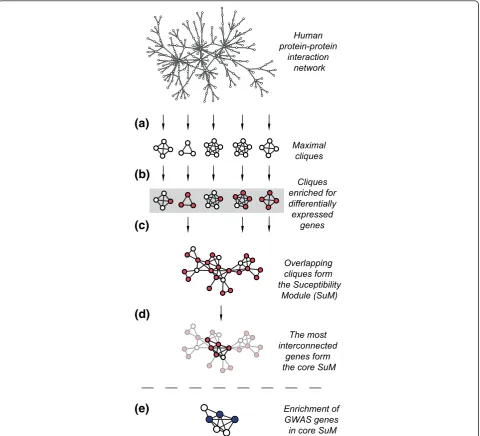
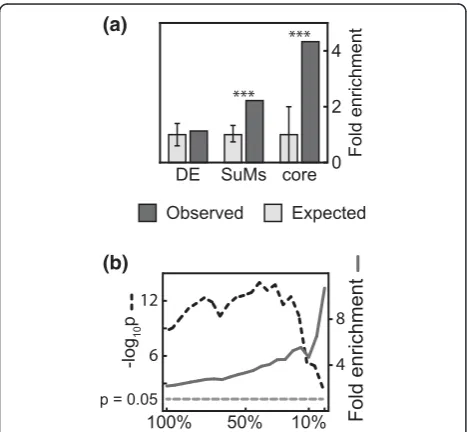
We defined modules in disease-specific networks by using (a) the global human PPI network and (b) differen-tially expressed genes for each disease. Those modules will henceforth be referred to as susceptibility modules (SuMs). Genes with high interconnectivity in the SuMs were defined as core SuMs (Figure 1; see Materials and methods). We examined whether the disease-specific core SuMs were enriched for genes harboring disease-associated SNPs by analyzing complex diseases for which gene expression microarray data from relevant cells or tissues were available in the public domain, and where GWAS had identified genes harboring disease-associated SNPs. Such genes will henceforth be referred to as GWAS genes. Thirteen oncological, immunological or metabolic diseases fulfilled these criteria (Table 1; Addi-tional file 1). For each disease, we derived a SuM and within it, a core SuM. The enrichment of GWAS genes in the core SuMs was 4.71-fold compared to the whole PPI network (P< 10-5). The corresponding figure of the SuMs was 2.22-fold (P< 10-5). In contrast, using only
differentially expressed genes we found a mere 1.15-fold enrichment of GWAS genes (P = 0.3; Figure 2a). We tested different cutoffs for interconnectivity. We found that increasingly stringent cutoffs for core SuMs were associated with stronger enrichment of GWAS genes (Figure 2b). Based on these analyses we defined core SuMs as the 10% of the SuM genes with the lowest aver-age shortest path length. This demonstrated the effective-ness of modules to identify GWAS genes, compared to differentially expressed genes.
Core SuMs could be used to find novel genes for functional studies
We then determined whether core SuMs could be used to find novel genes for functional studies. We repeated the analyses using our own gene expression microarray and GWAS data from patients with SAR. This is an ideal model of complex diseases because it is possible to mimic and analyze the disease process in allergen-chal-lenged cells from patients [16] (Extended background in Additional file 2). Novel genes can be functionally exam-ined by combining small interfering RNA (siRNA) and gene expression microarrays in Th2 polarized cells [17-19], (Extended background in Additional file 2).
We constructed a SuM and a core SuM for SAR using differentially expressed genes obtained by performing gene expression microarray analysis of allergen-chal-lenged CD4+ cells in samples from 12 patients as pre-viously described [19,20] (Additional file 3). The SuM included 622 of the 2,822 differentially expressed genes in the PPI network, and 1,191 genes in total (Figure 1a in Additional file 4). Next, we tested if they could be repli-cated in the additional study material. The repeated ana-lyses resulted in highly similar SuMs and core SuMs (P< 10-15in both cases, determined by ac2-test; Figure 1b in Additional file 4). We also compared gene expression microarray data from allergen-challenged CD4+ cells from patients with SAR and allergen-challenged CD4+ cells from healthy controls and found differences in dis-ease-relevant pathways and genes (Extended results in Additional file 2).
gene. We tested the functional relevance ofFGF2 by siRNA-mediated knock-down of this gene in Th2 polar-ized cells, followed by gene expression microarrays (Extended methods and Extended results in Additional file 2; Additional file 7). The knock-down resulted in altered expression of several pathways of potential relevance for type 1 allergic inflammation, as well as individual genes of known relevance for type 1 allergic inflammation, includ-ingMAFBandNFKB1[25-30] (Additional file 8). In con-trast to the core SuM, no enrichment of SNPs was found in the SuM.
The union of core SuMs of different diseases was enriched for pleiotropic genes
Because complex diseases tend to show both phenotypic and genotypic overlap [31,32], we hypothesized that the core SuMs would be associated with generally increased susceptibility for all complex diseases. In support of this assertion, we found that the core SuMs from the 13 dis-eases tended to overlap. This tendency was stronger for core SuMs than SuMs (Figure 3a). The union of the core SuMs was highly enriched for pathways involved in oncological, metabolic and inflammatory complex
(a)
(b)
(c)
Maximal cliques Human protein-protein
interaction network
Cliques enriched for differentially expressed
genes
Overlapping cliques form the Suceptibility
Module (SuM)
The most interconnected
genes form the core SuM
(d)
(e)
Enrichment of [image:3.595.59.540.89.525.2]GWAS genes in core SuM
diseases (Additional file 9). Finally, we tested whether the union of the core SuMs was generally enriched for GWAS genes of various complex diseases. This test comprised 1,570 GWAS genes associated with 145 com-plex diseases, excluding the genes associated with the 13 complex diseases for which the core SuMs were derived (Additional file 1). We found 2.52-fold enrichment
compared to the whole PPI network (P < 10-18). The enrichment increased if the disease genes were pleiotro-pic, that is, associated with more than one disease (Fig-ure 3b). For example, when considering only genes associated with more than one disease, we found a 3.1-fold enrichment (P< 10-6), and when considering genes only associated with more than four diseases we found a 9.1-fold enrichment (P< 10-3).
Discussion
We have developed a novel method to define SuMs and core SuMs for complex diseases by combining gene-expression microarray and PPI data. To show the gen-eral applicability of the method, we analyzed diseases with highly divergent phenotypes, rather than focusing on a specific subset of phenotypically related diseases. We found that SuMs, and in particular core SuMs, were enriched for GWAS genes. By comparison, no enrich-ment of GWAS genes was found when analyzing all dif-ferentially expressed genes.
[image:4.595.58.544.100.296.2]To test if core SuMs could be used to find novel genes for functional studies, we analyzed our own gene expression microarray and GWAS data from patients with SAR. This is an optimal model of complex diseases in that it has a clearly defined phenotype that occurs at a given time point each year and the external cause (pollen) and key cell-type (lymphocytes) are known (Extended background in Additional file 2). We identi-fied a SuM and a core SuM, which were reproduced in an independent study. We tested for enrichment of GWAS genes by analyzing a large population-based GWAS. This led to the identification of two novel genes in the core SuM. One of those genes, FGF2, was novel in type 1 allergic inflammation. The relevance of this
Table 1 Overview of SuMs in 13 complex diseases
GWAS genes in PPI GWAS genes in SuM GWAS genes in core SuM
Disease GEO accession Genes in SuM network Observed Expected Observed Expected
Asthma GSE4302 587 8 1 0.39 0 0.04
Breast cancer GSE10810 2,474 7 2 1.45 1 0.15
Chronic lymphocytic leukemia GSE8835 1,787 11 3 1.64 0 0.17
Colorectal cancer GSE9348 1,651 5 3 0.69 1 0.07
Crohn’s disease GSE6731 1,458 16 5 1.95 3 0.20
Lung adenocarcinoma GSE7670 2,524 10 4 2.11 0 0.21
Obesity GSE12050 2,268 13 4 2.47 0 0.25
Parkinson’s disease GSE20141 1,871 21 5 3.29 1 0.33
Prostate cancer GSE6919 751 16 3 1.01 1 0.10
Psoriasis GSE13355 2,274 12 8 2.28 1 0.23
Schizophrenia GSE17612 1,586 18 4 2.39 0 0.24
Type 2 diabetes GSE20966 1,658 21 5 2.91 2 0.29
Ulcerative colitis GSE6731 2,365 25 13 4.95 3 0.50
Total - - - 60 27.53 13 2.76
Gene expression dataset for each disease obtained from the NCBI Gene Expression Omnibus (GEO).
0 2 4
DE SuMs core
(a)
Fold enrichment
Observed Expected
*** ***
6 12
Fold enrichment
4 8
-log
10
p
p = 0.05
100% 50% 10%
(b)
Figure 2 Enrichment of GWAS genes from 13 oncological, immunological and metabolic diseases in SuMs and core SuMs.
[image:4.595.57.291.428.644.2]gene was supported by transcriptomal analysis following siRNA-mediated knock-down. The knock-down ofFGF2 resulted in altered expression of pathways and genes of potential or known relevance for type 1 allergic inflam-mation. In contrast, we found no enrichment of GWAS genes among all differentially expressed genes. These findings support the hypothesis that core SuMs can be used to identify GWAS genes with moderate effect sizes as well as novel genes for functional studies.
Studies of complex diseases often focus only on specific diseases and the genes associated with them. However, complex diseases show considerable phenotypic and gen-otypic overlap. Moreover, the effects of individual com-plex disease genes are generally small, while their collective contribution may be large [33]. This has led to increasing interest in studying groups of diseases and genes [31,32,34,35]. In the final part of our study, we made a corresponding change of scale and considered whether core SuMs from the 13 studied diseases were associated with an increased susceptibility for complex diseases, in general. We found that core SuMs tended to overlap, suggesting that they were involved in shared pathogenic mechanisms in complex diseases. This was supported by the union of the core SuMs being enriched for pathways involved in complex diseases. Finally, we tested if the union of the core SuMs was generally enriched for GWAS genes from 145 complex diseases, which represented hundreds of thousands of patients. Indeed, that union was highly enriched for such GWAS genes. Interestingly, the enrichment was greater when considering only GWAS genes associated with more than
one disease. Taken together, our findings showed that the core SuMs of highly interconnected disease genes were associated with increased susceptibility for complex diseases.
We propose that the pathways in the core SuMs increase our understanding of how shared pathogenic mechanisms contribute to complex diseases, and also help explain why many of those diseases show phenoty-pic overlap [36]. From a therapeutic perspective, the core SuMs may be used to prioritize therapeutic novel genes. It should, however, be noted that even though the num-ber of genes in the core SuMs was considerably smaller than all the differentially expressed genes, it may be diffi-cult to find individual target genes. Instead, perhaps drugs targeting combinations of core SuM genes will be required. Another interesting possibility is that the same novel genes might be exploited to develop drugs that tar-get more than one disease. From a diagnostic perspective, different combinations of SuM and core SuM proteins may be useful as diagnostic markers. We propose that such studies can be performed in both specific disease groups and diseases.
A limitation of this study is that it is mainly based on GWAS genes reported in a public database. This may result in missing GWAS genes in some core SuMs, due to too stringent cutoffs. In this study, we analyzed only intragenic SNPs, while intergenic SNPs may have regula-tory and disease-causing roles. Another limitation is that the study is based on known physical and functional PPIs. Thus, our results may be confounded by knowledge bias. Moreover, some of the gene expression microarray
Asthma
Breast Cancer
CLL
Colorectal Cancer Crohn’s Disease Lung Adenocarc.
Obesity
P
ar
kinson’s
Prostate Cancer
Psor
iasis
Schiz
ophrenia
Ulcer
ativ
e Colitis
Tyoe 2 Diabetes
Type 2 Diabetes Ulcerative Colitis Schizophrenia Psoriasis Prostate Cancer Parkinson’s Obesity Lung Adenocarc. Crohn’s Disease Colorectal Cancer CLL
Breast Cancer Asthma
SuMs
core SuMs
0.11
0.58
-log
10
p
Fold enrichment
(a)
(b)
5 10 15 20
4 6 8 10
p = 0.05
1 2 3 4 5
Jaccard
[image:5.595.57.538.89.284.2]similarity index
studies used in this effort were performed in tissues that contained mixed cell populations. We anticipate that the increasing accuracy of PPIs as well as availability of gene expression microarray and GWAS data will lead to more accurate identification of SuMs.
Conclusions
SuMs and core SuMs may be used to find novel genes for functional studies, as well as to increase understand-ing of the specific and shared pathogenic mechanisms in complex diseases and how they relate to phenotypic manifestations.
Materials and methods
Definition of susceptibility modules of complex diseases
SuMs were defined by integrating PPI network data and differentially expressed genes for each disease. The PPI network was assembled from a large set of functional and physical PPIs obtained from STRING (version 8, using interactions with a confidence score≥ 0.7). The SuMs were identified using a step-wise process. First, maximal cliques were extracted from the PPI network (A clique is a complete sub-network, that is, a sub-net-work with links connecting every pair of its nodes (Fig-ure 1a) [37]. Such a clique is maximal if it is not properly contained within another clique.) For this task we employed our custom clique extraction tools as pre-viously applied [38,39]. We noted that maximal cliques tend to be highly overlapping and we used all cliques down to a minimum size of 2 that were not part of other cliques. Each clique was tested for enrichment (P < 0.05) of differentially expressed genes in the disease using Fisher’s exact test (Figure 1b). Differentially expressed genes between the patient and control sam-ples were determined using a Student’st-test with aP< 0.05. Finally, overlapping enriched modules/cliques were mapped onto the PPI network so that each gene was represented only once, and overlapping enriched cliques could be identified as SuMs (Figure 1c). The SuMs included both differentially expressed genes and their neighbors in these cliques. In the SuMs, we identified highly interconnected genes and defined them as core SuMs (Figure 1d). Interconnectivity was measured by calculating the average shortest path length using the Network-Analyzer (v2.6.1) plug-in in Cytoscape (v2.6.0).
Enrichment of core SuMs for GWAS genes
GWAS genes for all complex diseases were obtained from‘a catalog of published Genome-wide association studies’[40]. We tested for enrichment of GWAS genes using a permutation test. In each permutation, every GWAS gene was replaced with a random gene. The number of random genes present in the corresponding SuMs or core SuMs was noted. This process was
repeated 100,000 times. The total number of random genes present in the disease SuMs represented the prob-ability of finding GWAS genes in the SuMs by chance. The significance of the overrepresentation of GWAS-identified genes in the SuMs was measured as the ratio of random permutations that included as many or more SuM genes than the true GWAS-identified genes for all 13 diseases. Similarly, enrichment of GWAS genes in the union of core SuMs was also determined for 145 diseases. Pathway enrichment for the union of core SuM genes was determined using Ingenuity Pathway Analysis [17].
Gene-expression microarray analysis in seasonal allergic rhinitis
Peripheral blood mononuclear cells from patients with SAR and healthy controls were prepared and stimulated with grass pollen extract or diluent for seven days [20]. For gene expression studies, T helper cells were enriched from the allergen-challenged peripheral blood mononuclear cells using anti-CD4-coated paramagnetic microbeads and a MACS (magnetic cell sorter) system according to the instructions of the manufacturer (Mil-tenyi Biotec GmbH, Bergisch Gladbach, Germany). cRNA was extracted from 200 ng total RNA using Ambion’s Illumina RNA TotalPrep Amplification kit (Ambion, Inc., USA).In vitrotranscription reaction and cRNA biotinylation were performed overnight (14 h). The RNA/cRNA concentrations where checked using Nanodrop ND-1000 before and after the amplifications. cRNA quality was controlled by BioRad’s Experion elec-trophoresis station (Bio-Rad Laboratories, Inc., CA, USA). Transcriptional profiling in 12 patients was per-formed using Illumina’s Sentrix® Human-6 Expression BeadChips (Illumina Inc., San Diego, CA, USA) accord-ing to the manufacturer’s instructions. (The data can be obtained from the Gene Expression Omnibus under accession number GSE18574.) Probes with a detection score below 0.95 were discarded prior to differential expression analysis. Differentially expressed genes were determined usinglmFit from the Bioconductor package
Limma[41] (Additional file 3). Genes with aP-value < 0.05 after correction for multiple comparisons (false dis-covery rate) were determined to be differentially expressed. To validate results obtained from the data above, an additional set of patients (n= 3) was analyzed on an Affymetrix U133A platform as previously described [20].
GWAS analysis for seasonal allergic rhinitis
with a 71% response rate. DNA was collected for the majority of participants and a total of 4,772 individuals were successfully genotyped. All aspects of the study were reviewed and approved by the Ethics Committee of the University of Oulu and participants gave written informed consent. Genotyping was done using the Illu-mina HumanCNV370-Duo chip. The data were imputed to approximately 2.5 million SNPs using NCBI HapMap II CEU build 35 version 21 after pre-filtering SNPs (gen-otyping rate > 95%, P-value for HWE deviation > 10-4, minor allele frequency > 1%, imputation with a confi-dence call of R2 > 0.5) using IMPUTE [43].
The SAR phenotype was defined as a positive response to the ‘have you ever had allergic rhinitis’question in the main questionnaire and a positive skin prick test for grass. Controls had a negative response to the question and a negative skin prick test. A positive skin prick test was defined as a mean wheal reaction to grass extract of at least 3 mm. Participants with a positive reaction to negative control (diluent of allergen extracts) or a nega-tive reaction to posinega-tive control (10 mg/ml histamine dihydrochloride) were excluded. There were 456 patients that had SAR, while 2,569 individuals were controls.
Association tests for additive effects between SNPs and the defined phenotypes were conducted using the QUICKTEST software and supplemented using R. These analyses were adjusted for sex and relevant prin-cipal components of population stratification. Statisti-cally significant SNPs located within and outside the genes of the core SuM were assessed. A SNP was assigned to a gene if that SNP position lies within the start and end region of the gene DNA sequence as defined by the Ensembl database [44]. A higher propor-tion of SNPs within the genes of the core SuM when compared with the background level of association is indicative of the relevance of the core SuM for the phe-notype. TheP-value of this test is the cumulative prob-ability of finding k or more SNPs in that gene subset when the probability of samplingkSNPs is given by the hypergeometric distribution. The cutoff of the statistical significance of SNP association was determined to be a = 10-3via sensitivity analysis of the P-values, false dis-covery rate, true positive rate and odds ratio of the core SuM enrichment (Additional file 6). The false discovery rate was given by FDR=FP/P, whereP is the number of positive SNP associations and FP is the number of false positive SNP associations within the core SuM under the null hypothesis distribution:
FP=m
x p(x,k,m,n)x
where p(x,k,m, n)x is theP-value of the hypergeo-metric distribution whenx out of theksignificant SNPs
are observed within the core SuM, when the core SuM holdsmof the totaln SNPs. The number of true posi-tive SNP associations (TP) is given by TP=P -FP. The odds ratio of the enrichment was defined as the odds of a significant SNP within the core SuM (or any given subset of genes) as compared to the remaining genes. The linkage disequilibrium within the core SuM is assumed to be similar to the expected linkage disequili-brium in the rest of the genome; therefore, GWAS P -value distributions within and outside the core SuM should be comparable.
Additional material
Additional file 1: Additional Table 1 - the genes associated with each disease in the online GWAS catalogue (data obtained on 10 January 2012).
Additional file 2: Additional documentation providing Extended background, Extended experimental methods and Extended results.
Additional file 3: Additional Table 2 - differential expression analysis of allergen-challenged CD4+ cells compared to diluent-challenged controls in SAR.
Additional file 4: Additional Figure 1 - the SuM associated with seasonal allergic rhinitis.
Additional file 5: Additional Table 3 - all disease-associated SNPs in the SAR SuM.
Additional file 6: Additional Figure 2 - sensitivity analysis of the statistical significance levelaof a SNP on the Core SuM enrichment.
Additional file 7: Additional Table 4 - differentially expressed genes in Th2 polarized cells followingFGF2knockdown.
Additional file 8: Additional Figure 3 - analysis ofFGF2by siRNA-mediated knock-down ofFGF2in Th2 polarized cells, followed by gene expression microarrays.
Additional file 9: Additional Table 5 - pathways enriched in the combined set of core SuM genes.
Abbreviations
GWAS: genome-wide association studies; PPI: protein-protein interaction; SAR: seasonal allergic rhinitis; siRNA: small interfering RNA; SNP: single-nucleotide polymorphism; SuM: susceptibility module.
Acknowledgements
We thank Petter Holme for his insightful comments on this manuscript. This work was supported by the European Community’s Seventh Framework Programme ([FP7/2007-2012] under grant agreement 223367 (MultiMod)), by the US National Institutes of Health under grants R01-AA-018776 and 3P20MD000516-07S1, and by the Swedish Research Council. SC is an EMBO Long Term Fellow.
Author details 1
Group, National Heart and Lung Institute, Imperial College, London, SW7 2AZ, UK.8Unit for Paediatric Allergology, Queen Silvia Children’s Hospital, Gothenburg, SE-416 85 Sweden.
Authors’contributions
FB and SC were involved in conception, design, acquisition, analysis and interpretation of the data and drafting the manuscript. ALC and LC were involved in conception, design, acquisition, analysis and interpretation of the data. MRJ, RJ and MAL were involved in conception, design and
interpretation of the data. AR, GR and HW were involved in acquisition and analysis of the data. MB supervised the entire study and was involved in conception, design, interpretation of the data and drafting the manuscript. All authors were involved in critically revising the manuscript for intellectual content and have given final approval of this version to be published.
Competing interests
The authors declare that they have no competing interests.
Received: 27 February 2012 Revised: 25 May 2012 Accepted: 15 June 2012 Published: 15 June 2012
References
1. Ge H, Liu Z, Church GM, Vidal M:Correlation between transcriptome and interactome mapping data from Saccharomyces cerevisiae.Nat Genet
2001,29:482-486.
2. Minguez P, Dopazo J:Assessing the biological significance of gene expression signatures and co-expression modules by studying their network properties.PLoS One2011,6:e17474.
3. Narayanan M, Vetta A, Schadt EE, Zhu J:Simultaneous clustering of multiple gene expression and physical interaction datasets.PLoS Comput Biol2010,6:e1000742.
4. Ramani AK, Li Z, Hart GT, Carlson MW, Boutz DR, Marcotte EM:A map of human protein interactions derived from co-expression of human mRNAs and their orthologs.Mol Syst Biol2008,4:180.
5. Chen J, Liang H, Fernandez A:Protein structure protection commits gene expression patterns.Genome Biol2008,9:R107.
6. Pujana MA, Han JD, Starita LM, Stevens KN, Tewari M, Ahn JS, Rennert G, Moreno V, Kirchhoff T, Gold B, Assmann V, Elshamy WM, Rual JF, Levine D, Rozek LS, Gelman RS, Gunsalus KC, Greenberg RA, Sobhian B, Bertin N, Venkatesan K, Ayivi-Guedehoussou N, Sole X, Hernandez P, Lazaro C, Nathanson KL, Weber BL, Cusick ME, Hill DE, Offit K,et al:Network modeling links breast cancer susceptibility and centrosome dysfunction.
Nat Genet2007,39:1338-1349.
7. Barabasi AL, Gulbahce N, Loscalzo J:Network medicine: a network-based approach to human disease.Nat Rev Genet2011,12:56-68.
8. Goldstein DB:Common genetic variation and human traits.N Engl J Med
2009,360:1696-1698.
9. Schadt EE:Molecular networks as sensors and drivers of common human diseases.Nature2009,461:218-223.
10. Lage K, Karlberg EO, Storling ZM, Olason PI, Pedersen AG, Rigina O, Hinsby AM, Tumer Z, Pociot F, Tommerup N, Moreau Y, Brunak S:A human phenome-interactome network of protein complexes implicated in genetic disorders.Nat Biotechnol2007,25:309-316.
11. Goh KI, Cusick ME, Valle D, Childs B, Vidal M, Barabasi AL:The human disease network.Proc Natl Acad Sci USA2007,104:8685-8690. 12. Oti M, Snel B, Huynen MA, Brunner HG:Predicting disease genes using
protein-protein interactions.J Med Genet2006,43:691-698.
13. Feldman I, Rzhetsky A, Vitkup D:Network properties of genes harboring inherited disease mutations.Proc Natl Acad Sci USA2008,105:4323-4328. 14. Barrenas F, Chavali S, Holme P, Mobini R, Benson M:Network properties of
complex human disease genes identified through genome-wide association studies.PLoS One2009,4:e8090.
15. Chuang HY, Lee E, Liu YT, Lee D, Ideker T:Network-based classification of breast cancer metastasis.Mol Syst Biol2007,3:140.
16. Woodfolk JA:T-cell responses to allergens.J Allergy Clin Immunol2007, 119:280-294, quiz 295-286.
17. Bruhn S, Barrenas F, Mobini R, Andersson BA, Chavali S, Egan BS, Hovig E, Sandve GK, Langston MA, Rogers G, Wang H, Benson M:Increased expression of IRF4 and ETS1 in CD4(+) cells from patients with intermittent allergic rhinitis.Allergy2012,67:33-40.
18. Banfield G, Watanabe H, Scadding G, Jacobson MR, Till SJ, Hall DA, Robinson DS, Lloyd CM, Nouri-Aria KT, Durham SR:CC chemokine receptor 4 (CCR4) in human allergen-induced late nasal responses.Allergy2010, 65:1126-1133.
19. Benson M, Langston MA, Adner M, Andersson B, Torinssson-Naluai A, Cardell LO:A network-based analysis of the late-phase reaction of the skin.J Allergy Clin Immunol2006,118:220-225.
20. Benson M, Carlsson L, Guillot G, Jernas M, Langston MA, Rudemo M, Andersson B:A network-based analysis of allergen-challenged CD4+ T cells from patients with allergic rhinitis.Genes Immun2006,7:514-521. 21. Ramasamy A, Curjuric I, Coin LJ, Kumar A, McArdle WL, Imboden M,
Leynaert B, Kogevinas M, Schmid-Grendelmeier P, Pekkanen J, Wjst M, Bircher AJ, Sovio U, Rochat T, Hartikainen AL, Balding DJ, Jarvelin MR, Probst-Hensch N, Strachan DP, Jarvis DL:A genome-wide meta-analysis of genetic variants associated with allergic rhinitis and grass sensitization and their interaction with birth order.J Allergy Clin Immunol2011, 128:996-1005.
22. Dong C, Yang DD, Tournier C, Whitmarsh AJ, Xu J, Davis RJ, Flavell RA:JNK is required for effector T-cell function but not for T-cell activation.Nature
2000,405:91-94.
23. Dong C, Yang DD, Wysk M, Whitmarsh AJ, Davis RJ, Flavell RA:Defective T cell differentiation in the absence of Jnk1.Science1998,282:2092-2095. 24. Chu X, Ci X, He J, Wei M, Yang X, Cao Q, Li H, Guan S, Deng Y, Pang D,
Deng X:A novel anti-inflammatory role for ginkgolide B in asthma via inhibition of the ERK/MAPK signaling pathway.Molecules2011, 16:7634-7648.
25. Hashizume H, Hamalainen H, Sun Q, Sucharczuk A, Lahesmaa R: Downregulation of mafB expression in T-helper cells during early differentiation in vitro.Scand J Immunol2003,57:28-34.
26. Chen Q, Dowhan DH, Liang D, Moore DD, Overbeek PA:CREB-binding protein/p300 co-activation of crystallin gene expression.J Biol Chem
2002,277:24081-24089.
27. Cornejo-Garcia JA, Fernandez TD, Torres MJ, Carballo M, Hernan I, Antunez C, Blanca M, Mayorga C:Differential cytokine and transcription factor expression in patients with allergic reactions to drugs.Allergy
2007,62:1429-1438.
28. Erpenbeck VJ, Hagenberg A, Krentel H, Discher M, Braun A, Hohlfeld JM, Krug N:Regulation of GATA-3, c-maf and T-bet mRNA expression in bronchoalveolar lavage cells and bronchial biopsies after segmental allergen challenge.Int Arch Allergy Immunol2006,139:306-316. 29. Tenda Y, Yamashita M, Kimura MY, Hasegawa A, Shimizu C, Kitajima M,
Onodera A, Suzuki A, Seki N, Nakayama T:Hyperresponsive TH2 cells with enhanced nuclear factor-kappa B activation induce atopic dermatitis-like skin lesions in Nishiki-nezumi Cinnamon/Nagoya mice.J Allergy Clin
Immunol2006,118:725-733.
30. El-Hashim AZ, Renno WM, Abduo HT, Jaffal SM, Akhtar S, Benter IF:Effect of inhibition of the ubiquitin-proteasome-system and IkappaB kinase on airway inflammation and hyperresponsiveness in a murine model of asthma.Int J Immunopathol Pharmacol2011,24:33-42.
31. Ramos PS, Criswell LA, Moser KL, Comeau ME, Williams AH, Pajewski NM, Chung SA, Graham RR, Zidovetzki R, Kelly JA, Kaufman KM, Jacob CO, Vyse TJ, Tsao BP, Kimberly RP, Gaffney PM, Alarcon-Riquelme ME, Harley JB, Langefeld CD:A Comprehensive analysis of shared loci between systemic lupus erythematosus (SLE) and sixteen autoimmune diseases reveals limited genetic overlap.PLoS Genet2011,7:e1002406. 32. Sivakumaran S, Agakov F, Theodoratou E, Prendergast JG, Zgaga L,
Manolio T, Rudan I, McKeigue P, Wilson JF, Campbell H:Abundant pleiotropy in human complex diseases and traits.Am J Hum Genet2011, 89:607-618.
33. Petretto E, Liu ET, Aitman TJ:A gene harvest revealing the archeology and complexity of human disease.Nat Genet2007,39:1299-1301. 34. Sirota M, Schaub MA, Batzoglou S, Robinson WH, Butte AJ:Autoimmune
disease classification by inverse association with SNP alleles.PLoS Genet
2009,5:e1000792.
35. Torkamani A, Dean B, Schork NJ, Thomas EA:Coexpression network analysis of neural tissue reveals perturbations in developmental processes in schizophrenia.Genome Res2010,20:403-412.
37. Bomze J, Budinich M, Pardalos P, Pelillo M:The maximum clique problem.
InHandbook of Combinatorial Optimization. Volume 4.Edited by: Du D-Z,
Pardalos PM. Kluwer Academic Publishers; 1999.
38. Chesler EJ, Lu L, Shou S, Qu Y, Gu J, Wang J, Hsu HC, Mountz JD, Baldwin NE, Langston MA, Threadgill DW, Manly KF, Williams RW:Complex trait analysis of gene expression uncovers polygenic and pleiotropic networks that modulate nervous system function.Nat Genet2005, 37:233-242.
39. Voy BH, Scharff JA, Perkins AD, Saxton AM, Borate B, Chesler EJ, Branstetter LK, Langston MA:Extracting gene networks for low-dose radiation using graph theoretical algorithms.PLoS Comput Biol2006,2: e89.
40. Hindorff LA, Sethupathy P, Junkins HA, Ramos EM, Mehta JP, Collins FS, Manolio TA:Potential etiologic and functional implications of genome-wide association loci for human diseases and traits.Proc Natl Acad Sci USA2009,106:9362-9367.
41. Smyth GK:Linear models and empirical bayes methods for assessing differential expression in microarray experiments.Stat Appl Genet Mol Biol
2004,3:Article3.
42. Rantakallio P, Leino S:Social and biological factors adding to the risks of infants.Katilolehti1969,74:520-522.
43. Marchini J, Howie B, Myers S, McVean G, Donnelly P:A new multipoint method for genome-wide association studies by imputation of genotypes.Nat Genet2007,39:906-913.
44. Hubbard T, Andrews D, Caccamo M, Cameron G, Chen Y, Clamp M, Clarke L, Coates G, Cox T, Cunningham F, Curwen V, Cutts T, Down T, Durbin R, Fernandez-Suarez XM, Gilbert J, Hammond M, Herrero J, Hotz H, Howe K, Iyer V, Jekosch K, Kahari A, Kasprzyk A, Keefe D, Keenan S, Kokocinsci F, London D, Longden I, McVicker G,et al:Ensembl 2005.
Nucleic Acids Res2005,33:D447-453.
doi:10.1186/gb-2012-13-6-r46
Cite this article as:Barrenäset al.:Highly interconnected genes in
disease-specific networks are enriched for disease-associated polymorphisms.Genome Biology201213:R46.
Submit your next manuscript to BioMed Central and take full advantage of:
• Convenient online submission
• Thorough peer review
• No space constraints or color figure charges
• Immediate publication on acceptance
• Inclusion in PubMed, CAS, Scopus and Google Scholar
• Research which is freely available for redistribution