E n g a g i n g r e si d e n t s in
r e g e n e r a ti o n: L e s s o n s f r o m
P e n dl e t o n
S h e r r iff, GA, B r o w n , JW, Cl a r k , AJ a n d B r o w n , P
T i t l e
E n g a g i n g r e si d e n t s i n r e g e n e r a ti o n : L e s s o n s f r o m
P e n d l e t o n
A u t h o r s
S h e r r iff, GA, B r o w n , JW, Cl a r k , AJ a n d B r o w n , P
Typ e
M o n o g r a p h
U RL
T hi s v e r si o n is a v ail a bl e a t :
h t t p :// u sir. s alfo r d . a c . u k /i d/ e p ri n t/ 3 7 4 6 3 /
P u b l i s h e d D a t e
2 0 1 5
U S IR is a d i gi t al c oll e c ti o n of t h e r e s e a r c h o u t p u t of t h e U n iv e r si ty of S alfo r d .
W h e r e c o p y ri g h t p e r m i t s , f ull t e x t m a t e r i al h el d i n t h e r e p o si t o r y is m a d e
f r e ely a v ail a bl e o nli n e a n d c a n b e r e a d , d o w nl o a d e d a n d c o pi e d fo r n o
n-c o m m e r n-ci al p r iv a t e s t u d y o r r e s e a r n-c h p u r p o s e s . Pl e a s e n-c h e n-c k t h e m a n u s n-c ri p t
fo r a n y f u r t h e r c o p y ri g h t r e s t r i c ti o n s .
Lessons from
Pendleton
Graeme Sherri
ff
, Joanna Wilson Brown, Philip Brown
and
Andrew Clark
1 Introduction
1
2 Context
3
2.1 Introduction
3
2.2 The Importance of Handover
3
2.3 Energy Efficient Practice
4
3 This study
5
4 Issues identified
8
4.1 The Engagement Process
8
4.2 Before Refurbishment
10
4.3 During Refurbishment
11
4.4 After Refurbishment
13
4.5 Summary
15
5 Key messages
17
5.1 Examples of Good Practice
17
5.2 Areas for improvement
17
5.3 Recommendations for ongoing Refurbishment Activity
18
5.4 Potential Directions for Future Research
18
iv Pendleton Handover Review
A wide-ranging urban regeneration programme is taking place in the Pendleton area of Salford. A substantial element of this work entails the refurbishment and retrofit of existing, tenanted properties. Flats and houses have been subject to kitchen and bathroom replacements, new windows and doors, and a new heating system based around an air source heat pump.
Throughout this process, effective resident engagement is essential. Such refurbishment has the potential to be disruptive and stressful for residents, and research has suggested that appropriate information and channels of communication can help to mitigate this (Hull, 2006). It is important that residents are well-informed and also have an active voice in the process of refurbishment and its outcome. Where new systems have been introduced, such as those for heating and waste disposal, residents may need information and guidance to be able to use them effectively.
The Together Housing Group have been awarded the Customer Service Excellence mark, which places an emphasis developing customer insight and the robust management of customer satisfaction1. In order to ensure the effective delivery of the
programme the organisation has commissioned the
1 Further information on the Customer Service Excellence mark can be found here: http://www.customerserviceexcellence.uk.com/aboutTheStandardCSE.html
Sustainable Housing & Urban Studies Unit to carry out this rapid review of handover and resident engagement with respect to the refurbishment works carried out to date. The study is a review, based on desk research, discussions with relevant Pendleton Together and Keepmoat staff, and interviews with contractors and residents occupying a range of properties. In total 30 interviews were carried out. Although efforts were made to find a diverse sample, and avoid speaking only to residents who were already vocal, no claims are made to the opinions being representative of the wider Pendleton population, or contractors involved in the work.
The structure of the report is as follows. Chapter 2, by providing the context for the study, outlines the importance of the resident engagement process at all stages of refurbishment. Chapter 3 provides a brief methodology, with details of the interviewees and interview topics. Chapter 4 outlines the resident engagement processes followed by Pendleton Together and Keepmoat. Chapter 5 provides detail on the issues arising through the interviews, presented according to the three stages of refurbishment: before the work began, during, and after completion. Chapter 6 summarises the key messages arising from this study, structuring these around examples of good practice, areas for improvement, and recommendations for the on-going refurbishment.
2 Pendleton Handover Review
2 Context
2.1 Introduction
The process of refurbishment and retrofit of residential dwellings can be invasive and complex, with the installation of new heating systems, windows and other major changes. This section discusses the evidence-base for understanding the resident experience of retrofit.
To date in Pendleton, flats and houses have been subject to kitchen and bathroom replacements, new windows and doors, and a new heating system based around an air source heat pump. It is important to understand the ways in which these processes affect the occupants of the dwellings and to identify ways to improve the occupant experience of refurbishment as the programme is rolled out across Pendleton.
2.2 The Importance of Handover
Research has highlighted the importance of effective
engagement with residents when embarking on programmes of refurbishment and retrofit (Hull, 2006). There is clear potential for the work to be disruptive and stressful for residents, and appropriate information and channels of communication can help to mitigate this. Where refurbishment involves new systems, such as heating or waste disposal, it is important that
there is a process of handover to ensure that these are suitable for the residents and clearly understood by them (Brown, Swan & Chahal, 2014; Institute of Sustainability 2012). Moreover, it is important that residents feel they are not only informed of, but also have an active voice in, the process of redevelopment as well as the outcomes.
Whilst residents may be able to utilise support networks to some extent to gain an understanding of new technologies and operating practices, there are risks of spreading ‘poor’ practice and of accentuating concerns around issues such as hidden charges and equipment not working as expected.
The Institute of Sustainability (2012: 6) has suggested that ‘to help occupants adapt to their new environment, a handover programme is needed consisting of training sessions and support so that they can acquire the knowledge and skills to operate the systems efficiently’. This can be more effective, they argue, than simply leaving occupants with manufacturers’ manuals since these are often difficult to understand and do not cover the interactions between appliances with other technology within the setting of the home.
4 4 Handover in Pendleton: Rapid Review
Sustainable Housing and Urban Studies Unit
Sustainable Housing & Urban Studies Unit
consumption, waste disposal and carbon emissions are not met; and stories of dissatisfaction circulate and affect the perceptions of residents involved in future rollout. Conversely, a smooth process with effective communication at all stages and support as residents learn about new systems can help to bring about residents and set a good precedent for on-going work, helping to ‘support the narration of positive stories about the technolo-gies that will be re-told from home to home.’ (Brown, Swan & Chahal, 2014)
Understanding why people use their homes the way they do is valuable in terms of optimising building performance and getting the most out of retrofit and refurbishment. By having a good understanding of the expectations and needs of building occupants, and by ensuring that changes to buildings and systems are well understood by them, there is the potential to maximise efficiency gains, avoid unexpected outcomes and to reduce the need for call out and potentially expensive mitigation measures. Occupants are better able to get the best out of their home, therefore contributing to improving their quality of life and tackling important social issues such as fuel poverty and social exclusion (Boardman, 2012).
Research has indicated that, whilst refurbishment and retrofit can be positive experiences, the potential for disruption and discomfort during implementation is not only a barrier to take up (Brown, Swan & Chahal, 2014) but also affects occupant satisfaction with the outcomes of process (Institute for Sus-tainability, 2012). Given that residents may endure prolonged disruption to their everyday lives, provision of appropriate information and clear communication has been found to be important (Institute for Sustainability, 2012). Despite the importance of communication, however, research has suggested that in some cases ‘the process of handover from an installer and landlord to the resident appears inadequate’ (Brown, Swan & Chahal, 2014 p13).
Once the refurbishment is complete, occupants may need help and support in adapting to, looking after and managing their home. Moving from a more conventional gas-fired heating system with radiators to newer technologies such as air-source heat pumps and under floor heating, for example, can present specific learning challenges, as they tend to require a different approach to operation. New recycling and waste disposal systems may also need explanation, and issues with new windows and doors may require discussion.
Occupants may face specific challenges in learning and operating new systems. Conditions such as dementia, sight loss and arthritis can compound difficulties in understanding a new system and/or operating controls (Hulme 2012; Guy et al 2013). The re-design of homes can have significant implications for disabled people who may experience difficulties coping with changes in surface levels and restricted circulation space in rooms and passages. Fixtures and fittings may be difficult to reach and new windows and doors may be challenging to open (Mitchell, Chesters, & Middleton, 2005). In its guidance, the Institute of Sustainability (2012: 7) emphasises the importance of understanding the current practices and capabilities of residents and planning retrofit around them: ‘Occupants often have well-established patterns of behaviour within their homes which are not easily changed. Some occupants may be less able
physically or mentally to cope with both the disruption and the new systems. This needs to be taken into account in retrofit design.’
2.3 Energy Efficient Practice
The impact of occupant behaviour is often seen as being external to or separate from, physical changes to building fabric and installed technologies (Ingle et al 2014), but research shows that understanding behaviour is core to ensuring energy retrofit is effective. It is argued that energy is ‘doubly invisible’, in the sense that electricity and gas are invisible; we do not see them enter our homes, and because in the case of household activities that involve energy-consumption it is another function (such as comfort, entertainment, cleanliness) that is the primary goal, not the consumption of energy per se. Middlemiss and Gillard (2013) argue however that, in situations of low income with prepayment meters, energy expenditure can be conspicuous, for example weighing up the costs of running the washing machine. In a sense, smart meter technology attempts to make energy visible by providing real-time feedback on use (Hargreaves, Nye & Burgess 2013).
3 This study
The overall aim of this research was to investigate how well the chosen methods of engaging and informing residents before, during and after refurbishment are performing. The research comprised four stages:
■ A desk-based process review, in discussion with Pendleton Together and Keepmoat staff, with the aim of better understanding the ways in which resident engagement is integrated into the refurbishment process.
■ Interviews with a selection of contractors (10) to identify self-reported good practice, identify common issues and explore their view on opportunities and mechanisms for improvements.
■ Interviews with a selection of occupants (20), to understand the extent to which they are satisfied with the information and engagement processes in place and seek their views on good practice and opportunities for improvement.
■ Analysis of the interview transcripts and production of this report.
In the initial stages of the research, discussions with Pendleton Together and Keepmoat staff and attendance at a meeting of the Customer Policy and Performance Panel helped the research team to understand the processes that were followed during
refurbishment and identify issues that informed the design of the subsequent interviews.
Ten interviews were carried out with contractors, four of whom were identified as key respondents at the briefing meeting with Pendelton Together and a further six recruited using a snowballing approach. Their roles included contract management, quality assurance, property management, design, project administration, neighbourhood management and resident involvement. The interviews explored:
■ the interviewees’ involvement in the recent refurbishment works;
■ the process of resident engagement before the works started on site and once the work had started;
■ the ways in which existing processes and expectations helped or hindered effective resident engagement;
■ approaches to talking residents through what had been installed and/or changed.
6 6 Handover in Pendleton: Rapid Review
Sustainable Housing and Urban Studies Unit
Sustainable Housing & Urban Studies Unit
■ examples of good practice and what worked well, and examples where the approach did not work as well as expected;
■ ways in which the resident engagement process could be improved.
Interviews were also carried out with 20 Pendleton residents; nine female and 11 male. A total of 17 interviewees lived in blocks (five from Whitebeam Court, five from Hornbeam Court, seven from Spruce Court) and three lived in houses at Clarendon. The interviewees were recruited in several stages: two were in attendance at the customer policy and performance panel meeting and agreed to be interviewed; two were
identified by those at the panel meeting; 11 were recruited on the street using a selection questionnaire; three were found through door knocking at Clarendon houses; two were identified through Pendleton Together officers.
The majority of residents interviewed could be described as having some level of vulnerability. Although specific questions to identify vulnerability were not used as part of the recruitment screener, many cited issues such as low mobility, old age,
memory loss, long term illness, and mental health issues during their interviews.
The interviews with residents explored:
■ the works that were carried out in the interviewee’s home;
■ how they were informed about the works that would be carried out, including being made aware of the processes that would be followed and the options available to them;
■ how well informed they felt as the works were carried out.
■ examples of best practice where the residents felt that Pendleton Together and Keepmoat did particularly well in keeping them informed about the refurbishment, and examples where they could make improvements;
8 8 Handover in Pendleton: Rapid Review
Sustainable Housing and Urban Studies Unit
Sustainable Housing & Urban Studies Unit
4 Issues identified
The following provides detailed analysis of the findings from the research for each stage of refurbishment; before, during and after. Findings from interviews with both contractors and tenants have been combined to provide an overview across all respondent types, with a focus on the main themes emerging. Where there have been minority views and individual cases worth identifying, these have also been included in order to provide a rounded and more thorough consideration of the most salient points and experiences.
Generally, both contractors and residents reported satisfaction with the processes in place for informing and engaging residents before, during and after refurbishment of the individual
properties and blocks. In using an established process that had reportedly been tried and tested, Keepmoat officers said they felt confident and well prepared for resident information provision and engagement in Pendleton. Many residents did not have strong concerns about their need for information, and the level to which they wanted to be engaged in the process, though of course this is not to say that they would rather receive less information or have a lower level of engagement than currently delivered. For the majority of residents interviewed, the information processes in place were seen to work well, and they felt they were provided with an appropriate level of information throughout the refurbishment of their property.
4.1 The Engagement Process
[image:13.595.184.455.192.443.2]An initial task of the research was to establish an overview of the processes in place to involve residents in the programme of refurbishment, encompassing opportunities to input into decision-making and methods of informing residents about what would be happening and how this might affect them and their homes.
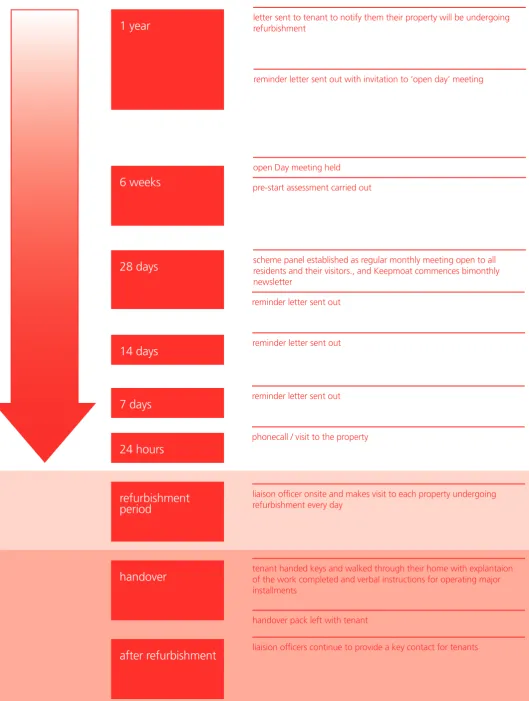
Figure 1 provides a graphical representation of the processes in place. This process map was developed by consolidating the information given by staff in the interviews. A representative of Pendleton Together was then asked to review this to confirm that this was a fair representation of practice.
The process map illustrates the year-long nature of the process, beginning with a letter to the resident, followed by an invitation to an ‘open day’ meeting to coincide with the pre-start
6 weeks
28 days
14 days
7 days
24 hours
refurbishment
period
handover
after refurbishment
refurbishment
reminder letter sent out with invitation to ‘open day’ meeting
reminder letter sent out
liaison officer onsite and makes visit to each property undergoing refurbishment every day
phonecall / visit to the property
liaision officers continue to provide a key contact for tenants scheme panel established as regular monthly meeting open to all residents and their visitors., and Keepmoat commences bimonthly newsletter
open Day meeting held
reminder letter sent out
reminder letter sent out
tenant handed keys and walked through their home with explantaion of the work completed and verbal instructions for operating major installments
[image:14.595.29.559.97.799.2]10 10 Handover in Pendleton: Rapid Review
Sustainable Housing and Urban Studies Unit
Sustainable Housing & Urban Studies Unit
4.2 Before Refurbishment
Both Pendleton Together and Keepmoat officers reported using a systematic process for resident information and engagement. The process was developed by Keepmoat, and has reportedly been used a number of times previously for refurbishment of similar schemes. One contractor explained how the process has continued to be developed and improved each time it is used in order to continue to enhance resident satisfaction. The core process for resident information before refurbishment is as
follows:-■ A letter is sent to residents 12 months prior to work starting to inform them that refurbishment is planned on their property.
■ Residents are invited by letter to an open day six weeks before the start date.
■ Individual assessments of each household are carried out to provide each resident with the opportunity to ask questions, make choices for fittings and fixtures, discuss choices and needs for decampment and carry out a vulnerability assess-ment for occupants.
■ A suite of letters are sent out at 28 days, 14 days and seven days to keep residents informed on start date, key dates, meetings and any other relevant activity.
■ Residents receive a phone call or visit 24 hours prior to the work starting.
A number of contractors felt that the process for resident information and engagement in Pendleton represented very good practice, especially when compared to refurbishment projects they had worked on previously, with some expressing the view that this is in part due to the unique needs and dynamics of the Pendleton community. One contractor felt, for example, that the ‘community’ had been vocal for some years about their needs for better living conditions and refurbish-ments, and as such, it was imperative to ensure high levels of engagement and involvement of residents from the very start of the process.
Tenant involvement is a lot stronger than anywhere I’ve ever worked before. Tenants are involved (from the) bidding stage. (Contractor)
The (Tenants and Residents Associations) are strong and have a big influence in the area. (They) spread the word before the first consultation. (Contractor) There’s a process map, open day and customer liaison and a pre-entry survey. A booklet that shows different stages of work; (we) show them that. Twenty-eight day letter to them and then 14 day letter and 7 day letter and phonecall 24 hours prior. It’s a really successful process. (Contractor)
Letters sent to resident prior to work starting
When asked how they first heard about the refurbishment and how well-informed they felt before work started on their property, the majority of residents, like the contractors, felt the process worked well. All but one of the interviewed residents recalled receiving a letter to inform them that refurbishment was planned on their property. Letters sent out in the six weeks
leading up to the start of the refurbishment were also generally well received by residents and ensured that they remained informed prior to work starting.
Got a letter and went to the housing office to ask more about it. It took a long time to get started after receiving the letter. (Male resident)
A small number of residents detailed how they felt that this process deviated at some stage: one reported that contractors turned up at the property the day before the start date; another (living as a sub-tenant) received information through the main resident at the address; and a third reported not receiving any letters about the refurbishment and only became aware of the impending work when visited for a pre-start assessment. However, these issues did not pose a significant problem for any of these three residents and their satisfaction with information levels remained high.
I got all the info I needed prior to work starting by meeting and letter. I got the date that work was starting and took a day off work to prepare but they came a day early. – (Male resident)
A small number of more engaged residents felt strongly that efforts should be made to ensure that all residents affected are completely informed about all aspects of the refurbishment, and that there was a need for further mechanisms for this. For example, there is no process in place to ensure that letters are opened, read and understood. It was suggested that residents should have to reply to the letter informing them of their pre-start assessment to confirm the appointment. In this case, non-reply should then be followed up by phone call or home visit. Other residents would like to see more information posted on notice boards in communal areas as a safeguard option to non-receipt of letters.
‘Open Day’ Meeting
The majority of the interviewed residents recall being invited to an ‘open day’ meeting six weeks before their block/street start date, with most of the interviewees attending this meeting. When asked to provide more detail about the purpose of this initial ‘open day’ meeting, there was some disparity between feedback from contractors and residents.
people. (Contractor)
The vast majority of residents interviewed recall attending an open day meeting. These respondents generally gave a narrower opinion on the purpose of the initial ‘open day’ meeting and reported that this was an opportunity to find out what will happen and when, ask any questions, raise concerns, and make choices for colour schemes, finishes and kitchen units etc. Again, reported satisfaction was high with this initial ‘open day’ meeting, with the majority appreciating the opportunity to receive face to face information at this stage, increasing their knowledge and involvement in the process, and as such providing a good foundation of involvement and engagement to build on throughout the process. However, many felt that information provided at this point could have been more explicit in terms of the level of disturbance to expect, for example with respect to noise and dust levels.
I was given all the choices for colours and staying at the property or moving out. I would have moved out if I’d known how bad it was going to be. (Female resident)
Pre-start Assessment
An individual assessment was carried out with each household prior to refurbishment starting and this was thought to provide an effective information and engagement platform. Contractors reported that this assessment is carried out by appointment, lasts around one hour and is used to assess any individual needs and vulnerabilities that will need to be taken into consideration throughout the refurbishment. At this point options for decampment were discussed with the resident, and/ or arrangements made for those who want to stay in or close to their property.
(We) send an intro letter and then make appointments to visit every property to start engagement processes. It takes an hour and some block are high vulnerability. We leave them with information about packing, respite, and put a magnet on their fridge with a 0800 number for the help desk. We identified a need for a risk assessment six months ago – a few sensitive questions were developed from the experience of the teams as to what is vulnerable. We do the appointment in three stages and the third stage is ‘about you.’ (Contractor)
The majority of residents interviewed did not mention this pre-start assessment unprompted when asked about the sources of information they received prior to work starting. However, when prompted most were able to provide detail about their pre-start assessment, with many reporting this was the point they made choices for items such as the kitchen units and - for those with additional needs and/or vulnerabilities - options for staying at the property or decamping. Generally, residents already felt well-informed through the letters they had received and attendance of the ‘open day’ meeting and therefore, regarded the pre-start assessment as an additional opportunity
would need to be out of the property. (She) came to the flat with choices for refurbishment. (She) gave me a mobile number to phone with any questions or problems. (Male resident)
I had an assessment. I have minor mental health problems so I didn’t need any special measures. (Male resident)
I had an assessment to see how I would cope with the stress as I have diabetes. (Female resident)
4.3 During Refurbishment
The process for keeping residents informed and engaged during the refurbishment period moves away from arm’s length approaches such as letters and notices towards face-to-face, verbal communication as officers and contractors become more visible on site, therefore reducing the need to contact residents by letter. It may be that the emphasis on face-to-face and verbal communication helped to build trust at this stage. Onsite contractors and liaison officers become the first port of call for residents who need to gain information or make an enquiry or complaint, and in most cases it was found that the onsite contractors and liaison officers have been immediately available as and when residents need, with the liaison officer often located in a temporary office onsite. This, the interviewees suggest, has resulted in high levels of satisfaction with commu-nication, information provision and levels of engagement for residents who appreciated face-to-face interactions with staff.
Liaison Officers
For the majority of respondents, their dedicated liaison officer provided them with a valuable source of information and reassurance throughout the refurbishment. The contractors interviewed reported that a liaison officer visited each property undergoing refurbishment every day. Feedback from residents generally supports this, with many recalling a daily visit from their liaison officer, and others reporting that a liaison officer was always close at hand to deal with queries and to provide a first port of call for complaints and issues. The combination of proactive liaison and high onsite visibility and accessibility demonstrated by liaison officers appears to be well received by residents in ensuring they feel well informed and engaged throughout the process.
Face to face works best so that you can explain to them properly what they need to do to prepare. (Contractor)
I got face to face information as I needed lots of reassurance. (It was) good information, they told me not to panic. (Male resident)
12 12 Handover in Pendleton: Rapid Review
Sustainable Housing and Urban Studies Unit
Sustainable Housing & Urban Studies Unit
A small number of residents who encountered problems during the refurbishment, which they reported to the liaison officer, seemed to struggle in the interviews to separate their satis-faction with the outcome of the complaint from the reporting process and subsequent communication from Pendleton Together or Keepmoat. However, for the vast majority, regardless of satisfaction levels with the outcome of complaints or the final results of their refurbishment, satisfaction with information and engagement processes remained high.
It should be emphasised however that successful handover and satisfactory outcomes are both important: neither is a substitute for the other.
Onsite Contractors
Interviews with officers from Pendleton Together and Keepmoat did not highlight the onsite contractors (carrying out the work on a day to day basis) as a source of information and engagement within their process map. However, for residents this provided the most frequent and valued source of information. Respondents were very positive about the ‘workmen’ present at their property, describing them as approachable, friendly and well informed. Residents felt able to ask those onsite what was happening and when, gaining information about work to be carried out over the next one to two days, and receiving advice on whether to vacate the property.
This informal process seems to have worked well in facilitating day-to-day communications, providing an easy and reliable source of information for residents. For the majority of residents interviewed, receiving work-plan information in this informal way, within such a short time frame (i.e. one to two days before the work is due to start) worked well. This was generally felt to give residents enough time to make necessary arrangements, such as plans to vacate the property for the day.
They were lovely. I called them ‘my boys’ and they called me ‘nanna’. I could ask them anything. (Female resident)
Letters/notices
Letters sent directly to the resident were less well remembered as a source of information once the refurbishment had started, with the day to day communication with onsite contractors and liaison offers taking prominence from this point on. However, a small number of residents did recall receiving letters with start dates for individual activities of refurbishment throughout. This was particularly useful for those who were at work most days and therefore had lower interaction with the onsite contractors and liaison officer.
Some residents interviewed were relocated to a hotel in Southport for the whole period of refurbishment of their property. For these residents, communication from any source was infrequent and none recalled receiving any written updates about the progress of refurbishment of their property. However, this did not pose a particular problem, and the experience of staying at the hotel was good, with the hotel staff providing a liaison service between the resident and Keepmoat when required.
Someone at the hotel just told us what date we’d be going home. – (Female resident)
Scheme Panel Meetings
The use of scheme panel meetings was detailed by all the contractors interviewed, and were held for each individual block undergoing refurbishment, in community rooms, every month. Representatives from both Pendleton Together and Keepmoat attended these meetings to provide a forum at which residents could raise issues and concerns and gain more information. Meetings were held in the evening to increase access for those who are working and unable to visit the housing office during the day.
Scheme panels work well (which were) deliverable under Keepmoat’s contract. People know they can go there to speak to staff instead of always coming into the office. (Contractor)
There was mixed feedback from residents on the success of the scheme panel meetings as a means of providing information and engagement opportunities among residents. For most, the meetings worked well at the start of the refurbishment process, as questions tended to be general information gathering enquiries, to which the response was of interest to the majority of attendees. However, as the refurbishment progressed, the need for general information decreased and questions brought to the scheme panels became more specific to individual households, reducing their relevance to the group overall, and in turn reducing attendance. There was some feedback that meetings could, at times, become quite ‘heated’ as the sessions were, over time, used as a forum to make complaints and air grievances with the refurbishment.
Consequently, it is important to recognise that the dynamics of these meetings may change over the period of refurbishment.
(There were) regular meetings but sometimes got out of hand and then they weren’t productive as too many people were asking questions. (Male resident)
Customer Database
called) QL, it flags up issues. [For example, if] people get ill through the refurb period. As soon as we know about something, we flag it up and it gets put on QL. We can print a vulnerability list and can tailor services (like) how to contact them, how to knock on the door, format of information (such as) large print, mobility, if they need moving to another property. (Contractor)
Customer Policy and Performance Panel meetings
Representatives from each block of flats in Pendleton meet every month to provide support to Pendleton Together and Keepmoat’s resident information, involvement and engagement strategies. The meetings are organised, chaired and attended by engaged residents – usually those with high involvement with the Tenants and Residents Association for each block in Pendleton. The meetings are facilitated and supported by Pendleton Together’s Customer Involvement Co-ordinator and work to provide a strong liaison between the Pendleton community and organisations working within the area.
I knew that the whole area was undergoing
regeneration so I knew it was going to happen before we received the letters about it. (Male resident)
Although those interviewed who are not involved in this regular meeting did not mention this as a source of information, many did discuss how they received informal information through friends and neighbours. This suggests that there may be a good information flow through the customer panel meeting to other less engaged tenants.
4.4 After Refurbishment
The handover process was discussed in the contractor interviews. Once Keepmoat deem the refurbishment of a property to be complete, a handover process takes place. As the landlord, Pendleton Together carry out an inspection of the property to assess whether the property is in a suitable state for the tenant to either move back in, or to sign off the property as ‘complete’. When Pendleton Together are satisfied, Keepmoat handover the property to the tenant, and the tenant is also asked to sign to indicate their satisfaction with the work carried out. At this point, the tenant is walked around the property, receiving a verbal explanation of work completed, including how to operate major installations such as heating systems, alarms, windows and doors. The tenant is also handed a ‘handover pack’ containing instruction manuals and other relevant information about the property and the work carried out.
After inspection and after snags, (we) create a handover pack. We demonstrate how to use the boiler and how to use the key. After that they get a satisfaction survey; the resident liaison officer goes round and fills it in with them. (Contractor)
It some cases, there is a need for continued communication between Pendleton Together, Keepmoat and the tenant after
at Brotherton House. One respondent living some half a mile away from Brotherton House explained that they had contacted ‘the council’ by phone to log a complaint about work carried out during the refurbishment. At the time of research, this complaint was still outstanding and the respondent reported that they had not had any communication about resolving the issue from Salford Council, Keepmoat or Pendleton Together.
Handover
Generally, tenants spoke positively about their experience of receiving information and engagement practices after refurbish-ment work was complete on their property, with the majority stating that they were happy with the work carried out and with the handover of their property. Most felt that there was no obvious need for intense or detailed handover of the major installations such as the heating system, windows, doors and alarm as they were deemed to be straightforward and easy to use.
There was nothing really to explain. It was all easy. – (Female resident)
Additionally, most tenants reported that they were happy for someone to set up such things as the heating system and alarm on their behalf, with just simple, verbal instructions for anything additional they needed to know. One respondent, for whom English is not a first language felt that there would have been added benefit for a longer time allocation for handover, with slower, easier to understand information to ensure tenants not confident in spoken English fully understand all the information given at this stage. An interpreter may also have been
beneficial.
I need things to be explained slowly and in different ways so that I can understand. (Male resident)
Written Information
Very few tenants recalled receiving written information at the handover stage, and all but three respondents felt that this was not particularly a problem, preferring instead to receive verbal information. For the three who reported that they had not received operation manuals for such things as their heating system but would have liked to, this implied a significant breakdown in the information-providing process. For these number of tenants, written information provides a valuable reference to refer back to and supports the verbal information received in increasing knowledge and understanding to a desired level. No tenants reported that they had requested any written information.
Snagging and repairs
14 14 Handover in Pendleton: Rapid Review
Sustainable Housing and Urban Studies Unit
Sustainable Housing & Urban Studies Unit
problems with their property through their onsite liaison officers, at the Brotherton House office or by telephone. Contractors detailed how these reports are then logged on the database and allocated to the most appropriate team or officer within the partnership for follow-up communication with the tenant and planning to resolve the issue. For tenants, there is generally little knowledge of the internal systems in place to resolve such issues. However, this does not appear to detract from the process for tenants, who are generally pleased with the reporting system in place, and the continuum of the information they receive on their case, which for most, is fed back through the onsite liaison officer.
Respondents with current and/or ongoing snagging issues did not necessarily separate their dissatisfaction with service from their feelings as to whether they were satisfied with the information they received. For some, the communication experience is good at this stage, with regular update verbal information given by the onsite liaison officer, keeping the tenant informed on progress of their case. In a small number of cases, there is a feeling that their case is not being dealt with and they are not receiving up-to-date information.
They came round and asked me to sign to say they had handed over but I refused until the snagging list was done. They came and set [the] Nibe system but they went through it too fast and he didn’t explain what he was doing. (Male resident)
The Nibe System
Despite a broadly positive tenant experience of refurbishment, information and engagement processes in relation to the Nibe Heating System (fitted in all properties that have undergone
refurbishment at the time of this research) appear to provide a contentious and challenging environment for Keepmoat and Pendleton Together. It is important to point out that although the research did not aim to evaluate the Nibe heating system, it was a frequently raised point of contention among participating tenants. According to contractor interviewees, the system is set up, explained and demonstrated to tenants as part of the handover. Additionally, all client-facing officers at the two organisations have received training on how to set-up the system, explain how it works to tenants and provide additional information to help tenants use the system most effectively. A systemic approach of information giving at every opportunity is being followed by the partnership to continue to communicate with tenants, explain how to operate the system and work towards a step change in behaviour. In the contractor interviews it was explained that the level of intensity of handover process of the Nibe system is dependent on the individual needs of the tenant. Contractors report that they are willing to visit a property as many times as is required.
due to a perception that it is too expensive to run. On the other hand, some tenants felt they had not had the heating system long enough to form an opinion of it, and some tenants felt the system was working well for them. Satisfaction was generally higher among those interviewees who were happy to have the system set up on their behalf and had little interest in how to operate or change settings.
Apparent from the interviews carried out with tenants, are the different sources of information they are in receipt of, all of which work towards forming a view of the Nibe System. These sources are:
■ onsite contractors
■ liaison officers
■ other client-facing officers from Keepmoat and Pendleton Together
■ neighbours and friends/relatives living in the Pendleton area
■ a tenant campaign group opposing the Nibe system
■ sources of information tenants do not appear to be in receipt of are:
■ engineers/representatives from the manufactures
■ operation manuals
A small number of respondents felt a need to receive information from a Nibe Engineer or someone with a role of authority from the manufacturers in order to gain a better understanding of the system and how it works. Others said they would like more detailed written information that can be studied to add depth of understanding to the verbal information received. Generally, those who felt less satisfied with the Nibe system at this stage, expressed greater need for additional verbal and written information.
Different people have told me different things about operating the Nibe system. Needs a proper engineer to explain it. (Male resident)
processes they had worked on in the past. The process includes a pre-start assessment, written communication, home visits, tenant meetings and ongoing contact with onsite liaison officers.
Tenants report high levels of satisfaction, even when activities were perceived to deviate from the proposed process. One issue that was noted, however, was that the information provided could have been more explicit about the level of disruption. The initial ‘open days’ were viewed positively, however it appears that contractors and tenants viewed them slightly differently, with contractors valuing this as a means of creating dialogue and identifying vulnerabilities and tenants seeing them more narrowly as opportunities to ask questions and raise concerns. Contractors would like to see these meetings better attended.
As the works moved into the implementation phase, face-to-face and verbal communication became more prominent, with onsite contractors and liaison officers becoming reference points for tenants. The interviews suggest that this has worked well. Whilst the contractors interviewed did not see the onsite contractors as core to the engagement process, tenants were very positive about their role in keeping them informed about what was happening each day.
The Scheme Panel Meetings were useful as a source of information throughout the process, although latterly become more of a forum to vent issues. Regular meeting of tenants, contractors and a combination of both can be understood to have helped the process progress smoothly.
Once work is complete, tenants received verbal information about changes to their home, in the form of a walk around, and a ‘handover pack’ containing instructions and other information. Tenants valued this experience, with most feeling that the changes were generally straightforward and easy to understand. One interviewee, however, for whom English was not their first language, felt that more time should have been allocated to this stage.
16 Pendleton Handover Review
5 Key messages
This chapter provides a summary of the research by taking in turn examples of best practice, areas where improvements can be made, recommendations for the on-going refurbishment activity, and potential directions for further research.
5.1 Examples of Good Practice
This section identifies good practice that the interviews suggest have served residents well in ensuring positive experiences of information and engagement:
■ Having liaison officers onsite was seen to work well, providing an easily accessible, available and proactive service in equipping residents with face-to-face information. It was often their preferred way of receiving information.
■ Pre-start assessments were particularly valued by contractors as a means of gaining information about the household, its specific needs and any vulnerabilities in order to plan a specific care package.
■ Scheme panel meetings were held in community room settings, every month, in the evening, for each block. These worked well for those residents wanting to gain information in the early stages of refurbishment and later on in providing a platform for tenants with specific grievances or issues.
■ Letters were sent out, using a systemic count-down approach to the start of refurbishment work are well received as a blanket approach, ensuring that all residents receive the detail they need.
■ Pendleton Together and Keepmoat identified some early issues in their working procedures as a collaborative partnership. These were resolved in the early stages, increasing good communication practice between the two organisations, and subsequently improving information and engagement practices for residents.
■ A database was used to share information and flag up specific needs, cases and vulnerabilities across all house-holds.
5.2 Areas for improvement
The interviews also identified a number of areas of activity in which improvements could usefully be made:
■ There was some evidence that more time should be allocated to handover for some residents, particularly those with vulnerabilities (e.g. learning difficulties, English as a second language etc.).
18 18 Handover in Pendleton: Rapid Review
Sustainable Housing and Urban Studies Unit
Sustainable Housing & Urban Studies Unit
informed about the work that was going to be carried out.
■ Some residents identified issues of punctuality and reliability, such as contractors arriving the day before the scheduled time. Although these experiences did not detract from the overall levels of satisfaction it is important to reduce such incidences to avoid inconveniencing or frustrating residents.
■ There is some evidence that residents felt that the infor-mation given underestimated the extent of the disruption and disturbance that the works would cause. Interviewees implied that this influenced their decision on whether to remain in their property at the time of the works.
5.3 Recommendations for ongoing
Refurbishment Activity
■ Ensure every opportunity to inform residents is taken by continuing with the suite of letters sent out, and alongside this put up clear notices in communal areas and make house visits where there is deemed to be low communication from residents`.
■ Seek opportunities to increase attendance of the open day meetings through increased awareness raising, timings of the meetings within the process plan and ensuring needs are met for those reluctant or unable to attend meetings, whether that be due to working patterns, vulnerabilities or specific individual needs.
■ Recognise the importance of onsite contractors as sources of information within engagement strategies and ensure that they are kept fully informed of the refurbishment plans.
■ Work towards increasing success rates of starting work on time, as planned, and as the resident is expecting as per the information they have previously received. Creating a solid foundation of trust at the start of the work is imperative in ensuring residents remain engaged, and as such increasing the likelihood of a positive experience overall.
■ Build in capacity for longer handover sessions for those who need it, e.g. for residents with learning difficulties or with English as a second language.
■ Communicate to residents a clear process for resolving issues such as snagging after the refurbishment period. Back up the verbal information provided by the liaison officer with written information that informs the resident of the process for snagging and repairs, with a timeframe for resolving any such issues, wherever possible.
■ Recognise the importance of issues raised by residents relating to the Nibe units, as these reflect genuine concerns and potentially evidence a need for more information and guidance. Visits from representatives of Nibe may help residents to get the best out of this new system.
5.4 Potential Directions for Future Research
Whilst this review has been valuable in providing a general picture of the experience of the refurbishment process in Pendleton, it makes no claims to be representative of the resident population of the buildings concerned or to provide an in-depth exploration of particular sub-groups, rather it is an initial step in highlighting pertinent issues.
A more comprehensive understanding could be reached using more formal approaches. One possibility would be an area-wide questionnaire survey that sought to evaluate satisfaction levels statistically. This in turn would help to identify issues that would benefit from further investigation and to provide a subset of occupants who could be invited to take part in interviews and focus groups. These qualitative approaches would facilitate a more in-depth exploration of the issues and challenges faced by particular groups of people. Such a study could provide valuable insights into how best to engage with occupants when implementing a refurbishment programme.
6 References
Boardman, B. (2012). Fuel poverty synthesis: Lessons learnt, actions needed. Energy Policy, 49: 143–148.
doi:10.1016/j.enpol.2012.02.035
Brown, P., Swan, W., & Chahal, S. (2014). Retrofitting social housing: reflections by tenants on adopting and living with retrofit technology. Energy Efficiency 7:641-653
doi:10.1007/s12053-013-9245-3
Energy Saving Trust. (2011). Trigger points : a convenient truth. Promoting energy efficiency in the home.
http://www.energysavingtrust.org.uk/sites/default/files/reports/ EST_Trigger_Points_report.pdf
Fi, M. and Wood, W. (2007). Purchase and Consumption Habits: Not Necessarily What You Intend Journal of Consumer Psychology 17(4) doi:10.1016/S1057-7408(07)70037-2
Guy, S., Devine-Wright, P., Brand, R., Brown, S., Chard, R., Henshaw, V., Karvonen, A. Sherrif, G. and Wrapson, W. (2013). Building Comfort for Older Age. Designing and Managing Thermal Comfort in Low Carbon Housing for Older People. Manchester.
Hargreaves, T., Nye, M., & Burgess, J. (2010). Making energy visible: A qualitative field study of how householders interact with feedback from smart energy monitors. Energy Policy, 38(10): 6111–6119 doi:10.1016/j.enpol.2010.05.068
Hargreaves, T., Nye, M., Burgess, J. (2013) Keeping energy visible? Exploring how householders interact with feedback from smart energy monitors in the longer term. Energy Policy. 52: 126–134 doi:10.1016/j.enpol.2012.03.027
Hull, A. (2006). Facilitating Structures for Neighbourhood Regeneration in the UK: The Continuation of the Housing Action Trusts. Urban Studies, 43(12): 2317-2350. doi: 10.1080/00420980600937622
Hulme, J. (2012). ENGLAND: Lessons from delivering Decent Homes and affordable warmth. In N. Nieboer, S. Tsenkova, V. Gruis, & Anke van Hal (Eds.), Energy Efficiency in Housing Management: Policies and Practice in Eleven Countries. Routledge.
Ingle, A., Moezzi, M., Lutzenhiser, L., & Diamond, R. (2014). Better home energy audit modelling: incorporating inhabitant
behaviours. Building Research & Information, 42(4): 409–421. doi:10.1080/09613218.2014.890776
Institute For Sustainability. (2012). Occupant-centred retrofit: engagement and communication. Key Findings: Analysis of a Selection of Retrofit for the Future Projects, 1–20.
Middlemiss, L., & Gillard, R. (2013). “ How can you live like that?” energy vulnerability and the dynamic experience of fuel poverty in the UK. Sustainability Research Institute Papers No.54, University of Leeds
The University of Salford C602 Allerton Building The Crescent Salford M6 6PU
Telephone:
0161 295 2140
Email: