Technology (IJRASET)
Requirement Engineering and Creative Process in
Video Game Industry
Radhika.B1, S.Nikila2, Manjula.R3 1
Final Year Student, SCOPE, VIT University, Vellore. 2
Final Year Student, SCOPE, VIT University, Vellore. 3
Assistant Professor, SCOPE, VIT University, Vellore.
Abstract: Requirement engineering process plays a significant role in video gaming industry. Basically it is process of gathering information from clients, analyzing the data (functional and non-functional) and formatting it into a document is defined as requirement engineering. Video games are mind diverting and gives joy for humans. The role of the requirement engineering is not prominent in video game industry as the variation takes place from preproduction to production process, failures are detected as problems. At that point of changing phases requirement engineering is important. Gaming process is a creative field. This is a combination of many platforms such as designing, coding, art, testing, sound, math etc. This paper describes about the use of requirement engineering and the process of creating a game.
Keywords: Functional, Non-functional, preproduction, Testing, Designing.
I. INTRODUCTION
Video gaming is a unique type of multimedia and graphics application. The customer needs to take lively participation in games. The key stakeholders to game development industry are gamers, designers, developers, marketers, researchers, government, media and distributors. By merging all the ideas given by stakeholders (especially from designers and developers) we get a brief knowledge about the game. [1] The main requirements are those that are the demands of the customers. The demands are formulated in the document as requirements with functional and non-functional attributes by analyzing the data provided from the customers. Here requirement engineering takes part. [4] It identifies the failures and traces them as problems. In gaming process there are three extensive phases involved. They are preproduction, production and postproduction. Below mentioned problems are identified by using requirement engineering. [2]
A. How the document can be transformed from preproduction to production phase.
B. To identify the non-direct information in preproduction formatted documents. C. To apply domain knowledge without making difficult in the creating process.
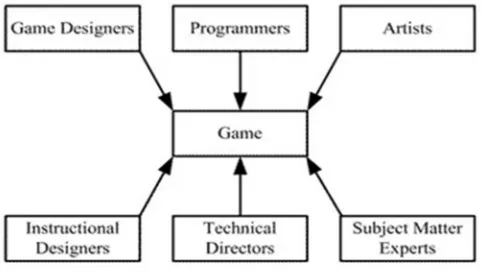
[image:2.612.191.432.569.709.2]Requirement engineering process is united with game creation. The platform for creating games can be anything such as C, C++ and Java etc. With the help of developers the code can be implemented. Prototypes are built before creating game. [5] The communication between game designers and software engineers should be good. Based on the communication the game can be developed very easily. As the concept of creativity need not be known for software engineers and concept of functional and non-functional requirements need not be known for game designers.[6]
Technology (IJRASET)
II. LITERATURE REVIEW
A. Procedure
The creating process of game is simple notion though by seeing video games we may think it is difficult to make.[2] For this task game designers, sound engineers, writers, developers, visual artists and many more should work together to accomplish the goal. Firstly, the concept of the game should be completely understood by the designers and developers. After that production of the game is done in 3 phases. They are:
B. Pre-Production
Te first step in the process of game creation is Pre-Production Phase. This is the phase where pre-production team comes into play. This team has many members. But to mention there are designers, producers, programmers etc. This team works on storyline of game, creating storyboards and simultaneously working on comprehensive design document about the detailing of game goals and final blueprint.[8] The character imagination is based on the people of this team only. Game can be grounded on real-life incidents or fictional stories. The storyline is the main thing in this process as it decides characters, plot of the game, names etc. After the storyline this is executed to form a storyboard which needs the help of visual artists for sketches.[3] The prominent part of this phase is that while completing the story together design document should also be finished. Software engineers also take part in this as to control the action of the players in further levels.
C. Production
Now production phase starts with relatively great size of producers, programmers, designers and artists.[1] The main task of producers is to check that all the teams are working with co-ordination. Safeguard the teams that the work is grounded to licenses and platform of the game. Designers play a significant role in this phase. [4] They ensure that all the requirements are properly fit into the game and if found any errors they should rectify with new plans. Building visual effects are done in this phase by artists. Motion-capture technique will be used to capture any real-life characters. Programmers code for 2D or 3D game based on that. [7] After completion of all their tasks production team will go through all the elements whether they are running on the hardware which was used for game.
D. Post-Production
This is the final stage of game creation. Here alpha version is tested to fix any bugs and any other limitations needs to be reconstructed by programmers. After alpha testing beta version of testing is done. [5] This is where every line of the code is tested for any A type or B type or C type errors in order of precedence. Following these testing final testing is ready for gamers. After all the bugs are fixed and game is running smoothly then game is fit for users to play.
Fig. 2
III. VIDEO GAME DEVELOPMENT
Technology (IJRASET)
frame works and the other tools. This is the step after the game engine. It includes a number of tools to conserve the time of your code.[3] This is the basic level of software to the gaming project. Relying on the frame work and the game engine selected some of the additional work may be involved. Next we have to test the integrated development environment (IDE). It is the general compiler of source files which makes the difficult programming projects to easier ones. It makes the programming much easier to interact with graphics. The last step of part one is learning a programming language.[5] The most common languages used in the game development. In all the devices C++ or C# is used for the browsers HTML5 or flash action script is used and for the mobile phones Java is used. The other languages like python or java script is used in designing many independent games.
IV. DEVELOPMENT PROCESS
The second part is about the creating the game. Many steps are involved in the creation. First step is to create a plan for the game. Before starting the programming the concept should be clear in terms of the game play, including the genre and the mood.[9] Second step is gathering all your art assets like all the textures models and sounds which are needed in the game. The third step is to script the game which tells what to do in the project. If you choose an open source engine, there are chances that it already has the scripting language and tutorials will teach hoe to manage it. If you choose your own engine then you have create your own languages. The next step is to create the individual levels in the design.[10] It consists basic tutorial level for everyone and then the basic levels are there in which the player can explore .the next step is to test your game find the testers to take active part on the game and take the as much as feedback. The final step to finish the project but make sure that the terms and conditions for any game you used.
V. GAME DOCUMENT
This design document consists of all technical aspects of game which needs to be functioned background. [6] This is the document where all the detailing are explained including designs, sounds, music, characters, their dialogues and as well as functional requirements. The document has 3 aspects. They are:
A. Game concept document.
B. Technical design document.
C. Game design document.
Technology (IJRASET)
in detailed version of game.Fig. 3
VI. CONCLUSION
We have analyzed the video game improvement method from the attitude of necessities engineering, supplied a model for online game improvement that integrates preproduction with manufacturing, and situated the sport design document as an artifact of the preproduction method. Our evaluation of fifty observational reviews from the Postmortem column in recreation Developer showed that venture control issues are the best individuals to success or failure in online game improvement. Inside the case of failure, a lot of these problems may be traced back to insufficient requirements engineering for the duration of the transition from preproduction to manufacturing. [10] 3 examples from actual video games provide further evidence of the significance of nicely dealing with the transition from preproduction to manufacturing. [9] These examples illustrate the challenges associated with transforming preproduction files to production files, the significance of detecting implied statistics as early as possible, and the consequences of making use of a priori information from the manufacturing domain to the transition from preproduction to production.
We have studied the video game creation process with the interpretation of requirements engineering. The phases required for processing from pre-production to post-production. [7] And deign document is mentioned as important in pre-production work. When any failure is identified these can be traced back to problems during the transformation from pre-production to production stage. Design document consists of functional requirements regarding the game which user ought to include in the game like response time, scalability, reusability, reliability. [8]
VII. FUTURE WORK
There is a strong courting among the issues addressed by means of Lowe [10] in net-based development and with video game improvement problems, specifically those troubles that are not technology primarily based. This merits in addition research. We are presently acting a extra unique evaluation of the observational reviews from game Developer and other resources. We assume to use this facts to similarly manual the improvement of a procedure for coping with the transition between preproduction and production.[4] A technique for identifying sources of implied information, perhaps based totally on a few form of syntactic evaluation, would enhance the efficiency and the accuracy of the documentation translation system. Mechanisms for shooting and declaring non-functional necessities, which include a laugh, in a manner that may be measured and verified are also required. Involving production personnel within the preproduction might also result in greater efficient development or it can lead to reduced creativity.[6] In addition research is needed to quantify the tradeoffs.
VIII. ACKNOWLEDGEMENT
We wish to thank recreation of Developer for persevering with the Postmortem column through the years. The first writer thank you
Technology (IJRASET)
documentation previous to launch of their game.REFERENCES
[1] Various Authors. Postmortem column. Game Developer, 6(5) through 11(6), May 1999 - June 2004 [2] Eric Bethke. Game Development and Production. Wordware Publishing, Inc., 2003
[3] Karin Breitman and Julio Cesar Sampaio do Prado Leite. Ontology as a requirements engineering product. In Requirements Engineering, pages 309–319, 2003 [4] Lawrence Chung. Non-Functional Requirements in Software Engineering. Kluwer Academic Publishers, 2000
[5] Katie Salen and Eric Zimmerman. Rules of Play: Game Design Fundamentals. MIT Press, 2004.
[6] Boehm, B. (1984): Verifying and validating software requirements and design specifications. IEEE software 1(1): 75-84
[7] Browne, G., Ramesh, V. (2002): Improving information requirements determination: a cognitive perspective. Information & Management 39: 625-645 [8] David Lowe. Web system requirements: an overview. Requirements Engineering, 8(2):102–113, 2003.
[9] David Michael. The Indie Game Development Survival Guide. Charles River Media, Inc., 2003.