University of Huddersfield Repository
White, Stephen and Ousey, Karen
Evaluating the Effectiveness of a Multiprofessional Online Mentor Update Tool
Original Citation
White, Stephen and Ousey, Karen (2011) Evaluating the Effectiveness of a Multiprofessional Online Mentor Update Tool. In: The Third International Conference on Mobile, Hybrid, and On line Learning eL&mL 2011, February 2328, 2011, Gosier, Guadeloupe, France. (Unpublished)
This version is available at http://eprints.hud.ac.uk/id/eprint/10538/
The University Repository is a digital collection of the research output of the University, available on Open Access. Copyright and Moral Rights for the items on this site are retained by the individual author and/or other copyright owners. Users may access full items free of charge; copies of full text items generally can be reproduced, displayed or performed and given to third parties in any format or medium for personal research or study, educational or notforprofit purposes without prior permission or charge, provided:
• The authors, title and full bibliographic details is credited in any copy;
• A hyperlink and/or URL is included for the original metadata page; and
• The content is not changed in any way.
For more information, including our policy and submission procedure, please contact the Repository Team at: [email protected].
Evaluating the Effectiveness of a Multiprofessional Online Mentor Update Tool
Stephen White, Karen Ousey
The University of Huddersfield Huddersfield, UK
[email protected] , [email protected]
Abstract—This paper presents evaluation data following the implementation of a multiprofessional online mentor update tool designed to meet the learning needs of mentors in clinical healthcare practice. The huge resources needed to sustain traditional delivery of the updates, plus the inability of mentors to attend these events, were amongst the main drivers for the development of this tool. Results of the evaluation have identified that the flexibility of the online tool promotes engagement for both mentors and their line managers, and in doing so provides academic staff to alternatively utilize the time saved delivering it. The multiprofessional originality and uniqueness of the package has also promoted users to consider the mentor role from an inter-disciplinary perspective. With the Nursing and Midwifery Council praising the package as an example of innovative good practice, it is intended to promote its use in other regions that provide healthcare education.
Keywords - Educational technology; Online learning; Mentor update; Multidisciplinary; Interdisciplinary
I. BACKGROUND
In healthcare education, the fundamental purpose of the mentor’s role is to support students and facilitate their learning and experiences within the clinical area; in order to achieve this, the mentor has to be adequately prepared for their role, understanding the mentor role and the educational needs of their mentees. This paper presents the results of an evaluation of an interactive multi professional web-based update package for mentors of nursing, midwifery and healthcare professionals. The package, originally conceived at the University of Huddersfield [1], has now been designed for use by fourteen professional groups; nurses; midwives; operating department practitioners (ODPs); occupational therapists; physiotherapists; dieticians; podiatrists; audiologists; clinical physiologists; diagnostic radiographers; radiotherapists; social workers; speech and language therapists and paramedics across the nine Higher Education Institutions (HEIs) in the Yorkshire and Humber Strategic Health Authority [2].
This paper offers an overview of the need for an
alternative mentor update package, identifying and exploring the impetus for its development; progressing to discuss data collection and analysis of an evaluation undertaken on the effectiveness of the package. Themes that have arisen from the analysis, developing knowledge, duration, usability and accessibility are discussed. Finally, a summary of the results and future developmental plans are presented.
II. THE NEED FOR AN ALTERNATIVE MENTOR
UPDATE PACKAGE
resources; they are prioritising the adequate staffing of clinical areas over attendance at mentor updates, supporting the earlier findings [3].
The role of the mentor has been investigated [4] and it was identified that most mentors were aware of the significance of their role in facilitating the development of students’ clinical skills and experience and acting as a source of support. However there are barriers that can sometimes hinder the effective mentor role; mentors in Myall et al.’s study [4] highlighted staff shortages and increasing demand on placement capacity as contributing to an increased workload which often led to a lack of time to carry out the role, with many completing assessment documentation in their own time. Such constraints were also identified as preventing mentors from attending regular updates, resulting in some feeling they had unmet continuing professional development needs. There was a genuine belief that the mentor role was pivotal to students’ clinical learning experiences and as such it was vital that the mentor was able to access ongoing support and preparation in carrying out this role ensuring that students could be supported to become confident and competent practitioners [2]. The development process and structure of the online package itself is described in detail in previous publications [1, 2].
III. DATA COLLECTION
A questionnaire was made available to all mentors accessing the tool and was completed on a voluntary basis. No personal details were required, but respondents were asked to identify which professional group they belonged to, to ascertain whether or not all professional groups were accessing the information. The questionnaire contained both quantitative and qualitative questions (Table I). A Likert scale [5]was used to extract data: strongly agree – agree – neutral – disagree – strongly disagree with space available to add in comments.
IV. DATA ANALYSIS
[image:3.612.312.556.83.417.2]To date six hundred and fifty-two mentors have undertaken the online update over a ten-month period; Table II shows the demographic of the disciplines. Although the majority of mentors accessing the update were nurses, this was to be
TABLE I. EVALUATION QUESTIONS
This update activity has helped me in knowing where to access information relating to the mentorship of students?
I have an improved understanding of how the mentor role can function in a multi-professional way?
I have been given all the relevant information to assist me in my role? My ability to mentor has been enhanced through carrying out this activity?
There are accountability and responsibility issues associated with mentoring – this update has improved my understanding of them? Through this activity my understanding of how to improve the learners’ experience has been enhanced?
This activity has developed me professionally? The update package was easy to navigate?
Carrying out the update was an enjoyable experience? Overall, the package has met my needs?
The content in the initial generic section was relevant to my role as a mentor?
The content in the Sets was relevant to my role as a mentor?
The content in the profession-specific area(s) was relevant to my role as a mentor?
Overall, the update activity was relevant to my role as a mentor? How long, not including breaks, did the update take you to complete? Were you given time during your working day to complete this update? With 1 being the lowest and 10 being the highest, how would you rate this online package when compared to other updates you have experienced?
Following this experience, would you, by choice, undertake other activities online?
What did you like most about the update? What did you like least about the update?
expected, not only because they are greater in number across the region, but because this professional group (and midwifery) are required to update yearly. ODPs are the next most-regular group to update, every two years, whilst other professional groups accessing the package currently have no mandatory requirement to update themselves while undertaking the mentor role.
V. DEVELOPING KNOWLEDGE
The update provided all of the relevant information relating to the mentorship role, as reported by 83% of mentors, with 86% indicating that it helped
TABLE II. NUMBER OF MENTORS IN EACH DISCIPLINE THAT HAVE
COMPLETED THE UPDATE PACKAGE (N=652)
Audiology 3 Operating Department Practitioner 14
Clinical Physiology 4 Paramedic 0
Diagnostic Radiography 2 Physiotherapy 4
Dietetics 0 Podiatry 0
Midwifery 30 Radiotherapy 0
Nursing 593 Social Work 1
[image:3.612.314.559.634.716.2]provide them with the knowledge of where to access information. In relation to specific sections, positive responses were received from 87% of the users on the generic content (17% Strongly Agree, 70% Agree), 85% on the content in the Sets (16% Strongly Agree, 69% Agree), and 89% on the profession-specific content (20% Strongly Agree, 69% Agree). 91% were in agreement that undertaking the online update had been relevant to their mentor role (19% Strongly Agree, 72% Agree) (Figure 1).
One mentor commented, ‘Good update - interaction good as makes you consider all areas. Good to reflect on past experiences whilst having update and relevant learning criteria’, however, two mentors commented that they would have preferred a face-to-face update and would prefer the information to be paper based; it is worthwhile noting that there were consistent negative responses from two mentors for every question, clearly indicating a dislike for anything computer-based. However the majority reported that they preferred the online version as ‘it made me think’ and ‘more interactive than sitting listening to a tutor’; a sentiment echoed by another mentor ‘i had to engage a lot more than i do in the attended updates where i don’t always concentrate’.
VI. DURATION
The online update had been developed to overcome the problem of clinical staff struggling to find time to attend scheduled update activities, and instead allow them to update as and when they found appropriate, additionally allowing the academic staff more time to visit the clinical areas and provide support to both students and clinical staff.
When asked ‘How long, not including breaks, did the update take you to complete?’ the mentors’ responses indicated that 48% took less than 2 hours to complete it, and 76% completed it in under 3 hours (Table III). In contrast, 8% of mentors responded that the update had taken longer than 4 hours; it is not an unreasonable assumption that this was due to them accessing multiple areas of content, because students from more than one discipline were placed within their clinical area. This would have traditionally required them to attend multiple update events.
0% 10% 20% 30% 40% 50% 60% 70% 80% 90% 100%
O
ve
ra
ll
Re
le
va
nc
e
P
rofe
ss
iona
l
cont
ent
Sets
G
ene
ri
c
cont
ent
[image:4.612.322.533.77.281.2]Strongly Disagree Disagree Neutral Agree Strongly Agree
Figure 1. Relevance of the content
When asked ‘Were you given time during your working day to complete this update?’ it was interesting to note that 64% of mentors had been given the time, which appears to contradict the supposition that mentors had not been able to attend the face-to-face update sessions due to work pressures. It is not unreasonable to surmise, based on some qualitative comments, that in response to a new system being introduced, line managers had made time available; one mentor stated that this was the ‘first time ever that I have been given time…’ Another mentor identified that ‘I have just started a new job so had the time during working hours as part of induction programme’. However,
not all mentors were afforded time to undertake the package, but due to the nature of the delivery were able to complete it in personal time, one mentor said, ‘Because of the shortage of staff on our unit time was not available to allow me to complete this in works time’. Indeed one mentor; ‘found quiet time within night shift to complete’ which would not have been possible to achieve had they been expected to undertake the traditional face-to-face
TABLE III. TIME TAKEN TO COMPLETE THE UPDATE
Less than 1 hour 5%
1 to 2 hours 43%
2 to 3 hours 28%
3 to 4 hours 15%
session. Respondents did state that they would have found it beneficial to be informed of the approximate time it takes to complete the update, prior to starting it, so that they could plan their time accordingly. They also commented that they would have liked to see a ‘timeline’ on each page so they knew how much they had completed. These issues are being addressed, with the evaluation data on duration, discussed above, being used to provide guidance on the average length of time it may take to complete the package. A progress indicator is also being introduced; however this is proving more difficult than anticipated due to the ‘looping’ options available to the mentors as they progress through the package.
VII. USABILITY
[image:5.612.341.499.497.675.2]The online package was reported as easy to navigate by 73% of the mentors (18% Strongly Agree; 55% Agree), with a further 17% providing a Neutral response. Despite this being a positive outcome for a new tool with an untested design, and although one mentor commented that ‘I am not the best IT person but find it so easy to use’, the data suggests there is still room for improvement (Figure 2).
[image:5.612.62.241.564.687.2]Ease of use featured regularly in the qualitative comments, with mentors indicating that the tool was ‘easy to navigate’, ‘easy to understand and follow’, ‘straightforward to use’, and ‘user friendly’. Arguably one parameter from which usability could be determined is how enjoyable the mentors found the experience. 36% of the mentors indicated positively with regard to enjoyment of the activity (6% Strongly Agree; 30% Agree), with
Figure 2. The update package was easy to navigate
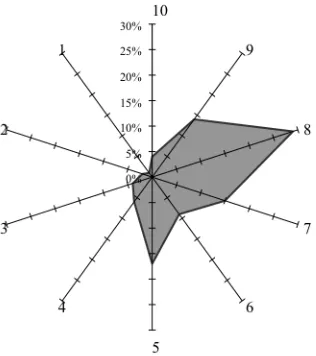
42% staying Neutral in their response; this means that 22% did not enjoy the experience (16% Disagree; 6% Strongly Disagree). It is not possible from this data alone to determine if these mentors’ lack of enjoyment is a direct result of this particular package, or the delivery method, nor whether the actual experience of updating is enjoyable, in itself. However, when asked if they would, by choice, undertake other activities online following this experience, 81% of the mentors said ‘Yes’. Also, when invited to rate this package in comparison to other updates they have experienced (1 being the lowest and 10 being the highest), 70% valued it 6 or above, with 16% providing a neutral response (Figure 3).
The outcome of these two questions suggests that overall the package was well received and the lack of enjoyment experienced by some may not be specifically related to the tool.
VIII. ACCESSIBILTY
The inability of mentors to attend traditional updates had been cited as one of the main drivers for the initiative and therefore accessibility of the package was an important factor in determining how successful the tool had been for mentors.
Flexibility and convenience were repeatedly mentioned when mentors were asked what they liked most about the update, particularly being able to undertake it in a place of their choice, rather than having to attend a session in a specific
Figure 3. With 1 being the lowest and 10 being the highest, how would you rate this online package when compared to other updates you have
location, ‘it was convenient for me to do at home because I have childcare issues to think about’; ‘I could do it at work and not attend a study day’; ‘if I have to attend a day course it is 140 miles round trip’; ‘I could sit in my lounge and drink tea!’
Being able to undertake the update at a time of their own choosing, was also perceived to be beneficial by mentors, ‘I could complete it in my own time when convenient for me’; ‘able to do online read at your leisure’; ‘it could be done when it was convenient to me and my workplace’; ‘it was on line so didn’t need to go to a lecture and could do it when i wanted’; ‘the ability to complete update without attending a teaching session, made it easier to fit in work commitments’.
In addition, the ability to work at their own rate, as and when practical for each mentor, was identified as advantageous, ‘was able to complete at a convenient time and pace’; ‘able to complete it at my own speed’; ‘I was able to work at my own pace’, as was the functionality that permits mentors to carry out the update intermittently, returning as and when time permits, ‘because the ward has been so busy i have been able to do this in my own time and be able to go back to it from time to time’; ‘could log out and complete the course in sections rather than having to complete it in one go’; ‘liked the ability to log in and out and not complete the update in one sitting’.
IX. SUMMARY
‘Yes, it exceeded what I thought I needed but in reflection may be it was just what the doctor ordered’.
As indicated by this quote from one of the mentors, the online mentor package has evaluated positively during the evaluation period. Users of the package have found it easy to navigate, whilst also identifying that it has met the learning and information needs required to undertake their mentor role effectively.
The inability of staff to attend updating activities [1,3] appears to have been remedied in many ways through the online version, with significant numbers undertaking the update in a short period of time. This would appear to not only be due to its flexible access allowing staff to fit it into their schedules [6,7], but also as a result of a visible shift in the line managers’ willingness to
give time during the working day. It may be that the stimulus of a new approach was the cause of this, but whatever the reason, it contradicts suggestions that staff lack motivation and incentive to attend [8], if provided with the opportunity.
Somewhat surprisingly, staff also stated that they generally enjoyed the experience, and whilst it is unknown whether this also applied to the traditional approach, there is clear evidence that this tool was appreciated, in the main, above previous update experiences. This supports findings that online approaches to learning can provide stimulus and interest for students [9], promoting meaningful learning [10].
The multi-professional originality and uniqueness of the package has also promoted the professional groups to learn about the mentor role from an inter-disciplinary perspective, and importantly it has provided them with a ‘one stop shop’ to enhance their knowledge base in mentoring students from more than one discipline and one HEI at one session.
It is anticipated that freeing academic staff from the ‘burden’ of delivering the updates will now enable them to concentrate this time more effectively in providing further support for the mentors within the actual placement environments; thus meeting their identified needs [3,11].
A limitation of this evaluation is that the majority of the participants are from one discipline, nursing, which may make it difficult to generalize the results. However, this can also be construed as a positive, because for this professional group, annual updating will have been ‘the norm’ throughout their career; as such they are the group most suited to evaluate this new tool against their previous, traditional, experiences.
X. CONCLUSION AND FUTURE WORK
is also anticipated that the structure underpinning the tool may be utilized for other subject areas.
Future work includes continual evaluation of the package to ensure the information maintains its relevance and currency; it is anticipated that this will be achieved through delegation of administrative rights to each discipline or institution, allowing self-management of the content.
Further development of the chat tool is also being considered, to introduce video functionality, in order to enhance the interactions between the mentors. However, initial investigations into this suggest there may be problems accessing video via some institution’s networks, due to current security settings.
REFERENCES
[1] Ousey, K.J. and White, S.A. “Developing a multi-professional e-learning mentor update package”, Proceedings of the International Conference on Mobile, Hybrid, and On-line Learning, elml, 2009, pp. 103-107.
[2] Ousey, K. and White, S. “A case study exploring a multi-disciplinary collaborative initiative to use e-learning to meet the professional learning needs of health care practitioners,” in Interprofessional E-Learning and Collaborative Work: Practices and Technologies, A. Bromage, L. Clouder, J. Thistlethwaite and F. Gordon, Eds. IGI-Global: Pennsylvania, 2010, pp. 286-300.
[3] Pulsford, D., Boit, K. and Owen, S. “Are mentors ready to make a difference? A survey of mentors’ attitudes towards nurse education”, Nurse Education Today,22(6), pp. 439-446, 2002.
[4] Myall, M., Levett-Jones, T. and Lathlean, J. “Mentorship in contemporary practice: the experiences of nursing students and practice mentors”, Journal of Clinical Nursing, 17(14), pp. 1834-1842, 2008.
[5] Trochim, W.M. “Likert scaling”. Available from:
http://www.socialresearchmethods.net/kb/scallik.htm. Accessed: 01 December 2010
[6] O'Malley, J. and McGraw, H. “Students perceptions of distance learning, online learning and the traditional classroom”, Online Journal of Distance Learning Administration, 2(4), 1999.
[7] Sit, J.W.H., Chung, J.W.Y., Chow, M.C.M. and Wong, T.K.S. “Experiences of online learning: students’ perspective”, Nurse Education Today, 25, pp. 140–147, 2005.
[8] Joshua-Amadi, M. “Recruitment and retention: a study in motivation”, Nursing Management, 9, pp. 7–21, 2002.
[9] Rosenlund, C.H. and Damark-Bembenek, B. “Assessing the effectiveness of an online program”, Nurse Educator, 24(1), pp. 5–6, 1999.
[10] Jonassen, D.H. “Transforming learning with technology: Beyond modernism and postmodernism or whoever controls the technology creates the reality”, Educational Technology, 40(2), pp. 21–25, 2000. [11] Hutchings, A., Williamson, G.R. and Humphreys, A. “Supporting
learners in clinical practice: capacity issues”, Journal of Clinical Nursing, 14, pp. 945–955, 2005.