BIROn - Birkbeck Institutional Research Online
D’Souza, Hana and Karmiloff-Smith, Annette (2016) Neurodevelopmental
disorders. Wiley Interdisciplinary Reviews: Cognitive Science 8 , e1398.
ISSN 1939-5078.
Downloaded from:
Usage Guidelines:
Please refer to usage guidelines at or alternatively
Neurodevelopmental Disorders
Hana D’Souza1,2,3 and Annette Karmiloff-Smith2,3
1 Sensorimotor Development Research Unit Department of Psychology
Goldsmiths, University of London 2 Centre for Brain and Cognitive Development
Birkbeck, University of London
3 The London Down Syndrome Consortium (LonDownS), University College London
Keywords: neurodevelopmental disorders, neuroconstructivism, neuropsychology, Williams syndrome, specific language impairment
Pre-print
D’Souza, H., & Karmiloff-Smith, A. (in press). Neurodevelopmental disorders. WIREs Cognitive Science.
ABSTRACT
Recent technological advances allow us to measure how the infant brain functions in ways that were not possible just a decade ago. Although methodological advances are exciting, we must also consider how theories guide research: what we look for and how we explain what we find. Indeed, the ways in which research findings are interpreted affects the design of policies, educational practices, and interventions. Thus, the theoretical approaches adopted by scientists have a real impact on the lives of children with neurodevelopmental disorders (NDDs) and their families, as well as on the wider community. Here, we introduce and compare two theoretical approaches that are used to understand NDDs: the neuropsychological account and neuroconstructivism. We show how the former, adult account is inadequate for explaining NDDs and illustrate this using the examples of ‘Williams syndrome’ and ‘specific language impairment’. Neuroconstructivism, by contrast, focuses on the developing organism and is helping to change the way in which NDDs are investigated. Whereas neuropsychological static approaches assume that one or more “modules” (e.g., visuospatial ability in Williams syndrome) are impaired while the rest of the system is spared (e.g., language in Williams syndrome), neuroconstructivism proposes that basic-level deficits have subtle cascading effects on numerous domains over development. Neuroconstructivism leads researchers to embrace complexity by establishing large research consortia to integrate findings at multiple levels (e.g., genetic, neural, cognitive, environmental) across developmental time.
INTRODUCTION
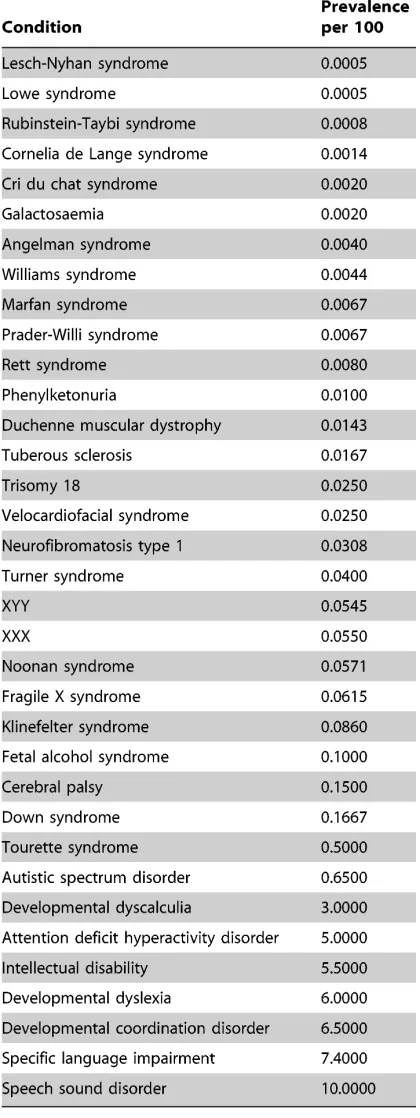
Dramatic increases in the availability of data on neurodevelopmental disorders (NDDs;; see Table 1) are providing new and exciting opportunities for understanding the infant brain and the factors that shape its development. Much of the excitement in this field can be traced to technological advances that, in ways that were not possible just a decade ago, allow us to measure how the infant brain functions. Although these methodological advances are exciting, we must also consider how theories guide research: what we look for and how we explain what we find. Here we compare two very different theoretical approaches for explaining NDDs—the neuropsychological account and neuroconstructivism—and explain why we believe that the latter approach is more likely to lead to better treatments and outcomes.
might affect the way in which infants with Williams syndrome scan numerical displays, faces, and other visual stimuli. So, adopting a neuroconstructivist or other developmental approach, we would target those basic-level processes with the aim of improving developmental processes and outcomes.
THEORETICAL APPROACHES: THE NEUROPSYCHOLOGICAL VERSUS THE
NEUROCONSTRUCTIVIST APPROACH
these interventions.
Although methodological advances are exciting, we must also consider how theories guide research: what we look for and how we explain what we find. The interpretation of the research findings then affects the design of policies, educational practices, and interventions. Thus, the theoretical approaches adopted by scientists have a real impact on the lives of many children with NDDs and their families, as well as on the wider community.
The neuropsychological account views the brain as if it were a Swiss Army knife4,
containing built-in, separate, special-purpose tools. Proponents of this approach argue that the brain has discrete parts, often referred to as modules, each of which has a specific, evolved cognitive function. They use the existence of adult neuropsychological patients to support the modularity view. One example given by advocates of this approach invokes patients with damage to the Fusiform Face Area (FFA), which is a part of the cerebral cortex located in the temporal lobe. The FFA is selectively activated when adults perceive faces5, 6. When the FFA has been damaged in adult patients, the ability to identify faces is particularly impacted to the point that otherwise normally functioning patients are unable to recognize their partner or even themselves in the mirror7, 8 ([link – Prosopagnosia Research Centers - http://www.faceblind.org]). This is the basis for the claim that there exists an independently functioning face-processing module.
Indeed, theorists using data from neuropsychological patients and embracing the
modularity hypothesis take the existence of double dissociations in adults to make strong claims about the functional architecture of the human mind/brain (e.g.,9-11;; see discussion in Shallice12). A double dissociation is established when a specific brain lesion X in Patient 1 relates to poor performance on Task A but not Task B, whereas a different brain lesion Y in Patient 2 relates to poor performance on Task B but not Task A13:
Patient 1
Lesion X
Task A Task B
Patient 2
Lesion Y
Task A Task B
The usual assumption is that the brain lesion is the direct cause of poor performance, leading to the conclusion that the cognitive function necessary to perform well on Task A is linked to the brain region damaged in Patient 1, and vice versa for Patient 2. Hence, double dissociations for different cognitive abilities in brain-damaged adults are used to relate brain and cognitive data directly, thereby elucidating the architecture of the adult cognitive system and how brain lesions affect it.
that adult brain networks display large-scale patterns of interconnectivity that are inconsistent with the notion that there exist independently functioning modules per se (for more detail, see14). Because it is questionable that the neuropsychological framework is useful for explaining even adult neural and cognitive processes, it is unlikely to have any explanatory or predictive power when applied to NDDs in children. We will explain why this is the case using examples from Williams syndrome and specific language impairment in the next section.
When the adult neuropsychological approach is applied to children with NDDs, it is assumed that individual differences in cognitive ability are the result of a deficit in one or more innately specified modules, perhaps due to faulty genes. For example, a “specifically impaired” phonological processor has been purported to be the root cause of dyslexia15 and an impaired ‘theory of mind’ module has been suggested to be a major causal factor in autism16.
will be the one we focus on hereinafter.
In contrast to the neuropsychological approach described above, proponents of the
neuroconstructivist approach argue that adults with acquired brain lesions cannot be
compared to children with NDDs. Although specific patterns of network activation in the brain are relatively stable (highly specialized) in adults, they do not necessarily start out that way. Patterns of activation become increasingly specialized over developmental time (see Figure 3) through interactions between various brain regions and through processing different types of input20-23. Thus, although any brain injury is likely to impair multiple cognitive functions, it is more likely to cause a relatively specific deficit in the highly specialized adult brain than in the less specialized (and more plastic) infant brain19, 23. Therefore, the brain of a child with an NDD cannot be described as composed of a set of damaged versus intact parts (see discussions in24-26). Instead, it can be better characterized as an atypical system developing under different constraints.
performance by typically developing children on the same task (e.g.,30). Children with autism spectrum disorder are actually faster and more accurate than typically developing children in finding hidden shapes embedded in larger meaningful pictures (e.g., finding a triangle within the drawing of a pram). Why? Because those with autism spectrum disorder focus on local details and are less distracted than neurotypicals by the meaning of the whole picture30.
If the developing infant brain starts out highly interactive, then an initial impairment in one cognitive component is likely to have cascading effects on other parts of the developing system. That is, a basic-level deficit in the cognitive system will constrain the emergence of several higher-level cognitive functions, because these functions emerge from complex interactions in the brain24, 26. This early basic-level cognitive deficit may be underpinned initially by small variations in one or more factors including gene expression, neuronal growth and migration, synaptogenesis, and synaptic pruning20, 25;; (for a comprehensive account of early neural development, see31). These initial small alterations interact with other genetic and environmental events that, over time, give rise to the resulting phenotype. Such complexities make it challenging to elucidate developmental causes in complex, dynamic, multi-level systems. To understand NDDs, it is thus critical to account for these dynamic, complex interactions between and within all levels of organization across time, from genes to environment32. Simple explanations may seem more tractable but they do not suffice;; we must embrace complexity.
to develop atypical neural and cognitive trajectories with numerous widespread impairments24, 26, rather than a set of impaired and intact modules. A single deficit may have differential cascading effects on the system, with some functions being more affected than others. Thus, some atypicalities may be subtle and difficult to detect, using standardized measures designed for children with typically developing brains33. Because these subtle differences are hard to identify, they lead some theorists to claim that impaired modules co-exist with “intact” modules in NDDs, even though fine-grained analyses have revealed this not to be the case.
DOES THE NEUROCONSTRUCTIVIST APPROACH EXPLAIN THE DATA BETTER?
One example that illustrates the advantages of the neuroconstructivist approach is that of Williams syndrome ([links - Williams Syndrome Association: http://www.williams- syndrome.org;; Williams Syndrome Foundation: http://www.williams-syndrome.org.uk]).
Within the neuropsychological framework, Williams syndrome is often invoked as a model NDD. This is because of its known genetic etiology and its uneven cognitive profile, with seemingly intact and impaired components. Proponents of the neuropsychological approach characterize this syndrome as having specific impairments in spatial and numerical cognition modules34 alongside “intact” language and face recognition modules34-41. Consequently, Williams syndrome is often compared with other NDDs in an attempt to delineate double dissociations not only in adults but also in children.
For example, a double dissociation has been repeatedly proposed between Williams syndrome and ‘specific language impairment’ (SLI), a developmental disorder that—as its name suggests—appears to target language development in a highly specific manner. Researchers point to this double dissociation as evidence that language is the product of a stand-alone cognitive module (e.g.,38, 42, 43). Accordingly, proponents of this double dissociation describe Williams syndrome as a disorder in which the “system for language is selectively spared” (36;; p. 193) and SLI as a disorder characterized by a single impairment in the language domain in an otherwise intact brain37, 38, 44-46. Furthermore, the proposed double dissociation is used to support the notion that “a grammar module” develops normally in Williams syndrome alongside low IQ while being selectively impaired in SLI alongside normal IQ, suggesting that syntax is a cognitive module operating independently of nonverbal cognitive abilities in children (e.g.,38, 42, 43).
In fact, however, the purported double dissociation between Williams syndrome and SLI does not exist. Rather, as proposed by the neuroconstructivist approach, several aspects of the brain and cognitive system in both Williams syndrome and SLI develop atypically25, 47-49. For example, when the purported double dissociation was tested by
chronological age. In other words, within Williams syndrome, language ability may be strong relative to other domains (e.g., visuospatial ability), but it cannot be considered to represent an intact language module because it develops atypically. Most aspects of language, including the lexicon51, morphosyntax52 and pragmatics53, are atypical in Williams syndrome when compared to typically developing children.
Even the claim that SLI entails a selective impairment of language alongside preserved non-verbal intelligence (e.g.,54-56) is controversial. Although individuals with SLI perform within the normal range on non-verbal intelligence tests, they have been shown to perform significantly worse than their siblings47, which points to subtle, more widespread impairments57. Moreover, SLI has been associated with numerous other (subtle) cognitive, sensory, and motor difficulties47, 58-64. Finally, the double dissociation is proposed purely on behavioural evidence whereas, as predicted by the neuroconstructivist approach, widespread brain atypicalities are found in both Williams syndrome and SLI (see review by49, 65).
HOW THEORETICAL APPROACHES INFLUENCE RESEARCH STRATEGIES
As mentioned earlier, the theoretical approaches that scientists adopt influence the type of research questions they ask, which in turn determine the studies they carry out and the way that they interpret their findings. These decisions have consequences for health and social policies as well as for education and intervention.
age does each module come online?”, “Which modules are impaired and which are intact?”, and “Where are these modules located in the brain?” Such questions necessarily lead to the search in children with NDDs for specifically impaired modules in an otherwise intact brain. This type of research tends to generate interventions that target one specific cognitive system in isolation of others (e.g., language in SLI;; number in dyscalculia). However, as argued above, it cannot be assumed that the infant brain is modular. Brain circuits interact across different regions at every age, but especially in early development when they are more plastic and less specialized. Thus, the static research questions that are generated by the neuropsychological approach are now giving way to new, more dynamic questions such as “How do neural circuits and cognitive functions emerge and change over developmental time?”, “Will an early, low- level deficit be followed by compensation or compounding of effects?” “Which domains interact across developmental time?”, and “What aspects of the ever-changing environment affect gene expression and cognitive development?”
Neuroconstructivists are helping to change the way in which NDDs are investigated.
is not composed of isolated, minimally interactive brain parts. Thus, neuroconstructivism requires that researchers adopt a truly developmental approach, focused on change over time, to gain insight into interactions among the genetic, cellular, neural, cognitive, behavioral, and environmental levels of description. This is critical in order to discover how an initial perturbation in one domain, and at one level of analysis (e.g., genetic), may over time influence other domains at other levels of analysis.
The neuroconstructivist approach has also helped to engender a shift in research from small domain-focused research teams (focused, for example, on numerical cognition) to large collaborative networks of multidisciplinary teams that include geneticists, cellular and molecular biologists, neuroscientists, social scientists, and psychologists as well as computational modelers and others. To facilitate this collaboration, large cross-scientific consortia are being established (e.g., British Autism Study of Infant Siblings [BASIS]
[http://www.basisnetwork.org], European Autism Interventions - A Multicentre Study for Developing New Medications [EU-AIMS] [http://www.eu-aims.eu], London Down Syndrome Consortium [LonDownS] [http://www.ucl.ac.uk/londowns], and Pediatric Imaging, Neurocognition and Genetics [PING] [http://pingstudy.ucsd.edu]).
domains over developmental time25, 48. Being able to ascertain how tiny variations interact with factors early in development provides greater insight into the emerging phenotype. Examining developmental trajectories is also important for identifying possible protective factors (factors that improve outcome) and risk factors (factors that worsen outcome). Uncovering the cascading effects of a basic-level perturbation, as well as any protective and risk factors, are critical for the design of early diagnostic tests and intervention strategies.
To be able to tailor early diagnostic tests and interventions, it is necessary to compare children with NDDs not only with typically developing children, but also with children with other NDDs, conducting cross-syndrome comparisons3, 67-71. This is especially important because initial perturbations may be very similar across syndromes, yet tiny subsequent differences may ultimately yield very different developmental outcomes.
ACKNOWLEDGMENTS
The authors of this paper are funded by Wellcome Trust Strategic Grant No. 098330/Z/12/Z conferred upon The LonDownS Consortium UK.
REFERENCES
1. Butterworth B. The Mathematical Brain. London, England: Macmillan; 1999.
2. Butterworth B. Foundational numerical capacities and the origins of dyscalculia.Trends Cogn Sci 2010, 14:534-541.
3. Karmiloff-Smith A, D'Souza D, Dekker TM, Van Herwegen J, Xu F, Rodic M, Ansari D. Genetic and environmental vulnerabilities in children with neurodevelopmental disorders. Proceedings of the National Academy of Sciences of the United States of America 2012, 109:17261-17265.
4. Cosmides L, Tooby J. Beyond Intuition and Instinct Blindness - toward an Evolutionarily Rigorous Cognitive Science.Cognition 1994, 50:41-77.
5. Kanwisher N, McDermott J, Chun MM. The fusiform face area: A module in human extrastriate cortex specialized for face perception. Journal of Neuroscience 1997, 17:4302-4311.
6. Kanwisher N, Yovel G. The fusiform face area: a cortical region specialized for the perception of faces. Philosophical Transactions of the Royal Society B-Biological Sciences 2006, 361:2109-2128.
7. Barton JJ. Structure and function in acquired prosopagnosia: lessons from a series of 10 patients with brain damage.J Neuropsychol 2008, 2:197-225.
8. Barton JJ, Press DZ, Keenan JP, O'Connor M. Lesions of the fusiform face area impair perception of facial configuration in prosopagnosia.Neurology 2002, 58:71-78.
9. Coltheart M. Attention and Performance XII: The Psychology of Reading. Hillsdale, NJ: Erlbaum; 1987.
10. Dunn JC, Kirsner K. Discovering functionally independent mental processes: the principle of reversed association.Psychol Rev 1988, 95:91-101.
11. Vallar G. The methodological foundations of neuropsychology. In: Denes F, Pizzamiglio L, eds. Handbook of Clinical and Experimental Neuropsychology. Hove, UK:: Psychology Press; 1999, 95-131.
12. Shallice T. From Neuropsychology to Mental Structure. Cambridge, England: Cambridge University Press; 1988.
13. Dunn JC, Kirsner K. What can we infer from double dissociations? Cortex 2003, 39:1-7. 14. Bressler SL, Menon V. Large-scale brain networks in cognition: emerging methods and
principles.Trends Cogn Sci 2010, 14:277-290.
15. Frith U. Can we have a shared theoretical framework? Educational and Child Psychology 1995, 12:6-17.
16. Leslie AM. Pretense, Autism, and the Theory-of-Mind Module. Current Directions in Psychological Science 1992, 1:18-21.
17. Oyama S, Griffiths P, Gray R. Cycles of Contingency: Developmental Systems and Evolution. Cambridge, MA: MIT Press; 2001.
18. Thelen E, Smith L. A Dynamic Systems Approach to the Development of Cognition and Action. Cambridge, MA: MIT Press; 1994.
20. Elman J, Karmiloff-Smith A, Bates E, Johnson M, Parisi D, Plunkett K. A Connectionist Perspective on Development. Cambridge, MA: MIT Press; 1996.
21. Fair DA, Dosenbach NUF, Church JA, Cohen AL, Brahmbhatt S, Miezin FM, Barch DM, Raichle ME, Petersen SE, Schlaggar BL. Development of distinct control networks through segregation and integration.Proceedings of the National Academy of Sciences of the United States of America 2007, 104:13507-13512.
22. Johnson MH. Functional brain development in humans. Nature Reviews Neuroscience 2001, 2:475-483.
23. Johnson MH. Developmental Cognitive Neuroscience. 3rd ed. Oxford: Wiley-Blackwell; 2011.
24. Bishop DV. Cognitive neuropsychology and developmental disorders: uncomfortable bedfellows.Q J Exp Psychol A 1997, 50:899-923.
25. Karmiloff-Smith A. Development itself is the key to understanding developmental disorders.Trends in Cognitive Sciences 1998, 2:389-398.
26. Karmiloff-Smith A. Crucial differences between developmental cognitive neuroscience and adult neuropsychology.Developmental Neuropsychology 1997, 13:513-524.
27. Karmiloff-Smith A, Thomas M, Annaz D, Humphreys K, Ewing S, Brace N, Van Duuren M, Pike G, Grice S, Campbell R. Exploring the Williams syndrome face-processing debate: the importance of building developmental trajectories. Journal of Child Psychology and Psychiatry 2004, 45:1258-1274.
28. Benton AL, Hamsher K, Varney NR, Spreen O. Contributions to Neuropsychological Assessment. New York: Oxford University Press; 1983.
29. Wilson B, Cockburn J, Baddeley A. Rivermead Behavioural Memory Test. Reading, UK: Thames Valley Test Co; 1985.
30. Frith U. Autism: Explaining the Enigma. 2nd ed. Oxford: Wiley-Blackwell; 2003.
31. Stiles J, Jernigan TL. The Basics of Brain Development.Neuropsychology Review 2010, 20:327-348.
32. Gottlieb G. Probabilistic epigenesis.Developmental Science 2007, 10:1-11.
33. Karmiloff-Smith A, Scerif G, Ansari D. Double dissociations in developmental disorders? Theoretically misconceived, empirically dubious.Cortex 2003, 39:161-163. 34. Bellugi U, Wang P, Jernigan TL. Williams syndrome: an unusual neuropsychological
profile. In: Broman S, Grafman J, eds. Atypical Cognitive Deficits in Developmental Disorders: Implications for Brain Function. Hillsdale, NJ: Erlbaum; 1994, 23-56.
35. Bellugi U, Marks S, Bihrle A, Sabo H. Dissociation between language and cognitive functions in Williams syndrome. In: Bishop D, Mogford K, eds. Language Development in Exceptional Circumstances. London: Churchill Livingstone; 1988, 177-189.
36. Clahsen H, Almazan M. Syntax and morphology in Williams syndrome.Cognition 1998, 68:167-198.
37. Pinker S. The Language Instinct: How the Mind Creates Language. New York: W. Morrow; 1994.
40. Tager-Flusberg H, Boshart J, Baron-Cohen S. Reading the windows to the soul: Evidence of domain-specific sparing in Williams syndrome. Journal of Cognitive Neuroscience 1998, 10:631-639.
41. Tager-Flusberg H, Plesa-Skwerer D, Faja S, Joseph RM. People with Williams syndrome process faces holistically.Cognition 2003, 89:11-24.
42. Clahsen H, Ring M, Temple C. Lexical and morphological skills in English-speaking children with Williams Syndrome. In: Bartke S, Siegmüller J, eds. Williams Syndrome Across Languages. Amsterdam: Benjamins; 2004, 221-244.
43. Fonteneau E, van der Lely HKJ. Electrical Brain Responses in Language-Impaired Children Reveal Grammar-Specific Deficits.Plos One 2008, 3.
44. Pinker S. Talk of genetics and vice versa.Nature 2001, 413:465-466.
45. Smith N. Noam Chomsky: New Horizons in the Study of Language and Mind. Cambridge: Cambridge University Press; 1999.
46. Smith N, Tsimpli IM. The Mind of a Savant: Language, Learning and Modularity. Oxford: Blackwell; 1995.
47. Chiat S. Mapping theories of developmental language impairment: Premises, predictions and evidence.Language and Cognitive Processes 2001, 16:113-142.
48. Farran EK, Karmiloff-Smith A. Neurodevelopmental Disorders Across the Lifespan: A Neuroconstructivist Approach. Oxford: Oxford University Press; 2012.
49. Martens MA, Wilson SJ, Reutens DC. Research Review: Williams syndrome: a critical review of the cognitive, behavioral, and neuroanatomical phenotype. Journal of Child Psychology and Psychiatry 2008, 49:576-608.
50. Stojanovik V, Perkins M, Howard S. Williams syndrome and specific language impairment do not support claims for developmental double dissociations and innate modularity.Journal of Neurolinguistics 2004, 17:403-424.
51. Temple CM, Almazan M, Sherwood S. Lexical skills in Williams Syndrome: a cognitive neuropsychological analysis.Journal of Neurolinguistics 2002, 15:463-495.
52. Grant J, Valian V, Karmiloff-Smith A. A study of relative clauses in Williams syndrome. Journal of Child Language 2002, 29:403-416.
53. Laws G, Bishop D. Pragmatic language impairment and social deficits in Williams syndrome: a comparison with Down's syndrome and specific language impairment. International Journal of Language & Communication Disorders 2004, 39:45-64.
54. Gopnik M, Crago MB. Familial Aggregation of a Developmental Language Disorder. Cognition 1991, 39:1-50.
55. Rice ML. A unified model of specific and general language delay: Grammatical tense as a clinical marker of unexpected variation. In: Levy Y, Schaeffer J, eds. Language Competence Across Populations: Toward a Definition of Specific Language Impairment. Mahwah, NJ: Erlbaum; 2002, 63-95.
56. VanderLely HKJ. Language and cognitive development in a grammatical SLI boy: Modularity and innateness.Journal of Neurolinguistics 1997, 10:75-107.
57. Clegg J, Hollis C, Mawhood L, Rutter M. Developmental language disorders a follow-up in later adult life. Cognitive, language and psychosocial outcomes. Journal of Child Psychology and Psychiatry 2005, 46:128-149.
Neurodevelopmental Approach to Specific Learning Disorders. London: Mac Keith Press; 1999, 191-210.
59. Bishop DV. Motor immaturity and specific speech and language impairment: evidence for a common genetic basis.Am J Med Genet 2002, 114:56-63.
60. Botting N. Non-verbal cognitive development and language impairment.J Child Psychol Psychiatry 2005, 46:317-326.
61. Hick R, Botting N, Conti-Ramsden G. Cognitive abilities in children with specific language impairment: consideration of visuo-spatial skills. International Journal of Language & Communication Disorders 2005, 40:137-149.
62. Hill EL. Non-specific nature of specific language impairment: a review of the literature with regard to concomitant motor impairments. International Journal of Language & Communication Disorders 2001, 36:149-171.
63. Johnston J. Cognitive deficits in specific language impairments: decisions in spite of uncertainty.Journal of Speech-Language Pathology and Audiology 1999, 23:165-172. 64. Norbury CF, Bishop DVM, Briscoe J. Does impaired grammatical comprehension
provide evidence for an innate grammar module? Applied Psycholinguistics 2002, 23:247-268.
65. Watkins KE, Vargha-Khadem F, Ashburner J, Passingham RE, Connelly A, Friston KJ, Frackowiak RSJ, Mishkin M, Gadian DG. MRI analysis of an inherited speech and language disorder: structural brain abnormalities.Brain 2002, 125:465-478.
66. Thomas MSC, Annaz D, Ansari D, Scerif G, Jarrold C, Karmiloff-Smith A. Using Developmental Trajectories to Understand Developmental Disorders. Journal of Speech Language and Hearing Research 2009, 52:336-358.
67. Annaz D, Karmiloff-Smith A. Cross-syndrome, cross-domain comparisons of development trajectories. Cahiers De Psychologie Cognitive-Current Psychology of Cognition 2005, 23:44-48.
68. Brown JH, Johnson MH, Paterson SJ, Gilmore R, Longhi E, Karmiloff-Smith A. Spatial representation and attention in toddlers with Williams syndrome and Down syndrome. Neuropsychologia 2003, 41:1037-1046.
69. D'Souza D, Kyjonkova H, Johnson MH, Gliga T, Kushnerenko E, Scerif G, Karmiloff-Smith A. Are Early Neurophysiological Markers of ASD Syndrome-Specific? Preliminary Results from a Cross-Syndrome Study. In: International Meeting for Autism Research, IMFAR San Sebastian, Spain May, 2013.
70. Paterson SJ, Brown JH, Gsodl MK, Johnson MH, Karmiloff-Smith A. Cognitive modularity and genetic disorders.Science 1999, 286:2355-2358.
71. Scerif G, Cornish K, Wilding J, Driver J, Karmiloff-Smith A. Visual search in typically developing toddlers and toddlers with Fragile X or Williams syndrome. Developmental Science 2004, 7:116-130.
72. Bishop DVM. Which Neurodevelopmental Disorders Get Researched and Why? Plos One 2010, 5.
73. Lloyd-Fox S, Blasi A, Elwell CE. Illuminating the developing brain: the past, present and future of functional near infrared spectroscopy. Neurosci Biobehav Rev 2010, 34:269-284.
75. Osborne LR. Genes: The gene expression approach. In: Farran EK, Karmiloff-Smith A, eds. Neurodevelopmental Disorders Across the Lifespan: A Neuroconstructivist Approach. Oxford: Oxford University Press; 2012, 59-81.
76. Meyer-Lindenberg A, Mervis CB, Sarpal D, Koch P, Steele S, Kohn P, Marenco S, Morris CA, Das S, Kippenhan S, et al. Functional, structural, and metabolic abnormalities of the hippocampal formation in Williams syndrome. Journal of Clinical Investigation 2005, 115:1888-1895.
77. Andrus BM, Blizinsky K, Vedell PT, Dennis K, Shukla PK, Schaffer DJ, Radulovic J, Churchill GA, Redei EE. Gene expression patterns in the hippocampus and amygdala of endogenous depression and chronic stress models.Mol Psychiatry 2012, 17:49-61.
78. Cohen MM, Tottenham N, Casey BJ. Translational Developmental Studies of Stress on Brain and Behavior: Implications for Adolescent Mental Health and Illness? Neuroscience 2013, 249:53-62.
79. Lisowski P, Juszczak GR, Goscik J, Wieczorek M, Zwierzchowski L, Swiergiel AH. Effect of chronic mild stress on hippocampal transcriptome in mice selected for high and low stress-induced analgesia and displaying different emotional behaviors. European Neuropsychopharmacology 2011, 21:45-62.
80. Leyfer O, Woodruff-Borden J, Mervis CB. Anxiety disorders in children with Williams syndrome, their mothers, and their siblings: Implications for the etiology of anxiety disorders.Journal of Neurodevelopmental Disorders 2009, 1:4-14.
FURTHER READING
Karmiloff-Smith A. An alternative to domain-general or domain-specific frameworks for
theorizing about human evolution and ontogenesis. AIMS Neurosci 2015, 2:91-104.
doi: 10.3934/Neuroscience.2015.2.91
Karmiloff-Smith A. Development itself is the key to understanding developmental disorders.
Trends Cogn Sci 1998, 2:389-398. doi:10.1016/S1364-6613(98)01230-3
Karmiloff-Smith A, Al-Janabi T, D’Souza H, Groet J, Massand E, Mok K, Startin C, Fisher
E, Hardy J, Nizetic D, et al. The importance of understanding individual differences in
Mareschal D, Johnson MH, Sirois S, Spratling M, Thomas MSC, Westerman G.
Neuroconstructivism: How the Brain Constructs Cognition. Oxford: Oxford University
Press; 2007.
Moore DG, George R. ACORNS: A tool for the visualisation and modelling of atypical
development. J Intellect Disabil Res 2011, 55:956-972.
Table 1. A list of neurodevelopmental disorders, ordered by prevalence. Prevalence has been divided by two if reported for one sex only. Adapted from Bishop72
FIGURE LEGENDS
Figure 1. An infant with Down syndrome wearing a cap that records electrical activity in the brain. Electroencephalography (EEG) is one of the most commonly used methods to measure brain responses in infants.
Figure 2. This figure compares the spatial and temporal resolution of different methods used to measure brain activity in infants. It also illustrates the relative degree of tolerance needed from the infant for each method, ranging from yellow (low) to red (high). EEG = electroencephalography;; ERP = event-related potential;; MEG = magnetoencephalography;; NIRS = near infrared spectroscopy;; fMRI = functional magnetic resonance imaging;; DTI = diffusion tensor imaging;; PET = positron emission tomography. From Lloyd-Fox, Blasi, & Elwell73 .
Example of complex interactions
Williams syndrome (WS) is caused by the deletion of some 28 genes on one copy of chromosome 7 (7q11.23), 22 of which are expressed in the brain75. This initial deletion at the genetic level is linked to a number of atypicalities at the level of the brain (brain chemistry, brain anatomy, brain volume, hemispheric asymmetry, temporal patterns of brain activity, etc.25), and these are associated with various cognitive and behavioural abnormalities48. However,
although the genetic deletion is the root cause of WS, this simple fact belies the complexity of how WS emerges over developmental time.
How different theories affect assessment and intervention
Neuropsychological approach
• Assessments focus on the identification of impaired and intact parts of
cognition and brain.
• Once the “broken” module has been identified, the intervention targets this
module specifically (e.g., practicing language in the case of specific language impairment or number in the case of Williams syndrome).
• If the module is identified as being underpinned by specific genes, then
gene therapy may be considered the only solution.
Neuroconstructivist approach
• Assessments are broad, mapping the profile of the child’s strengths and
weaknesses over time.
• No specific isolated impairment is assumed. Rather, many domains will be
more or less affected.
• The ideal intervention is based on prior in-depth syndrome-specific
research and usually takes place early in the developmental trajectory, enhancing protective factors and/or reducing risk factors in the child’s development.
• The targeted intervention need not be in the most visibly problematic
these processes that would be likely to have the most cascading impact on other domains.
• Timely intervention is key. Effective intervention ultimately depends on the
timing of various interactions among domains, which is why it is crucial to base the intervention on syndrome-specific research that identifies how systems change over developmental time in a given neurodevelopmental disorder.
• Although the earliest intervention will not necessarily be the most
successful one, younger brains are typically more plastic than older ones. Also, early in development, even relatively small perturbations can have cascading effects over developmental time.