Age Differences in the Control of Posture and Movement During Standing Reach
by
Min-Hui Huang
A dissertation submitted in partial fulfillment of the requirements for the degree of
Doctor of Philosophy (Kinesiology)
In The University of Michigan 2009
Doctoral Committee:
Associate Professor Susan H. Brown, Chair Professor Neil B. Alexander
© Min-Hui Huang
ii
To my patients and their families
iii
Acknowledgements
Thank you to my graduation committee: Drs. Alexander, Ashton-Miller, and
Smith for their support and guidance.
Thank you to my doctoral advisor Dr. Susan Brown for being a great mentor in
the pursuit of scientific inquiries. It has been a long and arduous journey. Every time I
fell off the wagon she never forgot to stop and pick me up. She is always persistent and
patient in giving her guidance. Whenever she talks about science, her enthusiasm
radiates. She has the amazing ability to make a difficult scientific subject so interesting
and simple that probably anyone on the street would be able to understand. Perhaps that
is the ultimate learning goal for a doctoral student.
Thanks to the past and present members of Motor Control Lab. Thanks to Dr.
Daniel Goble for being a good role model and inspiring researcher. Thanks to Dr. Jeanne
Langan, Melissa Wright, and Kathy Kern, for their support and encouragement,
especially in the most difficult time.
Thanks to very talented undergraduate students for their assistance in data
collection and analysis: Stephanie Huang, Megan Penfold, and Marianne Mousigian.
Thanks to the subjects who volunteered in the experiments.
Thanks to Alex Flick for his help in programming and equipment set-up.
Whenever there was a problem during data collection, Alex always responded at the first
minute to trouble-shoot. He has also inspired me in learning how to make things work, in
iv
Thanks to Dr. Wen-Sheng Lin, my husband, for his assistance in programming
and resolving technical issues.
Thanks to Kinesiology and Rackham for Fellowships support.
Thanks to Mom and Dad in Taiwan for their love and financial support in
furthering my education, enough to buy a house at Arbor Hills.
Thanks to Eleanor and Zachary for successfully delaying my progress in this
program. They get up early and go to bed late everyday, despite Zachary’s getting
full-dose Benadryl occasionally for his allergies. Eleanor, being an over-achieving 2nd grader, frequently reminds me not to quit school and volunteers to baby-sit her little brother so
that “Mommy can work on the computer”.
Thanks to teachers at St. Paul Lutheran Church Early Childhood Center for
providing excellent education for my children so that I can be relived of my motherly
duty.
Thanks to my patients and co-workers at Chelsea Community Hospital for their
v
Table of Contents
Dedication ii
Acknowledgements iii
List of Figures xi
List of Tables xiii
List of Appendices xiv
List of Abbreviations xv
Abstract xvi
Chapter
1. Introduction 1
Control of Standing Balance 1
Postural Control Associated with Voluntary Movements 3
Function of anticipatory postural adjustments 3
Modulation of anticipatory postural adjustments 4
Compensatory postural responses 6
Anticipatory Postural Adjustments Associated with Handedness 7
Upper limb asymmetries 7
Dynamic dominance hypothesis 8
Postural asymmetries 9
vi
Invariant characteristics of hand trajectories 11
Coordination of arm and trunk during reaching 12
Age-Related Changes in Anticipatory Postural Adjustments 14
Age Differences in Reaching Movements 15
Aging and Asymmetric Motor Behaviors 17
Physiological Factors Underlying Age-Related Changes in 18 Postural Control
Sensory systems 18
Motor system 20
Perceptual processes 20
Summary of Literature Review 21
Thesis Statement 22
Dissertation Hypotheses 25
2. Age Differences in Postural Control during Standing Reach 26
Introduction 26
Methods 31
Subjects 31
Experimental protocol 33
Data acquisition and analysis 35
Primary dependent variables 36
Secondary dependent variables 37
Statistical analysis 39
Results 40
vii
Dynamic balance during movement execution 49
Discussion 58
Effects of age on APA amplitude: Primary hypothesis 58
Effects of age on APA duration 60
Effect of age on dynamic balance: Primary hypothesis 61
Effects of target height on APA and dynamic balance: 62 Secondary hypothesis
Effects of hand on APA and dynamic balance: 63 Secondary hypothesis
Implications 65
Limitations 66
Future studies 67
Conclusions 68
3. Kinematics of Arm and Trunk Movements during Standing 69 Reach in Young and Older Adults
Introduction 69
Methods 75
Subjects 75
Experimental protocol 77
Data acquisition and analysis 79
Primary dependent variable 79
Secondary dependent variables 80
Statistical analysis 82
viii
Kinematics of hand movements 83
Kinematics of trunk movements 87
Discussion 89
Curvature of hand trajectories: Primary hypothesis 89
Age-related increase in asymmetric manual performance: 92 Secondary hypothesis
Effect of age on the utilization of trunk movements in 92 the reach: Secondary hypothesis
Implications 93
Limitations 94
Future Studies 97
Conclusions 97
4. Contextual Effects of Grasp versus Point on Center of Pressure 99 during Standing Reach in Young and Older Adults
Introduction 99
Methods 103
Subjects 103
Experimental protocol 104
Data acquisition and analysis 106
Primary dependent variable 106
Secondary dependent variables 107
Statistical analysis 110
Results 111
ix
Secondary variable: Center of pressure peak velocity 113
Primary variable: Center of pressure trajectory linearity 114
Secondary variables: Grasp Parameters 116
Secondary variable: Hand movement time 117
Discussion 118
Center of pressure maximum displacement and peak 118 velocity
Effect of movement context on center of pressure 119 trajectory: Primary hypothesis
Implications 121
Limitations 122
Future Studies 124
Conclusions 124
5. General Discussion 126
Summary of Major Findings 126
Models of Postural Control 128
Internal Model 128
Central Set 130
Movement Context 130
Aging Differences in Postural Control 131
Altered Internal Model and Central Set for Postural 131 Control in Older Adults
Current Findings Related to Postural Control Model 132
x
Measures of COP Trajectory for Dynamic Balance 133
Difficulties in Controlling Backward COP Displacement 134 in Older Adults
Coordination of Arm Movements with Posture 136
Influence of Trunk Displacement on Hand Trajectory 136
Adaptive Strategy in Coordination of Arm and Posture in
Older Adults 137
Asymmetric Postural Control Associated with Handedness 138
Clinical Implications 140
Limitations 142
Future Studies 144
6. Conclusions 147
Appendices 148
xi
List of Figures Figure
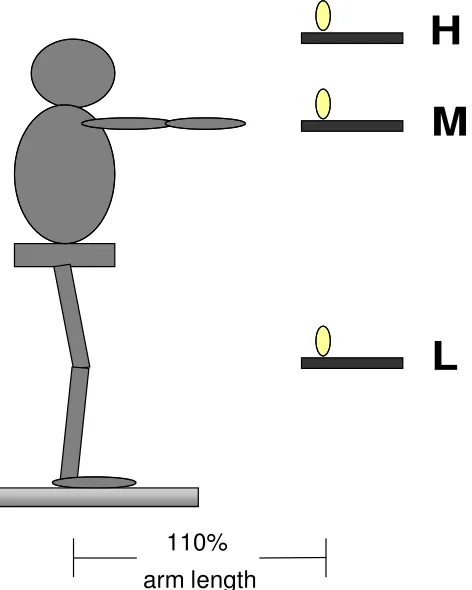
2.1 – Schematic representation of the experimental set up. 34
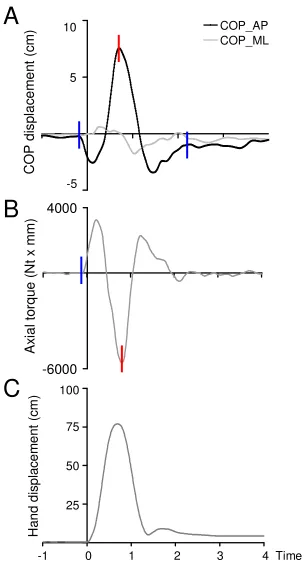
2.2 – COP displacement in the AP and ML directions (A), axial torque (B), and hand displacement in three dimensions (C) from one subject
under dominant hand reach condition. 38
2.3 – Mean (± SE) APA amplitude (COP displacement) in young (A)
and older adults (B). 42
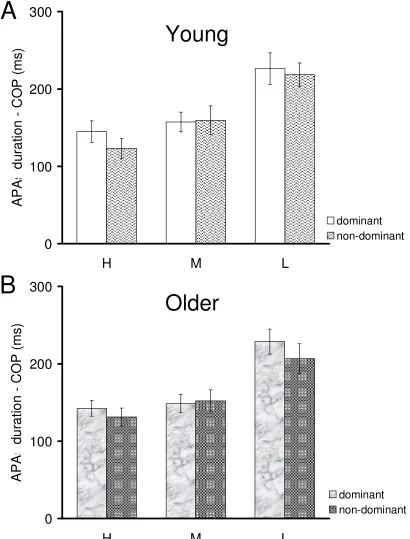
2.4 – Mean (± SE) APA duration (COP displacement) in young (A) and
Older adults (B). 44
2.5 – Mean (± SE) APA amplitude (Tz) in young (A) and older adults
(B). 46
2.6 – Mean (± SE) APA duration (Tz) in young (A) and older adults (B). 48
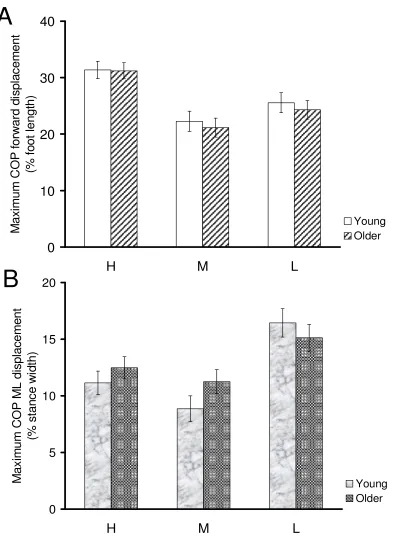
2.7 – Mean (± SE) Mean (± SE) COP maximum AP (A) and ML (B) 50 displacements in young and older adults.
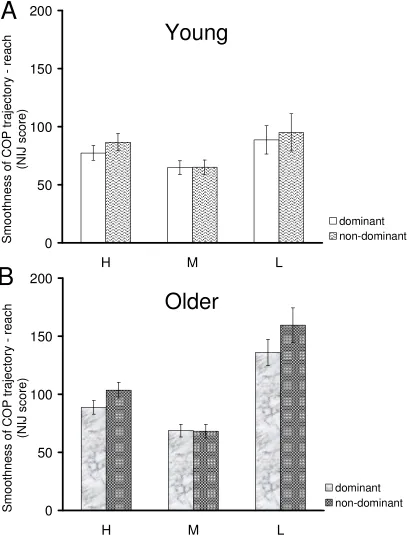
2.8 – Mean (± SE) COP trajectory smoothness measured by normalized jerk score (NIJ score) during reaching in young (A) and older (B) adults. 52
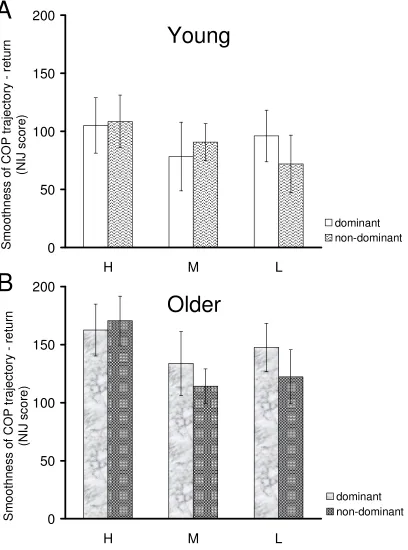
2.9 – Mean (± SE) COP trajectory smoothness measured by normalized jerk score (NIJ score) during returning movement in young (A) and older
(B) adults. 53
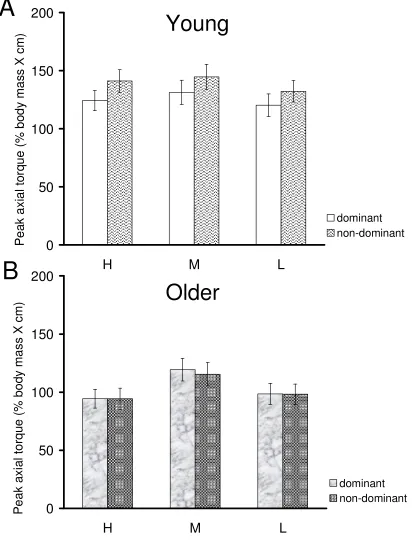
2.10 –Mean (± SE) Peak axial torque associated with target acquisition
in young (A) and older (B) adults. 55
2.11 – Mean (± SE) COP path length in the anterior-posterior and medial-lateral directions after movement ended in young (A) and older
(B) adults. 57
3.1 – Schematic representation of the experimental set up. 77
xii
3.3 – Stick figures illustrate trunk flexion (θ1) in the sagittal plane (A) and trunk rotation (θ2) in the horizontal plane (B). 81
3.4 – Mean (± SE) Mean (± SE) hand movement time in young (A)
and older (B) adults. 84
3.5 – Mean (± SE) Mean (± SE) hand peak velocity in young and
older adults. 85
3.6 – Mean (± SE) Mean (± SE) linearity of hand path in three- 86 dimensional space.
3.7 – Mean (± SE) maximum trunk flexion in young and older adults. 87
3.8 – Mean (± SE) maximum trunk rotation during reaching movements 88 made towards targets at different heights.
4.1 – COP trajectories during one reach (left) and return (right)
movement cycle from one older subject. 107
4.2 – COP displacement in the anterior-posterior (COP-AP) and medial-lateral (COP-ML) direction (A), and hand displacement in three
dimensional coordinates (X, Y, Z) (B) from a young subject are shown. 109
4.3 – Mean (±SE) COP maximum displacement during forward (A) and lateral (B) reach-point and reach-grasp condition in young and older
adults. 112
4.4 – Mean (±SE) COP peak velocity during reach (A) and return (B)
movements in young and older adults. 113
4.5 – Mean (±SE) COP trajectory linearity during reach (A) and return
(B) movement cycle in young and older adults. 115
4.6 – Mean (±SE) hand movement time during reach (A) and return (B)
xiii List of Tables Table
2.1 – Mean (± S.E.) anthropometry parameters of subjects. 40
2.2 – Mean (± S.E.) hand mean velocity during reaching. 41
4.1 – Anthropometric parameters, dimension of BOS, and target distance
in young and older adults. 111
4.2 – Grasp parameters in young and older adults. 116
C – Intercepts and slopes of regression line for hand peak velocity and 154 APA amplitude in young and older adults.
xiv
List of Appendices
Appendix
A — Telephone Screening Form 149
B — Edinburgh Handedness Inventory 152
C — Values of Partial Eta Squared Reported in Previous Studies 153
D — Regression Analysis for Hand Peak Velocity with APA Amplitude 154
E — Regression Analysis for Trunk Peak Velocity with APA Amplitude 155
xv
List of Abbreviations ADLs — activities of daily living
AP — anterior-posterior
APAs — anticipatory postural adjustments
BOS — base of support
CCW — counter clockwise
CEA — control error anomaly
CNS — central nervous system
COG — center of gravity
COM — center of mass
COP — center of pressure
CV — coefficient of variation
CW — clockwise
ML — medial-lateral
xvi Abstract
Age Differences in the Control of Posture and Movement During Standing Reach
by
Min-Hui Huang
Chair: Susan H. Brown
The performance of standing reach requires the maintenance of postural stability
and the coordination of multiple joints. Although aging is associated with declines in
postural stability, the impact of workspace target heights, reaching with the dominant
versus non-dominant arm, and movement context on limb-posture control is not well
understood in older adults. The first study of this dissertation examined anticipatory and
dynamic postural control during standing reach to different heights with the dominant and
non-dominant arm. Compared to younger individuals, older adults produced larger
anticipatory postural adjustments (APAs), and center of pressure (COP) trajectories were
less smooth, particularly when returning to an upright posture (Chapter 2). These results
suggested that older adults used an active “over-control” strategy to increase the safety
margin for balance, rather than relying on later, potentially inadequate compensatory
xvii
COP trajectory smoothness when reaching with the dominant compared to the
non-dominant hand, perhaps reflecting handedness. In contrast, no differences between age
groups were found when examining hand trajectory curvature, indicating that planning of
multi-joint, standing reach movements was not affected by age (Chapter 3). Hand
trajectories were more curved during reaching to low compared to higher targets
regardless of age, suggesting that the biomechanical demands associated with controlling
the trunk affects hand trajectory formation. The second study examined whether the
movement context (pointing versus grasping) would affect postural control (Chapter 4).
In older adults only, grasping was associated with a decrease in COP trajectory linearity,
suggesting that aging affects the ability to anticipate and counteract the internal
perturbations generated by grasping an object. From a rehabilitative perspective, the
results of these studies indicate that standing balance training in older adults should
incorporate different workspace locations, functional goals, as well as tasks involving
reaching with both the dominant and non-dominant hands.
1 Chapter 1 Introduction
Tasks that require reaching, such as getting a pot from a cabinet, turning a
doorknob, or retrieving a book from a shelf, are commonly performed daily activities. To
accomplish reach from a standing position, the central nervous system (CNS) needs to
solve two problems pertaining to postural and movement control. First, the execution of
reaching movements disturbs postural stability because it alters the body’s geometry and
results in reaction joint torques. Thus, anticipatory postural adjustments are needed to
counter the forthcoming perturbations arising from movement execution (Massion,
1992). Secondly, various joint configuration patterns are available to bring the hand to
the target. Despite a high demand for coordinating multiple joints, relatively straight hand
trajectories with bell-shaped velocity profiles have been viewed as the constraint utilized
by the CNS in planning arm movements (Morasso, 1981). This chapter reviews the
literature in the control of posture and arm movements in young and older adults, and
specifies the general aims and hypotheses of this dissertation.
Control of Standing Balance
To maintain standing balance, the vertical projection of the center of mass (COM)
intersecting the horizontal plane, i.e. the center of gravity (COG), needs to be kept within
the base of support (BOS). The range for shifting the COG without changing the BOS
2
not determined simply by the geometry of the BOS. For instance, a small forward
acceleration of the COM is sufficient to displace it outside the BOS when the COM
locates near the anterior boundaries of the BOS. In contrast, a larger forward acceleration
of the COM is needed to cause loss of balance if the COM is close to the posterior
boundaries of the BOS. Therefore, stability limits should be defined as the combined
state of the instant position and velocity of the COM with relation to the BOS.
Stability limits can be estimated by measuring the maximum displacement of the
center of pressure (COP), which is the location of ground reaction force vectors on the
BOS and reflects the neuromuscular effort in controlling the COG (Winter, 1990). One
clinical test to measure stability limits is the forward functional reach test because the
extent of reach is correlated with COP maximum displacements during the task (Duncan
et al., 1990, 1992). Functional reach has been modified to also include reaching in the
lateral and backward direction (Newton, 2001). With age, maximum COP displacements
and maximum functional reach distance are decreased, indicating a reduced capability to
control the COG movements within BOS (King et al., 1994; Duncan et al., 1990, 1992;
Holbein-Jenny et al., 2007).
The difficulty level for maintaining standing balance varies depending on the
direction of movements. Newton (2001) reported that during maximum reach in multiple
directions in the horizontal plane, older adults had the smallest reach distance in the
backward direction. It was suggested that with the position of ankle joint relative to the
foot, there is a greater biomechanical advantage for shifting the COP forward than
backward during reaching. Newton (2001) also found a significant correlation between
3
might have contributed to directional differences in the reach distance. Recently, studies
have found that the age-related reduction in the maximum reach distance was greater
during upward than forward reach (Row & Cavanagh, 2007). Taken together these
findings indicate that aging affects the control of standing balance during movements
made in different directions and to different heights.
Postural Control Associated with Voluntary Movements
To prevent the position and velocity of the COM from exceeding stability limits,
the CNS utilizes feedforward and feedback postural control mechanisms.
Function of anticipatory postural adjustments
Belen'kii et al. (1967) first reported that muscles in the legs and trunk are
activated 40 to 60 ms prior to the onset of the prime mover muscles during arm raising
movements performed by standing subjects. Subsequent studies documented that
consistent patterns of muscle activity or acceleration in the trunk and legs were observed
prior to the initiation of rapid arm movements (Bouisset & Zattara, 1981, 1987; Cordo &
Nashner, 1982; Horak et al., 1984; Lee et al., 1987). It has been found that these patterns
act to move the COM upward and forward. This, in turn, counteracts the backward and
downward acceleration of the COM which results from reaction forces of arm
movements. Thus, it was proposed that the CNS generates anticipatory postural
adjustments (APAs) to stabilize the COM prior to the forthcoming perturbations
associated with movements (Bouisset & Zattara, 1987). APAs have also been observed
4
1998), suggesting that the CNS is able to estimate changes in the mass of the system and
produces APA to counteract the expected perturbations.
In addition to stabilization of posture, APAs can assist in generating the dynamics
required for the forthcoming movements, particularly in tasks involving multi-joint
coordination or tasks with a change in the BOS configuration. Stapley et al. (1999)
showed that, when standing subjects reached to targets placed in front of their feet, the
COM displacements were as large as 90% of the length of BOS. The extent of the COM
displacements indicated that APAs did not serve to stabilize the COM, which was
contrary to the findings by Bouisset and Zattara (1987). Further, Stapley et al. (1999)
found that ground reaction forces and the COP displacement during the APA phase
created the angular momentum required for shifting the COM forward toward the reach
target. Similarly, APAs during gait initiation generated the momentum required for
displaying the COM over the new BOS (Breniere & Do, 1991). Thus, APAs do not solely
function to stabilize posture but also contribute to the forthcoming movement dynamics.
Modulation of anticipatory postural adjustments
Numerous studies have examined processes affecting the programming of APAs
by analyzing APA amplitudes (changes in the postural muscle activity or the resultant
mechanical effects prior to the onset of upcoming perturbations) and APA duration (the
interval between the onset of postural and upcoming perturbations).
When the forthcoming perturbations arise from one’s own motor action, APA
amplitude and/or duration are scaled with the movement speed or amplitude (Horak et al.,
5
(Bouisset et al., 2000; Horak et al., 1984). Moreover, the patterns of muscle activity vary
depending on movement direction (Aruin & Latash, 1995; Leonard et al., 2009). Bouisset
et al. (2000) examined whether APA amplitude and duration are scaled identically with
the kinetic energy and work of the upcoming arm raising movements made at different
speeds, with and without an added load. They found that while both APA amplitude and
duration are scaled with the same parameters of the upcoming arm movement, APA
duration was more sensitive to the inertia load of the moving arm.
Postural perturbations resulting from changes in the mass of the system can also
influence the programming of APA amplitude and duration. Aruin and colleagues
examined the modulation of APAs in response to perturbations in a series of studies using
unloading task, which required standing subjects to release a load being held in front of
them with shoulder abduction movements. Perturbations caused by dropping the load
were in the sagittal plane and consequently were not related to the reaction forces induced
by arm abduction movements. Aruin and Latash (1996) found that APA amplitudes and
duration were correlated with the magnitudes of the load. Later, Aruin et al. (2003)
showed that when the load was released by a device triggered with jaw or mouth
movements, APAs are diminished. These results indicate that the CNS needs information
related to the characteristics of the forthcoming perturbation, possibly via the sensory
inputs and efferent copy of motor commands holding the load, in order to appropriately
program APAs. More recently, Shiratori and Aruin (2007) demonstrated that while
releasing the same load, APA amplitudes were greater at faster movement speeds but
remained unchanged with larger movements. Moreover, APAs observed during the
6
a load. These results together suggest that when the expected perturbations are not
directly related to a motor action, APAs are modulated primarily with the dynamics of
perturbations and to some extent with the speed of the movements.
Compensatory postural responses
Once movements are initiated, compensatory postural responses are triggered by
sensory feedback from externally imposed perturbations. Stereotypical muscle activation
patterns have been reported in standing subjects following perturbations to the support
surface (Nashner, 1977; Horak & Nashner, 1986). Horak and Nashner (1986) reported
that activity first begins in the ankle joint muscles 73 to 110 ms following the
perturbation, and then radiates proximally to the thigh and trunk muscles. This pattern,
i.e. an ankle strategy, exerts torques at the ankle joint to correct the COM movements.
The authors also found that when the standing surface is shorter than the foot length,
antagonistic thigh and trunk muscles of those observed in the ankle strategy are recruited
in the opposite proximal to distance sequence while the ankle muscles are not activated.
They referred to this pattern as hip strategy, which produces movements primarily at the
hip joints to restore balance and generates shear force on the support surface but little
ankle torque. Moreover, mixed ankle and hip strategy has been noted when the support
surfaces are intermediate in length between the shortest and longest in their experiment.
When the support surface was changed from one length to the other, muscle activation
patterns appropriate for the ankle or hip strategy gradually emerged after subjects
performed more practice trials. The above findings indicate that central organization of
7
Using a similar paradigm of unexpected surface translation, McIlroy and Maki
(1993) demonstrated that stepping to recover balance was more frequently observed
when subjects were not instructed to keep their feet in place. These results contradict the
traditional view of stepping as the last resort to recover balance. They also found that arm
muscles were activated with onset timings similar to that seen in the ankle strategy,
suggesting that protective arm movements are also functionally important in correcting
external perturbations (McIlroy & Maki, 1995).
Anticipatory Postural Adjustments Associated with Handedness Upper limb asymmetries
Handedness refers to the preferred use of a particular hand to perform skilled
movements. Visually guided movements made with the dominant arm are typically
associated with shorter duration and more skillful than the non-dominant arm (Annett et
al., 1979; Roy et al., 1994; Todor & Cisneros, 1985). Imaging studies have found
evidence of structural asymmetry in the cerebral cortex (Amunts et al., 1996; Hervé et al.
2006), brain stem (Anastasi et al., 2006), and cerebellum (Szabó et al. 2003), providing
neurophysiological evidence of upper limb asymmetries.
Parallel to the findings of asymmetric hemispheric structure, several studies have
reported asymmetric sensory processes between upper limbs. Goble and Brown (2008)
examined differences in the ability to utilize proprioception or visual feedback between
the dominant and non-dominant arm in right handed individuals. A target angle of the
elbow joint was presented by either passively moving the subject’s arm to the position or
8
sensory information was used to match the target position presented previously, both the
dominant and non-dominant arms showed smaller errors with visual and proprioceptive
feedback, respectively. These findings may provide support for the advantage of the
dominant arm in right handed individuals during the performance of visually-guided
functional tasks. Adamo et al. (2009) examined age-related differences in upper limbs
proprioceptive acuity using a wrist-position-matching task in right handed individuals.
They found that young and older adults showed comparable proprioceptive matching of
limb position when matching was performed with the non-dominant hand. Further,
differences in matching performance between hands were significantly affected by age.
In older adults only, matching errors were significantly increased when the dominant
hand was used to match the position presented at the non-dominant hand. The authors
suggested that age-related declines in corticospinal control and in interhemisphere
transfer of information from the left to right hemisphere may have contributed to the
asymmetries in proprioceptive matching observed in older adults.
Dynamic dominance hypothesis
Studies examining arm reaching movements to targets have supported a dynamic
dominance hypothesis as the mechanism underlying asymmetric sensorimotor behavior
between hands. In a series of targeted arm reaching movements, the dominant arm was
found to exploit more reaction joint torques and required smaller shoulder and elbow
muscle torques than the non-dominant arm (Bagesteiro & Sainburg, 2002; Sainburg &
9
before movement onset, the non-dominant but not the dominant arm showed comparable
final positional accuracy compared to unloaded condition (Bagesteiro & Sainburg, 2003).
Moreover, Sainburg and Schaefer (2004) reported that the strategies for scaling
movement amplitudes are different during reaching with the dominant and non-dominant
hands. When elbow extension movements are made through various ranges of motion,
the dominant right hand scales peak acceleration with movement ranges. This strategy
primarily depends on feedforward preplanning processes. In contrast, for the left
non-dominant hand, the duration of initial acceleration impulse increases with larger
movement amplitudes. This strategy is mediated mainly through feedback-based
mechanisms.
The above findings support that the dominant arm is specialized in feedforward
control of intersegmental dynamics and hence, is more skillful in dynamic movement
tasks (e.g. hammering or cutting) (Bagesteiro & Sainburg, 2002; Sainburg, 2002;
Sainburg & Kalakanis, 2000; Wang & Sainburg, 2005). In contrast, the non-dominant
arm is specialized at feedback-mediated control of steady state posture and impedance
during the final phase of reaching movements and consequently, is more proficient at the
stabilizing role in the tasks (e.g. holding an object) (Bagesteiro & Sainburg, 2003).
Postural asymmetries
In contrast to upper limb asymmetries, the concept of asymmetric motor function
extending to more proximal and body segments has been overlooked. From a
phylogenetic perspective, lateralized function of upper limbs should be accompanied with
10
in action and reaction forces, asymmetric postural control would be expected in order to
accommodate asymmetric control of intersegmental reaction forces as suggested by the
dynamic dominant hypothesis (Bagesteiro & Sainburg, 2002; Sainburg & Kalakanis,
2000). Therefore, APAs may be more efficient in counteracting perturbations and
generating movement dynamics during visually-guided movements by the dominant than
by the non-dominant arm.
Teyssèdre et al. (2000) compared APAs during pointing movements made at
maximum speeds with the dominant and non-dominant arm in seated right handed
individuals. Difficulty in maintaining balance also depended on whether subjects sat with
their thighs fully or partially supported on the chair. They found that in the thigh fully
supported condition, APAs began earlier and the movement speed was higher for
pointing movements by the dominant arm. In the less stable sitting condition, the
movement speed was not different between arms but postural muscles exhibited a higher
activation level during non-dominant arm movements. Increased amplitudes of postural
muscle activity during non-dominant arm movements parallel previous findings of
increased muscle torques during reaching movements made with the non-dominant arm
(Sainburg & Kalakanis, 2000; Bagesteiro & Sainburg, 2002). Results from the study by
Teyssèdre et al. (2000) suggest that the asymmetry in the parameters of APAs is
dependent on the degree of body stability.
Ypsilanti et al. (2009) examined rapid and accurate forward aiming movements to
targets within arm’s length in right-handed, right-eyed, and right-footed standing
subjects. They found that despite comparable movement speeds between hands, the
11
smaller COP maximum displacement in the medial-lateral direction. They suggested that
in the non-dominant arm, longer APA duration reflected a better ability to anticipate
perturbations. Increased COP dispersion medial-laterally could result from increased
curvature of hand trajectories that disturb the COP.
In studies of gait in right leg dominant adults, Sadeghi et al. (2001) reported that
during the stance phase, power generated at the right hip in the sagittal plane contributed
primarily to propulsion of gait. In contrast, the majority of power generated at the left hip
joint occurred in the transverse and frontal planes and were associated with energy
absorption. Therefore, the dominant leg is to move the body forward and the
non-dominant leg is to ensure a safe body weight transfer. These findings are in accordance
with differential functional roles for the dominant and non-dominant upper limbs in the
dynamic dominance hypothesis (Sainburg, 2005). Overall, the dominant arm and leg
primarily involve in dynamic movements and the non-dominant arm and leg contribute to
the maintenance of posture.
Control of Whole Body Reaching Movements Invariant characteristics of hand trajectories
Redundancy in the human motor system allows for infinite combinations of joint angles
which can be utilized to bring the hand to a target. When reaching movements are
performed from a standing position, task complexity is increased as the demand to
maintain body stability increases. However, the kinematics of arm movements have
12
Experimental and computational studies in seated subjects have identified
stereotypical kinematic features of planar arm movements (Morasso, 1981; Soechting &
Lacquaniti, 1981; Flash & Hogan, 1985). Morasso (1981) investigated arm movements
made in the horizontal plane between two targets. It was found that while angular
displacements of the shoulder and elbow joints varied markedly during movements to
different targets, hand trajectories were nearly straight with smooth, single peak
symmetrical velocity profiles, similar to what has been seen in single joint movements
(Brown & Cooke, 1981, 1990; Cooke & Brown, 1990). These characteristics remain
unchanged despite different movement velocities, direction, and amplitudes (Flash &
Hogan, 1985; Soechting & Lacquaniti, 1981). When reaching movements are
accomplished with trunk displacement, the invariant features of hand trajectories are
consistently observed, regardless of the extent and direction of trunk movements
(Kaminski et al., 1995; Ma & Feldman, 1995). Since these earlier studies, straight hand
trajectories have been viewed as the constraint employed by the CNS in planning arm
movements (Gielen, 2009).
Coordination of arm and trunk during reaching
Reaching movements involving the trunk segment demand a higher degree of
multi-joint coordination and postural stabilization than reaching with the arms only. Ma
and Feldman (1995) proposed that the CNS plans trunk-assisted reaching movements by
employing two functionally independent synergies. One coordinates the joints to shift the
hand to the target whereas the other coordinates the arm and trunk segments to ensure
13
It is believed that the arm-trunk coordination synergy is controlled in a
feedforward manner to preserve hand trajectories. Bortolami et al. (2008) examined arm
reaching movements made to targets with active versus passive trunk rotation elicited by
exposing seated subjects to constant rotational velocity in a slowly rotating room. They
found that reaching movements made with voluntary trunk rotation were accurate despite
significantly greater reaction torques (Coriolis torques) from trunk movements. In
contrast, reaching movements made during exposure to passive trunk rotation showed
more errors with greater deviations from the targets. Therefore, the effect of trunk
movements on hand trajectories is anticipated and compensated for in advance.
The influence of equilibrium constraints on hand trajectories during reaching
movements was investigated by Berret et al. (2009) during reaching to targets placed on
the ground. They asked subjects to stand on a normal or reduced BOS, or to lock their
knees with a normal BOS. In these above conditions, the state of body stability was
altered. In the other conditions, they instructed subjects to make a straight versus curved
path while standing on a normal BOS. It was found that across different conditions of
body stability, the curvature and velocity profiles of hand trajectories were comparable.
In contrast, reaching with a curved path significantly increased the COM displacement in
the anterior-posterior direction. In accordance with Ma and Feldman’s (1995) findings,
Berret et al. (2009) also identified two primary joint coordination patterns in these types
of tasks with principal component analysis. They found that while one pattern controls
the coupling of arm joints and hand trajectories, the other coordinates the legs, trunk, and
head to maintain balance. Above findings support the view that the formation of hand
14
curved hand trajectories can result in a larger COM displacement and is detrimental to
postural stability.
Age-Related Changes in Anticipatory Postural Adjustments
Age-related changes in anticipatory postural adjustments (APAs) may contribute
to deficits in postural stabilization during the performance of voluntary movements.
Inglin and Woollacott (1988) examined APAs in standing subjects when they pushed and
pulled a handle. They found that older adults had longer APA duration than young adults.
Stelmach et al. (1990) adopted the same experimental task and instructed subjects to
perform the movements in a reaction time paradigm from a sitting and standing position.
They showed that older adults were slower in initiating the movement from a standing
position than young adults, suggesting that postural stabilization preceding the onset of
movements may become slower with age.
Research examining arm raising movements has shown both normal (Garland et
al., 1997) and reduced APA durations (Rogers et al., 1992; Woollacott & Manchester,
1993) in older than young adults. Bleuse et al. (2006) observed that APA durations were
reduced in older adults when arm raising movements were performed at maximum speed,
whether or not an additional load was added to the arm. At slow movement speeds, older
adults showed no impairments in APAs production. Woollacott and Manchester (1993)
suggested that inconsistent findings of age-related differences in APA duration may be
related to the mechanical characteristics of the forthcoming movement. When the task
involved generating force with the arm against a support, older adults required longer
15
subjects performed arm movements without contact with a surface, APA duration was
shorter in older adults.
In addition to altered APA duration, the activation patterns of postural muscles
and APA amplitudes are affected by age. Inglin and Woollacott (1988) reported that older
adults had less consistent patterns in recruiting postural muscles prior to the onset of arm
pushing and pulling movements. Moreover, a greater percentage of older adults activated
muscles either on both sides of the joints, or only the distal muscles, reflecting a
mechanically less efficient strategy. During arm raising movements, older adults were
found to more likely recruit the proximal instead of distal postural muscles first or
activate the thigh muscles at greater amplitudes (Bleuse et al., 2006). In spite of altered
patterns of postural muscle activity, arm movement speeds were not different between
groups.
To date, age-related changes in APAs have primarily focused on the analysis of
APA duration and spatial-temporal recruitment patterns of postural and prime mover
muscles. In contrast, little information is known regarding whether APA amplitude is also
altered in older adults.
Age Differences in Reaching Movements
It has been well established that movements slow considerably with age
(Salthouse, 1979; Welford, 1984). Numerous studies with seated subjects have identified
features of age differences in arm movements, including a longer movement time and
deceleration duration profile (Cooke et al., 1989; Goggin & Meeuwsen, 1992), lower
16
(Cooke et al., 1989; Ketcham et al., 2002; Morgan et al., 1994). On the other hand, age
differences in reaching movements involving the trunk and the maintenance of standing
balance have rarely been examined.
The ability to coordinate the trunk during multi-joint movements is affected by
age. When subjects were instructed to reach maximally from a standing position, the
amount of forward trunk flexion and rotation, and maximum reach distances were
reduced in older adults (Cavanaugh et al., 1998; Kozak et al., 2003). Smaller angular
displacements of the trunk were also observed in older adults compared to young adults
during standing to sitting tasks (Dubost et al., 2005). An age-related reduction in trunk
movements is likely related to the demand for maintaining postural stability.
In a study by Paizis et al. (2008), young and older adults reached forward to a
target on the ground from a standing position. Compared to young adults, older adults
showed straighter hand trajectories, smaller hand peak velocities and longer hand
movement duration. The COM and COP displacements in the AP direction were reduced
with age. With regression analysis, the authors were able to identify the primary joint
coordination patterns utilized during the task and found that patterns of joint coupling
were not different between groups. It was suggested that older adults made straighter
hand trajectories to limit the forward displacement of COM due to movements. In a
follow-up control experiment (Paizis et al., 2008), they instructed young subjects to
perform the same task while standing on a reduced BOS. With decreased postural
stability, young subjects also demonstrated straighter hand trajectories, indicating that the
17 Aging and Asymmetric Motor Behaviors
Whether or not aging is associated with increased or decreased asymmetries in
upper limb motor behaviors is inconclusive. However, it is possible that long-term
preferential use of the dominant limbs may lead to greater proficiency and greater
resistance to age-related declines in motor skills.
Studies have reported that differences in motor skills between the dominant
versus the non-dominant hand were greater in older than young adults, especially in more
complex and fast movements (Weller & Latimer-Sayer, 1985; Mitrushina et al., 1995;
Francis & Spirduso, 2000). Mitrushina et al. (1995) found that in a group of right-handed
adults aged 60 to 88 years, the extent of slowing of the left hand with advanced age was
significant only in tasks requiring the highest level of precision, visual-motor
coordination, attention and visual tracking. On the other hand, when older adults became
more familiar with the task after more practice (Weller & Latimer-Sayer, 1985), or were
given sufficient time to aim for accuracy (Meudell & Greenhalgh, 1987), age differences
in asymmetric performance between hands were no longer present.
Teixeira (2007) analyzed manual asymmetry in right handed adults aged 18 o 63
years. The motor tasks were classified into three categories: symmetric performance
between hands, inconsistent asymmetry, and consistent asymmetry. Across ages, there
was decreased asymmetry for maximum grip strength and increased asymmetry for
sequential drawing tasks, suggesting that manual asymmetries are task specific. Kalisch
et al. (2006) found that performance differences between hands increased with age during
18
during repetitive finger tapping movements. These results supported that the view that the
expression of manual asymmetry in older adults is task-specific.
To date, it is now known whether aging is associated with changes in postural
asymmetries. Skelton et al. (2002) found that asymmetric muscle power in legs was
significantly greater in older adults with a history of falls. Blaszczyk et al. (2000)
examined age effects on the vertical forces exerted by each leg during quiet stance. It was
shown that asymmetric leg loading was increased with age. Older adults tended to put
proportionally more body weight towards one leg compared to young adults, especially
with eyes closed. In addition, postural sway in the absence of vision was significantly
correlated with the extent of leg load asymmetry, with more unstable older adults
experiencing greater differences in load between legs. However, it is not known whether
the patterns of asymmetric leg loading are related to leg asymmetries, e.g. more weight
on the dominant than non-dominant leg.
Physiological Factors Underlying Age-Related Changes in Postural Control Age-related declines in sensory, neuromuscular, perceptual, and cognitive
function have been implicated in altered postural responses in older adults.
Sensory systems
Numerous studies have documented that impaired balance and/or falls in older
adults are related to declines in visual (Haibach et al., 2007; Ivers et al., 1998; Lord et al.,
2001; Lord, 2006), somatosensory (Lord et al., 1991, 1999; Menz et al., 2006a; Son et al.,
19
from multiple systems can be used to control posture, age differences in balance are most
pronounced when inputs from more than one system are diminished or altered (Bugnariu
& Fung, 2007; Hay et al., 1996; Teasdale et al., 1991). In a study by Hay et al. (1996),
subjects initially stood with a vibration perturbation applied to the tendon of ankle
muscles. Once the vibration was turned off, older adults were not able to take advantage
of the reinsertion of proprioceptive inputs whereas young adults quickly integrated
proprioceptive inputs to stabilize posture.
Bugnariu and Fung (2007) reported that older adults demonstrated altered postural
responses in quiet stance when visual and somatosensory inputs provided conflicting
information regarding one’s motion in space. When visual field and support surface
moved in the same direction, older adults recovered balance by taking more steps, at
delayed latencies, and with larger COP and COM displacements. Buatois et al. (2006)
found that older adults with recurrent falls were unable to stabilize posture in quiet stance
even after repetitive exposure to conflicting sensory inputs. The results suggest that aging
is associated with impaired central mechanisms for sensory integration when sensory
inputs from different systems provide ambiguous and conflicting information. Older
adults are also more likely to stabilize their head position in space than young adults
during difficult balance tasks, including movements of the support surface with and
without movements of the visual field (Di Fabio & Emasith, 1997). The authors
suggested that this head-stabilization strategy reduces the complexity in interpreting
20 Motor system
Studies have attributed age-related declines in leg muscle strength to impaired
balance and/or falls in older adults (Era et al., 1996; Daubney & Culham, 1999; Horlings
et al., 2008; Lord et al., 1999; Schultz et al., 1997). Binda et al. (2003) examined the
relationship between isometric muscle strength and balance control in older adults with
and without fear of falls. They reported that hip extensors, knee extensors and flexors,
and ankle plantarflexors significantly correlated with maximum COP displacements in
the anterior-posterior (AP) direction during a self-initiated maximum leaning task.
Similarly, Melzer et al. (2009) reported that the strength of the ankle plantar-flexor
significantly correlated with maximum forward COP displacements in older adults.
Using the paradigm of induced falls from a forward leaning position, Wojcik et al.
(2001) reported that both young and older adults generated comparable leg joint torques
at nearly maximal magnitudes to recover balance. With a similar paradigm, Madigan and
Lloyd (2005) found that older adults had smaller peak knee extensor torques when
stepping to recover balance. Arampatzis et al. (2008) found that the ability to regain
balance with a single step following a forward fall is not related to leg strength and
stiffness in older adults. The above results indicate that strength generation capacity of
leg muscles is not the only mechanism determining dynamic balance control during
stepping responses in older adults.
Perceptual processes
The perception of stability limits during reaching movements may be altered with
21
nursing home and participating at day care estimated their maximum forward functional
reach distance before executing the task. It was found that older adults with impaired
postural stability tended to overestimate maximum reach distance to a greater extent. In
contrast, young adults underestimated their maximum reach distance. Therefore, lack of
awareness of the decline in stability limits could be related to decreased balance and falls
in older adults.
Binda et al. (2003) reported that maximum COP displacement in the anterior, left,
and right directions while leaning maximally were smaller in older adults reporting fears
of falls compared to older adults who were not fearful of falls. Feldman and Robinovitch
(2005) compared whether young and older adults differ in their perceived ability to
approach their maximum reach distance. Subjects reached forward as far as possible to
grasp a target that was moving back and forth. Older and young adults reached to the
target at 65% and 84% of maximum reach distance on the first trial, and at 79% and 89%
of maximum reach distance after multiple trials, respectively. Although older adults were
able to improve after practice, they were less likely than young adults to approach the
target at their limits, suggesting cognitive or motivation factors underlying the differences
between perceived and actual ability to shift the COP in older adults.
Summary of Literature Review
This chapter reviewed recent literature in the area of age differences in the control
of posture and reaching movements. In older adults, anticipatory postural adjustments
(APA) are characterized by altered spatial-temporal activation patterns in postural
22
dynamic balance during movement execution, such as the reduced capacity to shift the
COP maximally during standing reach.
It is well recognized that in planning arm movements, the CNS attempts to
produce roughly straight hand trajectories. Even when the trunk is used in the reach, hand
trajectories remain straight. When reaching tasks are performed from a standing position,
older adults reduce the amount of trunk displacement and alter the straightness of hand
trajectories. These age-related changes may reflect a strategy to minimize postural
perturbations arising from movements.
It has been well established that sensorimotor performance between upper limbs
is asymmetric, particularly in older adults after life-long preferred use of the dominant
arm. Recently, studies have found evidence supporting asymmetric organization of
postural control associated with movements made by the dominant and non-dominant in
young adults.
Thesis Statement
Reaching tasks, particularly from a standing position, are important daily activities that
require the coordination of multiple joints and maintenance of postural stability. It is well
recognized that aging is associated with declines in both the control of posture (Maki &
McIlroy, 2006; Horak, 2006) and goal-directed arm movements (Bellgrove et al., 1998;
Cooke et al., 1989; Darling et al., 1989; Pohl et al., 1996). Indeed, in older adults, falls
frequently occur during reaching tasks in standing (Nachreiner et al., 2007).
Reaching tasks are commonly made towards various regions in the workspace and
23
examining age differences in posture control during standing reach has employed limited
experimental paradigms. APA associated with arm movements have been examined with
subjects simply raising the arm up in a forward direction to shoulder height or pushing
and pulling a handle. Although older adults reported more difficulties in performing
upward- and downward-oriented movements, such as reaching up, stooping, bending and
crouching (Ervin, 2006), it is not known whether age-related changes in APA during
reaching vary depending on the movement direction. Further, no study has examined
age-related changes in APA in addition to dynamic balance during movement execution.
Because APA aim to counteract perturbations arising from the forthcoming movements,
concurrent analysis of APA and dynamic balance may reveal the effectiveness of APA in
stabilizing posture following the onset of movements.
The influence of functional goals of movements on postural control in older adults has
not been examined. The challenge to postural control is increased when a manipulation
component is required at the end of the reach. Compared to simply reaching forward, the
requirement of manipulation following reaching prolongs the time one needs to keeps the
COP closer to the boundaries of the BOS. Moreover, the action required following
reaching can change the movement context and consequently affects the planning
processes of posture and movements. For instance, when the goal of reaching is to turn a
doorknob, the CNS also needs to plan postural adjustments associated with the forces
arising from interacting with the door. An internal model related to the functional goals
and the physical properties of the door is required. In contrast, planning for the additional
24
While a stable posture is fundamental to the successful performance of reaching tasks,
arm movement control has frequently been examined from a seated position without
considering the need to maintain standing balance and to coordinate the trunk with the
arm. Whether age-related declines in postural and trunk control affect the formation of
hand trajectories is not clear. To what extent the CNS adapts the kinematics of arm
movements to fulfill the constraints of postural stability remains to be investigated,
particularly in older adults.
There has been limited information regarding asymmetric APA based on the hand
used to perform the movements in young adults (Teyssèdre et al., 2000; Ypsilanti et al.,
2009). In right-handed individuals, the dominant hand typically plays a more significant
role in skillful, dynamic movement tasks (e.g. hammering or cutting) while the
non-dominant hand mainly serves to stabilize posture (e.g. holding the object) (Sainburg,
2005). After life-long preferred use of the dominant hand, it is possible that APA become
more proficient in estimating and counteracting the forthcoming perturbations associated
with the arm movements. Consequently, increased postural instability will be present
during movements made by the non-dominant compared to the dominant hand. However,
the above assumption has not yet been examined.
In view of the limitations from previous studies, this dissertation was to
investigate postural and arm movement control during standing reach in young and older
adults. More specifically, the effects of the workspace and the functional goals of
reaching movements on postural control were assessed. Further, whether there exits
asymmetric postural control based on the dominant versus non-dominant arm was
25
incorporate the trunk in the reach can affect the formation of hand trajectories was
examined. The results will further elucidate the impact of age-related changes in postural
and movement control on the performance of reaching tasks during daily activities in
older adults.
Dissertation Hypotheses
The first experiment examined age differences in APA and dynamic balance
during movement execution (Chapter 2), and whether age affects hand trajectories and
trunk movements (Chapter 3) during reaching to targets at different heights. In this
experiment, all tasks were performed with the dominant and non-dominant arm.
In Chapter 2, the primary hypothesis was that older adults would show reduced APA
amplitudes as measured by the COP displacement, and altered dynamic balance control
during movement execution as reflected by the smoothness of COP trajectories.
In Chapter 3, the primary hypotheses were that for both young and older adults, the
curvature of hand trajectories would be varied according to the target location in the
workspace. In addition, older adults would exhibit straighter hand trajectories in order to
minimize perturbations from reaching movements.
The second experiment was designed to investigate age differences in postural control
during reaching when the movement context was altered by pointing to versus grasping
the target (Chapter 4). The primary hypothesis was that in older adults, postural control
measured by COP trajectory linearity would be affected by the movement context. The
COP would show larger deviations from a straight path during grasping compared to
26 Chapter 2
Age Differences in Postural Control during Standing Reach Introduction
Reaching tasks represent a significant component of activities of daily living
(ADLs) and require control of both the arms and trunk, particularly when reaching is
made from a standing position. Reaching movements can disturb postural stability due to
the production of joint reaction torque and changes in body configuration. To counteract
these forthcoming perturbations and maintain dynamic balance during movement
execution, anticipatory postural adjustments (APAs) are generated prior to movement
onset (Bouisset & Zattara, 1981, 1987; Leonard et al., 2009; Stapley et al., 1998; Zattara
& Bouisset, 1988). The need to control disturbance to postural stability arising from
moving multiple body segments can be challenging for older adults, where up to 95% of
ADLs involve both arm and trunk movement (Clark et al., 1990). Despite the frequency
of such motor tasks in everyday activities, our understanding of the factors impacting
postural stability during reaching in older populations remains limited. For example,
almost 20 percent of community-dwelling older adults report difficulties when reaching
up above head level while over 50 percent have difficulties during downward directed
movements, such as stooping or crouching (Ervin, 2006). Nevertheless, postural control
during reaching movements performed from a standing position has been predominantly
examined with individuals reaching horizontally at shoulder height (Bleuse et al., 2006;
27
importantly, no studies have investigated APAs during reaching up and downward in
older adults despite the everyday need to reach for objects located at different heights.
It has been well established that APAs are programmed in a feedforward mode
with both APA duration and amplitude scaled to the estimated perturbation resulting from
the forthcoming movement. APA duration and amplitude increase with increases in
movement speed (Bouisset et al., 2001; Horak et al., 1984; Mochizuki et al., 2004) and
magnitude (Kaminski & Simpkins, 2001; Tyler & Karst, 2004). In addition to modulation
with respect to movement parameters, there is some evidence that APAs associated with
movements of the dominant versus non-dominant hand are programmed differently.
However, existing studies have yielded conflicting results. For example, Teyssedre et al.,
(2002) found that APA duration was longer when pointing movements were made with
the dominant compared to the non-dominant hand. In contrast, Ypsilanti et al. (2009)
recently reported shorter APA durations associated with reaching with the dominant
versus the non-dominant hand. Moreover, postural sway during movement execution, as
measured by the COP displacement in the medial-lateral direction, was larger under the
non-dominant hand reach condition. Therefore, the nature of asymmetric postural control
based on upper limbs asymmetries is not clear.
Numerous studies have documented that the generation of APAs is affected by
age. Man’kovskii et al. (1980) found that, when producing single leg flexion movements
from standing at maximum speed, APA duration was reduced and loss of balance
increased in older adults. The authors suggested that with age, less time was available to
stabilize posture before movement initiation, which in turn, contributed to impaired
28
have confirmed the presence of age-related reductions in APA duration during other
types of voluntary tasks, such as unilateral arm raising movements (Bleuse et al., 2006;
Rogers et al., 1992; Woollacott & Manchester, 1993). However, others have shown that
APA duration was prolonged in older adults in tasks requiring arm pulling or pushing
(Inglis and Woollacott, 1988), suggesting that age differences in APA duration may be
influenced by the mechanical demands of the task (Woollacott and Manchester, 1993).
In contrast to studies focusing on the timing of APAs, to what extent aging affects the
APA amplitude associated with voluntary movements has not been investigated.
While age-related changes in APA duration are typically considered the cause of
inadequate postural stabilization during movement execution (Inglin & Woollacott, 1988;
Woollacott & Manchester, 1993), this view has only been confirmed during leg
movements where both APAs and dynamic balance during movement execution were
examined (Man’kovskii et al., 1980). In contrast, little is known regarding the effect of
age-related changes in APA amplitude with relation to dynamic balance during reaching
movements performed from a standing position.
It has been established that aging is associated with declines in dynamic balance
control as reflected by a reduction in stability limits, i.e. the maximum range of COP
displacement within the BOS during reaching or leaning maximally (Duncan et al., 1992;
Holbein-Jenny et al., 2007; King et al., 1994; Kozak et al., 2003; Paizis et al., 2008). To
what extent external factors such as the reach direction or location impacts dynamic
balance control in older adults is not well understood. Row and Cavanagh (2007) showed
29
upward reaching compared to forward reaching, suggesting that age differences in
dynamic balance vary depending on reach height
In many of the above studies examining postural control in older adults,
individuals were required to hold the end reaching posture (Duncan et al., 1992;
Holbein-Jenny et al., 2007; Kozak et al., 2003; Paizis et al., 2008; Row & Cavanagh, 2007). In
everyday reaching activities, however, the task often is not simply to reach and hold in a
particular direction but to grasp an object and then return to an upright position. Whether
more dynamic tasks present a greater challenge to control postural stability for older
adults remains unclear. More specifically, dynamic balance control when one shifts the
COP away from the boundaries towards the center of the BOS (e.g. during returning to
upright posture from a forward reach posture) has not been explored.
The above review indicates that our understanding of age-related changes in
APAs and dynamic balance during movement execution is still limited. The present study
investigated two factors related to postural control during reaching movements: the
effects of reaching to targets at various heights in the workspace and reaching with the
dominant versus non-dominant arm. Three phases of postural control were examined: the
APA phase, dynamic balance during the reaching phase, and dynamic balance during the
return to an upright posture phase. For the analysis of postural control, COP was chosen
as the primary variable because it represents the net neuromuscular effort in controlling
the COG (Winter, 1990). The secondary variable was axial torque, which contributes to
the stabilization of the trunk posture and assists in shifting the arm to the target during
reaching (Yamazaki et al., 2005). These measures have been used in previous studies of
30
balance (Alexandrov et al., 2001; Duncan et al., 1992; Holbein-Jenny et al., 2007; Kozak
et al., 2003; Paizis et al., 2008; Row & Cavanagh, 2007) during voluntary movements
performed from a standing position.
The primary hypothesis was that older adults would show reduced APA
amplitude as measured by smaller COP displacement and reduced dynamic balance as
demonstrated by decreased COP trajectory smoothness. The secondary hypotheses were
that age differences in postural control would be more pronounced at the high or low
compared to medium height targets, and during the returning compared to the reaching
movement phases. Moreover, movements made with the non-dominant hand would show
reduced APA amplitudes as measured by smaller COP displacement and reduced
dynamic balance as represented by decreased COP trajectory smoothness compared to
31 Methods
Subjects
Fourteen young (age = 20.0 ± 1.5 yr; 2 male and 12 female) and 16 older (age =
73.5 ± 5.3 yr; 3 male and 13 female) volunteers participated in this experiment. Young
subjects were students and staff at the University of Michigan. Older subjects were
recruited by posting flyers at local senior centers and retirement communities, and from a
volunteer data bank at the Institute of Gerontology at the University of Michigan.
All subjects were right-handed, ambulatory without the use of assistive devices, and lived
in the community independently. Based on a short questionnaire (Appendix A),
individuals with a history of diabetes, neurological or debilitating musculoskeletal
disorders, or body mass index ≥ 30 were excluded. The experiment was approved by the
Institutional Review Board at the University of Michigan. Consent forms were provided
to each individual prior to the experiment.
After each subject’s consent, further testing was conducted to rule out individuals
who were not right-handed, or had sensory or visual impairments. Handedness was
determined by scores greater than 40 for the right hand using the original Edinburgh
Handedness Inventory (Oldfield, 1971) (Appendix B). The scores for young and older
subjects were, on average, 81 (± 12.8) and 80 (± 20.2), respectively. Great toe position
and vibration sense was examined bilaterally following the protocol developed by
Richardson (2002). To test for position sense, the medial and lateral surfaces of the great
toe distal to the metatarsophalangeal joint were grasped with the thumb and index finger
and the distal phalange was passively displaced approximately 1 cm in either the flexion
32
whether the great toe had been displaced in the upward direction (extension) or
downward (flexion) direction. A total of 10 joint displacements were randomly
administered for each great toe in approximately 1 min. A correct response was recorded
when the subject perceived the movement and identified the direction correctly.
Individuals who were able to correctly identify 8 out of 10 movements were included.
To familiarize the subject with the vibration sensation testing procedure, a tuning fork
was struck and then held against the clavicle until the subject could no longer feel the
vibration. At that point, the subject verbally reported “gone”. This procedure was
repeated by placing the tuning fork proximal to the nailbed of the great toe. The time
between the striking of the tuning fork and when the subject reported “gone” was
recorded. Individuals who perceived the vibration for less than 8 s were excluded from
the study. Binocular vision, with corrected lens if needed, was tested with subjects
reading a sentence on a paper at a distance of 40 cm. Individuals who were able to read
the sentence scored 20/50 or better. Subjects with vision below 20/50 were excluded from
the study.
In addition to sensory testing, cognitive and balance assessments were also
performed in older adults. Cognition was examined with the Mini-Cog test (Borson et al.,
2000). Individuals with scores indicating impaired cognition were excluded from
participating in the experiment. A series of balance tests were conducted using the
protocols developed by Duncan et al. (1992) for the Functional Reach Test (Duncan et
al., 1992), by Podsiadlo and Richardson (1991) for the Timed Up and Go Test, and by
Bohannon et al. (1984) for the Single Leg Stance Test. Balance scores in older adults
33
Exclusion criteria values were determined based on scores reported in previous studies:
(Functional Reach: below 29 cm (Brauer et al., 2000), Timed Up and Go: greater than
12 s (S