This document is still in draft and requires a technical
accuracy check.
LAND FORCE MULTINATIONAL CORPS OPERATIONS—
CORPS OPERATIONS
(ENGLISH)
WARNING
ALTHOUGH NOT CLASSIFIED, THIS PUBLICATION, OR ANY PART OF IT, MAY BE EXEMPT FROM DICLOSURE TO THE PUBLIC UNDER THE ACCESS TO
INFORMATION ACT. ALL ELEMENTS OF INFORMATION CONTAINED HEREIN MUST BE CLOSELY SCRUTINIZED TO ASCERTAIN WHETHER OR NOT THE PUBLICATION, OR ANY PART OF IT, MAY BE RELEASED.
LAND FORCE MULTINATIONAL CORPS OPERATIONS—
CORPS OPERATIONS
(ENGLISH)
WARNING
ALTHOUGH NOT CLASSIFIED, THIS PUBLICATION, OR ANY PART OF IT, MAY BE EXEMPT FROM DICLOSURE TO THE PUBLIC UNDER THE ACCESS TO
INFORMATION ACT. ALL ELEMENTS OF INFORMATION CONTAINED HEREIN MUST BE CLOSELY SCRUTINIZED TO ASCERTAIN WHETHER OR NOT THE PUBLICATION, OR ANY PART OF IT, MAY BE RELEASED.
Issued on the authority of the Chief of the Land Staff
FOREWORD
1. B-GL-321-001/FP-001, Land Force Multinational Corps Operations - Corps Operations
is issued on the authority of the Chief of the Defence Staff.
2. Suggestions for amendments should be forwarded through normal channels toLand Force
Doctrine and Training System, attention DAD.
3. Unless otherwise noted, masculine pronouns apply to both males and females.
PREFACE AIM
1. The aim of Land Force Multinational Corps Operations-Corps Operations is to provide
corps level doctrine for Canadian Forces operations in a multinational context.
SCOPE
2. The doctrine and concepts outlined in this publication are applicable to the tactical level in war and operations other than war (OOTW). In certain situations the sustainment doctrine and concepts may not apply or may be modified to fit the circumstances.
3. This publication is a Canadian reproduction of a US Army doctrinal manual, FM 100-5.
In accordance with the training philosophy presented in X Allied Corps and ABCA agreements, the US acts as lead nation in corps level operations.
4. The terminology used in this publication may diverge with that of
B-GL-303-002/FP-Z03 Army Vocabulary and AAP-6 (U) NATO Glossary of Terms and Definitions. In case of divergence, the terminology reference is the US DOD Dictionary.
5. These Corps publications have been adopted for use, and all references to FM
publications refer to other US DOD publications.
6. This manual is a guide for employing US Army corps in OOTW. It addresses corps
combat operations and the integration and coordination of combat, combat support (CS), and combat service support (CSS), as well as other joint and multinational functions applicable to any theatre. It discusses concepts and principles unique to the corps. However, except when necessary, it does not address specific tactics, techniques, or procedures (TTP).
7. The primary users of this manual are the corps commander and his staff, senior service and staff college students, major subordinate corps units, and echelons above corps (EAC). Sister service commanders and staffs will also find this manual useful in planning and conducting joint operations.
8. This manual is fully compatible with Field Manual (FM) 100-5 and is consistent with
current joint and multinational doctrine. It assumes that the user has a fundamental understanding of the concepts in FM 100-5, FM 100-10, FM 101-5 (authorized draft [D]).
9. Field Manual 100-5, the primary US Army doctrinal manual, implements Allied Tactical
Publication (ATP) 35-(B), Standardization Agreement (STANAG) 2868. Field Manual 100-15 addresses US Army doctrine at the corps level and is fully compatible with ATP 35-(B),
STANAG 2868. It also complies with STANAGs 2079 and 2104 and Quadripartite Standardization Agreement (QSTAG) 189.
10. The proponent of this publication is Headquarters (HQ), US Army Training and Doctrine
INTRODUCTION
1. During the European wars that followed the French Revolution, Napoleon gained a
pronounced advantage over his opponents by grouping combined arms divisions into formations. These formations, called corps, were capable of dispersed manoeuvre and independent action. The speed, versatility, and agility of Napoleon’s corps changed the nature of land warfare and forced other armies to adopt similar organizations. Since then, and in spite of vast changes in weapons and equipment, the corps has remained a standard unit in western armies.
2. Corps have been important in US Army operations since the Civil War when Generals
Sherman, Thomas, Jackson, and Longstreet made their names as corps commanders. Corps have continually demonstrated their value as manoeuvre forces of the field army and as forces capable of significant independent action. In World War I (WWI), World War II (WWII), and the Korean War, the corps served as the Army’s principal ground manoeuvre force.
3. Generals Patton and Stilwell successfully conducted independent operations with corps in Africa and Asia during World War II, while Generals Collins, Haislip, Middleton, and Gerow, among others, led corps that fought the battles of western Europe under command of Field Armies. General Almond’s X Corps carried out the critical amphibious landing at Inchon and regained the initiative for United Nations (UN) Forces in Korea. During the Vietnam War, field forces performed corps functions. They had regional authority and considerable administrative and logistic responsibilities. They also maintained the traditional tactical concerns normal to a corps.
4. Early in the 1970s, the US Army realigned and reduced headquarters layering to improve
command and control (C2). The corps assumed most of the field army’s administrative and logistic functions. The realignment established the headquarters of a unified command, a specified command, a combined command, or a joint task force (JTF) above the corps in the operational chain. A theater Army, if established, would provide combat service support for deployed US corps.
5. In the 1980s, the corps had organic armored and mechanized divisions along with an
armored cavalry regiment (ACR). Whatever its mission or exact composition, the corps was to conduct the following critical functions:
6. Maintaining surveillance over an area to the corps’ front to provide an accurate picture of the enemy as he is deployed 96 hours movement time from the forward line of own troops (FLOT) extending as far as 300 kilometers (km) from the FLOT.
7. Fighting the enemy throughout the area of influence, 72 hours movement time from the
FLOT or from corps objectives.
8. Supporting the battle with CS and CSS forces.
TABLE OF CONTENTS
PREFACE... iii
INTRODUCTION... v
CHAPTER 1 THE CORPS The Corps’ Role in Operations...1
The Corps as Part of a Larger Ground Force ...4
The Corps as a JTF Headquarters...4
The Corps as the ARFOR or JFLCC Headquarters ...6
Organiozation of the Corps ...7
Corps Headquarters ...7
Corps Units...10
Divisions...10
Separate Manoeuvre Brigades...12
Armored Cavalry Regiment (ACR) ...12
Aviation Brigade ...12
Corps Artillery...13
Military Intelligence (MI) Brigade...13
Engineer Brigade...13
Air Defense Artillery (ADA) Brgigade...14
Signal Brigade ...14
Chemical Brigade ...14
Military Police (MP) Brigade...15
Civil Affairs (CA) Brogade...15
Psychological Operations (PSYOPS Tactical Support Battalion...15
Corps Support Command (COSCOM) ...16
Finance Group ...16
Personnel Group (PG) ...16
SECTION 2 JOINT FORCE CAPABILITIES...17
US Air Force ...17
US Navy ...18
US Marine Corps...19
CHAPTER 2 FUNDAMENTALS OF CORPS OPERATIONS
Force Projection ...23
Battlefield Visualization...23
Battlefield Framework...25
Area of Operations (AO)...26
Area of Interest (AI) ...27
Battle Space...27
Organizing the Battlefield ...27
Deep Operations ...30
Close Operations ...32
Rear Operations...33
Battlefield Operating Systems (BOS) ...35
Intelligence ...35
Manoeuvre...38
Armored and Mechanized Infantry ...39
Light Forces...40
Reconnaissance and Security ...41
Aviation ...42
Fire Support...45
Field Artillery (FA) ...46
Electronic Attack (EA)...47
Air Support ...48
Weapons of Mass Destruction...50
Joint Suppression of Enemy Air Defense (J-SEAD)...52
Air Defense (AD) ...52
Mobility and Survivability ...55
Combat Service Support (CSS)...57
Command and Control (C2)...60
Special Operations Forces (SOF) ...60
Special Reconnaissance...61
Direct Action ...61
Psychological Operations (PSYOP)...63
Civil Affairs Operations ...64
Public Affairs (PA)...66
CHAPTER 3 THE CORPS IN FORCE-PROJECTION OPERATIONS Mobilization ...70
Predeployment Activity...72
Deployment ...74
Unit Preparation ...75
Movement to Ports of Embarkation ...77
Strategic Lift...78
Reception at Ports of Debarkation...78
Onward Movement...78
Entry Operations...79
Examples of Forible Entry Operations...81
Types of Forcible Entry Operations ...82
Phases of Forcible Entry Operations ...83
Planning, Preparation, and Deployment...84
Assault ...88
Force Buildup ...88
Stabilization of the Lodgement ...89
Follow-On Forces...90
Transition ...90
Operations ...90
SECTION 2 WAR TERMINATION AND POSTCONFLICT OPERATIONS...91
War Termination ...91
Postconflict Operations ...91
Redeployment and Reconstitution ...91
Redeployment...91
Reconstitution...92
Demobilization ...92
Initiative...98
Agility...99
Versatitlity...101
Tempo...101
Split-Based Operations...102
Organization ...102
Command Group (CG)...103
Tactical Command Post ...104
Main Command Post...106
Command Post Headquarters Cell ...108
Current Operations Cell ...109
Plans Cell...109
Intelligence Cell ...109
Fire Support Cell ...110
Corps Deep Operations Coordination Cell...110
Combat Service Support Cell ...111
Command and Control Warfare ( C2W) Cell ...111
Rear Command Post...112
Rear Headquarters Cell ...113
Rear CP Operations Cell ...113
Rear CP CSS Cell...114
Assault Command Post ...114
Future Battle Command Support Centers ...115
SECTION 2 BATTLE COMMAND EXECUTION ...118
Communications and Automation Systems ...118
SECTION 3 PLANNING, EXECUTING, AND COORDINATING OPERATIONS...121
Planning...121
Executing...123
Coordinating...123
Joint Battle Synchronization ...124
Joint Task Force Operations...131
Joint Staff Directorates...134
Joint Special Operations...138
Command and Control ...138
Joint Fires ...140
Corps Multinational Operations ...141
Interagency Operations...144
Army Airspace Command and Control (A2 C2)...146
Command and Control warfare (C2 W)...149
Counter C2...149
C2 Protection ...150
CHAPTER 5 OFFENSIVE OPERATIONS SECTION 1 FUNDAMENTALS OF CORPS OFFENSIVE OPERATIONS...151
Characteristics of the Offense ...151
Surprise...151
Concentration ...152
Tempo...152
Audacity ...153
Forms of Tactical Defense ...153
Movement to Contact ...153
Attack ...156
Exploitation ...157
Pursuit...159
Forms of Manoeuvre ...161
Special Purpose Operations...166
Planning Corps Offensive Operations...167
Operations in Depth...168
Organization of the Offense ...168
Deep Operations ...168
Reconnaissance and Security Operations...170
Main and Supporting Attacks...171
SECTION 2 PREPARING FOR CORPS OFFENSIVE OPERATIONS ...174
Intelligence ...174
Manoeuvre...175
Fire Support...177
Air Defense...178
Mobility and Survivabitlity ...179
Combat Service Support...180
Command and Control ...180
SECTION 3 EXECUTING CORPS OFFENSIVE OPERATIONS...181
The VII Corps’ Plan for Operation Desert Storm ...181
VII Corps’ Execution ...182
Transitioning Defense ...186
CHAPTER 6 DEFENSIVE OPERATIONS SECTION 1 FUNDAMENTALS OF CORPS DEFENSIVE OPERATIONS ...189
Characteristics of the Defense...189
Preparation...189
Security...190
Disruption...190
Mass and Concentration ...191
Flexibility ...191
Forms of Defense ...191
Mobile Defense ...191
Area Defense ...193
SECTION 2 PLANNING CORPS DEFENSIVE OPERATIONS...193
Organization of the Defense...193
Security Force Operations ...193
Deep Operations ...197
Close Operations ...197
Reserve Operations...200
Rear Operations...201
SECTION 3 PREPARING FOR CORPS DEFENSIVE OPERATIONS ...201
Fire Support...204
Air Defense...204
Mobility and Survivability ...205
Combat Service Support...206
Command and Control ...206
Executing Corps Defense Operations...207
Transitioning to the Offense...209
CHAPTER 7 RETROGRADE OPERATIONS Delay ...214
Withdrawal ...215
Retirement ...217
CHAPTER 8 OTHER OPERATIONS River Crosiing ...219
Offensive Crossinging...219
Retrograde Crossing ...222
Encirclement of a Friendly force...223
Breakout Operations...226
Defend Encircled...226
Exfiltrate...227
Encirclement of an Enemy Force ...227
Large-Unit Movement...230
Reconstitution...233
Passage of Lines and Releif in Place...236
Passage of Lines ...237
Forward Passage of Lines...237
Rearward Passage of Lines...239
Relief in Place ...239
Linkup Operations...241
CHAPTER 9 OPERATIONS OTHER THAN WAR (OOTW) ...243
The Corps' suitability for OOTW...244
Unity of Effort ...246
Legitimacy...246
Perseverence...247
Restraint ...248
Security...248
Corps Missions in OOTW...248
Arms Control...250
Attacks and Raids...250
Combatting Terrorism ...250
Disaster Relief ...251
Humanitarian Assistance...251
Nation Assistance and Support to Counterinsurgency...252
Security Assistance...252
Foreign Internal Defense (FID)...253
Noncombatant Evacuation Operations (NEO) ...253
Peace Operations ...254
Peacekeeping Operations (PKO)...254
Peace Enforcement Operations (PEO) ...254
Recovery Operations ...255
Shows of Force...255
Support to Civil Authorities ...255
Support to Counterdrug Operations ...256
OOTW Considerations ...256
Special Operations...257
Information Operations ...258
Intelligence ...258
Sharing Intelligence...259
Human Intelligence (HUMINT)...259
Manoeuvre...260
Fire Support...261
Air Defense...261
Funding...263
Transportation Services...263
Combat Health Support ...263
Personnel Services...263
Resources Control ...264
Legal Services ...264
Battle Command...265
Command Considerations ...265
Planning Considerations...265
CHAPTER 10 INFORMATION AGE TECHNOLOGIES AND CORPS OPERATIONS Future Improvements ...270
BOS Implications ...271
Future Applications ...272
ANNEX A CORPS TASK ORGANIZATION AND PLANNING CONSIDERATIONS...275
Corps Task Organization Considerations...275
SECTION 1 CORPS PLANNING CONSIDERATIONS...276
US Air Force (Theater Air Control) ...276
SEAD, J-SEAD, and Air Interdiction ...278
Close Air Support, Reconnaissance and Surveillance, and Airlift...279
Airspace Command and Control ...280
SECTION 2 US NAVY AND US MARINE CORPS...282
Naval Surface Fire Support Considerations ...282
Supporting Naval Air Missions and Tasks...284
Fleet Marine Forces (FMF) ...286
US Army...290
Corps ADA Brigade ...291
Corps Aviation Brigade...293
Corps Chemica; Brigade and Battalion ...296
Corps Combat Service Support ...300
Corps Engineer ...310
Corps Field Artillery ...316
Corps Military Police ...321
Corps Signal Brigade (Mobile Subscriber Equipment)...322
Special Forces (SF) ...325
Rangers...326
Civil Affairs (CA) ...327
Psychological Operations (PSYOP)...327
ANNEX B COMMAND...329
Post/Cell Functions ...329
SECTION 1 TACTICAL, MAIN, AND REAR COMMAND POSTS ...329
Tactical Command Post ...329
SECTION 2 MAIN COMMAND POST...330
Headquarters Cell ...330
Current Operations Cell ...330
Plans Cell...331
Command and Control Warfare Cell...332
Intelligence Cell ...332
Fire Support Cell ...333
Deep Operations Coordination Cell ...333
Combat Service Support Cell ...334
SECTION 3 REAR COMMAND POST...334
Headquarters Cell ...334
Combat Service Support Cell ...335
Operations Cell...336
Assualt Command Post ...336
Forward and Rearward Command Posts ...337
Forward Command Post...337
Rearward Command Post...337
ANNEX C REAR OPERATIONS...339
Rear Command...339
Terrain Management ...339
Security...340
Response Force Operations ...344
Tactical Combat Force Operations...345
Fire Support...347
Air Base Defense...347
Sustainment ...348
Movements ...349
Tactical Movements ...349
Administrative Mivements ...349
GLOSSARY ACRONYMS AND ABBREVIATIONS...351
REFERENCES...379
Sources Used ...379
Joint and Multiservice Publications ...379
Allied Tactical Publications (ATP) ...380
Army Publications...380
Training and Doctrine Command Publications ...382
Documents Needed...382
Readings Recommended ...382
TABLE OF FIGURES
Figure 1-1: The Corps Staff ...9 Figure 1-2: Typical Corps Organization ...10 Figure 2-1: Battlefield Framework Representation ...26 Figure 2-2: Battlefield Organization...28 Figure 2-3: Targeting Methodology...31 Figure 2-4: Intelligence Flow...36 Figure 3-1: Phase I US Army Desert Shield Deployments...68 Figure 3-2: The Eight Stages of Force Projection ...68 Figure 4-1: Tactical Command Post ...105 Figure 4-2: Corps Tactical Operations Center ...108 Figure 4-3: Corps Rear Command Post ...113 Figure 4-4: Corps Forward and Rearward Command Posts ...116 Figure 4-5: Commander’s C2 Vehicle Functions ...117 Figure 4-6: Army Battle Command System ...118 Figure 4-7: Typical Battlefield Coordination Element Interface ...125 Figure 4-8: Battlefield Coordination Element Organization ...125 Figure 4-9: Corps Staff Interface ...128 Figure 4-10: Joint Task Force Staff Organization ...133 Figure 4-11: Joint Task Force Staff Augmentation
(Specific Functional Areas as Reaquired)...134 Figure 4-12: Example Joint Task Force Staff Augmentation of Army Headquarters (J1
Directorate) ...135 Figure 4-13: Coalition Parallel Command Structure (Forces Under National Control)...142 Figure 4-14: Coalition Lead-Nation Command Structure ...143 Figure 4-15: Alliance Integrated Command Structure
(Multinational Subordinate Formations)...144 Figure 5-1: Movement to Contact...154 Figure 5-2: An Exapmle of a Pursuit ...160 Figure 5-3: An Example of a Frontal Attack ...161 Figure 5-4: An Example of a Single Envelopment...162 Figure 5-5: An Example of a Double Envelopment ...163 Figure 5-6: An Example of a Penetration ...164 Figure 5-7: An Example of a Turning Movement ...165 Figure 5-8: Breach and Attack to Fix Iraqui Tactical Reserves G-Day,
February 24-G+1, February 25 ...183 Figure 5-9: The 1st Armored Division’s Destruction of the 26th Infantry and the Fight for
CHAPTER 1 THE CORPS THE CORPS’ ROLE IN OPERATIONS
1. Corps are the largest tactical units in the US Army. They are the instruments by which higher echelons of command conduct operations at the operational level. Higher headquarters tailor corps for the theater and the mission for which they are deployed. They contain organic combat, CS, and CSS capabilities to sustain operations for a considerable period (when employed as part of a larger ground force).
2. Corps may be assigned divisions of any type the theater and the mission requires. They possess support commands and are assigned combat and CS organizations based on their needs for a specific operation.
3. Separate infantry brigades, ACRs, field artillery brigades (FAB), engineer brigades, air defense artillery (ADA) brigades, and aviation brigades are the nondivision combat units commonly available to the corps to weight its main effort and to perform special combat functions. Signal brigades, military intelligence (MI) brigades, military police (MP) brigades, civil affairs (CA) brigades, chemical brigades, and psychological operations (PSYOP) battalions are the combat support organizations commonly available to the corps.
4. Other special operations forces (SOF) may support corps combat operations as necessary.
The corps CSS organizations are the personnel group, the finance group, and the corps support command (COSCOM).
5. Future corps operations will possess several key characteristics. Operations will be joint and, often, multinational in nature. They will reflect a need for tailored forces employed in force-projection operations, likely in response to short-notice crisis situations. They will be conducted across the full range of military operations from war to operations other than war (OOTW).
6. There may be times when the corps must provide resources to support operations that do
not otherwise involve corps headquarters. The corps then acts as a force-provider. The corps may at times have considerable assets committed to other commands to support major and lesser regional contingencies around the world.
7. The corps retains significant responsibilities as the parent organization for these deploying forces while these forces are under the operational control (OPCON) or tactical control (TACON) of another commander. The organization of the corps has evolved to reflect these characteristics.
primarily a tactical headquarters charged with synchronizing combat operations inrapidly concentrate combat power. During the support of operational objectives.
9. Today’s corps will most likely find itself conducting force-projection operations as part of a tailored joint force. When the mission calls for a preponderance of land power, the corps may perform duties as a joint task force (JTF) headquarters.
10. Corps operations are habitually combined arms operations. The corps possesses the organic capability to synchronize these activities across all of the battlefield functional areas. As such, corps are uniquely suited to be Army Forces (ARFOR) headquarters or the joint force land component commander’s (JFLCC) headquarters of the joint task force.
11. Corps usually link the operational and tactical levels of war. They may link operational and strategic levels of war as well. As such, they have the key role of translating the broad strategic and operational objectives of higher echelons into specific and detailed tactics to achieve those objectives.
12. Corps plan and conduct major operations and battles. They synchronize tactical
operations including manoeuvre, fires of organic artillery, naval fires, supporting tactical air, and actions of their CS and CSS units. Doing so brings together the effects of these separate
activities throughout the depth of the battlefield.
13. Corps also act as the force provider for other headquarters tasked to control an operation. Whether the corps is the supporting or the supported command, it should receive mission-type orders.
14. Today’s corps is the central point on the battlefield where the commander synchronizes combat power to achieve tactical and operational advantage over the enemy. Critical corps roles include:
a. planning and conducting operations with other elements of the joint force to achieve campaign objectives;
b. integrating available Air Force (AF), Navy, and Marine combat, CS, and CSS
units, along with interagency support in land operations, including joint efforts in intelligence, target acquisition, target attack, electronic warfare (EW), suppression of enemy air defenses (SEAD), and CSS;
c. collecting intelligence, anticipating enemy activities and intentions, and planning future actions;
d. planning and conducting simultaneous operations in depth;
e. nominating targets for nuclear weapons employment in support of campaign
objectives;
15. Operational planning concentrates on the design of campaigns and major operations. Campaign plans set broad, long-term goals, such as control of a geographic area, reestablishment of political boundaries, or defeat of an enemy force in the theater.
16. The corps accomplishes its goals in phases in most cases. Thus, the campaign plan normally provides a general concept of operations for the entire campaign (lasting weeks or even months) and a specific plan for only the first phase of the campaign. Major operations are the coordinated elements of a campaign. The outcome of a major operation will decisively impact the conduct of a particular phase of the campaign.
17. Tactical operations include battles and engagements as parts of campaigns and major operations. Divisions, brigades, and smaller units may fight engagements either as part of a battle or as separate actions. Battles are larger than engagements and may involve numerous engagements over a large area that take days to resolve.
18. Planning and executing tactical level battles is a major role of the corps. The corps commander must clearly understand the intent of the commanders above him. Doing so will help him plan and execute battles that will achieve operational objectives. The corps must simultaneously conduct close, deep, and rear operations as well as plan for future operations.
19. When conducting simultaneous operations, the corps must synchronize one or several
collateral operations with the main effort. Collateral operations consist of major activities within the scope of any combat operation. Examples of possible collateral operations are intelligence, counterfires, deep/joint fires, special operations, joint suppression of enemy air defenses (J-SEAD), humanitarian assistance, and deception. These operations may draw on the same resources and normally require special planning, synchronization, and unity of command and control.
20. A single organization under corps control usually plans and executes these operations. They may be operations for which the corps is either best suited to control or for which the corps should assume responsibility because of the specific situation.
21. There are several reasons why the corps may want to assume this responsibility. The collateral operation may involve coordinating joint functions, employing scarce resources, focusing on attainment of critical objectives, or allowing subordinate manoeuvre units to focus on other operations.
22. The commander assigns collateral operations as specific tasks in the operation order (OPORD) keyed to the overall concept of operations. Although collateral operations require their own internal concept of operations, their concepts must be consistent with the corps commander’s overall concept of operations.
23. A corps headquarters may function as the Army service headquarters of a subordinate
joint force, the JFLCC headquarters of a JTF, or as the JTF headquarters itself. In such cases, the corps is responsible for both operational and tactical planning and operational and tactical
execution of the campaign. The centerpiece of the corps’ operational responsibilities is
24. By its nature, the corps will always fight as part of a joint force, working closely with its sister services. The nature of current world politics, in addition to US treaty commitments, means the corps may fight as part of a multinational force. The implications of these joint and combined operations are no different from those FM 100-5 and FM 100-7 discuss, but are of particular significance to the corps.
THE CORPS AS PART OF A LARGER GROUND FORCE
25. The corps may be located in or deployed to a theater to fight as a component of a larger ground force. This situation occurs when a significant military threat exists in a specific geographic region or because of treaty obligations.
26. Currently, V Corps is forward-deployed in Europe, and I Corps is Continental United States (CONUS)-based, yet under the Combatant Command of the US Pacific Command (PACOM). Under these conditions, the corps normally operates as part of a multinational force and is under the control of a multinational command structure.
27. Coalition forces usually have specific areas of operations (AOs) and missions that should be relatively well-defined even before the outbreak of war in their theater. Such corps may have the advantage of having a larger logistic base composed of a combination of US and host-nation (HN) resources. The corps may be required to provide logistic support to other US forces or allies.
28. While major subordinate elements normally locate with a forward-deployed corps, there
may still be some deployment of CONUS-based forces to support the corps. The time-phased deployment of these augmentation forces is of major concern and must be well-integrated into both tactical and sustainment planning.
29. Corps with missions to respond to worldwide situations frequently fight as the largest ground formation in the theater, possibly with the corps commander serving as the JTF commander. These corps plan for employment in theaters of likely hostilities.
30. The threat, which corps will encounter, is often poorly defined. Enemy forces may range from irregulars to mechanized forces with a high degree of technological sophistication to forces that are of asymmetrically modernized.
31. Corps are capable of deploying anywhere in the world. For this reason, they must consider employment of light, special operations, and armored manoeuvre forces, capable of both rapid deployment and the ability to conduct operations in a variety of situations. Corps may require augmentation of selected CSS forces to perform sustainment operations.
THE CORPS AS A JTF HEADQUARTERS
32. A joint task force is composed of Army, Navy, Marine Corps, and Air Force assigned or
(subunified) command or an existing JTF. (See JP 1-02.) Normally, a JTF is established for a specific purpose or task. Usually the task is limited in scope and duration and there is little need for centralized control of logistics.
33. The corps commander, as the commander, JTF (CJTF), is subordinate to the establishing
authority and must look to him for guidance, strategic direction, and missions for the joint force. In turn, the CJTF exercises OPCON or TACON of assigned forces.
34. The CJTF also forms a joint staff and establishes joint boards and centers, as necessary, to command and control the force. This ensures that the staff is representative of the joint force, and it provides a structure for planning and executing joint operations.
35. The corps may require augmentation to transition to this joint staff structure.
Augmentation maybe in the form of a deployable joint cell to provide initial assistance or a major augmentation of personnel and equipment based on the JTF’s size and composition.
36. The establishing authority is responsible for providing augmentation to the JTF.
However, the corps commander, as the CJTF, must make his augmentation requirements known. (Chapter 4 contains details of corps augmentation for JTF operations.)
37. The corps as a JTF can conduct either tactical- or operational-level operations. The mission, not the size of the force, determines at which level the JTF functions. When the focus is on conducting joint operations to attain theater-strategic objectives, the JTF serves as an
operational headquarters. However, the commander must fully understand both the tactical and operational-level environments to ensure a supportive relationship exists between his plans and operations and those of subordinate and higher headquarters.
38. The CJTF takes guidance from the establishing authority and assigns objectives and tasks for the various components of the force. If planners have not developed a supporting campaign plan, the JTF may have to produce one.
39. In any case, as an operational-level commander, the CJTF must identify the conditions the force needs to attain strategic goals (ends). He must also detail the sequence of activities, from deployment or mobilization through redeployment or demobilization (ways), that will achieve those conditions. Finally, he must identify the resources (means) the force will need to apply to the effort.
40. Although the commander applies the military element of power, he also considers those
inter-agency, political, economic, informational, and other resources that may be available and appropriate for the task at hand. The CJTF must understand the strategic and regional
environment, including US policies, treaty commitments, status of forces agreements (SOFA), coalition parties’ interests, and so on.
42. Planners must include political, economic, informational, and interagency considerations in the planning process and synchronize the execution of operations. Joint task force campaign plans must sequence these activities to achieve strategic objectives.
THE CORPS AS THE ARFOR OR JFLCC HEADQUARTERS
43. The CJTF establishes the organizational structure of the JTF and exercises OPCON of all assigned and attached forces. Joint Publication 5-00.2 outlines specific guidance for options for conducting JTF operations.
44. One option for organizing a JTF and exercising OPCON is by creating service
component commands. As the name implies, a JTF-level service component command generally consists of forces from only one service that are assigned or attached to a JTF. When a corps is placed under the OPCON of a JTF, the CJTF may designate the corps as the ARFOR
headquarters giving it Title 10, Posse Comitatus Act, responsibilities and, in most cases, OPCON of a number of assigned or attached forces.
45. When designated as the commander, ARFOR (COMARFOR), or the JFLCC, the corps
has the following additional responsibilities:
a. coordinating with other JTF-level component or fictional commands;
b. coordinating with the service component command headquarters of the JTF
establishing authority for administrative and logistic support;
c. planning and conducting operations in compliance with CJTF guidance and
detailed plans;
d. providing liaison personnel to CJTF, other component commanders, and
supporting commanders, as necessary or as directed by the CJTF.
46. Corps are uniquely suited to be the ARFOR or JFLCC headquarters in a JTF. They are
optimized for executing battle command functions the higher headquarters of ground manoeuvre forces requires. They can coordinate sustainment activities for significant numbers of assigned or attached forces.
47. Corps can also perform joint and multinational force coordination and liaison. In most cases, a corps headquarters can be the ARFOUR or JFLCC headquarters in a JTF without significant personnel augmentation.
48. With the exception of small operations of limited scope and duration, the corps headquarters cannot simultaneously function as the JTF headquarters and the ARFOR
ORGANIOZATION OF THE CORPS
49. The corps consists of a headquarters and a mix of combat, CS, and CSS units. The headquarters plans, directs, controls, and coordinates corps operations while employing its unit to accomplish its missions.
CORPS HEADQUARTERS
50. The corps headquarters consists of the corps commander, the deputy corps commander,
and the corps staff, including liaison elements assigned to work with the corps. The corps commander:
a. interprets and translates his superior commanders’ intents into his own intent and concept of operations;
b. derives the corps’ mission;
c. provides planning guidance to focus the work of the staff;
d. sets objectives;
e. states his intent;
f. determines the concept of operations;
g. assigns missions to subordinate units;
h. designates the main effort;
i. task-organizes the corps for combat;
j. influences the battle by assigning missions;
k. establishes priorities;
l. assigns areas of operations;
m. allocates resources;
n. synchronizes operations within his battle space.
51. His intentions and objectives guide the actions of his subordinate commanders and the corps staff during operations.
52. The deputy corps commander extends the corps commander’s span of control in areas
controlling several functions critically important to the corps operation’s success. Typical duties include being the rear operations commander or controlling a specific aspect of the close
operation.
53. The corps staff consists of coordinating and special staffs, under the control of the chief of staff (CofS), and the personal staff, which reports directly to the corps commander. Liaison elements from outside organizations work with various corps staff sections. Liaison may be provided to, provided by, or be reciprocal with the following:
a. subordinate units;
b. the US Air Force (USAF);
c. the US Marine Corps (USMC);
d. the US Navy (USN);
e. special operations forces;
f. echelons above corps;
g. the battlefield coordination element (BCE);
h. allied or coalition forces;
i. host nations;
j. government agencies;
k. non-government agencies.
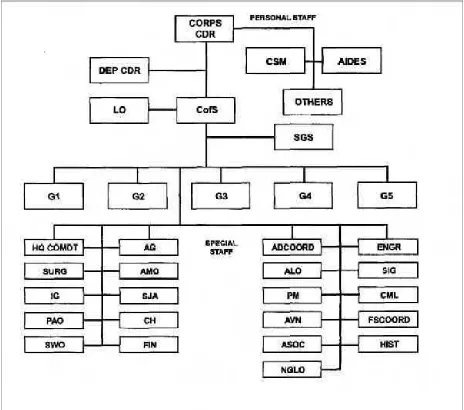
54. The chief of staff supervises all activities of the coordinating and special staffs in compliance with the corps commander’s intent. The corps staff provides the commander with accurate and timely information, prepares analyses and estimates, and recommends courses of action (COA).
55. Once the corps commander decides what is to be done, the staff translates the
commander’s decisions and intent into instructions and orders, issues the orders, and ensures the execution of those orders. The staff must anticipate future developments and requirements as much as possible to ensure that the corps retains the tactical initiative. Field Manual 101-5 (D) discusses specific responsibilities of coordinating, special, and personal staffs.
available close air support (CAS), air interdiction (AI), tactical air reconnaissance and aerial battlefield surveillance (TARABS), EW, counter air operations, tactical airlift, naval gunfire, air and missile support, and sea lift into the operation.
[image:33.612.107.571.192.602.2]58. Third, the corps must continuously plan into the future to anticipate battlefield conditions and then move forces and assemble resources in time to successfully fight the enemy. To plan continuously, the staff must anticipate conditions that may exist several days ahead. Figure 1-1 depicts a typical corps staff organization.
CORPS UNITS
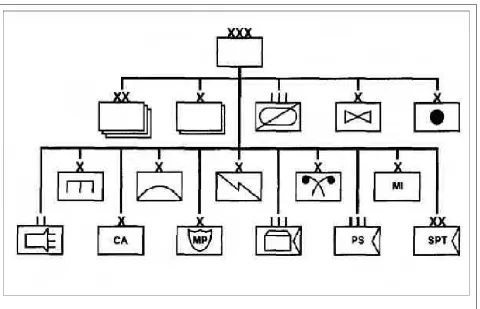
[image:34.612.33.513.147.456.2]59. There is no standard corps organizational structure. Figure 1-2 shows a typical corps organization. Most corps will have a similar structure, although the specific number, size, and types of units will vary.
Figure 1-2: Typical Corps Organization
DIVISIONS
60. Divisions are standard combined arms organizations that commanders may tailor
according to METT-T conditions. Divisions can perform any tactical mission and are largely self-sustaining. They are the basic manoeuvre units at the tactical level and perform major corps tactical operations. They occasionally function as operational-level headquarters, but can
conduct sustained battles and engagements and OOTW.
61. A corps normally has from two to five divisions of any type and combination. Light infantry, armored, mechanized infantry, airborne, and air assault (AASLT) divisions are all at present in the US force structure. Each type of division has unique capabilities and limitations. (See FM 71-100 for further discussion.).
US forces. They are also available for worldwide contingencies, including in regions that lack a developed support infrastructure.
63. Light infantry division operations are flexible in both tactical deployment and organization for combat, but are limited in tactical mobility unless augmented. Light forces habitually operate as combined arms teams with organic engineers, artillery, aviation, and air defense. When suitably augmented and task-organized for the mission, they are capable of executing brigade, battalion, and company- size operations. They can also be reinforced with, or can themselves reinforce airborne, air assault, special operations, armored, or mechanized forces.
64. Armored and Mechanized Infantry Divisions. Armored and mechanized divisions are mobile, ground-gaining forces with significant armor-protected firepower. They operate most effectively in terrain where they can move quickly and use long-range, direct-fire weapons to their best advantage. They seek to rapidly concentrate combat power against the enemy on the mobile battlefield.
65. Armored and mechanized divisions are somewhat limited in exploiting their mobility in
restrictive terrain, such as cities, mountains, and heavily forested areas. While all force-projection operations require use of strategic-lift assets, the deployment of armored and mechanized divisions may require more careful planning in order to achieve desired arrival sequences.
66. Airborne Division. The airborne division can rapidly deploy anywhere in the world to establish US presence and to seize and secure vital objectives. The division conducts vertical assaults by airdrops in the enemy’s rear to secure key terrain or to interdict the enemy’s routes of resupply or withdrawal, The division must depend on the USAF for airlift, CAS, and aerial resupply.
67. Once on the ground, the division is essentially a dismounted force with limited wheeled and rotary-wing mobility. The airborne division can be used in a developed theater, especially to add depth to the offense and defense. It is particularly well-suited for force-projection operations and can rapidly deploy in situations calling for early presence buildup of combat forces.
68. Air Assault Division. The AASLT division conducts rapid-tempo tactical operations over extended ranges. It combines strategic and operational mobility with an extremely high degree of tactical mobility within its AO.
69. The AASLT division can fight by projecting significant combat power by transporting
infantry, field artillery (FA), and other combat and CSS units using organic helicopter assets. It can also rapidly concentrate, disperse, and redeploy its forces, making it a highly responsive mobile force.
SEPARATE MANOEUVRE BRIGADES
71. Except for their size, separate armored, infantry, light infantry, and mechanized infantry brigades have essentially the same characteristics as their corresponding types of divisions. Separate manoeuvre brigades have organic cavalry, engineer, AD, FA, MI, MP, and CSS units.
72. Separate manoeuvre brigades help reinforce manoeuvre divisions but are capable of
operating as independent units. However, they are not capable of sustained operations unless augmented. (See also FM 71-3 and FM 7-30.).
ARMORED CAVALRY REGIMENT (ACR)
73. The ACR performs reconnaissance, security, and economy of force operations for the
corps. The regiment has organic air and armored cavalry units that can operate as combined-arms teams over wide areas and serve as reconnaissance or security forces.
74. The regiment also has organic AD, FA, engineer, MI, chemical, and CSS units. The
regiment may conduct offensive, defensive, or retrograde operations. It is capable of
independent operations but lacks infantry, a force artillery headquarters, and military police. The regiment may require augmentation in these areas. (See FM 17-95 for details.).
AVIATION BRIGADE
75. The corps aviation brigade provides the corps commander with a highly flexible manoeuvre force capable of performing a variety of combat, CS, and CSS missions across the entire range of military operations. Aviation units can rapidly manoeuvre to provide the decisive component of combat power throughout the depth of the battlefield during day, night, or adverse weather conditions. The aviation brigade can operate independently or, when properly
augmented, become the controlling headquarters for other combined arms elements conducting ground operations.
76. The corps aviation brigade consists of an attack regiment with three attack helicopter (AH)-64 attack battalions and an aviation group that consists of an assault battalion, a command aviation battalion, a CS aviation battalion, a medium helicopter battalion, a light utility helicopter (UH) battalion, and the air traffic services battalion.
CORPS ARTILLERY
78. Corps artillery contains all of the field artillery cannon, guided missile, and multiple-rocket battalions not organic to manoeuvre units. Corps artillery may also contain target acquisition units with artillery locating radars.
79. The cannon artillery and missile and rocket battalions are normally field artillery brigades allocated as needed to reinforce the fires of artillery units supporting committed manoeuvre units. They might also remain under corps control to provide general support (GS) fires. Artillery at corps is used to add depth to the battle, to support rear operations, and to influence the battle at critical times.
MILITARY INTELLIGENCE (MI) BRIGADE
80. The MI brigade contains operations, tactical exploitation, and aerial exploitation battalions as well as a brigade headquarters. These units conduct intelligence and electronic warfare (IEW) functions in GS of the corps. They augment the intelligence and
counterintelligence (CI) capabilities of the corps’ subordinate units.
81. The brigade collects and analyzes information from multiple sources, such as
communications intercept, enemy prisoner of war (EPW) interrogation, imagery exploitation, and weather forecasts. Its collection capabilities, combined with its information links from theater and national sensors, provide the corps with the ability to “see deep” into enemy rear areas.
82. The operations battalion provides a support element to the corps headquarters. Sections of the battalion assist the G2 in intelligence and CI planning, management, analysis, production, and dissemination. They also assist the G3 in EW, operations security (OPSEC), and deception planning.
ENGINEER BRIGADE
83. The engineer brigade controls corps engineer units not organic to manoeuvre units. The brigade provides mobility, countermobility, survivability, topographic engineering, and general engineering support to the corps and augments engineer support of the divisions and other subordinate units.
AIR DEFENSE ARTILLERY (ADA) BRGIGADE
85. The ADA brigade contains weapons systems designed to protect the force from aerial
attack, missile attack, and surveillance at all altitudes. Subordinate battalions employ a combination of missile systems supported by an identification, friend or foe (IFF), capability.
86. Corps AD battalions usually conduct tactical operations in support of corps priorities, but may also be tasked to reinforce division AD units. Corps AD priorities include forces, facilities, and functions crucial to the success of the corps’ concept of operations.
87. The commander coordinates and synchronizes corps air defenses with both division
defenses and those that EAC forces provide. The EAC air defense forces usually include aircraft of US and allied air forces; long-range, high-altitude missile systems of theater surface-to-air missile (SAM) units; and the supporting radar and C2 network of the theater- integrated AD organization.
SIGNAL BRIGADE
88. The signal brigade installs, operates, and maintains voice and data communications within and between corps C2 facilities. The signal brigade also maintains an extensive area network that connects all elements of the corps.
89. When supporting split-base operations, the signal brigade provides communications to link corps elements at the sustaining base to corps units at intermediate staging bases and in the objective area. When the corps is the JTF or ARFOR HQ, the signal brigade installs
communications links to USMC, USAF, USN, and special operations component commands.
90. In OOTW, the corps signal brigade provides links to HN, UN, allied forces, and government and non government agencies, as required. In disaster relief operations, the corps signal brigade may assist in restoring critical civilian communications.
91. Theater tactical communications assets normally deploy in support of each corps JTF or air component commander (ACC) to augment the corps signal brigade. These assets provide range extensions and automatic switching, and they support EAC, CS, and CSS units. The corps signal brigade terminates communications links from theater tactical networks.
CHEMICAL BRIGADE
92. The chemical brigade commands, controls, and coordinates CS operations of attached
93. Brigade chemical battalions support corps units in specified command or support relationships. The brigade also evaluates and determines corps decontamination, NBC reconnaissance, and smoke requirements.
MILITARY POLICE (MP) BRIGADE
94. The MP brigade usually has from three to six MP battalions and provides battlefield circulation control (BCC), area security, EPW and civilian internee operations, and law-and-order support to the corps. It conducts reconnaissance and surveillance, to ensure security of main supply routes (MSR), and area reconnaissance of other key areas in the corps’ rear.
95. In support of rear operations, this brigade normally provides the initial Level II response force to counter threats that exceed base and base cluster defense capabilities. It can assist tactical combat forces in Level III responses. This brigade can be designated as a tactical combat force for Level III threats, operating independently or augmented according to METT-T.
96. The MP brigade augments the organic MPs of committed manoeuvre units as required.
The corps MP brigade with USAF elements may conduct joint operations during air base defense activities.
97. The brigade maintains close liaison with HN civil and military police and often provides civil-military operations (CMO) support. Joint and multinational operations with HN civil and military police might occur during MP brigade missions.
CIVIL AFFAIRS (CA) BROGADE
98. The CA brigade, in support of the corps, normally consists of a brigade headquarters and headquarters company (HHC) and from three to five CA battalions. Under the corps G5's supervision, the brigade headquarters analyzes the corps’ mission for CA requirements, prepares the CA annex to corps plans and orders, and establishes liaison with joint service and other CA organizations.
99. The brigade headquarters company contains four technical support teams. Each team
contains government, economics, public facilities, and special functions sections. These sections provide CA technical advice and assistance to unit commanders throughout the corps area.
100. A CA battalion is normally attached to each division and the COSCOM. Under the staff supervision of the division G5 or the COSCOM CMO officer, the battalion plans, coordinates, and supervises CA activities as directed.
PSYCHOLOGICAL OPERATIONS (PSYOPS TACTICAL SUPPORT BATTALION
101. Corps PSYOP support normally consists of a PSYOP tactical support battalion with from
PSYOP support element (CPSE). This element provides interface with a PSYOP task force (POTF) or a joint PSYOP task force (JPTOF).
102. Each tactical support company normally is in direct support (DS) of a division, separate brigade, or ACR. Tactical support companies provide product development and tactical
dissemination.
CORPS SUPPORT COMMAND (COSCOM)
103. COSCOM is the corps’ principal logistic organization. It provides supply, field services ,transportation (mode operations and movement control), maintenance, and combat health support (CHS) to the divisions and to nondivision corps units. The COSCOM is not a fixed organization and contains a mix of subordinate units as required by the corps’ size and configuration.
104. Within the COSCOM are fictional control centers; a materiel management center
(MMC); the movement control center (MCC); a medical brigade; a transportation group (when three or more functional transportation battalions are assigned); and corps support groups. These elements provide supply (less Class VIII), maintenance, and medical transportation and services to division and nondivision units.
105. Sustaining forces in any major regional contingency (MRC) or lesser regional contingency (LRC) requires the mobilization of selected reserve component (RC) units and personnel. Commanders can organize these mixed active and RC packages into modules tailored to the overall composition of the force. (See Chapter 3 for details.)
FINANCE GROUP
106. The finance group commands, controls, and coordinates the finance operations of all corps finance battalions. It provides administrative and logistic support to assigned finance battalions. The finance group normally has from two to six finance battalions.
107. Finance battalions provide finance support to all corps divisional and nondivisional units. Finance support includes commercial vendor services and contracting support, military pay, disbursing, funding, accounting, travel pay, civilian pay, and non-US pay (for EPW, local hire labor, and so on).
PERSONNEL GROUP (PG)
108. The PG mission is to sustain corps and EAC personnel readiness and to exercise C2 over personnel units. The PG manages critical personnel systems and synchronizes the corps’ personnel network through the personnel management center (PMC) formed from adjutant general (AG) and personnel operations. The personnel group normally commands a
109. Personnel service battalions are responsible for critical tasks associated with the following systems: data base management of personnel accounting and strength reporting, casualty operations management, and personnel information management. They are also responsible for the following essential personnel services: identification document, personnel evaluations, promotions and reductions, officer procurement, and soldier actions.
110. The PSB exercises C2 over from two to six identical personnel detachments and a modular postal company. This modular structure enables commanders to tailor their organizations to support specific missions in accordance with METT-T.
SECTION 2
JOINT FORCE CAPABILITIES US AIR FORCE
111. The USAF’s contributions to joint operations include a range of missions and capabilities that meet Department of Defense (DOD)-mandated service responsibilities and functions.
Missions that most directly affect corps operations include:
a. counter air-to gain control of the aerospace environment;
b. air interdiction-to delay, disrupt, divert, or destroy an enemy’s military potential before it can be brought to bear effectively against friendly forces;
c. close air support-to support surface operations by attacking hostile targets near friendly surface forces;
d. special operations-to influence the accomplishment of strategic or tactical
objectives normally through low-visibility, covert, or clandestine military actions;
e. airlift-to deploy, employ, and sustain military forces;
f. reconnaissance and surveillance-to collect information from airborne, orbital, and surface-based sensors.
112. The USAF also performs specialized tasks to enhance the execution of its missions. Tasks that most often enhance corps operations include:
a. aerial refueling-to extend the range, payload, and flexibility of air operations;
b. electronic combat (electronic warfare performed by aerospace forces) to control selected parts of the electromagnetic spectrum in support of combat operations;
c. warning, command, control, and communications- to provide warning and
d. intelligence-to acquire, correlate, analyze, and apply intelligence data to provide essential information for deciding how, when, and where to engage and attack the enemy;
e. weather service-to provide timely and accurate environmental information to
support the decision process for employing forces in combat operations;
f. medical evacuation-to provide timely aero-medical evacuation to clear corps
hospital of those patients exceeding hospitalization limits.
US NAVY
113. The USN participates in joint operations and conducts a wide range of operations and tasks. Department of Defense-mandated USN directives that most closely affect corps operations include:
a. providing naval forces (including naval air) to conduct amphibious operations;
b. providing sea-based air defense;
c. providing CAS and naval support for land operations;
d. providing sea movement of personnel and cargo through the Military Sealift
Command (MSC).
114. During the planning phase and in the initial execution phase of amphibious operations, C2 facilities afloat are available to enhance or complement corps operations. Other Navy resources available to corps operations include:
a. Intelligence;
b. electronic warfare;
c. naval gunfire support;
d. aerial reconnaissance and photography;
e. airborne early warning;
f. air transport;
g. offensive and defensive air operations beyond CAS;
h. special operations;
115. The joint force commander’s (JFC) apportionment decision provides the basis for naval aviation support to the corps during joint land operations. The JFC may apportion excess naval aviation sorties to various missions or geographic areas to ensure unity of effort in the overall mission. The joint force air component commander (JFACC) normally plans, coordinates, and tasks these sorties.
US MARINE CORPS
116. Like the other services, the USMC conducts operations to fulfill functional areas as mandated by DOD. Operations that may complement or contribute to a corps’ effort include conducting land operations essential to prosecute a naval campaign and conducting amphibious operations for which the USMC is the proponent service.
117. In addition to fulfilling its functional responsibilities, USMC resources may complement or enhance corps operations by providing:
a. air and naval gunfire liaison companies (ANGLICOs) in support of US and allied
divisions and subordinate elements;
b. offensive air support, including CAS, deep air support, and airborne EW and
communications countermeasures;
c. antiair warfare to gain and maintain air superiority;
d. assault air support;
e. air reconnaissance;
f. electronic warfare;
g. airspace management within the AO;
h. special operations;
i. intelligence.
118. The USMC’s tactical aviation is an organic element of each Marine Air-Ground Task
Force (MAGTF). The MAGTF commander retains OPCON of MAGTF air assets during joint land operations. MAGTF air assets normally support the MAGTF. Air sorties in excess of MAGTF direct-support requirements are provided to the JFC:
a. for tasking by the JFACC;
b. for the support of other components of the joint force;
119. This reapportionment and/or reallocation of USMC tactical aviation sorties occurs when the JFC determines they are required for higher priority missions and to ensure unity of effort in accomplishing the overall mission.
SPECIAL OPERATIONS (SO)
120. Specially organized, trained, and equipped military and paramilitary forces conduct special operations to achieve military, political, economic, or psychological objectives by generally unconventional means in hostile, denied, or politically sensitive areas. Special operations forces conduct missions throughout the full range of military operations either independently or with general purpose forces.
121. Special operations differ from operations by general purpose forces
by-a. their degree of acceptable physical and political risk;
b. their employment and operational techniques;
c. their relative independence from friendly support;
d. their dynamic interdependence on detailed operational intelligence and indigenous assets.
122. Special operations forces allow the unified or joint force commander to perform critical, relatively small-unit missions that directly strike or engage the aim or object of his operational design.
123. Special operations forces accomplish missions and tasks by director indirect modes of employing military power and resources. The direct mode describes applications of military power designed to coerce or force the subjugation of an adversary’s will. It includes strikes and manoeuvres that cause destruction, disruption, or denial of military capabilities.
124. The indirect mode describes applications of military resources designed to train, advise, or assist interagency activities, nations important to US interests, or surrogate forces pursuing US interests. The indirect mode of special operations encompasses engagements and economies of force that deter an adversary’s use of force or that promote peace.
125. Special operations forces consist of four interdependent elements: special operations command and control headquarters (SOCCH), operational bases, SOF supporting units, and SOF tactical units. SOCCH integrates SO and SOF for unified or joint commanders. SOF operational bases are versatile, deployable organizations that command and control SOF tactical units for unified or joint commanders. SOF supporting units conduct relatively independent special operations. SOF tactical units are relatively small units with specialized, often unconventional, combat skills.
a. are specific tactical operations conducted by certified small units with unique talents who directly strike or engage strategic and/or theater aims or objectives;
b. planning begins at unified, joint, or interagency levels for SO execution requiring extensive, rigorous rehearsal, and training by small units;
c. execution occurs within a specifically tailored C 2 architecture;
d. frequently include cover, clandestine, or low-visibility operations and may be combined with overt operations;
e. often occur at great distances from operational bases and employ sophisticated communications systems and means of insertion, support, and extraction to penetrate and return from hostile, denied, or politically sensitive areas;
f. occur throughout the range of military operations in war, conflict, and peacetime environments;
g. influence the will of foreign leaders to create conditions favorable to US strategic aims or objectives;
h. are often high-risk operations, have limited windows of execution, and require first-time success;
i. require theater and, frequently, national-level intelligence support;
j. often require a detailed knowledge of specific cultures and languages of a country or region.
CHAPTER 2
FUNDAMENTALS OF CORPS OPERATIONS
1. In combat a corps must be able to simultaneously and continuously execute operations in
depth. This requires careful planning and detailed coordination in order for the corps to bring to bear all available resources at decisive times and places on the battlefield.
2. Commanders must understand force-projection operations, battlefield visualization, the battlefield framework, and the basic capabilities of each battlefield operating system (BOS). Commanders must also understand the complementary and reinforcing effects of combined arms and joint capabilities to apply Army operations doctrine.
FORCE PROJECTION
3. Future contingencies will most likely occur in regions of the world where the US does not have significant ground forces. Force projection is the demonstrated ability to rapidly alert, mobilize, de ploy, employ, sustain, and recover to again operate anywhere in the world. It is the key military element of power projection.
4. As a member of the joint team, the Army corps is often the organization of choice to deploy from CONUS and/or forward presence locations and to conduct operations associated with lesser regional contingencies or operations that may develop into a major regional contingency.
5. The corps is ideally suited for force-projection missions. It has the fill extent of C2, combat, CS, and CSS assets with which to assemble an appropriate mix of units to execute any force-projection operation.
6. Because the corps is not a fixed force, it can be tailored to any contingency worldwide. Therefore, the corps brings tremendous versatility and lethality to a warfighting commander-in-chief’s (CINC’s) total force. It can execute the full range of land combat operations and OOTW. Also, when properly tailored, it can execute both simultaneously. (See Chapter 3 for details.)
7. The CINC may assign the corps commander various command responsibilities within a
force-projection operation. For example, the corps commander may be the commander of the senior tactical level headquarters in the theater and may be directly subordinate to an Army EAC headquarters. The corps commander may also function as the commander of an operational-level headquarters, such as a JTF, a JFLCC, or an ARFOR headquarters. (See Chapter 4.)
BATTLEFIELD VISUALIZATION
visualize the operation he will conduct before any mental constraints (for example, boundaries, phase lines (PLs), and fire control measures) are emplaced.
9. The first aspect in the commander’s visualization is gaining an understanding of the current state of his unit and that of the enemy. This includes gaining an awareness of his own and the enemy’s status, including combat readiness, logistic status, location, speed of advance, tempo of operations, known vulnerabilities, and probable course of action.
10. Environmental factors for both the enemy and the friendly force are also included. Environmental factors include terrain and weather as well as human factors such as morale and fatigue. Less tangible influences are cultural, religion, and similar factors.
11. The second aspect of the commander’s vision is his ability to clearly discern a desired end state. This initially involves foreseeing a feasible outcome to the operation that would result in mission success and would leave the unit postured for the next mission.
13. Ultimately, the commander articulates his battlefield vision to his subordinates and staff through the commander’s intent statement. The commander’s intent guides the development of the concept of operations.
14. The ability to visualize a battlefield is an essential leadership attribute. It is learned and attained through training, practice, experience, wisdom, and available battle command
technologies. It is critical to accomplishing the mission.
15. Battlefield visualization is fundamental to establishing a battlefield framework. A battlefield framework for any operation results from, and is a natural extension of, this process.
BATTLEFIELD FRAMEWORK
16. A battlefield framework helps commanders relate friendly forces to one another and to the enemy in terms of time, space, and purpose. The concept of a battlefield framework is not new, but the proliferation of military and advanced technology and the influence of joint doctrine has caused the battlefield framework to evolve.
17. The battlefield framework is relevant to any battlefield, including those in OOTW. The following discussion applies primarily to conventional combat operations.
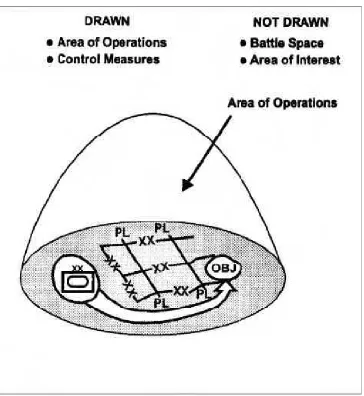
18. The battlefield framework consists of four inter-related components: area of operations (AO), area of interest (AI), battle space, and a specific battlefield organization. As a result of the battlefield visualization process, the commander can translate his vision into this framework.
19. The commander mentally establishes an area in which he must focus
intelligence-gathering means, This will ensure he is aware of factors that may have a near-term impact on the operation. This is called the area of interest.
20. The commander next determines the three-dimensional area in which he seeks to
dominate the enemy. This volume is referred to as the commander’s battle space.
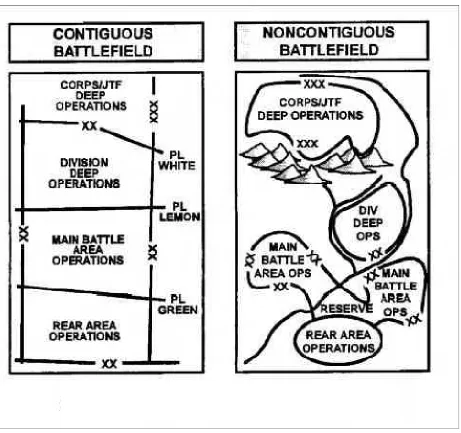
21. Finally, the commander lends structure to his assigned AO through a specific battlefield organization. This organization includes using boundaries, phase lines, and similar measures.
Figure 2-1: Battlefield Framework Representation
AREA OF OPERATIONS (AO)
23. A commander is assigned an AO by his higher commander. An AO is a
three-dimensional volume prescribed by boundaries on the ground. It also includes the airspace above.
24. The size of an AO depends on METT-T, but it must be large enough for the commander
to accomplish his mission and protect the force. Boundaries may require frequent adjustment based on the actual and projected rates of manoeuvre and the operational environment.
25. Commanders can use AOs to divide large areas into smaller geographical areas in which