Simultaneous Determination of Dopamine and L-Ascorbic
Acid by Modified Carbon Paste Electrode with Ni (II)
Cyclam Complex
Leila Farzin1, Mohammad Reza Milani Hosseini2
1Environmental Laboratory, Nuclear Science Research School, Nuclear Science & Technology Research Institute,
Atomic Energy Organization of Iran (AEOI), Tehran, Iran
2Analytical Department, Chemistry faculty, Iran University of Science and Technology,Tehran, Iran
E-mail: LFarzin84@yahoo.com
Received November 8, 2010; revised January 10, 2011; accepted May 16, 2011
Abstract
The electroanalysis of dopamine (DA) and ascorbic acid (AA) by square wave voltammetry has been per-formed at a modified carbon paste electrode with macrocyclic ligand 1,4,8,11-tetraazacyclotetradecane (cy-clam) and monolayer of Ni (II) cyclam. In pH 7.2 buffer solutions, the electrostatic reaction of AA with di-positive monolayer shifts the oxidation potential to less positive potential, while the electrostatic repulsion of DA with the monolayer shifts the oxidation potential of DA to more positive potential. The separation between the oxidation peaks of AA and DA at the present di-positive monolayer modified electrode (252 mV) was larger than that (187 mV) at the cyclam modified electrode. In addition, the catalytic oxidation of AA by oxidized DA has been advantageously eliminated at the modified carbon paste electrode with cyclam and Ni (II) cyclam complex. Thus, the determination of DA in the presence of an excess of AA is possible with the present modified electrodes.
Keywords:Macrocyclic Compound, Carbon Paste Electrode, Dopamine, Ascorbic Acid
1. Introduction
Dopamine (DA) and ascorbic acid (AA) are compounds of great biomedical and neurochemical interest playing a potential role in human metabolism. DA is one of the most significant catecholamine, functioning as a neuro-transmitter in the central nervous system and a medica-ment to drug addiction and Parkinson’s disease [1,2]. It affects brain processes that control movement, emotional response, and ability to experience pleasure and pain. AA is a water-soluble vitamin that is widely required in metabolism. It has been used in the prevention and treatment of common cold, mental illness, cancer and Aids [3]. In mammalian brain DA and AA coexists in the extracellular fluids.
There are various determination methods includes ul-traviolet spectroscopy (UV) [4], high performance liquid chromatography (HPLC) [5,6], capillary electrophoresis (CE) [7] and electrochemical approaches [8-10]. Because both DA and AA are oxidisable compounds, their detec-tion can be made by electrochemical methods based on
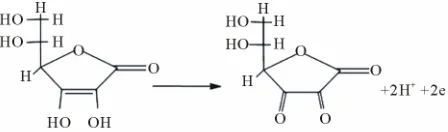
anodic oxidation. When a potential is applied at the elec-trode, ascorbic acid is also oxidized to dehydroascorbic acid, which undergoes further chemical reaction to form the gem-diol (Figure1). As is known the oxidation po-tential is pH dependent [11] (The first pKa is at 4.17 and
the second is at 11.57).
[image:1.595.313.537.638.704.2]Dopamine is oxidized to form dopaminequinone with the liberation of two electrons (Figure2). It is generally believed that direct redox reactions of these species at bare electrodes are irreversible and therefore require high overpotentials. Moreover the direct redox reactions of these species at the bare electrodes take place at very similar potentials and often suffer from a pronounced
L. FARZIN ET AL. 290
Figure 2. Electrooxidation of dopamine.
fouling effect, which results in rather poor selectively and reproducibility. Thus the simultaneous determination of DA and AA is of critical importance in the field of biochemistry and medical treatment [12].
The use of chemically modified electrodes greatly in-creases the selectivity and sensitivity toward these ana-lytes. The development of voltammetric sensors for the detection of neurotransmitters in the extracellular fluid of the central nervous system has received much interest in the past few decades. So, many different strategies have been employed for the modification of the electrode sur-face [13]. A simple method for preparing electrochemi-cal modified electrodes (CME) is based on doping car-bon paste with the biocatalyst [14-16]. The most impor-tant advantage of the “mixed catalyst-carbon paste elec-trode” is the substantial reduction of response time ow-ing to the absence of a layer that hinders mass transport. The catalyst is an integral part of the sensing element, and hence the electrode responds rapidly to changes in the level of the substrate.
The goal of this study was to develop a production method for modified carbon paste electrodes with mac-rocyclic compounds for selective measurement of neuro-transmitters in physiological pH (7.2). This modified electrode with Ni (II) 1, 4, 8, 11-tetraazacyclotetradecane has been used for Simultaneous Determination of DA and AA. The electrochemical behavior of a broad family of macrocyclic complexes of nickel has been studied by Busch et al. [17].
2. Materials and Methods
2.1. Chemical and Reagents
All chemicals used were of analytical-reagent grade. Double distilled, deionized water (Milli-Q system, Mil-lipore, Japan) was used for preparation of all solutions. 1,4,8,11-tetraazacyclotetradecane (cyclam), dopamine hydrochloride and ascorbic acid were bought from Fluka and used as such. All the voltammetric studies were car-ried out in phosphate buffer (potassium phosphate were also used as a supporting electrolyte). Buffer solutions were prepared from orthophosphoric acid and its salts in the pH range of 3-9.
2.2. Apparatus
The voltammetric system used for the studies was Auto-labPSTAT 10 potentiostat joined to a Metrohm 663 VA.
Square wave voltammetry was carried out in a three- electrode cell. Silver/silver chloride (3 moldm–3 KCl), a
platinum wire and a bare or modified electrode were used as reference, counter and working electrodes, re-spectively. The pH values were measured with a digital pH meter MK VI (systronics).
2.3. Preparation of Bare Carbon Paste Electrode
The bare carbon paste electrode was prepared by hand mixing of graphite powder and silicon oil at a ratio 70:30 (w/w) in an agate mortar until a homogenous paste was obtained. The paste was then tightly packed into a PVC tube (3 mm internal diameter) and the electrical contact was provided by a copper wire connected to the end of tube. The bare carbon paste electrode was polished suc-cessively with 0.3 and 0.05 µm Al2O3 slurry on emery
paper. It was then rinsed with doubly distilled water and sonicated in 1 + 1 HNO3, acetone and doubly distilled
water for 10 min, respectively.
2.4. Preparation 1of Modified Carbon Paste Electrode
The macrocyclic nickel complex (nickel (II) 1,4,8,11- tetraazacyclotetradecane) was synthesized, purified and characterized by elemental analysis and 13C-NMR and IR
spectral measurements according to reported procedure [18].
The carbon paste electrodes were prepared as before with 5% of the modifier in graphite-silicon oil matrix and used in conjunction with an Ag/AgCl reference electrode and a platinum counter electrode. The thickness of modi-fied carbon paste was controlled in the range of 4 - 6 mm.
2.5. Procedure
The electrochemical experiments were performed in a 25 cm3 electrolytic cell with 10 cm3 solutions. All
measure-ments were conducted at room temperature and under a nitrogen atmosphere. Nitrogen gas was bubbled through the solution for 30 min prior to each electrochemical measurement.
3. Results and Discussion
3.1. Electrochemical Behavior of AA and DA on CME-1
The square-wave voltammograms obtained for the oxi-dation of AA and DA at the CME-1 and the bare elec-trode are shown in Figure 3. At the bare electrode when both AA and DA coexist, only one voltammetric peak is obtained for both analytes. Thus it is impossible to de-termine the individual concentrations from the broad voltammetric peak. Moreover the catalytic oxidation of AA by the oxidized DA [19] enhances the oxidation peak current of DA at the bare electrode. The precise deter-mination of DA in the presence of AA is not possible because of this catalytic oxidation. As the AA concentra-tion, for example, in the extracellular fluid is very high, this mediated oxidation would affect the accurate deter-mination of DA and this unwanted catalytic oxidation needs to avoid. The present modified electrode clearly separates the merged voltammetric peaks of AA and DA and the mediated oxidation of AA by oxidized DA has been successfully eliminated. At these electrodes the AA oxidation occurs well before the DA oxidation potential and hence the mediated oxidation would not be expected. Since the voltammetric peak of DA is well separated from the AA peak, the determination of DA in the pres-ence of AA is possible with the present modified elec-trode. The separation between the oxidation peaks of AA and DA at the CME-1 in phosphate buffer solution (pH = 7.2) was 187 mV.
3.2. Electrochemical Behavior of AA and DA on CME-2
Figure4 shows the oxidation of AA and DA at the bare
[image:3.595.313.535.79.219.2]Figure 3. Square-wave voltammograms obtained for the oxidation of DA and AA (2 × 10⁻⁵ M) at (a) bare and (b) CME-1 in 0.5 M phosphate buffer (pH = 7.2).
Figure 4. Square-wave voltammograms obtained for the oxidation of DA and AA (2 × 10⁻⁵ M) at (a) bare and (b) CME-2 in 0.5 M phosphate buffer (pH = 7.2).
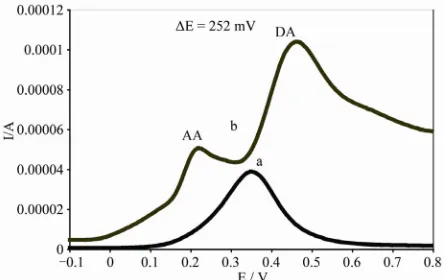
carbon paste electrode and the modified carbon paste electrode with nickel (II) macrocyclic complex (CME-2). As can be readily seen from Figure4 a negative shift in the AA oxidation potential can be the electrostatic inter-action of AA with the positively charged monolayer. Since AA is negatively charged in neutral aqueous solu-tion (pH = 7.2), the electrostatic interacsolu-tion is expected between AA and Ni 2+ redox centers of the monolayer
and it would favor the oxidation of AA.
In contrast, DA exists in the cationic form physiologi-cal pH (pKa 8.9). It is repelled by the Ni2+ redox centers.
Hence, it cannot enter the monolayer to the same extent as AA, and the interference with the determination of DA is diminished. These results indicated that the prob-lem of the overlapped voltammetric responses of DA with AA, due to their coexistence in real biological fluids can be effectively overcome by use of dipositive mono- layer of Ni (II) cyclam.
The monolayer modified electrode successfully re-solves the merged voltammetric peaks of AA and DA and the peaks are separated enough (252 mV separation) to determine the concentration of each analytic.
3.3. Effect of Film Thickness on the Voltammetric Response
The thickness of complex film directly controls the elec-trode performance. The optimum film thickness reflects compromise between mechanical stability and residual current.
[image:3.595.57.287.525.684.2]L. FARZIN ET AL. 292
catalyst loaded apparently affect the sensitivity. Whereas, when the films were too thick, residual current increased remarkably. So, electrodes prepared with the optimum of catalyst (5 wt%), were used in all experiments.
3.4. Optimization of the Solution pH
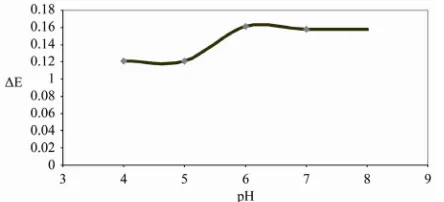
Figure5 shows the ΔEp versus pH plots for CME-2 in
the phosphate buffer with various pHs (in range of 3 - 9). The electrochemical reaction can be induced and mo- nitored by voltammetry to quantify the concentration of ascorbic acid in solution.
The voltammograms obtained with the Ni (II) macro-cyclic for solutions containing L-ascorbic acid in strongly acidic media (e.g. pH2) showed that L-ascorbic acid did not couple catalytically with the Ni (II) macrocyclic. Therefore, optimization of the solution pH was necessary in order to obtain a catalytic couple. A variation in the electrolyte pH will result in variations in the formal po-tential of L-ascorbic acid. Therefore, the thermodynamic driving force for the catalysis will vary with the pH, making the peak currents and the shapes of the voltam-mograms at different pH values. The anodic peak cur-rents increased with an increase in the pH up to 6.6, and then gradually decreased up to pH 9. So, the most opti-mized pH for catalytic oxidation of AA is 6.6. However, in this pH, electron transfer kinetic for the oxidation of DA was found to be rather sluggish owing to the electro-static repulsion between positively charged DA (pKa 8.9)
and Ni (II). So, the electrostatic repulsion of DA and with di-positive monolayer shifts the oxidation potential of DA to more positive potential, while the electrostatic reaction of AA with the monolayer shifts the oxidation potential to less positive potential. In this study, all of the measurements were carried out at the physiological pH (7.2) that it is much near to optimized pH.
3.5. Effect of Scan Rate on Peak Currents of DA and AA
[image:4.595.63.285.582.683.2]The results show an initial linearity which curves off at
Figure 5. Plot of ΔEp vs pHfor 2 × 10⁻³ M ascorbic acid and dopamine obtained by CME-2 in the 0.5 M phosphate buf-fer.
higher scan rates. It suggests that the reaction is initially diffusion controlled, but at faster scan rates the electron transfer becomes rate determining. It appears from these data that a scan rate of 100 mVs–1 was used for the
pur-pose of simultaneous determination of DA and AA. In addition, the Ep values are shifted to more positive
val-ues.
3.6. Calibration Curve and Reproducibility
The calibration plots for the oxidation of AA and DA were linear for a wide range of concentration (1-100 μM for AA and 1.5 - 100 μM for DA at the CME-2).
To characterize the reproducibility of the CME-2, re-petitive measurementregeneration cycles were carried out. The results of 15 successive measurements showed a relative standard deviation of 4.1% and 3.8% for 50 μM ascorbic acid and 50 μM dopamine.
4. Conclusions
Redox processes of organic compounds often have slow charge transfer rates, leading to poorly defined voltam-metric responses. Modification of the electrode surface by a redox mediator reduces the over-potential for the redox processes. The modified carbon paste electrodes with cyclam and Ni (II) cyclam monolayer have been successfully applied to the determination of ascorbic acid and dopamine. The separation between the oxidation peaks of AA and DA at the CME-2 (252 mV) was larger than that (187 mV) at the CME-1.
The carbon paste approach permits convenient mixing of different ligands and as the ligand is homogeneously mixed in the bulk of the paste, renewal of the surface is done simply by pressing out the paste from syringe, which is easier and faster. Moreover, the electrode so fabricated can be stored for about six months in an air-tight container.
5. Reference
[1] H. Zhao, Y. Zhang and Z. Yuan, “Electrochemical De-termination of Dopamine Using a Poly (2-Picolinic Acid) Modified Glassy Carbon Electrode,” Analyst, Vol. 126, No. 3, 2001, pp. 358-360.doi:10.1039/b008283j
[2] T. E. Smith, “Text Book of Biochemistry with Clinical Correlations,” T. M. Devlin Eds., Wiley/Liss, New York, 1992, p. 929.
[3] O. Gilbert, U. Chandra, B. E. Kumara Swamy, M. Pandu-ranga Char, C. Nagaraj and B. S. Sherigara, “Poly (Alanine) Modified Carbon Paste Electrode for Simultaneous De-tection of Dopamine and Ascorbic Acid,” International
Journal of Electrochemical Science, Vol. 3, No. 3, 2008,
[4] M. Rohani Moghadam, S. Dadfarnia, A. M. Haji Shabani and P. Shahbazikhah, “Chemometric-Assisted Kinetic– Spectrophotometric Method for Simultaneous Determina-tion of Ascorbic Acid, Uric Acid, and Dopamine,” Ana-lytical Biochemistry, Vol. 410, No. 2, 2011, pp. 289-295.
doi:10.1016/j.ab.2010.11.007
[5] W. Zhang, X. Cao, Y. Xie, S. Ai, L. Jin and J. Jin, “Simultaneous Determination of the Monoamine Neur-otransmitters and Glucose in Rat Brain by Microdialysis Sampling Coupled with Liquid Chromatography-Dual El- ectrochemical Detector,” Journal of Chromatography B,
Analytical Technologiesin the Biomedical and Life
Sci-ences, Vol. 785, No. 2, 2003, pp. 327-336.
doi:10.1016/S1570-0232(02)00953-4
[6] C. Muzzi, E. Bertocci, L. Terzuoli, B. Porcelli, I. Ciari, R. Pagani and R. Guerranti, “Simultaneous Determination of Serum Concentrations of Levodopa, Dopamine, 3-O-Methyldopa and α-Methyldopa by HPLC,” Biomedicine & Pharmacotherapy, Vol. 62, No. 4, 2008, pp. 253-258.
doi:10.1016/j.biopha.2007.10.018
[7] H. Li, C. Li, Z. Y. Yan, J. Yang andH. Chen, “Simulta-neous Monitoring Multiple Neurotransmitters and Neu-romodulators During Cerebral Ischemia/Reperfusion in Rats by Microdialysis and Capillary Electrophoresis,”
Journal of Neuroscience Methods, Vol. 189, No. 2, 2010,
pp. 162-168.doi:10.1016/j.jneumeth.2010.03.022
[8] M. Pandurangachar, B. E. Kumara Swamy, B. N. Chandrashekar, O. Gilbert and B. S. Sherigara “Electro-chemical Deposition of 1-Butyl-4-Methyl-Pyridinium Tetrafluroborate Ionic Liquid on Carbon Paste Electrode and its Application for the Simultaneous Determination of Dopamine, Ascorbic Acid and Uric Acid,” Journal of Molecular Liquids, Vol. 158, No. 1, 2011, pp. 13-17.
doi:10.1016/j.molliq.2010.09.005
[9] R. Zhang, G. D. Jin, D. Chen and X. Y. Hu “Simultane-ous Electrochemical Determination of Dopamine, Ascor-bic Acid and Uric Acid Using Poly (Acid Chrome Blue K) Modified Glassy Carbon Electrode,” Sensors and Ac-tuators B: Chemical, Vol. 138, No. 1, 2009, pp. 174-181. [10] A. A. Ensafi, M. Taei, T. Khayamian and A. Arabzadeh
“Highly Selective Determination of Ascorbic Acid, Do-pamine, and Uric Acid by Differential Pulse Voltam-metry Using Poly (Sulfonazo III) Modified Glassy Car-bon Electrode,” Sensors and Actuators B: Chemical, Vol. 147, No. 1, 2010, pp. 213-221.
doi:10.1016/j.snb.2010.02.048
[11] V. S. Lieri, M. Algarra and A. Martins, “Electrocatalytic Determination of Vitamin C Using Calixarene Modified
Carbon Paste Electrodes,” Electroanalysis, Vol. 16, No. 24, 2004, pp. 2082-2086.doi:10.1002/elan.200403054
[12] Z. Gao and H. Huang, “Simultaneous Determination of Dopamine, Uric Acid and Ascorbic Acid at an Ultrathin Film Modified Gold Electrode,” Chemical Communica-tions, Vol. 8, No. 1, 1998, pp. 2107-2108.
doi:10.1039/a805915b
[13] C. R. Raj and T. Ohsaka, “Electroanalysis of Ascorbate and Dopamine at a Gold Electrode Modified with a Posi-tively Charged Self-Assembled Monolayer,” Journal of Electroanalytical Chemistry, Vol. 496, No. 1-2, 2001, pp. 44-49.doi:10.1016/S0022-0728(00)00335-1
[14] J. Tashkhourian, M. R. Hormozi Nezhad, J. Khodavesi and S. Javadi, “Silver Nanoparticles Modified Carbon Nanotube Paste Electrode for Simultaneous Deter-mination of Dopamine and Ascorbic Acid,” Journal of
Electroanalytical Chemistry, Vol. 633, No. 1, 2009, pp.
85-91.doi:10.1016/j.jelechem.2009.04.028
[15] O. Gilbert, B. E. Kumara Swamy, U. Chandra and B. S. Sherigara, “Simultaneous Detection of Dopamine and Ascorbic Acid Using Polyglycine Modified Carbon Paste Electrode: A Cyclic Voltammetric Study,” Journal of Electroanalytical Chemistry, Vol. 636, No. 1-2, 2009, pp. 80-85.
[16] B. N. Chandrashekar, B. E. Kumara Swamy, M. Pandu-rangachar, S. S. Shankar, O. Gilbert, J. G. Manjunatha and B. S. Sherigara, “Electrochemical Oxidation of Do-pamine at Polyethylene Glycol Modified Carbon Paste Electrode: A Cyclic Voltammetric Study,” International
Journal of Electrochemical Science, Vol. 5, No. 5, 2010,
pp. 578-592.
[17] M. Khorasani-Motlagh and M. Noroozifar, “Electrocata-lytic Determination of L-Ascorbic Acid by Modified Glassy Carbon with Ni(Me2(CH3CO)2[14]tetraenoN4) Complex,”Analytical Scientific, Vol. 19, No. 12, 2003, pp. 1671-1674.doi:10.2116/analsci.19.1671
[18] Y. Kashiwagi, C. Kikuchi and J. Anzai, “Electrocatalytic Dehalogenation of Organohalides on a Ni (II) Te-traazamacrocyclic Complex-Modified Graphite Felt Elec-trode,” Journal of Electroanalytical Chemistry, Vol. 518, No. 1, 2002, pp. 51-55.
doi:10.1016/S0022-0728(01)00697-0