Image credit:
Proceedings of the 3rd Biennial
Research Through Design Conference
Maxwell, D., Edwards, E., Odling, M. 2017. ‘Bee Boxes: Designing Spaces for Stories’. In: Proceedings of the 3rd Biennial Research Through Design Conference, 22-24 March 2017, Edinburgh, UK, Article 26, pp. 406-422. DOI: 10.6084/m9.figshare.4747009.
Bee Boxes: Designing Spaces for Stories
Deborah Maxwell, Liz Edwards, and Morvern Odling
Bee Boxes: Designing
Spaces for Stories
Abstract: Bee Boxes were one strand of a research through design project
that worked with communities of beekeepers, storytellers, and school groups. The overarching project sought to understand existing and changing knowledge systems of beekeeping to imagine and potentially shape narratives and knowledge systems for future generations. The Bee Boxes were created in collaboration with three rural primary schools, in an area historically renowned for hard fruit production. To strengthen and contextualise school children’s understanding of their local environment, a physical story box was designed in the shape of a wild hive to store pupils’ stories. Each school had their own hive shape,
inspired by organic, parabolic forms of honeycomb. Following a talk by a beekeeper, pupils collaboratively wrote stories and decorated their Bee Box. This paper illustrates the value of a design-facilitated making process to extend engagement opportunities and provide a resource for inspiration and future narratives. We will discuss the use of research through design to create open experience-artefacts intended for use in environmental education about honey bees and pollination. We reflect on the ways that openness has enabled appropriation of these artefacts creating additional opportunities for knowledge sharing and gathering by considering the role of the Bee Boxes across five distinct life phases.
Deborah Maxwell1, Liz Edwards2, Morvern Odling3
1 University of York, York, UK
3 Freelance visual artist and designer, Edinburgh, UK
Keywords:storytelling; research through design; codesign; narrative; environment; knowledge
2 Lancaster University, Lancaster, UK
accessible and memorable ways. As such we argue that they have value in transmission for ecological and environmental knowledge.
The Bees Boxes, one element of the Telling the Bees project, extends this storytelling approach to a new set of audiences. They emerged from working with a project community partner, Tay Landscape Partnership, to deliver a creative learning and engagement experience designed in collaboration with rural primary schools. The Boxes were presented as part of an interactive 1-day workshop learning experience, engaging pupils in multimodal activities. They were designed to provide a physical repository for stories as well as enabling school children to creatively apply existing and newly acquired knowledge and develop deeper connections with their local environment. By making spaces meaningful they become places that resonate with intellectual and emotional significance. People develop these associations that transform space to place through their experiences, but the process can be stimulated through deliberate interventions, such as the StreetMuseum augmented reality application. (Farman, 2012) We sought to stimulate connections with place through sensory engagment with materials and through the power of stories but the connection to place was also key to the intial concept. Farman highlights the “power of site-specificity to engage us with information in an embodied way” (2012, p. 43) and this was a driving influence in the project. The design process sought to bring children into their orchards and locate their stories in the orchards to
Introduction
The honey bee is enshrined in literature and early cave paintings, woven into folklore and popular culture. Today, the honey bee
remains a powerful symbol, an environmental indicator, a synonym for industriousness, and a metaphor for human society. As we move into the Anthropocene, our relationship with these pollinators and their wider significance is changing. In this context, we conducted a research through design project, Telling the Bees, to explore contemporary stories, practices, and transmission of knowledge about the honey bee. We worked with communities of beekeepers, storytellers, and school groups in Scotland to begin to understand existing and changing knowledge systems of beekeeping. Working together we started to imagine and potentially shape narratives and knowledge systems for future generations. The project brought together researchers from design, English, archaeology, and partners including Tay Landscape Partnership, artists, and primary schools in Tayside, Scotland. Telling the Bees primarily worked with beekeeping and storytelling communities in Scotland
(Maxwell et al., 2016) using codesign to create a series of ‘future folklore’ prototypes that explored ways to share future knowledge of bees and beekeeping. Our engagement with Scottish beekeepers found that folklore is still in common currency in contemporary forms, substantiating the theory that folktales and oral histories can encapsulate knowledge and cultural traditions (e.g. Olson & Torrance 1996; Zipes 1983) in easily
inspire a sense of value for their local patch for its importance to the local and global environment. Therefore, the Bee Boxes as a whole are not simply a set of aesthetically pleasing artefacts, but a set of activities and narratives, bound up with complex ownership, knowledge-making and unanticipated outcomes. This paper reports on the research through design process of the Bee Boxes, considers their unexpected outcomes, and the insights this process has for the wider RtD community.
Process and Practice
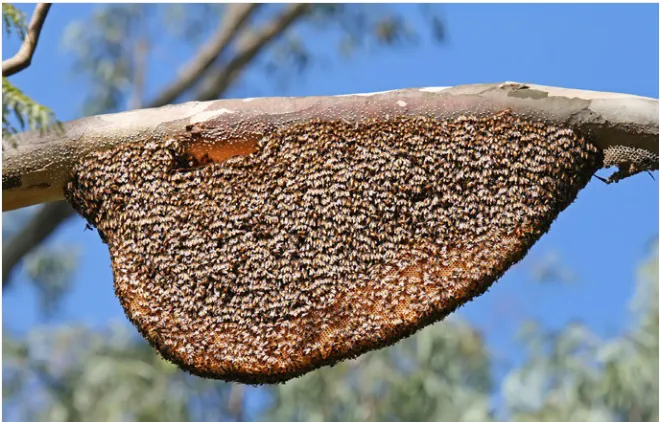
[image:5.842.456.786.56.267.2]The Bee Boxes were created in collaboration with three rural primary schools in Scotland during Autumn 2015, in an area historically renowned for hard fruit production, with rich narratives of local apple varieties. Each school had its own orchard, which was drawn into curriculum work on orchards, soil and pollination. Using the focus of the overall Telling the Bees project on folklore and storytelling, we wanted to explore ways of using design and stories to develop children’s knowledge of orchards, pollination and the honey bee, and the life cycle of their environment. Therefore we developed a day long workshop for a class (18-20 pupils) at each school to help children understand the importance of the honey bee through a mix of learning styles and activities, including creative writing, drawing, listening and craft making. As design ideas evolved, it was clear that every stage of the children’s experience should be linked. This was achieved in part by adopting consistent visual keys: bees, hives,
Figure 1. Natural beehive and honeycomb. Photo: Muhammad Mahdi Karim.
[image:5.842.456.785.312.521.2]honeycombs and their hexagonal patterns. By visually and verbally returning to these symbols, ideas and knowledge about bees, pollination
and the environment were reinforced throughout the workshops. To
further engage pupils and staff with the stories, we envisaged an artefact — an interactive vessel through which stories could be discovered and shared within different physical environments. Furthermore, this artefact needed to be customisable so that each pupil and school could recognise their own creation, thereby encouraging ownership of the artefacts.
[image:6.842.456.787.54.522.2]To strengthen and contextualise pupils’ understanding of bees with their local environment, and to encourage placemaking, the Bee Boxes were envisioned as inhabiting each school’s orchard as repositories for collaborative stories that could be explored in an outdoor space and therefore needed to be weatherproof. One of the authors brought knowledge from an arts residency in Berlin, where they had been researching bees and their wax, and their natural and unhindered hive structures. This led to a wider discussion of the organic, parabolic shapes of honeycomb. The natural, curved shapes of honeycomb (Figure 1) are a rare sight in the UK; conventional beehives use rectangular frames to constrain and guide bees in their wax production to enable easy collection of honey. Freeform honeycomb is the province of the natural beekeeper employing alternative hive designs, and wild colonies of bees nesting, for example, in sheltered roof cavities. Therefore, by mimicking the shapes of natural hives from warmer climates that grow downward from crooks in tree trunks and branches, the Bee Boxes make
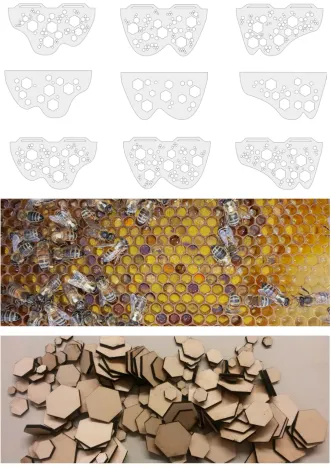
Figure 3. Revised designs of Bee Boxes showing three variations (top); Pollen colours (middle), Wooden hexagonal tiles as by-product of constrution process. Photo: Authors.
a connection between the local surroundings and a global ecological context. That is, like the bees they see in their school grounds, the children are part of a wider world in which they both play a key part.
The design of the Bee Boxes iterated quickly through necessity, bound by the school year and curricula, from sketches and research, to plans and computer drawings to make the first prototype (Figure 2). The Boxes were constructed from laser cut MDF and birch plywood, with internal ribs for strength and body, and four cavities to contain short written stories. To install the completed boxes, two slots were added to the front and back panel (Figure 3 top). This allowed fabric tape or ribbon to be passed through and looped around a branch, protecting the hard fruit tree host, which generally have low branches that can be used to hang the boxes at an accessible height. Additionally, these slots mean that the box can be attached, detached and replaced in various settings without any permanent chance to either the environment or the box itself.
Our project partner and the schools intended to bring all the pupils together at a sharing day, with the Bee Boxes installed in a local heritage orchard. In order to enable easy visual identification and enhance a sense of ownership for each school class’ boxes, the prototype design was adapted to give each school its own unique shape (Figure 3 top). To complete the design, laser engraved patterns of honeycomb adorned the front and back of each box. Here knowledge exchange took place across the design team, evidenced in the scientifically correct orientation
Figure 4. Local beekeeper demostrating an observation hive at a school workshop. Photo: Maxwell.
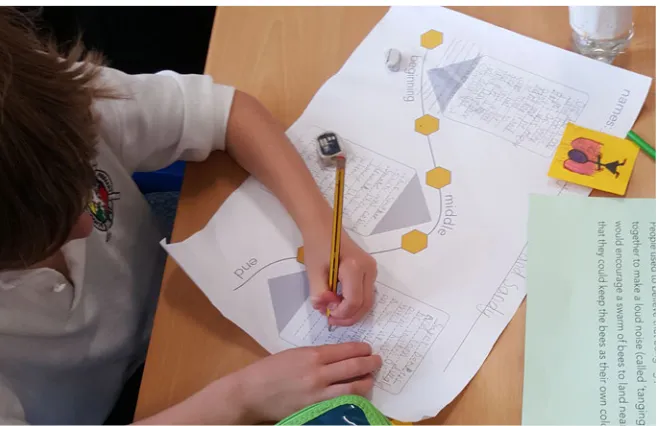
Figure 5. Creating a story at a school workshop using the template story arc worksheet. Photo: Maxwell.
school, so that each set could be installed to encourage exploration of an orchard, building a greater awareness of place.
Our aim for each school’s day-long workshop was to engage children across different learning styles and modalities. Each workshop began with an informative and interactive talk by a local volunteer beekeeper who shared not only images and facts about bees but brought in a live colony in an observation hive (Figure 4). In this first stage, children listened and asked questions, observed, and felt (fragments of honeycomb, the warmth of the bees through the glass, and put on bee suits). Children worked in small groups of 3 or 4 (with a Bee Box between them), with each group given a hexagonal themed worksheet with a blank story arc and indicative sections for writing beginning, middle and end bits of a story (Figures 5 and 6). To reinforce the ideas introduced in the beekeeper’s talk, the worksheet was supported by a set of bee-related story prompt game tiles (Figure 6), using the hexagonal offcuts from the construction of the Bee Boxes. These game tiles were issued at key points as each group progressed with their writing. This gamification of the storytelling process encouraged collaboration between the children. The groups invariably took turns with writing and needed little encouragement to put pen to paper, unafraid to ask questions and invent with freedom. After responding to spontaneous drawing during the first school’s workshop, we added a visual component to the story creation by asking children to illustrate their written story using a
[image:8.842.92.422.310.523.2]smoker honey plants person SPECIAL FACT SPECIAL FACT smoker honey plants person SPECIAL FACT SPECIAL FACT beginn ing middle end _ _ _ _ _ _ _ _ _ _ _ _ _ _ _ _ _ _ _ _ _ _ _ _ _ _ _ _ _ _ _ _ _ _ _ _ _ _ _ _ _ _ _ _ _ _ _ _ _ _ _ _ _ _ _ _ _ _ _ _ _ _ _ _ _ _ _ _ _ _ _ _ _ _ _ _ _ _ _ _ _ _ _ _ _ _ _ _ _ _ _ _ _ _ _ _ _ _ _ _ _ _ _ _ _ _ _ _ _ _ _ _ _ _ _ _ _ _ _ _ _ _ _ _ _ _ _ _ _ _ _ _ _ _ _ _ _ _ _ _ _ _ _ _ _ _ _ _ _ _ _ _ _ _ _ _ _ _ _ _ _ _ _ _ _ _ _ _ _ _ _ _ _ _ _ _ _ _ _ _ _ _ _ _ _ _ _ _ _ _ _ _ _ _ _ _ _ _ _ _ _ _ _ _ _ _ _ _ _ _ _ _ _ _ _ _ _ _ _ _ _ _ _ _ _ _ _ _ _ _ _ _ _ _ _ _ _ _ _ _ _ _ _ _ _ _ _ _ _ _ _ _ _ _ _ _ _ _ _ _ _ _ _ _ _ _ _ _ _ _ _ _ _ _ _ _ _ _ _ _ _ _ _ _ _ _ _ _ _ _ _ _ _ _ _ _ _ _ _ _ _ _ _ _ _ _ _ _ _ _ _ _ _ _ _ _ _ _ _ _ _ _ _ _ _ _ _ _ _ _ _ _ _ _ _ _ _ _ _ _ _ _ _ _ _ _ _ _ _ _ _ _ _ _ _ _ _ _ _ _ _ _ _ _ _ _ _ _ _ _ _ _ _ _ _ _ _ _ _ _ _ _ _ _ _ _ _ _ _ _ _ _ _ _ _ _ _ _ _ _ _ _ _ _ _ _ _ _ _ _ _ _ _ _ _ _ _ _ _ _ _ _ _ _ _ _ _ _ _ _ _ _ _ _ _ _ _ _ _ _ _ _ _ _ _ _ _ _ _ _ _ _ _ _ _ _ _ _ _ _ _ _ _ _ _ _ _ _ _ _ _ _ _ _ _ _ _ _ _ _ _ _ _ _ _ _ _ _ _ _ _ _ _ _ _ _ _ _ _ _ _ _ _ _ _ _ _ _ _ _ _ _ _ _ _ _ _ _ _ _ _ _ _ _ _ _ _ _ _ _ _ _ _ _ _ _ _ _ _ _ _ _ _ _ _ _ _ _ _ _ _ _ _ _ _ _ _ _ _ _ _ _ _ _ _ _ _ _ _ _ _ _ _ _ _ _ _ _ _ _ _ _ _ _ _ _ _ _ _ _ _ _ _ _ _ _ _ _ _ _ _ _ _ _ _ _ _ _ _ _ _ _ _ _ _ _ _ _ _ _ _ _ _ _ _ _ _ _ _ _ _ _ _ _ _ _ _ _ _ _ _ _ _ _ _ _ _ _ _ _ _ _ _ _ _ _ _ _ _ _ _ _ _ _ _ _ _ _ _ _ _ _ _ _ _ _ _ _ _ _ _ _ _ _ _ _ _ _ _ _ _ _ _ _ _ _ _ _ _ _ _ _ _ _ _ _ _ _ _ _ _ _ _ _ _ _ _ _ _ _ names:
Figure 6. The template story arc worksheet used in schools workshops. Photo: Maxwell.
Figure 7. Icons used to create double-sided physical story tokens that helped scaffold the children’s stories and helped them to reflect on what they had heard and seen in the beekeeper’s talk. Photo: Maxwell.
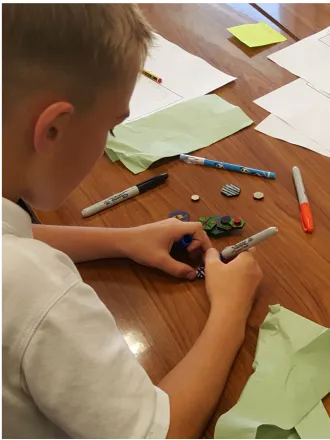
celled storyboard (Figure 6). The classes we worked with spanned at least two year groups (these were rural schools with limited intake) and this visual element aided in ensuring that the younger children had just as much input in the story and presentation as the older. After the children had completed their stories, the artist/designer briefly spoke about their role, inspiration, and how the Bee Boxes were made. The children then took on the mantle of designers themselves — designing and building the ‘caps’ for their Bee Box (Figure 8). Following this, we gathered up all the designed ‘caps’ and handwritten stories, to type up, print off and complete construction of the boxes. We returned to each school the next week to distribute the completed boxes. Without fail, all pupils instantly recognised their own box and enthusiastically swapped stories and poured over their box (Figures 9-12). Addtionally, our initial considerations on weather proofing were set aside after the school workshops as it became clear that the boxes would be adaptable – never to be permanently installed into any one environment as the teachers and children were inspired to make use of the boxes in different lessons and different contexts.
Outcomes and Critical Reflection
[image:9.842.148.356.323.507.2]stories they hold and embody. This section presents and reflects on five distinct life phases of the boxes in supporting environmental education, the first three as anticipated outcomes, and the last two as unexpected outcomes resulting from the open design approach adopted. They are: i) Creation of the Bee Boxes; ii) Implementation and adaptation in schools; iii) Use for visitor interpretation at a fruit festival; iv) Adoption and use in a theatre performance; and v) Use as a prop for gathering stories about bees from visitors to a public garden. Each life phase activated assemblages that created different interactions, relationships and revelations. Working with the Bee Boxes beyond the initial planned activities in schools revealed the fluidity of knowledge produced by different engagements with material artefacts.
i) Creation of the Bee Boxes
[image:10.842.455.785.54.494.2]During its creation, the Bee Box functioned in several ways. The design process and material explorations gathered and consolidated knowledge that the artist/designer had found through previous commissioned projects. Specifically the artist used the Bee Box prototypes to reference and embody recently acquired knowledge about beeswax. The design phase also created a space for conversations within the team to discuss priorities for the project and share knowledge about beekeeping. The Bee Boxes were used to negotiate and share knowledge but were not boundary objects (Barrett and Oborn, 2010), because they did not pre-exist the collaboration. Instead they worked as dialogical objects
Figure 8. Customising the ‘cap’ of a Bee Box during a school workshop. Photo: Maxwell.
Figure 9. Telling a story through images with the completed Bee Boxes. Photo: Lindsay Perth.
[image:11.842.454.788.312.526.2]Figure 10. Pupils exploring their completed Bee Box. Photo: Lindsay Perth.
Figure 11. Sharing a section of a story. Photo: Lindsay Perth.
[image:11.842.90.419.312.526.2](Coombes, 2015) through which the team built shared understandings.
ii) Implementation and adaptation in schools
In schools, the Bee Boxes provided a focal point, linking a constellation of knowledge sharing activities, including talks by a beekeeper and activities about and within orchards. The material construction of the branch-hugging Bee Boxes was designed to initiate conversations about bees locally and globally, as the shape referenced natural beehives around the world, and the beeswax caps connected directly to local plants and bee habitats. The partial construction of the Bee Boxes provided space for pupils to make personal creative decisions that gave them greater investment in the final artefact, as evidenced by their instant recognition when we brought the completed boxes back. Hanging the boxes in the school orchards created a visual landmark to draw children into the orchards and act as a reminder about bees and their role. The activities designed around the boxes were intended to encourage the children to take ownership and build emotional and sensory connections to the boxes and the school orchard, in support of placemaking (Tuan, 1977). Places are “centres of value” (Tuan, 1977, p. 18) that are created as the result of engagement and familiarity. Tuan describes how places emerge through habitual embodiment of space, initially through landmark making that, over time, joins landmarks to create a cohesive whole. Tuan describes a place as a ‘pause’, sometimes a pause as one’s gaze moves across a landscape, at other times a pause in movement across landscape.
We hoped that by placing Bee Boxes in the orchards we would create a temporary landmark which would cause children to pause and pay attention to the orchard. This in itself is unlikely to be enough to establish an emotional connection to the the orchard but we thought of it as a seeding activity, linking engaged sensory experiences to a particular local place, to which they might return. By drawing attention to the orchard and its importance we hoped children would notice and value their local patch and see its connection to global environmental issues.
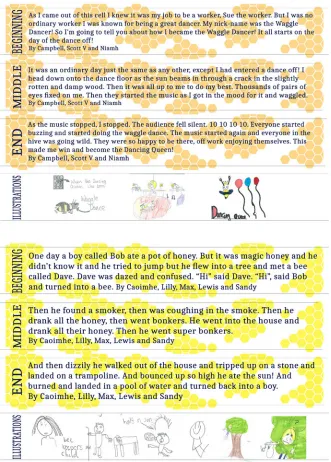
The children’s activities involved embodied and material engagement with the artefact. The time given to the making activity created a space for the children to reflect and consolidate learning as they made their Bee Box caps and wrote stories. There are similarities in this approach to our work with the Beespoon (Maxwell et al., 2016) and also to Jensen’s (2008) use of objects to open up discussion about environmental issues. However, Jensen used existing, often mundane objects from everyday life to show that environmental issues touch our lives and are not remote and abstract, whereas our work uses artefacts created specifically to provoke discussion about an environmental issue. The children’s written stories (Figure 13) wove together cultural awareness with an intake of new knowledge to generate a range of magical, anthropomorphic, and even prophetic tales — fantastical projections made based on the recalled facts from the beekeeper’s talk. The stories were wild, inspired, engaging tales of children and bees; how we can live in harmony and how
Figure 13. Two examples of children’s collaborative stories and their illustrations, ready to be printed out, cut up, and placed inside the Bee Boxes. Photo: Authors.
we cannot. This dovetailed with our wider project that explored the use of folklore as a carrier for traditional ecological knowledge (TEK) in the present and into the future, acknowledging Lanza’s (Lanza & Negrete, 2007, p. 65) argument that “We need new myths and new metaphors that can help us to perform and represent our interrelationships with the Earth as a living planet in the conditions of urban and late industrial lifestyle.”
iii) Use for visitor interpretation at a fruit festival
All the Bee Boxes were brought together to be installed at our project partner’s fruit festival in Scotland, October 2015. The Bee Boxes were hung in trees around the public park such that they were part installation and part interpretation about bees and the wider project, Telling the Bees (Figure 14). They hung as ambiguous signposts to the event, enticing passing visitors to explore the festival activities and marking the boundary to the space. As a piece of interpretation the Bee Boxes reached an audience beyond the school children involved in the earlier creation phase. The boxes complemented the wider project’s public engagement activities at the festival, which included gathering stories and anecdotes from members of the public.
iv) Adoption and use in a theatre performance
Figure 16. Bee Box used as story gathering at public engagement event. Photo: Edwards. Figure 14. Bee Boxes installed at project partner’s fruit festival. Photo: Lindsay Perth.
Figure 15. Bee Box used in performance event. Photo: Paul Maven.
[image:14.842.90.421.313.527.2]intended uses, serendipitously we had a spare Bee Box remaining after distributing all the boxes to the schools. The open, malleable form of the box enabled its use in additional contexts. As part of our wider project collaboration, GrowTheatre, a Sheffield-based youth theatre group, used stories from the Bee Boxes experience-artefacts to create role playing situations and improvisations. This initial material provided a basis on which to develop new stories and micro performances. These came together in a bee-inspired performance lecture event. One of these micro performances was an extrapolation and extension of an original Bee Box story.
The Bee Box stories stimulated discussion and research about bees, and the honeycomb structure of the box inspired the structure of the performance. Rather than writing a single play, the group used their micro performances as a series of vignettes about bee pasts, presents and futures. The Bee Box acted as a central prop within the performance to involve the audience in dynamic storytelling in small groups of around 30. At the start of the performance each hexagonal ‘cell’ held the title of a vignette, with audience members asked to pick and read out a title from the box (Figure 15) and the theatre group performing the corresponding piece. Then another title was picked and so on. This created a flexible,
changing structure where no set of performances was the same. This
reappropriation of the Bee Box was returned to over and over as the site from which the knowledge was drawn, the fount of bee knowledge.
v) Use as a prop for gathering stories about bees from
visitors to a public garden
but the engagement could be improved if more is ‘given back’ to visitors in exchange for their stories. We will consider this in future instantiations.
Conclusions
There is an ongoing debate about the creation of knowledge through the design of objects and the location of knowledge within objects. (Durrant 2015, p. 9) This paper considered the dynamics of knowledge generation as people coalesced around an artefact at different points in its life. The authors have demonstrated ways that designed artefacts can be used to draw attention to local environments while foregrounding global ecological connections.
The planned engagements with experience-artefacts (i.e. the first three phases in the Bee Boxes lifecycle) generated opportunities for further research. But the Bee Boxes grew beyond their initial function because the team and others could see their potential to support other forms of engagement. Research through design supports iterative development combined with ongoing reflection so we continued to explore and reflect on the interplay of design and story into new contexts. While the implementations with the theatre group and within the National Trust garden offered opportunities to create new interactions and take bee stories to new audiences, there was a tension as the site specificity
of the original design was lost, so significance of a particular place is diluted. In these settings the boxes were held in hands or hung from glasshouse frames rather than branches, and the coloured wax caps signified generic knowledge about pollen colour and plants, rather than specific knowledge about the ecology of a particular locale, so the the activity resembles interpretation of scientific knowledge rather than TEK. However the new interventions created a new set of meanings and prompted the adaptation of the Bee Boxes design to fit their new situation. Ingold describes the Art of Inquiry as an emergent process where thought follows the “fluxes and flows of materials” (2010, p. 6) and knowledge builds by trying things out (Ibid, p. 7). This project has shown that following the flows of artefacts as they evolve over time and are manipulated in new settings by new participant groups unlocks new possibilities for knowledge transfer and data gathering. If you design for longevity, openness (Sengers and Gaver, 2006) and ambiguity (Gaver et al., 2003), artefacts can be reappropriated and increase opportunities for future possibilities for knowledge sharing and gathering. In this way artefacts have the potential to make generative contributions (Rust, 2007)
to research.
Acknowledgements
The research was part of Telling the Bees, funded by Arts and Humanities
Research Council (AH/M009319/1). We would like to thank all the school children involved, beekeeper Steve Fulton and Tay Landscape Partnership. This work was also supported by the RCUK Digital Economy Programme (Grant Reference EP/G037582/1).
References
Barrett, M. and Oborn, E. (2010). Boundary object use in cross-cultural software development teams. Human Relations, 63(8), pp.1199-1221.
Coombes, M. (2015). Dialogical props and individuals with dementia. In:
Proceedings of the 3rd European Conference on Design4Health. Sheffield, pp.1-9.
Durrant, A.C., Vines, J., Wallace, J. and Yee, J. (2015). Developing a dialogical platform for disseminating research through design.
Constructivist Foundations, 11(1), pp.8-21.
Farman, J. (2012). Mobile interface theory. 1st ed. New York: Routledge.
Gaver, W., Beaver, J. & Benford, S. (2003). Ambiguity as a resource for design. In: Proceedings of the SIGCHI conference on Human factors in Computing Systems. New York:ACM, pp.233–240.
Ingold, T. (2010). Archaeology, anthropology, art and architecture. 1st ed.
London: Routledge.
Jensen, M. (2008). Learning about environmental issues with the aid of cognitive artefacts. Göteborgs Universitet, 1, pp.1-14.
Keyte, J. (2015). Objects in Purgatory brooch exchange: storytelling
artefacts as agents for audience engagement. Studies in Material Thinking, 13, pp.1-16.
Lanza, T. & Negrete, A. (2007). From myth to earth education and science communication. Geological Society, 273(1), pp.61-66.
Maxwell, D., Edwards, L., Pillatt, T., Downing, N. (2016). Stories In a beespoon: exploring future folklore through design. In: Proceedings of Design Research Society 50th Anniversary Conference. Brighton, UK.
Olson, D. and Torrance, N. (1996). Modes of thought. 1st ed. Cambridge [Cambridgeshire]: Cambridge University Press.
Rust, C. (2007). Unstated contributions - how artistic inquiry can inform interdisciplinary research. International Journal of Design, 1(3), pp.69-76.
Sengers, P. and Gaver, B. (2006). Staying open to interpretation. In:
Proceedings of the 6th conference on Designing Interactive Systems. New York: ACM, p.99.
Tuan, Y. (1977). Space and place. 1st ed. Minneapolis: University of Minnesota Press.