May 2017
Doctoral Thesis:
Staff experiences in paediatric trauma services: Exploring perceptions of resilience when
dealing with distress
Gemma Foat-Smith
Doctorate in Clinical Psychology
Division of Health Research, Lancaster University
All correspondence should be sent to:
Gemma Foat-Smith
Doctorate in Clinical Psychology Furness College
Lancaster University Lancaster
LA1 4YT
Main Text Appendices (including
tables, figures and
references)
Total
Thesis abstract 195 - 195
Literature Review 7,917 6,084 14,001
Empirical paper 7,810 4,967 12,777
Critical Appraisal 4,199 357 4,556
Ethics Section 5,184 4,220 9,404
An absence of qualitative research exploring stress and coping in particular paediatric specialities has been highlighted. With the aim to explore stress and coping amongst all health-care professionals within inpatient paediatric specialities, a review of published research using a meta-synthesis approach was undertaken. The qualitative synthesis of 23 studies highlighted a complex relationship between stress and coping factors that included: relationships and loss of relationships, complexity of professional role and organisational support and working within a multi-disciplinary team (MDT). Clinical implications are discussed.
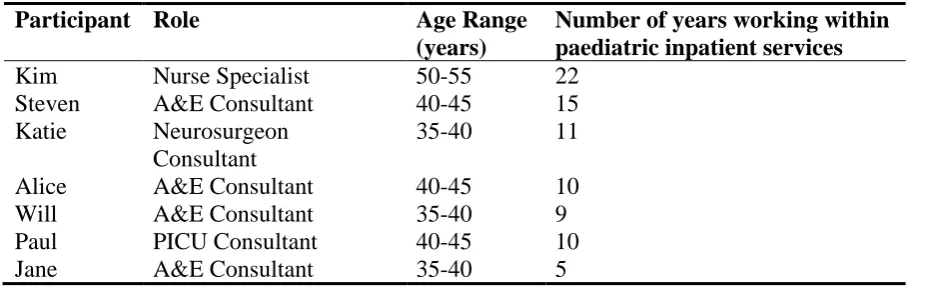
The second section of the thesis is an empirical study that explored resilience amongst health professionals working within a paediatric trauma setting. Seven participants were recruited that included medical and nursing professionals working in a specialist trauma service within a paediatric hospital. Using Interpretative Phenomenological Approach (IPA) the data highlighted the importance of self-awareness in understanding resilience amongst professionals working in this context. Clinical implications and limitations of the study are discussed. Further research is recommended in developing theoretical understandings.
This thesis records work undertaken for the Doctorate in Clinical Psychology at the Division of Health Research at Lancaster University from August 2016 to May 2017.
The work presented here is the author’s own, except where due reference is made. The work has not been submitted for the award of a higher degree elsewhere.
Name: Gemma Foat-Smith
Signature:
I wish to express a sincere thank you to the professionals who generously gave up their time to participate in my research. Without them, the completion of this study would not have been possible.
A special thanks to my research supervisor, Dr Suzanne Hodge, for her continued
encouragement and guidance throughout this research. Also, thank you to Dr Jennifer Dainty and Dr Clare Dixon for their expertise and support. I am deeply appreciative of your
invaluable contributions.
I would also like to thank my family for their unconditional love and continuous support. A special thanks to my Mum for always believing in me and her continuous words of
encouragement during times of despair.
Lastly, thank you to Peter for your love and patience with me during the last few months – no more studying I swear!
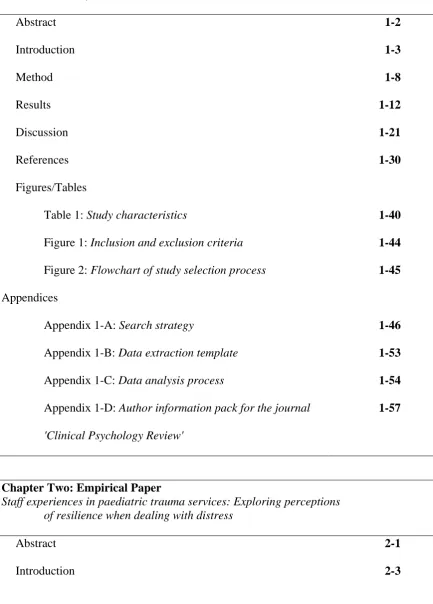
Chapter One: Literature Review
Stress and coping amongst inpatient paediatric health-care professionals: A meta-synthesis
Abstract 1-2
Introduction 1-3
Method 1-8
Results 1-12
Discussion 1-21
References 1-30
Figures/Tables
Table 1: Study characteristics 1-40
[image:6.595.76.510.151.756.2]Figure 1: Inclusion and exclusion criteria 1-44
Figure 2: Flowchart of study selection process 1-45
Appendices
Appendix 1-A: Search strategy 1-46
Appendix 1-B: Data extraction template 1-53
Appendix 1-C: Data analysis process 1-54
Appendix 1-D: Author information pack for the journal 'Clinical Psychology Review'
1-57
Chapter Two: Empirical Paper
Staff experiences in paediatric trauma services: Exploring perceptions of resilience when dealing with distress
Abstract 2-1
Results 2-13
Discussion 2-24
References 2-31
Tables
Table 1: Participant characteristics 2-36
Table 2: Summary of themes
Appendices
Appendix 2-A: Extract of coded transcript 2-37
Appendix 2-B: Superordinate theme development 2-38
Appendix 2-C: Final theme development 2-42
Appendix 2-D: Author information pack for the journal ‘Qualitative Health Research'
2-45
Appendix 2-E: Interview schedule 2-46
Appendix 2-F: Reflective diary excerpt 2-47
Chapter Three: Critical Appraisal
Reflecting on the Process of Conducting Resilience Research
Aims of the Critical Appraisal 3-2
Summary of the research 3-2
Background to choosing the thesis topic 3-2
Reflexivity 3-3
Existing relationship with the topic area 3-4
Collecting and analysing data 3-7
References 3-16
Chapter Four: Ethics Section Ethics Application and Appendices
IRAS Application 4-2
Research Protocol 4-30
Appendices
Appendix 4-A: Information email for participants 4-40
Appendix 4-B: Research poster invitation 4-41
Appendix 4-C: Participant information sheet 4-42
Appendix 4-D: Consent form 4-45
Appendix 4-E: Participant debrief sheet 4-46
Appendix 4-F: Interview schedule 4-48
Appendix 4-G: FHMREC Approval 4-49
Appendix 4-H: HRA Approval 4-50
Section One: Literature Review
Stress and coping amongst inpatient paediatric health-care professionals:
A meta-synthesis
Gemma Foat-Smith Doctorate in Clinical Psychology
Division of Health Research, Lancaster University
Work Count: 7,917 excluding title page, references, tables/figures
Prepared in accordance with 'Author Information Pack' for the journal 'Clinical Psychology Review'
All correspondence should be sent to:
Gemma Foat-Smith
Doctorate in Clinical Psychology Furness College
Lancaster University Lancaster
LA1 4YT
Abstract
Purpose: To identify and synthesize qualitative studies exploring experiences of stress and coping amongst health professionals working in paediatric inpatient settings.
Methods: A systematic search of six databases for qualitative research exploring experiences of health professionals working within paediatric hospital settings was conducted. Papers that met the inclusion criteria for the review were evaluated using the Critical Appraisal Skills Programme (CASP) quality guidelines. Themes were extracted and synthesized in
accordance with the procedures outlined for qualitative metasyntheses.
Results: From the 23 papers included for the review four concepts were identified: (i) Relationships: the double edged sword, (ii) Complexities of role, (iii) 'Letting go': experiencing death and overcoming grief and (iv) Systemic influences and challenges.
Conclusions: The findings of the current review highlight factors that can enable
Occupational stress is defined as work-related conditions that impact the well-being of the employee (Health and Safety Executive (HSE), 2007). Stressor domains include: demands, control, relationships, the role, change and support (HSE, 2001). As nursing ranks highly amongst stressful occupations (HSE, 2000), there may be factors specific to the environment which could be applicable to other health professionals in these settings. It is acknowledged that some individuals respond positively to stress (McCloskey & Taggart, 2010) however, for most, occupational stress commonly leads to poor physical and emotional health (Beehr, 2014). Thus for professionals working in these settings, staff sickness may be common due to the effects of the role. Prolonged stressors are also associated with increased societal and economical costs (Beehr, 2014). Although the importance of developing an effective health-care workforce has been highlighted (Department of Health, 2008), it is increasingly challenging to retain the health-care professionals needed to meet a growing demand
(International Council of Nursing, 2015). NICE (2015) guidance recommends the need for a supportive environment for employees which enhance the individual's well-being.
Paediatric inpatient settings
some sub-specialities within inpatient paediatric care. The emotional labour associated with inpatient paediatric care is thus highlighted and indicates staff working in these settings require effective strategies to manage the complexity of the role.
Stress and coping within role
Working in paediatric services is personally and professionally challenging due to the emotional labour involved in working in this context (Sekol & Kim, 2014; Zander & Hutton, 2009). Alongside this, moral distress is commonly experienced by professionals working within these settings (Pye, 2013). Moral distress was first introduced by Jameton (1984) and has been studied primarily amongst nurses. Jameton (1984) described moral distress as an internal conflict resulting from a situation in which the professional is aware of the morally appropriate course of action but is prevented from carrying this out by the institution. Moral distress could relate to professional role differences as nurses are often required to provide treatment to their child patient1 as directed by the medical professional responsible for the child’s care. If nurses disagree with the treatment or feel it is causing unnecessary pain or discomfort, this would cause distress in the professional. Moral distress appears significant within health professionals within paediatric settings (Pye, 2013). This may relate to the unique and complex demands associated within the role.
There is a body of research looking at the related issues of stress, coping and staff retention (Ekedahl & Wengström, 2006; Muscatello et al., 2006; Jourdain & Chênevert, 2010). When considering professionals that work in paediatric services, interest has gathered from qualitative and quantitative researchers over the last two decades exploring role specific stress factors. A combination of personal influences that include: experience, marital status
1Research conducted within physical health settings commonly refers to the individual receiving treatment as the "patient".
and professional role (Hinds, Quargnenti, Hickey, & Mangum, 1994; Isikhan, Comez, & Danis, 2004) have been identified as stress factors for professionals in this context. Additionally, professional influences have also been identified that include: physical environment, responsibilities, interpersonal conflict, lack of resources, shift work and an absence of organisation support (Gallagher & Gormley, 2009; Isikhan et al., 2004; Judkins, 2003; Zander, Hutton & King (2010) . Repeated exposure to stress within the work-place can result in difficulties for health professionals continuing to work in these settings (Jourdain & Chênevert, 2010).
When exploring retention amongst inpatient paediatric professionals using qualitative methods, five key issues emerged that related to wider systemic influences (Skinner, Van Dijk, Elton & Auer (2011). These included: workload and shift patterns, difficulties accessing leave and child-care arrangements (Skinner et al., 2011). This highlights personal challenges for professionals working within a paediatric hospital. When considering coping within paediatric inpatient settings many professionals discussed how their personal relationships were commonly a source of support (Fanos, 2007). Thus, previous research captures the challenges to inpatient settings: working shift patterns and an inability to access time off not only directly impacts the professionals’ wellbeing; they also inhibit their access to an
important coping strategy - support from relationships outside of work. It is noteworthy that the aforementioned studies were primarily conducted within oncology settings and thus it is unclear if these findings relate to all sub-specialities.
Despite the aforementioned research exploring stress within paediatric settings, there is an absence of reviews. To date, most reviews have been conducted within oncology
settings or relating specifically to moral distress. In reviewing the qualitative and quantitative research available, Mukherjee, Beresford, Glaser and Sloper (2009) highlighted the
The transactional model of stress and coping highlights that stressors are only considered as such if they are appraised by the individual as stressful (Lazarus & Folkman, 1984). Thus, working in paediatric settings will expose the professional to an array of stressors, however these may not all result in negative outcomes or be experienced as negative by the individual. It is the individual's evaluation of the situation and the coping strategies available to them that influences the interpretation of the stressor. In considering professionals' coping, Zander and Hutton (2009) identified the importance of reflective practice for professionals working in paediatric contexts. This would suggest having a supportive and protected space to discuss and share difficulties associated with working in this emotive context enables the professional to continue working within this setting. Taken together, the importance of organisations to enable the implementation of strategies that enable professionals to continue working in this area is highlighted.
Moral distress has been identified as a particular stressor for paediatric professionals (Pye, 2013). Austin, Kelecevic, Goble and Mekechuk (2009) conducted a review to
summarise the factors that contribute towards moral distress. It was highlighted that moral distress arises from a variety of factors including; treatment decisions, life-or-death decision making, training, power issues and personal values and beliefs (Austin et al., 2009). Similar findings were highlighted in a more recent review; that moral distress most commonly relates to medical interventions that the professional does not consider in the child's best interest (Prentice, Janvier, Gillam & Davis , 2016). The reviews highlight however that for
professionals working within intensive care settings, distress may be a result of conflicting personal and professional beliefs, commonly related to treatment for the young person. This indicates the importance of team working within these settings and for all professionals to be heard and respected in relation to clinical decisions.
An absence of high quality research exploring stress and coping in particular
paediatric specialities, including oncology, is highlighted (Mukherjee, Beresford, Glaser, & Sloper, (2009). A body of qualitative research has accumulated in the area that explores experiences of a variety of medical specialities. However, no review of studies in relation to stress and coping including all paediatric health professionals has been conducted to date. In considering this, the current review will expand on current published reviews by exploring stress and coping amongst all health-care professionals within all inpatient paediatric specialities. The review will adopt a meta-synthesis approach, as this provides a depth and richness that is absent in other review approaches.
In considering the aforementioned, the aim of the current review was to synthesise qualitative literature exploring stress factors and coping mechanisms amongst
professionals working within inpatient paediatric services. Thus, the review has the following research questions:
1. What aspects of working in inpatient paediatric services do professionals find stressful?
Method
A meta-ethnography approach as developed by Noblit and Hare (1988) was adopted for the current review as it allows qualitative results to be interpreted and integrated to generate new meanings (Kane, Wood & Barlow, 2007). This approach is appropriate for the current review as it allowed the original findings to be re-interpreted and new concepts generated in line with the research question.
Searching for studies
A number of inclusion and exclusion criteria (see Figure 1) were used to identify papers for the review. Relevant papers were identified by searching PsycARTICLES,
PsycINFO, CINAHL, AMED, Academic Search Complete and PubMed electronic databases in December 2016. This covered a range of medical, nursing and psychology journals. The searches covered the periods from January 1985 to December 2016. The full-text search terms used within the review were verified by a librarian at Lancaster University.
Insert Figure 1 here
The terms used for the current review were: [stress* or distress or burnout or
exhaustion or occupational stress or compassion fatigue] AND [health professional* or health worker* or health personnel or allied health professional* or allied health personnel or
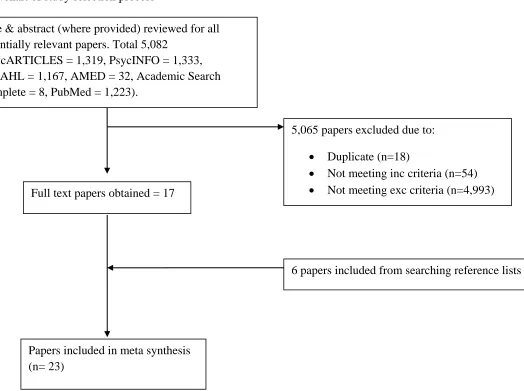
to search for qualitative research material within each database. The filters developed by the University of Texas (UTHealth, 2014) were used in the search process. This resulted in the identification of 5,082 papers (PsycARTICLES = 1,319, PsycINFO = 1,333, CINAHL = 1,167, AMED = 32, Academic Search Complete = 8, PubMed = 1,223). The papers were first reviewed by examining the title and abstract, and duplicates removed. Where it was not clear from the information available whether a paper was suitable for inclusion in the review then a full text of the paper was requested. The reference sections of all included papers (except Kellogg, Barker, & McCune, 2014 whose reference list was not made available in the
journal) were also considered for the review. Following this process 23 papers were identified for inclusion within this review (see Figure 2 for a flow chart of this process).
Insert Figure 2 here
Characteristics of the selected studies
The 23 papers selected for inclusion in the meta-synthesis explored health
professionals' experiences of working within a paediatric inpatient setting. All studies were published between 1996 and 2016. The review represented a wide ranging international sample including: ten studies conducted in USA, five in Canada, one in Iran, three in the United Kingdom, one in Ireland, one in Sweden, one in Greece and one study recruited from both Greece and China. Sample sizes ranged from 6-63 participants. All 23 of the papers included nurses, seven included medical personnel, two included social workers and one included therapists. The papers covered a variety of specialities; 11 were conducted in
Appraising the quality of the selected studies
One difficulty in reviewing qualitative studies is an absence of quality appraisal tools specifically for qualitative studies (Dixon-Woods & Fitzpatrick, 2001). For the current
review, the Critical Appraisal Skills Programme (CASP) (Public Health Resource Unit, 2013) was used to assess the strengths and weaknesses of the included papers against 10 criteria that are considered appropriate for qualitative research. Quality appraisal was conducted prior to data extraction as recommended by Harden and Thomas (2005). Each study was given a score based on a three point rating system developed by Duggleby et al., (2010) to indicate a (1) weak (2) moderate or (3) strong explanation of the particular item. The scores were used to provide an indication of the studies’ quality and not used as exclusion criteria, as the current aim was to provide a broad overview of the stress and coping factors amongst all paediatric health professionals. Additionally, there is a lack of agreement of indicators of quality in qualitative research (Harden & Thomas, 2005; Sandelowski & Barroso, 2005).
Insert Table 2 here
Analysing the studies and producing the synthesis
challenges in balancing the breadth and depth of the papers needed for each stage of the synthesis.
In accordance with Noblit and Hare's (1988) approach, the 23 studies were read to determine how they were related. Once the papers were read, data extraction was completed for all studies using Munro et al.’s, (2007) data extraction guide (see Appendix 1-B for data extraction template). During data extraction all themes or theme components were identified from the results section of each paper. This process allowed the author to consider how the papers were related and begin to identify recurring themes. Following this, the original themes identified from the papers that related to the research question of the current review were recorded. Aspects of each theme were then grouped together to generate new key themes that captured different aspects of the review. According to Schutz (1962, as cited in Britten et al., 2002), these new themes are termed ‘second order constructs’. The themes were further analysed and those relevant to the research question of the current meta-synthesis were compiled for each study included in the review. Following this, themes from the original papers were then grouped together to form new themes for the current review. Each concept was further examined with a focus on how well it captured the original theme in each study. Key themes were then synthesised into core 'concepts' using an iterative, constant comparison approach used in grounded theory (Corbin & Strauss, 1990). A line of argument was then developed by considering each concept and second-order constructs. This led to the final iteration of four key themes which are considered third-order constructs (see Appendix 1-C for an illustration of the process).
Results
The quality appraisal scores ranged from 15 to 27 out of a total of 30. No studies were excluded based on the scoring as no individual paper was considered poor quality based on this. Four concepts were identified from the meta-synthesis of the identified papers: (i) Relationships: the double-edged sword, (ii) Complexities of role (iii) 'Letting go': experiencing death and overcoming grief, and (iv) Systemic influences and challenges.
Concept 1: Relationships: the double-edged sword
The concept of relationships was multi-faceted for many of the health professionals within the studies. Relationships reflected internal and external relationships and included personal and professional relationships. Relationships were a source of both coping and distress for the participants.
Relationships with families
By nature of the working environment, relationships formed between professionals and families could be developed rapidly or over many years but despite this, all relationships had an intensity that might not be evident in other working environments. Inevitably, the relationships formed with families were commonly the source of distress for many of the professionals (Borhani, Abbaszadeh, Mohsenpour, & Asadi, 2013; Davies et al., 1996; Costello & Trinder-brook, 2000; Kaplan, 2000; Lee & Dupree, 2008; Maytum, Heiman, & Garwick, 2004; Rashotte, Fothergill-Bourbonnais, & Chamberlain, 1997; Thomas,
Trinder-brook, 2000; Maytum et al., 2004). The distress experienced as a consequence of the relationship formed could be in relation to the attachment developed: "The patient was undergoing CPR while everyone was crying. That was because we had known the patient for more than four years and had a relationship with him...it should not have happened to him, but it happened anyhow and we lost the patient" (Borhani et al., 2013, p.350), disagreeing with treatments (Lee & Dupree, 2008; Thomas et al., 2016) and expectations of themselves and others: "All these expectations are put on me. I have a lot of parents...dependent on me. It's wearing after a while" (Maytum et al., 2004, p. 175).
Relationships with families were also a source of satisfaction for many of the health professionals (Hilliard & O’Neill, 2010) and a motivator to continue working in such difficult settings (Dix, Gulati, Robinson, Syed, & Klassen, 2012; Papadatou, Bellali, Papazoglou, & Petraki, 2002). Comfort in relationships was evident during times of recovery (Olson et al., 1998; Papadatou et al., 2002) and despair (Costello & Trinder-brook, 2000). Professionals discussed how working so closely with parents and experiencing grief alongside parents was a source of comfort and coping (Davies et al., 1996; Olson et al., 1998; Costello & Trinder-brook, 2000). Some professionals reported that maintaining emotional boundaries prevented burnout when supporting children who were dying (Cook et al., 2012).
Relationships within the MDT
being made: "I felt badly that we were prolonging the pain for her" (Davies et al., 1996, p. 6). This caused distrust, agitation and worry (Mahon, 2014) and left some professionals feeling devalued (Pye, 2013).This was most prevalent for nurses who were often the communicator for families, who worked long night shifts alone and who often felt unheard in the hierarchy of MDTs (Pye, 2013): "you are faced with the consultant ... that is challenging for us to see because sometimes you feel like they just want to play God" (Pye, 2013, p. 255).
Support from colleagues was considered essential within this working environment (Dix et al., 2012; Hilliard & O’Neill, 2010; Pearson, 2013). Having relationships with colleagues was the greatest support at work and was particularly evident amongst nurses (Davies et al., 1996). Despite this, some nurses experienced a dilemma with not knowing who they could share their emotions with, and reported wanting to express themselves away from others: "I go to the beach and I write their name in the sand and let the tide come in and wash it away" (Kaplan, 2000, p. 194). The implementation and use of debrief and reflective sessions encouraged staff to process difficult emotions and encouraged effective decision making: "you need to be supported...and you need to support people when other people need to be supported" (Lee & Dupree, 2008, p.988).
Personal relationships
Relationships outside of work were discussed as both a source of stress for the
appears that some professionals valued having supportive family and friends to offload emotionally to, whereas others found this increased their frustration as their family and friends did not understand what their role entailed physically and psychologically.
Concept 2: Complexities of role
Competing demands of role
Health professionals commonly described competing demands within their role that caused them considerable distress (Dix et al., 2012; Foglia et al., 2010). This was particularly evident amongst nurses who felt overwhelmed by the level of responsibility and felt unable to take breaks, leave work on time and take care of themselves (De Almeida Vicente et al., 2016). For some nurses however, general experience from working within their professional role enabled them to cope and have confidence within their role (Hilliard & O’Neill, 2010; Ljusegren, Johansson, Gimbler Berglund, & Enskär, 2012). Furthermore, nurses felt that through working in oncology settings, they experienced personal growth and fulfilment in their life (Dix et al., 2012).
Providing high-quality care to chronically unwell children was difficult for nurses, particularly when each nurse was responsible for caring for many patients, each with a different diagnosis (De Almeida Vicente et al., 2016). Professionals also discussed the
challenges of a fast-paced and busy work environment and balancing this with their home life (Dix et al., 2012). It is highlighted therefore that the multiple demands involved in working across all paediatric inpatient settings caused distress for health professionals within this review.
A common difficulty for professionals working with young people in these settings was the array of difficult emotions they experienced including sadness (Kellogg et al., 2014; Lee & Dupree, 2008), fear (Ljusegren et al., 2012) and helplessness (Borhani et al., 2013). Despite experiencing sadness, professionals reflected that they welcomed this emotion as it signified humanity and emotional availability (Lee & Dupree, 2008). For some however, the difficult emotions they experienced triggered compassion fatigue and burnout (Maytum et al., 2004). In considering this, professionals discussed a need to repress their emotions to help them cope in a range of paediatric medical settings (Borhani et al., 2013; Cook et al., 2012; Kellogg et al., 2014). This did not appear an effective strategy however, as it created a sense of guilt through not feeling the emotions they felt they should (Cook et al., 2012; Kaplan, 2000). Thus, professionals experienced distress through the inescapable difficult emotions faced, which was further compounded by the uncertainty surrounding the expression of emotions which was explored in the first concept: Relationships.
Limits of treatment
For many of the professionals, a source of distress within this context related to
more by medical professionals than other disciplines (Lee & Dupree, 2008). Medical professionals are often responsible for making final treatment-related decisions in these settings which may explain this finding. In summary the limits of treatment is distressing for all professionals.
Concept 3: 'Letting go': experiencing death and overcoming grief
Experiencing death
Seven of the papers included in the review explored professionals' experiences of death explicitly and thus it emerged as a key theme within the review. The concept of experiencing death was evident in all medical settings and was most commonly discussed in papers focusing on nurses' experiences of death. Nurses reported a pre-occupation with patient death within their role (Papadatou et al., 2001) and common emotions following the death of a child included: hurt, sadness, sorrow, guilt, anger, depression, despair, feeling overwhelmed, shock, anguish and heartache (Davies et al., 1996; Meyer, 2014; Papadatou et al., 2001; Rashotte et al., 1997).
specific to a particular sub-speciality and was discussed across surgical, medical, oncology and intensive care units. This highlights the individual differences for nursing professionals experiencing patient death.
Nurses reported a process of accepting the mortality of a child; initially hoping the child would recover, however when they witnessed their health deteriorating they accepted the inevitability of their death and were able to 'let go' of the child (Davies et al., 1996). This letting go provided comfort for nurses in knowing they had done all that they could do for the patient (Costello & Trinder-brook, 2000). Conversely, where a death was sudden,
professionals could not experience the process of death, and this appeared to result in greater distress. A close relationship with the child also increased the intensity of the grief the nurse experienced (Costello & Tinder-brook, 2000; Kaplan, 2000; Pearson, 2013; Rashotte et al., 1997). For some nurses, feeling somewhat to blame for the child's death exacerbated the emotions they experienced (Rashotte et al., 1997).
Individual belief systems appeared to compound grief reactions as nurses discussed their beliefs about how they thought a child should die and how these did not always match reality (Papadatou et al., 2001; Rashotte et al., 1997). Thus, witnessing 'meaningless' deaths was distressing for nurses and medical professionals (Papadatou et al., 2001). Furthermore, nurses described witnessing remarkable deaths where the individual displayed emotional and spiritual strength, encouraging the nurse to remain in their job (Olson et al., 1998).
Coping with grief
by professionals (Davies et al., 1996; Meyer, 2014; Papadatou et al., 2001; Papadatou et al., 2002; Rashotte et al., 1997) and was considered a sign of burnout for some nurses (Papadatou et al., 2002). Self-reflection was considered a positive coping mechanism by nurses working in intensive care and enabled the individual to accept and create meaning for the child's death. Additionally, nurses were aware of the importance of engaging in self-reflection through the grieving process (Rashotte et al., 1997) and nurses discussed the importance of spirituality in coping with (Forster & Hafiz, 2015). Through this, nurses were better able to understand their individual reactions to death, understand the factors of death that impacted their grief and have knowledge of the coping strategies that were effective for them.
The conceptualisation of grief within the papers described a sense of coping with the grieving process within a professional context, as opposed to grieving per se. As this review is synthesising existing results, meanings taken from the original interviews cannot be guaranteed. What is hypothesised from the studies discussing grief is that perhaps
professionals working in these contexts are expected to experience grief differently to the way it is experienced in a personal context; that perhaps grief should be contained and managed. Thus, grief is an aspect of coping within paediatric settings.
demeanour with little energy for effective coping strategies (Davies et al., 1996). Thus the importance of facilitating reflective sessions following the death of a patient within these settings is highlighted (De Almeida Vicente et al., 2016).
This theme highlights that experiencing death and coping with grief were both described as a process for the professionals. Distress related to the emotions the professional experienced and uncertainty around sharing the emotions with others. It also highlighted the importance of relationships and sharing emotions as coping strategies. The theme also highlighted issues in relation to how health professionals are expected to cope with death; how they manage the relationship between their personal and professional sense of self.
Concept 4: Systemic influences and challenges
Health professionals discussed the educational and health-care challenges that caused difficulties within their roles. Some professionals felt unprepared for working in paediatric services due to a lack of education provided during training (Kellogg et al., 2014). This was also due to some professionals being assigned by service managers to work in particular specialities rather than doing so from choice. Thus, some professionals working in paediatric Chinese and Greek hospitals had not chosen to work in that specific context (Papadatou et al., 2001). Furthermore, nurses who chose to work in paediatric services felt upset and outrage when asked to work in another ward area (Mahon, 2014). This was part of their role but prevented continuity of care of patients. This suggests differences between countries and cultures in relation to the amount of control professionals have over their chosen area of medical speciality.
2000) and also when supporting bereaved families (Forster & Hafiz, 2015). Similarly, when making treatment-related decisions, some professionals felt a sense of abandonment due to a lack of guidelines. When this occurred nurses tended to blame themselves and reported feeling insecure and ignored by medical professionals (Ljusegren et al., 2012). Professionals discussed inadequate resources within their working environments as a source of stress within their role (Costello & Trinder-brook, 2000; De Almeida Vicente et al., 2016; Foglia, 2010; Maytum, 2004). This was particularly evident when nurses were unable to spend time with a child (Costello & Trinder-brook, 2000; Hilliard, 2010) or when nurses were not given
adequate time to grieve following their death (Foglia et al., 2010; Kaplan, 2000). Nurses also spoke about the pressures of needing to admit and discharge patients fairly rapidly without adequate resources (De Almeida Vicente et al., 2016). This also related to feeling
overworked, including excessive paperwork and staff shortages which triggered burnout amongst many nurses (Maytum et al., 2004). Supportive systemic factors were discussed in one paper included in the review (Dix et al., 2012). Health professionals within this paper felt that working in a large hospital provided opportunities for professional growth that helped them remain in these settings.
This theme highlights the different systemic challenges health professionals experience within their role. Several organisational challenges were highlighted.
Discussion
(1988) framework, four concepts were identified as described above. In keeping with providing a broad overview of the area, all studies were included irrespective of the quality appraisal scores. During interpretation of the studies it became evident that the identified constructs - relationships: the double edged sword, 'letting go': overcoming death and grief, complexities of role and systemic influences and challenges were interrelated. Many of the factors that contributed towards the professional experiencing distress were also a source of coping. This was particularly evident for relationships with families and MDTs and appeared to depend on both the situation and the individual.
A key concept to emerge from the review was that relationships with others (families, colleagues and personal relationships) were of particular importance because they were a source of both stress and coping. This finding was highlighted within the majority of the papers. The review highlighted that positive relationships with the individuals the
professionals cared for and worked alongside were fundamental in the individual being able to cope and continue working in this environment. This particular finding was evident amongst a range of studies irrespective of the medical setting the professional worked in, or the professional role of the individual.
professionals can build trust with patients and families which include: involving others and seeking their input, consistency and honesty.
The review also highlights the dual edged aspect of relationships within paediatric settings. Developing significant attachments with a child and their family was shown to create difficulties for the professional relating to the individual effectively managing their emotions alongside having a close relationship with the patient’s family. Additionally, relationships with families often created challenges for the professional when difficult treatment decisions needed to be made (Lee & Dupree, 2008; Thomas et al., 2016). The challenges for health professionals in managing treatment decision making has previously been highlighted (Say & Thomson, 2003).
The review highlights differences amongst professionals in coping with death and overcoming grief as medical professionals discussed experiencing grief alone and not seeking support from colleagues (Papadatou et al., 2002). Medical professionals often cope with grief by detaching from the patient (Pessagno, Foote, & Aponte, 2013) which has parallels to the dual process model of grief. This theory proposes adaptive coping comprises of an avoidance and confrontation of loss (Stroebe & Schut, 1999), thus medical professionals' avoidance and detachment protects them from experiencing loss. Furthermore, medical professionals may unknowingly engage in similar behaviours with colleagues. In doing this, medical
role has a greater independent working approach. It could also be related to the differences in the nature of medic and nursing professionals work; nurses role focuses on the emotional and physical labour aspects whereas medic professionals' role relates to specialised medical procedures and life-or-death decision making.
The review also highlighted that some health professionals did not seek support from their own families as they felt their families did not fully understand the emotional labour of the role. This highlights the need for adequate support mechanisms in the workplace. This finding was also highlighted by Austin et al., (2009) who, following their review of distress in paediatric intensive care units (PICU), called for paediatric teams to engage in case discussions and reflections to influence professionals' experience of team working. This relates to the current review as professionals identified that engaging in group debrief and reflections enabled them to remain working in paediatric settings.
Experiencing paediatric death was highlighted as distressing for nursing professionals within this review (Costello & Trinder-brook, 2000; De Almeida Vicente et al., 2016;
Mahon, 2014). As discussed, the review identified that nurses are more emotionally attached to their patients than medical professionals perhaps are. In considering this, the level of distress a nurse would experience would increase somewhat, which may highlight the
Within paediatric settings it is not uncommon for professionals to be caring for 'dying' children; those with chronic and severe illnesses. This was evident within the review as many professionals spoke about working with dying children. Furthermore, the review highlighted similar coping strategies when caring for unwell children, caring for dying children, or following the death of a child. It could therefore be suggested that all professionals working in inpatient paediatric settings experience the prospect of mortality due to the very nature of working in these settings. In a review of a bereavement training programme, MacKenzie and MacCallam (2009) identified that ongoing training and support were essential in relation to bereavement within paediatric settings. Taken together, this strengthens the argument that professionals should be encouraged to discuss and reflect upon mortality and death within paediatric settings. It has previously been highlighted that the process of reflection can
support nurses in managing the stressful aspects on their role (Edward & Hercelinskyj, 2007), thus enabling nurses feeling able to continue working in these settings.
This review highlights the complexity and competing demands involved when working in paediatric settings. Similar findings were found by Kravits, McAllister-Black, Grant and Kirk (2010). Kravits and colleagues identified that loss, changes to technology and institutional issues related to the competing demands nurses face in their role that contributed towards stress and burnout. Nurses in the current review reported that the demands of the role reduced their capacity to engage in self-care (De Almeida Vicente et al., 2016). This
Lastly, the review identified that a difficulty experienced by many of the professionals in the studies related to inadequacies within their department and wider hospital; an absence of support and staffing resources was commonly reported as a challenge when working within these settings. This created emotional turmoil for some professionals and, for others, resulted in burnout and compassion fatigue. This particular challenge was experienced in the UK (Costello & Trinder-brook), Ireland (Hilliard & O’Neill, 2010), USA (Foglia et al., 2010; Kaplan, 2000; Maytum et al., 2004) and Canada (De Almeida Vicente et al., 2016). The review also highlighted systemic issues that impacted nurses' wellbeing as staff working within Greek and Chinese paediatric hospitals were allocated a department to work in as opposed to this being the individual's choice. Interestingly, the lack of resources previously discussed was not identified as an issue in the Greek and Chinese contexts where staff were allocated to particular departments. The aforementioned indicates a global difficulty
experienced by paediatric health-care professionals however that relates to wider
organisational issues within these settings that create distress for the professional. This has critical implications for organisations and hospital managers as the well-being of staff is crucial in retaining staff in these areas.
Implications
settings should pay attention to group dynamics within reflective sessions as power imbalances within teams were highlighted within the review.
Avoidance of emotions was highlighted in the current review as an unhelpful coping strategy that may lead to burnout. Psychologists working in these settings need to be aware and consider why some individuals may avoid attending debriefing or reflective sessions. It is important to be aware that avoiding emotional difficulties may exacerbate the intensity of the emotions experienced (Kahn & Garrison, 2009), thus creating more distress for the
professional if avoided. With this in mind, creating both formal reflective sessions and
informal sessions may encourage more professionals to attend to explore issues and situations that may not be discussed in a group or formal setting. To the author's knowledge, it is
believed that in some paediatric services, this occurs on an informal basis however no formal guidance is available to professionals in these contexts. Creating a standardised process would reduce health professional's anxieties about attending and manage expectations of the session.
The review also highlighted stress relating to a lack of knowledge in relation to particular diagnoses. It is recommended that implementing training sessions would increase knowledge and skills of professionals in these settings. These implications are in keeping with the World Health Organisation's (WHO) (n.d) global strategy aimed at strengthening nursing and midwifery services which highlights the need for educating health care staff to feel more competent.
Limitations
nurses to medical and other professionals within the health-care workforce and thus within the research base. Although limiting the study to nurses' experiences would have resulted in a smaller sample of papers, including only nurses' experiences has previously been highlighted as a limitation of research in this area (Mukherjee et al., 2009). Furthermore, including all health professionals' experiences allows theoretical understandings to be made that can better support and retain staff working in these contexts. The relatively large sample used in the current review could also be considered a limitation as this impacted on the level of depth and detail that could be reflected in the write-up of the synthesis. However, including all
professional roles and sub-specialities across a large international sample is considered a particular strength of this review, as it enabled the development of concepts with greater explanatory power across paediatric inpatient settings.
It should also be acknowledged that the concepts that emerged from the current review report on third-hand interpretations of the original data. The findings reflect a representation of the original researcher's findings in each study, and in this meta-synthesis, another reinterpretation (Sandelowski & Barroso, 2007). This process highlights the
subjectivity of meta-syntheses, which can be considered a limitation (Aguirre & Bolton, 2014). The current review was conducted by one author from collating studies to constructing core concepts. Thus, the current review is one author's interpretation using a systematic process of data collection, analysis and synthesis, but bringing her own experiences and knowledge of working in the area to bear upon her interpretation.
Future research and directions
relationship further and consider how paediatric health professionals deal with sudden and anticipated death, what are professional's expectations around grief and grieving and explore what the boundaries are between the personal and the professional in relation to experiencing grief.
Conclusion
The qualitative synthesis of the 23 studies highlighted different stress and coping factors amongst paediatric health professionals within inpatient settings. Stress factors included: attachments with the patient and family, experiencing and overcoming patient death, challenges of MDT working, complexity of professional role and systemic challenges. Coping strategies included: boundaried relationships with families, peer and organisational support including reflection. These findings highlight clear factors that can enable
organisations and institutions to better support the professionals that work within the emotive and demanding settings. In particular, it is recommended that services consider the emotional and practical support available for the professionals. In considering this, the review
References
Aguirre, R. T. P., & Bolton, K. W. (2014). Qualitative interpretive meta-synthesis in social work research: Uncharted territory. Journal of Social Work, 14(3), 279–294. https://doi.org/10.1177/1468017313476797
Austin, W., Kelecevic, J., Goble, E., & Mekechuk, J. (2009). An overview of moral distress and the paediatric intensive care team. Nursing Ethics, 16(1), 57–68.
https://doi.org/10.1177/0969733008097990
Beehr, T. A. (2014). Psychological Stress in the Workplace (Psychology Revivals). Routledge.
Borhani, F., Abbaszadeh, A., Mohsenpour, M., & Asadi, N. (2013). Lived experiences of pediatric oncology nurses in Iran. Iranian Journal of Nursing and Midwifery Research, 18(5), 349–354. Retrieved from PubMed.
Britten, N., Campbell, R., Pope, C., Donovan, J., Myfanwy, M., & Pill, R. (2002) Using meta ethnography to synthesise qualitative research: a worked example. Journal of Health Services Research and Policy, 7 (4), 209-215. Retrieved from PsycINFO
Campbell, R., Pound, P., Morgan, M., Daker-White, G., Britten, N., Pill, R., … Donovan, J. (2011). Evaluating meta-ethnography: systematic analysis and synthesis of qualitative research. NIHR Journals Library. Retrieved from
https://www.ncbi.nlm.nih.gov/books/NBK84046/
Cook, K. A., Mott, S., Lawrence, P., Jablonski, J., Grady, M. R., Norton, D., … Connor, J. A. (2012). Coping while caring for the dying child: nurses’ experiences in an acute care setting. Journal of Pediatric Nursing, 27(4), e11-21.
Corbin, J. M., & Strauss, A. (1990). Grounded theory research: Procedures, canons, and evaluative criteria. Qualitative Sociology, 13(1), 3–21.
https://doi.org/10.1007/BF00988593
Costello, J., & Tinder-Brook, A. (2000). Children’s nurses’ experiences of caring for dying children in hospital. Paediatric Nursing, 12(6), 28–32.
https://doi.org/10.7748/paed2000.07.12.6.28.c674
Davies, B., Clarke, D., Connaughty, S., Cook, K., MacKenzie, B., McCormick, J., … Stutzer, C. (1996). Caring for dying children: nurses’ experiences. Pediatric Nursing, 22(6), 500–507. Retrieved from PubMed.
Department of Health (2008). Better care: Better lives. London, Department of Health. Retrieved from: http://eprints.uwe.ac.uk/5178/1/Download.pdf
De Almeida Vicente, A., Shadvar, S., Lepage, S., & Rennick, J. E. (2016). Experienced pediatric nurses’ perceptions of work-related stressors on general medical and surgical units: A qualitative study. International Journal of Nursing Studies, 60, 216–224. https://doi.org/10.1016/j.ijnurstu.2016.05.005
Dix, D., Gulati, S., Robinson, P., Syed, I., & Klassen, A. (2012). Demands and rewards associated with working in pediatric oncology: a qualitative study of Canadian health care providers. Journal of Pediatric Hematology/Oncology, 34(6), 430–435.
https://doi.org/10.1097/MPH.0b013e3182580a90
Dixon-Woods, M. & Fitzpatrick, R. (2001) Qualitative research in systematic reviews has established a place for itself. British Medical Journal, 323, 765–766. Retrieved from PsycINFO database.
Edward, K.-L., & Hercelinskyj, G. (2007). Burnout in the caring nurse: learning resilient behaviours. British Journal of Nursing (Mark Allen Publishing), 16(4), 240–242. https://doi.org/10.12968/bjon.2007.16.4.22987
Ekedahl, M., & Wengström, Y. (2006). Nurses in cancer care--coping strategies when encountering existential issues. European Journal of Oncology Nursing: The Official Journal of European Oncology Nursing Society, 10(2), 128–139.
https://doi.org/10.1016/j.ejon.2005.05.003
Fanos, J. H. (2007). Coming through the fog, coming over the moors’: The impact on
pediatric oncologists of caring for seriously ill children. Journal of Cancer Education: The Official Journal of the American Association for Cancer Education, 22(2), 119– 123. https://doi.org/10.1080/08858190701372919
Foglia, D. C., Grassley, J. S., & Zeigler, V. L. (2010). Factors that influence pediatric intensive care unit nurses to leave their jobs. Critical Care Nursing Quarterly, 33(4), 302–316. https://doi.org/10.1097/CNQ.0b013e3181f64979
Forster, E., & Hafiz, A. (2015). Paediatric death and dying: exploring coping strategies of health professionals and perceptions of support provision. International Journal of Palliative Nursing, 21(6), 294–301. https://doi.org/10.12968/ijpn.2015.21.6.294 Gallagher, R., & Gormley, D. K. (2009). Perceptions of stress, burnout, and support systems
in pediatric bone marrow transplantation nursing. Clinical Journal of Oncology Nursing, 13(6), 681–685. https://doi.org/10.1188/09.CJON.681-685
Harden, A. & Thomas, J. (2005) Methodological Issues in Combining Diverse Study Types in Systematic Reviews. International Journal of Social Research Methodology, 8, 257–271. doi: 10.1080/13645570500155078
Health and Safety Executive (2007). Managing the causes of work- related stress: A step-by-step approach using the management standards. Health and Safety Executive, London, UK.
Hilliard, C., & O’Neill, M. (2010). Nurses’ emotional experience of caring for children with burns. Journal of Clinical Nursing, 19(19–20), 2907–2915.
https://doi.org/10.1111/j.1365-2702.2009.03177.x
Hinds, P. S., Quargnenti, A. G., Hickey, S. S., & Mangum, G. H. (1994). A comparison of the stress--response sequence in new and experienced pediatric oncology nurses.
Cancer Nursing, 17(1), 61–71. Retrieved from PubMed.
International Council of Nurses (2015). ICN Biennial Report 2014–2015. ICN, Geneva, Switzerland. Retrieved from: http://www.icn.ch/
images/stories/documents/publications/biennial_reports/ICN_ Biennial_Report_2014-2015.pdf.
Isikhan, V., Comez, T., & Danis, M. Z. (2004). Job stress and coping strategies in health care professionals working with cancer patients. European Journal of Oncology Nursing,
3(8), 234–244. https://doi.org/10.1016/j.ejon.2003.11.004
Jameton, A. (1984). Nursing practice: The ethical issues. Englewood Cliffs, NJ: Prentice-Hall.
Jourdain, G., & Chênevert, D. (2010). Job demands–resources, burnout and intention to leave the nursing profession: A questionnaire survey. International Journal of Nursing Studies, 47(6), 709–722. https://doi.org/10.1016/j.ijnurstu.2009.11.007
Judkins, S. (2003). Paediatric emergency department design: Does it affect staff, patient and community satisfaction? Emergency Medicine, 15(1), 63–67.
Kahn, J. H., & Garrison, A. M. (2009). Emotional self-disclosure and emotional avoidance: Relations with symptoms of depression and anxiety. Journal of Counseling
Psychology, 56(4), 573–584. https://doi.org/10.1037/a0016574
Kane, G., Wood, V., & Barlow, J. (2007) Parenting programmes: A systematic review and synthesis of qualitative research. Child: Care, Health and Development, 33, 784-793. doi:10.1111/j.1365-2214.2007.00750.x
Kaplan, L. J. (2000). Toward a Model of Caregiver Grief: Nurses’ Experiences of Treating Dying Children. OMEGA - Journal of Death and Dying, 41(3), 187–206.
https://doi.org/10.2190/NGG6-YPAH-40AB-CNX0
Hilliard, C., & O’Neill, M. (2010). Nurses’ emotional experience of caring for children with burns. Journal of Clinical Nursing, 19(19–20), 2907–2915.
https://doi.org/10.1111/j.1365-2702.2009.03177.x
Kellogg, M. B., Barker, M., & McCune, N. (2014). The lived experience of pediatric burn nurses following patient death. Pediatric Nursing, 40(6), 297–301. Retrieved from PubMed.
Kravits, K., McAllister-Black, R., Grant, M., & Kirk, C. (2010). Self-care strategies for nurses: A psycho-educational intervention for stress reduction and the prevention of burnout. Applied Nursing Research: ANR, 23(3), 130–138.
https://doi.org/10.1016/j.apnr.2008.08.002
Lazarus, R. S., & Folkman, S. (1984) Stress, appraisal and coping. Springer: New York. Lee, K. J., & Dupree, C. Y. (2008). Staff experiences with end-of-life care in the pediatric
Ljusegren, G., Johansson, I., Gimbler Berglund, I., & Enskär, K. (2012). Nurses’ experiences of caring for children in pain. Child: Care, Health and Development, 38(4), 464–470. https://doi.org/10.1111/j.1365-2214.2011.01262.x
MacKenzie, J., & MacCallam, J. (2009). Preparing staff to provide bereavement support.
Paediatric Nursing, 21(3), 22–24. https://doi.org/10.7748/paed2009.04.21.3.22.c7031 Mahon, P. R. (2014). A critical ethnographic look at paediatric intensive care nurses and the
determinants of nurses’ job satisfaction. Intensive & Critical Care Nursing, 30(1), 45– 53. https://doi.org/10.1016/j.iccn.2013.08.002
Maytum, J. C., Heiman, M. B., & Garwick, A. W. (2004). Compassion fatigue and burnout in nurses who work with children with chronic conditions and their families. Journal of Pediatric Health Care: Official Publication of National Association of Pediatric
Nurse Associates & Practitioners, 18(4), 171–179. https://doi.org/10.1016/j.pedhc.2003.12.005
McCloskey, S., & Taggart, L. (2010). How much compassion have I left? An exploration of occupational stress among children’s palliative care nurses. International Journal of Palliative Nursing, 16(5), 233–240. https://doi.org/10.12968/ijpn.2010.16.5.48144 Meyer, R. L. (2014). Caring for children who die unexpectedly: patterns that emerge out of
chaos. Journal of Pediatric Nursing, 29(1), 23–28. https://doi.org/10.1016/j.pedn.2013.03.008
Mok, E., & Chiu, B. (2004). Nurse' patient relationships in palliative care. Nurse' patient relationships in palliative care, 48(5), 475-483. Retrieved from PubMed.
Mukherjee S, Beresford B, Glaser A, & Sloper P. (2009). Burnout, psychiatric morbidity, and work-related sources of stress in paediatric oncology staff: a review of the literature.
Munro, S., Lewis, S., Smith, H., Engel, M., Fretheim, A., & Volmink, J. (2007) Adherence to tuberclosis treatment: A qualitative systematic review of stakeholder perceptions.
PLOS Medicine, 4 (7), 238. Retrieved from PsycINFO.
Muscatello, M. R. A., Bruno, A., Carroccio, C., Cedro, C., La Torre, D., Di Rosa, A. E., … Di Orio, F. (2006). Association between burnout and anger in oncology versus ophthalmology health care professionals. Psychological Reports, 99(2), 641–650. https://doi.org/10.2466/PR0.99.6.641-650
NICE (National Institute of Clinical Excellence) (2015) Workplace health: Management practices. Retrieved from:
https://www.nice.org.uk/guidance/ng13/resources/workplace-health-management-practices-1837269751237
Noblit, G. W. & Hare, R. D. (1988) Meta-Ethnography: Synthesizing Qualitative Studies. Sage Publications, London, UK.
Olson, M. S., Hinds, P. S., Euell, K., Quargnenti, A., Milligan, M., Foppiano, P., & Powell, B. (1998). Peak and nadir experiences and their consequences described by pediatric oncology nurses. Journal of Pediatric Oncology Nursing: Official Journal of the Association of Pediatric Oncology Nurses, 15(1), 13–24. Retrieved from PubMed. Papadatou, D. (2000). A Proposed Model of Health Professionals’ Grieving Process.
OMEGA - Journal of Death and Dying, 41(1), 59–77. https://doi.org/10.2190/TV6M-8YNA-5DYW-3C1E
Papadatou, D., Martinson, I. M., & Chung, P. M. (2001). Caring for dying children: a
comparative study of nurses’ experiences in Greece and Hong Kong. Cancer Nursing,
24(5), 402–412. Retrieved from PubMed.
Pearson, H. N. (2013). ‘You’ve only got one chance to get it right’: children’s cancer nurses’ experiences of providing palliative care in the acute hospital setting. Issues in
Comprehensive Pediatric Nursing, 36(3), 188–211. https://doi.org/10.3109/01460862.2013.797520
Pessagno, R., Foote, C. E., & Aponte, R. (2013). Dealing with Death: Medical Students’ Experiences with Patient Loss. Omega: Journal of Death & Dying, 68(3), 207–228. https://doi.org/10.2190/OM.68.3.b
Prentice, T., Janvier, A., Gillam, L., & Davis, P. G. (2016). Moral distress within neonatal and paediatric intensive care units: a systematic review. Archives Of Disease In Childhood, 101(8), 701–708. https://doi.org/10.1136/archdischild-2015-309410 Pye, K. (2013). Exploring moral distress in pediatric oncology; a sample of registered
practitioners. Issues in Comprehensive Pediatric Nursing, 36(4), 248–261. https://doi.org/10.3109/01460862.2013.812693
Public Health Resource Unit (2013) Critical Appraisal Skills Programme: Making sense of evidence. Public Health Resource Unit: England.
Rashotte, J., Fothergill-Bourbonnais, F., & Chamberlain, M. (1997). Pediatric intensive care nurses and their grief experiences: a phenomenological study. Heart & Lung: The Journal of Critical Care, 26(5), 372–386. Retrieved from PubMed.
Sandelowski, M., & Barroso, J. (2005) The travesty of choosing after positive prenatal diagnosis. Journal of Gynaecological and Neonatal Nursing, 37, 307-318. Retrieved from PsycINFO.
Say, R. E., & Thomson, R. (2003). The importance of patient preferences in treatment decisions—challenges for doctors. The BMJ, 327(7414), 542–545. Retrieved from PubMed.
Sekol, M.A., Kim, S.C., (2014). Job satisfaction, burnout, and stress among pediatric nurses in various specialty units at an acute care hospital. Journal of Nursing Education and Practice, 4 (12), 115–123, http://dx.doi.org/10.5430/jnep. v4n12p115
Skinner, N., Van Dijk, P., Elton, J., & Auer, J. (2011). An in-depth study of Australian nurses’ and midwives’ work-life interaction. Asia Pacific Journal of Human Resources, 49(2), 213–232. https://doi.org/10.1177/1038411111400263
Stenmarker, M., Hallberg, U., Palmérus, K., & Márky, I. (2010). Being a messenger of life-threatening conditions: experiences of pediatric oncologists. Pediatric Blood & Cancer, 55(3), 478–484. https://doi.org/10.1002/pbc.22558
Stroebe, M., & Schut, H. (1999). The Dual Process Model of Coping with Bereavement: Rationale and Description. Death Studies, 23(3), 197–224.
https://doi.org/10.1080/074811899201046
Thomas, T. A., Thammasitboon, S., Balmer, D. F., Roy, K., & McCullough, L. B. (2016). A Qualitative Study Exploring Moral Distress Among Pediatric Resuscitation Team Clinicians: Challenges to Professional Integrity. Pediatric Critical Care Medicine: A Journal of the Society of Critical Care Medicine and the World Federation of
UTHealth (2014). Search Filters for Various Databases - Ovid Medline. The University of Texas. Retrieved from: http://libguides.sph.uth.tmc.edu/ovid_medline_filters WHO Nursing and midwifery - WHO global strategic directions for strengthening nursing
and midwifery 2016–2020. (n.d.). Retrieved from:
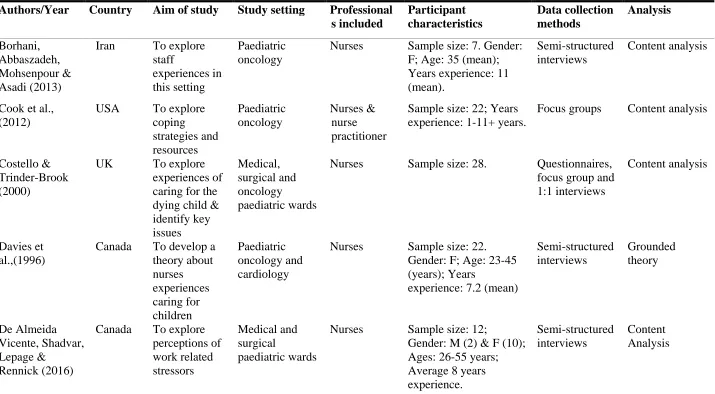
Tables/Figures Table. 1 Study characteristics
Authors/Year Country Aim of study Study setting Professional
s included Participant characteristics Data collection methods Analysis Borhani, Abbaszadeh, Mohsenpour & Asadi (2013)
Iran To explore staff
experiences in this setting
Paediatric oncology
Nurses Sample size: 7. Gender: F; Age: 35 (mean); Years experience: 11 (mean).
Semi-structured interviews
Content analysis
Cook et al., (2012)
USA To explore coping strategies and resources Paediatric oncology Nurses & nurse practitioner
Sample size: 22; Years experience: 1-11+ years.
Focus groups Content analysis
Costello & Trinder-Brook (2000)
UK To explore experiences of caring for the dying child & identify key issues Medical, surgical and oncology paediatric wards
Nurses Sample size: 28. Questionnaires, focus group and 1:1 interviews
Content analysis
Davies et al.,(1996)
Canada To develop a theory about nurses experiences caring for children Paediatric oncology and cardiology
Nurses Sample size: 22. Gender: F; Age: 23-45 (years); Years
experience: 7.2 (mean)
Semi-structured interviews Grounded theory De Almeida Vicente, Shadvar, Lepage & Rennick (2016)
Canada To explore perceptions of work related stressors Medical and surgical paediatric wards
Nurses Sample size: 12;
Gender: M (2) & F (10); Ages: 26-55 years; Average 8 years experience.
Semi-structured interviews
Dix, Gulati, Robinson, Syed, & Klassen (2012)
Canada To identify work-related demands and rewards Paediatric oncology and PICU Doctors, nurse & social workers
Sample size: 33. Gender: M (5), F (28); Age: 30-60+ (years); Years experience: 5-20+. Semi-structured interviews Thematic analysis Foglia, Grassley & Zeigler (2010)
USA To explore factors that contributed towards professionals voluntarily leaving professional role
PICU Nurses Sample size: 10;
Gender: F; Age: 24-60 (years); Years
experience: 2-22.
Semi-structured interviews
IPA
Forster & Hafiz, (2015)
Australia Explore coping strategies and support Medical units, oncology & PICU Doctors, nurse & social workers
Sample size: 10; Age: 24-57 (years); Years experience: 4-20. Semi-structured interviews Grounded theory Hilliard & O’Neill (2010)
Ireland To explore emotions and coping
Paediatric burns Nurses Sample size: 8; Gender: F; Years experience: 6-30.
Unstructured interviews
Phenomenology
Kaplan (2000) USA Explore emotion reactions and expressions following the loss of a child
Paediatric haematology, oncology & PICU inpatient (13% of sample included
outpatient so included)
Nurses Sample size: 15; Gender: M (1), F (14); Age: 28-52 (years). Years experience: 2-34.
Structured interviews
Kellogg, Barker & McCune (2014)
USA To explore the experiences following patient death
Paediatric burns Nurses Sample size: 7; Gender: M (2), F (5); Years experience: 7-44.
Semi-structured interview
Selective approach
Lee & Dupree (2008)
USA To explore experiences following the loss of a patient
PICU Doctors and
nurses
Sample size: 29; Years experience: 3-31. Semi-structured interview Content analysis Ljusegren, Johansson, Gimbler, Berglund & Enskär. (2012)
Sweden To describe experiences of caring for children in pain
PICU Nurses Sample size: 21; Ages:
26-55+ (years); Years of experience: 1-35.
Interviews Content analysis
Mahon (2014) Canada To explore retention in medical setting
PICU Nurses Sample size: 31;
Gender: M (31 percent), F (69 percent); Ages: 20-60+ (years); Years of experience: 2-35. Semi-structured interviews Not stated Maytum, Heiman & Garwick (2004)
USA Explore triggers and coping strategies Paediatric chronic health inpatient settings
Nurses Sample size: 20; Years experience: 4-36.
Semi-structured interviews
Content analysis
Meyer (2014) USA To explore experience caring for dying children
PICU Nurses Sample size: 10; Ages:
25-65 (years); Years experience: 3-40.
Interviews Phenomenology
Olson et al., (1998)
USA To identify ways
professionals find meaning in their role
Paediatric oncology
Nurses Sample size: 26; Gender: M (1), F (25); Ages: 26-48 (years); Years experience: 2-20.
Semi-structured interviews
Papadatou, Martinson, & Chung (2001) Greece & China Explore and compare experiences of professionals in these settings PICU, oncology & NICU (>10% of total sample)
Nurses Sample size: 63; Gender: M (5), F (58); Ages: 21-50 (years).
Semi-structured interviews Grounded theory Papadatou, Bellali, Papazoglou & Petraki (2002)
Greece To explore grieving process and compare experiences
Oncology Doctors and nurse
Sample size: 30; Gender: M (6), F (24); Ages: 21-50+ (years).
Semi-structured interviews
(Mixed methods used) Grounded theory used for qualitative analysis Pearson (2013) UK To explore
experiences providing palliative care
Paediatric oncology
Nurses Sample size: 7; Gender; F; Ages: 22-25 (years). Years experience: >1-2.
Semi-structured interviews
Grounded theory
Pye (2013) UK To explore
experiences and feelings concerning moral distress Paediatric oncology Doctors & nurses
Sample size: 8. Semi-structured interviews Phenomenology Rashotte, Fothergill-Bourbonnais & Chamberlain (1997)
Canada To describe grief
experiences
PICU Nurses Sample size: 6; Gender:
M (1), F (5); Years experience: 2-20 years.
Semi-structured interviews
Phenomenology
Thomas,
Thammasitboon, Balmer, Roy & McCullough (2016)
USA To explore moral distress
PICU Doctors,
nurses & therapists
Sample size: 25; Gender: M (7), F (18); Years experience: 2-35.
Semi-structured interviews