University of Warwick institutional repository:
http://go.warwick.ac.uk/wrap
A Thesis Submitted for the Degree of PhD at the University of Warwick
http://go.warwick.ac.uk/wrap/54811
This thesis is made available online and is protected by original copyright.
Please scroll down to view the document itself.
Statistical language learning
Luca Onnis
Thesis submitted for the degree of Doctor of Philosophy
Department of Psychology
University of Warwick
List of Figures ... vi
List of Tales ... viii
Acknowledgements ... ix
Declaration ... x
Abstract ... xi
Chapter l ... I Statistical language learning ... 2
Chapter 2 ... 14
Detecting non-adjacent structural dependencies in language ... 15
Detection of invariant structure through context variability ... 17
Testing the zero-variability hypothesis ... 20
Experiment 1 ... 21
Method ... 21
Participants ... 21
Materials ... 21
Procedure ... 22
Results and Discussion ... 23
General discussion ... 24
... Chapter 3 ... 30
. ... ... The Variability effect: A graded, associative account ... 31
Simulation 1- The Variability Effect Hypothesis ... 34
Method ... ... 37
Networks ... ... 37
Materials ... ... 37
Procedure ... ... 37
Results and Analyses ... ... 38
Simulation 2- The zero-variability hypothesis ... ... 41
Method ... ... 41
Networks ... ... 41
Materials ... ... 42
Procedure ... ... 42
Results and Analyses ... ... 42
Learning nonadjacent structure in SRNs ... 43
Conclusions ... ... 50
Chapter 4 ... 52
Experiment 2- Visual Sequential (VS) version ... ... 56
Method ... ... 56
Participants ... ... 56
Materials ... ... 56
Procedure ... ... 56
Results and discussion ... ... 57
The confirmatory bias in the Variability Experiments ... 59
Experiment 3- Visual Sequential Abridged version (VSA) ... 62
Method ... ... 62
Participants ... ... 62
Materials ... ... 62
Procedure ... ... 63
Results and discussion ... ... 63
Experiment 4- Visual Temporal (VT) version ... ... 65
Method ... ... 65
Participants ... ... 65
Materials ... ... 65
Procedure ... ... 65
Results and discussion ... ... 66
General Discussion ... 68
Chapter 5 ... 71
Bootstrapping abstract linguistic representations ... ... 72
Generalisation under conditions of variability ... 75
Experiment 5 (Human data) ... 83
Method ... ... 83
Participants ... ... 83
Materials ... ... 83
Procedure ... ... 84
Results and discussion ... 84
Simulation 3 (SRN data) ... ... 85
Method ... ... 86
Networks ... .. ... 86
Materials ... ... ... ... 86
Procedure ... ... 87
Results and Analyses ... ... 87
General Discussion ... 89
Chapter 6 ... ... 95
The debate over the nature of linguistic representations ... 96
Are algebraic and statistical computations empirically separable? ... 98
Experiment 6 ... ... 106
... ...
Procedure
... ... 107
Results
... ... 108 Discussion
... ... 108
Experiment 7
... 110
Method
... ... 110 Participants
... ... 110
Materials and design ... ... 110 Procedure
... ... ... 111 Results
... ... 111
Discussion
... ... 111
Experiment 8
... ... 113
Method
... ... 113 Materials and design ... ... 113
Procedure
... ... 114
Results
... ... 114 Discussion
... ... 114
Experiment 9
... ... 117
Method
... ... 117 Participants
... ... 117 Materials and design ...
... 117 Procedure
... ... 118 Results
... ... 118
Discussion
... ... 118
Experiment 10
... 120
Method
... ... 120 Participants
... ... 120 Materials and design ... ... 120 Procedure
... ... 121 Results
... ... 121
Discussion
... ... 121
Experiment 11 ...
... 123
Method
... ... 123
Participants
... ... 123
Materials and design ... ... 123 Procedure
... ... 124
Results and discussion ... ... 124
Experiment 12
... 125 Method
... ... 125
Materials and design
... ... 125 Procedure
... ... 125
Results
... ... 126 Discussion
... ... 126
Experiment 13
... 128
Method
... ... 128
Participants
... ... 128 Materials and design ... ... 128
Discussion ... 129
General discussion ... 131
Chapter 7 ... 143
Recovery from overgeneralizations in language acquisition ... 144
Baker's Paradox and linguistic quasi-productivity ... 146
The logical problem of language acquisition ... 149
Learning Argument Structure: semantic bootstrapping ... 150
Learning Argument Structure: Construction Grammar ... 154
Learning Argument Structure from non-occurrence ... 155
Causative alternations in child-directed speech ... 157
Simplicity and Language ... 161
Modeling language learning with simplicity ... 162
The Models ... 163
Calculating Code-Length for each element ... 164
Simulating recovery from overgeneralization with an artificial language ... 168
Conclusions and future directions ... 171
Chapter 8 ... 173
Acquisition and Evolution of quasi-regular languages: Two puzzles for the price of one ... 174
The logical problem of language evolution ... 175
Simplicity-Based Language Learning: The Learner as Gambler ... 175
Learning a rudimentary language ... 177
Language Learning over Generations - ILM simulations ... 182
Results ... 184
Discussion and conclusion ... 186
Chapter 9 ... 192
Discussion and conclusions ... 193
Limits and future directions ... 196
Extensions to the variability effect ... 196
What is learnt in Artificial Grammars ... 199
Solving the language acquisition and evolution puzzles with Artificial Grammars ... 203
References ... 206
variability of the middle item ... 19
Figure 2. Total percentage endorsements in Experiment I for different variability ... 24
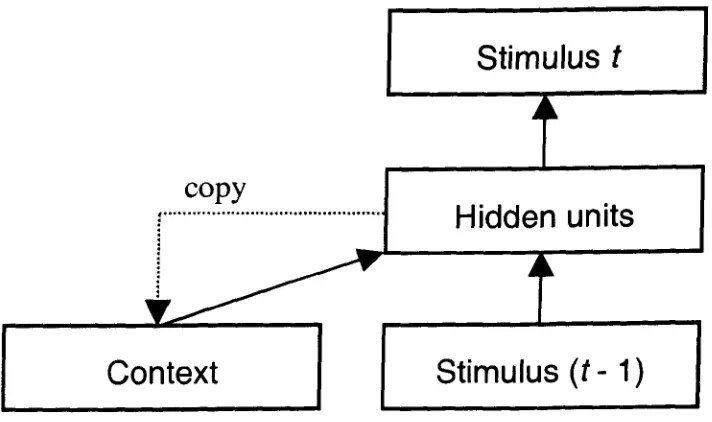
Figure 3. A Simple Recurrent Network (after Elman, 1990) ... 36
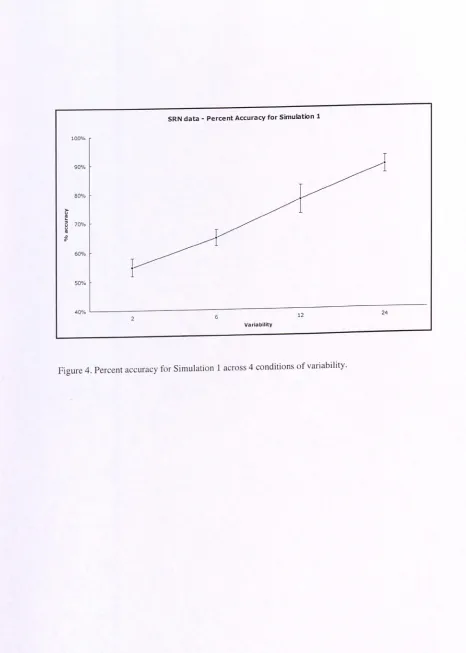
Figure 4. Percent accuracy for Simulation I across 4 conditions of variability ... 40
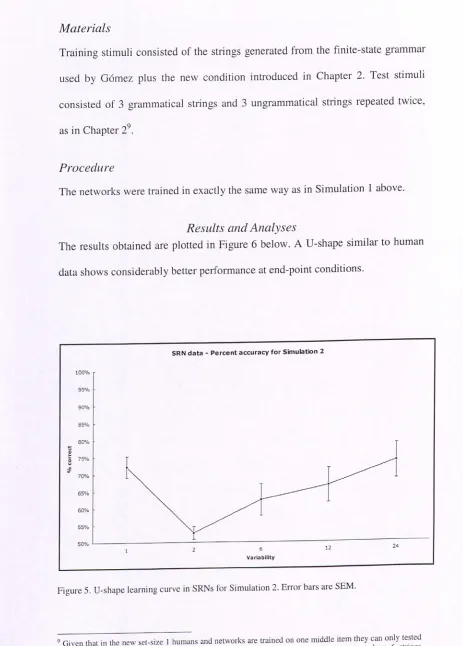
Figure 5. U-shape learning curve in SRNs for Simulation 2. Error bars are SEM ... 42
Figure 6. MDS analysis of hidden unit trajectories. A network trained on 2 Xs fails to achieve the needed separation: all 6 trajectories remain close to each other all the way through the end of training. Hence the network can never form correct predictions of the successor to the X... 48
Figure 7. MDS analysis of hidden unit trajectories in the 24X condition: all 6 trajectories start out, on the left side, from the same small region, and progressively diverge to result in three pairs of two representations ... 48
Figure S. MDS analysis for a network trained on I X. Like in the 24X case, the network is successful in separating out the corresponding internal representations: The terminal points of each trajectory end up in different regions of space ... 49
Figure 9. Total percentage endorsements in Experiment 2 for different variability ... 58
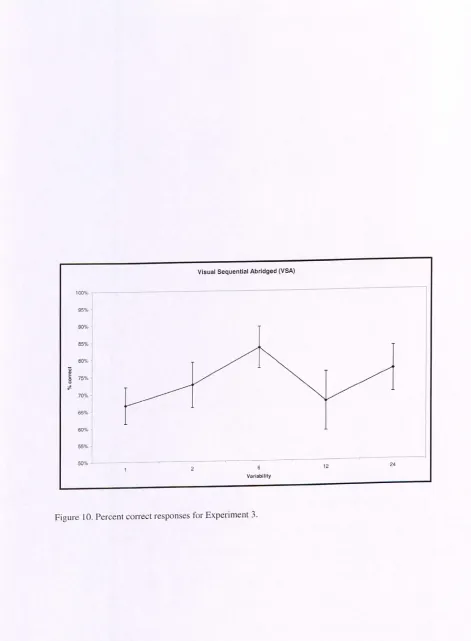
Figure 10. Percent correct responses for Experiment 3 ... 64
Figure 11. Percent correct responses for Experiment 4 ... 67
Figure 12. Percent accuracy in generalising to a new embedding across 3 conditions of variability: null, small, and large ... 85
Figure 13. Results from Simulation 3 on generalisation to new embeddings plotted against results obtained experimentally in Experiment 5 ... 88
Figure 14. At the top of the frame, a sample of the training speech is shown, with "words" shown in different colours and part-words underlined. Underneath, is a sample of a test pair: In Experiments 14-16, words were compared to part-words, in 17-20, rule-words were compared to part-words. The results for each participant, in terms of percentage preference for part-word or word/rule-word, is represented by a dot. The mean for all participants is indicated above a vertical line. Experiment 6- segmentation task ... 109
Figure 15. Experiment 7- segmentation task with randomized phonology ... 112
Figure 16. Experiment 8- segmentation task with no structure ... 116
Figure 17. Experiment 9- generalization task ... 119
Figure 18. Experiment 10-generalization task with randomized phonology ... 122
Figure 19. Experiment 11 - generalization task with gap ... 124
Figure 20. Experiment 12 - generalization task with gap and randomized phonology ... 127
Figure 21. Experiment 13 - generalization task with gap and no structure ... 130
Figure 22. Comparison between a traditional ALL task (above) and the segmentation task used by Pena et al. (below) ... 140
Figure 23. Comparison between the ALL task used by Gomez (2002) with large variability of middle items (above) and a hypothetical mirror segmentation task (below), where low-transitional probabilities between the As and the Xs would lead to wrong segmentation ... 141
Figure 24. Comparison between the ALL task used In chapter 2 with no variability of middle items (above) and a hypothetical mirror segmentation task (below), where unwanted nonadjacent dependencies between the Xs and the As having relatively high conditional probabilities would lead to an impossible task ... 142
Figure 25. The structure of the toy language mimics that of Baker's Paradox for alternations. al and a2 could be blocked from occurring in BA and AB constructions respectively by entries in the exceptions element such as a2bl, a2b2 or blas, b2a j etc. For the first generation agent in each simulation, however, all As occurred in both contexts (that is, they were 'alternating'). 'Cut', fall', and 'break' are examples of alternating and non-alternating verbs. Levin (1993) provides an extensive list of alternations in English ... 178 Figure 26. The codelength (number of bits) associated with each hypothesis grammar entertained by a learner after exposure to 50 sentences of a language containing 11 exceptions. The shortest codelength is obtained by the 12`h hypothesis, i. e. the one containing 11 exceptions. (the first
Figure 27. The number of exceptions contained in the language transmitted by each learner to the subsequent generation in four simulations with differing corpus sizes. Where the number of exceptions was stable across several generations, for example seven exceptions in c) or the final 600 generations of d), the sentences specified as exceptions were the same for each generation. It is important to note the difference in scale for number of exceptions for a), b), c) and d)... 185
each of the five set-size conditions ... 58 Table 2. Positive bias for the Visual Sequential experiment ... 60 Table 3. Positive bias for the Auditory experiment ... 60 Table 4. Percent correct responses for Experiment 4 expressed in terms of seen (trained) and unseen (untrained) items recognised correctly ... 67 Table 5. Percentage of words beginning with each consonant for syllables in initial/medial/final word position in Pena et al. 's studies ... 103 Table 6. Summary of the design of the experiments. The first column lists the Experiment, the second column lists the experiment number in Pena et al. 's study. "Syllable positions" indicates whether syllables occurred in the original initiallmedial/final positions from Pena et al. The
"Structure" column indicates whether the language contained nonadjacent dependencies or not, and the effect indicates the statistical result (* indicates that there was a significant reverse effect, i. e., there was a preference for part-words over rule-words in Experiment 10) ... 105 Table 7. Alternating and non-alternating verbs across contexts ... 157 Table 8. Verbs in child-directed speech occurring in transitive and intransitive contexts pooled from the CHILDES English sub-corpora (MacWhinney, 2000) ... 160
Table 9. Code-lengths of Models 1 and 2 for successively large corpora. Code-lengths in bold show the shorter codes for the corpus size ... 170
Table 10. Sentences allowable under [3]. Rows are first words, columns are second words. The re- write rules license half the sentences in this table; blocked sentences are denoted *. The learner was able to discover exceptions to the rules such as a2 appearing in first position oral appearing in second position ... 182
I would like to thank Nick Chater for his indefatigable support and scholarly advice throughout the last three years. Nick has been a vital and constant source of reference and stimulation, while at the same time allowing me to pursue a personal and unconstrained research path in the directions that most suited my intellectual thirst and curiosity. He has also been unconditionally supportive for many practical aspects of my English life at Warwick. I also feel deeply indebted to Morten Christiansen (Cornell University), who since my second year has fuelled me with invigorating challenges and has taught me many skills.
Most of the work presented here is the fruit of daily collaborations, filtered coffees and Sunday countryside walks with Matthew Roberts and Padraic Monaghan. We have learnt together and together we have become friends. I will miss them both enormously.
Several other scholars deserve mention for sharing their thoughts and skills: Axel Cleeremans (ULB, Brussels), Rebecca Gomez (Arizona), Arnaud Destrebecq (ULB, Brussels), and Bob French (Liege).
This work is dedicated to the memory of my grandfather Adamo Volpe (1917- 2003), who lived his life fully until the very last minute.
This thesis was supported by European Union Project HPRN-CT-1999-00065, "Basic mechanisms of learning and forgetting in natural and artificial systems".
I hereby declare that the research reported in this thesis is my own work unless otherwise stated. No part of this thesis has been submitted for a degree at another university.
Parts of chapter 2 and 4 have been published in Onnis, Christiansen, Chater, & Gomez, (2003). The contents of chapter 3 form part of Onnis, Destrebecq, Christiansen, Chater, & Cleeremans (submitted). Chapter 6 as been submitted for publication in Onnis, Monaghan, Chater, & Richmond. Material in chapter 7 is published as Onnis, Roberts, & Chater (2002), while parts of chapter 8 are to be published in Roberts, Onnis, & Chater (in press).
The MDS analyses and graphs in chapter 3 were provided by Axel Cleeremans. The computer scripts for the simplicity simulations and the equations reported in chapters 7,8, and Appendix A were written by Matthew Roberts.
Luca Onnis
Theoretical arguments based on the "poverty of the stimulus" have denied a priori the possibility that abstract linguistic representations can be learned inductively from exposure to the environment, given that the linguistic input available to the child is both underdetermined and degenerate. I reassess such learnability arguments by exploring a) the type and amount of statistical information implicitly available in the input in the form of distributional and phonological cues; b) psychologically plausible inductive mechanisms for constraining the search space; c) the nature of linguistic representations, algebraic or statistical. To do so I use three methodologies: experimental procedures, linguistic analyses based on large corpora of naturally occurring speech and text, and computational models implemented in computer simulations.
In Chapters 1,2, and 5, I argue that long-distance structural dependencies - traditionally hard to explain with simple distributional analyses based on n- gram statistics - can indeed be learned associatively provided the amount of intervening material is highly variable or invariant (the Variability effect). In Chapter 3, I show that simple associative mechanisms instantiated in Simple Recurrent Networks can replicate the experimental findings under the same conditions of variability. Chapter 4 presents successes and limits of such results across perceptual modalities (visual vs. auditory) and perceptual presentation (temporal vs. sequential), as well as the impact of long and short training procedures. In Chapter 5, I show that generalisation to abstract categories from stimuli framed in non-adjacent dependencies is also modulated by the Variability effect. In Chapter 6, I show that the putative separation of algebraic and statistical styles of computation based on successful speech segmentation versus unsuccessful generalisation experiments (as published in a recent Science paper) is premature and is the effect of a preference for phonological properties of the input. In chapter 7 computer simulations of learning irregular constructions suggest that it is possible to learn from positive evidence alone, despite Gold's celebrated arguments on the unlearnability of natural languages. Evolutionary simulations in Chapter 8 show that irregularities in natural languages can emerge from full regularity and remain stable across generations of simulated agents. In Chapter 9I conclude that the brain may endowed with a powerful statistical device for detecting structure, generalising, segmenting speech, and recovering from overgeneralisations. The experimental and computational evidence gathered here suggests that statistical language learning is more powerful than heretofore acknowledged by the current literature.
Statistical language learning
To what extent is language learnable from experience? Does the information available to the child in the form of statistical regularities allow learning core aspects of language such as syntactic structures, segmenting speech, generalising and recovering from overregularisations? The remarkable speed and apparent implicitness with which human infants acquire a language in their first years of life has lead many theorists to dismiss a priori the idea that statistical information inherent in the language plays a central role in acquisition. Theoretical arguments based on the `poverty of the stimulus' (Gold, 1967; Chomsky, 1965; Pinker,
1984) have drawn attention to the fact that positive evidence available to the learner is insufficient to distinguish between grammatical and ungrammatical utterances, and that online speech is full with flaws and missing elements. Because the target language seems both underdetermined and degenerate, successful learning must occur despite the nature of the input on a deductive basis by means of an innate mental language system.
This thesis takes on a recent and renewed interest in the analysis of language acquisition from an inductive perspective, and tries to assess empirically and computationally what can be learned from the environment. We can broadly term this field statistical language learning. Core issues tackled in this area are: (a) how reliable is statistical information for bootstrapping linguistic structure in the form of low-level prosodic, phonological, and distributional cues? (b) In the face of a combinatorial explosion of potentially valid hypotheses about some linguistic structure given the cues in the input, what psychologically plausible constraints should apply to the learning device? For
instance, Redington, Chater, & Finch (1998) pointed out that a totally unconstrained search with n items and m syntactic categories (where each item belongs to a single syntactic category and assuming the number of categories is known a priori), would imply considering m° possible mappings, and that there are already more than a million permutations with only 20 items and 2 syntactic categories. From an empiricist point of view this task is even harder because the number of syntactic categories is not innately specified. Clearly, statistical analyses that entertain all possible relations among words would be computationally intractable; (c) Does language learning ultimately necessitates a language-specific device or Universal Grammar, or does it impinge on general- purpose mechanisms that support human learning broadly? As a result of a shift to nativism in American linguistics towards the late 1950s, the role of inductive learning - what can be learned from the environment given general-purpose inductive mechanisms - has been downplayed as not powerful enough. Recently, various researchers have started to reassess empirically and computationally both the amount of information inherently available in the linguistic input and the power and types of mechanisms that might be plausibly engaged in language learning; (d) What is the nature of linguistic representations in the brain - algebraic-like or statistical?
The field of language acquisition has recently benefited from a wave in computational modeling. Computational models can be seen as intermediate tools that mediate between a purely "verbal" theory and a purely experimental paradigm (Broeder & Murre, 2003). As a computer implementation of a theory a computational model requires the modeller to make more explicit the assumptions underpinnings her theory. Because it involves an input, a process,
and an output, it can also be subjected to experimental manipulations that test different conditions of behaviour. As an intermediate between theory and experiment, a model can thus be judged in terms of how well it implements the theory as well as how well it fits the data gathered. In this thesis computational models are coupled with experimental paradigms in order to accumulate more robust evidence about a given issue. In this work I specifically focus on four related aspects of language learning from experience: detecting nonadjacent invariant structure, generalising beyond experience to novel instances given an invariant structure, segmenting speech into core constituents, and recovering from overgeneralisations. Detecting invariant structure and generalising are seen by many as the hallmark of discovering syntactic structure in language (Chomsky, 1957). Research on statistical learning in adults and infants has shown that humans are particularly sensitive to statistical properties of the input, for instance, transitional n-gram probabilities. Although this may help children segment speech (Saffran, Aslin, & Newport, 1996) it has been argued, however, that this source of information may not help in detecting nonadjacent dependencies, in the presence of substantial variability of the intervening material (Gomez, 2002). Words in the language are organised into constituents called phrases, groupings of words that behave as units (typical constituents are Noun Phrases, Verb Phrases, Prepositional Phrases, Adjective Phrases). The position of such constituents is not fixed in a sentence because of the recursivity of syntax: for instance, a Noun Phrase constituent that contains a Prepositional Phrase can in turn contain another Noun Phrase. Recursivity generates non-local dependencies, the fact that two words can be syntactically dependent even
though they occur far apart in a sentence. Consider subject-verb agreement in English in the following examples:
(1) Mark runs, She runs, The rabbit runs
(2) John and Mark run, The rabbit with the white fur runs (3) The woman with the blue dress is kind
(4) The women with the blue dress are kind
As one can see, a near-neighbour analysis such as *Mark run in (2) or the blue dress is kind in (4) does not yield the correct structural dependency. In Chapter 2, in particular, I discuss that detecting long-distance relationships like verb-noun agreement and tensed verbs are hard to explain in terms of simple distributional analyses based on n-gram statistics such as transitional probabilities. This is because the intervening material is extremely variable and hence has to be ignored for the structural constraints to be learned. Sequences in natural languages typically involve some items belonging to a relatively small set (functor words and morphemes like am, the, -ing, -s, are) interspersed with items belonging to a very large set (e. g. nouns, verbs, adjectives). Crucially, this asymmetry translates into patterns of highly invariant nonadjacent items separated by highly variable material (am cooking, am work qg, am goj g, etc. ). On the other end, nonadjacent contingencies such as number agreement may share the very same embedded material: consider sentence (1) versus (2) below:
(5) The book on the shelf is dusty (6) The books on the shelf are dusty.
In either case - large variability or no-variability of intervening items - knowledge of n-gram conditionals cannot be invoked for detecting invariant structure. The same chapter hence introduces the Variability Effect hypothesis, in which I empirically show that learners are better at detecting long-distance dependencies with either zero or high variability. I show a U-shape in learning long-distance contingencies as a function of the number of intervening items. Gomez (2002) has proposed that alternative sources of information may be attended to simultaneously by learners. With several potential cues in competition, human learning seems extremely flexible and naturally biased toward the most informative ones in an attempt to maximally reduce uncertainty.
In chapter 3,1 discuss the extent to which simple associative mechanisms
instantiated in connectionist models can account for the Variability Effect. A Simple Recurrent Network (SRN) is able to detect nonadjacent sequential contingencies by developing graded representations in hidden units that simultaneously maintain similarities and differences between several sequences. Crucially this happens in the presence of either zero variability or large variability, thus replicating the U-shape pattern obtained experimentally.
Chapter 4 examines the extent to which a U-shape learning curve attributed to the Variability Effect is modality-independent and may be affected by training length. In two new experiments the same training and test stimuli used in chapter 2 were presented visually on a computer screen. The obtained U- shape curve is less marked when whole sentences appear on the screen. One possible explanation is that attending to visually presented stimuli is less demanding cognitively or makes the structure stand out visually, explaining the
ceiling effect. In another experiment, presenting words one by one on the screen (thus mirroring the sequential presentation of the auditory version) yields results that are at the same time surprising and difficult to interpret, as the U-shape turns into an S-shape. In a third experiment, new participants were administered the same auditory experiment of chapter 2 with a halved training regime. This manipulation was initially motivated by the desire to reduce the large variation in scores between subjects within each condition, on the assumption that 20 minutes of training might produce boredom or distraction in participants. However, the U-shape did not emerge with 10 minutes of training exposure. Overall, the chapter tackles the limits of interpretability of single ALL results and cautions against drawing fast conclusions without a good battery of tests. In the AGL community it is often believed that because of their artificiality and abstractness artificial grammars capture the essence of learning at a highest, indeed abstract way. The results presented here point to different performance results depending on the training regime and the way the stimuli are perceptually perceived. The issue is explored further in Chapter 6 when phonological confounds are shown to explain away strong theoretical claims about the separability of statistical and algebraic computations.
Generalisation is regarded as a core aspect of linguistic knowledge
(Chomsky, 1957): although learners are exposed to a limited amount of language they produce an infinite number of sentences in their life. The ability to abstract beyond exemplars encountered is thus a critical feature of syntax acquisition. Chapter 5 discusses generalisation in the light of the variability results. Whereas the experiments in Chapter 3 test preference for grammatical items previously encountered in the training phase, in Chapter 51 test empirically whether
generalisation to novel stimuli is supported under the same conditions of variability involved in detecting invariant structure.
Chapter 6 deals with speech segmentation and generalisation. The speech signal is mostly continuous and word boundaries are rarely marked by acoustic cues such as pauses. This poses a serious inferential problem to the child who lacks knowledge of the syntax and semantics of the language as well as the phonological properties of the lexicon. Here I discuss segmentation strategies with specific reference to an article by Pena, Bonatti, Nespor, and Mehler (2002). Many theories of language acquisition debate whether processing is dependent on statistical computations alone or whether it needs algebraic computations. Pena et al. recently argued that speech segmentation was a statistical process, whereas learning structural generalizations was due to algebraic computations. In a series of experiments, extending those by Pena et al., I found that participants had strong preferences for phonemes in certain utterance positions. I found no evidence for the statistical/algebraic distinction: the results from Peria et al. were a consequence of the impact of phonological preferences on language processing. I reassess the debate on algebraic versus statistical computation in the light of the obtained results. Chapter 6 ties in well with the previous ones for two reasons: firstly, they deal with the issue of exploiting long-distance dependencies for segmenting speech and generalising to novel items, thus adding another piece to the puzzle. Secondly, they elaborate on the methodological considerations started in chapter 5 about the perceptual non-neutrality of artificial stimuli, which is often incorrectly taken for granted.
Chapters 7 and 8 conclude the statistical explorations into language by looking at the other side of generalisation, namely how a learner can recover
from overgeneralisations which are known to be spontaneously generated by children (such as *I disappeared the rabbit) without direct negative evidence, i. e. without direct correction from the caretaker. This is a general problem of inductive inference. Overgeneralizations are a common feature of language development. In learning the English past tense, children typically overgeneralize the `-ed' suffix marker, producing constructions such as *we holded the baby rabbits (Pinker, 1995). Language learners recover from these errors, in spite of the lack of negative evidence and the infinity of allowable constructions that remain unheard (Gold, 1967). It has been argued that this favours the existence of a specific language-learning device (e. g. Chomsky, 1980; Pinker, 1989). This is an aspect of the `Poverty of the Stimulus' argument. I report on a statistical model of language acquisition, which suggests that recovery from overgeneralizations may proceed from positive evidence alone. Specifically, I show that adult linguistic competence in quasi-regular structures may stem from an interaction between a general cognitive principle, simplicity (Chater, 1996) - based on the mathematical theory of Kolmogorov Complexity (Kolmogorov, 1965) - and statistical properties of the input. Under what is known as Baker's Paradox (Baker, 1979) non-occurrence in the input is not in itself evidence for the incorrectness of a construction because an infinite number of unheard sentences are still correct. One type of irregularities that Baker referred to can be broadly labeled alternations (Levin, 1993; see also Culicover, 2000). For instance, the dative alternation in English allows a class of verbs to take both the double-object construction (He gave Mark the book) and the prepositional construction (He gave the book to Mark). Hence the verb give alternates between two constructions. However, certain verbs seem to be constrained to one possible
construction only (He donated the book to Mark is allowed, whereas *He donated Mark the book is not). Such verbs are non-alternating. From empirical studies we know that children do make overgeneralization errors that involve alternations, such as *I said her no (by analogy to I told her no, Bowerman,
1996; Lord 1979).
In chapter 7,1 present alternation phenomena from the CHILDES database (MacWhinney, 2000) of child-directed speech which will be used in the computer model. The simplicity principle (Chater, 1996; Chater & Vitanyi, 2001) states that the cognitive system seeks the hypothesis that provides the briefest representation of the available data - here the linguistic input to the child. This model allows learning from positive evidence alone in a probabilistic sense, contrasting with Gold's (1967) negative theorems. Data gathered from the CHILDES database were used as an approximation of positive input the child receives from adults. I consider linguistic structures that would yield overgeneralization. Two computer simulations incorporating simplicity were run corresponding to two different hypotheses about the grammar: (1) The child assumes that there are no exceptions to the grammar. This hypothesis leads to overgeneralization. (2) The child assumes that some constructions are not allowed. By measuring the cost to encode a structure given its probability P of occurrence as 1og2(11P), the second hypothesis was preferred as it lead to a shorter input description and eliminated overgeneralization.
While chapter 7 attempts to solve the long-debated logical problem of language acquisition, chapter 8 takes an evolutionary perspective. The relative diachronic stability of quasi-productive constructions in linguistic codes poses a puzzle for accounts based on the principle of parsimony of representation. The
logical problem of language evolution is concerned with how quasi-regularities such as alternations could have possibly emerged in natural languages and why they were not eliminated over generations, if these constituted a serious learning problem. In particular, I consider the fact that languages are never fully productive, although full productivity would be a desirable solution in terms of leamability over generations (Kirby, 2001; Hurford 2000). I present several simulations charting the emergence and stability of irregularities across 1000 generations of artificial simplicity-based learners using an artificial language. In all simulations grammar induction is by simplicity. Randomly set proto- grammars are transmitted across 1,000 generations of communicating agents. At each generation a simplicity learner seeks the shortest representation of the available data. As a result, overgeneral grammars are not handed down over the next generation and alternations remain stable, at least across a number of generations.
Finally, Chapter 9 pulls the lines of research on statistical language learning together, discussing the merits and limits of a distributional approach. I hope to show that beyond well-founded theoretical claims for the unlearnability of language in some deep sense, there is ample scope for setting a rigorous research agenda for evaluating experimentally and computationally what aspects of language can be learned from experience and what cannot. The relative recency of the area of statistical language learning as well as the preliminary nature of the investigations reported here can only warrant a cautionary position that eschews polarized views. Ultimately, it is suggested here that the human brain may be endowed with a powerful statistical device for detecting structure,
generalising, segmenting speech and recovering from overgeneralisations found in natural languages.
This work is exploratory by necessity because none of the studies that I report can claim a definitive answer to a specific issue, although they are all self- contained projects that have been published or submitted for publication. I also perform a cursory exploration in language learning in as much as the experiments and simulations reported here do not deal with real linguistic utterances in real communicative contexts, but rather make use of simplified grammars technically known as artificial or finite-state grammars. The virtues of such a simplification will soon result apparent, particularly for the possibility of carefully controlling the conditions of learning in experimental settings, as well as making learning a computationally tractable issue in computer simulations. Using artificial language stimuli enables precise control over the learning environment, and allows systematic manipulation and testing of specific structures. As we shall see, artificial stimuli need not be entirely abstracted from real languages: both the experimental stimuli and the computer simulations reported here are empirically motivated by statistical analyses of large corpora of real language, such as the CHILDES database and the British National Corpus.
The reader may also be struck to note that, although I deal with language acquisition throughout this work, none of the experiments involve infants or children. This is certainly a caveat. In recent times, insights and methodologies from two lines of research have been combined: one involving studies of artificial grammar learning (henceforth AGL) in adults (e. g. Reber, 1967,1969; Morgan & Newport, 1981; Valian & Levitt, 1996) and another examining infant learning examining infant learning of artificial language material (ALL). Because
the two areas are now beginning to be merged, and because the learning that results from adults is better understood, it is customary to gather preliminary data
from adult performance as a baseline against infant performance to be tested
later.
Detecting non-adjacent structural dependencies in language
Research in artificial grammar learning (AGL) and artificial language learning (ALL) in infants and adults has revealed that humans are extremely sensitive to the statistical properties of the environment they are exposed to. This has opened up a new trend of investigations aimed at determining empirically the processes involved in so-called statistical learning.
Several mechanisms have been proposed as the default that learners use to detect structure, although crucially there is no consensus in the literature over which is most plausible or whether there is a default at all. Some researchers have shown that learners are particularly sensitive to transitional probabilities of bigrams (Saffran, Aslin, & Newport, 1996): confronted with a stream of unfamiliar concatenated speech-like sound they tend to infer word boundaries between two syllables that rarely occur adjacently in the sequence. Sensitivity to transitional probabilities seems to be present across modalities, for instance in the segmentation of streams of tones (Saffran, Johnson, Aslin, and Newport, 1999) and in the temporal presentation of visual shapes (Fiser & Aslin, 2002).
Other researchers have proposed exemplar- or fragment-based models, based on knowledge of memorised chunks of bigrams and trigrams (Dulany et al., 1984; Perruchet & Pacteau, 1990; Servan-Schreiber & Anderson, 1990) and learning of whole items (Vokey & Brooks, 1992). Yet others have postulated rule- learning in transfer tasks (Reber, 1967; Marcus, Vijayan, Rao & Voshton, 1999). In addition, knowledge of chained events such as sentences in natural languages
require learners to track nonadjacent dependencies where transitional probabilities are of little help (Gomez, 2002).
In this Chapter I propose that there may be no default process in human sequential learning. Instead, learners may be actively engaged in search for good sources of reduction in uncertainty. In their quest, they seek alternative sources of predictability by capitalizing on information that is likely to be the most statistically reliable. This hypothesis was initiated by (Gomez, 2002) and is consistent with several theoretical formulations such as reduction of uncertainty (Gibson, 1991) and the simplicity principle (Chater, 1996), which states that the cognitive system attempts to seek the simplest hypothesis about the data available. Given performance constraints, the cognitive system may be biased to focus on data that will be likely to reduce uncertainty as far as possible'. Specifically, whether the system focuses on transitional probabilities or non-adjacent dependencies may depend on the statistical properties of the environment that is being sampled. Therefore, by manipulating the statistical structure of that environment, it is perhaps possible to investigate whether active search is at work in detecting structure.
In two experiments, I investigated participants' degree of success at detecting invariant structure in an AGL task in 5 conditions where the test items and test task are the same but the probabilistic environment is manipulated so as to change the statistical landscape substantially. I propose that a small number of alternative statistical cues might be available to learners. I aim to show that, counter to intuition, orthogonal sources of reliability might be at work in different
experimental conditions leading to successful or unsuccessful learning. I also asked whether my results are robust across perceptual modalities by running two variations of the same experiment, one in the auditory modality and one in the visual modality. My experiments are an extension of a study by Gömez (2002), which I first introduce.
Detection of invariant structure through context variability
Many sequential patterns in the world involve tracking nonadjacent dependencies. For example, in English auxiliaries and inflectional morphemes (e. g., am cookies has travelled) as well as dependencies in number agreement (the books on the shelf are dusty) are separated by various intervening linguistic material. One potential source of learning in this case might be embedding of first-order conditionals such as bigrams into higher-order conditionals such as trigrams. That learners attend to n-gram statistics in a chunking fashion is evident in a number of studies (Schvaneveldt & Gömez, 1998; Cohen, Ivry, & Keele, 1990). In the example above chunking involves noting that am and cook as well as cook and ing are highly frequent and subsequently noting that am cooking is highly frequent too as a trigram. Hence we may safely argue that higher order n-gram statistics represent a useful source of information for detecting nonadjacent dependencies. However, sequences in natural languages typically involve some items belonging to a relatively small set (functor words and morphemes like am, the, -ing, -s, are) interspersed with items belonging to a very large set (e. g. nouns, verbs, adjectives). Crucially, this asymmetry translates into patterns of highly invariant
We assume that this process of selection is not necessarily conscious, and might for example involve
nonadjacent items separated by highly variable material (am cooking, am working, am going, etc. ). Gomez (2002) suggested that knowledge of n-gram conditionals cannot be invoked for detecting invariant structure in highly variable contexts because first-order transitional probabilities, P(YIX), decrease as the set size of Y increases. Similarly, second-order transitional probabilities, P(ZIXY), also decrease as a function of set size of X. Hence, statistical estimates for these transitional probabilities tend to be unreliable. Gomez exposed infants and adult participants to sentences of an artificial language of the form A-X-B. The language contained three families of nonadjacent pairs, notably Al-Bj, A2-B2, and Ai-B3. She manipulated the set size of the middle element X in four conditions by systematically increasing the number from 2 to 6 to 12 and 24 word-like elements. In this way, conditional bigram and trigram probabilities decreased as a function of number of middle words. In the test phase, participants were required to subtly discriminate correct nonadjacent dependencies, (e. g. A2-XI-B2) from incorrect ones (*A2-XI-BI). Notice that the incorrect sentences were new as trigrams, although both single words and bigrams had appeared in the training phase in the same positions. Hence the test requires very fine distinctions to be made. Gomez hypothesized that if learners were focusing on n-gram dependencies they should learn nonadjacent dependencies better when exposed to small sets of middle items because transitional probabilities between adjacent elements are higher for smaller than for larger set sizes. Conversely, if learners spotted the invariant structure better in the larger set size, Gomez hypothesized that increasing variability in the context must have led them to disregard the highly variable middle elements. Her
distribution of processing activity in a neural network.
results support the latter hypothesis: learners performed poorly with low variability whereas they were particularly good when the set size of the middle item was largest (24 middle items; see Figure 1).
Total percentage endorsements (Gomez, 2002) ICY,
9J`ß
60% E
75% 70%
i /
cJ"b
l
24 V. Oi bdiry
Figure 1. Total percentage endorsements from Gomez (2002) for the different conditions of
variability of the middle item.
[image:31.496.12.475.9.685.2]Testing the zero-variability hypothesis
Gomez proposed that both infant and adult learners are sensitive to change versus non-change, and use their sensitivity to capitalize on stable structure. Learners might opportunistically entertain different strategies in detecting invariant structure, driven by a reduction of uncertainty principle. In this study I am interested in taking this proposal further by exploring what happens when variability between the end-item pairs and the middle items is reversed in the input. Gomez attributed poor results in the middle set sizes to low variability: the variability effect seems to be attended to reliably only in the presence of a critical mass of middle items. However, an alternative explanation is that in small set size conditions both nonadjacent dependencies and middle items vary, but none of them considerably more than the other. This may confuse learners, in that it is not clear which structure is non-variant. With larger set sizes middle items are considerably more variable than first-last item pairings, making the nonadjacent pairs stand out as invariant. I asked what happens when variability in middle position is eliminated, thus making the nonadjacent items variable. I replicated Gomez' experiment with adults and added a new condition, namely the zero- variability condition, in which there is only one middle element (e. g. A3-X1-B3, A, -XI-BI). My prediction is that non-variability of the middle item will make the end-items stand out, and hence detecting the appropriate nonadjacent relationships will become easier, increasing mean performance rates.
Intuitively, sampling transitional probabilities with large context variability results in low information gain as the data are too few to be reliable; by the same vein, the lack of variability should produce low information gain for transitional probabilities as well, because it is just obvious what the bigram
structure is. Hence this should make nonadjacent dependencies stand out, as potentially more informative sources of information, by contrast.
The final predicted picture is a U-shape learning curve in detecting nonadjacent
dependencies, on the assumption that learning is a flexible and adaptive process.
Experiment 1
Method
Participants
Sixty undergraduate and postgraduate students at the University of Warwick
participated and were paid £3 each.
Materials
In the training phase participants listened to auditory strings generated by one of two artificial languages (L1 or L2). Strings in L1 had the form aXd, bXe, and cXf. L2 strings had the form aXe, bXf, cXd. Variability was manipulated in 5 conditions, by drawing X from a pool of either 1,2,6,12, or 24 elements. The strings, recorded from a female voice, were the same that Gomez used in her study and were originally chosen as tokens among several recorded sample strings in order to eliminate talker-induced differences in individual strings.
The elements a, b, and c were instantiated as pel, vot, and dak; d, e, and f, were instantiated as rud, jic, tood. The 24 middle items were wadim, kicey, puser, fengle, coomo, loga, gople, taspu, hiftam, deecha, vamey, skiger, benez, gensim, feenam, laeljeen, chla, roosa, plizet, balip, malsig, suleb, nilbo, and wiffle. Following the design by Gomez (2002) the group of 12 middle elements were drawn from the first 12 words in the list, the set of 6 were drawn from the
first 6, the set of 2 from the first 2 and the set of 1 from the first word. Three
strings in each language were common to all five groups and they were used as test stimuli. The three L2 items served as foils for the L1 condition and vice versa. In Gomez (2002) there were six sentences generated by each language, because the smallest set size had 2 middle items. To keep the number of test items equal to Gomez I presented the 6 test stimuli twice in two blocks, randomizing within blocks for each participant. Words were separated by 250-ms pauses and strings by 750-ms pauses.
Procedure
Six participants were recruited in each of the five set size conditions (1,2,6,12, 24) and for each of the two language conditions (L1, L2) resulting in 12 participants per set size. Learners were asked to listen and pay close attention to sentences of an invented language and they were told that there would be a series of simple questions relating to the sentences after the listening phase. During training, participants in all 5 conditions listened to the same overall number of strings, a total of 432 token strings. This way, frequency of exposure to the nonadjacent dependencies was held constant across conditions. For instance participants in set-size 24 heard six iterations of each of 72 type strings (3 dependencies x 24 middle items), participants in set-size 12 encountered each string twice as often as those exposed to set size 24 and so forth. Hence whereas nonadjacent dependencies where held constant, transitional probabilities decreased as set size increased.
Training lasted about 18 minutes. Before the test, participants were told that the sentences they had heard were generated according to a set of rules
involving word order, and they would now hear 12 strings, 6 of which would violate the rules. They were asked to press "Y" on a keyboard if they thought a sentence followed the rules and to press "N" otherwise.
Results and Discussion
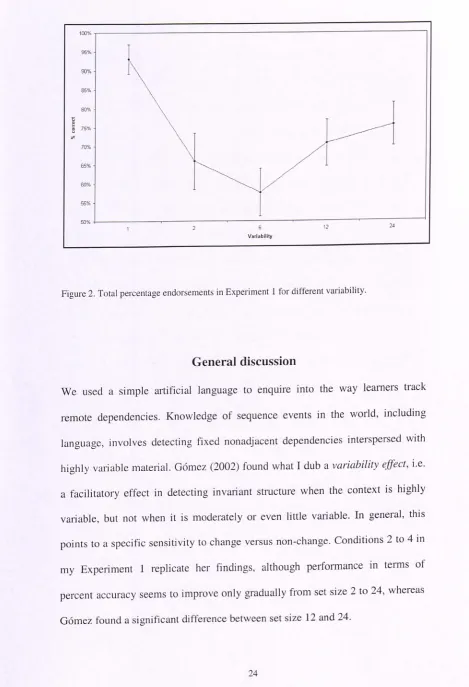
An analysis of variance with Set Size (1 vs. 2 vs. 6 vs. 12 vs. 24) and Language (L1 vs. L2) as between-subjects and Grammaticality (Trained vs. Untrained strings) as a within-subjects variable resulted in a main effect of Grammaticality, F (1,50)=24.70, p<. 001, a main Set Size effect, F(4,50)=3.85, p<. 008, and a Language x Set Size interaction, F(4,50)=2.59, p<. 047. I was particularly interested in determining whether performance across the different set-size conditions would result in a U-shaped function. Consistent with my prediction, a polynomial trend analysis yielded a significant quadratic effect, F(1,50)=5.85, p<. 05. In contrast to Gomez (2002), there was not a significant increase between set size 12 and set size 24, t(22)=. 57, p=. 568. This leveling off is responsible for a significant cubic effect, F(1,50)=9.49, p<. 005. Figure 2 summarizes total percentage endorsements for correct answers.
irni 95% qoi asi uü `0 75Y
'o r osq
soya
ljN
\
\\
\
o 24
varýahýry
Figure 2. Total percentage endorsements in Experiment I for different variability.
General discussion
We used a simple artificial language to enquire into the way learners track remote dependencies. Knowledge of sequence events in the world, including language, involves detecting fixed nonadjacent dependencies interspersed with highly variable material. Gomez (2002) found what I dub a variability effect, i. e. a facilitatory effect in detecting invariant structure when the context is highly variable, but not when it is moderately or even little variable. In general, this points to it specific sensitivity to change versus non-change. Conditions 2 to 4 in my Experiment 1 replicate her findings, although performance in terms of percent accuracy seems to improve only gradually from set size 2 to 24, whereas
Gomez found a significant difference between set size 12 and 24.
[image:36.496.3.472.22.709.2]Overall, Gomez' original results do not square well with recent findings of learners' striking sensitivity to n-gram transitional probabilities. Because transitional probabilities are higher in set sizes 2,6, and 12, performance should be better. Instead, the opposite is the case. I reasoned that perhaps variability in both the middle item and end-point items leave learners in doubt as to what is the invariant structure. Hence, by eliminating variability in the middle item in a new condition, the variability of the nonadjacent items stands out again, this time reversed. However, the effect is, quite counter intuitively, not reversed. Indeed similar performance results are obtained for set size 1 and set size 24. In set size 1 performance is near 100% and significantly better than set size 2 (Experiment 1). One could argue that word trigrams, if recorded perfectly, could suffice to account for performance in set size 1, thus trivializing my results and explaining away the variability effect in this condition. However, as a counter to that it would be reasonable to expect good performance in set size 2 condition too, given the high number of repetitions (72) for only six type strings. A control condition could have been run involving learning six frames (instead of three) with 1 different middle item each (e. g. A3-X3-B3, A6-X6-B6) so as to reproduce the same number of type and token frequencies of set size 2, but with no middle item being shared by different frames. However, the doubt of rote learning will be solved in chapter 5, when generalisation to novel middle items will be tested in set size 1.
Similarly, one could argue that good performance in set size 24 could be achieved by strikingly but not impossibly memorizing 72 type strings. However, this would imply good performance in all smaller set sizes as well and this runs counter to data.
Notice also that in all conditions, including set size 1, bigram transitional probabilities by themselves are not sufficient for detecting the correct string pel wadim rud from the incorrect one *pel wadim jic (example taken from L1) as both pel wadim, wadim rud, and wadim jic appear as bigrams during training. Moreover, Gdmez (2002) conjectured that perhaps low discrimination rates in small set sizes are due to overexposure of string tokens during training, resulting in boredom and distraction. My findings disconfirm this hypothesis: if it held true performance would drop even lower in the zero-vari ability condition, as the type/token ratio decreases even more. Crucially, the finding that there is a statistically significant difference in learning in the two conditions becomes intriguing for several reasons.
The implications of my findings might inform in various degrees both the
AGL community and researchers of language development. AGL researchers working mainly with adults have long debated whether there are one or more mechanisms at work in learning structured events from experience. My results suggest that associative learning based on adjacent material may not be the only source of information. There seems to be a striking tendency to detect variant versus invariant structure, and the way learners do it is extremely adaptive to the informational demands of their input. Without claiming exhaustiveness I explored two putative sources of information, namely n-gram transitional probabilities and the variability effect. At this stage I can only give an informal explanation of the reduction of uncertainty hypothesis. Intuitively, sampling bigrams involving middle items under no variability yields no information gain, as the middle item is always the same. Under this condition learners may be driven to shift attention towards nonadjacent structure. Likewise, sampling
bigrams with large variability yields no reduction of uncertainty, as bigram transitional probabilities are very low. In a similar way then, learners may be lead to focus on nonadjacent dependencies. With low variability, sampling bigrams may be reliable enough, hence "distracting" learners away from nonadjacent structure. Other sources may be at work and disentangling the contribution of each of them to learning is an empirical project yet to be investigated. For instance, post-hoc verbal reports from the majority of my participants suggest that, regardless of their performance, they were aware of the positional dependencies of single words in the strings. This piece of information may be misleading for the task: on the one side it reduces uncertainty by eliminating irrelevant hypotheses about words in multiple positions (each word is either initial, middle, or final), on the other side distinguishing pel wadim rud from *pel wadim jic requires more than positional knowledge. I believe that positional knowledge deserves more research in the current AGL literature. Studies of sequential learning have found that it is an important source of information. However, many nonadjacent dependencies are free ranging and hence non-positionally dependent. Further experiments are needed to investigate whether people can detect such non-positionally dependent constraints as Ax y_B, Ax y_w_B, A_x y_w_z_B, equally well.
In the next chapter I will show that these results can be modelled successfully using simple recurrent neural connectionist networks (SRNs) trained in experimental conditions akin to the adult data reported here, obtaining a very similar U-shape curve. SRNs can be thought of as reducing uncertainty in that predictions tend to converge towards the optimal conditional probabilities of observing a particular successive item to the sequence presented up to that point.
The SRNs specific task was to predict the third nonadjacent element B, correctly. Minimizing the sum squared error maximizes the probability of the next element, given previously occurring adjacent elements (McClelland, 1998). This is equivalent to exploiting bigram probabilities. As we have seen, conditional probability matching only yields suboptimal behaviour. To overcome this, SRNs possess a stack of memory units that help them maintain information about previously encountered material. Crucially, they maintain a trace of the correct non-adjacent item A, under either no variability or large variability only. This happens by forming separate graded representations in the hidden units for each nonadjacent dependency.
The reduction of uncertainty hypothesis may also be given a formal account in terms of active data selection (MacKay, 1992, Oaksford & Chater, 1994), a form of rational analysis (Anderson, 1990). However, the details of such model are outside the scope of this chapter (see Monaghan, Chater & Onnis, in preparation). Overall, framing my results within a reduction of uncertainty principle should prompt new research aimed at discovering in which carefully controlled statistical environments multiple sources are attended to and either discarded or integrated.
Finally, my findings might inform research in language development. Gomez (2002) found that infants attend to the variability effect. I am currently investigating whether the U-shape curve found in my experiments applies to infant learning as well. The fact that performance in the zero-variability condition is very good is consistent with various findings that children develop productive linguistic knowledge only gradually building from fixed item-based constructions. According to the Verb Island hypothesis for example (for a
review, see Tomasello, 2000) early knowledge of verbs and verb frames is extremely idiosyncratic for each specific verb. In addition, morphological markings are unevenly distributed across verbs. In this view I-am-eat-ing is first learnt as an unanalyzed chunk and it takes the child a critical mass of verbs to realize that the frame am-ing can be used productively with different verbs. Two- and three-year olds have been found to generalize minimally, their repertoire consisting of a high number of conservative utterances and a low number of productive ones. The speculation is that a critical number of exemplars is vital for triggering schematization. Perhaps then, young children exploit n-gram statistics as a default option, because their knowledge of language is limited to a few type items. This situation is similar to learning in small set sizes and it only works if each string is learnt as a separate item. When children's repertoire is variable enough (arguably at ages three to four), then switching to change versus non-change as a source of information becomes more relevant and helps the learner reduce uncertainty by detecting variant versus invariant structure. The fact that learners in the large set size discard the middle item could be interpreted as a form of generalisation for material in the middle item position. This hypothesis will be tested in chapter 5. At this stage the link between AGL results and language learning can only remain speculative, but invites to intringuing research for the immediate future.
The Variability effect: A graded, associative account
Since Reber's early studies (e. g., Reber, 1967), Artificial Grammar Learning (AGL) research has provided a steady stream of evidence that infants and adults become sensitive, after necessarily limited and often purely incidental exposure to complex stimuli, to the deep structure contained in chained events such as strings of letters. In a typical AGL situation, participants are first exposed to numerous stimuli and asked to memorize or process them in some way. Next, they are informed of the fact that the stimuli all instantiate a specific set of rules (a grammar), and asked to classify further strings as grammatical or not. Typically, participants can achieve some success in this classification task despite the fact that their verbalizable knowledge about the features that define grammaticality remains very limited. The learning mechanisms involved in such situations remain controversial. Recent results point to an inbuilt sensitivity to the transitional probabilities of adjacent items (Saffran, Aslin, & Newport, 1996). Other studies suggest fragment-based models involving memorised chunks of bigrams and trigrams (Dulany et al., 1984; Perruchet & Pacteau, 1990; Servan- Schreiber & Anderson, 1990), learning of whole items (Vokey & Brooks, 1992), or learning based on similarity with previous items (Pothos & Bailey, 2000). Yet others postulate abstract learning of a distinct algebraic type in transfer tasks where the surface form of test items bears no resemblance to the training items (Reber, 1967; Marcus, Vijayan, Rao & Vishton, 1999).
The difficulty of identifying a single mechanism responsible for performance in AGL tasks should perhaps be taken as an indication that no such unique mechanism actually exists. Two points are worth highlighting in this respect. First, many of the proposed mechanisms actually turn out to be
equivalent at some level of description (Redington & Chater, 1998). Second, it appears likely that several sources of information might be used concurrently by subjects (as suggested by studies involving speech-like stimuli, e. g., Onnis, Monaghan, Chater, & Richmond, submitted).
The recent results by Gomez (2002), however, challenge virtually all extant AGL models. Gomez found that nonadjacent dependencies, that is, items that are structurally dependent but separated sequentially by one or more items, are learned better when the variability of the intervening items is large. In chapter 21 have further found that nonadjacent dependencies were also learned better when the variability of the intervening items is zero (i. e., when there is only one possible intervening item). In other words, learning is best either when there are many possible intervening items or when there is just one such item, with degraded performance for conditions of intermediate variability. This U-shaped relationship between variability and performance cannot be readily explained by any of the putative mechanisms listed above. In particular simple associative mechanisms that rely on knowledge of chunks of items (or n-grams) would not predict such results, which thus appear to be incongruent with recent findings that both infants and adults can discover patterns in sequences based solely on sensitivity to low-level statistics (e. g. Saffran et al., 1996). Gomez suggested that while humans are indeed attuned to distributional properties of the environment, they may also learn about which source of information is most likely to be useful, and that success might therefore depend specifically on the statistical properties of the stimulus environment they are exposed to. Crucially, Gömez's hypothesis is that learners capitalise on the most statistically reliable source of information in an attempt to reduce uncertainty (Gomez, 2003; Gibson, 1991;