
Trust, collaboration and learning in a hospital : nurses' perceptions of their team : effect of a learning intervention to improve the sense of trust during their collaboration
43
0
0
Full text
(2) Abstract To provide high-quality patient care, nursing team members need to collaborate effectively. Trust and interaction are two relevant pillars to establish this effective collaboration. This explorative study aimed to design, implement, and evaluate a learning intervention based on the need of the team to enhance the positive interaction and trust between the nursing team members. The underlying aims were to achieve insight into the perception of trust and the factors that influenced this trust. A quasiexperimental design and a mixed method of data collection were used. Based on a relational and systematic approach a learning intervention was designed and implemented in the experimental group. This intervention, for learning to provide constructive feedback on positive professional behaviour (meaningful compliments), aimed to improve the feedback culture in a nursing team. Before and after the implementation of the learning intervention a survey was conducted to measure its effectiveness. As an effect of the learning intervention significantly more constructive feedback providing behavior on positive professional behaviour was found in the trained group (part of the experimental group), which positively influenced their perception of trust and interaction. No positive effect on trust and interaction was found for the other team members as other factors negatively influenced trust and interaction. The results with regard to the underlying aims confirmed previous findings that the two pillars of collaboration, namely interaction and trust, are strongly and positively related. Furthermore, the results validated the pivotal role of a high-quality relationship for trust, and identified the relevance of the affective (emotional) aspects of trust. The findings emphasized the role of respect, and stressed the relevance of an open interaction as a basis for establishing effective collaboration. This study also revealed that gossip appeared more often when team members perceived a less open and honest interaction and less opportunity to share their influence. Gossip appeared less when a high-quality relationship was established and showed a strong negative influence on trust in case of a high-quality relationship. Furthermore, this study confirmed earlier findings that feedback is relevant for interaction to enhance trust. Additionally, this study found reasons why nursing team members perceived difficulties with providing and receiving constructive feedback. The findings led to a revised conceptual model. Subjects for further research and practical implications are discussed.. Keywords: nursing team collaboration, trust, learning intervention, constructive feedback.. Master thesis J.E. Jochems s1237373. 1.
(3) Acknowledgement This thesis is the final project of my Master study Educational Science and Technology at University of Twente. Now, at the end of my study, I remember the start of a wonderful time. Over four years ago, I discussed a possible next step in my career with my manager. For several years, I cherished a latent wish to study psychology due to my interest in the underlying ideas of people, which influences their behaviour. However, the profession of psychology did not seem to be attractive for me. Moreover, I enjoyed my job as educational advisor. Therefore, a beautiful opportunity appeared when there was a need for an educational advisor at academic level in my team. In advance, I never expected that learning about my profession during this study was such a joyful experience, whilst (age) peers could not imagine studying again for such a long time. Sometimes I had to get used to the different manner of education in contrast to my usual informal learning. However, most of the time I felt happy regarding the learning about my profession from a different perspective, whilst I added a dimension: the scientific view. Meanwhile, I was learning together with younger people. However, most of the time I did not feel this difference in age, as the subjects and goals of the study connected us. By means of this thesis, I finish my final project. Firstly, I would like to thank my supervisors, Joseph and Maria, who supported me to choose a subject of my interest and provided me with feedback about my study. Joseph, you stimulated me to develop my interest in the subject trust during collaboration, instead of the choice to validate an existing scientific instrument. It was a challenging and inspiring experience to understand the theory about this topic and to compose my own theoretical framework. I want to thank you for your inspiring questions about my study and thesis. Maria, I would like to thank you for stimulating me to make the concepts and line of reasoning in my thesis more clearly. Due to my study, I could not spend as much time with the people that are dear to me than I wanted to over the last four years. Therefore, I would like to thank my beloved Jaco in particular, who supported me in several ways. Furthermore, I want to thank Ina, my colleagues, and my family and friends. All these people supporting me felt like a warm bath. They convinced me that I would finish my study successfully. Trust. It remains a difficult but fascinating and relevant aspect of collaboration. This study revealed that a high quality working relationship is relevant for trust. Mayer et al. (1995) related affective (emotional) trust to faith during a (working) relationship, in which emotional care and concern appears. Therefore, open interaction, providing meaningful compliments and constructive feedback can help to take a step further to an effective collaboration, which is based on affective trust. However, this will not always be an easy step and the current study revealed that somebody has to overcome hesitation or reluctance. Therefore, I would like to finish this acknowledgement with a quote that encourages in taking this first step: “Faith is taking the first step even when you don't see the whole staircase.” Martin Luther King, Jr.. Jettie Tolman - Jochems Loenen, February 2016.. Master thesis J.E. Jochems s1237373. 2.
(4) Table of contents. Abstract ...................................................................................................................................... 1 Acknowledgement ...................................................................................................................... 2 Introduction ................................................................................................................................ 4 Theoretical framework ............................................................................................................... 6 Method ..................................................................................................................................... 12 Results ...................................................................................................................................... 19 Conclusion and discussion ....................................................................................................... 27 References ................................................................................................................................ 32 Appendix 1. Team Development Measure ............................................................................... 35 Appendix 2. Codeboek Vertrouwen ......................................................................................... 38 Appendix 3. Factors and related statements. ............................................................................ 40. Master thesis J.E. Jochems s1237373. 3.
(5) Introduction In hospitals, nurses continuously collaborate with colleagues in their team to provide high-quality patient care. Working in a highly effective health care team requires collaboration, because multiple nursing team members take care for the same patients. This means that two or more persons share a common goal and accomplish mutual dependent tasks based on their specific roles (Stock, Mahoney, & Carney, 2013). Team members often expressed that trust in colleagues is a pivotal factor during collaboration. This is confirmed by Six (2004), who found that collaboration is always based on interpersonal trust. Additionally, Clelland and Zarankin (2012) state that collaboration is needed to enhance trust. Trust is defined as the extent to which individuals rely on each other and it refers to the affective interactive relationship between these persons (Mayer, Davis, & Schoorman, 1995). Lencioni (2009) stated that trust is an indispensable basis for conflict resolution and that a trustful collaboration in a team is indispensable to reach team effectiveness. In particular, Stock et al. (2013) found that a trustful collaboration is necessary for nursing team members to provide high-quality patient care. Moreover, a trustful collaboration in a team is required to achieve common learning (Knipfer, Kump, Wessel, & Cress, 2013; Montiel-Overall, 2005). This is especially important as most of the learning of qualified nurses occurs mainly informally during work (Torunn Bjørk, Tøien, & Lene Sørensen, 2013). Results of a survey concerning the learning climate (Gelre Ziekenhuizen, 2014) showed that 31% of the qualified nurses, as well as 22% of the nurse students, responded that qualified nurses do not always effectively resolve encountered conflicts about patient care. Furthermore, the students and nurse teachers encounter occurrences whereby nursing team members provide unconstructive feedback not only to the students, but also to their (qualified) colleagues. These events lead to a worrisome decline of trust among both qualified team members and students in the nursing team. Based on the above, it becomes clear that trust within the nursing team is essential for qualified nurses to collaborate effectively. Furthermore, trust is essential to provide a trustful learning culture for student nurses. Moreover, collaboration between nurses and physicians is increasingly emphasized for the purpose of high-quality patient care. The assumption for this study is that first a trustful collaboration in the nursing team needs to be established. This effective collaboration refers to the team atmosphere, which is characterized by respectful, open relationships between the team members (Hilli, Salmu & Jonsén, 2014). Subsequently, a trustful learning culture for students and an effective multiprofessional collaboration can be established. Since trust is the basis for collaboration, the trustful nursing team collaboration needs to be investigated first. However, collaboration is essential to enhance the sense of trust. Therefore, investigation of this mutual relationship between trust and collaboration is needed. Studies about effective collaboration within a hospital (Bruijne & Bleeker, 2013; Copnell, Johnston, Harrison, Wilson, Robson, Mulcahy, & Best, 2004; Knipfer et al., 2013; Ouwens, Hulscher & Wollersheim, 2009) particularly concentrated on interventions at the level of outcomes of (multiprofessional) collaboration. However, fewer studies (Evans & Revelle, 2008; Montiel-Overall, 2005) focus on enhancing trust to improve collaboration. Moreover, little is known about informal learning interventions at the workplace to improve the effective collaboration of an existing team. Therefore, the aim of this explorative study was to measure the effectiveness of a learning intervention, which intends to enhance the interpersonal trust between the nursing team members. The main research question was to what extent this learning intervention contributed to the enhancement of the interpersonal trust during collaboration of these nursing team members. The results will provide insight into the influence of this learning intervention on the factors that determine trust in a nursing team.. Master thesis J.E. Jochems s1237373. 4.
(6) Research questions The perceived need to achieve insight into the relation between trust and collaboration and the influence of a learning intervention on this relation leads to the following research questions: Research question 1. What is the effect of the used learning intervention that aims to enhance the interpersonal trust during collaboration in a nursing team of Gelre Ziekenhuizen? To enable the measurement of the effectiveness of the learning intervention, insight into the perceptions of trust of the nursing team members is necessary. In Gelre Ziekenhuizen, it is unclear to what extent the nursing staff members perceive the collaboration in their team as trustful. This unclarity leads to a set of subsequent research questions: a. How do the nursing staff members of Gelre Ziekenhuizen perceive the interpersonal trust during their collaboration in the team? b. Which factors influence the interpersonal trust of these team members during their collaboration? This study focused on the nursing team members of nursing departments of Gelre Ziekenhuizen, location Apeldoorn. In consultation with a focus group of the Experimental group, a suitable learning intervention was developed and subsequently implemented and performed. To measure the effectiveness of this learning intervention, a survey was conducted before and 10 weeks after the implementation of the learning intervention. Firstly, the theoretical concept of collaboration, related trust and the learning intervention will be explored. Subsequently, the used method for data collection and analysis will be described. Thirdly, the results will be displayed. Finally, the conclusion, discussion, implications and further research will be presented.. Master thesis J.E. Jochems s1237373. 5.
(7) Theoretical framework In this thesis, collaboration refers to the working relationship between the team members of a nursing department in a hospital. First, the concept of collaboration is explained. In particular, interaction and trust are the most relevant factors of collaboration and will be explored in more detail. Subsequently, the relevance of collaboration for the learning of nurses will be explained. Then, the theoretical basis for a specific learning intervention aiming at stimulating interaction and enhancing trust will be elucidated. Finally, the research model is displayed.. Collaboration In a nursing team, professionals fulfill specific roles during their collaboration to jointly provide patient care. Head (2003) found that effective collaboration is an interdependent and mutual process whereby individuals share their knowledge about the task. Through effective knowledge sharing, employees create a meaningful shared vision and goals about the interdependent task and learning (Bruijne & Bleeker, 2013; Ouwens et al., 2009; Stock et al., 2013). The interdependency and mutuality refers to the working relationship of the individuals. A high-quality working relationship is positively related to trust and this trust leads to learning (Carmeli, Brueller, & Dutton, 2009; Eraut, 2004; LunaReyes, Cresswell, & Richardson, 2004). Above all, trust is the most relevant factor for collaboration (Dirks, 1999; Eraut, 2004; Luna-Reyes et al., 2004; Six, 2004) and the related learning (Eraut 2004; Luna-Reyes et al., 2004). For the purpose of this thesis, collaboration in a nursing team is defined as an interdependent working relationship between two or more individuals who interact based on trust to create a shared vision and goals, which can lead to positive outcomes (Head, 2003; Montiel-Overall, 2005; Stock et al., 2013). To establish a high-quality relationship, two interrelated pillars are generally considered as the most relevant for effective collaboration: Trust and Interaction (Luna-Reyes et al., 2004; MontielOverall, 2005; Six, 2004). Therefore, in the next section these two concepts will be further explored.. Trust As trust is the most relevant factor of a high-quality relationship during collaboration (Carmeli et al., 2009; Eraut, 2004; Six, 2004), the concept of trust will be explored below. First, the concept and conditions of trust will be presented. Subsequently, the personal perspectives on trust will be explored. Concept. Firstly, there seems to be a lack of agreement on the divers meanings, forms and causes of trust, as found in definitions, perspectives and outcomes of trust (Bhattacharya, Devinney, & Pillutla, 1998; Goudge & Gilson, 2005). Trust focuses on emotions, beliefs, and intentions that are related to the psychological interpersonal interactions (Lewicki, Tomlinson, & Gillespie, 2006; LunaReyes et al., 2004). However, the persons involved in these interpersonal interactions are not always aware of these processes (Six, 2004). Hence, individuals often perceive trust as a vague indefinable, intuitive sense, which is difficult to elucidate. Therefore, this perception of the concept is often expressed as sense of trust. A common finding is that trust appears as a dynamic phenomenon, which means that the degree of trust changes and therewith influences the degree of knowledge sharing and learning (Luna-Reyes et al., 2004). The development and maintenance of trust is recognized as an important element of human relationships at individual, group and organizational level (Luna-Reyes et al., 2004). These researchers indicated that central within these three levels are the interpersonal factors. This interpersonal concept focuses on the trust into another person (Luna-Reyes et al., 2004), which is a reciprocal process (Evans & Revelle, 2008). By nature, every human being has a certain degree of trust (Lewicki et al., 2006). However, Six (2004) found that personal contact is relevant for building trust. To start with, professionals have to know each other, after which trust increases during further collaboration (Boor, 2009; Luna-Reyes et al., 2004). This implies that interaction is the central factor that influences trust. Six (2004) emphasized that in particular the psychological aspects of this interaction, such as expressing emotions, determine the degree of trust. Conditions. In fact, trust solely appears when there is interdependency in which both parties perceive a certain amount of risk (Delgado-Márquez, Hurtado-Torres, & Aragón-Correa, 2013; LunaReyes et al., 2004). This mutual dependence implies that the persons involved need to be vulnerable to. Master thesis J.E. Jochems s1237373. 6.
(8) each other (Luna-Reyes et al., 2004). These two conditions, vulnerability and risk, are closely related to the interaction between people. This means that employees are willing to share their knowledge and provide feedback, when they believe in the trustworthiness of others (Luna-Reyes et al., 2004). This willingness is based on previous experiences with the person involved (Luna-Reyes et al., 2004; Six, 2004). To conclude, literature shows that trust is a concept that is difficult to define and to investigate (Bhattacharya et al., 1998; Goudge & Gilson, 2005). Since this study focuses on interpersonal interaction, Trust is defined as: The willingness of a party to be vulnerable to the actions of another party based on the expectation that the other will perform a particular action important to the trustor, irrespective of the ability to monitor or control that other party (Mayer et al., 1995, p. 712). In sum, trust is based on the interaction between the persons involved. This interaction refers to the nature of their relationship. As mentioned earlier, a high-quality relationship is relevant for the perception of Trust. Therefore, the features of this relationship will be explored now. High-quality working relationship. Dutton and Heaphy (2003) point out that, in a highquality relationship, persons involved feel safe to mutually express their positive and negative emotions. Persons who share these feelings show a higher mutual emotional care-giving bond (Dutton & Heaphy, 2003). This bond leads to a deeper sense of trust (Dutton & Heaphy, 2003) and a sense of collegial friendship (Nugent & Abolafia, 2006). Nugent and Abolafia (2006) stressed that this collegial and reciprocal relationship differs from a private relationship, as it is limited to the work situation. People who experience high-quality working relationships know each other and feel respected and appreciated (Dutton & Heaphy, 2003). Such a high-quality relationship is indispensable for common learning by knowledge creation and provides the opportunity for (personal) development and creativity (Dutton & Heaphy, 2003). It becomes clear that trust refers to the relationship between the persons. As a consequence, the trustworthiness is based on experiences of these persons with their mutual interactions. Mayer et al. (1995) found that ability and intentions are two dimensions that express the degree of trustworthiness of the other party. Ability and intentions are interrelated dimensions (McAllister, 1995; Six, 2004). A relevant distinction between these dimensions is cognitive and affective trust. Ability refers to the cognitive trust, and intentions to affective trust (McAllister, 1995). This distinction will be explained below. Cognitive and affective trust. Cognitive trust includes the rational aspects of trust, for example trust into the competence of the other, good reasoning and responsibility (McAllister, 1995). McAllister (1995) found that cognitive trust is the antecedent of affective trust. Affective trust refers to the emotional bond between persons, for example care for each other, or interest in the other person (McAllister, 1995). McAllister (1995) stressed the relevance of this affective trust and the high-quality relationships. This psychological, affective perspective of trust is reflected into the intentions of a person (Six, 2004). These intentions relate to the dedication and benevolence of the persons involved. Dedication refers to the extent to which it is supposed that a person delivers the expected positive effort (Six, 2004). Benevolence refers to the extent to which it is believed that the other party wants to do something for the other without self-interest (Mayer et al., 1995). Baker et al. (2013) stated that affective trust is essential for employees to be honest about their performance. Moreover, these authors argue that affective trust is an antecedent of feedback seeking behavior. Previous findings showed that affective trust is the most relevant determinant of a trustful culture (McAllister, 1995). McAllister (1995) asserted that when affective trust is established, cognitive trust may not even be relevant. Based on these findings it can be expected that: Conjecture 1: Perceptions of trust are more frequently related to affective trust than to cognitive trust. Above all, reciprocal trust is the most relevant factor for collaboration (Eraut, 2004; Evans & Revelle, 2008; Luna-Reyes et al., 2004; Six, 2004). The other way around, intensive forms of collaboration. Master thesis J.E. Jochems s1237373. 7.
(9) enhance trust (Montiel - Overall, 2005). Especially the communication is a relevant form of interaction that influences the interpersonal trust (Clelland & Zarankin, 2012). This confirms the interplay between interaction and trust. Therefore, the concept of interaction will be explored below.. Interaction The central process of collaboration is the interaction (Boor, 2009; McAllister, 1995; Six, 2004) and refers to the communication between the persons involved (Clelland & Zarankin, 2012; Six, 2004). For this study, Interaction is defined as the communicational actions based on interpersonal social contact between team members (Clelland & Zarankin, 2012; Six, 2004). Different levels of Interaction are found. Trust enhancing actions. In particular, knowledge sharing and feedback are relevant forms of Interaction within collaboration (Luna-Reyes et al., 2004). The study of Torunn Bjørk et al. (2013) revealed that sharing knowledge and experiences often occurs during the collaboration of nurses. However, nurses in the studied hospital (Gelre Ziekenhuizen) expressed their difficulties with providing feedback not only towards colleagues, but also towards nurse students and doctors. The reason for these difficulties is that nurses express that feedback is more personal than sharing knowledge, as they do not want to damage the relationship with colleagues and other professionals. This suggests that feedback is a manner of Interaction that refers to the relationship between the persons involved. Actually, difficulties with providing and receiving feedback are a common phenomenon (Baker, Perreault, Reid, & Blanchard, 2013). These authors emphasize that trust is the basis for feedback. Furthermore, Baker et al. (2013) stressed that positive feedback fosters a trustful collaboration. This means that offering compliments enhances trust. In particular, a meaningful (Aakhus & Aldrich, 2002) and sincere (Dijkstra, 2011) compliment stimulates positive interaction. The forms of Interaction are in line with the four types of trust enhancing actions of Six (2004). These types of actions based on literature are defined as Being open, Share influence, Delegate, and Manage expectations (Six, 2004). Being open encompasses behavior like providing information timely, providing positive and negative feedback and being honest and open about work problems and own motives. Share influence refers to actions like giving and asking for help and counsel, showing care and interest for the other, and taking decisions jointly. Delegate encompasses actions like giving and taking responsibility, which implies interdependency. Manage expectations pertains actions such as adjusting expectations and evaluation of the effectiveness of the collaboration. The positive actions of Six (2004) are in line with the previously described forms of Interaction, namely knowledge sharing and feedback. However, the actions of Six (2004) reflect more the personal relationship between the persons involved. Actions with regard to the personal relationship are in particular reflected in the action Share influence. In fact, the actions described above are directly related to Trust. Therefore, a positive relation between positive actions and trust can be expected. This leads to the following prediction: Conjecture 2: Trust enhancing actions are positively related to Trust. Trust breaking action. Information of a third party, for example a colleague, about trust in a particular person is called trust transfer (Delgado-Márquez et al., 2013; Six, 2004). This information influences the perceptions and beliefs of a trustor (the trusting party) with regard to the trustworthiness of the other party (Delgado-Márquez et al., 2013; Six, 2004). Specifically, gossip is perceived as trust breaking behavior (Rushton, Reina, Francovich, Naumann, & Reina, 2010). Gossip is defined as talking about another person behind one’s back without positive intentions (Rushton et al., 2010). Rushton et al. (2010) found a positive relation between the number of years that a nurse performs her profession and trust breaking behavior. However, these researchers did not explain the cause of this relation. Actually, as Gossip refers to the Interaction between team members it can be expected that this trust breaking behavior is related to their working relationship. Hence, this leads to the expectation that: Conjecture 3: The perception of Gossip in a team is negatively related to Trust.. Master thesis J.E. Jochems s1237373. 8.
(10) In sum, the literature shows that Trust and Interaction are relevant pillars for collaboration (LunaReyes et al., 2004). In particular, Trust is related to Interaction and also to learning during collaboration in the workplace. This implies that working and learning are integrated. The perspective of learning during collaboration and features of workplace learning of nurses will be explored below.. Relevance of collaboration for learning of nurses As working and learning are integrated, the relation between these two concepts seems close. MorenoBlack and Homchampa (2008) confirm this relation and describe collaboration as a learning experience. Eraut (2004) defined learning during work as informal learning, which implies an undesigned and often unconscious acquisition of knowledge. Torunn Bjørk et al. (2013) reported that in the hospital setting learning by nurses often occurs incidentally and unconsciously during interactions with colleagues and other professionals. Therefore, informal learning is a relevant form of learning of nurses. However, a trustful personal relationship is indispensable for their learning (Carmeli et al., 2009), for example to tell about mistakes (Singer, Gaba, Geppert, Sinaiko, Howard, & Park, 2003) and to feel free to ask all questions (Hilli et al., 2014). As explored above, knowledge sharing and feedback are related to learning, but these forms are likewise related to working. This confirms the interplay between both and refers to Interaction. Above all, collaboration is important for employees who participate in problem solving and innovation (Kessels & Verdonschot, 2012). The leader of a team has an essential role to establish the necessary conditions to create a trustful working and learning culture (Baker et al., 2013; Edmondson, 1996). More specifically, Torunn Bjørk, et al. (2013) confirmed the inspiring role of the leader, which is necessary to stimulate a culture of sharing knowledge and experiences to discuss difficult nursing cases. Concluding, effective collaboration implies that working and learning are integrated. These positive outcomes of effective collaboration will be further described in the following section.. Outcomes of effective collaboration The outcomes of effective collaboration relate, among others, to shared vision and goals, and to learning of employees and job satisfaction due to the relationship between team members. The effectiveness of the collaboration within a team determines the level of shared goals and vision (Bruijne & Bleeker, 2013; Ouwens et al., 2009). The reverse is also true, since collaboration will improve when perceptions about collaboration and learning are shared between team members (Lencioni, 2009; Montiel-Overall, 2005). It is assumed, that learning is the effect of an effective and trustful collaboration (Knipfer et al., 2013; Montiel-Overall, 2005). The other way around, feedback and learning also enhances Trust (Luna-Reyes et al., 2004). Furthermore, collaboration largely determines the job satisfaction of nurses (Copnell et al., 2004). In particular, a high-quality relationship is perceived as motivating and positively stimulates learning behaviour (Carmeli et al., 2009). In sum, effective collaboration refers to a high-quality working relationship between team members. This collaboration is established by positive interaction and trust, which subsequently leads to a high level of shared vision and goals. During effective collaboration the learning of nursing team members is integrated in their work. Based on the literature it can be assumed that Trust and positive Interaction are necessary for nurses to effectively collaborate with colleagues in their team. One of the factors that can influence the Interaction to enhance this Trust is a learning intervention. Therefore, the aim of this study is to implement a specific learning intervention, which influences Interaction to enhance Trust of the team members. The rationale for the choice of this learning intervention will be explained in the following section.. Learning intervention: improve trustful interaction In particular, the learning intervention in this study, offering meaningful compliments, was based on positive interactions, as these stimulate the building of positive relationships (Mills, Fleck & Kozikowski, 2013). According to Six (2004), providing positive and negative feedback is a trust enhancing action. However, nurses frequently encounter difficulties with providing feedback (Gelre. Master thesis J.E. Jochems s1237373. 9.
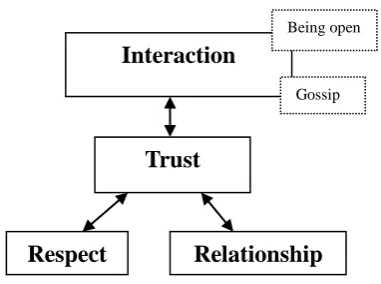
(11) Ziekenhuizen, 2014). Baker et al., (2013) recognized that feedback is often unconstructive or focuses on negative behaviour of the feedback receiver. Therefore, the result of feedback is often inefficacious (Baker et al., 2013). Baker et al. (2013) emphasize that affective trust is indispensable for providing and receiving feedback. Therefore, Baker et al. (2013) advise to provide feedback from a positive perspective and in an informal setting. Offering compliments suites to this positive perspective of providing feedback (Aakhus & Aldrich, 2002). Therefore, offering meaningful compliments, which in particular focus on positive professional behaviour, seems a suitable learning intervention. The aim is to stimulate positive experiences, because these enhance trust (Luna-Reyes et al., 2004; Six, 2004). Baker et al. (2013) state that team members more frequently provide and seek feedback when they perceive trust. These findings led to the assumption that team members show a greater propensity to provide constructive feedback on unwished professional behaviour when they also offer meaningful compliments. As informal learning seems to have a greater effect than formal learning activities (Eraut 2004; Mankin, 2009), a learning intervention based on informal learning was conducted. This suited to the professionals, as informal learning is a relevant form of learning of nurses (Torunn Bjørk et al., 2013). Generally, many compliments are offered about the appearance of a person, for example hairstyle. However, Dijkstra (2011) states that this kind of compliments does not make sense to enhance trust during collaboration. Aakhus and Aldrich (2002) described that a meaningful compliment has a condition of positive, appreciative value with a noteworthy attribution of the compliment receiver. Therefore, a written instruction with communication steps to offer a meaningful compliment was developed. Examples of a meaningful compliment in a professional context focus on professional behaviour and the positive results of that behaviour, for example “Great that you listened to the problem I met with this patient. You helped me to find a solution and now I know how to take further care for the patient”. A description of the method to develop the learning intervention can be found in the chapter Method. As relationships develop over time (Luna-Reyes et al., 2004; Six, 2004), and the degree of Trust changes (Luna-Reyes et al., 2004), it was expected that the effect of the learning intervention on Trust and Interaction will not be significant within the timeline of this study. No literature was found indicating how much time is needed to achieve a significant effect of providing meaningful compliments. However, a positive effect of the learning intervention within the timeline of the study was expected. In specific, it was expected that the mean scores of Trust and Interaction would have increased within the timeline of the study. Related to the effect of the learning intervention, the following conjectures are formulated: Conjecture 4a: The learning intervention will positively influence Interaction and the related Trust. Conjecture 4b: The effect of the learning intervention will not be significant within the timeline of this study. As explained above, Trust and Interaction are the two most relevant pillars of collaboration. Therefore, these two pillars were the subject of this study and led to the research model. Furthermore, these pillars were used to measure the effectiveness of the learning intervention. The pillars, the intended learning intervention and the related conjectures, are displayed in Figure 1.. Research model C4. Interaction. Learning intervention. C1, C2, C3. Trust Figure 1: Research model. Master thesis J.E. Jochems s1237373. 10.
(12) The model displays the relation between the two relevant factors of collaboration, namely Interaction and Trust. The learning intervention is a part of the trust enhancing action Being open (Six, 2004), which is one type of the four trust enhancing actions. Therefore, the expectation was that this action would enhance the factor Trust. As a consequence, less attention was paid to the other three trust enhancing actions of Six (2004) during the development and implementation of the learning intervention.. Master thesis J.E. Jochems s1237373. 11.
(13) Method In this chapter, the research method and the method of the development and implementation of the learning intervention are described. Firstly, the context of the study is presented. Subsequently, the research design, the instruments, the procedures, and the data analysis will be explained. Furthermore, the process of the implementation of the learning intervention is described.. Context The current study is conducted at Gelre Ziekenhuizen. This high-level care hospital has two locations. Research and education are relevant subjects of the mission of the hospital. Therefore, this hospital has achieved the STZ status (Cooperating Top clinical teaching Hospitals). Respondents. This study focused on the staff members of two nursing departments at Gelre Ziekenhuizen, location Apeldoorn, which specialize in the health needs of patients who require highly specialized cure. Therefore, the nurses who are working at these departments have finished their bachelor nursing study first. Subsequently, they have finished a study that focuses on highly specialized cure for the specific group of patients of the department. Most of the staff members (85%) of all departments are nurses and the additional 15% are nurse students, midwives, pedagogical therapists, medical technical assistants and nurse aides. According to the leader of the first department, the 66 team members wanted to improve their feedback culture. Therefore, this team was selected as the team for the learning intervention and formed the Experimental group. The staff of the second department formed the Control group. This team was composed of 62 employees. A third team (39 team members), who provided a comparable level of highly specialized care, provided data to enhance the validity of the quantitative and qualitative measurement of the first survey. This team was called Team 3. The response of the teams to the first survey diverged from 61% until 91%. Two persons of the Experimental group withdrew after they started the survey. One person argued that the statements were not representative and the other person stated that she could not respond for other persons. Finally, 39 team members (60,9%) of this team, 34 persons (54,8%) of the Control group and 39 team members (90,7%) of the third team responded to the first survey. Despite two reminders and extension of the entry deadline only 24 (37,5%) team members of the Experimental group responded to the second survey, although only 18 team members responded to both surveys. The reason of the disappointing response was the heavy workload during these weeks at the department of this team. In contrast, 34 (54,8%) team members of the Control group responded to this second survey. This was exactly the same number of respondents compared with the first survey. Most of these respondents, namely 26 team members, responded to both surveys. Based on the outcomes of the first survey the leader of the Control group felt the need to discuss the results of this first survey. This was an understandable need as team collaboration was perceived as very important for the quality of patient care and the well-being of the employees. Therefore, a team meeting was held about the manner of communication between the team members. However, due to this meeting, the Control group could not function as a control group for the measurement of the effect of the learning intervention. Therefore, only the results of this team with regard to the qualitative measurement were included in second survey. Team for the learning intervention. The Experimental group that wanted to improve the feedback culture was largely composed of nurses (85%). Furthermore, other professionals were working in this team. To determine the learning needs of the team members, a focus group was composed from the Experimental group. The members of this focus group were two nurses, two other professionals and the team leader of the Experimental group. The role of this focus group was two-fold. Firstly, based on the systematic and relational design approach (Kessels & Plomp, 1999), the learning needs, the learning goal, the results and related learning intervention of the team members were determined during the meetings with this focus group. Secondly, based on the aforementioned analysis, the Focus group was the group who initiated the learning intervention. Therefore, this group could be viewed as a specific group in the Experimental group. It could be argued that the Focus group was the experimental group. However, the other team members of the team were influenced by the behavior of the Focus group. Therefore, in the research design and for the calculation of the effect of the learning. Master thesis J.E. Jochems s1237373. 12.
(14) intervention, the Experimental group was divided into the Focus group and the other team members.. Research design The data collection was a mixed method to obtain quantitative and qualitative data, which was collected with the same group of respondents through a pre-test and post-test design (Verschuren & Doorewaard, 2007). First, the perceptions of the team members about Interaction and Trust of the three above described teams were investigated. Subsequently, in the Experimental group a learning intervention was developed and implemented, which aimed to enhance the interpersonal trust, by offering meaningful compliments. After ten weeks, the relevant parts of the survey were repeated to determine the effect of the intervention on Interaction and Trust. Therefore, in this study a quasiexperimental design (Campbell, Stanley, & Gage, 1963) was applied. The units of analysis were the teams of two nursing departments of Gelre Ziekenhuizen, namely the Experimental group and the Control group. In the Experimental group, the unit of analysis was also the Focus group (5 persons) who initiated the meaningful compliment offering behavior and the other team members (61 persons). The other team with comparable context was the Control group. Figure 2 shows the research design to measure the effect of the learning intervention. Experimental group: Focus group. O. X. O. Experimental group: other team members. O. Y. O. Control group:. O. O = measurement X = learning intervention Y = influence learning intervention. O. Figure 2. Research design.. Measure The first and second survey contained a measurement with statements to obtain quantitative data. Self-formulated open and closed questions were added to obtain qualitative data. These two instruments that were used to measure Trust and Interaction were combined into one digital survey. Furthermore, general questions were added to obtain insight into the demographics of the respondents. Trust and Interaction are related concepts and this relation is also reflected in these instruments. Firstly, the instruments will be introduced. Thereafter, the measurement of the demographics and the effect of the learning intervention will be described based on these instruments. Instruments. Quantitative data: TDM (Stock et al., 2013. Firstly, the surveys included a measurement with statements to obtain quantitative data. Generally, it is recommended to use an existing instrument for research (Dooley, 2009). Unfortunately, no suitable Dutch measurement with statements about perceptions of Interaction in the team was found. However, a relevant English alternative was available. The Team Development Measure (TDM) (Stock et al., 2013) is a reliable and a valid instrument. This instrument was developed and used for American health care workers at various work settings. Therefore, this English measurement was translated into Dutch and translated back to English. The statements were based on a 4-points Likert scale (1 = strongly disagree, 2 = disagree, 3 = agree, 4 = strongly agree). The TDM (Stock et al., 2013) was the main part of the first survey as well as the second survey. The statements of the TDM (Stock et al., 2013) reflect both Trust and Interaction. Trust. The TDM (Stock et al., 2013) encompasses statements about the relation between team members and appreciation of unique attribution of team members. Therefore, these statements reflect the emotional bond between team members, which is a relevant affective aspect of trust. Examples are statement 6 “All team members feel free to express their feelings with the team” and statement 26 “I am allowed to use my unique personal skills and abilities for the benefit of the team”. Furthermore, the TDM (Stock et al., 2013) encompasses statements about the responsibilities of the team members and the tasks that team members need to perform. These statements referred to cognitive trust. An example is statement 17 “Roles and responsibilities of individual team members are clearly understood by all members of the team”. Interaction. The interaction between team members was also measured by the TDM (Stock et al., 2013) during both surveys. Subjects of the statements of the TDM (Stock et al., 2013) were the. Master thesis J.E. Jochems s1237373. 13.
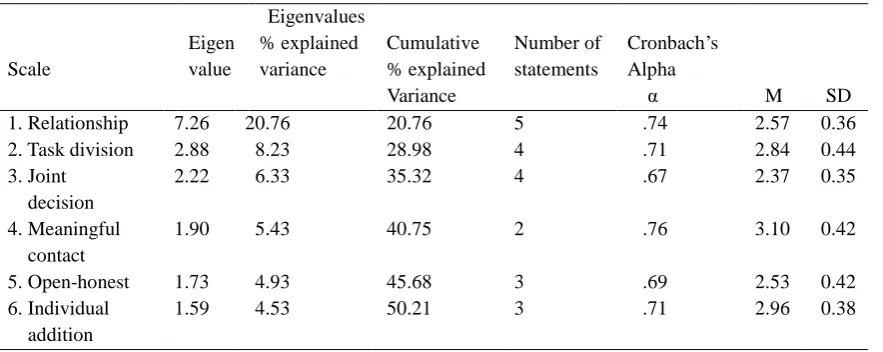
(15) manner of respectful and caring communication and conflict resolution, sharing information and feelings, discussing decisions, problem solving, and distribution of tasks. As admitting mistakes is difficult for nurses (Singer et al., 2003), four statements about the perception of admitting mistakes by team members and by the respondents themselves were added. An example is “In our team, mistakes are easily admitted”. Validity and reliability check. To check the validity of the TDM (Stock et al., 2013) and added statements, a Principal Components with Varimax factor analysis was conducted in SPSS v21. As four statements (statements 3, 15, 16 and 27) of the TDM (Stock et al., 2013) were negatively formulated, the responses to these statements were reversed before the analysis was performed. The Kaiser Normalization (KMO = .71) and the Bartlett’s test of Sphericity (p < .001) confirmed that the data was suitable to conduct a factor analysis. The rotated factor matrix was used to determine the factors as this calculation displayed the most clear distinctive loading of the items on one factor. All items that loaded higher than .4 on a factor were included into the factors. Item 7 did not load higher than .4 on any factor. Therefore, this item was removed. The screeplot suggested 6 or 10 scales. Although insights differ about the minimum eigenvalue of the found scales (Field, 2013), primarily all scales with an eigenvalue higher than 1.0 were used. After the factor analysis, the calculation of the reliability (Cronbach’s Alpha) of the found scales was performed. The reliability of four scales was improved by removing one item each. Solely the first six scales showed sufficient reliability and an eigenvalue > 1.5 and were therefore used for the results of this study. Table 1 shows the results of the six scales with their related statistics. The overview of these scales and related statements is included in Appendix 3. Table 1. Final Scales Team Development Measure and added statements.. Scale 1. Relationship 2. Task division 3. Joint decision 4. Meaningful contact 5. Open-honest 6. Individual addition. Eigen value. Eigenvalues % explained variance. Cumulative % explained Variance 20.76 28.98 35.32. Number of statements. 7.26 2.88 2.22. 20.76 8.23 6.33. 5 4 4. 1.90. 5.43. 40.75. 2. 1.73 1.59. 4.93 4.53. 45.68 50.21. 3 3. Cronbach’s Alpha α .74 .71 .67. M 2.57 2.84 2.37. SD 0.36 0.44 0.35. .76. 3.10. 0.42. .69 .71. 2.53 2.96. 0.42 0.38. The first two scales encompassed statements that reflected each the factors Trust and Interaction of this study. This confirmed that these two factors are narrowly related to each other. Firstly, Relationship was the most relevant scale, which also explained a respectable amount of variance. A typical example of this scale is item 6 “All team members feel free to express their feelings with the team”, which refers to a high-quality relationship. Therefore, this scale was interpreted as the relationship between team members, which referred to affective trust. The composition of this scale reflected the relation between Trust and Interaction as statement 6 reflect Trust. Additionally, statement 8 “The team handles conflicts in a calm, caring and healing manner” reflect the positive actions that refer to affective trust. The statements of the second scale Task division reflected the division, performance and the responsibility of the team members with regard to the tasks. These statements predominantly referred to cognitive trust. An example of this scale is item 17 “Roles and responsibilities of individual team members are clearly understood by all members of the team”. Furthermore, this scale contained one item that related to Interaction, namely statement 28 “Information that is important for the team to have is openly shared by and with all team members’’. The third scale Joint decision reflected the participation of all team members to establish decisions about the work of the team. This reflected the affective and cognitive aspects of trust of this action. Typical examples of this scale are item 4 “All. Master thesis J.E. Jochems s1237373. 14.
(16) team members participate in making decisions about the work of the team” and item 29 “All individuals on this team feel free to suggest ways to improve how the team functions”. The scale Meaningful contact referred to the high-quality relationship, which refers to affective trust. An example of this scale is item 22 “I enjoy being in the company of the other members of the team. The fifth scale Open-honest was interpreted as behaviour that reflected the open interaction between team members, which referred to affective trust. A typical example is item 2 “Team members say what they really think”. Finally, the sixth scale Individual addition referred to the appreciation of the unique abilities of the individual team members. This refers to affective trust. Item 26 “I am allowed to use my unique personal skills and abilities for the benefit of the team” is a typical example of this scale. Generally, the factors above encompassed the same statements compared with the original factor loading of Stock et al. (2013). However, compared with the factor loading of Stock et al. (2013), the results of the factor analysis of this study showed more factors. This means that the new scales were more divided compared with the factors of Stock et al. (2013). In particular, the factor Communication of the TDM (Stock et al., 2013) was divided in the factors 1, 3, and 5 of the current study and Cohesion of the TDM (Stock et al., 2013) was divided in the factors 4 and 6 of the current study. The differences in factor loadings can be explained as Stock et al. (2013) used a larger sample and also used a more rigid factor analysis. Moreover, the sample of Stock et al. (2013) was composed of a more varied health care settings and more different disciplines. The results of this study suggested that the team members felt more need for appreciation and relatedness compared to the complete sample of Stock et al. (2013). Quantitative data: Trust. Additional to the TDM (Stock et al., 2013), Trust was measured in both surveys by the question “Give a grade for your sense of trust within this collaboration” (scores ranging from 1 = lowest score to 10 = highest score). Qualitative data. The qualitative data of both surveys provided additional insight into the responses to the TDM (Stock et al., 2013) with regard to Trust and Interaction. Moreover, the results of the qualitative measurement were compared with the results of the quantitative measurement (TDM, Stock et al., 2013) to explain the relation between the results. Therefore, self-formulated open questions were included in the first survey to obtain qualitative data about the relevance and appearances of Interaction and Trust. Furthermore, based on the results of the qualitative data of the first survey, self-formulated open questions were included in the second survey. The distinctive questions are described below. Trust. The study aimed to achieve insight in the perception of Trust of the respondents. Therefore, the team members could respond to the open question “What is your first thought with regard to trust during collaboration”. Furthermore, based on Six (2004) and Rushton et al. (2010), five open questions were added to the first survey about a) what went well and what could be improved with regard to trust during collaboration, b) whether they know their colleagues well enough to trust them and what attributes to knowing their colleagues well enough to trust them, c) examples of behavior whereby the respondents trust their colleagues or do not trust their colleagues. The two questions about what went well and what could be improved were consciously formulated at the level of collaboration. The aim was to gain insight into the relevance of factors that were not included in this study. Interaction. To obtain data about the perceptions of the team members with regard to Interaction, two open questions about perceived communication were added to the first survey. These questions were a) “Please, give a positive example of trustful and positive communication” and b) “Please, give an example whereby the communication can be improved”. Furthermore, at the end of the survey, respondents were invited by means of two open questions to provide additional relevant information about collaboration and the related sense of trust. The Focus group members agreed with the survey content and perceived the items as relevant for their team collaboration. Demographics. The survey started with three questions about the department of the respondents, their total years of work experience and the years of experience in their team.. Master thesis J.E. Jochems s1237373. 15.
(17) Adaptations for the second survey. Several appearances of Respect were responded to the open questions by 13% of the team members during the first survey. Therefore, this was perceived as a relevant feature of Interaction that influenced Trust. Furthermore, providing constructive feedback was responded to be relevant for Trust. Therefore, these items were investigated during the second survey. Quantitative data. The question “Give a grade for your sense of respect during the collaboration in your team” (scores ranging from 1 = lowest score to 10 = highest score) was included to obtain quantitative data about the perception of respect. Qualitative data. To obtain qualitative data about the perception of Respect the team members could respond to the open question “What is your first thought with regard to respect”. Furthermore, two open questions about the perceived respect were added. These questions were a) “Please, give a positive example of respectful behaviour during the collaboration”, b) “Please, give an example whereby the respectful behaviour can be improved”. To obtain data about the perception of providing feedback two open questions were added about a) when the respondent perceived providing feedback to a team member as easy and b) when the respondent perceived providing feedback to a team member as difficult. Effectiveness of the learning intervention. The effectiveness of the learning intervention was based on the perceptions of the team members with regard to Trust and Interaction. Quantitative data. To measure the effect of the learning intervention the survey included the quantitative question about Trust according to the first survey. Furthermore, the team members were invited to respond to the TDM (Stock et al., 2013). Qualitative data. Firstly, the team members responded to the closed question “Did you get the impression, that something has changed in the collaboration compared to 2 months ago? “ (1 = yes, a clear change, 2 = yes, a little change, 3 = no change). This question aimed to understand the real cause of the change. When the response to the question was positive the team members received an open question about what was changed. Furthermore, two closed questions about receiving and offering compliments were added. When the team members responded that they offered a compliment, they received an additional closed question about which professional they offered a compliment. Finally, an open question was included about the subject of a received compliment. The full survey, including the statements of the TDM (Stock et al., 2013), the added statements and the open and closed questions is included in Appendix 1.. Procedures To recruit participants, the leaders of the departments provided information about the study and a poster in the consulting room. Furthermore, a folder was distributed to interested team members. For the first survey, the team members of all three departments were invited by e-mail to respond to the online digital survey. Parantion, a program for conducting digital surveys, was used. The survey started with brief information about the study. Informed consent of the participants was obtained. After a week, all respondents who did not (completely) respond to the survey received a reminder of the invitation by e-mail. After ten weeks the Experimental group and the Control group were invited for the second survey. After a week, the respondents who did not (completely) respond to the survey received a reminder. Due to the low response of the Experimental group the entry deadline was extended for three weeks and a second reminder was send.. Data analysis To analyze the data of the surveys, various statistical calculations were performed. As mentioned above, four statements were reversed. These reversed outcomes are consistently used in the description of the results. Relationship between Trust and Interaction. Subsequently, the calculation of all correlations provided insight into the relation between Trust and the scales of the TDM (Stock et al., 2013). To gain insight into the relation between Trust and Interaction, all correlations between the. Master thesis J.E. Jochems s1237373. 16.
(18) scales of the TDM (Stock et al., 2013) and Trust were calculated. Effect of the learning intervention. To achieve insight in the effect of the learning intervention, the differences between the Focus group and the other team members of the Experimental group were analyzed. Therefore, a Mann-Whitney test was performed to compare the means of the scales of the TDM (Stock et al., 2013) and of Trust before as well as after the implementation of the learning intervention. This provided a more detailed insight into the change of the specific interactions with regard to the different groups. Analysis of open questions in the first and second survey. Based on the grounded theory (Verschuren & Doorewaard, 2007) a codebook was used to analyze the responses of the team members to the open questions of the survey. The codebook with the concepts for the analysis was composed based on the four trust enhancing actions according to Six (2004, p 85) namely Being open (for example provide information and feedback), Share influence (for example take decisions together and offer and receive help), Delegate (for example distribute responsibility) and Manage mutual expectations (about evaluation of the collaboration and differences in expectations). Furthermore, Gossip (Rushton et al., 2010) and the personal features of the persons involved, for example Benevolence and Dedication (Mayer et al., 1995; Six, 2004), were added. The analysis of the responses provided insights into the aspects that influenced Trust. A second coder verified the coding process to achieve a reliable categorization. To ensure an efficient coding, the iterative, six steps process (Hruschka, Schwartz, John, Picone-Decaro, Jenkins, & Carey, 2004) was used. Firstly, the codebook was composed based on the above-described composition. Subsequently, the answers of 11 respondents to the first three open questions were coded and aligned. Differences in agreement were related to difficulties with the interpretation of respondents’ (long) answers. These answers often encompassed more than one item of the codebook. Therefore, these responses were divided at forehand into two or more codes. The second stage of the coding resulted in less agreement on the interpretation of the responses (Cohen’s Kappa = .56). The analysis of this disagreement revealed that the differences in interpretation were based on different perceptions of the raters of the concepts. In particular, analysis of the comparison of the encodings indicated that the 4 actions of the collaboration (according to Six, 2004) were narrowly connected to the features (Dedication and Benevolence) of the persons involved. Based on the results of this second stage of the coding, the codebook was adapted. The third round resulted in sufficient agreements about the concepts (Cohen’s Kappa = .87). The responses accorded largely with the concepts of the codebook. Some concepts for frequently provided responses were added, in particular Respect. Other concepts that were added for less frequently provided responses were personal relationship, duration (number of years) of the collaboration, the features of the team, for example perception of shared goals, and the role of the leader. Several responses to the open questions (45%) encompassed more than one concept of the codebook. These responses were divided at forehand into two or more codes. Furthermore, the team members did not respond to every open question. Therefore, the total number of responses (N = 1094) does not correspond with the number of respondents. Finally, the open questions of the second survey were analyzed by means of the codebook of the first survey. Based on the responses some new concepts were added. In particular, positive and negative feedback, and positive and negative reactions to feedback. The final codebook is included in Appendix 2.. Learning intervention of the Experimental group To determine the learning needs of the team members, the team leader composed a Focus group. The members of this Focus group were two nurses, two other professionals and the team leader. The educational advisor (and researcher of this study) coached the process of the intended improvement in offering meaningful compliments to enhance Trust. The Focus group met four times. During the first meeting with this Focus group (one hour) the learning needs, the learning goal, the results and related intervention of the team members were determined based on the systematic and relational design approach (Kessels & Plomp, 1999). Furthermore, the relation between the learning goal and the survey content was discussed. One week before the second meeting, the results of the first survey were sent to the Focus group members by email. During this second meeting (two hours) the. Master thesis J.E. Jochems s1237373. 17.
(19) results of the first survey were briefly discussed. Subsequently, the learning intervention, offering meaningful compliments, was trained during this meeting with the Focus group members. The meaningful compliments focused on positive professional behaviour. A written instruction with communication steps to offer meaningful compliments was used. The Focus group members used this instruction during the training and afterwards during their work. Primarily, the meaningful compliments were only offered by the Focus group. The reason was that these team members did not want to focus on the negative experiences with feedback. Their assumption was that other team members would imitate their meaningful compliment behaviour, which is a positive action. This seems not to be sufficient as the Focus group consisted of a small number of people compared to the total number of team members. However, Walter and Bruch (2008) found that positive experiences between two team members can stimulate other team members to share positive experiences. Furthermore, the results of the open questions of the first survey confirmed the difficulties with providing feedback, whilst this team perceived a satisfactory relationship. This emphasized the relevance of providing respectful, constructive feedback to enhance Trust. Therefore, offering meaningful compliments by the Focus group seemed a suitable consideration. Moreover, Baker et al. (2013) emphasized the positive example of behavior of the leader. The leader of the Experimental group was a member of the Focus group. Therefore, this positive role behavior of the leader was included into the learning intervention. After a month a third meeting (one hour) was held to discuss the experiences and to provide advice about offering meaningful compliments. After this meeting, the educational advisor sometimes supported and coached the Focus group members during a short time. The fourth meeting was held two months after the third meeting. During this meeting the effect of the learning intervention was evaluated based on the perceptions of the Focus group members and the results of the second survey. Based on this evaluation the Focus group members and educational advisor agreed about new interventions of the Focus group, such as providing constructive feedback on unwished professional behaviour and spontaneous actions to show appreciation to their colleagues. Furthermore, the educational advisor stimulated to provide instructions to all team members to enhance the positive results of the meaningful compliment behaviour.. Master thesis J.E. Jochems s1237373. 18.
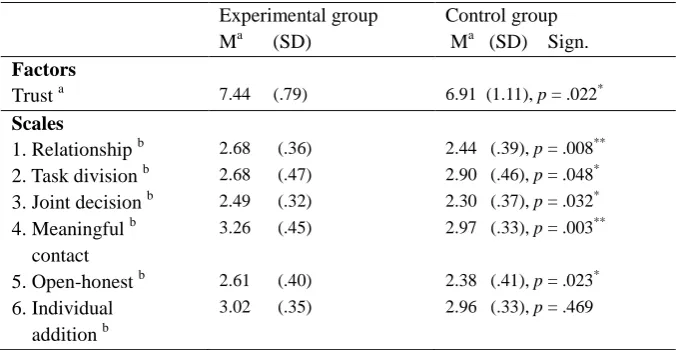
(20) Results This chapter firstly presents the results of the first survey. Subsequently, the adaption of the qualitative part of the survey will be described. Finally, the results of the second survey with regard to the effect of the learning intervention are described.. First survey As described in the previous chapter, the responses of two teams (Experimental group and Control group) were mainly used for the results of this survey. Firstly, the general information will be presented. Subsequently, the comparison of the teams with regard to Trust and the scales of the TDM (Stock et al., 2013) will be described. Afterward, the correlations between Trust and the found scales of the TDM (Stock et al., 2013) and Gossip will be explored. After these quantitative results, the analysis of the responses to the open questions (qualitative results) will be presented. Finally, the quantitative and qualitative results will be compared. Quantitative results first survey General information about the respondents and teams. The two teams were composed more than 25 years ago. The work experience of the team members varies between and within the teams. The total years of work experience as well as the years of experience in the current team are described. The information is presented in Table 2 below. No significant differences were found between the Experimental group and the Control group. Table 2. Total years of work experience and years of work experience in this team. Work experience. Experimental group Control group. Total years of experience M SD. Years in this team M SD. 17.44 7.57 20.38 5.16. 12.26 8.83 15.26 7.10. Differences between the teams: Trust and scales TDM (Stock et al., 2013). Firstly, the difference between the Experimental group and the Control group concerning Trust is presented. Furthermore, the differences with regard to the scales of the TDM (Stock et al., 2013) are displayed in Table 3. Table 3. Trust and scales TDM (Stock et al., 2013): differences between teams. Experimental group Ma (SD). Control group Ma (SD) Sign.. Factors 7.44 (.79) 6.91 (1.11), p = .022* Trust a Scales 2.68 (.36) 2.44 (.39), p = .008** 1. Relationship b 2.68 (.47) 2.90 (.46), p = .048* 2. Task division b b 2.49 (.32) 2.30 (.37), p = .032* 3. Joint decision 3.26 (.45) 2.97 (.33), p = .003** 4. Meaningful b contact 2.61 (.40) 2.38 (.41), p = .023* 5. Open-honest b 3.02 (.35) 2.96 (.33), p = .469 6. Individual b addition Note: ak = 10, bk = 4, *p < .05 (2-tailed), **p < .01 (2-tailed).. Master thesis J.E. Jochems s1237373. 19.
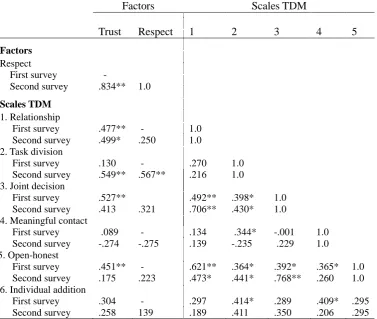
(21) Firstly, the results showed that the Experimental group scored significant higher on Trust. Furthermore, this team scored higher on the scales 1, 3, 4 and 5 compared with the Control group. These scales referred to the personal relationship and to positive interactions that are related to affective trust. In contrast, the Control group scored significant higher on the scale Task division. This scale is related to cognitive trust. Relationship between Trust and the TDM (Stock et al., 2013). As mentioned in the chapter Methods, the calculations of the relationship between Trust and the scales of the TDM (Stock et al., 2013) were based on the results of three teams (Experimental group, Control group, Team 3). Table 4 provides an overview of all correlations of the total group of respondents (three teams). Furthermore, the specific correlations of the Experimental group and the Control group are presented in Table 4. These correlations are presented per group. For example, for the Experimental group, the relationship between Joint decision and Trust represents the calculated relationship based solely on the data of the Experimental group. Table 4. Correlations between Trust and the scales of the TDM (Stock et al., 2013) Factor. Scales. TDM. Trust 1 2 3 4 5 Scales TDM 1. Relationship Total .374** Experimental group .477** Control group .359* 2. Task division Total .193* .108 1.0 Experimental group .130 .270 Control group .241 .178 3. Joint decision Total .368** .457** .179 1.0 Experimental group .527** .492** .398* Control group .284 .620** .260 4. Meaningful contact Total .241* .169 .155 .134 1.0 Experimental group .089 .134 .344* -.001 Control group -.181 .205 -.062 .254 5. Open-honest Total .297** .551** .141 .352** .247** 1.0 Experimental group .451** .621** .364* .392* .365* Control group .150 .512** .243 .481** .244 6. Individual addition Total .384** .270** .287** .205* .327** .210* Experimental group .304 .297 .409* .268 .409* .295 Control group .137 .247 .109 .262 -.012 .096 Note: (N = 112, df = 110). *p < .05 (2-tailed),.**p < .01 (2-tailed). The correlations are presented per group. For example, for the Experimental group, the relationship between Open-honest and Meaningful contact (r = .365**) represents the calculated relationship based solely on the data of the Experimental group.. Relationship between Trust and the scales of the TDM (Stock et al., 2013). For the total group of respondents, the scales Relationship, Joint decision and Individual addition showed the strongest relation with Trust. These scales referred to affective trust. In contrast, the scale Open-honest was less related to Trust. However, as will be presented further in this thesis, “open and honest” was often responded to the open questions about the perceived trust and how to improve the communication in the team. Although many correlations were significant, the strength of most correlations were insufficient or weak. Therefore, it was relevant to consider the correlations between the varied scales.. Master thesis J.E. Jochems s1237373. 20.
(22) Relationship between the scales of the TDM (Stock et al., 2013). The results for the total group of respondents showed that most of the scales were significantly related to four other scales. It became clear that Relationship showed the strongest relation with Joint decision and Open-honest. It was noteworthy that Task division had no strong relation with one of the other scales. In sum, the strongest relations were found between the scales that referred to the relational, affective aspects of trust. As many of the correlations between the varied scales were significant but weak, it was worthwhile to investigate the differences between the teams. Differences between the Experimental group and the Control group. The results showed that the relations between the scales differed for the distinct teams. Firstly, in the Experimental group, the strongest relations appeared between Trust and the scales Relationship and Joint decision. Furthermore, for this team the scale Open-honest showed the strongest relationship with Trust and Relationship. Secondly, in the Control group the scale Open-honest showed a strong relation with the scale Joint decision. Furthermore, these scales showed a strong relationship with the scale Relationship. However, these scales did not show a significant and strong relationship with Trust. In addition to the correlations between Trust and the scales of the TDM (Stock et al., 2013), a significant negative relation between Gossip and Trust was expected (Rushton et al., 2010). Therefore, these results will be presented in the next paragraph. Relationship between Gossip and Trust. To begin with, the Experimental group reported less Gossip (M = 2.79, SD = .47) than the Control group (M = 2.88, SD = .48), but this difference was not significant. However, Gossip was in the Experimental group significant negatively related to Trust (r(37) = -.54, p < .001). In contrast, in the Control group no significant relation between Gossip and Trust was found ( r(32) = -.19, p = .278). Furthermore, in both teams no significant relation was found between Gossip and a) the total years of work experience and b) the experience in the current team. The factor analysis revealed that nurses perceived Gossip as a component of Joint decision. The scale Joint decision reflects the shared decision-making based on the relationship between the team members. This suggested that Gossip appears when team members lack the opportunity to share their knowledge to establish a shared decision. In addition to the quantitative results above, the qualitative data will provide more insight into the aspects that influenced Interaction and Trust. These results will be presented below. Qualitative results first survey. Firstly, the results of the responses of the three teams to the open questions related to Trust will be presented. Subsequently, the relevant results of the distinct open questions with regard to Interaction will be explained. Finally, the relation between the responses to the open questions and the Team Development Measure (Stock et al., 2013) will be explored. Trust Primarily thought. To start with, the primarily thought about Trust during collaboration pertained Dedication (24%). This feature was often expressed as ‘‘keeping appointments’’ or that team members “can count on each other”. Furthermore, 16% of the responses pertained Being open, mostly expressed as “open and honest”. Subsequently, 12% of all respondents expressed Respect as primarily thought, articulated as “get the opportunity to be yourself’’. Activities with regard to Share influence appeared as 11% of the responses. Finally, trust in the competences of colleagues was responded by 10% of all respondents as the primarily thought about Trust during collaboration. Trust enhancing aspects. In particular, Being open and Respect were the most frequently responded aspects that positive influenced Trust during collaboration. Relationship. Generally, Being open (28%), Respect (11%) and Mutual contact (11%) were the most frequent articulated aspects for the respondents that attributes to knowing their colleagues well enough to trust them. The duration of the collaboration (11%) attributed to this relationship. In particular, the responses reflected the meaning of a high-quality working relationship, which refers to affective trust. The Experimental group reported the highest percentage (19%) of team members that always trust their colleagues and mentioned more examples of a high-quality relationship compared with the Control group.. Master thesis J.E. Jochems s1237373. 21.
Figure
Related documents
Marie Laure Suites (Self Catering) Self Catering 14 Mr. Richard Naya Mahe Belombre 2516591 [email protected] 61 Metcalfe Villas Self Catering 6 Ms Loulou Metcalfe
The corona radiata consists of one or more layers of follicular cells that surround the zona pellucida, the polar body, and the secondary oocyte.. The corona radiata is dispersed
National Conference on Technical Vocational Education, Training and Skills Development: A Roadmap for Empowerment (Dec. 2008): Ministry of Human Resource Development, Department
19% serve a county. Fourteen per cent of the centers provide service for adjoining states in addition to the states in which they are located; usually these adjoining states have
• Follow up with your employer each reporting period to ensure your hours are reported on a regular basis?. • Discuss your progress with
In our study, consumption of high zinc biofortified wheat flour for 6 months compared to low zinc bioforti- fied wheat resulted in statistically significant reduction in days
Our study successfully implemented a referral program for maternal contraceptive services within pediatric care by having pediatric residents assess postpartum women ’ s needs
It was decided that with the presence of such significant red flag signs that she should undergo advanced imaging, in this case an MRI, that revealed an underlying malignancy, which
