itself. Please refer to the repository record for this item and our
policy information available from the repository home page for
further information.
To see the final version of this paper please visit the publisher’s website.
access to the published version may require a subscription.
Author(s): Szczepura A, Freeman K, Osipenko
Article Title: Emerging Prenatal Genetic Tests: Developing a Health
Technology Assessment (HTA) Framework for Informed
Decision-making
Year of publication: 2005
Link to published version:
Emerging Prenatal Genetic Tests: Developing a
Health Technology Assessment (HTA) Framework
for Informed Decision-making
December 2005
Initial Report on International Delphi Exercise:
Prepared by Socio-Economic Group, University of
Warwick for Workpackage 6, SAFE Network of
Excellence
S
pecial Non-Invasive
A
dvances in
F
etal and Neonatal
E
valuation (SAFE)
CONTRACT No LSHB-CT-2004-503243
Framework Six
Research Team
Professor Ala Szczepura Professor of Health Services Research & Director, UK Centre for Evidence in Ethnicity, Health & Diversity (CEEHD), Warwick Medical School, University of Warwick
Karoline Freeman HTA Reviewer, Warwick Medical School, University of Warwick
Dr Leeza Osipenko SAFE Fellow, Warwick Medical School, University of Warwick
Julia Hyde Clerical Support, Warwick Medical School, University of Warwick
Address for correspondence:
Professor Ala Szczepura Warwick Medical School University of Warwick Coventry, CV4 7AL UK
Telephone No: +44 (0)24 7652 3985 (office) Fax No: +44 (0)24 7652 4963
E-mail: [email protected]
For further information on SAFE please visit: www.safenoe.org
CONTENTS
FOREWORD (I) ...5
FOREWORD (II) ...6
EXECUTIVE SUMMARY ...7
STAGE 1 REPORT...17
A: INTRODUCTION...17
1 Clinical Background...17
2 SAFE Network of Excellence...18
3 SAFE Socio-economic Workpackage...19
B: METHOD FOR CONSENSUS DEVELOPMENT...20
4 Development of HTA Framework for Emerging Prenatal Genetic Tests...20
4.1 Development of Delphi Questionnaire and Pilot Phase...20
4.2 Selecting Delphi Panel Members...21
4.3 Delphi Process...23
4.4 Questionnaire Format...24
C RESULTS: INITIAL HTA FRAMEWORK...27
5 Participants in the Delphi Exercise...27
5.1 Overview of Response Rates...27
5.2 Panel HTA Experience...27
5.3 Panel Professional Background...28
5.4 Conclusions...28
6 Open Responses...28
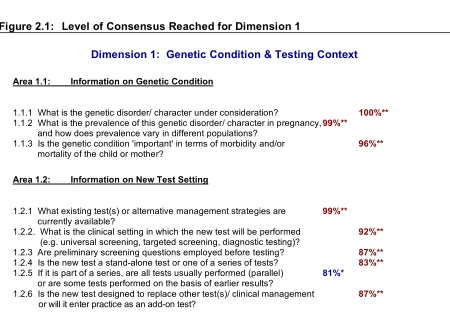
7 Dimension 1: Genetic Condition & Testing Context...30
7.1 Level of Consensus on Importance of Questions...30
7.2 Level of Consensus on Questions to be Addressed Early...32
7.3 Edits to Questions/ Duplicates...32
7.4 New Questions...32
7.5 Summary Dimension 1...34
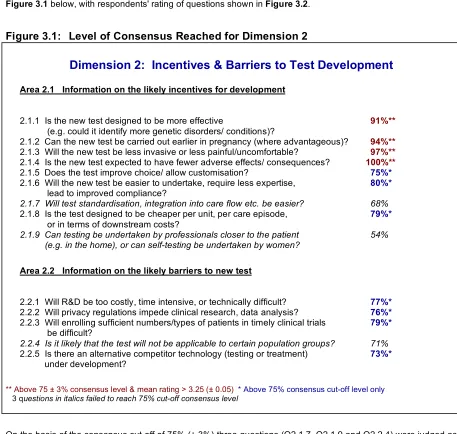
8 Dimension 2: Incentives & Barriers To Test Development...35
8.1 Level of Consensus on Importance of Questions...35
8.2 Level of Consensus on Questions to be Addressed Early...37
8.3 Edits to Questions/ Duplicates...37
8.4 New Questions...37
8.5 Summary Dimension 2...39
9 Dimension 3: Test Performance...40
9.1 Level of Consensus on Importance of Questions...40
9.2 Level of Consensus on Questions to be Addressed Early...42
9.3 Edits to Questions/ Duplicates...42
9.4 New Questions...42
9.5 Summary Dimension 3...44
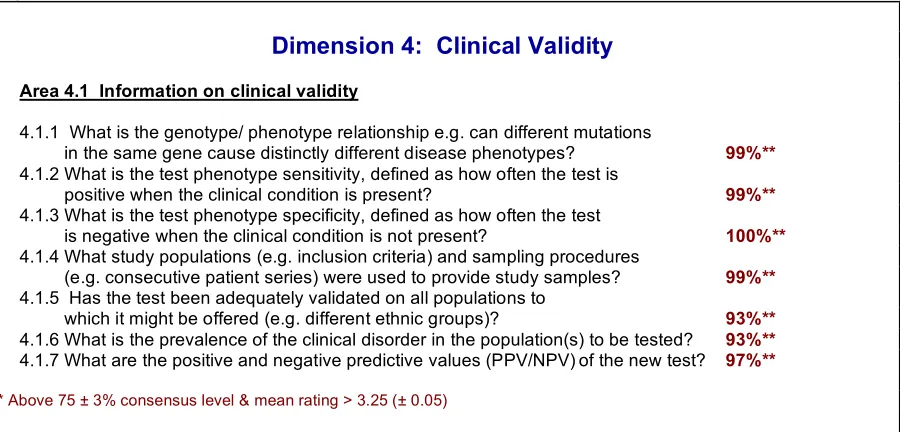
10 Dimension 4: Clinical Validity...45
10.1 Level of Consensus on Importance of Questions...45
10.2 Level of Consensus on Questions to be Addressed Early...45
10.3 Edits to Questions/ Duplicates...47
10.4 New Questions...47
10.5 Summary Dimension 4...47
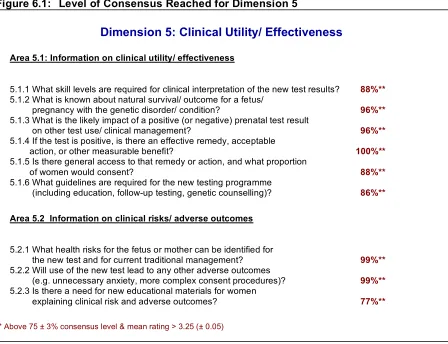
11 Dimension 5: Clinical Utility/ Effectiveness...49
11.2 Level of Consensus on Questions to be Addressed Early...51
11.3 Edits to Questions/ Duplicates...51
11.4 New Questions...51
11.5 Summary Dimension 5...53
12 Dimension 6: Economic Implications...55
12.1 Level of Consensus on Importance of Questions...55
12.2 Level of Consensus on Questions to be Addressed Early...57
12.3 Edits to Questions/ Duplicates...57
12.4 New Questions...57
12.5 Summary Dimension 6...59
13 Dimension 7: Ethical, Legal, Organisational Implications...60
13.1 Level of Consensus on Importance of Questions...60
13.2 Level of Consensus on Questions to be Addressed Early...62
13.3 Edits to Questions/ Duplicates...62
13.4 New Questions...63
13.5 Summary Dimension 7...65
D CONCLUSIONS...67
REFERENCES ...71
ANNEX 1: DELPHI ROUND 1 QUESTIONNAIRE ...73
ANNEX 2: DELPHI PANEL MEMBERS...85
ANNEX 3: GLOBAL DELPHI SCORES...91
FOREWORD (I)
Average maternal age has increased significantly in the past two decades. This shift towards later pregnancy has increased the likelihood of fetal disorders, whilst reductions in fertility above the age of 35 years make conception more difficult and therefore resulting pregnancies more precious. These factors provide an added impetus for the development of new non-invasive prenatal diagnostic (NIPD) tests based on fetal material circulating in the maternal blood. Such tests would remove the risk of miscarriage which is presently associated with invasive procedures such as amniocentesis used for definitive diagnosis following current non-invasive screening methods (e.g. biochemical tests). The search for safe, accurate prenatal diagnostic tests is therefore a key focus for modern molecular medicine.
A number of factors will influence appropriate introduction of NIPD. These include the measurable benefits and costs of tests for different genetic conditions, any unintended consequences, and the influence of other scientific advances (e.g. gene therapy) on their usefulness. The European Union has addressed this issue by funding the Special Advances in Fetal and Neonatal Evaluation (SAFE) Network of Excellence under its Framework 6 Programme for the period 2004-2009. The ultimate aim of SAFE is to implement cost-effective, routine non-invasive prenatal diagnosis, and to forge long-term research partnerships in the process.
The SAFE consortium includes scientists who are developing testing strategies for the detection of free fetal nucleic acids and fetal cells in maternal blood. Their collaborative approach will promote standardisation of testing and improve the accuracy and quality of tests.
The consortium also includes social scientists who are assessing the likely socio-economic impact of new non-invasive prenatal genetic tests. An important step in this process has been the establishment of a world-wide Delphi Panel of 90 experts in 24 countries to identify international consensus on early assessment of these new tests.
This report provides the initial results from this Delphi exercise. The questions on which the Panel has
demonstrated consensus are now being applied to the first emerging area of NIPD testing i.e. fetal ‘rhesus’ blood group for RhD negative mothers. The Delphi Framework will be refined in future rounds. This activity, which includes bio-scientists, clinicians, policy makers and industry, will enable SAFE to build early health technology assessment into the scientific technology development cycle for these new prenatal genetic tests. This is a good example of the way in which HTA can be used to promote the development and adoption of beneficial innovation in health care.
Dr Chris Henshall
FOREWORD (II)
Non-invasive prenatal diagnosis is one of the long-sought goals of human clinical genetics research. Over the last few years, rapid advances have taken place, especially in the area of cell-free fetal nucleic acids in maternal plasma. In this regard, the European Union is particularly insightful in funding the Special Advances in Fetal and Neonatal Evaluation (SAFE) Network of Excellence under its Framework 6 Programme. Under this ambitious programme, it is envisioned that a number of European groups will continue and consolidate their leading position in this area of research.
Non-invasive prenatal diagnosis, like many medical and scientific disciplines, has impact not just in the scientific domain, but has raised important ethical, social and medico-economic issues. I am therefore especially pleased to see that the SAFE Network has planned a series of Delphi exercises, supported by an international panel of experts to look into this intertwining nexus of issues.
This strategy demonstrates foresight and would certainly smooth the subsequent clinical utilisation of many of the technologies which would be studied and developed by the SAFE Network. The choice of the RhD system as the first topic under the Delphi programme is a good one because fetal RhD genotyping is amongst the best
established applications of non-invasive prenatal diagnosis. It is expected that this exercise will lay the foundation and point the direction for future exercises.
With this in mind, I look forward to learning from the many consensus opinions of this important exercise.
Professor Y.M. Dennis Lo
Dr. Li Ka Shing Professor of Medicine and Professor of Chemical Pathology, The Chinese University of Hong Kong
EXECUTIVE
SUMMARY
Background
New genetic tests currently pose unprecedented challenges to clinical practice, service organisation and the economics of modern health care systems. At the same time, these tests potentially offer significant benefits to patients. Genetic tests have captured the attention of consumers and health care providers, with recent initiatives in the USA, Canada and the UK (among others) to develop guidelines for the appraisal of such tests. Meanwhile, there are reports of inconsistent coverage of new genetic tests by insurers and health care funders with decisions based on ad hoc measures such as predicted demand, unit costs, and expert opinion on clinical value. There remains therefore a need for harmonization of appraisal mechanisms and guidelines for implementation of new genetic tests. A particularly challenging area lies in the field of new prenatal genetic tests.
A demographic shift towards later pregnancy in the western world has increased the risk of fetal disorders and pregnancy complications. At the same time, reductions in fertility above the age of 35 years make conception more difficult and therefore resulting pregnancies more precious. These trends have provided an added impetus for the development of new, accurate, non-invasive prenatal diagnostic (NIPD) techniques based on fetal material circulating in the maternal blood. Such NIPD tests would remove the risk of miscarriage which is presently associated with invasive procedures such as amniocentesis used to identify any false positives associated with current non-invasive screening methods (e.g. biochemical tests and nuchal translucency).
SAFE Network of Excellence
Currently, scientists world-wide are expending considerable research effort on trying to develop non-invasive tests for diagnosing a number of genetic conditions or diseases in the fetus. SAFE (Special Non-Invasive Advances in Fetal and Neonatal Evaluation) is an EC-funded Network of Excellenceestablished in September 2004 and funded for a period of 5 years. The ultimate aim of SAFE is to improve prenatal diagnosis through the development and introduction of a number of routine and cost-effective non-invasive prenatal tests based on fetal cells or cell-free fetal DNA or RNA circulating in the mother's blood [see Box 1]. It is the ambition of the Network to facilitate the appropriate introduction of such NIPD tests throughout Europe and beyond within a 5 to 10 year time frame, and to forge long-term research partnerships in the process. The Network now includes 56 partner groups in 16 European countries plus Israel, India and China. There is a large and growing number of ‘SAFE Associates’ with an interest in the area, and Network Advisory Board members include leading scientific experts from around the world in the field of non-invasive prenatal diagnosis.
Box 1 Non-Invasive Prenatal Diagnostic (NIPD) Tests
In pregnancy the maternal circulation contains various types of fetal material which might be used for non-invasive prenatal diagnosis (NIPD). This includes cell-free fetal DNA (ffDNA) which is present at a 1-3% level in maternal blood. A number of NIPD tests are now being developed based on ffDNA in maternal plasma. Scientific proof of principle studies have
demonstrated that such tests are technically feasible. However, scaling up the test for widespread delivery and clinical implementation will require a number of further studies.
Socio-economic Issues
Ultimately, the aim of this team is to underpin the production of a 'package of best practice' for the assessment and early implementation of non-invasive prenatal genetic tests in EU member states and beyond.
Implementation will, of course, be dependent on the development of accurate and technically robust tests. But, other factors will also be important, including the cost-effectiveness of these new tests when applied to different conditions, their likely integration into existing prenatal care, and the influence of other scientific advances (e.g. gene therapy) on their usefulness. The socio-economic research team aims to produce early-HTA reports, and economic modelling and simulation in different health care systems, in order to provide information for health policy makers.
In prenatal genetic testing, the work of the team will focus on three main areas of NIPD application:
• fetal RHD genotyping (for RhD negative mothers);
• diagnosis of single-gene recessive disorders (e.g. haemoglobinopathies, cystic fibrosis);
• diagnosis of fetal chromosome disorders (e.g. Down syndrome)
At a later stage, the SAFE socio-economic team will also consider the application of NIPD techniques in predicting pregnancy-related complications such as pre-term labour and preeclampsia.
While scientific research in the development of NIPD is being undertaken across the world (Europe, Hong Kong, USA), only a few centres are currently assessing technology entry into routine clinical practice. Furthermore, the European Union is unique in funding a series of Delphi exercises to shape early assessment of these new technologies.
Box 2: Health technology assessment (HTA)...
.... has been defined as “the systematic process by which the direct and indirect consequences of a particular technology are assessed; it is concerned with evaluating the safety, effectiveness, and cost-effectiveness, and (where appropriate) the social, ethical, and legal impact of a technology” [1]. Direct consequences are those benefits which the technology is designed to produce; indirect or secondary consequences are the unintended economic, social, or other effects of the technology. Both are of interest to health policy makers.
SAFE World-wide - Harmonization
Recently, significant effort has been devoted in the UK and USA in order to develop internationally agreed quality criteria for reporting the accuracy of diagnostic tests, and to identify key questions for the appraisal of new genetic tests. However, there is no internationally agreed framework for assessing new prenatal genetic tests, and no consensus on which key questions should be addressed early in the technology development process. As part of its mission, SAFE aims to promote harmonization on this topic in Europe and beyond by developing an internationally agreed framework for future appraisal of these emerging NIPD tests.
Delphi Panel
A total of 92 organisations/ experts were approached and invited to participate in the Delphi exercise; of these, 90 agreed [see Annex 2: Delphi Panel Members]. The resulting world-wide Delphi Panel consists of the following organisations/ experts:
• HTA Agencies/ Ministry Leads/ Insurers in 24 countries
• Clinicians, Patient organisations, and Experts in Ethics, the Law, Epidemiology and Economics;
• Industry/ Laboratory Groups (e.g. EUCOMED, EDMA)
• International health technology horizon scanning groups (e.g. Euroscan), and HTA Networks;
• Unit leads in sister Networks of Excellence in genetic testing (i.e. Eurogentest);
• Bio-scientists developing the tests (SAFE partners plus world leaders)
The Panel covers key countries in Europe, North America, Australasia and Asia. While areas like India and China potentially represent the largest future markets for these new technologies in population terms, due to economic development status these countries may not become the main consumers initially. Europe and Northern America are expected to be the major markets for NIPD technology at first.
Delphi Process
In preparation for the first Delphi exercise, a list of questions was produced from the academic literature, web-based sources and interviews with experts. These questions were structured into broad dimensions and a draft questionnaire piloted. A final list of 73 questions formed the basis of the first Delphi survey. Participants were asked to grade the perceived importance of each question for inclusion in HTA reports on new prenatal genetic tests (4 = Essential; 3 = Desirable, but not essential; 2 = Useful but should not be required; 1 = Of little/ no importance; 0 = I have no basis for judgement). Secondly, they were asked to indicate whether a question should be addressed during test development or whether the question could be addressed later once the technology is ready for implementation. Finally, Panel members were encouraged to identify any other questions which appeared to be missing from the initial list. For copy of questionnaire, see Annex 1: Delphi Round 1 Questionnaire.
Respondents were also asked to provide personal details to give some indication of their HTA experience and specialist expertise. Analysis of responses demonstrated that SAFE Delphi panel members represent a highly experienced, multidisciplinary international group of experts with the knowledge required to define which key questions should be addressed in HTA reports on new prenatal genetic tests.
Delphi Responses
Emerging SAFE Delphi Framework
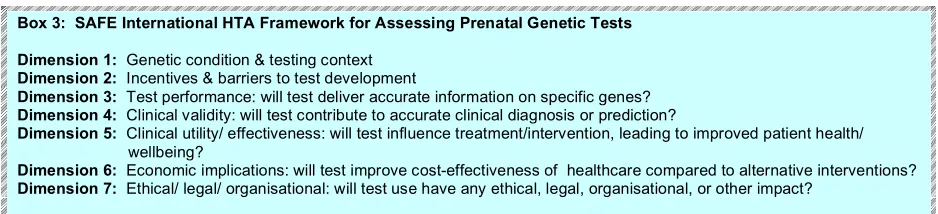
The analysis of Delphi responses demonstrates a high level of international consensus on which questions should be included in a Health Technology Assessment Framework for new prenatal genetic tests, and which of these should be addressed in early HTA reports. Following analysis, the original 73 questions were reduced to 57 questions and ordered under 7 dimensions [see Box 3], once questions which did not reach the 75% cut-off for consensus were excluded, duplicates removed and certain other questions combined. Two thirds (41/57) of these questions were identified as being of the highest priority to address (mean score >3.25 ± 0.05). Just over half (31/57) were identified as questions which should be addressed in early-HTA reports.
[image:11.595.64.533.308.415.2]The final complete list of 57 revised questions which reached the 75% cut-off required for consensus is shown in Figure A. A list of the questions provisionally excluded is provided in Figure B.
A further 11 new questions which did not occur elsewhere in the questionnaire were suggested by Panel members [see Figure C]. These will be included in further rounds as possible additions to the framework.
Box 3: SAFE International HTA Framework for Assessing Prenatal Genetic Tests
Dimension 1: Genetic condition & testing context Dimension 2: Incentives & barriers to test development
Dimension 3: Test performance: will test deliver accurate information on specific genes? Dimension 4: Clinical validity: will test contribute to accurate clinical diagnosis or prediction?
Dimension 5: Clinical utility/ effectiveness: will test influence treatment/intervention, leading to improved patient health/ wellbeing?
Dimension 6: Economic implications: will test improve cost-effectiveness of healthcare compared to alternative interventions? Dimension 7: Ethical/ legal/ organisational: will test use have any ethical, legal, organisational, or other impact?
Initial Application of SAFE Delphi Framework
The SAFE HTA Framework will be refined in future Delphi rounds. In the interim, the questions on which the Panel has demonstrated consensus are being applied to the first emerging area of application of NIPD testing i.e. non-invasive prenatal tests for fetal RHD genotyping in pregnancies with RhD negative mothers.
International data is being collected through literature reviews, surveys and interviews with key stakeholders. Economic modelling will be undertaken in five countries – Germany, India, the Netherlands, France and UK. The systematic collection of comparative information across a number of countries on current clinical care, prenatal testing services provided, resource use, and other characteristics influencing cost-effective introduction will be achieved through a combination of workshops, visits, email and tele-conferences. Stakeholder interviews and surveys are also being undertaken to explore local issues associated with the introduction of non-invasive testing of fetal RhD status.
The Future
It is evident that European industry and its scientists are increasingly aware of the need for HTA in order to identify which innovations to develop and market. Firstly, because health care cost containment strategies introduced by funders (i.e. health insurers and governments) throughout the world increasingly require manufacturers to provide information on the cost-effectiveness of any new health product as well as on its safety and efficacy. Secondly, as purchasers of medical technologies become more knowledgeable about HTA, technology developers will need to incorporate technology assessments as part of their marketing of new products. Both these trends (national cost containment strategies and more educated buyers) will increase the financial risk to technology developers of unsuitable research investments and inappropriate production decisions.
Through the SAFE Delphi exercises, which encourage integration and catalyse engagement between bio-scientists, clinicians, patient groups and industry partners in the SAFE Network, and by establishing strategic relationships with policy and other stakeholders world-wide, we hope to lay the foundation for a legacy in Europe which will enable early health technology assessments to be built into the scientific technology development cycle for new non-invasive prenatal genetic tests. Through our activity, we also hope that the SAFE Network will be able to train a new generation of research leaders in the bio-sciences - scientists who understand the need for early appraisal of new diagnostic tests such as those being developed by SAFE, and who have the knowledge required and the enthusiasm to collaborate in such assessments.
FIGURE A: SAFE Checklist* for Assessment of Prenatal Genetic Tests.
DIMENSION 1. GENETIC CONDITION & TESTING CONTEXT
Area 1.1: Genetic Condition
Item Question
* 1.1.1 What is the genetic disorder/ character under consideration?
* 1.1.2 What is the prevalence of this genetic disorder/ character in pregnancy, and how does prevalence vary in different populations?
* 1.1.3 How 'important' is the genetic condition in terms of morbidity and/or mortality of the child or mother?
Area 1.2: Testing Context
Item Question
* 1.2.1 What existing test(s) or alternative management strategies are currently used/ available?
1.2.2 What is the clinical setting in which the new test will be performed (e.g. universal screening, targeted screening, diagnostic testing)?
* 1.2.3 How will the new test be used (i.e. alone, or in combination with other tests, following preliminary screening questions etc) and how will it interface with existing technology (e.g. replacement, add-on etc)?
DIMENSION 2. INCENTIVES & BARRIERS TO TEST DEVELOPMENT
Area 2.1 Incentives for new test development
Item Question
* 2.1.1 Is the test designed to produce clinical benefits e.g. identify more genetic disorders/ conditions, be carried out earlier in pregnancy (where advantageous), be less invasive or less painful/uncomfortable, reduce adverse test risks such as fetal loss?
2.1.2 Is the test expected to improve choice/ allow customisation or lead to improved compliance? 2.1.3 Is the test expected to be easier to perform, require less expertise?
2.1.4 Is the test expected to be less expensive per testing episode, or in terms of downstream costs?
Area 2.2 Barriers to new test development
Item Question
* 2.2.1 Will R&D be too costly, time intensive, or technically difficult? * 2.2.2 Will privacy regulations impede clinical research, data analysis?
* 2.2.3 Will enrolling sufficient numbers/ types of patients in timely clinical trials be difficult? * 2.2.4 Is there an alternative or competitor technology (testing or treatment) under development?
DIMENSION 3. TEST PERFORMANCE
Area 3.1 Information on analytic validity
Item Question
* 3.1.1 What is the test genotype sensitivity/ specificity, defined as the ability of a test to correctly detect/ exclude a genetic mutation when the mutation is present/absent?
* 3.1.2 How many studies of genotype sensitivity/ specificity have been undertaken, with what number of samples in each; and for quantitative tests, is the optimum threshold (e.g. ROC curve) and the accuracy (precision) reported? * 3.1.3 Did studies include reference samples with known genotypes, with and without the variant being assayed? * 3.1.4 What type (e.g. whole blood, plasma) and condition (e.g. age, storage temperature) of samples have been tested? * 3.1.5 Did studies report how often the test failed to give a useable result?
* 3.1.6 What methods were used to minimise bias (e.g. blinding reader to true result) and to quantify uncertainty (e.g. 95% confidence interval)?
Area 3.2 Information on quality assurance
Item Question
* 3.2.1 Is there agreement on the technical specification of materials and test methods, including how and when measurements are taken?
3.2.2 What skill levels are required to perform the new test and for clinical interpretation of the test result? * 3.2.3 Have repeated measurements been made on specimens (e.g. negative and positive control samples)? 3.2.4 How similar are results obtained in multiple laboratories using the same, or different technology? 3.2.5 Has an internal quality control (QC) programme been defined and can this be externally monitored?
DIMENSION 4. CLINICAL VALIDITY
Area 4.1 Information on clinical validity
Item Question
* 4.1.1 What is the genotype/ phenotype relationship e.g. can different mutations in the same gene cause distinctly different disease phenotypes?
* 4.1.2 What is the test phenotype sensitivity/ specificity, defined as the ability of a test to correctly detect/ exclude a clinical condition when the condition is present/absent?
* 4.1.3 How many studies of phenotype sensitivity/ specificity have been undertaken, with what number of samples in each and do these report positive and negative predictive values (PPV/NPV)?
* 4.1.4 What study populations (e.g. exclusion criteria) and sampling procedures (e.g. consecutive patient series, random patients etc) were used to provide study samples?
* 4.1.5 Has the test been adequately validated on all populations to which it might be offered (e.g. different ethnic groups)?
DIMENSION 5. CLINICAL UTILITY/ RISK
Area 5.1: Information on clinical utility/ effectiveness
Item Question
* 5.1.1 What is the likely impact of a positive (or negative) prenatal test result on other test use/ clinical management? * 5.1.2 If the test is positive, is there an effective remedy, acceptable action, or other measurable benefit?
5.1.3 Is there general access to that remedy or action, and what proportion of women would consent?
5.1.4 What guidelines are required for the new testing programme (including education, follow-up testing, genetic counselling)?
Area 5.2 Information on clinical risks/ adverse outcomes
Item Question
* 5.2.1 What clinical risks exist for the fetus or mother associated with the new test and with current traditional management, and in how many pregnancies?
5.2.2 Will use of the new test lead to any other adverse outcomes (e.g. unnecessary anxiety, more complex consent procedures)?
5.2.3 Is there a need for new educational materials for women explaining clinical risk and adverse outcomes?
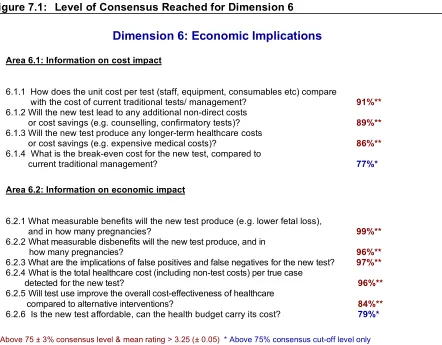
DIMENSION 6. ECONOMIC IMPLICATIONS
Area 6.1: Information on cost implications
Item Question
6.1.1 How does the ‘unit cost’ per test result (including staff, equipment, consumables, patent costs, laboratory throughput) compare with the cost of current traditional tests/ management?
6.1.2 Will the new test lead to any additional indirect costs or cost savings during pregnancy (e.g. specimen collection/transport, counselling, confirmatory tests)?
6.1.3 Will the new test lead to any additional longer-term healthcare costs or cost savings post delivery and later (e.g. maternal or child medical costs)?
Area 6.2: Information on economic implications
Item Question
* 6.2.1 What benefits (i.e. primary desired outcomes) will the new test produce, over what time horizon and in how many women being tested?
* 6.2.2 What are the implications of false positives and false negatives on these primary outcome measures?
* 6.2.3 What other measurable disbenefits (i.e. undesired outcomes) will the new test produce, over what time horizon and in how many women tested?
6.2.4 What is the total healthcare cost (including non-test costs) per true case detected for the new test? 6.2.5 Will test use improve the overall cost-effectiveness of health care compared to alternative interventions? 6.2.6 Is the new test affordable, can the health budget carry its cost?
DIMENSION 7. ETHICAL, LEGAL, ORGANISATIONAL IMPLICATIONS
Area 7.1 Information on ethical implications
Item Question
7.1.1 Are there informed consent requirements, and do these differ between the new and current traditional management? * 7.1.2 What is known about the potential for inequity for certain population groups (e.g. due to differential access/ test
accuracy)?
7.1.3 What is known about potential unintended, indirect consequences of this technology e.g. use of new test for sex selection?
7.1.4 What safeguards have been described and are these safeguards likely to be effective?
Area 7.2 Information on legal implications
Item Question
* 7.2.1 Are there legal issues regarding patient consent, ownership of data and/or samples, obligation to disclose, or reporting requirements?
* 7.2.2 Are there legal issues regarding technology patents, licensing, or proprietary testing?
Area 7.3 Information on organisational implications
Item Question
7.3.1 Will introduction of the test require changes to any aspects of existing routine antenatal or postnatal care e.g. extra antenatal visits, blood samples?
7.3.2 Is it likely that women will decline the new prenatal test/ fail to be tested and still select/require traditional management?
FIGURE B: Questions Provisionally Excluded by Delphi Panel.
DIMENSION 2. INCENTIVES & BARRIERS TO TEST DEVELOPMENT
Area 2.1 Incentives for new test development
Old Question
2.1.7 Will test standardisation, integration into care flow etc. be easier?
2.1.9 Can testing be undertaken by professionals closer to the patient (e.g. in the home), or can self-testing be
undertaken by women?
Area 2.2 Barriers to new test development
Old Question
2.2.4 Is it likely that the test will not be applicable to certain population groups?
DIMENSION 7. ETHICAL, LEGAL, ORGANISATIONAL IMPLICATIONS
Area 7.1 Information on ethical implications
Old Question
FIGURE C: Potential New Questions Identified by Delphi Panel.
DIMENSION 1. GENETIC CONDITION & TESTING CONTEXT
Area 1.2: Testing Context
New Question
1a Is paternal / spouse genetic material needed?
DIMENSION 2. INCENTIVES & BARRIERS TO TEST DEVELOPMENT
Area 2.2 Barriers to new test development
New Question
2a How burdensome will the regulatory, registration and reimbursement process be?
2b Will knowledge of the test result interfere with obtaining insurance (i.e. life, mortgage, medical, unemployment due to ill health)?
DIMENSION 4. CLINICAL VALIDITY
Area 4.1 Information on clinical validity
New Question
4a What gold standard (reference test) will the new test be compared with in order to assess its phenotype sensitivity and specificity?
DIMENSION 5. CLINICAL UTILITY/ RISK
Area 5.1: Information on clinical utility/ effectiveness
New Question
5a What percentage of test positives can be treated with some effect, and can likely beneficiaries be selected?
5b If no treatment option exists, is being informed by the test on risk status appreciated as a benefit as such?
DIMENSION 7. ETHICAL, LEGAL, ORGANISATIONAL IMPLICATIONS
Area 7.1 Information on ethical implications
New Question
7a Which societal values/ groups might oppose the test?
7b Will the offering of a new test constitute social pressure on the patient to undergo testing?
Area 7.2 Information on legal implications
New Question
7c Are there legal issues regarding “the right to ignorance” (Recht auf Nichtwissen)?
7d Are there legal issues regarding the kind of information to be delivered before and after genetic testing, including the obligation to inform pregnant women about alternatives to abortion in case of a positive result?
STAGE 1 REPORT
Emerging Prenatal Genetic Tests: Developing a Health Technology
Assessment (HTA) Framework for Informed Decision-making
A: INTRODUCTION
1
Clinical Background
The demographic shift towards later pregnancy is rapidly increasing the need and use of current prenatal diagnostic techniques. This leads to a substantial cost burden on healthcare systems and increased risk of miscarriage as unnecessary invasive procedures are required to validate the false positives associated with current non-invasive screening methods.
Europe, and the developed world in general, is experiencing a significant shift in population demographics which will have far-reaching consequences for health services. In reproductive medicine, the most noticeable effect is a large increase in the number of women who become pregnant at a more advanced maternal age (over 35), and who are opting to have one child [1].
This demographic shift implies increased risk of fetal disorders and pregnancy complications, and increased requirements for prenatal diagnostic procedures and genetic counselling.
Currently, prenatal identification of chromosome disorders such as fetal aneuploidies (e.g. Down syndrome) requires an invasive procedure such as amniocentesis or chorionic villus sampling (CVS) to acquire fetal material for definitive diagnosis. This situation has placed obstetricians and genetic counsellors in an awkward position, in that the increasing number of women delaying pregnancy leads to an increased risk in these pregnancies of having a fetus with a chromosome disorder. Since current non-invasive screening methods are associated with a high false positive rate (over 5%), they inevitably lead to numerous unnecessary invasive diagnostic procedures. At the same time, older women may be reluctant to expose their much desired child to the risk of induced abortion (around 1%) associated with current invasive prenatal diagnostic procedures. It would be beneficial therefore if safe, accurate, non-invasive prenatal diagnostic (NIPD) methods were devised for this purpose.
Similarly, non-invasive risk-free alternatives for prenatal diagnosis of single-gene recessive (Mendelian) disorders could be of benefit. If both parents are 'carriers', a child may inherit the gene from both (homozygotic state) and will then exhibit the disease, for example haemoglobinopathies or cystic fibrosis (CF). The prevalence of these single-gene disorders varies in different populations, with haemoglobinopathies more common in southern European populations and CF the most common single-gene disorder in northern Europe.
Two main strategies have emerged to date for NIPD testing:
Non-invasive analysis of fetal aneuploidies has been shown to be feasible by the examination of intact fetal cells, whereas ffDNA appears to be the approach best suited for the analysis of fetal Mendelian disorders. However, accurate, low cost non-invasive diagnostic techniques using either cell-free fetal DNA from maternal plasma or fetal cells from maternal blood are not yet available.
2
SAFE Network of Excellence
The SAFE Network (Special Advances in Fetal Evaluation) is an EC Network of Excellence. It was established in 2004 and currently has partners in 19 countries. The Network aims to improve perinatal care by developing non-invasive prenatal diagnostic tests, based on fetal cells or DNA circulating in maternal blood, and to improve tests available for neonatal screening.
Increasingly, industry is using networks as a means of linking researchers from different disciplines in order to ensure successful innovation and effective exploitation of scientific advances [2, 3].
The SAFE (Special Non-Invasive Advances in Fetal and Neonatal Evaluation)Network of Excellence is an EC-funded research initiative established in 2004. The Network now includes 56 partner groups in 19 countries, including Israel, India and China.
The main aim of SAFE is to improve prenatal diagnosis through the development and introduction of non-invasive tests that can identify fetal cells or free fetal DNA. It is the ambition of the Network to facilitate the appropriate introduction of such tests throughout Europe and beyond within a 5 to 10 year time frame.
The Network consists of scientists, clinicians, social scientists and industrialists. Countries included in the SAFE Partnership are:
Austria China Cyprus Czech Republic Denmark Estonia
Finland France Germany Greece India Israel
Italy Netherlands Poland Spain Sweden Switzerland
UK
Activity in the Network is organised into a number of workpackages. Four of these are led by scientists and aim to undertake the basic research required for test development, and to establish testing standards for implementation. A further three workpackages are led by social scientists and aim to explore a range of issues relevant to successful technology implementation, including risk communication, socio-economics and ethics.
3
SAFE Socio-economic Workpackage
Socio-economic factors will naturally influence the extent of widespread implementation of these new tests. The SAFE socio-economic workpackage is identifying and analysing the key factors that might govern successful introduction of NIPD tests for various applications. The socio-economic research team is working closely with Network partners to collect data to enable early health technology assessment.
Exploitation of NIPD technologies will, of course, be dependent firstly on the development of technically robust tests. But, after that other factors, including demonstration of likely cost-effectiveness of these new technologies and their integration into existing healthcare systems will be important. The overarching aim of the socio-economic workpackage is to identify and explore the key factors that might govern the successful introduction of various NIPD tests being developed by SAFE, gathering data to enable early health technology assessment (HTA) and economic modelling of these emerging technologies in different countries.
The socio-economic workpackage will focus on three main likely areas of application of NIPD genetic tests as follows:
• fetal RHD genotyping (for RhD negative mothers)
• diagnosis of single-gene recessive disorders (e.g. haemoglobinopathies, CF)
• diagnosis of fetal chromosome disorders (e.g. Down syndrome)
This work will be undertaken in close collaboration with SAFE network partners and other agencies internationally. These collaborations will ensure the provision of information suitable for scientists developing the tests and relevant to decision-makers considering their implementation in different national contexts.
The first stage in this work is the joint development of a HTA Framework for early assessment of these technologies. This framework will be generated through a world-wide Delphi Panel, and refined for each technology in turn. The Delphi Panel will include international HTA experts, clinicians, industry, patient groups, and SAFE bio-scientists, thus providing a mechanism for cross-linking scientists in the SAFE Network with international HTA agencies and regulatory bodies.
Based on the Delphi framework, data to address the questions prioritised will be gathered through literature reviews, surveys, and interviews with key stakeholders. Economic modelling will be undertaken in selected countries to identify key cost drivers, organisational factors, and perceived benefits / disbenefits for each emerging area of application. A SAFE internet forum will enable dissemination of early socio-economic findings and on-line discussion of these. At a later stage, international workshops will be held for interested stakeholders to consider translation of socio-economic findings to different national contexts.
B: METHOD FOR CONSENSUS DEVELOPMENT
4
Development of HTA Framework for Emerging Prenatal Genetic Tests
Health technology assessment (HTA) has been defined as “the systematic process by which the direct and indirect consequences of a particular technology are assessed; it is concerned with evaluating the safety, effectiveness, and cost-effectiveness, and (where appropriate) the social, ethical, and legal impact of a technology” [4]. Direct consequences are those benefits which the
technology is designed to produce; indirect or secondary consequences are the unintended economic, social, or other effects of the technology.
A modified Delphi technique was chosen as the method for identifying consensus on a framework for assessment of prenatal genetic tests. Behavioural studies suggest that non-interactive techniques are more effective in reaching an objective consensus, rather than informal and interactive consultation methods such as consensus conferences. Of these the Delphi approach, involving pooling and feedback of anonymously contributed information, is generally favoured [5-7]. The method was originally devised for technology forecasting, and has been widely used to identify consensus in various clinical areas relevant to the present context, including emerging technologies [8], diagnostics [11-12], prenatal screening and genetic disorders [13-15], evaluation methodology [9], and future laboratory research [10]. Because the consultation is carried out via mail (or email), it is possible to draw on the experiences of a larger number of individuals than would be feasible otherwise, and at a lower cost (including personal inconvenience).
4.1 Development of Delphi Questionnaire and Pilot Phase
Development and piloting of the Delphi questionnaire was undertaken in the first phase of the socio-economic workpackage, in collaboration with selected SAFE members and international experts.
Content for the first round questionnaire was initially drawn from a comprehensive search of the published literature and other sources. Material was drawn from, among other sources, the literature focused on screening for disease, including the early WHO criteria for screening for disease [16], which have been widely promulgated [17], and more recently guidelines from bodies such as the US Preventive Services Task Force Methods Work Group on evaluating procedures used to develop recommendations [18], and extension of these to incorporate cost-effectiveness [19]. Another source of material was the literature on health technology assessment, including early guidelines for assessment of diagnostic tests, which incorporated cost-effectiveness as an important dimension [20], and were subsequently adapted to include diagnostic, monitoring, screening and predictive tests [21, 4], and associated guidelines which focus on the assessment of economic evaluations [22]. Finally, early guidelines, which focused on prenatal tests, and considered assessment of screening and diagnostic tests, including some consideration of economic implications, provided valuable material [23], as did more recent guidelines on the assessment of genetic tests [24]. The most recent HTA guidelines which concentrate on the assessment of evidence on diagnostic accuracy i.e. the technical performance of tests were also examined [25].
structure for respondents, the initial 73 questions were clustered into seven broad dimensions. Where appropriate, these dimensions were further divided into sub-areas (up to a maximum of 3) each with a slightly different focus.
Next, the 73 questions were incorporated into a pilot questionnaire which was distributed to WP6 group members who had experience of HTA. Variations of this document were produced, each with a different presentation style and demanding differing types of response (tick-boxes, free text etc.). Respondents were asked to comment on these in terms of ease of completion, simplicity of instructions etc. Through this process, a final version of the Delphi questionnaire was produced (see Annex 1: Delphi Round 1 Questionnaire).
4.2 Selecting Delphi Panel Members
A geographical sampling frame was drawn up for the Delphi Panel. This incorporated all 19 countries in which SAFE partners are located, regardless of the interests of the SAFE organisations in these countries. To this were added six further countries or territories of importance located in: Australasia (Australia, New Zealand); Europe (Belgium); North America (USA, Canada), and Hong Kong (Special Administrative Region of China). The latter was included as a scientific world leader in NIPD research, along with the USA. In the event, we were able to recruit a bioscientist but unable to recruit a HTA expert from Hong Kong (see section 4.2.1 below). A total of 24 countries were covered by the final Panel members.
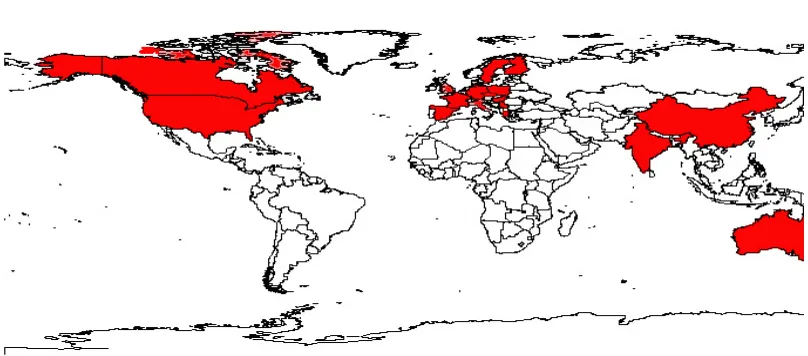
[image:22.595.71.475.522.700.2]The geographical spread of Delphi Panel members is shown in Figure 1. This indicates that participants covered countries in Europe, North America, Australasia and Asia. While areas like India and China potentially represent the largest markets for these new technologies in population terms, due to economic development status and genetic differences (e.g. for RhD gene), these countries may not become the main consumers initially. Europe and Northern America are expected to be the major markets for NIPD technology at first, not least because they have sufficient specialised laboratories and the funding required to undertake these capital intensive, high skill tests.
4.2.1 National HTA Agencies / Leads
We first identified all countries in which there is an established HTA Agency. Personal contact was made with the heads of these agencies (14 in total) and they were invited to join the Delphi Panel. In countries where the agency lead considered that someone else in their organisation could contribute more effectively to a Delphi exercise on prenatal genetic tests, these individuals were invited to join the Panel instead (5 cases).
Where there was no established HTA agency in a European country (e.g. Italy), contact was made with members of HTAi (the world-wide HTA Association) in that country in order to identify any centres taking a lead nationally. Alternatively, where HTA committees were being established by bodies such as the Ministry of Health (e.g. Cyprus), the lead actor was recruited. In addition, insurance agencies / third-party payers with an interest in health technology assessment were recruited from selected countries (i.e. Germany, France, Czech Republic).
The two Asian countries (China and India), are both members of the SAFE Network, but neither has a national HTA Agency. In the case of China, it was possible to make contact with a number of HTAi members and a Delphi participant was identified from the University of Shanghai. India has a less well developed HTA community, with no Indian members of HTAi. Therefore, the All India Institute of Medical Sciences (AIIMS) in New Delhi, which is a SAFE Network partner, was contacted and a senior economist was recruited to the Panel.
We could similarly identify no Hong Kong-based members of HTAi. An attempt was made to recruit a suitable expert through the Health and Medical Development Advisory Committee recently constituted by the government. Unfortunately, no suitable Delphi contributor could be identified by the Chairman of this Committee.
In total, 34 HTA agencies / organisations covering 23 countries were recruited to the Panel (for details of organisations see Annex 2: Delphi Panel Members).
4.2.2 International HTA Networks
The Chair of the International Network of Agencies for HTA (INAHTA) was recruited to the Panel. Contact was also made with Euroscan (a world-wide HTA horizon scanning network providing early information on new health technologies). The founding member (Birmingham, UK) was recruited; several members of the Euroscan network had already been recruited to the Delphi exercise through national HTA agencies (including Denmark, Sweden, France, Australia, Switzerland, Israel and Spain).
4.2.3 Clinicians / Laboratory Service Providers
In total, 34 clinicians/ laboratory service providers of various types were recruited to the Panel, including some who were also HTA agency leads (see Annex 2).
4.2.4 Patient User Groups
The directors of two patient organisations were recruited to the Delphi Panel, both partners in the SAFE Network. The Genetic Interest Group (GIG) is a UK alliance of organisations with a membership of over 120 charities which support children, families and individuals affected by genetic disorders. Unique is an international support group for families affected by a rare chromosome disorder, with over 3,800 member families in 60 countries. In addition, the Chairman of the International Down's Syndrome Screening Group, a member of the SAFE Advisory Board, was recruited to the Panel.
4.2.5 SAFE Bio-Scientists
Bio-scientists were recruited from within the SAFE network in order to bring relevant scientific expertise on NIPD to the Panel. Their involvement would also improve the ability of these scientists involved in medical innovation to contribute to health technology assessment; long recognised as an important gap in EU countries [26, 27]. An important aim from the outset for the socio-economic workpackage was to integrate early health technology assessment into scientific innovation in the Network. Particular effort was therefore put into recruiting the workpackage leaders who were coordinating the scientific effort. The hope is that, once the SAFE socio-economic infrastructure is established, it will support the continuation of cost-effective innovation beyond the lifetime of the network funding.
In total, 24 SAFE bio-scientists were recruited to the Panel (see Annex 2).
4.2.6 Industrial Entrepreneurs / Manufacturers
Industrial partners in the SAFE network were also invited to join the Delphi Panel, and were all successfully recruited; these covered 3 countries (France, Germany and the Netherlands). Two European industry groups were also recruited; the European Medical Technology Industry Association (EUCOMED) and the European Diagnostic Manufacturers Association (EDMA).
4.2.7 Other Experts
The Programme Director of the international ESRC (Economic and Social Science Research Council) Innovative Health Technology research programme was recruited, as were representatives from other international agencies such as the World Health Organisation (WHO). Experts were also recruited from our sister Network of Excellence, Eurogentest (Genetic Testing in Europe - Network for test development harmonization, validation and standardization of services). These included the co-ordinator and leads for relevant work units.
Other individuals with expertise in Ethics/Philosophy, Legal/IP issues and Epidemiology /population studies were also recruited (see Annex 2).
Once the Delphi panel had been identified (92 potential members), the first Delphi survey was commenced in August 2005 and final replies were received at the end of September 2005.
Questionnaires were distributed to all 92 individuals by email. The date when sent was recorded, and a respondent numbering system used so that the identity of respondents was not apparent from completed questionnaires. The e-mailing consisted of the questionnaire plus an explanatory covering note. Return of completed questionnaires was requested within 10 days of receipt.
Non-responders were first sent a follow-up email approximately 2 weeks after the initial e-mailing. Following this, if no response was received, telephone contact was made with the individual (or their office) to encourage a response. Finally, an opt-out option was offered to any non-responder. Two Panel members withdrew at this stage; one was too busy and one because of perceived lack of expertise in the field.
Particular effort was invested to ensure that Panel members from national HTA agencies expressed their views and contributed to the exercise, so that any consensus would reflect the current views of these agencies world-wide. All except one HTA agency completed the questionnaire.
4.4 Questionnaire Format
4.4.1 Delphi Round One Content
The questionnaire introduced panel members to the Delphi process as follows:
"This questionnaire forms part of an important EC study to develop new prenatal genetic tests, an emerging area of genetic testing. In order to help us assess the key socio-economic characteristics of these new tests we have constituted an international panel of experts to identify a health technology assessment framework. ... The ultimate aim of HTA is to inform decision-making - either clinical, managerial or policy-making. It does not remove the need for careful thought and judgement or provide 'the answer'. Indeed, sometimes its role is simply to clarify the precise nature of the choices that must be made."
It was explained that the focus of the Delphi Exercise was on prenatal genetic tests, with the ultimate aim of informing the structure and content of early-HTA reports produced for SAFE non-invasive prenatal genetic tests. Respondents were provided with a brief summary of the type of tests that might be involved as follows:
"Non-invasive prenatal genetic tests may be undertaken for a number of reasons and conditions. For example, to test for a genetic disorder in the fetus that is inherited from carrier parents (e.g. cystic fibrosis,
thalassaemia). Or, prenatal tests may be used to detect a genetic disorder that occurs de novo or by chance, although with some risk indicators such as age (e.g. Down's syndrome). Alternatively, prenatal tests may be used to identify a genetic characteristic of the fetus which may cause problems in pregnancy (e.g. fetal blood group)."
The seven dimensions used to structure the questionnaire were explained to respondents as follows:
these new non-invasive prenatal genetic tests. Each dimension raises a number of specific questions which might be asked about the technology."
The dimensions covered included: (i) the genetic condition and testing context (i.e. information on the genetic disorder / character being tested for, and the setting in which the test will be carried out); (ii) incentives and barriers to test development (i.e. potential advantages of the new test as well as possible barriers to its development and use); (iii) test performance (i.e. whether the test will deliver accurate information on specific genes); (iv) clinical validity (i.e. whether the test will contribute to accurate clinical diagnosis and / or prediction); (v) clinical utility / effectiveness (i.e. whether test use will influence selection and delivery of a treatment / intervention and contributing to improved patient health / wellbeing); (vi) economic implications (i.e. whether test use will improve the cost-effectiveness of healthcare); and (vii) ethical, legal, organisational implications (i.e. whether test use will have any ethical, legal, organisational, or other impact). Every effort was made to make questions in each section as short and clear as possible; also, to ensure that there was minimal duplication of the information requested by questions in different sections, although this was sometimes difficult to achieve.
Respondents were first asked to identify for each question whether they considered it essential or desirable that information be provided in a health technology assessment report. For this they were asked to use a 5 point numerical system to grade the level of importance they would attach to the question (4 = Essential; 3 = Desirable, but not essential; 2 = Useful but should not be required; 1 = Of little/ no importance; 0 = I have no basis for judgement).
In addition, for questions which they were able to grade (i.e. excluding 0 = no basis for judgement), respondents were asked to consider at what stage these questions should ideally be addressed. Questions might be addressed during the test development process (i.e. early-HTA), or it may be that they could be addressed later once the test is ready for implementation in the practice setting (i.e. later HTA). It was emphasised that:
"Early in the development process definitive data may not be available to answer all these questions. However, it may still be important to identify what evidence is available in order to enable preliminary decisions to be made, including what information is likely to be key to any later, comprehensive HTA report."
Finally, for each of the seven dimensions respondents were asked to add any other questions which they thought might be relevant but which appeared to be missing from the HTA framework at this stage. It was explained that these responses, and those of others in the group, would be analysed and presented for consideration in later rounds of the Delphi exercise.
All Delphi participants were asked to complete a personal profile and to provide information concerning their own experience of HTA.
4.4.2 Delphi Round One Analysis
The questions which were retained at this stage would form the initial Framework for data collection being undertaken for NIPD tests for fetal RHD genotyping (first HTA report due end of December 2005).
In addition, mean scores were also calculated (excluding 0 = I have no basis for judgement) for each question. Equal numbers in each category would give a mean score of 2.5. The point mid-way between this and a score of 4 by everyone (i.e. mean score >3.25 ± 0.05) was considered to be an indication that the Panel had clearly identified this as a high priority question to address in HTA.
Finally, all open responses were content analysed and grouped by distinct themes. In some instances, these represented comments about clarification of the wording of an existing question. These comments were distributed to WP6 group members and considered carefully. Where there was a clear consensus that the phrasing of the original question would benefit from being edited, this was done in preparation for round two of the Delphi exercise.
C RESULTS: INITIAL HTA FRAMEWORK
5
Participants in the Delphi Exercise
5.1 Overview of Response Rates
[image:28.595.75.481.224.301.2]An overview of response rates at different stages of the Delphi process is presented in Table 1 below. An excellent response rate of 86% was achieved for the first Delphi survey.
Table 1 Delphi Mailing and Response Rates
Stage Mailed Acceptance/
Responses
Valid Acceptance/ Response Rate
Invitation 92 invitations 90 98%
Round 1 90 Panel members 77 86%
5.2 Panel HTA Experience
The reliability of any consensus reached through a Delphi exercise is naturally dependent on the mix of relevant experience of contributors. In the present case, this would include expertise in health technology assessment, experience of assessment of diagnostic tests, and scientific/clinical understanding of the technologies being developed.
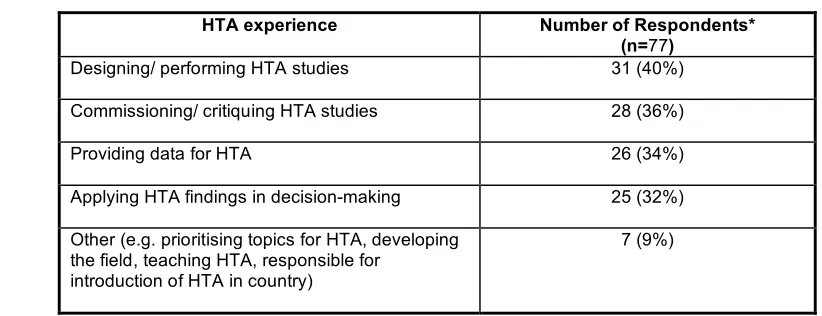
[image:28.595.79.490.466.624.2]Respondent characteristics were first examined in order to gauge the level of HTA expertise within the Panel. Analysis revealed extensive experience of HTA as shown in Table 2.
Table 2 Delphi Panel HTA Experience
HTA experience Number of Respondents* (n=77)
Designing/ performing HTA studies 31 (40%)
Commissioning/ critiquing HTA studies 28 (36%)
Providing data for HTA 26 (34%)
Applying HTA findings in decision-making 25 (32%)
Other (e.g. prioritising topics for HTA, developing the field, teaching HTA, responsible for
introduction of HTA in country)
7 (9%)
* Respondents may have more than 1 type of experience
Reported experience was fairly equally balanced in terms of designing/ performing HTA studies, commissioning/ critiquing HTA studies, providing data for HTA, and applying HTA findings in decision-making.
• Prenatal testing
PCR of maternal plasma for Rhesus typing; non-invasive diagnosis of genetic analysis of circulating fetal cells (e.g. cystic fibrosis); screening for Down Syndrome, (including biochemical tests, nuchal translucency); preimplantation diagnosis; ultrasound Doppler diagnosis in pregnancy; pregnancy hypertensive disorder (PHD); prenatal visit frequency.
• Genetic tests
Polymorphism screening; gene tests for monogenic diseases.
• Other tests
Tests for isolation and characterisation of circulating tumour cells; hip ultrasound in new-borns; point of care testing; positron emission tomography (PET); polygraphy (lie detector); mammography; HIV testing; screening for chlamydia infection; automated cervical screening; colorectal cancer screening.
• Methodology
Development of evaluation framework for genetic tests; methods of meta-analysis of diagnostic accuracy studies.
5.3 Panel Professional Background
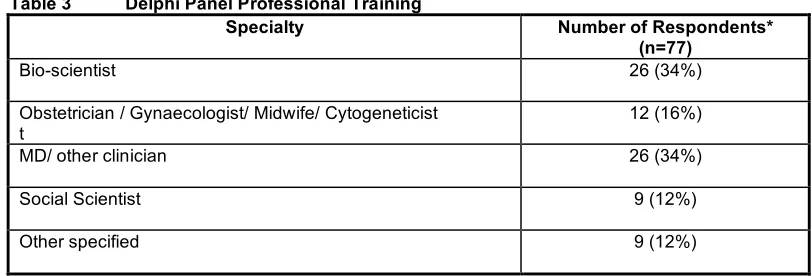
[image:29.595.82.488.434.572.2]The professional background of Panel members is shown in Table 3 below. One in six were clinicians with experience of providing care for pregnant women; one third were other types of physicians/ clinicians; and one third described themselves as bio-scientists. The remainder were equally divided between social scientists (e.g. with academic training in philosophy, politics, communication and psychology) and those from other backgrounds such as chemistry, physics, the legal profession and business economist.
Table 3 Delphi Panel Professional Training
Specialty Number of Respondents* (n=77)
Bio-scientist 26 (34%)
Obstetrician / Gynaecologist/ Midwife/ Cytogeneticist t
12 (16%)
MD/ other clinician 26 (34%)
Social Scientist 9 (12%)
Other specified 9 (12%)
* Respondents may come from more than 1 professional background
5.4 Conclusions
Members of the SAFE Delphi Panel comprise a highly experienced body of individuals, many of whom are pioneering new diagnostic procedures or evaluating the evidence on new diagnostic technologies. As such, they represent an excellent, broad cross-section of relevant expertise with the ability to define a suitable, internationally acceptable HTA framework for non-invasive prenatal genetic tests
6
Open Responses
suggestions for the future work of the workpackage. These responses were content analysed and an attempt was made to group them by emergent themes. However, there were insufficient similarities between responses to be able to do this. Selected comments were therefore identified and these are presented below.
One respondent with an HTA background commented that, considering the WHO checklist for evaluation of screening programmes, most questions in the proposed framework are very important and need to be addressed early as part of HTA before implementation. Another HTA agency respondent pointed out that some questions may be more relevant to implementation than evaluation and therefore might not belong in a formal HTA report. The same person also commented that because early-HTA reports cannot be based on large numbers of supporting studies, this does not provide a quick process for the evaluation of such new tests.
Another Panel member (a bio-scientist) commented that patients must clearly understand the limitations of any testing for a genetic disorder i.e. that a test will provide answers for that particular condition only and not for all genetic disorders. A further member (a geneticist) highlighted the need to distinguish between single gene (monogenic) and chromosome disorders. Further points were raised by two members (from HTA backgrounds). These included the question of whether evidence of the causal effects of the test is direct or indirect; and the requirement for a concept or measurement of unacceptable distress caused by a test.
It was pointed out by one Panel member that HTA frameworks for evaluating diagnostic technologies often assume that a test is part of a simple clinical process or set within a therapeutic framework e.g. where every test result is followed by just one preferred action which gives results (benefits) to the individual patient within a short time. Such a simplistic view is challenged in prenatal care where a higher level of complexity exists e.g. two or more beneficiaries (mother, child); problems in valuing a positive test followed by termination of pregnancy followed by substitution of a healthy child at a later date; difficulties in valuing information provided by the test as an outcome per se. This Panel member also suggested that the Delphi exercise might result in different answers if a prenatal genetic test were designed to provide private information to the individual only, without medical follow up.
Finally, a further member of the Panel identified that any dialogue must also take into account the seriousness of the condition which a test is designed to detect: