Examining the controller
activities at MST
2017
Student: Edwin Bies
s1011073
Supervisors UT: Dr. B. Roorda
Dr . P.C. Schuur
Ir. H. Kroon
supervisor MST: Ir. B. Schukkink
Management Summary
MST needs to get more efficient in total. As a result the financial manager would like to address the efficiency and effectiveness of the controllers. Therefor he needs a clear overview of activities performed by the controllers and would like to compare these outcomes with activities controllers perform in peer hospitals. As a result of this provocation we formulated the following central research question.
What are the main activities of a controller in respect to the literature and in comparison to peer hospitals to improve effectiveness and efficiency of the controllers at MST.
We started this research with an extensive literature study from which we created our theoretical framework around the concept, role and activities of a controller. Besides this theoretical framework we performed a corporate style benchmark as suggested by Ammons (1999) existing of
semi-structured interviews (N=22) and a questionnaire (N=25).
In the literature there is little consensus on the exact definition of the controller (or management accountant) due to the fact that literature more speaks about the different roles of a controller. We found two profound roles a controller can execute: the control role and the service role (Sathe, 1983). The controle role: “To ensure that reported financial information pertaining to the relevant organizational unit is accurate and conform formal regulations and that internal control practices are conform to informal corporate policies and procedures”. The service role: “to assist and support the management team in their business decision-making.”
The literature widely claims the change in the role of the controller over time: the shift from bean counters to business partner (Siegel, 1999, p.20) and often even member of the management team. However some researchers question whether this shift actually takes place, or should only be regarded as an ideal develop model (Knoop, 2015). Further, Sathe (1983) claims that when the controller is expected to fulfill both the control- and the support role at the same time, a role conflict could arise.
Verstegen (2007) performed an extensive literature research distinguishing 37 different activities for controllers. We grouped the activities and enhanced them with hospital specific activities.
We tested the provocation of this study and two different calculations support the managers feeling that MST employs too much FTE in their controlling function in comparison with the benchmark. We carefully concluded that the controllers operate in a less efficient way.
Categories of controller activities
A. Activities regarding the control system of the organization G. Exchange of information
B. Maintenance of (financial) information systems H. Activities regarding (operational) support role C. Activities related to planning within the planning and control cycle I. Activities regarding strategic support role D. Activities related to control within the planning and control cycle J. Activities regarding information generation E. Processing information K. Other activities
MST's main categories of activities relate to performing audit and risk (F), operational support (H) and activities related to care administration (L). Followed by activities related to information
generation (J) and processing (E). The benchmark's main categories of activities relate to the strategic support role (I), control within the planning and control cycle (D), maintenance of (financial)
information systems (B) followed by activities related to planning within the planning and control cycle (C). A Mann-Whitney U test shows that on the activities with the significant differences (I and F) and trends (H, D and L) are also opposites to each other (benchmark more strategic, MST more operational).
Combined with the interviews, we concluded that the main activities of MST controllers are primarily of an operational/executive nature and the benchmark of a strategic support nature. The benchmark is therefore further in their development into the (strategic) service role.
We concluded that business structure is the main cause for inefficiency at MST. This is mainly due to the physical location of the controller in the organization, the functional control of the controller and the absence of a separate care administration. Besides this some boundary conditions contribute to the problem: strong leadership, vision, and strategy, ICT and standardization, the maturity of the financial administration and the involvement in strategic decision making.
Preface
In front of you is the master thesis “Examining the controller activities at MST”. This research has been conducted within The Medical Spectrum Twente, one of the largest non-academic hospitals in the Netherlands and three benchmark hospitals of comparable size .
This thesis has been written in the context of my graduation for the study Master Business Administration at the University of Twente, and commissioned by the Medical Spectrum Twente, Department of Finance & Information.
In close cooperation with my supervisor at MST, Ir. Ben Schukkink, I've managed to formulate a clear research question. The research has been conducted in an complex environment as the healthcare sector is, and in an turbulent context (financial distress for MST). This made it difficult to conduct a research for assessing the efficiency and effectiveness and the involvement of human research entities at the same time. However after an extensive literature research and both quantitative and qualitative research, we managed to solve the research question. And we believe that we succeeded to deliver a research report that has both a theoretical contribution and at the same time pragmatic solutions for MST.
I had great support from Ben Schukkink, in the contact with the benchmark hospitals and the numerous sparring sessions. As well from my supervisors at the University of Twente: Berend
Roorda, Peter Schuur and Henk Kroon who supported me in directing this research. And of course my brother in law Robert Leusink, which has been a great support, critical sparring partner and
inspiration for me.
I'd like to use this moment for thanking my supervisors at both the University of Twente and MST. As well as all my colleges at MST department F&I, who gave me a warm welcome and supported me in writing this thesis. And this research couldn't have succeeded without the cooperation of the managers and controllers of both MST and the benchmark hospitals.
And last but not least my family, and in special my parents and girlfriend for their support and motivating words.
I wish you a lot of pleasure during reading this thesis.
Edwin Bies
Table of content
MANAGEMENT SUMMARY ... 2
PREFACE ... 4
TABLE OF CONTENT ... 5
1. INTRODUCTION ... 7
1.1MEDICAL SPECTRUM TWENTE ... 7
1.2PROVOCATION ... 7
1.3PROBLEM STATEMENT ... 8
1.4RESEARCH QUESTIONS... 8
1.5RESEARCH DESIGN ... 9
1.6LIMITATIONS ... 9
2. THEORETICAL FRAMEWORK ... 11
2.1THE POSITION OF THE CONTROLLER IN THE ORGANIZATION ... 11
2.1.1 Positioning of the controller in Dutch healthcare organizations ... 12
2.2EVOLUTION OF THE CONTROLLER ... 13
2.3DEFINITION OF A CONTROLLER ... 16
2.4ROLES OF A CONTROLLER ... 18
2.4.1 Roles of a controller within Dutch healthcare organizations ... 21
2.5OUR VIEW ON THE ROLES OF A CONTROLLER ... 22
2.6ROLE CONFLICT ... 24
2.7ACTIVITIES OF A CONTROLLER ... 25
3. METHODS AND METHODOLOGY ... 28
3.1LITERATURE REVIEW METHOD ... 28
3.2PRELIMINARY RESEARCH ... 29
3.3BENCHMARK DESIGN METHODS ... 31
3.4ETHICAL CONSIDERATIONS ... 32
4. RESULTS ... 34
4.1RESEARCH GROUP ... 34
4.2EFFICIENCY MST COMPARED TO THE BENCHMARK ... 35
4.3THE CONDUCTED RESEARCH OF THE MAIN ACTIVITIES OF A CONTROLLER ... 37
4.4MAIN ACTIVITIES OF A CONTROLLER WITHIN MST ... 38
4.5MAIN ACTIVITIES OF A CONTROLLER WITHIN THE BENCHMARK ... 39
4.6COMPARISON OF MAIN ACTIVITIES MST AND THE BENCHMARK ... 40
4.7CAUSES AND BEST-PRACTICES FOR DIFFERENCES ... 41
4.7.1 Preliminary - They all know, but can’t make the change ... 42
4.7.2 Root cause - The physical location of the controller in the organization ... 42
4.7.3 Root cause - Functional control of the controller ... 45
4.7.4 Root cause - Existence of separate care administration ... 47
4.7.5 Leadership, vision and strategy ... 49
4.7.6 ICT and standardization ... 51
4.7.7 The maturity of the financial administration ... 52
4.7.8 Involvement in strategic decision making ... 53
4.8TO CONCLUDE ... 54
5. CONCLUSIONS AND RECOMMENDATIONS ... 55
5.1CONCLUSIONS ... 55
6. CONTRIBUTION ... 57
6.1ACADEMIC RELEVANCE... 57
6.2PRACTICAL RELEVANCE ... 57
APPENDIX A ... 58
APPENDIX B ... 59
APPENDIX C ... 60
APPENDIX D ... 61
1
. In
tro
d
u
ctio
n
7
1. Introduction
1.1 Medical Spectrum Twente
Medical Spectrum Twente (MST) was founded in 1989 after a merger between two existing hospitals
in Enschede (Ziekenzorg and the Stadsmaten) and the Roman Catholic hospital ‘’Heil der Kranken’’ in
Oldenzaal. In addition, MST has two outpatient clinics in Losser and Haaksbergen. MST is one of the largest non-university hospitals in Netherlands. The catchment area MST serves comprises about 264.000 people. MST employs about 4.000 employees, from which about 260 medical specialists. Their mission statement is formulated in the following manner: “MST was created to improve the health of the inhabitants of our region, by offering general and top clinical specialized medical care, education and research. MST strives to ensure that patients do not have to leave the region for their healthcare.
For the years 2015-2018 MST has developed a vision, which will serve as a guideline for testing decisions in the field of care and management.
Vision 2015-2018:
• All employees in MST, are constantly working on a culture in which improvement of the healthcare, reducing risks and unintended risk to the patient, are central.
• MST, is a safe environment for patients, visitors and employees and provides high quality specialized medical care to the patient.
• Depending on the type of healthcare we work with other healthcare institutions to have a wide range of general, as well as complex care, available in the region.
MST expresses the ambition to become ‘’the best improve hospital’’ of the Netherlands.
For a clear overview of the organization chart see appendix A. Since January 1st, 2008 MST has a new
organizational structure: the RVE-model.
The main purpose of the RVE-model is the decentralized allocation of responsibilities, as much as possible. These responsibilities include quality, efficiency and financial performance (in terms of revenues and costs). This is realized by involving the business- and medical management closer, and making them in duality responsible for the business processes and the financial performance (RVE's in MST, internal document, May 2010).
1.2 Provocation
From a conversation with the financial manager of MST the following issues appeared. At this
moment it’s not clear whether the activitiesthat central- and decentralized controllers perform match with the activities a controller is supposed to perform. The manager likes an overview of the activities performed by the controllers, and compare these outcomes with activities controllers perform in peer hospitals.
1
. In
tro
d
u
ctio
n
8
During my first period within MST additional challenges concerning MST and the financial department have occurred. The challenges MST is facing are to get more efficient in total. To summarize the provocation of this study:
• The manager likes a clear overview of the activitiesperformed by their controllers, and compare these outcomes with the activitiescontrollers perform in the benchmark , in the light of relevant controller activitiesin the literature;
• According to the opinion of the manager, there are too much FTE in the controlling function; • In 2012 a study from PWC shows there is much room for improvement in the financial
function as a total in comparison to peer hospitals;
• MST needs to get more efficient in total; so also within the financial department.
1.3 Problem statement
The provocation of this study leads to the following problem statement:
Provide insight in the efficiency and effectiveness of activities executed by controllers by designing and performing a benchmark research.
1.4 Research questions
To solve the prior mentioned problem statement of this study we have formulated a central question and several sub questions.
Central research question
Sub questions
The following sub research questions have been established to answer the central research question. These sub research questions will also serve as a structure for the research and make the central research question more tangible.
1. What is according to the literature the definition of a controller, what are the activities and how has the controller developed over time?
2. What is the definition of a benchmark study and how is a benchmark study designed?
3. What are the main activities of the controllers at Medisch Spectrum Twente and in the
benchmark?
4. How is the controlling function organized in MST and the benchmark?
5. Which differences between literature, MST and the benchmark lead to superior performance
(‘best practices’)?
What are the main activities of a controller in respect to the literature and in
1
. In
tro
d
u
ctio
n
9
1.5 Research design
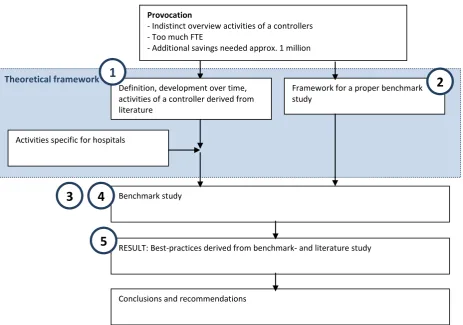
[image:9.595.20.484.126.451.2]Below you'll find an overview of the research design of this study. The numbers mentioned refers to the sub questions as stated in the previous paragraph.
Figure 1 – Research design
1.6 Limitations
Below we will discuss the limitations of the conducted research (methods). It's important to acknowledge these limitations while reading this thesis.
Controller function instead of financial function
One of the main limitations of this research is that the focus is restricted to the controller function instead of the financial function as a whole. To ensure enough depth in this research we decided to limit the scope to the controller function instead of screening the organization of the administrative and financial organization as a whole. This means we don't assess the presence of supportive services in depth.
Theoretical framework
Provocation
- Indistinct overview activities of a controllers - Too much FTE
- Additional savings needed approx. 1 million
Framework for a proper benchmark study
Activities specific for hospitals
Benchmark study
RESULT: Best-practices derived from benchmark- and literature study
Conclusions and recommendations
2
3
5
Definition, development over time, activities of a controller derived from literature
Definition, tasks and
responsibilities of a controller derived from literature
1
1
. In
tro
d
u
ctio
n
10
Context of conducting the research
The context in which the research is conducted could be a possible limitation of this research as well. At the moment this research is conducted, MST is in financial distress because of among other things, a decline in the growth of revenues and increasing (capital) costs. This has several implications that could influence the results of this research. The CFO has announced, and partially already executed, the plan of reducing the amount of FTE's employed in the controlling staff. This resulted in agitation among the group of controllers. At the controller meeting where the financial manager presented the plans for the reorganization, at least one of the controllers mentioned that she was not going to cooperate with this research because of the following reason: “by giving disclosure about her activities as a controller, she digs her own grave”. Controllers could for example exaggerate the problems/situation because of displeasure with the situation. Furthermore they might not be willing to give full disclosure about the activities they perform. Other controllers might also be dissatisfied with the situation or afraid of being fired. This sentiment could lead to biased results.
Categorization of activities
In order to be able to compare the activities of a controller we need to categorize them. Both the words tasks and activities are used in this research and refer to the same concept. By providing a list of categories with the most common controller activities, there might be a chance that we direct the interviewees in their thinking this could possibly affect the answers they give. Asking the controllers to specify every task in detail might provide more details, however this makes it more difficult to compare these results and will probably decrease the response rate because of the time needed to fill in the surveys. So a concession has to be made to increase the comparability and response rate. However, a potential benefit of the list of controller activities we used in our questionnaire is that it has been tested and used several times to investigate controller activities.
Translation and aggregation of activities
The initial list of controller activities in this survey was written in English. Several controllers
acknowledged that they had problems with understanding the definitions written in English. So for a sufficient understanding of the activities, we decided to translate the list into Dutch.
In this process, translation errors could have occurred, the perception/interpretation of the activities written in English, can be different from the activities translated in Dutch. Next to the translation problems, some of the controllers acknowledged that they had problems with the meaning of the activities formulated in the survey. We tackled this problem by grouping the activities in
2
. The
o
re
tical fra
m
ew
o
rk
11
2. Theoretical framework
Within this chapter we provide a comprehensive overview of the theories that will be used in this research. First of all a literature review is conducted to build a comprehensive understanding of the concept and context of a controller.
Therefore we discuss in following order its position in the organizational context (§2.1) and the evolution of the controller over time (§2.2). The definition of the controller (§2.3) and the possible roles of the controller according to the literature (§2.4). This together serves as the basis on how we see the main roles of the controller according to the literature, in this research. (§2.5). Then we describe the possible role conflict of the controller (§2.6) and eventually in the last paragraph we describe the activities and responsibilities of the controller (§2.7).
In advance we would like to state that in our literature review, and also acknowledged by the research of Weber (2011, p.26), Ahrens (1999) and Messner et al. (2008) we noticed that the term
‘management accountant’ is practically equivalent for ‘controllers’. Verstegen et al. (1997, p.9) acknowledges this as well and indicate that both management accountant and controller are commonly used in this field of research, however the term management accountant is more often and commonly used then controller.
In this study, we use the name as the author has used it in reference literature. In all other cases, we use the term controller because this is most tangible to MST. In case we use the term controller we also mean management accountant.
2.1 The position of the controller in the organization
In order to build a good understanding of the controller in the organization, it's important to clarify the context it's operating in. After we have charted that, we will discuss the evolution in controllers' roles over time.
2
. The
o
re
tical fra
m
ew
o
rk
[image:12.595.80.394.77.275.2]12
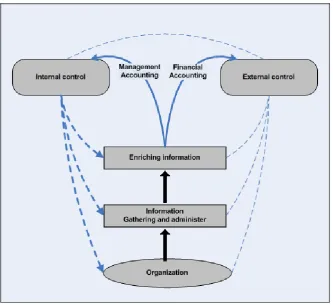
Figure 2 – Enterprise financial management according to IFAC (2009, p.7)
In an document written by Savage and Jasch (2005, p.12), commissioned by the International Federation of Accountants (IFAC), they have defined two broad categories regarding the accounting practices in organizations. In which the following categories of practices are often encountered in organizations:
• Financial Accounting (FA) is concerned with the more pure accounting activities and delivering financial statements for the purpose of the external stakeholders of the
organization. However this doesn't mean that the products delivered by Financial Accounting are not used internally.
• Management Accounting (MA) is more directed towards the internal stakeholders (Knoop, 2016, p.15) and focuses on providing financial and non-financial information to the
management of the organization, in which the latter uses this information for internal decision making.
As we can see in figure 2, the more we go to the right horizontally, the nature of the activities shifts from historical (backwards looking) to predictive (forward looking). FA and MA can therefore
respectively be associated with historical information (generating) and predictive information supply.
2.1.1 Positioning of the controller in Dutch healthcare organizations
2
. The
o
re
tical fra
m
ew
o
rk
[image:13.595.162.416.59.436.2]13
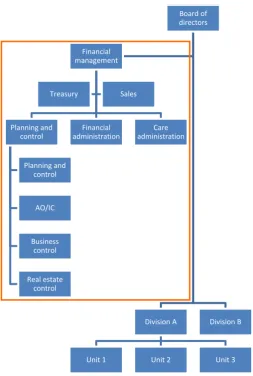
Figure 3 - Common position of the financial- and control function in a Dutch healthcare organization (Knoop and Van de Ven, 2016, p.231)
When we take a second look on the common organization chart (figure 3) of Dutch healthcare organizations we find in the vertical column of this organization chart (upper orange box) the central financial function. The financial function of the healthcare organizations in their research, appear to be highly specialized. Knoop and Van de Ven (2016, p.230) indicate that in this central financial function we can distinguish: business control, treasury, real estate control, care control (also called production control), planning and control and the administrative organization/internal control (AO/IC).
2.2 Evolution of the controller
The controller and its equivalent, the management accountant has a rich history. In the late 19th century the concept of a controller (also called comptroller, in the US) was firstly introduced by the American railroad organizations (Kristofersson et al., 2008). At that time the main responsibilities of the controller were taking care of accounting routines and asset management, in other words the prior mentioned more pure financial accounting activities. Roehl-Anderson and Bragg (2004, p.1)
conclude: “the controller was originally nothing more than a bookkeeper” and “traditionally the controller, or management accountant, was tolerated as a necessary evil, viewed as a bean counter or a corporate cop'' (Rouwelaar, 2007, p.6).
Board of directors
Division A
Unit 1 Unit 2 Unit 3
Division B Financial
management
Planning and control
Planning and control
AO/IC
Business control
Real estate control
Financial administration
Care administration
2
. The
o
re
tical fra
m
ew
o
rk
14
In the IFAC's statement “Management accounting concepts” (IFAC, 1998)the evolution and main focus in the Management Accounting practice, is described in headlines as well. They distinguish four stages in the field of Management Accounting practice development over time and provide us with an overview of the main focus in every stage.
Stage 1: Before 1950
The focus in Management accounting is on cost determination and financial control.
Stage 2: Around 1965
The main focus is on providing information to enact managements' planning and control.
Stage 3: Around 1985
The main focus is on resource waste reduction, used in the business processes e.g. Lean Management.
Stage 4: Around 1995
The main focus is on value creation through the effective use of (human) resources.
The main drivers that rapidly change the management accountant’s environment are improvements
in information technology (IT), changes in organizational structures, higher complexity and
competitiveness in the external market and new management practices (Ezzamel et al., 1993, 1996). Regarding the main changes and evolution in the role of the controller the one thing we need to keep in mind is that: the emphasis shifted from a passive role in which capturing and processing
(historical) accounting data is paramount, towards a more active role, in which an interpretation of the data and advisory is main important.
Especially this shift from ‘bean counter’ to ‘business partner’ is a trending topic in the management
accounting literature (see for example Kaplan (1995), Siegel (1999), Weber (2011) and Rouwelaar (2007), in which the bean counter role represents the financial accounting role and the business partner role represents a more management accounting role. Many researchers recognize and acknowledge the shift in the management accountant's role, over time, from the pure ‘financial
2
. The
o
re
tical fra
m
ew
o
rk
15
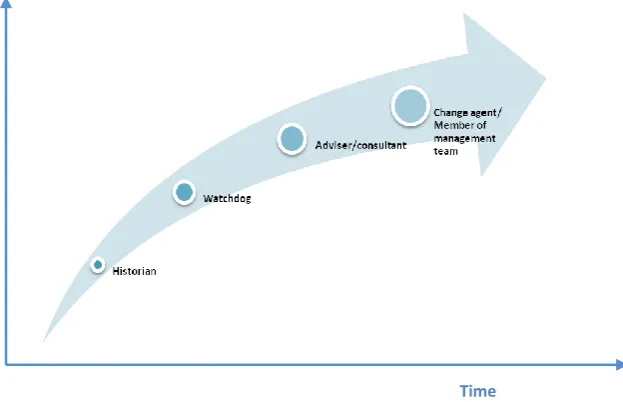
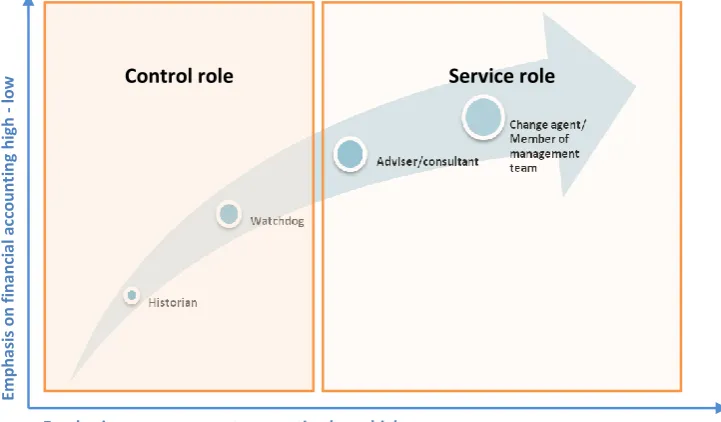
[image:15.595.88.400.128.329.2]Grandlund and Lukka (1998, p.187) found, in their research, a similar development in the roles of the controller. They found with regard to the changing role of the controller throughout time, the following development:
Figure 4 - Development of controller role over time according to Grandlund and Lukka (1998, p.187)
Knoop (2015, p.18-19) studied several models e.g. Van Veen and Van der Wal (1996), De Waal (2003) and Weber and Schäffer (2013), regarding the development of the traditional controller into the business partner role and discovered that the three models fitted as a blueprint over each other. This resulted in the following model:
A
d
d
e
d
V
a
lu
e
Time
Bookkeeper
Financial Controller
Management Controller Business Partner
Figure 5 – Interpretation of the future of the financial function (Knoop, 2015, p.19)
Knoop (2015, p.19) adds an important remark with this model as described in the management literature. So far there has been few empirical evidence in the literature that the role of the
controller in practice is actually developing in the direction in of business partner, rather it should be considered as an ideal model of the development of the controller.
[image:15.595.72.302.442.642.2]2
. The
o
re
tical fra
m
ew
o
rk
16
The growth of the management accountant into the direction of business partner is acknowledged by the Institute for Management Accountants (IMA) as well. In the research “counting more, counting less” (Siegel, 1999, p.20) commissioned by the IMA, the following phrase is characteristic for the current development of the management accountant:
“The management accounting profession has made a quantum leap. Over the past 10 years, management accountants have been transformed from bean counters and corporate cops on the periphery of decision making to business partners and valued team members at the very strategic activity”.
To summarize and conclude, in the different literature we encounter largely the same global developments in the role of the controller:
- From pure financial accounting role (bean counter/bookkeeper) and financial control role (corporate cops/corporate watchdogs/financial controller) into the financial management accounting role (management controller/business partner/member of management team); - Shift in nature of the role from operational towards more strategic;
- Shift from taking care of the record, accuracy and reliability of the (financial) numbers, into gathering the proper numbers, enriching this data and using this data to support
management decision making.
2.3 Definition of a controller
Now we understand the position, history and evolution of the controller, it's important to develop a deeper understanding of the definition of a controller. This will contribute to a higher validity of the research, because it will increase the likelihood that we measure, what we intended to measure. In this paragraph we will discuss and triangulate the different definitions and eventually, present the definition we use during our research. By triangulating, we mean using multiple sources (both multiple reputable dictionaries and consulting the management accounting literature) in order to build a more complete definition (Baarda et al., 2009, p.188) and eventually an higher validity of the definition used in this research.
When we consult reputable dictionaries, regarding the concept of a controller we find the following phrases:
Van Dale: “a controller is the financial expert in a company”
Oxford Dictionary: “a person in charge of organization's finance”
Cambridge University: “an executive who is the head of a
company's finance or accounts department”
All dictionaries give a similar broad and at the same time, vague definition of the controller. Striking is the fact that all three dictionaries, use the terms: finance and financial prominent in their
definition to describe the controller. In other words, according to these dictionaries the primary
2
. The
o
re
tical fra
m
ew
o
rk
17
When we consult the dictionary for the term ‘management accountant’ we are redirected to theterm ‘Management Accounting’ and the prominent dictionaries provides us with the following phrases:
Oxford Dictionary: “The provision of financial data and advice to a company for use in
the organization and development of its business”
Cambridge Dictionary: “an accountant who helps managers decide how to
make profits or save money by examining information relating to the costs of running a business and analyzing how
much profit different parts of the business are making”
Based on these definitions so far we can cautiously conclude that the controller/management accountant is a (chief) executive which is responsible for the financial matters in an organization. It's expected to gather, analyze financial information and advice on financial aspects for the purpose of organizational decision making. This definition is anything but clear, and needs to be deepened by definitions from the literature.
In the literature, there seems to be little consensus on the definition of the controller. Kristofersson et al. (2008) acknowledge the buzz around the definition of a ‘controller’ and found that there is a lack of agreement about the exact definition. During their research, they found that in interviews with people currently working as a controller, these interviewees acknowledge that even if you have the same title, the activities differ from organization to organization. The following general
definitions are found in management literature:
Different definitions of the controller found in the management literature
“Controller is the person in charge of both management accounting and financial accounting in an organization; usually the chief accountant.” (Zimmerman, 2005, p.784)
“A controller: the top managerial and financial accountant in an organization. Supervises the accounting department and assists management at all levels management at all levels in interpreting and using managerial accounting information.” (Hilton, 2002, p.836)
“Professionals active as management accountants, financial managers, and CFO's, who are positioned as financial representative of the business unit.”(Rouwelaar, 2007, p.3)
“Management Accountants or Controllers are the professionals who are responsible for the financial reports and the management accounting control system within an organization (control role) But beside this role the controllers also provide information to their mangers.”(Rouwelaar, 2007, p.3)
“Controllers are the financial measurement experts within their firm or business unit and are key members of management teams. As a member of the management team, they can influence the decisions taken by the members (act before the fact). In addition to the controller's role of contribution in business decisions, the controller is responsible for the accuracy of financial reporting and for the integrity of internal control (after the fact reporting).”
(Rouwelaar, 2007, p.5)
“A function name or person term. Controllers are service providers for other executives and are responsible for economical services. Service means support and consultation/advising and sometimes also servicing of an operational matter. Controllers are Service-partners in different functional areas.”(Biel, 2007)
The professionals responsible for delivering all kinds of information are the management accountants or so called controllers. Accounting information plays an important role in organizations. Rouwelaar (2007, p.3) describes the purpose of accounting information as follows: “accounting information is designed to serve as the basis for many important decisions, both within and outside the organization”.
Management accounting: “it's the process of guarding the economic vitality of the organization, by translating wishes and plans on the one hand, and the results and performance on the other hand. All in the financial dimension in which the goals of the organization have been formulated”. (Boons , 2006, p.15)
2
. The
o
re
tical fra
m
ew
o
rk
18
After triangulating the several definitions found in the dictionaries and the management accounting literature we can cautiously conclude that the controller:
Is often a (high) placed financial professional, who deals mainly with the financial aspects of the organization; the controller provides and advises the management with financial- and non-financial information, for the purpose of decision making and is responsible for accurate financial in- and external reporting and internal control.
As we can see, this is still a very broad definition of the controller. And especially the fact that the controller can be responsible for such a large number of subjects makes it so difficult to provide an unambiguous definition. However in the next paragraph we elaborate on the possible roles a controller can serve, this will provide us a deeper understanding of the concept of the controller.
2.4 Roles of a controller
In this third part of the literature review we start by providing multiple author's definitions on the potential controller's roles in an organization. Problematic is the fact that “very different definitions of the controller (as we could read in the prior paragraph) and controller roles are used” (Verstegen et al., 2007, p.10). So there appears to be a lack of agreement on the exact definition of the role of the controller. Especially because of this lack of agreement and variety in the definition of the controller and its roles we believe that it's difficult, but highly important, to elaborate on these different views in order to build a clearer and more extensive understanding of the potential roles of a controller.
In an document written by Savage and Jasch (2005, p.12), commissioned by the International Federation of Accountants (IFAC) they have defined two broad categories regarding the accounting practices in organizations, in which the following categories of practices are often encountered in organizations:
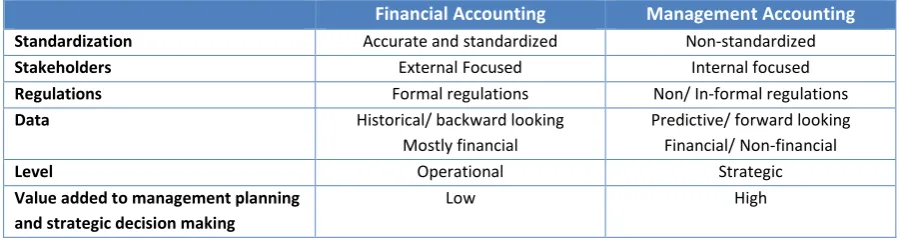
• Financial Accounting is mostly directed at providing accurate and standardized (financial) information/ accountability to the external stakeholders of the organization (Knoop, 2015, p.15). Among these external stakeholders are for example investors, shareholders and (tax) authorities. In contrary to Management Accounting, Financial Accounting is bounded by (inter)national laws and standards like the IFRS (International Financial Reporting Standards) which is obligated for companies in the European Union. According to the IFAS, part of the financial accounting is among other things the collecting relevant data, balance accounting, financial statements auditing and the prior mentioned reporting for external stakeholder. The data that Financial Accounting delivers is primarily based on a historical data and therefore more backwards looking.
2
. The
o
re
tical fra
m
ew
o
rk
19
Financial Accounting Management Accounting
Standardization Accurate and standardized Non-standardized
Stakeholders External Focused Internal focused
Regulations Formal regulations Non/ In-formal regulations
Data Historical/ backward looking
Mostly financial
Predictive/ forward looking Financial/ Non-financial
Level Operational Strategic
Value added to management planning and strategic decision making
[image:19.595.69.520.64.183.2]Low High
Table 2 – Main differences between Financial Accounting and Management Accounting
Anderson (1947) gave an early description of the role of a controller, and defines three main global categories: (1) Taking care for a reliable and complete financial reporting; (2) controllers are responsible for delivering information needed to evaluate managers’ performance; (3) the
controllers support the managers with operational decisions by delivering information and financial analyses on request.
Sathe (1983, p.31) describes the role of the controller based on its two major responsibilities: (1) to help the management team in the business decision-making possible, also referred to as the
management-service responsibility; (2) to insure that reported financial information pertaining to the relevant organizational unit is accurate and that internal control practices are conform to corporate policies and procedures, also referred to as the financial reporting and internal control responsibility. The first controller role is related to the financial reporting and internal control, and is important to organizations because they function as a local guardian (most large companies have a decentralized structure we multiple business units) against financial misreporting and signaling (managers) behavior that's not in the best interest of the company as a whole. Despite most companies have a substantial internal audit staff, and regularly visit the decentralized locations, they just can't provide the same amount of security as the controller can. The controller has, in contrary to the internal audit staff, not the same “depth of knowledge about local systems, people and practices to be able to detect subtle misrepresentations or inadequacies.” (Sathe, 1983, p.33).
The second controller role Sathe (1983) identified is the management-service role. To effectively support the management team in the business-decision making process, the controller needs to have a high level of involvement in this process. And when the controller is more (directly) involved, it's less likely that the controller remains independent from the business unit and eventually reports objectively to the corporation’s management. So a conflict of interest could arise.
2
. The
o
re
tical fra
m
ew
o
rk
20
Boons (2006) stated that management accountants are responsible for maintenance and
[image:20.595.72.406.118.423.2]improvement of the economic vitality of the organization. Boons (2006) distinguishes three different roles (see figure 6).
Figure 6 - Boons (2006, p.14)
First off all they provide an impression of the economic vitality of the business by selecting, registering and enriching the data needed to assess this vitality. Common activities in this sub-role are for example financial administration and gathering, recording and assessing data with regard to financial and non-financial operational processes and environmental phenomena.
Secondly, they participate in controlling/navigating the organization towards the organizational objectives. The information provided by the controllers, serves as the basis on which organizational decision making is supported and eventually initiated. “Reversely, this decision making directs and determines the nature and reach of the information system”(Boons, 2006, p.13). The ‘navigating’
role of the controller can be interpreted as optimizing the financial-economical future of the organization and preventing decision making which could harm the short and long term economic vitality of the organization.
Thirdly, the last role of the controller is the management control role that focuses on influencing the behavior of the people in the organization. It's considered as a controversial role (Boons, 2006, p.15). The fact that certain decisions have been taken, will not guarantee that the organization will move in the intended direction.
The second and third role have according to Boons (2006, p.14) the following goal: “the central question in the management accounting and control discipline: supporting and initiating the decision making in organizations by providing information about the consequences of future decision
2
. The
o
re
tical fra
m
ew
o
rk
21
There is another factor that makes it difficult to delimit the role of a controller. According to Boons (2006) in the management literature, one acknowledges the overlap between the responsibilities of the manager and the controller.
In line with the ideology of Anderson (1947), Sathe (1983) and Boons (2006), Hopper (1980) sketches a similar role for management accountants (controllers).
Acknowledged by the research of Mouritsen (1996), Hopper (1980) has divided the role of the management accountant into two: (1) the scorekeeping role and (2) the customer service role. In addition Hopper found that both roles are often conflicting with each other. The decision support needs of the line management (customer service role) conflicted with the needs of the central management to control line management actions (control role). His advice was to separate both functions, and assign it to two or more separate employees.
Hopper's two roles and the mutual role conflict are substituted by the research of Sathe (1983) as well. The controller’s major responsibility in the management-service role is to actively aid the management team in their decision-making process. The controller is actively involved in the business decision-making process by “recommending courses of action and by challenging the plans and action of operating executives”. We will dive deeper into this potential role conflict in paragraph 2.6.
That the two or three different roles haven't changed drastically over time, is clear from the more recent research Merchant and Van der Stede (2003), they recognized the fiduciary responsibility, supervisory role (both roles are equivalent for the financial control role of Anderson’s) and the management support role (equivalent for the management control/ service role of Anderson's). All together the roles seem to have a high resemblance with the previous roles as defined in 1947 by Anderson.
2.4.1 Roles of a controller within Dutch healthcare organizations
Knoop and Van de Ven (2016, p.231) made an empirical multiple-case study in ten Dutch healthcare organizations. The purpose of their research was to assess whether decentralized controllers are really developing into business partners.
2 . The o re tical fra m ew o rk
22
The financial function of Dutch healthcare organizations in their research on the other hand, appear to be highly specialized. Knoop and Van de Ven (2016, p.230) state that in this central financial function we can distinguish:
• Financial control
o Treasury function because of its scale and the high risks involved, assigned to specialist.
o The real estate function is from the beginning of time an important point. Because of the many changes in regulation, there is an increased risk with regard to the
management of real estate, and therefore financial specialist have been appointed o Because of the increasing complexity of regulations regarding the care production,
most care and cure organizations decided that it was not desirable to combine it with the controller function and it needed a separate function.
o In most organizations the AO/IC function is combined with internal audit and appointed to specialists like concern controllers or internal audit employees, which are part of the planning and control function.
• Business control
According to the empirical research of Knoop and Van de Ven (2016, p.231) in Dutch healthcare organizations the main activities of the controller in practice are still especially budget estimate, budgeting and financial reporting. Therefore the emphasize is on financial control, and they little develop towards the management control role.
2.5 Our view on the roles of a controller
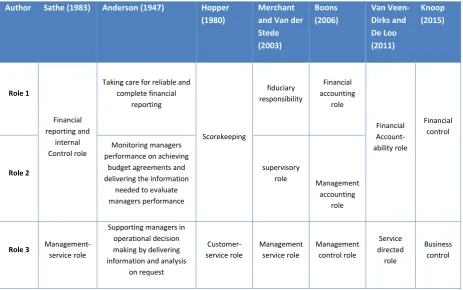
[image:22.595.67.531.452.742.2]When we put the different theories to each other we get the following overview:
Table 3 - Overview of the different roles derived from literature Author Sathe (1983) Anderson (1947) Hopper
(1980)
Merchant and Van der Stede (2003) Boons (2006) Van Veen- Dirks and De Loo (2011) Knoop (2015) Role 1 Financial reporting and internal Control role
Taking care for reliable and complete financial reporting Scorekeeping fiduciary responsibility Financial accounting role Financial Account-ability role Financial control Role 2 Monitoring managers performance on achieving
budget agreements and delivering the information
needed to evaluate managers performance
supervisory
role Management accounting
role
Role 3
Management-service role
Supporting managers in operational decision making by delivering information and analysis
2
. The
o
re
tical fra
m
ew
o
rk
23
As we can see the different theories have similar roles. We chose to use the concept of Sathe (1983) for the following reasons: (1) he has described the different roles in more detail then the other authors; (2) as we will read in paragraph 2.6 he described different types of controllers and (3) the roles as defined by Sathe (1983) show a high resemblance with the roles as described by Knoops (2015) who conducted his research in Dutch healthcare organizations, the same sector as this research is being conducted.
Our view on the roles of the controller:
1. Financial reporting and internal control role >> for the remainder of this research we
will use the term ‘control role’ to indicate this role.
Our definition: To ensure that reported financial information pertaining to the relevant organizational unit is accurate and conform formal regulations and that internal control practices are conform to informal corporate policies and procedures.
2. Management service role >> for the remainder of this research we will use the term
‘service role’ to indicate this role.
Our definition: to assist and support the management team in their business decision-making.
[image:23.595.80.441.390.601.2]Within these two roles the focus is respectively on financial control and management control. Subsequently the link can be made with the roles as described in the model of Grandlund and Lukka (1998), regarding the controller's development from bean counter to business partner.
Figure 7 – Combining the development and different roles
Therefore, if we follow the suggested development of Grandlund and Lukka (1998), we could expect the modern controller to shift towards the service role and move away from the control role.
Emphasis on management accounting low - high
Emp
h
asi
s on
f
in
a
n
ci
a
l ac
co
u
n
ti
n
g h
ig
h
lo
2
. The
o
re
tical fra
m
ew
o
rk
24
2.6 Role conflict
The prior paragraph taught us that the controller has two major roles: (1) control role and (2) service role. Sathe (1983) was one of the first authors to acknowledge the problems that could arise when one controller conducts both roles at the same time. The different nature of both roles and especially the conditions needed to conduct both roles at the same time, are such significant that it's difficult to conducted them in an effective way.
In order to fulfill the financial reporting and internal control role in an effective and integer way, the controller needs to retain a high degree of independence from the business unit and at the same time win the confidence of the (division) manager and staff to disclose every detail about the business unit operations and situation. It needs to assess whether the managers decisions are in the best interest of the company, and the manager might be reluctant to disclose sensitive information and this will lead to an information a-symmetry between the controller and the manager. In other words the controller is expected to retain a high degree of independence from the business unit in order to be able to report integer to the corporate management. Especially this required
independence could conflict with the second role of the controller, in which the controller needs a high degree of involvement in the business unit.
Hopper (1980) also found that both roles are often conflicting with each other. The decision support needs of the line management (service role) conflicted with the needs of the central management to control line management actions (control role). His advice was to separate both roles.
The controller’s role regarding the financial reporting and internal control is important for
organizations because they function as a local guardian against financial misreporting. Despite most companies have a substantial internal audit staff, and regularly visit the decentralized locations, they can't provide the same amount of security as the controller can. The controller has, in contrary to the internal audit staff not the same “depth of knowledge about local systems, people and practices to be able to detect subtle misrepresentations or inadequacies” (Sathe, 1983, p.33).
When the controller is involved in the decision making of the business unit and at the same time responsible for providing independent financial reporting (control role) on the outcomes of these local business decisions, a conflict of interest could arise. A striking citation of Sathe (1983, p.33),
2 . The o re tical fra m ew o rk
25
Sathe (1983, p.34) emphasizes the importance of both roles and has designed a framework with four ideal types on the controller's roles. For every role type he defines the controller's role, required
behavior, potential benefits and potential risks. We’ll describe the roles and behaviors, the potential risks and benefits are mentioned in appendix C.
Name Role Required behavior
The Involved controller
The controller is mainly focused on the management-service role and less on the financial-reporting and internal control role.
Pro-active involved in the business unit decision making
The
independent controller
The controller is mainly focused on the financial-reporting and internal control responsibility and less on the management-service role.
Remain objective and independent from the business unit managers it serves
The split controller
The financial reporting and internal control role on the one hand, and the management-service role has been assigned to different individuals in the organization. This enables the organization to put high emphasis on both roles, something which is not possible if both roles are assigned to one individual.
The controller with the management-service role is expected to be actively involved in business unit decision making.
The controller with the financial reporting and the internal control responsibility is expected to report objective and independent from the business unit.
Strong controller
Both the management-service role and the financial reporting/internal control role are united in one individual. The controller is expected to put high emphasize on both of them.
[image:25.595.74.520.134.417.2]Both the management-service role and the financial reporting/internal control role are united in one individual. The controller is expected to put high emphasize on both of them.
Table 4 – Overview of different types of controllers according to Sathe (1983)
The different roles of a controller works as a good filter to address potential problems we encounter within MST. However in order to have a deeper understanding of the actual activities of a controller and to increase the practical relevance for MST we need a list of actual activities of a controller. We have built a framework by specifying the role of a controller. In the next paragraph we will enhance this framework by adding the activities and responsibilities of a controller.
2.7 Activities of a controller
In this paragraph we will conduct a literature review on the papers, available in the field of management accounting, regarding the actual activities of a controller.
2
. The
o
re
tical fra
m
ew
o
rk
26
Ax et al. (2005, p.15) identified the following main function of a controller: ''planning, implementing, following up, evaluating, and adapting the organization’s function’’. Resulting from these main functions of a controller, Ax et all. (2005, p.82) identified the following activities:
• Plan, follow up and control the organization.
• Provide decision makers with sufficient information and follow up taken decisions. • Distribute responsibility.
• Gather, analyze, compile, report and communicate financial information. • Analyze variance and suggest actions for improvement.
• Contribute to the prerequisites of the learning organization. • Contribute to a positive organizational culture
• Perform different ad hoc investigations for example changes in external factors and how other organizations function.
• Provide advice for the organization regarding financial questions. • Develop and update control and accounting systems
• Educate employees in financial questions.
Knoop has investigated the most important activities of the controller in Dutch healthcare organizations (2015, p.30):
• Taking care of a good financial administration. • Budgeting and forecasting.
• Monitoring budget and performance evaluation. • Periodical financial information supply.
• Financial analyses.
• Financial support business cases and cost price calculations. • Taking care for management information.
• Internal advisory.
A positive exception is the research of Verstegen et al. (2007). They have developed a framework in which 37 controller activities have been distinguished (see appendix D for a complete overview). This list of controller activities has been established by an extensive literature research in the
management accounting and controlling literature, by two separate researchers.
They managed to cluster the 37 activities into five coherent combinations of activities (Verstegen et al. 2007, p.15):
1. Designing and changing control systems and supporting change processes; 2. Internal reporting;
3. External reporting;
2 . The o re tical fra m ew o rk
27
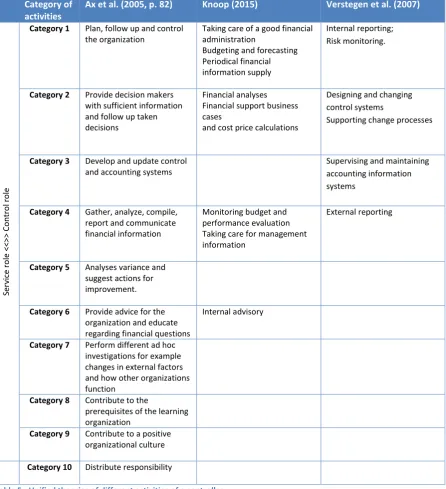
The three theories compared:
Category of activities
Ax et al. (2005, p. 82) Knoop (2015) Verstegen et al. (2007)
Se rvi ce ro le < <> > Co n tr o l ro le
Category 1 Plan, follow up and control the organization
Taking care of a good financial administration
Budgeting and forecasting Periodical financial information supply
Internal reporting; Risk monitoring.
Category 2 Provide decision makers with sufficient information and follow up taken decisions
Financial analyses Financial support business cases
and cost price calculations
Designing and changing control systems
Supporting change processes
Category 3 Develop and update control and accounting systems
Supervising and maintaining accounting information systems
Category 4 Gather, analyze, compile, report and communicate financial information
Monitoring budget and performance evaluation Taking care for management information
External reporting
Category 5 Analyses variance and suggest actions for improvement.
Category 6 Provide advice for the organization and educate regarding financial questions
Internal advisory
Category 7 Perform different ad hoc investigations for example changes in external factors and how other organizations function
Category 8 Contribute to the
prerequisites of the learning organization
Category 9 Contribute to a positive organizational culture
[image:27.595.76.523.92.582.2]Category 10 Distribute responsibility
Table 5 - Unified theories of different activities of a controller
3
. M
et
h
o
d
s and
m
et
h
o
d
o
lo
gy
28
3. Methods and methodology
[image:28.595.32.578.145.437.2]In this chapter we will highlight the research methods that has been followed for answering the sub research questions and eventually the central research question. In the section methods we will elaborate further on the specific methods used to solve these research questions. An overview of the methods that will be used in this research:
Figure 8 – used methods as parts of our research
3.1 Literature review method
Before we can initiate a benchmark study for the activities of the controller we need to frame the concept of a controller. In paragraph 2.3 we attempted to find a clear definition of a controller in the field of the management accounting literature. Because of the many different interpretations and the lack of agreement on the definition of a controller, we have performed an extensive literature review to reach a comprehensive definition of the concept of a controller.
Multiple search engines, including Google Scholar, Scopus, and the University of Twente’s library
search engine, will be used to find relevant literature. By including multiple search engines one protects himself against bias from favoring one specific publisher above others (Wohlin, 2014, p.2-3). Instead of starting a systematic literature in the traditional way, the literature study will be
structured according to the snowballing procedure (see appendix B) (Wohlin, 2014). Snowballing refers to: “using the reference list of a paper or the citations to the paper to identify additional papers” (Wohlin, 2014, p.1). The Snowball method can be split into two types of snowballing:
backward- and forward snowballing. Backward snowballing refers to scanning the reference list of an article to find new relevant articles to include in the research, see the left side of appendix B.
Forward snowballing on the other hand, refers to finding new papers by looking at the papers citing the article, we used the latter to check if the literature is still relevant today. See the right side of appendix B, for an explanation of the forward snowballing method.
Used methods
3
. M
et
h
o
d
s and
m
et
h
o
d
o
lo
gy
29
According to traditional guidelines for conducting a systematic literature research, the objective is to include all relevant research. This is absolutely a good objective, however in practice this is hard, almost, impossible to achieve. This is mainly due to for example the problems arising in the first phase of the literature review: selecting the right words/terms and to choose the right literature in the search engines for academic literature. We, as suggested by Baarda et al. (2009, p.56), checked
for every relevant paper what the keywords or so called ‘descriptors' were. These are keywords,
authors use to make their research easier to find in search engines.
To find all relevant synonyms, related terms and keywords the hyperdictonary.com is used as well to identify synonyms and related terms for these keywords. For example: because of prior mentioned lack of definition on the name of a controller, we tried to find synonyms for the term controller like 'business controller' and 'management accountant'. By performing these checks, we increase the likelihood that we don't miss relevant literature because of not including existing synonyms and related terms (Baarda et al., 2009, p.56).
The eventual literature framework, consist of the main literature available regarding the definition, roles and activities of the controller. These frameworks are established by selecting current relevant literature, using the reverse snowballing method of Wohlin (2014) and triangulation. In this way we aim to provide a solid theoretical foundation for the rest of this research.
In part 2 of paragraph 3.1 we raise the question: what are, and maybe even more important, what
aren’t the main activities of a typical controller according to the current management accounting literature. The multiple studies will be examined in the same way as in part one of this paragraph to create a comprehensive list of activities of a controller. Thus, this literature study is designed in the same way as the literature study performed in part one.
3.2 Preliminary research
The list of activities mentioned in paragraph 2.7 serve as a good starting point for the benchmark study. However this list might not be complete. Before we start sending questionnaires to the controllers as described in the following paragraph, we need to be sure we miss at least as possible activities. There might be some hospital/branch specific activities, that are not included in the list of controller activities as compiled in the literature by Verstegen et al. (2007).
Following from some informal talks with the financial manager, controllers and observations in the
field, it appears that ‘care administration’ for example, appears to be a time-consuming activity of the controller in MST. In order to make this list as complete as possible (taken the restrictions of this research in account), we need to identify if there are any specific hospital activities missing.
To examine this, we will take (semi-)structured interviews (Drever, 1995) with managers of each hospital (n=6), to identify these additional activities. During these interviews, the managers have been asked to describe the situation in their hospital regarding the controlling function and share their thoughts on the problem statement as well. This helps us a lot to gain insights in the problem, that is central in this research, and possible solutions (‘best practices’) to overcome this.
3
. M
et
h
o
d
s and
m
et
h
o
d
o
lo
gy
30
Therefore, next to the interviews with the managers in MST, more than 85 percent of the total population of MST controllers have been interviewed (semi-structured) as well. And last but not least informal observations on the work floor and attending meetings have been taken into account in designing the survey list of controller activities.
By using data from multiple sources (also called triangulating; Baarda et al., 2009, p.188) we increase the probability that we include as much controller activities as possible. In case the list of activities is still not sufficient, the controllers always have the option and freedom to add their activities in the
survey section ‘other’ controller activities.
So the initial list of controller actvities of Verstegen et al. (2007) serves as the basis for our
questionnaire. Some of the activities have been merged to reduce the amount of controller activities and to keep to list more clear to the controllers. Then from observations, the interviews and informal chats with the controllers, we added some additional activities. We decided to categorize activities with a high resemblance in to order to make the list easier to understand for the controllers and added a short description. And to be as complete as possible we added two categories: ‘other activities’ and ‘other activities related to care administration’ to provide the controllers the freedom to add activities not pre-defined in the prior categories.
This will serve as the structure for the activities framework used in the benchmark study survey as described in the following paragraph.
Overview of the structure of the activity framework used in the benchmark survey:
37 controller activities Verstegen et al., (2007)
Dutch hospital specific activities (source interviews and observations) and freedom for respondent to add activities
+
=
[image:30.595.70.428.409.581.2]Activity framework used in the benchmark survey
3
. M
et
h
o
d
s and
m
et
h
o
d
o
lo
gy
31
3.3 Benchmark design methods
For answering sub research question 2, a literature review has been performed according to the same method as described in paragraph 3.1. To find a comprehensive definition of a benchmark study and an appropriate benchmark study design the corporate-benchmark method (Ammons, 1999) provides a good structure for the benchmark study design.
Box 1 – Corporate style benchmark (Ammons, 1999, p.107)
As Ammons (1999, p.107) describes in step 4 of the corporate-style benchmark research: ''Analyze the process of the benchmarking partners in order to identify the differences that result in the superior performance (''best practices'')''. So after we have completed the internal research we will reproduce the research for the activities in the peer hospitals in the same way as we did in MST. Step 1 and 3
We build further on the outcomes of the Price Waterhouse Coopers’ (PWC) study performed in 2012 regarding the financial function of MST. This study puts forward the big differences regarding the size (Full time employment, FTE) of the controller function of MST with the Santeon group. So to provide a deeper understanding of the causes of differences in FTE’s, we will investigate among other, the specific activities and time expenditure of a controller through a benchmark study. In the PWC study they benchmarked MST in the Santeon group. Santeon is a group of Dutch hospitals in different areas of the Netherland (no direct competitors) and comparable to each other in types of cure functions in the hospital and size. For this study, we will use the Santeon group as well.
Step 2 and 4
We investigate whether a controller in MST performs the activities as described in the literature. In addition to the activities mentioned in the literature there might be some hospital specific controller activities. Examination of the current literature regarding the activities of controllers in the hospital sector shows that there are no studies undertaken in the hospital sector yet. These hospital branch specific activities that might exist will be an addition to the already existing list of activities
mentioned in the financial literature, as described in step 2 of this research. So we investigate whether a controller in the hospital branch performs branch specific activities in addition to a general controller in for example the commercial sector.
In the benchmark study, questionnaires will be send to the respondents to measure whether the general and hospital specific activities as found in the literature emerge within MST and benchmark and how much time they spend on each category. Questionnaires are used because in this matter we can analyze and process the results of the research in a more quantitative manner (Babbie, 1998). Besides these questionnaires, also semi-structured interviews with the controllers and managers will be held to complement the information derived from the questionnaires.
The theory of Ammons, D. N. (1999, p. 107) suggests using the following framework for conducting a corporate-style benchmark study:
1. ''Decide what process to benchmark 2. Study the process in your own company 3. Identify the benchmarking partners
4. Analyze the process of the benchmarking partners in order to identify the differences that result in the superior performance (''best practices'').