ISSN Online: 2327-5960 ISSN Print: 2327-5952
DOI: 10.4236/jss.2018.65014 May 24, 2018 171 Open Journal of Social Sciences
A Systematic Review of Empirically Based
Universal Design for Learning: Implementation
and Effectiveness of Universal Design in
Education for Students with and without
Disabilities at the Postsecondary Level
Soonhwa Seok
1*, Boaventura DaCosta
2, Russ Hodges
31Korea University, Seoul, South Korea 2Solers Research Group, Orlando, USA 3Texas State University, San Marcos, USA
Abstract
This systematic review explored methods of UDL implementation for postse-condary students with and without disabilities and the degree to which these methods are effective. The authors examined 17 empirically based studies published across 12 journals focused on the application of UDL principles. The studies were analyzed with regard to 1) participant information, 2) courses and delivery mode, 3) independent and dependent variables, 4) im-plementation strategies, and 5) effectiveness of imim-plementation. The analysis revealed that 15 of the studies reported effective outcomes, one study resulted in blended effects, and one did not discuss implementation. Two studies used a blended delivery mode for special education courses, and four studies used online delivery modes for a teacher education course and three professional development programs. Other studies used face-to-face instruction for teacher education, general courses, and workshops. The most common independent variables were UDL principle-based course design and implementation, fol-lowed by hands-on activities, training of instructors, peer-led team learning, and a collaborative professional development model. The dependent variables included course evaluation, learning outcomes, such as revision of lesson plans and technology use, and level of confidence or acquisition of knowledge about UDL and disabilities. Finally, multiple instructional strategies focusing on the UDL principles were utilized, to include web-based computer-mediated com-munication, web-based class management systems, interactions with
technol-How to cite this paper: Seok, S., DaCosta, B. and Hodges, R. (2018) A Systematic Review of Empirically Based Universal Design for Learning: Implementation and Effectiveness of Universal Design in Educa-tion for Students with and without Disabil-ities at the Postsecondary Level. Open Journal of Social Sciences, 6, 171-189.
https://doi.org/10.4236/jss.2018.65014
Received: March 23, 2018 Accepted: May 21, 2018 Published: May 24, 2018
Copyright © 2018 by authors and Scientific Research Publishing Inc. This work is licensed under the Creative Commons Attribution International License (CC BY 4.0).
http://creativecommons.org/licenses/by/4.0/
DOI: 10.4236/jss.2018.65014 172 Open Journal of Social Sciences
ogy and other participants, and learning community. Overall, the findings re-vealed promising learning outcomes as supported by the existing literature regarding the effectiveness and practicality of UDL for students with and without disabilities at the postsecondary level.
Keywords
Accessibility, Accommodation, Application of UDL Principles, Design and Implementation of UDL-Based Courses, Modification, Outcomes of UDL Implementation, Postsecondary Education, Students with Disabilities, Systematic Review, Universal Design for Learning
1. Introduction
According to the Institute of Education Sciences [1], those with a learning disa-bility (LD) and/or attention deficit hyperactivity disorder (ADHD) collectively represent almost half of all students with disabilities (SDs) attending two- and four-year postsecondary institutions. Their attendance rate (60.9%) is lower than those of typically developing students (62.1%) [2], as is their college completion rate (37.5% and 51.2%, respectively) [3]. While many reasons have been offered for this discrepancy, these figures reflect the difficulty that SDs experience in adjusting to postsecondary school [4], as they are often not ready for academic college programs [5], showing difficulties in the areas of organization, attention, cognition, and information processing [6].
Students with disabilities at the postsecondary level need programs that adapt to their special needs [7] [8], but at the same time allow the curriculum to be used with all students. To that end, specific strategies have been offered to help students of various educational, cultural, and linguistic backgrounds to succeed in college [9]. However, while considerable research has been conducted on cur-riculum and/or strategies for increasing learning outcomes for students without disabilities at the postsecondary level (e.g., [10]), few investigations have ad-dressed such solutions for SDs [11].
One of the more promising strategies in this regard is use of the principles of universal design for learning (UDL), which is intended to help all learners suc-ceed [12]. Universal design for learning is based on universal design (UD), orig-inally describing the way buildings and environments can be designed to max-imize their inherent accessibility to a diverse body of people [12]. Seven prin-ciples serve as the foundation for UD to maximize the accessibility and usability of aggregate surroundings [13]: equitable use, flexibility in use, simple and intui-tive use, perceptible information, tolerance for error, low physical effort, and size and space for approach and use.
includ-DOI: 10.4236/jss.2018.65014 173 Open Journal of Social Sciences
ing the means of communication, letters, or figures. Multiple expressions refer to the provision of multiple ways to express students’ knowledge and skill acquisi-tion. Finally, engagement refers to the provision of choices to enhance motiva-tion for learning and opmotiva-tions for internal and external factors, such as self-regulation and self-discipline, to maintain motivation. Altogether, these principles offer an outline for instructional actions, such as goals, methods, ma-terials, and assessments, for the purpose of developing built-in, flexible ap-proaches that are available to each student [15]. A number of frameworks for enhancing accessibility and equity for SDs exist, to include UDL, universal de-sign for instruction (UDI), and universal instructional dede-sign (UID) [12] [16]. All are similar in approach, with the terms often used interchangeably (e.g., [12] [17]).
Regrettably, empirical examination of UDL implementation and strategies in postsecondary education is lacking, even though numerous studies have been published on the principles, history, and philosophy of UDL [12]. In the context of special education, the reason for this void might be the fact that the Individu-als With Disabilities Education Act [18] mandates free appropriate public edu-cation (FAPE) for SDs in K-12, but FAPE is not mandated at the postsecondary level [17]. Necessary accommodations (e.g., curriculum and textbooks) for SDs in K-12 are directed and included in their individualized educational programs; however, legal services are not required for SDs at the postsecondary level, and state governments do not offer proactive direction. Compounding matters, while special education teachers in K-12 are specifically trained to teach this popula-tion with a focus on pedagogy [17] [19], instructors at the postsecondary level are typically not trained to work with and address the special needs of SDs.
1.1. Purpose and Research Questions
This systematic review explored methods of UDL implementation for postse-condary students with and without disabilities and the degree to which these methods are effective. The aim was framed by the following questions:
Question 1: What are the delivery modes of the courses utilized or UDL implementation?
Delivery modes were explored as one of the built-in mechanisms of UDL practices because UDL is believed to enhance accessibility to curriculum. At the same time, delivery mode has not been explored as a built-in mechanism in ex-isting research.
Question 2: What are the independent and dependent variables?
All studies were empirically based. Each study had independent and depen-dent variables. The outcomes of each study resulted from the implementation of the independent variable as interventions or experiments. The dependent varia-ble was investigated from the intervention. Thus, the independent and depen-dent variables were explored.
Question 3: What are the strategies used, and are they effective?
DOI: 10.4236/jss.2018.65014 174 Open Journal of Social Sciences
was used for educational settings. To enhance the efficacy of the independent variables, specific strategies were used in the intervention as the element of UDL. Thus, specific strategies used in the UDL implementation for post-secondary educational settings were explored.
2. Method
The authors systematically and independently searched three databases: Educational Resources Information Center (ERIC), PsycINFO, and Professional Developmental Center. The searches were limited to peer-reviewed, empiri-cally based studies published in English. The terms universal design for
learn-ing, universal design for instruction, and postsecondary education were used
as the descriptors. A total of 102 studies were identified that met these search criteria.
2.1. Inclusion Criteria
Each of the 102 studies were independently reviewed for inclusion based on the following criteria: the study had to 1) be empirically based; 2) contain the terms
universal design and/or UD, universal design for learning and/or UDL, and/or
universal design for instruction and/or UDI in the title or abstract; 3) have
iden-tified the participants; and 4) either implement UDL practices or conduct a sur-vey or interview on UDL intended to enhance knowledge about or implementa-tion of UDL practices for diverse, postsecondary-level learning populaimplementa-tions.
Of the 102 studies examined, the authors independently identified 16 studies, among which 14 were common among the authors. This amounted to an 88% agreement rate on the inclusion criteria use. Some of the 16 studies had been published in the same journals. That is, some of the journals had published two or more of the 16 studies. Upon reviewing these journals, the authors identified two additional studies that met the aforementioned inclusion criteria. The result, therefore, was a total of 18 studies.
The authors together scrutinized the 18 studies in a second review using the same inclusion criteria. This ended in an agreed-upon removal of three studies. Two additional studies were also reviewed because they had been cited by two or more of the remaining studies and met the inclusion criteria. In sum, the remov-al of the three studies coupled with the addition of the two studies resulted in a final count of 17 studies for review.
2.2. Data Extraction
DOI: 10.4236/jss.2018.65014 175 Open Journal of Social Sciences
related to the UDL principles. Finally, in the last pass, the effectiveness of the implementations was assessed. That is, the findings were classified as effective, for studies in which the course or instruction for the workshop was designed, implemented, and had higher course evaluation and significant improvement; or
blended, if the outcome was not better than or the same as that of the control
group, but still showed improvement in the learning assessment.
2.3. Inter-Coder Agreement
Inter-coder agreement was assessed on the extracted information using a check-list developed by the authors. The checkcheck-list comprised the following six ques-tions: Is the statement about the—1) participant information, 2) courses and de-livery mode, 3) independent and dependent variables, 4) implementation out-comes, 5) elements of UDL in the implementation, and 6) assessment of the ef-fectiveness of the implementation—clear and precise?
A total of 102 items (17 studies by 6 checklist items) were assessed. The au-thors reached an initial agreement rate of 95% on 97 of the 102 items regarding their belief that the extracted information from the 17 studies was clear and pre-cise, deliberating on the remaining four items until reaching consensus.
3. Results
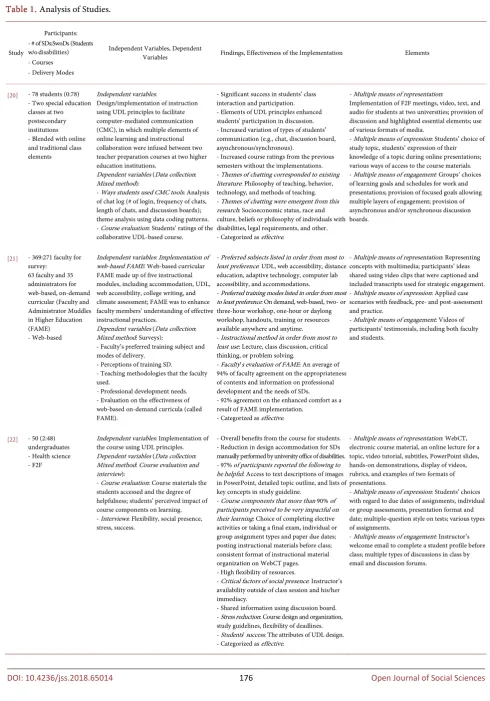
Table 1 depicts the information extracted from the 17 studies, published in 12
journals. That is, 1) participant information, 2) courses and delivery mode, 3) independent and dependent variables, 4) findings, 5) effectiveness of implemen-tation, and 6) elements of UDL in the implementation.
As shown in the table, six studies used mixed methods (see [20]-[25]), seven used quantitative methods (see [26]-[32]), and four used qualitative methods (see [33] [34] [35] [36]). Two studies conducted experimental and control group comparisons (see [26] [31]), while three used pre- and posttests (see [25] [29] [31]). (Table 1 does not call out the implementation strategies in a separate column; rather, the strategies are nested within the other table columns as part of implementation, delivery modes, or elements of UDL.)
3.1. Participants
DOI: 10.4236/jss.2018.65014 176 Open Journal of Social Sciences
Table 1. Analysis of Studies.
Study
Participants: - # of SDs:SwoDs (Students w/o disabilities) - Courses - Delivery Modes
Independent Variables, Dependent
Variables Findings, Effectiveness of the Implementation Elements
[20] - 78 students (0:78) - Two special education classes at two postsecondary institutions - Blended with online and traditional class elements
Independent variables:
Design/implementation of instruction using UDL principles to facilitate computer-mediated communication (CMC), in which multiple elements of online learning and instructional collaboration were infused between two teacher preparation courses at two higher education institutions.
Dependent variables (Data collection:
Mixed method):
- Ways students used CMC tools: Analysis of chat log (# of login, frequency of chats, length of chats, and discussion boards); theme analysis using data coding patterns. - Course evaluation: Students’ ratings of the collaborative UDL-based course.
- Significant success in students’ class interaction and participation. - Elements of UDL principles enhanced students’ participation in discussion. - Increased variation of types of students’ communication (e.g., chat, discussion board, asynchronous/synchronous).
- Increased course ratings from the previous semesters without the implementations. - Themes of chatting corresponded to existing literature: Philosophy of teaching, behavior, technology, and methods of teaching. - Themes of chatting were emergent from this research: Socioeconomic status, race and culture, beliefs or philosophy of individuals with disabilities, legal requirements, and other. - Categorized as effective.
- Multiple means of representation:
Implementation of F2F meetings, video, text, and audio for students at two universities; provision of discussion and highlighted essential elements; use of various formats of media.
- Multiple means of expression: Students’ choice of study topic, students’ expression of their knowledge of a topic during online presentations; various ways of access to the course materials. - Multiple means of engagement: Groups’ choices of learning goals and schedules for work and presentations; provision of focused goals allowing multiple layers of engagement; provision of asynchronous and/or synchronous discussion boards.
[21] - 369:271 faculty for survey: 63 faculty and 35 administrators for web-based, on-demand curricular (Faculty and Administrator Muddles in Higher Education (FAME) - Web-based
Independent variables: Implementation of web-based FAME: Web-based curricular FAME made up of five instructional modules, including accommodation, UDL, web accessibility, college writing, and climate assessment; FAME was to enhance faculty members’ understanding of effective instructional practices.
Dependent variables (Data collection:
Mixed method: Surveys):
- Faculty’s preferred training subject and modes of delivery.
- Perceptions of training SD.
- Teaching methodologies that the faculty used.
- Professional development needs. - Evaluation on the effectiveness of web-based on-demand curricula (called FAME).
- Preferred subjects listed in order from most to least preference: UDL, web accessibility, distance education, adaptive technology, computer lab accessibility, and accommodations.
- Preferred training modes listed in order from most to least preference: On demand, web-based, two- or three-hour workshop, one-hour or daylong workshop, handouts, training or resources available anywhere and anytime. - Instructional method in order from most to least use: Lecture, class discussion, critical thinking, or problem solving.
- Faculty’s evaluation of FAME: An average of 94% of faculty agreement on the appropriateness of contents and information on professional development and the needs of SDs. - 92% agreement on the enhanced comfort as a result of FAME implementation.
- Categorized as effective.
- Multiple means of representation: Representing concepts with multimedia; participants’ ideas shared using video clips that were captioned and included transcripts used for strategic engagement. - Multiple means of expression: Applied case scenarios with feedback, pre- and post-assessment and practice.
- Multiple means of engagement: Videos of participants’ testimonials, including both faculty and students.
[22] - 50 (2:48) undergraduates - Health science - F2F
Independent variables: Implementation of the course using UDL principles.
Dependent variables (Data collection:
Mixed method: Course evaluation and interview):
- Course evaluation: Course materials the students accessed and the degree of helpfulness; students’ perceived impact of course components on learning. - Interviews: Flexibility, social presence, stress, success.
- Overall benefits from the course for students. - Reduction in design accommodation for SDs manually performed by university office of disabilities. - 97% of participants reported the following to be helpful: Access to text descriptions of images in PowerPoint, detailed topic outline, and lists of key concepts in study guideline.
- Course components that more than 90% of participants perceived to be very impactful on their learning: Choice of completing elective activities or taking a final exam, individual or group assignment types and paper due dates; posting instructional materials before class; consistent format of instructional material organization on WebCT pages. - High flexibility of resources.
- Critical factors of social presence: Instructor’s availability outside of class session and his/her immediacy.
- Shared information using discussion board. - Stress reduction: Course design and organization, study guidelines, flexibility of deadlines. - Students’ success: The attributes of UDL design. - Categorized as effective.
- Multiple means of representation: WebCT, electronic course material, an online lecture for a topic, video tutorial, subtitles, PowerPoint slides, hands-on demonstrations, display of videos, rubrics, and examples of two formats of presentations.
- Multiple means of expression: Students’ choices with regard to due dates of assignments, individual or group assessments, presentation format and date; multiple-question style on tests; various types of assignments.
DOI: 10.4236/jss.2018.65014 177 Open Journal of Social Sciences
Continued
[23] - 26 preservice teachers and inservice teachers (16:10)
- Online degree certificate program for teachers
- F2F instruction for preservice teachers emphasizing assistive technology application
Independent variables:
An assignment activity for class after introduction to UDL: Review and revision of a previously used lesson plan with UDL applications and a focus on special learning needs.
Dependent variables (Data collection:
Mixed method):
- Changes in revised lesson plans were quantified and categorized.
- Revisions should include students’ special needs in their learning and UDL instructional strategies using the three UDL principles. - Participants’ reflections on their assignment were coded using a code book.
- Significant revisions using UDL approaches made by both pre- and inservice teachers; preservice teachers made more revisions using UDL principles than practicing teachers. - Preservice teachers made more revisions in multiple means of expression than in systematic engagement.
- Analysis of participants’ reflection: Perception of UDL was a transformative practice that served as an effective model for inclusion for all students.
- Categorized as effective.
[24] - 114 students - F2F special education class with eLearning elements lasting for 1 hour 40 minutes per week
- Blended
Independent variables: Implementing a web-enabled F2F class focusing on online team collaboration (online teams of nine each) to complete eight assignments during the semester; a different case of a student with special academic needs (e.g., LD, ADHD, and gifted) was assigned to each team.
The design of the course using adult learning tenets and UDI principles: Course management system (CMS) used to combine eLearning elements with those of traditional class sessions.
Dependent variables (Data collection:
Mixed method):
- Observation and analysis of participation. - Online interactions: Discussion, products, and feedback.
- Course evaluations.
- Increased interaction: The blended course design enhanced students’ engagement in meaningful learning.
- Enhanced learning autonomy and self-directed learning: Choices of what to study, how to engage, and when to engage.
- Increased critical reflection skills through the learning community activities and skills of positive collaboration.
-The score of course evaluation was 9.2 out of 10 points (10 indicating outstanding).
- Categorized as effective.
- Equitable use: Enhanced and easy access by all students with multiple learning abilities (e.g., lecture notes, links to Internet resources, peer discussion thread).
- Tolerance of error: CMS used; students studied at their own pace.
- Minimizing physical efforts: Online and in-person availability of the course on an “anytime, anyplace basis.”
- Perceptible information: The design of CMS to easily access the instructional materials (e.g., all germane information located in a place). - Community of learners: Course made use of team interactions and communications between students and between students and professors. - Simple and intuitive: Design of the blended course resulted in effective interactions.
[25] - 53 faculty: 43: First phase; 10: Second phase - Online disability awareness program during the 2014-2015 academic year
Independent variables:
The online disability awareness program made up of three modules: Two or three hours to complete each module. Module 1 on disability laws, related services and accommodations, and disability. Module 2 on UDL principles and models of UDL strategies and instructional activities. Module 3 on ways to develop easy-to-approach teaching materials (e.g., syllabi, presentations, and documents).
Dependent variables (Data collection:
Mixed method):
Quantitative measures: - Faculty attitudes toward SDs using Interaction With Disabled Persons Scale. - Pre- and post-surveys on faculty knowledge about disability laws, disability characteristics, accommodation policies, UDI, and accessibility of electronic materials, as discussed in the online disability awareness program. - Qualitative analysis:
Thematic analysis method.
- Improvement of faculty attitudes toward SDs: A statistically significant difference between before and after completion of program (Pretest: M = 3.06, SD = 0.54; Posttest: M = 2.82, SD = 0.47);
t(42) = 3.90, p < 0.01, d = 0.47; less discomfort in interactions with SDs; better understanding of SDs’ academic needs and thoughts/ideas. - Increase in knowledge about SDs and principles of UDL: Significant increase from the pretest (M = 22.51, SD = 7.48) to the posttest (M = 36.09, SD = 2.42); t(43) = −12.19, p < 0.01, d = 2.44. - Acquisition of new terms and concepts. - Faculty’s confidence and willingness to implement UDI principles in their instruction: More than 86% of participants rating themselves as confident about disability laws, legal definition of disability, UDI, faculty responsibilities, making adequate accommodations, creating accessible documents, types of campus services available, and finding additional support.
- Categorized as effective.
- Text-, audio-, and video-based materials of the online program that allow faculty to access the program anywhere and anytime.
- Multiple means of representation: Hands-on activities, discussion, computer-aided instruction, productivity software, online delivery system, (e.g., Blackboard).
- Multiple means of expression: Productivity software, online delivery system, (e.g., Blackboard).
- Multiple means of engagement: Discussion, productivity software, utilizing electronic media, online delivery system, (e.g., Blackboard). - Beside the implementation, to implement the effective workshop, Technology Needs Survey was conducted prior to the workshop to plan it.
[26] - 413 undergraduate students
- Introductory geology and geography - F2F
Independent variables:
Captioned conditioning (Close-captioned TED Talk on climate change).
Dependent variables (Data collection: A composite score from two—captioning or no-captioning—conditioned groups): Test booklets used to test remembrance of information: Short-answer, 12 fill-in-the-blank questions, and multiple choice.
- Support of close captioning to recall information. - Statistical significance between two groups (t(411) = 5.105; p = 0.000; d = 0.51; Captioning group: M = 18.49; SD = 3.37, n = 194; No-captioning group: M = 16.67; SD = 3.81, n = 219). - Exposure to video instruction and captioning: 7% (n = 29) with no exposure to a
course-related video; 60% (n = 247) with occasional exposure to close captioning while course-related videos were incorporated; 30% (n
= 126) with no exposure to close captioning while course-related videos were incorporated. - Categorized as effective.
DOI: 10.4236/jss.2018.65014 178 Open Journal of Social Sciences
Continued
[27] - 928 undergraduate students - A large undergraduate marketing management course during spring and fall
- F2F
Independent variables: Implementation of a UDL environment.
Dependent variables (Data collection:
Quantitative method: Survey): - Effectiveness of UDL environment on the last day of class.
- Students’ satisfaction.
- Perceived effectiveness, use of various instructional tools, and perceived learning.
- Actual learning: An average of student non-cumulative scores from three exams over the course.
- Actual use of tools: Total number of uses of each instructional tool (clicker and MindTap) analyzed by online analytics.
- The perceived effectiveness of each tool with significant difference (p < 0.001) as shown in the order from most to least: Perceived lecture notes
- (M = 4.5, SD = 0.89), PowerPoint (M = 4.4,
SD = 0.84), clickers (M = 4.2, SD = 0.99), and MindTap (M = 3.9, SD = 1.22), indicating students’ preference for professors’ developed content over that of others; instructional tools available both in and outside the classroom (e.g., PowerPoint, MindTap, and lecture notes) perceived to be more effective than tools only accessible from class (e.g., clickers). - Actual use of MindTap added 0.36 points to test scores (β = 0.36, p < 0.001), meanwhile the use of clickers was not significant (β = −0.004,
p = 0.95).
- Perceived (self-reported) use and actual use of tools indicated a strong and positive corre-lation: Clickers (r = 0.22, p < 0.001) and MindTap (r = 0.10, p = 0.002). - Categorized as effective.
- Multiple means of representation: Lecture in class, PowerPoint presentations, printed and electronic textbooks, MindTap ReadSpeaker (audio).
- Multiple means of expression: Lecture notes, clickers, MindTap flashcard, MindTap dictio-nary, MindTap notebook.
- Multiple means of engagement: Before-lecture assignments, fill-in-the-blank exercises, quizzes, and after-lecture assignments.
[28] - 1195 faculty: 231 from a university in the U.S.;
315 from a university in Canada; 649 from 43 universities in Spain - F2F
Independent variables:
In the U.S.: Intense 4-day workshop, e-newsletters, website resources; Topics of the workshop: Disability, legal means, accommodations, and alternative and inclusive strategies for instruction teaching and assessment.
In Canada: Workshop on faculty attitudes toward SDs and instructional practices.
In Spain: Unknown.
Dependent variables (Data collection:
Quantitative method): The Inclusive Teaching Strategies Inventory used.
- Faculty attitudes. - Actions.
- Measurement dimensions: Accommodations, accessible course materials, course modification, inclusive lecture strategies, inclusive classroom, inclusive assessment, and disability laws and concepts.
- Attitude: The components that U.S. faculty believed significant were the provision of accessible course materials, inclusive classroom, inclusive lecture strategies, inclusive assessment, and course mediation; the components that Canadian faculty believed significant were the provision of
accommodations and knowing laws and concepts of disability.
- Actions: Implementations by U.S. faculty: Inclusive assessment and course modifications in their teaching practices; Those by Canadian faculty: Integrated accommodations into their class; Those by Spanish faculty: Provision of accessible course materials and inclusive lecture strategies.
- The ratings of dimension of inclusive classrooms were similar across the three countries.
- Categorized as effective.
-
[29] - 1367 students and instructors; 5 instructors; 1362 (106 [8%]: 1256): pre-survey (during the 3rd week of the semester); 1,223 (98 [8%]: 1125): post-survey (during the last two weeks of the semester) - Large “gateway” introduction to psychology - F2F
- Independent variables:
UDL training for the five instructors once a week for a semester: F2F training and provision of electronic tutorials of universally designed electronic materials.
Dependent variables (Data collection:
Quantitative method: Survey): - Effectiveness of UDL training as measured by students’ perceptions of instructors’ UDL implementation. - Pre- and post-surveys contained the same questions.
- The instructors reported significant improvement in UDL strategy implementation.
- Areas with significant enhancement: Information presentation in multiple formats (t(2559) = 10.09, p < 0.0005, d = 0.40), provision of the electronic equivalents of traditional copies of information (t(2504) = 6.13, p < 0.0005, d = 0.24), online availability of required readings (t(2393) = 8.74, p < 0.0005, d = 0.36), clarity of instructional video (t(2520) = 9.62, p < 0.0005, d = 0.39), provision of prompt, constructive, and informative feedback (t(2515) = 8.14, p < 0.005, d = 0.33), and provision of visual supports for lecture and reading assignment (t(2556) = 5.14, p < 0.0005, d = 0.20). - Categorized as effective.
- Multiple means of representation: Instructors presented information using lecture, text, graphics, audio, and video.
DOI: 10.4236/jss.2018.65014 179 Open Journal of Social Sciences
Continued
[30] - 80 graduate students enrolled in an introductory research method course for four semesters (spring 2010:18, fall 2010:14, spring 2011:33, fall 2011:15) - Introduction to research method - F2F
Independent variables:
Research method course was taught using UDL strategies with the modification of the traditional research method course (emphasizing instructor’s action based on students’ feedback).
Dependent variables (Data collection:
Quantitative method: Students’ paper-based survey): Student evaluation of learning and instruction at the end of the semester: Strategies used, instructional consistency with the principles of UDL, and students’ perceptions of the degree and ways of student engagement were surveyed.
- The instructors’ self-reported use of strategies is listed in the column of Elements of UDL Curriculum.
- The strategies students most frequently used for UDL recognition learning network: Reading summarizing handouts (M = 2.87, SD = 0.43), listening to an in-class lecture (M = 2.84, SD = 0.43), reading lecture notes (M = 2.37, SD = 0.83), reading summarizing graphic organizer (M = 2.33, SD = 0.84).
- The strategies students used least for UDL recognition learning network: Listening to text- to-speech software (M = 0.05, SD = 0.22), accessing online digital course materials (e.g., Blackboard,
M = 0.61, SD = 1.04), and listening to recordings of course topics (M = 0.65, SD = 0.87). - The strategies students most frequently used for UDL strategic learning network: Hands-on activities (M = 2.81, SD = 0.42), word processor or other (M = 2.76, SD = 0.68), and spell checker to check written work (M = 2.67, SD = 0.70).
The strategies students least used for UDL strategic learning network: Speech-to-text (M = 0.04, SD
= 0.191, inclusion of hyperlinks in assignments (M = 1.1, SD = 1.13), and inclusion of images or video in assignment (M = 1.3, SD = 1.1). - The strategies students preferred: Feedback from the instructor (M = 2.65, SD = 0.51), choice of assignment topics (M = 2.35, SD = 0.73), and choice of assignment materials (M = 2.28, SD = 0.73).
- Categorized as effective.
- Multiple means of representation (recognition learning): Provision of online learning management system, posted class notes, PowerPoint slides, links to files in different formats, and reading materials. - Multiple means of expression (strategic learning): Provision of timely feedback, hands-on sentence-completion activities, trading cards in front of which the researcher’s picture was displayed with facts about him/her on the back, students’ role-playing favorite researcher by sharing research with classmates, and poster session at the end of the semester. - Multiple means of engagement (affective learning): Administration of multiple-intelligences inventory to learn about students, small-group discussion, provision of choice of topics in assignments, students developing blogs to post their thoughts on class topics, and resources from YouTube.
[31] - 72 graduate and undergraduate students - Two special education and two general education classes - F2F
Intervention: One-hour in-class lecture to the experimental group on how to change lesson plans for students with mild and severe disabilities incorporating the ULD principles (experimental group design).
Dependent variables (Data collection:
Quantitative method):
- Professor-developed scoring rubric with zero-to-two points used.
- Pre/posttest scores on students’ modified lesson plans.
- Information needed about UDL approaches for the teachers to design lesson plans for diverse learners.
- The effectiveness of UDL both for the special and general education teachers: Statistically significant scores on pre and posttests (F(1, 68) = 52.027, p < 0.001, η2 = 0.433; representation component, F(1, 68) = 31.416, p < 0.001, η2 = 0.316; expression component, F(1, 68) = 46.069,
p < 0.001, η2 = 0.404; and engagement component, F(1, 68) = 6.830, p = 0.011, η2 = 0.091). - Significant improvement indicated by results of pre- and posttests of the experimental group between pre- (M = 0.98) and posttest (M = 3.34) compared to those of control group’s pre- (M = 0.77) and posttest (M = 0.077).
- Categorized as effective.
Multiple means of expression: One-hour class lecture comprised of presentations on the UDL principles and implementations; elements unknown.
[32] - 16 freshmen and sophomores with LD and ADHD - STEM courses; calculus and chemistry for two semesters - F2F
Independent variables:
PLTL implementation; peer mentor training focusing on UDI strategies and learning characteristics of students with LD/ADHD.
Dependent variables (Data collection:
Quantitative method): - Course GPA.
- Persistence: Enrollment in a STEM class for the next semester.
- Scores from Learning and Study Strategies Inventory (LASSI).
- Persistence in STEM course.
- Growth in using learning strategies measured by LASSI pre- and post-group tests: Significant improvement shown with 0.05% level in the group means of skill cluster (pretest; posttest = 42nd; 66th percentile with a probability value of 0.005), will cluster (pretest; posttest = 42nd; 63rd percentile with a probability value of 0.005) and self-regulation cluster (pretest; posttest = 29th; 56th percentile with a probability 0.001). For three clusters, single-tailed test was applied.
- Lower academic performance of PLTL SDs than non-PLTL SDs in the STEM courses: PLTL SDs might be the most at-risk subgroup on campus.
- Categorized as blended.
DOI: 10.4236/jss.2018.65014 180 Open Journal of Social Sciences
Continued
[33] - 15 students (12:3): 11 undergraduate; 5 with LD/CD; 5 with PD; 6 with more than one disability (4 with MRD, 1 with PD, and 1 with LD)
Independent variables:
Common phenomenon between SDs and SwoDs called a phenomenological approach.
Dependent variables (Data collection: Structured interview using an interview protocol):
- SDs’ perceptions of instructional methodologies and strategies to enhance their learning.
- Matching SDs’ perception of UDL principles.
- Perceptions of instructional methodologies and strategies found to enhance learning: SDs addressed issue more than SwoDs; organization of physical environment (11 SDs vs. 2 SwoDs), equity (9 SDs vs. 1 SwoD), the degree of professors’ familiarity with disabilities (11 SDs), frustration with accommodations and policies (9 SDs), stigma associated with disabilities (7 SDs), and stress from dependency on others, need for extra time for study, and challenges with transportation.
- Accommodation issues: Satisfaction from nine SDs; Students’ concerns: Inadequate time given for tests; faculty members’ lack of understanding SDs; lack of provision of built-in
accommodations (e.g., human reader vs. built-in computer screen reader); functional mismatch between SDs’ needs and technology (e.g., voice recognition software for the students with communication impairment [CI]).
- Learning preference: Varied between learners, but the flexible combination of learning preferences leading to the best learning outcomes.
- The highest learning preferences by SDs, visually (n = 3), hands-on (n = 3), picture graphs, charts (n = 3), and practice or demonstration (n = 3). The least preferred methods were explanation with words (n = 2). - Matching SDs’ perception of UDL principles:
Effective strategies based on the SDs’ perception: Class and small-group discussion, clarity of class expectations, dissemination of class outlines and instructional materials before class, frequent feedback before the final grades of the projects, writing center, general feedback, screen readers, use of computer, transition from class to class, tutoring, and counseling services.
- Equitable use: Access to the same instructional materials.
- Flexibility of use: Class discussion or small-group discussion.
- Simple and intuitive: Clarity of class expectations.
- Perceptible information: Dissemination of class outlines ahead of time.
- Tolerance for error: Frequent feedback before final grades of the projects.
- Low physical effort: Use of screen reader. - Size and space for approach and use: Transitions between classes.
- Community of learners: Tutors, counseling services, and class and small-group discussion. - Multiple means of representation: Equitable use, flexibility of use, perceptible information, tolerance for error.
- Multiple means of expression: Flexibility of use, perceptible information, tolerance for error, low physical effort, instructional climate.
- Multiple means of engagement: Flexibility of use, simple intuitive (clarification of class
expectations), tolerance for error, low physical effort, size and space of approach and use, a community of learners, and instructional climate.
[34] - 16 disability service providers at postsecondary institutions; two focus groups of eight - F2F
Independent variables:
- Keynote presentation addressing UDI principles, construct, and application for instruction for student with LD (SLD), and inclusion using UDI.
- Focus group discussion.
Dependent variables (Data collection:
Qualitative method):
- Responses to open-ended questionnaires of the protocol developed by UDI project team with foci on experiences with or teaching SLD/ADHD and analysis of discussion.
- Perceptions of the strengths and weaknesses of UDI as a strategy for faculty to increase inclusion in their teaching. - Perceptions of the participants’ responsibility for enhancing UDI on campus.
- Perceptions on office for students with disabilities (OSD) supports to incorporate UDI as strategies of faculty development. - Focus group discussion audiotaped, transcribed, and analyzed as data: Code book and multiple processes of interrater reliability were used.
- Benefits of UDI implementation: Increased instances of enrollment and graduation of students with different cultural backgrounds, adequate instructional approaches to all students, support for data-based teaching practices, and decrease in stigma related to disabilities.
- Weakness of UDI implementation: Faculty resistance, training issues, technology requirements, lack of students’ self-advocacy, lack of instructional knowledge of service providers, and legal void of UDI implementation.
- Perceptions of participants’ responsibility: Widely spreading knowledge about UDI to campus leadership, collecting data and supporting faculty who incorporate UDI in their teaching, and facilitating faculty members’ UDI implementation, different appreciation from a campus based on culture and disciplines. - Perceptions of OSD supports: Supports needed from campus leaders to incorporate UDI; provision of knowledge about UDI, including information about instructional technology and research on the efficacy of UDI.
- Findings from the interviews: Data collection as a facilitator of UDI implementation; service providers’ expertise — learning strategies vs. faculty members’ expertise — the content areas. - Categorized as effective.
DOI: 10.4236/jss.2018.65014 181 Open Journal of Social Sciences
Continued
[35] - 41 preservice teachers for 2 studies: study 1 (n = 36) study 2 (n = 5) - Action research and practicum in pre-K to grade 3 classrooms - F2F
Independent variables:
Study 1: Implementation of action research in which topics of UDL principles, methods of reading and math, young children, and disabilities were taught; practicum in which UDL approaches were used in class by the preservice teachers to complete their action research.
Study 2: Practicum in which UDL principles were taught and training was conducted using teacher education materials developed by the Center for Assistive Special Technology.
Dependent variables (Data collection:
Qualitative method):
- Interview using grounded theory. - Preservice teachers’ understanding and implementation of UDL in their teaching.
- The effectiveness of UDL strategies in enhancing their teaching in terms of class structure, learning, engagement and accessibility for every student in class.
- Preservice teachers’ confidence in their knowledge about UDL and its application. - Categorized as effective.
-
[36] - 46: 6 faculty and 11 teachers taking a UDL online course; 17 faculty and teachers attending the first two-day F2F summer institute; 12 attending F2F event - Online or F2F summer course
Independent variables:
- Instruction using the collaborative professional development model and UDL strategies (e.g., computer-aided instruction, productivity software, and instruction management software).
- Learning topics taught: UDL principles and networks, significance of electronic texts, learning barriers associated with students with special needs, and hands-on technology implementation (e.g., Thinking Reader, voice recognition, IntelliMathics, computer voice, other hands-on technology tools).
- Building learning team in which university faculty and teachers grouped as a team while taking online Blackboard class.
Dependent variables (Data collection:
Qualitative method):
Written reflections (feedback) from teachers.
- Participants’ inefficient use of multiple technology devices for instruction due to a lack of skills in technology.
- Collaboration essential to produce progress in teaching practices.
- UDL approaches valued: Teachers’ appreciation of the assistive and adaptive technology to benefit their students with different learning backgrounds; adequate amount of practice needed to generalize their acquired technology knowledge in different contexts with continuous supports. Categorized as effective.
-
was offered regarding the number of participants in each of these disability cat-egories.
3.2. Courses and Delivery Mode
Ten studies were conducted in the students’ classrooms (see [20] [22] [23] [24] [26] [27] [29] [31] [32] [35]). One study was conducted outside of the classroom as peer-mentoring team teaching, but the outcomes were measured using grade-point average (GPA) taken from science, technology, engineering, and math (STEM) courses for which tutoring was provided (see [32]). Two studies used a blended approach (see [20] [24]). Three studies were conducted in special education courses: two used a blended delivery (see [20] [24]), and one was de-livered as face-to-face (F2F) (see [31]). Twelve studies used F2F for courses other than special education (see [22] [23] [26]-[32] [34] [35] [36]). Although the lev-el(s) of special courses was/were not specified, the courses targeted the under-graduate and under-graduate level. The underunder-graduate courses comprised the topics of geology, geography, marketing management, health science, calculus, and che-mistry; the graduate course taught research methods for 80 students.
DOI: 10.4236/jss.2018.65014 182 Open Journal of Social Sciences
designed and utilized for faculty (see [21] [25] [28]), disability providers (see [34]), administrators (see [21]), and teachers (see [36]). Two programs were de-scribed as F2F (see [28] [34]) while three were web-based (see [21] [25] [36]). In Zhang’s [36] study, for example, faculty and teachers were teamed to implement a collaborative UDL solution. Topics included UDL approaches, accessibility, accommodation, and disability laws and regulations. Overall, 16 of the 17 studies described UDL-based implementations.
3.3. Independent and Dependent Variables
Independent VariablesRegarding UDL implementation, a variety of independent variables were identified. Eleven studies described investigations focused on increasing learning outcomes. The most frequently used independent variables were UDL-based course design and implementation (see [20] [22] [24] [27]). Multiple variables were used only once, which included captioned conditioning (see [26]), assign-ment activities related to revision of lesson plans (see [23]), action research and practicum (see [35]), UDL training for instructors (see [29]), traditional course revision (see [30]), lecture on the lesson plan revision (see [31]), and peer-led team learning (PLTL) implementation (see [32]).
Implementation for faculty members took the form of professional develop-ment programs, with each study using a different type of program. The inde-pendent variables included keynote presentation on UDL and focus group dis-cussion (see [34]); implementation of five instructional modules, including ac-commodation, UDL, web accessibility, college writing, and climate assessment (see [21]); intensive workshops (see [28]); an online disability awareness pro-gram (see [25]); and instruction using the collaborative professional develop-ment model and UDL strategies (see [36]).
Dependent Variables
transfor-DOI: 10.4236/jss.2018.65014 183 Open Journal of Social Sciences
mative pedagogy for diverse students (see [23] [35]).
Furthermore, perceptions of UDL implementation, participants’ discussions, confidence in UDL implementation, attitudes and actions toward SDs, effectiveness of the programs, knowledge about UDL, accommodations and disability-related issues, and level of knowledge acquisition were commonly measured across the studies using professional development programs (see [21] [25] [28] [34] [36]). Finally, preferred training subjects and program delivery modes were also ex-plored (see [21]).
3.4. Implementation Strategies
Regarding strategies, nine studies delineated or listed UDL approaches matching UD or UDL principles (see [20] [21] [22] [24] [27] [29] [30] [32] [33]). Three principles were sustained in each study using various strategies. These strategies included web-based computer-mediated communication, provision of text, au-dio, and video learning materials, discussion, web-based class management sys-tems, interaction with technologies, team collaboration strategies, and learning community (see [20] [22] [24] [32]). Traditional instruction was also used (see
[23] [35]). Furthermore, group or individual assignments and hands-on
activi-ties were employed to enhance the principles of multiple expression and en-gagement (see [22] [23] [35]). Course modifications in some studies were made based on student feedback (see [29] [30]), while for professional development programs, “anywhere and anytime” web-based instruction, web-based work-shops, and web-based information were generally utilized (see [21] [25] [28]).
3.5. Effectiveness of Implementation
Implementation of the interventions was generally reported to be effective. The outcomes of captioned conditioning (see [26]) and revision of the lesson plans (see [31]) were reported effective with statistically significant differences for ef-fect sizes from the control/experimental group comparison. The outcomes from the studies using pre- and posttests (see [25] [29] [31]) were also reported effec-tive with statistical significance. Improvement was reported in the following areas: application of learning strategies of students with LD and ADHD across two semesters (see [32]); participation in discussion, interaction with technolo-gy, and reflection skills (see [20] [22] [24]); and confidence in technology skills (see [23] [25] [35] [36]).
4. Discussion
This systematic review revealed that the outcomes of UDL implementation in 15 of the 17 studies examined were effective for coursework or professional devel-opment programs. This finding is promising, suggesting the value of applying UDL principles [37] [38].
DOI: 10.4236/jss.2018.65014 184 Open Journal of Social Sciences
accommodation for SDs, and related laws and regulations [39] [40]. The studies also offered different perspectives and learning outcomes for both professionals and students at the postsecondary level (faculty, teachers, service providers, or administrative staff and students). In this context, effectiveness of UDL imple-mentations was found among both groups. The studies that used group compar-ison between experimental and control groups found statistically significant dif-ferences between them, consistent with the larger body of research [39] [41]. Furthermore, the studies using pre- and posttests found significant improve-ments between training with and without implementation, likewise aligned with the group comparison studies (see [25] [29] [31]). Finally, the results from the comparison studies addressing the importance of teacher education were con-sistent with those of existing studies [39] and across the studies included in this review (see [20] [23] [24] [31] [35]), further indicating the overall value of UDL at the postsecondary level.
Of particular importance was the finding that participants with LD and/or ADHD did not perform better in their STEM courses than their peers with other disabilities who did not participate in PLTL. As a result, further research should address these findings with a particular focus on examining different disabilities, at-risk groups on campus, and other identified variables [42].
Also, of importance, three studies discussed students’ use of products to eva-luate the effectiveness of the UDL implementation. The results suggested that the best approach was comprised of professors’ instruction with examples, stu-dents’ practice and products using hands-on activities, and feedback and as-sessments (see [23] [27] [31]). These findings are aligned with the other studies in this review, showing student preference for in-house teacher-made instruc-tional materials over commercial materials [27] and the effectiveness of hands-on activities [23] [31] [33]. Overall, processes of instruction were aligned with one of the evidence-based practices in other disciplines [43] [44]. That is, behavior skills training comprised of instruction, rehearsal, and feedback. Beha-vior skills training is generally used for teachers and students in the training of individuals with developmental disabilities.
It is also important to emphasize that less than 5% of the participants sampled in the 17 studies were reported to have disabilities. This might explain the dis-crepancy in the number of enrollments and class attendance rates for these stu-dents (see [21] [29]), which was aligned with existing reports [2] [3] [45]. Al-though SDs were not representative, by and large, information from the partici-pants suggests that UDL application was effective for all students sampled, whether they had disabilities or not. These are findings consistent with existing research [46].
DOI: 10.4236/jss.2018.65014 185 Open Journal of Social Sciences
in K-12 settings. Extrapolated, these findings may suggest that information about UDL and related strategies should be taught to pre- and inservice teachers to improve instruction and learning outcomes as part of their teaching practic-es—a conclusion that is supported by and aligned with findings reported in the literature [47] [48].
Another finding is the importance of considering students’ needs when pro-viding instruction and accommodations. In Smith [30], students listened to in-class lectures more than using other accommodations to learn and study. At the same time, they least utilized a speech-to-text device to learn and study. This finding is aligned with other investigations, such as that of Black et al. [33], in which SDs reported inappropriate accommodations and mismatches between their needs and accommodations or modifications provided. While this may be viewed as a finding emerging from this investigation at the postsecondary lev-el, such a discovery has been addressed in secondary education [49], revealing an important implication for the provision of accommodations and modifica-tions.
The instructional strategies were found to match UD or UDL principles across the included studies. The strategies were nested in eLearning (e.g., web-based asynchronous vs. synchronous discussion; distance learning for two different classrooms at two different institutions; anytime-, any place-based), adult learn-ing (e.g., learnlearn-ing autonomy, self-discipline), and traditional learnlearn-ing (e.g., in-class lecture). One of the strengths of web-based instruction is its flexibility in terms of time and space to promote learning as well as its inherent ability to handle built-in accommodations and modifications [50] [51]. Most of the courses described in the 17 studies utilized web-based management systems, al-though some also included F2F instruction. It is, therefore, reasonable to con-clude that web-based instruction or eLearning could be applied as an effective delivery mode of UDL implementation to enhance built-in accessibility. This may be viewed as a new finding resulting from this investigation. As stated, de-livery modes were viewed in this review as one of the built-in mechanisms of UDL practice but have been mostly excluded as such in the existing research.
Finally, the most frequent independent variables were design and implemen-tation of UDL-based courses. Other independent variables included strategies to facilitate UDL implementation, such as revisions and modifications of lesson plans; training instructors to enhance learning outcomes and interaction; use of technology; and learning community. All in all, the findings reinforce the value of UDL-based blended instruction, focusing on the three UDL principles of mul-tiple means of representation, expression, and engagement.
5. Conclusion
DOI: 10.4236/jss.2018.65014 186 Open Journal of Social Sciences
the application of UDL principles, showed that this approach was effective; thus, underscoring the benefits of UDL in educating students with and without dis-abilities at the postsecondary level.
References
[1] Raue, K. and Lewis, L. (2011) Students with Disabilities at Degree-Granting Postse-condary Institutions. U.S. Department of Education, National Center for Education Statistics, Institute of Education Sciences, Washington DC.
https://nces.ed.gov/pubs2011/2011018.pdf
[2] Cameto, R., Knokey, A.-M. and Sanford, C. (2011) Participation in Postsecondary Education of Young Adults with Learning Disabilities: Findings from NLTS2.
Learning Disabilities: AMultidisciplinary Journal,17, 45-54.
[3] Farmer, J.L., Allsopp, D.H. and Ferron, J.M. (2015) Impact of the Personal Strengths Program on Self-Determination Levels of College Students with LD and/or ADHD. Learning Disability Quarterly,38, 145-159.
https://doi.org/10.1177/0731948714526998
[4] Morningstar, M.E., Frey, B.B., Noonan, P.M., Ng, J., Clavenna-Deane, B., Graves, P., Kellems, R. and Williams-Diehm, K. (2010) A Preliminary Investigation of the Relationship of Transition Preparation and Self-Determination for Students with Disabilities in Postsecondary Educational Settings. Career Development for Excep-tional Individuals, 33. 80-94.https://doi.org/10.1177/0885728809356568
[5] Thurston, L.P., Shuman, C., Middendorf, J.B. and Johnson, C. (2017) Postsecondary STEM Education for Students with Disabilities: Lessons Learned from a Decade of NSF Funding. Journal of Postsecondary Education and Disability,30, 49-60. [6] Seok, S., DaCosta, B., Kinsell, C., Poggio, J.C. and Meyen, E.L. (2010)
Comput-er-Mediated Intersensory Learning Model for Students with Learning Disabilities.
TechTrends,54, 63-71.https://doi.org/10.1007/s11528-010-0385-4
[7] DaCosta, B. and Seok, S. (2010a) Human Cognition in the Design of Assistive Technology for Those with Learning Disabilities. In: Seok, S., Meyen, E. and Da-Costa, B., Eds., Handbook of Research on Human Cognition and Assistive Tech-nology: Design, Accessibility and Transdisciplinary Perspectives, IGI Global. Her-shey, 1-20. https://doi.org/10.4018/978-1-61520-817-3.ch001
[8] DaCosta, B. and Seok, S. (2010b) Managing Cognitive Load in the Design of Assis-tive Technology for Those with Learning Disabilities. In: Seok, S., Meyen, E. and DaCosta, B., Eds., Handbook of Research on Human Cognition and Assistive Technology: Design, Accessibility and Transdisciplinary Perspectives, IGI Global. Hershey, 21-42. https://doi.org/10.4018/978-1-61520-817-3.ch002
[9] Hodges, R., Seller, D. and Dochen, C.W. (2001) Implementing a Learning Frame-work Course. In: Hodges, R., Simpson, M.L. and Stahl, N.A., Eds., Teaching Study Strategies in Developmental Education: Readings on Theory, Research, and Best Practice, Bedford St. Martin’s, Boston, 314-325.
[10] Holschuh, J.P., Nist, S.L. and Olejnik, S. (2001) Attributions to Failure: The Effects of Effort, Ability, and Learning Strategy Use on Perceptions of Future Goals and Emotional Responses. Reading Psychology,22, 153-173.
https://doi.org/10.1080/027027101753170601
DOI: 10.4236/jss.2018.65014 187 Open Journal of Social Sciences
Postsecondary Education and Disability,27, 273-290.
[12] Roberts, K.D., Park, H.J., Brown, S. and Cook, B. (2011) Universal Design for In-struction in Postsecondary Education: A Systematic Review of Empirically Based Articles. Journal of Postsecondary Education and Disability,24, 5-15.
[13] Center for Universal Design (1997) The Principles of Universal Design. https://www.ncsu.edu/ncsu/design/cud/about_ud/udprinciples.htm
[14] National Center on Universal Design for Learning (2013) Universal Design for Learning.
http://www.udlcenter.org/aboutudl/udlguidelines/udlguidelines_graphicorganizer [15] Burgstahler, S. (2001) Universal Design of Instruction. University of Washington,
Seattle. http://files.eric.ed.gov/fulltext/ED468709.pdf
[16] Dell, C.A., Dell, T.F. and Blackwell, T.L. (2015) Applying Universal Design for Learning in Online Courses: Pedagogical and Practical Considerations. The Journal of Educators Online,12, 166-192.https://doi.org/10.9743/JEO.2015.2.1
[17] Scott, S.S., McGuire, J.M. and Shaw, S.F. (2003) Universal Design for Instruction: A New Paradigm for Adult Instruction in Postsecondary Education. Remedial and Special Education,24, 369-379.https://doi.org/10.1177/07419325030240060801 [18] (2004) Individuals with Disabilities Education Improvement Act of 2004, Pub. L.
No. 108-446, 118 Stat. 2647.
[19] Cornelius, K.E. and Nagro, S.A. (2014) Evaluating the Evidence Base of Perfor-mance Feedback in Preservice Special Education Teacher Training. Teacher Educa-tion and Special EducaEduca-tion,37, 133-146. https://doi.org/10.1177/0888406414521837 [20] Basham, J.D., Lowrey, A.K. and deNoyelles, A. (2010) Computer-Mediated Com-munication in the Universal Design for Learning Framework for Preparation of Special Education Teachers. A Journal of Special Education Technology, 25, 31-44.
https://doi.org/10.1177/016264341002500203
[21] Izzo, M.V., Murray, A. and Novak, J. (2008) The Faculty Perspective on Universal Design for Learning. Journal of Postsecondary Education and Disability,21, 60-72. [22] Kumar, K.L. and Wideman, M. (2014) Accessible by Design: Applying UDL
Prin-ciples in a First Year Undergraduate Course. Canadian Journal of Higher Educa-tion,44, 125-147.
[23] McGhie-Richmond, D. and Sung, A.N. (2013) Applying Universal Design for Learning to Instructional Lesson Planning. International Journal of Whole School-ing, 9, 43-59.
[24] Parker, D.R., Robinson, L.E. and Hannafin, R.D. (2007) “Blending” Technology and Effective Pedagogy in a Core Course for Preservice Teachers. Journal of Computing in Teacher Education,24, 49-54.
[25] Wynants, S.A. and Dennis, J.M. (2017) Embracing Diversity and Accessibility: A Mixed Methods Study of the Impact of an Online Disability Awareness Program.
Journal of Postsecondary Education and Disability,30, 33-48.
[26] Dallas, B.K., Long, G. and McCarthy, A.K. (2016) Assessing the Effects of Closed-Captioning on Undergraduate Students’ Recall and Understanding of Vid-eo-Based Information. Journal on Excellence in College Teaching,27, 117-129. [27] Dean, T., Lee-Post, A. and Hapke, H. (2017) Universal Design for Learning in
Teaching Large Lecture Classes. Journal of Marketing Education, 39, 5-16. https://doi.org/10.1177/0273475316662104
DOI: 10.4236/jss.2018.65014 188 Open Journal of Social Sciences
States. Journal of Postsecondary Education and Disability, 28, 447-460.
[29] Schelly, C.L., Davies, P.L. and Spooner, C.L. (2011) Student Perceptions of Faculty Implementation of Universal Design for Learning. Journal of Postsecondary Educa-tion and Disability,24, 17-30.
[30] Smith, F.G. (2012) Analyzing a College Course That Adheres to the Universal De-sign for Learning (UDL) Framework. Journal of the Scholarship of Teaching and Learning,12, 31-61.
[31] Spooner, F., Baker, J.N., Harris, A.A., Ahlgrim-Delzell, L. and Browder, D.M. (2007) Effects of Training in Universal Design for Learning on Lesson Plan Development.
Remedial and Special Education,28, 108-116. https://doi.org/10.1177/07419325070280020101
[32] Street, C.D., Koff, R., Fields, H., Kuehne, L., Handlin, L., Getty, M. and Parker, D.R. (2012) Expanding Access to STEM for At-Risk Learners: A New Application of Universal Design for Instruction. Journal of Postsecondary Education and Disabili-ty,25, 363-375.
[33] Black, R.D., Weinberg, L.A. and Brodwin, M.G. (2015) Universal Design for Learn-ing and Instruction: Perspectives of Students with Disabilities in Higher Education.
Exceptionality Education International,25, 1-26.
[34] Embry, P.B., Parker, D.R., McGuire, J.M. and Scott, S.S. (2005) Postsecondary Disa-bility Service Providers’ Perceptions about Implementing Universal Design for In-struction (UDI). Journal of Postsecondary Education and Disability, 18, 34-48. [35] McGuire-Schwartz, M.E. and Arndt, J.S. (2007) Transforming Universal Design for
Learning in Early Childhood Teacher Education from College Classroom to Early Childhood Classroom. Journal of Early Childhood Teacher Education,28, 127-139. https://doi.org/10.1080/10901020701366707
[36] Zhang, Y. (2005) Collaborative Professional Development Model: Focusing on Universal Design for Technology Utilization. ERS Spectrum, 23, 31-38.
[37] Rose, D., Harbour, W., Johnston, C., Daley, S. and Abarbanell, L. (2006) Universal Design for Learning in Postsecondary Education: Reflections on Principles and Their Application. Journal of Postsecondary Education and Disability, 19, 135-151. [38] Davies, P.L., Schelly, C.L. and Spooner, C.L. (2013) Measuring the Effectiveness of
Universal Design for Learning Intervention in Postsecondary Education. Journal of Postsecondary Education and Disability, 26, 95-220.
[39] Burgstahler, S.E. (2008) Universal Design in Higher Education. In: Burgstahler, S.E. and Cory, R.C., Eds., Universal Design in Higher Education: From Principles to Practice, Harvard Education Press, Cambridge, 3-20.
[40] Lombardi, A., Gerdes, H. and Murray, C. (2011) Validating an Assessment of Indi-vidual Actions, Postsecondary, and Social Supports of College Students with Dis-abilities. Journal of Student Affairs Research and Practice,48, 107-126.
https://doi.org/10.2202/1949-6605.6214
[41] Hall, T.E., Cohen, N., Vue, G. and Ganley, P. (2015) Addressing Learning Disabili-ties with UDL and Technology: Strategic Reader. Learning Disability Quarterly,38, 72-83. https://doi.org/10.1177/0731948714544375
[42] McGlaughlin, S.M., Knoop, A.J. and Holliday, G.A. (2005) Differentiating Students with Mathematics Difficulty in College: Mathematics Disabilities vs. No Diagnosis.
Learning Disability Quarterly,28, 223-232.https://doi.org/10.2307/1593660 [43] Lerman, D.C., Hawkins, L., Hillman, C., Shireman, M. and Nissen, M.A. (2015)
Child-DOI: 10.4236/jss.2018.65014 189 Open Journal of Social Sciences
ren with Autism: Outcomes of a Behavioral Skills Training Program. Journal of Ap-plied Behavior Analysis,48, 233-256.https://doi.org/10.1002/jaba.196
[44] Nuernberger, J.E., Ringdahl, J.E., Vargo, K.K., Crumpecker, A.C. and Gunnarsson, K.F. (2013) Using a Behavioral Skills Training Package to Teach Conversation Skills to Young Adults with Autism Spectrum Disorders. Research in Autism Spectrum Disorders,7, 411-417. https://doi.org/10.1016/j.rasd.2012.09.004
[45] Loe, I.M. and Feldman, H.M. (2007) Academic and Educational Outcomes of Children with ADHD. Journal of Pediatric Psychology,32, 643-654.
https://doi.org/10.1093/jpepsy/jsl054
[46] Pace, D. and Schwartz, D. (2008) Accessibility in Post-Secondary Education: Appli-cation of UDL to College Curriculum. US-China Education Review,5, 20-26. [47] Grande, M. and Pontrello, C. (2016) Teacher Candidates Implementing Universal
Design for Learning: Enhancing Picture Books with QR Codes. Journal on School Educational Technology, 12, 11-23.
[48] Pearson, M. (2015) Modeling Universal Design for Learning Techniques to Support Multicultural Education for Pre-Service Secondary Educators. Multicultural Educa-tion,22, 27-34.
[49] Seok, S. and DaCosta, B. (2014) Development and Standardization of an Assistive Technology Questionnaire using Factor Analyses: Eight Factors Consisting of 67 Items Related to Assistive Technology Practices. Assistive Technology, 26, 1-14. https://doi.org/10.1080/10400435.2013.778917
[50] Seok, S. (2008) Teaching Aspects of E-Learning. The International Journal on E-Learning,7, 725-741.