R E S E A R C H
Open Access
Remarks on the fixed point problem of
2-metric spaces
Nguyen Van Dung, Nguyen Trung Hieu
*, Nguyen Thi Thanh Ly and Vo Duc Thinh
*Correspondence:
[email protected]; [email protected] Department of Mathematics, Dong Thap University, Dong Thap, Dong Thap, Vietnam
Abstract
In this paper, we prove a fixed point theorem on a 2-metric space and show that the main results in Lahiriet al.(Taiwan. J. Math. 15:337-352, 2011) and Singhet al.(J. Adv. Math. Stud. 5:71-76, 2012) may be obtained easily from the axioms of a 2-metric space. Examples are given to validate the results.
1 Introduction and preliminaries
There have been some generalizations of a metric space and its fixed point problem such as -metric spaces,D-metric spaces,G-metric spaces, cone metric spaces, complex-valued metric spaces. The notion of a -metric space was introduced by Gähler in []. Notice that a -metric is not a continuous function of its variables, whereas an ordinary metric is. This led Dhage to introduce the notion of aD-metric space in []. After that, in [], Mustafa and Sims showed that most of topological properties ofD-metric spaces were not cor-rect. Then, in [], they introduced the notion of aG-metric space and many fixed point theorems onG-metric spaces have been obtained. Unfortunately, in [], Jleli and Samet showed that most of the obtained fixed point theorems onG-metric spaces can be de-duced immediately from fixed point theorems on metric spaces or quasi-metric spaces. In [], Huang and Zhang defined the notion of a cone metric space, which generalized a metric and a metric space, and proved some fixed point theorems for contractive maps on this space. After that, many authors extended some fixed point theorems on metric spaces to cone metric spaces. In [], Feng and Mao introduced a metric on a cone met-ric space and then proved that a complete cone metmet-ric space is always a complete metmet-ric space. They verified that a contractive map on a cone metric space is a contractive map on a metric space, then fixed point theorems on a cone metric space are, essentially, fixed point theorems on a metric space. In [], Azam, Fisher and Khan introduced the notion of a complex-valued metric space and some fixed point theorems on this space were stated. But in [], Sastry, Naidu and Bekeshie showed that some fixed point theorems recently generalized to complex-valued metric spaces are consequences of their counter parts in the setting of metric spaces and hence are redundant.
Notice that in the above generalizations, only a -metric space is not topologically equiv-alent to an ordinary metric. Then there was no easy relationship between results obtained in -metric spaces and metric spaces. In particular, the fixed point theorems on -metric spaces and metric spaces may be unrelated easily. For the fixed point theorems on -metric spaces, the readers may refer to [–].
In this paper, we prove a fixed point theorem on a -metric space and show that the main results in [] and [] may be obtained easily from the axioms of a -metric space. Examples are given to validate the results.
Now we recall some notions and lemmas which will be useful in what follows.
Definition . ([]) Let X be a non-empty set and letd:X×X×X−→Rbe a map satisfying the following conditions:
. For every pair of distinct pointsa,b∈X, there exists a pointc∈Xsuch that d(a,b,c)= .
. d(a,b,c) = only if at least two of three points are the same.
. The symmetry:d(a,b,c) =d(a,c,b) =d(b,c,a) =d(b,a,c) =d(c,a,b) =d(c,b,a)for alla,b,c∈X.
. The rectangle inequality:d(a,b,c)≤d(a,b,d) +d(b,c,d) +d(c,a,d)for all a,b,c,d∈X.
Thendis called a-metriconXand (X,d) is called a-metric spacewhich will be some-times denoted byXif there is no confusion. Every memberx∈Xis called apointinX.
Remark .
. Every -metric is non-negative.
. We may assume that every -metric space contains at least three distinct points.
2 Main results
Theorem . Let (X,d) be a -metric space and let T,F : X−→X be two maps. If d(Tx,Fy,x) =d(Tx,Fy,y) = for all x,y∈X,then Tx is a fixed point of T and Fy is a fixed point of F for all x,y∈X.
Proof For allx,y∈X, we have
d(Tx,x,y)≤d(Tx,x,Fy) +d(x,y,Fy) +d(y,Tx,Fy) =d(Fy,y,x).
By interchanging the roles ofxandy,TandF, we getd(Fy,y,x)≤d(Tx,x,y). So,
d(Tx,x,y) =d(Fy,y,x) (.)
for allx,y∈X. Then ifTxplays the role ofxin (.), we haved(Tx,Tx,y) =d(Fy,y,Tx) =
for allx,y∈X. HenceTx=Txfor allx∈X. This proves thatTxis a fixed point ofTfor
allx∈X. Similarly,Fyis a fixed point ofFfor ally∈X.
Corollary .([], Lemma .) Let(X,d)be a-metric space and let T:X−→X be a map.If d(Tx,Ty,x) = for all x,y∈X,then Tx is a fixed point of T for all x∈X.
The following examples show that Theorem . is a proper generalization of Corol-lary ..
Example . LetX={, , }andd(x,y,z) =min{|x–y|,|y–z|,|z–x|}for allx,y,z∈X. Then (X,d) is a -metric space. LetT,F:X−→Xbe two maps defined byT = ,T =
Table 1 Calculations for maps in Example 2.3
x y d(Tx,Fy,x) d(Tx,Fy,y)
1 1 d(T1,F1, 1) =d(1, 3, 1) = 0 d(T1,F1, 1) =d(1, 3, 1) = 0 1 2 d(T1,F2, 1) =d(1, 2, 1) = 0 d(T1,F2, 2) =d(1, 2, 2) = 0 1 3 d(T1,F3, 1) =d(1, 3, 1) = 0 d(T1,F3, 3) =d(1, 3, 3) = 0 2 1 d(T2,F1, 2) =d(3, 3, 2) = 0 d(T2,F1, 1) =d(3, 3, 1) = 0 2 2 d(T2,F2, 2) =d(3, 2, 2) = 0 d(T2,F2, 2) =d(3, 2, 2) = 0 2 3 d(T2,F3, 2) =d(3, 3, 2) = 0 d(T2,F3, 3) =d(3, 3, 3) = 0 3 1 d(T3,F1, 3) =d(3, 3, 3) = 0 d(T3,F1, 1) =d(3, 3, 1) = 0 3 2 d(T3,F2, 3) =d(3, 2, 3) = 0 d(T3,F2, 2) =d(3, 2, 2) = 0 3 3 d(T3,F3, 3) =d(3, 3, 3) = 0 d(T3,F3, 3) =d(3, 3, 3) = 0
d(, , )= . This proves that Corollary . is neither applicable toTnorF. On the other hand, Theorem . is applicable toTandFsinced(Tx,Fy,x) =d(Tx,Fy,y) = for allx,y∈ Xas in the Table .
Definition .([], Definition ) Let (X,d) be a -metric space and letT :X−→X
be a map.T is said to becontractiveif d(Tx,Ty,a) <d(x,y,a) for allx=y=a∈X, and
d(Tx,Ty,a) = if any two ofx,y,aare equal.
Corollary . Let(X,d)be a-metric space and let T:X−→X be a contractive map.Then T is a constant map,i.e.,there exists x∈X such that Tx=xfor all x∈X.In particular, T has a unique fixed point xand the sequence{Tnx}converges to xfor all x∈X.
Proof Sinced(Tx,Ty,x) = for allx∈X, it follows from Corollary . thatTxis a fixed point ofTfor allx∈X.
If Tx=Tyfor somex,y∈X, then there existsa∈Xsuch that d(Tx,Ty,a)= . Thus,
Tx=Ty=a. Notice thatTx=TxandT is a contractive map, so we have
d(Tx,Ty,a) =dTx,Ty,a<d(Tx,Ty,a).
It is a contradiction. ThereforeTx=Tyfor allx,y∈X,i.e.,Tis a constant map. LetTx=x
for allx∈X. Thenxis the unique fixed point ofT and the sequence{Tnx}converges
toxfor allx∈X.
The following example shows that the contraction ofTin Corollary . is essential.
Example . Let (X,d) be a -metric space and letT:X−→Xbe the identical map where
Xhas at least three points. ThenT is a non-contractive map with more than one fixed point.
In [], Lahiri, Das and Dey established Cantor’s intersection theorem and Baire cate-gory theorem in -metric spaces, and some fixed point theorems in -metric spaces have been proved sophisticatedly. By using the assumption of a contractive map, we show that the main results in [] are direct consequences of Corollary .. Moreover, the assump-tion of a contractive map is essential by Example ..
x=y=a∈X,and d(Tx,Ty,a) = if any two of x,y,a∈X are equal.Then T has a unique fixed point in X.
Corollary .([], Theorem ) Let(X,d)be a bounded-metric space and let T:X−
→X be a map such that d(Tx,Ty,a)≤α·d(x,y,a)for some <α< and all x,y,a∈X.
Let there be a point x∈X such that the sequence of iterates{Tnx}contains a subsequence {Tnix}that converges to x
∈X.Then xis a unique fixed point of T.
Corollary .([], Theorem ) Let(X,d)be an uncounTable-metric space and let T:
X−→X be a contractive map.If there exists a point x∈X such that the sequence of iterates
{Tnx}contains a subsequence{Tnix}converging to x
∈X,then xis the unique fixed point of T.
Recently, Singh, Mishra and Stofile have proved the following result.
Theorem .([], Theorem .) Let(X,d)be a complete-metric space and T:X−→ X.Define a non-decreasing functionθ from[, )onto(, ]by
θ(r) = ⎧ ⎪ ⎪ ⎨ ⎪ ⎪ ⎩
if≤r≤ √
– , –r
r if √
–
≤r≤
√ ,
+r if
√
≤r< .
Assume that there exists r∈[, )such that
θ(r)·d(x,Tx,a)≤d(x,y,a) implies d(Tx,Ty,a)≤r·d(x,y,a) (.)
for all x,y,a∈X.Then there exists a unique fixed point z of T.Moreover,limTnx=z for any x∈X.
In the proof of the above theorem, Singh, Mishra and Stofile claimed that
d(xn,xn+,a)≤d(xn,z,a) +d(xn+,z,a) +d(xn,xn+,xn) (.)
in lines + and +, page of []. In fact,
d(xn,xn+,a)≤d(xn,z,a) +d(xn+,z,a) +d(xn,xn+,z).
The error inequality (.) was pointed out in [].
Now, by choosinga=xin (.), we haveθ(r)·d(x,Tx,x) = ≤d(x,y,x) = . It implies that d(Tx,Ty,x)≤r·d(x,y,x) = for allx,y∈X. Then, by Corollary .,T has a fixed point. For the uniqueness, letThave fixed pointsx,y. We have
θ(r)·d(x,Tx,a) =θ(r)·d(x,x,a) = ≤d(x,y,a).
It implies thatd(Tx,Ty,a) =d(x,y,a)≤r·d(x,y,a) for alla∈X. Thend(x,y,a) = for all
a∈X, that is,x=y.
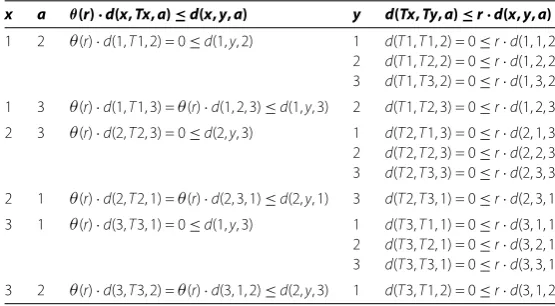
Table 2 Calculations for maps in Example 2.11
x a θ(r)·d(x,Tx,a)≤d(x,y,a) y d(Tx,Ty,a)≤r·d(x,y,a)
1 2 θ(r)·d(1,T1, 2) = 0≤d(1,y, 2) 1 d(T1,T1, 2) = 0≤r·d(1, 1, 2) 2 d(T1,T2, 2) = 0≤r·d(1, 2, 2) 3 d(T1,T3, 2) = 0≤r·d(1, 3, 2)
1 3 θ(r)·d(1,T1, 3) =θ(r)·d(1, 2, 3)≤d(1,y, 3) 2 d(T1,T2, 3) = 0≤r·d(1, 2, 3)
2 3 θ(r)·d(2,T2, 3) = 0≤d(2,y, 3) 1 d(T2,T1, 3) = 0≤r·d(2, 1, 3) 2 d(T2,T2, 3) = 0≤r·d(2, 2, 3) 3 d(T2,T3, 3) = 0≤r·d(2, 3, 3)
2 1 θ(r)·d(2,T2, 1) =θ(r)·d(2, 3, 1)≤d(2,y, 1) 3 d(T2,T3, 1) = 0≤r·d(2, 3, 1)
3 1 θ(r)·d(3,T3, 1) = 0≤d(1,y, 3) 1 d(T3,T1, 1) = 0≤r·d(3, 1, 1) 2 d(T3,T2, 1) = 0≤r·d(3, 2, 1) 3 d(T3,T3, 1) = 0≤r·d(3, 3, 1)
3 2 θ(r)·d(3,T3, 2) =θ(r)·d(3, 1, 2)≤d(2,y, 3) 1 d(T3,T1, 2) = 0≤r·d(3, 1, 2)
Example . LetX={, , }andd(x,y,z) =min{|x–y|,|y–z|,|z–x|}for allx,y,z∈X. Then (X,d) is a complete -metric space. LetT :X−→Xbe a map defined by T = ,
T = ,T = . We see thatT has no fixed point. But, for allx,y,a∈X anda=x, the contraction condition (.) holds as in the Table .
Competing interests
The authors declare that they have no competing interests.
Authors’ contributions
All the authors contributed equally. All authors read and approved the final manuscript.
Acknowledgements
The authors would like to thank the referees for their valuable comments.
Received: 20 December 2012 Accepted: 4 June 2013 Published: 26 June 2013 References
1. Gähler, VS: 2-metrische Räume und ihre topologische struktur. Math. Nachr.26, 115-118 (1963/64) 2. Dhage, BC: A study of some fixed point theorems. Ph.D. thesis, Marathwada, Aurangabad, India (1984)
3. Mustafa, Z, Sims, B: Some remarks concerningD-metric spaces. In: Proceedings of the International Conferences on Fixed Point Theory and Applications, Valencia, Spain, pp. 189-198 (2003)
4. Mustafa, Z, Sims, B: A new approach to generalized metric spaces. J. Nonlinear Convex Anal.7(2), 289-297 (2006) 5. Jleli, M, Samet, B: Remarks onG-metric spaces and fixed point theorems. Fixed Point Theory Appl.2012, Article ID 201
(2012)
6. Huang, LG, Zhang, X: Cone metric spaces and fixed point theorems of contractive mappings. J. Math. Anal. Appl.332, 1468-1476 (2007)
7. Feng, Y, Mao, W: The equivalence of cone metric spaces and metric spaces. Fixed Point Theory11(2), 259-264 (2010) 8. Azam, A, Fisher, B, Khan, M: Common fixed point theorems in complex valued metric spaces. Numer. Funct. Anal.
Optim.32(3), 243-253 (2011)
9. Sastry, KPR, Naidu, GA, Bekeshie, T: Metrizability of complex valued metric spaces and some remarks on fixed point theorems in complex valued metric spaces. Int. J. Pure Appl. Math.3(7), 2686-2690 (2012)
10. Aliouche, A, Simpson, C: Fixed points and lines in 2-metric spaces. Adv. Math.229, 668-690 (2012) 11. Deshpande, B, Chouhan, S: Common fixed point theorems for hybrid pairs of mappings with some weaker
conditions in 2-metric spaces. Fasc. Math.46, 37-55 (2011)
12. Freese, RW, Cho, YJ, Kim, SS: Strictly 2-convex linear 2-normed spaces. J. Korean Math. Soc.29(2), 391-400 (1992) 13. Gähler, VS: Lineare 2-normierte Räume. Math. Nachr.28, 1-43 (1965)
14. Gähler, VS: Über die uniformisierbarkeit 2-metrischer Räume. Math. Nachr.28, 235-244 (1965) 15. Iseki, K: Fixed point theorems in 2-metric spaces. Math. Sem. Notes Kobe Univ.3, 133-136 (1975) 16. Iseki, K: Mathematics on 2-normed spaces. Bull. Korean Math. Soc.13(2), 127-135 (1976)
17. Lahiri, BK, Das, P, Dey, LK: Cantor’s theorem in 2-metric spaces and its applications to fixed point problems. Taiwan. J. Math.15, 337-352 (2011)
18. Lai, SN, Singh, AK: An analogue of Banach’s contraction principle of 2-metric spaces. Bull. Aust. Math. Soc.18, 137-143 (1978)
19. Vats, RK, Kumar, S Sihag, V: Fixed point theorems in completeG-metric space. Fasc. Math.47, 127-139 (2011) 20. Singh, SL, Mishra, SN, Stofile, S: Suzuki contraction theorem on a 2-metric space. J. Adv. Math. Stud.5, 71-76 (2012) 21. An, TV, Dung, NV, Hieu, NT: Further results on 2-metric spaces. J. Sci. Vinh Univ.41(3), 1-10 (2012)
doi:10.1186/1687-1812-2013-167