196
Bieniak Monika, Łuczyk Robert, Wysokiński Mariusz, Fidecki Wiesław. Health behaviour of patients with unstable angina pectoris. Journal of Education, Health and Sport. 2018;8(02):196-213. eISNN 2391-8306. DOI http://dx.doi.org/10.5281/zenodo.1174001 http://ojs.ukw.edu.pl/index.php/johs/article/view/5286
The journal has had 7 points in Ministry of Science and Higher Education parametric evaluation. Part b item 1223 (26.01.2017). 1223 Journal of Education, Health and Sport eissn 2391-8306 7
© The Authors 2018;
This article is published with open access at Licensee Open Journal Systems of Kazimierz Wielki University in Bydgoszcz, Poland
Open Access. This article is distributed under the terms of the Creative Commons Attribution Noncommercial License which permits any noncommercial use, distribution, and reproduction in any medium, provided the original author(s) and source are credited. This is an open access article licensed under the terms of the Creative Commons Attribution Non commercial license
(http://creativecommons.org/licenses/by-nc/4.0/) which permits unrestricted, non commercial use, distribution and reproduction in any medium, provided the work is properly cited. This is an open access article licensed under the terms of the Creative Commons Attribution Non commercial License (http://creativecommons.org/licenses/by-nc/4.0/) which permits unrestricted, non commercial
use, distribution and reproduction in any medium, provided the work is properly cited. The authors declare that there is no conflict of interests regarding the publication of this paper.
Received: 05.01.2018. Revised: 10.01.2018. Accepted: 16.02.2018.
Health behaviour of patients with unstable angina pectoris
Monika Bieniak
1, Robert Łuczyk
2, Mariusz Wysokiński
1, Wiesław Fidecki
11 Departament of the Basics of Nursing and Medical Didactics, Faculty of the Development of Nursing, Medical University of Lublin
197
Abstract
Introduction. The illnesses of the cardiovascular system are the biggest cause of death in
Poland [9,10]. Unstable angina pectoris is the most frequently occurring manifestation of the
acute coronary syndrome (ACS). It aggravates the severity of the course of ischaemic heart
disease (IHD) and hence constitutes a direct threat to the life and health of the patient.
Therefore, it seems well-based to encourage pro-healthy behaviour among patients with this
disease [2,3,15].
The aim of the study. The aim of the study was to evaluate health behaviour of patients with
unstable angina pectoris.
Material and method. The study was conducted from November of 2016 to February of 2017
in three hospitals in Lublin among 194 patients with unstable angina pectoris. In the study the
diagnostic survey method alongside with polling technique was utilised. The research reference
consisted of Inventory of The Health Behaviour (Inwentarz Zachowań Zdrowotnych, IZZ) and
the authorial methodology.
Results. Patients with unstable angina pectoris described their health behaviour as ‘average’.
The patients’ age, gender, level of education and place of residence influenced their health
behaviour. The highest ratings were in the 61-70 years old category. A higher level of health
behaviour was presented by women. The lowest ratings of health behaviour were given by
patients with primary education. The ratings of health behaviour were higher among the
inhabitants of urban areas.
198
Introduction
The illnesses of the cardiovascular system are the biggest cause of death in Poland,
simultaneously they pose the main reason for hospitalisation and the loss of ability to work.
The data of the World Health Organisation indicates that it is a very serious health problem, as
the number of people suffering from the ischaemic heart disease is rising continuously, hence
the number of people who will die from cardiovascular causes is soaring [9,10].
Unstable angina pectoris is the most frequently occurring manifestation of the acute coronary
syndrome (ACS). It aggravates the severity of the course of ischaemic heart disease (IHD) and
hence constitutes a direct threat to the life and health of the patient [2,3,15].
A number of risk factors which cause a great increase in cardiovascular diseases morbidity are
widely known. The higher the risk, the quicker the preventative actions should be undertaken,
both before the disease occurring, and during the course of the disease. We can divide the risk
factors into modifiable risk factors and unmodifiable risk factors. Each factor causes more rapid
and radical development of the disease and its worse course [5].
Undertaking of the desirable health behaviour is crucial both for healthy and ill people, not only
for the patients with cardiovascular diseases, but for all patients. Health behaviour is influenced
by numerous factors, most important of which are ubiquitous risk factors. The majority of
cardiological risk factors belong to the health behaviour associated with patients’ lifestyle
[7,8,13].
The aim of the study
The aim of the study was to evaluate the health behaviour of patients with unstable angina
pectoris.
Material and method
The study was conducted from November of 2016 to February 2017 in three hospitals in Lublin:
Independent Public Clinical Hospital no. 4 in Lublin, Military Clinical Hospital with Polyclinic
no. 1 in Lublin and Regional Specialist Hospital in Lublin. The study was conducted on 194
patients suffering from unstable angina pectoris at the age of between 49 and 94 years old. The
mean age was 60.93±8.11 years old. The research subjects were mostly at the age of between
56 and 60 years old (38.14%, n=74), 22.68% (n=44) were at the age of up to 55 years old,
27.83% (n=54) at the age of between 61 and 70 and 11.34% (n=22) at the age over 70. Women
199
subjects had secondary education (58.25%, n=113), 24.23%, (n=47) had primary education and
17.52% (n=34) had higher education. In the research group 29.90% were unemployed, 12.89%
did mental work, 22.16% did physical work, 19.07% were retired, 5.67% claimed annuities,
and 10.31% were farmers. The majority of the research subjects lived in rural areas (72.68%,
n=141), and 27.32% (n=53) lived in urban areas.
In the study the diagnostic survey method alongside with polling technique was utilised. The
used research reference consisted of Inventory of The Health Beaviour (Inwentarz Zachowań
Zdrowotnych, IZZ) by Zygfryd Juczyński and the authorial methodology. The aforementioned
tools facilitated collecting sociodemographic data of the research sample, and its spectrum of
health behaviour. The criteria for the participation were the following: a patient diagnosed with
unstable angina pectoris, the health state of the patient allowing conducting a survey, expression
of an agreement to take part in the survey by the patient.
The attained results of the study were subjected to statistical analysis. The values of the analysed
measurable parameters were presented using their mean, median and standard deviation, and
the unmeasurable ones using their count and proportion. For the measurable qualities, the
normality of the distribution was analysed using Mann-Whitney U-test. In order to compare
two independent groups Kruskal-Willis test was used, and for analysing the link between the
rating of the quality of life and age Spearman correlation was used. The statistical significance
was set as p<0.05. The database and statistical study was constructed using STATISTICA 13.0
(StatSoft, Poland) software.
Before the study was conducted, the positive approval of the Bioethics Committee at the
200
The results of the study and discussion
Physical activity of the research sample
The study showed that the most common rating of the patients’ physical activity was “average”
(n=123; 63.40%), whereas 22.16% (n=43) of patients rated their physical activity as “very
good” and 14.44% (n=28) as “bad”.
The statistical analysis revealed that the patients aged 55 and younger more commonly rated
their physical activity as „very good” (34.09%) compared to the patients aged 56-60 (24.32%)
and 61-70 or older (13.16%). The proven differences were statistically significant (p=0,007).
The conducted study demonstrated that men rated their physical activity (27.85%) as „very
good” marginally more often than women (18.26%). The research subjects living in urban areas
rated their physical activity slightly more often as „very good” (30.19%), compared to the
inhabitants of rural areas (19.15%). The observed differences proved not statistically significant
(p=0.16 and p=0.18 respectively). The statistical analysis demonstrated that the research
subjects with higher education rated their physical activity as “very good” (44.12%) more often
than people with secondary education (19.47%) or primary education (12.77%). The stated
differences were statistically significant (p=0.0006). Furthermore, 11.34% of research subjects
did sports regularly, 45.88% from time to time, 17.53% did not do any sports but intended to
do some in the future, and 25.25% admitted that sport was not for them.
Nutrition of the study sample
74.23% (n=144) of the research samples admitted they knew what the term “food pyramid”
was, and 25.77% (n=50) did not have this knowledge.
The statistical analysis demonstrated that a higher proportion of patients aged 55 and younger
knew the term “food pyramid” (81.82%) in contrast to the patients aged 56-60 (79.73%), and
61-70 and older (64.47%). The conducted study concluded that the proportion of women
knowing the term “food pyramid” (84.35%) was substantially higher than the proportion of men
familiar with this term (59.49%). The patients with higher education more often declared the
knowledge of this term (85.29%) in comparison to those with secondary education (80.53%)
or with primary education (51.06%). It can be inferred from the study that people living in urban
areas knew this term more often (84.91%) compared to the people living in rural areas
(70.21%). The observed differences were statistically significant (p=0.04; p=0.0001; p=0.0001;
201
The study demonstrated that the patients most often consumed meat (73.20%), cereal products
(68.04%), vegetables (64.95%), fruit (59.79%), milk and dairy (54.12%), and more rarely
sweets (32.99%).
Most of the subjects had breakfast every day (76.80%, n=149), while 9.28% (n=18) declared
they had breakfast a few times a week, 11.86% (n=23) occasionally, and 2.06% (n=4) did not
have breakfast at all.
61.86% (n=120) of the patients declared they had 4-5 meals a day, 27.84% (n=54) had 3 or less
meals a day, and 10.30% (n=20) had more than 5.
The statistical analysis showed that the patients aged 50-56 slightly more often declared 4-5
meals a day (70.27%) compared to the patients aged 55 and younger (47.73%) and 61-70 and
older (61.84%). The observed differences were not statistically significant (p=0.18). The study
pointed out that women declared 4-5 meals a day more frequently (64.35%, n=74) than men
(58.23%, n=46). The observed differences were statistically significant (p=0.02). The statistical
analysis revealed that the patients with higher education marginally more often declared 4-5
meals a day (67.65%) compared to those with secondary education (58.41%) or primary
education (65.96%). The inhabitants of rural areas declared slightly more often 4-5 meals a day
(63.83%) as compared to the inhabitants of urban areas (56.60%). The observed differences
were not statistically significant in both cases (p=0.15, p=0.28 respectively).
Alcohol consumption
The majority of the research subjects consumed alcohol occasionally (46.91%, n=91) or did not
do it at all (35.05%, n=68), whereas 14.95% (n=29) declared consuming alcohol a few times a
month and 3.09% (n=6) a few times a week.
The statistical analysis showed that the patients aged 56-60 slightly more frequently declared
alcohol consumption either a few times a month or a week (24.32%) compared to those aged
55 and younger (22.73%) and 61-70 and older (9.21%). The inhabitants of urban areas
consumed alcohol a few times a week or a month slightly more often (24.53%) than the
inhabitants of urban areas (15.60%). The observed differences in both cases were not
statistically significant (p=0.09, p = 0.19 respectively). On the other hand, the study showed
that men consumed alcohol a few times a week or a month more often (27.85%) than women
(11.30%). The statistical analysis revealed that the research subjects with primary education
202
higher education (14.71%) or secondary education (17.70%). The observed differences in both
cases were statistically significant (p=0.002, p = 0.03 respectively).
Smoking tobacco
In most cases the research subjects did not smoke tobacco (72.68%, n=141), while 14.95%
(n=29) smoked habitually, and 12.37% (n=24) occasionally.
The statistical analysis revealed that the patients aged 55 and younger more often smoked
tobacco habitually or occasionally (38.64%) compared to the patients aged 56-60 (31.08%) and
aged 61-70 and older (17.11%). The study showed that men smoked slightly more often
(31.65%) than women (24.25%). The patients with primary education (25.53%) or secondary
education (31.86%) smoked a bit more often than those with higher education (14.71%). The
inhabitants of urban areas smoked habitually or occasionally slightly more often (28.30%) than
the inhabitants of rural areas (26.95%). The observed differences in all cases were not
statistically significant (p= 0.3; p=0.26; p=0.14; p=0.85 respectively).
The attendance of preventative medical examinations
The majority of the research subjects claimed they attended preventative medical examinations
(65.46%, n=127), 3.09% (n=6) have never heard of such examinations, 24.23% (n=47) did not
attend those, but intended to attend those in the future, and 7.22% (n=14) did not attend those
and did not intend to attend those in the future.
The statistical analysis showed that the patients aged 61-70 and older attended examinations
slightly more often (71.05%) compared to the patients aged 56-60 (59.46%) and aged 55 and
younger (65.91%). The observed differences were not statistically important (p=0.07). The
conducted study demonstrated that women attended examinations more often (73.91%) than
men (53.16%). Also, the patients with primary education attended examinations more often
(74.47%) than those with higher education (64.71%) or secondary education (61.95%). The
observed differences in both cases were statistically significant (p=0.004, p=0.02 respectively).
The study revealed that the inhabitants of rural areas attended examinations slightly more often
(67.38%) than those from urban areas (60.38%). The observed differences were not statistically
203
The rating of the health behaviour in the research sample
Inventory of The Health Behaviour (Inwentarz Zachowań Zdrowotnych, IZZ) was used for the
rating of the health behaviour of the patients. The mean index was 84.36±14.77 (Me=85.00).
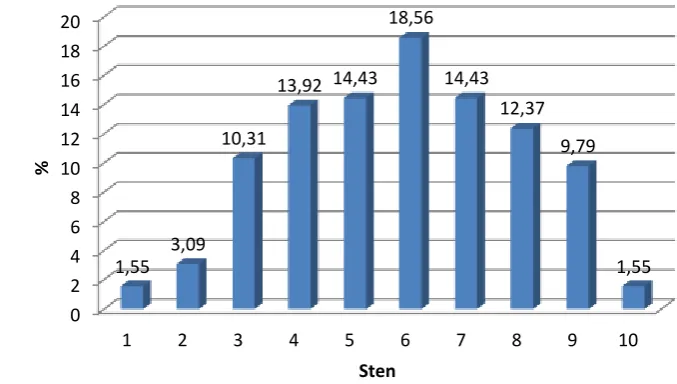
Figure 1 represents the frequency of the consecutive IZZ indices, converted into the sten
[image:8.595.122.461.201.393.2](standard ten) form. The most frequent results occurred within sten 6 (18.56%), (fig. 1).
Fig. 1 The distribution of the research subjects with regard to IZZ index
It was found that 28.87% (n=56) of the research subjects declared a low level of health
behaviour (1-4 sten), 32.90% (n=64) an average level (5-6 sten) and 38.14% (n=74) a high level
(7-10 sten).
The study showed that the highest level of health behaviour was demonstrated in the categories
of positive mental attitude, preventative actions and health practices, and a lower level in the
healthy eating habits category.
The study demonstrated that the patients aged 61-70 and older declared higher levels of health
behaviour than the patients aged 55 and younger and those aged 56-60 in preventative actions
category (p=0.01), positive mental attitude category (p=0.05), health practices category
(p=0.003) and in the overall IZZ index (p=0.01), whereas the healthy eating habits were slightly
higher rated by the patients aged 55 and younger (p=0.08), (tab. 1). 0
2 4 6 8 10 12 14 16 18 20
1 2 3 4 5 6 7 8 9 10
1,55 3,09
10,31
13,92 14,43 18,56
14,43 12,37
9,79
1,55
%
204
Tab. 1. The IZZ rating of the health behaviour broken down by age
The statistical analysis showed that women declared better health behaviour than men.
Significant differences were observed in healthy eating habits category (p=0.001), preventative
actions category (p=0.003), health practices (p=0.02) and in the overall IZZ index (p=0.002),
whereas in positive mental attitude category differences were insignificant (p>0.05), (tab.2).
Tab. 2. The IZZ rating of the health behaviour broken down by gender
Health behaviour
55 and younger 56-60 61-70 and older
Statistical analysis Me an Me dia n Std.dev Me an Me dia n Std.dev Me an Me dia n Std.dev Healthy eating
habits 3.45 3.50 0.67 3.15 3.17 0.80 3.36 3.50 0.93
H=5.12; p=0.08
Preventative
actions 3.69 3.83 0.83 3.32 3.42 0.86 3.71 3.92 0.79
H=9.10; p=0.01*
Positive mental
attitude 3.71 3.83 0.63 3.56 3.58 0.64 3.82 3.92 0.69
H=6.01; p=0.05*
Health
practices 3.40 3.50 0.57 3.35 3.17 0.71 3.71 3.75 0.70
H=11.86; p=0.003*
IZZ 85.50 87.00 12.28 80.32 78.50 15.21 87.63 86.00 14.90 H=8.77;
p=0.01*
Health behaviour
Female Male
Statistical analysis Me an Me dia n Std.dev Me an Me dia n
Std.dev Z P
Healthy eating
habits 3.47 3.50 0.79 3.06 3.17 0.84 -3.24 0.001* Preventative
actions 3.71 3.83 0.79 3.33 3.50 0.88 -3.00 0.003* Positive mental
attitude 3.73 3.83 0.66 3.65 3.67 0.66 -1.01 0.31 Health
205
The study showed that the inhabitants of urban areas had better health behaviour in comparison
to the inhabitants of rural areas, with the exception of the rating of the health practices. Statically
significant differences were observed only in the ratings of healthy eating habits (p=0.03),
(tab.3).
Tab. 3. The IZZ rating of the health behaviour broken down by place of residence
The study showed that the patients who declared their physical activity as “very good” rated their health behaviour higher than those who described their physical activity as “average” or “bad”. The statistical analysis demonstrated substantial differences between those groups with
regard to ratings of the healthy eating habits (p=0.0009), positive mental attitude (p=0.04) and
close to being significant differences in the IZZ rating (p=0.06). However, none of the
differences in the ratings of preventative actions (p=0.045) and health practices (p=0.93) were
statistically significant (tab.4). Zachowania
zdrowotne
Rural areas Urban areas
Statistical
analysis
Me
an
Me
dia
n
Std.dev Me
an
Me
dia
n
Std.dev Z P
Healthy eating
habits 3.21 3.33 0.84 3.53 3.50 0.77 -2.24 0.03* Preventative
actions 3.48 3.50 0.87 3.76 4.00 0.75 -1.94 0.05 Positive mental
attitude 3.68 3.83 0.67 3.73 3.83 0.66 -0.52 0.60 Health
206
Tab. 4. The IZZ rating broken down by the self-assessed physical activity rating
The study showed that the patients who knew the term “food pyramid” had considerably
statistically better health behaviour than the patients who did not know the term. Significant
differences between the subsequent groups in IZZ ratings, as well as all other sub-scales apart
from health practices category (p=0.001) were observed.
The study shows that the research subjects who had breakfast every day rated their health
behaviour higher than those who had breakfast a few times a week or occasionally, or never.
The statistical analysis demonstrated significant differences between subsequent groups with
regard to the ratings of healthy eating habits (p=0.03) and health practices (p=0.004) and overall
IZZ score (p=0.02), whereas differences in the ratings of preventative actions and positive
mental attitude were not statistically significant (p>0.05).
The conducted research revealed that the patients who had 4-5 meals a day demonstrated better
health behaviour than those who had 3 or less meals a day, as well as those who had 5 or more
meals a day. Statistically significant differences were observed between subsequent groups with
regard to the ratings of health practices (p=0.01), close to being significant with regard to the
ratings of healthy eating habits (p=0.06) and in the overall IZZ score (p=0.06).
The study states that the patients who did not consume alcohol demonstrated better health
behaviour than the patients who consumed alcohol occasionally, a few times a month or a week,
with an exception of the overall IZZ score. The statistical analysis revealed statistically
significant differences between subsequent groups with regard to the rating of the preventative
actions category (p=0.0002) and the health practices category (p=0.0005) and the overall IZZ Health
behaviour
Very good Average Bad
Statistical analysis Me an Me dia n Std.dev Me an Me dia n Std.dev Me an Me dia n Std.dev Healthy eating
habits 3.59 3.67 0.75 3.30 3.33 0.82 2.84 2.83 0.84
H=13.99; p=0.0009*
Preventative
actions 3.66 3.83 0.90 3.55 3.50 0.81 3.42 3.58 0.94
H=1.58; p=0.45
Positive mental
attitude 3.84 4.00 0.59 3.71 3.83 0.67 3.41 3.58 0.67
H=6.58; p=0.04*
Health
practices 3.47 3.67 0.73 3.52 3.50 0.68 3.50 3.50 0.71
H=0.14; p=0.93
IZZ 87.35 88.00 14.96 84.53 85.00 14.50 79.04 75.50 14.73 H=5.79;
207
score (p=0.002), whereas the differences regarding all other subscales turned out to be
statistically insignificant (p>0.05), (tab. 5).
Tab. 5. The IZZ rating broken down by the alcohol consumption
The statistical analysis showed significant differences between the ratings of health behaviour
of the research subjects who smoked tobacco, compared to the non-smokers (p=0.03). Health
behaviour was better among the non-smokers, (tab. 6).
Tab. 6. The IZZ rating broken down by tobacco consumption
Health behaviour
A few times a
week/month Occasionally No consumption
Statistical analysis Me an Me dia n Std.dev Me an Me dia n Std.dev Me an Me dia n Std.dev Healthy eating
habits 3.08 3.17 0.90 3.44 3.50 0.84 3.28 3.33 0.79
H=4.82; p=0.09
Preventative
actions 3.05 3.00 0.87 3.80 4.00 0.84 3.57 3.67 0.76
H=17.52; p=0.0002*
Positive mental
attitude 3.48 3.50 0.69 3.74 3.83 0.69 3.75 3.83 0.62
H=4.71; p=0.09
Health
practices 3.22 3.17 0.75 3.75 3.75 0.67 3.43 3.50 0.64
H=15.13; p=0.0005*
IZZ 76.97 74.00 15.79 88.40 88.50 15.02 84.19 84.00 13.11 H=12.22;
p=0.002*
Health behaviour
Habitually/
ocasionally No consumption
Statistical analysis Me an Me dia n Std.dev Me an Me dia n
Std.dev Z p
Healthy eating
habits 2.95 2.83 0.86 3.43 3.50 0.79 -3.49 0.0005* Preventative
actions 3.33 3.50 0.87 3.64 3.83 0.82 -2.22 0.03* Positive mental
attitude 3.42 3.50 0.67 3.80 3.83 0.63 -3.44 0.0006* Health
208
The statistical analysis demonstrated that the research subjects who attended preventative
medical examination had better health behaviour ratings than those who just intended to attend
those in the future, those who had not heard about them and those who did not intend to attend
such examinations at all. Significant differences were observed between the subsequent groups
with regard to the overall IZZ rating, as well as with regard to the consequent IZZ sub-scales
(p=0.04), (tab. 7).
Tab. 7. The IZZ rating broken down by the attendance of the preventative medical
examination
Discussion
The progress of civilisation, especially the one that started in the second half of the 20th century, despite so many advantages and benefits it brought, it also had a detrimental effect on people’s
lifestyle. There has been a rise in the frequency of negative health behaviours such as: incorrect
diet, lack of physical exercise, too high alcohol and tobacco consumption, the deficit of ways
of coping with stress, alongside with very frequent excess weight problems, high arterial blood
pressure, high levels of blood glucose and lipid parameters [6]. All these anti-health behaviours
caused the increased prevalence of anomalies in people’s health, and in consequence lead to the
occurrence of numerous diseases, including cardiovascular diseases [6]. The illnesses of the
cardiovascular system are the most common cause of death in Poland. One of the top
cardiological causes of death is ischaemic heart disease. It is correlated not only with the ageing
of the population, but also with the intense prevalence of the aforementioned risk factors [6]. Health
behaviour
Attended
Intended in the future/not heard
about such
Did not attend and intend to go in the
future Statistical
analysis Me an Me dia n Std.dev Me an Me dia n Std.dev Me an Me dia n Std.dev Healthy eating
habits 3.37 3.50 0.83 3.25 3.33 0.81 2.81 2.67 0.84
H=6.55; p=0.04*
Preventative
actions 3.75 4.00 0.78 3.27 3.33 0.77 2.88 2.92 1.04
H=20.57; p<0.0001*
Positive mental
attitude 3.80 3.83 0.61 3.58 3.50 0.69 3.19 3.08 0.78
H=10.94; p=0.004*
Health
practices 3.62 3.67 0.67 3.33 3.17 0.72 3.11 3.17 0.58
H=10.47; p=0.005*
IZZ 87.30 87.00 13.96 80.60 81.00 14.47 71.93 70.00 14.34 H=17.23;
209
Ischaemic heart disease is a clinical symptom complex whose direct cause is abnormalities
between the demand of the heart muscle and the ability to provide it with oxygen and other
substances which are essential to sustaining its proper functions [4]. The course of the disease
can be chronic as well as acute – when the coronary artery vasoconstriction is quite rapid and
sudden. Unstable angina pectoris is the most frequently occurring manifestation of the acute
coronary syndrome [1].
Sustaining a healthy lifestyle is crucial both for the healthy individuals and for the ill ones,
especially for those suffering from cardiovascular diseases. This issue is particularly interesting
for many researchers, and in order to describe this, they use a vast spectrum of research tools.
In this research the health behaviour ratings among the patients with unstable angina pectoris
were obtained using the Inventory of The Health Behaviour (IZZ) scale and the authorial
methodology. The results of the study indicated the prevalence of ‘average’ health behaviours.
In the research sample many risk factors like alcohol and tobacco consumption, lack of physical
exercise and inappropriate diet, were observed. The studies by Mejer (and others) among 86
patients with recent Acute Coronary Syndrome experience and among the control group
confirm the result of this study. Both the patients who had ACS history and people considered
as healthy do not observe the recommendations related to the healthy lifestyle. The authors
indicate the necessity of altering the current lifestyle within the primary and secondary
prevention framework [11]. The results correlate with the study by Pogorzelska (and others)
conducted on a research sample of patients who suffered from ACS 6 months prior to the study
– the ratings of the patients before and after the ACS indicate the occurrence of all the risk
factors before the IHD, whereas 6 months after the ACS they indicate significant improvement
in some of the behaviour categories (controlling blood pressure, hyperlipidaemia and diabetes
and smoking tobacco). The authors pointed to an insufficient level of care [12]. Similar results
were obtained by Kózek (and others) among 50 people with myocardial infarction and among
50 healthy people, and they indicate that the majority of each group declared an unhealthy
lifestyle [9].
The original research showed that women declared better health behaviour than men, and that
statistically significant differences with regard to healthy eating habits, preventative actions,
health practices and the overall IZZ score were observed. No differences between the ratings of
positive mental attitude were found. These results show the differences in biology, ageing
processes and behaviours between genders. Similar observations were made by Szkup (and
210
preventative practices and health practices more often than men. Positive mental attitude was
similar for both groups [14].
The original research showed that people aged 61-70 and older declared better health behaviour
than people aged 56-60, 55 and younger in preventative actions, positive mental attitude, health
practices categories and in the overall IZZ score. The differences were statistically significant.
On the other hand, healthy eating habits ratings were just slightly higher among the patients
aged 55 and younger. However surprising this result might seem, it may come from older
research subjects having greater knowledge and health awareness, acquired throughout their
longer lives.
The study reveals that the inhabitants of urban areas rated their health behaviour better than
those from rural areas, with an exception of health practices category. Only in healthy eating
habits category were the differences statistically significant. This result might suggest that
people living in urban areas pay more attention to meals they have.
The statistical analysis did not demonstrate substantial differences in health behaviour ratings
with regard to education. However, the collected information from the patients suggests that
the patients with primary education demonstrated the lowest ability to control their health, with
regard to self-assessed physical activity, awareness of the “food pyramid” term, having their
own developed ways of coping with stress, the number of hours devoted to their sleep, alcohol
and tobacco consumption. Patients with primary education had lower ratings compared to those
with secondary and higher education.
Conclusions
1. Patients suffering from unstable angina pectoris demonstrated an average level of health
behaviour.
2. The health behaviour of the patients with unstable angina pectoris was affected by: age,
gender, education and place of residence.
3. The health behaviour ratings of the patients with unstable angina pectoris were the best
among the patients aged 61-70.
4. Women demonstrated higher levels of health behaviour than men.
5. Patients with primary education had the worst health behaviour ratings.
6. The health behaviour of the patients with unstable angina pectoris ratings were better
211
7. Better health behaviour was demonstrated by the subjects who rated their physical activity as “very good”, were aware of the food pyramid, had breakfast every day, had
4-5 meals a day, did not consume alcohol and tobacco and attended preventative medical
212
Bibliography
1. Daniluk J., Jurkowska G. (red.): Zarys chorób wewnętrznych. Dla studentów
pielęgniarstwa. Wydawnictwo Czelej, Lublin 2005.
2. Dąbrowska B. (red.): Choroby układu krążenia. Schematy postępowania. Medycyna Praktyczna, Kraków 1997.
3. Fauci A. S., Braunwald E., Kasper D. L. i inni (red.): Interna Harrisona. Wydawnictwo
Czelej, Lublin 2009.
4. Gąsior M., Hawranka M., Poloński L. (red.): Podręcznik kardiologii. Lekarze
i studenci dla studentów i lekarzy. Medycyna Praktyczna, Kraków 2008.
5. Hudzik B., Szkodziński J.: Profilaktyka wtórna choroby wieńcowej. Choroby Serca i Naczyń 2008; 5(4): 186-189.
6. Kaszuba D., Nowicka A. (red.): Pielęgniarstwo kardiologiczne. Podręcznik dla studiów
medycznych. Wydawnictwo Lekarskie PZWL, Warszawa 2011.
7. Kłosiewicz-Latoszek L., Cybulska B.: Wpływ zdrowego stylu życia na zmniejszenie
ryzyka zgonów sercowo- naczyniowych. Choroby Serca i Naczyń 2012; 9(5): 273- 281.
8. Kłosiewicz-Latoszek L., Szostak- Węgierek D.: Co dziś wiemy o czynnikach ryzyka
choroby niedokrwiennej serca? Medycyna i Pasje 2009: 1(2): 24-30.
9. Kózka M., Majda A., Wróbel K.: Styl życia i ryzyko występowania ostrych zespołów
wieńcowych. Problemy Higieny i Epidemiologii 2013; 94(4): 740- 746.
10. Łuczyk R., Juśko A., Łuczyk M., Krzyżanowska E., Plottke A.: Akceptacja choroby w grupie pacjentów z niestabilną dusznicą bolesną. Journal of Education, Health and
Sport 2016; 6(7): 453-470.
11. Mejer A., Irzmański R., Pawlicki L., Kowalski J.: Ocena stylu życia chorych po świeżo
przebytym ostrym zespole wieńcowym oraz zakwalifikowanych do rehabilitacji
kardiologicznej i zdrowych. Polski Merkuriusz Lekarski 2013; XXXV, (205): 39-42.
12. Pogorzelska H., Wołkanin- Bartnik J.: Mądry Polak po szkodzie?- Znajomość
i stosowanie zasad prewencji wtórnej przez pacjentów po 60. Roku życia po przebyciu ostrego zespołu wieńcowego. Czynniki Ryzyka 2009: (4): 24-32.
13. Szczepaniak-Chicheł L., Bręborowicz P., Grabicki M., i inni: Występowanie czynników
213
14. Szkup M., Starczewska M., Skotnicka I., Jurczak A., Grochans E.: Ocena zachowań
zdrowotnych pacjentów zakwalifikowanych do zabiegu kardiochirurgicznego. Family
Medicine & Primary Care Review 2014; 16(2): 169- 171.
15. Widomska-Czekajska T., Górajek-Jóźwik J. (red.): Encyklopedia dla pielęgniarek