R E S E A R C H A R T I C L E
Open Access
Nursing students
’
perception of the clinical
learning environment and supervision in
relation to two different supervision
models
–
a comparative cross-sectional
study
Mirjam Ekstedt
1,2*, Marléne Lindblad
3,4and Anna Löfmark
5Abstract
Background:Knowledge concerning nursing students’experiences of the clinical learning environment and how supervision is carried out is largely lacking. This study compares nursing students’perceptions of the clinical learning environment and supervision in two different supervision models:peer learning in student-dedicated units, with students working together in pairs and supervised by a“preceptor of the day”(model A), andtraditional supervision, in which each student is assigned to a personal preceptor (model B).
Methods:The study was performed within the nursing programme at a university college in Sweden during students’clinical placements (semesters 3 and 4) in medical and surgical departments at three different hospitals. Data was collected using the Clinical Learning Environment, Supervision and Nurse Teacher evaluation scale, CLES+T, an instrument tested for reliability and validity, and a second instrument developed for this study to obtain deeper information regarding how students experienced the organisation and content of the supervision.
Independent t-tests were used for continuous variables, Mann-Whitney U-tests for ordinal variables, and the chi-square or Fischer’s exact tests for categorical variables.
Results:Overall, the students had positive experiences of the clinical learning environment and supervision in both supervision models. Students supervised in model A had more positive experiences of the cooperation and relationship between student, preceptor, and nurse teacher, and more often than students in model B felt that the ward had an explicit model for supervising students. Students in model A were more positive to having more than one preceptor and felt that this contributed to the assessment of their learning outcomes.
Conclusions:A good learning environment for students in clinical placements is dependent on an explicit structure for receiving students, a pedagogical atmosphere where staff take an interest in supervision of students and are easy to approach, and engagement among and collaboration between preceptors and nurse teachers. This study also indicates that supervision based on peer learning in student-dedicated rooms with many preceptors can be more satisfying for students than a model where each student is assigned to a single preceptor.
Keywords:Clinical learning environment, Supervision, Student-dedicated rooms, Peer-learning
© The Author(s). 2019Open AccessThis article is distributed under the terms of the Creative Commons Attribution 4.0 International License (http://creativecommons.org/licenses/by/4.0/), which permits unrestricted use, distribution, and reproduction in any medium, provided you give appropriate credit to the original author(s) and the source, provide a link to the Creative Commons license, and indicate if changes were made. The Creative Commons Public Domain Dedication waiver (http://creativecommons.org/publicdomain/zero/1.0/) applies to the data made available in this article, unless otherwise stated. * Correspondence:[email protected]
1
Department of Health and Caring Sciences, Linnaeus University, 392 31 Kalmar, Sweden
2Department of Learning, Informatics, Management and Ethics, Karolinska
Institutet, Stockholm, Sweden
Background
A constructive clinical learning environment, with satis-factory possibilities for student learning, and a focus on student learning needs, is vital to nursing education [1]. Clinical learning is carried out in complex health care
settings, and students’ experiences within the clinical
context are of great importance to how and what they learn. The environment should motivate students and contribute to their feeling of security, including when asking questions to achieve learning outcomes [2]. The clinical learning environment and supervision of stu-dents play a crucial part in supporting student learning and are highly dependent on the relationship between student, preceptor, and nurse teacher [3]. Nurse teachers have a multifaceted and important role in supervision, including supporting, motivating, problem-solving and monitoring [4]. Students have a responsibility to be ac-tive in their own learning [5] and preceptors and nurse teachers are both facilitators of and responsible for the
students’learning in clinical settings.
From the students’ perspective, the clinical
environ-ment has been described as non-supportive, e.g., because of organisational shortcomings, a lacking relationship between students and preceptors, and negative attitudes and behaviours on the part of preceptors [6], Students have also described inhibitors to learning arising from
preceptors’lack of engagement and feedback [7].
Precep-tors were not always engaged personally or easy to reach, and students found that theory and practice were not clearly connected to each other and felt that they lacked opportunities to reflect together with their pre-ceptors [8]. A key challenge reported by prepre-ceptors is finding adequate time to supervise students in the clin-ical setting and this, along with the lack of recognition by both the faculty and health care organisations, seems to undermine the importance of the role [9]. Preceptors have stated that they must strike a balance between tak-ing care of patients and supervistak-ing students [10]. There is a risk that the clinical demands may take time from supervision and thus affect student learning [11].
In the search for new innovative pedagogical models in the clinical setting, peer learning is found to be a valuable re-source [12]. In a peer learning model described by Pålsson and colleagues [13], students attending a course are divided into pairs, each supervised by one preceptor. The contribu-tion of peers has often been underestimated, but can be a key component of clinical learning that impacts on student
experiences [13–16]. When students get the opportunity to
assume responsibility for a patient’s care and share their
ex-periences with a peer, learning may increase [14, 16]. Peer
learning has also been described to contribute to developing
the students’abilities to communicate and solve problems
to a greater extent than a more traditional way of learning, as well as alleviating levels of stress and anxiety [17].
Other innovative ways of developing the learning en-vironment and supervising students include having nurse teachers and preceptors working together in models that enable for clinical wards to effectively supervise large numbers of students. Collaborative models, such as student-dedicated units, have been in-troduced. The teaching and learning environment at such units is developed through the collaborative efforts of preceptors and nurse teachers. A unit consists of one or two patient rooms, in which peer learning is com-bined with patient-centred training [18]. Several studies have reported that students have positive experiences of supervision combined with peer learning in
student-dedicated units [5, 19, 20]. Students express that they
become more confident as they assume increasing re-sponsibility for patients and that they also discover their professional role when they get opportunities to work independently and are given responsibility during their clinical placements [5].
However, comparisons of students’ experiences of
their learning and supervision in different models are limited. Today, we are seeing an increasing number of students, and a simultaneous reduction of the number of beds and patients in teaching hospitals, where most clin-ical placements occur. This calls for the highest possible standard in clinical education, and therefore it is of the utmost importance to investigate and evaluate supervi-sion models that meet these challenges.
Students’experiences of clinical education are relevant
as they impact on the opportunities of linking the theor-etical aspect of studies with clinical practice. The
nurs-ing student’s satisfaction with the learning environment
and the supervisory relationship are suggested as im-portant factors that could be used as a basis for potential development and/or reforms of learning environments in clinical settings [21]. Although theoretical
conceptual-isation is lacking, there is evidence that nursing students’
satisfaction with the clinical learning environment and supervision could be conceptually described and mea-sured within the context of an internationally validated tool. The Clinical Learning Environment, Supervision and Nurse Teacher (CLES+T) [22] evaluation measure conceptualises the key components in five distinct
di-mensions: the ward’s pedagogical atmosphere, the
lead-ership style of the ward manager, premises of nursing on the ward, various aspects of the supervisory relationship and the role of the nurse teacher in clinical practice in transforming theoretical knowledge into clinical practice
and skills [22, 23]. Therefore, the aim of this study was
to compare nursing students’experiences of the clinical
learning environment and the supervisory relationships from two different supervision models used in a Swedish
nursing education. The two supervision models arepeer
working together in pairs and supervised by a preceptor
“for the day” (model A), and traditional supervision, in
which each student shadows a preceptor in her/his work within nursing care (model B).
Methods
Design
This cross-sectional study investigates various aspects of two supervision models in a comparative between-subject design, using quantitative data gathered from students through questionnaires. The study adheres to the STROBE methodology for cross-sectional studies.
Setting
The study took place within the framework of the nurs-ing programme at a university college in Sweden. About 50% of the three-year nursing programme (correspond-ing to 180 credits in the European Credit Transfer
Sys-tem) consists of clinical education. Students’ clinical
placements during the second year (semesters 3 and 4), each a five-week period, were carried out in various medical and surgical departments at three different hos-pitals (for confidentiality reasons labelled Alpha, Beta,
Caesar in Table1).
Supervision during the clinical placements was pro-vided by preceptors. Nurse teachers employed by the university college had an overall responsibility for the clinical education in both supervision models. A nurse teacher met each student and his/her preceptor twice during the five-week period of clinical education in order to clarify objectives and learning outcomes and to
discuss the student’s progress. The nurse teachers’
re-sponsibilities, which include assessment and grading of
the students’ achievements, are explicitly described by
Kristofferzon and colleagues [24].
Supervision models
Supervision was carried out in two different supervision models. Both models were used in parallel, but on differ-ent wards, at the three hospitals. Studdiffer-ents in model A worked in pairs in student-dedicated units and were
su-pervised by “the preceptor of the day,” while those in
model B had traditional supervision, where each student was assigned to a personal preceptor and followed mainly this person in daily patient care. Model A, which has been introduced at a number of wards at the three
hospitals (Table 1), was guided by peer-learning
strat-egies [12, 18, 25] and patient-centred care, which in this
study meant that the students followed the patients, not the preceptor. A student pair had continuous
responsi-bility for all the nursing care given to “their”patients in
the student-dedicated unit, throughout the clinical placement. The preceptor was responsible for supervi-sion of one pair of students at a time, offering them supervision and exchanging thoughts with them. Super-vision model B, the traditional model, where one student is assigned to a personal preceptor and his/her patient care [26], was still used on a number of wards at the three hospitals. The preceptor could change from 1 day to the next in both models, depending on work organisation at the ward, sick leave or other unexpected occurrences.
Measures
The Swedish version of the Clinical Learning Environ-ment, Supervision and Nurse Teacher (CLES+T)
evalu-ation scale [22] was used to measure the students’
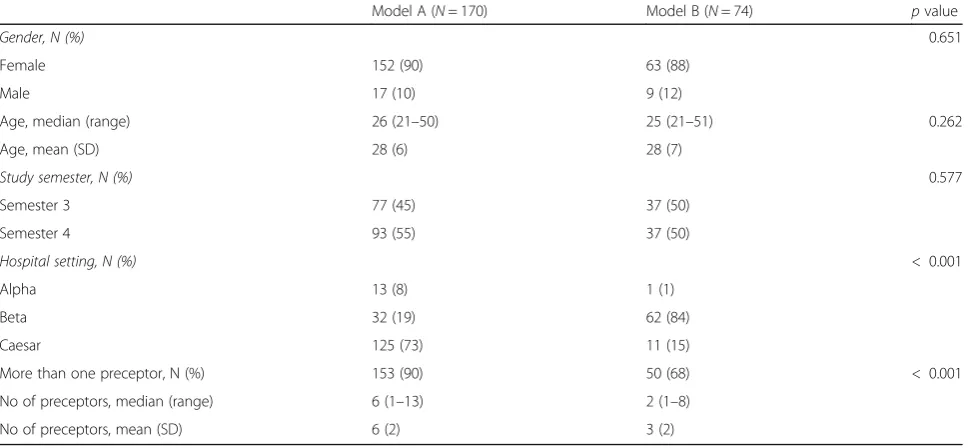
Table 1Demographic characteristics and supervision conditions for nursing students
Model A (N= 170) Model B (N= 74) pvalue
Gender, N (%) 0.651
Female 152 (90) 63 (88)
Male 17 (10) 9 (12)
Age, median (range) 26 (21–50) 25 (21–51) 0.262
Age, mean (SD) 28 (6) 28 (7)
Study semester, N (%) 0.577
Semester 3 77 (45) 37 (50)
Semester 4 93 (55) 37 (50)
Hospital setting, N (%) < 0.001
Alpha 13 (8) 1 (1)
Beta 32 (19) 62 (84)
Caesar 125 (73) 11 (15)
More than one preceptor, N (%) 153 (90) 50 (68) < 0.001
No of preceptors, median (range) 6 (1–13) 2 (1–8)
perceptions of the clinical learning environment and the supervisory relationship during clinical education. A questionnaire was used to gather demographic data on student age, which semester and clinical placement they were in, and the number of preceptors during their clin-ical placement. A supplementary questionnaire was used
to obtain additional information about each student’s
satisfaction with the preceptor’s role and their own
pre-paredness for clinical supervision and professional pro-gress. CLES+T has been tested for reliability and validity among Swedish nursing students during clinical
place-ment at hospitals [23, 27], with Cronbach’s alpha values
ranging from 0.75 to 0.96 [23]. The 34 statements in
CLES+T are divided into five sub-dimensions: “
Peda-gogical atmosphere on the ward” (nine items), “
Leader-ship style of the ward manager” (four items), “Premises
of nursing on the ward” (four items),“Supervisory
rela-tionship” (eight items) and “Role of the nurse teacher
during the clinical placement”(nine items). Responses to
CLES+T are given on a five-point Likert scale with the following alternatives: (1) fully disagree; (2) disagree to a certain extent; (3) neither agree nor disagree; (4) agree to a certain extent; (5) fully agree. In the current study,
the Cronbach’s coefficient alpha was calculated for
in-ternal consistency of the total scales, as well as for the sub-dimensions used in the analysis. The alpha value for CLES+T was 0.95 for the total scale, and ranged from 0.75 (premises of nursing on the ward) to 0.96 (supervis-ory relationship) for the five sub-dimensions.
The supplementary questionnaire was originally devel-oped by the last author (AL), based on her experiences as a faculty teacher, and used for evaluation of the clin-ical nursing education. The content validity is based on 21 interviews with a group of colleagues, who were asked to consider aspects of the contents, such as clarity, coverage, relevance, and wording of each question. To examine the content validity, experts familiar with the construct of interest and/or experts on the research sub-ject reviewed all of the questionnaire items for readabil-ity, clarreadabil-ity, relevance and comprehensiveness. Then, appropriate modifications were made and the final ques-tionnaire was developed. A factor analysis demonstrated that the items loaded on four factors. Based on theoret-ical reasoning the final questionnaire was modified to three subscales, which consisted of 20 statements
re-garding “preparedness of student and ward for
supervi-sion” (six statements), “the preceptor’s role” (seven
statements) and “the student’s professional progress”
(seven statements). The respondents were asked to score how well each statement matched their perceptions, using a four-point Likert scale: (1) not at all, (2) to a fairly small degree, (3) to a fairly high degree, and (4) to
a very high degree. The Cronbach’s alpha for the
supple-mentary questionnaire was 0.86 for the total, and ranged
from 0.71 to 0.76 for the subscales, showing moderate internal consistency. The items and subscales are shown
in Table3.
Procedures and sample characteristics
This study was conducted during three semesters: spring and fall 2011 and spring 2012. All students in the second year (semesters 3 and 4) of the nursing programme got verbal and written information about the study aims and procedures. The students were offered clinical place-ments by a university coordinator, who was not involved in teaching, on a ward with either supervision model A or supervision model B. This was based on the regular procedure for coordinating clinical placements. The pre-ceptor introduced the students to the routines on the ward and the supervision model for their clinical prac-tice, regardless of which model was used. Nurse teachers handed out questionnaires during a lesson following completion of the clinical placement. The students were explicitly informed that participation was voluntary and that it would not affect their education if they declined to participate. They were assured confidentiality and in-formed that the results would be presented at the group level. The students who decided to participate returned the questionnaire together with informed consent to the nurse teachers in a closed envelope addressed to the first author, or put it in the mailbox of one of the teachers.
Data analysis
The statistical analyses were carried out using the Statis-tical Program for the Social Sciences (SPSS ver. 25). De-scriptive statistics were presented as mean and standard deviations or median (range) for numerical variables, or as frequency or percentages for categorical variables. In-dependent t-tests were used for continuous variables, Mann-Whitney U-tests were used for ordinal variables or when there was violation of assumption for
continu-ous variables and chi-square or Fischer’s exact tests were
used for categorical variables. The statistical significance level was set to 5% (alpha = 0.05). The effect size
calcula-tion for group mean differences was based on Hedges’g,
as the sample size differed between the two groups.
Hedges’g [28] provides a measure of effect size weighted
according to the relative size of each sample. The effect size for ordinal variables where we employed
Mann-Whitney’s test was calculated using the equation from
Rosenthal [29], and interpreted using Cohen’s
recom-mendation: 0.2 = small; 0.5 = medium; 0.8 = large.
Cron-bach’s coefficient alpha was calculated for internal
consistency of the total scales as well as for the sub-dimensions used in the analysis. The estimate of
Ethical considerations
The head of the department at the university granted permission to perform the study. The researchers were not involved in teaching or grading of the students par-ticipating in this study. The questionnaires were coded and only the researchers had access to the coding list. This study followed the ethical requirements stated in the Declaration of Helsinki. As this study does not in-volve patients or relatives or sensitive personal informa-tion, no ethical approval was required under the Swedish Act concerning the Ethical Review of Research Involving Humans, from the Ministry of Education and Research [30].
Results
Out of 381 eligible students, 244 filled out question-naires, yielding a response rate of 64%. Of these, 170 stu-dents (90% women) got supervision in model A and 74
students (88% women) in model B. The students’mean
age was 28 years and the range was between 21 and 50/ 51 years in both groups. There was no difference be-tween the groups in the proportion of students who
were in semesters 3 and 4, respectively (Table1).
How-ever, there was a significant difference between the three hospital settings as regards the organisation of supervi-sion. In wards using model A, 90% of students received supervision from more than one preceptor, while in those using model B, the proportion of students super-vised by more than one preceptor was 68%.
The clinical learning environment
Overall, the student nurses had positive experiences of the clinical learning environment in both supervision
models. The ratings of the three sub-dimensions“
peda-gogical atmosphere,” “leadership style of the ward
man-ager” and “premises of nursing on the ward” had mean
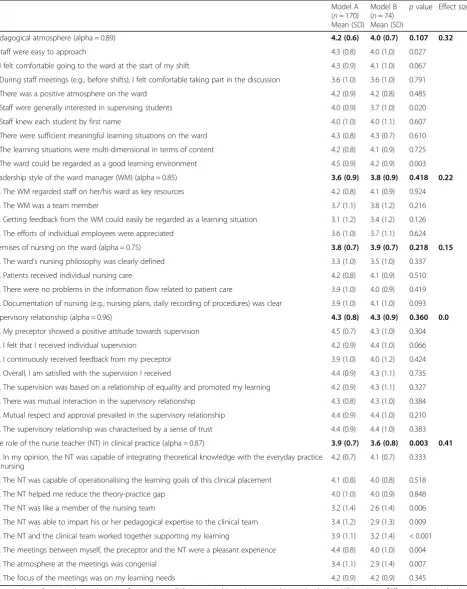
values between 3.1 and 4.5 (Table 2). While there were
no substantial differences between groups for any of the three sub-dimensions, there were differences regarding their ratings on single items in favour of model A. These items concerned if the ward was regarded as a good learning environment, and if staff were easy to approach and generally interested in supervising students.
The supervisory relationship
There were no differences between the two supervision
models within the subject area“supervisory relationship”
and the ratings were high overall in both models (range 3.9 to 4.5). However, students supervised in model A
gave higher ratings for the single item “I felt that I
re-ceived individual supervision” than students supervised
in model B (Table2).
The role of the nurse teacher during the clinical placement
Ratings showed a substantial difference between the two
supervision models in the subject area “the role of the
nurse teacher” (p= 0.003). The student ratings in this
area were significantly more in favour of supervision
with model A for five out of nine items (Table 2).
Stu-dent ratings within the sub-areas “cooperation between
placement staff and nurse teacher” and“relationship
be-tween the student, preceptor and nurse teacher”resulted
in significant differences, where students supervised in model A had more positive experiences. Students super-vised in model A to a greater extent than students in model B experienced that the nurse teacher was an inte-grated part of the nursing team, was able to impart ex-pertise to the team and that the team worked together supporting student learning. Students in model A also had more positive experiences of the relationship be-tween the student, preceptor and nurse teacher than stu-dents in model B, stating that meetings were generally a pleasant experience in a congenial atmosphere. The
three items concerning the nurse teacher“enabling
inte-gration of theory and clinical training”did not reveal any
differences between the groups.
Preparedness for supervision
Nursing student ratings on statements in the second questionnaire showed that they were, in general, satisfied
with their own preparedness and the ward’s
prepared-ness for supervision. The most significant differences with respect to how supervision was organised con-cerned the clarity and structure of the supervision; stu-dents in model A to a greater extent than stustu-dents in model B experienced that there was an explicit structure for receiving students, that the ward had an explicit model for supervising students, and that the ward had resources (i.e., personnel) dedicated to supervision of
nursing students (Table3).
The preceptor’s role
Students supervised in model A had more positive
experi-ences of the preceptor’s role and gave higher ratings for the
items “it is beneficial to have several preceptors during a
teaching period”and“having more than one preceptor
con-tributed to the assessment of my learning outcomes,” as
compared with students in model B (Table3). There were
no differences between the two supervision models in
regards to preceptors’encouragement of questions or
mak-ing room for reflections (Table3).
Students’professional progress
Table 2Students’experiences of the clinical learning environment (CLES+T) in the two supervision models Model A (n= 170) Mean (SD)
Model B (n= 74) Mean (SD)
pvalue Effect sizea
Pedagogical atmosphere (alpha = 0.89) 4.2 (0.6) 4.0 (0.7) 0.107 0.32
1.Staff were easy to approach 4.3 (0.8) 4.0 (1.0) 0.027
2. I felt comfortable going to the ward at the start of my shift 4.3 (0.9) 4.1 (1.0) 0.067
3. During staff meetings (e.g., before shifts), I felt comfortable taking part in the discussion 3.6 (1.0) 3.6 (1.0) 0.791
4. There was a positive atmosphere on the ward 4.2 (0.9) 4.2 (0.8) 0.485
5. Staff were generally interested in supervising students 4.0 (0.9) 3.7 (1.0) 0.020
6. Staff knew each student by first name 4.0 (1.0) 4.0 (1.1) 0.607
7. There were sufficient meaningful learning situations on the ward 4.3 (0.8) 4.3 (0.7) 0.610
8. The learning situations were multi-dimensional in terms of content 4.2 (0.8) 4.1 (0.9) 0.725
9. The ward could be regarded as a good learning environment 4.5 (0.9) 4.2 (0.9) 0.003
Leadership style of the ward manager (WM) (alpha = 0.85) 3.6 (0.9) 3.8 (0.9) 0.418 0.22
10. The WM regarded staff on her/his ward as key resources 4.2 (0.8) 4.1 (0.9) 0.924
11. The WM was a team member 3.7 (1.1) 3.8 (1.2) 0.216
12. Getting feedback from the WM could easily be regarded as a learning situation 3.1 (1.2) 3.4 (1.2) 0.126
13. The efforts of individual employees were appreciated 3.6 (1.0) 3.7 (1.1) 0.624
Premises of nursing on the ward (alpha = 0.75) 3.8 (0.7) 3.9 (0.7) 0.218 0.15
14. The ward’s nursing philosophy was clearly defined 3.3 (1.0) 3.5 (1.0) 0.337
15. Patients received individual nursing care 4.2 (0.8) 4.1 (0.9) 0.510
16. There were no problems in the information flow related to patient care 3.9 (1.0) 4.0 (0.9) 0.419
17. Documentation of nursing (e.g., nursing plans, daily recording of procedures) was clear 3.9 (1.0) 4.1 (1.0) 0.093
Supervisory relationship (alpha = 0.96) 4.3 (0.8) 4.3 (0.9) 0.360 0.0
18. My preceptor showed a positive attitude towards supervision 4.5 (0.7) 4.3 (1.0) 0.304
19. I felt that I received individual supervision 4.2 (0.9) 4.4 (1.0) 0.066
20. I continuously received feedback from my preceptor 3.9 (1.0) 4.0 (1.2) 0.424
21. Overall, I am satisfied with the supervision I received 4.4 (0.9) 4.3 (1.1) 0.735
22. The supervision was based on a relationship of equality and promoted my learning 4.2 (0.9) 4.3 (1.1) 0.327
23. There was mutual interaction in the supervisory relationship 4.3 (0.8) 4.3 (1.0) 0.384
24. Mutual respect and approval prevailed in the supervisory relationship 4.4 (0.9) 4.4 (1.0) 0.210
25, The supervisory relationship was characterised by a sense of trust 4.4 (0.9) 4.4 (1.0) 0.383
The role of the nurse teacher (NT) in clinical practice (alpha = 0.87) 3.9 (0.7) 3.6 (0.8) 0.003 0.41
26. In my opinion, the NT was capable of integrating theoretical knowledge with the everyday practice of nursing
4.2 (0.7) 4.1 (0.7) 0.333
27. The NT was capable of operationalising the learning goals of this clinical placement 4.1 (0.8) 4.0 (0.8) 0.518
28. The NT helped me reduce the theory-practice gap 4.0 (1.0) 4.0 (0.9) 0.848
29. The NT was like a member of the nursing team 3.2 (1.4) 2.6 (1.4) 0.006
30. The NT was able to impart his or her pedagogical expertise to the clinical team 3.4 (1.2) 2.9 (1.3) 0.009
31. The NT and the clinical team worked together supporting my learning 3.9 (1.1) 3.2 (1.4) < 0.001
32. The meetings between myself, the preceptor and the NT were a pleasant experience 4.4 (0.8) 4.0 (1.0) 0.004
33. The atmosphere at the meetings was congenial 3.4 (1.1) 2.9 (1.4) 0.007
34. The focus of the meetings was on my learning needs 4.2 (0.9) 4.2 (0.9) 0.345
Items rated on a five-point Likert scale ranging from: 1 (not at all/disagree entirely) to 5 (agree entirely), tested with Mann-Whitney U test.a
Effect size calculated with
they got a“comprehensive picture of the patients during
the clinical placement” to a greater extent than students
assigned to model B (Table 3). There were no
differ-ences in the students’ experiences of developing
problem-solving skills or achieving the learning out-comes of the course. For the two items concerning expe-riences of learning from peers, there were significant differences between students in the different models. Students in model A indicated, to a greater extent than students in model B, that they had increased their ability to solve problems and reflect on various patient care
sit-uations in collaboration with peers (Table3).
Discussion
This study is one of the few that has compared nursing
students’ experiences of different supervision models.
The main findings were that both models yielded overall satisfaction among students concerning the learning en-vironment (pedagogical atmosphere, leadership style of the ward manager, premises of nursing on the ward) and the supervisory relationship, as measured with CLES+T. However, model A was rated significantly higher by stu-dents than traditional supervision, model B, on items in-dicating that the ward was a good learning environment, and that staff were generally easy to approach and inter-ested in supervising students.
The number of preceptors per student varied largely
in both model A, where students had a designated“
pre-ceptor of the day,” and model B, where the preceptor
could change from 1 day to another. Students supervised in model A, to a greater extent than those supervised in model B, perceived it was beneficial to have more than one preceptor. This is in contrast with a study by Sund-lers et al. [31], also using the CLES+T scale, where the clinical learning environment was studied in relation to three models of supervision. They found that students who had the same preceptor all the time were more sat-isfied with their relationship with the preceptor than those who had different preceptors each day, whether they followed patients in rooms specifically designated for student training and had a number of preceptors or followed a designated personal preceptor, but also re-ceived supervision from others [31]. It was not stated if the students worked in pairs in the student-dedicated rooms. Omer et al. [32] explored and compared
stu-dents’ perceptions of two supervision models. One
model was characterised by intensive preceptorship and the other by increasing independence and self-directed learning. The model with intensive preceptorship was perceived as more satisfactory, which according to the authors could be due to the students not being mature
enough to act autonomously for their patients’interests.
However, comparisons of studies in an international per-spective are precarious, because of large variations
between countries in the organisation of supervision and
in preceptors’roles and responsibilities.
Most of the items concerning the wards’ preparedness
and organisation of supervision, the preceptor’s role, and
students’professional progress were rated higher by
stu-dents who had been supervised in model A. The area
“professional progress” included some questions about
collaboration with peers. Students who had experiences of working continuously with a fellow student rated items on collaboration and impact on problem-solving ability and reflection higher than students without such experiences. The literature reviews by Secomb [12] and by Stone et al. [17] underline that peer learning has many benefits, e.g., students have described how they discuss and reflect as well as identify and solve problems together. Students in model B were fairly positive to col-laborating with peers, although this model does not pre-suppose a structure with students in pairs all the time.
Students in model A found that they were given the opportunity to work autonomously and to discuss and reflect on care situations with peers, and they experi-enced, to a greater extent than those in model B, that they developed independence and got a comprehen-sive picture of patients during their clinical place-ment. This is in line with other studies where similar
supervision models are evaluated [5, 16, 18]. In the
study by Hellström-Hyson et al. [5], students appreci-ated the opportunity to identify and solve problems on their own, with an experienced preceptor within
reach. Loke and Chow [25] found that students’
per-sonal development and learning skills grew through peer learning. Thus, being able to cooperate with peers during clinical placement seems to encourage critical reflection and independent thinking, which is important for developing deeper knowledge.
Negative aspects of peer learning and the number of preceptors in the patient-centred supervision models have also been discussed in earlier studies. Loke and Chow [25] described that negative experiences of peer learning were related to having many different precep-tors involved in supervision. Sundler et al. [31] con-cluded in their study that student dissatisfaction with the learning environment was not only associated with
having many preceptors, but also with the preceptors’
Generally speaking, all students in the current study were satisfied with the relationships with their preceptors. The relationships were equal and based on mutual under-standing. Whether students were involved in model A or B, they were encouraged to use reflection as a tool for learning. No difference was found between the groups in
their perception of the preceptor’s role in making room
for reflection and questions, which may indicate that re-flection is used as a valuable tool for feedback and for
translating theory into practice [34,35].
The important role of the nurse teacher, e.g., as a pedagogical expert, was also underlined in this study. This is supported by a number of studies, which have highlighted that the student-teacher relationship is
cru-cial to learning [32, 36]. Studies based on the students’
perspective have also emphasised the important role that visits from the academic nurse teacher play in bridging the theory-practice gap during student placements and helping students reflect on clinical practices [24]. The role also includes supporting fulfilment of theoretical as-signments and clarifying the learning outcomes of the course to both the preceptor and the student. Papastav-rou et al. [21] have emphasised the role of the nurse teacher in influencing the entire nursing staff to be
in-volved in the students’learning process.
In this study, the role of the preceptor was described as more prominent on wards where students were su-pervised with peer learning compared with wards using traditional supervision. The reason for this is unclear, but the nurse teacher was experienced more as a mem-ber of the nursing team (preceptor and nurse teacher), able to impart his or her pedagogical expertise, on wards where students were supervised with the patient-centred, peer-learning model. The preceptor and nurse teacher also collaborated in their support of the
stu-dents’ learning in such a way that the encounters
be-tween the student, the preceptor and the nurse teacher were experienced as relaxed and congenial by the
stu-dent (Table 2). Our study also shows that the wards, in
model A, to a greater extent dedicated resources to supervision, and that students experienced that the wards had a clear structure for receiving students and an explicit model facilitating supervision. Altogether, this might have contributed to a closer cooperation between the academic nurse teacher and the preceptors, and
con-tributed to the students’positive experience of the
learn-ing environment. The literature indicates that there is an increased need for university teachers to be available regularly, to both students and staff [37], irrespective of supervision model. Calpin-Davies [38] emphasised that teachers have a distinct advantage over preceptors in helping students, as they are highly aware of the
students’ stage of learning, and can adjust teaching and
explanations accordingly. Students in the study by
Löfmark et al. [39] gave higher ratings for university teacher supervision than preceptor supervision, which
might be explained by the teachers’ familiarity with
learning outcomes for clinical placements and how they can be achieved and assessed.
Methodological considerations
This study was methodologically innovative and one
strength was that the students’experiences of two
super-vision models were possible to gather and compare. Fur-thermore, using two questionnaires, where one of them is a commonly used, validated and reliability-tested
in-strument for capturing students’ experiences of their
learning environment and supervision, can be seen as a strength. However, the psychometrics of the second questionnaire have not been tested, which limits the value of the additional knowledge of supervision and peer learn-ing it provided. A limitation of this study is the sample size, which makes generalisation problematic. Quantitative methods limit the possibility to extract more detailed in-formation about student experiences regarding the differ-ences between the models of supervision.
Conclusions
A good learning environment for students in clinical placements is dependent on engagement and collabor-ation between preceptors and academic nurse teachers. This study also indicates that a supervision model for stu-dents based on peer learning in student-dedicated rooms with many preceptors can be more satisfying than a model with traditional supervision, where each student is dependent on a single preceptor. A particularly good learning environment is found on wards with an explicit structure for receiving students, offering supervision from more than one preceptor, and a pedagogical atmosphere where staff are generally interested in supervising students and easy to approach. In the search for the best quality in clinical education, supervision models must be systematic-ally evaluated and compared in order to meet future needs and challenges. Longitudinal evaluation of the effect on
students’learning outcomes is needed.
Abbreviations
CLES+T:Clinical Learning Environment, Supervision and Nurse Teacher; model A: peer learning in student-dedicated units, with students working
to-gether in pairs and supervised by a preceptor“for the day”; model
B: traditional supervision, in which each student shadows a preceptor in her/ his work within nursing care
Acknowledgements
The authors would like to acknowledge Anette Lind and Malin Borell, for support with data collection, and Lina Benson and Mesfin Kassaye Tessma for assistance with the statistical analysis. Thanks also to all the students who participated in this study.
Authors’information
Department of Learning, Informatics, Management and Ethics, Stockholm, Sweden.
ML is an RN, PhD and Deputy Head of Department at Ersta Sköndal Bräcke University College, Department of Health Care Sciences, Stockholm, Sweden. AL is an RN, PhD and Associate Professor at University of Gävle, Department of Health and Caring Science, Faculty of Health and Occupational Studies, Gävle, Sweden.
Authors’contributions
ME, ML and AL all participated in study design, data collection and data analysis, and drafted and critically revised the manuscript. All authors read and approved the final manuscript.
Funding
The research for this manuscript was supported by grants provided by the Stockholm County Council (ALF project), project numbers 20100192 and 20110608. Funds were used for data collection and analysis of data.
Availability of data and materials
The datasets used and/or analysed during the current study are available from the corresponding author on reasonable request.
Ethics approval and consent to participate
This study followed the ethical requirements stated in the Declaration of Helsinki. Written informed consent was obtained from the study participants. An advisory opinion from the Regional Research Ethics Committee in Stockholm was obtained, and as this study did not involve patients or relatives or sensitive personal information, no ethical approval was required under the Swedish Act concerning the Ethical Review of Research Involving
Humans, from the Ministry of Education and Research [30].
Consent for publication
Not applicable.
Competing interests
The authors declare that they have no competing interests.
Author details
1
Department of Health and Caring Sciences, Linnaeus University, 392 31 Kalmar, Sweden.2Department of Learning, Informatics, Management and
Ethics, Karolinska Institutet, Stockholm, Sweden.3Department of Health Care Sciences, Ersta Sköndal Bräcke University College, Stockholm, Sweden.4Royal
Institute of Technology, KTH School of Engineering Sciences in Chemistry, Biotechnology and Health, Stockholm, Sweden.5Faculty of Health and
Occupational Studies, University of Gävle, Gävle, Sweden.
Received: 4 December 2017 Accepted: 14 October 2019
References
1. Croxon L, Maginnis C. Evaluation of clinical teaching models for nursing
practice. Nurse Educ Pract. 2009;9:236–43.
2. Levett-Jones T, Lathlean J, McMillan M, Higgins I. Belongingness: a montage
of nursing students' stories of their clinical placement experiences.
Contemp Nurse. 2007;24:162–74.
3. Luhanga F, Myrick F, Yonge O. The preceptorship experience: an
examination of ethical and accountability issues. J Prof Nurs. 2010;26(5):
264–71.
4. Brown L, Herd K, Humphries G, Paton M. The role of the lecturer in practice
placements: what do students think? Nurse Educ Pract. 2005;5(2):84–90.
5. Hellstrom-Hyson E, Martensson G, Kristofferzon ML. To take responsibility or
to be an onlooker. Nursing students' experiences of two models of
supervision. Nurse Educ Today. 2012;32:105–10.
6. Lofmark A, Thorell-Ekstrand I. Nursing students' and preceptors' perceptions
of using a revised assessment form in clinical nursing education. Nurse
Educ Pract. 2014;14:275–80.
7. Sweet L, Broadbent J. Nursing students' perceptions of the qualities of a
clinical facilitator that enhance learning. Nurse Educ Pract. 2017;22:30–6.
8. Jonsen E, Melender HL, Hilli Y. Finnish and Swedish nursing students'
experiences of their first clinical practice placement--a qualitative study.
Nurse Educ Today. 2013;33:297–302.
9. Sedgwick M, Harris S. A critique of the undergraduate nursing
preceptorship model. Nurs Res Pract. 2012;2012:248356.
10. Manninen K, Henriksson EW, Scheja M, Silen C. Supervisors' pedagogical role
at a clinical education ward - an ethnographic study. BMC Nurs. 2015;14:55.
11. Spouse J. Bridging theory and practice in the supervisory relationship: a
sociocultural perspective. J Adv Nurs. 2001;33:512–22.
12. Secomb J. A systematic review of peer teaching and learning in clinical
education. J Clin Nurs. 2008;17:703–16.
13. Palsson Y, Martensson G, Swenne CL, Adel E, Engstrom M. A peer learning
intervention for nursing students in clinical practice education: a
quasi-experimental study. Nurse Educ Today. 2017;51:81–7.
14. Eskilsson C, Carlsson G, Ekebergh M, Horberg U. The experiences of patients
receiving care from nursing students at a dedicated education unit: a
phenomenological study. Nurse Educ Pract. 2015;15:353–8.
15. Roberts D. Learning in clinical practice: the importance of peers. Nurs Stand.
2008;23:35–41.
16. Stenberg M, Carlson E. Swedish student nurses' perception of peer learning
as an educational model during clinical practice in a hospital setting-an evaluation study. BMC Nurs. 2015;14:48.
17. Stone R, Cooper S, Cant R. The value of peer learning in undergraduate
nursing education: a systematic review. ISRN Nurs. 2013;2013:930901.
18. Staun M, Bergstrom B, Wadensten B. Evaluation of a PBL strategy in clinical
supervision of nursing students: patient-centred training in
student-dedicated treatment rooms. Nurse Educ Today. 2010;30:631–7.
19. Lidskog M, Lofmark A, Ahlstrom G. Learning about each other: students'
conceptions before and after interprofessional education on a training
ward. J Interprof Care. 2008;22:521–33.
20. Ranse K, Grealish L. Nursing students' perceptions of learning in the clinical
setting of the dedicated education unit. J Adv Nurs. 2007;58:171–9.
21. Papastavrou E, Dimitriadou M, Tsangari H, Andreou C. Nursing students'
satisfaction of the clinical learning environment: a research study. BMC Nurs. 2016;15:44.
22. Saarikoski M, Leino-Kilpi H, Warne T. Clinical learning environment and
supervision: testing a research instrument in an international comparative
study. Nurse Educ Today. 2002;22:340–9.
23. Johansson UB, Kaila P, Ahlner-Elmqvist M, Leksell J, Isoaho H, Saarikoski M.
Clinical learning environment, supervision and nurse teacher evaluation scale: psychometric evaluation of the Swedish version. J Adv Nurs. 2010;66:
2085–93.
24. Kristofferzon ML, Martensson G, Mamhidir AG, Lofmark A. Nursing students'
perceptions of clinical supervision: the contributions of preceptors, head
preceptors and clinical lecturers. Nurse Educ Today. 2013;33:1252–1257.22.
25. Loke AJ, Chow FL. Learning partnership--the experience of peer tutoring
among nursing students: a qualitative study. Int J Nurs Stud. 2007;44:237–44.
26. Andrews GJ, Brodie DA, Andrews JP, Hillan E, Gail Thomas B, Wong J, Rixon
L. Professional roles and communications in clinical placements: a qualitative study of nursing students' perceptions and some models for
practice. Int J Nurs Stud. 2006;43:861–74.
27. Gustafsson M, Blomberg K, Holmefur M. Test-retest reliability of the clinical
learning environment, supervision and nurse teacher (CLES + T) scale. Nurse
Educ Pract. 2015;15:253–7.
28. Hedges, L. (1981). Distribution Theory for Glass’s Estimator of Effect Size and
Related Estimators. J Educ Stat. Vol. 6, No. 2 (Summer, 1981), pp. 107–128.
29. Rosenthal R. Meta-analytic procedures for social research. Newbury Park, CA:
Sage; 1991.
30. The Ministry of Education and Research. SFS 2003:460 [The Act concerning
the Ethical Review of Research Involving Humans]. Stockholm 2003.https://
www.kliniskastudier.se/english/for-researchers/laws-regulations/act-concerning-ethical-review-research-involving-humans%2D%2D.html
(accessed 30 sept 2019).
31. Sundler AJ, Bjork M, Bisholt B, Ohlsson U, Engstrom AK, Gustafsson M.
Student nurses’experiences of the clinical learning environment in relation
to the organization of supervision: a questionnaire survey. Nurse Educ
Today. 2014;34:661–6.
32. Omer TA, Suliman WA, Moola S. Roles and responsibilities of nurse
preceptors: perception of preceptors and preceptees. Nurse Educ Pract.
2016;16:54–9.
33. Trede F, Sutton K, Bernoth M. Conceptualisations and perceptions of the
nurse preceptor's role: a scoping review. Nurse Educ Today. 2016;36:268–74.
34. Ekebergh M. A learning model for nursing students during clinical studies.
35. Lofmark A, Wikblad K. Facilitating and obstructing factors for development of learning in clinical practice: a student perspective. J Adv Nurs. 2001;34:
43–50.
36. Papp I, Markkanen M, von Bonsdorff M. Clinical environment as a learning
environment: student nurses' perceptions concerning clinical learning
experiences. Nurse Educ Today. 2003;23:262–8.
37. Gillespie M, McFetridge B. Nurse education--the role of the nurse teacher. J
Clin Nurs. 2006;15:639–44.
38. Calpin-Davies PJ. Preventing the 'professional cleansing' of nurse educators.
J Nurs Manag. 2001;9:281–6.
39. Lofmark A, Thorkildsen K, Raholm MB, Natvig GK. Nursing students'
satisfaction with supervision from preceptors and teachers during clinical
practice. Nurse Educ Pract. 2012;12:164–9.
Publisher’s Note