S T U D Y P R O T O C O L
Open Access
Varied overground walking-task practice versus
body-weight-supported treadmill training in
ambulatory adults within one year of stroke:
a randomized controlled trial protocol
Vincent G DePaul
1,5*, Laurie R Wishart
1, Julie Richardson
1, Timothy D Lee
2and Lehana Thabane
3,4Abstract
Background:Although task-oriented training has been shown to improve walking outcomes after stroke, it is not yet clear whether one task-oriented approach is superior to another. The purpose of this study is to compare the effectiveness of the Motor Learning Walking Program (MLWP), a varied overground walking task program
consistent with key motor learning principles, to body-weight-supported treadmill training (BWSTT) in community-dwelling, ambulatory, adults within 1 year of stroke.
Methods/Design:A parallel, randomized controlled trial with stratification by baseline gait speed will be
conducted. Allocation will be controlled by a central randomization service and participants will be allocated to the two active intervention groups (1:1) using a permuted block randomization process. Seventy participants will be assigned to one of two 15-session training programs. In MLWP, one physiotherapist will supervise practice of various overground walking tasks. Instructions, feedback, and guidance will be provided in a manner that facilitates self-evaluation and problem solving. In BWSTT, training will emphasize repetition of the normal gait cycle while supported over a treadmill, assisted by up to three physiotherapists. Outcomes will be assessed by a blinded assessor at baseline, post-intervention and at 2-month follow-up. The primary outcome will be post-intervention comfortable gait speed. Secondary outcomes include fast gait speed, walking endurance, balance self-efficacy, participation in community mobility, health-related quality of life, and goal attainment. Groups will be compared using analysis of covariance with baseline gait speed strata as the single covariate. Intention-to-treat analysis will be used.
Discussion:In order to direct clinicians, patients, and other health decision-makers, there is a need for a head-to-head comparison of different approaches to active, task-related walking training after stroke. We hypothesize that outcomes will be optimized through the application of a task-related training program that is consistent with key motor learning principles related to practice, guidance and feedback.
Trial Registration:ClinicalTrials.gov # NCT00561405
Background
Every year an estimated 9 million new stroke events occur globally, and an additional 30.7 million individuals live with the ongoing effects of stroke [1]. Decreased ability to walk is one of the most common and
debilitating functional limitations following stroke [2-4]. Although the majority of adults with history of stroke recover some ability to ambulate independently follow-ing rehabilitation [2], many individuals experience long term residual limitations in walking speed [5,6], endur-ance [6] and walking-related self-efficacy [7,8]. Between 27% and 50% of community dwelling individuals report difficulty walking outside of their homes for months and years following stroke onset [6,9-11]. In the face of * Correspondence: [email protected]
1
School of Rehabilitation Sciences, McMaster University, Hamilton, Ontario, Canada
Full list of author information is available at the end of the article
these difficulties, independent walking remains one of the most frequently-stated goals of stroke rehabilitation [12], with 75% of individuals identifying the ability to walk in the community as a priority in living at home [10]. Given these challenges, stroke-rehabilitation clini-cians and researchers are compelled to apply and evalu-ate interventions that optimize the recovery of walking skill and participation in community mobility related activities.
According to recent stroke-rehabilitation reviews and practice guidelines, optimal walking recovery may be realized through the application of a task-related walk-ing trainwalk-ing approach [13-15]. In the literature, the term task-related walking practice generally refers to any intervention where walking or walking-related tasks are practiced using a functional approach [16]. Alternate terms include task-specific [13,17], task-oriented [18,19], and task practice [14,20,21]. Although the specific con-tent of interventions varies, they are all based on the premise that in order to optimally improve walking skill, one must practice walking. Training protocols include walking tasks performed overground, on a treadmill, or both. Two of the most common interventions described in the stroke-rehabilitation literature include practice of a variety of primarily overground walking-related tasks [16], and body-weight-supported treadmill training (BWSTT) [22].
Varied Overground Walking-task Training
Rooted in movement science, including motor learning research, Carr and Shepherd were early advocates of task-related walking practice after stroke [23]. They emphasized the importance of patient engagement in abundant, active practice of the whole task of walking. In addition, they promoted the practice of varied walk-ing-related tasks organized in a circuit of stations. A small number of controlled studies have evaluated the effectiveness of this varied task practice approach in community-dwelling adults with stroke history [19,24,25]. These studies differ in quality, intervention content and effect on walking performance. In a small-sample pilot study by Dean and colleagues [24], 12 indi-viduals with chronic stroke were randomized to a varied task-related training protocol, including overground walking, treadmill walking, and walking-related tasks (e. g. heel raises, step-ups, narrow base standing), or to a control intervention (upper- extremity task training). The experimental group improved walking endurance and speed more than the control group, however, the authors failed to discuss the implications of the rela-tively high proportion of participants who did not com-plete the study (n = 3). In a larger trial, 91 individuals within one year of stroke were randomized to receive 18 sessions of varied walking-related task practice, or
upper-extremity task practice performed in sitting [19]. The experimental intervention included practice of walking tasks (i.e. stand up and walk, walking along a balance beam, walking backwards, walking while carry-ing, walking with speed, stairs and walking on a tread-mill) and walking-related tasks (i.e. step-ups, kicking a ball). Following treatment, the walking group demon-strated significantly greater changes on the 6-minute walk test [35 m more than control, 95% confidence interval (CI) 7, 64], gait speed (0.11 m/s more than con-trol, 95% CI 0.03, 0.19) and walking-related self-efficacy. In a more recent trial, 58 adults with chronic stroke were assigned to a 12-session walking-related task train-ing protocol or to a non-exercise control intervention [25]. In this study, only 4 of the 15 stations involved walking while the remaining stations focused on strength and balance tasks in standing or sitting. The authors reported that the experimental group demon-strated modest, but statistically greater gains on the 6-minute walk test (19 m, p = 0.03) compared to the con-trol group.
Based on this literature, variable practice of walking and walking-related activities in a circuit format is asso-ciated with greater improvements in gait speed, endur-ance and walking self-efficacy than a non-walking control intervention such as upper-extremity task prac-tice. To date we do not know if this approach is super-ior to an alternate walking-focused treatment.
Body Weight Supported Treadmill Training
with chronic stroke were assigned to one of the four combined treatment protocols; BWSTT and arm erg-ometer, cycling and arm ergerg-ometer, BWSTT and lower extremity strength training, and BWSTT and cycling [34]. The group that received alternating sessions of BWSTT and arm-ergometer exercise (12 sessions each over 6 weeks) improved overground gait speed by 0.12 m/s (p < 0.01) more than those who received the cycling and arm-ergometer program. There were no significant differences between the change scores of the different BWSTT interventions. Finally, in a recent repeated-mea-sures, randomized crossover study [17], 20 adults with chronic stroke and recently discharged from physical therapy were assigned to receive either 12 sessions of BWSTT followed by 4 weeks of no treatment, or 4 weeks of no treatment then 12 sessions of BWSTT. Improvements in gait speed, gait efficiency (O2 cost) and daily stepping activity were observed after BWSTT treatment periods and not following the no-treatment periods. Based on these small-sample controlled trials, approximately 12 sessions of BWSTT seems to be more effective than a no-treatment control intervention or a non-walking intervention such as cycling. In addition, improvements seem to be optimized when participants train at speeds greater than their typical overground walking speeds. To date the effectiveness of BWSTT has not been evaluated against an alternate program of over-ground walking-focused training in community dwelling adults with history of stroke.
In summary, varied overground-focused walking prac-tice and BWSTT have been shown to result in greater improvements in walking speed, endurance and/or self-efficacy when compared to non-walking interventions (i. e. arm and hand exercises, cycling). These two walking-task related interventions are different in theoretical rationale as well as in content. In the case of BWSTT, the rationale is clear - repetition of the normal stepping pattern of gait activates the locomotor CPG’s and results in improved overground walking. Practice is constant and blocked, guidance is provided liberally, and the use of the treadmill environment allows for the repetition of a more normal gait pattern thought to be necessary to activating the CPG’s [17,33,34]. In varied overground-focused walking practice, the theoretical premises for learning are less defined. While all studies implicitly apply the motor learning principle of specificity of prac-tice, these overground-focused walking task training interventions fail to take full advantage of decades of behavioral motor learning research that have identified optimal learning conditions in healthy adult and rehabi-litation populations [35]. For example, based on this research, retention and transfer of learned skills are typi-cally enhanced if practice is abundant, variable, and organized in a random rather than blocked order.
Learning is typically optimized if augmented feedback is delayed and intermittent rather than immediate and continuous and if physical guidance is not excessive but allows learners to experience and attempt to correct their own errors. Although the overground-focused task-related training interventions include variable prac-tice of walking tasks that resemble typical walking con-ditions, order of practice is blocked, and feedback schedule is not described [19,24,25]. We suggest that the impact of task-related walking training will be more fully realized if the content and structure of interven-tions are consistent with these key motor learning principles.
The purpose of this randomized controlled trial is to compare the impact of the Motor Learning Walking Program (MLWP), a 15-session program of varied over-ground walking-task training consistent with key motor learning principles related to practice, guidance and feedback, to 15 sessions of BWSTT on walking perfor-mance in community-dwelling, ambulatory adults within 12 months of stroke onset.
It is our hypothesis that participants assigned to the MLWP group will demonstrate greater scores in com-fortable gait speed and secondary outcome measures at post intervention and follow-up assessments.
Methods/design
Design Outline
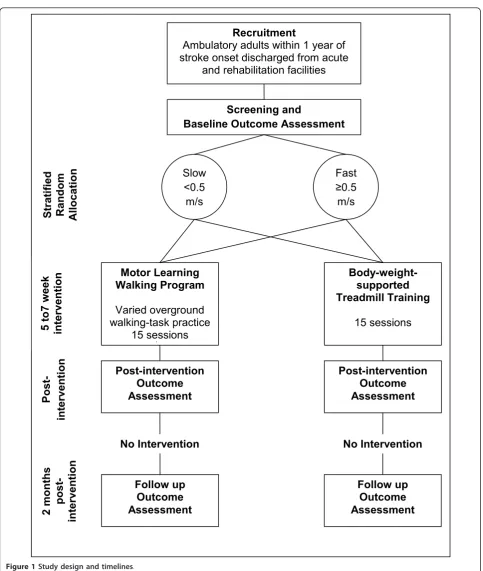
This study is a prospective, randomized, single blind, balanced parallel-group (1:1) superiority trial with strati-fication by baseline comfortable gait speed (< 0.5 m/s and≥0.5 m/s). The design includes concealed allocation during recruitment and screening, blinded outcome assessment and intention to treat analysis. Refer to Fig-ure 1 for study design diagram.
Ethics
All study activities have been approved by the Research Ethics Boards of St. Joseph’s Healthcare Hamilton (#6-2753), the Hamilton Health Sciences/Faculty of Health Sciences McMaster University (#07-054), and Joseph Brant Memorial Hospital, Burlington, Ontario.
Participants
programs at two teaching hospitals in Hamilton, Ontario, Canada (St. Joseph’s Healthcare Hamilton and Hamilton Health Sciences) and one community hospital, Joseph Brant Memorial Hospital, in the neighbouring
community of Burlington. We expect that treating phy-siotherapists and other clinicians will refer the majority of potential participants; however, some individuals may self-refer in response to community advertisements.
Motor Learning
Walking Program
Varied overground
walking-task practice
15 sessions
Body-weight-supported
Treadmill Training
15 sessions
Post-intervention
Outcome
Assessment
Slow
<0.5
m/s
Fast
0.5
m/s
Screening and
Baseline Outcome Assessment
Post-intervention
Outcome
Assessment
Recruitment
Ambulatory adults within 1 year of
stroke onset discharged from acute
and rehabilitation facilities
Follow up
Outcome
Assessment
Follow up
Outcome
Assessment
No Intervention
No Intervention
2 mont
hs
post-intervention
Stratified
Random
Allocation
5 to7 we
ek
intervention
Post-intervention
Following screening, individuals will be invited to parti-cipate if they meet the following criteria: 1) living in the community at time of entry into study, 2) at least 40 years old, 3) within 12 months of onset of a physician diagnosed ischemic or hemorrhagic stroke in any brain location (with or without evidence from diagnostic ima-ging), 4) able to walk 10 m without assistance with self-selected gait speed < 1.0 m/s (or typically use a walking aid), 5) able to follow a 2-step verbal command, 6) inde-pendent with community ambulation prior to most recent stroke, and 7) receive physician approval to parti-cipate in the study. Individuals with history of more than one stroke who meet all other inclusion criteria will be included in the study. Individuals will be excluded if they present with: 1) marked cognitive impairment (i.e. Mini Mental Status Exam < 24/30 or score less than predicted according to age and education level) [36], 2) severe visual impairment, 3) lower extre-mity amputation, 4) presence of serious unstable car-diac, medical or musculoskeletal conditions that would limit safe participation in walking exercise (as deter-mined by physician screening and baseline assessment interview).
Randomization
Participants will be randomly allocated to the two active intervention groups using a fixed allocation ratio of 1:1. Consistent with previous studies in this area [19,33], we anticipate the response to both training programs to be associated with pre-treatment walking ability and partici-pants will be stratified by baseline comfortable gait speed (slow < 0.5 m/s and fast≥0.5 m/) to minimize group imbalances on this variable [37]. In order to maintain recruitment balance between groups throughout the trial, a permuted block randomization process will be used within each strata using block sizes of at least 2 with all blocks divisible by 2 [38]. The randomization creation process (including block sizes) and resulting schedule will be set, held and managed by a central randomization service (Biostatistics Unit at St. Joseph’s Healthcare Hamilton). Group assignment will be communicated by email to the research coordinator on a single participant basis after screening, written informed consent, and base-line assessments have been completed.
Experimental Intervention: Motor Learning Walking Program (MLWP)
The Motor Learning Walking Program is a program of varied overground walking-task practice based on theory and research from the fields of motor control, motor learning, neuroplasticity, and stroke rehabilitation. The following statements will be used to guide the imple-mentation of the MLWP:
1. Motor skill is the product of multiple systems, internal and external to the individual[39]. Skilled human walking arises from the distributed contribu-tion of both internal (e.g., musculoskeletal, cardiovas-cular and central nervous system) and external systems (e.g. the environment). The characteristics of walking will vary depending on the specific task and environmental context in which it is performed. A comprehensive rehabilitation program must address the known demands of community walking [40]. 2. Learning is defined as a relatively permanent change in skill level (retention) and the ability to perform skill under varied conditions (transfer) [35].Motor learning is typically specific to the conditions of practice. Practice conditions should resemble the conditions of expected typical perfor-mance, including task characteristics, sensory motor conditions and information processing demands [35]. Repetitive task oriented practice of walking results in improved walking outcomes after stroke [20]. Training-induced neuroplasticity is specific to the trained movement or skill [41,42].
3. Practice should be sufficiently intense. Increased amounts of practice (repetitions) are typically asso-ciated with increased learning [35,42]. Increased prac-tice of lower extremity focused activities is associated with improved recovery of walking after stroke [43]. 4. Practice must be sufficiently challenging and engaging. Motor learning is enhanced when the lear-ner is cognitively challenged during practice or train-ing [44,45]. Cognitive effort may be facilitated through non-repetitive (random or serial) practice schedule, opportunity for self-evaluation and error correction through reduced augmented feedback presentation and minimal physical guidance, and increased task complexity [44-46]. Motor learning rather than simple motor activity or movement repetition is required to induce cortical and sub-cortical reorganization [42,46]. Practice must be interesting, meaningful, with the lear-ner/client actively engaged in order to induce desired neuroplastic changes [42].
5. Variable practice optimizes learning. Practice of a skill under a variety of environmental and task con-ditions usually leads to improved retention and trans-fer of skill to novel performance conditions [35]. 6. The effect of variable practice is usually enhanced when practiced in a non-repetitive order[35].
Content of the MLWP
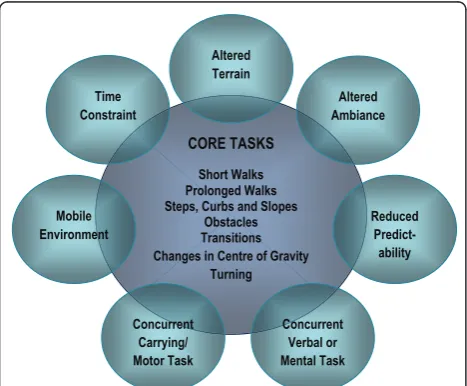
goals will help inform the content and emphasis of the walking training program. Training will be organized to promote engagement in intense, repetitive practice of a variety of challenging, walking tasks. Practice will be cognitively effortful, encouraging participants to solve and re-solve the problems of walking in a variety of environmental and task conditions. Refer to Figure 2 for a graphic representation of the MLWP.
Core Tasks
Participants will practice all walking tasks overground. At every session, the therapist will incorporate the fol-lowing seven core tasks that reflect the typical demands of home and community ambulation [40,47]: 1) walk short distances, 2) walk prolonged distances or times (> 50 m or > 5 minutes), 3) steps, curbs and slopes, 4) obstacle avoidance, 5) transitional movements (e.g. sit to stand and walk), 6) changes in centre of gravity (e.g. pick up object from floor while walking) and, 7) chan-ging direction/turning while walking.
Increasing Complexity of Walking Task Practice
Using the concepts described by Gentile in her Taxon-omy of Task Analysis [48] the training therapist will make each of the core tasks more complex through the addition of concurrent mental, verbal or physical tasks, adding a time restraint, altered terrain and/or lighting, increased duration, reduced predictability and/or perfor-mance of walking in a mobile environment.
The therapist will adjust the difficulty of practice tasks based on their assessment of the participant’s ability to perform the task safely without maximum physical assistance.
Tasks will be practiced in a serial or random order, moving from task to task, avoiding repetition of one sta-tion more than two times in a row. Feedback will be delayed and participants will be asked to self-evaluate their performance on a task and develop strategies to improve performance. When feedback is given, it will include either knowledge of results (e.g. time taken to complete a specific task) or knowledge of performance (e.g. step length, stance time) types of feedback [49]. The therapist will only provide hands-on guidance or assistance when required for safety, or for initial com-pletion of the basic task. Specific handling or facilitation techniques will not be used to affect quality of gait. Par-ticipants will practice walking tasks with and without their preferred gait aid. Tasks will be practiced in the physiotherapy gym and/or more natural settings inside and outside the hospital (e.g. courtyard, sidewalks, hos-pital lobby). The tasks will be designed to encourage inclusion of both lower limbs during practice (e.g. reci-procal stepping up stairs). Each session will last 45 min-utes including intermittent rest periods as required. Participants will practice three times a week for five weeks for fifteen sessions. Refer to Figure 2 for a graphic representation of the Motor Learning Walking Program.
Comparison Intervention: Body Weight Supported Treadmill Training (BWSTT)
Participants in the control group will practice walking on a treadmill according to a protocol based on an intervention described by Sullivan et al. [33] and Dun-can et al. [50]. Based in the CPG theory of stepping con-trol and recovery [51], the focus of this intervention is to provide participants with an opportunity to practice many repetitions of the normal gait cycle. Within a 45-minute session, participants will practice walking for up to 30 minutes at a time on the treadmill. Participants will train using the LiteGait system (harness and mechanical overhead suspension) and the GaitKeeper treadmill (Mobility Research Inc.). All participants will initiate training with 30% of their total body weight sup-ported. A maximum of 40% body weight support will be provided during training. As recommended in the litera-ture [33,52], participants will practice walking on the treadmill at speeds above their preferred overground walking speeds, preferably at or above 0.89 m/s (or 2.0 mph). Physical guidance will be provided by 1 to 3 therapists at the participant’s pelvis, and/or their limbs to increase gait symmetry, facilitate weight shift, increase hip extension during stance, and to correct foot place-ment. Verbal feedback related to the participants gait pattern (knowledge of performance) will be provided frequently and concurrent to participants walking on the treadmill. Continuous visual feedback will also be provided via a full-length mirror. Participants will be CORE TASKS
Short Walks Prolonged Walks Steps, Curbs and Slopes
Obstacles Transitions Changes in Centre of Gravity
Turning
Altered Ambiance Time
Constraint
Reduced
Predict-ability Mobile
Environment
Altered Terrain
Concurrent Verbal or Mental Task Concurrent
Carrying/ Motor Task
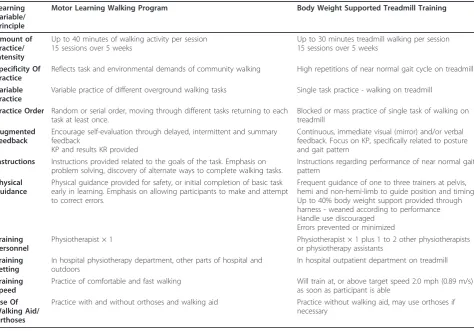
discouraged from placing their hands on the LiteGait or treadmill handles during training. Body weight support, feedback, and guidance will be weaned, and treadmill speed adjusted according to a clinical decision making algorithm modified from a training algorithm described for individuals with spinal cord injury by Behrman et al. [53]. A comparison of key elements of the MLWP and BWSTT are provided in Table 1.
For experimental and control interventions, blood pressure (BP), heart rate (HR) and rating of perceived exertion (RPE) will be measured at the beginning, dur-ing rest periods and at the end of every treatment ses-sion. During training, exercise intensity will be reduced if HR exceeds 70% of age predicted maximal heart rate (220 - age) or RPE is greater than 13 on the Borg RPE scale. If resting BP exceeds 180 mmHg systolic and/or 100 mmHg diastolic, the exercise session will be stopped and their physician notified. This information will be recorded allowing comparison between groups. Patients will also wear the StepWatch 3© step activity monitor during training sessions, and mean number of steps taken during the sessions recorded as a measure of amount of task-related practice.
In the event of missed sessions, participants will be allowed a maximum of seven consecutive weeks to com-plete as many of the fifteen sessions as possible. Consid-ering that previous studies have demonstrated changes in walking skill following 12 [24,25,33,34] and 18 ses-sions [19] over 4 [24,25,33,35] to 6 [19,34] weeks, we expect that a training frequency of 2 to 3 sessions per week for a total of 15 sessions will be result in improved walking skill in our participants.
To minimize the risk of contamination, separate train-ing physiotherapists will deliver the Motor Learntrain-ing Walking Program and the BWSTT program. All thera-pists will undergo a standardized training program prior to treating study participants on their own. The princi-pal investigator will monitor ongoing competence and adherence through session observation, case discussions and documentation reviews. In order to minimize the impact of expectation bias, training therapists and parti-cipants will be blinded to the hypotheses of the investi-gators regarding which of the two interventions is expected to result in superior outcomes. To avoid co-intervention, participants will be asked to refrain from attending physiotherapy for their balance or walking
Table 1 Description of experimental and comparison interventions
Learning Variable/ Principle
Motor Learning Walking Program Body Weight Supported Treadmill Training
Amount of Practice/ Intensity
Up to 40 minutes of walking activity per session 15 sessions over 5 weeks
Up to 30 minutes treadmill walking per session 15 sessions over 5 weeks
Specificity Of Practice
Reflects task and environmental demands of community walking High repetitions of near normal gait cycle on treadmill
Variable Practice
Variable practice of different overground walking tasks Single task practice - walking on treadmill
Practice Order Random or serial order, moving through different tasks returning to each task at least once.
Blocked or mass practice of single task of walking on treadmill
Augmented Feedback
Encourage self-evaluation through delayed, intermittent and summary feedback
KP and results KR provided
Continuous, immediate visual (mirror) and/or verbal feedback. Focus on KP, specifically related to posture and gait pattern
Instructions Instructions provided related to the goals of the task. Emphasis on problem solving, discovery of alternate ways to complete walking tasks.
Instructions regarding performance of near normal gait pattern
Physical Guidance
Physical guidance provided for safety, or initial completion of basic task early in learning. Emphasis on allowing participants to make and attempt to correct errors.
Frequent guidance of one to three trainers at pelvis, hemi and non-hemi-limb to guide position and timing Up to 40% body weight support provided through harness - weaned according to performance Handle use discouraged
Errors prevented or minimized
Training Personnel
Physiotherapist × 1 Physiotherapist × 1 plus 1 to 2 other physiotherapists
or physiotherapy assistants
Training Setting
In hospital physiotherapy department, other parts of hospital and outdoors
In hospital outpatient department on treadmill
Training Speed
Practice of comfortable and fast walking Will train at, or above target speed 2.0 mph (0.89 m/s)
as soon as participant is able
Use Of Walking Aid/ Orthoses
Practice with and without orthoses and walking aid Practice without walking aid, may use orthoses if necessary
limitations during the study intervention period. Partici-pants will be questioned at post-intervention and follow up measures regarding their participation in physiother-apy outside of the study.
Outcomes
Efficacy of the interventions will be determined by com-paring change scores (baseline to post treatment) on a variety of standardized outcome measures taken at base-line, post-treatment and 8 weeks post-intervention. The primary outcome measure is comfortable gait speed as measured by the five-metre walk test [54]. Following stroke, gait speed is frequently reduced compared to age matched normals [5,55,56]. Gait speed has been shown to be reliable (r = 0.94)[57], responsive to change (SRM = 1.22; effect size = 0.83) [54], and significantly related to independent community ambulation [11].
Secondary outcome assessment will include measures of maximal gait speed, walking endurance (Six Minute Walk Test), dynamic balance (Functional Balance Test) [58], balance and walking related self-efficacy (Activities-specific Balance Confidence Scale) [59], walking function (modified Functional Ambulation Categories) [60], walk-ing participation (5-day daily step activity - StepWatch 3 step activity monitor) [61,62], community reintegration (Life Space Questionnaire) [63,64], health related quality of life (Stroke Impact Scale 3.0) [65], goal attainment (Patient Specific Functional Scale) [66] and mean num-ber of trainers per training session.
In addition, the baseline assessment will include the collection of demographic information, assessment of cognitive function (Mini Mental Status Exam) [36], pre-sence of depression (Geriatric Depression Scale -15) [67], and the Chedoke-McMaster Stroke Assessment Leg and Foot stages of motor recovery [68]. At follow-up, information will be collected regarding participation in physiotherapy and any change in health status. This information will be used to describe the groups and interpret the results of the interventions.
Training and assessor therapists will record any of the following adverse events that occur during or between sessions: 1) falls (unintentionally landing on the ground), 2) any injury during session, 3) myocardial infarction (confirmed by physician and/or health records), 4) new stroke or transient ischemic attack (confirmed by physi-cian and/or health records), 5) hospitalization for any cause, 6) death of any cause.
Physiotherapists trained to perform the standardized outcome measures will measure outcomes. Assessors will be blinded to the participant’s intervention assign-ment and study hypotheses, limiting the potential for expectation bias. Participants will be instructed not to reveal their group assignment to the assessor.
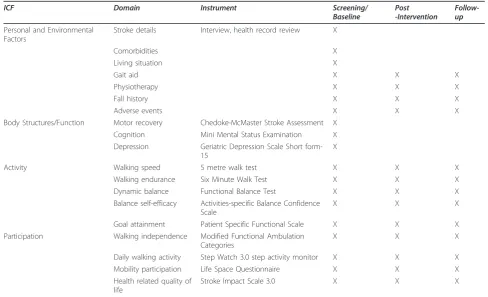
Outcome assessment domains, tools and timing are summarized in Table 2.
Sample size
Seventy participants will be recruited. The sample size has been calculated to reliably detect a 0.14 m/s between-group difference in gait speed change (assum-ing a standard deviation of 0.19 m/s) with 80% power at a 2-tail significance level of 0.05. Using self-selected gait speed as the primary outcome, this sample size has been estimated based on a range of change scores and stan-dard deviation values reported in the literature. Reported differences in change scores between experi-mental and control interventions range from 0.9 m/s to 0.14 m/s and standard deviation in change scores range from 0.14 to 0.19 m/s [19,33,34,69,70]. Using a conser-vative estimate of standard deviation of change score of 0.19 and a difference between group change scores of 0.14 m/s, the minimal number of participants required for each treatment group is 29 participants. Dropout rates in previous studies have ranged from 7 to 20% [19,33]. Allowing for a 17% loss to follow up rate, the study will need to recruit approximately 35 participants into each group for a total of 70.
Statistical Analysis
goodness-of-fit. All analyses will be performed using SPSS version 16.0 for Windows or SAS 9.2 (Cary, NC).
Primary Analysis
The post-intervention (T2) self-selected overground walking speed for the MLWP and BWSTT groups will be compared using analysis of covariance. The two fac-tors will be intervention group (intervention or control) and baseline speed stratum (i.e. slow or fast).
Secondary Analysis
Mixed design analysis of variance will be used to com-pare the two groups’baseline, post-intervention and fol-low-up scores on all other secondary measures. The two factors will be time and group. Descriptive statistics (i.e. means, or frequencies) will be used to present data related to adverse and serious adverse events by groups. Any apparently significant differences between groups will be analysed for significance using chi square statis-tics. In an effort to describe the two interventions, the mean number of steps taken per session will be counted in a convenient sub-sample of participants using the step activity monitors. Independent samples t-test statis-tic will be used to compare the mean number of steps taken per session by the two groups during treatment sessions.
Sensitivity Analyses
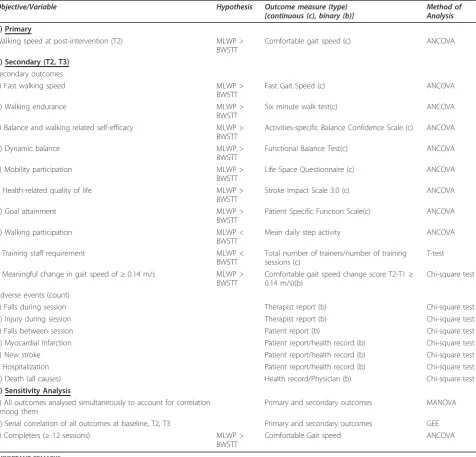
Sensitivity analyses will be performed to assess the robustness of the results. First, there is likely to be high inter-correlations among all outcomes. We will use mul-tivariate analysis of variance (MANOVA) approach to analyze all outcomes simultaneously. This method accounts for possible correlations among all outcomes and provides for a global assessment of differences between groups with an indication of where differences exist. Second, we will use generalized estimating equa-tions (GEE) [73] to account for possible serial correla-tion of measurements within a patient overtime. Unlike ordinary linear regression, GEE allows accounting possi-ble correlation of outcome scores for the same patient over time. We will use sensitivity analysis to explore potential clustering of measurements/outcomes from the same patient. The clustering effect, measured by intra-class correlation coefficient, will be assumed to be equal across patients. Sensitivity analysis will also include a between-group comparison of post-interven-tion comfortable gait speed in participants who com-pleted at least 12 of the 15 training sessions using analysis of variance. Refer to Table 3 for a summary of the planned analyses.
Table 2 Outcome domains, measures and timing of assessments
ICF Domain Instrument Screening/
Baseline
Post -Intervention
Follow-up
Personal and Environmental Factors
Stroke details Interview, health record review X
Comorbidities X
Living situation X
Gait aid X X X
Physiotherapy X X X
Fall history X X X
Adverse events X X X
Body Structures/Function Motor recovery Chedoke-McMaster Stroke Assessment X
Cognition Mini Mental Status Examination X
Depression Geriatric Depression Scale Short form-15
X
Activity Walking speed 5 metre walk test X X X
Walking endurance Six Minute Walk Test X X X
Dynamic balance Functional Balance Test X X X
Balance self-efficacy Activities-specific Balance Confidence Scale
X X X
Goal attainment Patient Specific Functional Scale X X X
Participation Walking independence Modified Functional Ambulation
Categories
X X X
Daily walking activity Step Watch 3.0 step activity monitor X X X
Mobility participation Life Space Questionnaire X X X
Health related quality of life
Stroke Impact Scale 3.0 X X X
Discussion
To date, a number of controlled trials have tested the effectiveness of intensive, task-related walking training interventions against a non-walking focused control treatment.
A head-to-head comparison of two different active walking focused interventions will help answer the question whether it matters howindividuals practice walking after stroke. As with most rehabilitation inter-ventions, task-related walking training can be complex Table 3 Summary of planned primary, secondary and sensitivity analyses
Objective/Variable Hypothesis Outcome measure (type)
[continuous (c), binary (b)]
Method of Analysis
1) Primary
Walking speed at post-intervention (T2) MLWP >
BWSTT
Comfortable gait speed (c) ANCOVA
2) Secondary (T2, T3)
Secondary outcomes
a) Fast walking speed MLWP >
BWSTT
Fast Gait Speed (c) ANCOVA
b) Walking endurance MLWP >
BWSTT
Six minute walk test(c) ANCOVA
c) Balance and walking related self-efficacy MLWP >
BWSTT
Activities-specific Balance Confidence Scale (c) ANCOVA
d) Dynamic balance MLWP >
BWSTT
Functional Balance Test(c) ANCOVA
e) Mobility participation MLWP >
BWSTT
Life Space Questionnaire (c) ANCOVA
f) Health-related quality of life MLWP >
BWSTT
Stroke Impact Scale 3.0 (c) ANCOVA
g) Goal attainment MLWP >
BWSTT
Patient Specific Function Scale(c) ANCOVA
h) Walking participation MLWP <
BWSTT
Mean daily step activity ANCOVA
i) Training staff requirement MLWP <
BWSTT
Total number of trainers/number of training sessions (c)
T-test
j) Meaningful change in gait speed of≥0.14 m/s MLWP >
BWSTT
Comfortable gait speed change score T2-T1≥ 0.14 m/s)(b)
Chi-square test
Adverse events (count)
a) Falls during session Therapist report (b) Chi-square test
b) Injury during session Therapist report (b) Chi-square test
c) Falls between session Patient report (b) Chi-square test
d) Myocardial Infarction Patient report/health record (b) Chi-square test
e) New stroke Patient report/health record (b) Chi-square test
f) Hospitalization Patient report/health record (b) Chi-square test
g) Death (all causes) Health record/Physician (b) Chi-square test
3) Sensitivity Analysis
a) All outcomes analysed simultaneously to account for correlation among them
Primary and secondary outcomes MANOVA
b) Serial correlation of all outcomes at baseline, T2, T3 Primary and secondary outcomes GEE
c) Completers (≥12 sessions) MLWP >
BWSTT
Comfortable Gait speed ANCOVA
IMPORTANT REMARKS: The GEE2
is a technique that allows to specify the correlation structure between patients within a hospital and this approach produces unbiased estimates under the assumption that missing observations will be missing at random. An amended approach of weighted GEE will be employed if missingness is found not to be at random3
.
In all analyses results will be expressed as coefficient, standard errors, corresponding 95% and associated p-values. Goodness-of-fit will be assessed by examining the residuals for model assumptions and chi-squared test of goodness-of-fit
Tukey’s HSD method will be used to adjust the overall level of significance for multiple secondary outcomes 1
Perera S, Mody SH, Woodman RC, Studenski SA. Meaningful change and responsiveness in common physical performance measures.Journal of American Geriatrics Society2006. 54: 743-749.
2
Hardin JW.Generalized Estimating Equations. New York: Chapman and Hall/CRC, 2001 3
and multifaceted. A sound theory base can help focus an intervention on the proposed, relevant active ingre-dients [74]. In our study, the experimental and com-parison intervention were designed based on two different theoretic frameworks. While both interven-tions emphasize walking practice, their respective the-ory bases dictate what type of walking is practiced, the practice environment, tolerance for error and variabil-ity during practice, the role of the therapist, and the role of the participant during practice. As a result, this study provides a direct comparison of the effectiveness of two quite different task-related walking training pro-tocols with different resource requirements. The results of this study takes an important step toward informing clinicians, patients, caregivers and adminis-trators of the essential components of an optimally effective task-related walking training intervention fol-lowing stroke.
Acknowledgements and funding
This study has received funding from the Ontario Stroke System, Ministry of Health and Long Term Care (MOHLTC) (Grant #06356) and the Father Sean O’Sullivan Research Centre, Hamilton, Ontario, Canada. Work completed related to this study was a component of VGD’s doctoral studies at McMaster University. VGD received financial support from the Canadian Institutes of Health Research’s Fredrick Banting and Charles Best Canada Graduate Scholarship Doctoral Award and the Canadian Institutes of Health Research Strategic Training Program in Rehabilitation Research, McMaster University.
Author details
1School of Rehabilitation Sciences, McMaster University, Hamilton, Ontario,
Canada.2Department of Kinesiology, McMaster University, Hamilton, Ontario, Canada.3Department of Clinical Epidemiology and Biostatistics, McMaster
University, Hamilton, Ontario, Canada.4Biostatistics Unit, Father Sean O’Sullivan Research Centre, St Joseph’s Healthcare - Hamilton, Hamilton Ontario, Canada.5Physiotherapy Department, St. Joseph’s Healthcare Hamilton, Hamilton, Ontario, Canada.
Authors’contributions
VGD conceived of the study, acted as the principal investigator and drafted the manuscript. LT provided statistical expertise in clinical trial design. All authors contributed to the study design, are grant holders, contributed to the editing of the manuscript, and read and approved the final manuscript.
Competing interests
The authors declare that they have no competing interests.
Received: 1 September 2011 Accepted: 21 October 2011 Published: 21 October 2011
References
1. World Health Organization:The Global Burden of Disease: World Health Organization.2008 [http://www.who.int/healthinfo/global_burden_disease/ GBD_report_2004update_full.pdf].
2. Jorgensen H, Nakayama H, Raaschou H, Olsen T:Recovery of walking function in stroke patients: The Copenhagen Stroke Study.Archives of Physical Medicine and Rehabilitation1995,76:27-32.
3. Pound P, Gompertz P, Ebrahim S:A patient-centred study of the consequences of stroke.Clinical Rehabilitation1998,12(4):338-47. 4. Moreland J, DePaul V, DeHueck A, Pagliuso S, Yip D, Pollock B, Wilkins S:
Needs assessment of individuals with stroke after discharge from hospital stratified by acute Functional Independence Measure score. Disability and Rehabilitation2009,31(26):2185-95.
5. Olney S, Richards C:Hemiparetic gait following stroke. Part I: Characteristics.Gait and Posture1996,4:136-48.
6. Mayo NE, Wood-Dauphinee S, Ahmed S, Gordon C, Higgins J, McEwen S, Salbach N:Disablement following stroke.Disability and Rehabilitation1999,
21(5/6):258-68.
7. Botner E, Miller W, Eng J:Measurement properties of the Activities-specific Balance Confidence Scale among individuals with stroke. Disability and Rehabilitation2005,27(4):156-63.
8. Salbach N, Mayo N, Robichaud-Ekstrand S, Hanley J, Richards C, Wood-Dauphinee S:Balance self-efficacy and its relevance to physical function and perceived health status after stroke.Archives of Physical Medicine and Rehabilitation2006,87:364-70.
9. Mayo NE, Wood-Dauphinee S, Cote R, Carlton J, Durcan L:Activity, Participation and Quality of Life 6 months poststroke.Archives of Physical Medicine and Rehabilitation2002,83:1035-42.
10. Lord S, McPherson K, McNaughton H, Rochester R, Weatherall M:
Community ambulation after stroke: how important and obtainable is it and what measures appear predictive?Archives of Physical Medicine and Rehabilitation2004,85:234-9.
11. van de Port I, Kwakkel G, Lindeman E:Community ambulation in patients with chronic stroke: How is it related to gait speed?Journal of Rehabilitation Medicine2008,40:23-7.
12. Bohannon R, Williams Andrew A, Smith M:Rehabilitation goals in patients with hemiplegia.International Journal of Rehabilitation Research1988,
11:181-3.
13. Bogey R, Hornby T:Gait training strategies utilized in poststroke rehabilitation: Are we really making a difference?Topics in Stroke Rehabilitation2007,14(6):1-8.
14. Lindsay P, Bayley M, Hellings C, Hill M, Woodbury E, Phillips S:Canadian Best Practice Recommendations for Stroke Care.Canadian Medical Association Journal2008,179(12 Supplement):E1-E93.
15. Foley N, Teasell R, Bhogal S:Mobility and the lower extremity. Evidence-based review of stroke rehabilitation.[http://www.ebrsr.com/
reviews_details.php?Mobility-and-the-Lower-Extremity-15].
16. Wevers L, van de Port I, Vermue M, Mead G, Kwakkel G:Effects of Task-Oriented Circuit Class Training on Walking Competency After Stroke: A Systematic Review.Stroke2009,40:2450-9.
17. Moore J, Roth E, Killian C, Hornby T:Locomotor training improves daily stepping activity and gait efficiency in individuals poststroke who have reached a“plateau”in recovery.Stroke2010,41:129-35.
18. Miller EW, Quinn ME, Seddon PG:Body weight support treadmill and overground ambulation training for two patients with chronic disability secondary to stroke.Physical Therapy2002,82:53-61.
19. Salbach N, Mayo NE, Wood-Dauphinee S, Hanley J, Richards C, Cote R:A task-orientated intervention enhances walking distance and speed in the first year post stroke: a randomized controlled trial.Clinical Rehabilitation2004,18:509-19.
20. French B, Thomas LH, Leathley MJ, Sutton CJ, McAdam J, Forster A, Langhorne P, Price CIM, Walker A, Watkins CL:Repetitive task training for improving functional ability after stroke.Cochrane Database of Systematic Reviews2007,4.
21. Smith LN, James R, Barber M, Ramsay S, Gillespie D, Chung C:
Rehabilitation of patients with stroke: summary of SIGN guidance.British Medical Journal2010,340:1356-8.
22. Hesse S, Werner C, von Frankenberg S, Bardeleben A:Treadmill training with partial body weight support after stroke.Physical Medicine and Rehabilitation Clinics of North America2003,14:S111-S123.
23. Carr JH, Shepherd RB:A motor relearning programme for stroke.1 edition. Oxford: William Heinemann Medical Books; 1982.
24. Dean C, Richards C, Malouin F:Task-related circuit training improves performance of locomotor tasks in chronic stroke: A randomized controlled pilot trial.Archives of Physical Medicine and Rehabilitation2000,
81:409-17.
25. Mudge S, Barber PA, Stott S:Circuit-based rehabilitation improves gait endurance but not usual walking activity in chronic stroke: A
randomized controlled trial.Archives of Physical Medicine and Rehabilitation
2009,90:1989-96.
26. Dietz V:Body weight supported gait training: From laboratory to clinical setting.Brain Research Bulletin2009,78:I-VI.
28. Behrman A, Bowden M, Nair P:Neural Plasticity after spinal cord injury and training: An emerging paradigm shift in rehabilitation and walking recovery.Physical Therapy2006,86(10):1406-25.
29. Yen C-L, Wang R-Y, Liao K-K, Huang C-C, Yang Y-R:Gait training-induced change in corticomotor excitability in patients with chronic stroke. Neurorehabilitation and Neural Repair2008,22:22-30.
30. Forrester L, Wheaton L, Luft A:Exercise-mediated locomotor recovery and lower-limb neuroplasticity after stroke.Journal of Rehabilitation Research and Development2008,45(2):205-20.
31. Harvey R:Improving poststroke recovery: Neurorecovery and task-oriented training.Current Treatment Options in Cardiovascular Medicine
2009,11:251-9.
32. Hesse S:Gait training after stroke: a critical reprisal.Annales de réadaptation et de médecine physique2006,49:621-4.
33. Sullivan K, Knowlton B, Dobkin B:Step training with body weight support: effect of treadmill speed on practice paradigms on poststroke locomotor recovery.Archives of Physical Medicine and Rehabilitation2002,
83:683-91.
34. Sullivan KJ, Brown DA, Klassen T, Mulroy S, Ge T, Azen SP, Winstein CJ:
Effects of task-specific locomotor and strength training in adults who were ambulatory after stroke: results of the STEPS randomized clinical trial.Physical Therapy2007,87:1580-602.
35. Schmidt R, Lee T:Motor Control and Learning: A Behavioural Emphasis.5 edition. Champaign, IL: Human Kinetics; 2011.
36. Crum R, Anthony J, Bassett S, Folstein M:Population-based norms for the min-mental state examination by age and educational level.Journal of the American Medical Association1993,18:2386-91.
37. Wang D, Bakhai A:Randomization.InClinical Trials: A practical guide to design, analysis, and reporting..1 edition. Edited by: Wang D, Bakhai A. London: Remedica; 2006:65-73.
38. Meinert CL:Randomization and the mechanics of treatment masking.In
Clinical Trial Design, Conduct and Analysis.Edited by: Meinert CL, Tonascia S. Oxford: Oxford University Press; 1986:90-112.
39. Horak F:Assumptions underlying motor control for neurologic rehabilitation.Contemporary Management of Motor Control Problems: Proceedings of the II STEP ConferenceFredericksberg: Foundation for Physical Therapy; 1991, 11-28.
40. Shumway-Cook A, Patla A, Stewart A, Ferrucci L, Ciol M, Guralnik J:
Environmental demands associated with community mobility in older adults with and without mobility disabilities.Physical Therapy2002,
82:670-81.
41. Sacco K, Cauda F, D’agata F, Mate D, Duca S, Geminiani G:Reorganization and enhanced functional connectivity of motor areas in repetitive ankle movements after training in locomotor attention.Brain Research2009,
1297:124-34.
42. Kleim JA, Jones TA:Principles of experience dependent neural plasticity: Implications for rehabilitation after brain damage.Journal of Speech, Language, and Hearing Research2008,51:S225-S239.
43. Kwakkel G, Kollen BJ, Wagenaar RC:Long term effects of intensity of upper and lower limb training after stroke: a randomised trial.Journal of Neurology, Neurosurgery and Psychiatry2002,72:473-9.
44. Lee T, Swinnen S, Serrien D:Cognitive Effort and Motor Learning.Quest
1994,46:328-44.
45. Sherwood DE, Lee TD:Schema theory: critical review and implications for the role of cognition in a new theory of motor learning.Research Quarterly for Exercise & Sport2003,74(4):376-82.
46. Carey JR, Bhatt E, Nagpal A:Neuroplasticity promoted by task complexity. Exercise and Sports Science Reviews2005,33(1):24-31.
47. Robinnett C, Vondran M:Functional ambulation velocity and distance requirements in rural and urban communities: a clinical report.Physical Therapy1988,68(1371):1373.
48. Carr J, Shepherd R:Movement Science: Foundation for Physical Therapy in Rehabilitation.2 edition. Gaithersburg, Maryland: Aspen Publishers, Inc.; 2000.
49. Van Vliet P, Wulf G:Extrinsic feedback for motor learning after stroke: What is the evidence?Disability and Rehabilitation2006,28(13-14):831-840. 50. Duncan PW, Sullivan KJ, Behrman AL, Azen SP, Wu SS, Nadeau SE,
Dobkin BH, Rose DK, Tilson JK:Protocol for the Locomotor Experience Applied Post-stroke(LEAPS) trial: a randomized controlled trial.BMC Neurology2007,7:39.
51. Duysens J, Van de Crommert H:Neural control of locomotion; Part 1: The central pattern generator from cats to humans.Gait and Posture1998,
7:131-41.
52. Pohl M, Mehrholz J, Ritshel C, Ruckriem S:Speed-dependent treadmill training in ambulatory hemiparetic stroke patients: a randomized controlled trial.Stroke2002,33:553-558.
53. Behrman A, Lawless-Dixon A, Davis S:Locomotor training progression and outcomes after incomplete spinal cord injury.Physical Therapy2005,
85:1356-71.
54. Salbach N, Mayo NE, Higgins J, Ahmed S, Finch L, Richards C:
Responsiveness and predictability of gait speed and other disability measures in acute stroke.Archives of Physical Medicine and Rehabilitation
2001,82:1204-12.
55. Wade D, Wood V, Heller A, Maggs J, Langton A, Hewer R:Walking after stroke. Measurement and recovery over the first 3 months.Scandanavian Journal of Rehabilitation Medicine1987,19:25-30.
56. Richards C, Malouin F, Dean C:Gait in Stroke: Assessment and Rehabilitation.Clinics in Geriatric Medicine1999,15(4):833-55. 57. Flansbjer U-B, Holmback A, Downham D, Patten C, Lexell J:Reliability of
gait performance tests in men and women with hemiparesis after stroke.Journal of Rehabilitation Medicine2005,37:75-82.
58. Richardson J, DePaul V, Moreland J, Cripps D:Evaluation of the Functional Balance Test.Pinnacles1999,Winter:11-13.
59. Powell L, Myers A:The Activities-specific Balance Confidence (ABC) Scale. Journal of Gerontology: Medical Sciences1995,50A(1):M28-M34.
60. Perry J, Garrett M, Gronley J, Mulroy S:Classification of walking handicap in the stroke population.Stroke1995,26(6):982-9.
61. Coleman KL, Smith DS, Boone DA, Joseph AW, del Aquila MA:Step activity monitor. Long term continuous recording of ambulatory function. Journal of Rehabilitation Research and Development1999,36(1):8-18. 62. Macko RF, Haueber E, Shaughnessy M, Coleman KL, Boone DA, Smith G,
Silver KH:Microprocessor based ambulatory activity monitoring in stroke patients.Medicine and Science in Sports and Exercise2002,34(3):394-9. 63. Baker PS, Bodner EV, Allman RM:Measuring Life-Space mobility in
community dwelling older adults.Journal of the American Geriatric Society
2003,51:1610-4.
64. Peel C, Baker PS, Roth D, Brown C, Bodner EV, Allman RM:Assessing mobility in older adults: The UAB study of aging life-space assessment. Physical Therapy2005,85(10):1008-19.
65. Duncan P, Bode R, Lai S, Perera S:Rasch Analysis of a new stroke-specific outcome scale: The Stroke Impact Scale.Archives of Physical Medicine and Rehabilitation2003,84:950-63.
66. Stratford P, Gill C, Westaway M, Binkley J:Assessing disability and change in individual patients: a report fo a patient specific measure. Physiotherapy Canada1995,47:258-63.
67. Sheikh RL, Yesavage JA:Geriatric Depression Scale(GDS). Recent evidence and development of a shorter version.Clinical Gerontologist1986,
5:165-73.
68. Gowland C, Stratford P, Ward M, Moreland J, Torresin W, VanHullenaar S:
Measuring physical impairment and disability with the Chedoke-McMaster Stroke Assessment.Stroke1993,24:58-63.
69. Ada L, Dean C, Hall J, Brampton J, Crompton S:A treadmill and overground walking program improves walking in persons residing in community after stroke: a placebo-controlled, randomized trial.Archives of Physical Medicine and Rehabilitation2003,84:1486-91.
70. Perera S, Mody SH, Woodman RC, Studenski SA:Meaningful change and responsiveness in common physical performance measures in older adults.Journal of the American Geriatric Society2006,54:743-9.
71. Moher D, Hopewell S, Schulze KF, Montorid V, Gotzschee PC, Devereaux PJ, Elbourne D, Egger M, Altman DG:CONSORT 2010 Explanation and Elaboration: updated guidelines for reporting parallel group randomised trials.Journal of Clinical Epidemiology2010,63:e1-e37.
72. Sterne JAC, White IR, Carlin JB, Spratt M, Royston P, Kenward MG, Wood AM, Carpenter JR:Multiple imputation for missing data in epidemiological and clinical research: Potential and pitfalls.British Medical Journal2009,339:157-160.
73. Hardin JW:Generalized estimating equationsNew York: Chapman and Hall/ CRC; 2001.
Pre-publication history
The pre-publication history for this paper can be accessed here: http://www.biomedcentral.com/1471-2377/11/129/prepub
doi:10.1186/1471-2377-11-129
Cite this article as:DePaulet al.:Varied overground walking-task practice versus body-weight-supported treadmill training in ambulatory adults within one year of stroke: a randomized controlled trial protocol.
BMC Neurology201111:129.
Submit your next manuscript to BioMed Central and take full advantage of:
• Convenient online submission
• Thorough peer review
• No space constraints or color figure charges
• Immediate publication on acceptance
• Inclusion in PubMed, CAS, Scopus and Google Scholar
• Research which is freely available for redistribution