An Examination of Product Development Approaches within
Demand Driven Supply Chains
Abstract
Purpose – Innovation has been considered as the most important factor in today’s global and competitive environments for meeting growth, customer demands and expectations for any product development environment. This research study examines the concepts of sustainable development, its practices and impacts within demand driven supply chain environments. This paper is part of a wider project and within later stages of the study, a novel framework will be developed in order to link new product development (NPD) and demand chain management (DCM) aspects from the analysis of the research findings.
Design/methodology/approach – This research has adopted the approach of descriptive method which tends to examine demand chain concept and its evolution through recent years, while having a particular focus into NPD projects.
Findings –The paper investigates early study models through key findings of the literature that focuses on demand chain and NPD for the use and implementation of sustainability measures within manufacturing environments. The research study highlights the need for incorporation of NPD-DCM through the entire business ecosystem entities and also through the flow of information, materials and resources within the structure of the supply chain. The study finds out the key hurdles of the companies towards adoption of demand-driven supply chains in NPD environments, such as lack of cross-organisational association and lack of innovative demand chain frameworks.
Originality/value – The novelty of the research is to develop an early understanding within demand driven supply chains, considering the product development programmes particularly focused on marketing activities. The study provides future researchers with a platform to undertake studies within similar function of demand driven supply chain environments.
Keywords Demand chain management (DCM), Environmental practices, New product development (NPD), Supply chain management (SCM), Sustainable development.
Paper type Literature Review
1. INTRODUCTION
change within the environments. Manufacturers are now considering products with shorter lifecycles, increased product offerings and variety and shorter lead times for product maturations within the markets. All of these are factors that impact overall performance of the business due to the increased uncertainty within the market (Awwad and Akroush, 2016). Hence, much of current competition not only focuses on different competing firms, but also the supply chain networks, thus allowing the transfer of single autonomous supply chain networks to multiple supply chain entities (Vural, 2015). This paper utilises a comprehensive review of literature in order to apply its results using a qualitative research method within the later stages of the study. The hurdles, needs and opportunities of the manufacturing companies would be discussed in order to present the findings and discussion and also to bridge the gap between theory and practice. The scope and structure of this research study is based upon the integration of NPD and DCM which will be considered through all processes of the business in order to facilitate the product portfolio and to allow the creation of unique competitive advantages linking customer values within the product portfolio. Also, environmental sustainability and business ethics are considered as significant towards the generation of new products for many of the manufacturing sectors.
2. LITERATURE REVIEW
The paper presents the literature review to further allow the researcher to gather evidence towards the adoption of sustainable practices within NPD processes in any demand driven supply chain environment. The findings from the literature aims to provide the framework that will allow the analysis of applications and methods for using sustainable and environmental practices within demand focused manufacturing sectors.
2.1 An Overview of Demand Chain Management
Studies highlight that DCM mainly focuses towards the importance of efficiency and production, similar to that of SCM and it should be linked appropriately with the relative aspects of supply chain activities to achieve higher competitive advantage with customer satisfaction (Vural, 2015). It has also shown through research that the competitive situation has advanced the pace of innovation through its discovery, implementation, introduction and diffusion into the market space. This has forced many companies to use continuous innovation within their products and services to provide and satisfy better performance from the consumers (Caputo et al., 2016). It has been noticed in recent years, that the power focus has been shifted from producers, manufacturers and retailers more towards buyers and end users (Mahmood and Kess, 2016).
A similar study compares different firms towards achieving competitive advantages through the concepts of DCM (Hilletofth, 2011). The study states that those firms that adopt demand driven practices are focused more towards the managing and coordination of total demand processes. This is achieved through the provision of high value and fulfilment of market demands within the consumer cycle (Hilletofth, 2011). Contrary to that, those firms that focus towards supply driven practices are focusing on the managing and coordination of supply processes (SCM) that allow them to retain their competitive advantage through the provision of comparative value at a much lower cost to the customer (Hilletofth, 2011). Hence, it’s easily reflected that marketing focuses towards creation of customer value and supply chain is focused towards supply related processes with the efficient use of resources. Thus, demand chain is providing the linkage to bridge the gap between the marketing and supply chain principles (Jüttner et al., 2007). Demand chain could be applied in a wide variety of industries such as aircraft industry as a SCM approach in order to deal with risks and threats associated with supply chain redesign approaches, whereas it has been argued within the Boeing 787 Dreamliner development programme (Naghi Ganji et al., 2017b).
information and products are rapidly increasing and becoming completely trackable across the entire supply chain.
DDSC is mainly based on four key pillars. First, the demand and inventory levels need to be clear and transparent across the whole supply chain. Second, a strong infrastructure helps the supply chain entities to adjust and correspond to instant changes in supply and demand. Third, coordination among the supply chain stakeholders enables them to operate more efficient and organized, and fourth optimization of whole supply chain performance provides companies with cost reductions and enhances customer service (Budd et al., 2012).
Other research studies facilitate a more cross functional base to capture supply and demand integration. Through the initial studies, researchers were enabled to propose the conceptual framework integrating the three elements (process, configuration and social interaction) towards the role of marketing in DCM that enabled the linkage and relationship between marketing and SCM as seen through Table 1 (Jüttner et al., 2007).
Table 1 The roles of marketing within DCM (Jüttner et al., 2007; Naghi Ganji et al., 2017c)
In this case, the demand chain transformation at Heineken Company is examined in some major aspects including efficient customer response (ECR) with the form of category management, vendor management inventory (VMI) and early supplier involvement (ESI) as useful practices (Vollmann and Kordon, 1998). Moreover, many successful companies like Zara and Dell benefit from adoption of the DCM principles to their businesses (Walker et al., 2000) in order to increase their profitability and competitive advantage by close association of supply and customer elements such as product availability, delivery accuracy and responsiveness. It is discussed that DDSC has got the potential to be expanded to a wide range of industries such as retail, consumer products, automotive, aerospace and defence due to its nature of end-to-end visibility and enhanced processes. For instance, aerospace
Demand Chain
Management Element Relevance in Marketing
Process -
Managing the integration between the demand and supply processes
Facilitating the process integration by disseminating customer and market information;
Evaluating marketing activities from integrated process perspective;
Fostering a demand rather than a supply-based integration of information needs.
Configuration -
Managing the structure between the integrated processes and customer segments
Linking external, customer-facing segmentation with internal segmentation of production, logistics and sourcing;
Obtaining knowledge about changes in customer needs as a basis for structural adaptation requirements of the supply chain.
Social interactions
-Managing the working relationship
Between marketing and SCM
Exchanging information with SCM such as defined customer segments and new customer/product opportunities;
and defence industry have logistical challenges requiring a high number of complex products at the right time and due to costly high inventory levels, these companies need to work closely with their suppliers in order to coordinate different activities (Budd et al., 2012). Marketing function will be resilient to alterations and hence, the whole supply chain needs to be involved in marketing activities, customer priority decisions and more significantly needs to deny marketing decisions if they are not in line with business profitability. In essence, it is suggested that the relationship triangle of SCM, DCM and marketing can act as a business enhancement option which also creates the superior customer value (Jüttner et al., 2007; Walker et al., 2000).
To distinguish the differences between SCM, DCM and DDSC, further interpretations can be provided. In a nutshell, SCM perspective starts with suppliers moving downstream to manufacturers and end-users. This creates a push system for the new products while entering the market. In contrary, DCM perspective starts with customer specific demands moving upstream to manufacturers and suppliers and this can be facilitated through the important factor of marketing. Hence, marketing act as a coordinator moving from SCM to DCM approaches. This means that in order to start with customer needs within NPD projects, innovative marketing practices such as collective customer commitment or postponement can be utilised in order to bridge the gaps between company and its customers which provides company with fruitful ideas as well as customer value creation and high level of satisfaction. On the other side, DDSC is a term coined by some authors which highly focuses on the IT applications, shortening the information flow time and providing with real-time information through the supply chain entities (Budd et al., 2012). Therefore, DCM and DDSC are very similar in nature and targets, and there are only few differences within their focus and strategies.
2.2 New Product Development and Innovation
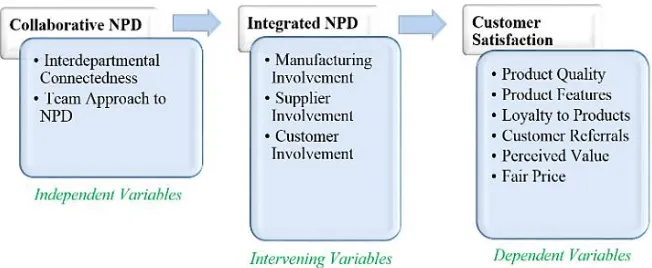
It is evidenced that manufacturing firms in order to be more competitive in market, must continuously update their product offers in order to better satisfy the customers’ requirements. The integrated NPD and SCM enterprise has the benefit of increased supply chain capability, thus increasing the effectiveness of new product introductions and improves enterprise’s performance (Van Hoek and Chapman, 2007). According to Figure 2, NPD relates to most departments in the manufacturing companies, while the main sections such as marketing, design and engineering sections should be included in.
towards the success of the product and that of the organisation within the competitive market place. Within the current global environments, companies have to adopt and practice innovative principles and methods to their product and service functions to enable them to compete within the markets while reducing the product life cycle and lead times to meet the demands (Vinayak and Kodali, 2014).
Figure 1 NPD dimensions in manufacturing environments (Vinayak and Kodali, 2014).
2.3 NPD and Demand Chain Management
mentioned in the last box in Figure 2. As identified in figure 2, NPD programmes requires a robust relationship with supply chain functions especially engagement of suppliers, end-users and manufacturing departments. Having the customer satisfaction element in the last box as dependant variables, proves the fact that the ultimate target of NPD and SCM interrelations is customer satisfaction and hence, replacement of customer requirements at the start of supply chain towards a demand-driven chain would help the NPD success. In this case it is important to identify, which strategies can assist the organisations to build the relationships between their NPD functions, suppliers and customers within supply chain.
Figure 2 Identified framework linking NPD and supply chain (Tan and Tracey, 2007).
The innovative marketing practices are one of the strategies which can engage customers within NPD approaches. This can be interpreted that NPD approaches can be linked with DCM practices in order to be more effective towards NPD success. The conventional market research towards NPD purposes is a traditional and heavy form of market research for testing new product concepts including “focused groups” which has several limitations (Ogawa and Piller, 2006). First, the results of the test is based
evaluating customers. This approach may put the manufacturers in a danger of non-innovative and unwanted products (Ogawa and Piller, 2006). In terms of demand chain perspective, in a Chinese company study, it is claimed that DCM is very much dependant on associations with external market situation and among the internal ones, market management, SCM and organisation management are the most significant ones in towards demand chain performance (Ye and Lau, 2017).
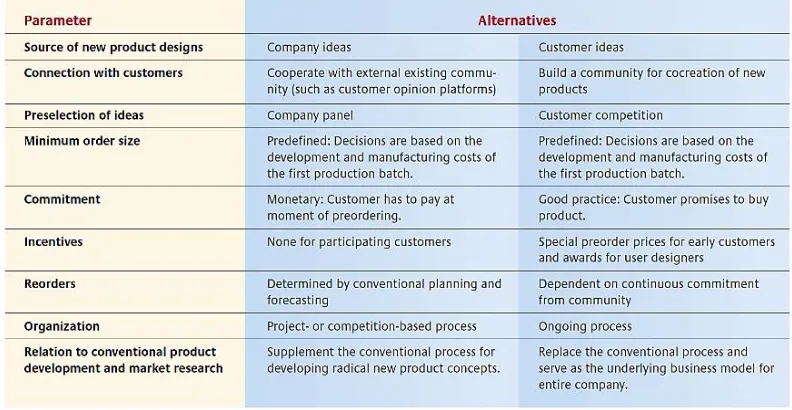
Alternative solutions such as “postponement and mass customization” can be replaced by focused groups or test marketing in order to enhance the forecasting accuracy by better dealing with the uncertain market reactions (Ogawa and Piller, 2006). In postponement strategy, manufacturer predesigns the product and manufacturing process is divided to two different stages. First generic components are built to stock and then once the company got the information regarding the market demand, the parts will be assembled into final goods. However, mass customization strategy is reverse and the customer design their own products using a configuration system by choosing their preferences an then the products are being manufactured on demand. Both these strategies provide opportunity for more flexibility while minimizing the risks of NPD, however they still require a redesign of both processes and products which impose higher costs at the operational level (Ogawa and Piller, 2006). Moreover, keeping smaller lot sizes requires complicated purchasing patterns and manufacturing operations. Besides, mass customization necessitates an “elicitation system” for transferring individual preferences to precise product features. The two mentioned strategies are more discussed through literature rather than industry applications (Ogawa and Piller, 2006).
Table 2 Options for collective customer commitment preventing NPD risks (Ogawa and Piller, 2006).
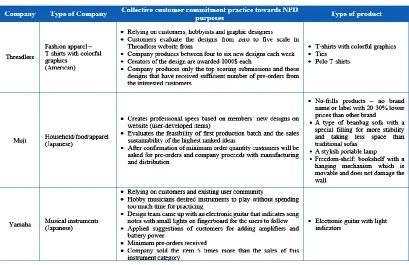
Table 3 Adoption of customer commitment practices preventing NPD risks (Ogawa and Piller, 2006).
Based on the literature reviews of this study, the innovative marketing practices along with IT applications can be considered as two significant facilitators of NPD and DCM linkage. Innovative marketing practices provide with an efficient customer relationship which can acts as input towards the early stages of product development further resulting in increase of NPD success rate. On the other side, IT applications such as Industry 4.0 and additive manufacturing are the novel NPD approaches that can provide with sustainable pillars by shortening the distance between manufacturers and customers, increase profitability and efficient customer response. Hence, the relationships between NPD and DCM could be further interpreted by creation of a novel framework within later stages of this study considering all the influential factors.
2.4 Sustainable Development and Green Product Development
minimisation of waste and key optimisation of products and services” (Brundtland Commission, 1987). Sustainable development proves to be an undefinable and unachievable goal that many businesses aims to target but fails to fulfil its core gaols successfully. Along with the financial, legislations and staff pressure, market pressure plays an important role in changing the industrial behaviour towards sustainable practices and some companies set some guidelines called “suppliers’ charter” introducing the environmental criteria they require from their supplier firms (Mackenzie, 1991). From the market perspective, one of the most frequent issues regarding the green products is the high costs involved and their premium price that often causes the product failure (Drozdenko, 2011). One of the major reasons for the eco-friendly products’ higher price is the low market demand and the new concept of greening that lead the manufacturers to produce cheaper products regardless of their life cycle, maintenance costs and environmental impacts. Eco-friendly is getting famous gradually, however it is still an emerging industry that have not been placed in people routine life and purchasing selections, especially in the developing countries. Hence, this is a very critical aspect of green products’ premium price as people are not still well-informed and cultivated regarding the benefits of such products and hence the demand is low. Besides, some countries have officially coined the eco-labelling schemes as trustworthy symbols attached to the products in order to provide consumers with independent information regarding the products they purchase and help them change their consumption patterns towards getting more environmental responsible (Naghi Ganji et al., 2017c; Erskine and Collins, 1997). Hence, in order to increase the success rate of green products, there are some strategies that can be adopted by companies including boosting consumers’ awareness regarding advantages of green products, creating customer trust by use of eco-labelling schemes, investment of R&D towards development of eco-friendly products and finally innovative marketing practices from the very early stage of product development which can partly confirm the product success within the market. Such marketing practices can be utilised for green products and therefore, can be classed as sustainable marketing as well, since they contribute on all the sustainability pillars such as profitability enhancement, social satisfaction and environmental conservation.
2.5 New Product Development and Sustainability Practices
The key advantage towards sustainability and its core opportunities refers towards solutions within existing environments and addressing key business problems to be able to deliver better sustainable products and services or its combinations (Hansen et al., 2009). It has also been described that the search and focus of innovative measures and practices leads to better sustainability related opportunities (Schaltegger, 2014). With the rapid changes to customer demands and that of better and advanced practices that have been applied within product based manufacturing environments, many companies are now operating in less secure and more complex structures in order to facilitate these rapidly evolving changes within the manufacturing requirements. The organisational focus is more towards high value manufacturing on short term rather than just focus towards long term relationship development between all connected parties of the supply chain including suppliers and customers.
strategies including, marketing, sales, technology adoption and product and process innovation measures within their environments (Pham and Thomas, 2011). Hence, the concept of NPD and Sustainability are highly important aspect that focuses on organisations to introduce new markets that enables their growth through higher customer and product diversification measures. NPD development teams will be dealing with three important factors when aiming to incorporate environmental concerns and NPD.
Utilising the existing theoretical models, a model is illustrated in Figure 3 that explains the emerging risks and challenges towards the incorporation of environmental issues into product development (Berchicci, 2005). Different aspects of greening related to design specifications such as market demands, environmental attributes and product functionalities make greening a complex procedure. From market perspective, some aspects of product specifications that are important by a development team might not be important to consumers and they might have a neutral vision regarding the environmental aspects of the product they purchase. When focusing on these parameters, due to their misalignment with customer preferences, the chances of new product success will be reduced. Likewise, there might be an incompatibility between environmental attributes and traditional products attributes, or product functionalities like safety and reliability. Effective communication and cooperation between different entities and NPD teams would be a very beneficial factor for product success (Cooper and Kleinschmidt, 1995; Dougherty, 1992). However, various interpretations about innovation and different mind-sets of people in large firms seem to be a barrier and cause the failed performance of the new products (Naghi Ganji et al., 2017c).
Figure 3 Influence of environmental concerns on product performance (Berchicci, 2005; Naghi Ganji et al.,
2017c).
regarding environmental preservation, the more they can encourage the staff towards ethical approaches towards greening. According to the EMS evaluation of an adhesive manufacturing company, among all the company shareholders’ challenges, generation of new products including eco-friendly and conventional products were only regarded as 4%. Whereas, 36% of the shareholders were assessed as important components to influence the company towards development of new products and environmental management system (EMS) adoption (Shah et al., 2016).
The review of literature highlights the need for incorporation of NPD-DCM through the entire business ecosystem entities and also through the flow of information, materials and resources within the structure of the supply chains. The study finds out the key hurdles of the companies towards adoption of demand-driven supply chains in NPD environments, such as lack of cross-organisational association, lack of innovative demand chain frameworks and shortage of R&D for eco-friendly products in developing countries.
3. RESEARCH METHODOLOGY
The purpose of the paper is to explore and evaluate the current world literature in order to extract knowledge and make an appropriate foundation towards continuing the later stages of the study. Various angles of the topic would be considered through different attitudes of the international authors to gain a thorough understanding of the opportunities, strengths, weaknesses and hurdles within the proposed phenomenon. Different studies were analysed through a literature review method following by a critical discussion and hence, contributing to the literature knowledge by developing more insights into different dimensions and key elements of the study. In a nutshell, this paper seeks to shed some lights on the previous efforts, current trends and future potentials and research directions within the field of DCM having a special focus on sustainability within NPD environments. This will be further utilised within the next stages of the research including data collections, final discussions and results.
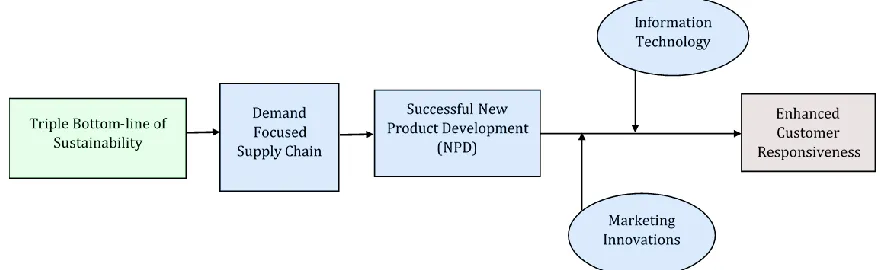
Figure 4 Preliminary conceptual framework: interrelationships of sustainability, supply chain and NPD
significance on conservation of our living earth for future generations. Sustainability factors further influence on supply chain structure based on customer requirements, also acting as initiatives towards success of NPD projects (Vural, 2015). As literature suggests, IT applications (Budd et al, 2012) and innovative marketing approaches (Petersen et al., 2005; Ogawa and Piller, 2006; Jüttner et al., 2007 and Ye and Lau, 2017) act as effective tools facilitating the ultimate goal of any supply chain and NPD project which is customer satisfaction. The question will be, to what extent the final component (Enhanced customer responsiveness) can be addressed and hence, this factor needs to be validated after one year from implementation of this framework within the company.
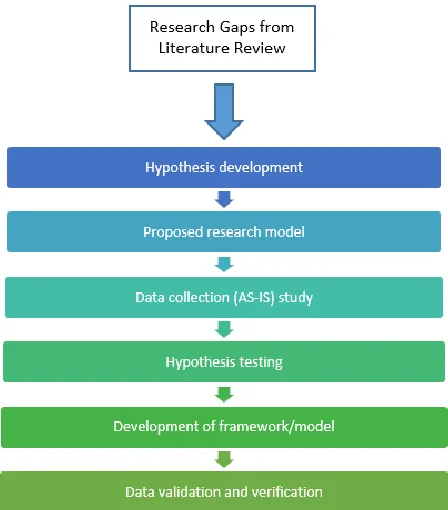
Before case study investigation, the updated literature will be also taken into account in order to impose the required modifications or improvements. Moreover, the framework will be further discussed and enhanced with the aid of case company executives before the survey questionnaire and interview conduction. This will give them pre insight regarding the research as well as smooth transfer of information. Therefore, the final research framework for examination and testing will be shaped based on the literature review and research gaps. Afterwards, different hypothesis will be extracted out of the final framework.
A case study based method will be conducted in order to collect data and evaluate the manufacturing company strategies from sustainable demand chain perspectives during the implementation of NPD projects. The AS-IS is the current status of the company and the way its current processes are taking place and hence, called AS-IS. Within the content of this research, AS-IS study seeks to describe the characteristics of sustainable demand chain practices considering new product development processes within a global manufacturing company based on the collected data from document research and industry association data. The case company provides with the information and input data for examination and testing of the hypothesis towards major research concepts. This would be facilitated through appropriate software application for qualitative data analysis and path modelling. Data validation and verification will be the next step which will be undertaken within the form of final discussions and analysis of study outcomes. As a result, the final framework or model will be proposed towards the association and linkage of sustainable demand chain within NPD projects, in order to fulfil all the research objectives, gaps and questions and contributing to theoretical knowledge within the relevant industrial studies.
development process and if necessary organize a plan to redesign the traditional SC structure in order to put it under the control of the company.
Figure 5 Proposed research steps.
Meanwhile, the potentials of manufacturing industry for being adapted to sustainable product development will be evaluated and also the requirements, limitations, opportunities, new industrial issues, academic challenges and critical factors will be studied. In doing so, the authors will take into consideration not only the engagement of different entities of the supply-demand chain but also the environmental aspects. Generally, the research seeks to minimize the potential risks associated with supply chain redesigning by analysing the most recent industrial cases in order for successful launching of new sustainable products as well as business profitability and prosperity (Naghi Ganji et al., 2017a).
4. CONCLUSION AND FUTURE STUDIES
roles of efficient physical supply of products and therefore it is essential to make a balance between customer fulfilment as dependent variables and supply chain efficiency. DCM is also defined as a tool which provides balance between supply and demand processes within internal and external operations of the organisation in order to provide with the competitive advantage. In some cases, it is revealed that demand chain practices could be applied to reduce the supply chain redesign risks and make a dynamic interaction between suppliers, company and customers. As a result, the major principles of DCM adoption include the supply-demand chain association, IT support and organisational capabilities.
There are still some research gaps existing in this field that need to be investigated including lack of cross-organisational association regarding DCM practices, lack of innovative demand driven chain framework and shortage of R&D for eco-friendly products in some developing countries. Moreover, the environmental side of sustainability and business ethics should be discovered as important factors towards the process of NPD within the manufacturing sectors. It is obvious that manufacturing companies, especially in competitive markets, need to regularly update their variety of products and services to survive within today’s global market. Senior managers of the company should use the demand chain features more frequently, as the increased rate of product introductions demand more from a business and need more efforts to deliver the new products effectively and efficiently.
Towards addressing the research objectives, the most recent world literature will be further studied in order to identify more profound and detailed research gaps, hurdles and challenges that companies may experience through this field. The mentioned gaps be addressed through the evidence-based research established on a mixed method data. As a result, the authors seek to develop a novel model/framework comprising main concepts of NPD and DCM also focusing on sustainability elements. The creation of the final framework will be initiated by extraction of some research hypothesis from the literature review, followed by case study investigations and hypothesis testing. The final framework tends to improve the engineering and manufacturing efficiency along with management practices of the company to move the company towards product sustainability and customer changing demands. This task would be achieved by validation of the framework through its adoption within the case company that will help the product development departments such as design, manufacturing and marketing to involve the customers and demand chain practices and further build a sustainable demand chain management as suggested by late authors (Vural, 2015).
References
Awwad, and Akroush M.N. (2016), “New product development performance success measures: an exploratory research”, EuroMed Journal of Business, Vol. 11 No. 1, pp. 2-9.
Berchicci, L. and Bodewes, W. (2005), “Bridging environmental issues with new product development”, Business Strategy and the Environment, Vol. 14 No. 1, pp. 272-285.
Budd, J., Knizek, C. and Tevelson, B. (2012), “The Demand-Driven Supply Chain, Making it Work and Delivering Results”. [Online] Boston Consulting Group. Available at: < www.bcg.com/documents/file106861.pdf> [Accessed 20 July 2017].
Brundtland Commission, WCED. (1987), “Our Common Future”, Oxford: Oxford University Press.
BusinessDictionary, “Test Marketing”. [Online] Available from:
<http://www.businessdictionary.com/definition/test-marketing.html> [Accessed: 20th July 2017].
Caputo, A., Marzi, G. and Pelleggrini, M.M. (2016), “The internet of things in manufacturing innovation processes: development and application of a conceptual framework,” Business Process Management Journal, Vol. 22 No. 2, pp. 383-402.
Chi-Jyun Cheng, C. and Shiu, E.C. (2008), “Critical success factors of new product development in Taiwan's electronics industry,” Asia Pacific Journal of Marketing and Logistics, Vol. 20 No. 2, pp. 174-189.
Cooper, R.G. and Edgett, S.J. (2012) “Best practices in the idea-to-launch process and its governance”,
Research-Technology Management, Vol. 55 No. 2, pp. 43-54.
Cooper, R.G. and Kleinschmidt, E.J. (1995), “Benchmarking the firm’s critical success factors in new product development”, Journal of Product Innovation Management, Vol. 12, No. 5, pp.374-391. De Treville, S., Shapiro, R.D. and Hameri, A.P. (2004), “From supply chain to demand chain: the role of lead time reduction in improving demand chain performance”, Journal of Operations Management, Vol. 21 No. 6, pp. 613-627.
Drozdenko, R., Jensen, M. and Coelho, D. (2011), “Pricing of green products: Premiums paid, consumer characteristics and incentives”, International Journal of Business, Marketing, and Decision Sciences, Vol. 4 No.1, pp. 106-116.
Dougherty, D. (1992), “Interpretive barriers to successful product innovation in large firms,”
Organization Science, Vol. 3 No. 2, pp. 179-202.
Erskine, C.C. and Collins, L. (1997), “Eco-labelling: success or failure?,” Environmentalist, Vol. 17 No. 2, pp. 125-133.
Gavronski, I., Klassen, R.D., Vachon S. and do Nascimento, L.F.M. (2011), “A resource-based view of green supply management,” Transportation Research Part E: Logistics and Transportation Review, Vol. 47 No. 6, pp. 872-885.
Hansen, E.G., Große-Dunker, F. and Reichwald, R. (2009), “Sustainability innovation cube: framework to evaluate sustainability-oriented innovations’” International Journal of Innovation Management, Vol. 13 No. 04, pp. 683-713.
Jüttner, U., Christopher, M. and Baker, S. (2007), “Demand chain management-integrating marketing and supply chain management,” Industrial Marketing Management, Vol. 36 No. 3, pp. 377-392. Katsikeas, C.S., Leonidou, C.B. and Zeriti, A. (2016), “Eco-friendly product development strategy:
Antecedents, outcomes, and contingent effects,” Journal of the Academy of Marketing Science, Vol. 44 No. 6, pp. 660-684.
Haluk Koksal, M. (2014), “The differences between successful and unsuccessful new manufacturing products in international markets: Evidence from Turkey,” Asia Pacific Journal of Marketing and Logistics, Vol. 26 No.1, pp. 21-38.
Krishnan, V. and Ulrich, K.T. (2001), “Product development decisions: A review of the literature,”
Management Science, Vol. 47 No. 1, pp. 1-21.
Lun, Y.H., Lai, K., Wong, C. and Cheng, T.C.E (2013), “Demand Chain Management in the container shipping service industry,” International Journal of Production Economics, Vol. 141 No. 2, pp. 485-492.
Mackenzie, D., Moss, L., Engelhardt, J. and Martyn, R. (1991), Green design: design for the environment. Laurence king, London.
Mahmood, S. and Kess, P. (2016), “An Overview of Demand Management through Demand Supply Chain in Fashion Industry,” Journal of Management Science & Business Administration, Vol. 2 No. 12, pp. 7-19.
Maravelakis, E., Bilalis, N., Antoniadis, A. Jones, K.A. and Moustakis, V. (2006), “Measuring and benchmarking the innovativeness of SMEs: a three-dimensional fuzzy logic approach,”
Production Planning and Control, Vol. 17 No. 3, pp. 283-292.
Martinich, L. (2015), “Excellent execution in new product development: Reducing uncertainty,” IEEE Engineering Management Review, Vol. 43 No. 1, pp. 17-19.
Menguc, B., Auh, S. and Ozanne, L. (2010), “The interactive effect of internal and external factors on a proactive environmental strategy and its influence on a firm’s performance,” Journal of Business Ethics, Vol. 94 No. 2, pp. 279-298.
Mu, J., Peng, G. and MacLachlan, D.L. (2009), “Effect of risk management strategy on NPD performance,” Technovation, Vol. 29 No. 3, pp. 170-180.
Naghi Ganji, E., Shah, S. and Coutroubis, A. (2017a). “An Evaluation of Demand focused Chain Contribution to Industrial Sustainability,” 15th International Conference on Manufacturing Research, London, UK, 5-7th September 2017.
Naghi Ganji, E., Shah, S. and Coutroubis, A. (2017b) “Bridging New Product Development with Sustainable Supply Chain Management Practices,” In Proceedings of 21st CSCC International Conference on Circuits, Systems, Communications and Computers, Crete, Greece, 14-17th July 2017.
Naghi Ganji, E., Shah, S. and Coutroubis, A. (2017c) “The Role of Sustainable New Product Development in Demand Driven Chains,” 4th iCatse International Conference on Industrial Engineering Management Science and Applications, Seoul, South Korea, 13-15th June 2017. Ogawa, S. and Piller, F.T. (2006), “Reducing the risks of new product development,” MIT Sloan
Rogers, E.M. (2010), Diffusion of innovations. Simon and Schuster.
Petersen, K., Handfield, R. and Ragatz, G. (2005), “Supplier integration into new product development: coordinating product, process and supply chain design,” Journal of Operations Management, Vol. 23 No. 3, pp. 371-88.
Pham, D.T. and Thomas, A.J. (2011), “Fit manufacturing: a framework for sustainability,” Journal of Manufacturing Technology Management, Vol. 23 No. 1, pp. 103-123.
Rainbird, M. (2004), “Demand and supply chains: the value catalyst”, International Journal of Physical Distribution & Logistics Management, Vol. 34 No. 3/4, pp. 230-250.
Schaltegger, S. and Burritt, R. (2014), “Measuring and managing sustainability performance of supply chains Review and sustainability supply chain management framework,” Supply Chain Management: An International Journal, Vol. 19 No. 3, pp. 232- 241.
Shah, S., Ganji, E. and Hasan, S. (2016) “Environmental management systems and sustainability in SMEs,” MATEC Web of Conferences, Vol. 76, p.02006.
Sharifi, H., Ismail, H. S. and Reid, I. (2006), “Achieving agility in supply chain through simultaneous “design of” and “design for” supply chain,” Journal of Manufacturing Technology Management, Vol. 17 No.8, pp. 1078-1098.
Tan, C.L. and Tracey, M. (2007), “Collaborative new product development environments: Implications for supply chain management,” Journal of Supply Chain Management, Vol. 43 No. 3, pp. 2-15.
Van Hoek, R. and Chapman, P. (2007) “How to move supply chain beyond cleaning up after new product development,” International Journal of Supply Chain Management, Vol. 12 No. 4, pp. 239-244.
Vinayak, K. and Kodali, R. (2014), “The relationship between NPD innovation and performance: the moderating role of NPD best practices in Indian manufacturing industry,” Measuring Business Excellence, Vol. 18 No. 2, pp. 39-59.
Vollmann, T.E. and Cordon, C. (1998), “Building Successful Customer Supplier Alliances,” Long Range Planning, Vol. 31 No. 5, pp. 684-694.
Vural, C.A. (2015), “Sustainable demand chain management: An alternative perspective for sustainability in the supply chain,” Procedia-Social and Behavioral Sciences, Vol. 207, pp.262-273.
Walker, B., Bovet, D. and Martha, J. (2000), “Unlocking the supply chain to build competitive advantage,” The International Journal of Logistics Management, Vol. 11 No. 2, pp. 1-8.
Walters, D. (2006), “Demand chain effectiveness – supply chain efficiencies: a role of enterprise information management,” Journal of Enterprise Information Management, Vol. 19 No. 3, pp. 246-261.