children’s well-being questionnaire
Akram Dehghani1, Mokhtar Malekpoor2, Ahmad Abedi2, Shole Amiri3
Abstract
Well-structured multi-dimensional and consists of emotional, cognitive, experience positive and negative emotions such as frustration and discomfort, and judging from the quality of individual lives. Psychological well-being criterion not only reflects child affections but also demonstrates aspects that person's life. The purpose of the present study was to develop and study characteristics of psychometric properties of suitable questionnaire to measure well-being of preschool children among their mothers. The research method of study was correlational and validation through developing its reliability. The sample consisted of 580 children that were selected by cluster multi-stage random sampling method. Preschool children’s well-being questionnaire was evaluated by construct validity (explanatory factor analysis and internal consistency), convergent validity and reliability (internal consistency) and Pearson correlation index in study group. As exploratory factor analysis of the five dimensions of well-being were extracted which including psychological, social, cognitive, educational, and family. As well as significant correlation between children's well-being of questionnaire and Q-set Questionnaire scores confirmed convergent validity. The reliability of each of the subscales of psychological, social, cognitive, educational, family and general well-being questionnaire preschoolers by Cronbach's alpha, respectively were 0.73, 0.83, 0.77, 0.70, 0.73, and 0.89. According to results of this research, the preschool children’s well-being questionnaire had good validity and reliability which can be used for evaluating preschool children’s well-being.
Keywords: Children, Reliability, Validity, Well-being Journal of Research & Health
Social Development & Health Promotion Research Center
Vol. 6, No. 1, Mar & Apr 2016 Pages: 137-144 Original Article
1. Correspondence to: Department of Psychology, Faculty of Human Science, Najafabad Islamic Azad University, Najafabad, Iran
Email: [email protected]
2. Department of Children with Special Needs, Faculty of Psychology and Educational Science, University of Isfahan, Isfahan, Iran
3. Department of Psychology, Faculty of Psychology and Educational Science, University of Isfahan, Isfahan, Iran
Received: 1 Jun 2013 Accepted: 23 Jul 2013
How to cite this article: Dehghani A, Malekpoor M, Abedi A, Amiri Sh. Development and validation of preschool children’s well-being questionnaire. J Research & Health2016; 6(1): 137-144.
Introduction
Positive-thinking psychology is based on acceptance of human as worthy and powerful being who is able to enhance individual's capabilities. The aim of current trends was to study Strength and happiness of human beings, according to the strengths, strengthen and establish positive features [1]. Positive psychology has been defined in the well-being framework. From this perspective, person's well-being means
optimal applications. Convention on the right of the child (CRC) has defined well- being as creating opportunities for the full development of abilities and talents of children [2].
has been described in 8 stages. In each stage individual is faced with a crisis that should solve for personal well-being and future growth successfully. At each stage of the children managed to resolve crisis that can be equipped both of the well-being and help to prepare for the next stage. Burner’s ecology theory describes interactions between child and environment but its emphasis on the types and levels of different influences that affect their child's development. In Bronfenburner’s model, the basic unit or microsystem is the network of child’s direct interactions with others (family, school, and neighbors) and activities; it was the most primary system. The relationship between two or more microsystems such as family, school. makes mesosystem. There is a final system or ecosystem that children do not involve in directly. Job parents, groups of friends, public policy and government social services are examples that indirectly affect their child interactions. These three structures make child’s developmental backgrounds which are different for every country because of differences in economic, culture, race, ethnicity, religion, beliefs, lifestyle, and other factors. Cultures, sub- cultures, beliefs, and ideology influence on child’s developmental background which constitute macro system in the model. These theories emphasize on child’s permanent interaction and environment [3]. The most important point in all well-being's dimensions is several dimensions. These dimensions include health and physical g cognitive, training, emotional and psychological and social behavior development [4]. According to Diner [5] and Ben-Zer [6] Well-being structured multi-dimensional and consists of emotional, cognitive, experience positive and negative emotions such as frustration and discomfort, and judging from the quality of individual lives. White [7] referred to important factors in well-being. According to him, well- being composed of three interdependent dimensions: mental, physical, and interaction. Mental dimension refers to one’s values, perceptions, and experiences; physical dimension refers to practical well-being and life standards and interaction dimension refers to person's relationships with society [8,9]. Although it was difficult to measure psychological well-being but it was an important
dimension of well-being [10]. In recent research, 12 developmental criterions were mentioned and they were summarized to four in other researches. Enjoy good health, to be educated for life, experience the love of God and their neighbors, and taken care, protection and collaboration by others [11]. Since then, further research in the field of children's well-being and there are several indicators that included:
Index of children's well- being in America: Land et al. [12] made this index about American child [13] well-being and referred to seven dimensions of well-being. In recent years this research has been revised in the broader dimension [14].
Index of children's well- being in Europe Bradshaw et al. [15] developed this index in 25 European countries. Analyses were based on CRC and ecology-human development model. In this Indicator, taking into account the theoretical framework, well-being of the child in 8categories is described as follows: material well-being, health, educational and psychological dimensions, child’s relationships, home dimension, social cooperation, and high risk behaviors dimension. This study was conducted recently by changes in 27 countries [16]. The new version those criteria were selected which consider the thoughts and feelings of children.
socio-economic status families, including family type and income). Recently, Moore and colleagues [18] have pointed out in a new definition of well-being in four dimensions and 3 variables for the field which include [2].
well- being dimensions: 1) physical health points to biological conditions, health and overall performance, weight and healthy lifestyle. 2) Mental health: thinking about themselves and the future, confront the situation and get rid of the problems. 3) social health, including how to enter the child's social ecology, basic skills, engage in structured activities, the ability to connect emotionally with people and establish friendly relations. 4) Intelligence and training include child's ability to learn and remember the ability to use cognitive skills for personal activities and school.
Background variables: 1) family, including family structure, facilities and resources at home, relationships between individuals, 2) The society includes neighbors and associations by which a person with others and interact with the community's institutions. 3) Socio-Economic Factors: The economic characteristics-Family that affect child's well- being. In this edition of calculating the composite index is used:
The index of child well-being that comes from the four dimensions of individual well- being and well-being's index underlying that result in the sum of three underlying dimensions. Moore and his colleagues in this edition has been analyzed two indexes separately to distinguish between different dimensions of child's welfare. However, in both Editions,parents completed questionnaires and the children are not considered [2].
Diener and Lucas [18] believed that demographic characteristics and objective conditions highly influence on well- being. So Heller and colleagues [20] have to mention genetic data and longitudinal studies. Several studies have investigated the importance of biological factors, but the whole range of environmental conditions cause significant differences in long and well- being [21,22]. So in most cases, the environmental impact of individual differences may provide a better explanation. White [7] stated that culture and environment have key roles in well- being, and probably the dimensions
of personal well- being may be change at different times and situations. Therefore it is necessary to measure well- being in each country according to the cultural conditions-environmental and according to time and situations. Thus, the current study seeks to find answers for following questions:
Does the researcher made questionnaire of preschool children’s well- being have suitable validity (content, construct, and criterion)? Does the researcher made questionnaire of preschool children’s well- being have enough reliability?
Method
The research method of study was correlational and validation through developing its reliability because in this study, factor analysis was used as a way to recognize the constructive elements of well-being and by putting together those variables which had correlation extract from few factors of well- being [22].
The population consisted of all children aged 4-6 pre-school centers in Isfahan. It should be noted that the questionnaire completed by the mother, but since there was no possibility to directly sample of mothers, so the children were used as samples. After obtaining permission from the relevant agencies, from any area of the city, five kindergarten and a total of 25 kindergartens were selected. In this way, an attempt was made to all social classes
-economic and geographic areas to be sampled. It is necessary for any questions at least 15 subjects to be selected for the factor analysis [23]. There was 46 items in initial test. So, 580 subjects were selected with regard to number of items and surveying validity and reliability, 5 kindergartens were chosen from each region by multi-stage random cluster sampling. Parents brought their children to kindergarten about 8 or 9 o’clock. The co- researchers attended there in that period then gave questionnaire to the parents who accepted to complete it. Finally 580 questionnaires were completed.
Table 1 KMO and bartlett’s test
Component Component KMO Bartlett’s test Eigenvalues
1 Psychological 0.74 414.64** 9.41 24.1 24.14
2 Social 0.84 1012.70** 2.24 5.76 29.91
3 Educational 0.72 439.51** 2.02 5.18 35.09
4 Cognition 0.78 188.96** 1.62 4.16 39.26
5 Family 0.76 131.30** 1.50 3.85 43.11
Total test 0.86 3143.903** 43.11
**p<0.0001
were gathered in physical, affective, emotional, relationship, cognitive and home and family statements. Lickert scale was used to answer the questions, from 1 to 5 (Never= 1, low= 2, 3= average, 4= high, very high= 5). But, 34, 40, 41 questions were scored reverse. Five child experts modified and reviewed validity and reliability. Then, test was conducted by five bachelors of psychology.
The data analyses for determination of validity and reliability was analyzed by SPSS.19 software. Construct validity was assessed with main components and varimax rotation by exploratory factor analysis. This analysis was
used to specify how many important and significant factors questionnaire saturate sum of fundamental material. Firstly Cronbach’s alpha was utilized to reliability of each factor and also total questionnaire [24].
Results
The validity of this research was conducted in three ways: The content validity of researcher made questionnaire Was conducted by experts the field of children's well- being.
To assess the validity of the internal correlation with the total scores were used for each factor and principal component exploratory factor
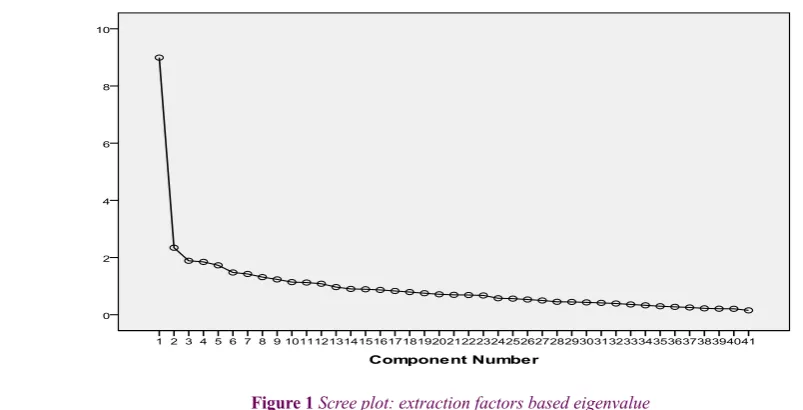
Figure 1 Scree plot: extraction factors based eigenvalue analysis method. As it seen in Table 1,
Kaiser-Meyer-Olkin (KMO) measure of Sampling was used to assess the adequacy of selected sample size for factor analysis; Kermit Bartlett test was used to determine correlation among the test materials in society is not equal to zero [24]. KMO coefficient represents that the selected
sample size is suitable for factor analysis. Also, Kermit Bartlett test was significant (p=0.000). The results indicated that preschool children well-being questionnaire is sufficient to constitute correlation factors and factor analysis can be applied.
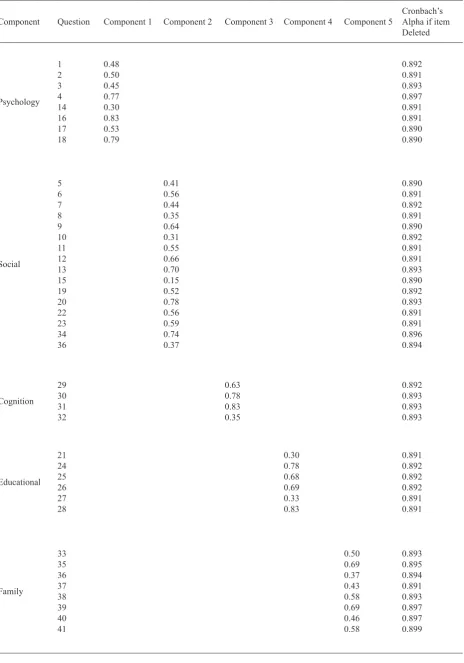
Table 2 Rotated component matrix with varimax method
Table 3 Pearson correlation among component and total test and subscales
Variables Social Educational Cognition Family Well-being child Cronbach’sAlpha
Psychology 0.65** 0.42** 0.31** 0.34** 0.77** 0.73
Social 0.53** 0.40** 0.47** 0.90** 0.83
Educational 0.39** 0.32** 0.70** 0.77
Cognition 0.26** 0.58** 0.70
Family 0.61** 0.73
Well-being child 0.89
**p=0.000
Table 4 Correlation of well-being and attachment in preschool children
Psychology Social Educational Cognition Family Well-being
Q-Set
Sample 0.64** 0.67** 0.47** 0.51** 0.48** 0.69**30
**p=0.000
in preschool children's well-being questionnaire. Totally, these five factors explained 43.11 percent of the total variance. The varimax rotation method was utilized to increase interpretation ability rate of obtained five factors. It should be noted the factor load at least 0.30 was selection criterion of each material for each factor [25]. The factors were named psychological, social, cognitive, educational and family after assessment of obtained contents (Table 2). As Figure 1. related to Scree test, 5 factors are located on steep slope; the sixth factors slope was almost equal and it was the last factor. Therefore, it can be concluded the questionnaire has five factors. Then, the table of rotation matrix was used to review derived components based on the factor load [Table 2].
High correlation in internal consistency model indicated the factors were convergence to total score of questionnaire. The results were shown in Table 3. The reliability was calculated for total questionnaire and each factor separately. The reliability coefficients can be seen in Table 3. Criterion validity: since well-being factors relation with life suitable conditions, it should be correlated to attachment. For the purpose, 30 subjects complete Q-Set questionnaire. It was designed to measure the attachment by Waters and Tabae-Emami reported its validity 0.89 in Iran [26]. The results in Table 4 indicated that
there was significant relation between preschool children's well-being factors and attachment.
Discussion
located in a category. But statements that related to physical dimension were located in family area. Cognitive and educational dimensions were considered as separated dimensions. Unfortunately, there is not any research to compare. In research, child well-being has been measured by lack of signs or rate of general health or using life quality questionnaire items. Criterion validity was reviewed by preschool children well-being questionnaire correlation with attachment Q-Set. Rate of relation in all of sub- scales was complete significant (p=0.000). Although, any research was found about it, many researches indicated that attachment relates to emotional- social adjustment [27], decreasing negative and maladjustment behaviors [28], self-control [29], emotion regulation [30], decreasing separation anxiety [31] and decreasing signs of hyperactivity disorder/attention deficit (ADHD). Finally, the validity calculated by Cronbach’s alpha was 0.89, which is remarkable. The smallest alpha correlation in the subtests was 0.70 which is related to cognitive dimension; the biggest was 0.83 related to social dimension with 16 statements. With regard to well- being formation, it is largely stable over time and is resistant to change, indicating that the questionnaire is reliable. Significant internal correlations indicated convergence of factors to total questionnaire. Also, factor reliability coefficients showed the questionnaire has high reliability. But recommended the instrument is evaluated in other societies and cities and respect to gender differences.Also it is suggested that making instrument which investigate children's well-being from their own perspective, and not their parents.
Conclusion
Overall, the findings of the study demonstrated satisfactory reliability and validity of questionnaire so it can be used for future researches. But these findings should be interpreted according its limitations. One of the limitations of the present study can be limited to a sample of non- clinical sample of women and noted normal. Therefore, it is suggested in next research studied in other groups include
mothers of children with special needs. According to conducted research, economic conditions is one of the effective factors on well-being and since the country is faced with a variety of economic sanctions and enormous changes which was not considered in this study So it is suggested that this factor can be evaluated when the economic situation is stable somewhat.
Acknowledgements
The authors wish to express their deepest gratitude for all those who helped and in conducting this study.
Contribution
Study's design: AD, MM, AA, ShA Data collection and analysis: AD, AA Manuscript preparation : AD, MM
Conflict of Interest
"The authors declare that they have no competing interests."
References
1- Seligman MEP, Peteson C. Positive psychology progress: empirical validation of interventions. Am Psychol2005; 60(5): 410-21.
2- Fernandes L, Mendes A. A review essay on the measurement of child well-being. Soc Indic Res2012; 106(2): 239-57.
3- Lippman HL. Positive indicators of child well-being: A conceptual framework, measures, and methodological issues .Florence: UNICEF innocenti research center; 2009.
4- Moore KA, Theokas C, Lippman L, Bloch M. A Microdata child wellbeing index: conceptualization, creation, and finding. Child Indic Res2008; 1: 17- 50. 5- Diener E. Subjective well-being: The science of happiness and a proposal for a national index. Am Psychol2000; 55(1): 34-43.
6- Ben Zur H. Happy adolescents: The link between subjective well-beng, internal resources, and parental factors. J Youth Adolesc2003; 32(2): 67-79 .
cds/but-what-is%20-wellbeing. Accessed April 2012. 8- Ben–Arieh A. Measuring and monitoring the well-being of young children around the world. Paper commissioned for the EFA global monitoring report 2007, Strong foundations: early childhood care and education 2006. Available at URL: http://unesdoc.unesco.org/ images/0014/001474/147444e.pdf.2007
9- Lippman L. Indicators and indices of child well- being: a brief American history. Soc Indic Res2007; 83(1): 39- 53. 10- Bradshaw J, Keung A, Ree G, Goswami H. Children's subjective well-being: international comparative perspectives.
Child Youth Serv Rev2011; 33: 548-56.
11- Carboni I, Morrow N. Finding the right balance between standardization and flexibility: a compendium of indicators for measuring child wellbeing. Soc Indic Res2011; 4(4): 597- 618.
12- Land K, Lamb VL, Mustillo SK .Child and youth wellbeing in the United States, 1975-1998: Some findings from a new index. Soc Indic Res2001; 56: 241- 320. 13- Land KC, Lamb VL, Meadows SO, Taylor A. Measuring trends in child wellbeing: an evidence-based approach. Soc Indic Res2007; 80: 105-32.
14- Bradshaw J, Hoelscher P, Richardson D. An index of child wellbeing in the European Union. Soc Indic Res2007; 80: 133-77.
15- Bradshaw J, Richardson D. An index of child wellbeing in the Europe. Child Indic Res2009; 2: 319-51.
16- Moore KA, Theokas C, Lippman L, Bloch M. A microdata child wellbeing index: conceptualization, creation, and finding. Child Indicators Research2008; 1: 17-50.
17- Moore KA, Vandivere S, Lippman L, Mcphee C, Bloch M. An index of the condition of children: the ideal and less- than-ideal U.S. example. Soc Indic Res2007; 84: 291-331.
18- Diener E, Lucas RE. Personality and subjective well- being. In Kahneman D, Diener E, Schwarz N (Eds). Well- being: the foundations of hedonic psychology. New York: Russell sage foundation; 1999.
19- Heller D, Watson D, Hies R. The role of person versus situation in life satisfaction: A critical examination.
Psychol Bull2004; 130(4): 574-600.
20- Diener E, Diener C, Diener M. Factor predicting the subjective well-being of nations. J Pers Soc Psychol1995; 69: 851-64.
21- Inglehart R, Klingemann HD. Genes, Culture, democeacy and happiness. In Diener E, Suh E. Subjective well-being across cultures. Cambridge, MA: MIT press: 2000.
22- Habibpoor K, Safari R. SPSS in the survey Reaserch. Tehran: Levie; 2010.
23- Gall M, Borg V, Gall J. Quantitative and qualitative research for psychology, Samt; 2012.
24- Molavi H. Statistical methods for psychology, Isfahan: Poyeshandishe; 2006.
25- Myeres LS, Gamst G, Guarino AJ. Applied multivariate research: design and interpretation. London: SAGE; 2007.
26- Tabae Emami Sh. Effectiveness of training attachment for mothers in the 3-5 year childrens. [dissertation]. Isfahan: University of Isfahan 2012; PP:356.
27- Cohen NJ, Farnia F. Social-emotional adjustment and attachment in children adopted from china: processes and predictors of change. Int J of Behav Dev2011; 35(1): 67-77.
28- Tan TX. Two-year follow- up of girls adopted form china: Continuity and change in behavioural adjustment.
Child Adolesc Ment Health2011; 16(1): 14- 21.
29- Miller HV, Jennings WG, Alvarez Rivera LL, Lanza Kaduce L. Self-control, attachment, and deviance among hispanic adolescents. Journal of Criminal Justice2009; 37: 77-84.
30- Riva Crugnola C, Tambelli R, Spinelli M, Gazzotti S, Caprin C, Albizzati A. Attachment patterns and emotion regulation strategies in the second year. Infant
BehavDev2011; 34(1): 136-51.
31- Zolfaghari Motlagh M, Jazayeri A, Khoshabi K, Mazaheri M, Karimlo M. Effectiveness of attachment beased therapy on reduction of symptoms in separation anxiety disorder. Iranian Journal of Psychiatry and Clinical Psychology2009; 14(4): 380-8.